Early Literacy Phonics Worksheets for Letter Sound Recognition

📅 Feb 12, 2025 👤 Nylen Smith

Mastering letter sound recognition lays the foundation for early literacy and successful reading development. Engaging phonics worksheets help children associate letters with their corresponding sounds through interactive exercises. Explore the available worksheets to support your child's phonics skills and boost their reading confidence.

Letter Sound Matching Phonics Worksheet
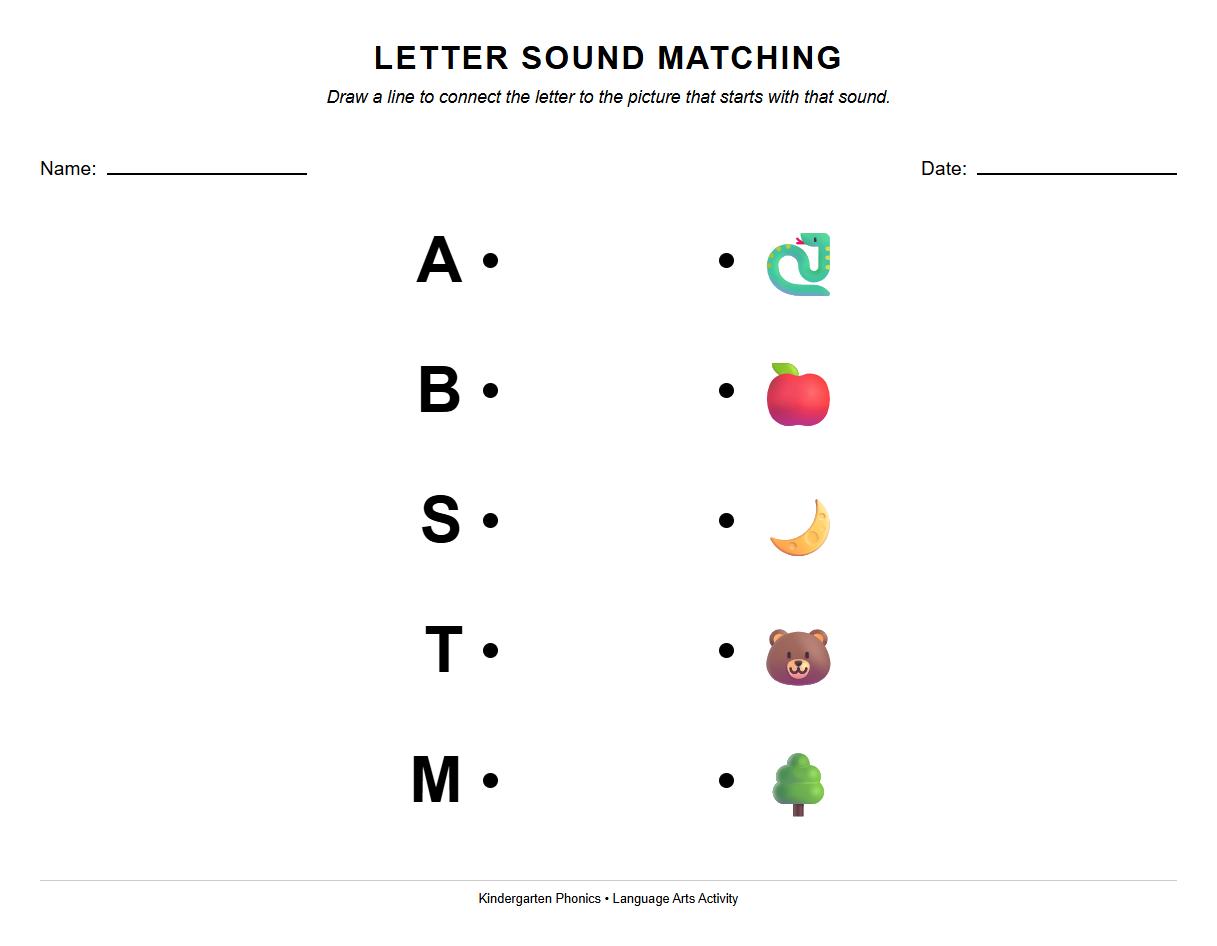
Letter Sound Matching Phonics Worksheet

Download PDF     Pin it

Initial Sounds Identification Phonics Activity
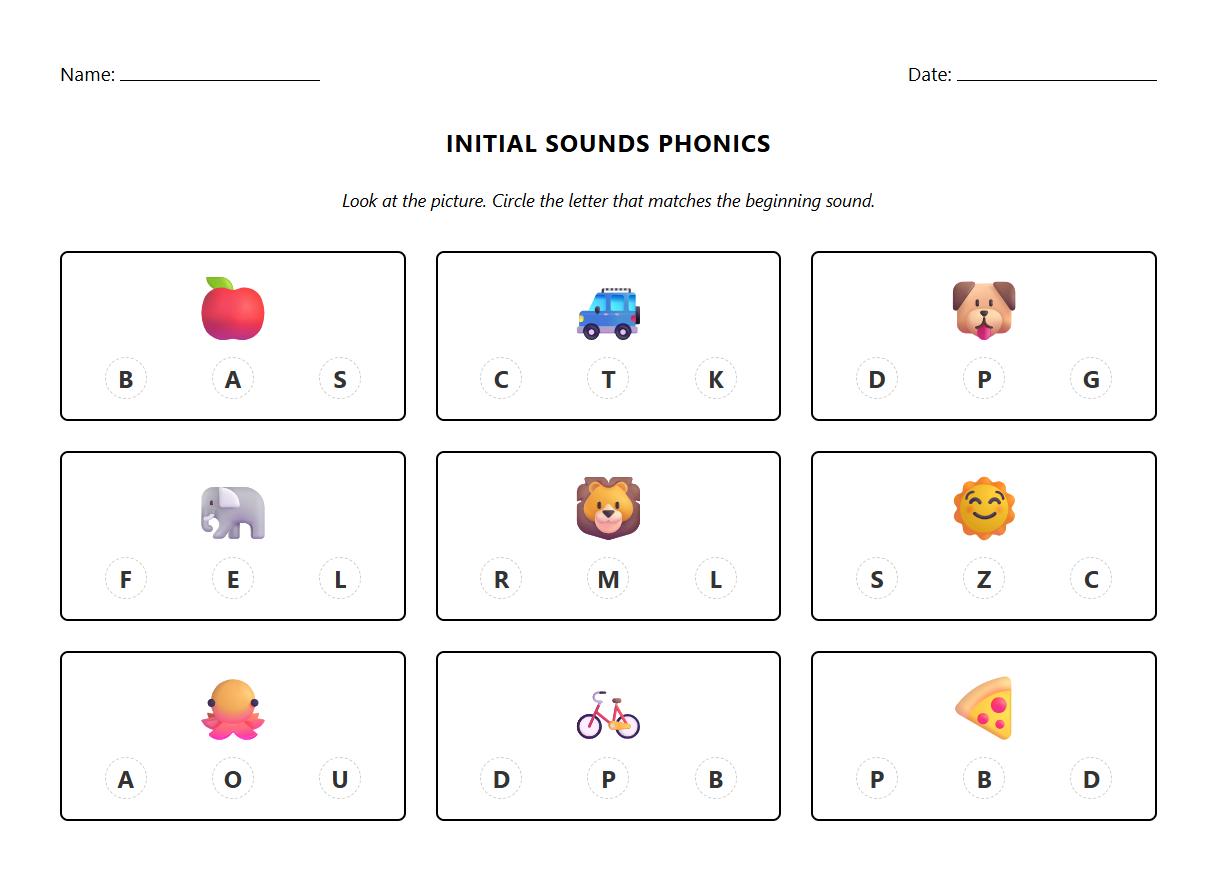
Initial Sounds Identification Phonics Activity

Download PDF     Pin it

Picture to Letter Sound Association Sheet
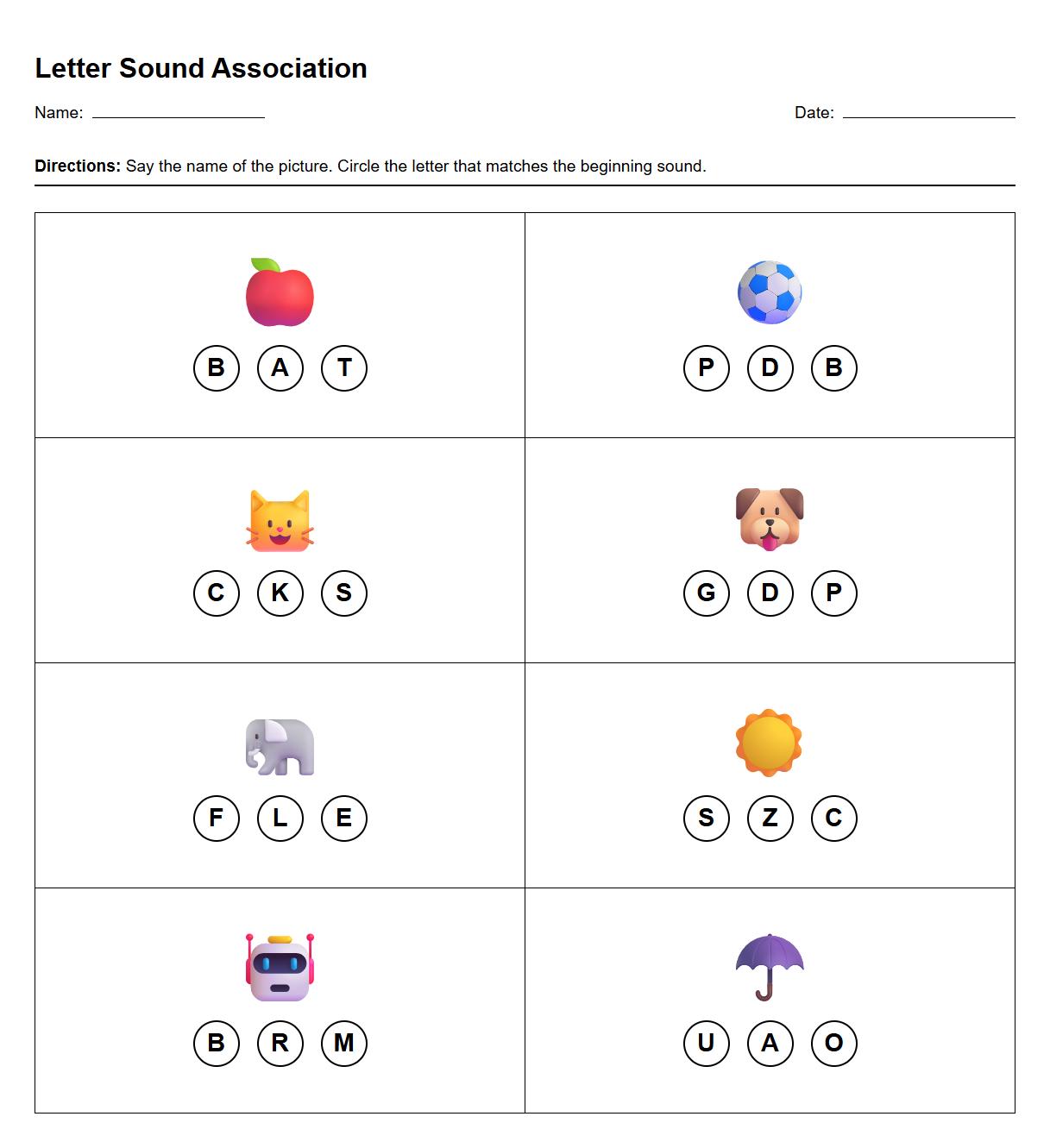
Picture to Letter Sound Association Sheet

Download PDF     Pin it

Uppercase and Lowercase Sound Discrimination Task
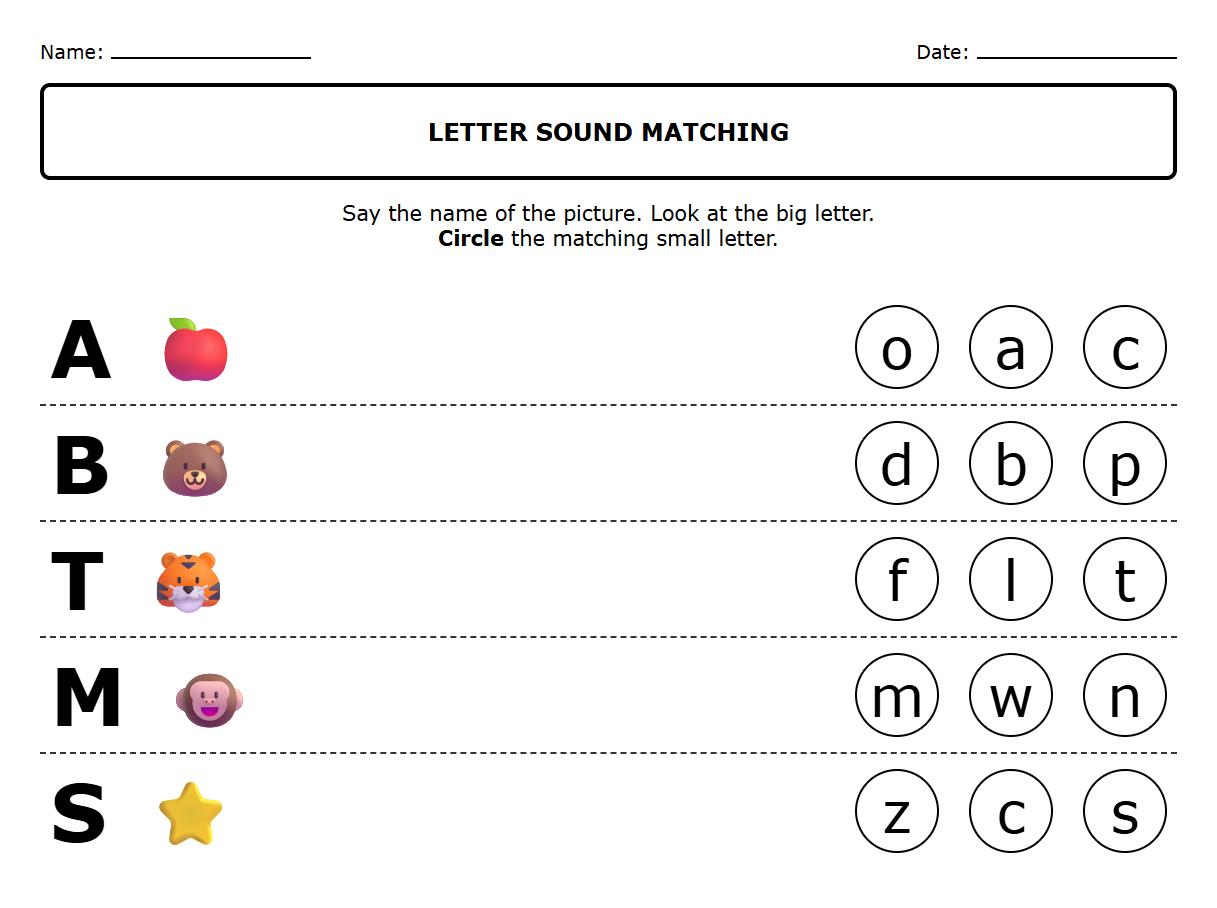
Uppercase and Lowercase Sound Discrimination Task

Download PDF     Pin it

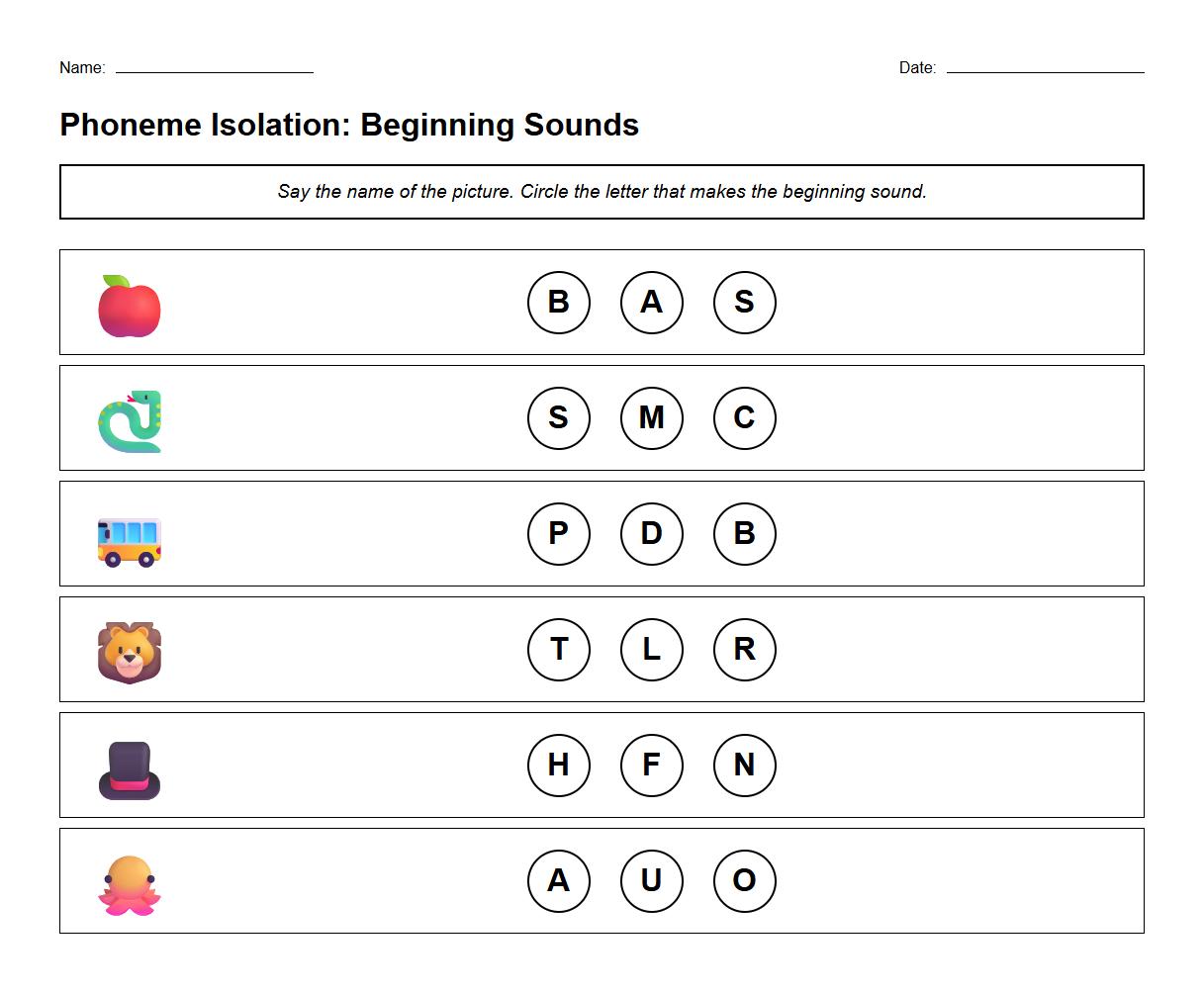
Phoneme Isolation Practice Page

Phoneme Isolation Practice Page

Download PDF     Pin it

Beginning Consonant Sound Sorting Exercise
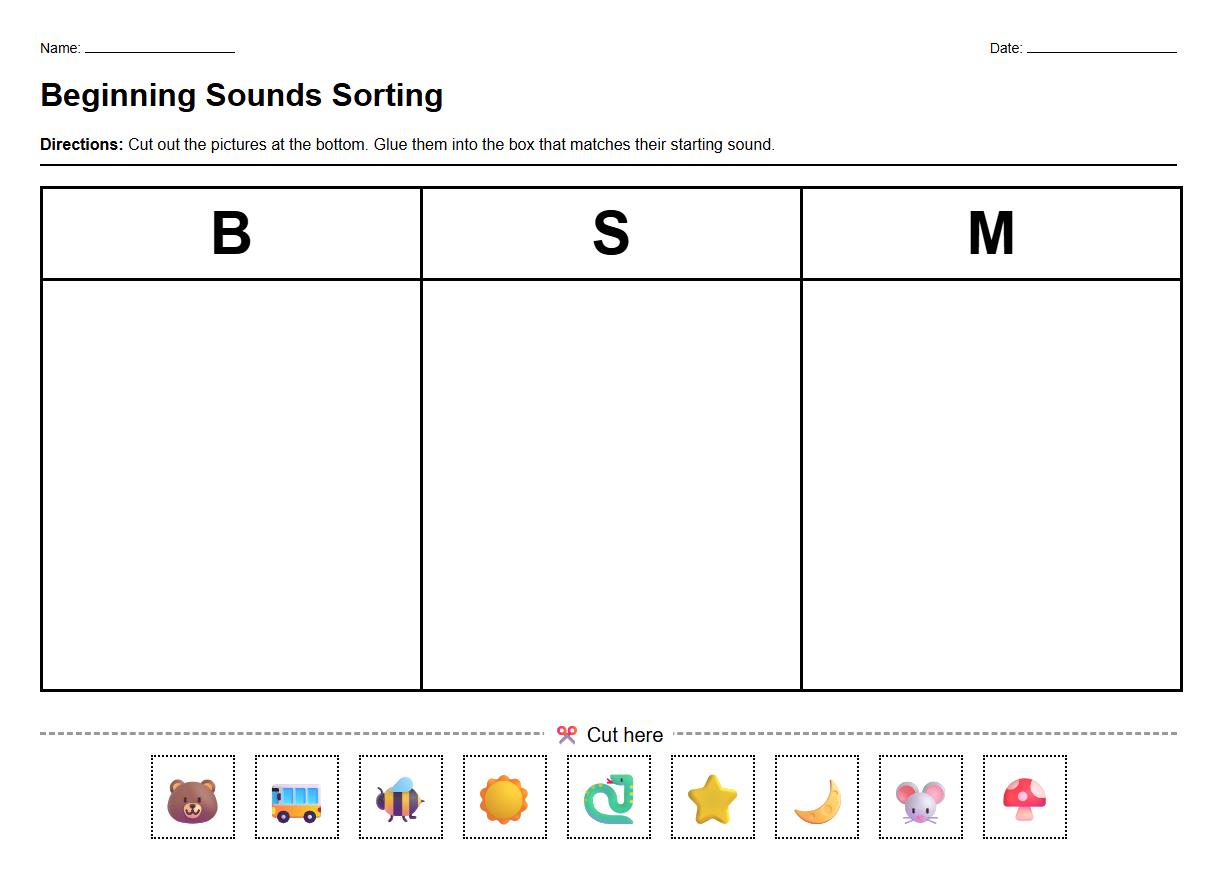
Beginning Consonant Sound Sorting Exercise

Download PDF     Pin it

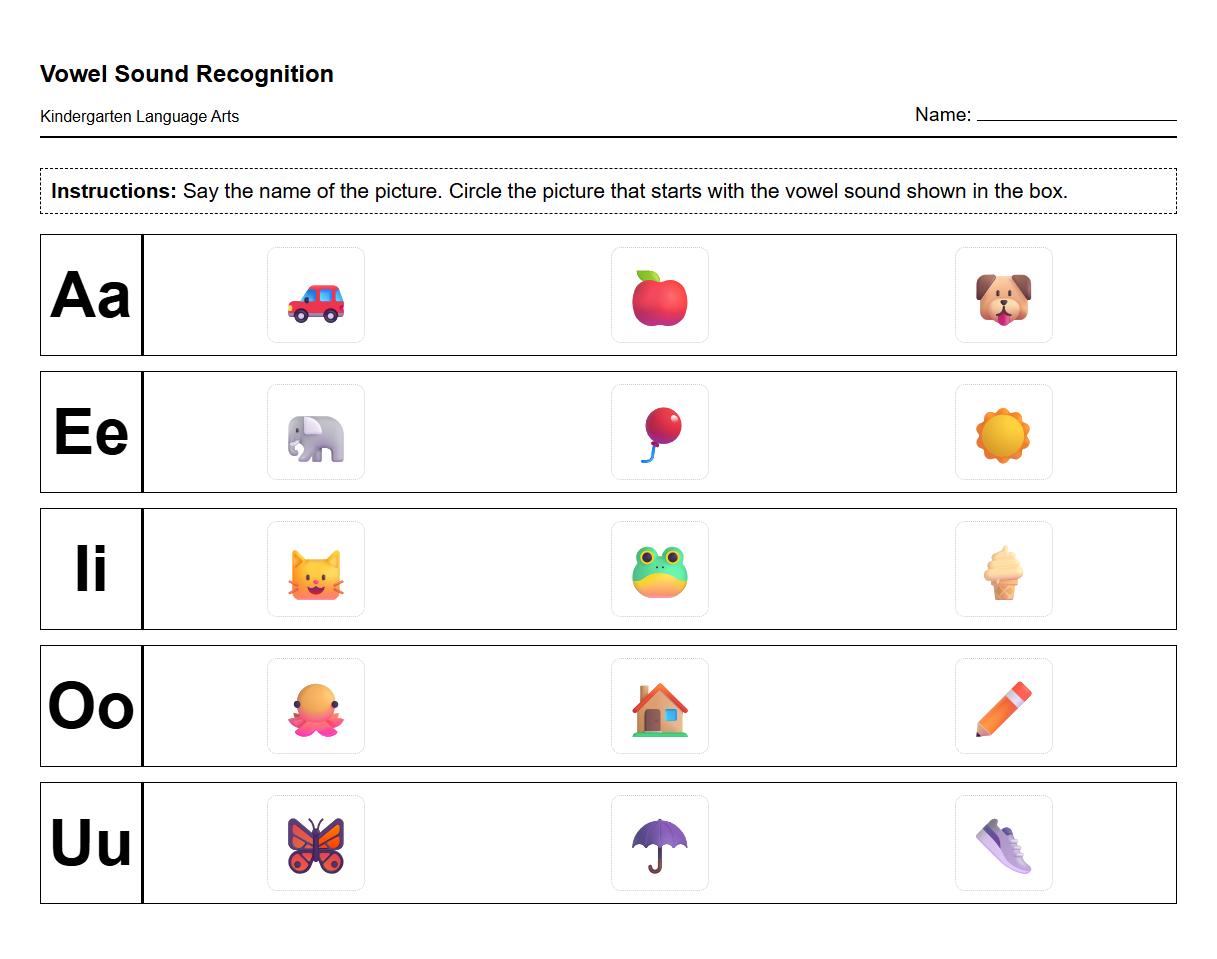
Vowel Sound Recognition Worksheet

Vowel Sound Recognition Worksheet

Download PDF     Pin it

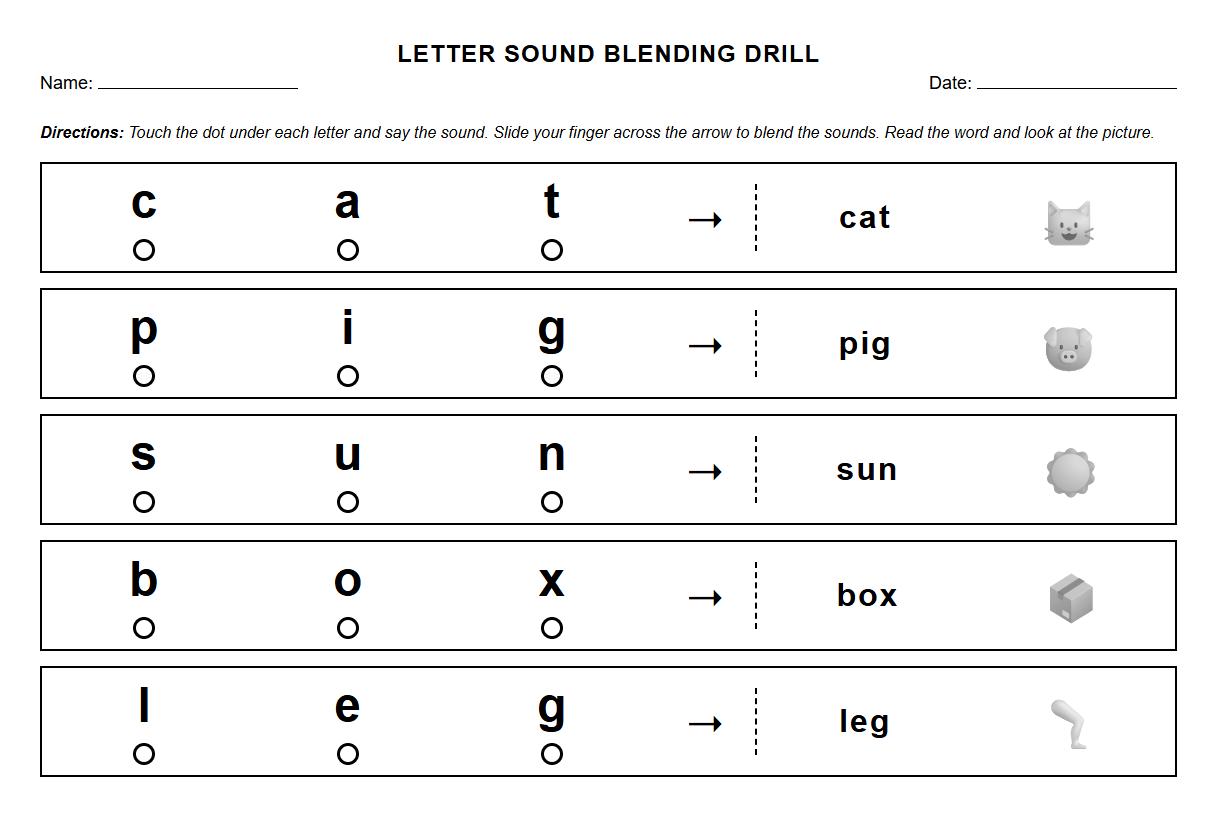
Letter Sound Blending Drill

Letter Sound Blending Drill

Download PDF     Pin it

Ending Sound Phonics Assessment Sheet
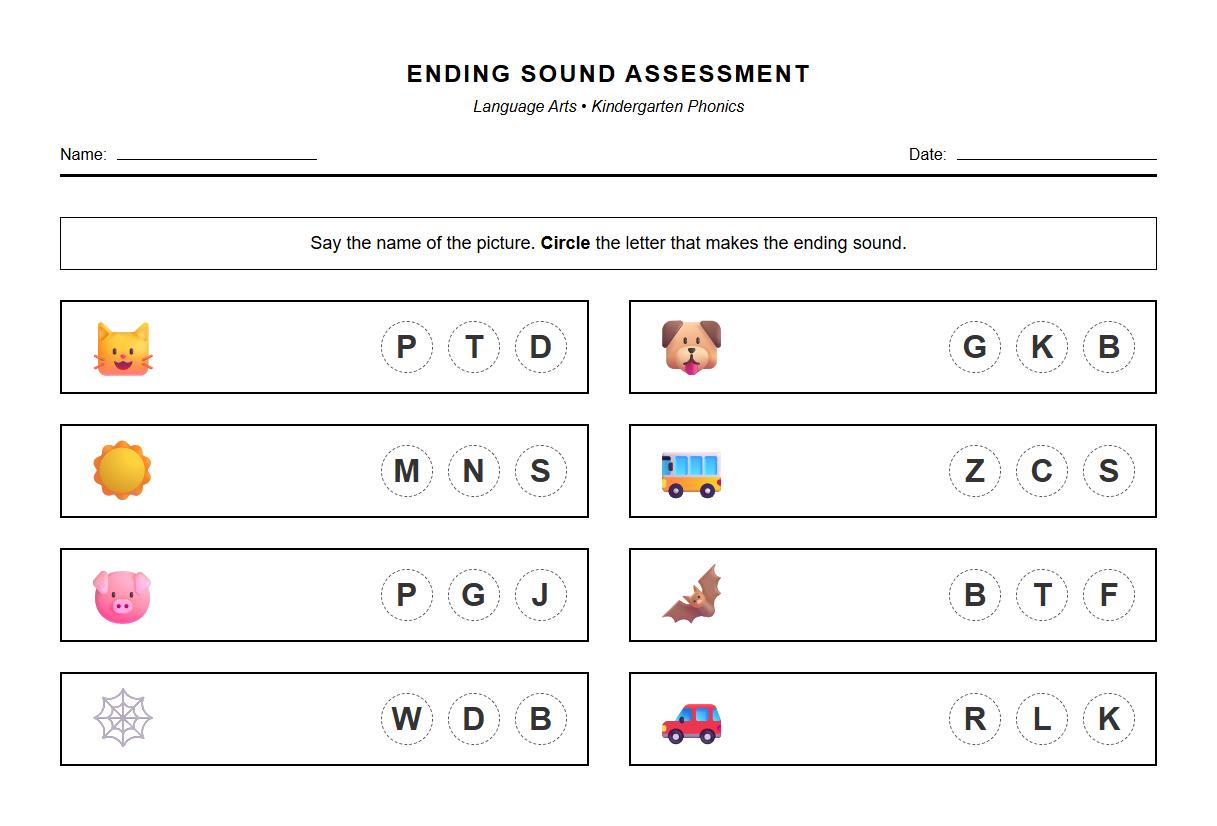
Ending Sound Phonics Assessment Sheet

Download PDF     Pin it

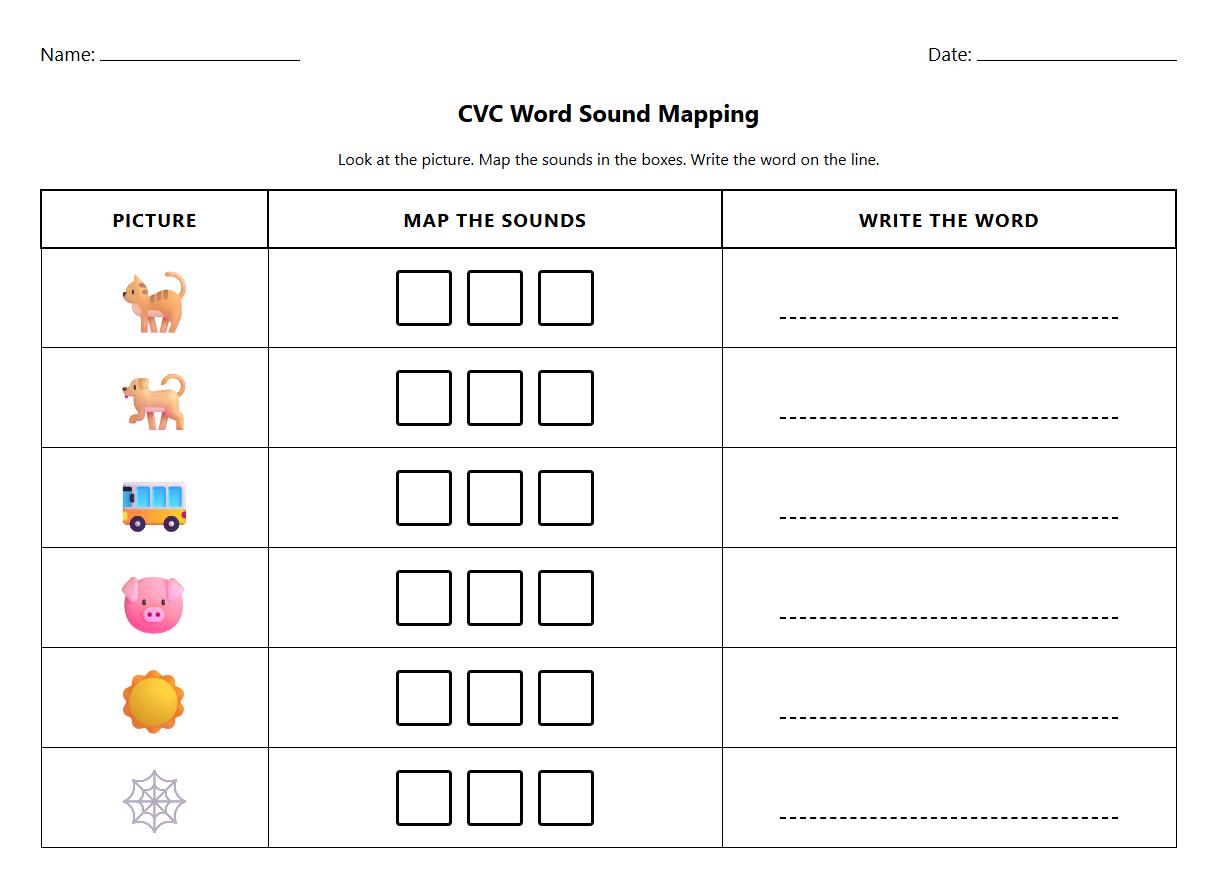
CVC Word Sound Mapping Task

CVC Word Sound Mapping Task

Download PDF     Pin it

Worksheets for Matching Pictures to Beginning Letter Sounds

The worksheets designed for kindergarten feature colorful pictures that children match to the beginning letter sounds. This activity helps learners associate images with the correct initial phoneme. Teachers and parents can use these worksheets to reinforce early phonics skills. The visual aid supports sound recognition and letter identification.

Introducing Vowel and Consonant Sounds

Worksheets introduce vowel and consonant sounds through clear, simple examples and engaging activities. Children explore the distinct letter sounds by focusing on common words starting with vowels and consonants. Interactive exercises encourage kids to differentiate between these sound categories. This foundation is critical for building early literacy skills.

Activities for Identifying Ending Sounds

Several worksheets include targeted exercises for identifying ending sounds in words. These activities encourage children to listen carefully and isolate the final phoneme in simple words. This skill enhances phonemic awareness, essential for reading development. The variety keeps learners engaged and focused.

Uppercase and Lowercase Letter Matching

The worksheets incorporate uppercase and lowercase letter matching tasks to familiarize children with different letter forms. Learners draw lines or cut and paste letters to pair the matching cases. This helps build recognition of letter variants in a fun and interactive way. Mastery of both forms supports fluent reading readiness.

Reinforcing Letter Sounds with Tracing and Coloring

Tracing and coloring exercises reinforce letter sounds by engaging multiple senses and fine motor skills. Children trace letters while repeating the corresponding sounds aloud. Coloring activities tied to letters keep engagement high and support sound-letter connection. This multisensory approach deepens phonics learning.

Blending Simple Letter Sounds Exercises

Worksheets include blending exercises where children combine letters to form basic sounds and simple words. These practices encourage the skill of sound blending, key for early decoding. Children practice moving from isolated letters to connected sounds with guided support. Blending is gradually built through structured repetition.

Rhyming Word Activities for Sound Recognition

Rhyming word activities promote awareness of sound patterns by asking children to identify and create rhymes. These entertaining exercises build sensitivity to word endings and similar sounds. Recognizing rhymes supports phonological processing and vocabulary growth. Rhyming games spark interest in language play.

Encouraging Sound Sorting by Initial Letter

Sound sorting worksheets help children categorize words based on their initial letter sounds. By sorting pictures or words, learners practice discriminating between different phonemes. This exercise strengthens sound-letter association and auditory discrimination. Sorting tasks develop critical early literacy skills.

Tracking Student Progress in Letter Sound Recognition

The guide includes tools for tracking student progress in letter sound recognition, such as checklists and observation notes. Teachers and parents can monitor improvement and identify areas needing additional support. Regular assessments ensure that phonics skills develop appropriately. Progress tracking informs targeted instruction.

Interactive and Cut-and-Paste Phonics Activities

Worksheets feature interactive games and cut-and-paste activities to make phonics practice engaging and hands-on. These activities promote active learning, fine motor skills, and phoneme recognition. Kids enjoy manipulating materials while reinforcing sound-letter connections. Interactive elements boost motivation and retention.


More in Language Arts Category


About the author. Nylen Smith is a dedicated educator and cofounder of KWorksheet.com, a popular platform specializing in high-quality kindergarten worksheets and printable activities.

Disclaimer. The information provided in this document is for general informational purposes and/or document sample only and is not guaranteed to be factually right or complete. Please report to us via contact-us page if you find and error in this page, thanks.

Comments

No comment yet