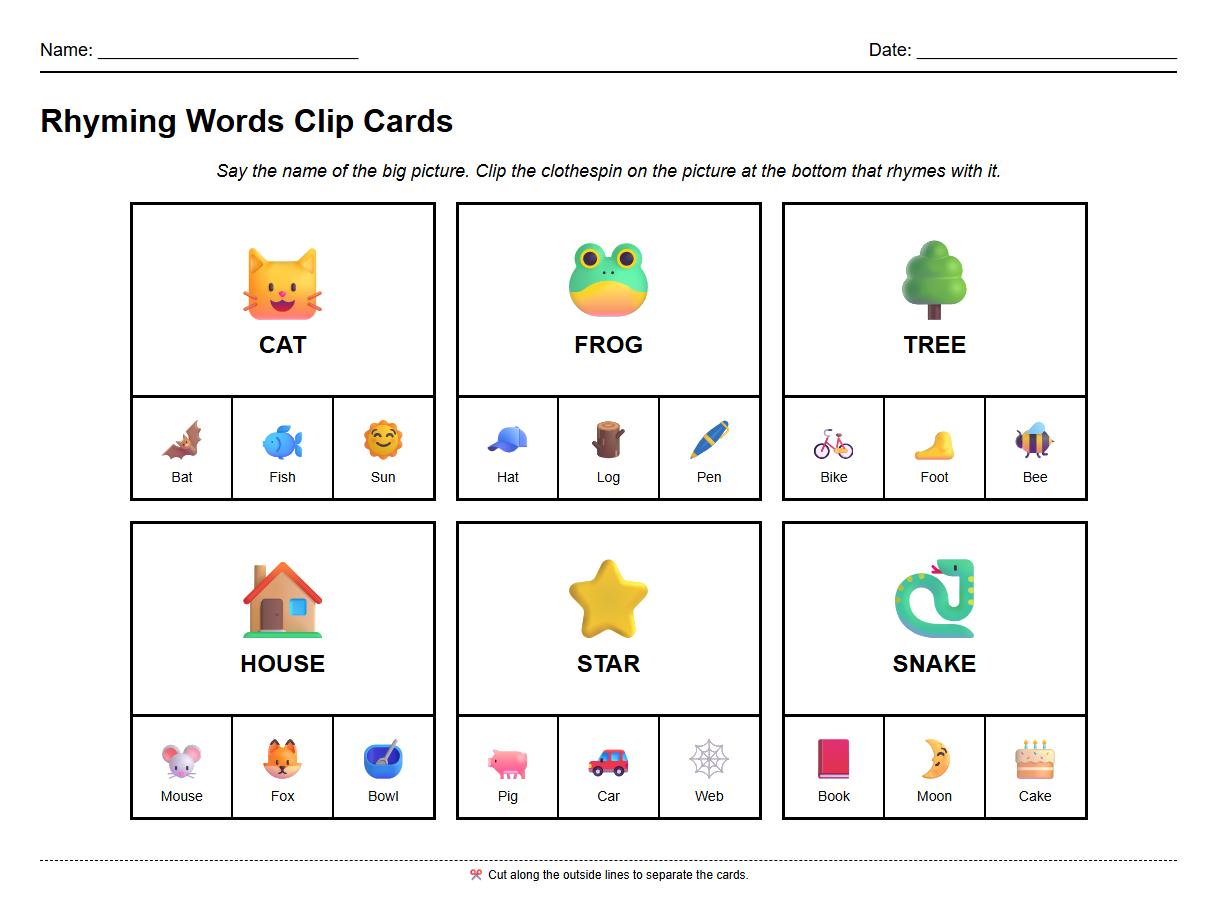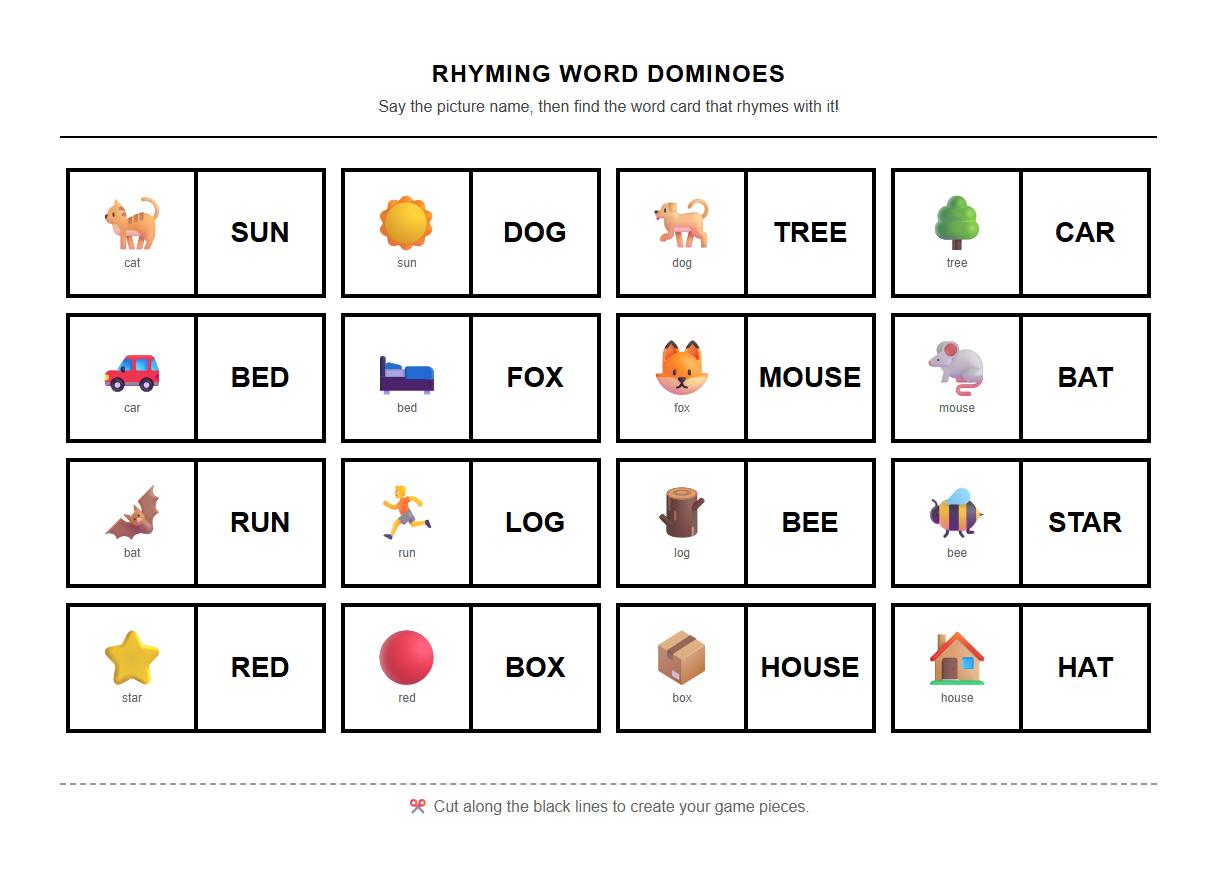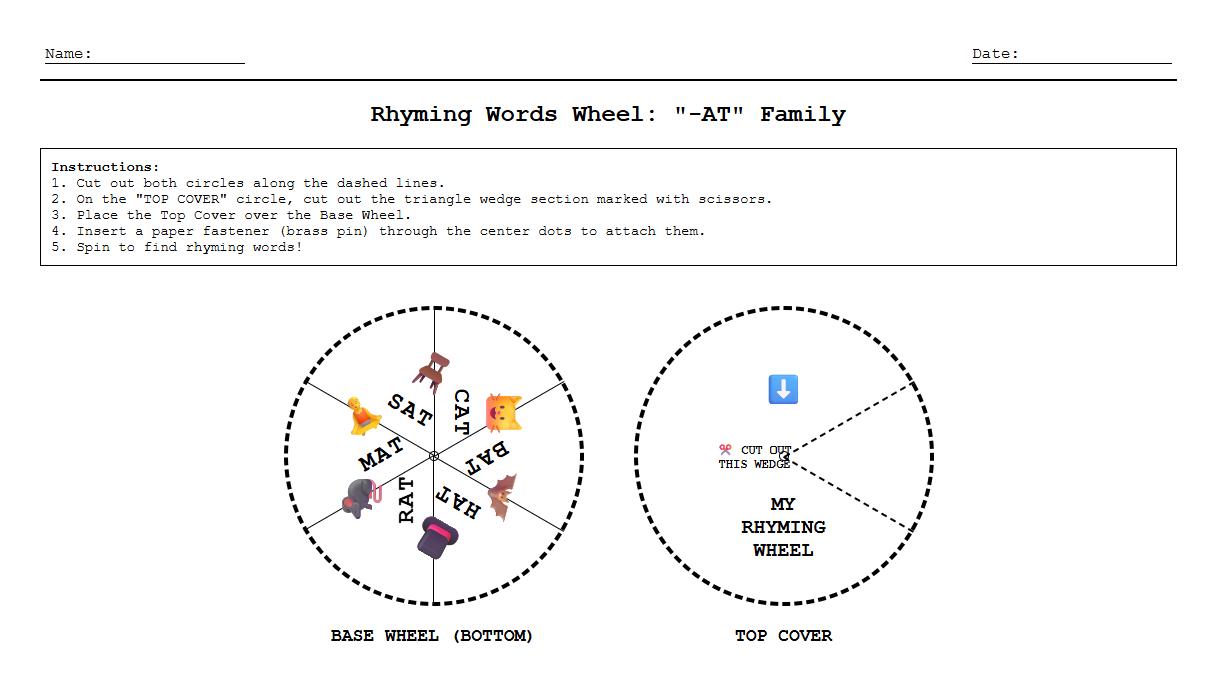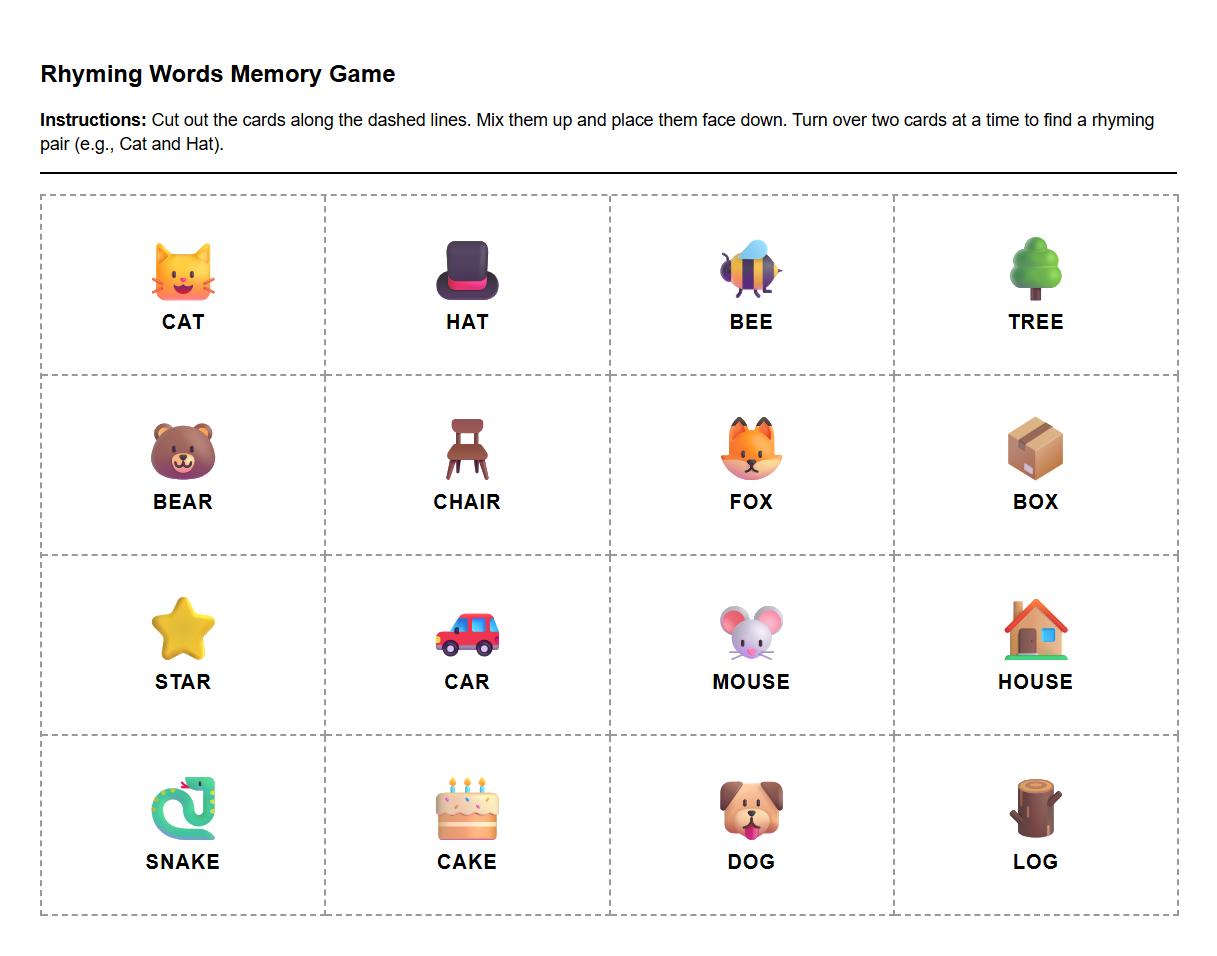
Hands-on rhyming word activities enhance kindergarten phonics skills by making learning engaging and interactive. These exercises help young learners recognize sound patterns and boost their early reading abilities. Explore our collection of rhyming word worksheets designed to support your child's phonics development.
Fun Hands-On Activities for Teaching Rhyming Words in Kindergarten
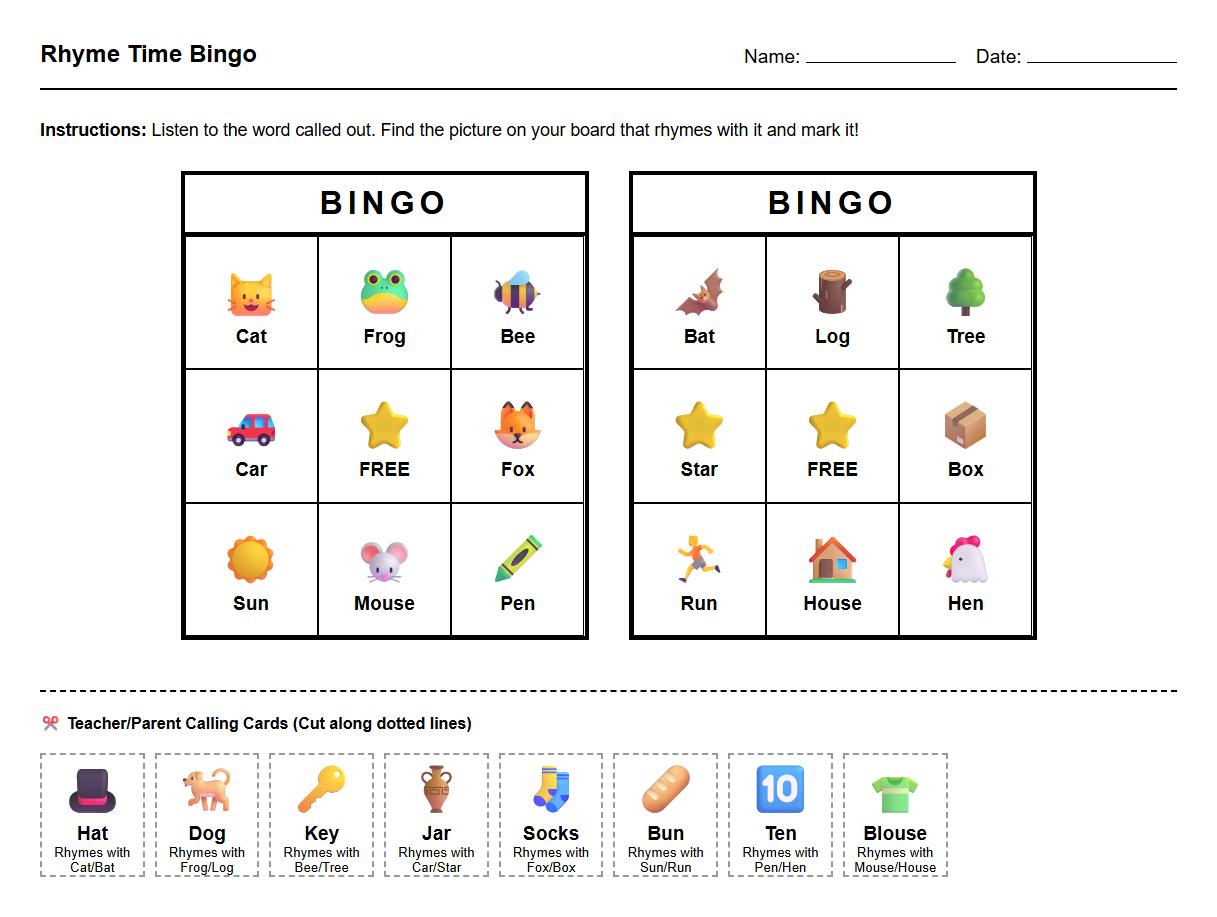
Engage children with rhyming word matching games, where they pair pictures or objects that rhyme. Use colorful flashcards or picture books to make the activity playful and interactive. Incorporate movement by having kids hop or clap when they hear rhyming pairs. These activities boost auditory discrimination and memory retention.
How Worksheets Help Reinforce Rhyming Word Skills for Young Learners
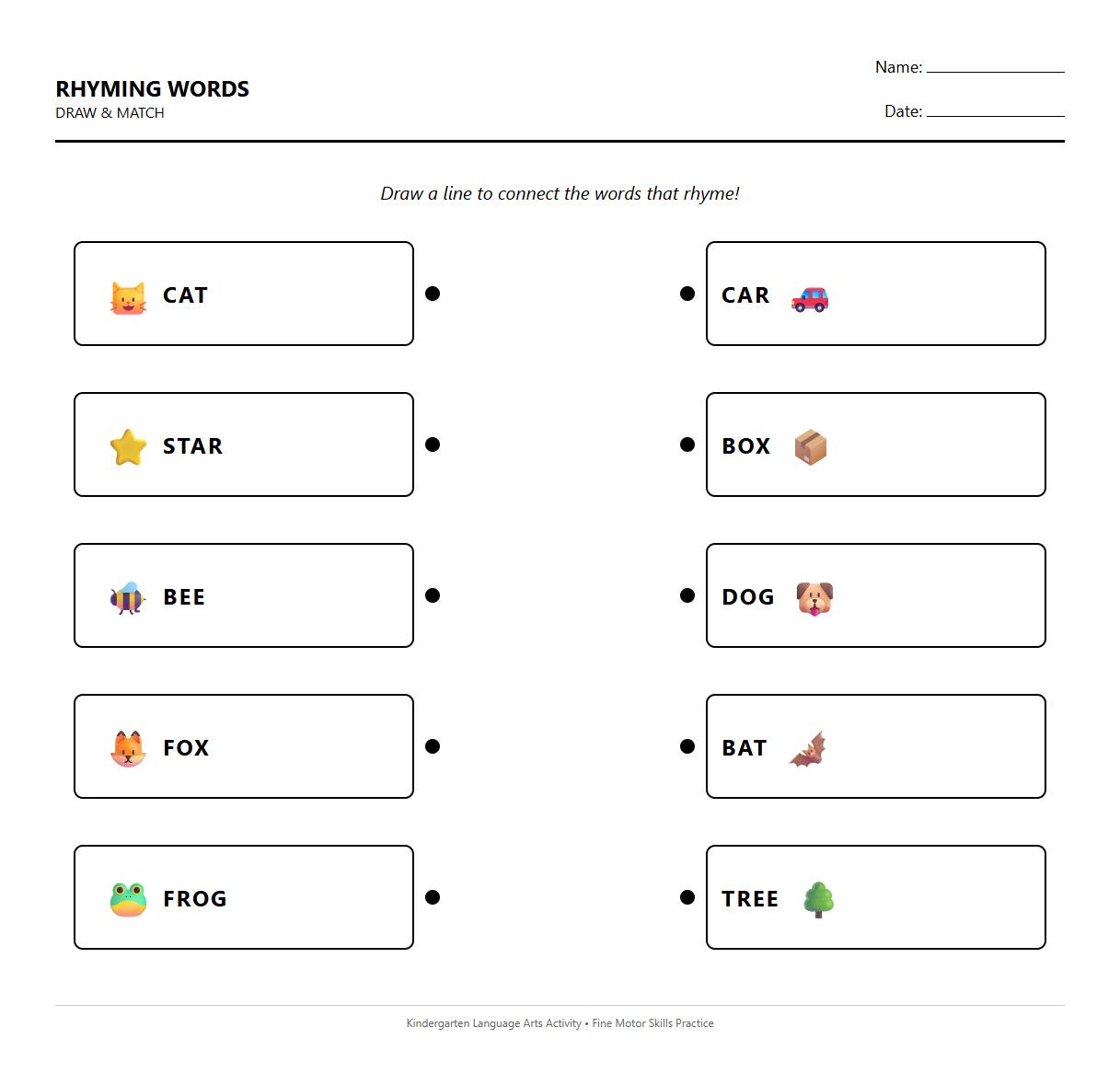
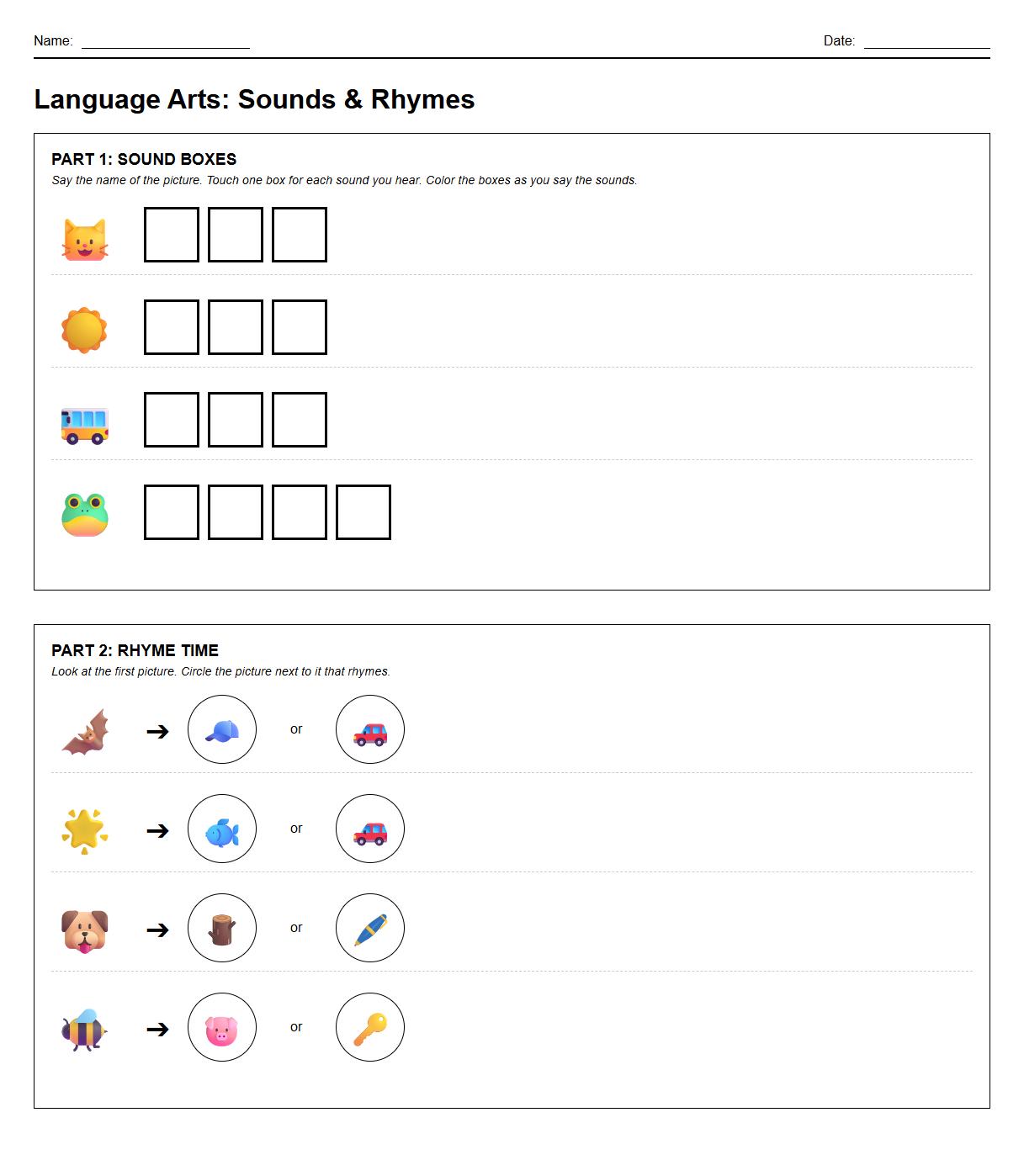
Worksheets provide structured practice in identifying, sorting, and producing rhyming words. They support visual recognition and fine motor skills through writing and coloring tasks. Repetitive exercises on worksheets help solidify phonological awareness. Worksheets also allow teachers and parents to track progress easily.
Best Materials for Hands-On Rhyming Word Activities
Use manipulatives like picture cards, letter tiles, and objects to make rhyming tangible. Magnetic letters and felt boards are excellent for constructing rhyming words interactively. Color-coded materials can help differentiate phonetic patterns. Additionally, using everyday items sparks curiosity and connection to real life.
Incorporating Phonics into Rhyming Word Games
Focus on sound patterns and simple phoneme manipulation during games to strengthen phonics skills. Encourage children to identify initial, medial, and ending sounds within rhyming pairs. Use songs and chants to highlight phonetic similarities. This multisensory approach supports phonemic awareness and decoding abilities.
Simple DIY Rhyming Word Worksheet Ideas for Kindergartners
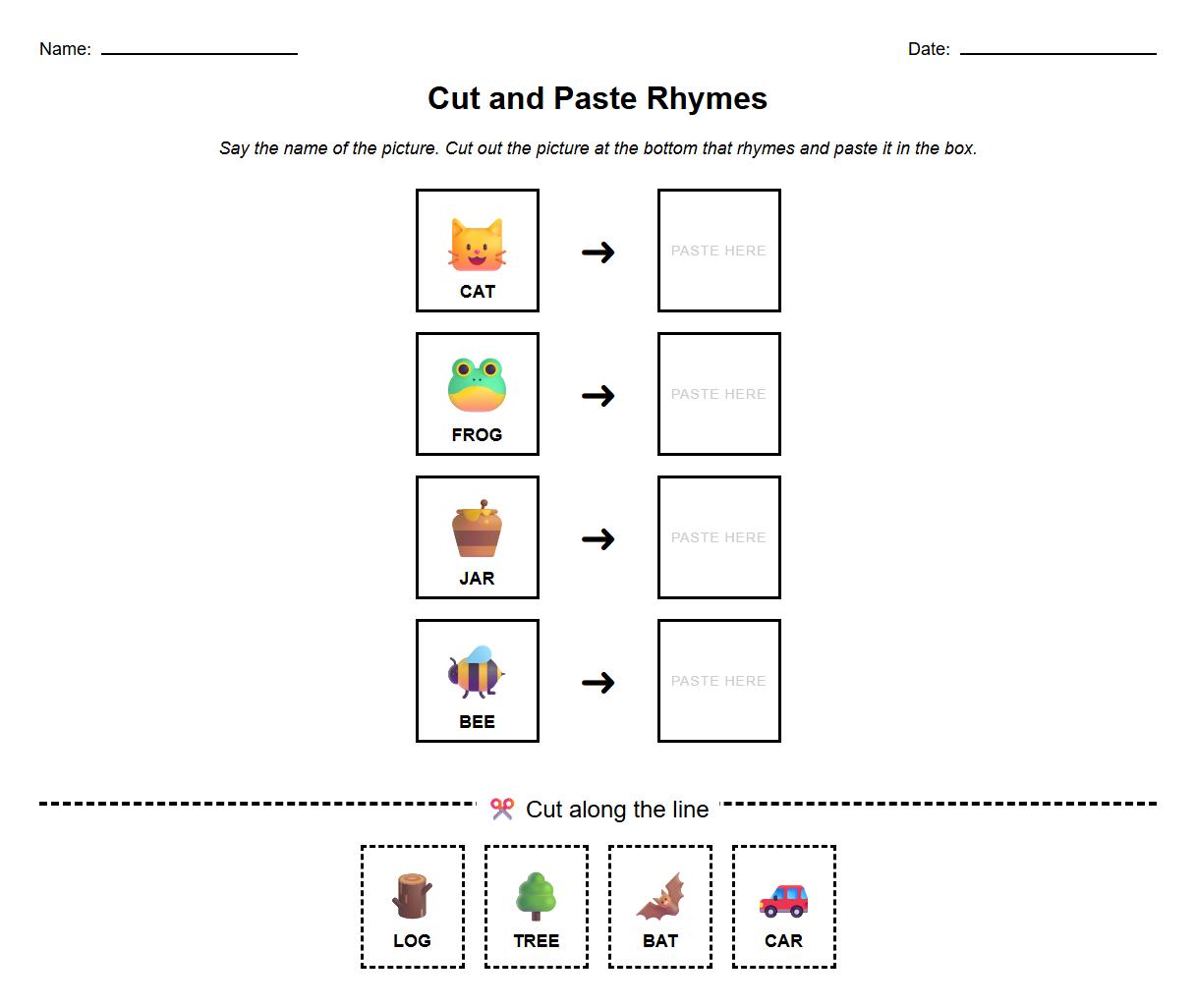
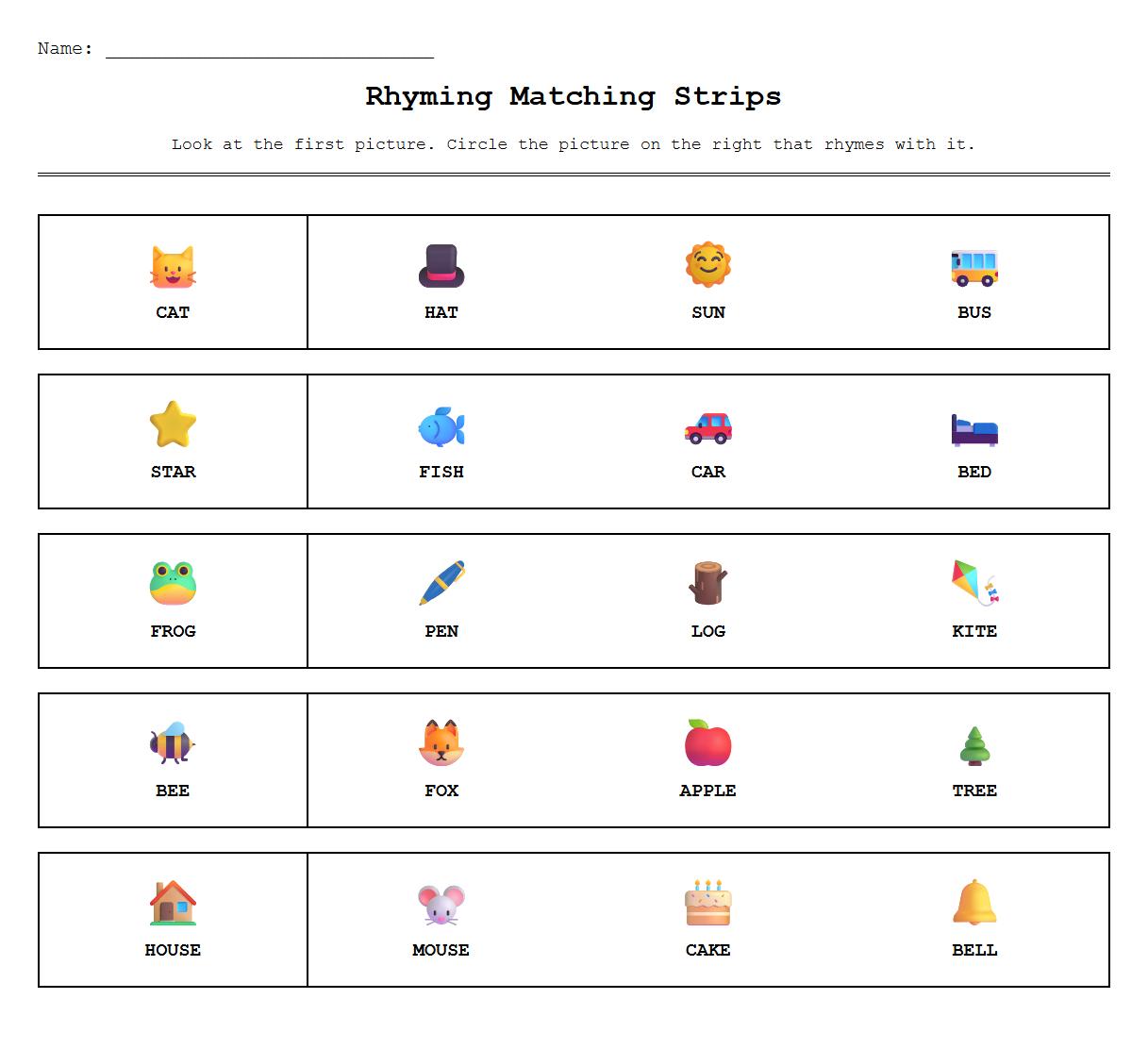
Create worksheets featuring picture-to-word matching, fill-in-the-blank rhymes, and circle the rhyming word exercises. Incorporate colorful illustrations to engage visual learners. Design cut-and-paste activities where kids match rhyming pairs. These easy-to-make worksheets reinforce concepts while keeping motivation high.
Assessing a Child's Understanding of Rhyming Words Using Hands-On Activities
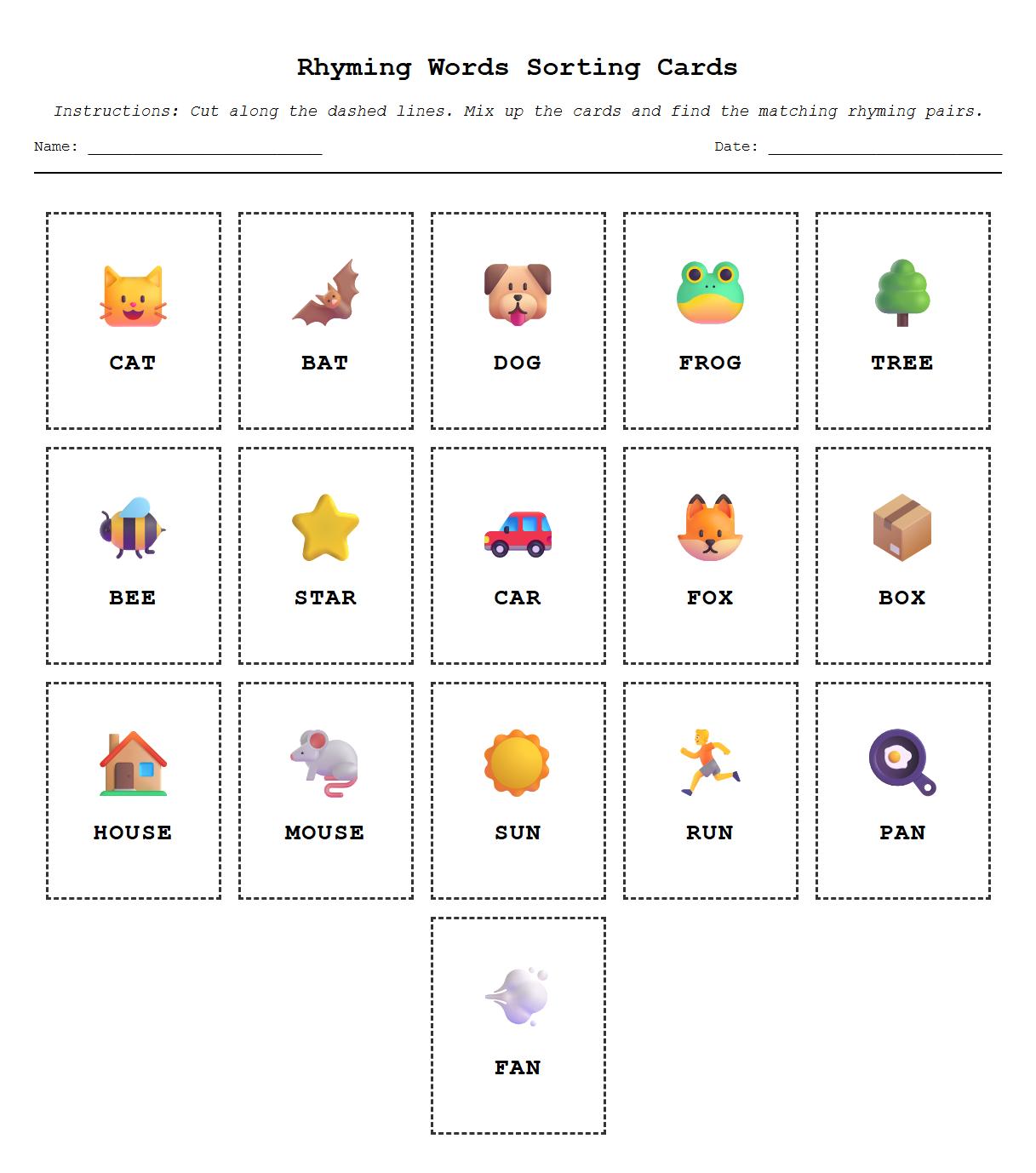
Observe children as they sort picture cards into rhyming and non-rhyming groups. Use oral rhyming games where children generate words that rhyme with a given word. Assess comprehension through interactive storytelling inviting rhyme prediction. These formative assessments offer immediate feedback on phonological skills.
Visual Aids That Work Best for Rhyming Word Lessons in Kindergarten
Bright, clear visuals like picture cards, posters, and rhyme wheels help children make connections. Use illustrations that clearly depict target sounds and rhymes. Incorporate charts that categorize rhyming word families for reference. Visual aids enhance engagement and support memory retention of rhyming patterns.
Differentiating Rhyming Word Activities for Varying Skill Levels
Provide simpler rhyming tasks such as identifying rhyming pairs for beginners and more complex word generation for advanced learners. Use tiered activities, including sorting, matching, and writing rhymes. Offer sensory materials or technology-based options for diverse learning preferences. Tailoring activities ensures all children stay challenged and motivated.
Useful Online Tools for Creating Rhyming Word Worksheets for Kindergarten
Platforms like Canva, Teachers Pay Teachers, and WorksheetWorks offer customizable templates. These tools allow teachers to create engaging and visually appealing rhyming worksheets quickly. Interactive online games and printable resources can complement worksheets. Utilizing technology saves time and enhances learning variety.
How Parents Can Support Rhyming Word Practice at Home with Hands-On Activities
Parents can engage children using everyday objects to find rhyming pairs around the house. Reading rhyming storybooks and singing nursery rhymes strengthens auditory awareness. Create simple home-based matching or sorting games using household items. Consistent, playful practice boosts rhyming skills outside the classroom.


Kindergarten Literacy: Rhyming Words Worksheet Series for Phonics Mastery