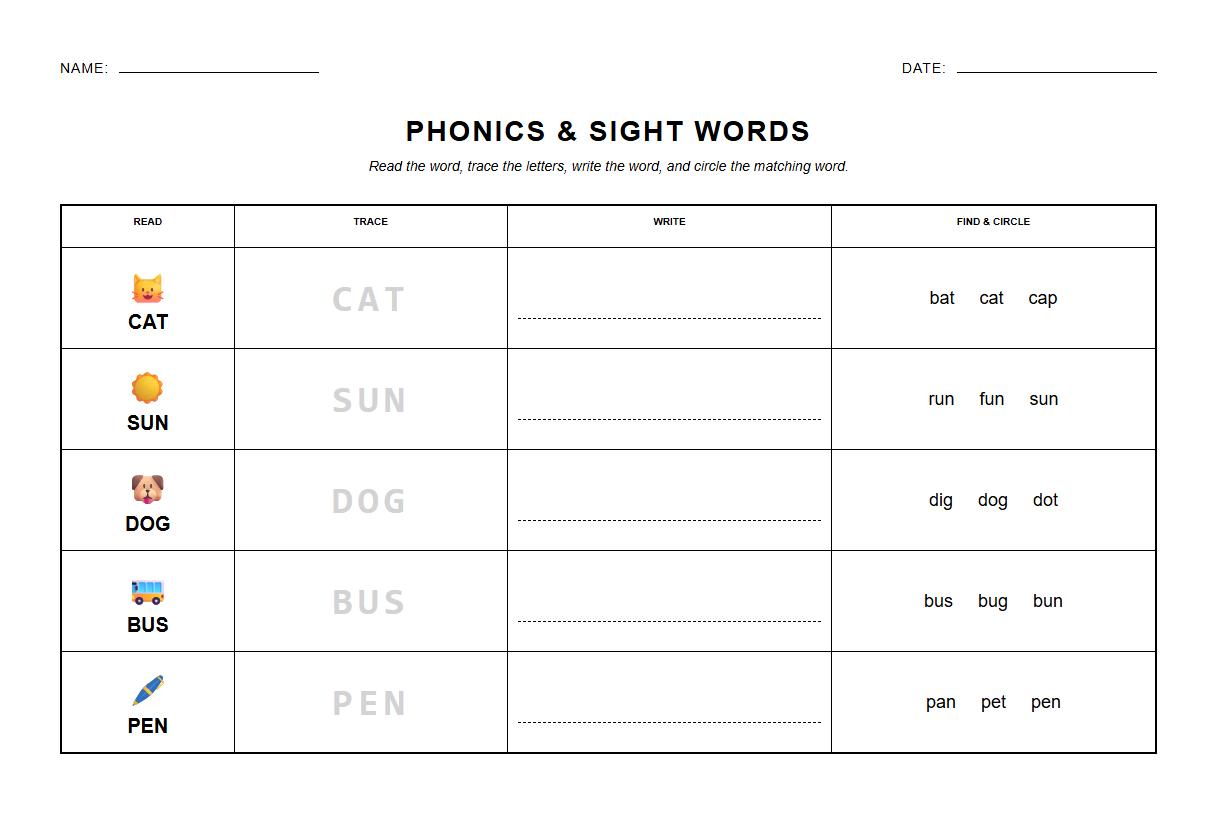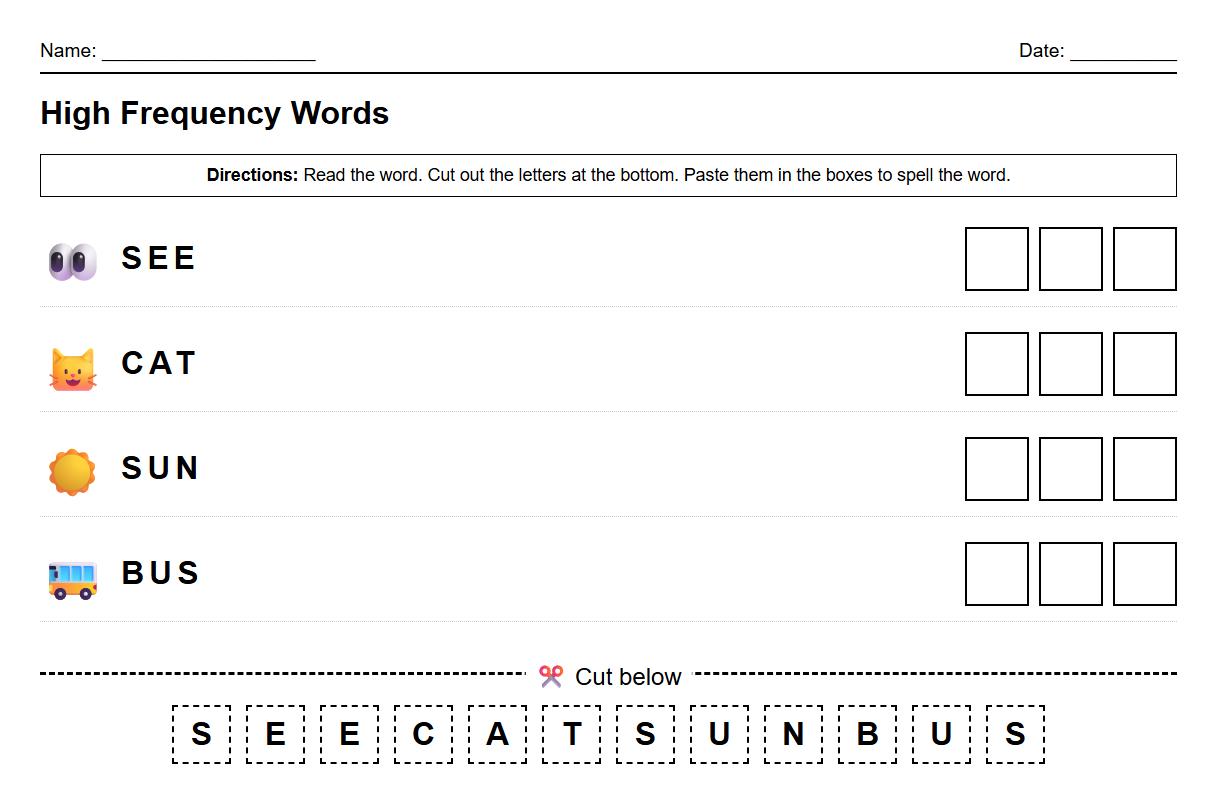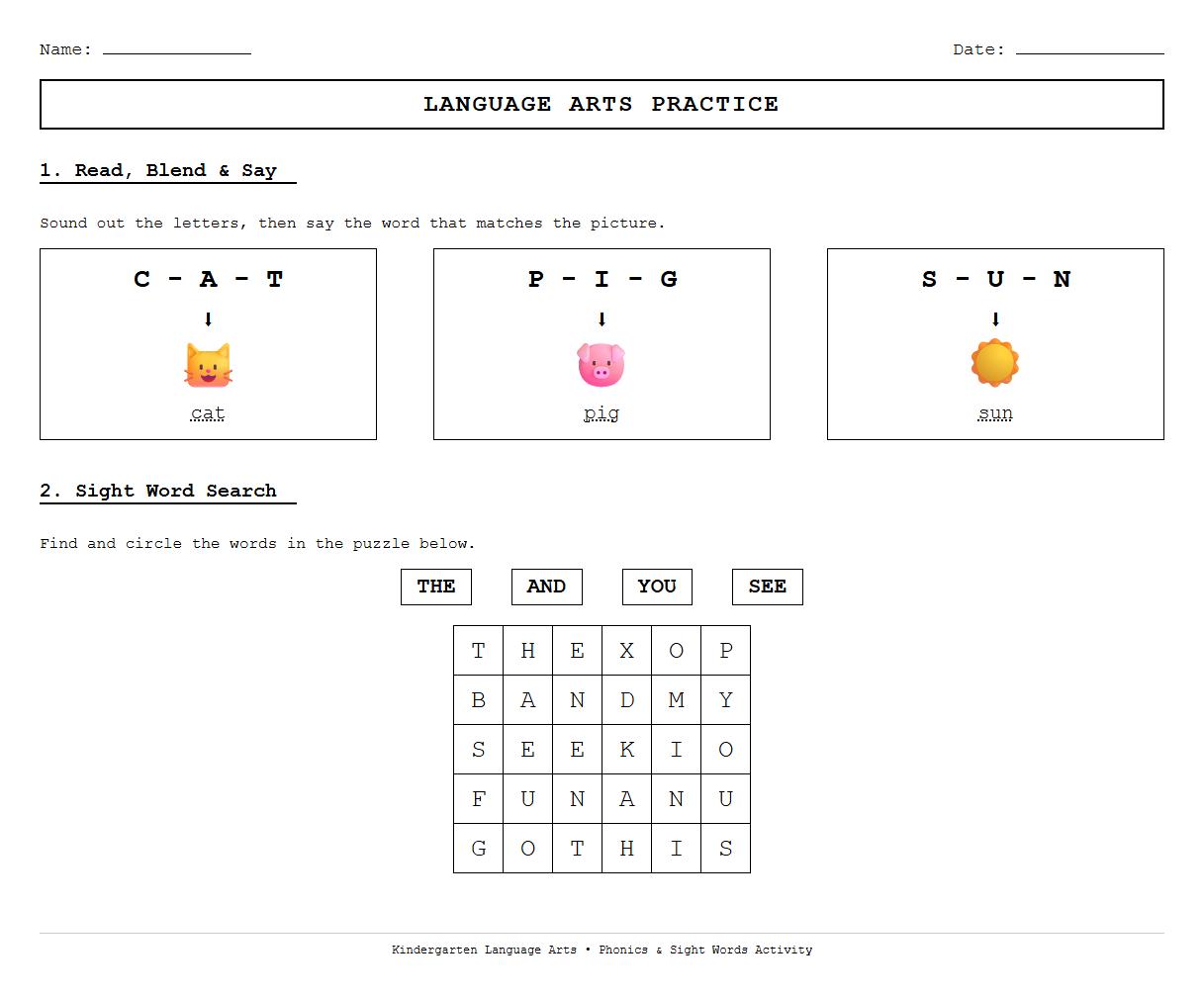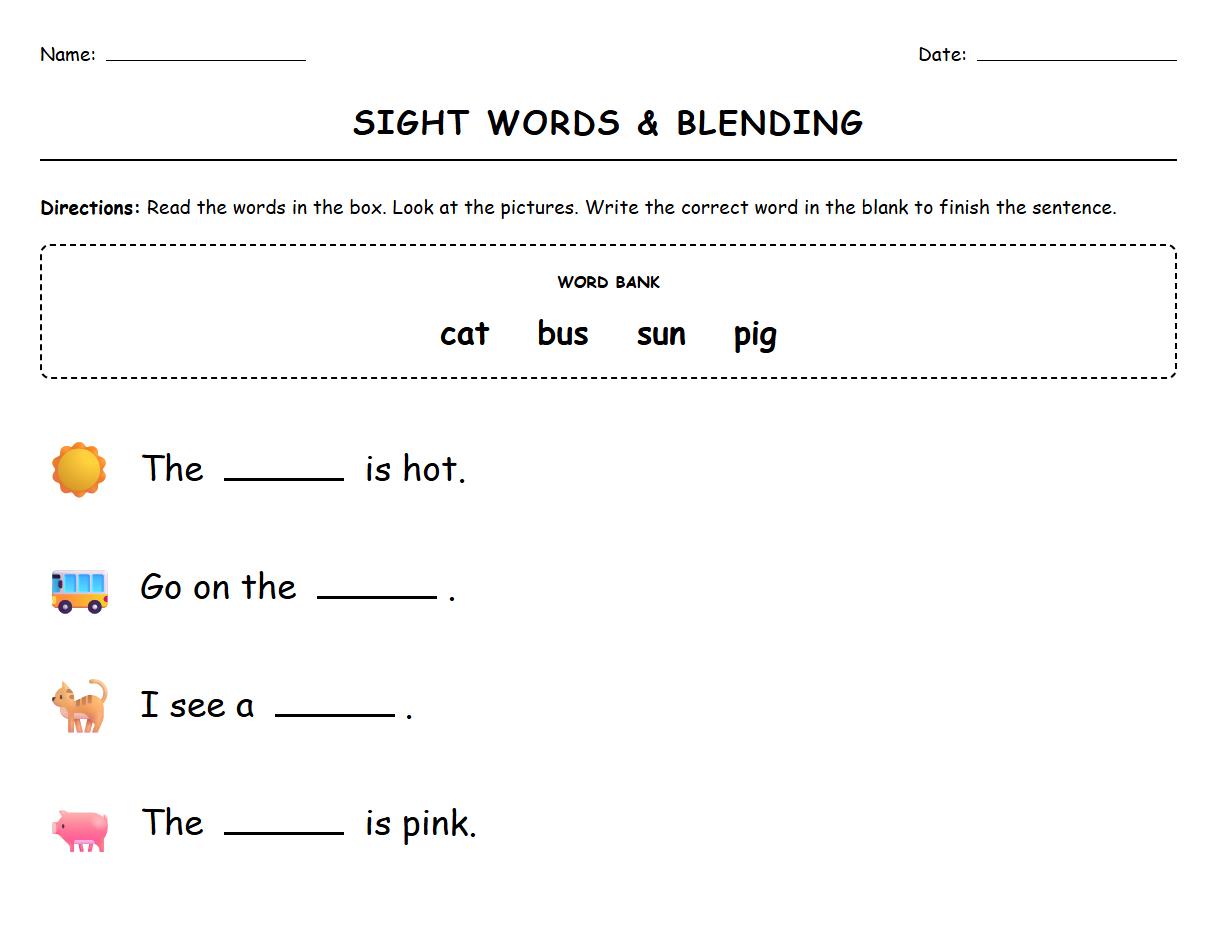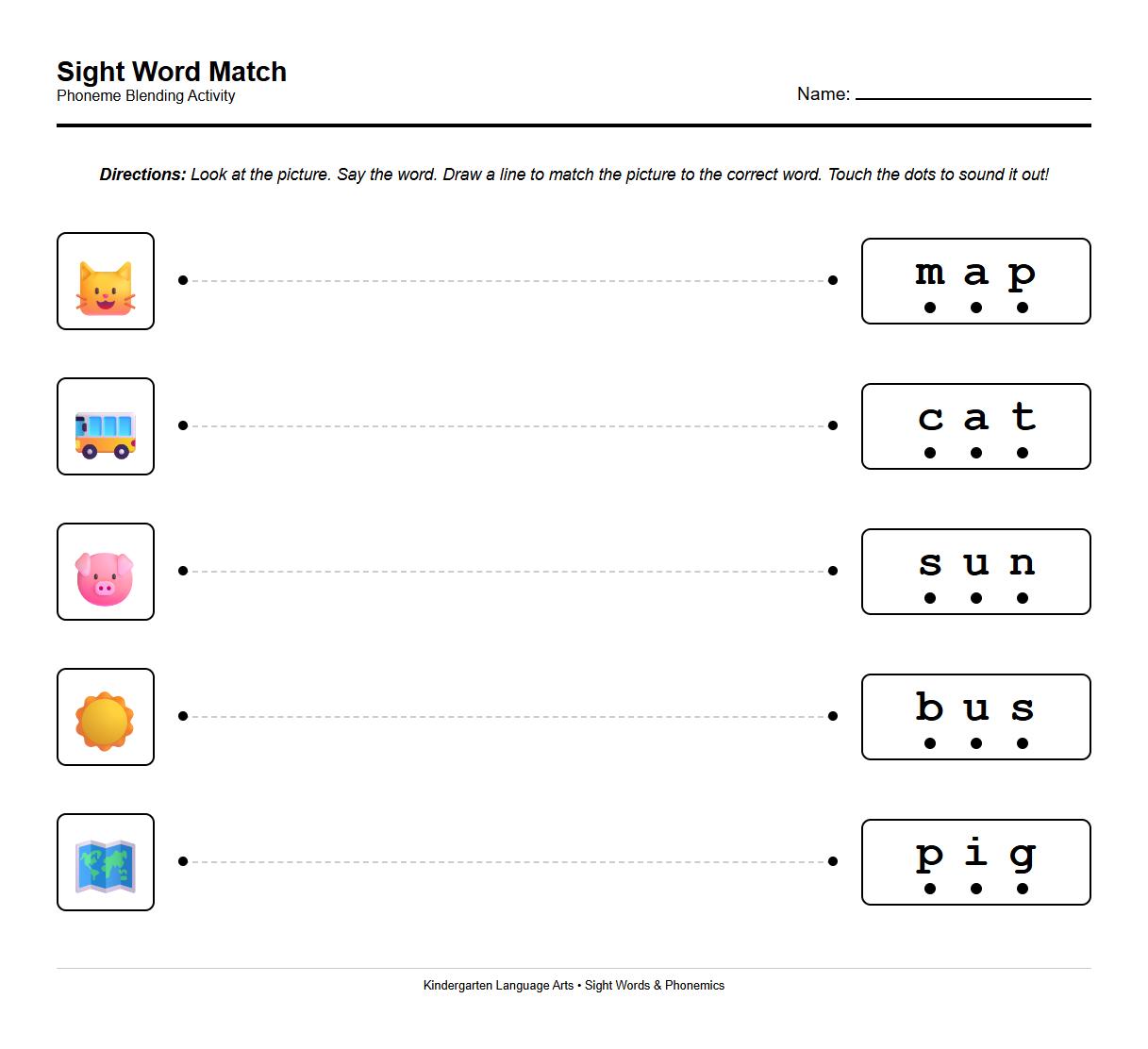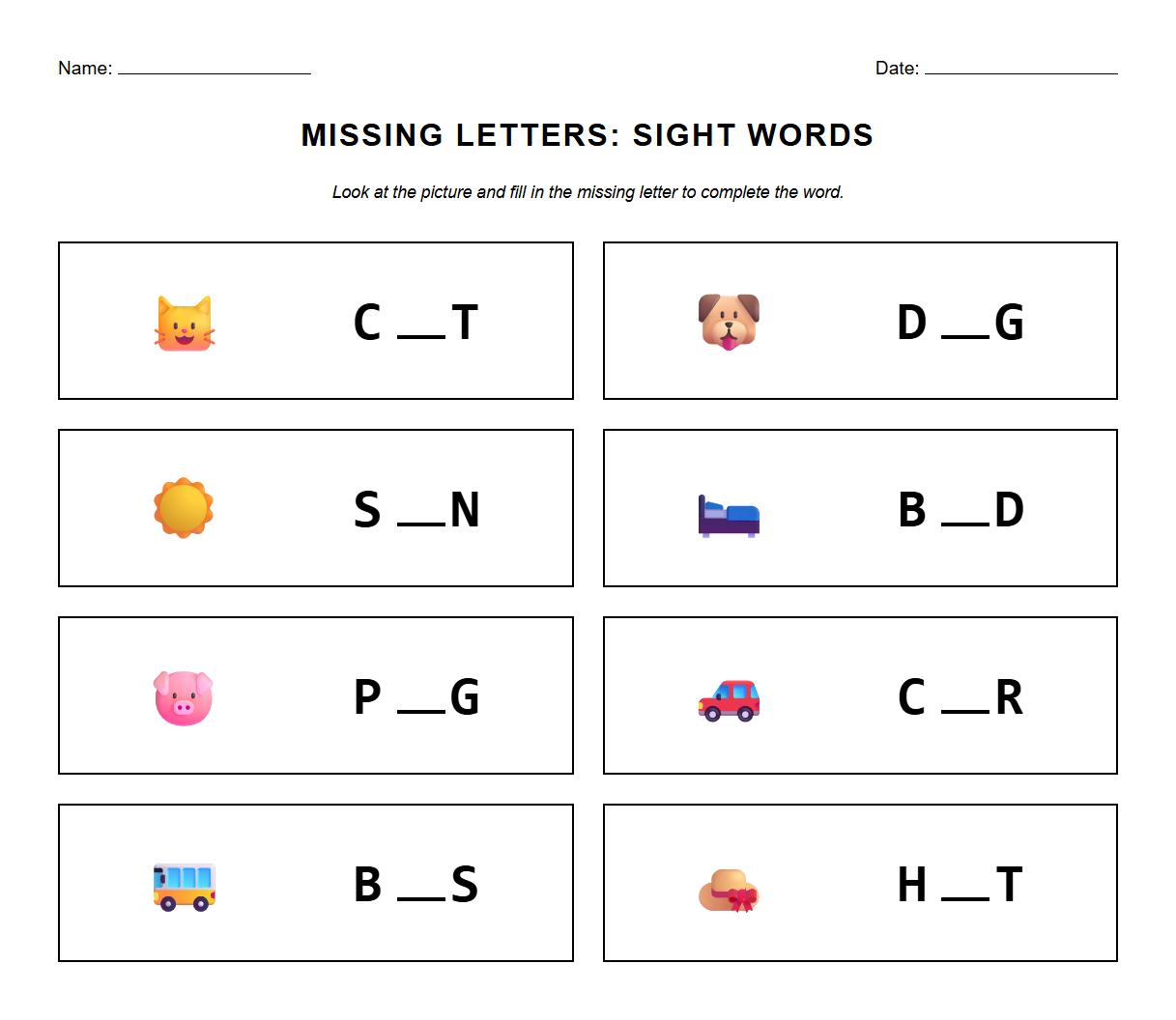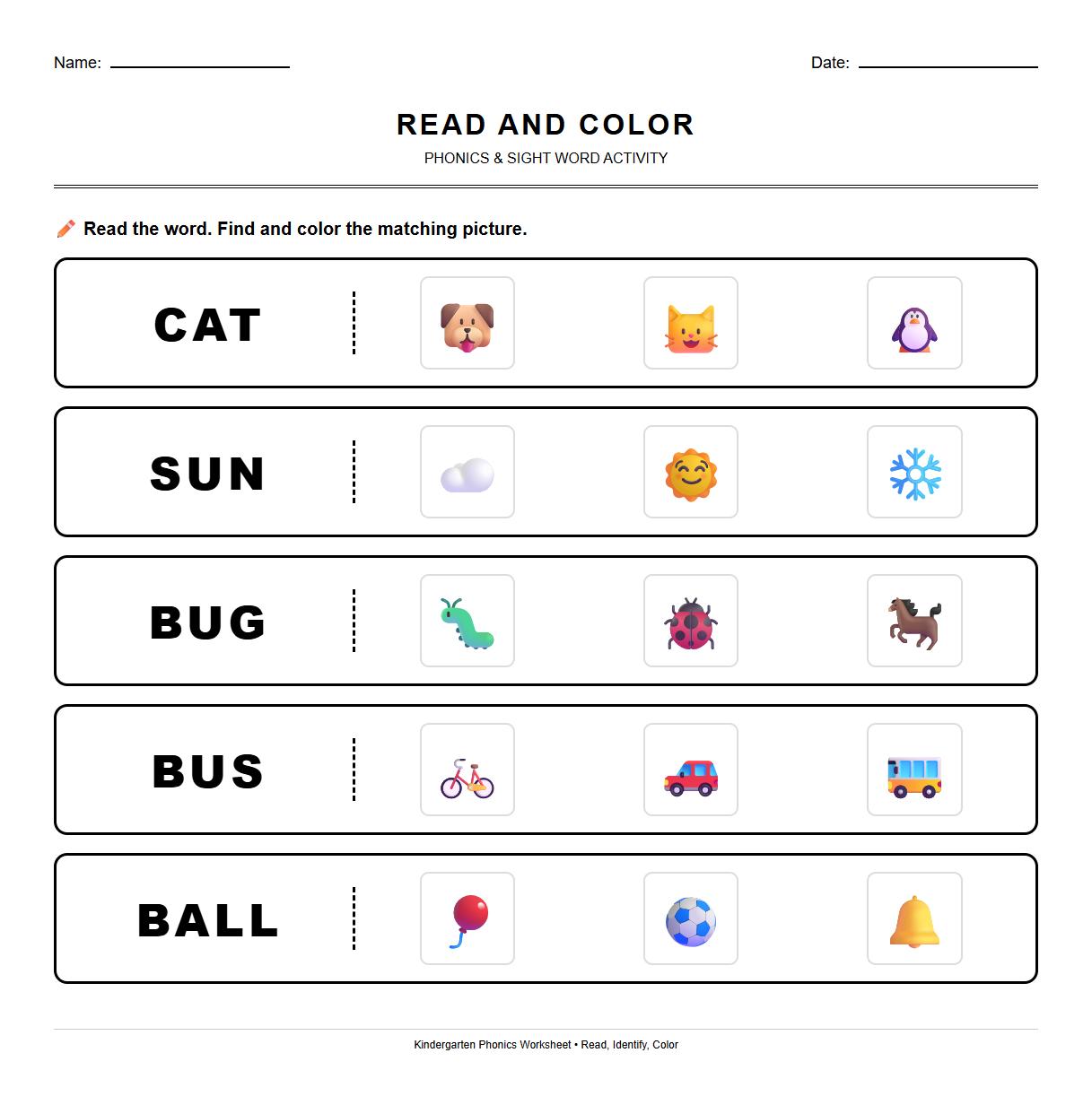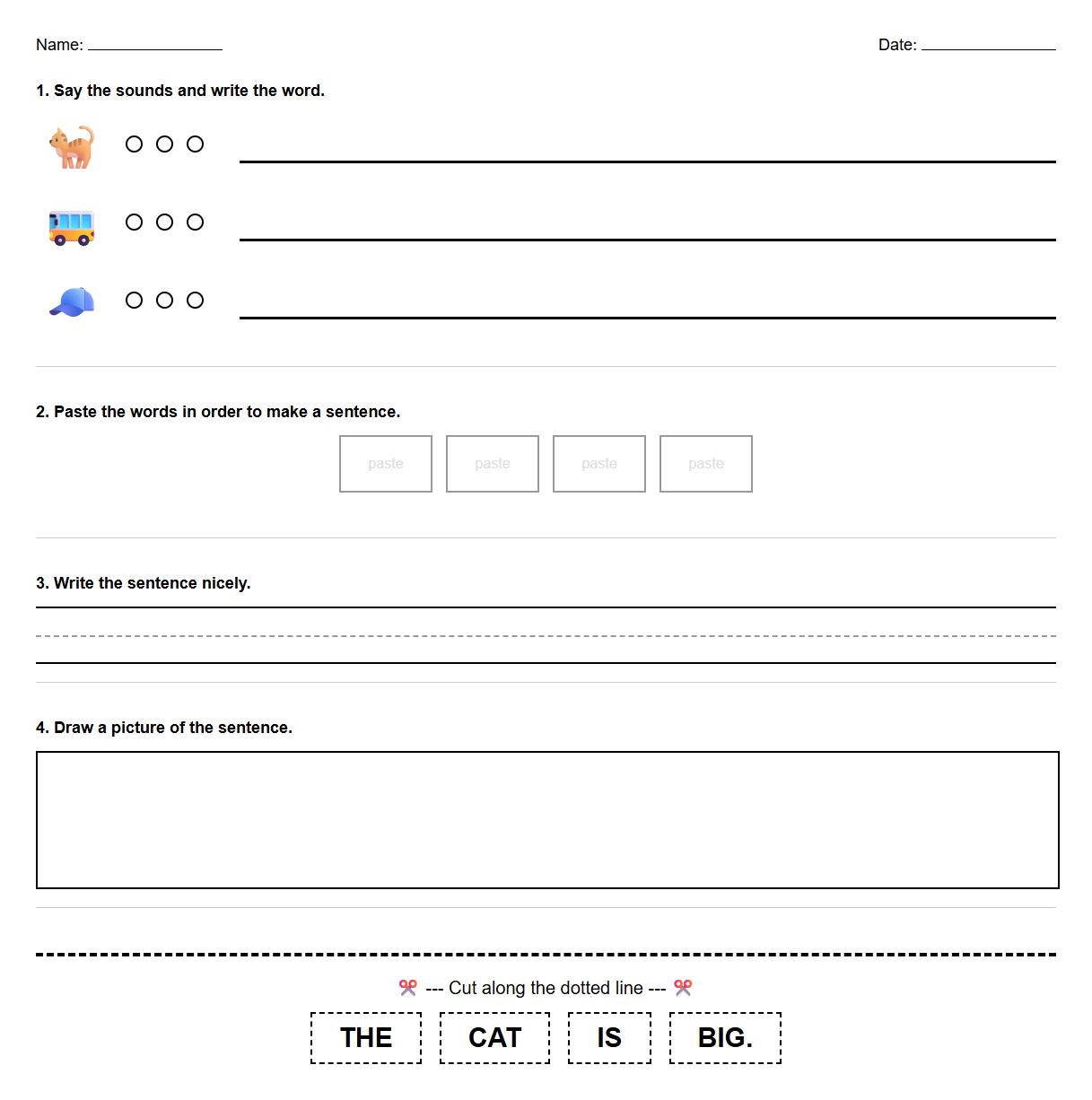
Sight Words Flashcard and Blending Phonics Activity Sheet enhance early reading skills by reinforcing word recognition and sound blending techniques. These tools support children in developing fluency and confidence in reading through engaging and repetitive practice. Explore the available worksheets to boost your child's literacy journey effectively.
Effective Sight Words for Kindergarten Flashcards
Include high-frequency sight words such as "the," "and," "it," "is," and "like" on flashcards. These words frequently appear in early reading materials, making them crucial for foundational literacy. Adding simple action words like "run," "see," and "play" can also enhance vocabulary. Choose words that are age-appropriate and relevant to children's everyday experiences. Try this kindergarten activity sheet on alphabet tracing and phonemic awareness to support sight word recognition.
Using Flashcards to Reinforce Sight Word Recognition
Teachers can use flashcards by incorporating them into daily quick review sessions, encouraging students to say words aloud for verbal reinforcement. Pair flashcard use with visual cues and gestures to enhance memory. Repetition and consistent practice help solidify word recognition. Flashcards can also be used in interactive games to maintain engagement. For more ideas, explore these sentence building worksheets for kindergarten phonics practice.
Blending Phonics Activities to Sound Out New Words
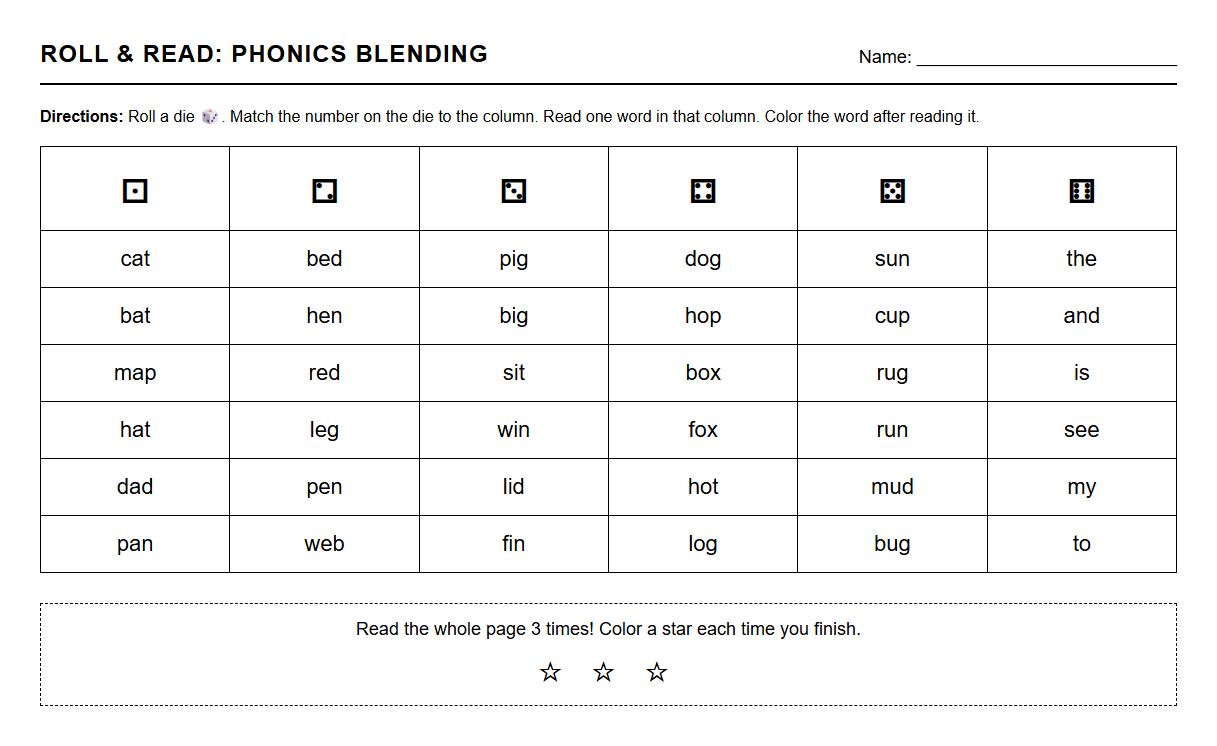
Activities like segmenting sounds and combining onset and rime (e.g., c + at = cat) foster blending skills. Using magnetic letters or written charts allows children to manipulate sounds physically. Encourage students to blend initial sounds with word endings to form and read new words. Repetitive practice enhances phonemic awareness and decoding ability. Check out this beginning phonics skills worksheet series with CVC words for practice.
Scheduling Sight Word Flashcard Practice
Practice should occur daily or at least 3-5 times a week for 5-10 minutes to build strong recognition skills. Short, frequent sessions are more effective than longer, less frequent ones for young learners. Consistent exposure helps maintain familiarity and confidence. Timing practice during transitions or recall moments can maximize attention. Incorporate these tips with engaging synonym worksheet activities for kindergarten phonics practice.
Materials Needed for Successful Blending Phonics Activity Sheets
Essential materials include printed activity sheets with letter combinations, scissors, glue, and colored pencils for interactive tasks. Letter tiles or magnetic letters can complement sheet activities for hands-on learning. Clear instructions and visually appealing layouts support student engagement. Supplementary audio aids can help reinforce correct pronunciation. For materials, consider this consonant blends word-building worksheet for kindergarten.
Assessing Student Progress with Sight Word Flashcards
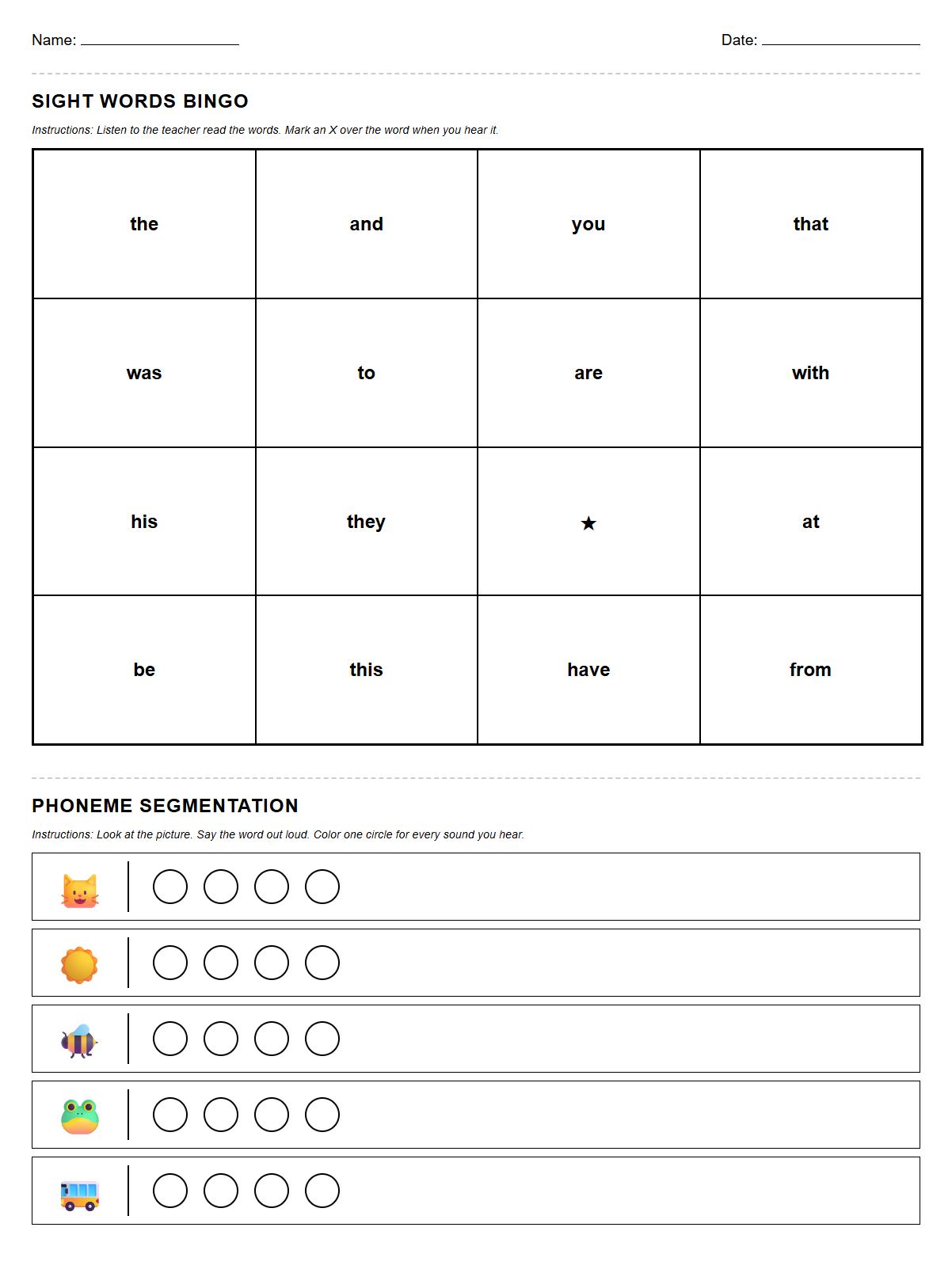
Regularly evaluate recognition through timed flashcard drills and spontaneous reading activities. Track which words are mastered and which need more practice using a simple checklist. Observing students' ability to use sight words in sentences shows applied learning. Adjust instruction based on assessment data to target areas for improvement. These story retelling and sequencing worksheets can help monitor comprehension alongside flashcard progress.
Fun Games to Make Sight Word Flashcard Practice Engaging
Games like Memory Match, Go Fish, and Sight Word Bingo add excitement to practice. Incorporate movement by playing word hopscotch or flashcard races. Using creative storytelling with sight words encourages contextual learning. These activities increase motivation while reinforcing word recognition skills. Add more fun with engaging phonics worksheet activities for CVC words.
Supporting Sight Word Learning at Home
Parents can reinforce sight words by reading daily with their child and pointing out words in books or labels. Creating homemade flashcards and practicing in small, consistent bursts keeps learning manageable. Encourage the use of sight words during conversations and writing activities. Positive reinforcement helps build confidence and interest in reading. Enhance at-home practice with rhyming words worksheet series for phonics mastery.
Steps to Guide Students Through Blending Phonics Activity Sheets
Begin by reviewing individual letter sounds, then model blending sounds to form words together. Guide students to say each sound slowly before combining them smoothly. Use visual and tactile aids to enhance understanding during the activity. Provide immediate feedback and celebrate successes to encourage persistence. For step-by-step guidance, try this phonics-based antonyms worksheet for early learners.
Differentiating Sight Word and Phonics Activities for Diverse Learners
Adapt activities by varying word difficulty levels and providing multisensory supports like visual, auditory, and kinesthetic tools. Use additional repetitions for learners who need extra practice and challenge advanced students with more complex words. Incorporate individualized goals and offer small-group instruction when possible. Tailoring tasks ensures all learners progress confidently. For differentiated sequencing, see this reading comprehension sequencing worksheet for kindergarten learners.


High-Frequency Words Assessment Worksheet for Kindergarten