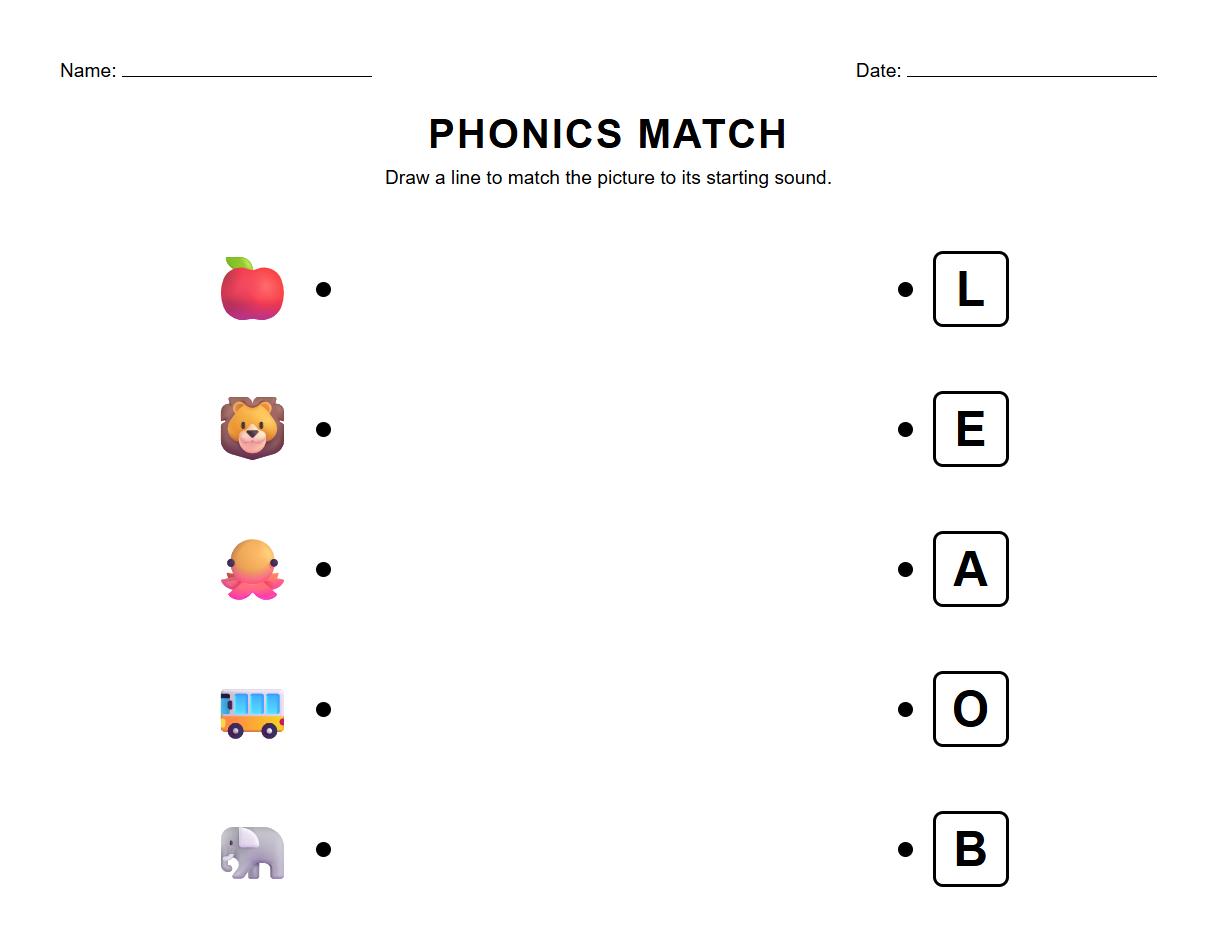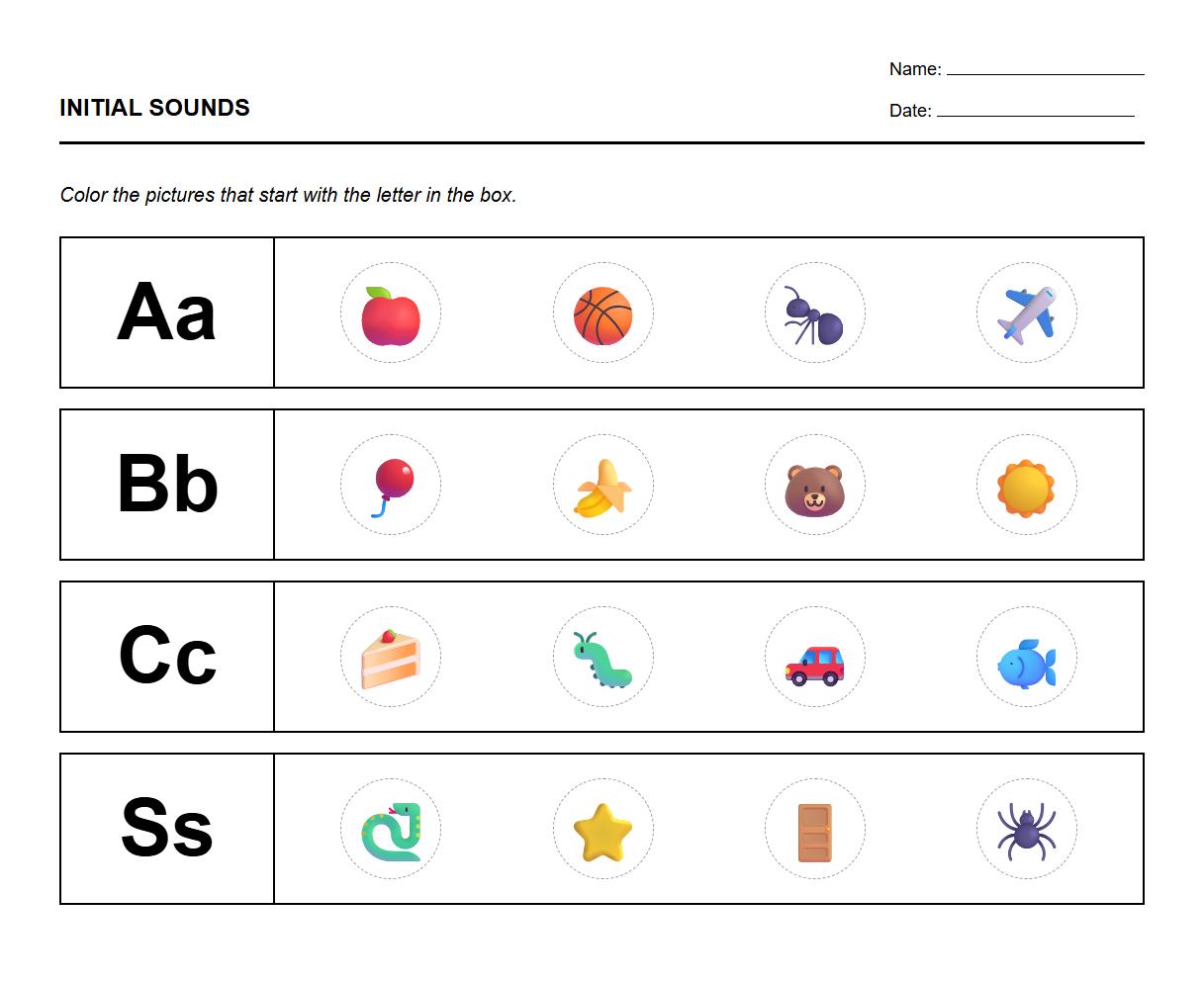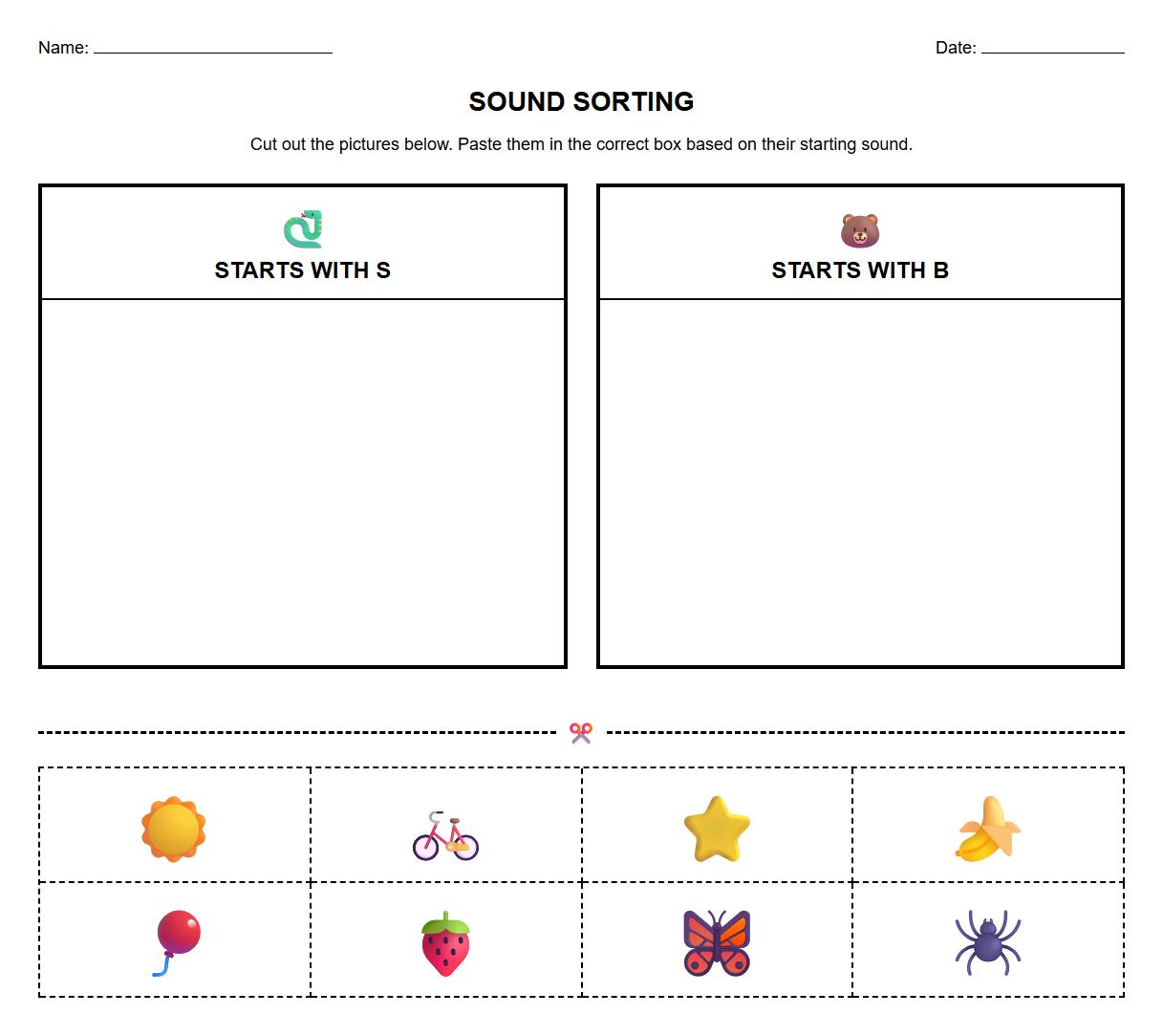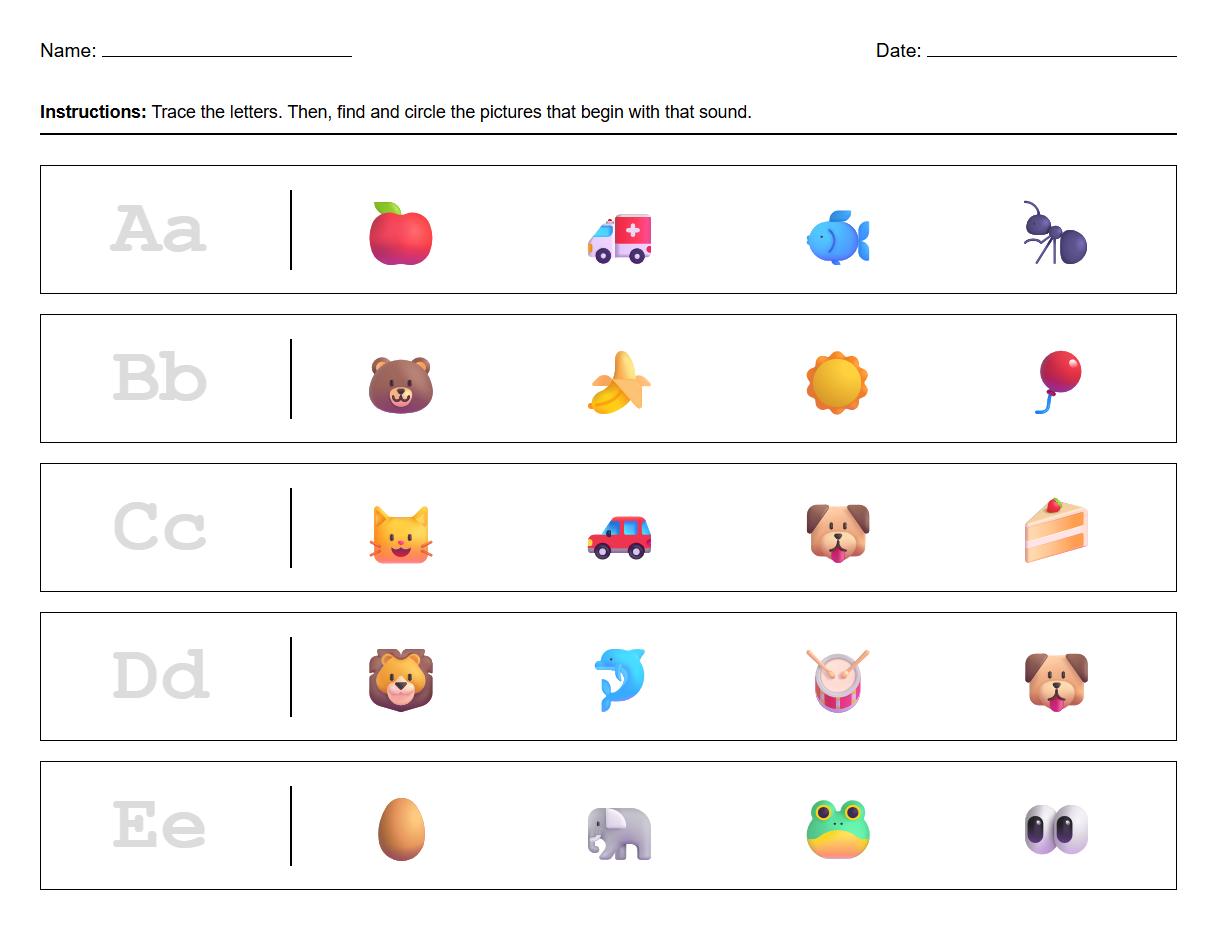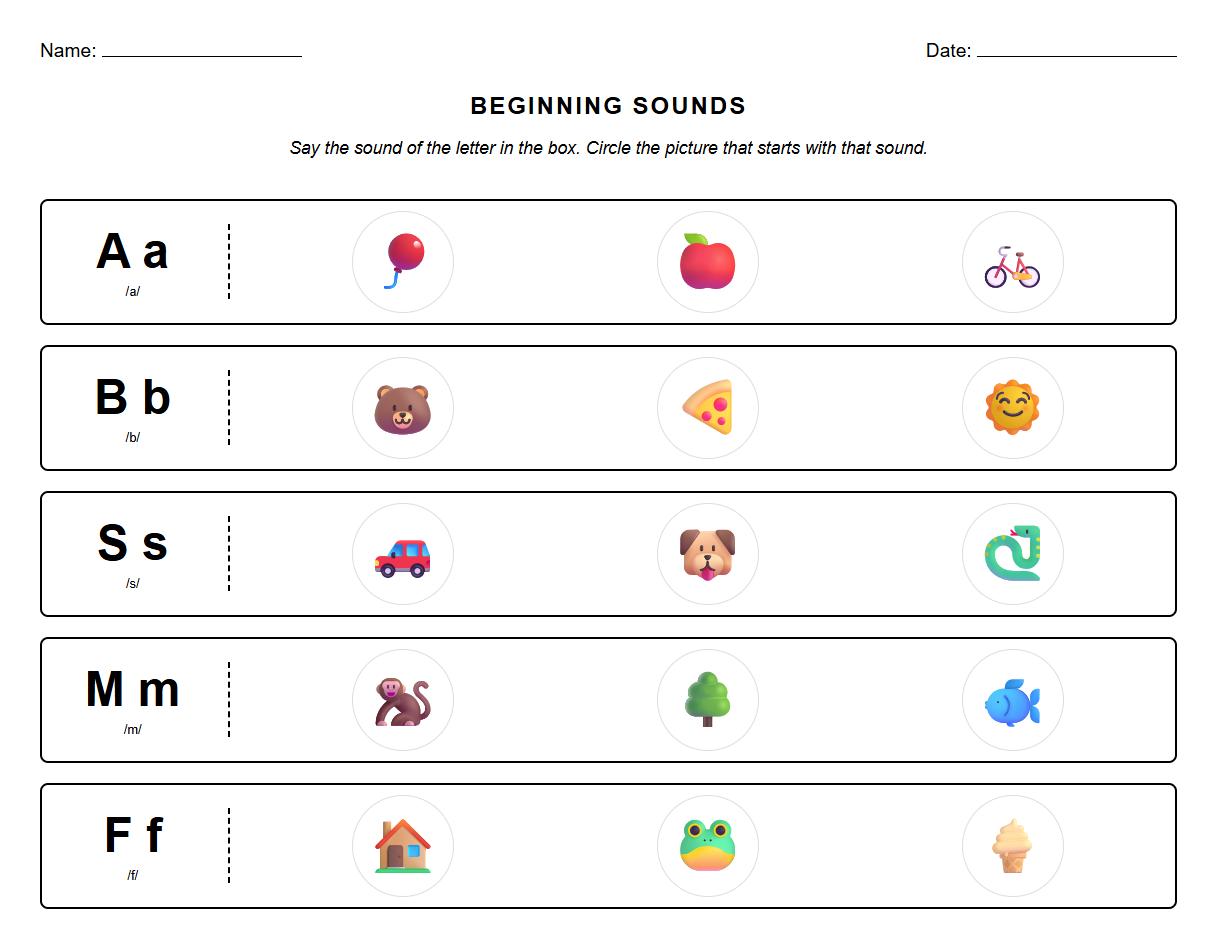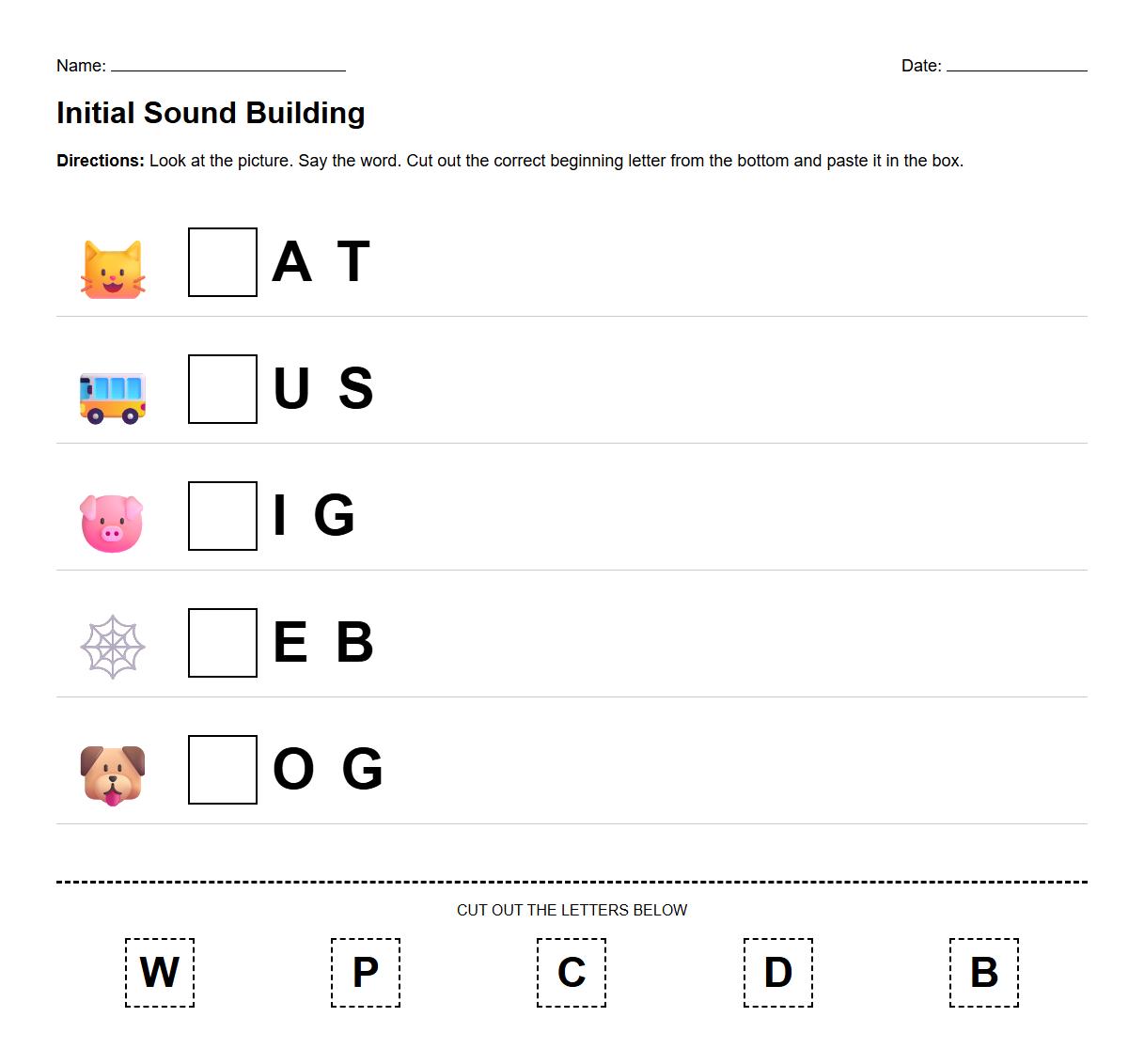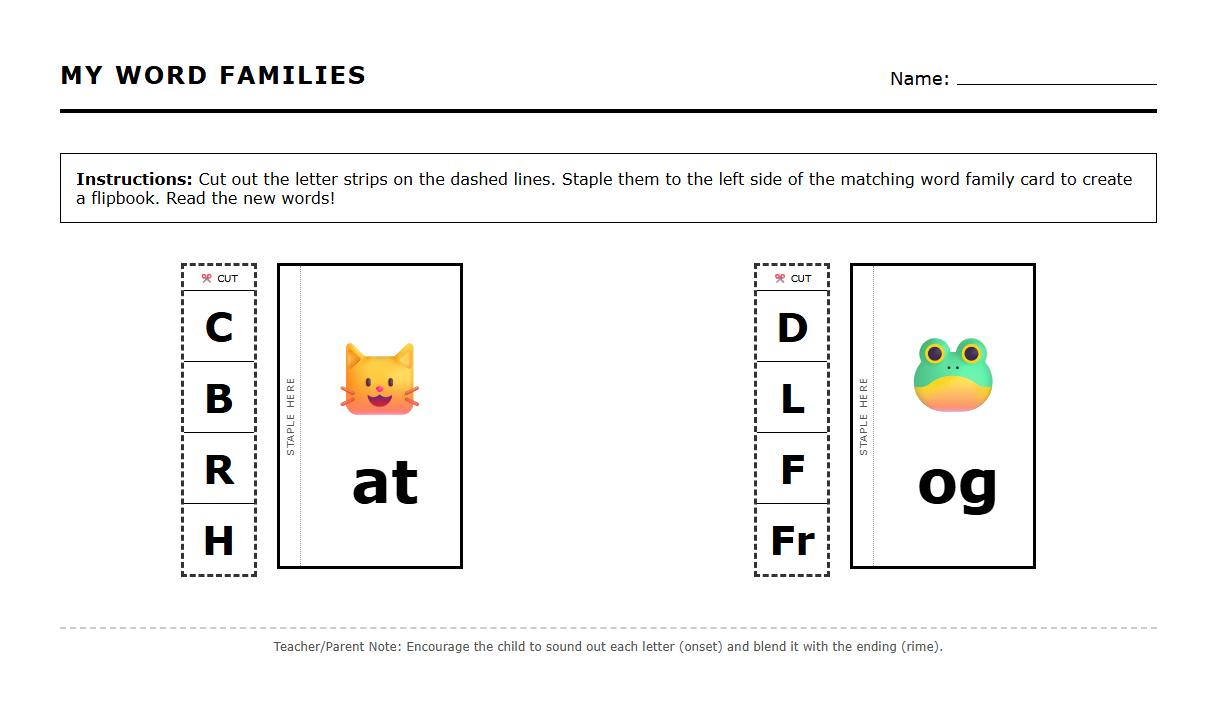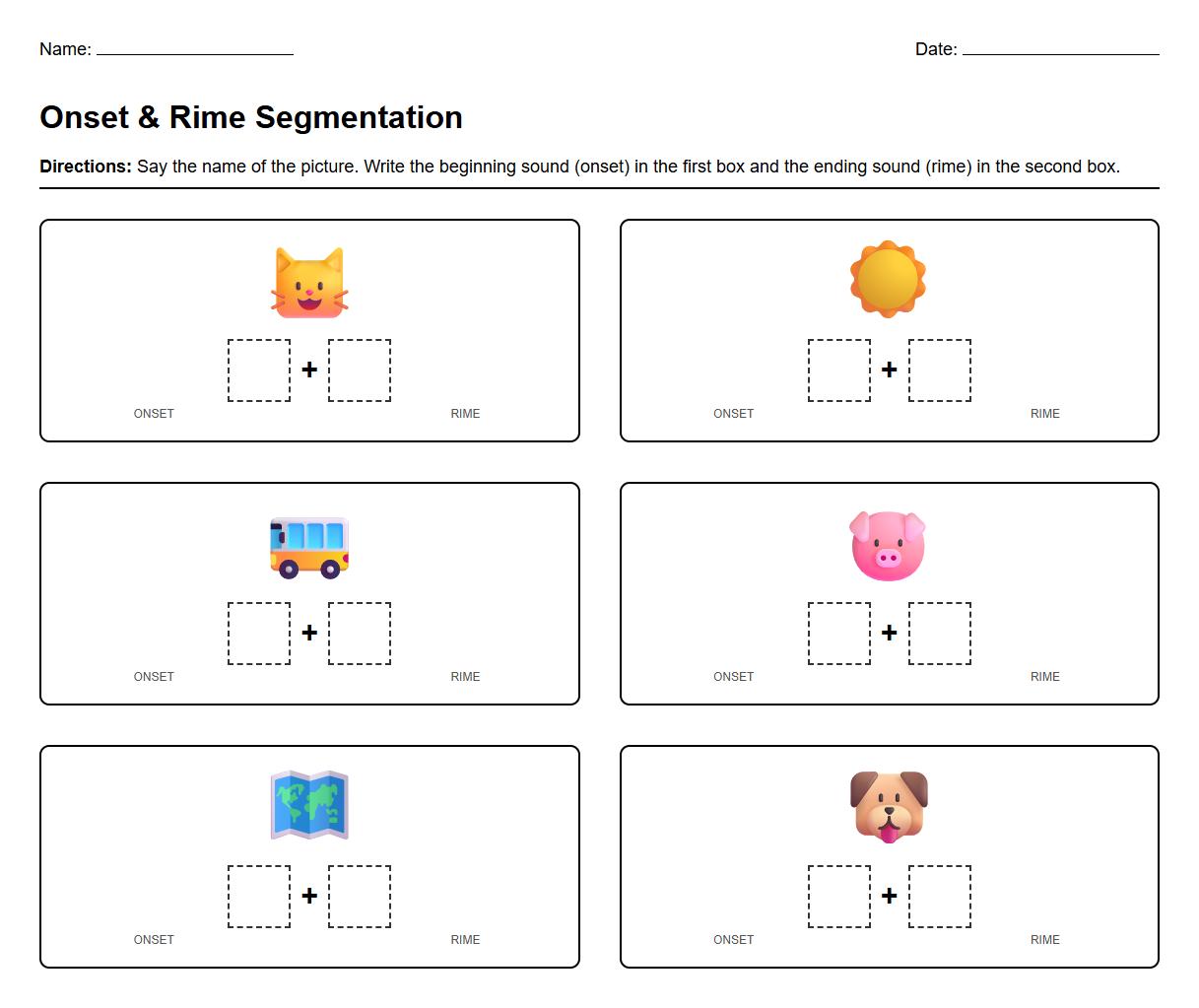
Kindergarten phonics activities enhance early reading skills by focusing on letter sounds and their corresponding symbols, helping children build a strong language foundation. These engaging exercises promote auditory discrimination and letter recognition, crucial for decoding words in the future. Explore our collection of fun and effective worksheets to support your child's phonics and initial sounds learning journey.
Fun Games to Identify Initial Letter Sounds
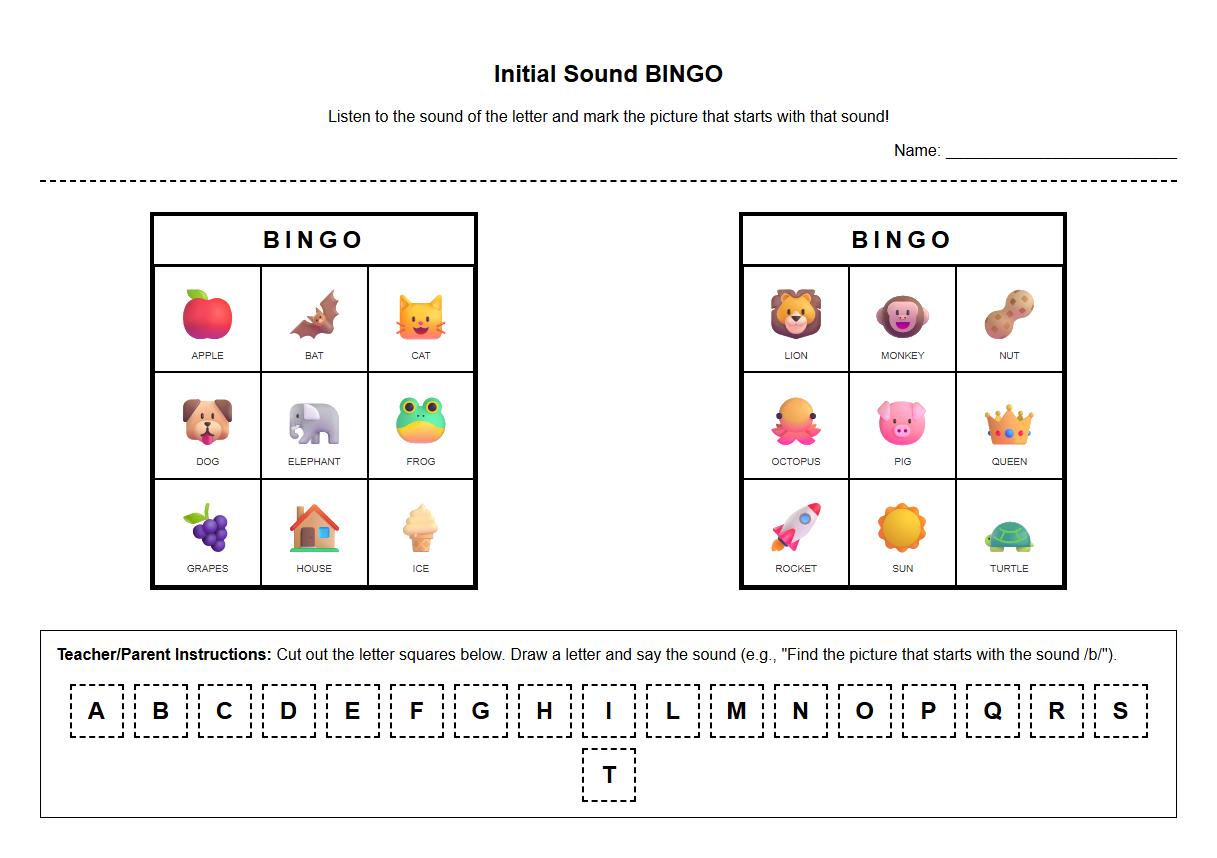
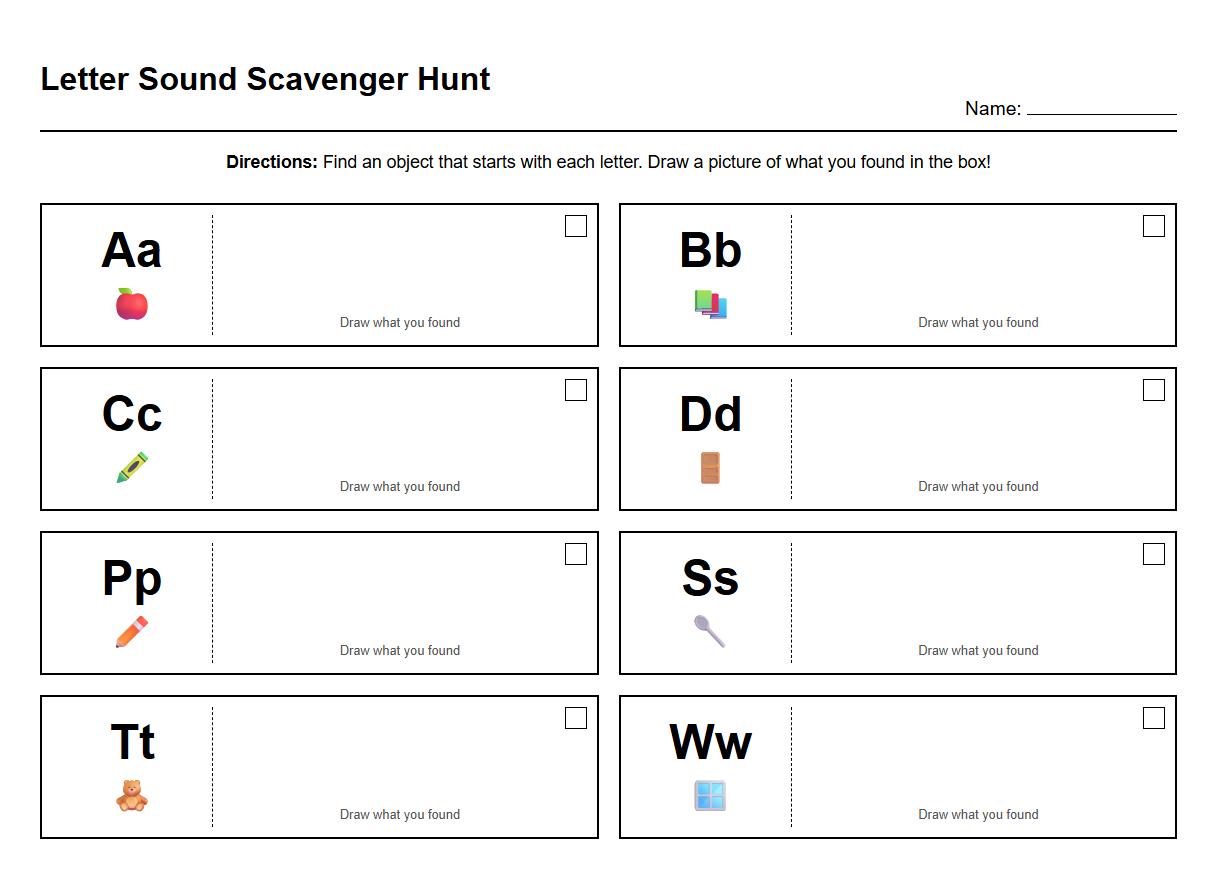
Engage kindergarteners with phonics bingo, where children match sounds to letters on their cards. Another fun game is sound scavenger hunt, encouraging students to find objects starting with a specific letter. These games improve auditory discrimination and keep learning playful and interactive. Explore related practice in the Letter Sound Association Worksheets.
Effective Use of Picture Cards for Teaching Phonics
Picture cards help connect visual images with letter sounds, reinforcing memory and recall. Teachers can use them for matching games or sorting activities by initial sounds. Consistent repetition with cards builds strong associations between letters and their sounds. Reinforce skills using the Engaging Alphabet Recognition Worksheet.
Interactive Group Activities for Beginning Sound Recognition
Group activities such as sound sorting circles foster collaboration while practicing initial sounds. Children can also play "I Spy" with sounds, prompting kids to identify objects based on their beginning letters. These activities encourage social learning and reinforce phonemic awareness. Try similar exercises in the Simple Digraphs and Blends Matching Worksheet.
Hands-On Materials Supporting Initial Sound Learning
Manipulatives like letter blocks, magnetic letters, and textured alphabet tiles provide tactile experiences. These materials help children connect physically with letter shapes and sounds. Using hands-on resources enhances engagement and supports different learning styles. Support learning with the Consonant Cluster Worksheets.
Songs and Rhymes for Practicing Phonics and Initial Sounds
Songs and rhymes embed letter sounds in memorable, rhythmic patterns that aid retention. Repetitive lines and catchy tunes make practicing phonics delightful and natural. Incorporating early literacy songs boosts children's enthusiasm and oral language skills. Build on these skills with the Interactive Rhyming Words Worksheet.
Best Online Resources and Apps for Practicing Initial Sounds
Apps like Starfall and ABCmouse offer interactive phonics games tailored for kindergarteners. These platforms combine visuals, sounds, and rewards to motivate learners. Online resources provide accessible and personalized phonics practice anytime. Reinforce digital learning with the High Frequency Words Phonics Worksheet.
Creating Engaging Phonics Centers in the Classroom
Design centers with varied activities such as letter matching, sound puzzles, and writing stations. Rotating stations keep students interested and offer multimodal phonics practice. Clear instructions and vibrant materials encourage independent learning and exploration. Set up your centers with ideas from the High Frequency Words Assessment Worksheet.
Art Projects Integrating Letter Sound Learning
Art activities like letter collages or sound stamping help children associate sounds with creativity. Crafting objects beginning with target sounds deepens phonetic understanding. These projects combine fine motor skills development with phonics practice. For creative phonics practice, see the Picture-Based Sequencing Worksheets.
Supporting Initial Sound Learning at Home
Parents can reinforce phonics through simple games like reading aloud and pointing out initial sounds in daily life. Labeling household items with letters and sounds encourages constant exposure. Creating a fun, language-rich environment strengthens children's literacy foundations. Try home-friendly activities from the High Frequency Words Recognition Worksheet.
Assessment Methods for Phonics and Initial Sound Understanding
Use informal assessments like sound identification tasks and one-on-one reading observations. Formal tools include checklist evaluations and phonics quizzes tailored to kindergarten skills. Ongoing assessments help track progress and guide instruction adjustments effectively. For further resources, review the Synonyms Practice Worksheets.


Letter Sound Association Worksheets for Phonics Practice