High-Frequency Words Assessment Worksheet for Kindergarten

📅 May 24, 2025 👤 Nylen Smith

High-frequency words are essential for developing early reading skills in kindergarten students. Mastering these words helps children recognize common terms quickly, improving reading fluency and confidence. Explore the available worksheets to support your child's journey in mastering high-frequency words.

High-Frequency Words Recognition Worksheet using Word Matching
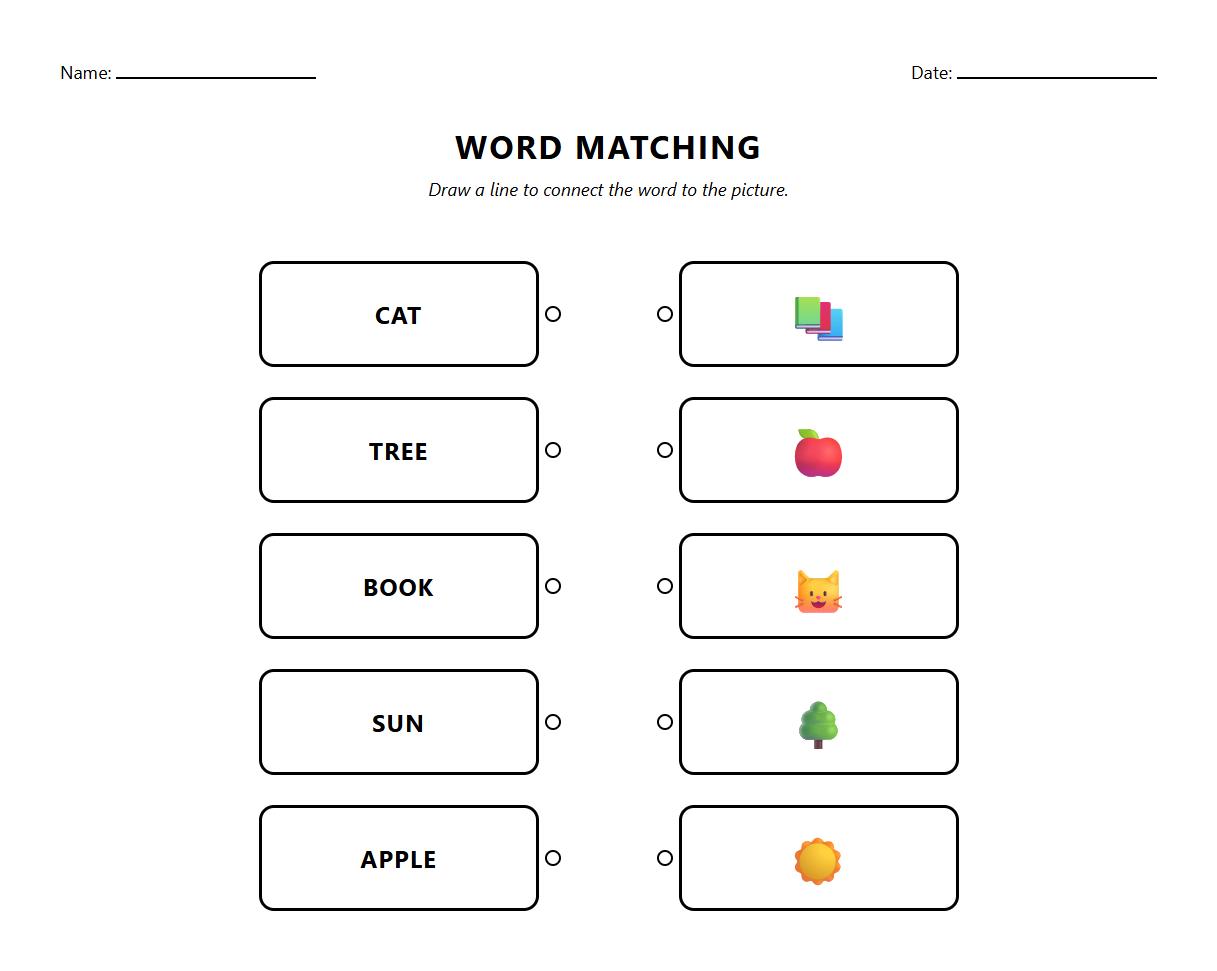
High-Frequency Words Recognition Worksheet using Word Matching

Download PDF     Pin it

Kindergarten High-Frequency Words Assessment with Fill-in-the-Blank
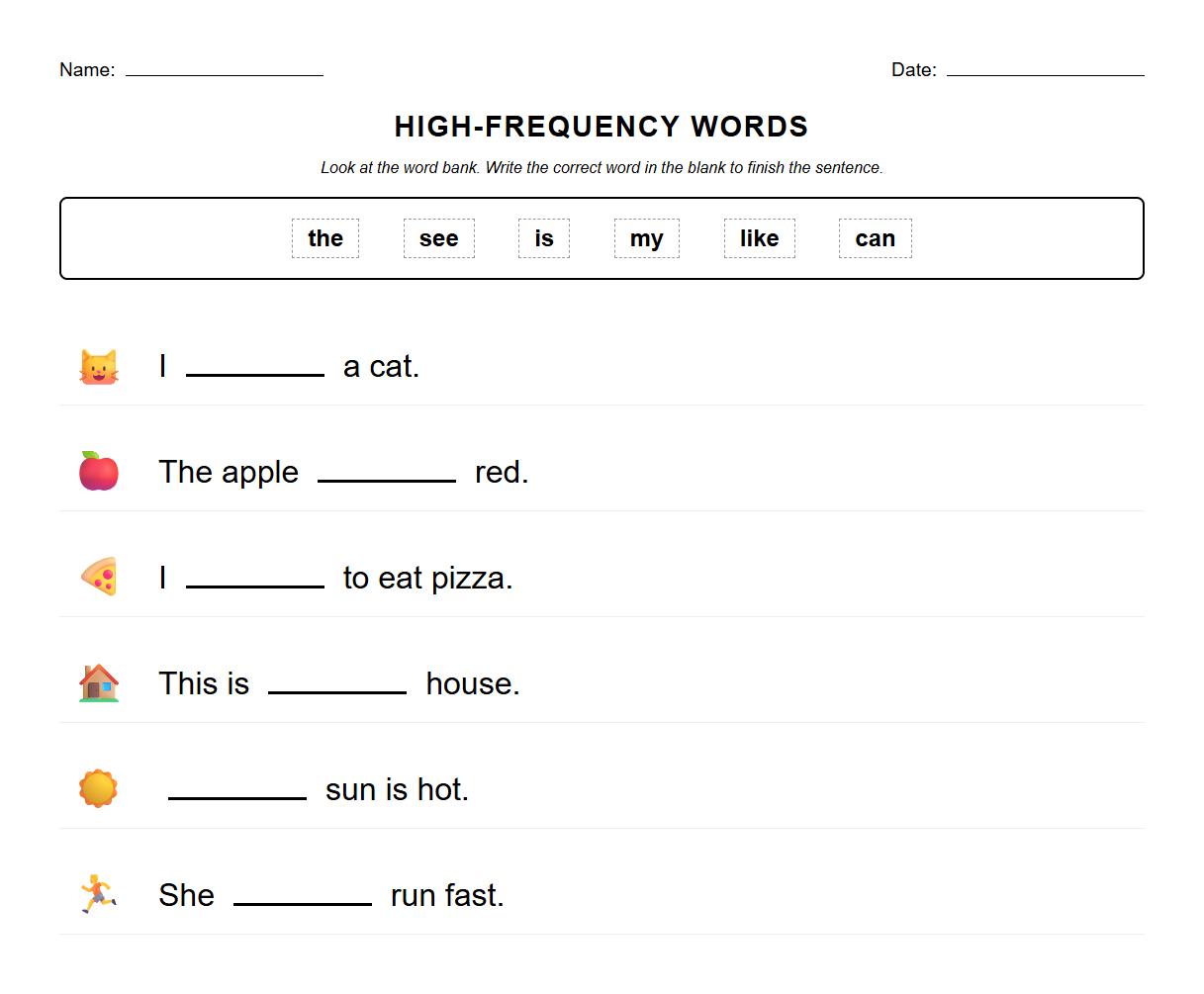
Kindergarten High-Frequency Words Assessment with Fill-in-the-Blank

Download PDF     Pin it

Sight Word Fluency Check Worksheet for Kindergarten
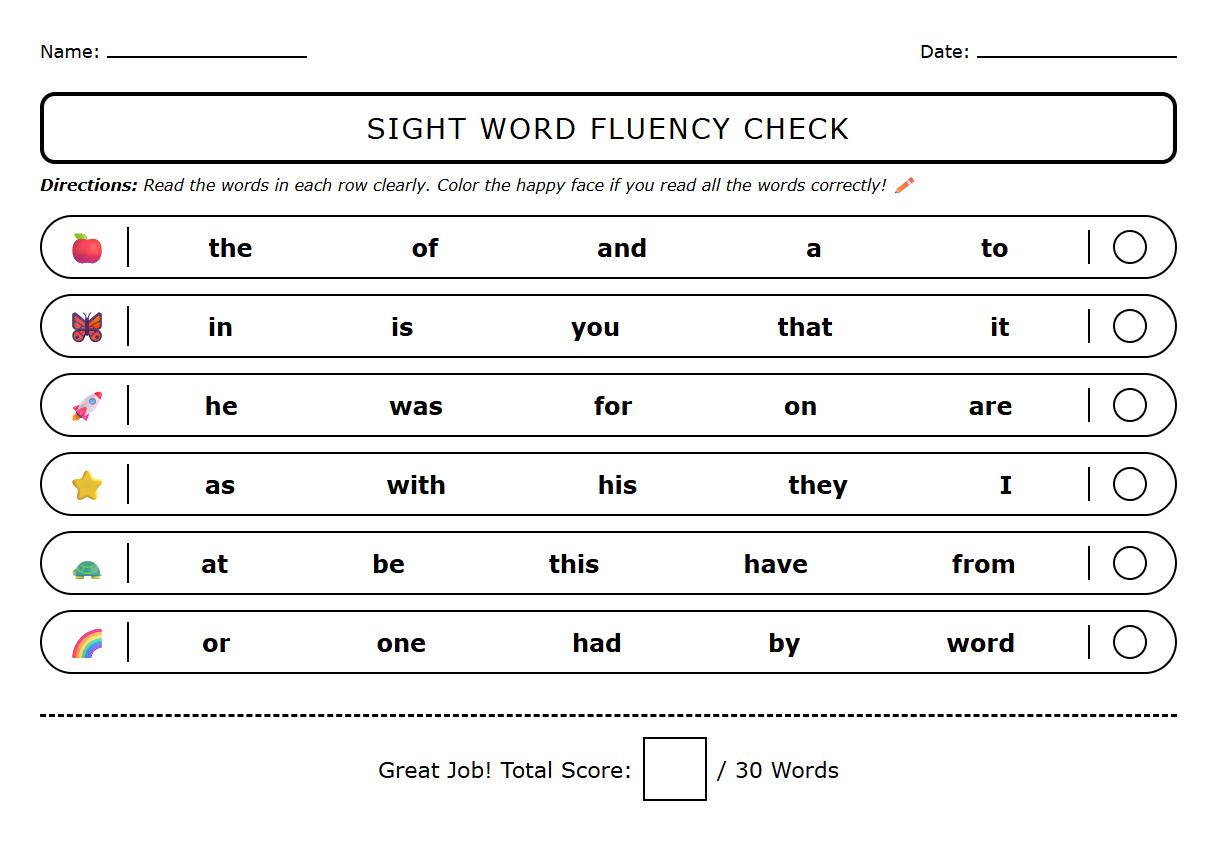
Sight Word Fluency Check Worksheet for Kindergarten

Download PDF     Pin it

High-Frequency Words Assessment using Word Tracing
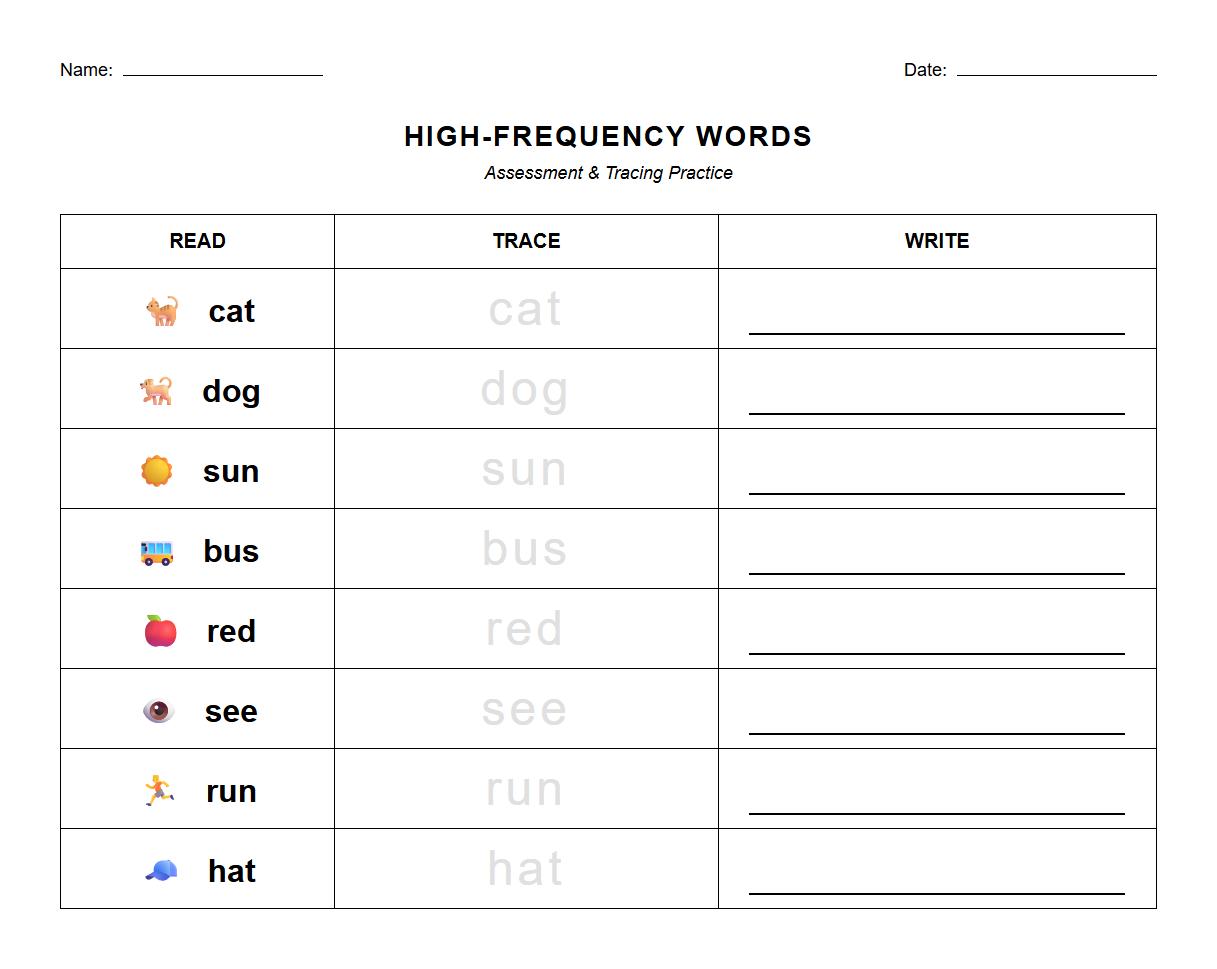
High-Frequency Words Assessment using Word Tracing

Download PDF     Pin it

Kindergarten High-Frequency Words Identification with Picture Clues
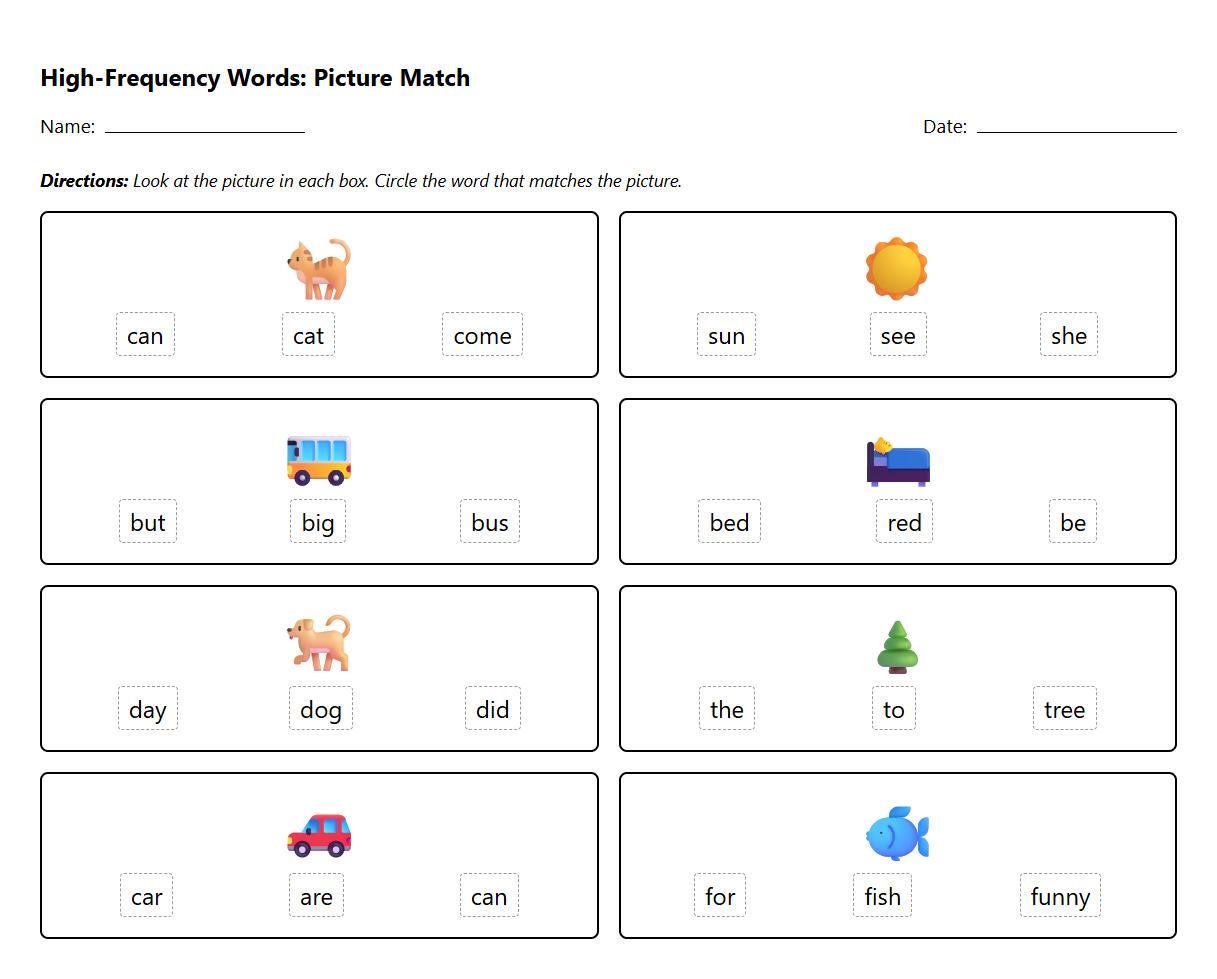
Kindergarten High-Frequency Words Identification with Picture Clues

Download PDF     Pin it

High-Frequency Words Reading Accuracy Worksheet with Word Lists
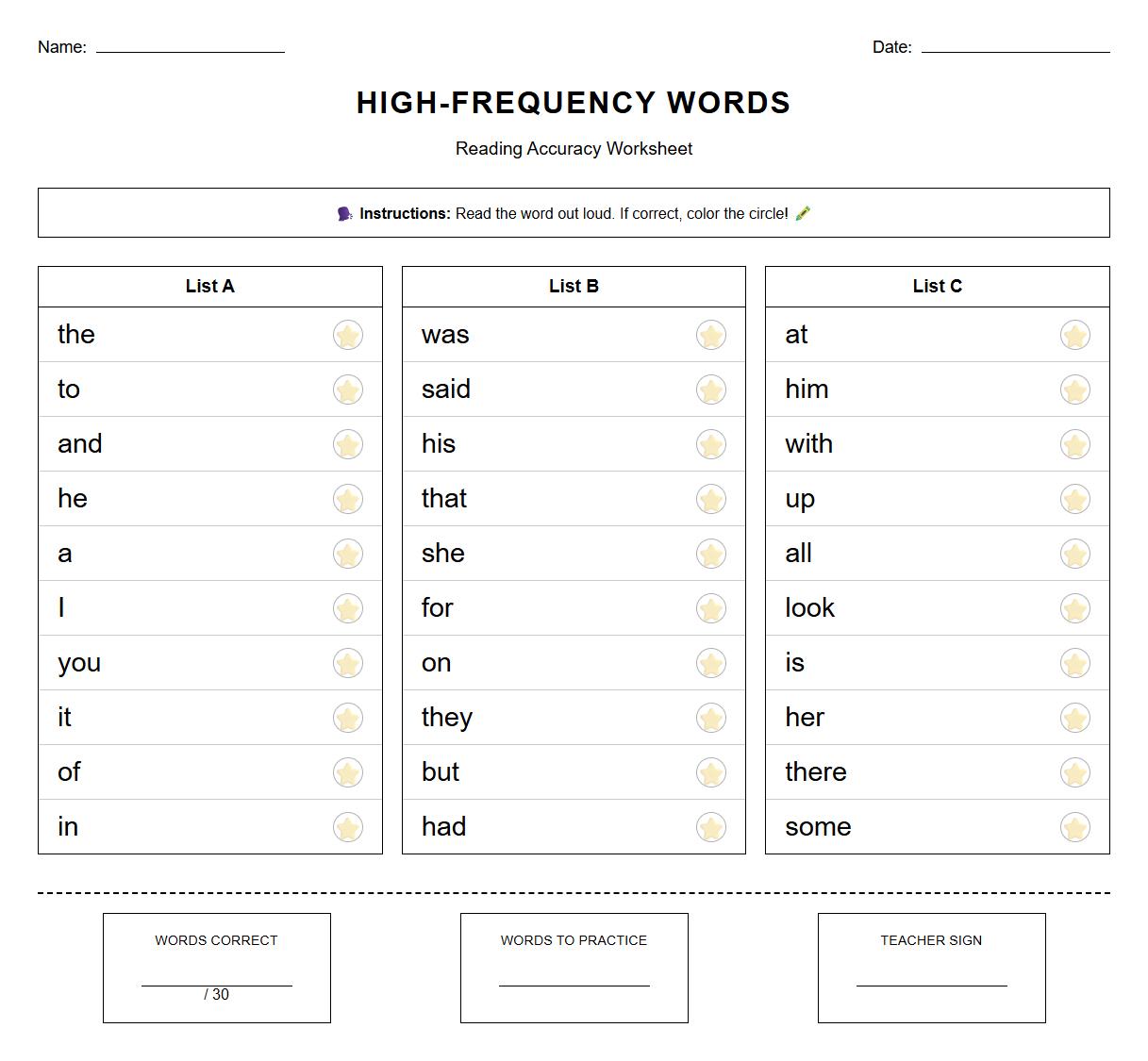
High-Frequency Words Reading Accuracy Worksheet with Word Lists

Download PDF     Pin it

Kindergarten High-Frequency Words Assessment using Sentence Completion
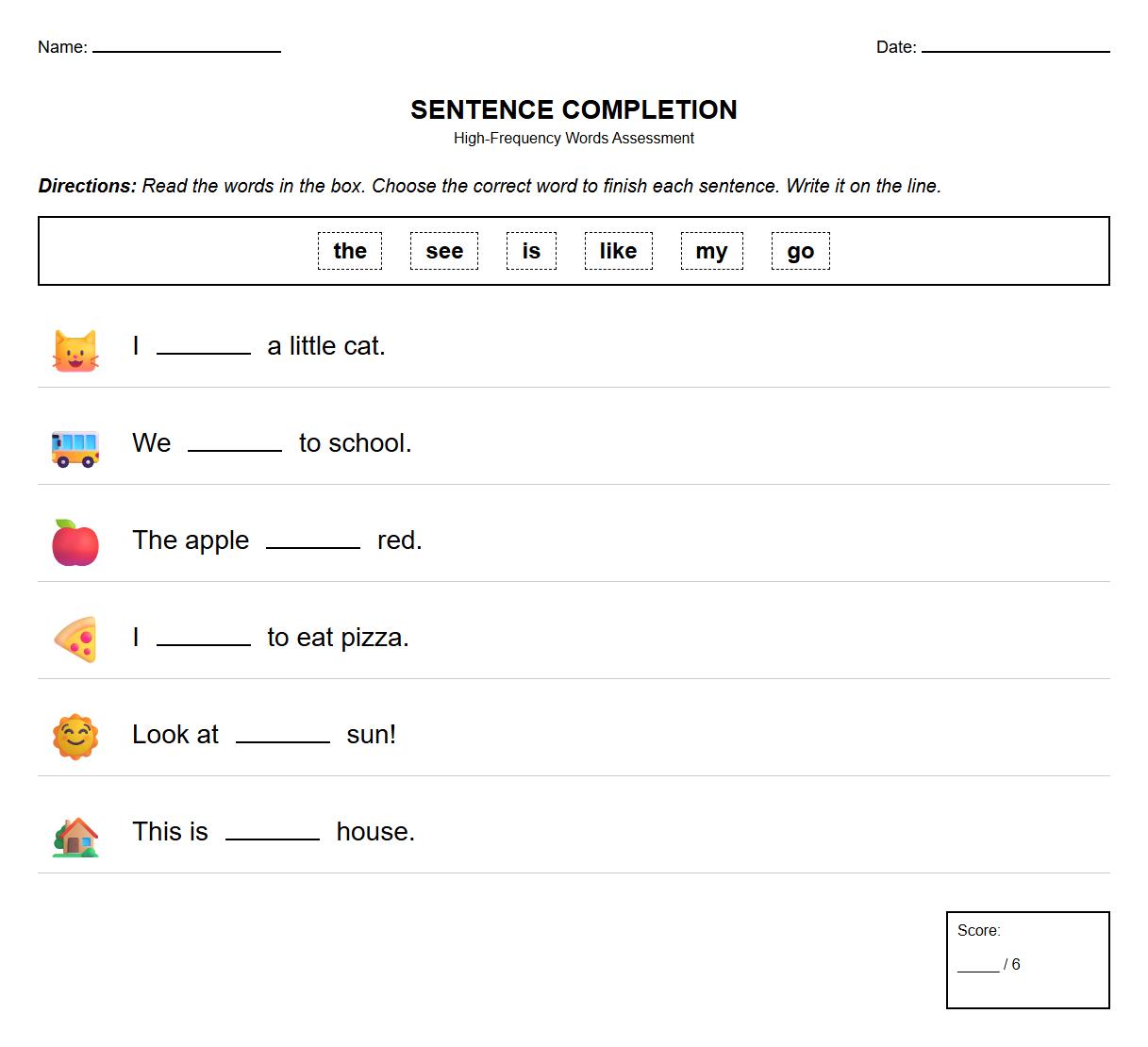
Kindergarten High-Frequency Words Assessment using Sentence Completion

Download PDF     Pin it

Sight Words Word Search Assessment for Kindergarten Literacy
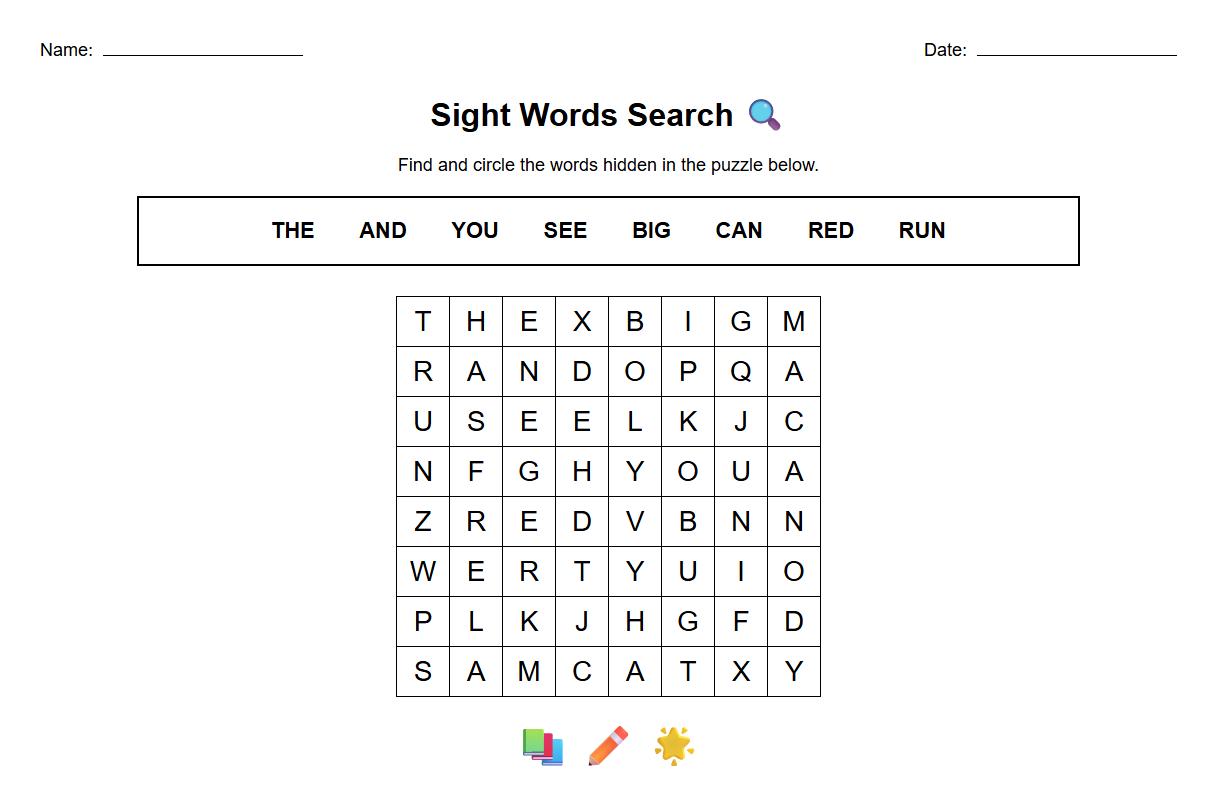
Sight Words Word Search Assessment for Kindergarten Literacy

Download PDF     Pin it

High-Frequency Words Writing Practice with Phonics Emphasis
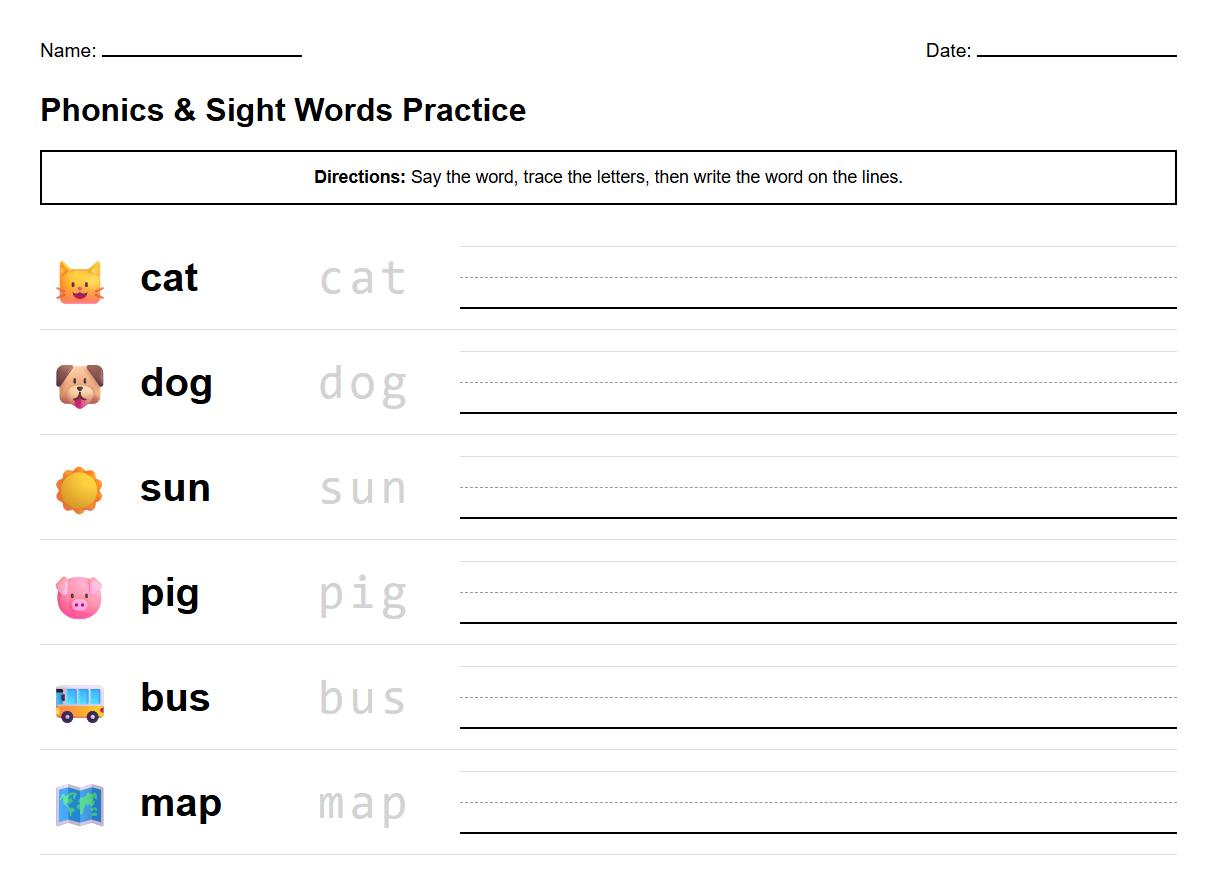
High-Frequency Words Writing Practice with Phonics Emphasis

Download PDF     Pin it

Kindergarten High-Frequency Words Assessment through Multiple Choice
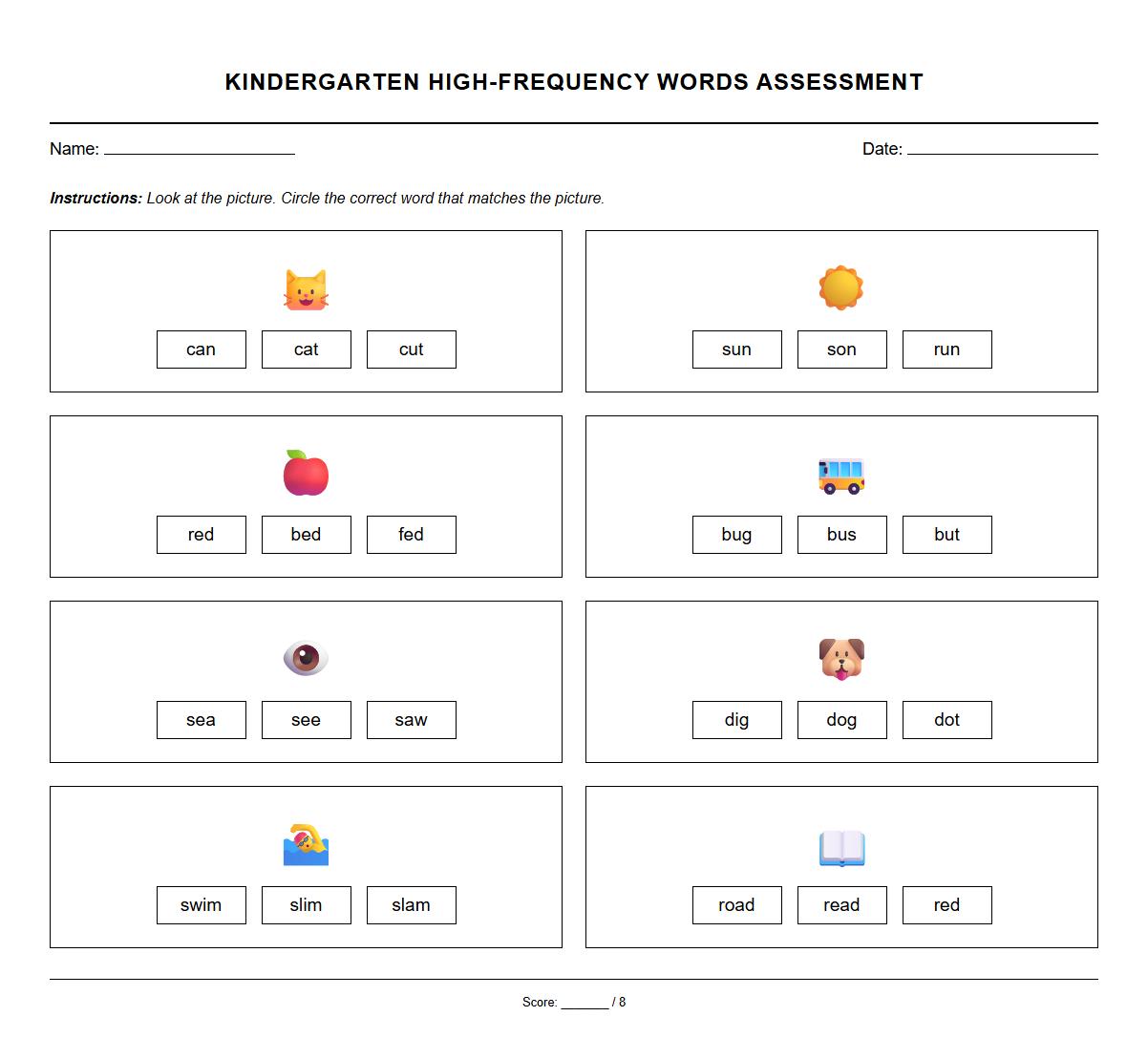
Kindergarten High-Frequency Words Assessment through Multiple Choice

Download PDF     Pin it

Main Purpose of High-Frequency Words Assessment Worksheet

The primary goal of a high-frequency words assessment worksheet is to evaluate kindergarten students' ability to recognize and read key sight words. This type of assessment helps teachers identify which words students know well and which words need more practice. It plays a crucial role in supporting early reading skills by focusing on words that appear frequently in texts. Additionally, it allows parents and teachers to track progress and tailor instruction effectively.

Essential High-Frequency Words for Kindergarten

Kindergarten assessments should include commonly used high-frequency words such as "the," "and," "is," "to," "it," "he," "she," "you," and "said." These words form the foundation for fluent reading and are vital for early literacy development. Including a balanced mix of easy and slightly challenging words helps gauge students' mastery. This selection aligns with popular word lists like Dolch or Fry sight words tailored for young learners.

Frequency of High-Frequency Words Assessment

Students should complete high-frequency words assessments regularly, ideally every 4 to 6 weeks. This frequency allows for timely feedback and adjustments in teaching strategies. Frequent assessment ensures continuous monitoring of progress and helps maintain student motivation. It also supports consistent reinforcement of word recognition skills over time.

Effective Activities for Practicing High-Frequency Words

Engaging activities such as flashcards, word matching games, and word hunts reinforce high-frequency word recognition effectively. Singing songs or using interactive apps can also motivate students to practice in enjoyable ways. Encourage storytelling or simple reading exercises incorporating these words to deepen understanding. Variety in activities addresses different learning styles and keeps practice fresh, as shown in rhyming word activities.

Measuring Progress with High-Frequency Words Worksheet

Progress is measured by tracking the number of words a student correctly identifies or reads within a set time limit. Teachers can record accuracy and fluency for comparison across assessments. Growth can be visualized using charts or checklists, which also aid communication with parents. Consistent progress indicates improving reading confidence and skill.

Best Format for Assessing High-Frequency Words in Kindergarten

The most effective format is a simple, visually clear worksheet presenting high-frequency words in isolation and within sentences. Including both recognition and reading tasks allows comprehensive assessment. Worksheets should be age-appropriate, with large fonts and colorful elements to engage young learners, as found in alphabet recognition activities. Optional oral assessment can complement written tasks for a complete picture.

Making High-Frequency Word Assessments Engaging

Teachers can make assessments fun by turning them into games or challenges, such as timed word recognition races or interactive group activities. Use colorful materials and positive reinforcement to encourage participation. Incorporating multimedia elements like audio or visuals can attract student interest. Keeping the environment supportive reduces anxiety and promotes willing engagement, similar to techniques used in letter tracing worksheets.

Common Challenges with High-Frequency Words

Students often struggle with memorizing irregular spellings and differentiating similar-looking words. Limited vocabulary backgrounds can hinder recognition, causing frustration. Additionally, maintaining attention during repetitive practice may be difficult for young learners. Addressing these challenges requires personalized support and varied teaching strategies, including digraphs practice.

Supporting Early Reading Development Through Assessments

High-frequency word assessments help build a strong foundation for early reading fluency by focusing on words that appear frequently in texts. They enable early detection of reading difficulties, allowing timely interventions. Consistent practice and evaluation boost students' confidence and reading comprehension skills. These assessments form an integral part of a balanced literacy program.

Strategies for Parents to Reinforce High-Frequency Word Learning

Parents can support learning by practicing words daily through fun activities like flashcards, reading aloud, or word games. Encouraging the use of these words in conversation and writing helps solidify recognition. Creating a positive and stress-free environment increases a child's willingness to practice. Collaboration with teachers ensures consistent reinforcement between home and school, similar to alphabet tracing and phonemic awareness activities.


More in Language Arts Category


About the author. Nylen Smith is a dedicated educator and cofounder of KWorksheet.com, a popular platform specializing in high-quality kindergarten worksheets and printable activities.

Disclaimer. The information provided in this document is for general informational purposes and/or document sample only and is not guaranteed to be factually right or complete. Please report to us via contact-us page if you find and error in this page, thanks.

Comments

No comment yet