Kindergarten English Language Arts worksheets focused on synonyms and antonyms help young learners build vocabulary and improve language comprehension through engaging activities. These worksheets support early literacy by encouraging children to recognize word meanings and relationships, enhancing their reading and communication skills. Explore our collection of fun and educational worksheets to boost your kindergartener's language development today.
Synonym Identification
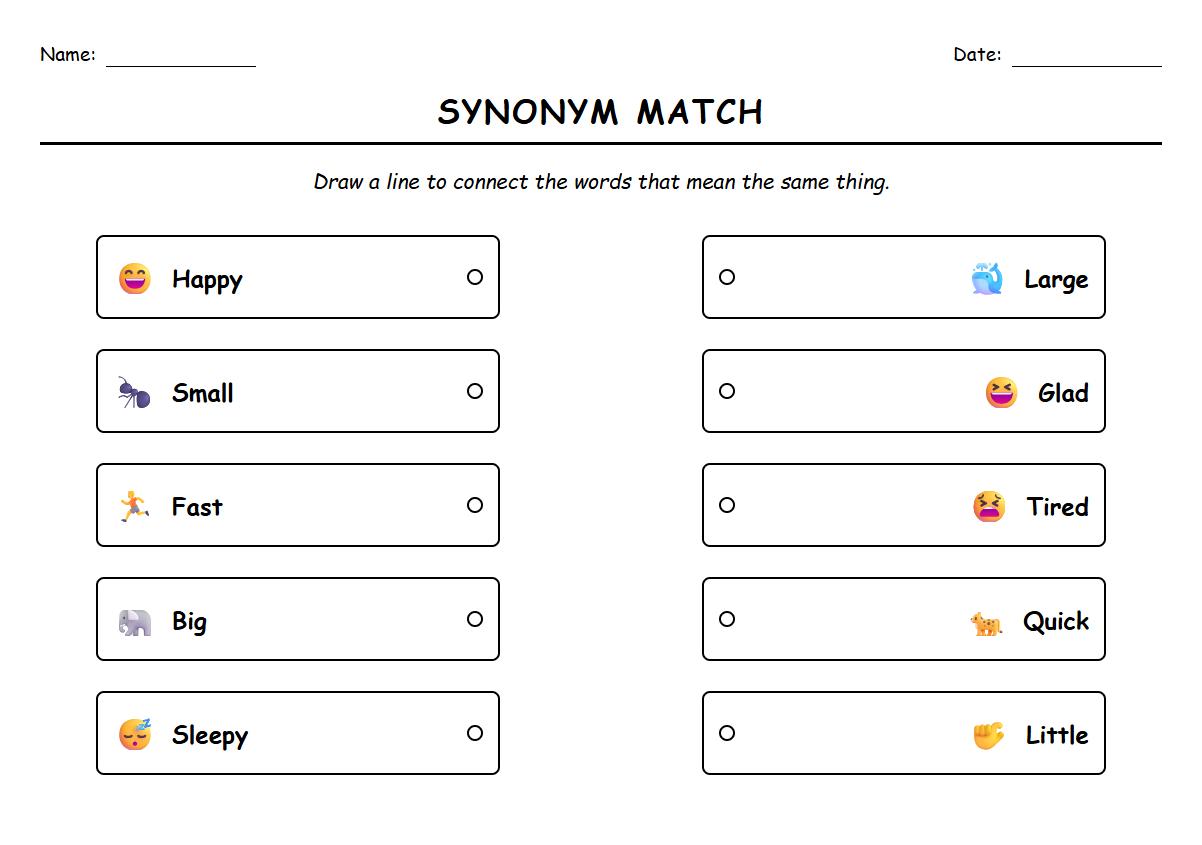
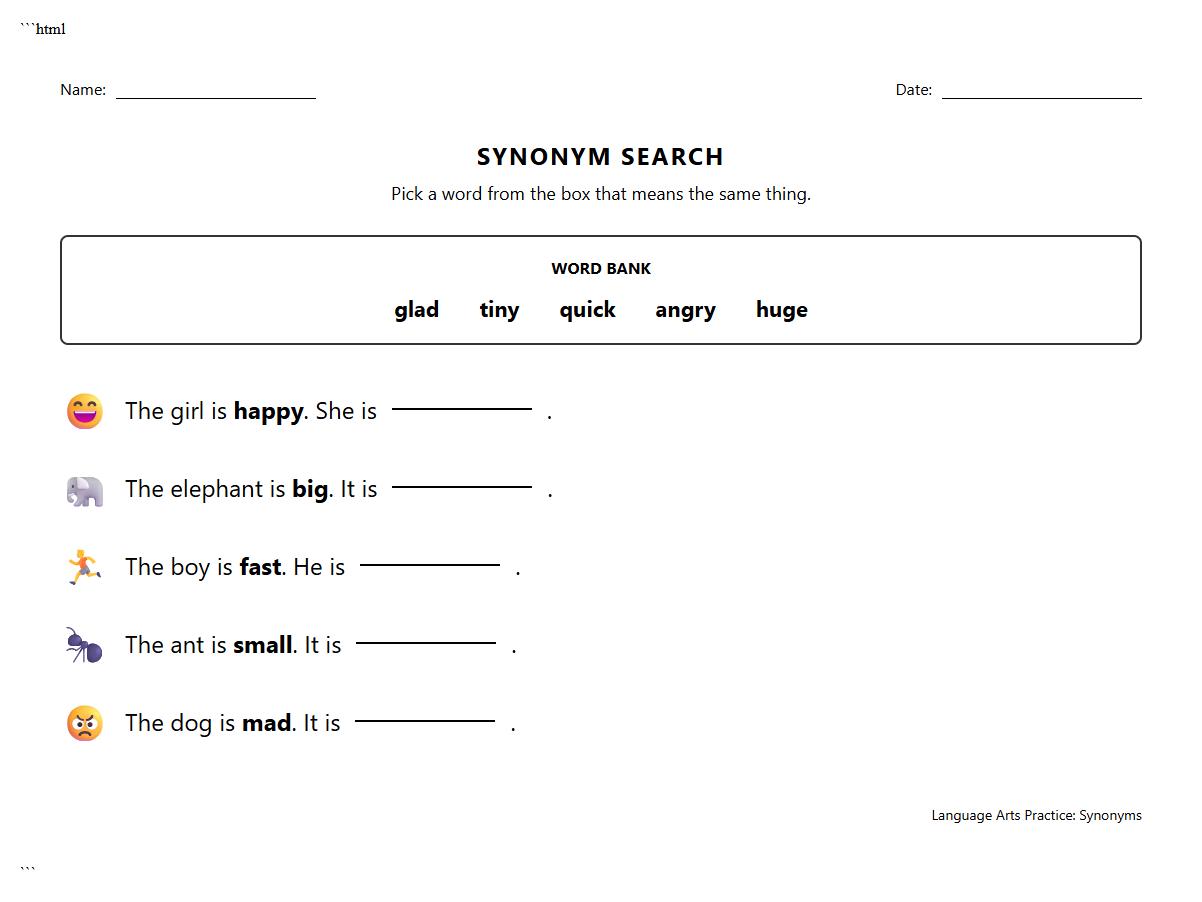
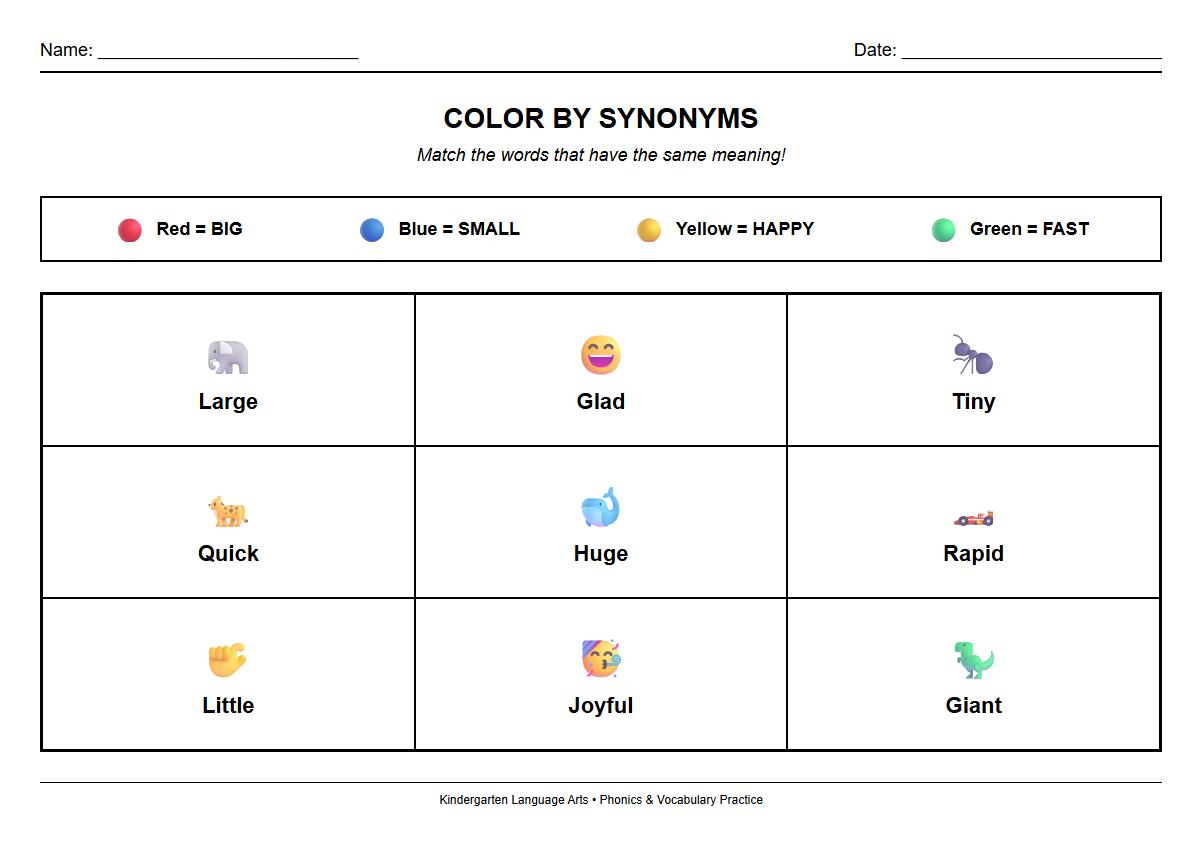
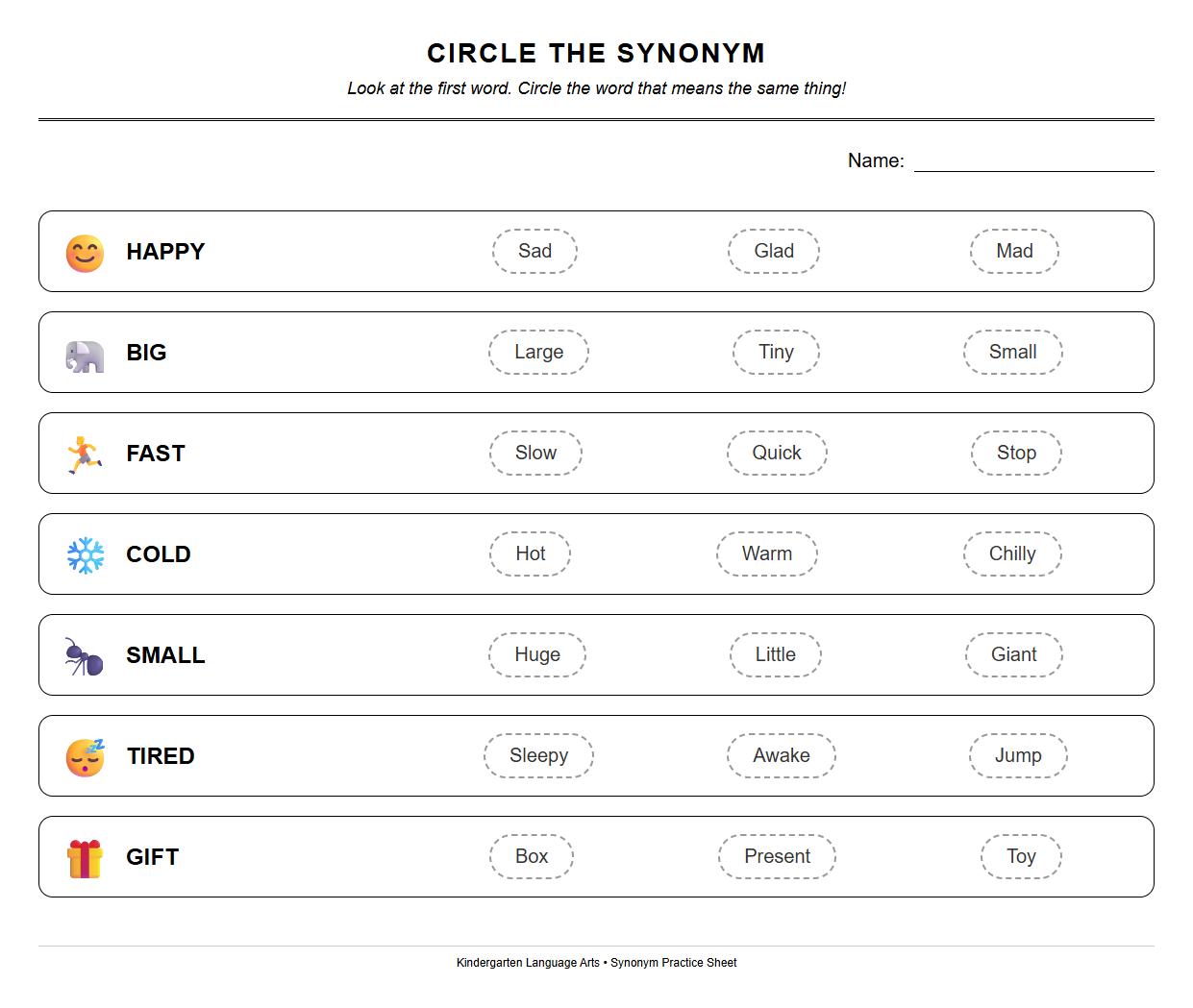
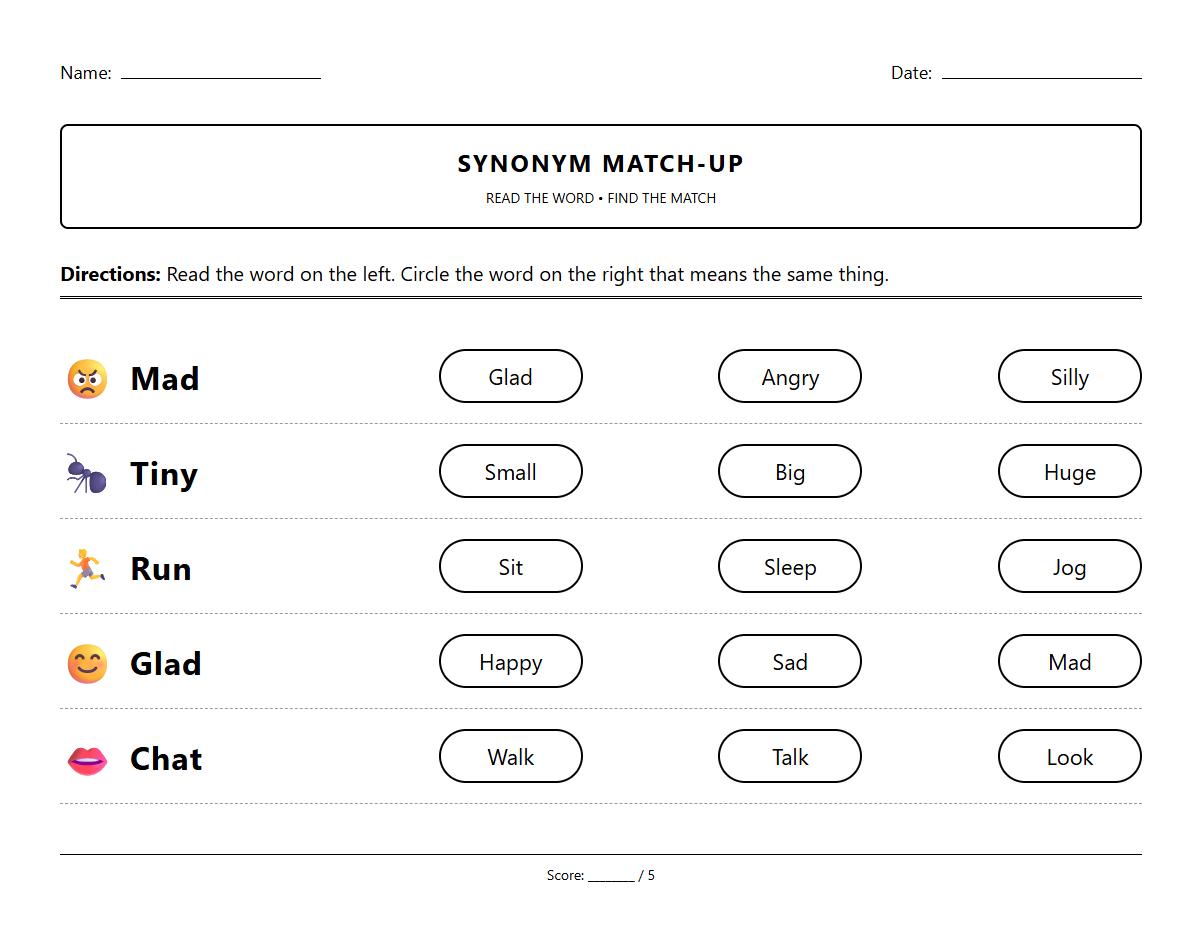
Teachers and parents can help children recognize synonyms by asking them to find words with similar meanings. For example, from the list joyful, sad, and tired, joyful is a synonym for happy. This activity builds vocabulary and helps kids understand word relationships clearly. Encouraging children to circle or highlight the correct word makes learning interactive and fun.
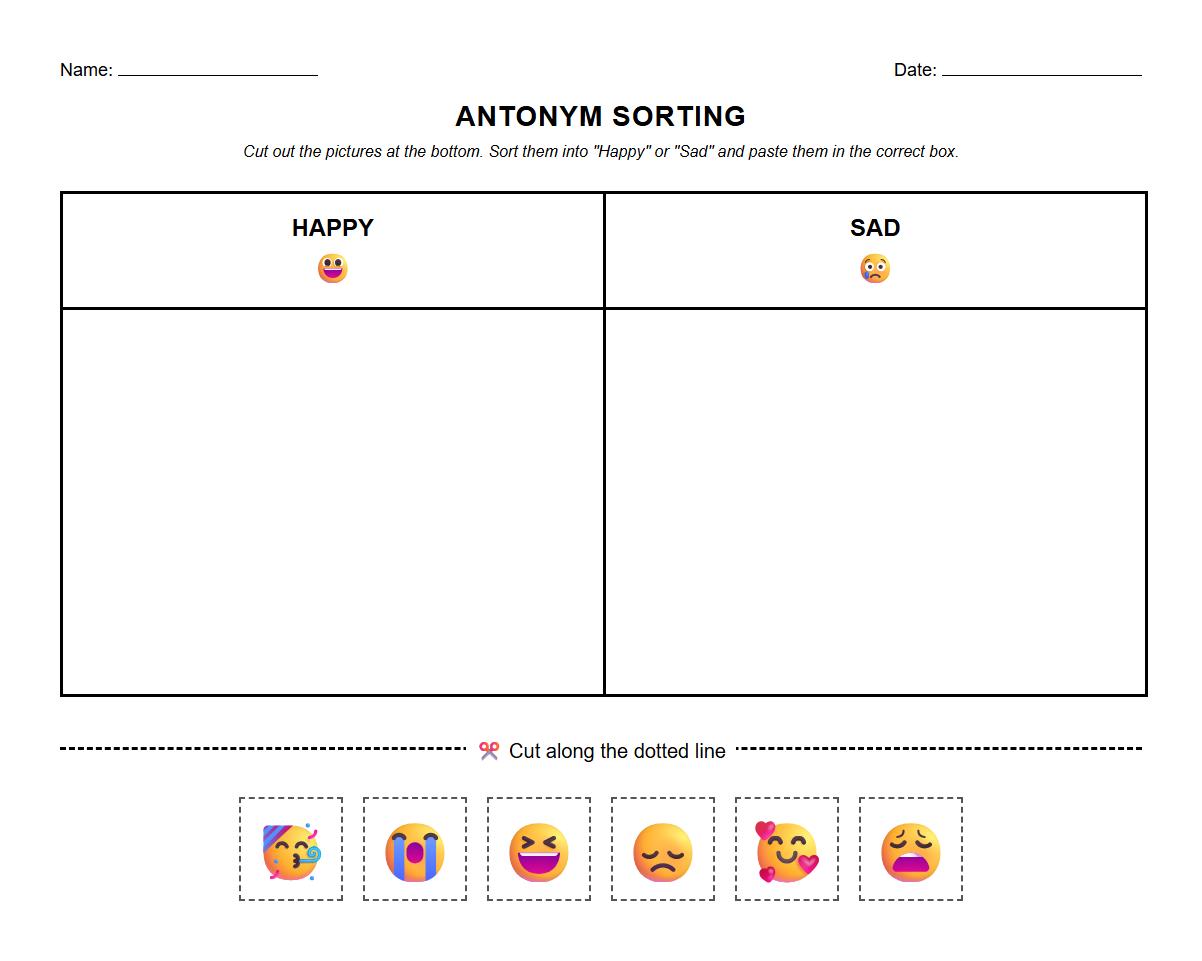
Antonym Circling
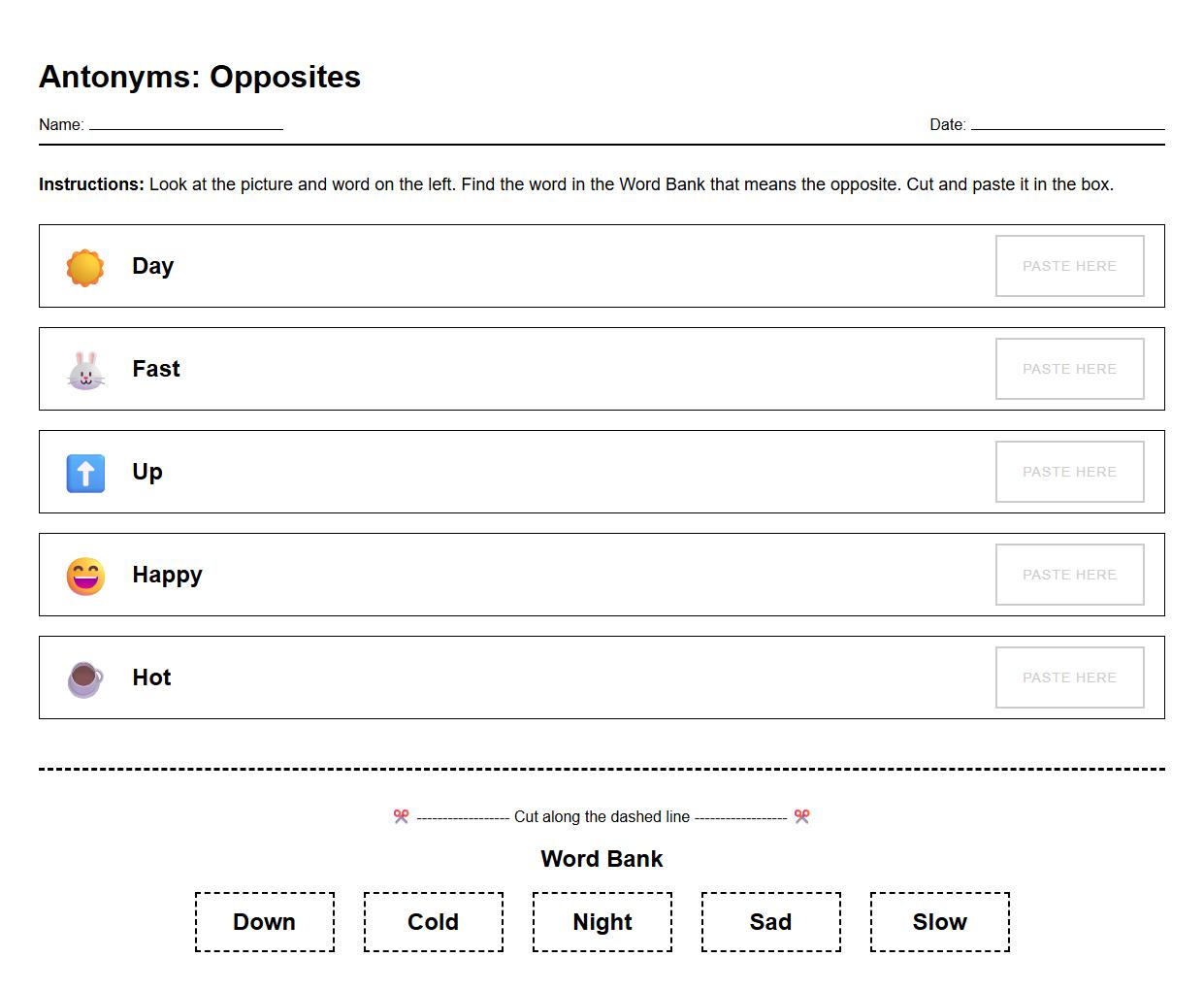
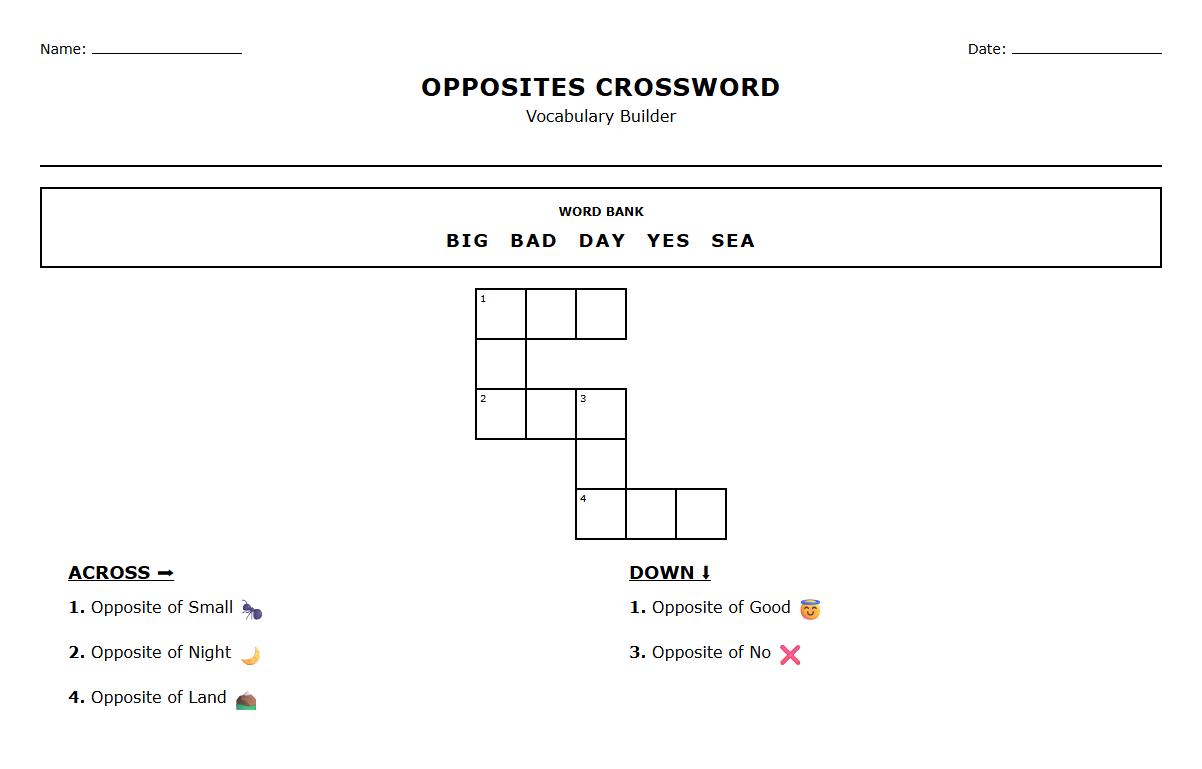
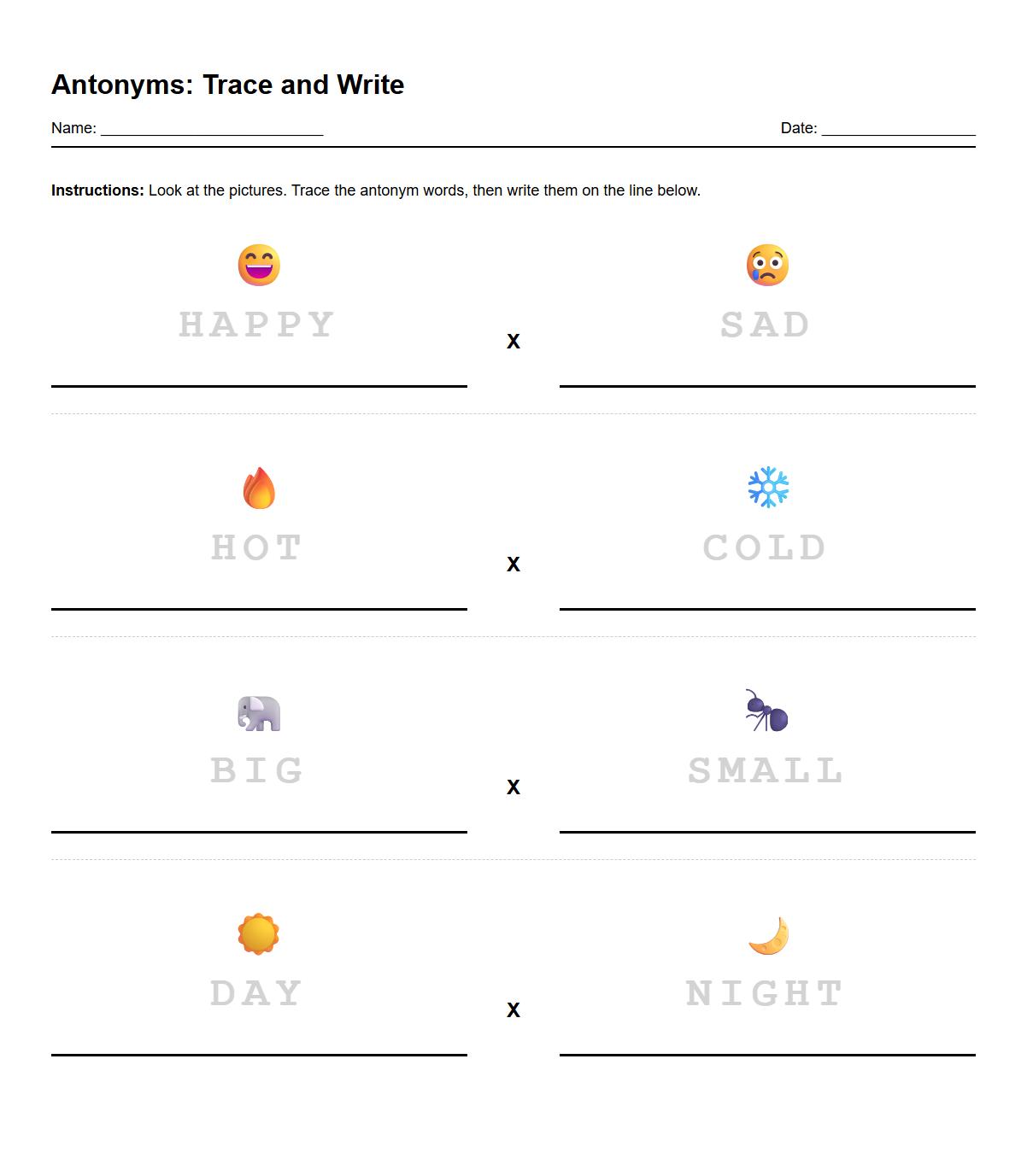
Kindergarten learners benefit from exercises that involve finding opposites, or antonyms. When given the word big, tasks can include circling antonyms like small, tall, or wide. By focusing on contrasting words, children develop critical thinking and language skills. This also prepares them to better understand context in reading and conversation.
Matching Synonyms and Antonyms
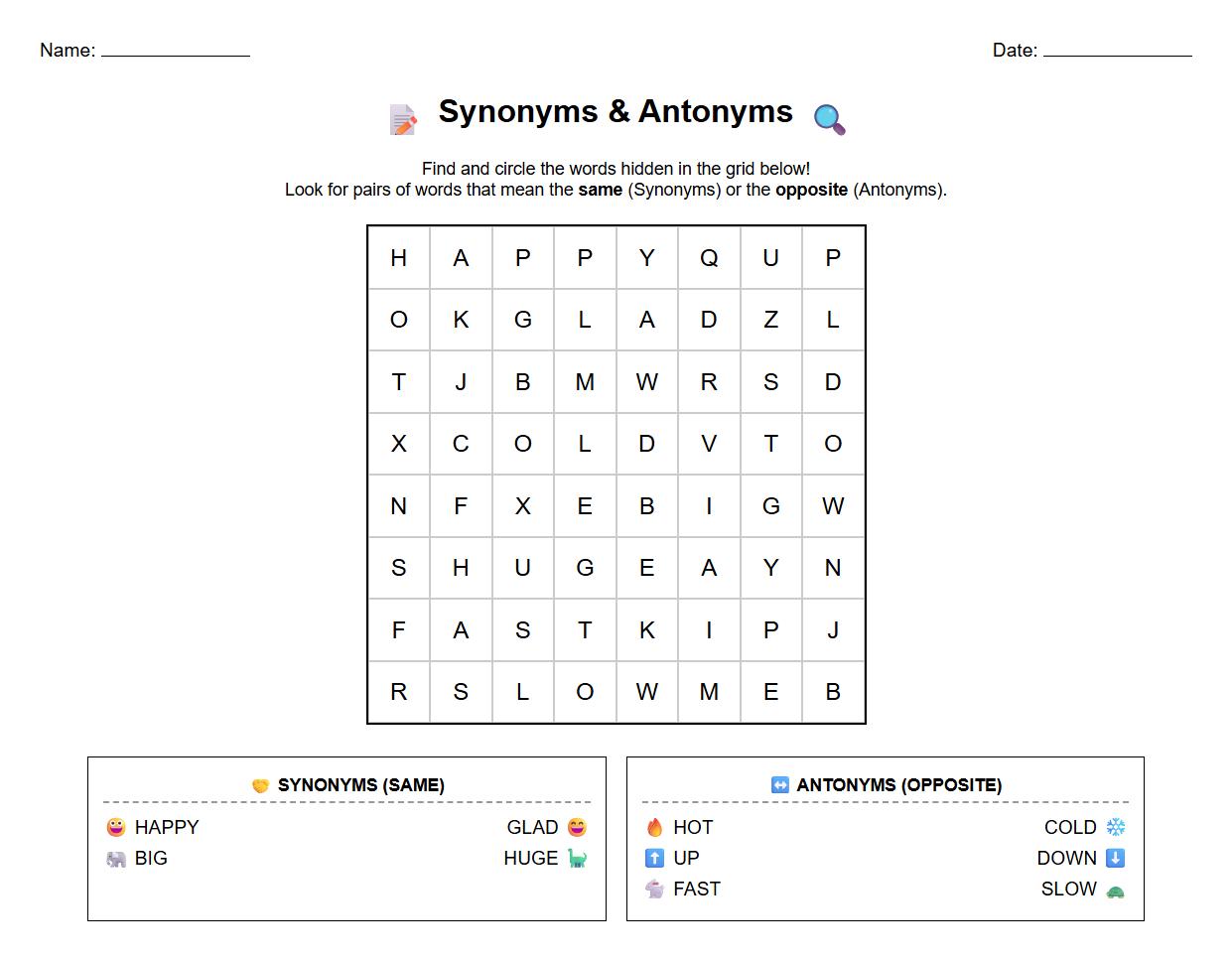
Using matching activities like hot-warm, cold-freezing, and tall-high helps children visually associate words with similar meanings. Drawing lines connecting antonyms such as up-down, open-closed, and day-night improves comprehension of opposites through a hands-on approach. These activities strengthen word recognition and semantic understanding. They are excellent tools for both classroom and home learning environments.
Choosing the Right Word
Encouraging children to point to synonyms or antonyms, like giggle as a synonym for laugh or finish as an antonym for start, enhances their listening and comprehension skills. Activities that involve selecting or coloring words like dry as the antonym of wet make vocabulary lessons engaging and memorable. This interaction promotes active learning and vocabulary retention. Teachers and parents can easily incorporate these methods into daily teaching routines.


Phonics Based Antonyms Worksheet Tasks for Early Learners