Early Learning Consonant Blend Worksheet for Young Learners

📅 Mar 6, 2025 👤 Nylen Smith

Consonant blends play a crucial role in developing young learners' reading and pronunciation skills by helping them recognize combined sounds in words. Early learning consonant blend worksheets engage children with fun and interactive exercises that reinforce blending consonants seamlessly. Explore our collection of worksheets designed to support your child's journey to mastering consonant blends.

Initial Consonant Blend Sorting Worksheet
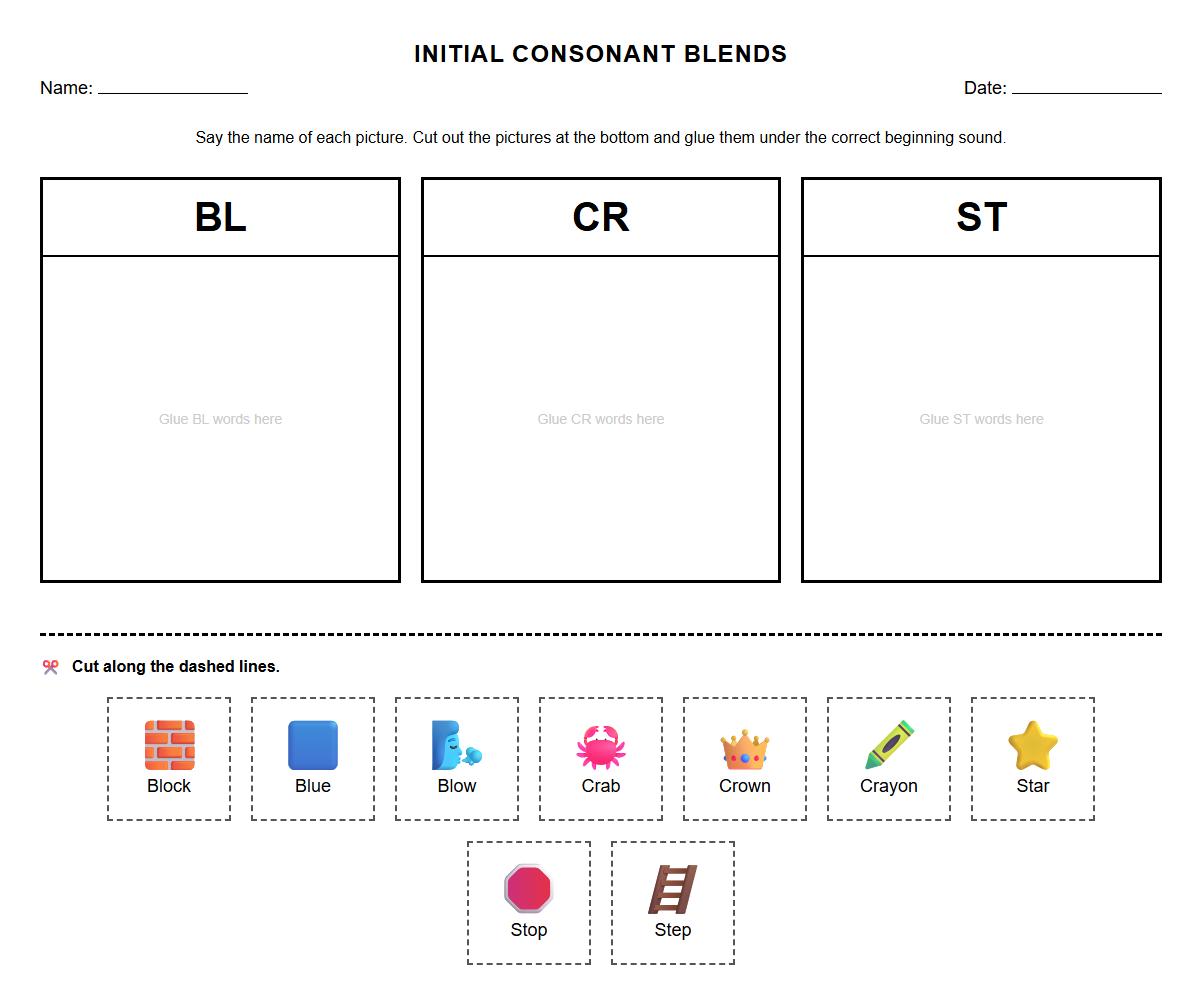
Initial Consonant Blend Sorting Worksheet

Download PDF     Pin it

Consonant Blend Word Matching Activity
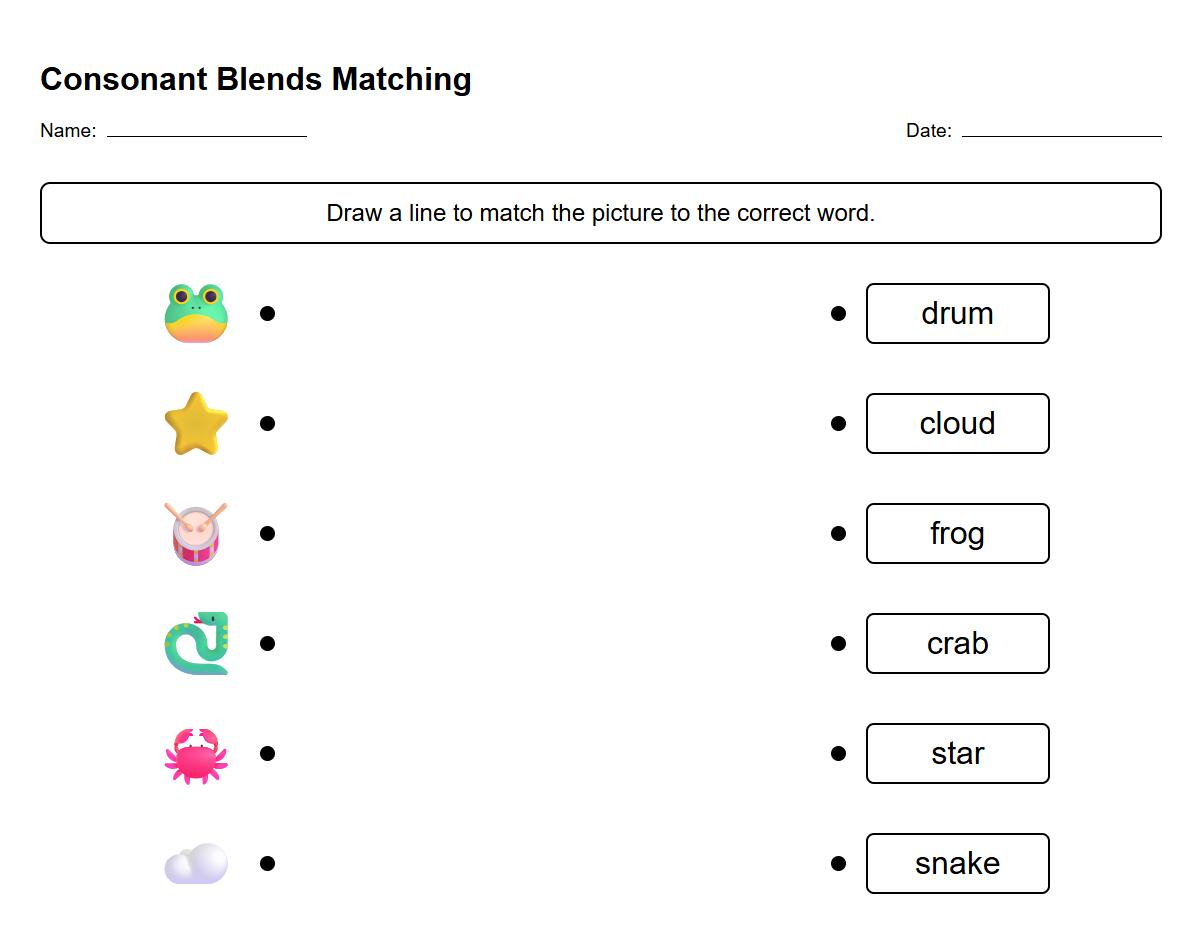
Consonant Blend Word Matching Activity

Download PDF     Pin it

Beginning Blend Sound Identification Worksheet
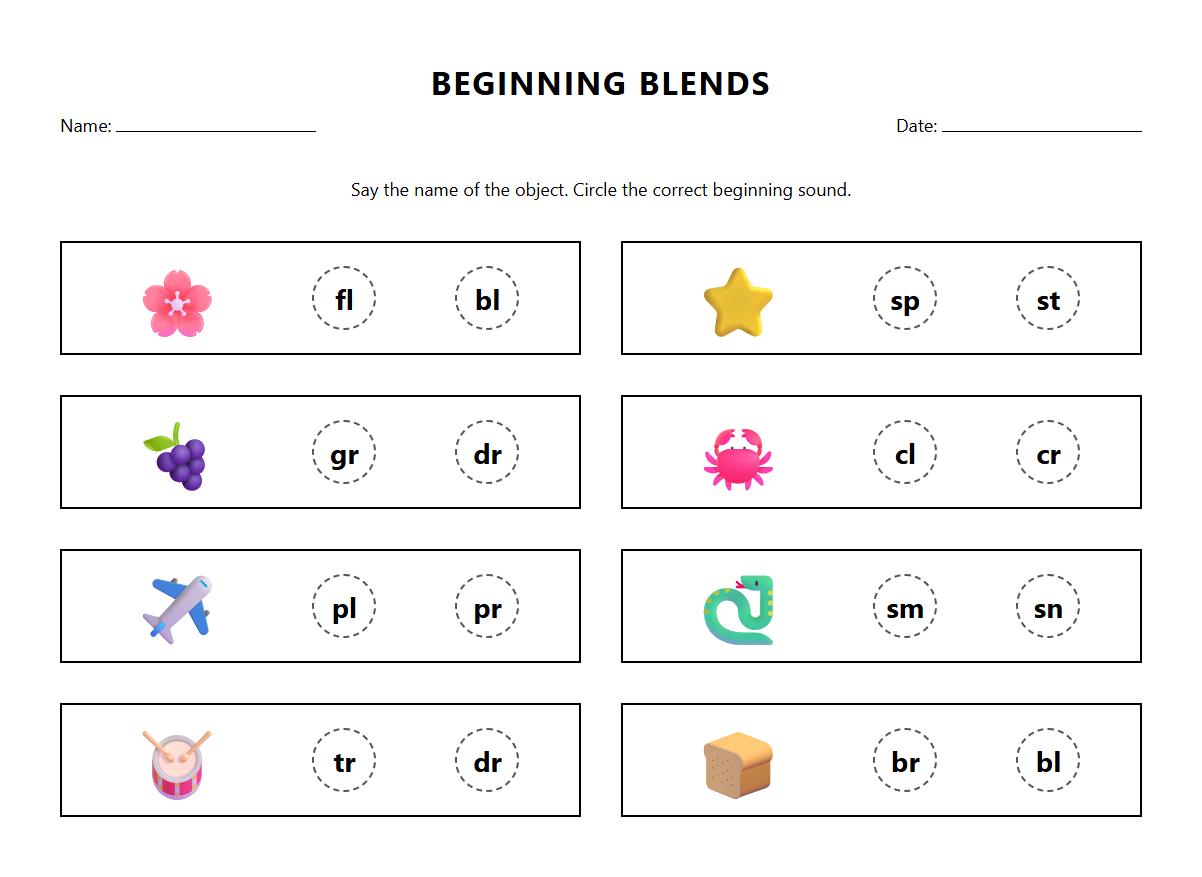
Beginning Blend Sound Identification Worksheet

Download PDF     Pin it

Fill in the Blanks with Consonant Blends Exercise
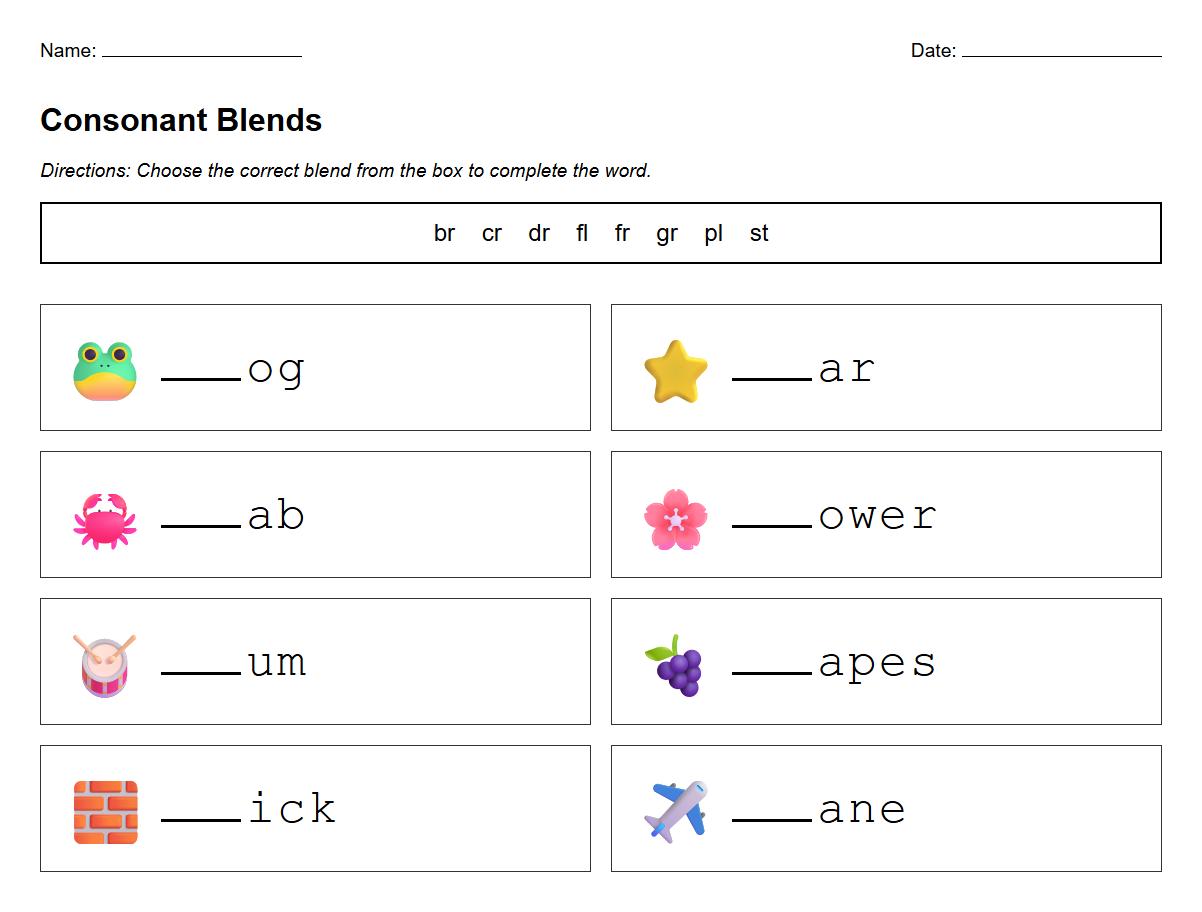
Fill in the Blanks with Consonant Blends Exercise

Download PDF     Pin it

Consonant Cluster Phonics Practice Sheet
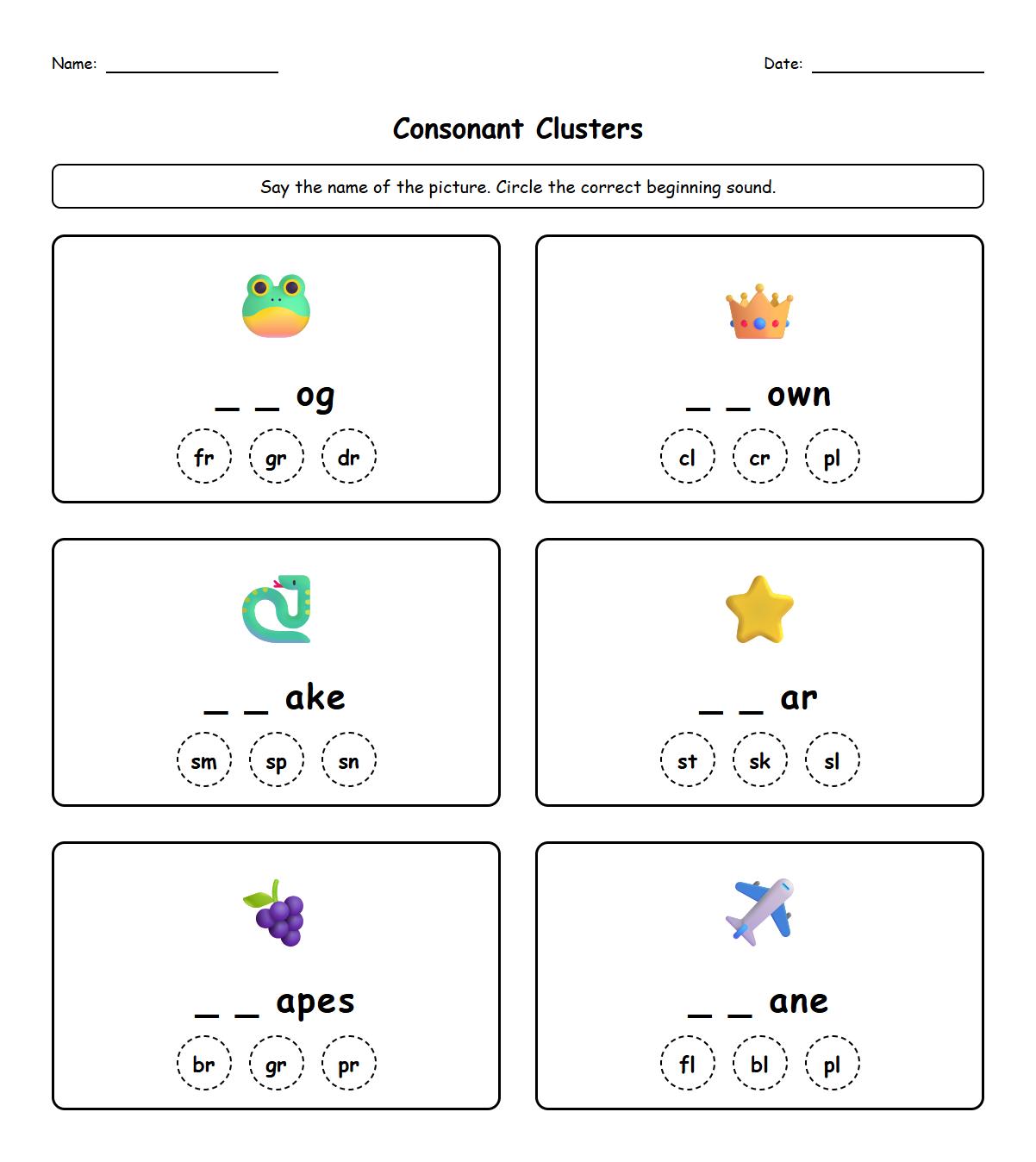
Consonant Cluster Phonics Practice Sheet

Download PDF     Pin it

Picture and Blend Sound Association Worksheet
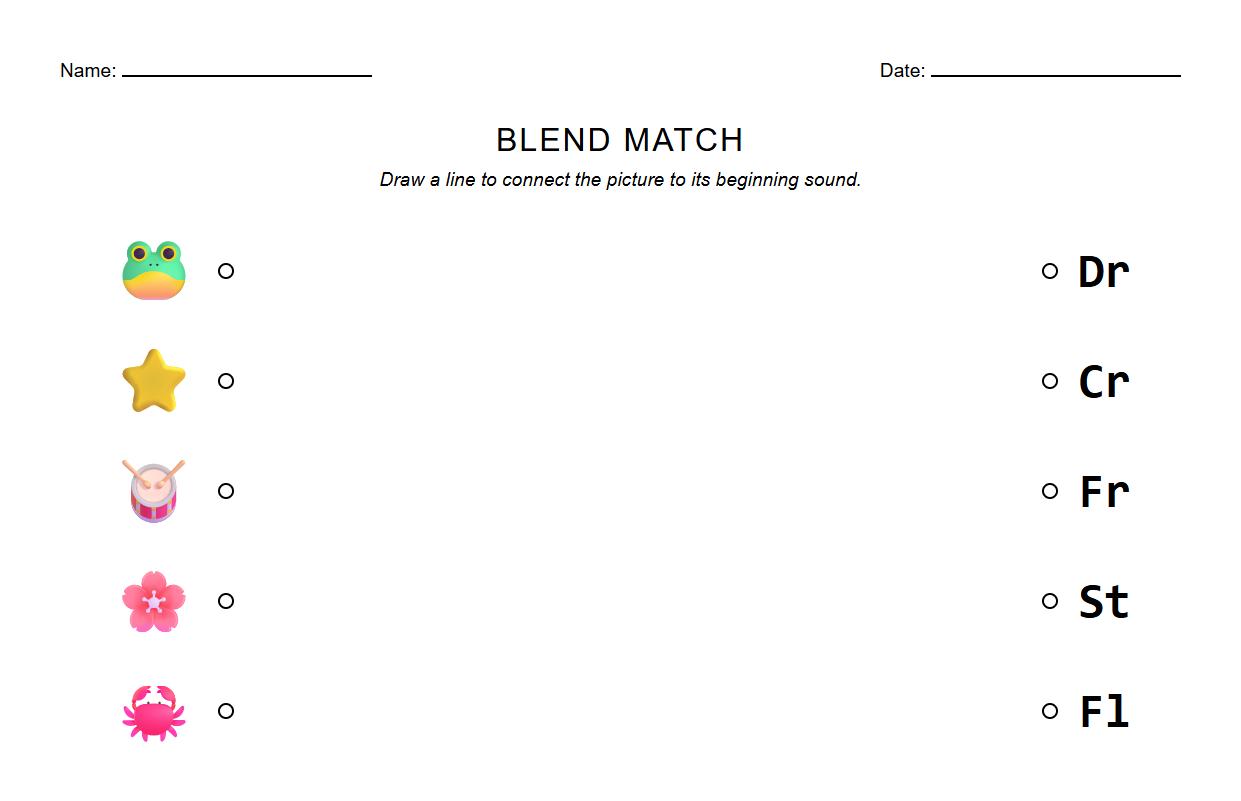
Picture and Blend Sound Association Worksheet

Download PDF     Pin it

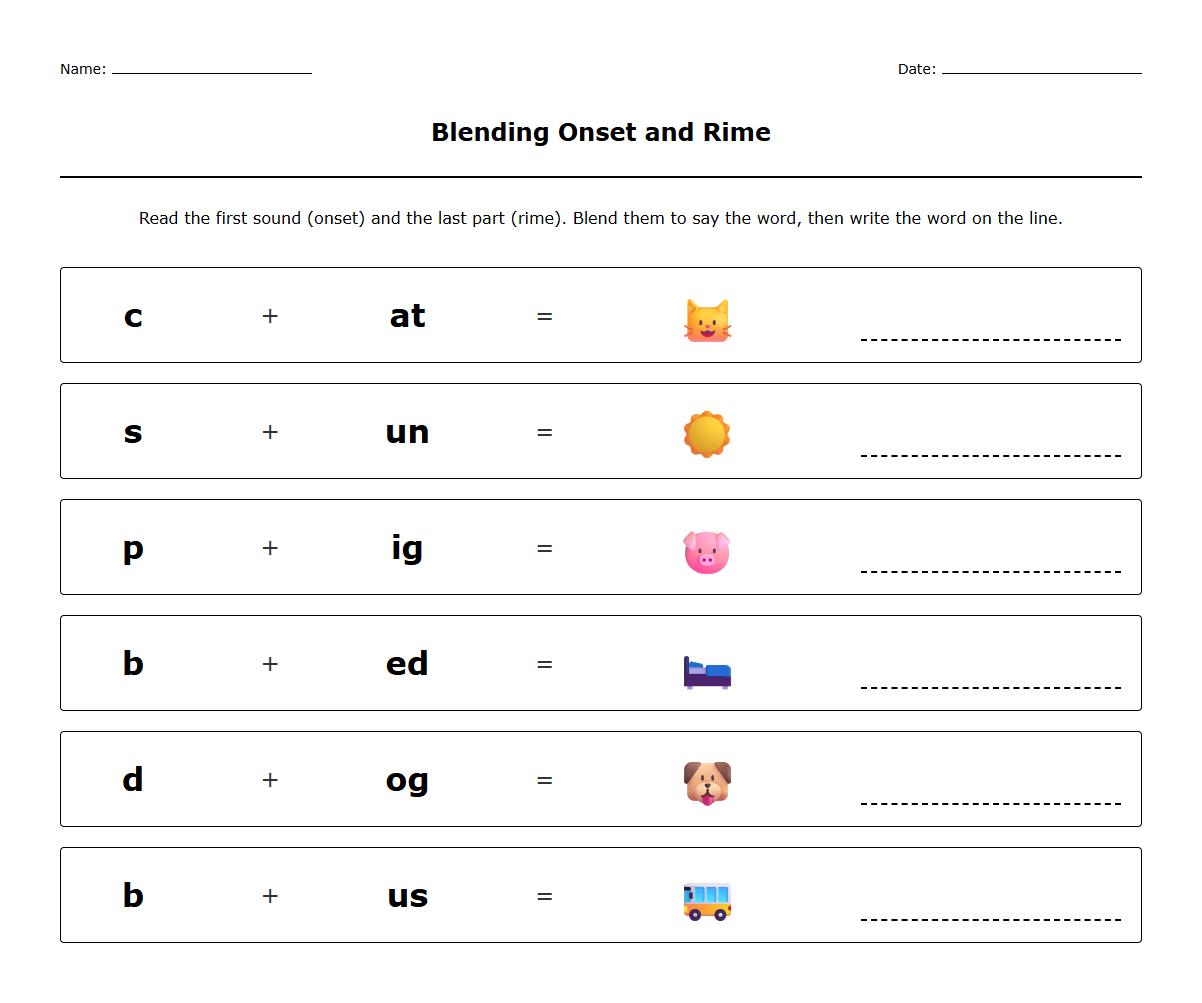
Blending Onset and Rime Worksheet

Blending Onset and Rime Worksheet
Download PDF     Pin it

Circle the Correct Initial Blend Task
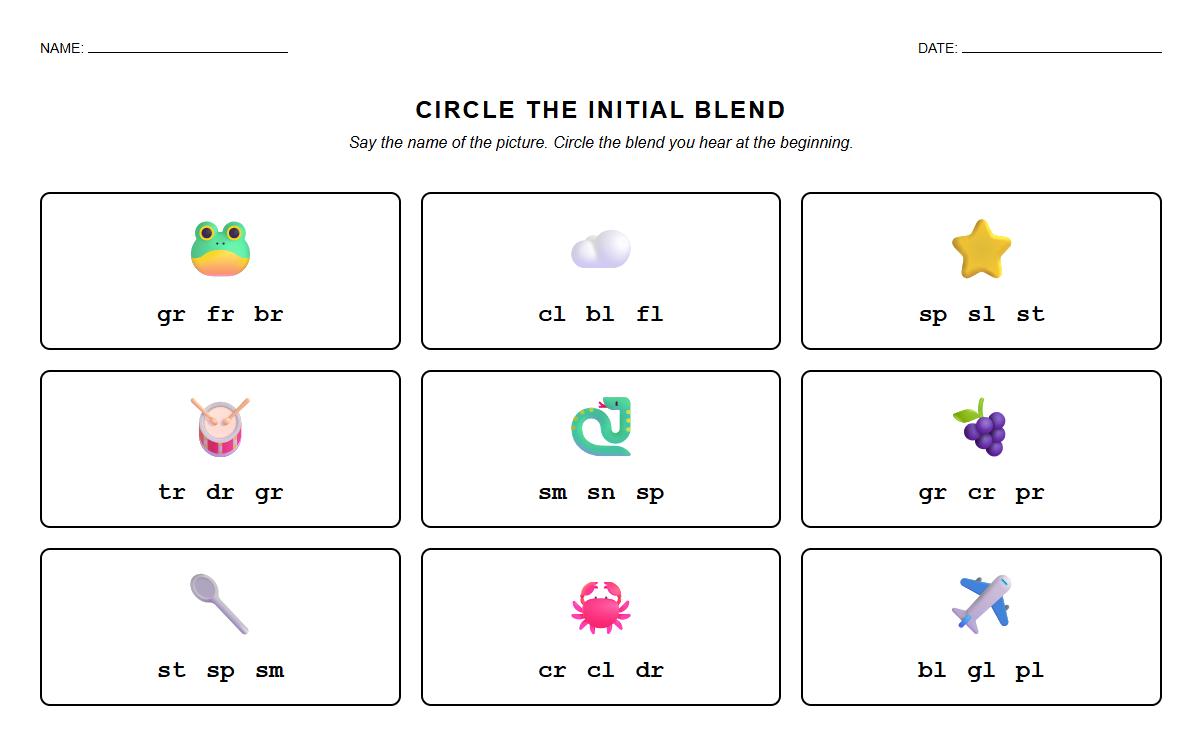
Circle the Correct Initial Blend Task

Download PDF     Pin it

Consonant Blend Word Building Strips
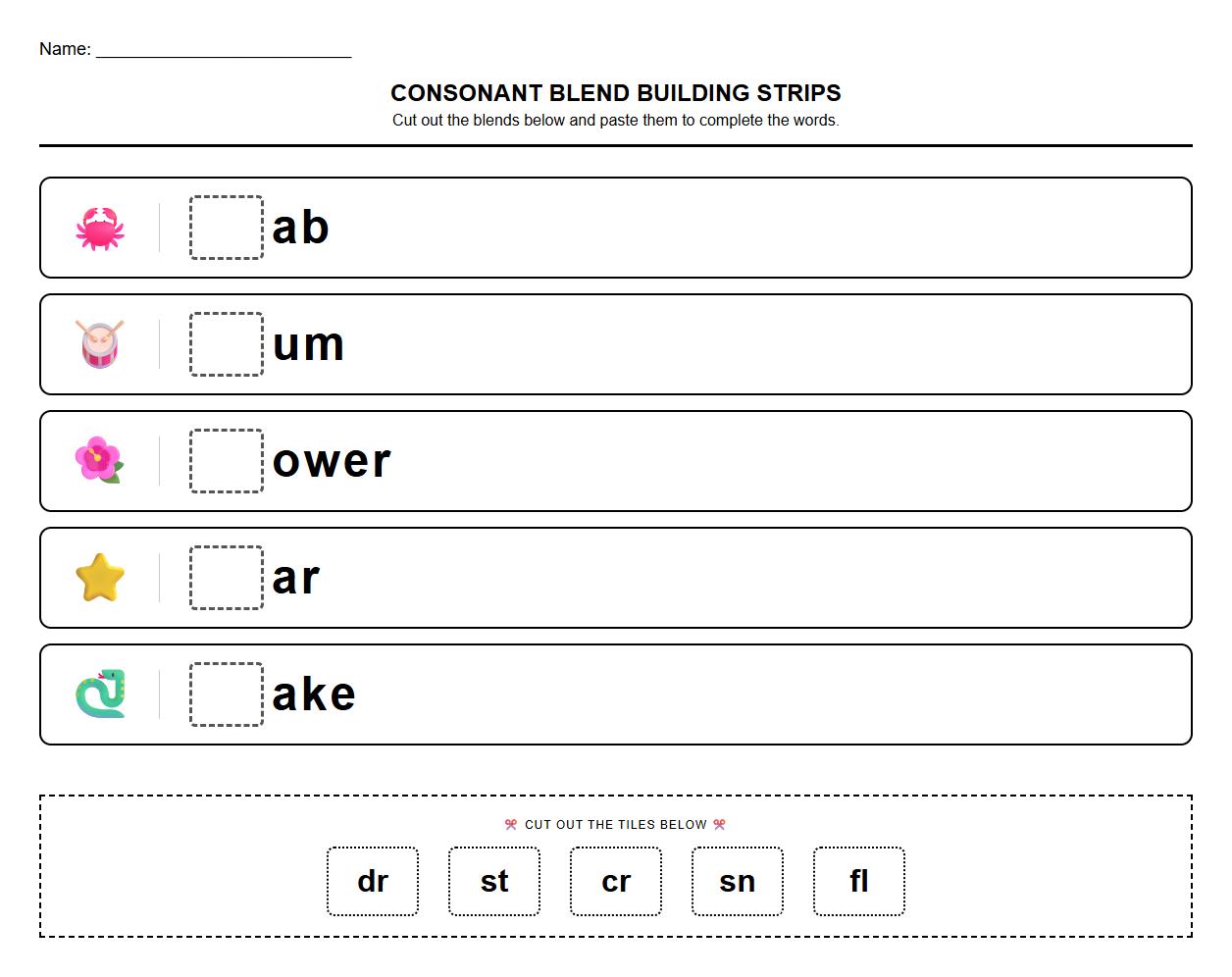
Consonant Blend Word Building Strips

Download PDF     Pin it

Ending Consonant Blend Segmentation Worksheet
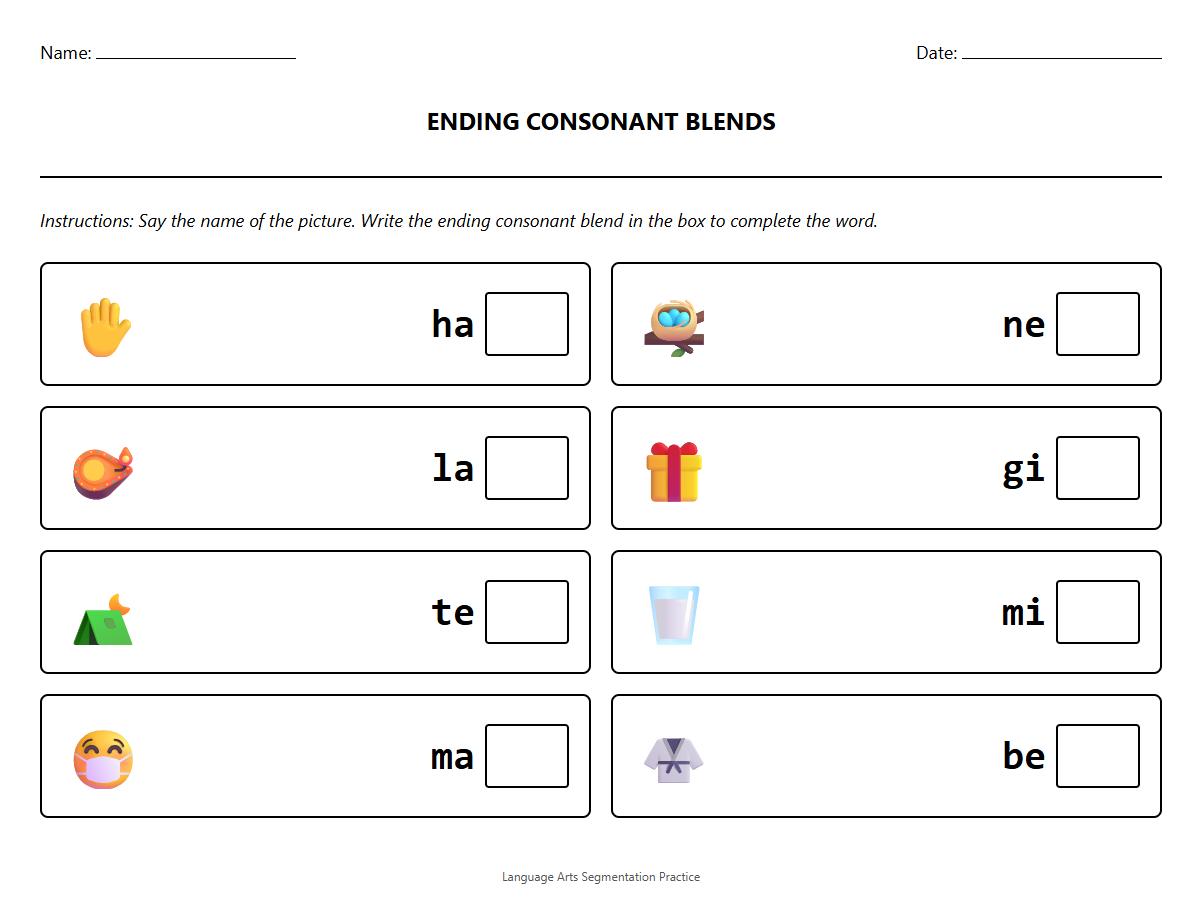
Ending Consonant Blend Segmentation Worksheet

Download PDF     Pin it

What are Consonant Blends and How Do They Sound in Words?

Consonant blends are groups of two or three consonants where each sound is heard clearly, such as bl in "blue" or cr in "crab." These blends help children understand how sounds combine to form words. Teaching blends improves reading skills by helping children recognize sound patterns. Listening carefully to blends is essential for early phonics development.

Can You Find and Circle the Blend in Each Word?

Look at each word carefully and find the two or three consonant letters that make a blend. Circle the blend to show you understand where the sounds join together. This activity builds awareness of how blends work in different words. Encourage kids to say the word aloud before circling the blend.

Which of These Words Start with the Same Blend as "bl"?

Check each word's beginning to see if it starts with the "bl" blend, like in "blue." Highlight or mark the words that share this sound. Recognizing similar blends helps improve pronunciation and word recognition skills. This exercise encourages children to compare and contrast sounds in words.

Color the Pictures That Show a Word with the "cr" Blend

Look at each picture and decide if the word starts with the "cr" blend, like "crab" or "crop." Color only the pictures that match this blend to practice sound identification. This fun coloring task reinforces the connection between sounds and objects. Visual learning supports memory retention in early readers.

Match the Words to the Correct Blend, Such as "fl" or "pl"

Draw lines to match words to their beginning blends like "fl" in "flag" or "pl" in "plant." This matching activity strengthens your child's ability to identify blends quickly. It also helps build vocabulary by grouping words with similar sounds. Use this exercise to enhance auditory discrimination.

Fill in the Missing Blend to Complete the Word and Match the Picture

Look at the picture and word with missing beginning letters, then fill in the missing blend to complete the word correctly. This activity develops spelling and phonics skills simultaneously. Matching the word to the picture ensures comprehension. Encourage children to say the completed word out loud for reinforcement.

Which Blend Do You Hear at the Beginning of "Train"?

Listen carefully to the word "train" and identify the starting blend, which is "tr." Hearing blends at the start of words enhances phonological awareness. Ask children to repeat the blend to practice pronunciation. Recognizing initial blends supports the development of fluent reading.

Draw a Line to Connect Each Blend to a Word That Starts With It

Match blends like "st," "br," or "cl" to words that begin with those sounds by drawing lines between them. This visual activity helps children link blends with familiar vocabulary. It also promotes concentration and fine motor skills. Use this to reinforce blending sounds with word meanings.

Say the Word Out Loud and Clap When You Hear the Blend

Say each word aloud and clap your hands whenever you hear the consonant blend. This kinesthetic activity makes learning blends fun and interactive. Clapping helps children internalize the rhythm and breaks down sounds in words. It supports auditory processing and early literacy skills.

Sort the Words Into Groups Based on Their Beginning Blend

Group words together by their starting blends, such as "sl," "pl," or "gr." Sorting helps children categorize sounds and develop phonics awareness. This activity also builds critical thinking by comparing word families. Use this as a hands-on exercise for word recognition practice.


More in Language Arts Category


About the author. Nylen Smith is a dedicated educator and cofounder of KWorksheet.com, a popular platform specializing in high-quality kindergarten worksheets and printable activities.

Disclaimer. The information provided in this document is for general informational purposes and/or document sample only and is not guaranteed to be factually right or complete. Please report to us via contact-us page if you find and error in this page, thanks.

Comments

No comment yet