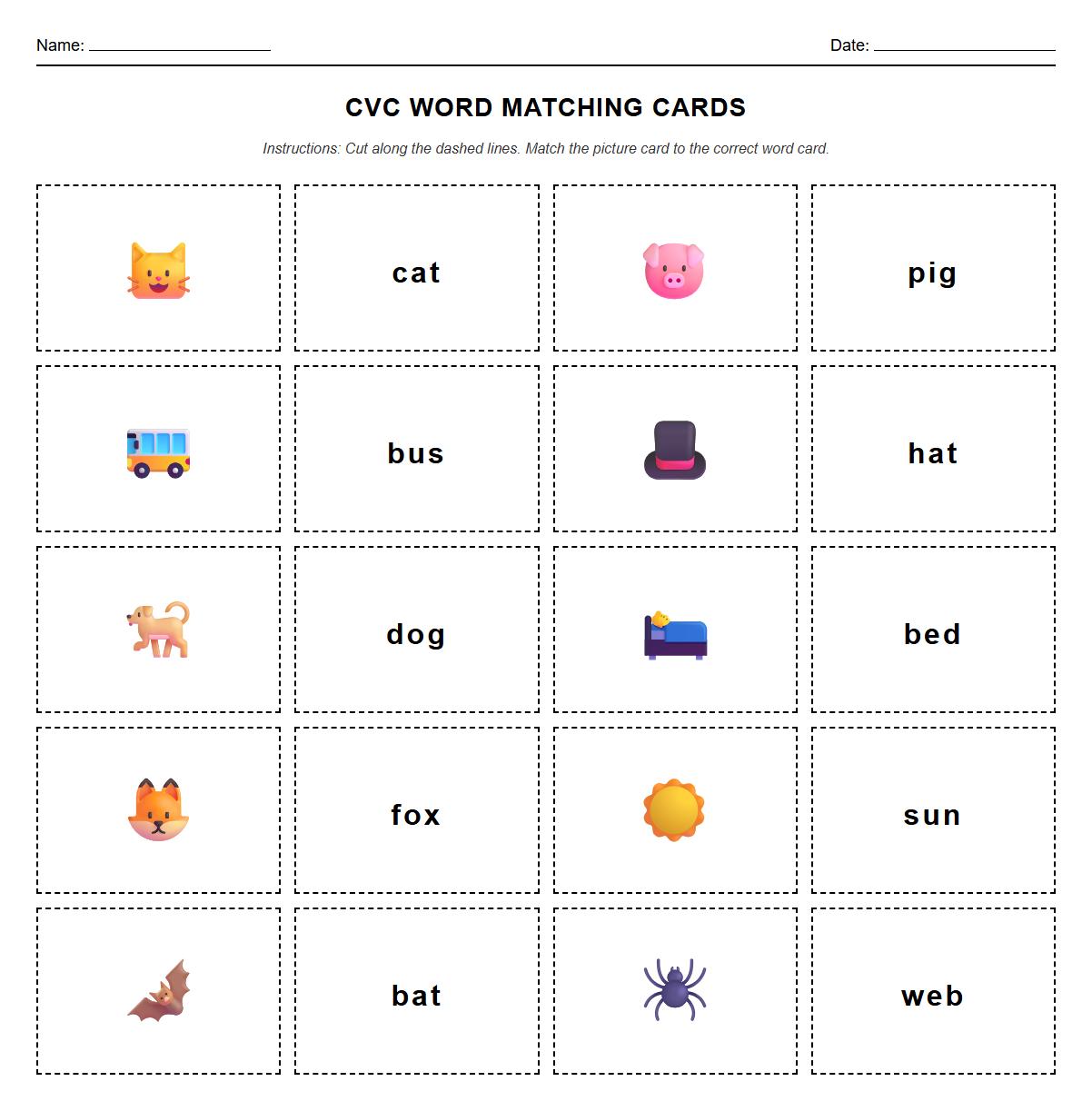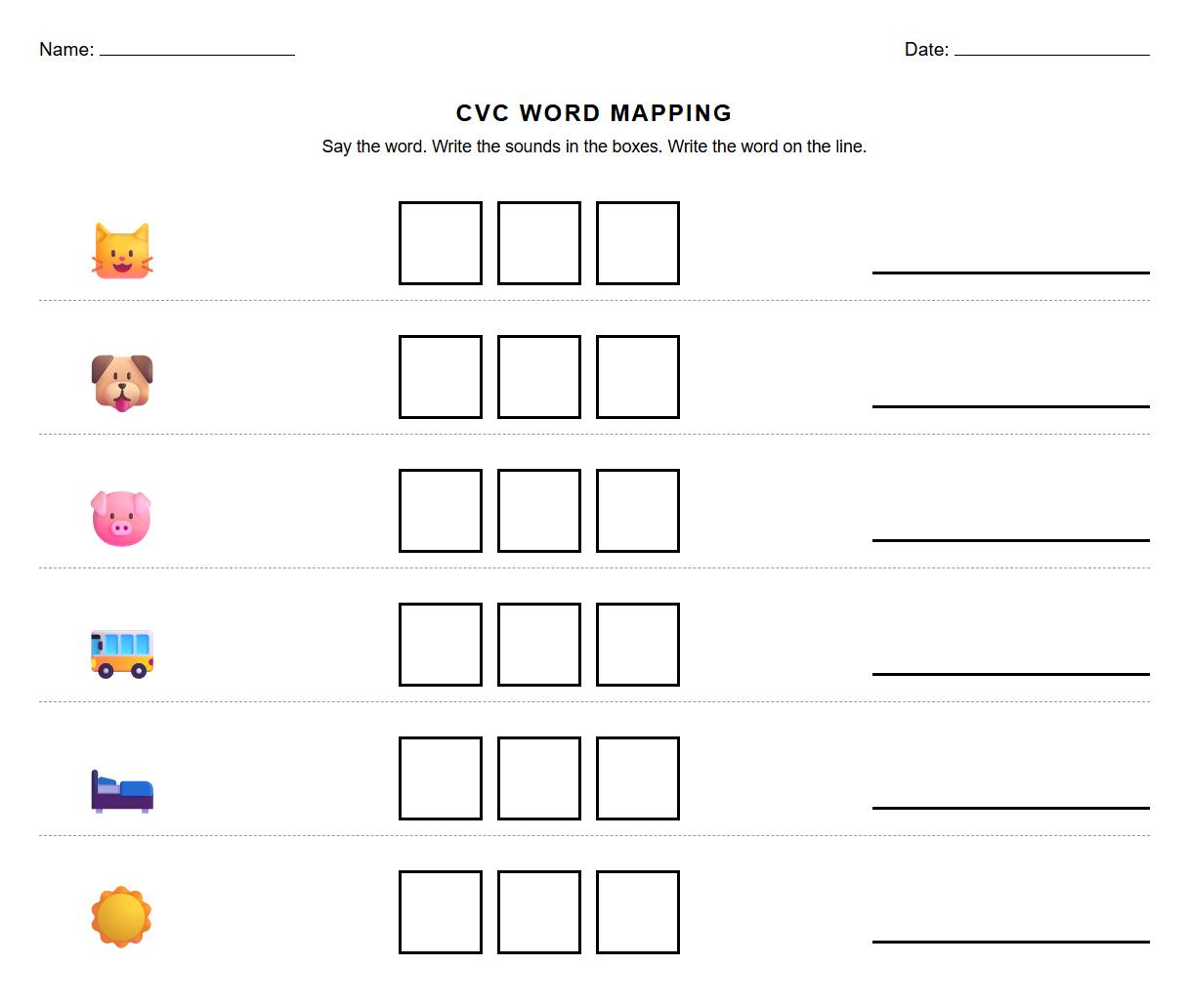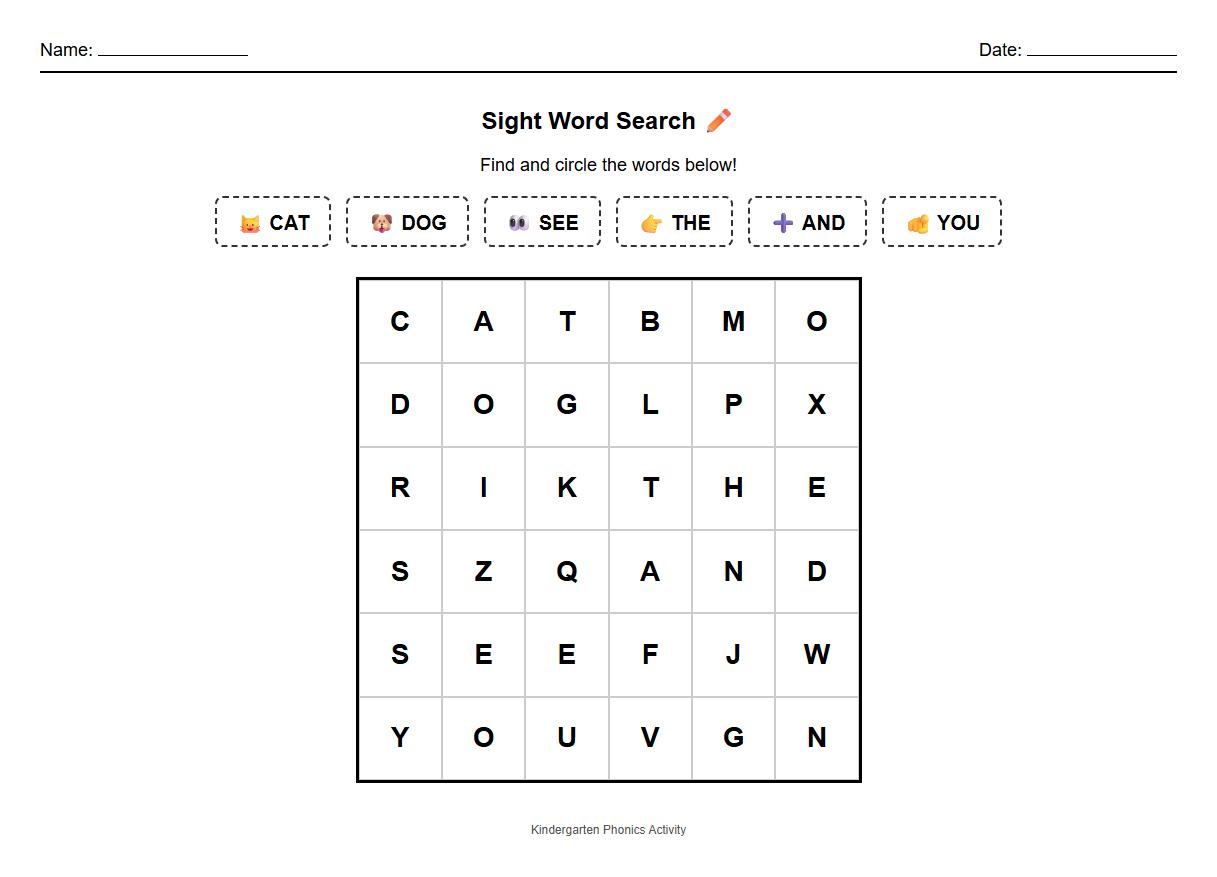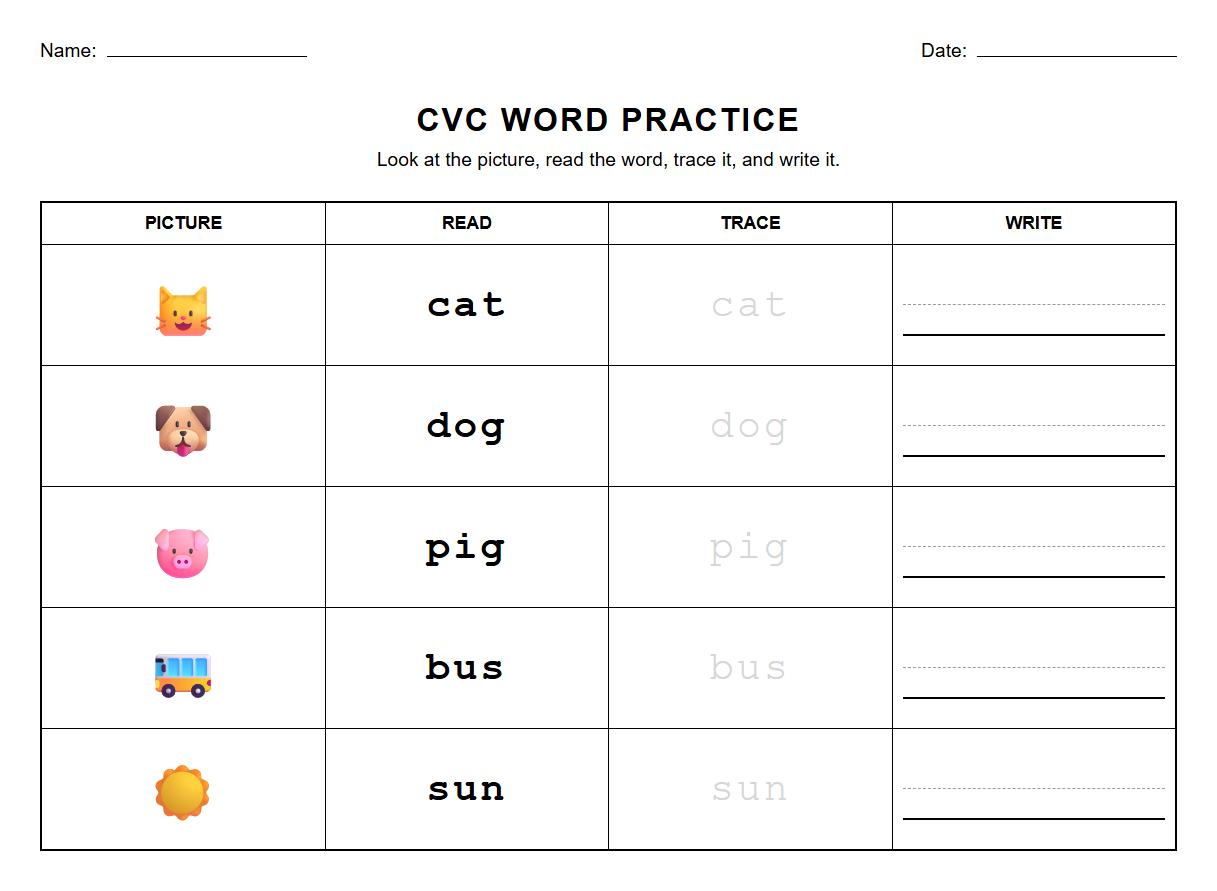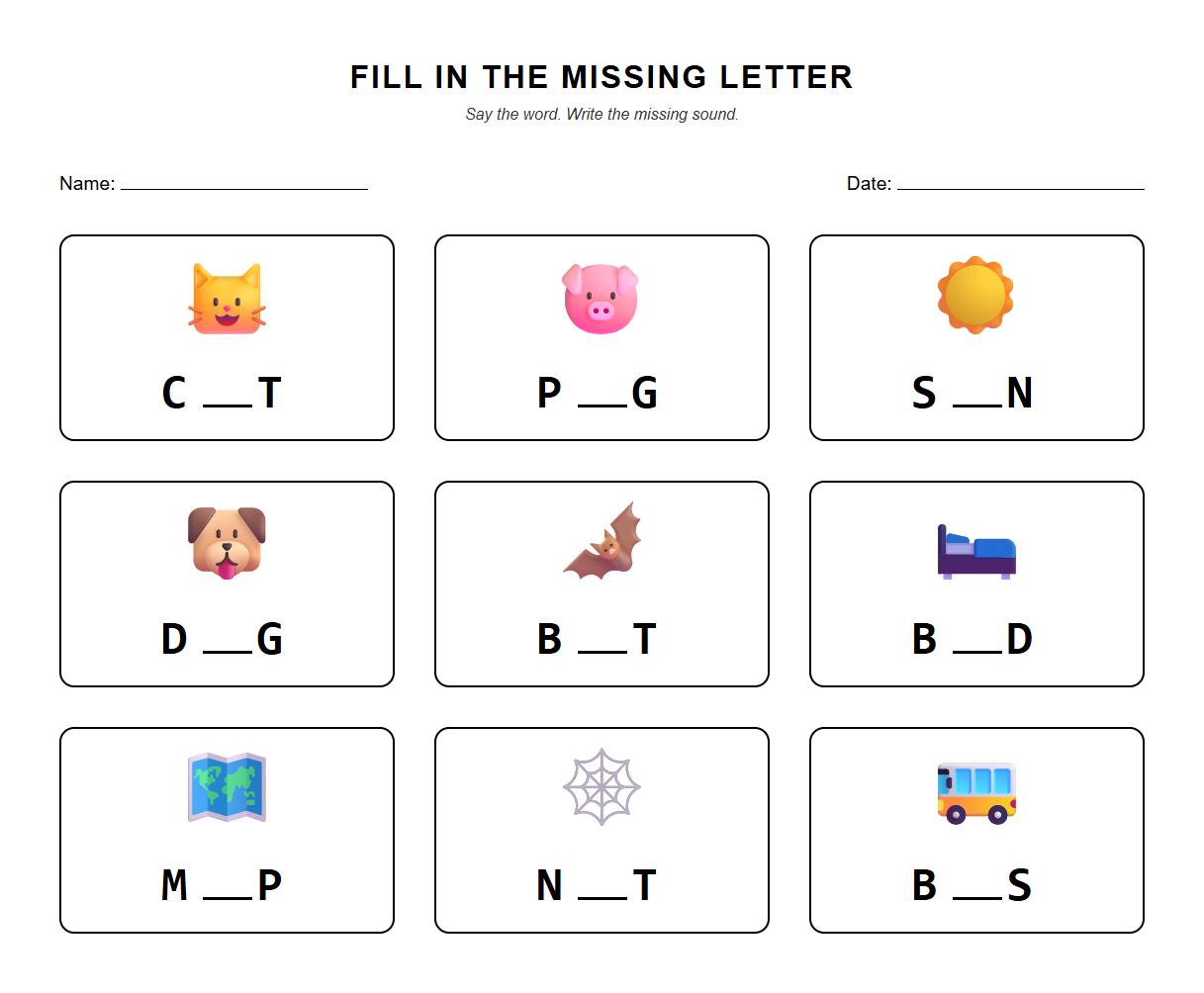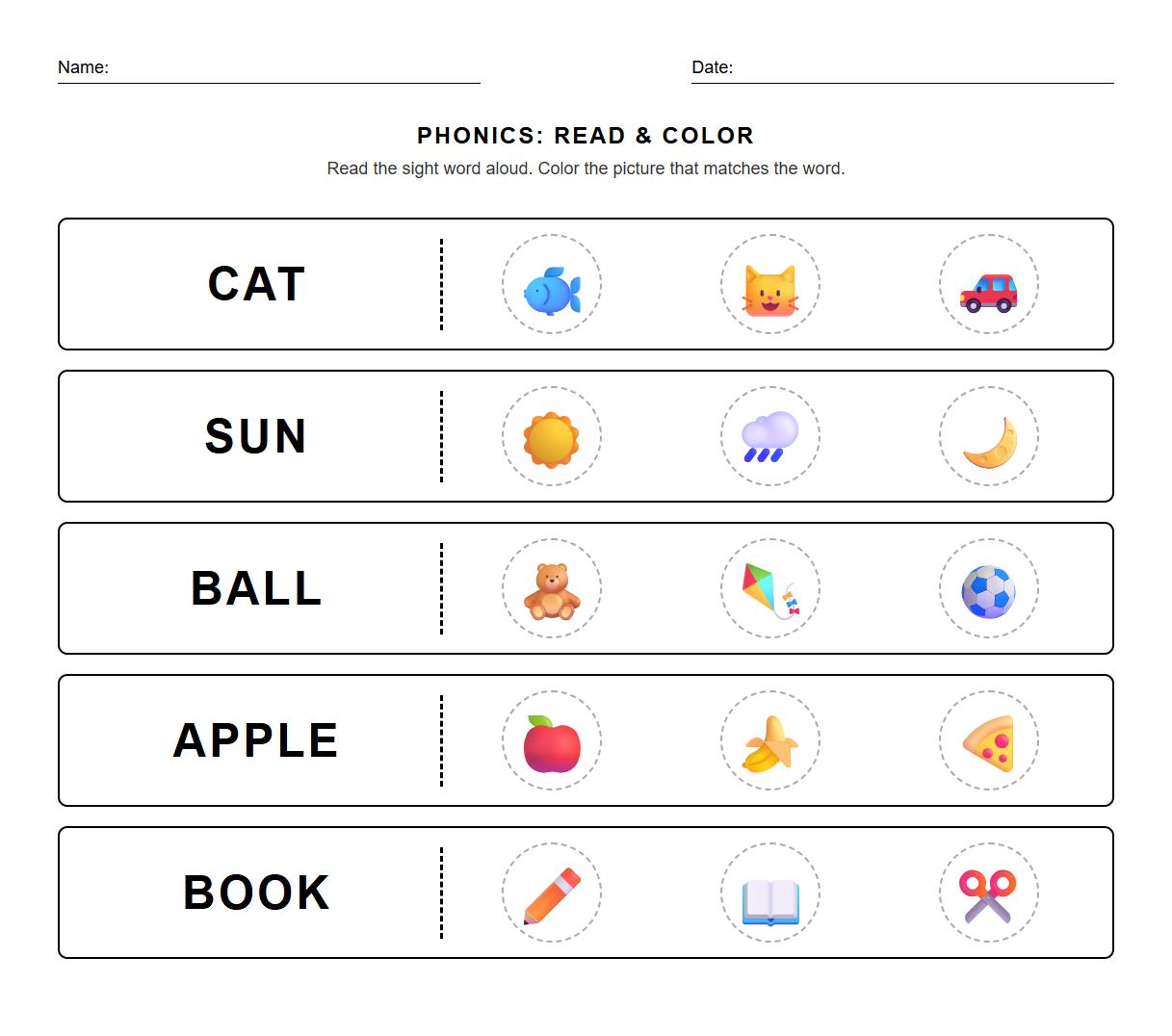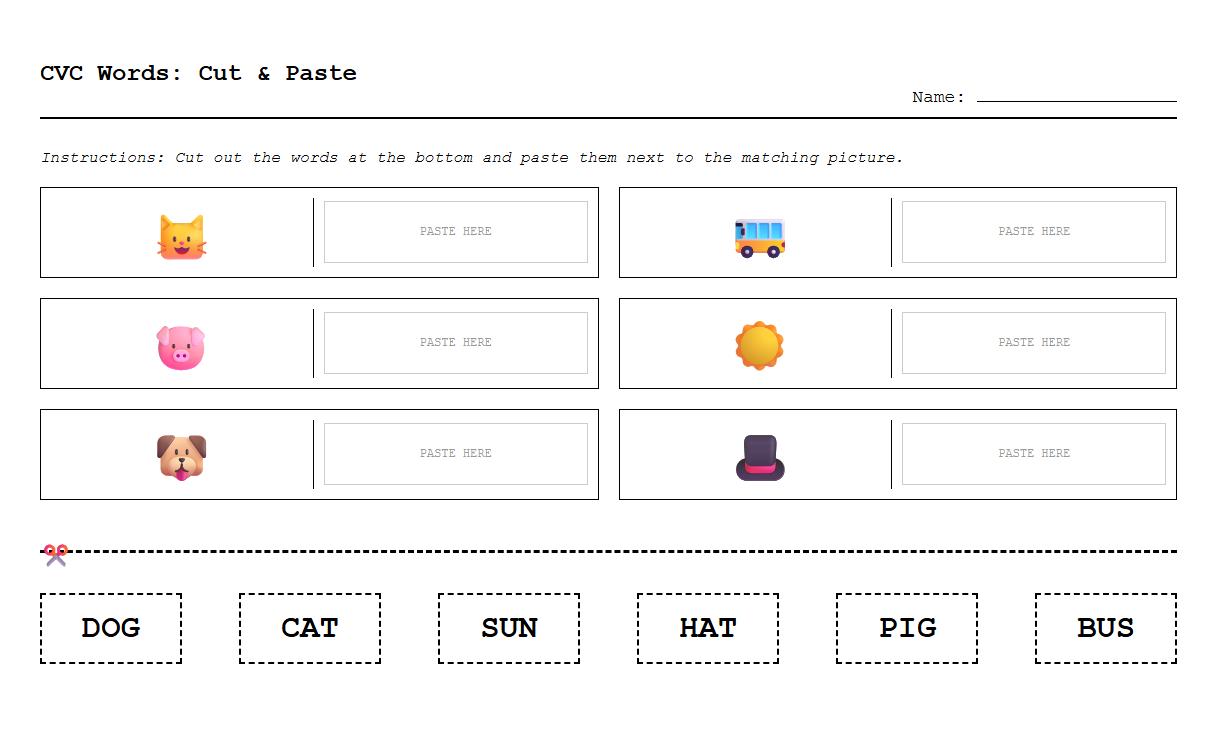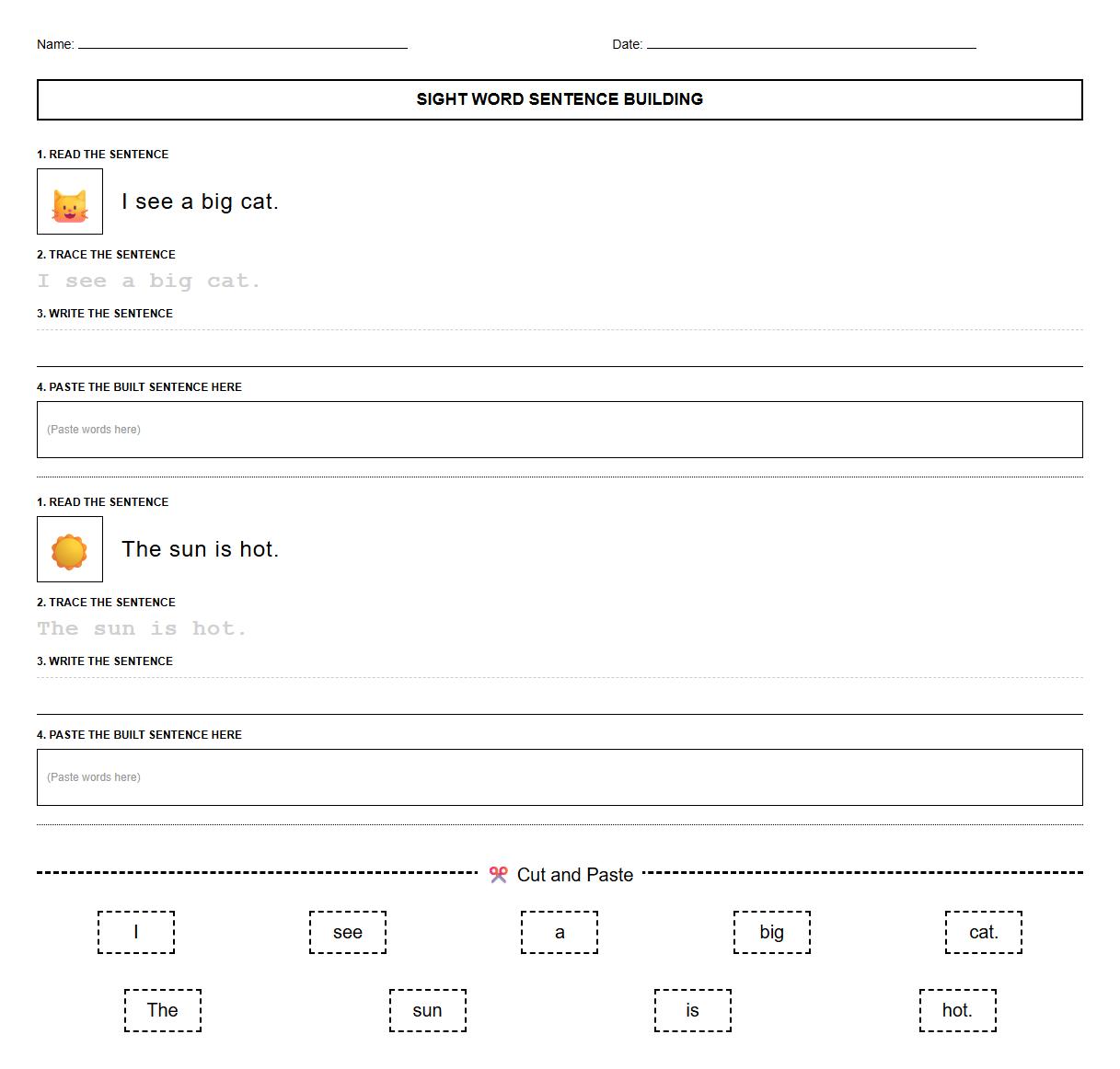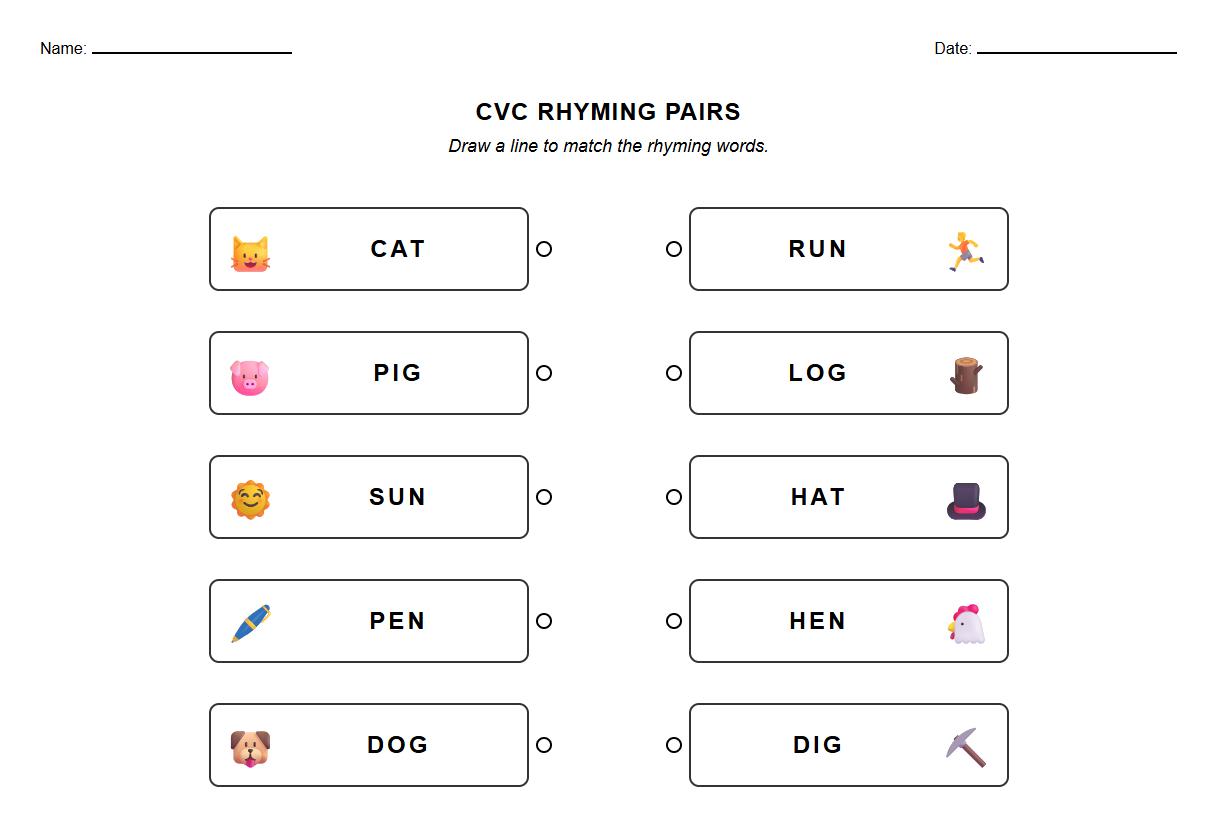
Kindergarten phonics CVC sight words worksheet activities are designed to help young learners build foundational reading skills by combining consonant-vowel-consonant patterns with high-frequency sight words. These exercises reinforce letter recognition, phonemic awareness, and word formation through engaging, hands-on practice. Explore our collection of worksheets to support early literacy development in your classroom or at home.
What are CVC words and how are they used in kindergarten phonics?
CVC words are simple three-letter words consisting of a consonant, vowel, and consonant, such as "cat" and "dog." They are foundational in kindergarten phonics as they help children practice blending individual sounds to form words. Teachers use CVC words to build early decoding skills and boost confidence in beginning readers. These words provide a manageable step in phonemic awareness and phonics instruction.
How can sight words improve early reading skills in kindergarten students?
Sight words are common words that readers recognize instantly without decoding, like "the" and "and." Mastery of these words improves fluency since children spend less time sounding out each word. This helps young readers focus on comprehension and overall reading flow. Sight word recognition is a crucial aspect of early literacy development in kindergarten.
What activities help children recognize and spell CVC words?
Engaging activities like word matching, magnetic letter play, and spelling games support CVC word recognition and spelling. Teachers and parents can use interactive worksheets where children fill in missing letters to complete CVC words. Reading aloud simple stories with CVC words also strengthens understanding. Repetitive practice in fun formats builds phonics skills effectively.
How many sight words should a kindergartener learn by the end of the year?
A typical kindergarten goal is for students to learn approximately 40 to 50 sight words by the end of the year. This range ensures a solid foundation for reading common text and building confidence. The words are carefully chosen to include frequently used terms in early literacy. Progress may vary based on individual learning pace and instructional methods.
What is the difference between sight words and CVC words?
Sight words are words recognized instantly without decoding, often because they do not follow standard phonetic rules. In contrast, CVC words are simple words that children can sound out using basic phonics patterns. Sight words emphasize memorization, while CVC words focus on phonemic decoding skills. Both types are essential for comprehensive early reading development.
How can worksheets be used to teach word families in kindergarten?
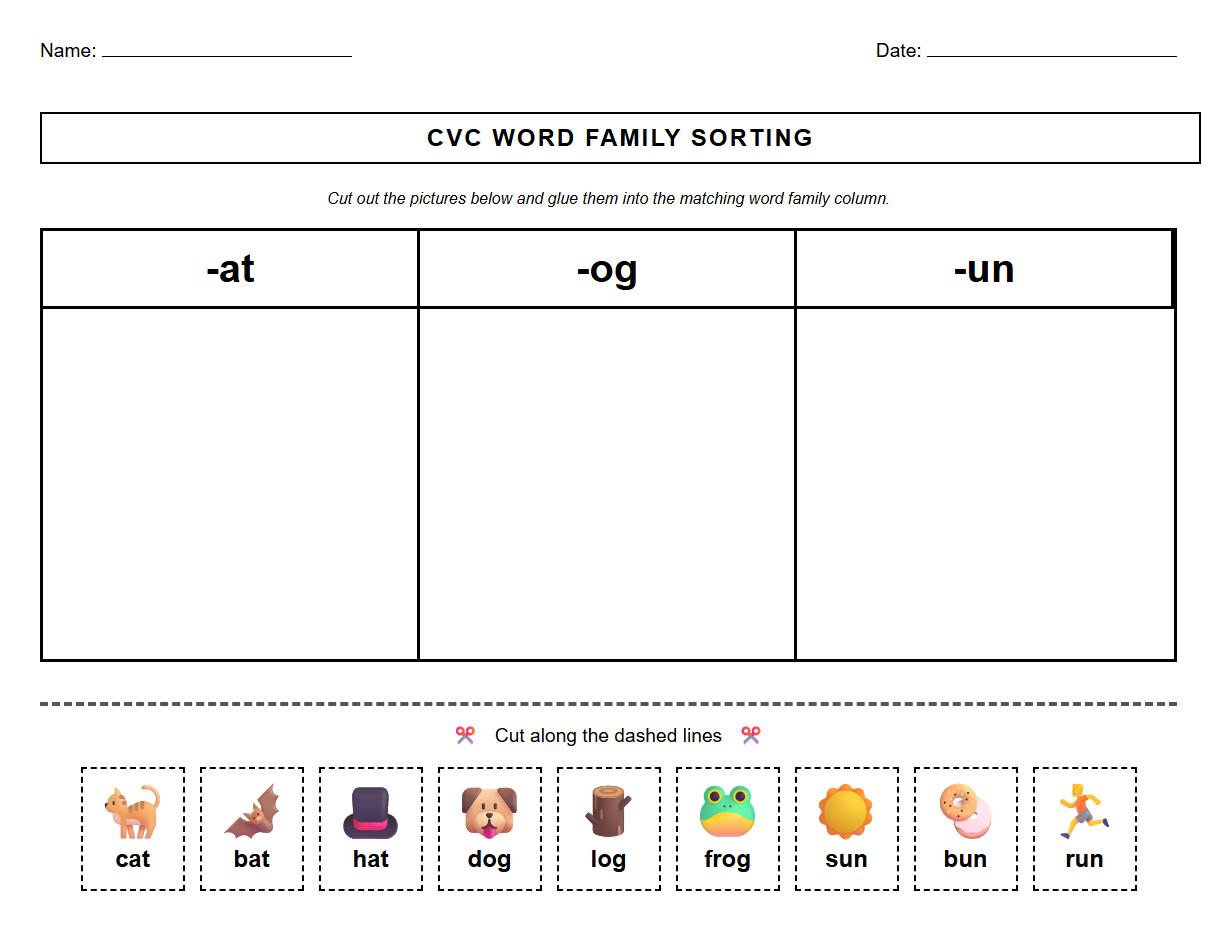
Worksheets designed around word families encourage children to explore groups of words with the same ending sounds, like "bat," "cat," and "hat." These activities help students identify patterns and predict spelling, reinforcing phonics concepts. Parents and teachers can use fill-in-the-blank, sorting, and matching exercises on worksheets. Such targeted practice enhances reading and writing skills.
What are effective ways to assess CVC word understanding in young learners?
Effective assessments include oral reading checkpoints where children decode CVC words aloud. Teachers can also use written spelling tests and interactive games to observe word recognition and sound blending. Informal assessments like guided reading sessions offer immediate feedback on student progress. These varied approaches help tailor instruction to each learner's needs.
How do you introduce new sight words to kindergarten students?
Introducing new sight words involves repetition, visual exposure, and context usage. Use flashcards, word walls, and interactive read-alouds to present the words frequently. Incorporate sight words into daily activities to help children see their practical use. Consistent review and application support long-term retention.
What visual aids can support CVC and sight word recognition?
Visual aids like flashcards, word walls, and illustrated charts enhance recognition of both CVC and sight words. Color-coded letters and images linked to word meanings engage young learners. Manipulative letters and interactive whiteboards also provide hands-on learning experiences. These tools make abstract concepts concrete and memorable.
Which classroom games reinforce both phonics and sight word skills?
Games such as bingo, word hunts, and memory matching strengthen both phonics and sight word skills. These activities promote active participation and motivation while reinforcing word recognition and decoding. Using board games with letter tiles or digital apps also supports varied learning styles. Fun, interactive games foster a positive literacy environment.


Sight Words Reading Fluency Worksheet for Early Kindergarten