Kindergarten Phonics Digraphs Sorting Worksheet

📅 Jan 27, 2025 👤 Nylen Smith

Kindergarten phonics digraphs sorting worksheets help young learners identify and categorize common two-letter sound combinations like ch, sh, and th. These activities enhance letter-sound recognition and build foundational reading skills through engaging sorting tasks. Explore the available worksheets to support your child's phonics development today.

Picture and Word Digraph Sorting Worksheet
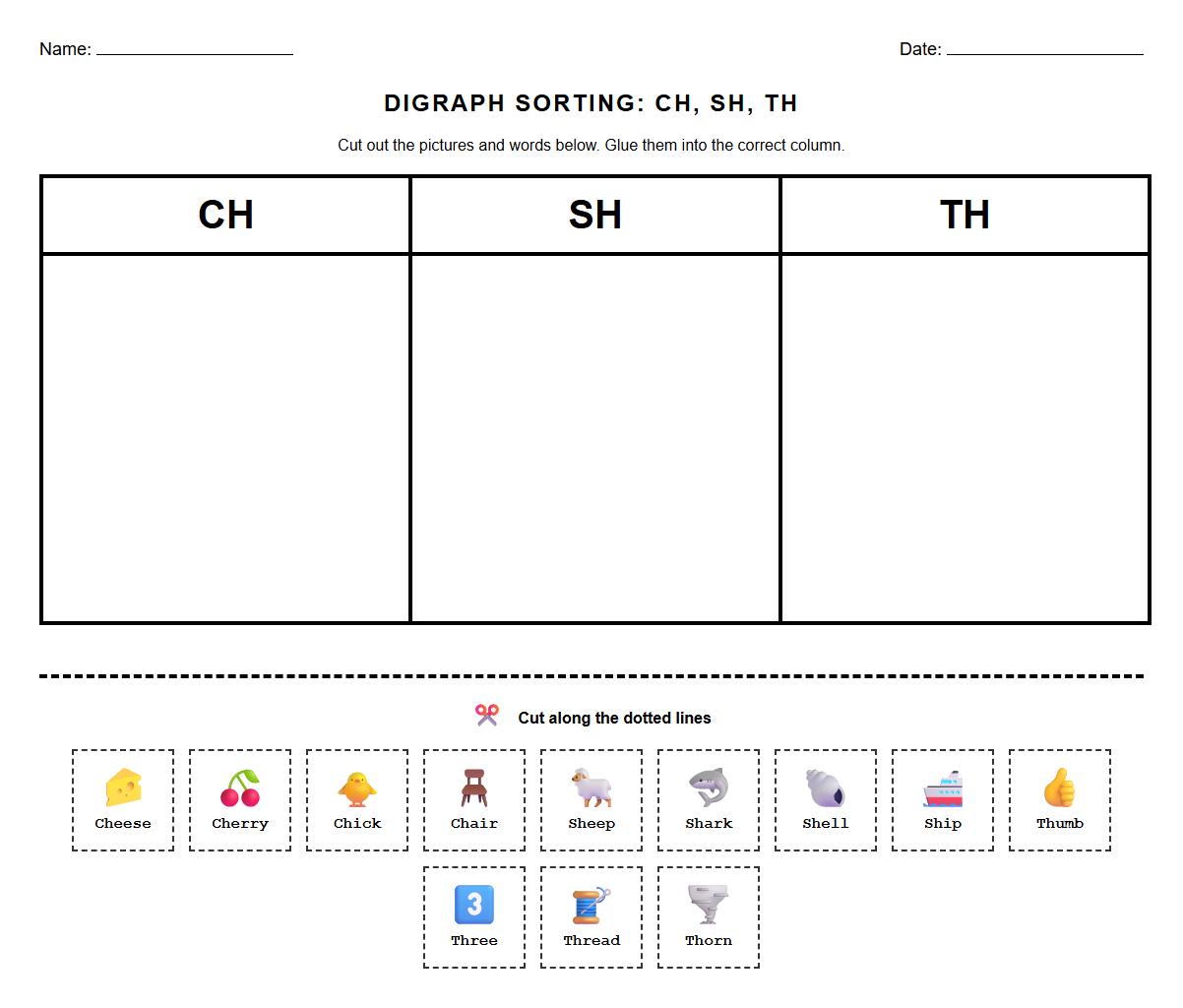
Picture and Word Digraph Sorting Worksheet

Download PDF     Pin it

Initial vs Final Digraphs Sorting Chart
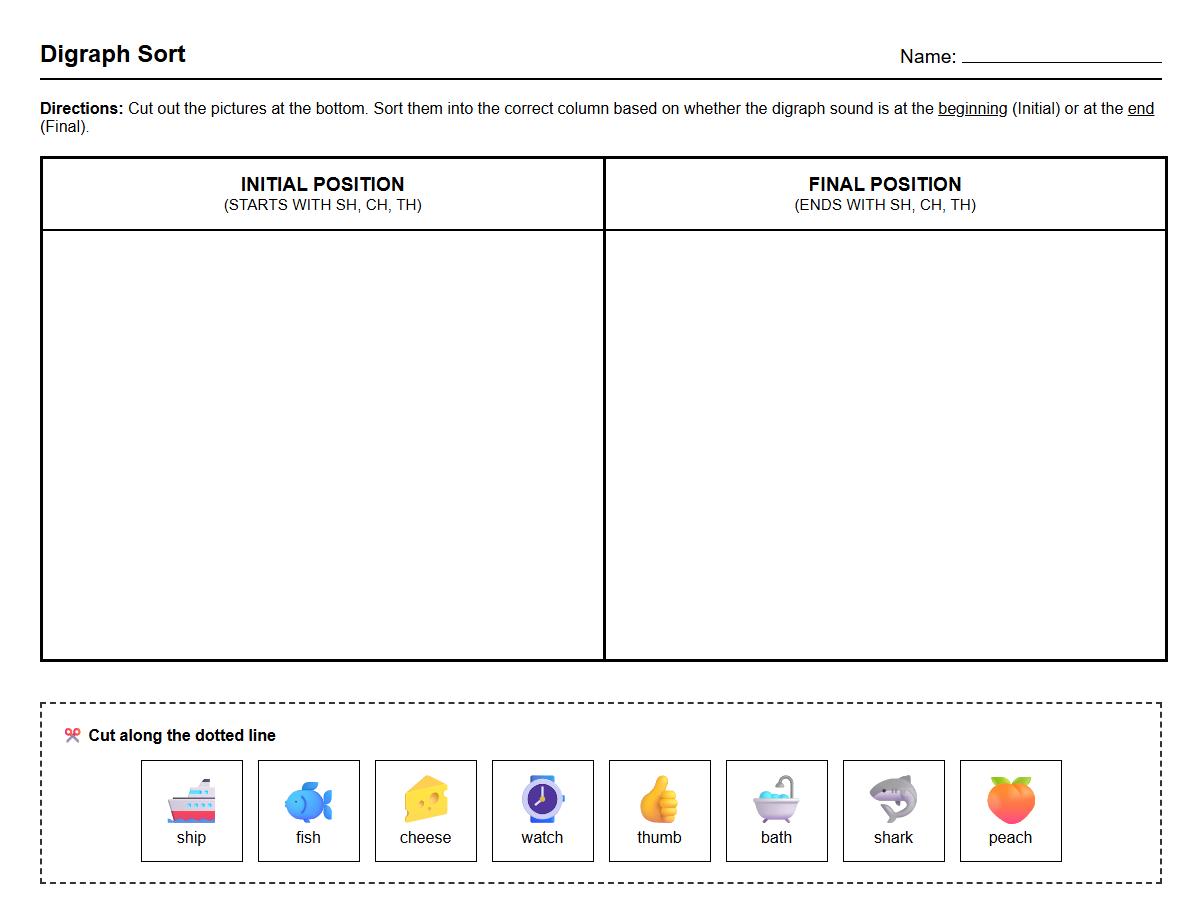
Initial vs Final Digraphs Sorting Chart

Download PDF     Pin it

Digraph Cut and Paste Sorting Activity
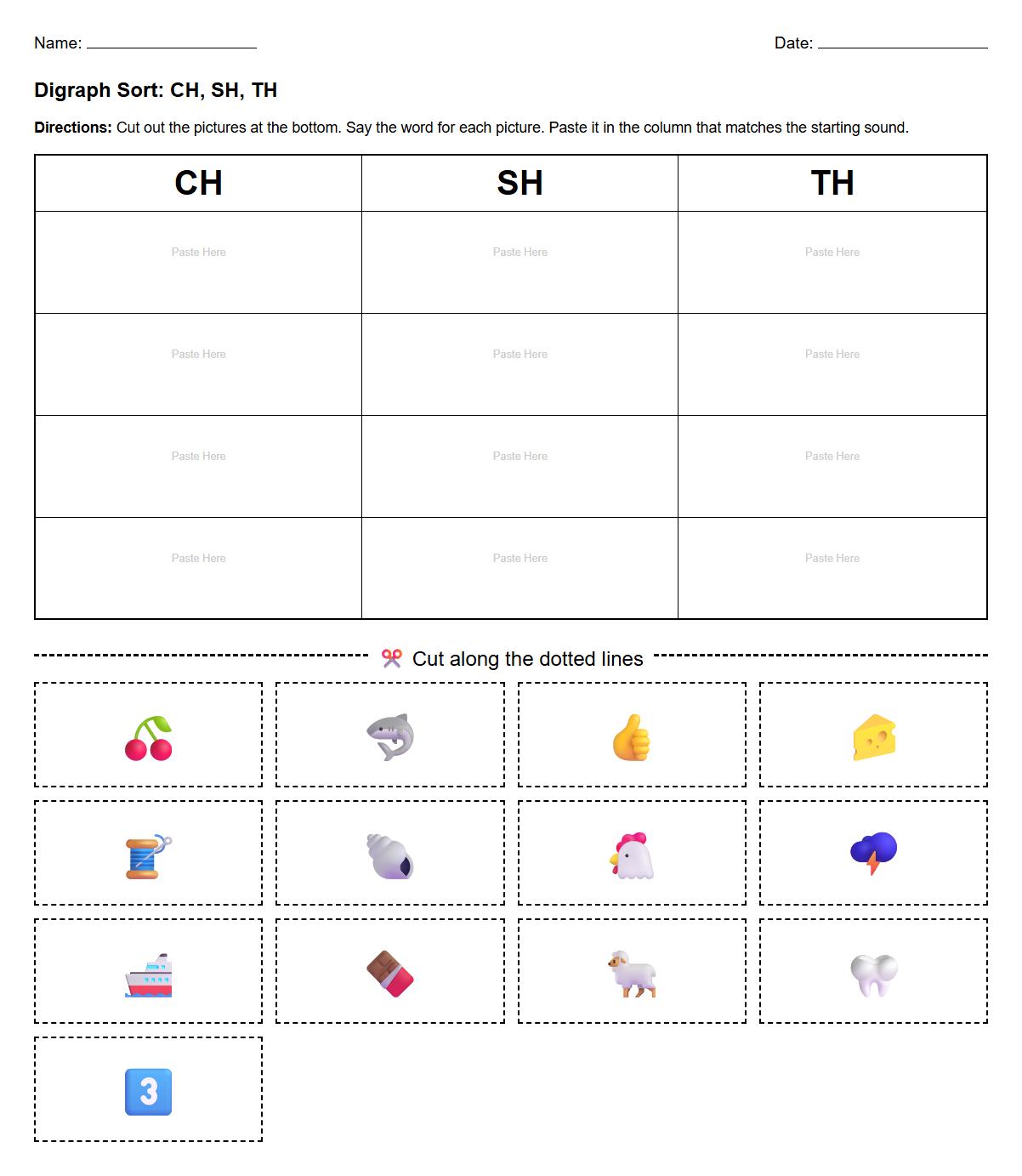
Digraph Cut and Paste Sorting Activity

Download PDF     Pin it

Word Family Digraph Sorting Worksheet
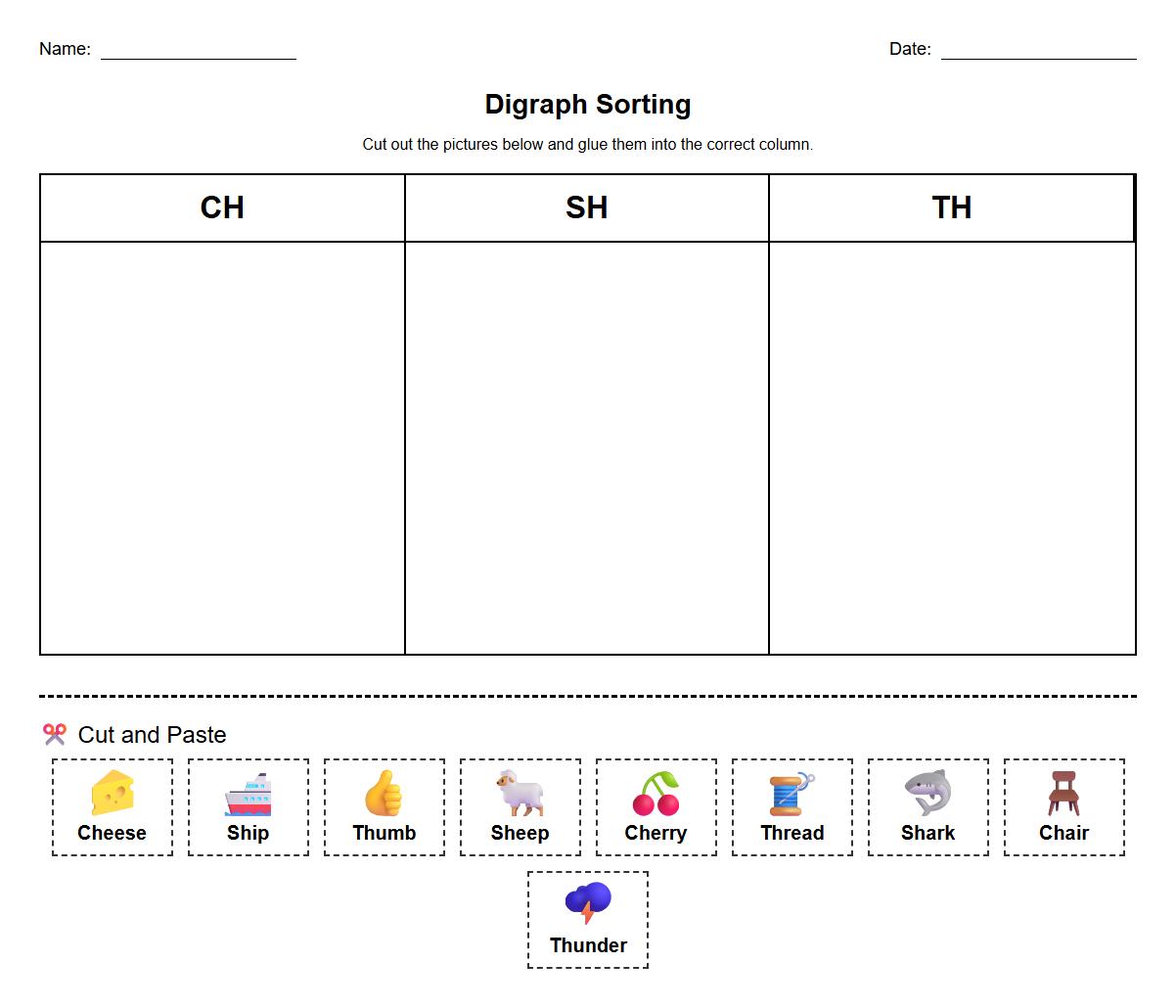
Word Family Digraph Sorting Worksheet

Download PDF     Pin it

Real and Nonsense Digraph Words Sort
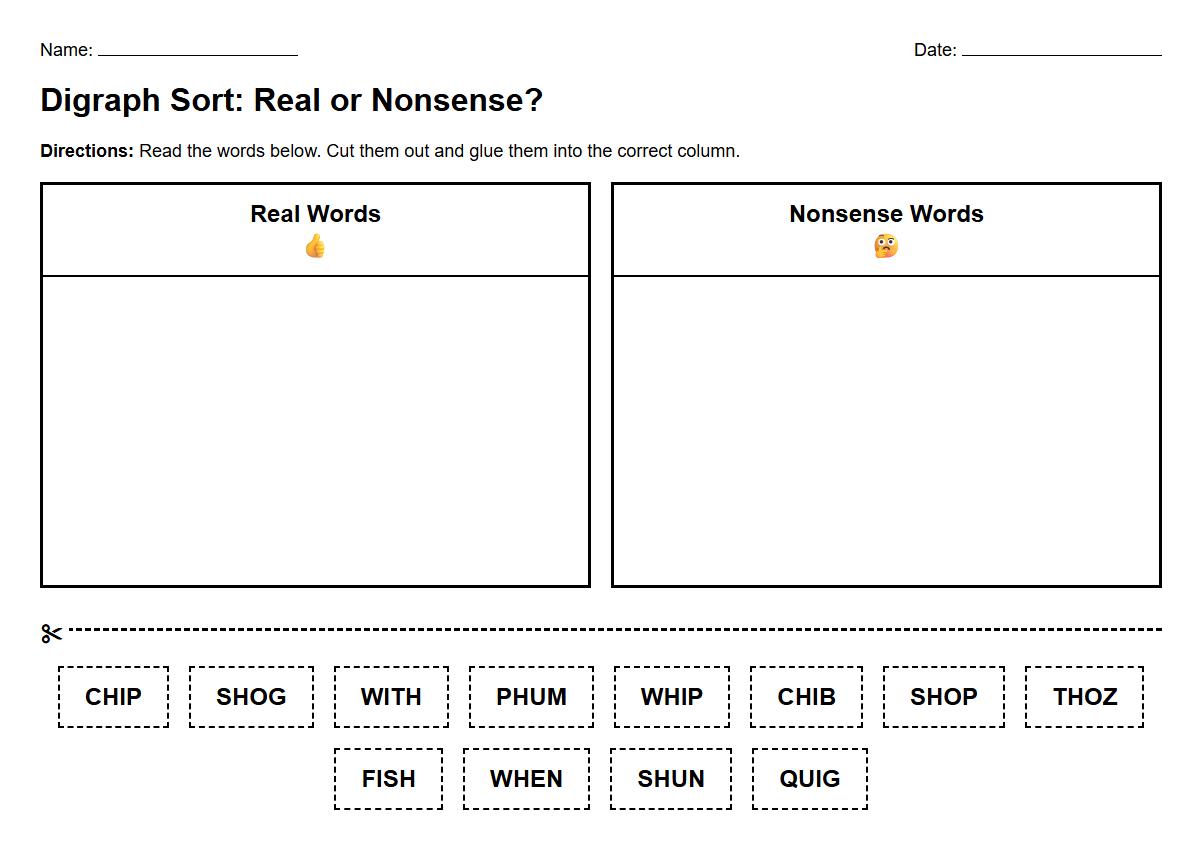
Real and Nonsense Digraph Words Sort

Download PDF     Pin it

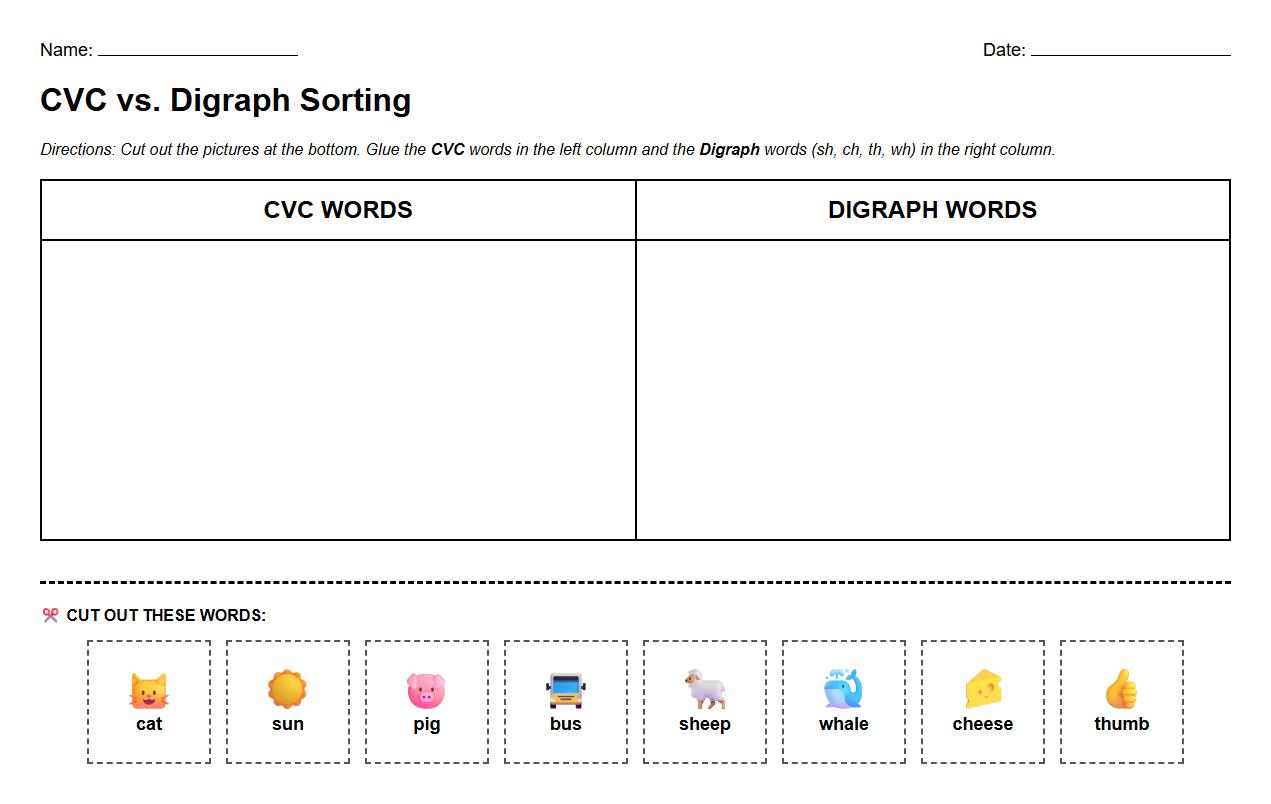
CVC vs Digraph Words Sorting Table

CVC vs Digraph Words Sorting Table

Download PDF     Pin it

Vowel and Consonant Digraphs Classification Sheet
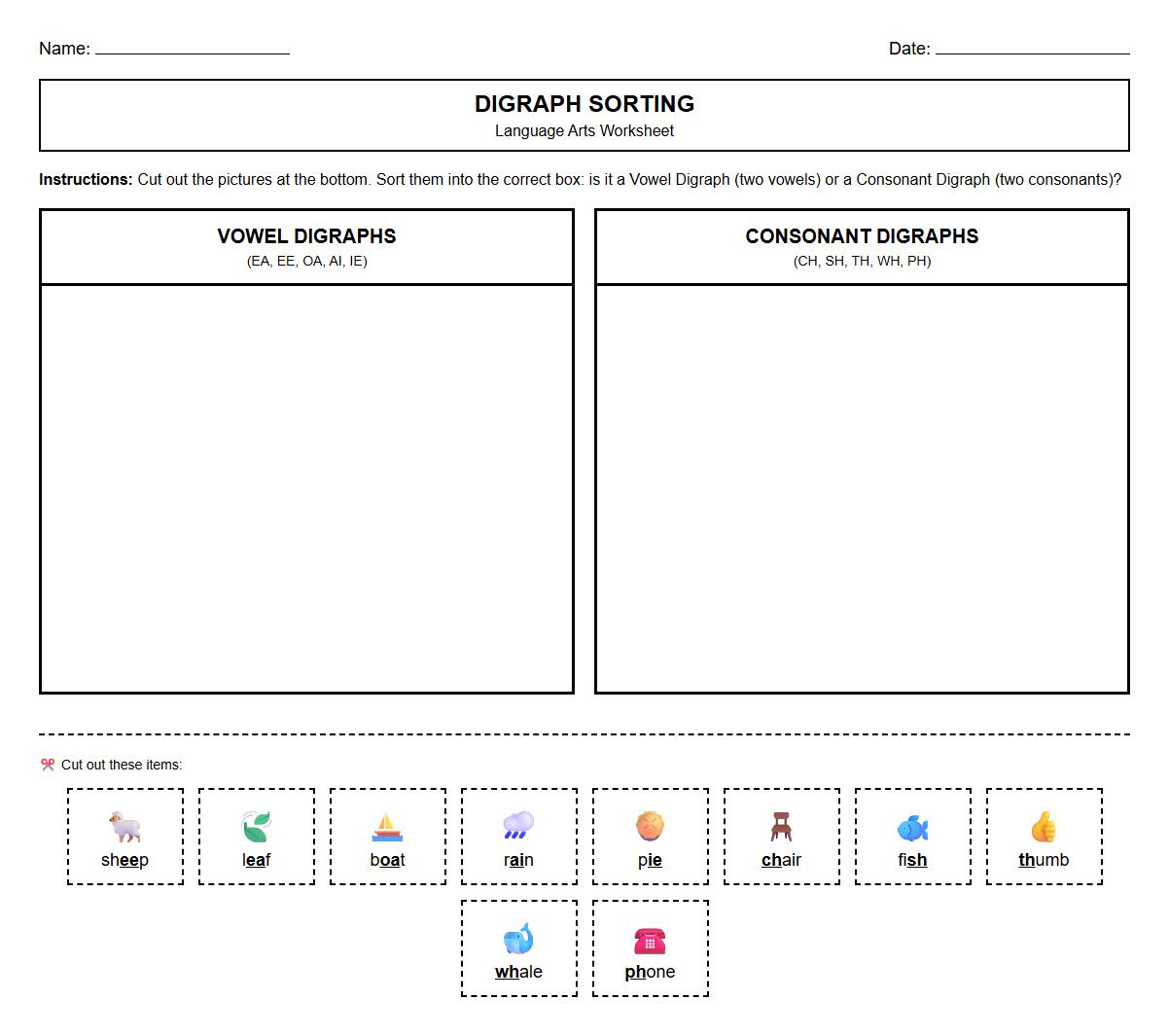
Vowel and Consonant Digraphs Classification Sheet

Download PDF     Pin it

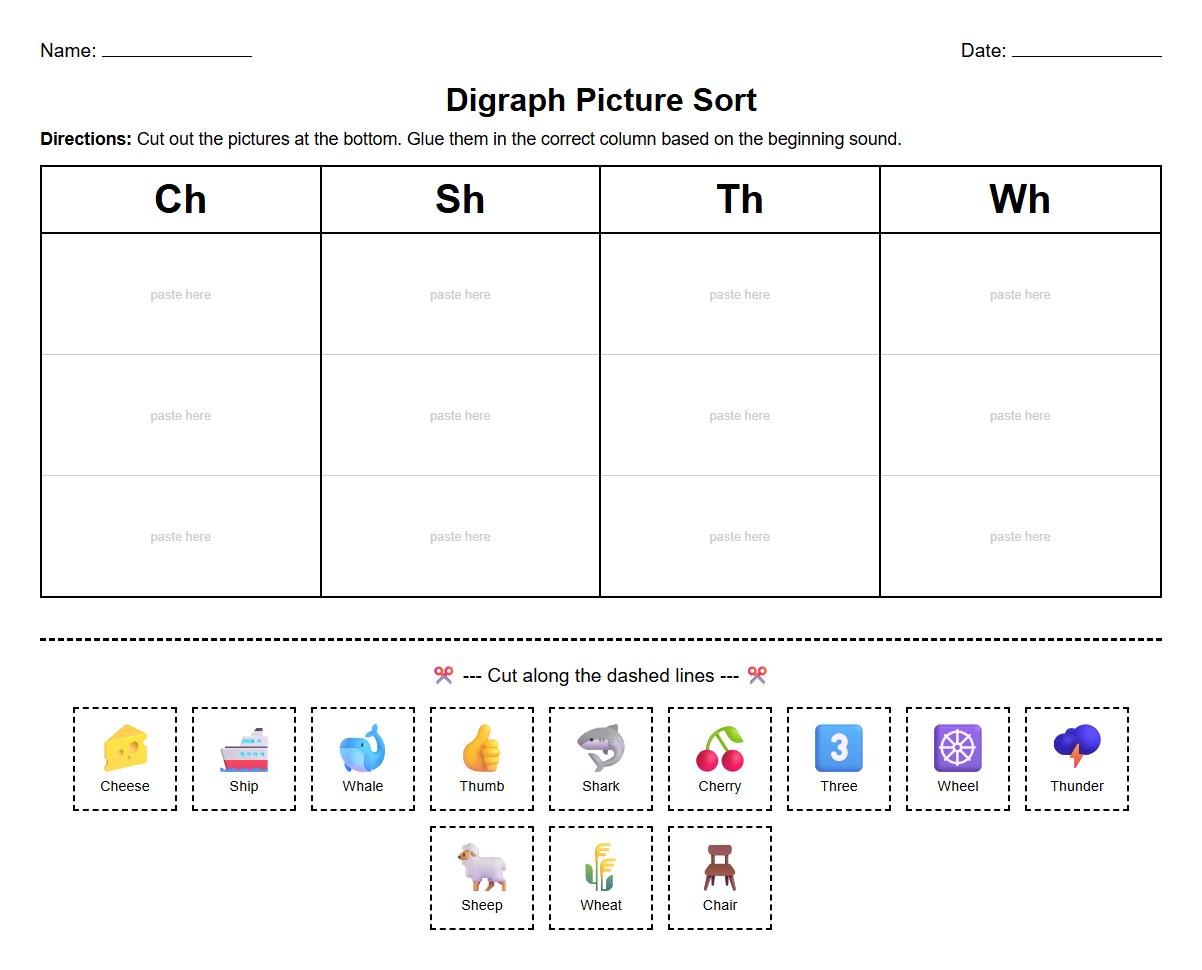
Ch Sh Th Wh Digraph Picture Sort

Ch Sh Th Wh Digraph Picture Sort

Download PDF     Pin it

Syllable Count and Digraph Sorting Worksheet
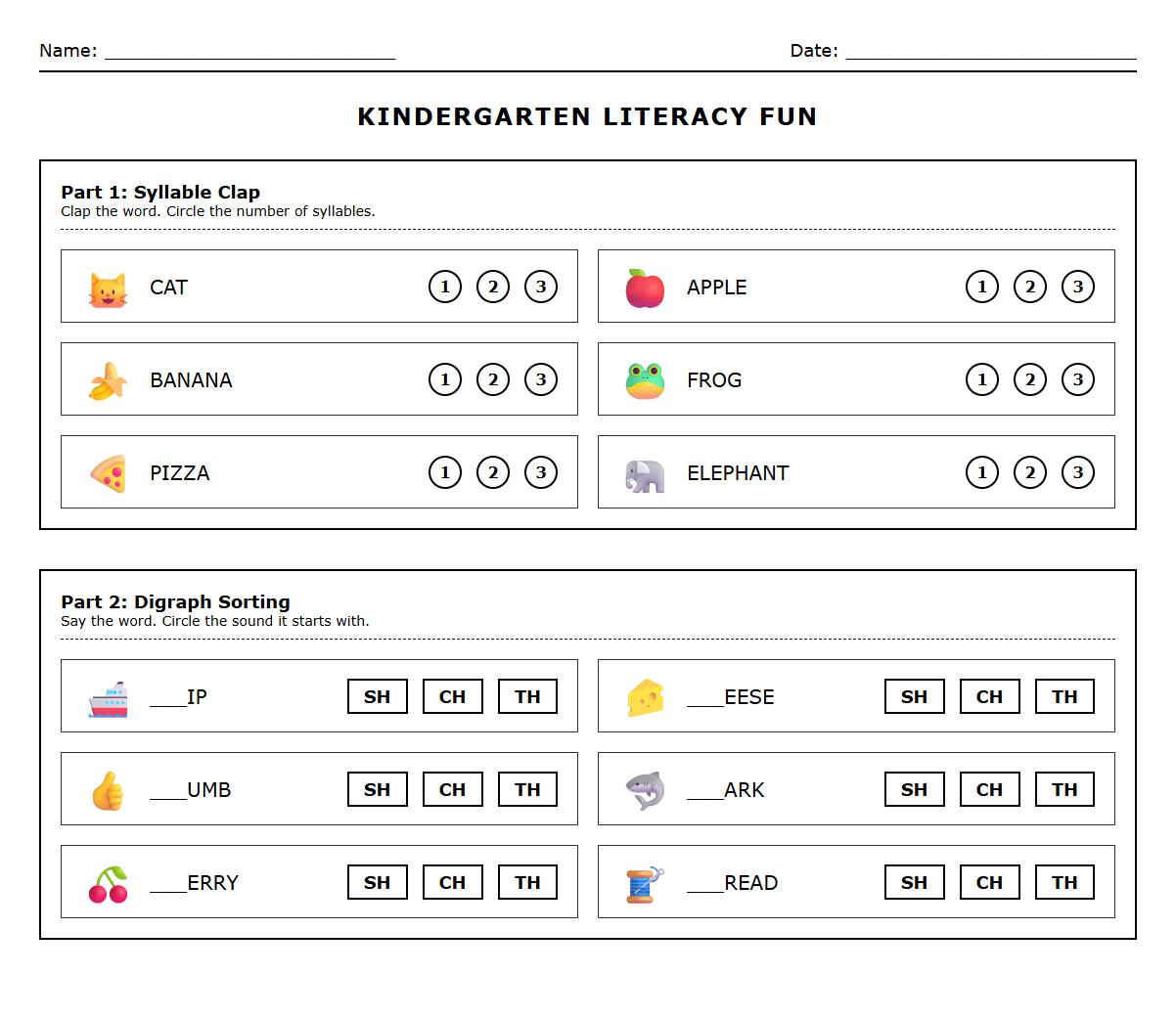
Syllable Count and Digraph Sorting Worksheet

Download PDF     Pin it

Sorting Digraphs by Sound Worksheet
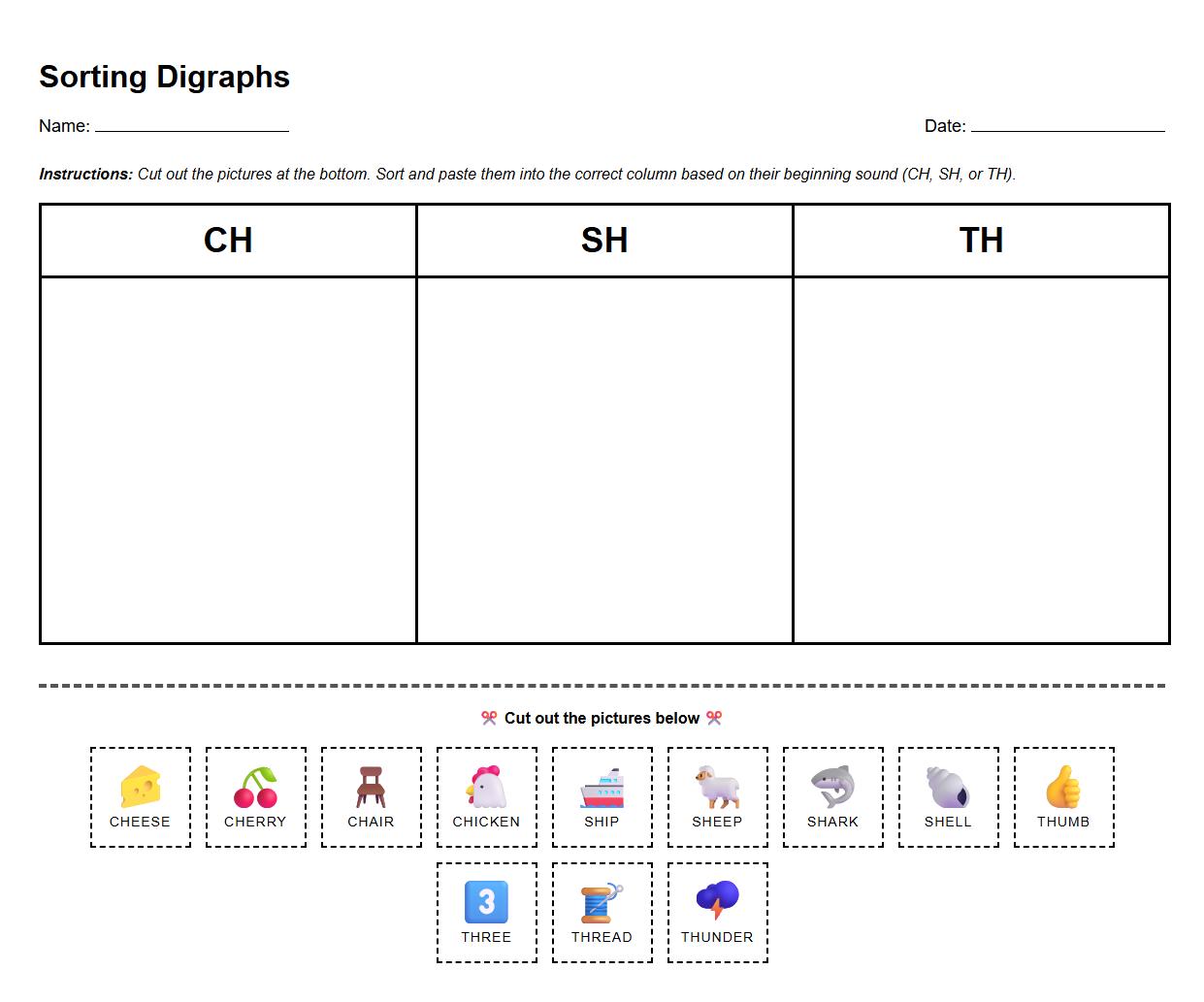
Sorting Digraphs by Sound Worksheet

Download PDF     Pin it

What are digraphs in phonics?

Digraphs are two letters combined to make one unique sound in a word, such as "ch," "sh," "th," and "wh." They are essential in teaching children how to decode words by breaking them into sounds. Understanding digraphs helps young learners improve their reading and pronunciation skills effectively. This concept builds a foundation for more advanced phonics learning.

How do you identify a digraph in a word?

To identify a digraph, listen carefully to the sounds at the beginning, middle, or end of a word. If two letters work together to create one sound, like "sh" in "ship," you have found a digraph. Teachers and parents can guide children to spot these by sounding out the word slowly. Highlighting digraphs in words during reading activities enhances recognition and learning.

Which picture starts with the digraph CH?

Look for pictures of objects or animals whose names begin with the CH sound, such as a "chair" or "chipmunk." Focus on the initial sound rather than just the letters. This exercise helps children connect sounds to words and images, reinforcing phonics lessons. Visual aids are powerful tools in solidifying digraph understanding.

Can you find the word with the SH sound?

Words with the SH sound include "ship," "shoe," and "shell." When identifying these words, encourage children to listen for the soft "sh" sound at the start or within the word. Using pictures alongside words supports younger learners in associating sounds with objects. This practice strengthens auditory discrimination of digraphs.

Place the word that has the TH sound in the correct column

The TH sound appears in words such as "thin," "this," and "thumb." Sorting words by digraphs helps children practice phonemic awareness and categorization skills. Using columns labeled by digraphs allows for clear visual organization. This activity builds confidence in distinguishing similar sounds.

Which word contains the WH digraph?

Words like "whip," "when," and "wheel" contain the WH digraph. Teach children to recognize this digraph by focusing on the unique "wh" sound at the beginning of these words. Consistent practice with different WH words enhances familiarity and pronunciation accuracy. Emphasizing the sound pattern improves reading fluency.

Does the word "ship" belong in the SH or CH group?

The word "ship" belongs in the SH group because it starts with the "sh" digraph sound. Differentiating similar sounds like "sh" and "ch" is crucial for clear phonics understanding. Sorting words into correct digraph groups supports accurate spelling and reading. This helps children avoid confusion between common digraphs.

Sort the following words by their digraphs: chat, thin, whip, shed

Sorting these words: "chat" goes under CH, "thin" under TH, "whip" under WH, and "shed" under SH. This activity encourages children to identify and classify digraph sounds. It develops their ability to recognize sound patterns quickly. Sorting tasks also make phonics lessons interactive and fun.

Which digraph do you hear at the beginning of "this"?

The digraph at the beginning of "this" is TH. It produces a unique voiced "th" sound that is different from other digraphs. Listening for this sound helps children learn to differentiate between similar phonemes. Awareness of digraph sounds improves reading and speaking skills.

Circle all the words with the digraph PH

Words with the PH digraph include "phone," "photo," and "graph." The "ph" digraph typically makes an "f" sound, which can be confusing for beginners. Highlighting or circling these words during activities emphasizes this important phonics rule. It supports children's spelling and pronunciation development.


More in Language Arts Category


About the author. Nylen Smith is a dedicated educator and cofounder of KWorksheet.com, a popular platform specializing in high-quality kindergarten worksheets and printable activities.

Disclaimer. The information provided in this document is for general informational purposes and/or document sample only and is not guaranteed to be factually right or complete. Please report to us via contact-us page if you find and error in this page, thanks.

Comments

No comment yet