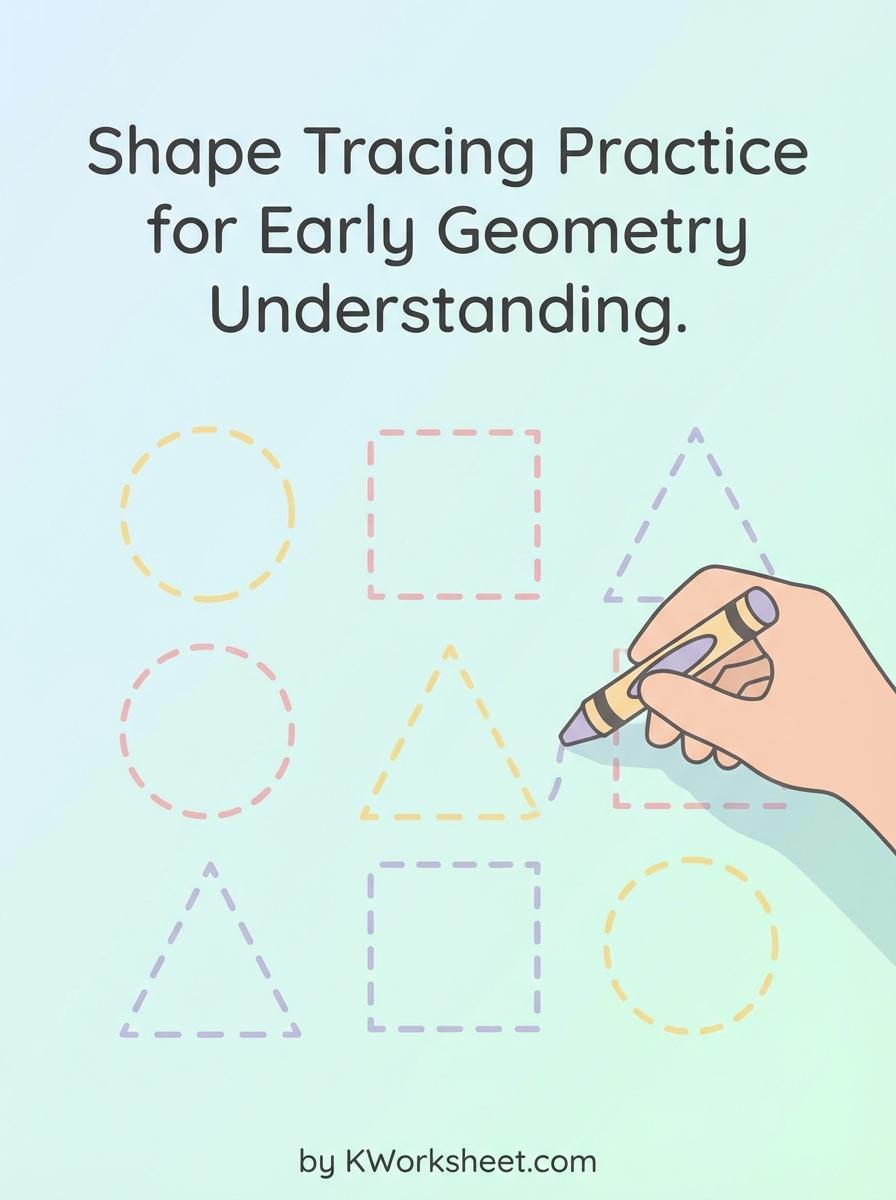
Shape Tracing Practice for Early Geometry Understanding

📅 Mar 3, 2025 👤 Nylen Smith

Shape tracing practice enhances early geometry skills by helping children recognize and replicate basic geometric forms such as circles, squares, and triangles. This activity improves hand-eye coordination and fine motor skills essential for writing and spatial awareness. Explore our selection of printable shape tracing worksheets designed to build foundational geometry understanding.

Phonics integrated shape tracing worksheet
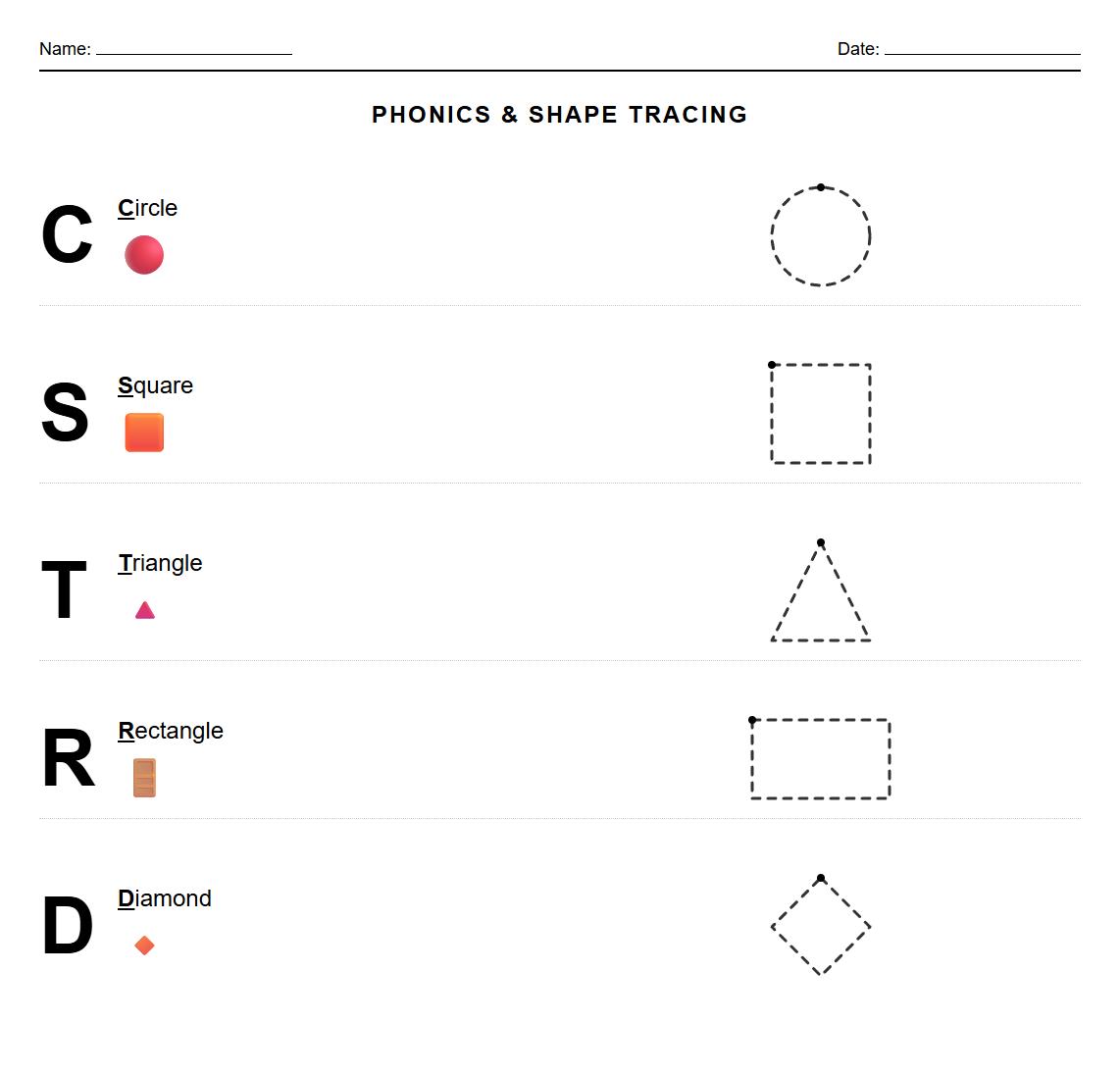
Phonics integrated shape tracing worksheet

Download PDF     Pin it

Symmetry and shape tracing pattern sheet
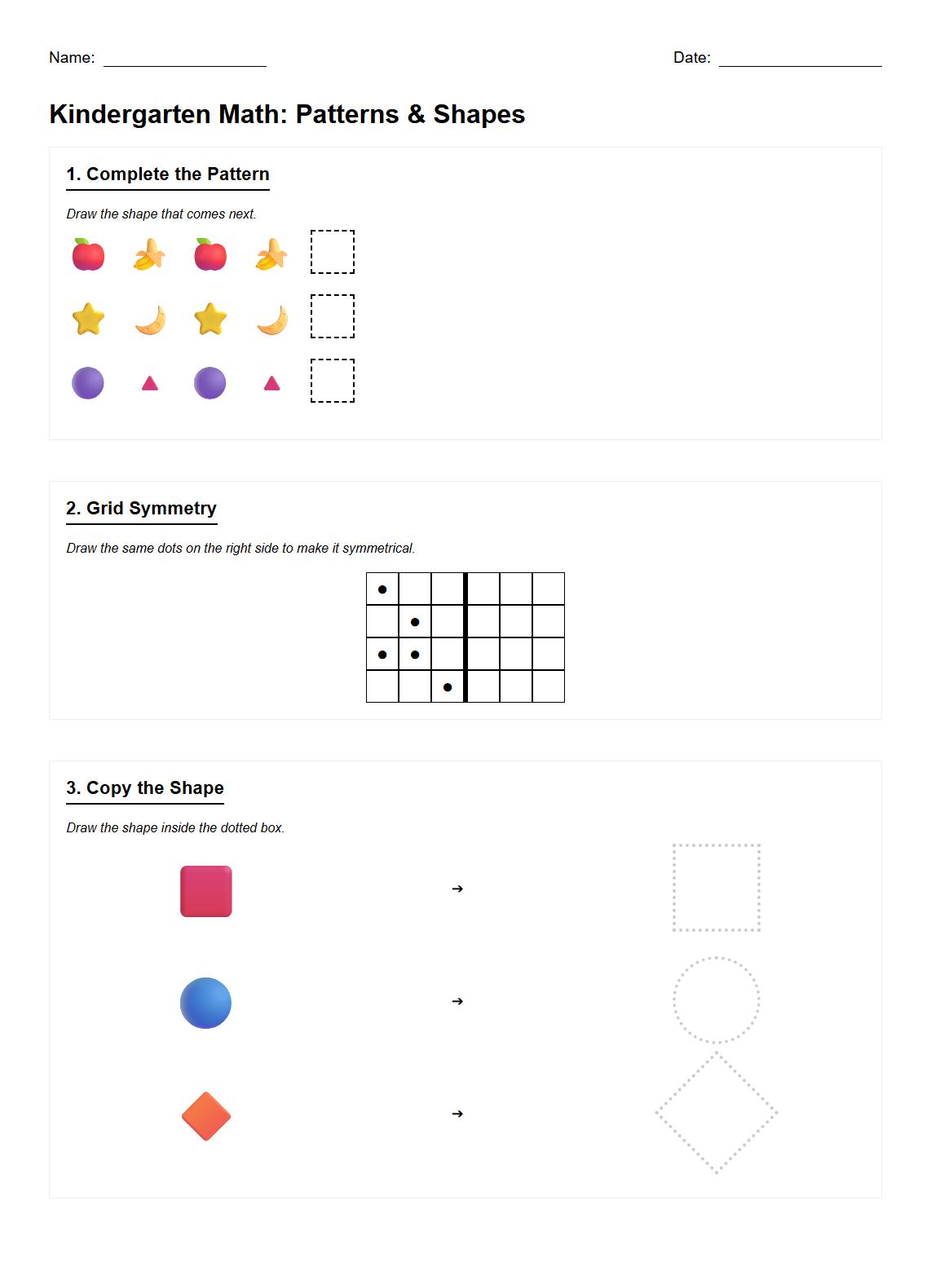
Symmetry and shape tracing pattern sheet

Download PDF     Pin it

Polygon and circle contour tracing drill
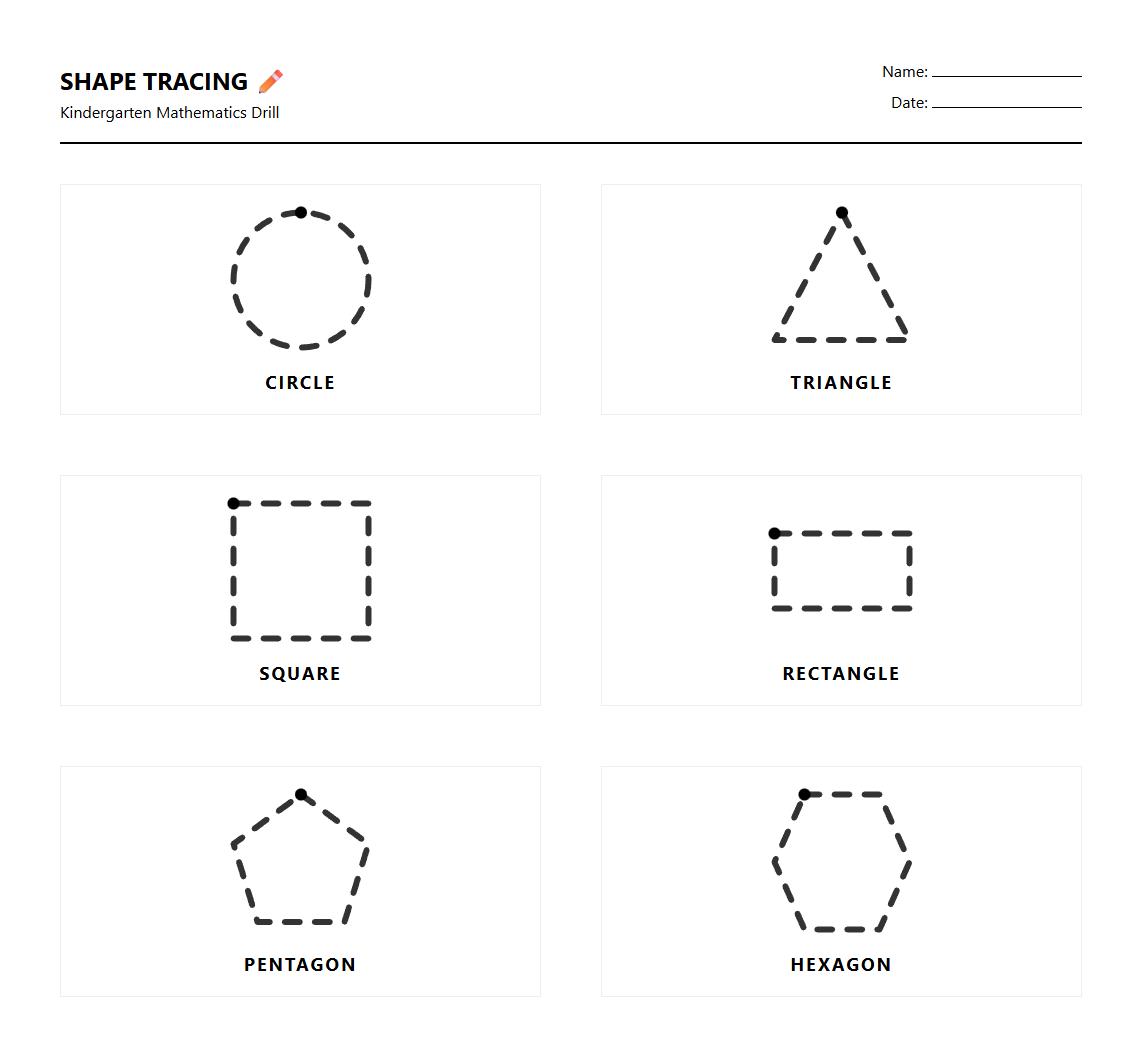
Polygon and circle contour tracing drill

Download PDF     Pin it

Fine motor skills geometric tracing lines page
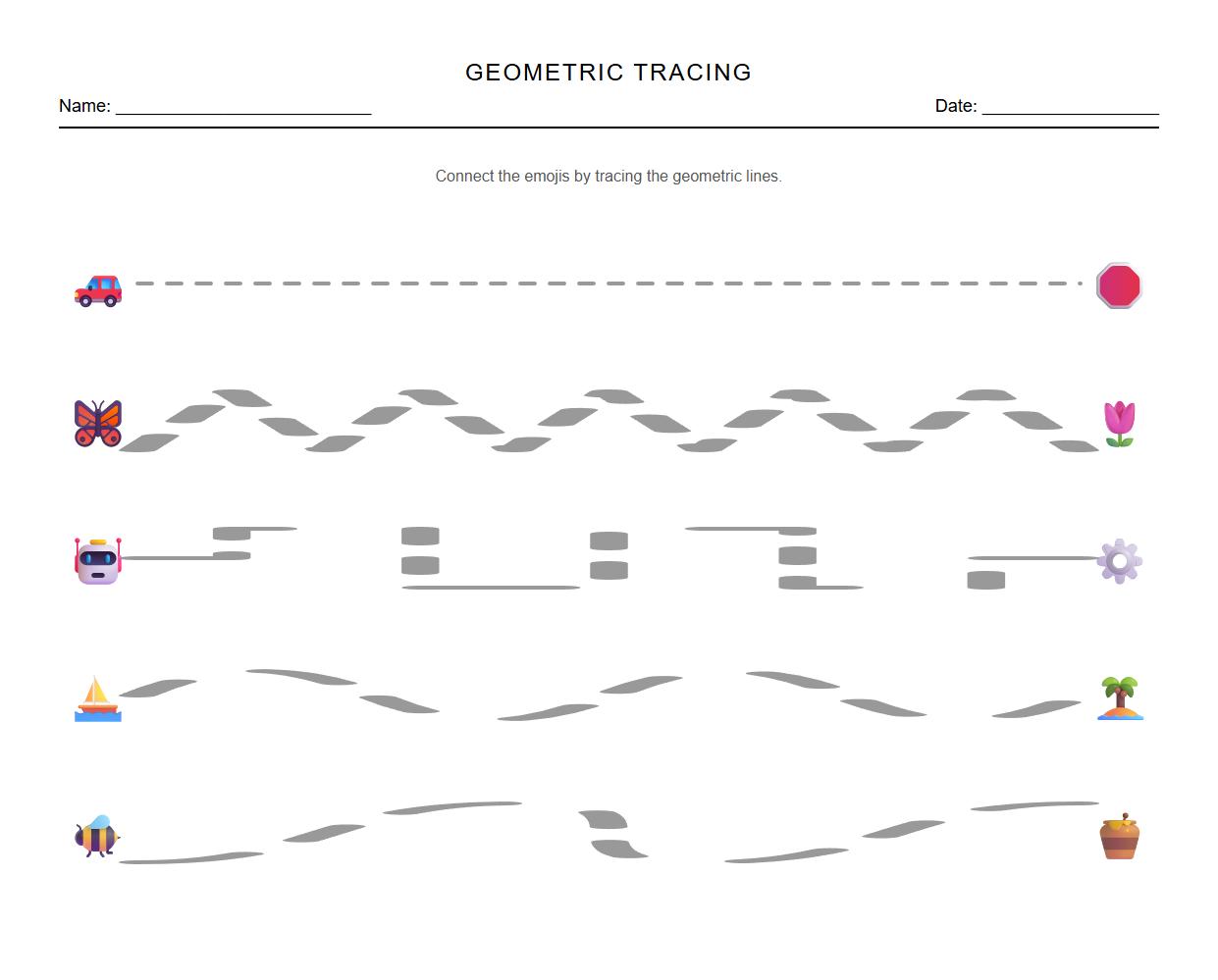
Fine motor skills geometric tracing lines page

Download PDF     Pin it

2D shape border tracing with visual cues
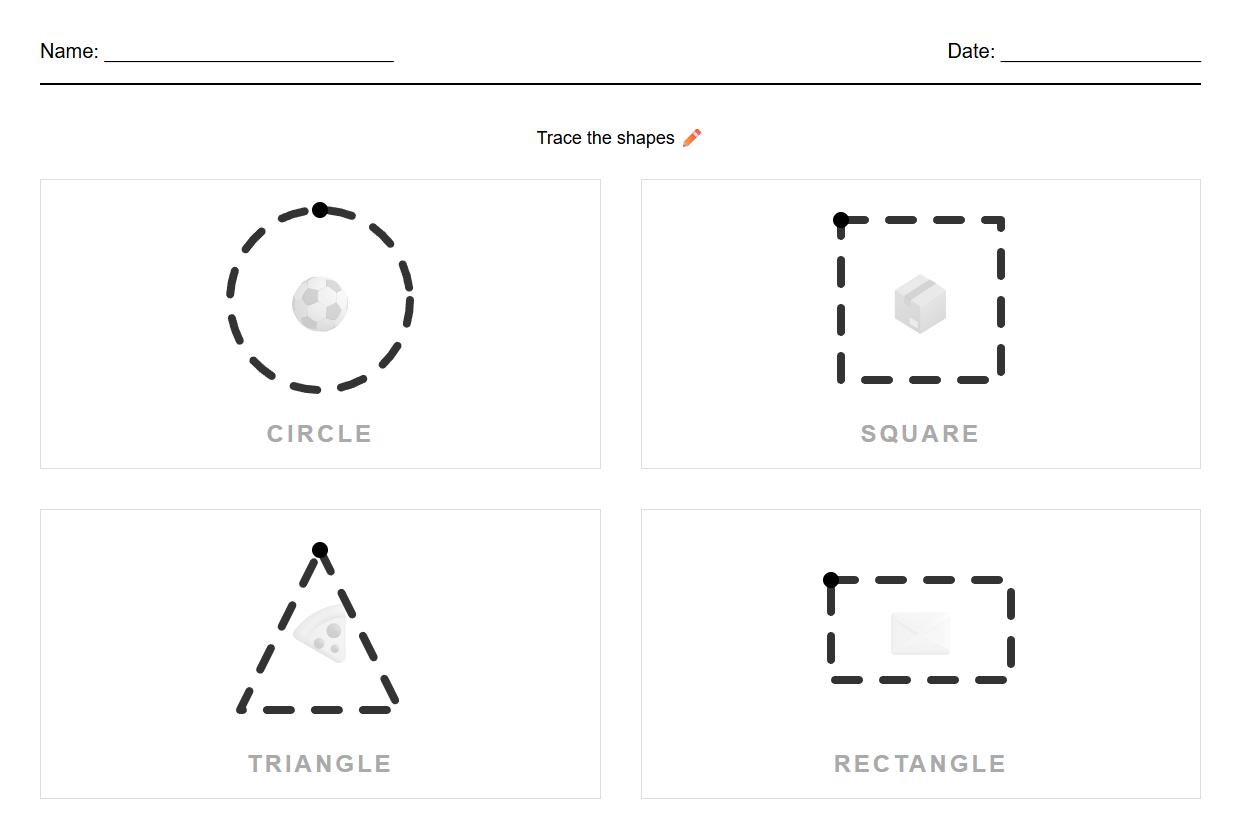
2D shape border tracing with visual cues

Download PDF     Pin it

Tracing basic geometric figures with size variation
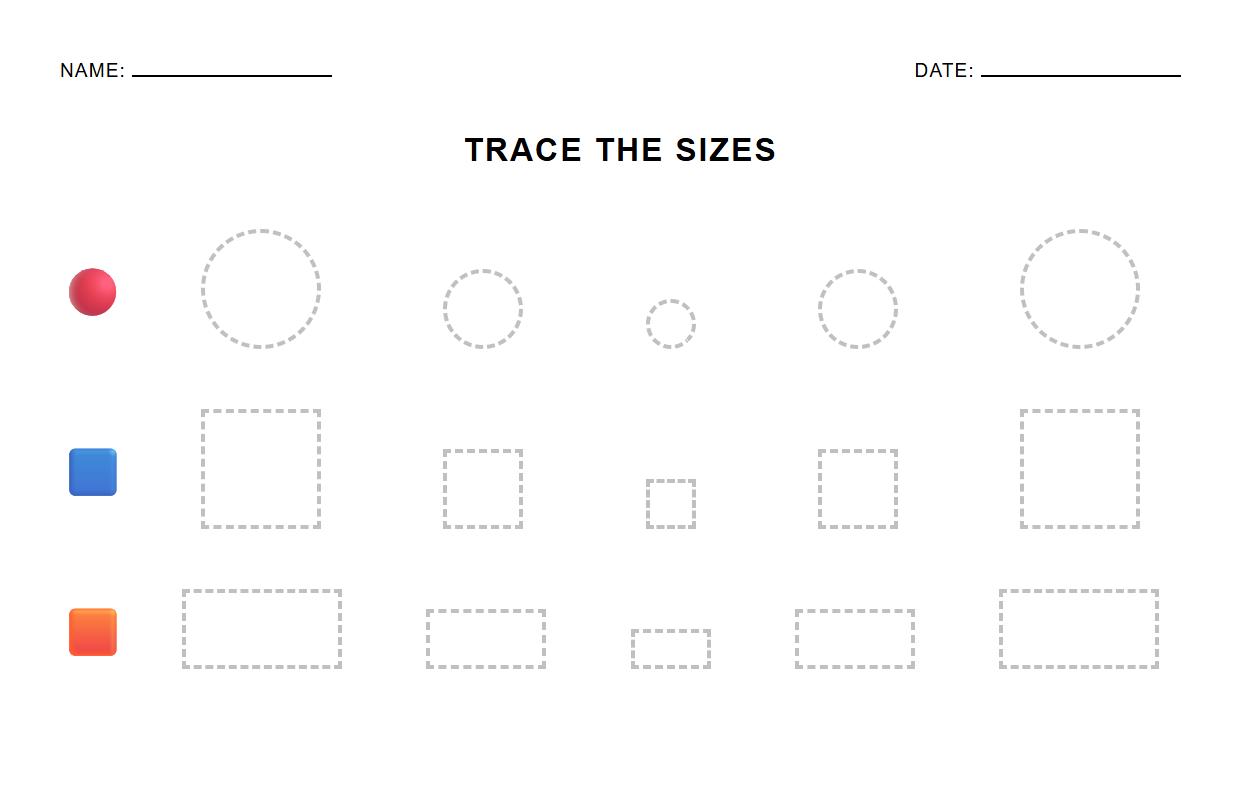
Tracing basic geometric figures with size variation

Download PDF     Pin it

Shape tracing with matching phonics sounds
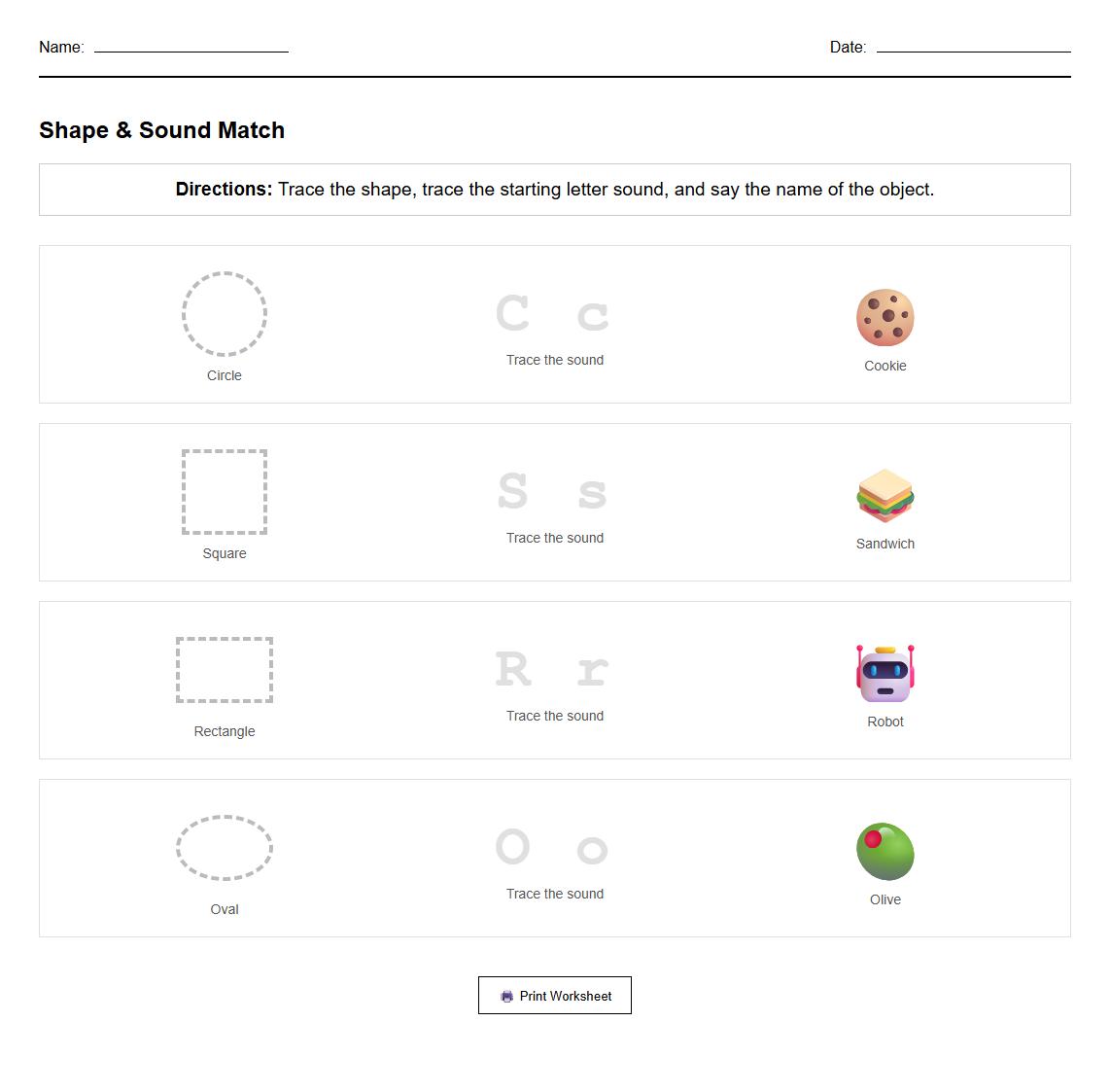
Shape tracing with matching phonics sounds

Download PDF     Pin it

Tracing composite figures for spatial awareness
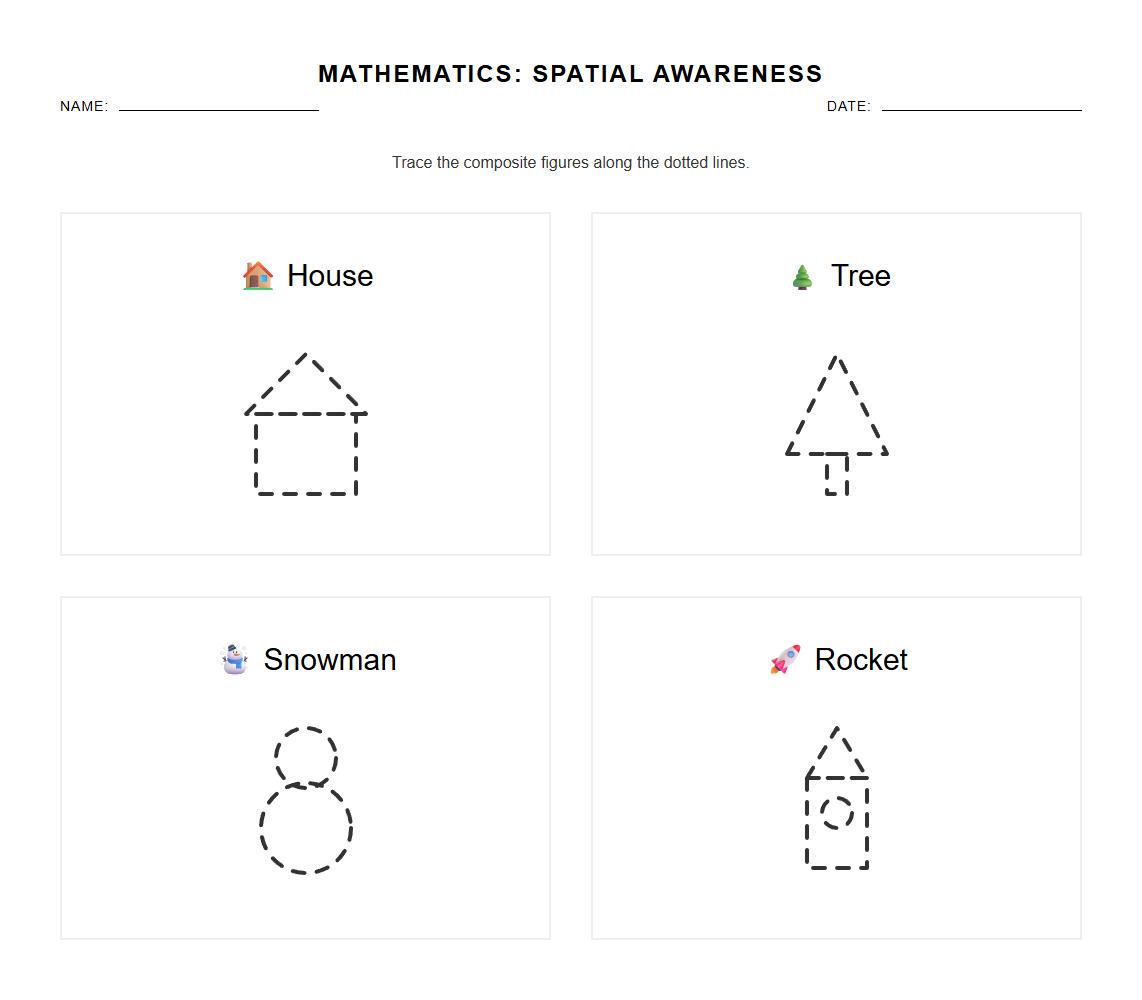
Tracing composite figures for spatial awareness

Download PDF     Pin it

Shape and angles tracing for early geometry
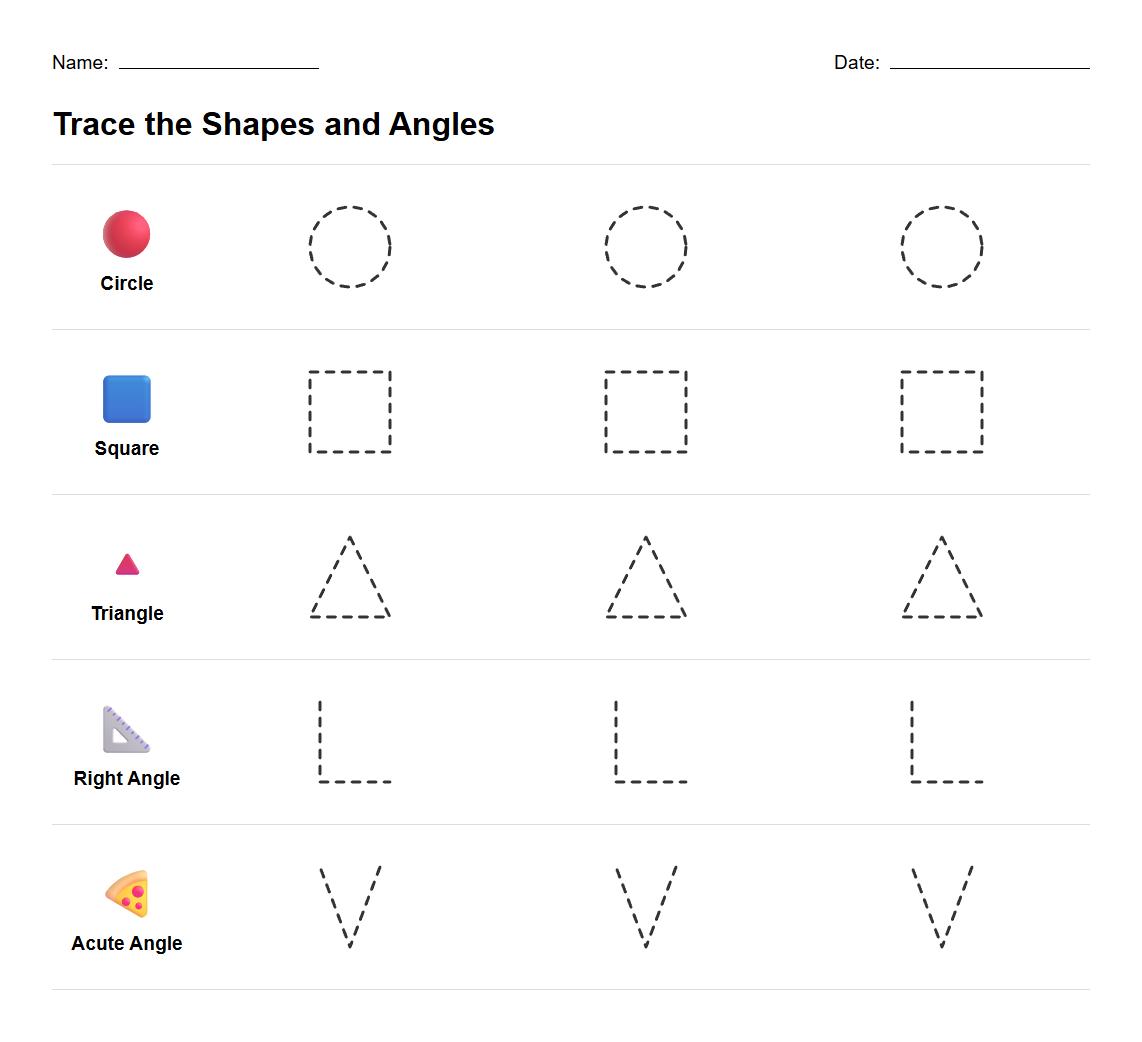
Shape and angles tracing for early geometry

Download PDF     Pin it

Curved and straight line tracing in geometric shapes
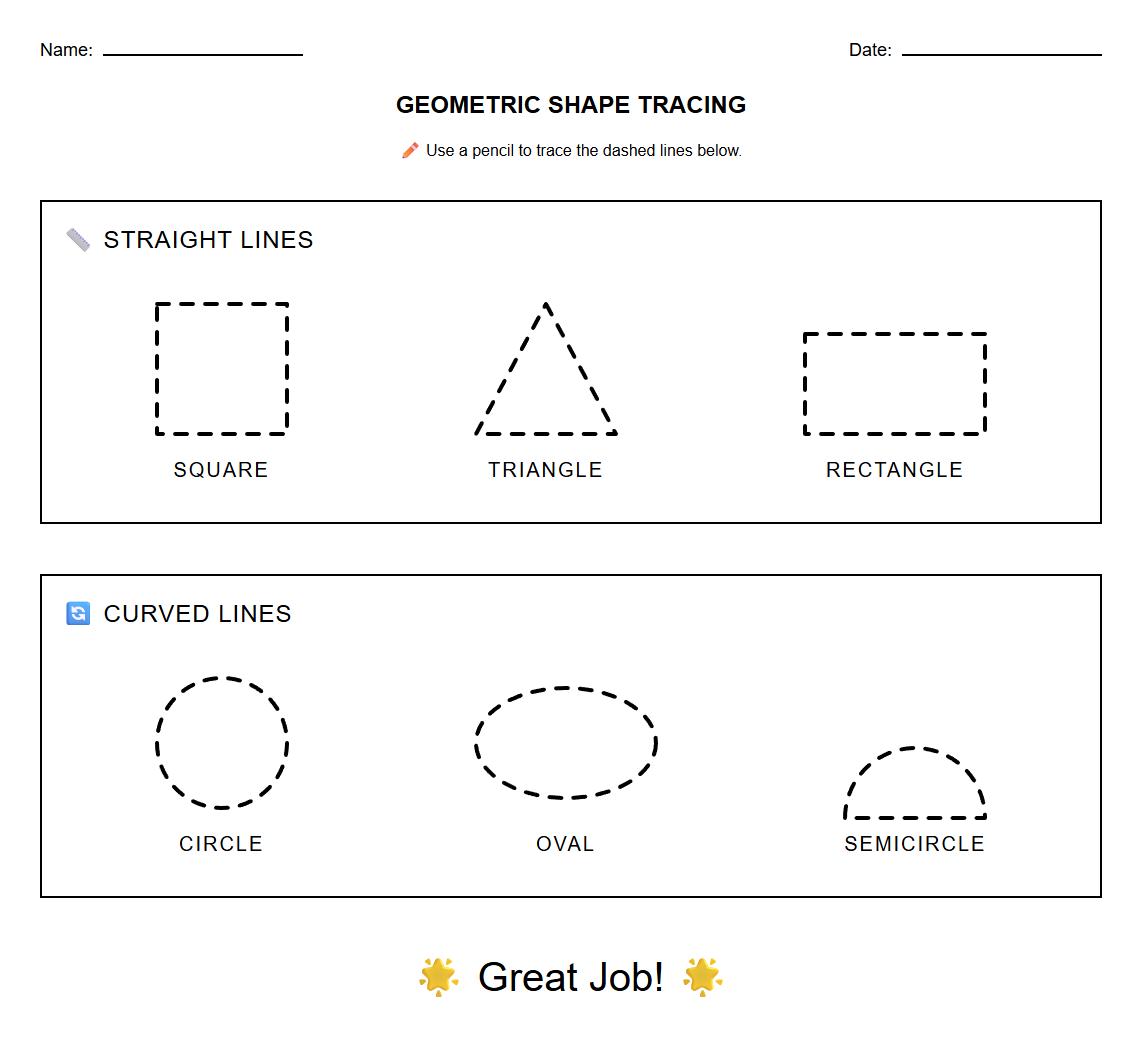
Curved and straight line tracing in geometric shapes

Download PDF     Pin it

Identifying the Shape

Ask the child, "What is the name of this shape you are tracing?" This encourages recognition and vocabulary development. Helping young learners associate names with shapes builds foundational math skills.

Finger Tracing Practice

Encourage the child to trace the shape with their finger before using a pencil. This tactile activity improves fine motor skills and prepares them for more precise pencil work. It also strengthens hand-eye coordination.

Exploring Triangle Shapes

Prompt the question, "Which shape has three sides?" This helps children visually identify triangles and count sides. Reinforcing shape characteristics deepens their understanding of geometry.

Shape Hunt in the Room

Challenge children to find another object in the room with the same shape. This makes learning interactive and connects classroom concepts to the real world. It enhances observational skills and critical thinking.

Counting Corners

Ask, "How many corners does this shape have?" Counting corners builds spatial awareness and shape recognition. It is an essential step for young learners to differentiate shapes.

Choosing Colors for Tracing

Invite the child to pick a color for tracing the shape. This encourages creativity and makes the activity enjoyable. Using colors also helps with color recognition and fine motor control.

Continuous Tracing Practice

Encourage tracing the shape without lifting the pencil. This fosters control and steadiness in hand movements, which is crucial for writing skills. It also enhances attention to detail.

Identifying the Largest Shape

Ask, "Which shape is the biggest on the page?" This question promotes size comparison and spatial reasoning. It supports early math concepts involving measurement and proportion.

Tracing from Different Starting Points

Challenge the child to trace a shape starting from a different point. This develops flexibility and adaptability in motor planning. It also keeps the tracing activity engaging and varied.

Comparing Line Types

Discuss how it feels to trace straight lines versus curved lines. This sensory reflection enhances body awareness and helps differentiate shapes by their edges. It supports fine motor development and descriptive language skills.


More in Mathematics Category


About the author. Nylen Smith is a dedicated educator and cofounder of KWorksheet.com, a popular platform specializing in high-quality kindergarten worksheets and printable activities.

Disclaimer. The information provided in this document is for general informational purposes and/or document sample only and is not guaranteed to be factually right or complete. Please report to us via contact-us page if you find and error in this page, thanks.

Comments

No comment yet