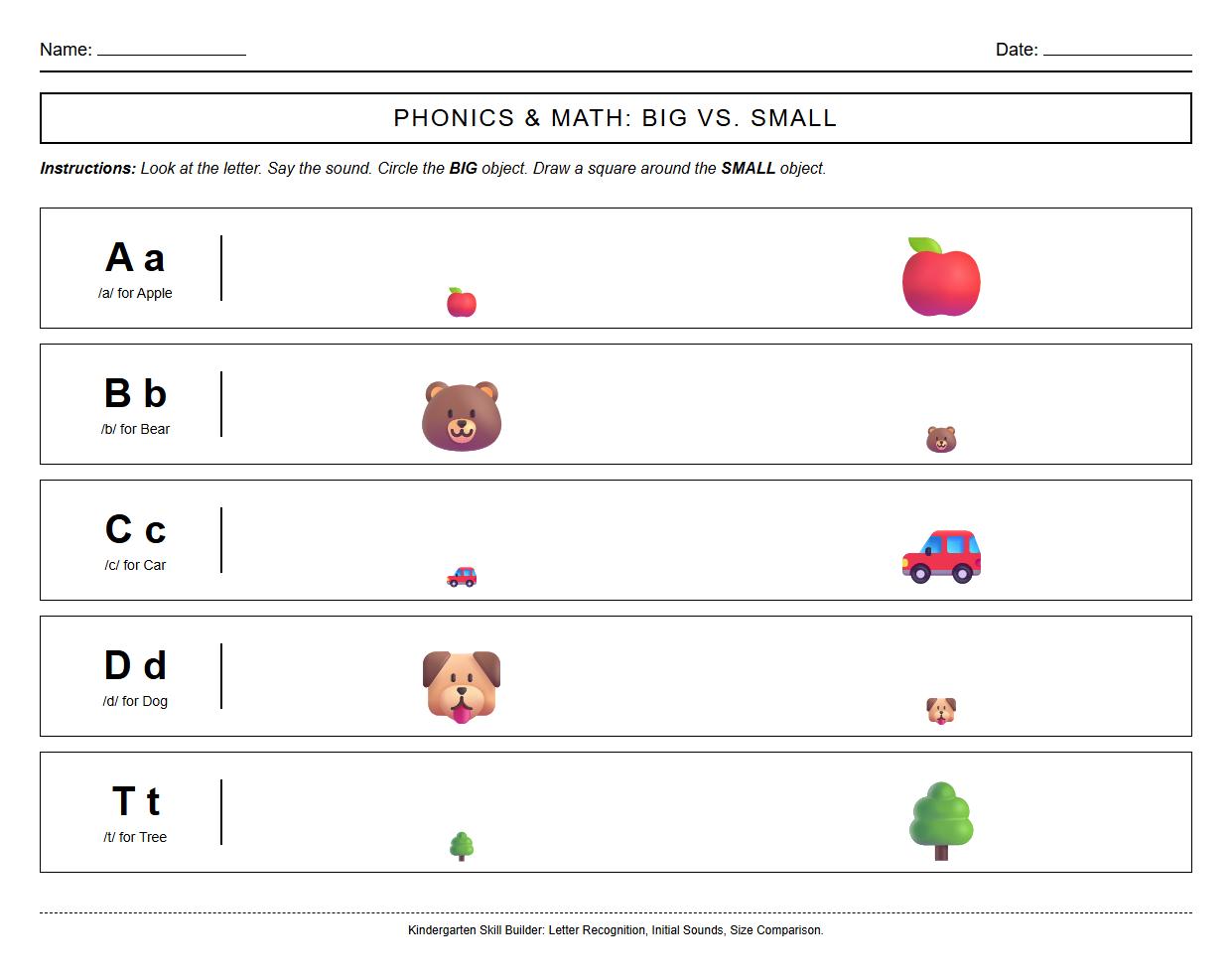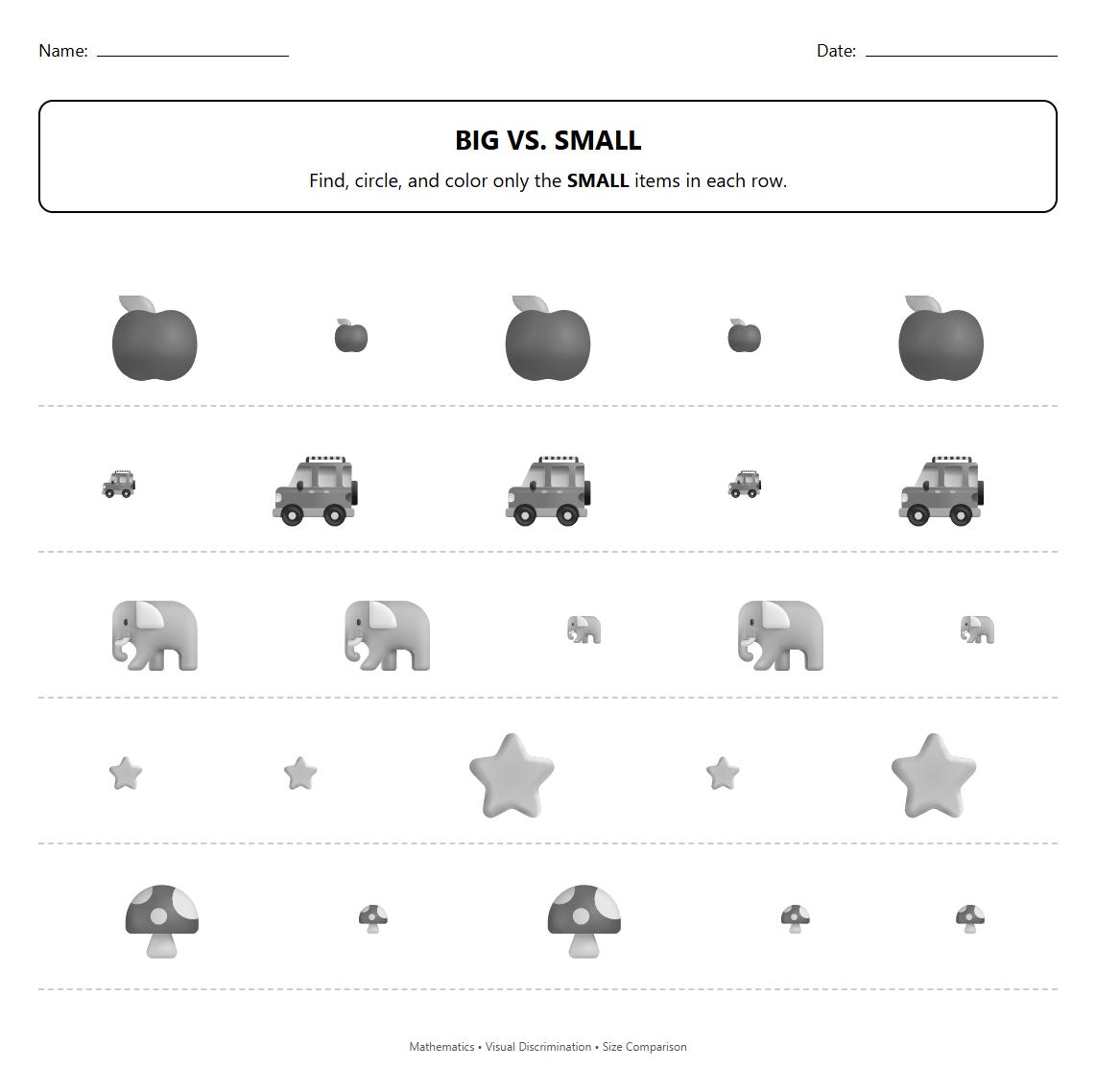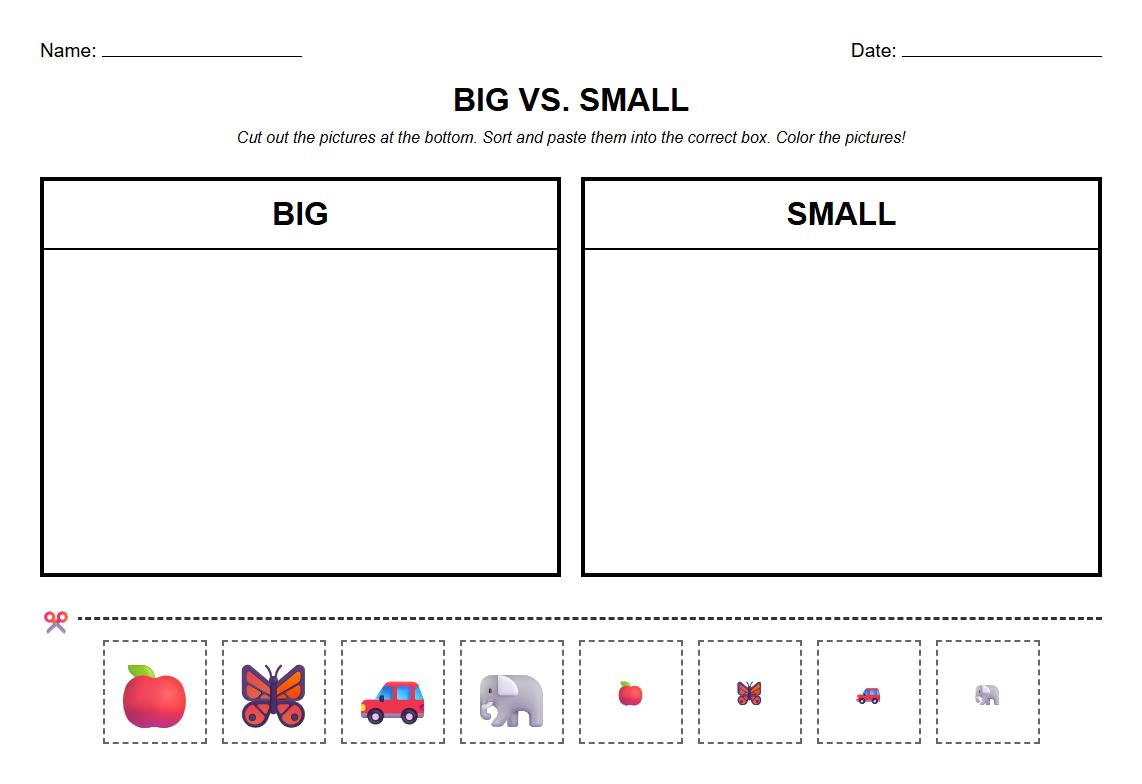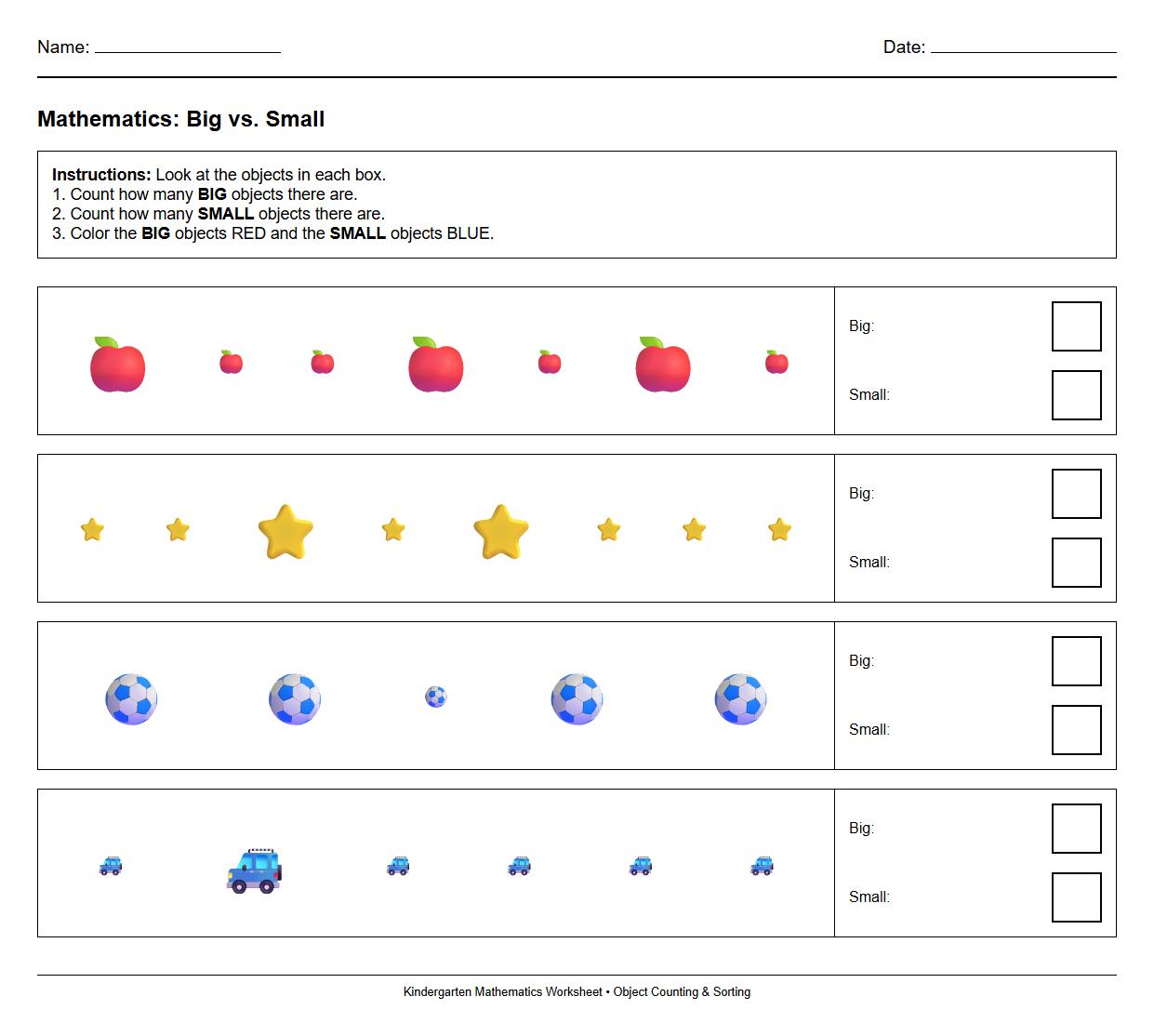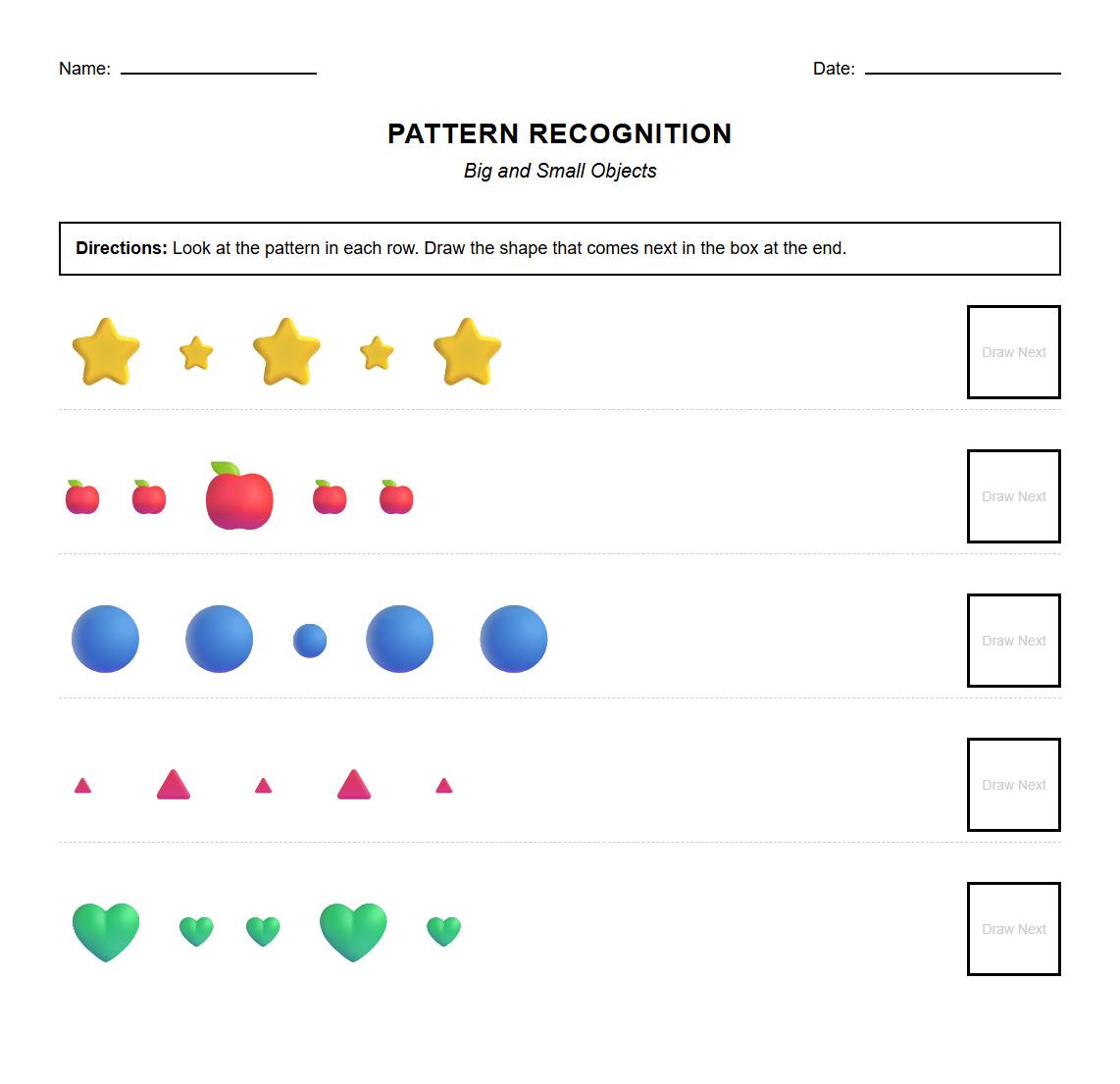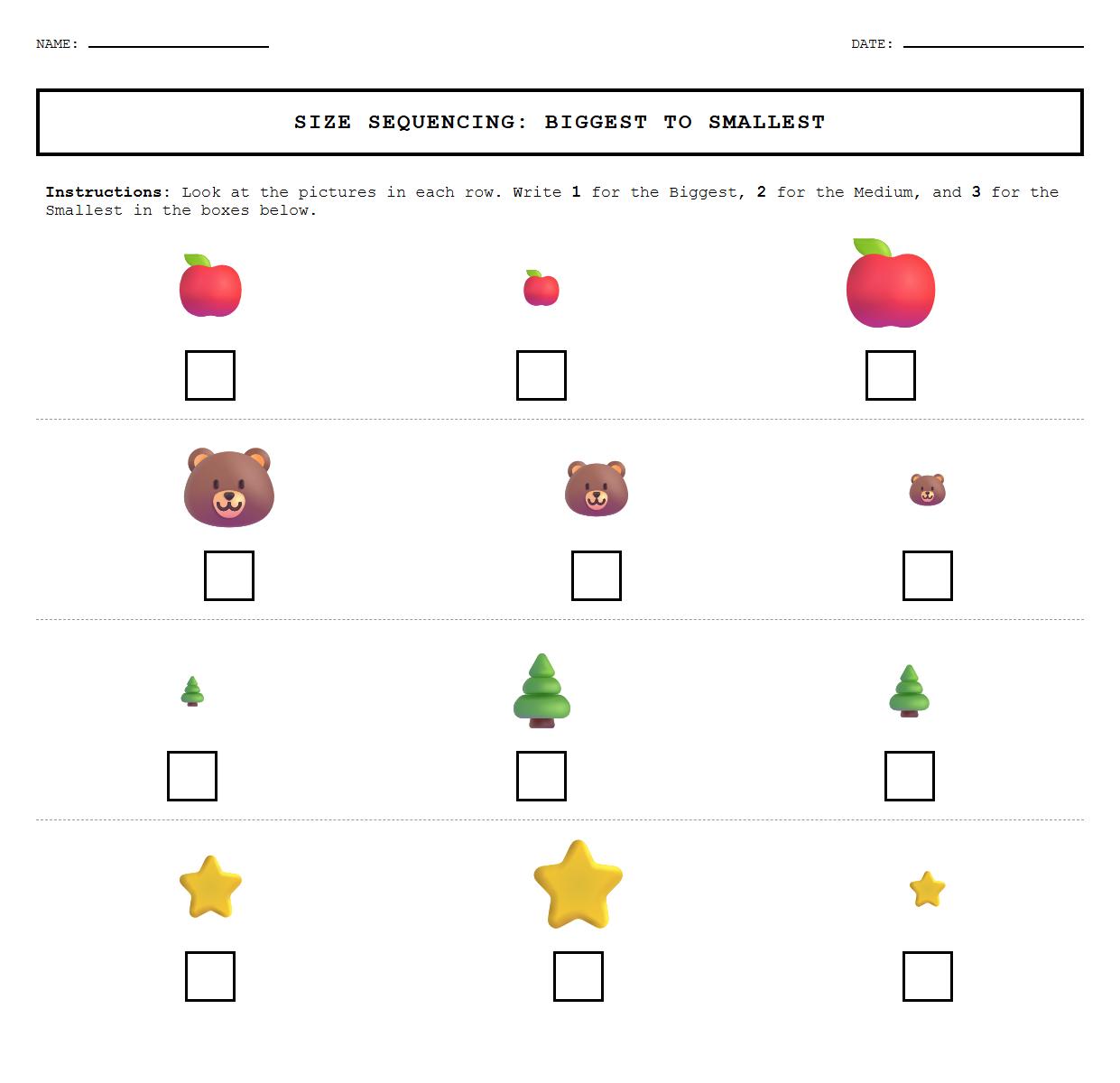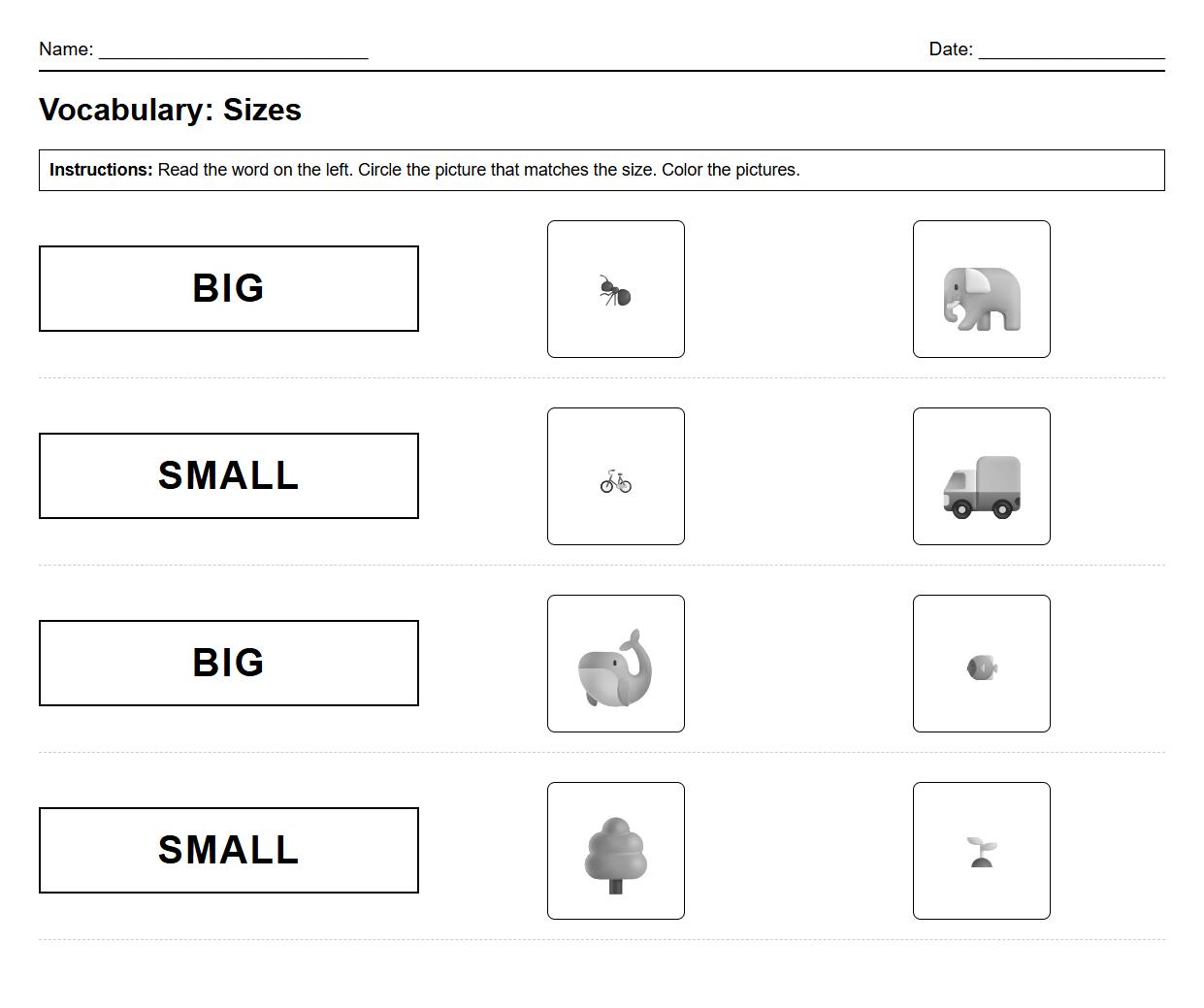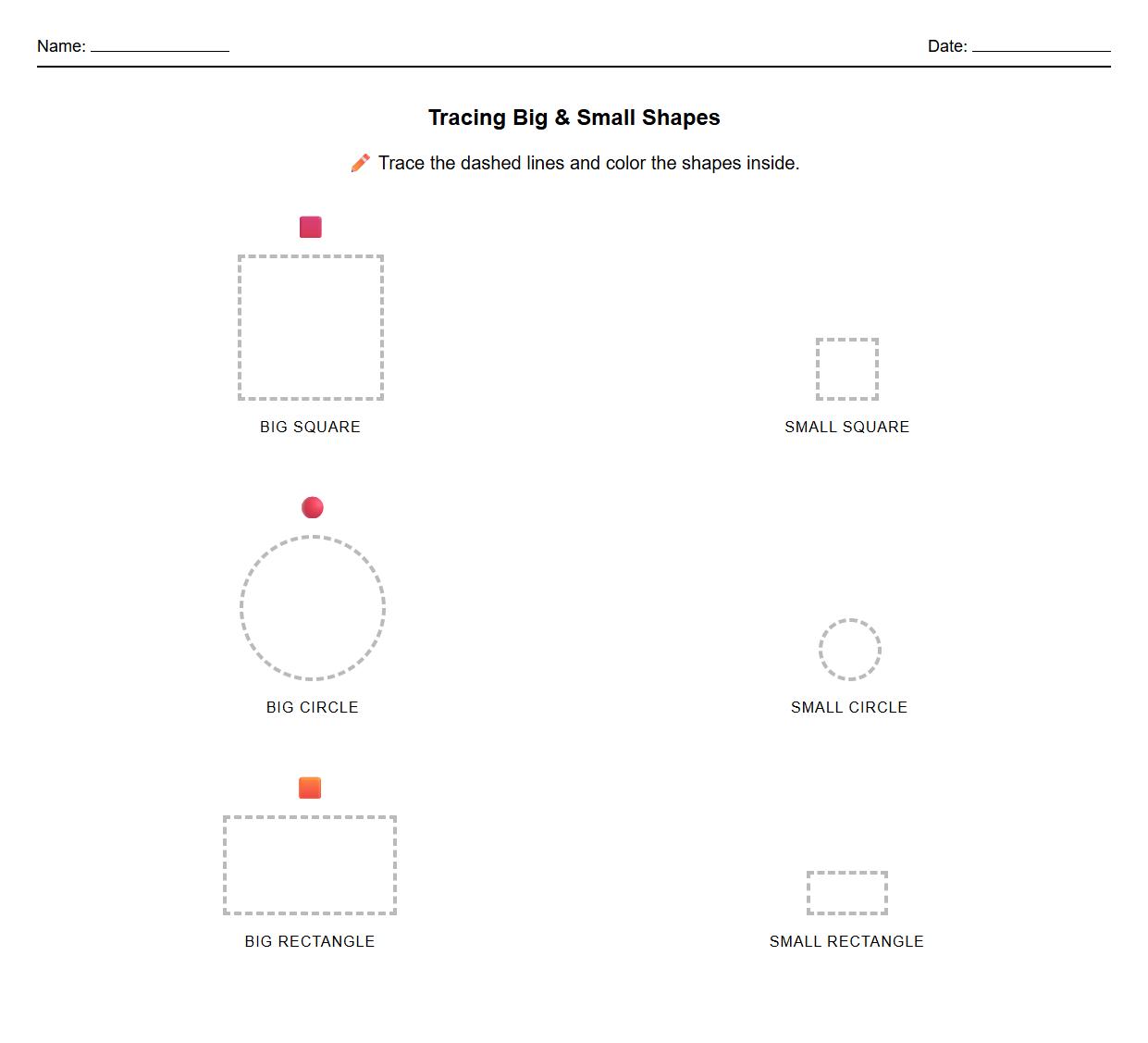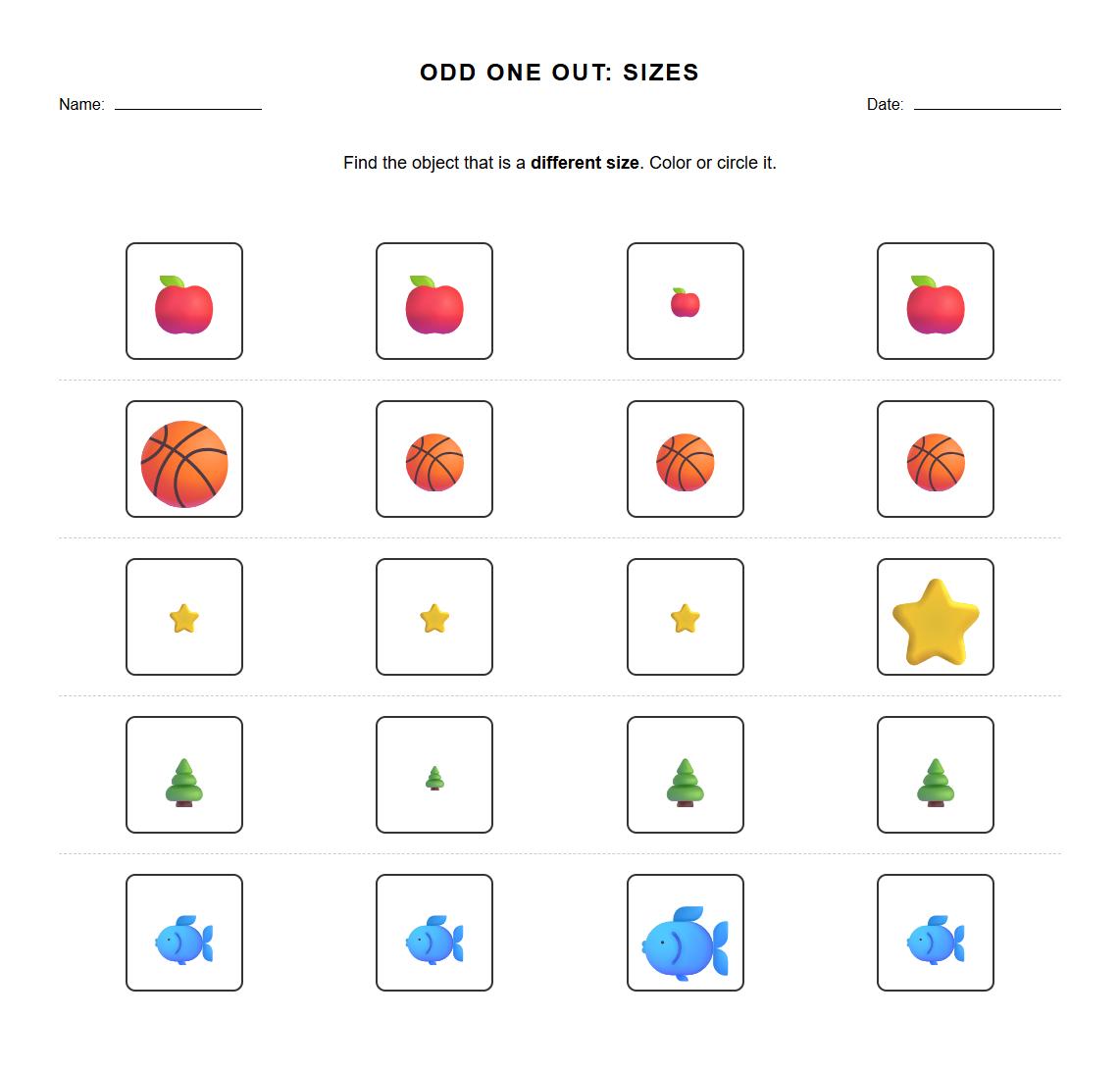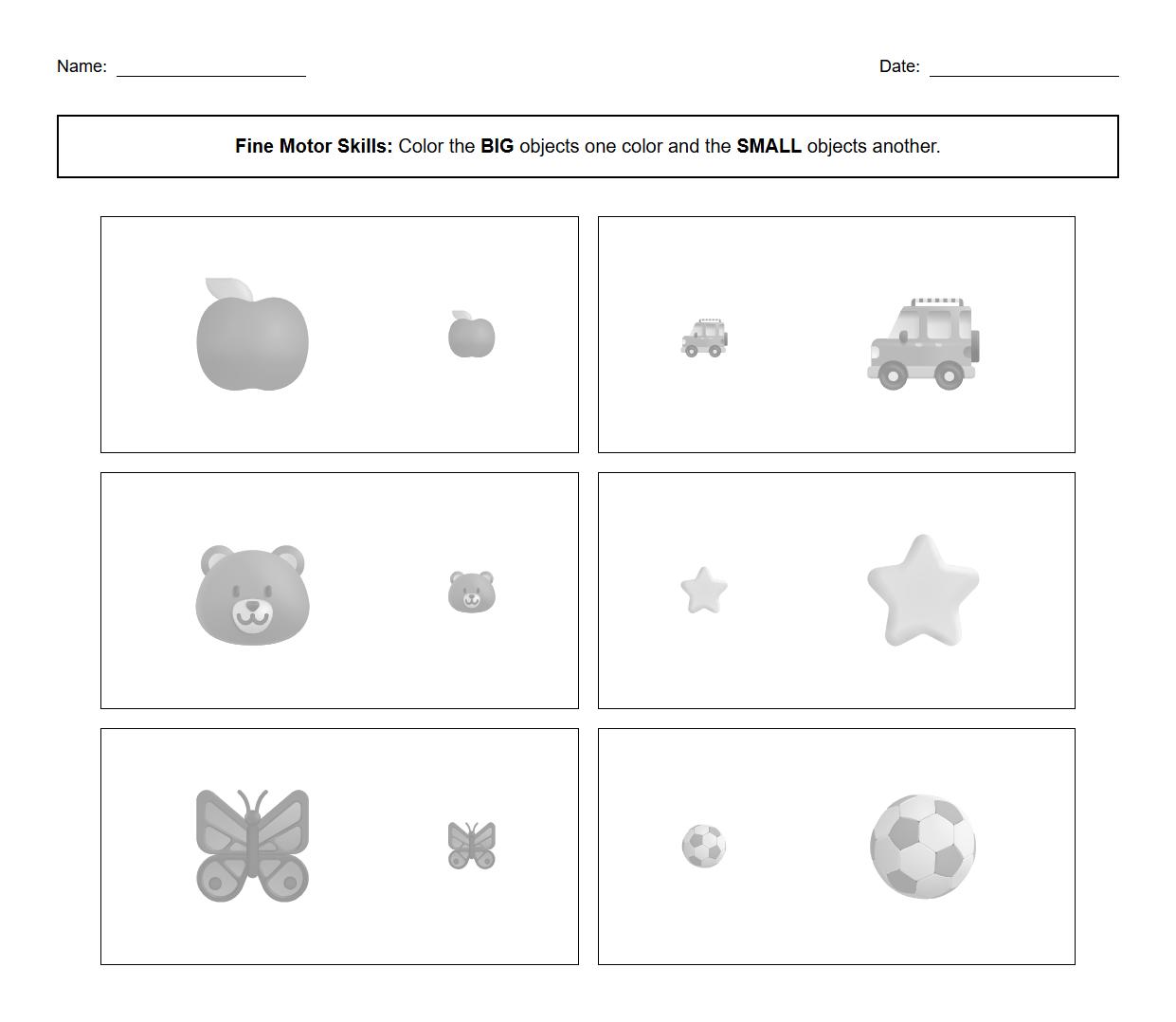
This worksheet activity helps children distinguish between big and small objects by engaging them in identifying and coloring exercises, enhancing their visual discrimination and size recognition skills. It promotes cognitive development through interactive learning, making size comparison both fun and educational. Explore the available worksheets to support early learning and fine motor skills.
Identifying the Biggest Object
Ask the children, "Which object in the row is the biggest?" This helps them practice size comparison and observation skills. Encourage them to point to or circle the largest object to reinforce learning. Use this activity to introduce vocabulary related to size.
Coloring the Smallest Object
Guide the kids to "Color the smallest object red." This task combines color recognition with size differentiation, enhancing their cognitive abilities. Using crayons helps improve fine motor skills. Ensure they understand the concept of smallest before starting.
Finding the Smallest Item
Encourage children to identify "Which item looks the smallest among these?" This promotes careful observation and comparison. Ask them to point or name the object to encourage verbal skills. Support their answers with positive feedback.
Coloring the Biggest Object
Instructions like "Find and color only the biggest object" engage children's attention and help develop sorting skills. Use bright colors to make this fun and appealing. This activity links size recognition with creative expression. Reinforce the learning with praise.
Counting Big Objects
Ask, "How many big objects do you see on this worksheet?" This encourages counting and quantitative skills. Children learn to categorize objects by size while practicing numbers. Use this as an opportunity to build math vocabulary.
Circling Small Objects
Request the children to "Circle all the small objects with a blue crayon." This develops precision and color awareness. It also fosters concentration and the ability to follow multi-step instructions. Use a blue crayon to differentiate this activity visually.
Matching Big and Small Objects
Help kids "Match the big and small objects." This strengthens comparison and categorization skills. Encourage discussion about differences and similarities. Matching exercises enhance critical thinking and vocabulary.
Identifying Small Animals
Ask, "Which picture shows a small animal?" This supports recognition and classification of living things by size. Discuss animal names and features to enrich language development. Use images that are clear and colorful for better engagement.
Coloring the Biggest Item Yellow
Instruct to "Color the biggest item yellow." Combining size recognition with color selection makes learning dynamic. Yellow is a bright color that attracts attention and reinforces memory. This also helps refine motor skills through coloring.
Pointing to the Smallest Thing
Encourage children to "Point to the smallest thing you can find." This enhances observation and focus. Verbalizing their choice builds confidence and language skills. Use this simple activity as a daily warm-up for size awareness.


Fun Money Worksheets for Kindergarten Coin Recognition Practice