Shape Counting Activity Sheet for Foundational Math Skills

📅 Apr 4, 2025 👤 Nylen Smith

This Shape Counting Activity Sheet enhances foundational math skills by helping learners identify and count various geometric shapes. It promotes visual recognition and numerical association through engaging, hands-on exercises. Explore the available worksheets to strengthen your child's early math abilities with fun shape counting tasks.

Circle Counting Worksheet for Early Numeracy
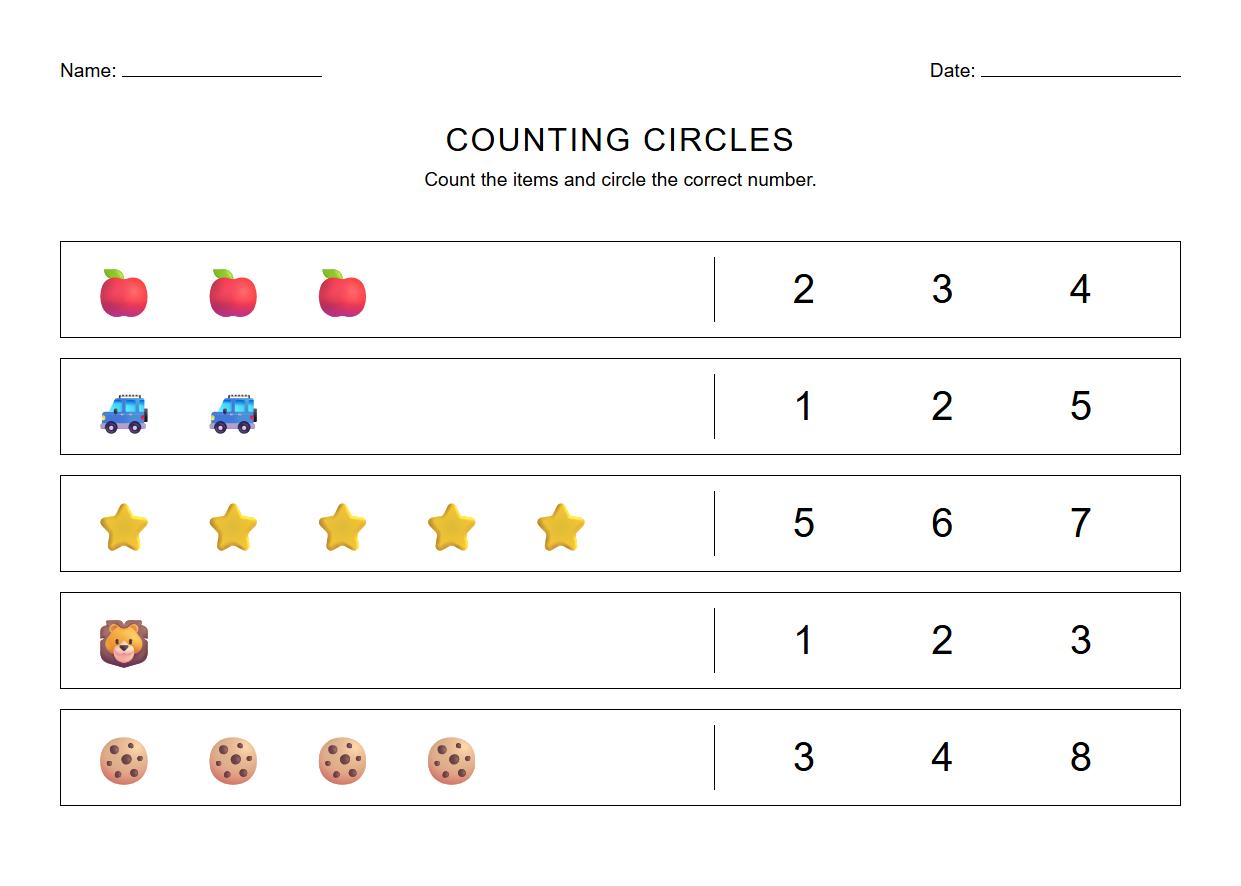
Circle Counting Worksheet for Early Numeracy

Download PDF     Pin it

Triangle Identification and Counting Exercise
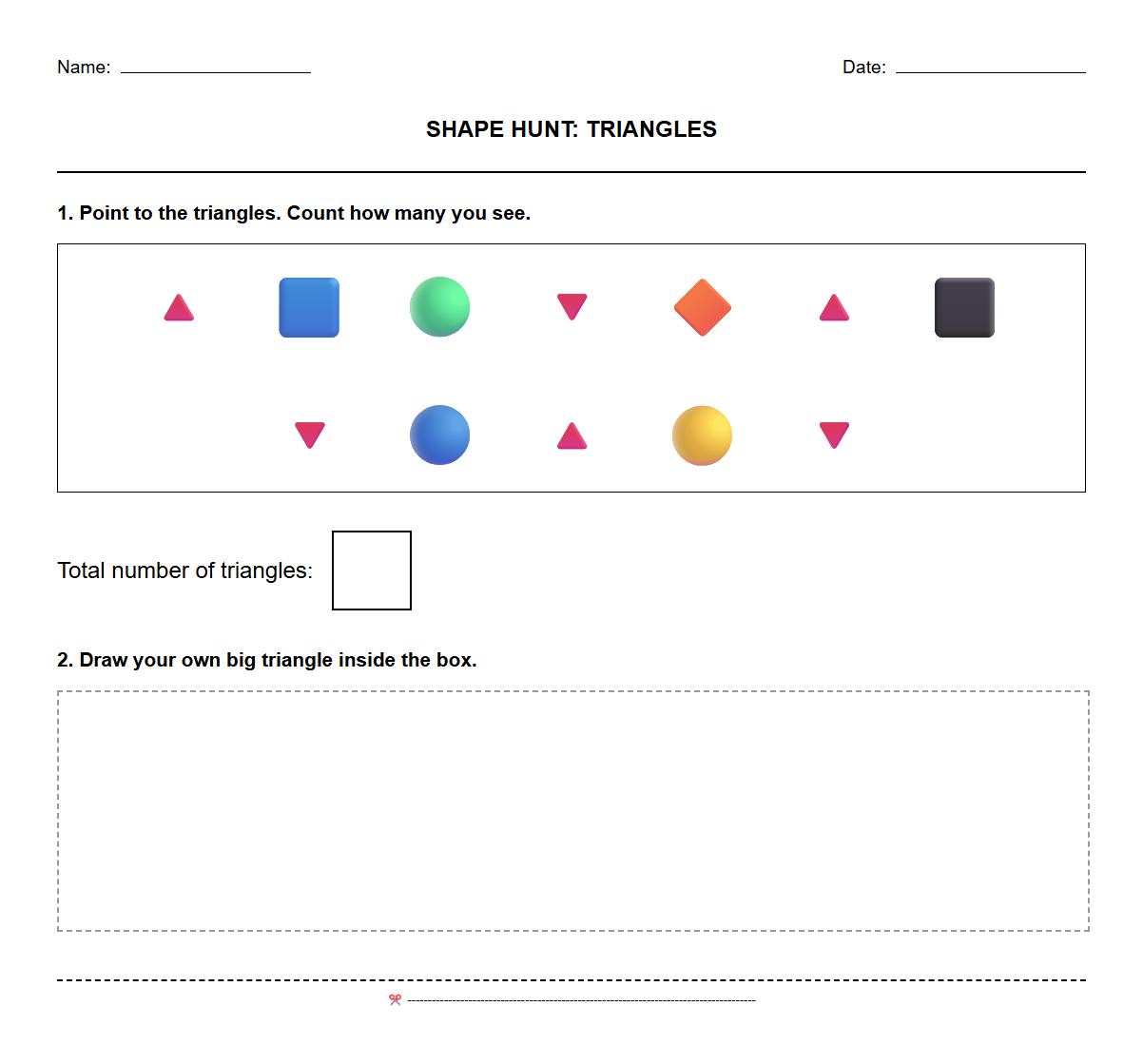
Triangle Identification and Counting Exercise

Download PDF     Pin it

Square Shape Tallying for Subitizing Practice
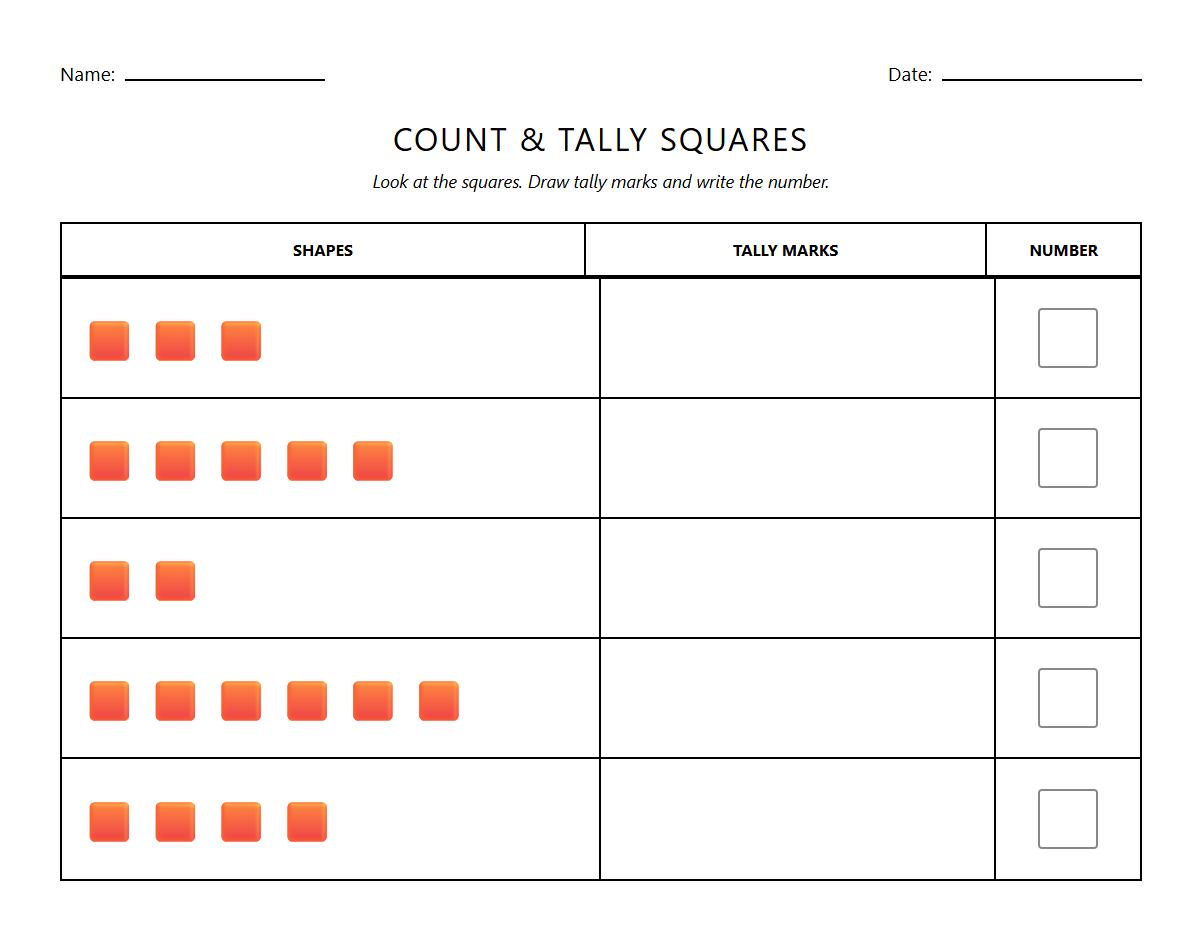
Square Shape Tallying for Subitizing Practice

Download PDF     Pin it

Rectangle Object Enumeration and Tracing
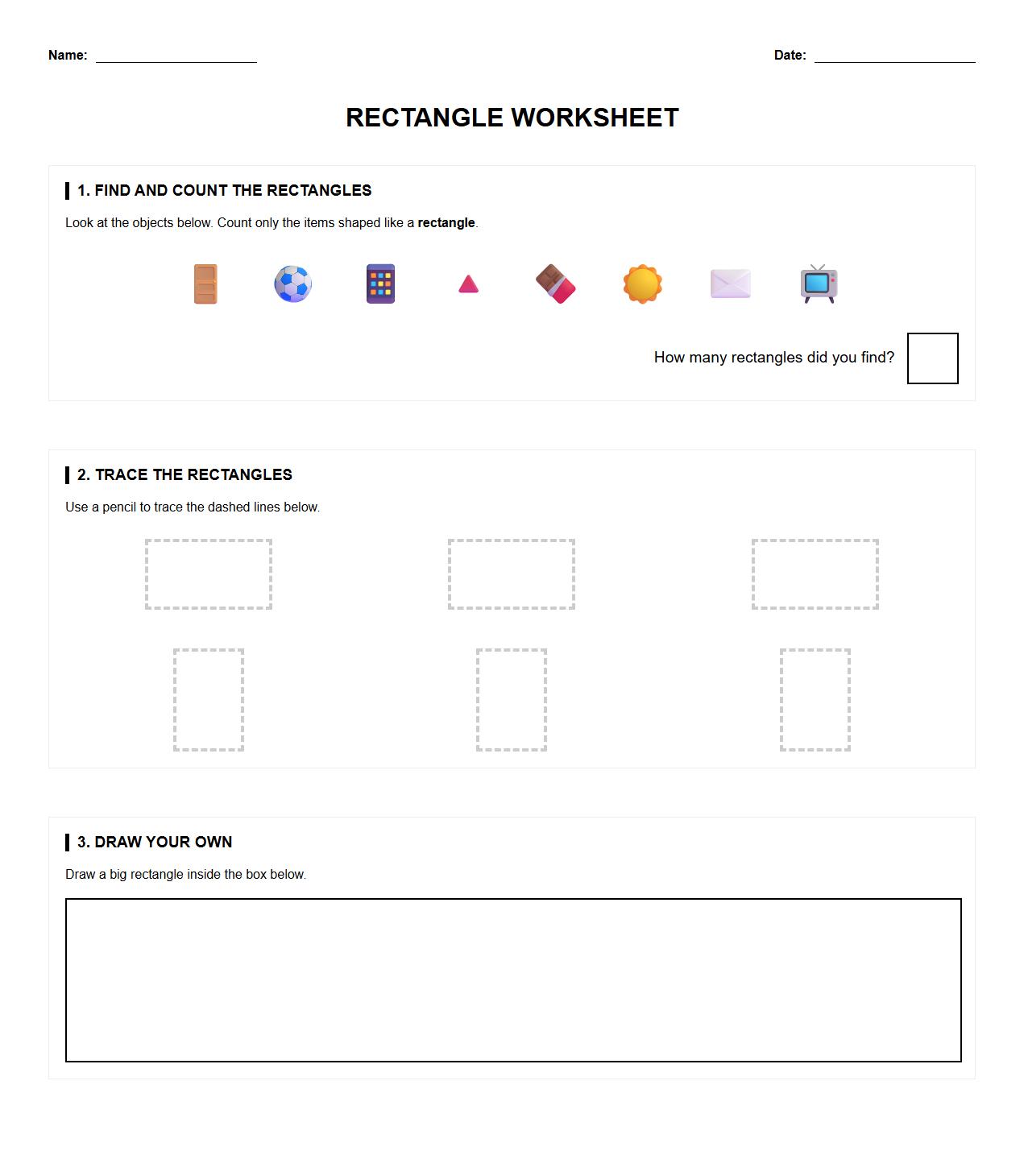
Rectangle Object Enumeration and Tracing

Download PDF     Pin it

Mixed Shape Quantification with Visual Discrimination
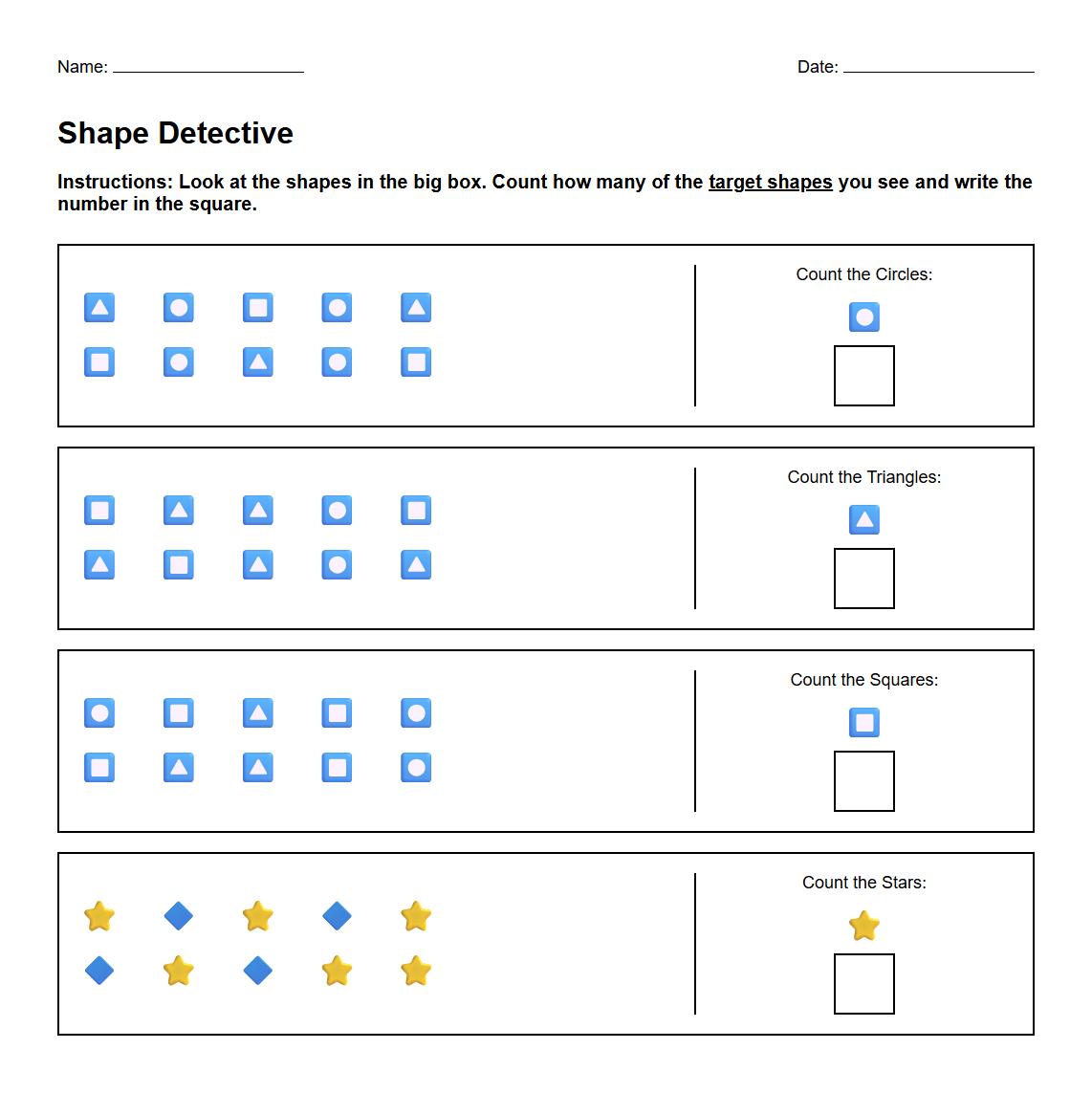
Mixed Shape Quantification with Visual Discrimination

Download PDF     Pin it

Counting and Matching Geometric Figures Activity
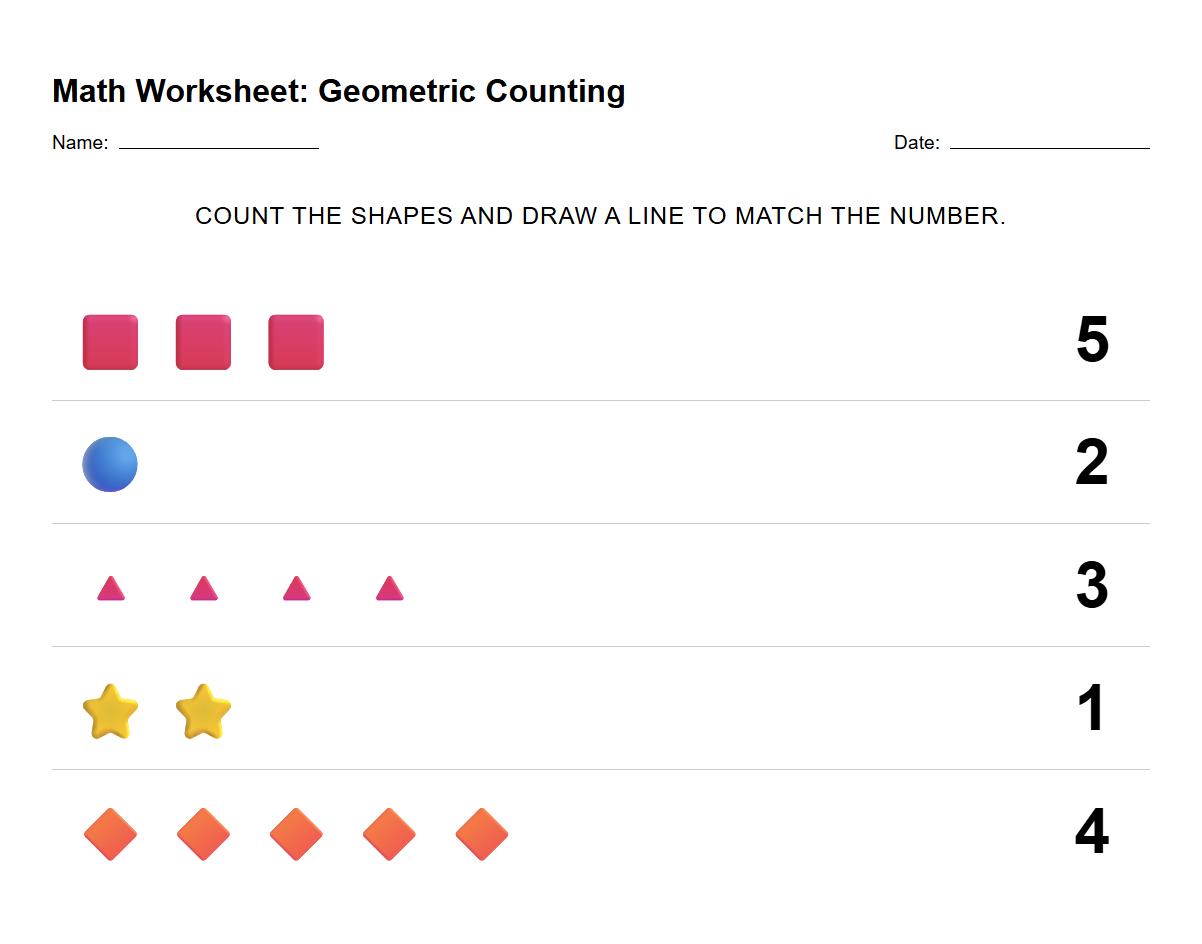
Counting and Matching Geometric Figures Activity

Download PDF     Pin it

Shape Sorting with Number Representation Task
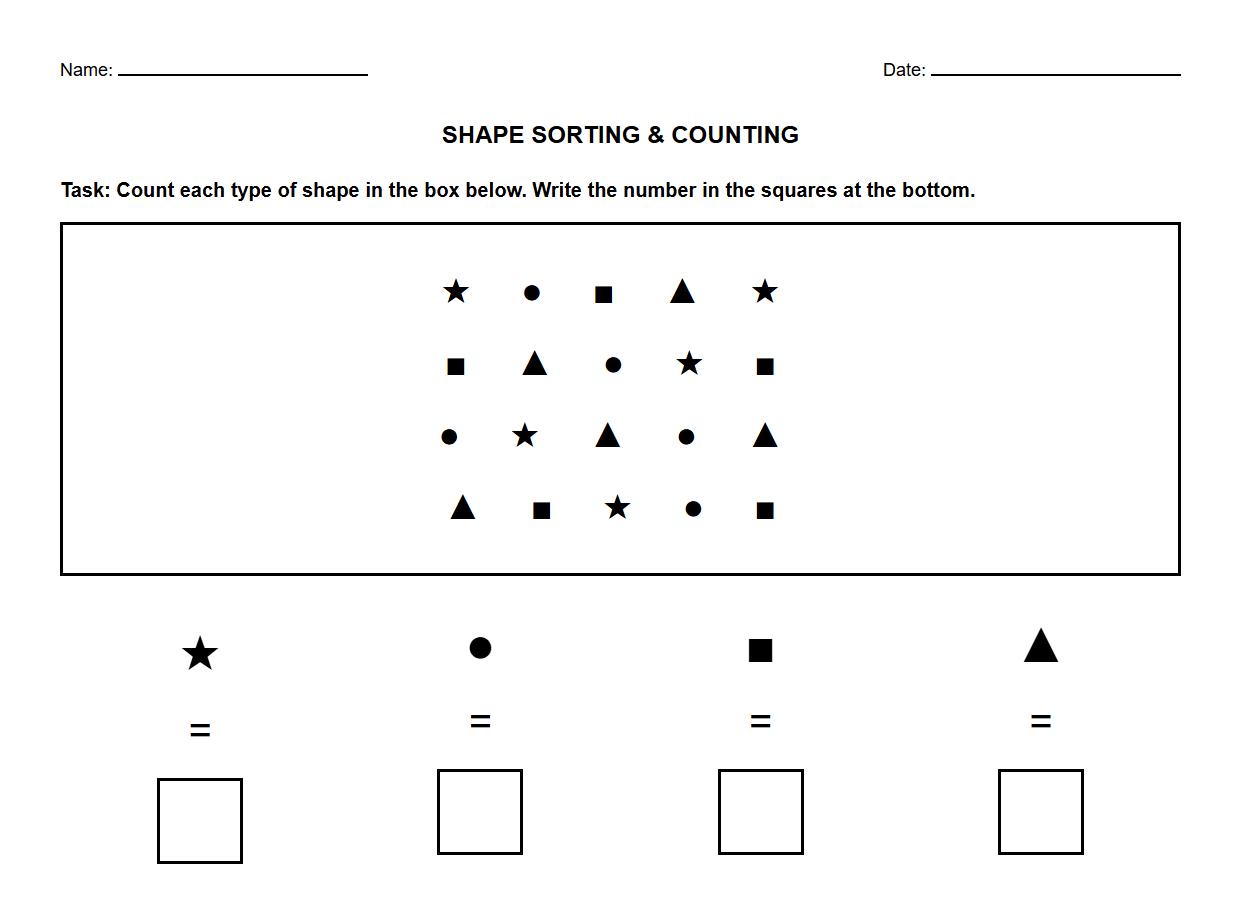
Shape Sorting with Number Representation Task

Download PDF     Pin it

Dot Marker Shape Counting for Fine Motor Skills
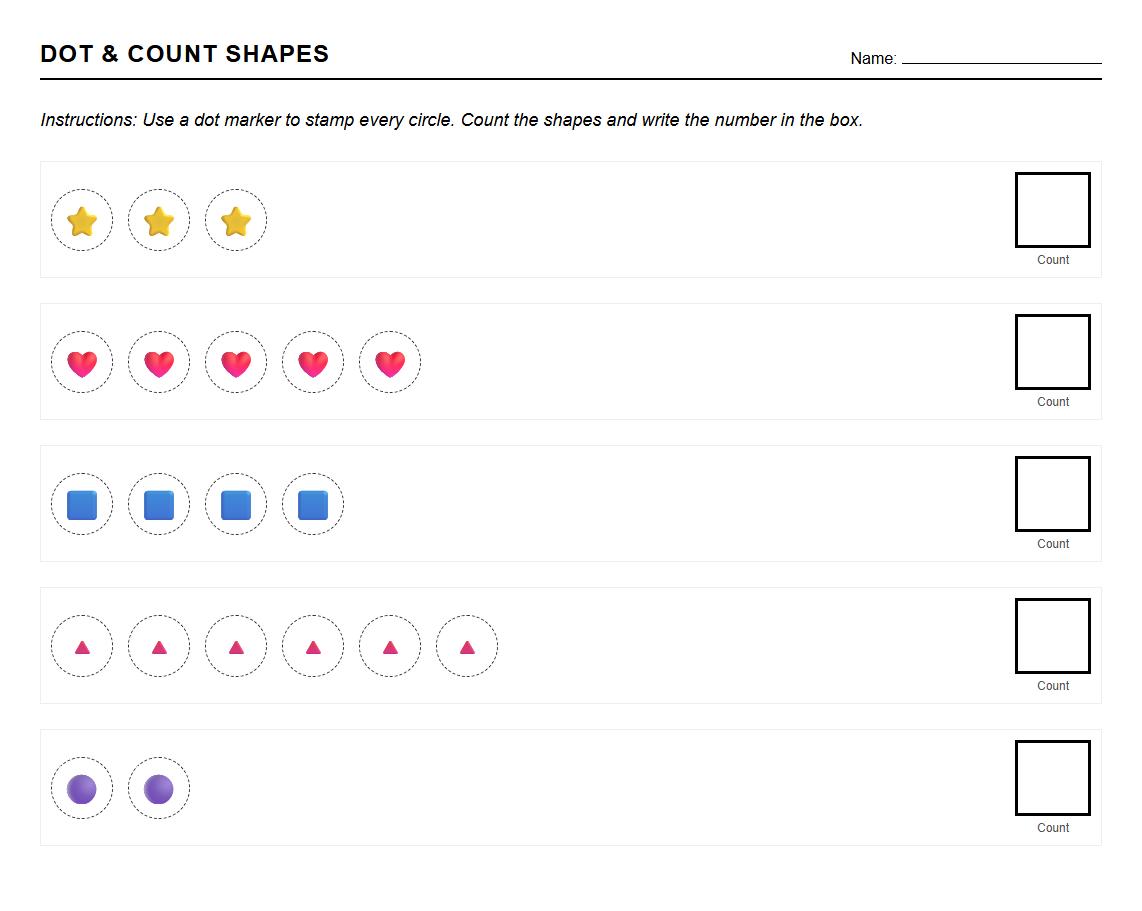
Dot Marker Shape Counting for Fine Motor Skills

Download PDF     Pin it

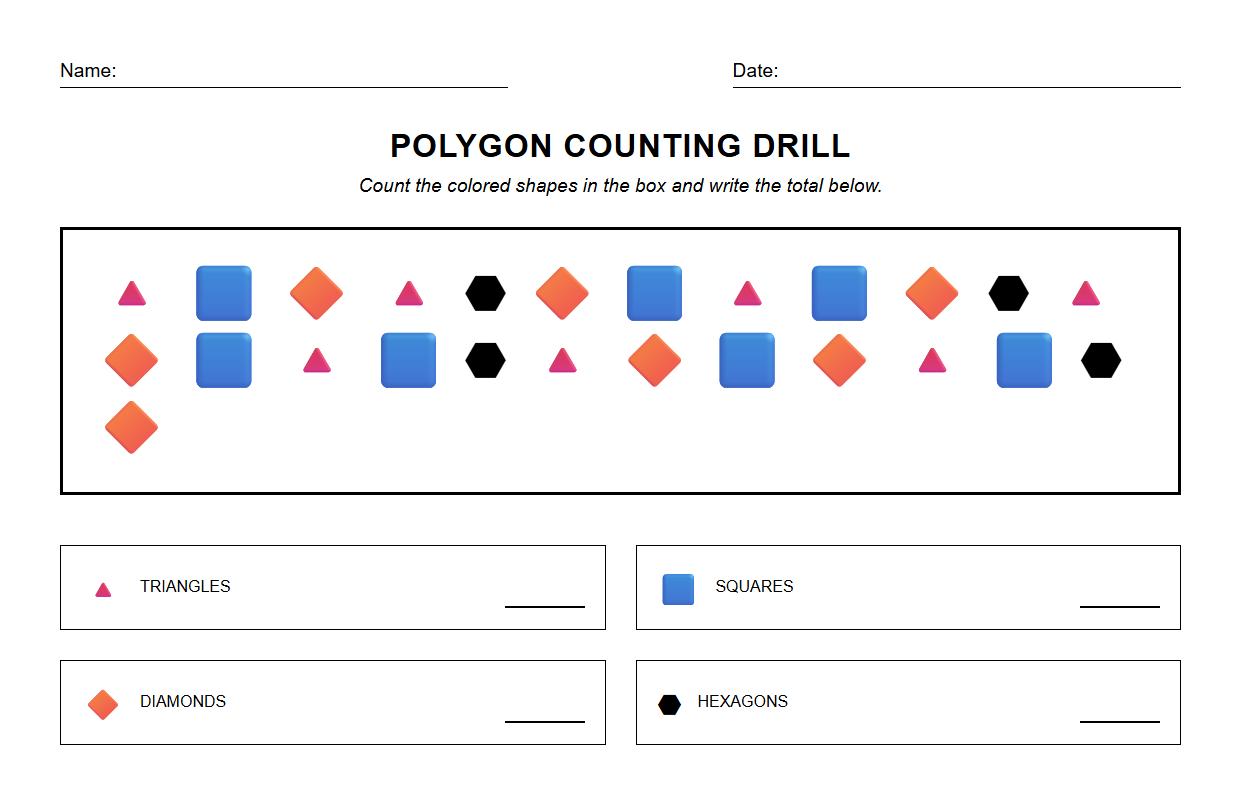
Color Coded Polygon Counting Drill

Color Coded Polygon Counting Drill

Download PDF     Pin it

Two Dimensional Figure Quantitative Assessment Sheet
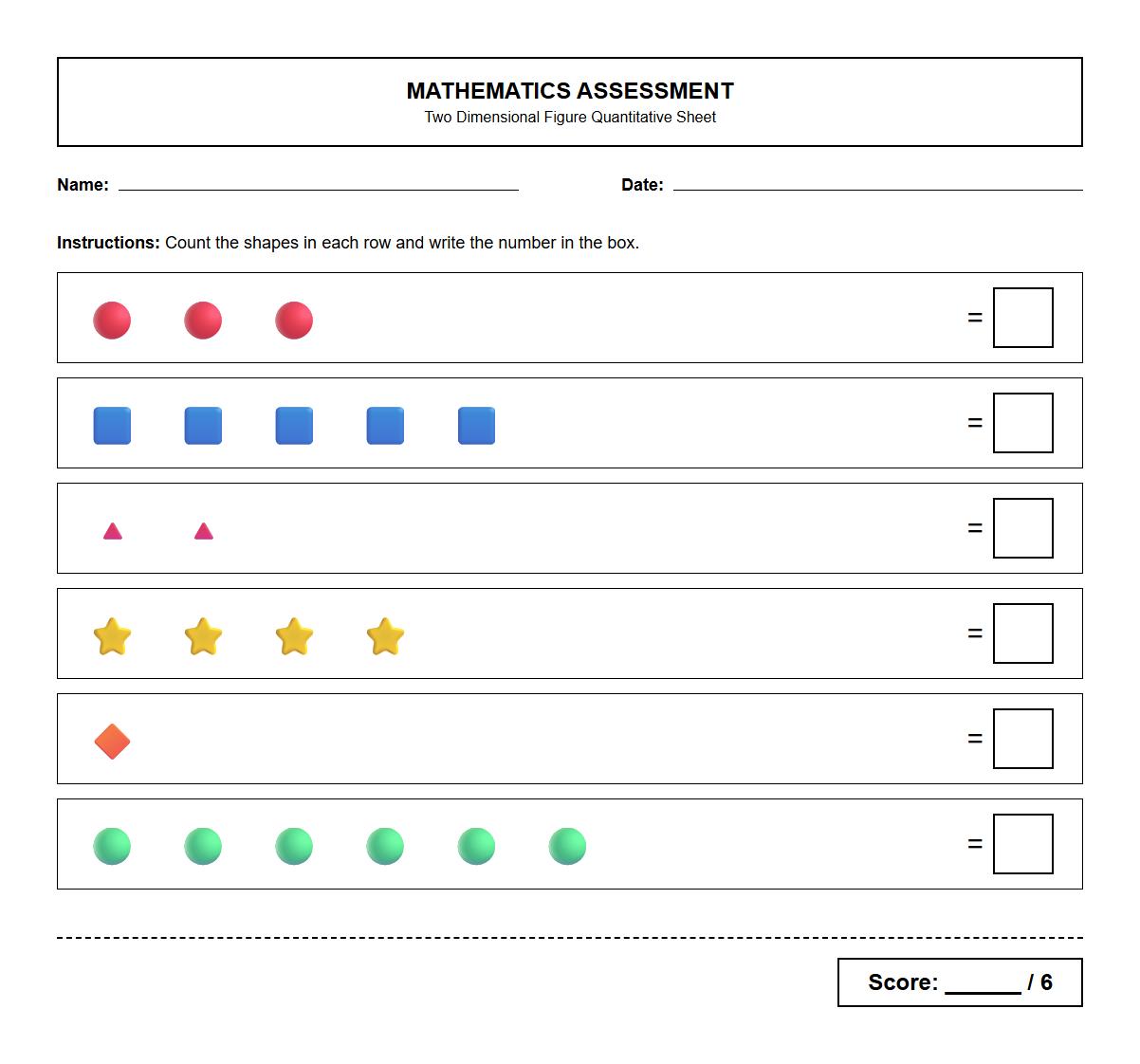
Two Dimensional Figure Quantitative Assessment Sheet

Download PDF     Pin it

Counting Circles on the Activity Sheet

Ask children to carefully search the worksheet and count all the circles they can find. This activity helps improve visual recognition skills and attention to detail. Teachers and parents should encourage kids to point to each circle as they count. This method supports learning through active engagement.

Identifying and Counting Triangles

Guide children to look for all the triangles among the shapes on the worksheet. Counting triangles enhances their ability to recognize and differentiate shapes based on sides and angles. Encourage children to trace each triangle with their finger or a pencil to reinforce the shape's form. This exercise builds early geometry skills vital for kindergarten learners.

Determining the Most Frequent Shape

Have children compare the number of different shapes and decide which one appears the most on the worksheet. This activity promotes comparison and analytical thinking. Teachers and parents can ask questions to help kids verbalize their observation process. Identifying the shape that repeats the most strengthens pattern recognition abilities.

Comparing Squares and Rectangles

Encourage kids to identify and count both squares and rectangles on the activity sheet. Then, help them compare quantities to find out which shape has a greater number. This task supports understanding of shape properties, such as equal sides for squares versus varied side lengths for rectangles. It also reinforces counting and comparison skills.

Counting Shapes with Four Sides

Ask children to find and count all shapes that have exactly four sides. This includes squares and rectangles, helping to categorize shapes by their attributes. Counting four-sided shapes aids in learning about quadrilaterals and basic geometry concepts. It's useful to have children name examples to solidify their understanding.

Finding and Counting Stars

Invite children to locate and count all the stars on the worksheet. Stars often have multiple points, making them distinct and easy to identify for young learners. This activity supports visual discrimination and shape recognition. Positive reinforcement encourages children to engage more deeply with the task.

Identifying the Smallest Shape

Ask children to observe all the shapes and find which one is the smallest on the sheet. This promotes comparative skills such as size differentiation and spatial awareness. Discussing size enhances vocabulary as children describe what they see. This simple exercise builds foundational observation skills.

Counting Different Shapes

Guide children to identify and count how many different shapes are used in the entire activity. This encourages them to recognize variety and categorization in shapes like circles, triangles, squares, rectangles, and stars. Discussing differences supports critical thinking and shape vocabulary development. It's a key step in early math education.

Circuiting All Three-Sided Shapes

Ask kids to circle all shapes with exactly three sides, which are triangles. This hands-on activity reinforces shape identification and fine motor skills as they use a pencil to circle. Circling helps create a physical connection to the learning process. It also promotes active engagement and focus.

Counting Blue Shapes on the Activity Sheet

Encourage children to count all the shapes that are colored blue on the worksheet. This introduces the concept of combining color recognition with shape counting. Discussing colors along with shapes fosters multi-dimensional learning. It also makes the activity more enjoyable and interactive for young learners.


More in Mathematics Category


About the author. Nylen Smith is a dedicated educator and cofounder of KWorksheet.com, a popular platform specializing in high-quality kindergarten worksheets and printable activities.

Disclaimer. The information provided in this document is for general informational purposes and/or document sample only and is not guaranteed to be factually right or complete. Please report to us via contact-us page if you find and error in this page, thanks.

Comments

No comment yet