Cut and Paste 2D and 3D Shapes Hands On Worksheet

📅 Feb 26, 2025 👤 Nylen Smith

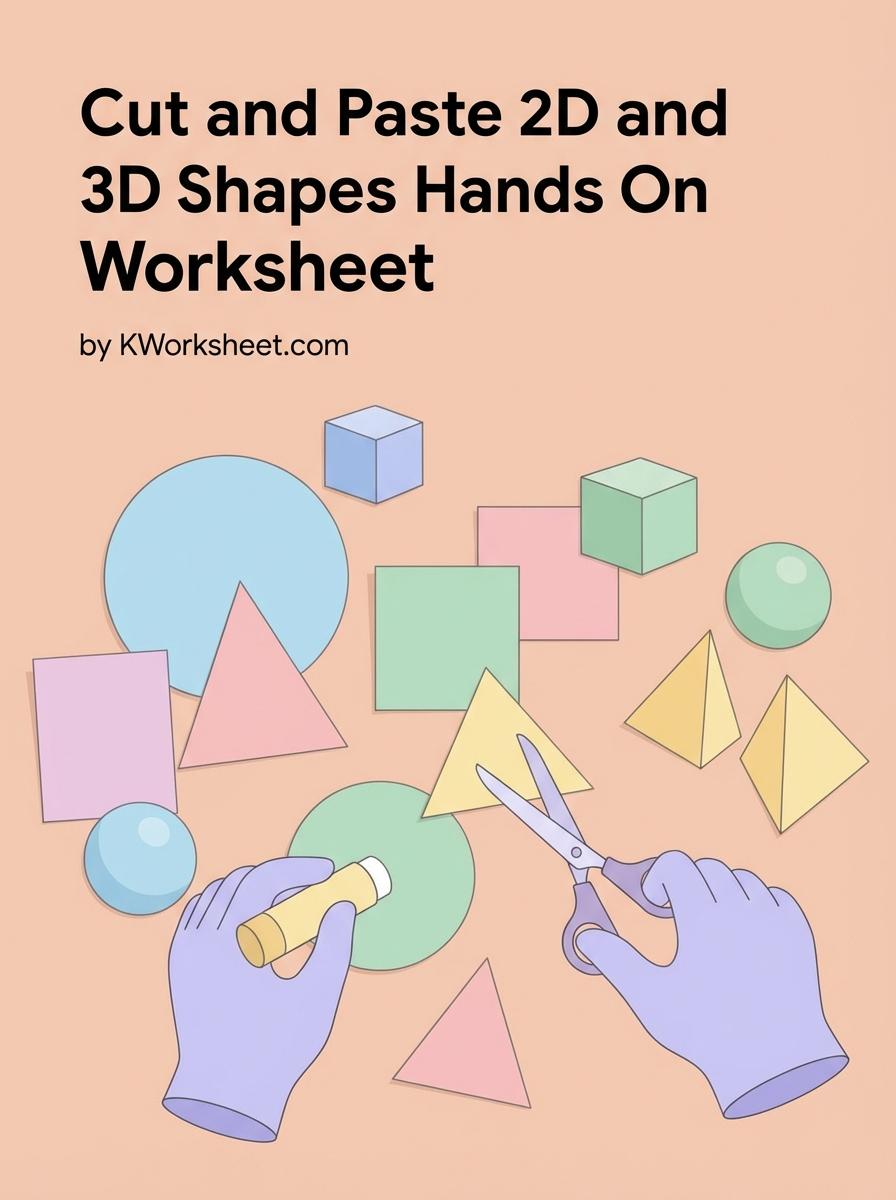
Explore hands-on learning with the Cut and Paste 2D and 3D Shapes worksheet designed to enhance spatial awareness and shape recognition skills. This engaging activity encourages children to identify, cut, and assemble various geometric shapes, fostering fine motor development and critical thinking. Check out the available worksheets to make shape learning interactive and fun.

Cut and Paste 2D Shapes Sorting Activity
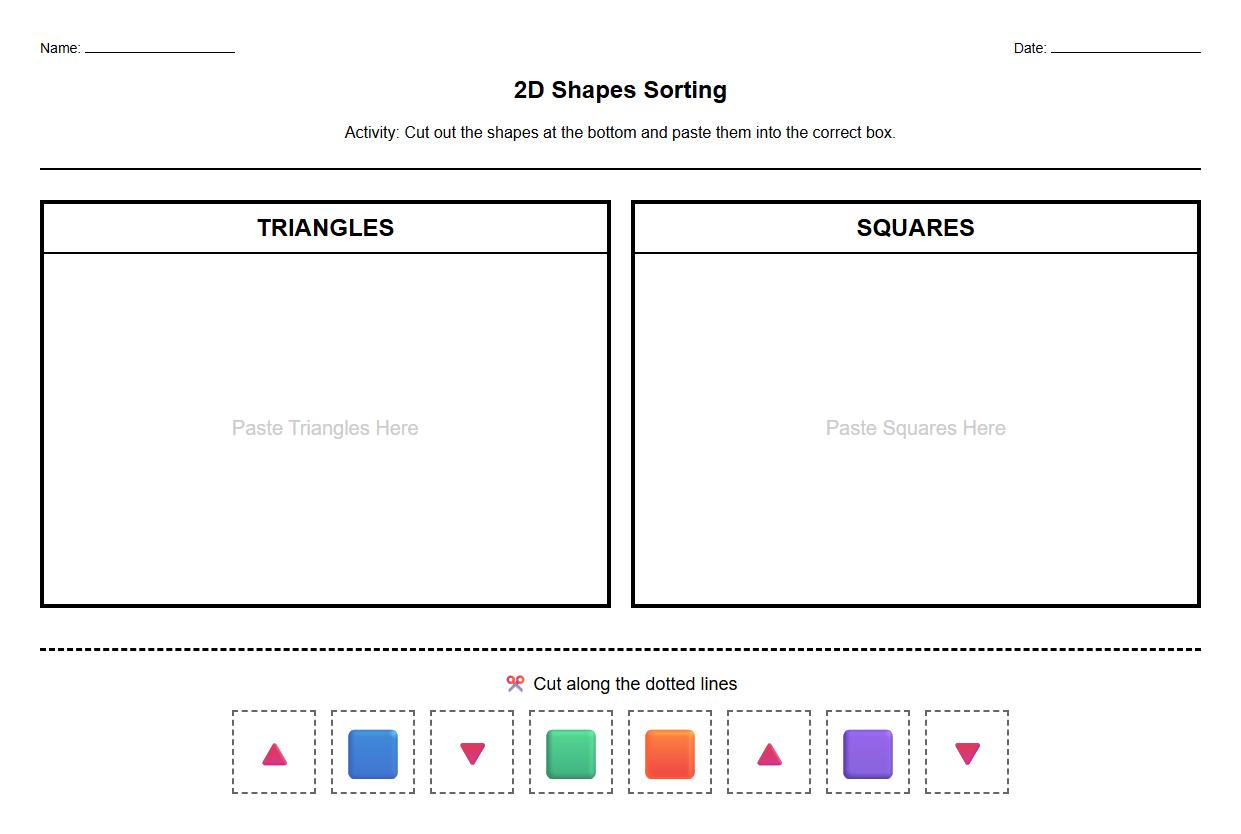
Cut and Paste 2D Shapes Sorting Activity

Download PDF     Pin it

Cut and Paste 3D Shapes Identification Worksheet
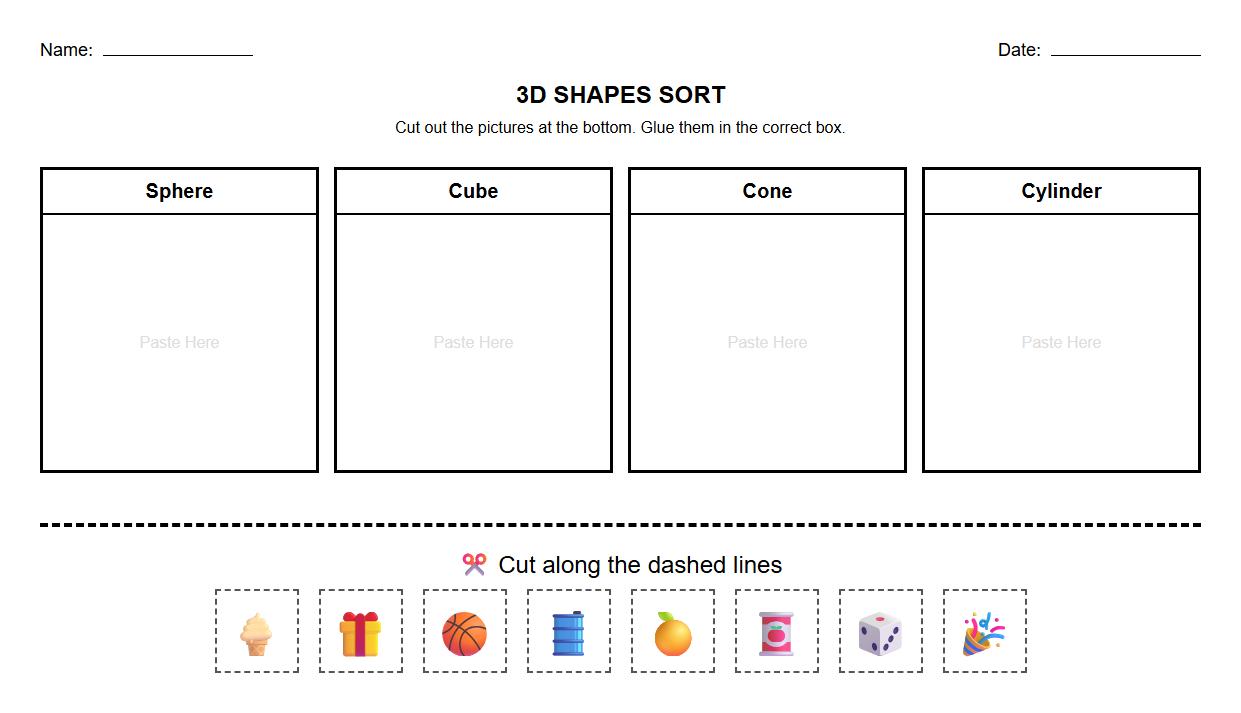
Cut and Paste 3D Shapes Identification Worksheet

Download PDF     Pin it

Phonics Matched with 2D Shape Pictures Worksheet
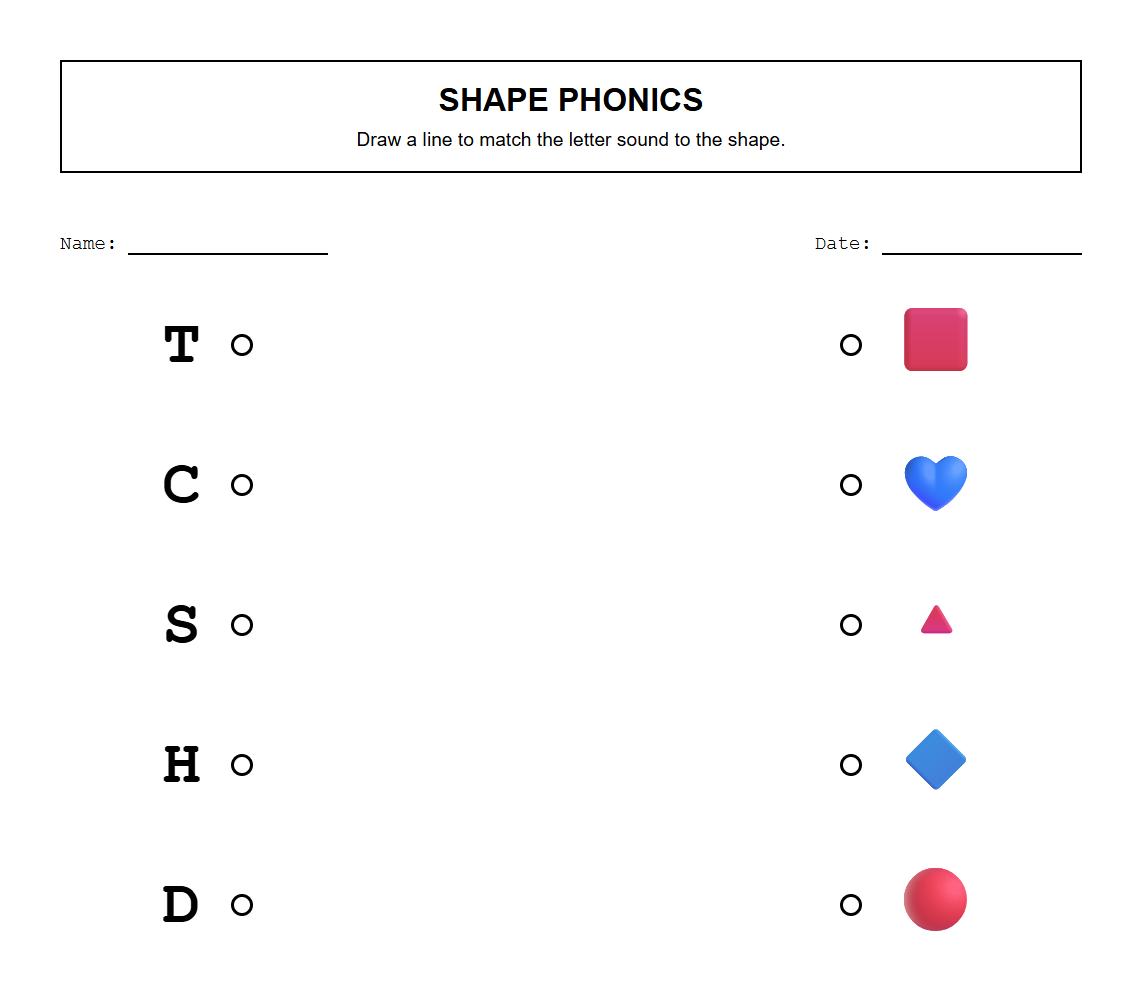
Phonics Matched with 2D Shape Pictures Worksheet

Download PDF     Pin it

Hands On Cut and Paste Shape Nets Exercise
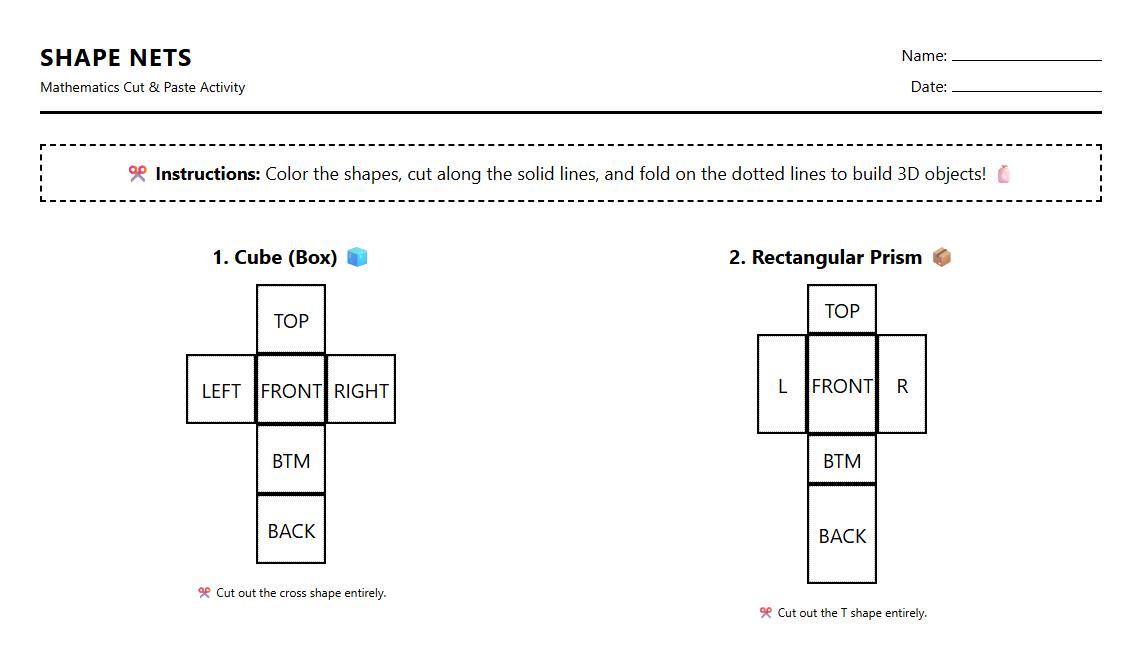
Hands On Cut and Paste Shape Nets Exercise

Download PDF     Pin it

Classify 2D vs 3D Shapes Cut and Paste Task
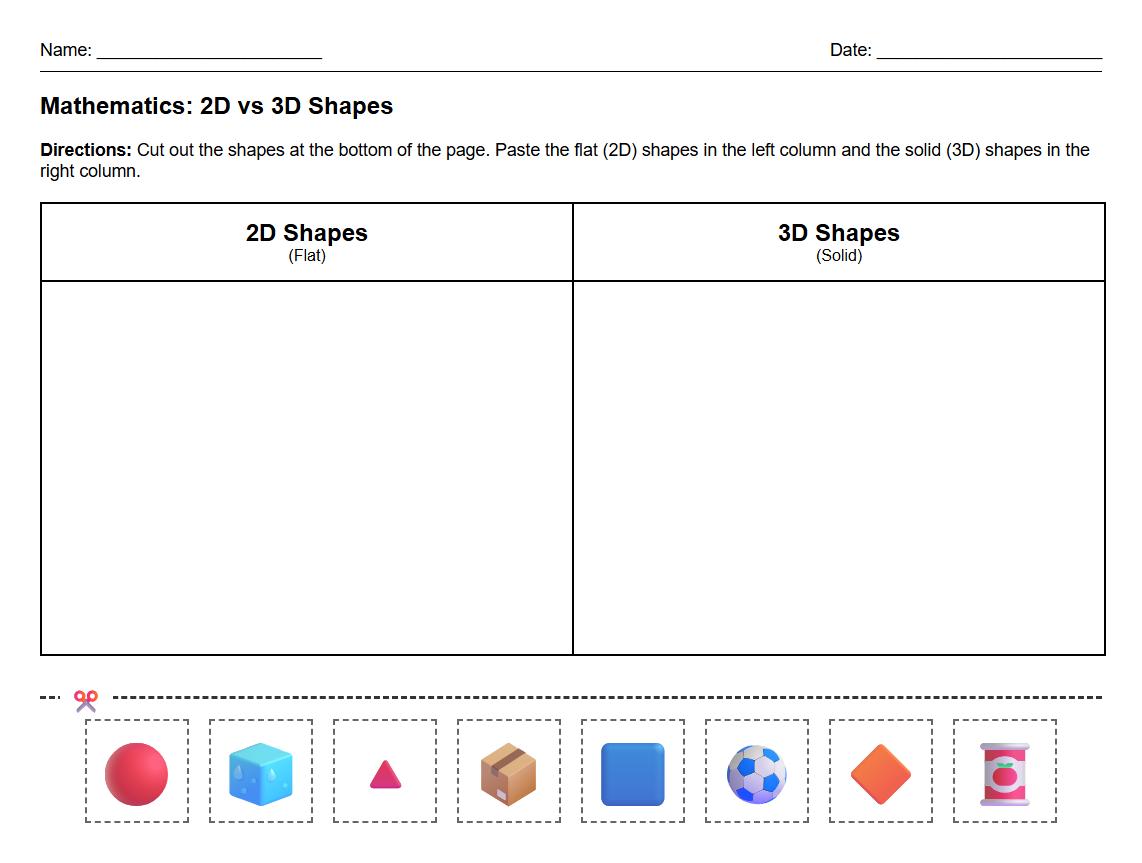
Classify 2D vs 3D Shapes Cut and Paste Task

Download PDF     Pin it

Shape Properties Cut and Match Worksheet
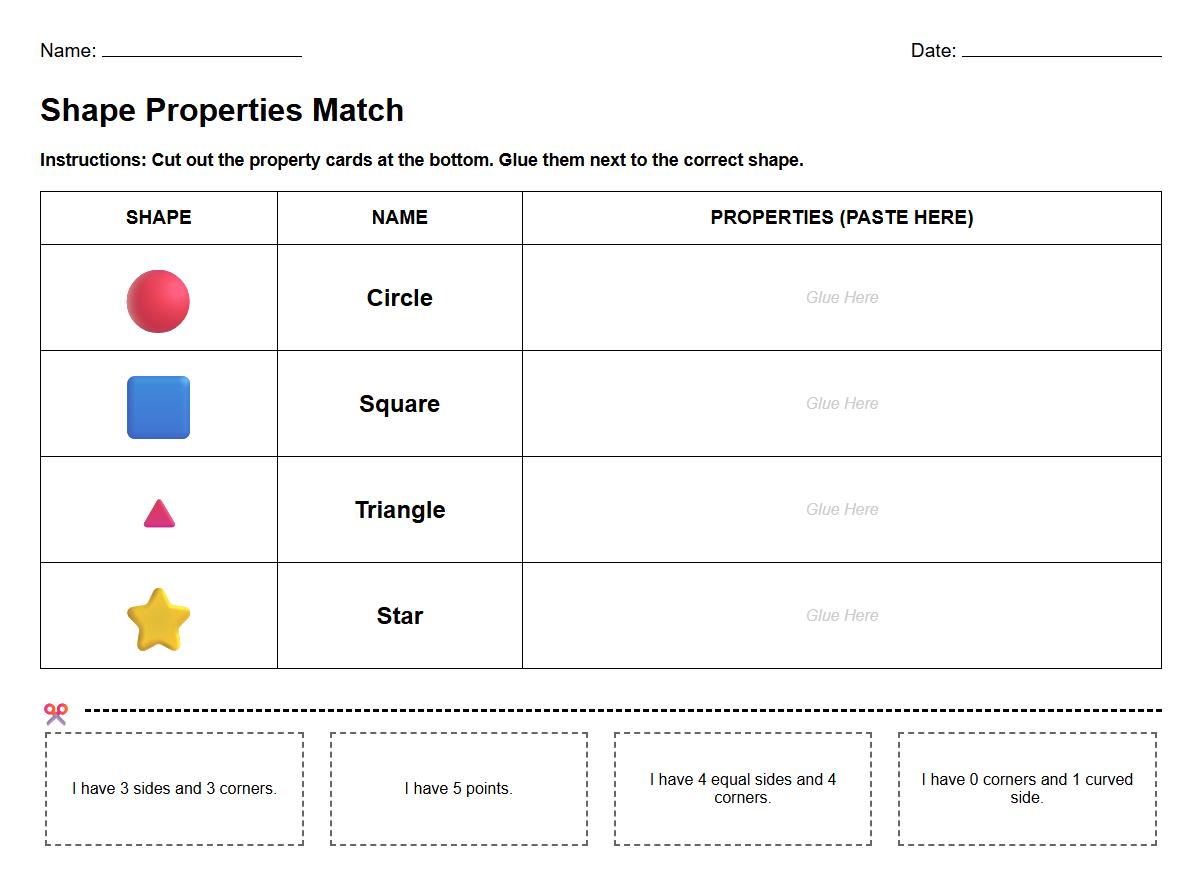
Shape Properties Cut and Match Worksheet

Download PDF     Pin it

Spatial Awareness Shape Placement Activity
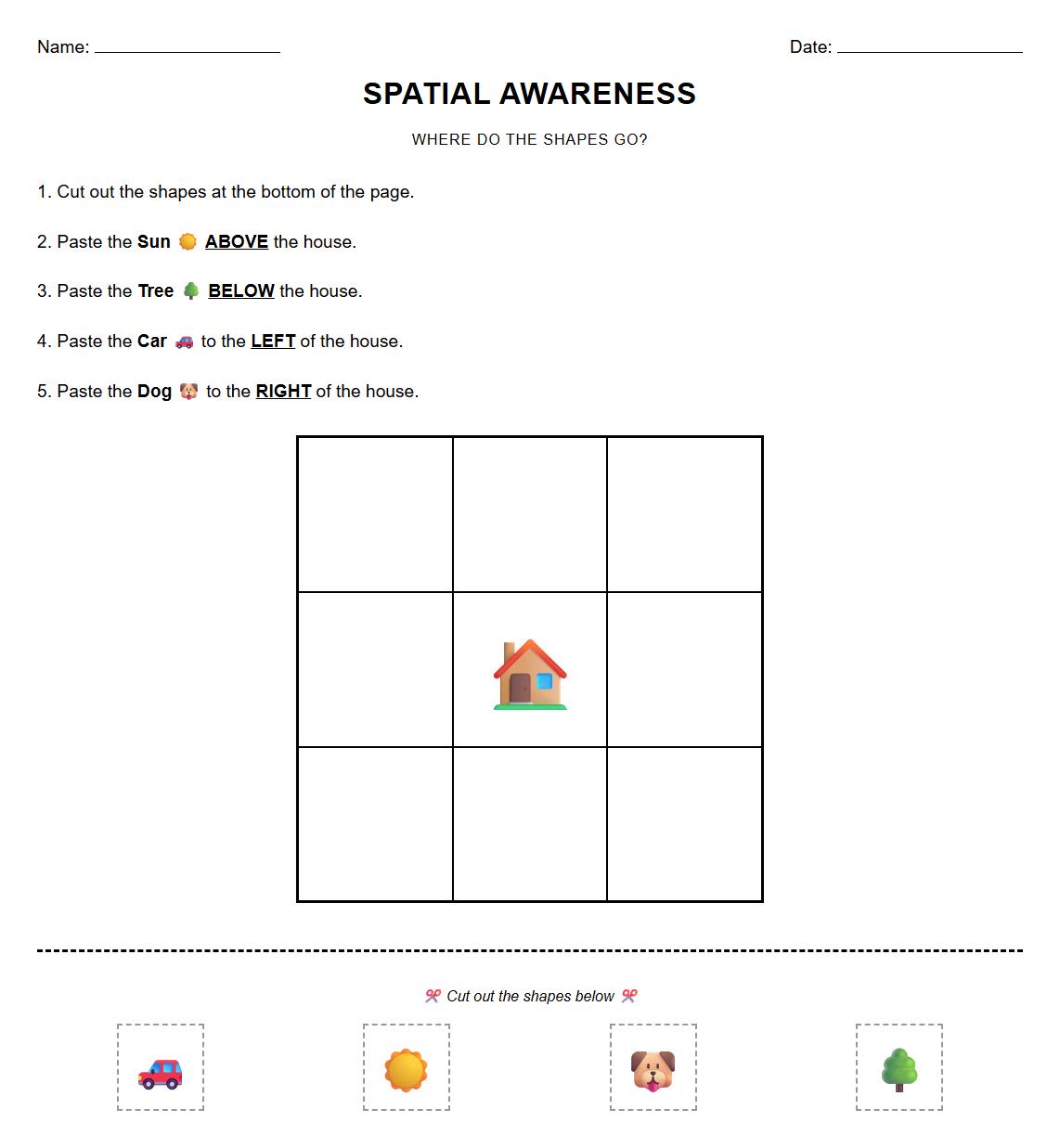
Spatial Awareness Shape Placement Activity

Download PDF     Pin it

Cut and Paste Prism and Pyramid Shapes Task
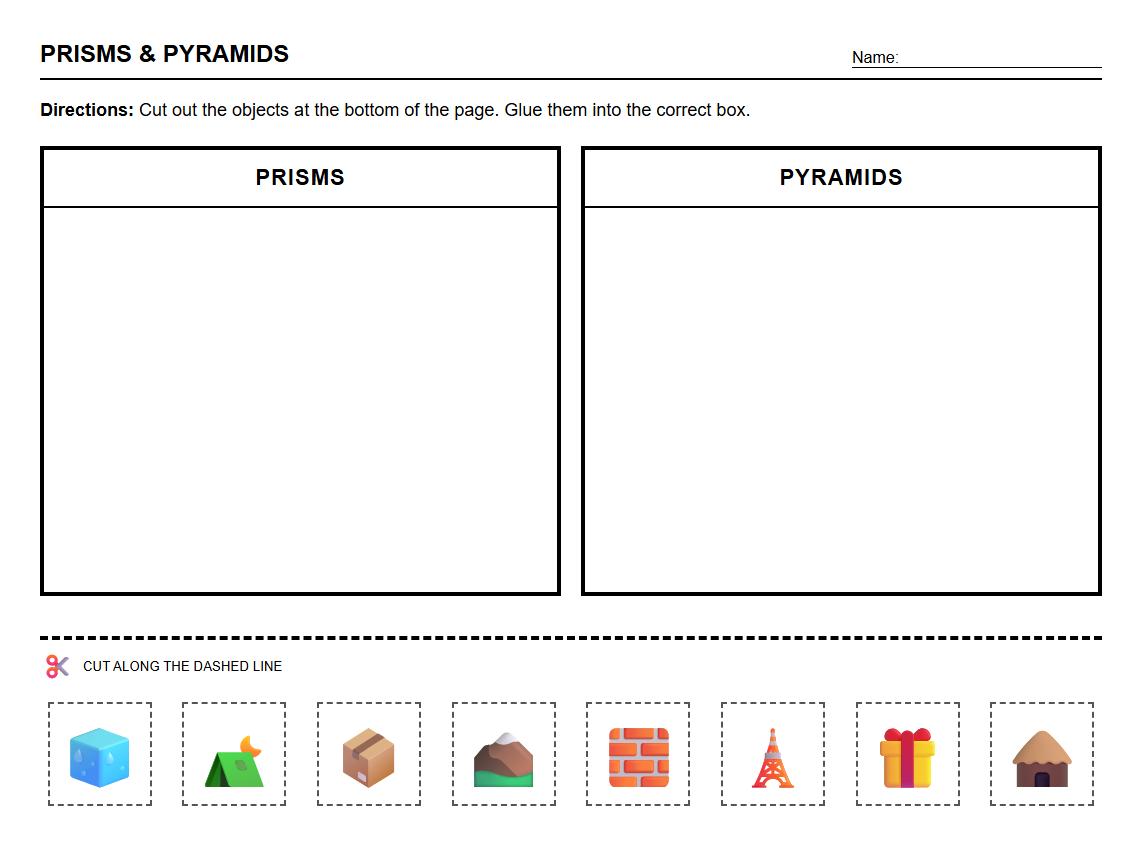
Cut and Paste Prism and Pyramid Shapes Task

Download PDF     Pin it

Symmetry in 2D Shapes Cut and Paste Exercise
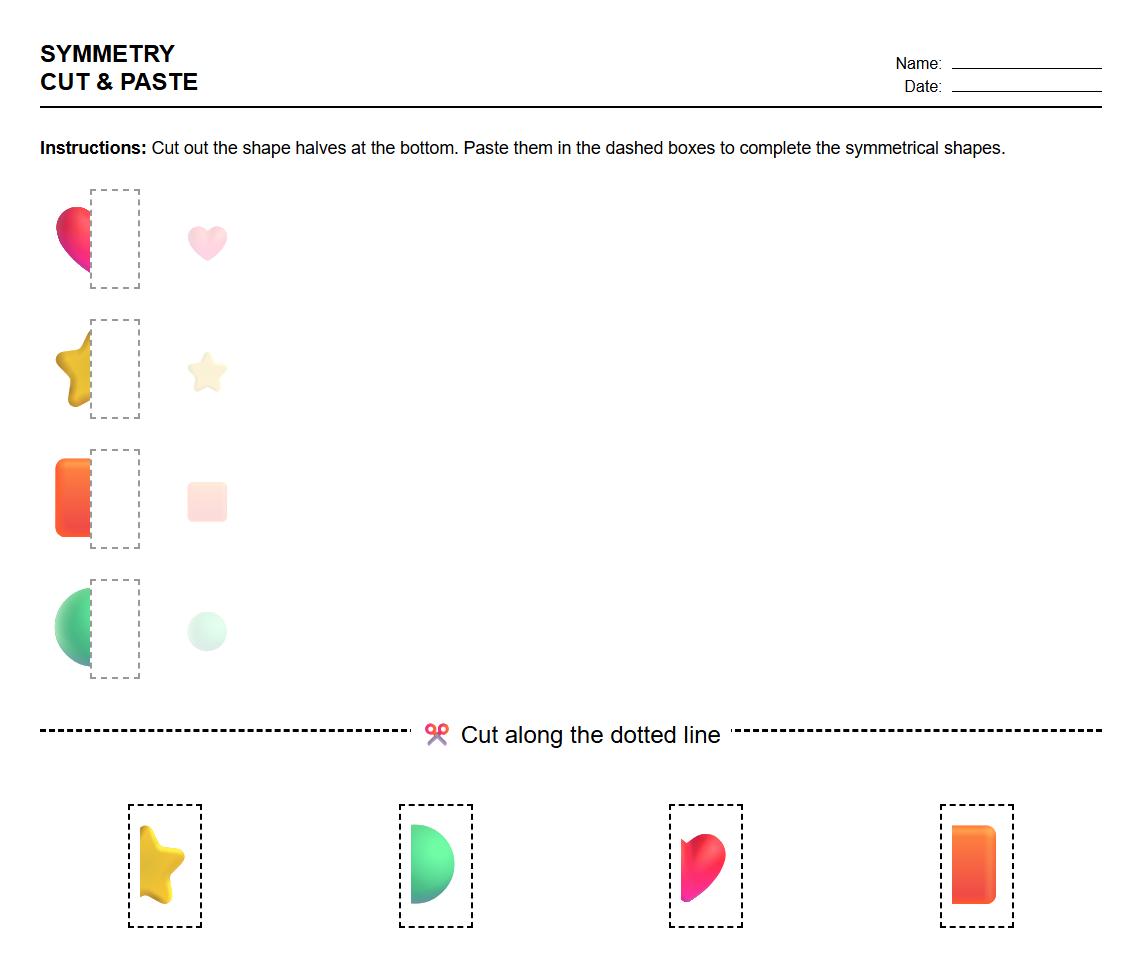
Symmetry in 2D Shapes Cut and Paste Exercise

Download PDF     Pin it

Geometry Vocabulary Shape Labeling Worksheet
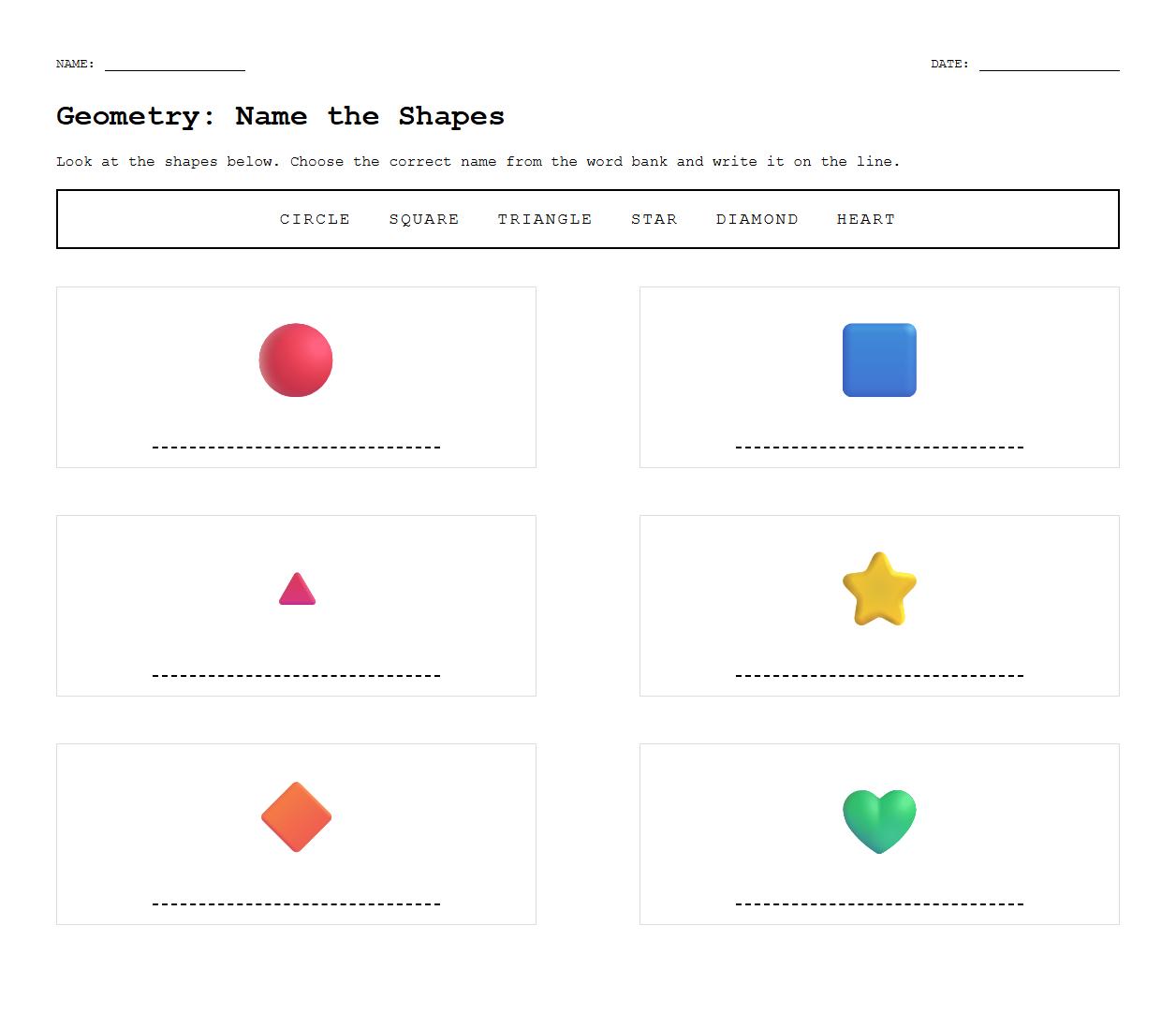
Geometry Vocabulary Shape Labeling Worksheet

Download PDF     Pin it

Names of the 2D Shapes

Identify the 2D shapes you cut and pasted during the activity. Common examples include circles, squares, triangles, and rectangles. Knowing the names helps in recognizing shapes in everyday objects. Encourage children to say each shape's name aloud to reinforce learning.

Matching 3D Shapes to Their Names

Help the child match 3D shapes like cubes, spheres, cylinders, and cones to their correct names. This improves shape recognition and vocabulary. Use the shapes on the worksheet as visual aids for better understanding. Practicing matching supports early geometry skills.

Sides of Each 2D Shape

Count and discuss how many sides each 2D shape has. For example, a triangle has 3 sides, a square has 4 sides, and a circle has none. Understanding sides is essential for developing spatial awareness and math skills. Use hands-on examples to make this concept clear.

Shapes That Roll or Slide

Explore which 3D shapes roll and which ones slide. Spheres and cylinders typically roll, while cubes and cones tend to slide. This activity develops physical understanding and fine motor skills. Children can test this by gently rolling or sliding the shapes.

Sorting Shapes into 2D and 3D Groups

Guide children to sort shapes into 2D (flat) and 3D (solid) groups. This helps them grasp basic geometric classifications. Sorting improves categorization skills essential for math readiness. Use the worksheet shapes for hands-on practice.

Easiest Shape to Cut Out

Ask children which shape was the easiest for them to cut out. Simple shapes like circles or squares may be easier due to fewer corners. This reflection encourages fine motor skill development. It also helps teachers and parents identify suitable activities for skill levels.

Real Objects Matching 3D Shapes

Encourage finding a real object that matches a 3D shape from the worksheet. Examples include a ball for a sphere or a can for a cylinder. This connection between shapes and the real world enhances understanding. It also makes learning more engaging and practical.

Colors Used for Each Shape

Discuss which colors children used for each shape during the activity. Coloring helps with shape recognition and creativity. It supports learning through visual stimulation and personal expression. Encourage naming the colors to build vocabulary.

Difference Between a Circle and a Sphere

Describe that a circle is a flat 2D shape, while a sphere is a round 3D object. A circle has only length and width, whereas a sphere has length, width, and height. Understanding this difference lays the foundation for more complex geometry. Use real objects to illustrate the concept clearly.

Number of Shapes Used to Complete the Picture

Count how many shapes were used to complete the child's picture on the worksheet. This highlights pattern recognition and counting skills. It also encourages attention to detail and finishing tasks. Celebrating this achievement boosts confidence and motivation.


More in Mathematics Category


About the author. Nylen Smith is a dedicated educator and cofounder of KWorksheet.com, a popular platform specializing in high-quality kindergarten worksheets and printable activities.

Disclaimer. The information provided in this document is for general informational purposes and/or document sample only and is not guaranteed to be factually right or complete. Please report to us via contact-us page if you find and error in this page, thanks.

Comments

No comment yet