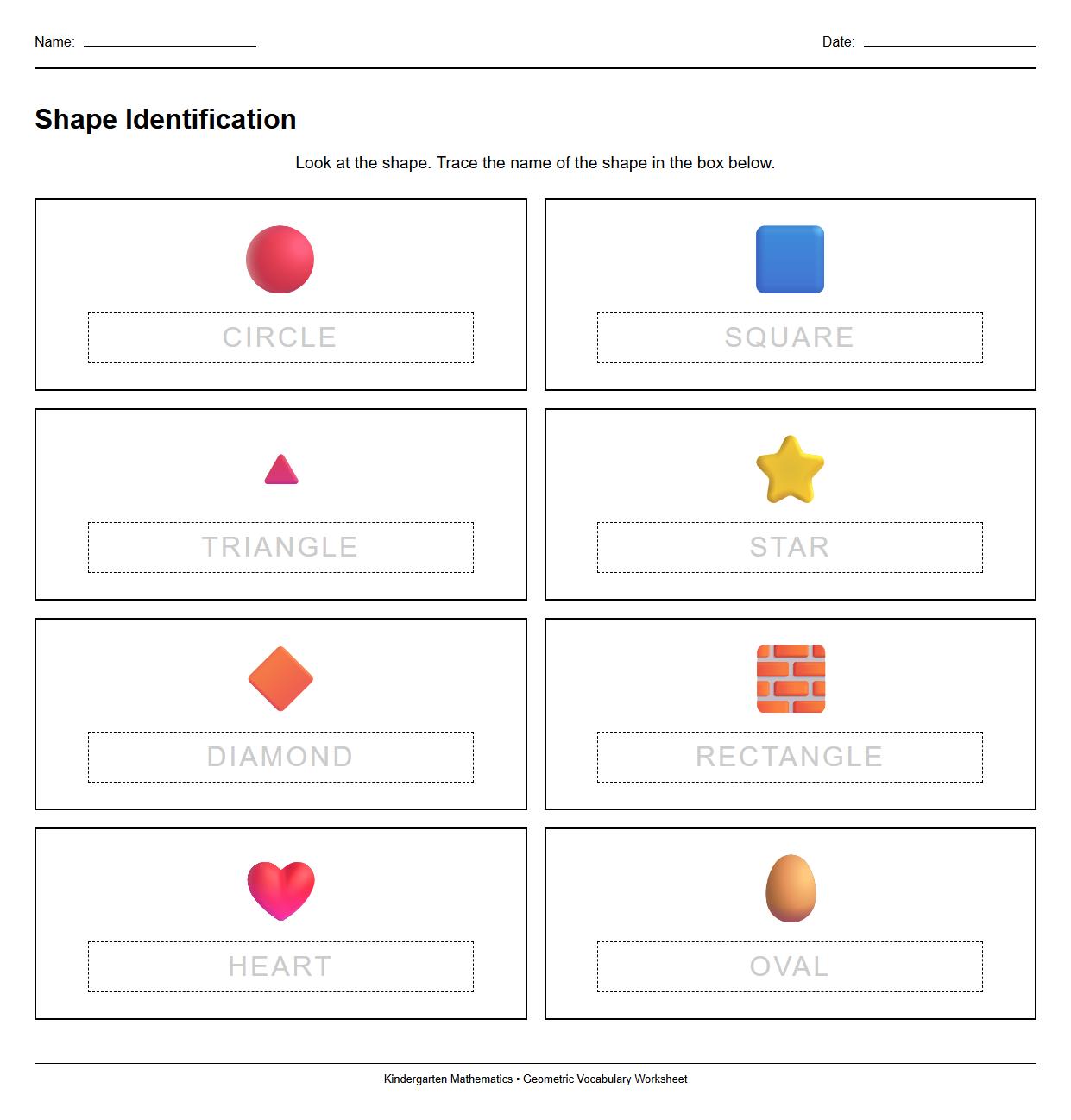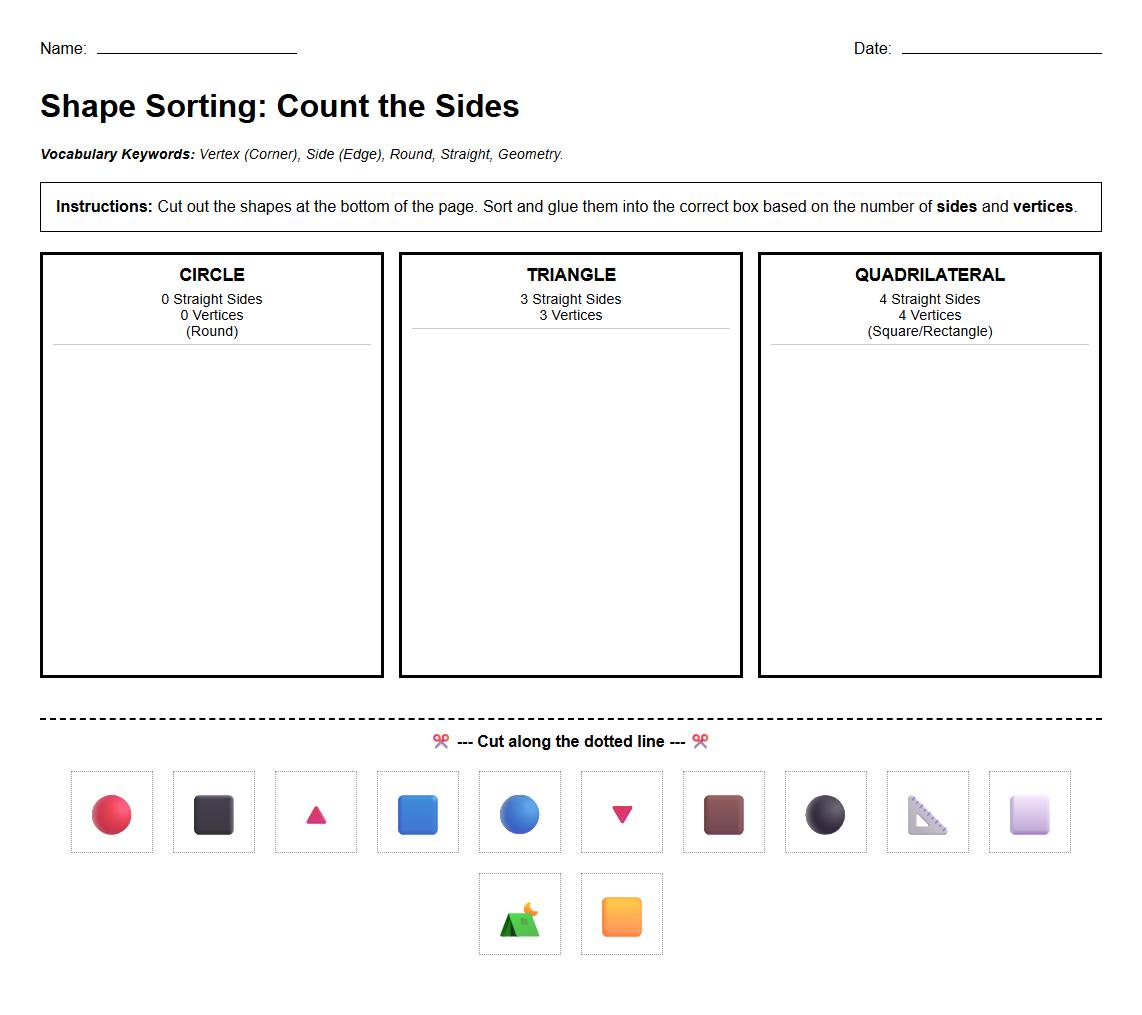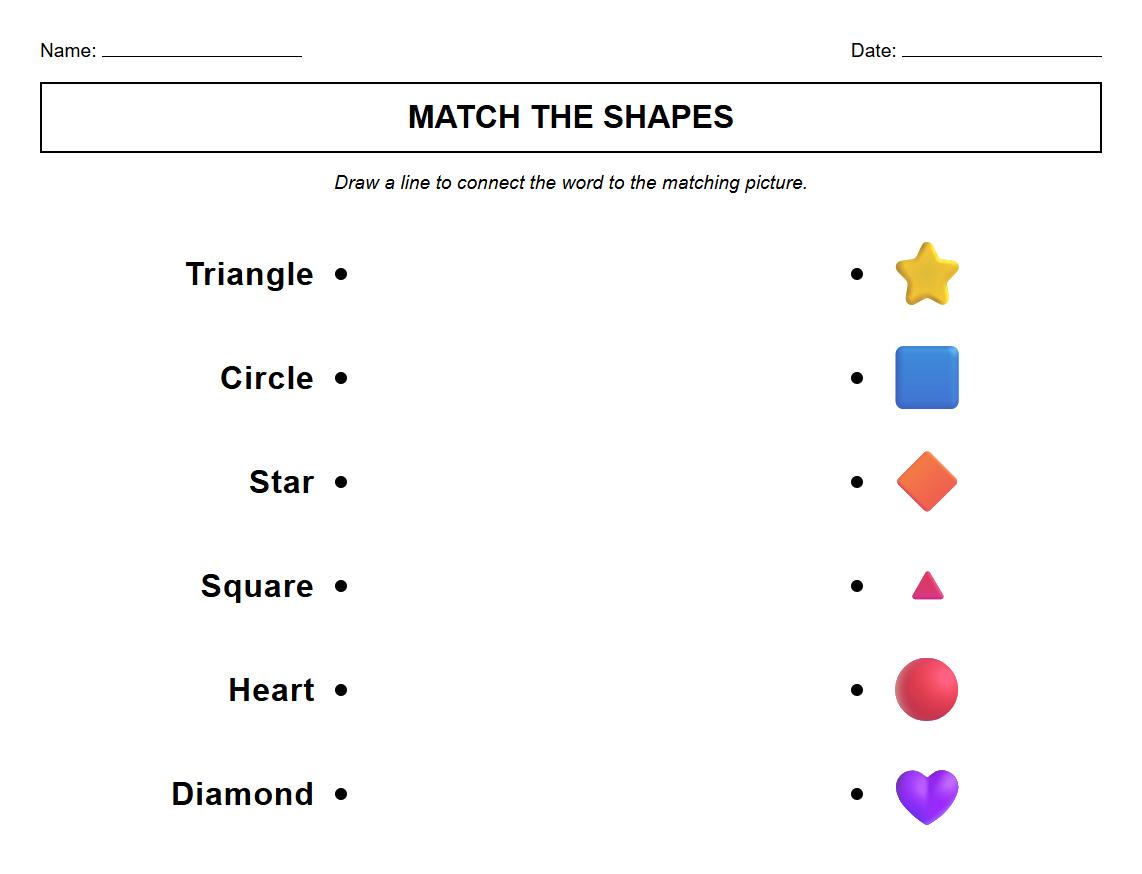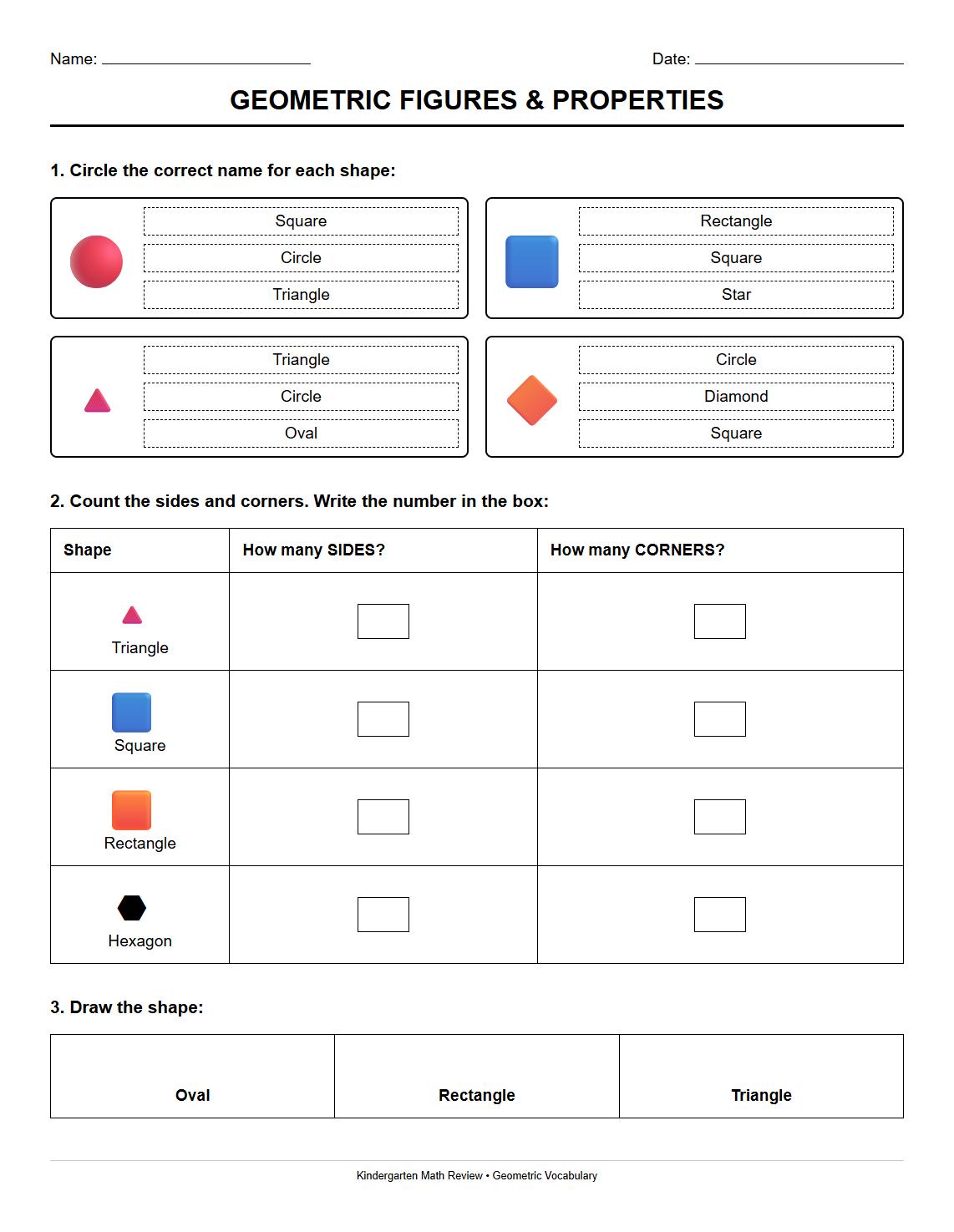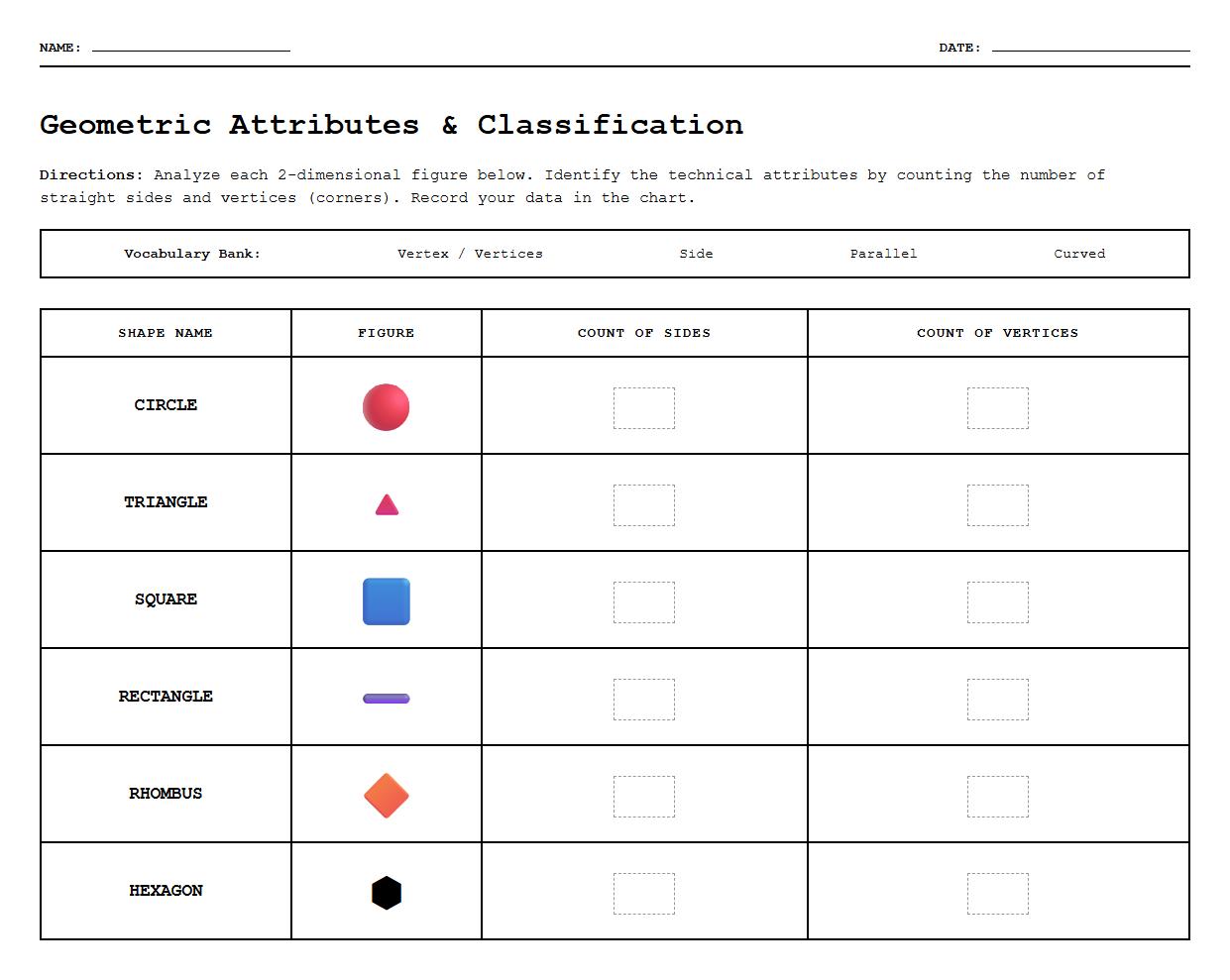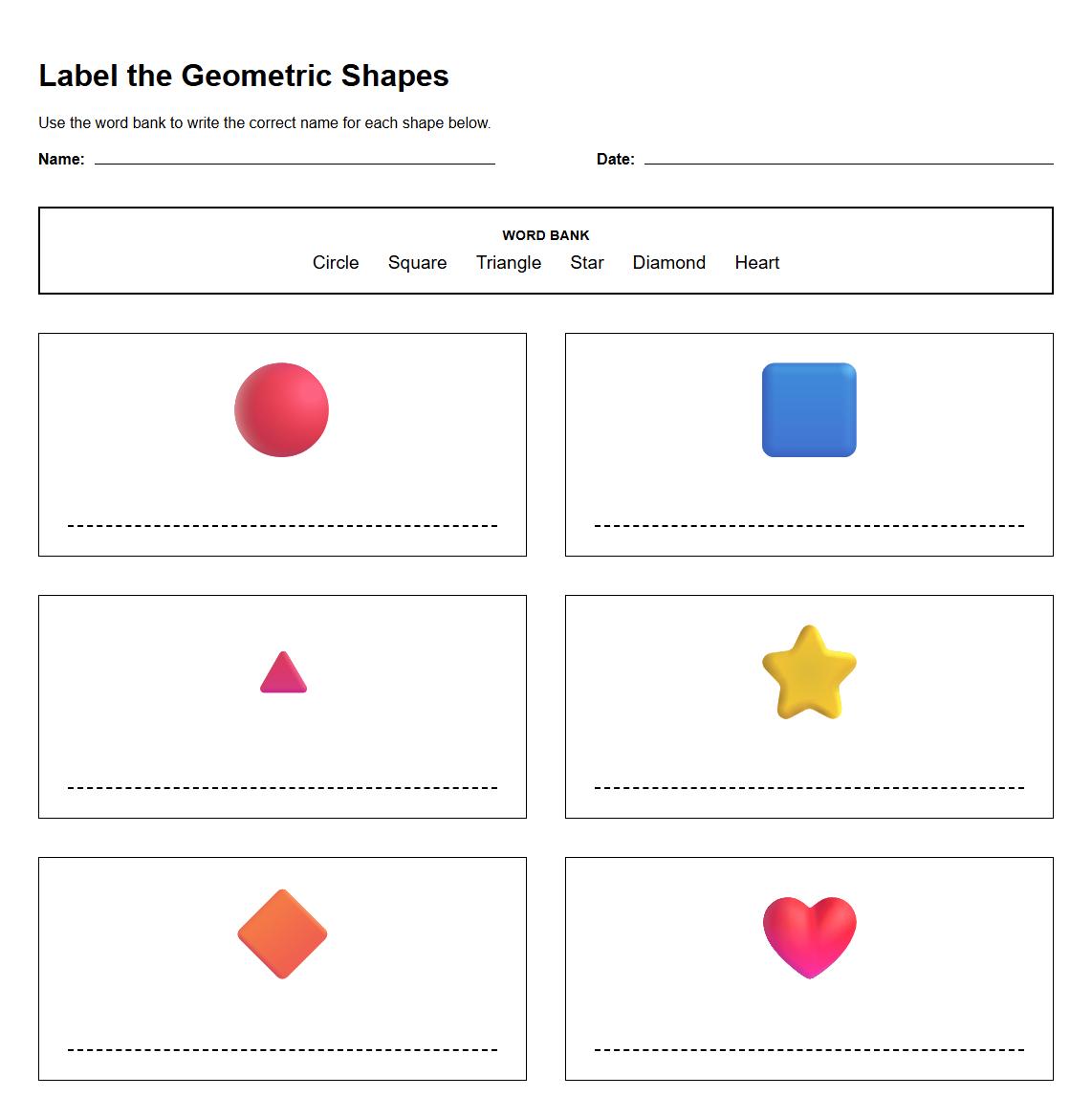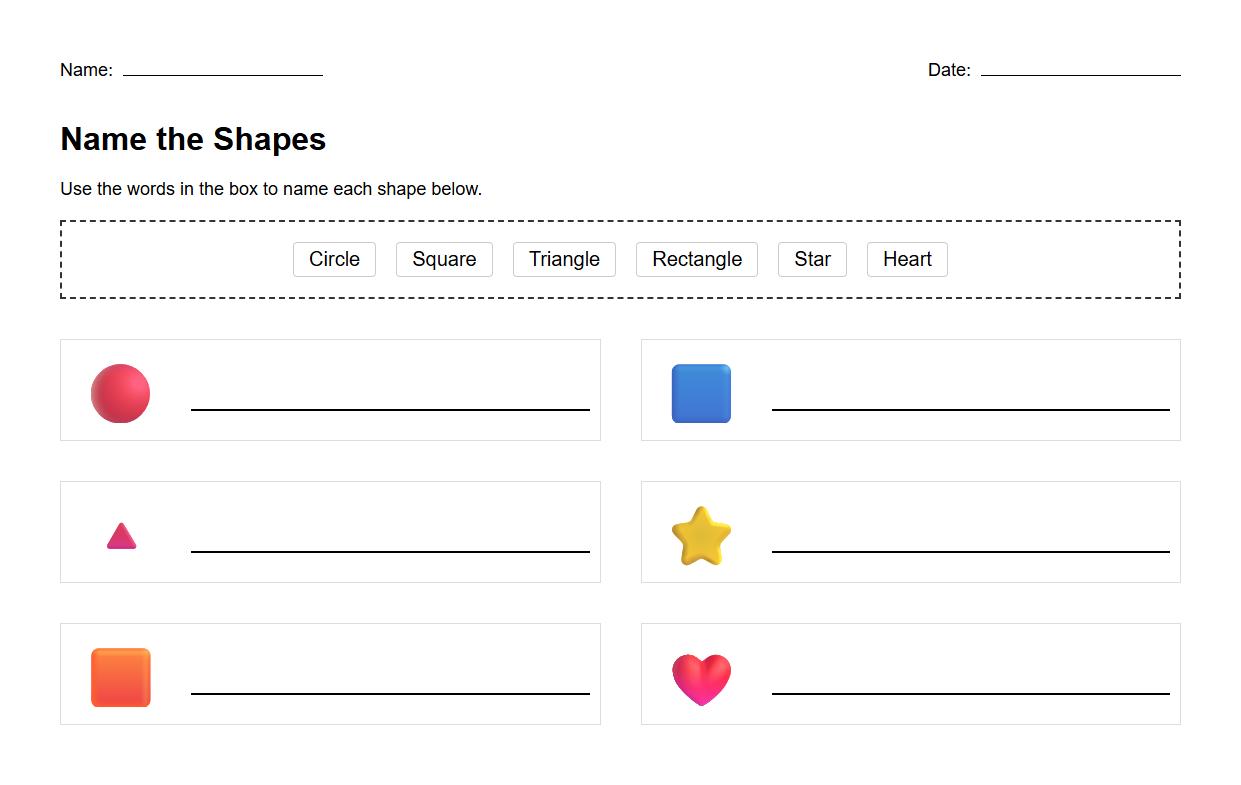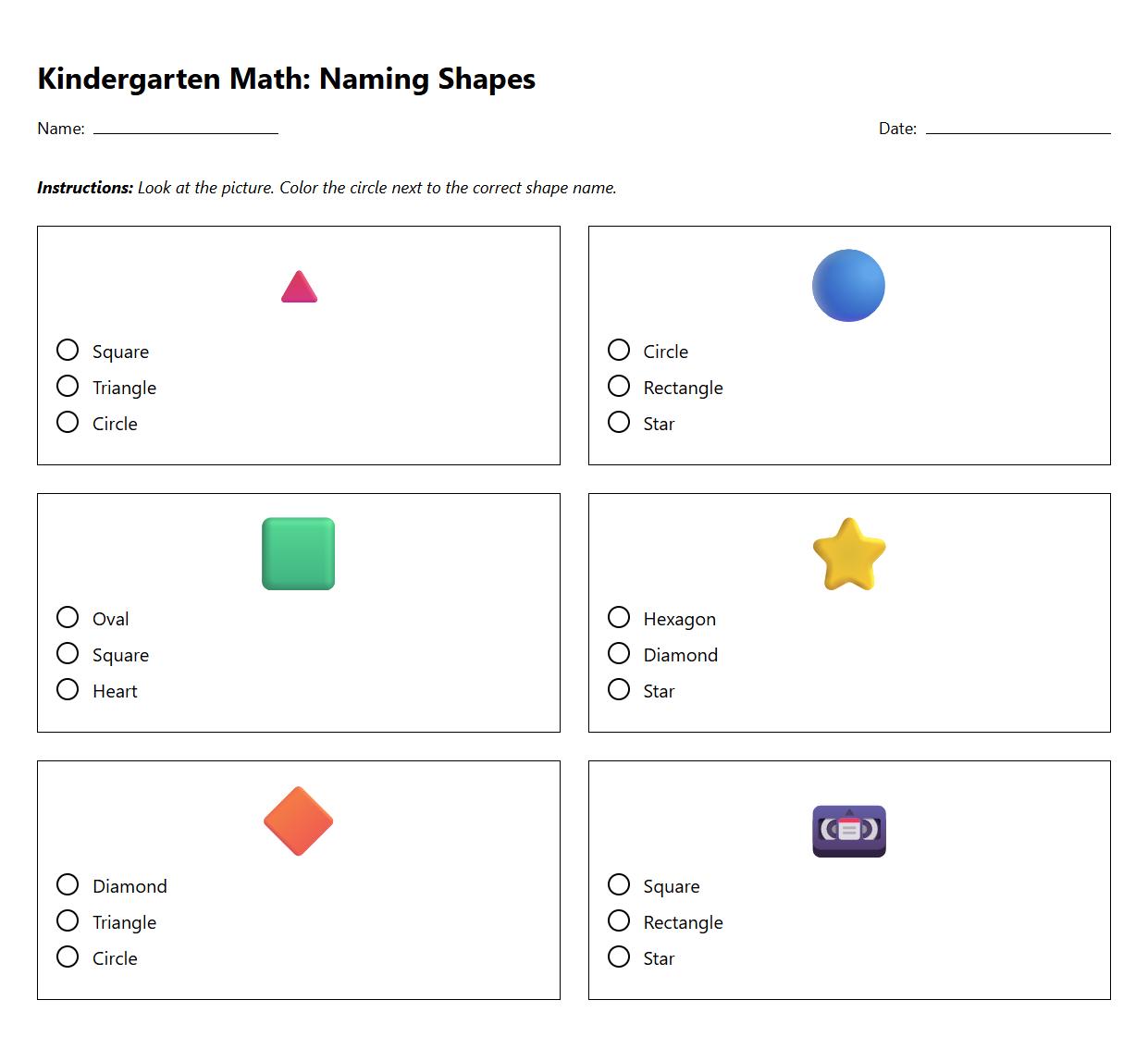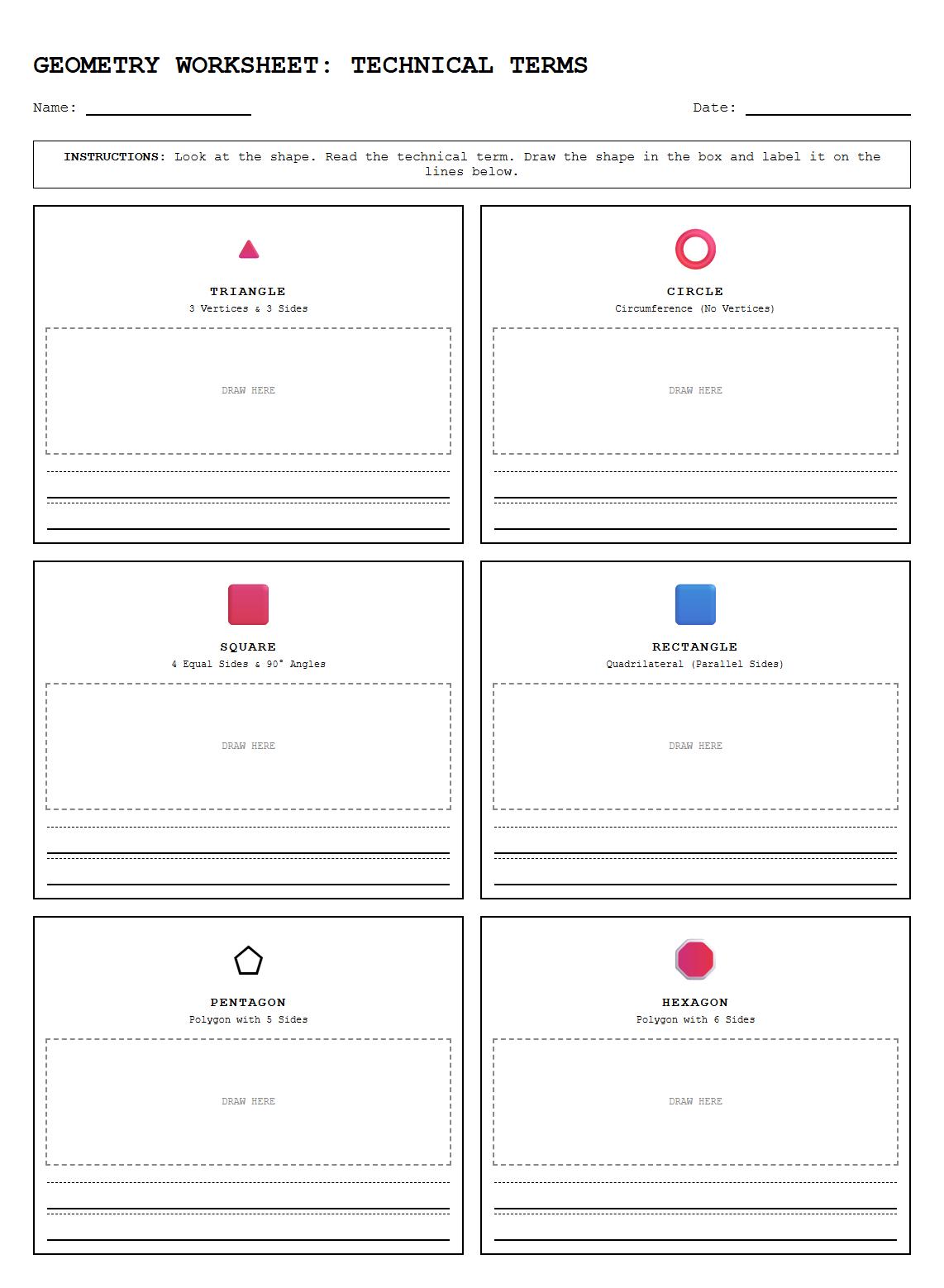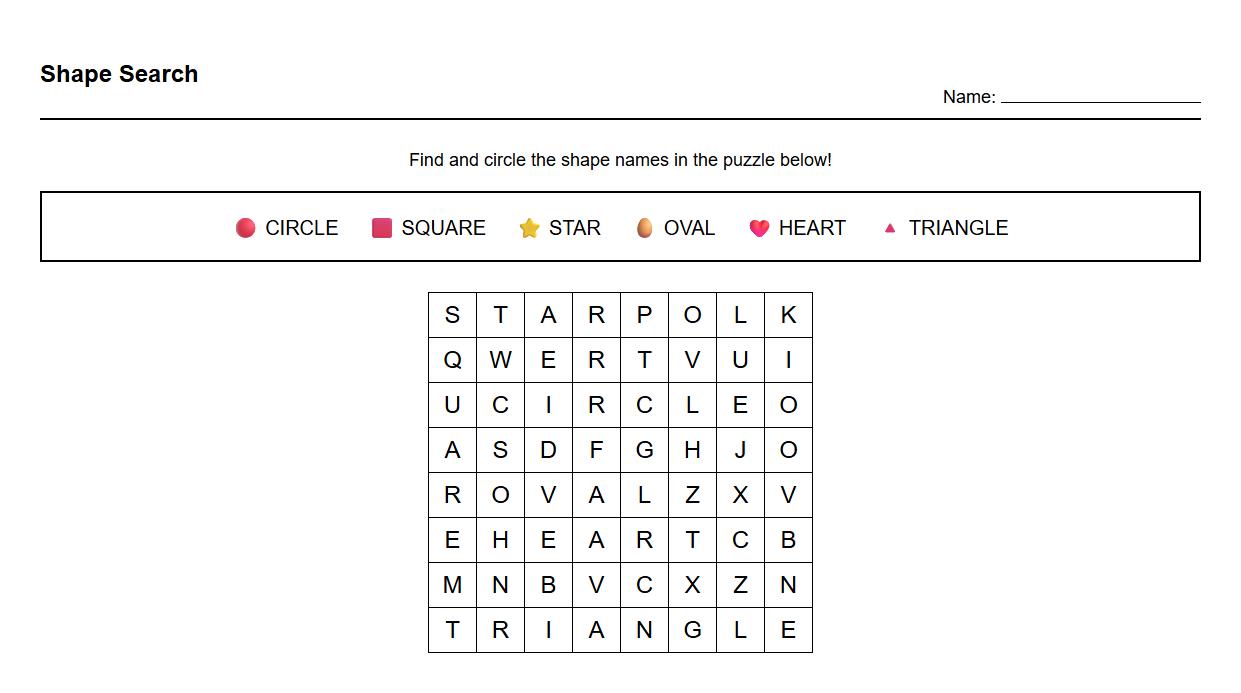
Understanding geometric shapes enhances spatial reasoning and mathematical vocabulary comprehension. This worksheet emphasizes identifying and naming common shapes such as circles, squares, triangles, and rectangles to build foundational geometry skills. Explore the available worksheets to strengthen shape recognition and vocabulary mastery.
Understanding Basic Shapes for Young Learners
Triangles are shapes with three sides. They are simple and easy to recognize, making them perfect for early shape identification activities. Teaching children about triangles helps build their foundational geometry skills.
Identifying Squares in Everyday Life
A square is a shape with four equal sides and four corners. This makes it unique and easily distinguishable from other shapes like rectangles. Encouraging children to spot squares around them enhances their spatial awareness.
Circle Recognition and Naming
Can the child point to the circle and confidently say its name? Circles are round shapes without corners, making them distinct and easy for young learners to identify. Using everyday examples like wheels or clocks can be helpful in teaching circles.
Relating Shapes to Real-World Objects
The shape that looks like a door is typically a rectangle. Recognizing shapes in familiar objects helps children connect learning with their environment. This approach aids in retaining shape names and understanding their attributes.
Counting Corners on Rectangles
A rectangle has four corners. Counting corners is a fundamental skill that introduces children to shape properties. This activity can be made interactive by having kids trace the corners on paper shapes.
Shapes Without Straight Sides
Circles have no straight sides--they are completely round. Teaching this characteristic distinguishes circles from other polygons. It's important for kids to understand that shapes can vary beyond just straight edges.
Identifying Triangles in Fun Shapes
The shape that looks like a slice of pizza is a triangle. This relatable example makes learning shapes fun and memorable. Associating shapes with familiar items encourages better engagement and understanding.
Shapes of Common Traffic Signs
The traffic sign that says STOP is an octagon, which has eight sides. Introducing children to real-world uses of shapes expands their learning beyond the classroom. This knowledge can also improve their awareness of safety signs.
Recognizing Shapes with Curved Sides
A shape with only one curved side is called a semi-circle. This shape is half of a circle and is often seen in everyday objects like arches. Exploring curved and straight sides together broadens children's geometric vocabulary.
Exploring Polygons with Six Sides
The shape with six sides is known as a hexagon. Hexagons appear in nature, such as in honeycombs, providing a fascinating example for children. Learning about polygons with various sides deepens understanding of shape diversity.


Draw and Compare 2D and 3D Figures Interactive Worksheet