Color and Shape Pattern Worksheet AB for Kindergarten

📅 Apr 22, 2025 👤 Nylen Smith

Color and Shape Pattern Worksheet AB for Kindergarten helps young learners recognize and complete patterns using basic colors and shapes, enhancing their early math and observation skills. This engaging activity supports cognitive development by encouraging children to identify sequences and predict the next item in a pattern. Explore the variety of worksheets available to reinforce your child's understanding of color and shape patterns.

AB Pattern Phonics Worksheet with Colors and Shapes
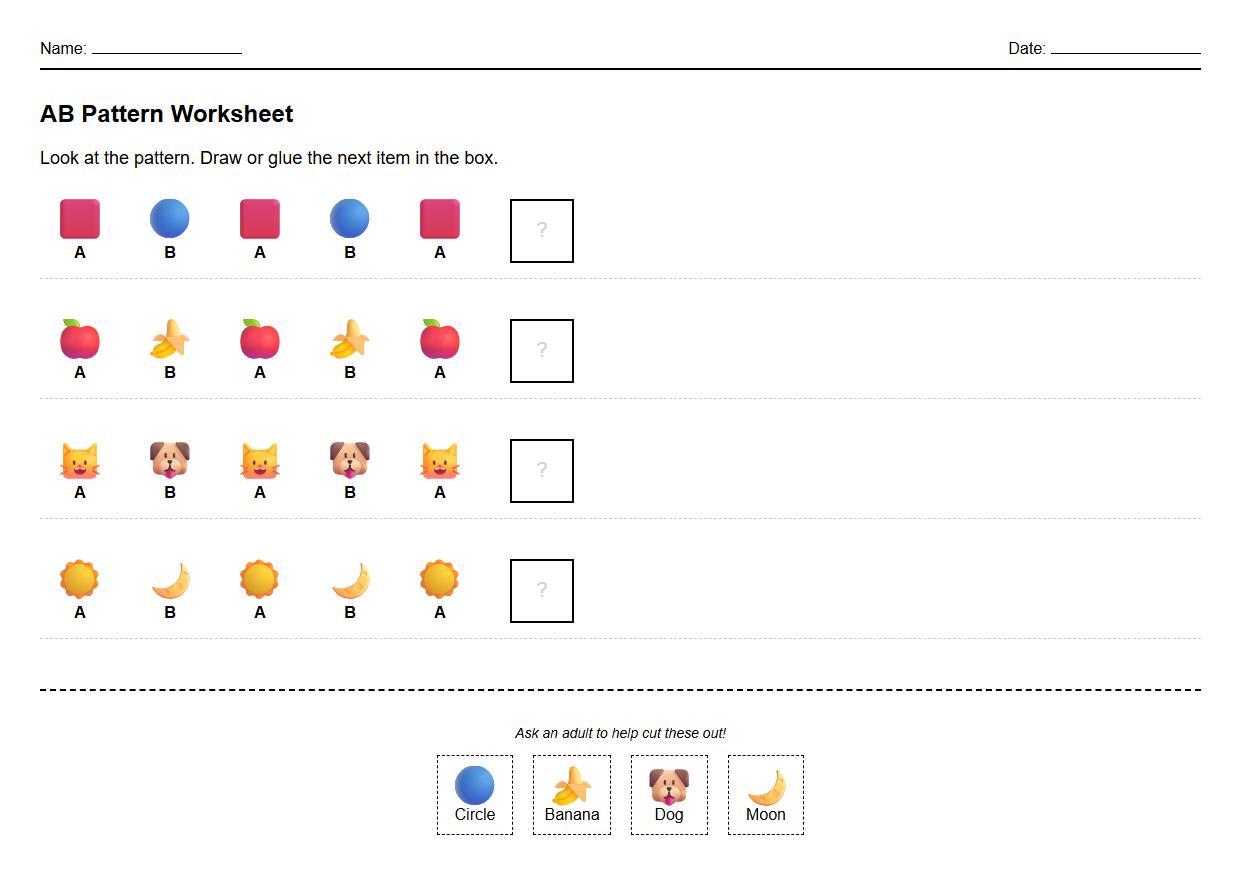
AB Pattern Phonics Worksheet with Colors and Shapes

Download PDF     Pin it

AB Sequence Recognition Worksheet Using Geometric Shapes
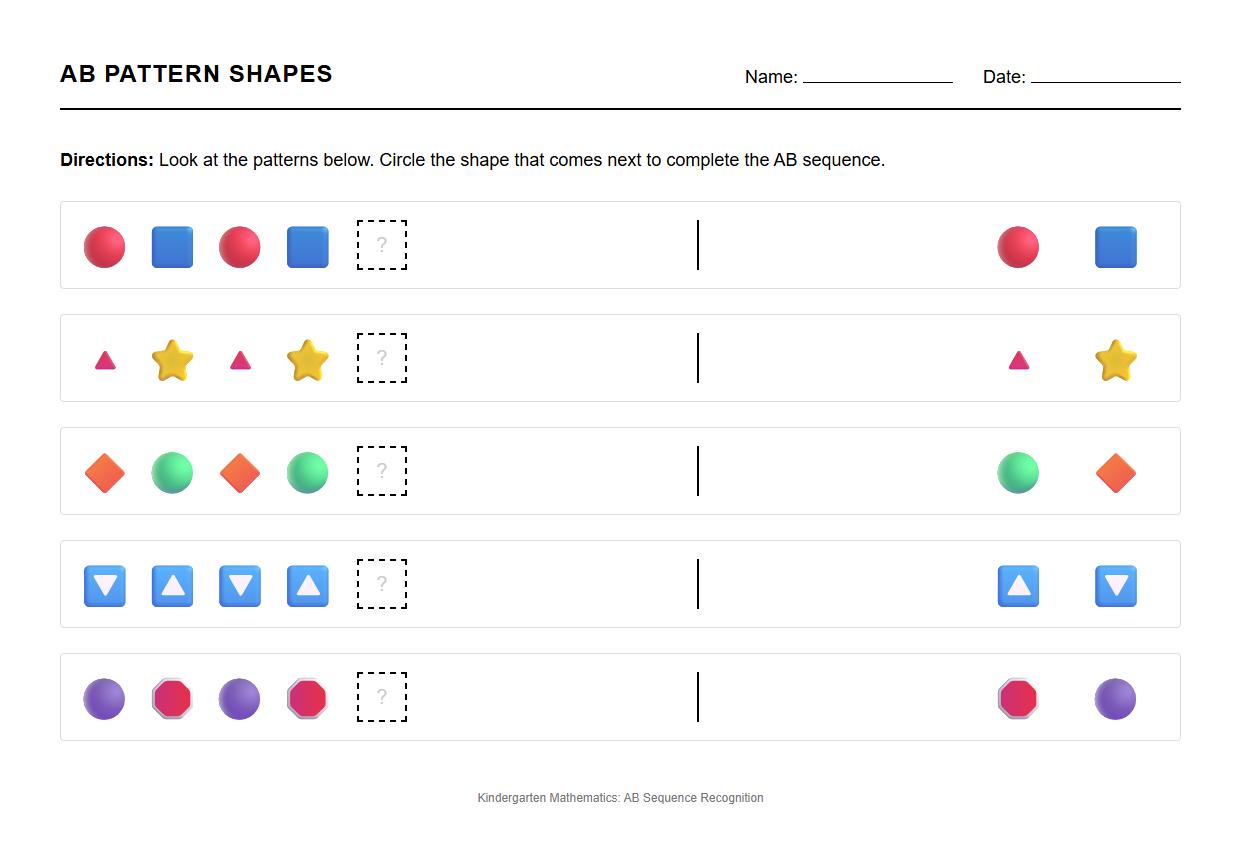
AB Sequence Recognition Worksheet Using Geometric Shapes

Download PDF     Pin it

Color and Shape Sorting AB Pattern Worksheet
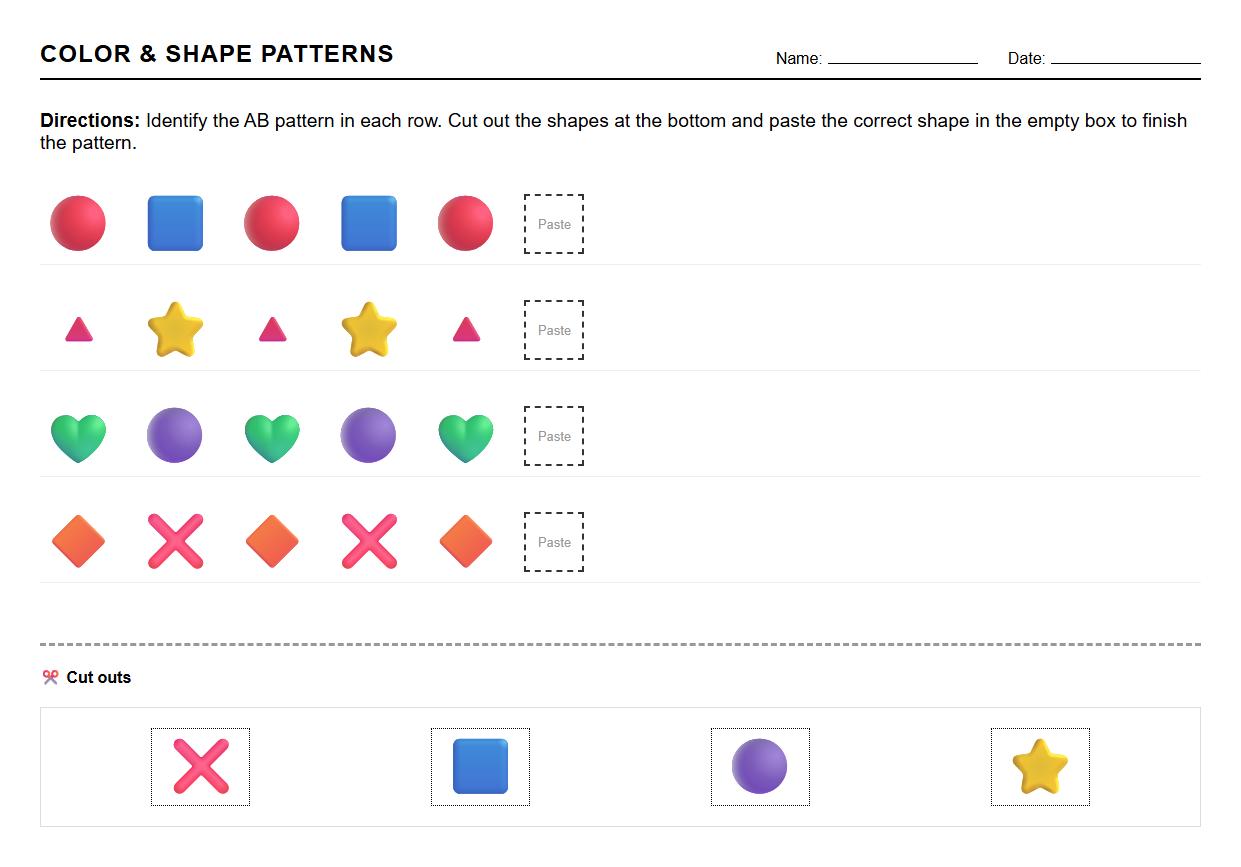
Color and Shape Sorting AB Pattern Worksheet

Download PDF     Pin it

Visual Discrimination AB Color Shape Worksheet
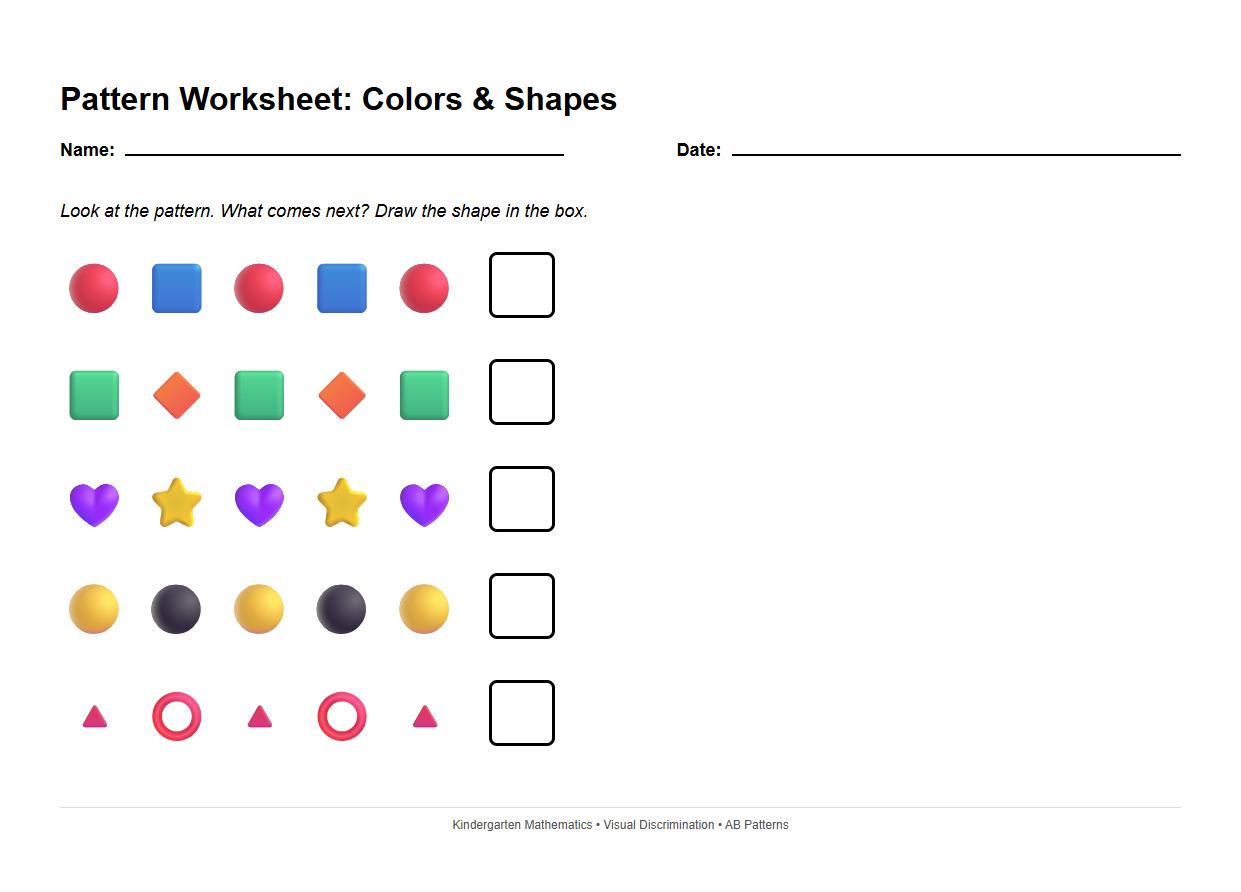
Visual Discrimination AB Color Shape Worksheet

Download PDF     Pin it

AB Pattern Building Worksheet with Squares and Circles
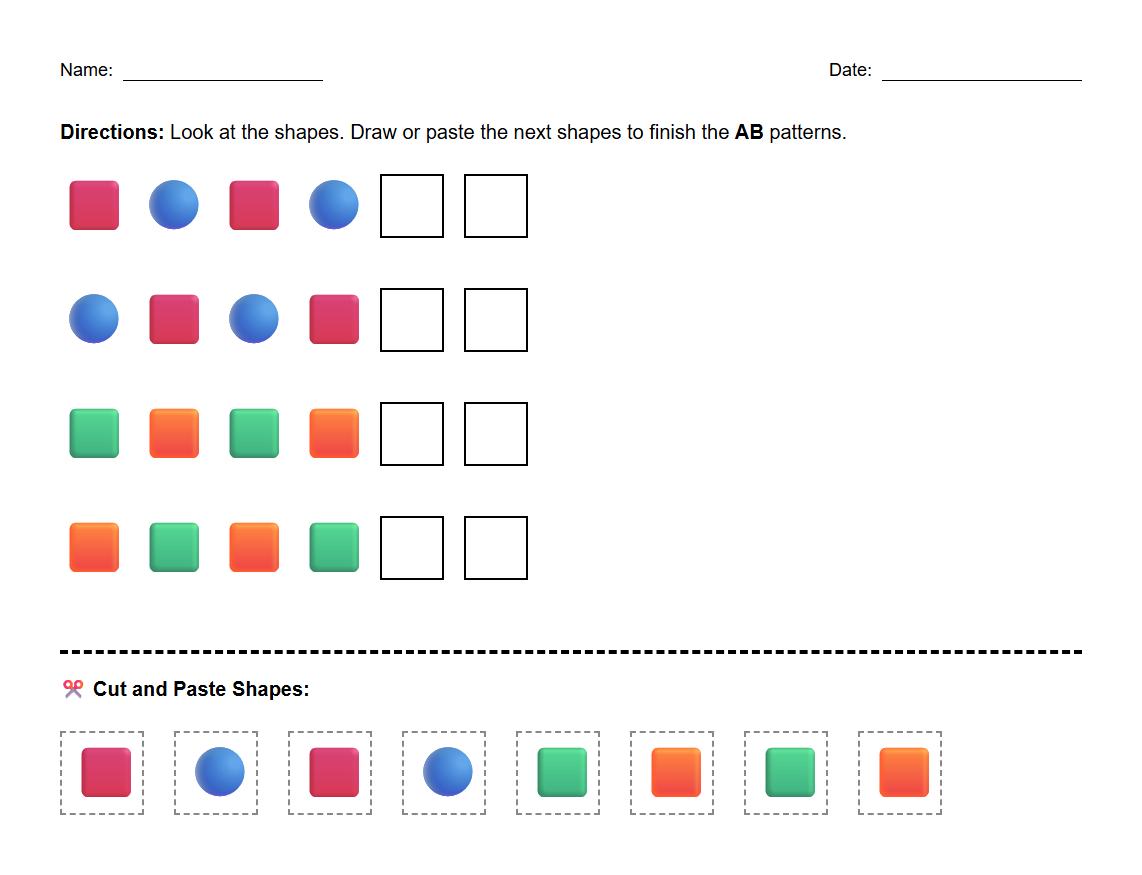
AB Pattern Building Worksheet with Squares and Circles

Download PDF     Pin it

Cognitive Skills AB Color Shape Matching Worksheet
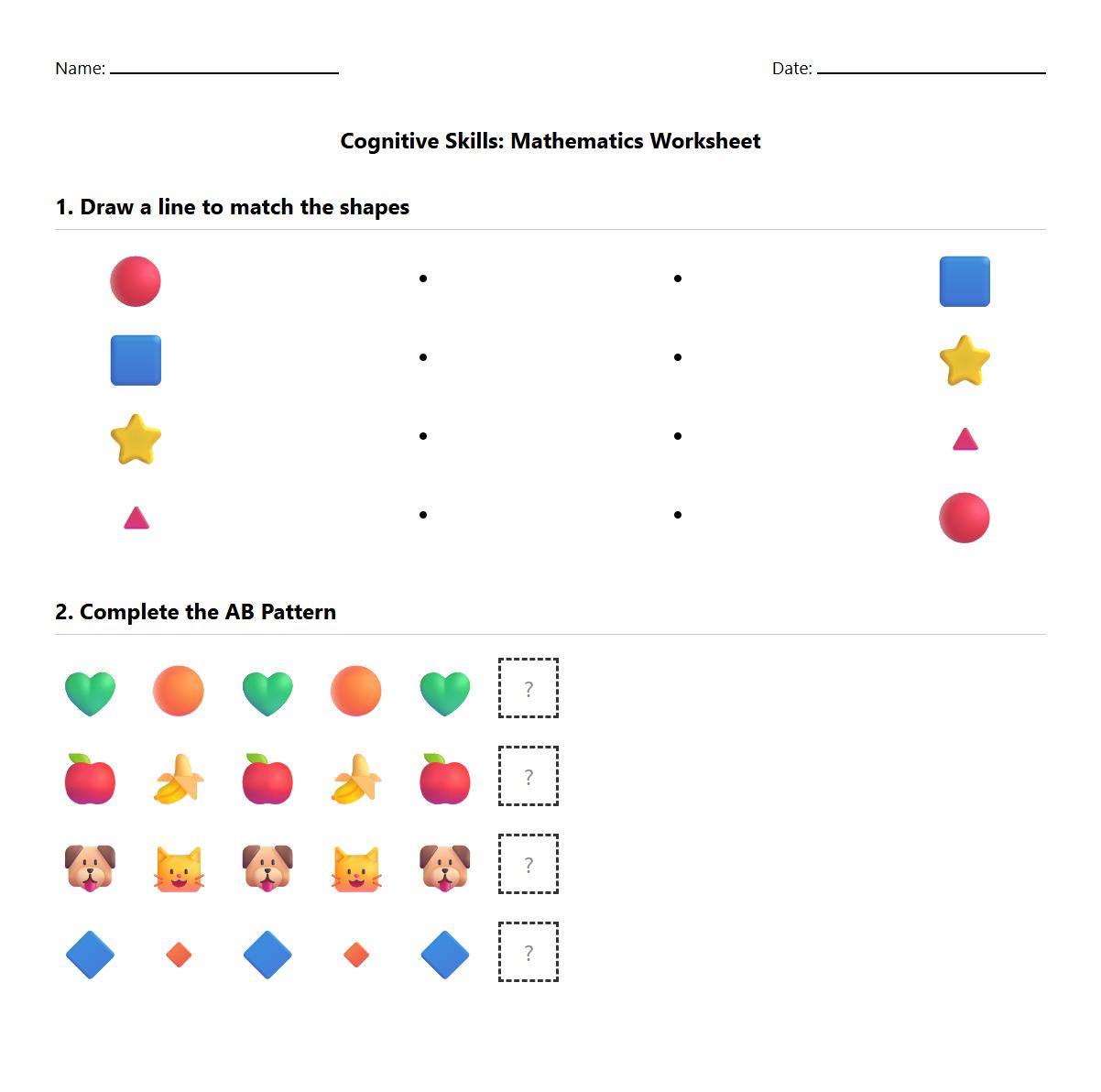
Cognitive Skills AB Color Shape Matching Worksheet

Download PDF     Pin it

Logical Reasoning AB Shape Pattern Worksheet
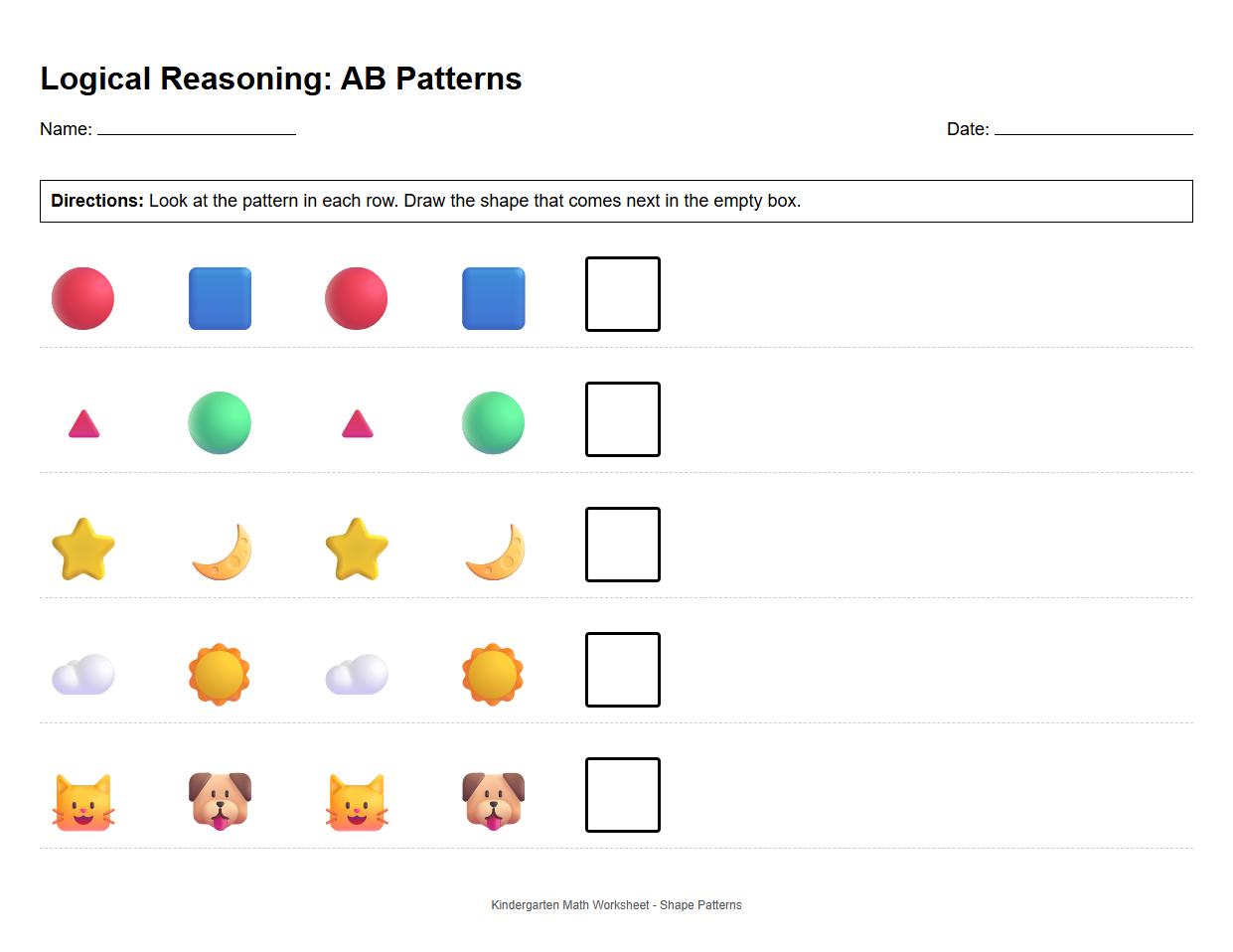
Logical Reasoning AB Shape Pattern Worksheet

Download PDF     Pin it

Color Identification AB Sequence Worksheet with Shapes
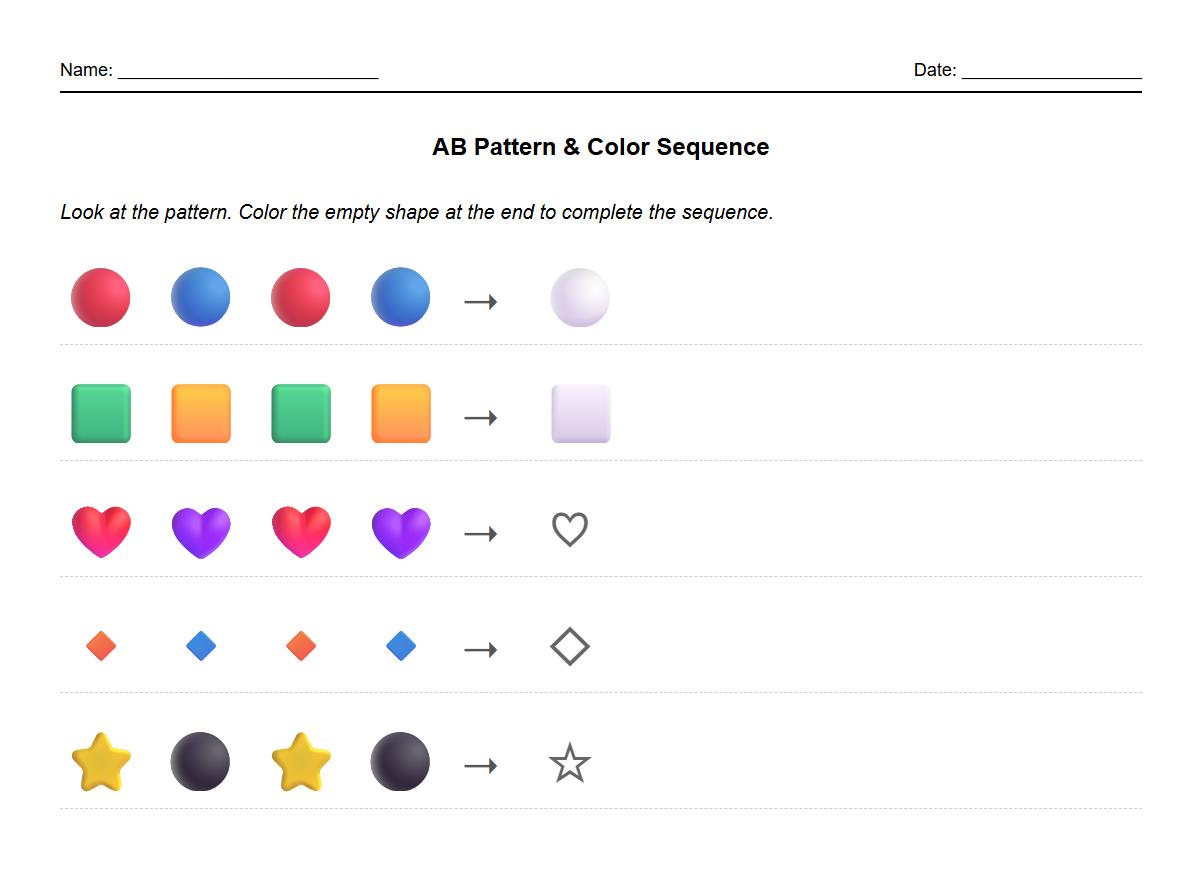
Color Identification AB Sequence Worksheet with Shapes

Download PDF     Pin it

Spatial Awareness AB Pattern Worksheet for Shapes
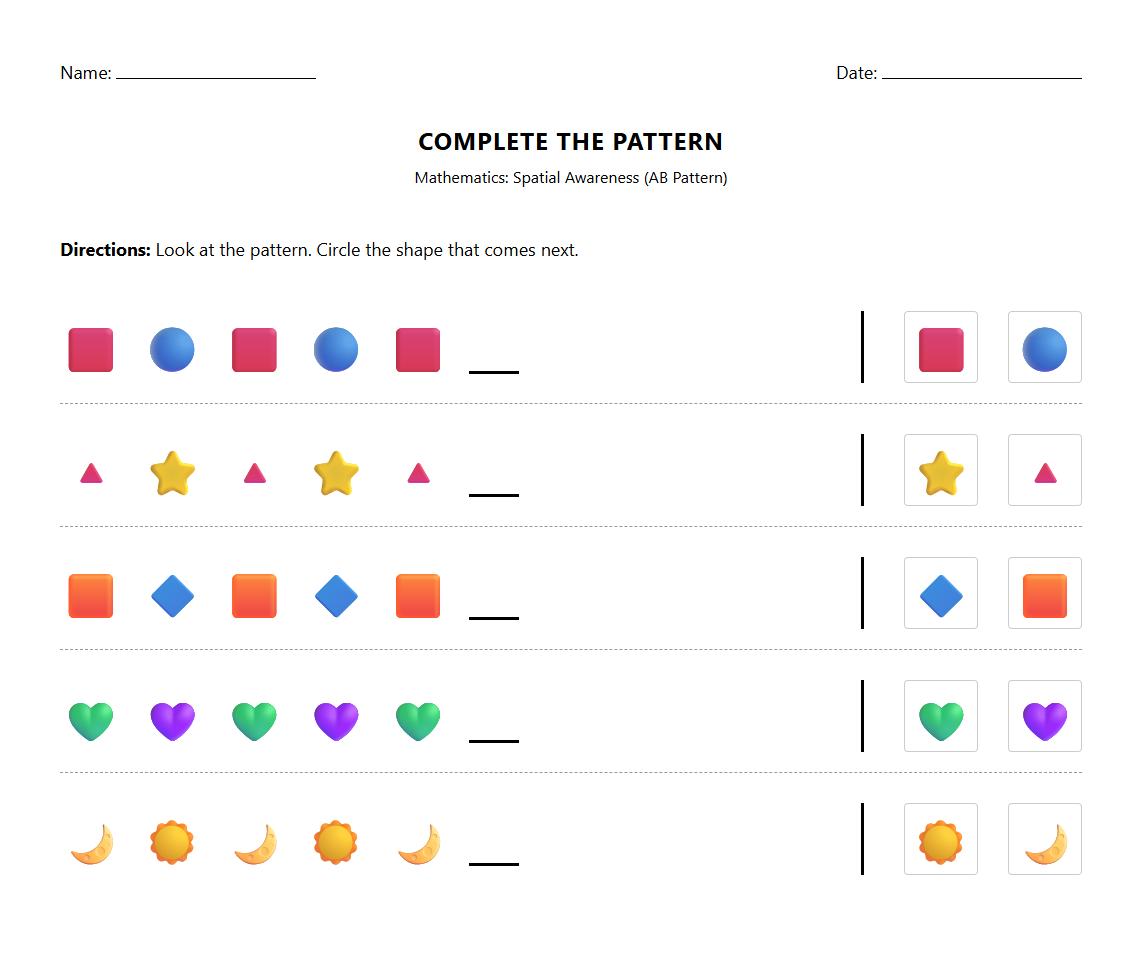
Spatial Awareness AB Pattern Worksheet for Shapes

Download PDF     Pin it

Early Math AB Pattern Worksheet with Colored Figures
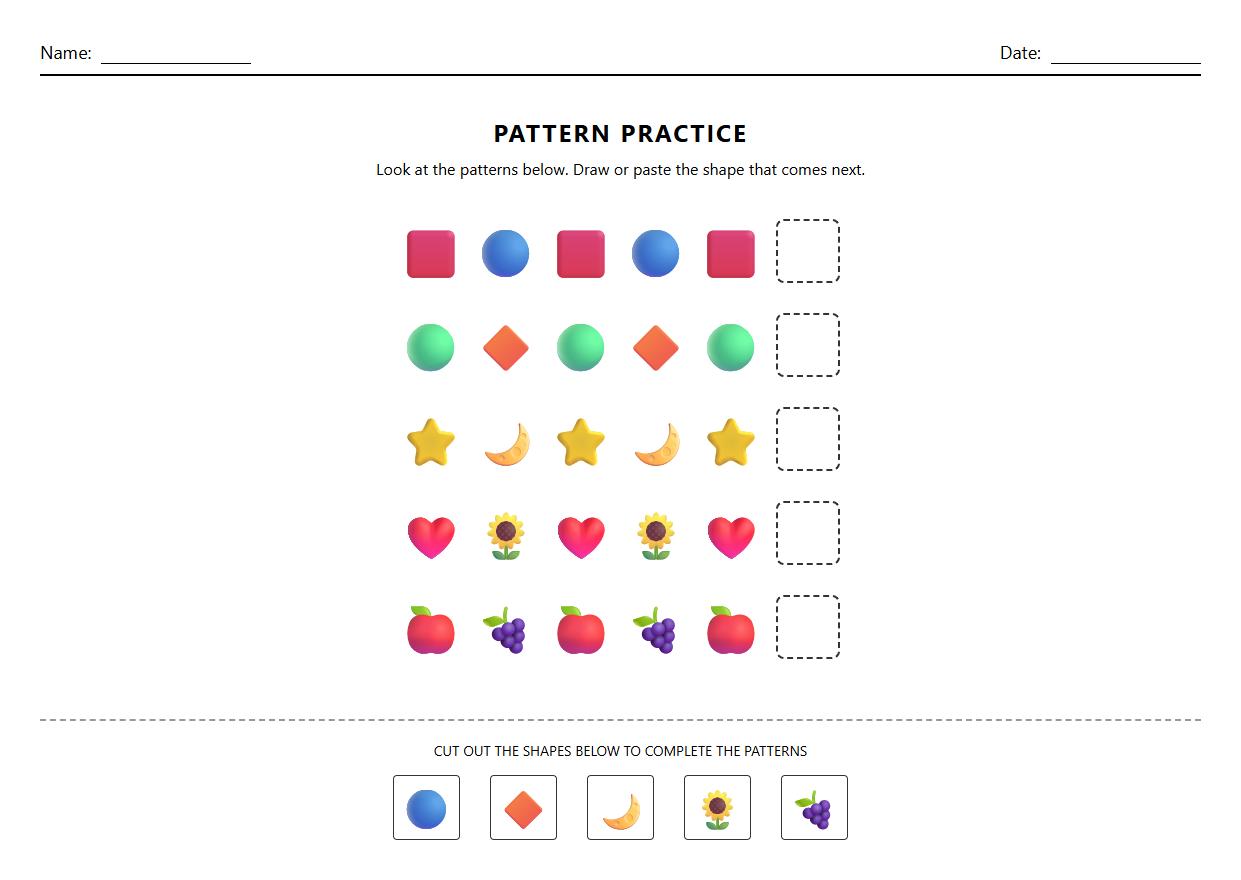
Early Math AB Pattern Worksheet with Colored Figures

Download PDF     Pin it

Understanding AB Color Patterns

An AB pattern alternates between two colors or shapes in a repeated sequence, such as red, blue, red, blue. The key is to recognize the recurring order to predict what comes next. For example, in the pattern red blue red blue, the next color is red. This simple repetition helps young learners develop early sequencing skills.

Identifying Shapes in AB Patterns

When working with shapes, an AB pattern like circle, square, circle, square requires identifying the alternating shapes. After a circle and square, the next shape should be a circle. This visual pattern recognition encourages children to focus on shape differences and sequencing.

Recognizing Mistakes in Patterns

A correct AB pattern alternates consistently. In the color pattern green, yellow, green, green, there is a mistake because the sequence breaks by repeating green twice. Identifying such errors strengthens observation and critical thinking skills. Children learn to spot inconsistency by comparing each item to the expected order.

Creating Your Own AB Shape Pattern

Encourage children to make their own AB patterns using shapes like triangles and rectangles. For example, a pattern could be triangle, rectangle, triangle, rectangle. This activity fosters creativity while reinforcing the concept of alternating sequences. Teachers and parents can guide children to explain their chosen pattern aloud for better understanding.

Predicting the Next Color in a Pattern

Given the pattern yellow, purple, yellow, purple, the next color should be yellow. Recognizing this helps children anticipate sequences, building their logical thinking. Predicting the next item in a sequence is a fundamental skill used in reading and math.

Continuing an AB Pattern Starting With a Blue Circle

If the AB pattern starts with a blue circle, the sequence might be blue circle, another shape or color, then repeats. For example, blue circle, red square, blue circle, red square. The next three items after blue circle would follow this alternating pattern. This kind of practice improves attention and pattern recognition.

Counting Occurrences in a Pattern

In the pattern red, green, red, green, red, the color red appears three times. Counting colors or shapes within patterns helps children develop number skills alongside pattern recognition. It also reinforces careful observation and attention to detail.

Matching Patterns to a Given Sequence

The pattern star, heart, star, heart matches any sequence that alternates these two shapes. Matching is an essential skill where children compare different sequences to find similarities. This activity builds their analytical and visual discrimination skills.

Drawing the Next Shapes in a Pattern

In the pattern square, triangle, square, triangle, the next two shapes should be square followed by triangle. Drawing these shapes reinforces understanding of AB patterns and develops fine motor skills. It also encourages children to apply what they observe actively.


More in Mathematics Category


About the author. Nylen Smith is a dedicated educator and cofounder of KWorksheet.com, a popular platform specializing in high-quality kindergarten worksheets and printable activities.

Disclaimer. The information provided in this document is for general informational purposes and/or document sample only and is not guaranteed to be factually right or complete. Please report to us via contact-us page if you find and error in this page, thanks.

Comments

No comment yet