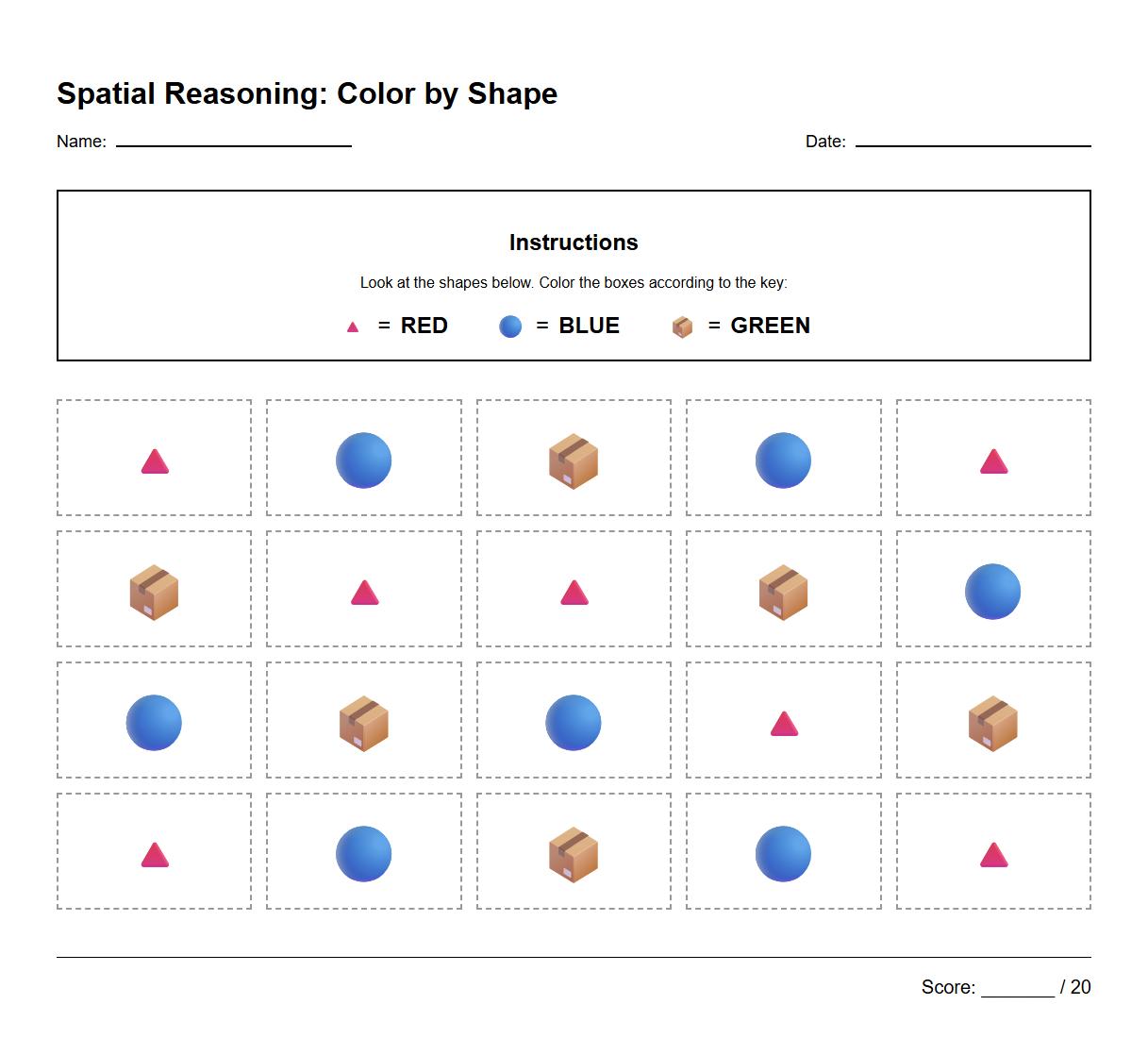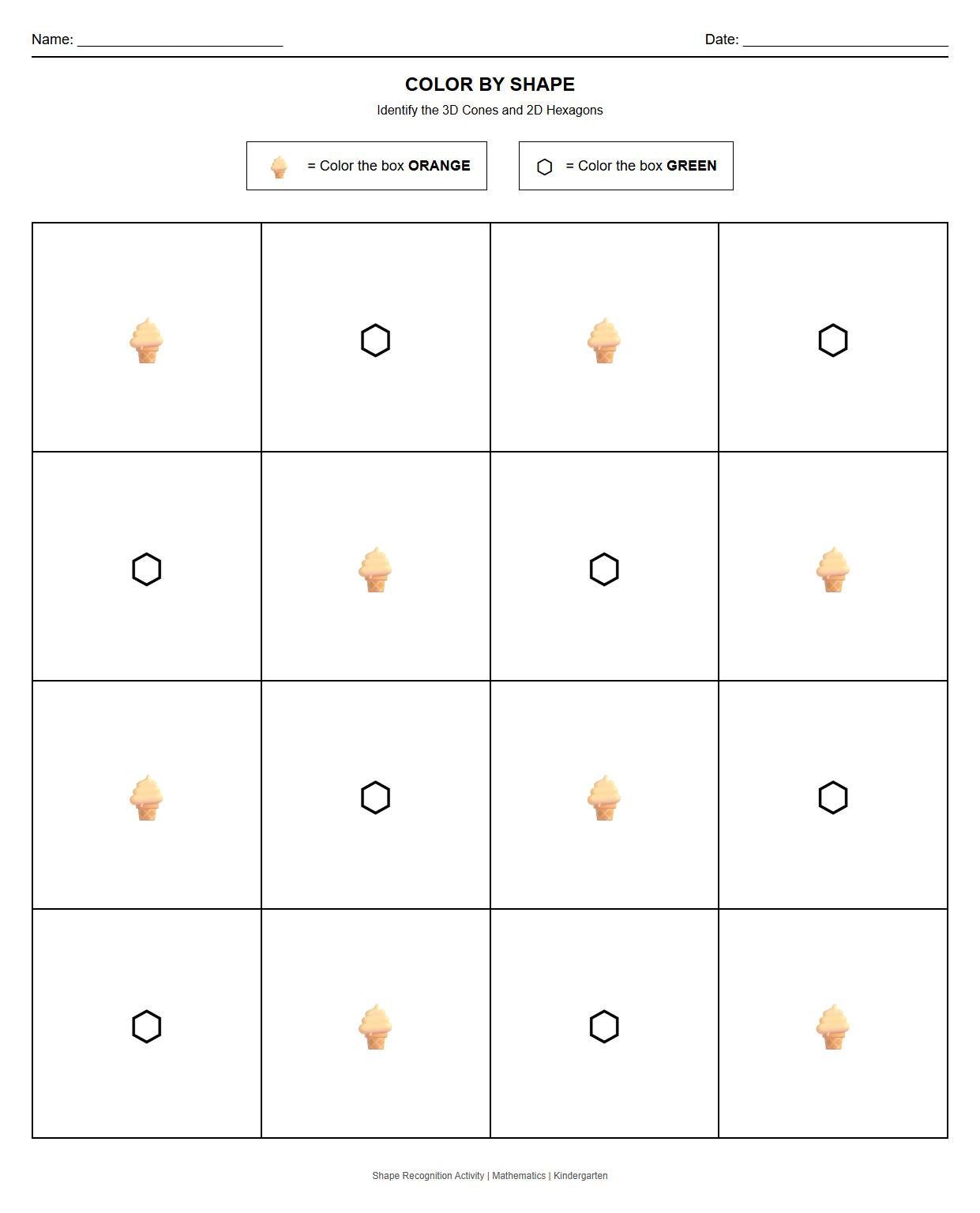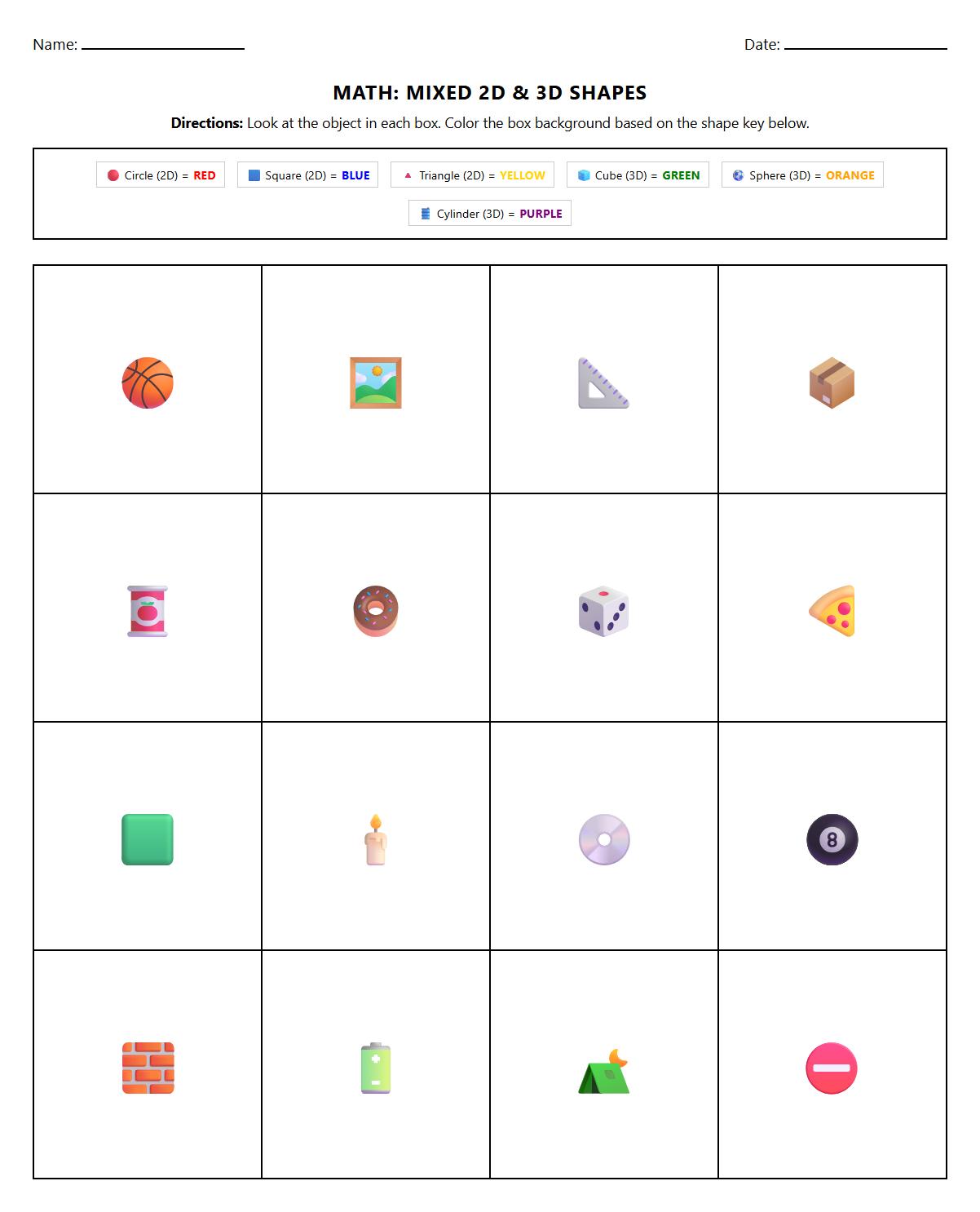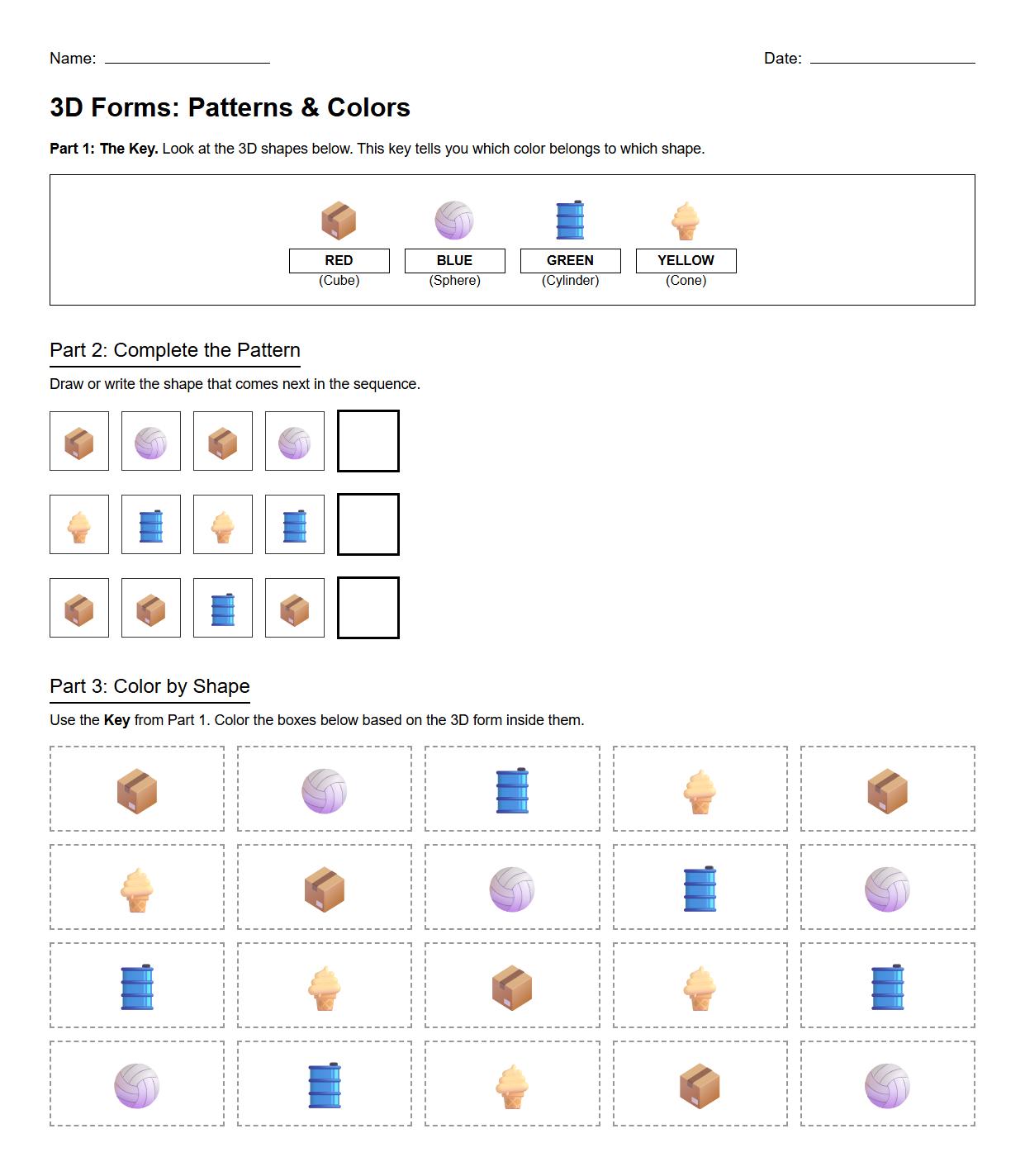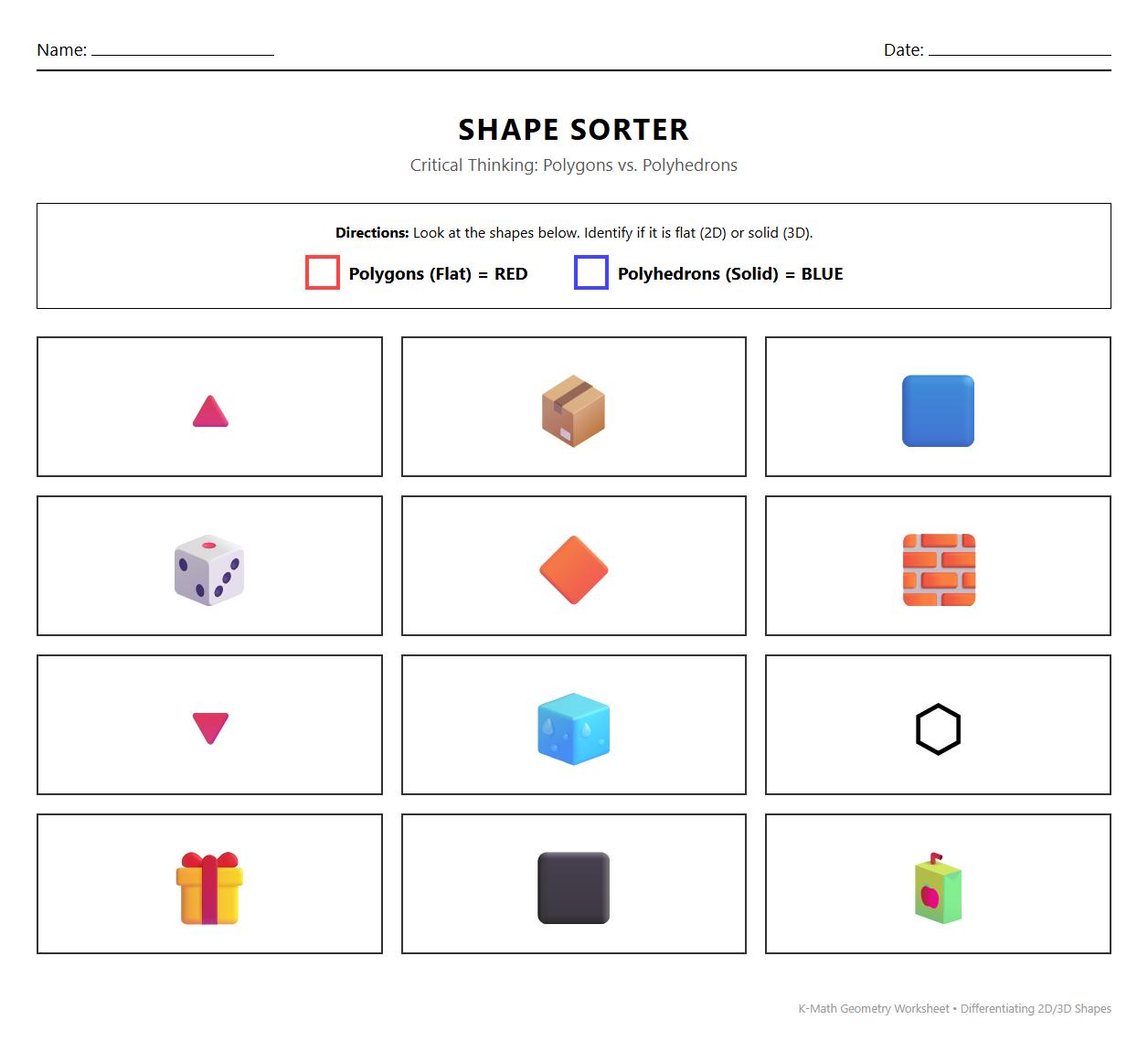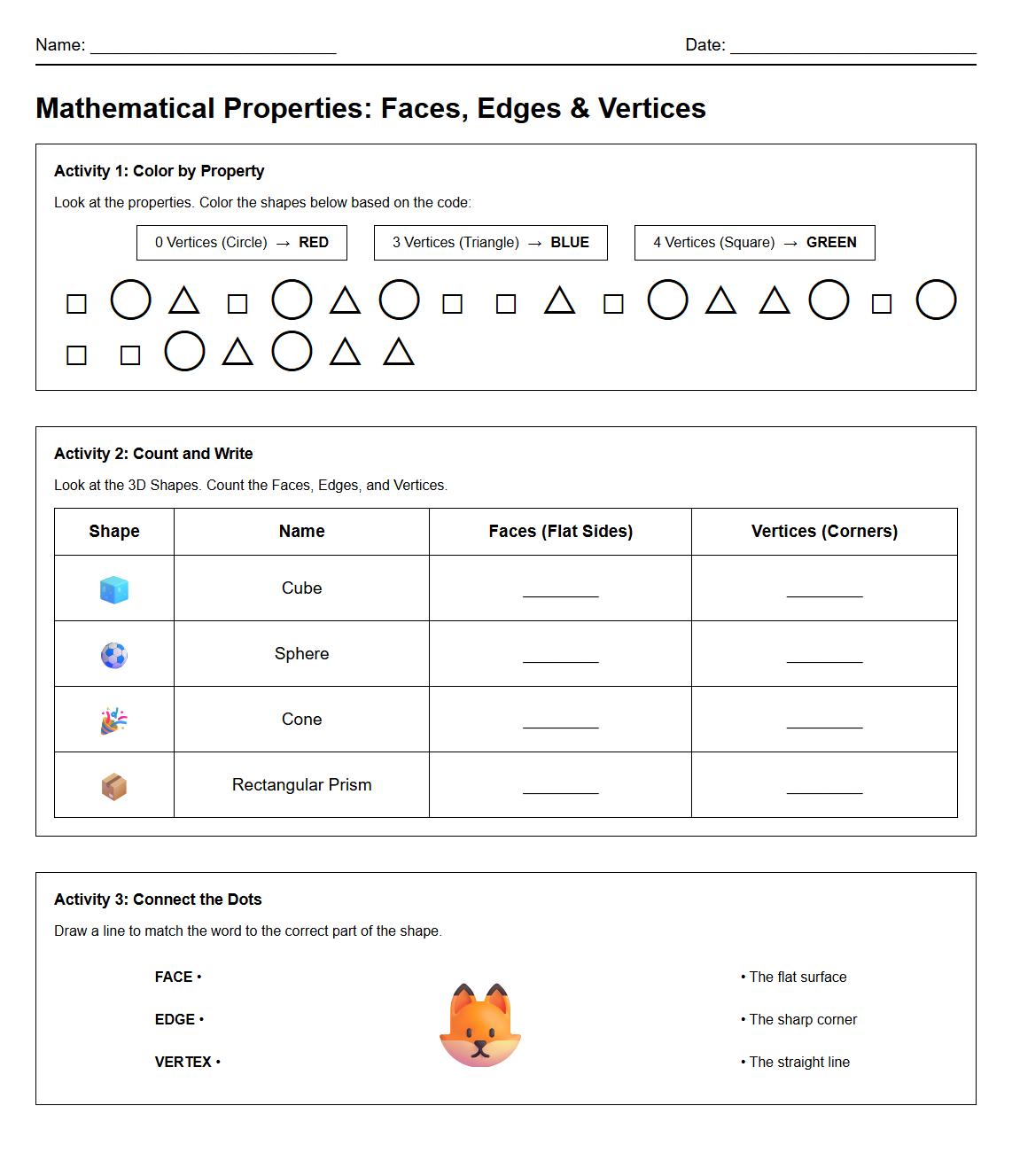

Color by Shape activities enhance understanding of 2D and 3D geometric concepts by engaging students in identifying and coloring different shapes. This interactive approach reinforces shape recognition and spatial reasoning skills in a fun, hands-on manner. Explore our collection of worksheets to support your learning journey with varied color by shape exercises.
Which Color Should You Use to Fill in All the Circles on the Worksheet?
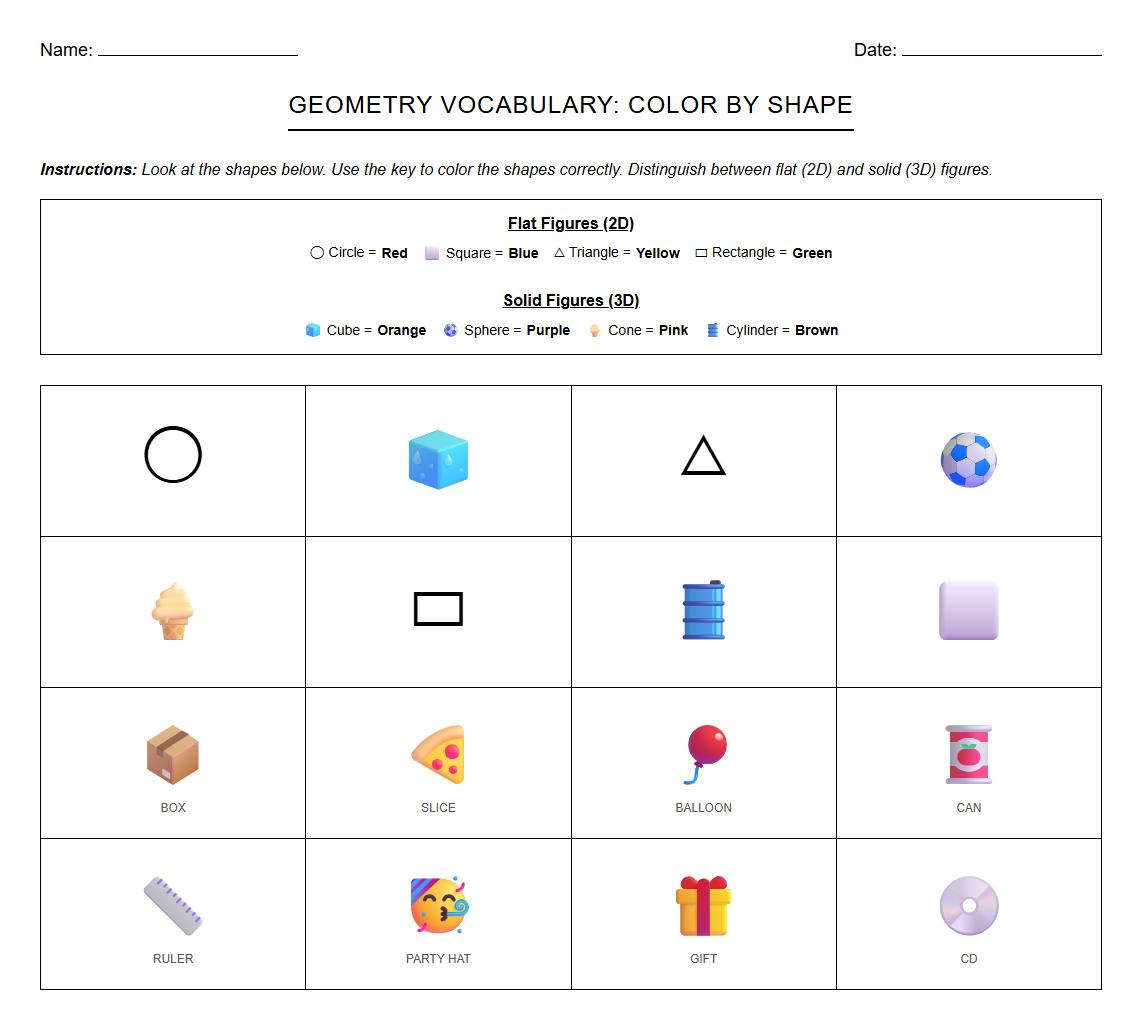
Teachers and parents should instruct children to use red to fill in all the circles. This bright color helps highlight the circle shapes clearly. Red is visually stimulating and easy for kindergarteners to recognize. Make sure the children color carefully within the lines to enhance fine motor skills. For more practice with circle shapes, try this shape identification worksheet.
Can You Find and Color All the Squares with the Same Color?
Ask the children to locate all the squares and color them using blue. Consistent coloring helps in shape recognition and categorization. Blue is a calming color that supports focus during the activity. Encourage parents and teachers to praise careful coloring to build confidence. Practice shape sorting with this sorting and classifying worksheet.
Which Shapes Are 3D and Need to Be Colored Blue?
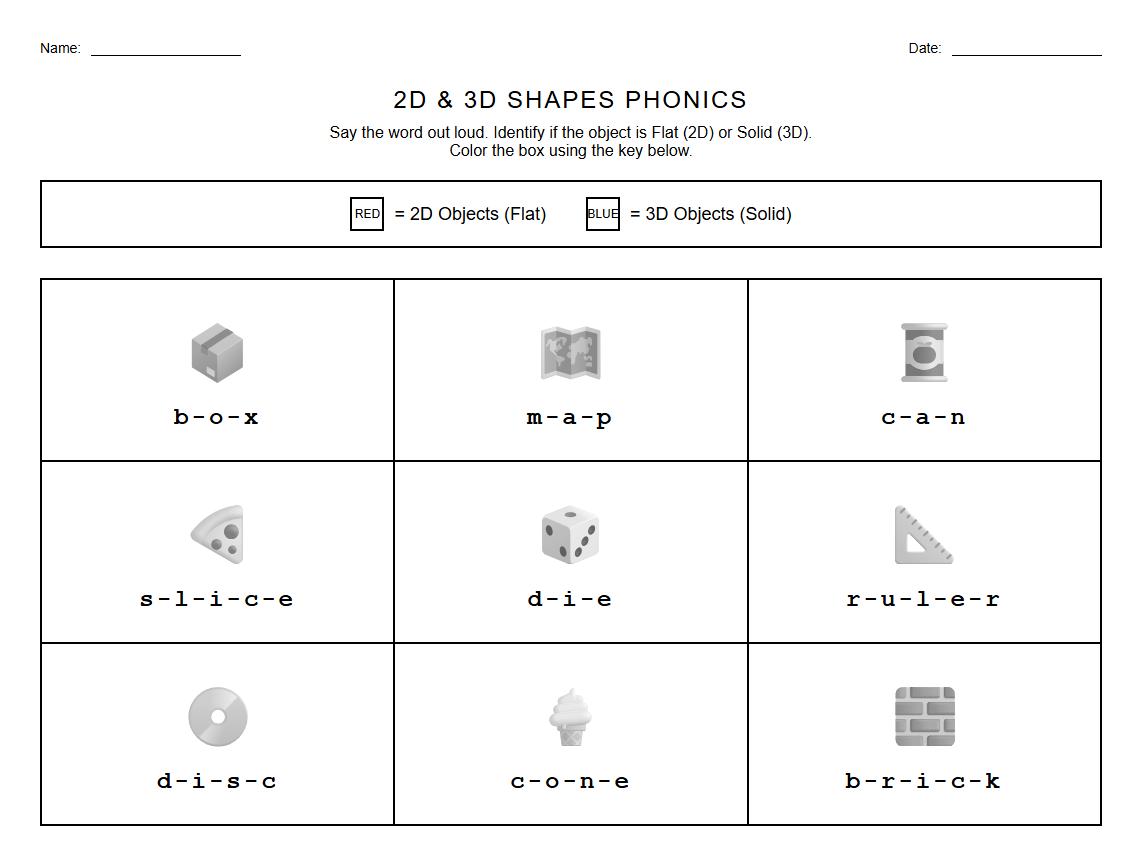
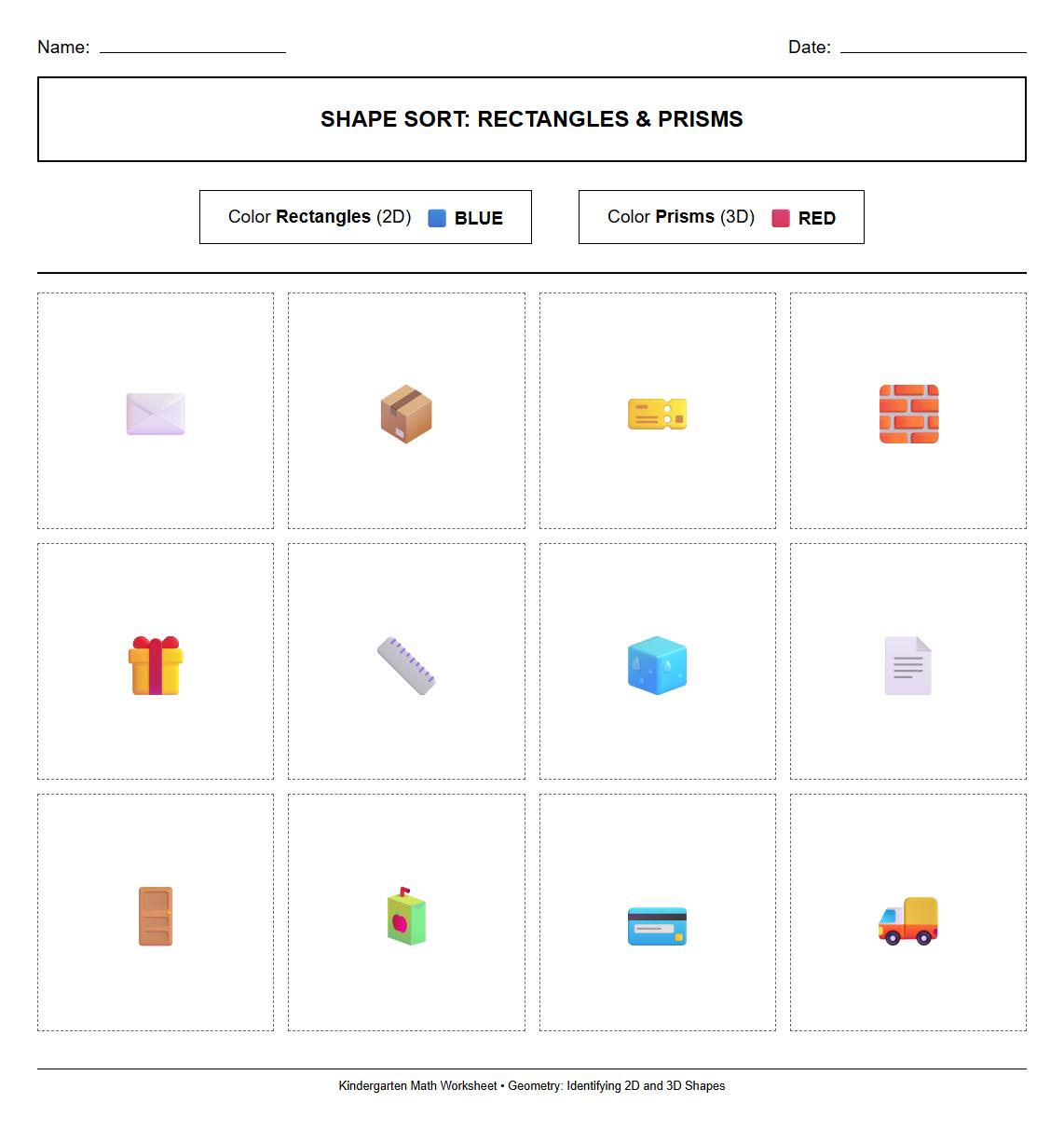
The 3D shapes that require coloring in blue include cubes and rectangular prisms. These shapes differ from 2D shapes by having depth and volume. Coloring these helps children distinguish between flat and solid forms. Reinforce the concept of 3D shapes by discussing their attributes with this worksheet on 2D and 3D geometry.
How Many Triangles Can You Color Green on This Page?
Children should count all the triangles present on the worksheet and then color each one green. Green is a fresh and eye-catching color that supports learning about shapes. Counting triangles helps develop early math skills along with color recognition. Make sure to assist kids in identifying each triangle accurately using this counting and quantity worksheet.
Can You Color All the Cubes with Red?
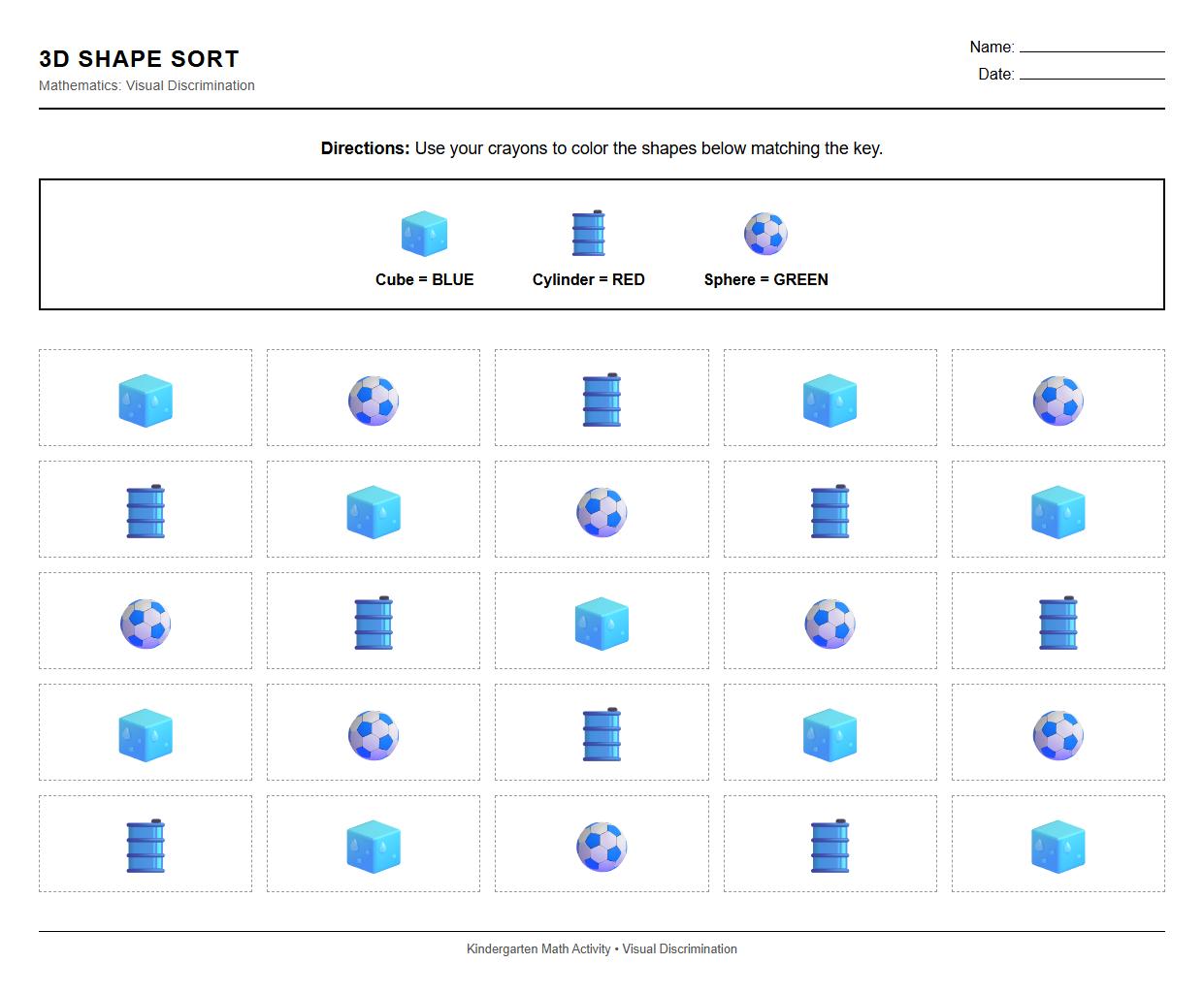
Encourage children to find every cube on the page and color them in red. Cubes are important 3D shapes with equal square faces. Red coloring helps them stand out for easy identification. This activity strengthens both shape recognition and color coordination. Explore more with this worksheet on practicing more and less concepts.
Find All the Rectangles and Color Them Yellow
Task children with spotting all rectangles and coloring them yellow. Yellow is bright and distinct, making rectangles easy to see. This exercise promotes recognition of different quadrilaterals. It's also a fun way to learn about colors and shapes together. Try this 2D and 3D geometry worksheet for more rectangle practice.
Which Shapes Are Spheres and Need to Be Colored Purple?
Spheres such as balls or globes should be colored purple. Purple is a distinctive color that captures children's attention. Highlighting spheres supports understanding of round 3D shapes. This helps build spatial awareness and differentiates 3D from 2D shapes. Practice with this shape identification worksheet.
Can You Spot and Color All the Cones in Orange?
Have children identify all cones and fill them in with orange. Orange is vibrant and fun, encouraging enthusiasm in learning. Cones are 3D shapes with a circular base tapering to a point. This enhances shape recognition and fine motor skills. Reinforce these concepts in this geometry worksheet.
How Many Different Colors Do You Need to Complete the 2D Shapes?
To finish coloring all 2D shapes, children will typically need four different colors. Each shape is matched with a unique color to aid distinction. This approach streamlines learning by associating colors with shape categories. Use this to boost memory and visual discrimination. Review with this sorting and classifying worksheet.
Can You Match the Colors to the 3D Shapes by Their Names?
Encourage matching the correct colors to 3D shapes based on their names for better comprehension. This reinforces vocabulary alongside color and shape identification. Use consistent color assignments to build confidence and retention. This activity bridges language and cognitive development. Discover more 3D shape activities in this shape identification worksheet.


Recognizing Geometric Shapes Worksheet with Vocabulary Focus