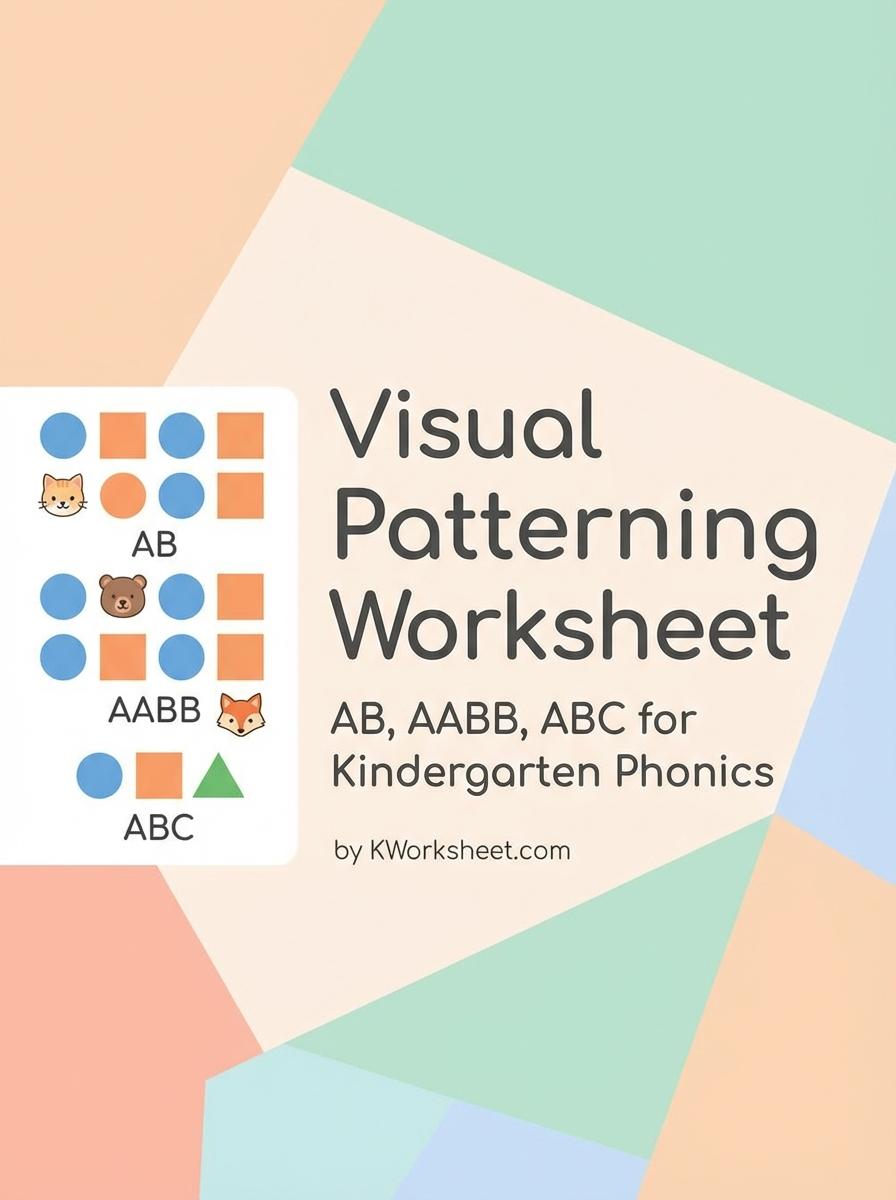
Visual Patterning Worksheet AB, AABB, ABC for Kindergarten Phonics

📅 Apr 20, 2025 👤 Nylen Smith

Visual patterning worksheets AB, AABB, and ABC help kindergarten students develop early phonics skills by recognizing and predicting sequences of letters and sounds. These exercises reinforce letter identification and improve cognitive abilities through engaging, repetitive patterns. Explore the available worksheets to support your child's foundational phonics learning.

AB Pattern Visual Sequencing Phonics Worksheet
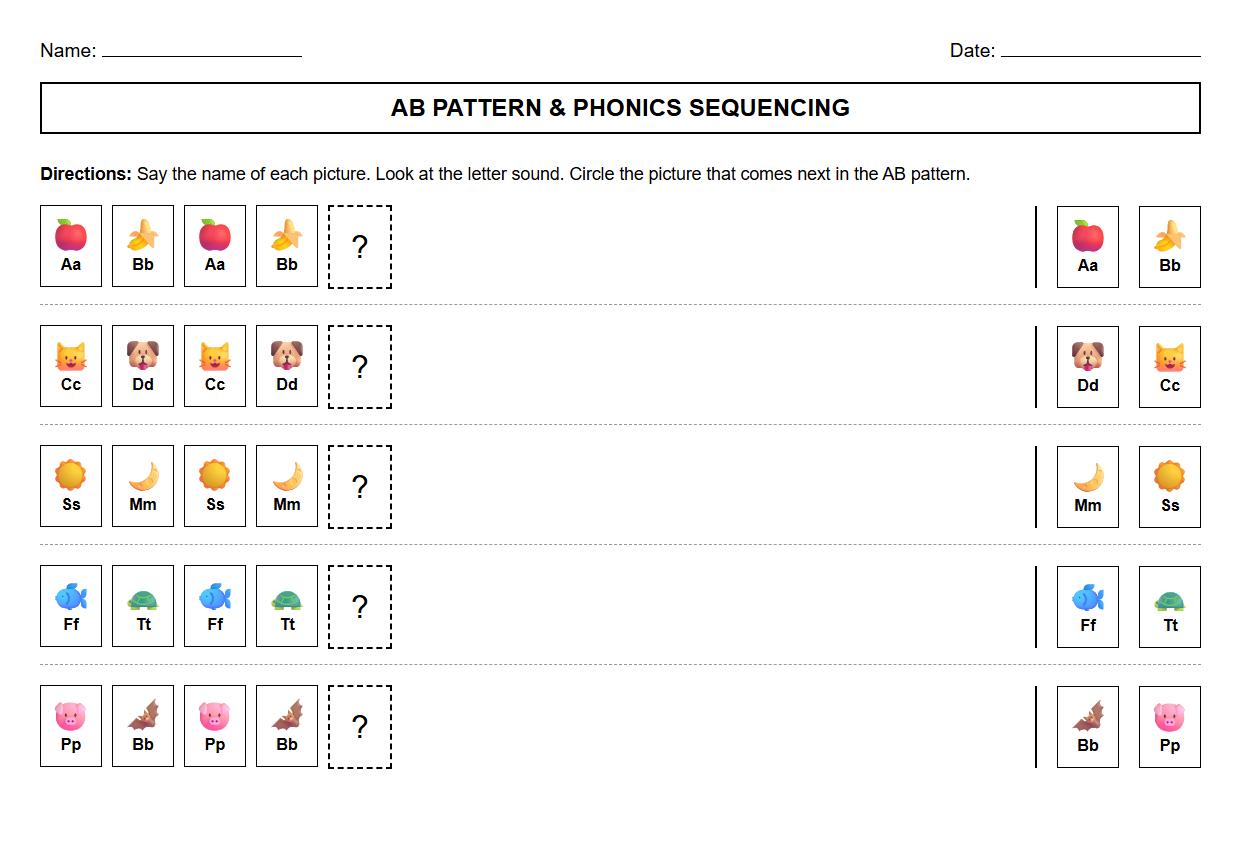
AB Pattern Visual Sequencing Phonics Worksheet

Download PDF     Pin it

AABB Pattern Recognition Worksheet with Phonics Images
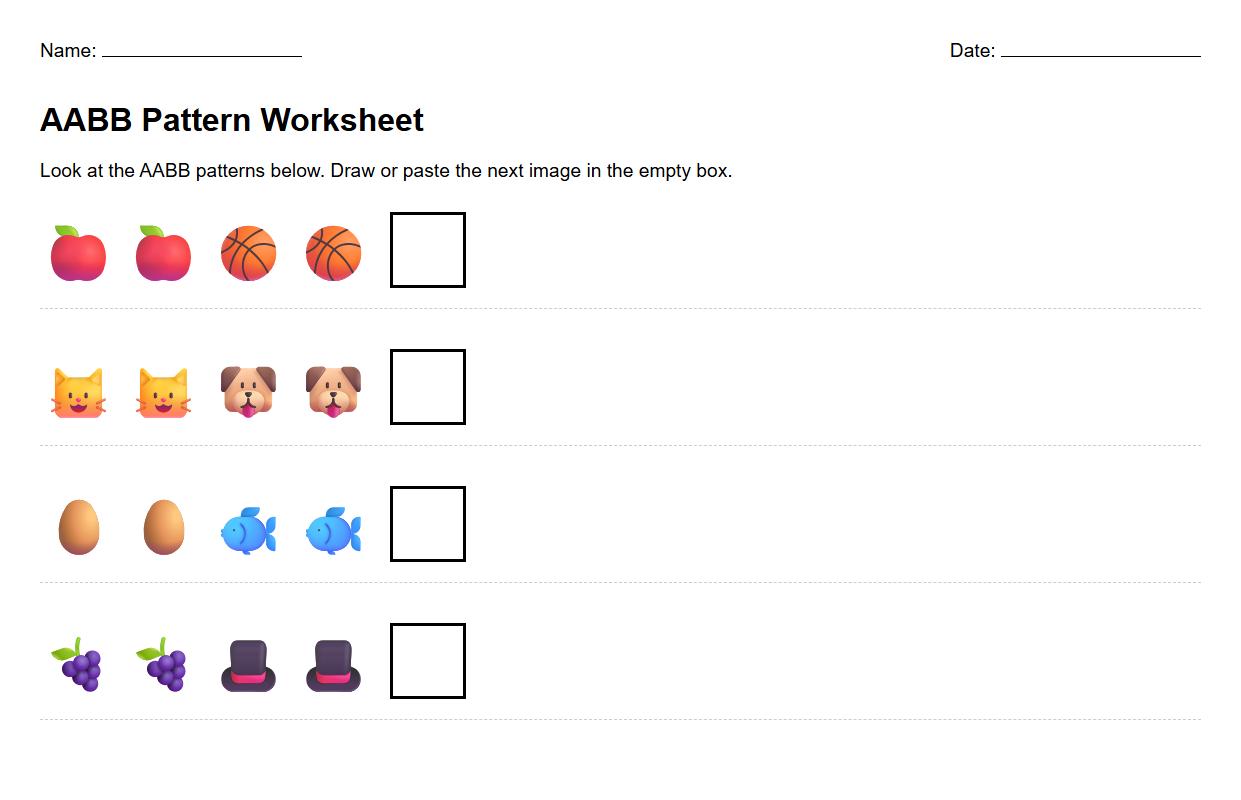
AABB Pattern Recognition Worksheet with Phonics Images

Download PDF     Pin it

ABC Order Visual Patterning Worksheet for Kindergarten
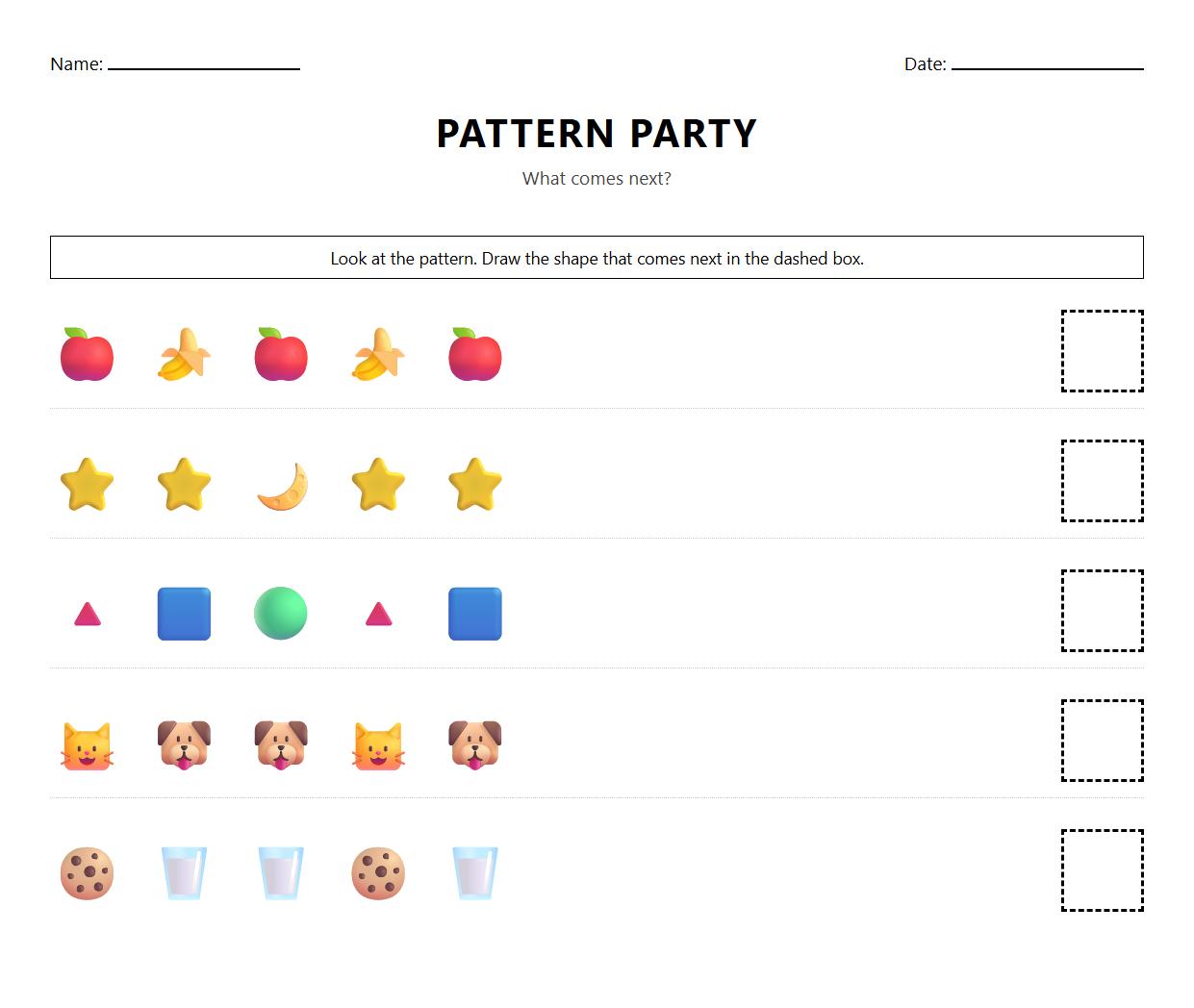
ABC Order Visual Patterning Worksheet for Kindergarten

Download PDF     Pin it

Mixed Pattern Phonics Worksheet AB and AABB
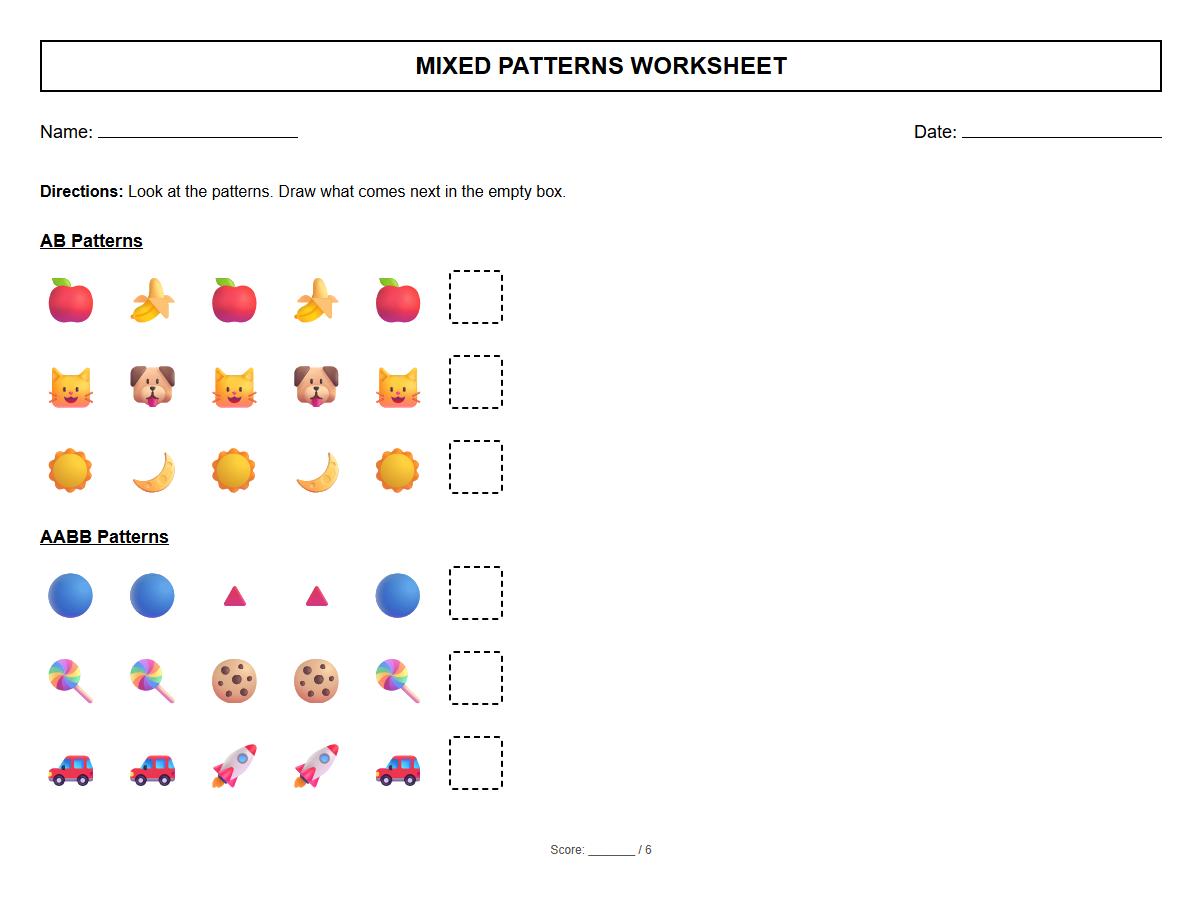
Mixed Pattern Phonics Worksheet AB and AABB

Download PDF     Pin it

Picture Pattern Fluency Worksheet with AB Phonics
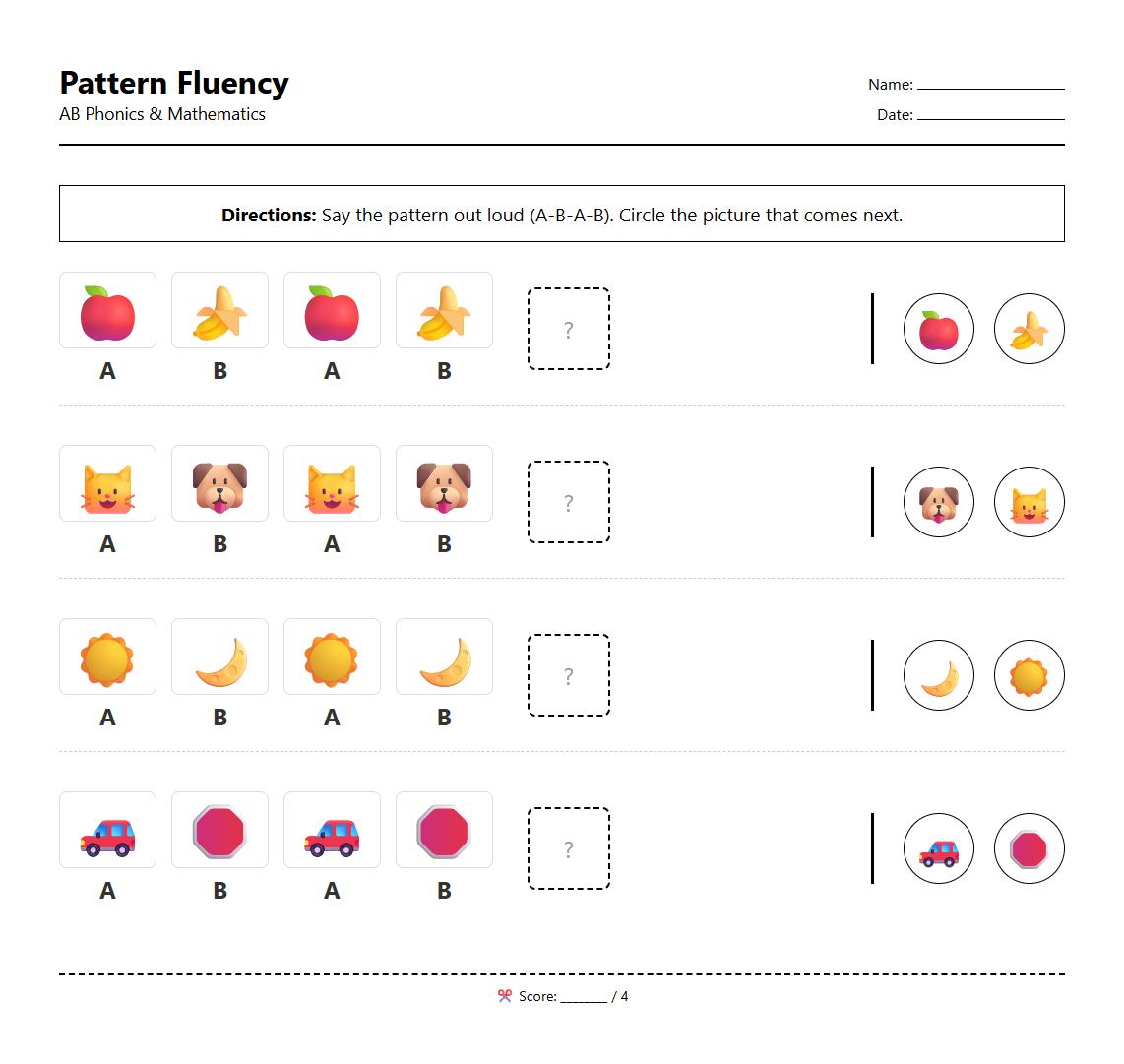
Picture Pattern Fluency Worksheet with AB Phonics

Download PDF     Pin it

Initial Sound Patterning Worksheet AABB Sequence
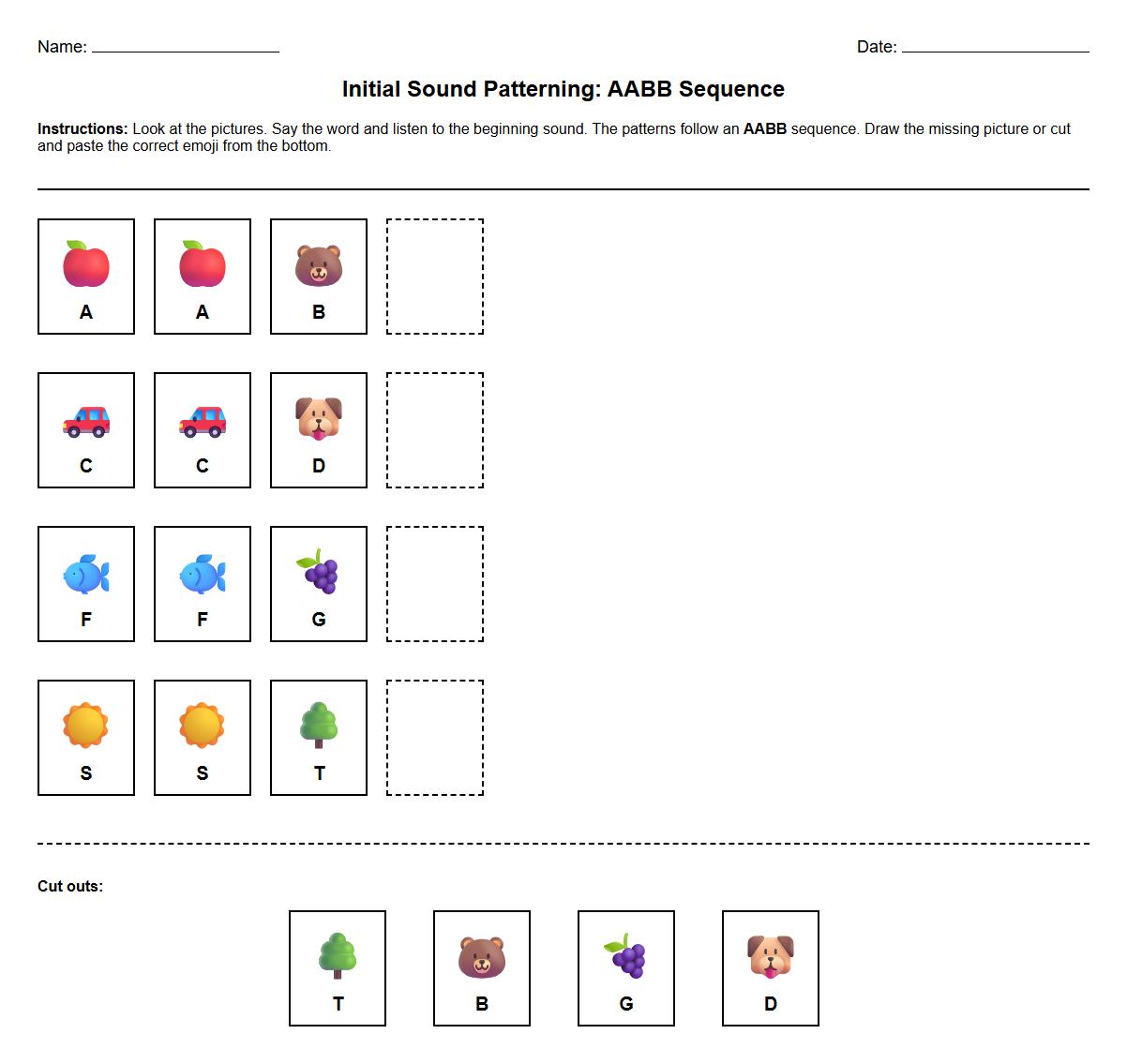
Initial Sound Patterning Worksheet AABB Sequence

Download PDF     Pin it

Visual Discrimination ABC Pattern Phonics Worksheet
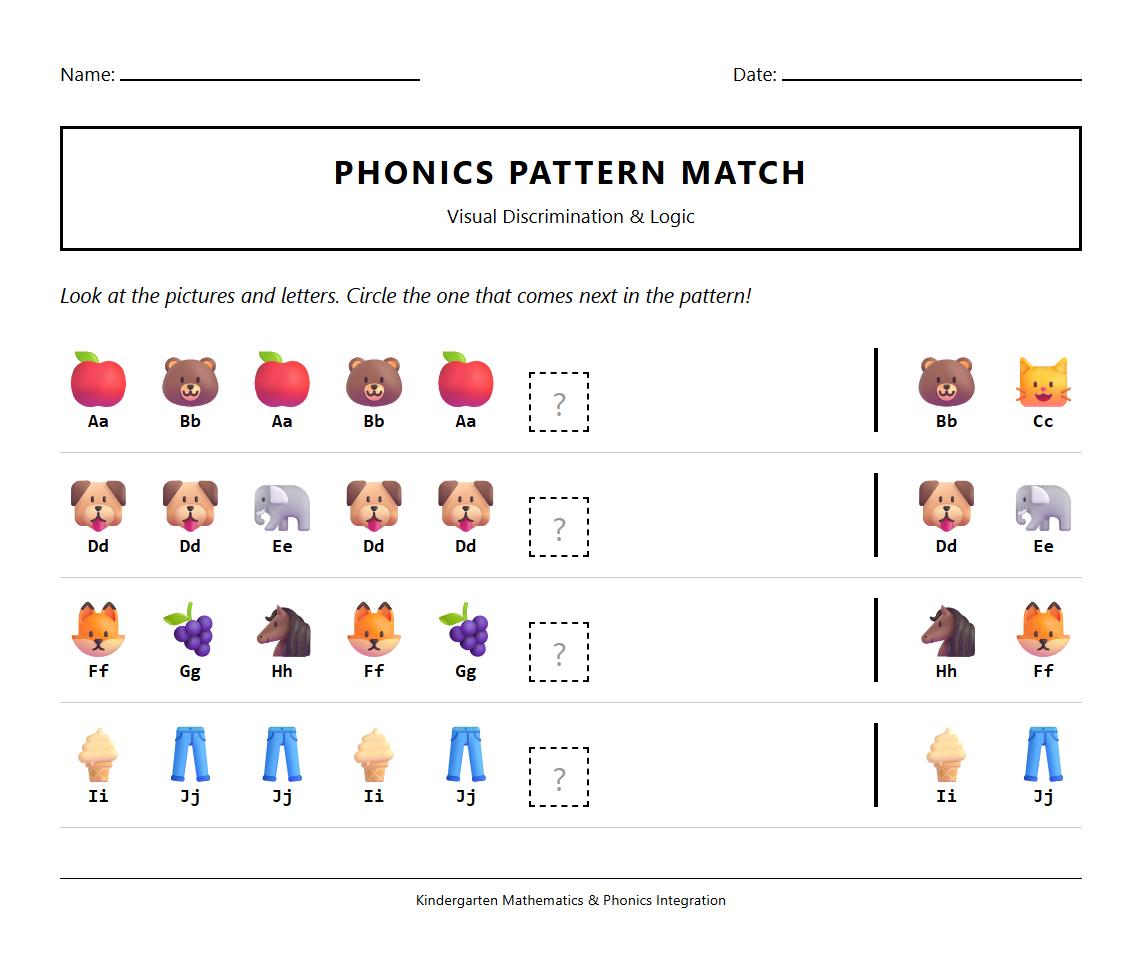
Visual Discrimination ABC Pattern Phonics Worksheet

Download PDF     Pin it

Pattern Completion Worksheet AB, AABB using Phonics Sounds
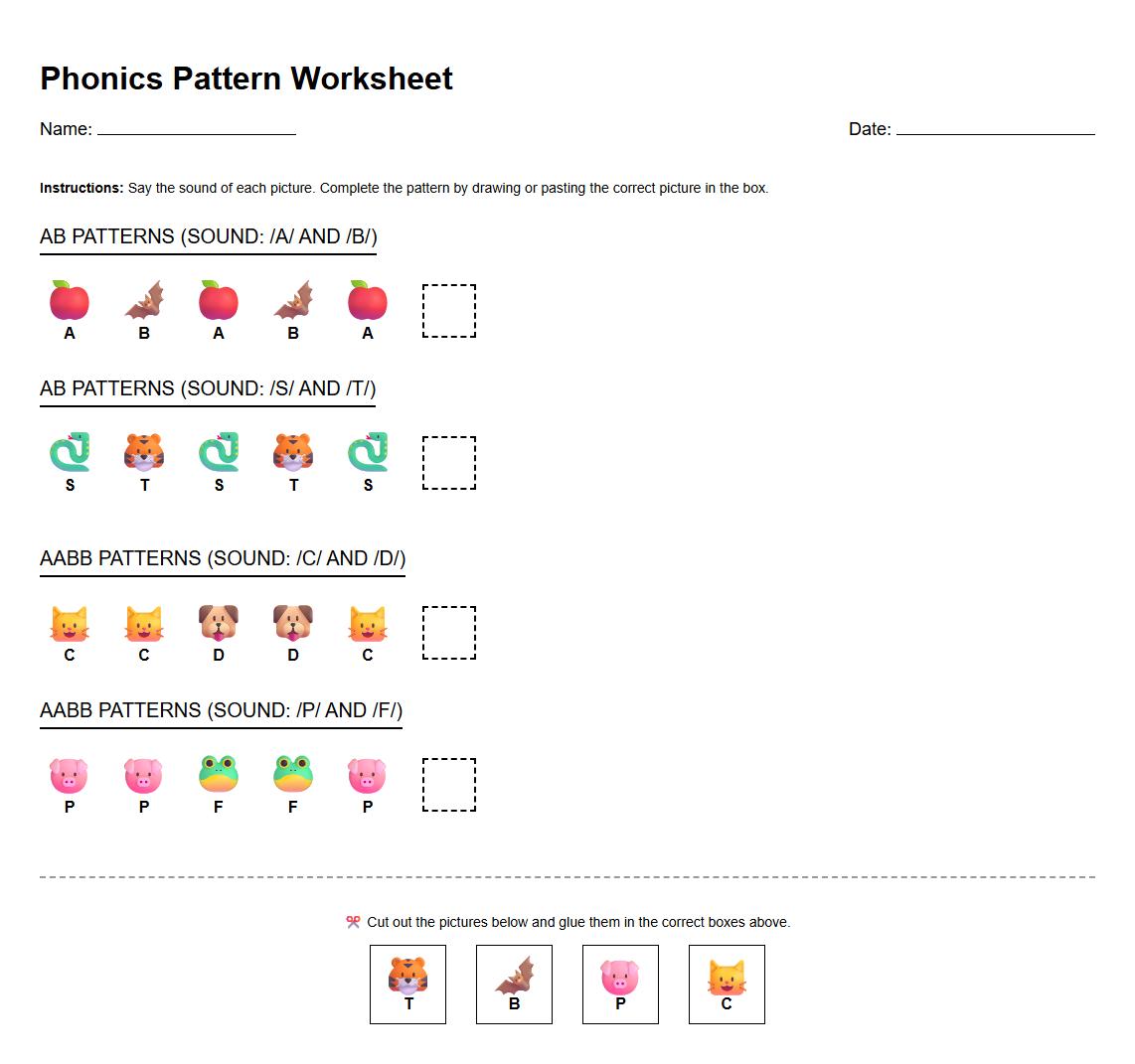
Pattern Completion Worksheet AB, AABB using Phonics Sounds

Download PDF     Pin it

Phoneme Matching Visual Pattern Worksheet in ABC Sequence
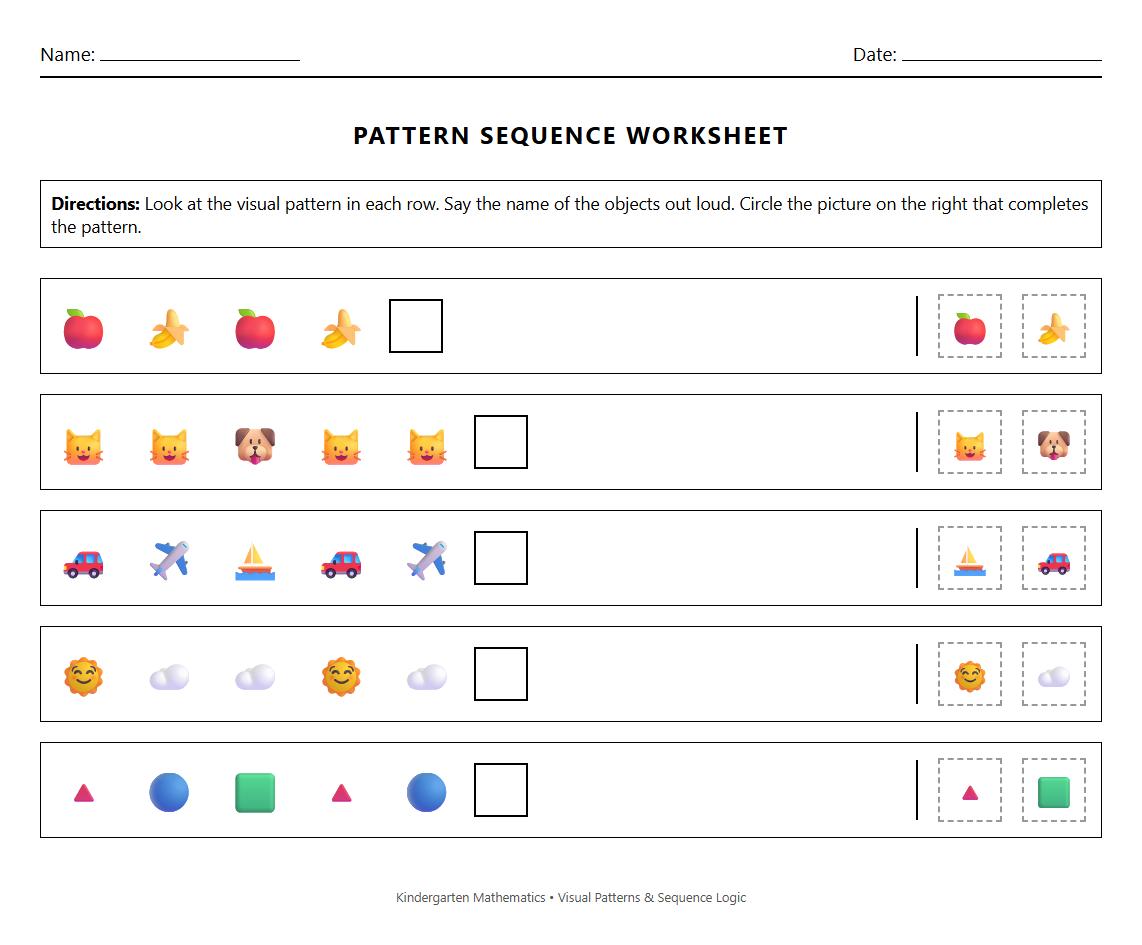
Phoneme Matching Visual Pattern Worksheet in ABC Sequence

Download PDF     Pin it

Pattern Sorting Worksheet Kindergarten Phonics AB AABB ABC
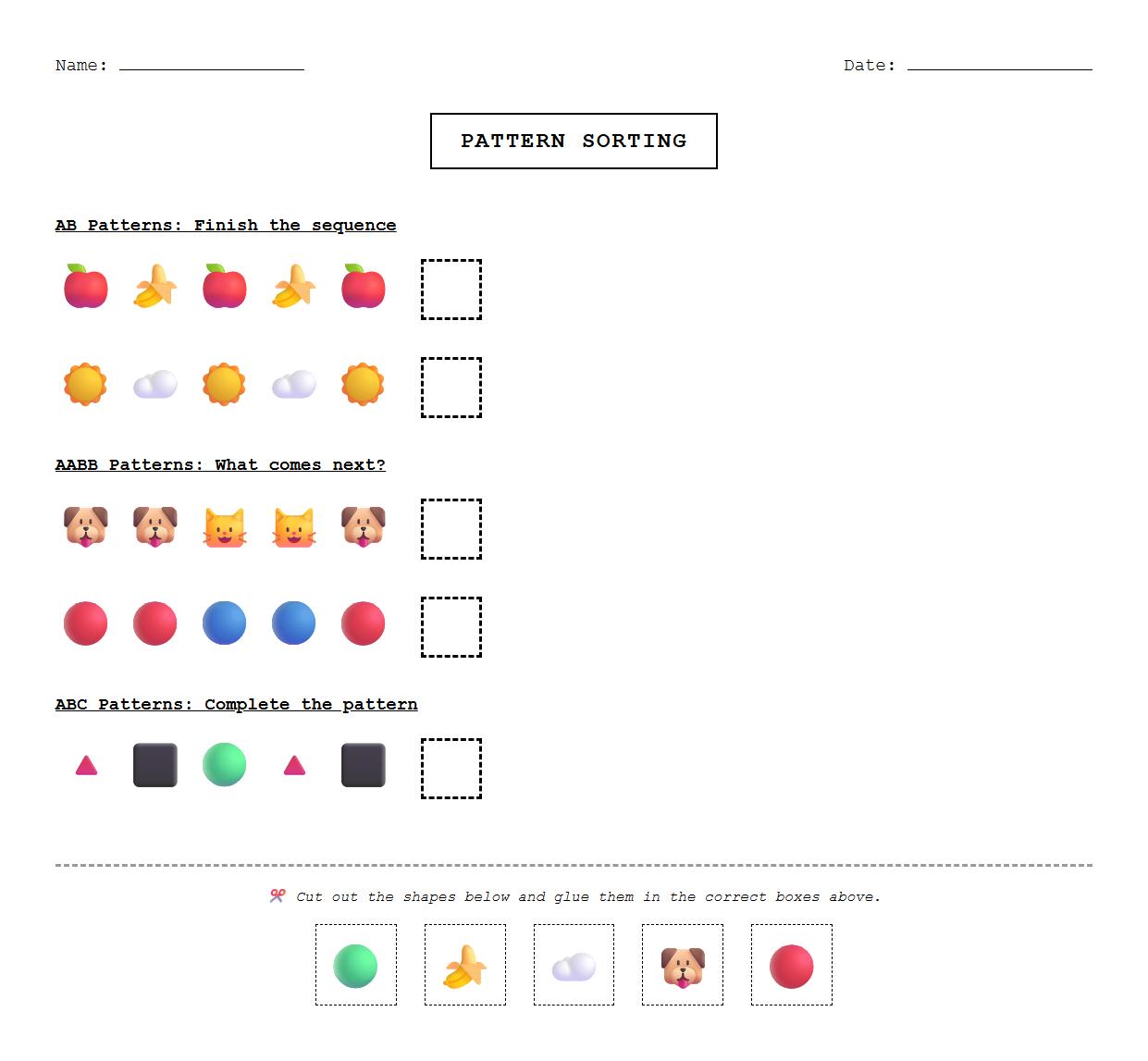
Pattern Sorting Worksheet Kindergarten Phonics AB AABB ABC

Download PDF     Pin it

Identifying the Next Item in an AB Pattern

When working with the AB pattern, such as dog cat dog cat, the next item continues the sequence by repeating the pattern. In this example, the answer is dog, as the sequence alternates between dog and cat. Encourage children to recognize the alternating elements to predict what comes next. This exercise helps develop early pattern recognition skills.

Spotting the Correct Continuation in an AABB Pattern

For the AABB pattern like sun sun moon moon, students need to choose the image that completes the sequence. The pattern repeats each item twice before switching. The next image should be sun again, continuing the cycle. Use pictures to make this activity engaging and accessible for young learners.

Pointing to the Starting Image of an ABC Pattern

An ABC pattern introduces three different elements in sequence, such as apple ball car. The correct response is to identify the first image, which is apple. Pointing helps children visually track the pattern's beginning. Reinforce this skill by encouraging observation and focus on sequence order.

Creating an AB Pattern Using Shapes

Ask children to create an AB pattern using a set of shapes provided. They should alternate between two types of shapes, such as circle and square. This hands-on activity strengthens understanding of simple repeating patterns. It also encourages creativity and critical thinking in pattern formation.

Finding the AABB Pattern Among Rows of Pictures

Guide children to find the AABB pattern by looking through rows of images. Each image should repeat twice before switching to the next in the sequence. This practice helps kids distinguish between short repeating units and develop pattern recognition. Using colorful pictures makes the activity more stimulating.

Identifying What's Missing in an AB Pattern

In a pattern like hat sock hat, asking what comes next reinforces predictability in an AB pattern. The missing item should be sock, following the alternating structure. This exercise tests attention to detail and memory. It builds foundational skills for understanding sequences and order.

Matching Objects to Complete an ABC Pattern

Matching the correct object to finish an ABC pattern involves recognizing the order of three different items. Children can select the next picture based on the pattern sequence. This activity enhances logical thinking and sequencing abilities. Providing clear options makes the task achievable and fun.

Creating Your Own AB Pattern with Pictures

Encourage children to create their own AB pattern with chosen pictures, fostering independence in pattern design. They learn to repeat two elements alternately while expressing creativity. This self-directed activity supports deeper understanding and application of pattern concepts. It also boosts confidence in their learning process.

Coloring the Next Shape in an AABB Pattern

Coloring the next shape in an AABB pattern helps reinforce recognition of repeating pairs. Children should identify which shape comes next, then color it accordingly. This tactile activity supports visual and motor skills. It adds variety to the learning experience while teaching pattern continuation.

Drawing the Next Three Items in an ABC Pattern Sequence

Drawing the next three items in a sequence like ABC challenges children to remember and reproduce the pattern. This practice deepens comprehension of complex three-element sequences. It also develops fine motor skills and creativity through drawing. Encouraging accuracy and repetition solidifies pattern learning.


More in Mathematics Category


About the author. Nylen Smith is a dedicated educator and cofounder of KWorksheet.com, a popular platform specializing in high-quality kindergarten worksheets and printable activities.

Disclaimer. The information provided in this document is for general informational purposes and/or document sample only and is not guaranteed to be factually right or complete. Please report to us via contact-us page if you find and error in this page, thanks.

Comments

No comment yet