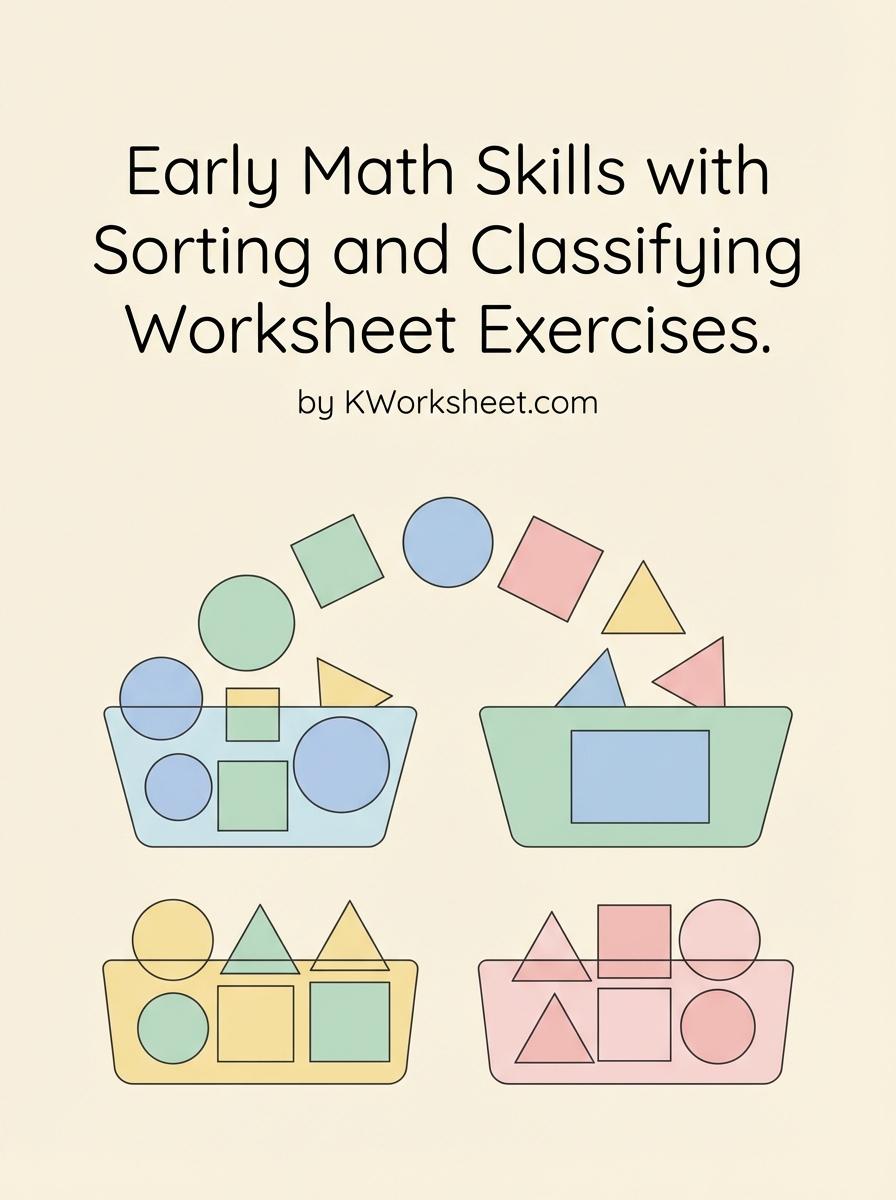
Early Math Skills with Sorting and Classifying Worksheet Exercises

📅 Feb 23, 2025 👤 Nylen Smith

Developing early math skills through sorting and classifying activities enhances critical thinking and problem-solving abilities in young learners. These exercises build foundational understanding of patterns, categories, and relationships by encouraging hands-on interaction with various objects and visuals. Explore our collection of worksheets to support your child's growth in early math concepts.

Object Sorting by Color for Early Math Skills
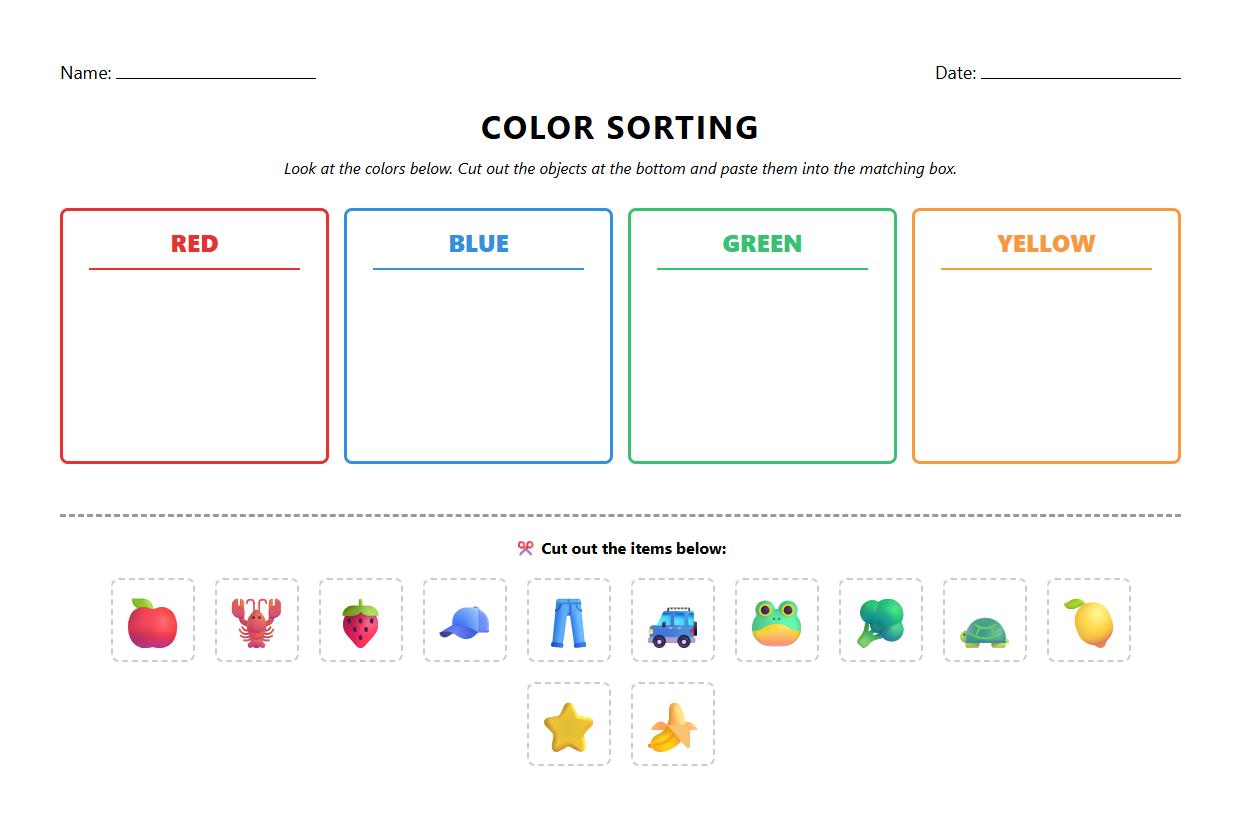
Object Sorting by Color for Early Math Skills

Download PDF     Pin it

Shape Classification Worksheet with Visual Discrimination
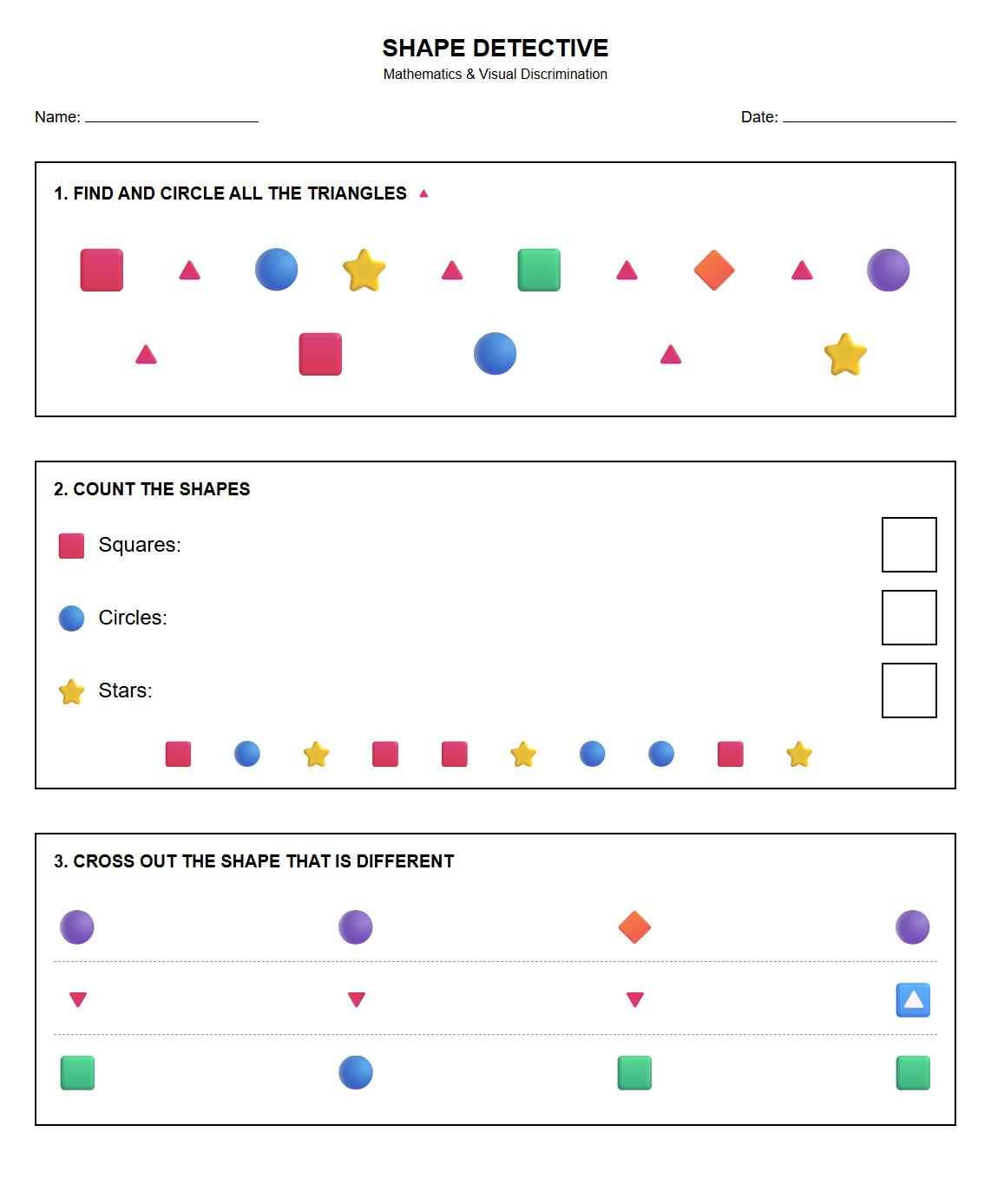
Shape Classification Worksheet with Visual Discrimination

Download PDF     Pin it

Size Sorting Activities for Foundational Math Understanding
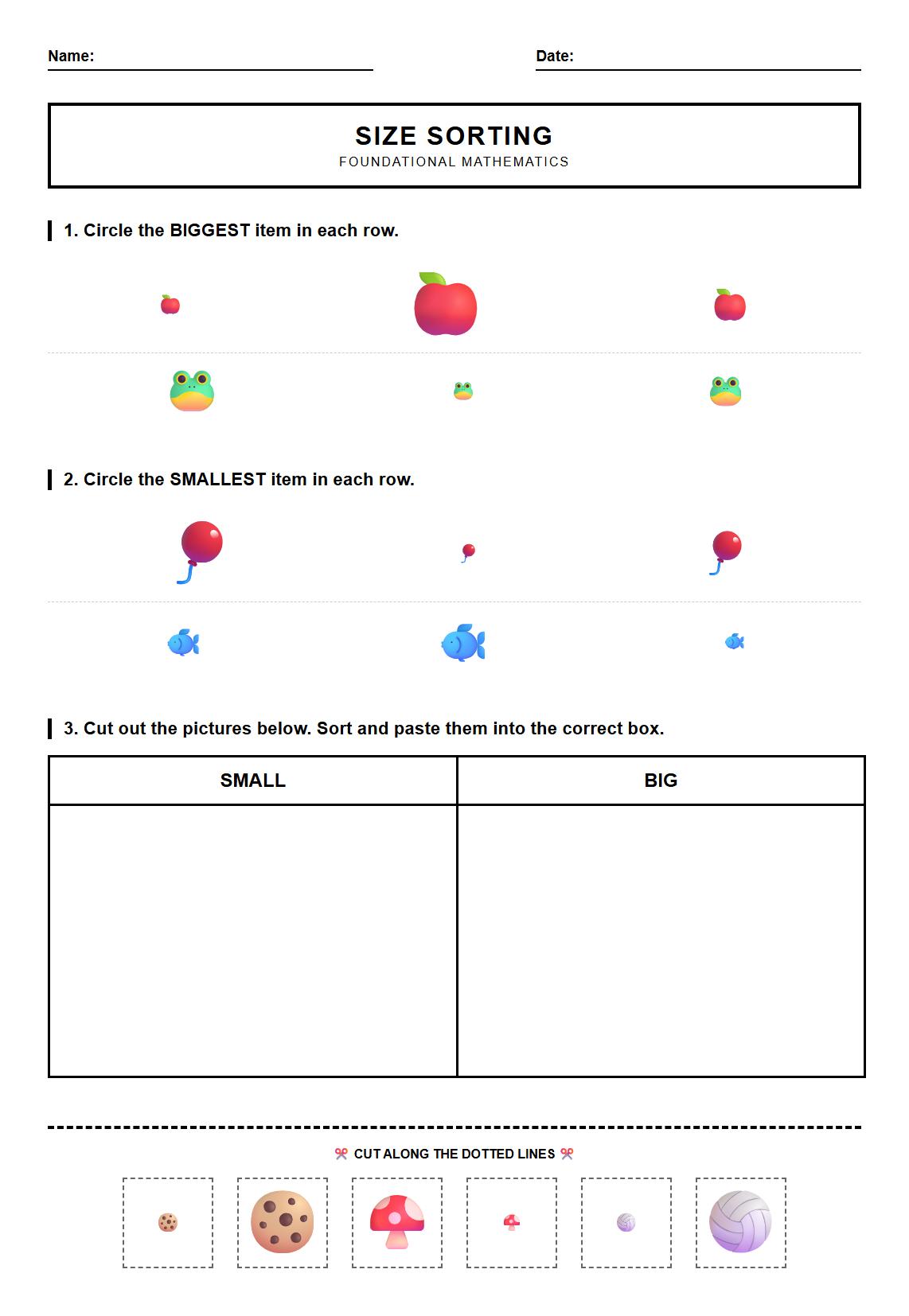
Size Sorting Activities for Foundational Math Understanding

Download PDF     Pin it

Sorting Animals by Habitat using Categorization Techniques
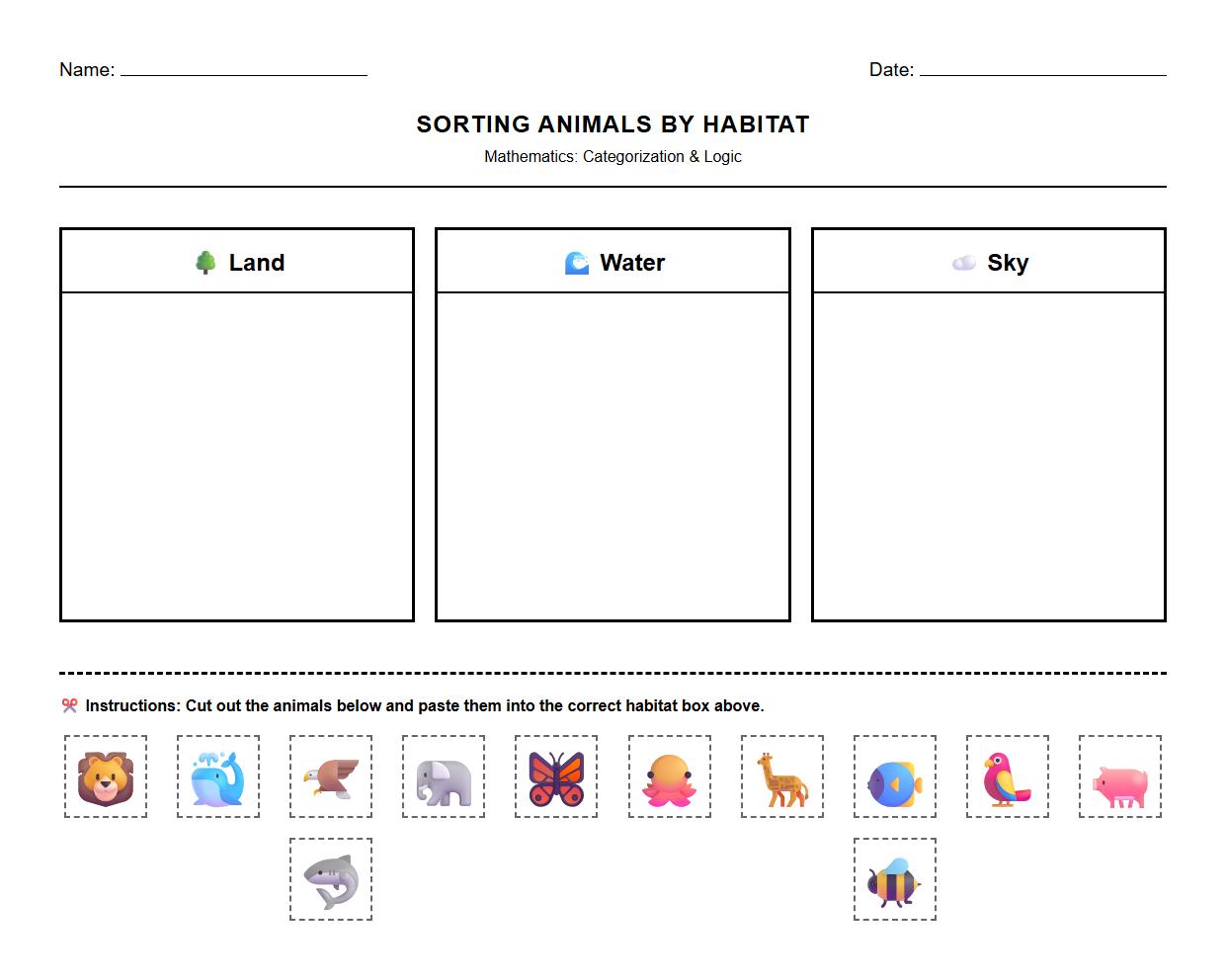
Sorting Animals by Habitat using Categorization Techniques

Download PDF     Pin it

Classifying Objects by Texture for Sensory Math Integration
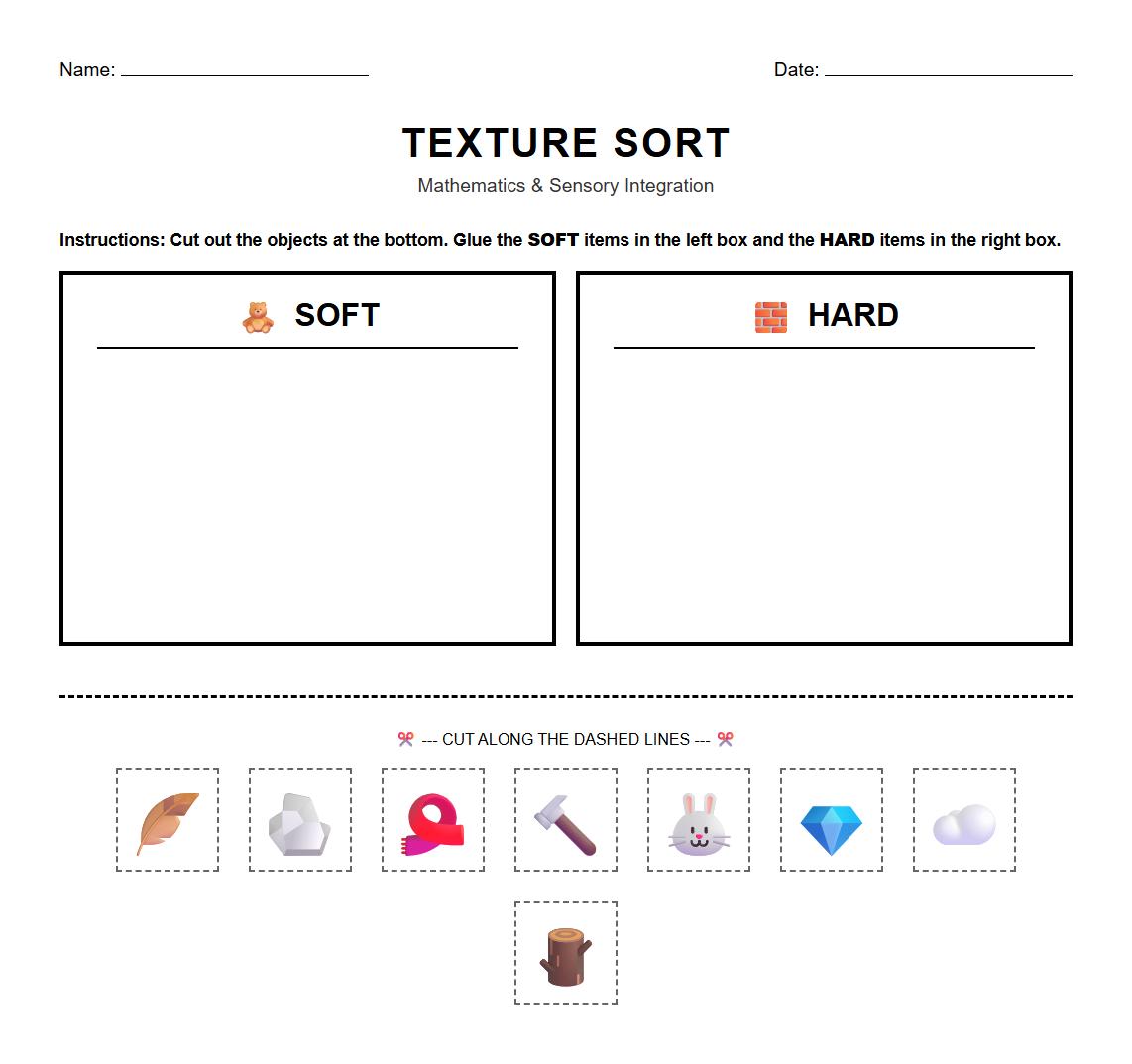
Classifying Objects by Texture for Sensory Math Integration

Download PDF     Pin it

Sorting Numbers into Even and Odd with Math Concepts
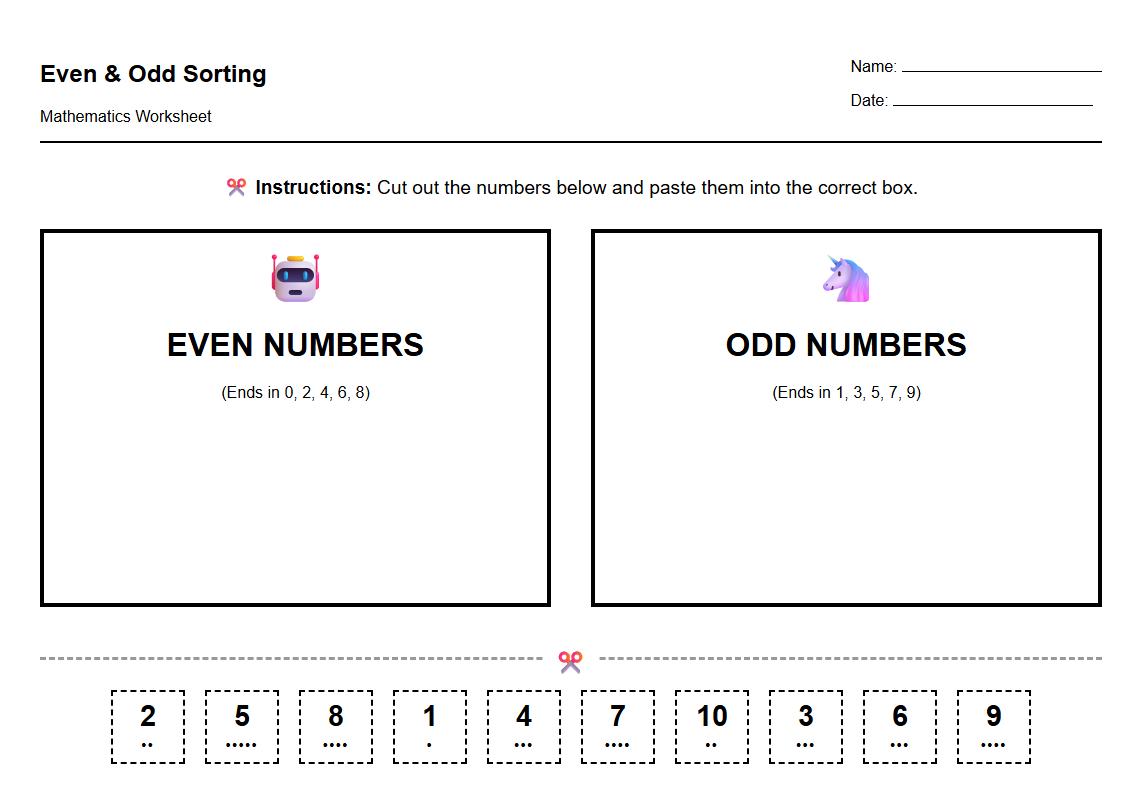
Sorting Numbers into Even and Odd with Math Concepts

Download PDF     Pin it

Attribute Blocks Sorting Exercise for Critical Thinking
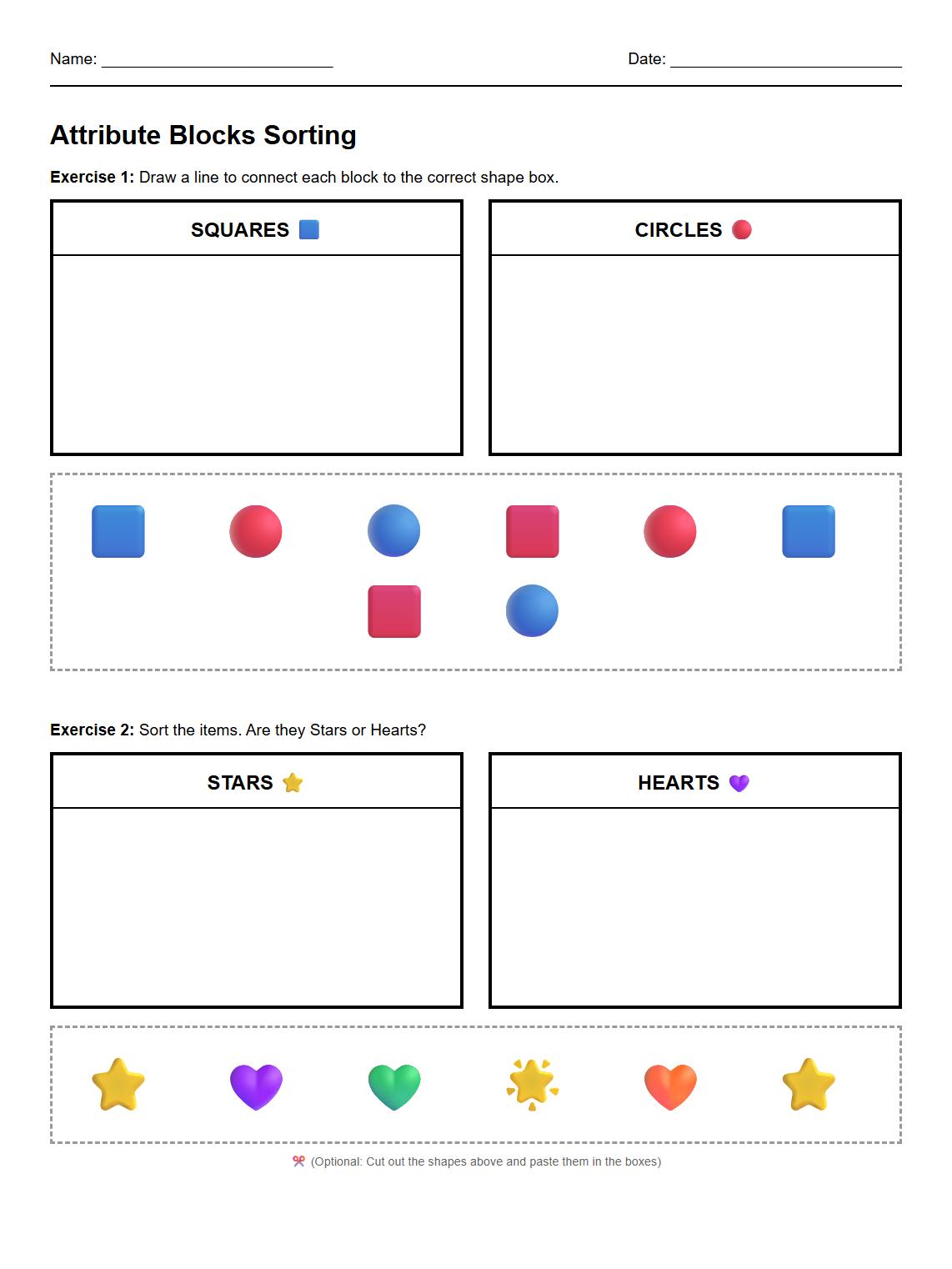
Attribute Blocks Sorting Exercise for Critical Thinking

Download PDF     Pin it

Sorting by Quantity to Develop Number Sense
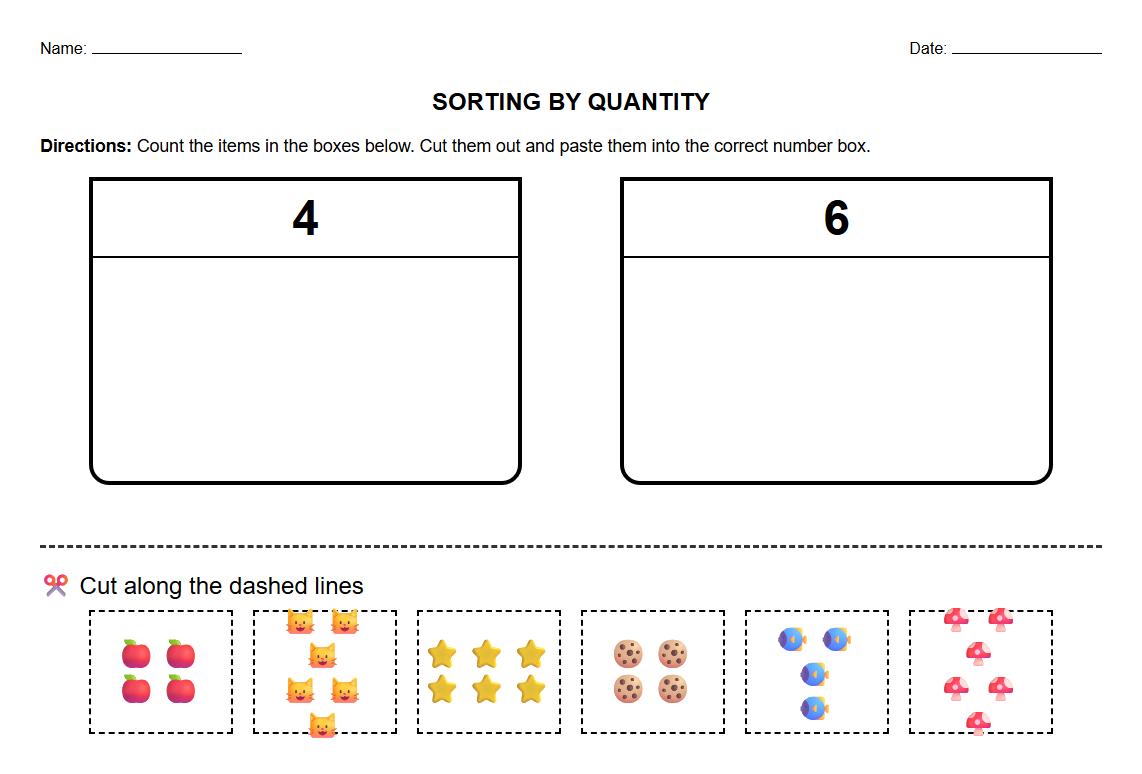
Sorting by Quantity to Develop Number Sense

Download PDF     Pin it

Food Group Classification Worksheet for Logical Reasoning
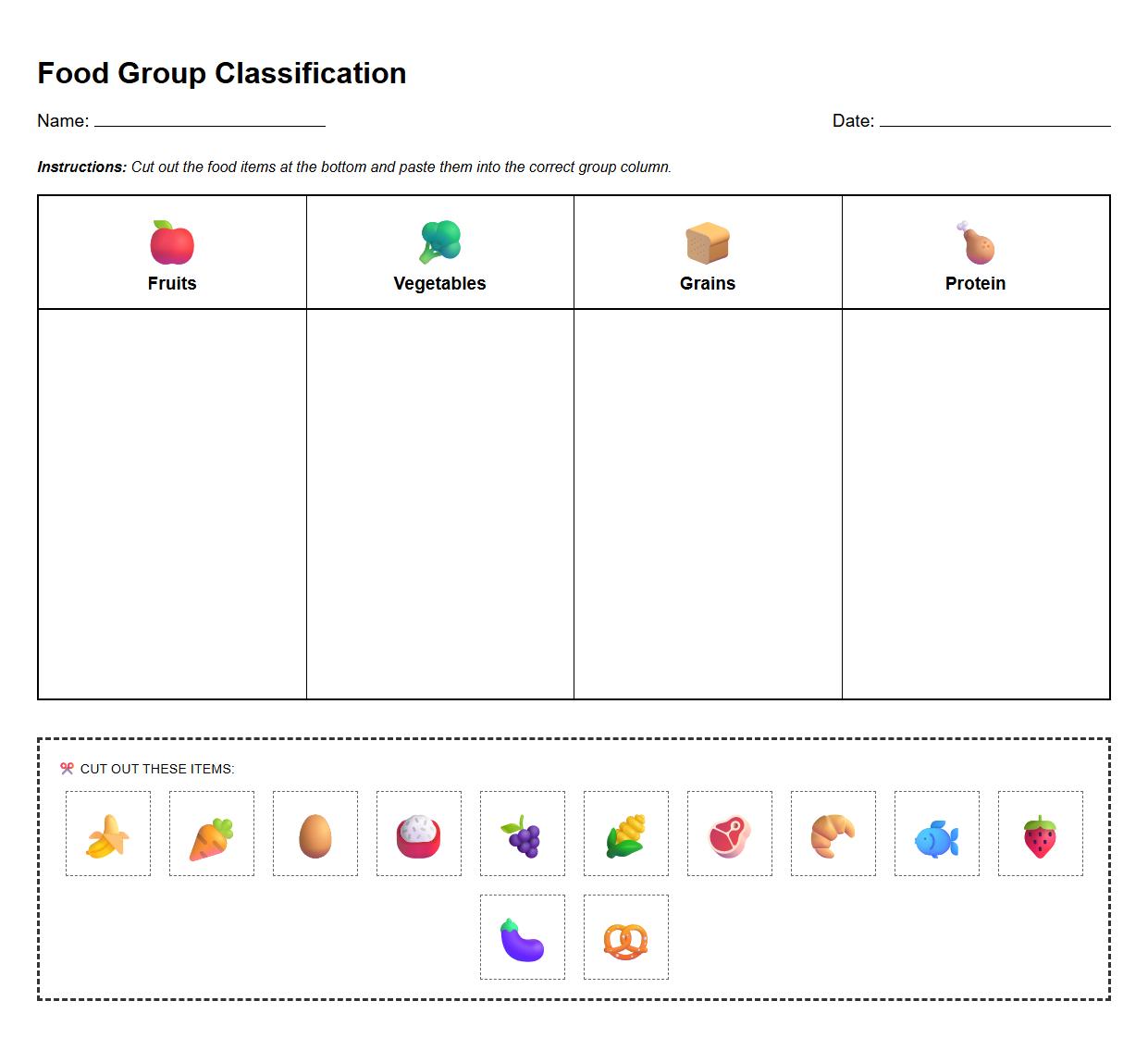
Food Group Classification Worksheet for Logical Reasoning

Download PDF     Pin it

Sorting Patterns by Sequencing with Early Math Vocabulary
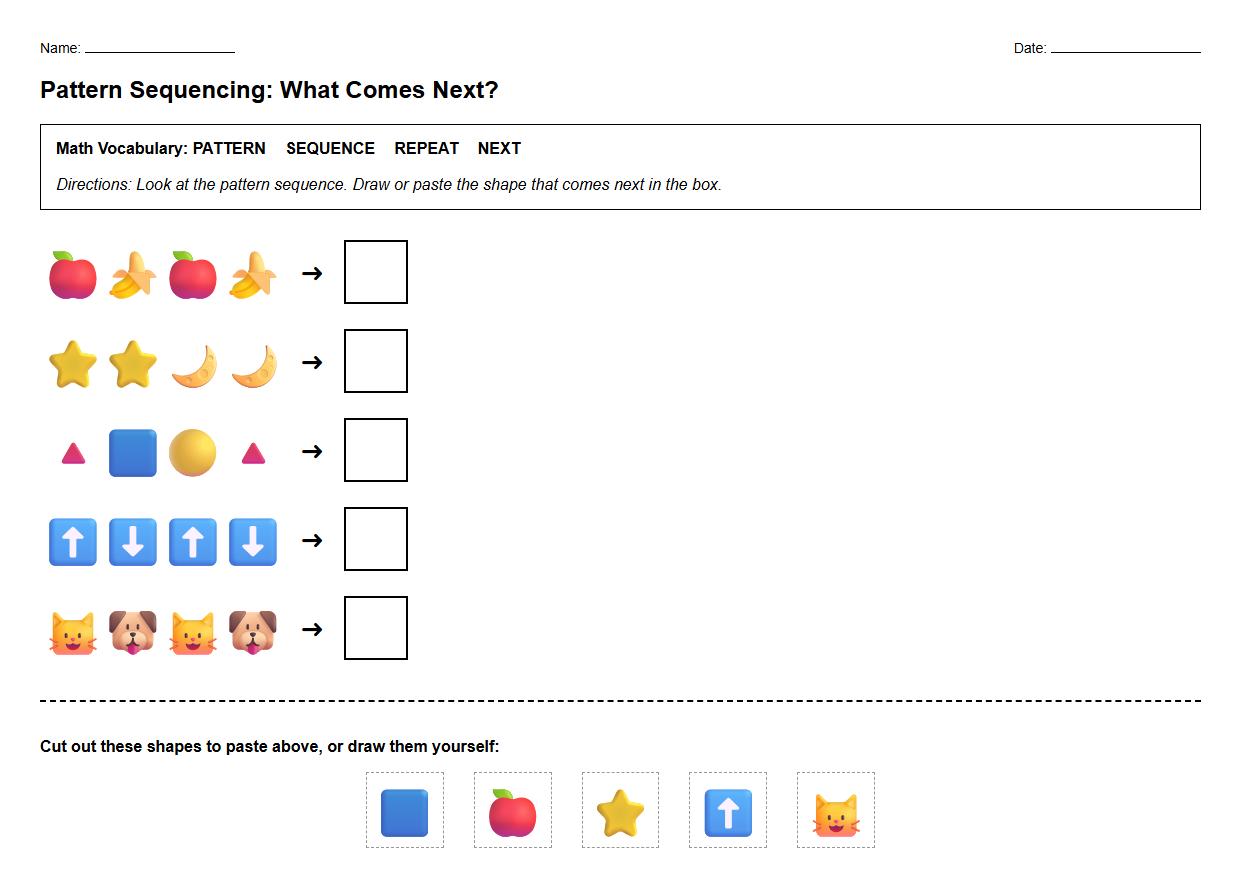
Sorting Patterns by Sequencing with Early Math Vocabulary

Download PDF     Pin it

How Many Objects Can You Sort by Color in This Worksheet?

This worksheet helps children develop their color recognition skills by sorting objects into groups based on color. Teachers and parents can encourage kids to identify and classify items by red, blue, yellow, or green. The activity is designed to reinforce visual discrimination and improve cognitive categorization. Sorting by color also enhances vocabulary as children learn color names.

Can You Group the Shapes by Size Using This Activity?

This worksheet prompts children to group shapes based on their size differences, such as small, medium, and large. It supports understanding of comparative concepts and spatial awareness. Through hands-on sorting, children practice identifying relative sizes, a foundational math skill. Teachers and parents can guide discussions about which shapes belong together and why.

Which Items Belong Together Based on Their Patterns?

Children are encouraged to observe and group items sharing similar patterns, like stripes, polka dots, or checks. This activity boosts attention to detail and pattern recognition. Sorting by patterns helps kids understand visual similarities beyond shape and color. It aids in developing classification skills critical for early learning.

How Many Groups Can You Create from the Given Pictures?

The worksheet encourages children to create multiple groups based on different attributes such as color, size, shape, or usage. This open-ended task fosters critical thinking and decision-making skills. Teachers and parents can support children by discussing various ways to group the pictures. It cultivates flexibility in categorization and observation.

Can You Find Two Objects That Are the Same Shape but Different Colors?

This activity challenges kids to identify objects that share the same shape, but differ in color, enhancing dual recognition skills. It promotes an understanding of shape as a distinct attribute from color. The exercise strengthens focus on subtle visual differences and similarities. It also supports vocabulary development regarding shapes and colors.

Which Set Has More Objects, Group A or Group B?

By comparing the number of objects in Group A and Group B, children practice counting and quantitative comparison. This supports early math skills such as number sense and more/less concepts. Teachers and parents can encourage children to count aloud and explain their reasoning. Understanding quantity differences is fundamental for math readiness.

Can You Sort the Items by What They Are Used For?

This sorting activity asks children to classify items based on their function or use. It encourages practical understanding and categorization beyond visual traits. Discussing item purposes promotes language development and critical thinking. It also helps children relate objects to everyday experiences.

How Many Things Can You Classify Under the Category of Animals?

The worksheet invites children to identify and group all items that represent animals. This develops skills in classification and category recognition based on living creatures. Teachers and parents can expand the activity by asking about animal characteristics. It strengthens knowledge of the natural world and vocabulary.

Which Objects Do Not Belong in This Group and Why?

This reflective question encourages children to use critical thinking to identify objects that do not fit in the given group. Explaining their reasoning enhances verbal skills and logical thinking. It promotes deeper understanding of category boundaries and exceptions. This activity fosters analytical skills important for problem-solving.

Can You Match the Objects to Their Correct Group Based on Similarities?

Children practice sorting and matching items to the correct groups by recognizing shared attributes such as shape, color, or function. This improves pattern recognition and categorization skills. Teachers and parents can guide children to articulate why objects belong together. It strengthens memory and conceptual understanding.


More in Mathematics Category


About the author. Nylen Smith is a dedicated educator and cofounder of KWorksheet.com, a popular platform specializing in high-quality kindergarten worksheets and printable activities.

Disclaimer. The information provided in this document is for general informational purposes and/or document sample only and is not guaranteed to be factually right or complete. Please report to us via contact-us page if you find and error in this page, thanks.

Comments

No comment yet