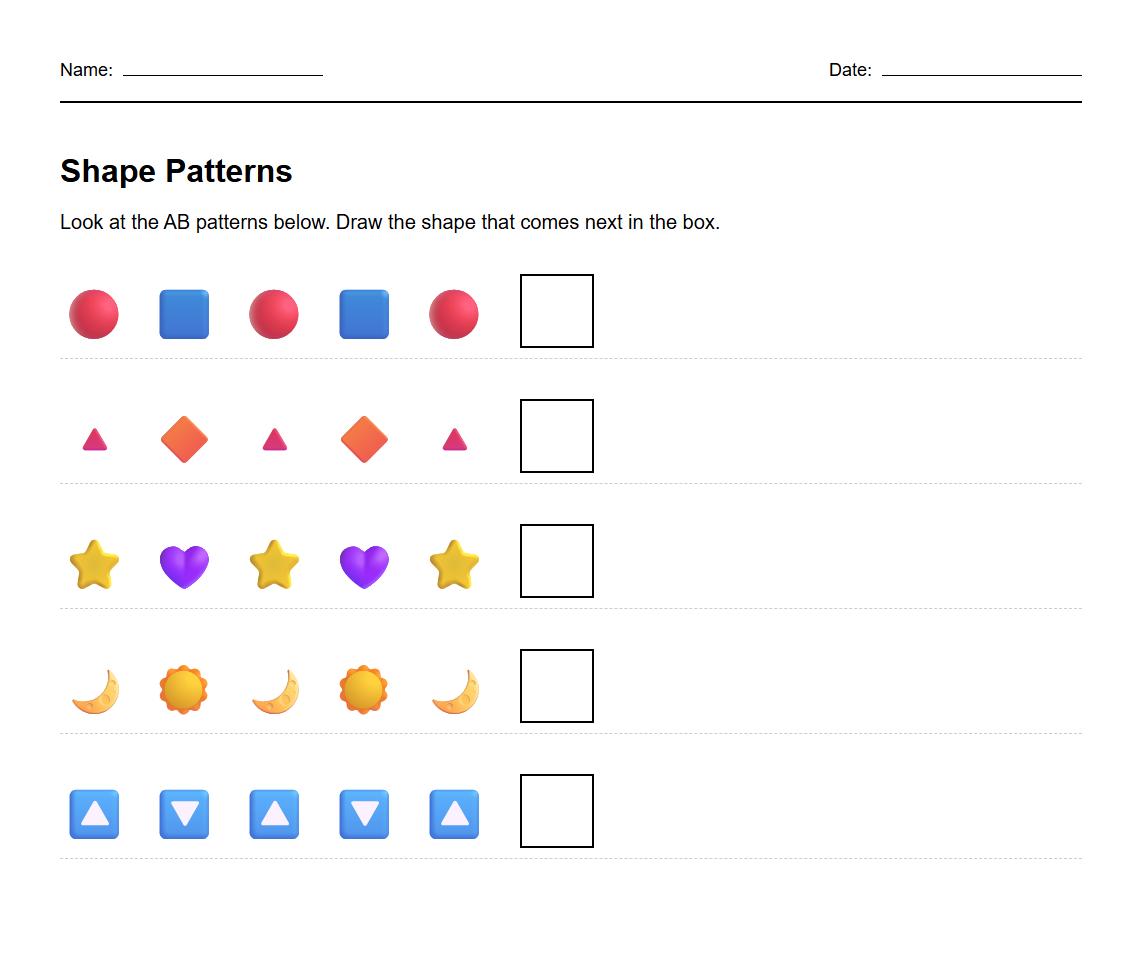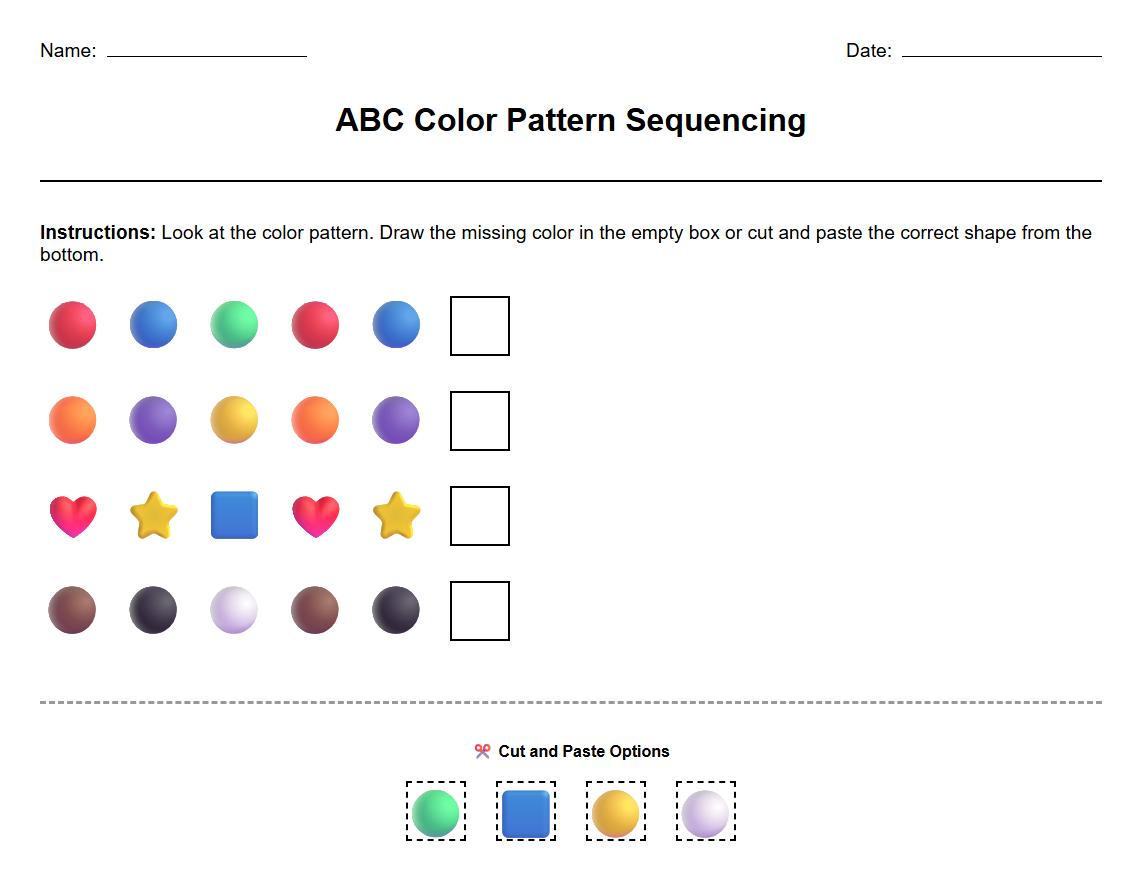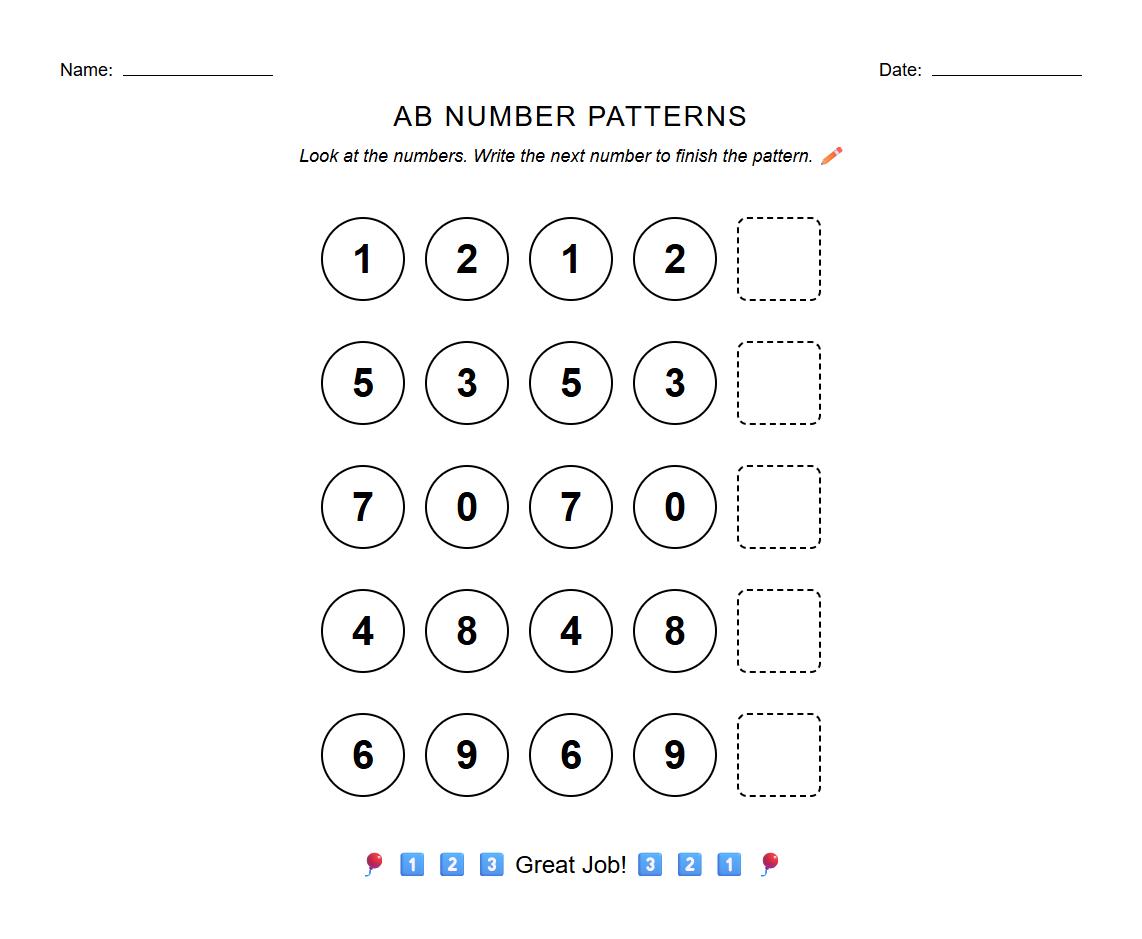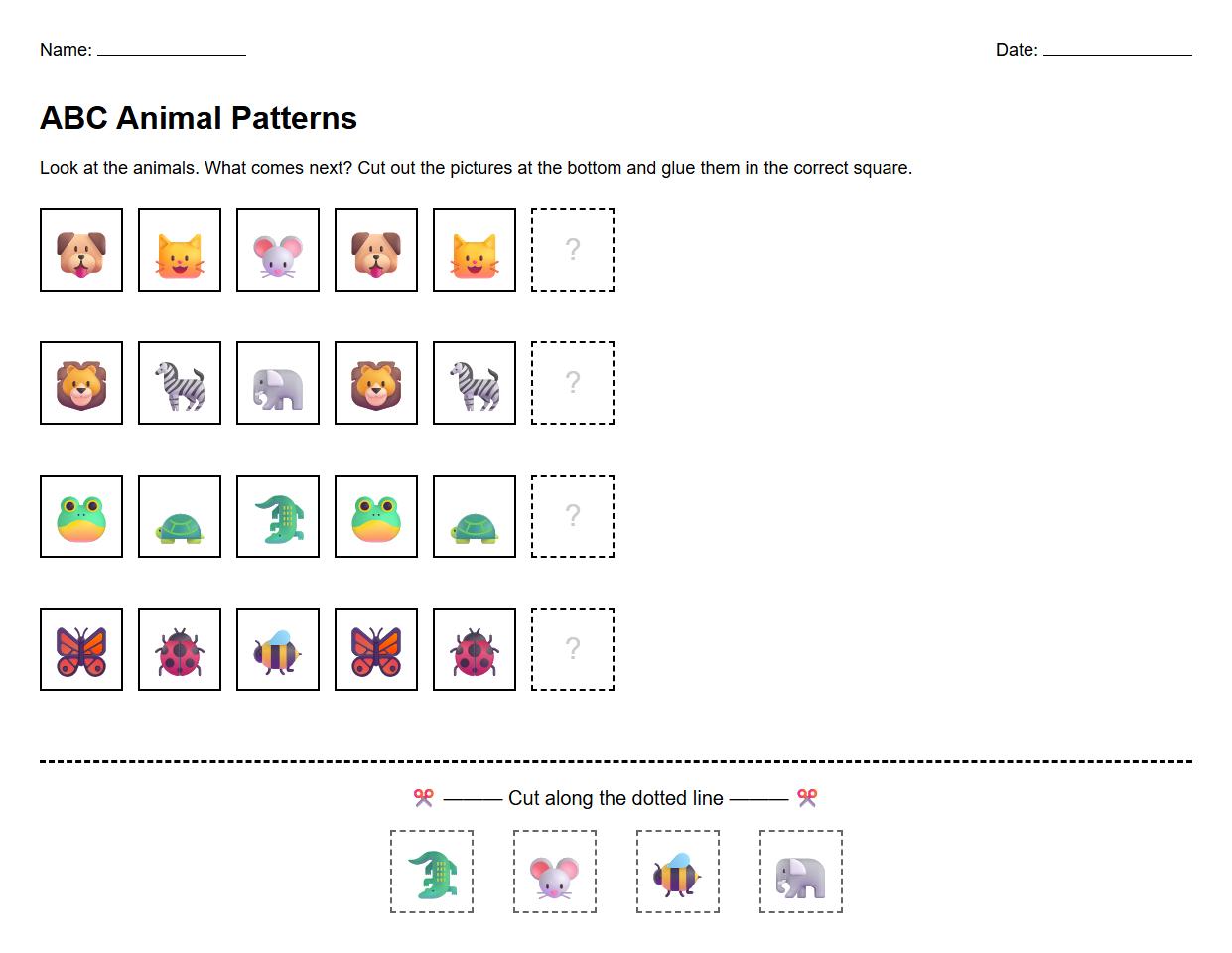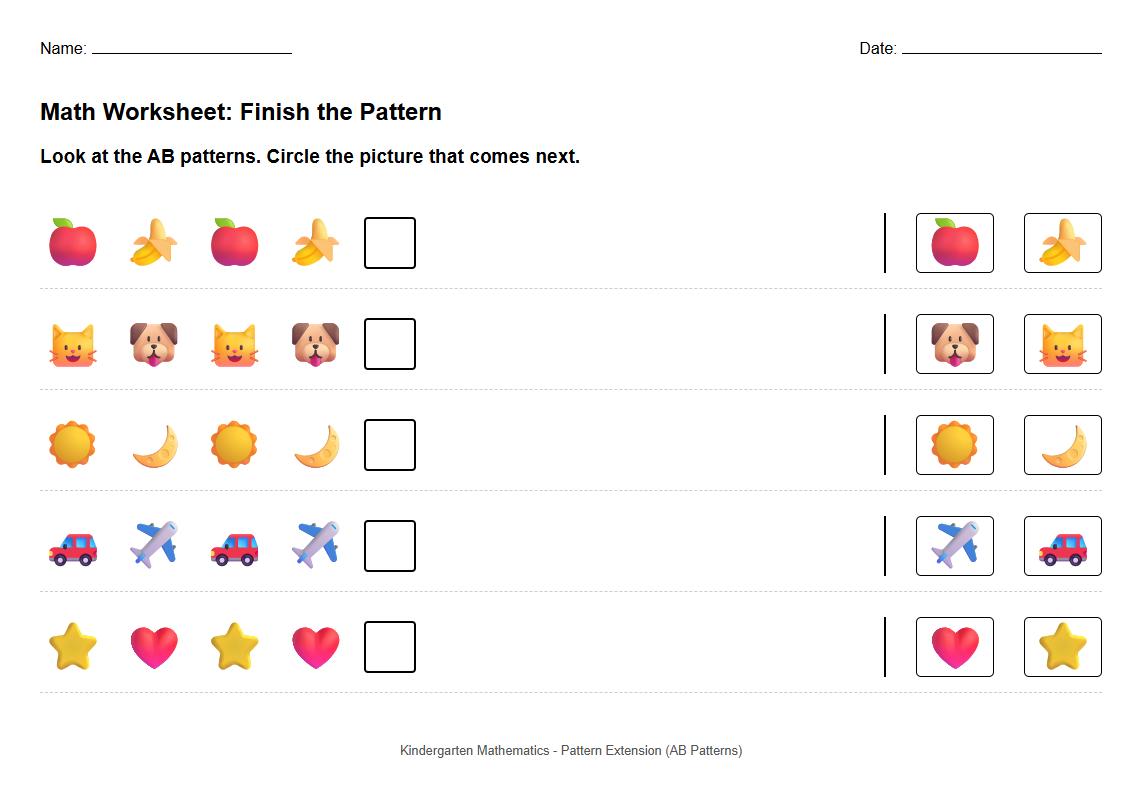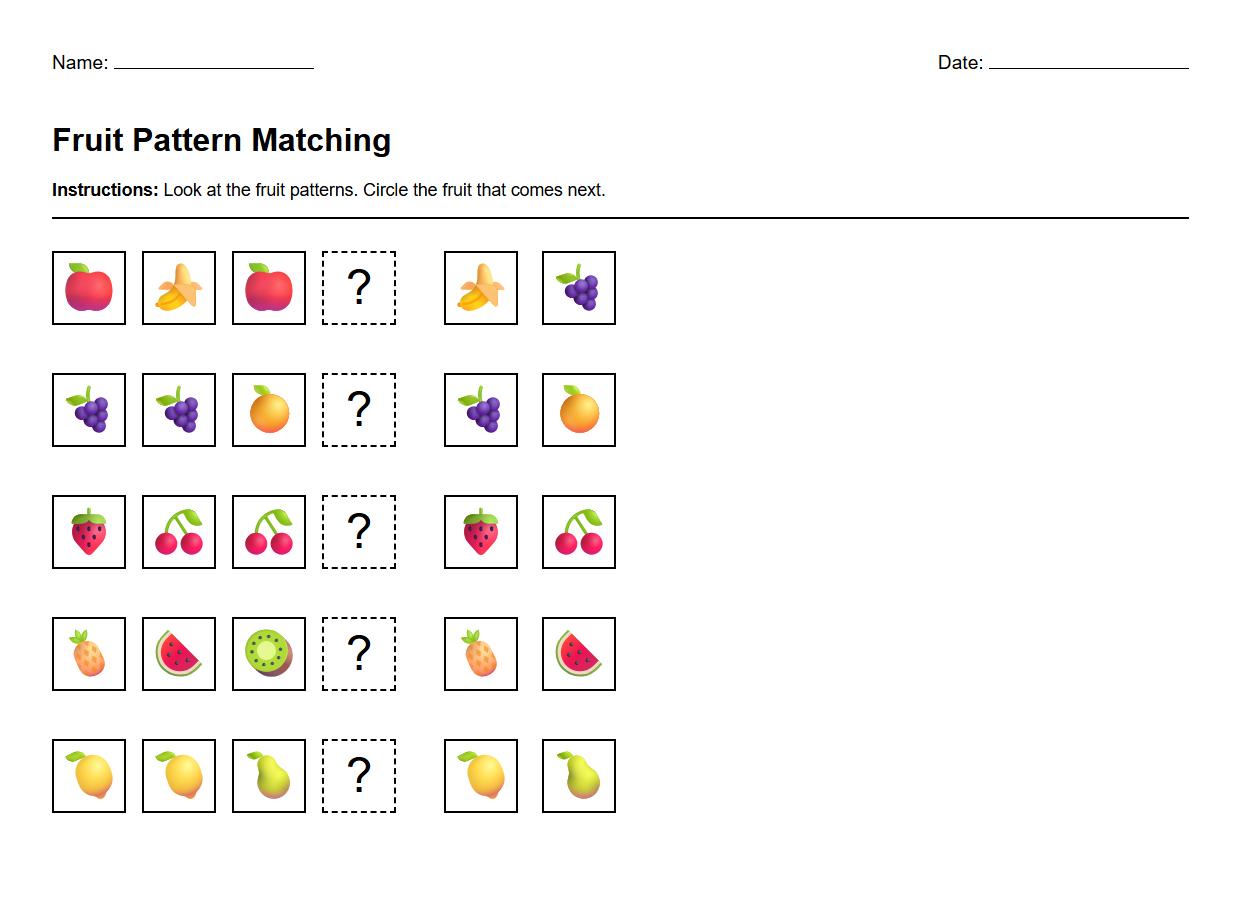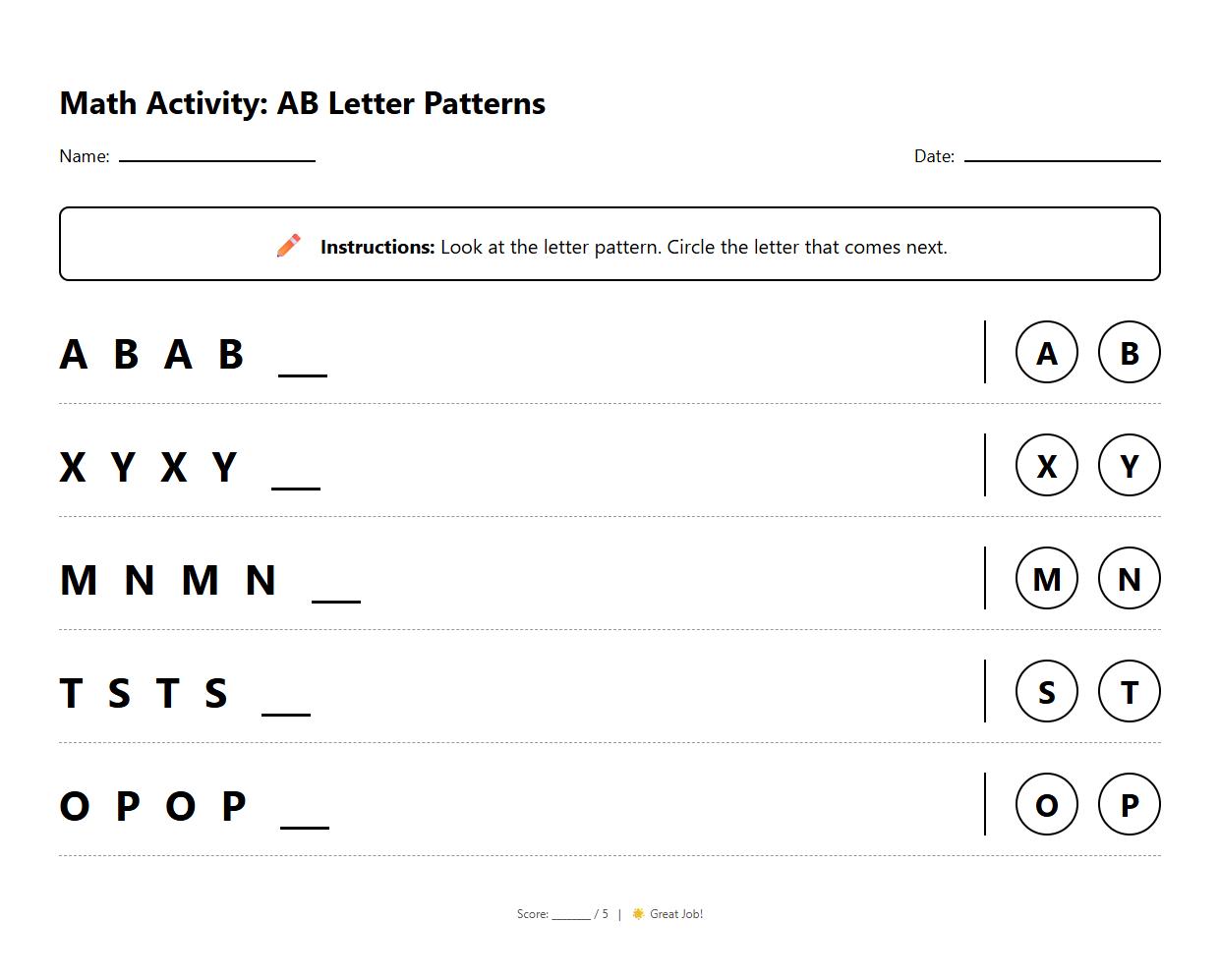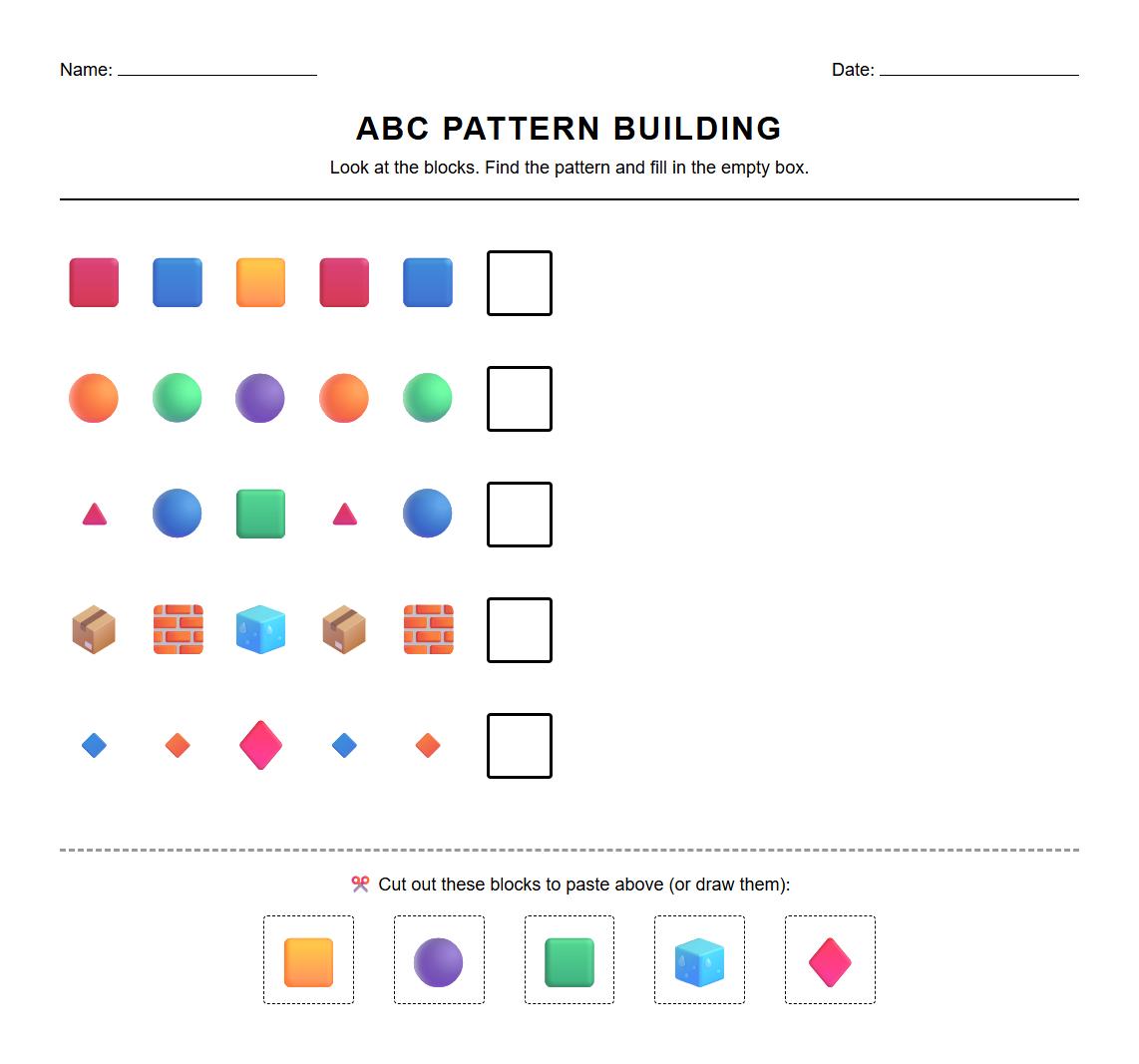
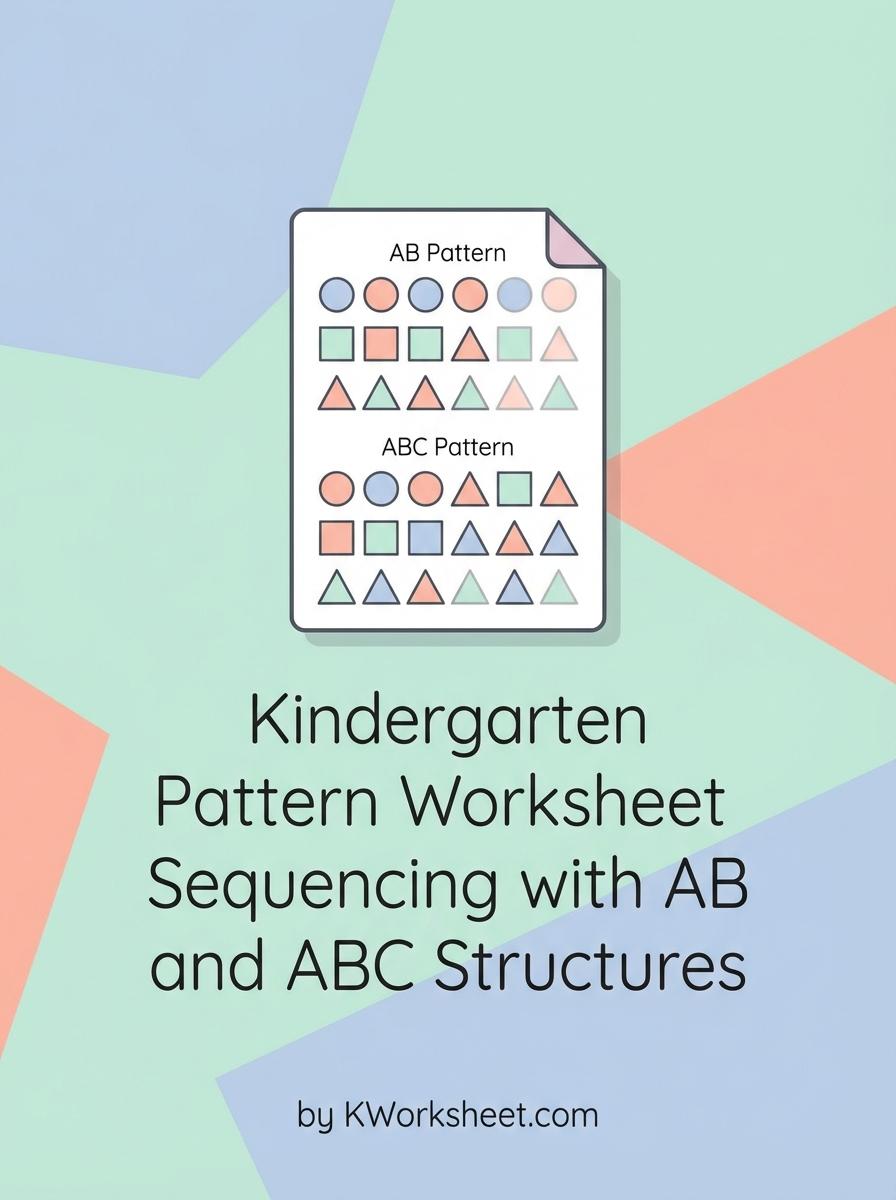
Kindergarten pattern worksheets focusing on AB and ABC sequencing structures help young learners develop critical early math skills by recognizing and predicting repeating patterns. These exercises enhance cognitive abilities such as logical thinking, memory, and attention to detail through engaging visual and hands-on activities. Explore our collection of worksheets designed to make pattern recognition fun and educational for kindergarten students.
Understanding AB Patterns
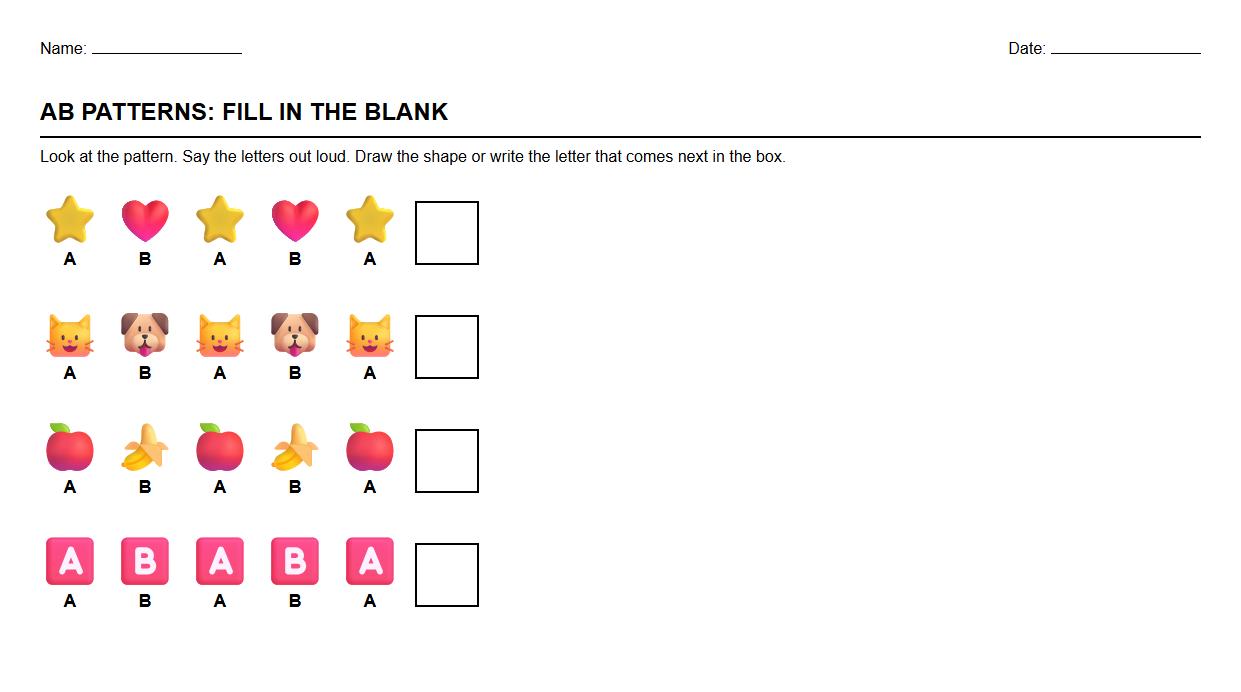
In an AB pattern like red, blue, red, blue, red, the sequence alternates between two elements repeatedly. The next item in this pattern is blue, continuing the alternating order. Recognizing AB patterns helps children develop predictive and sequencing skills.
Completing ABC Patterns
An ABC pattern includes three unique elements cycling in order, such as circle, square, triangle. After the second cycle (circle, square, triangle, circle, square), the next shape is triangle. Identifying ABC patterns enhances a child's ability to recognize complex sequences.
Identifying Pattern Elements
Given a pattern like star, heart, star, heart, the next two elements continue the AB sequence with star, heart. Repetition in such patterns teaches children how to anticipate what comes next based on earlier elements. This supports early mathematical thinking.
Creating Your Own AB Pattern
Teachers and parents can guide children to create their own AB pattern using shapes like circle, square, circle, square. This activity encourages creativity and reinforces understanding of repeating sequences. It also boosts fine motor skills when drawing the shapes.
Spotting the Pattern Breaker
In the sequence cat, dog, cat, dog, cat, fish, the object fish breaks the alternating AB pattern. Teaching children to spot such anomalies strengthens their critical thinking and attention to detail. It also introduces the concept of exceptions in patterns.
Filling Missing Shapes in ABC Patterns
For the ABC pattern green, yellow, red, green, ___, red, the missing color is yellow. Filling in missing elements develops a child's problem-solving skills and pattern recognition abilities. Encouraging discussion about the rule of the pattern deepens understanding.
Drawing Patterns to Continue Sequences
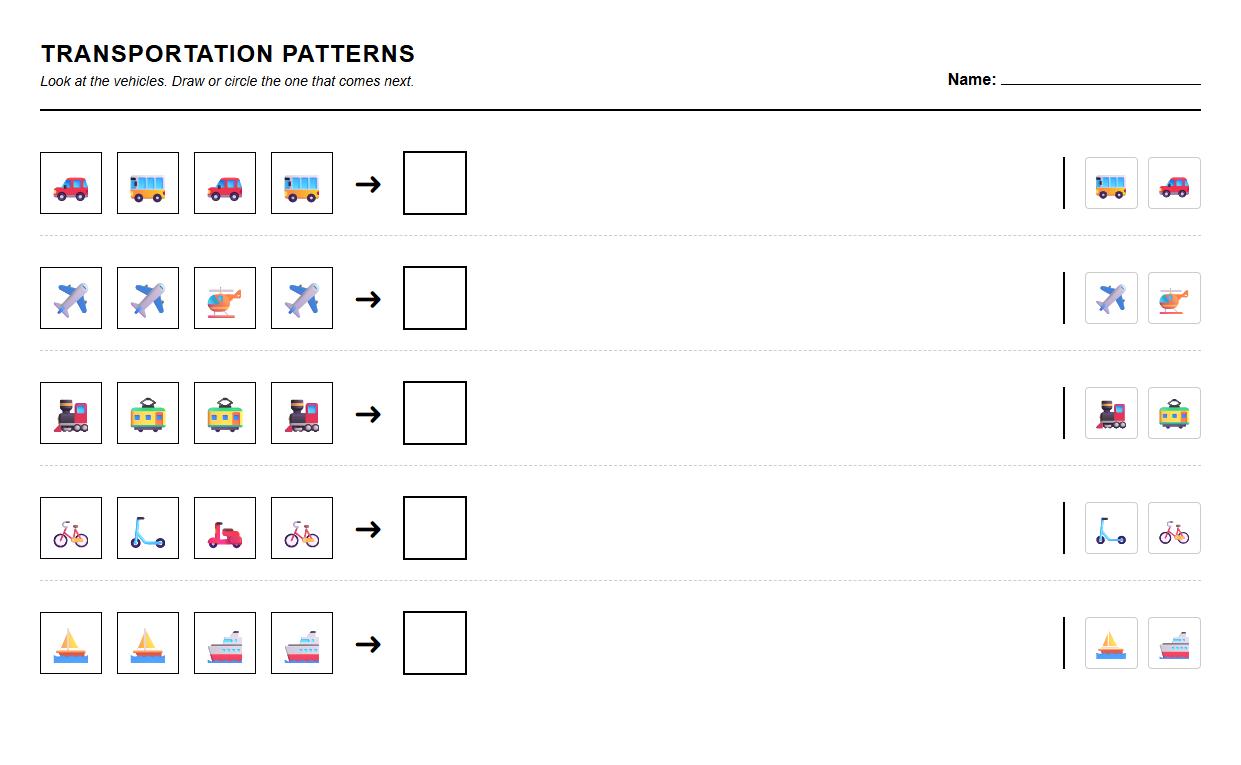
Given the sequence triangle, triangle, square, triangle, triangle, the next two shapes to draw are square, triangle. This exercise promotes visual discrimination and sequencing skills. Drawing the shapes helps improve hand-eye coordination as well.
Continuing Fruit Sequences
In the pattern apple, banana, cherry, apple, banana, the next fruit is cherry. Recognizing such sequences develops memory and understanding of repetition and order. Incorporating familiar objects like fruits makes learning relatable for children.
Understanding the Pattern Rule
The pattern blue, blue, yellow, blue, blue, yellow follows a rule of two blues followed by one yellow. Explaining this rule helps children grasp the concept of pattern cycles and consistency. Encouraging verbal descriptions of patterns supports language development.
Making AB Color Patterns with Crayons
Using crayons, children can create AB color patterns such as red, green, red, green. This hands-on activity combines color recognition with patterning skills. It also fosters fine motor skills and creative thinking.


Engaging Phonics Worksheet Activities for Sorting and Classifying in Kindergarten