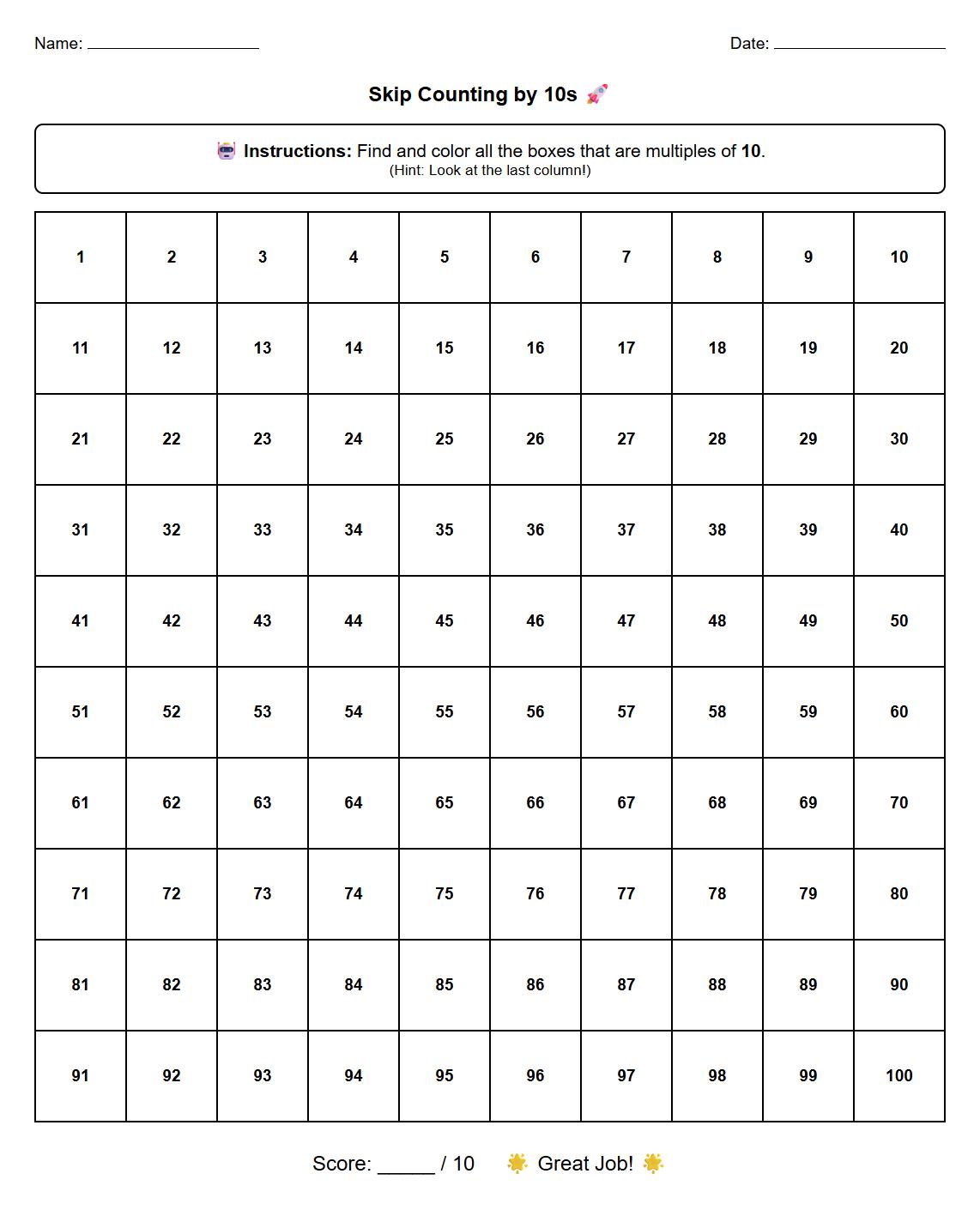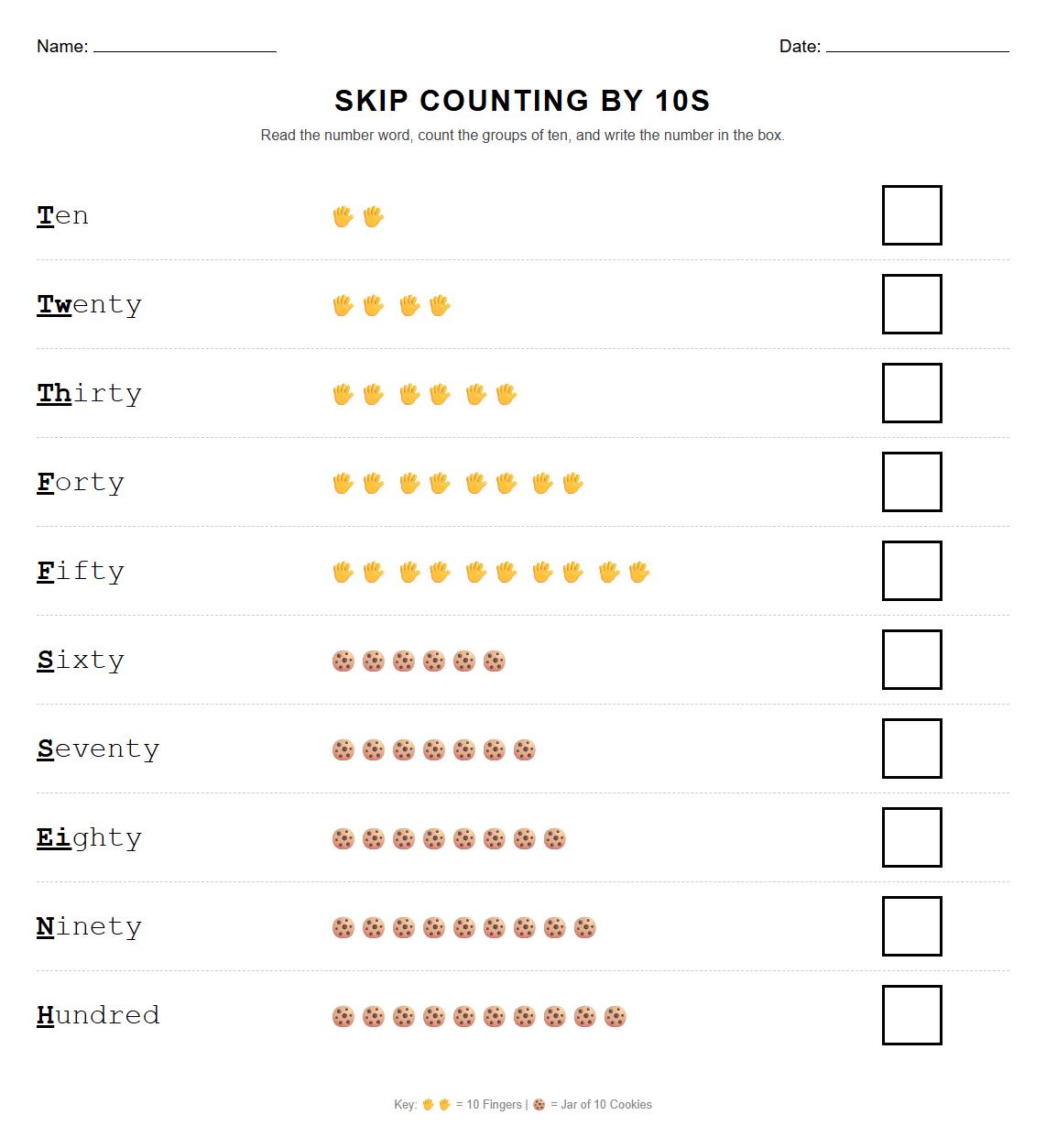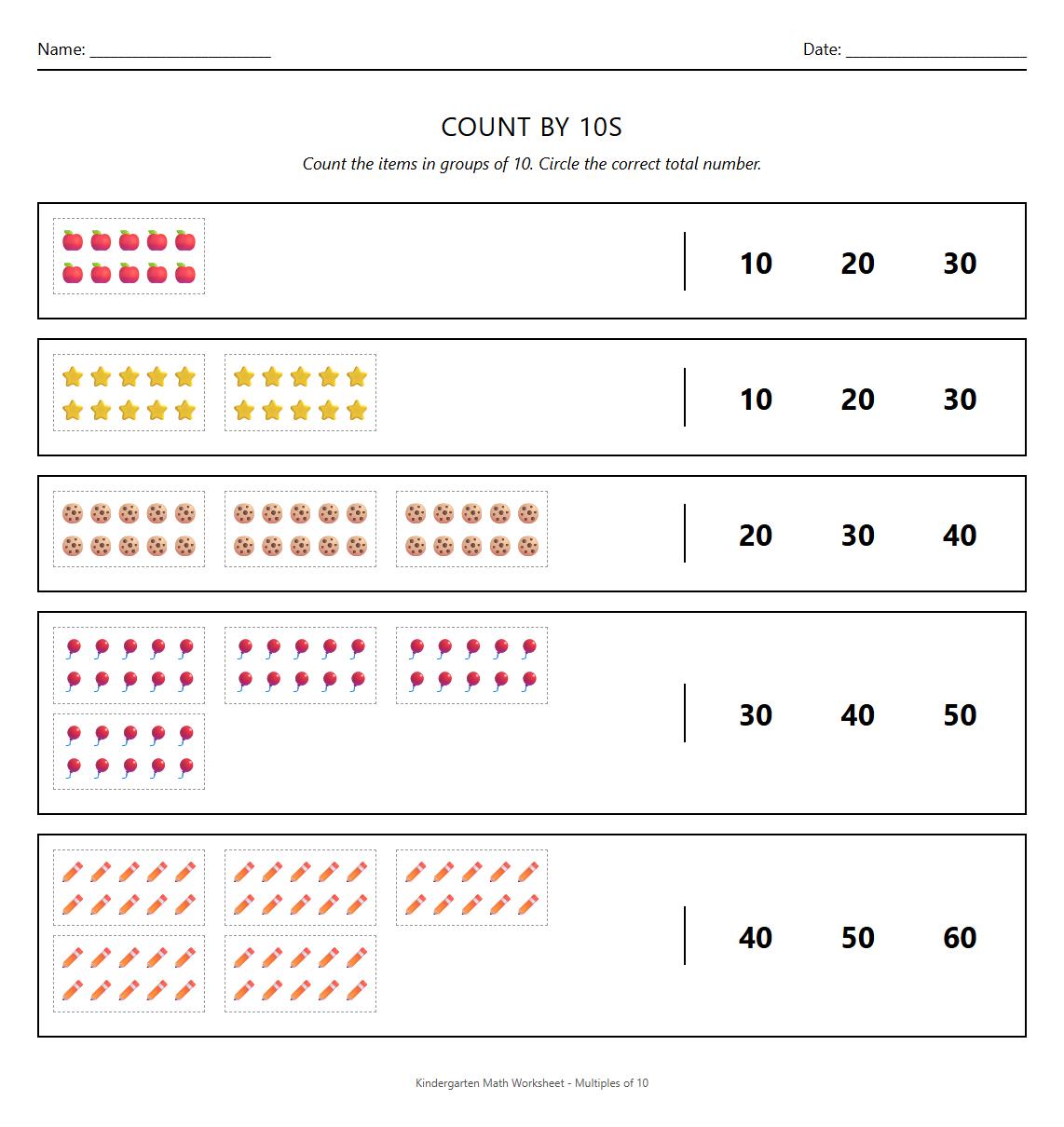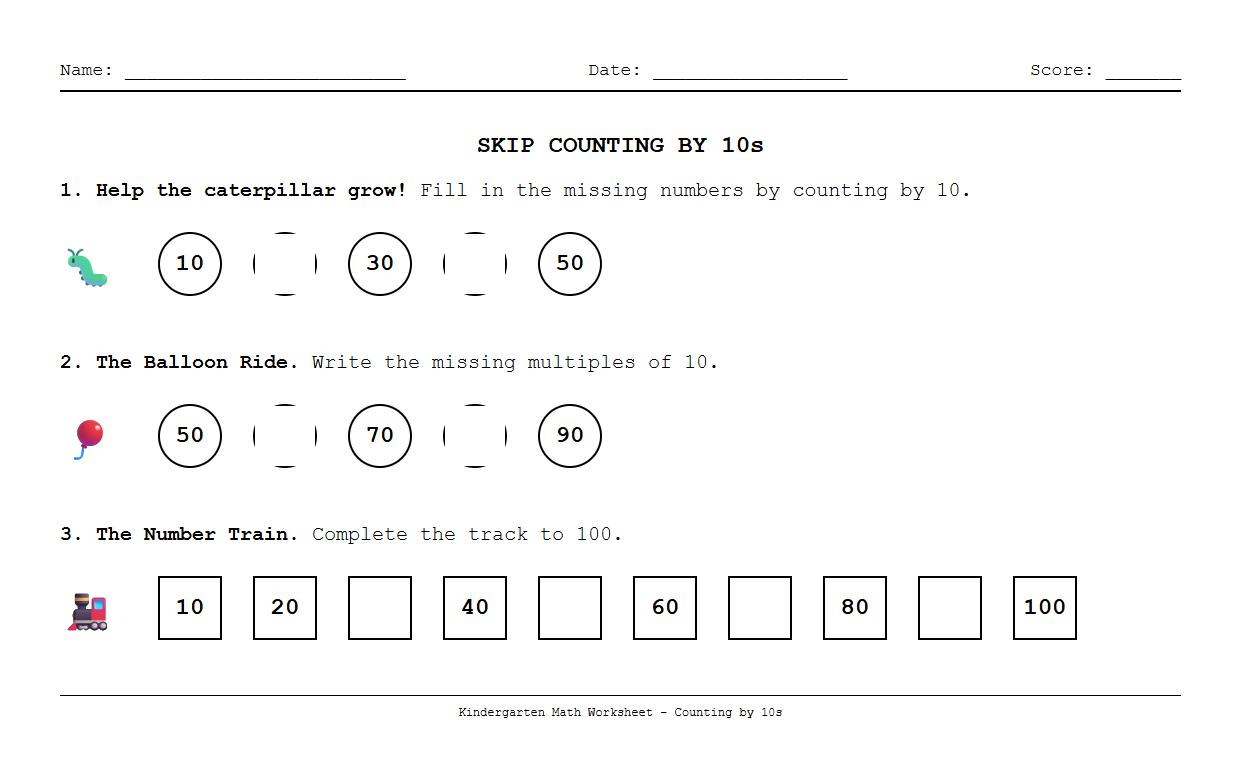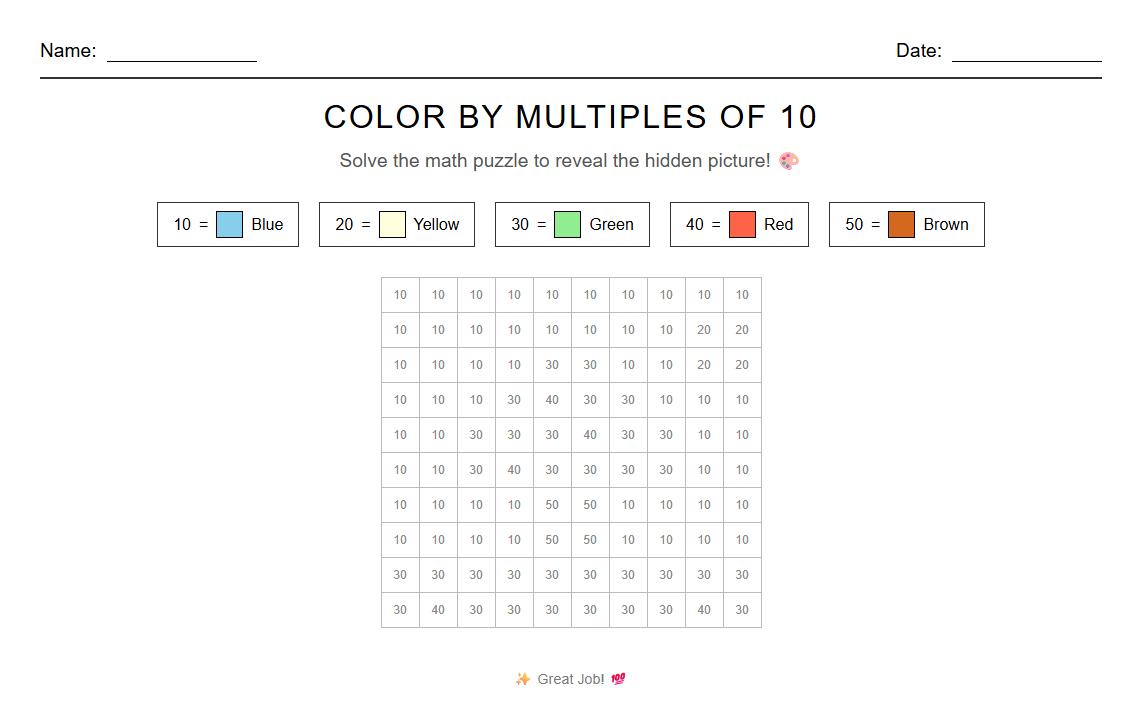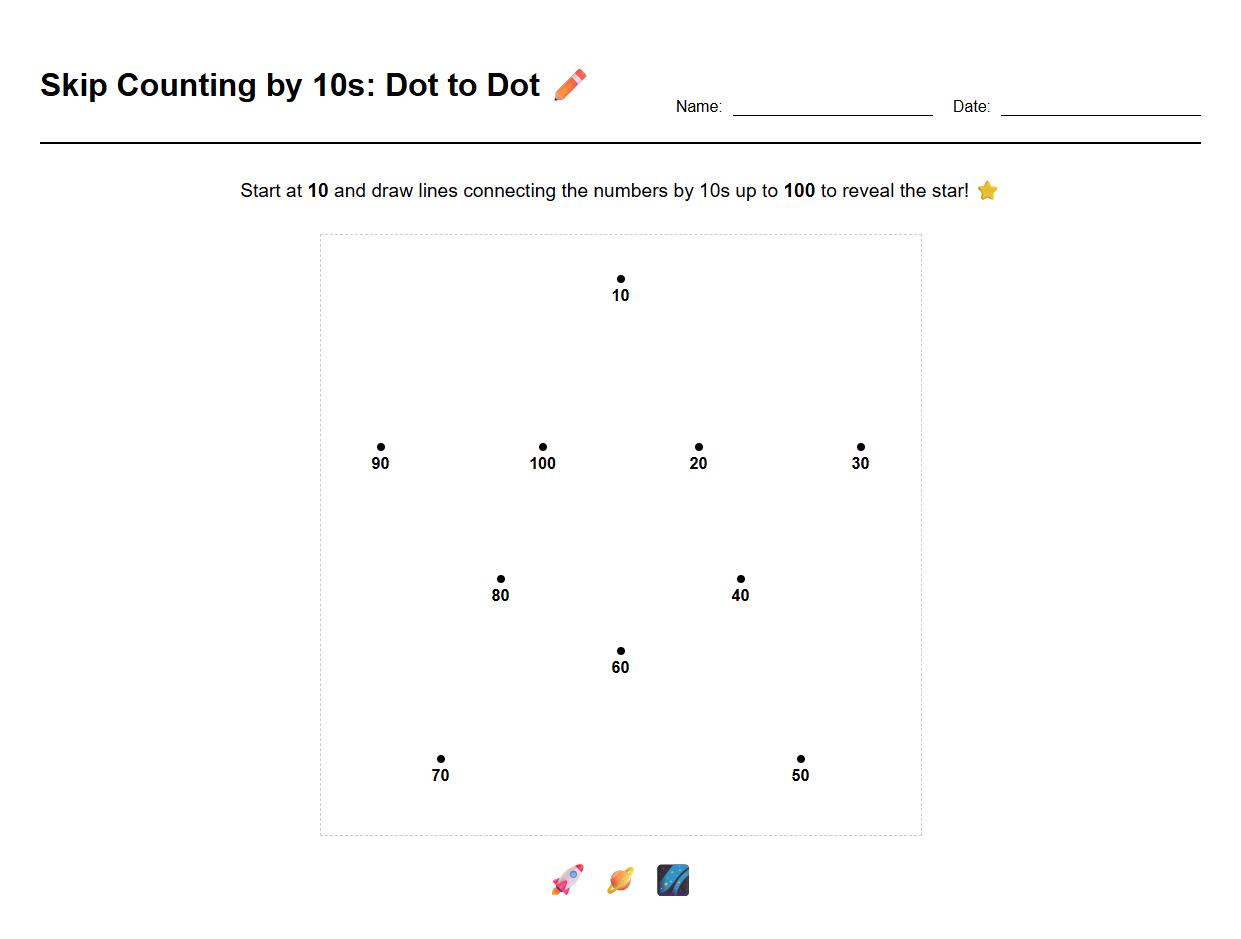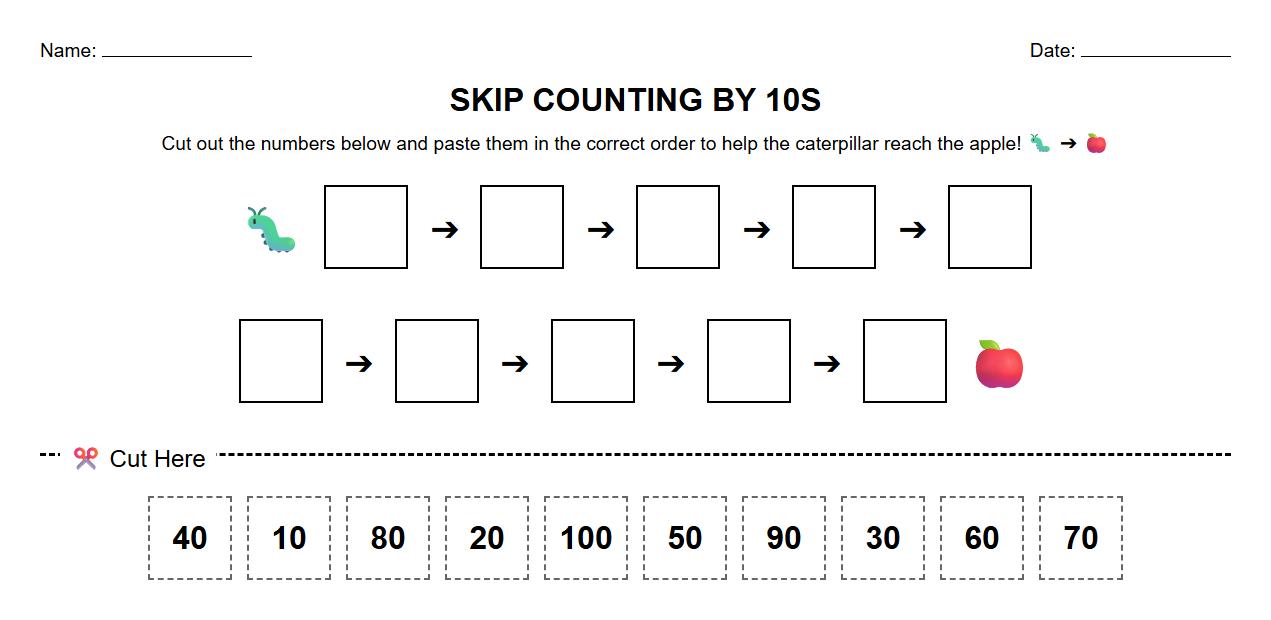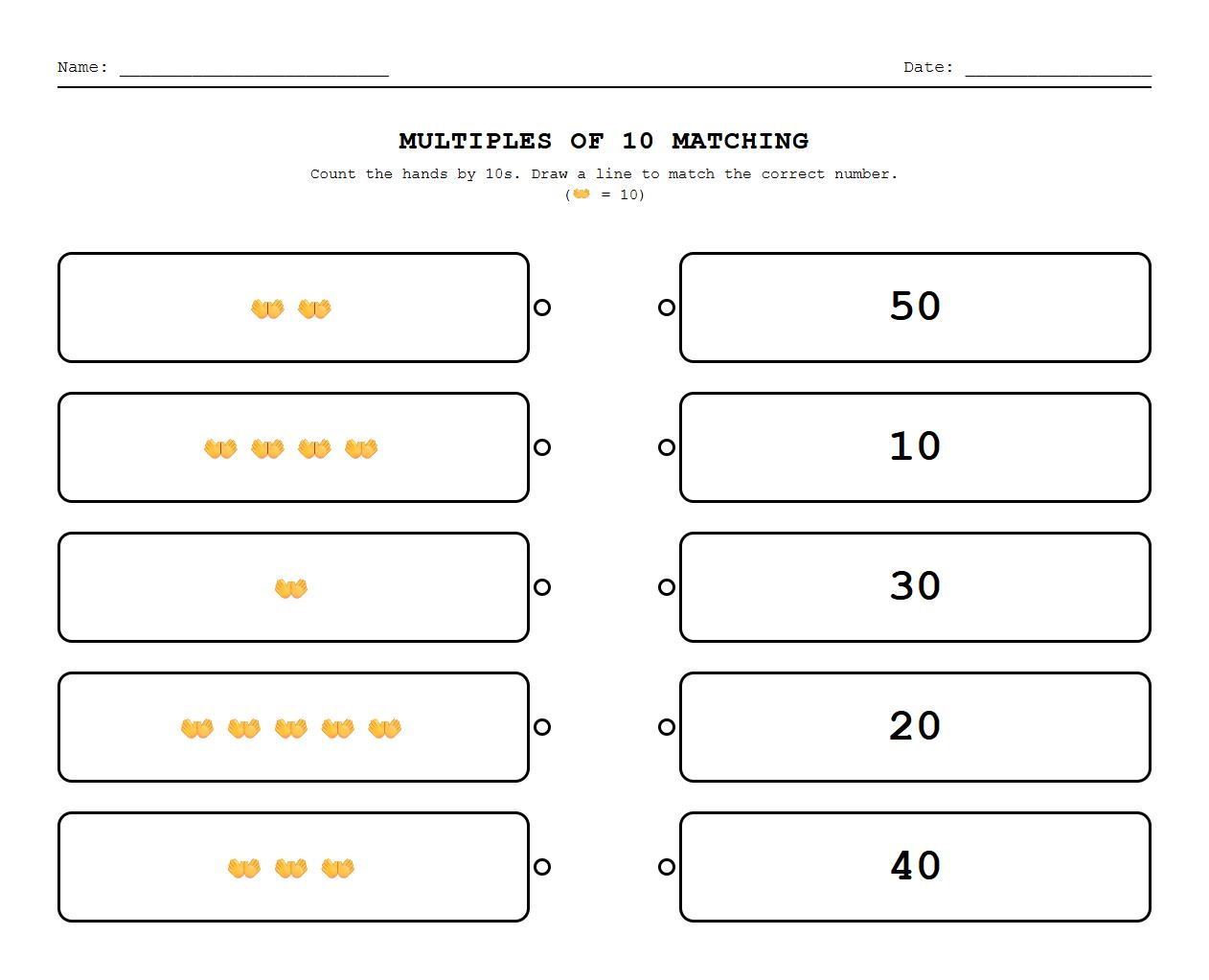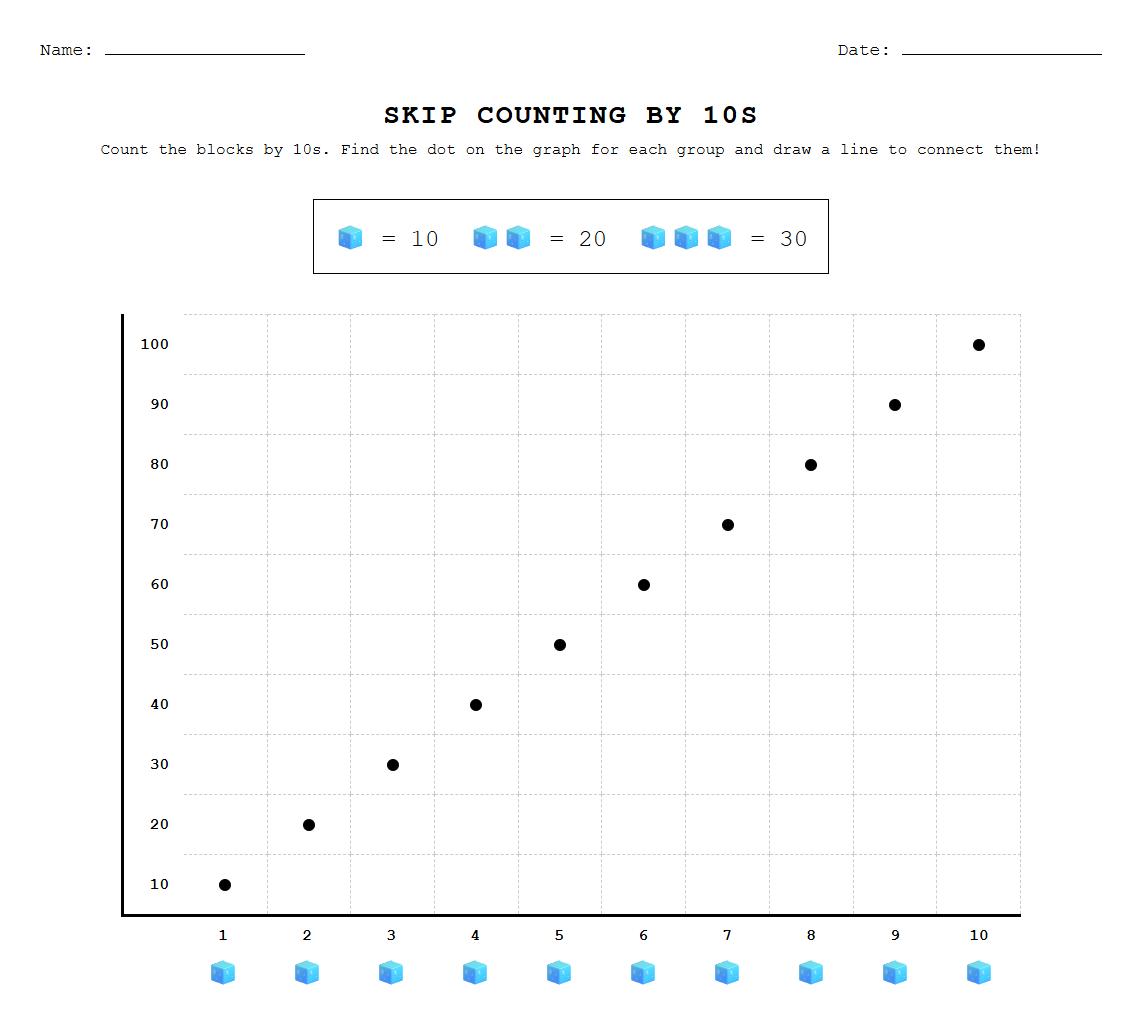
Recognizing multiples and practicing skip counting by 10s helps children build a strong foundation in multiplication and number patterns. This worksheet provides engaging exercises where kids identify and count multiples of 10, enhancing their numerical fluency. Explore the available worksheets to support your child's learning journey in mastering skip counting by 10s.
What number comes after 10 when skip counting by tens?
When you skip count by tens, you add 10 to the previous number. After 10, the next number in the sequence is 20. This pattern helps children recognize the increasing sequence of tens.
Write the next three numbers after 30 in a sequence counting by tens
Starting at 30 and skip counting by tens, the next numbers are 40, 50, and 60. This sequence strengthens the understanding of intervals and repetition in numbers. Encourage students to say these numbers aloud for better retention.
Which numbers will you say if you start at 20 and skip count by tens up to 100?
Starting at 20 and skip counting by tens, the numbers are 20, 30, 40, 50, 60, 70, 80, 90, and 100. This helps children recognize patterns in numbers and introduces counting in steps. Counting aloud supports both memory and pronunciation.
If you are skip counting by tens, which number comes before 50?
In a sequence where you skip count by tens, the number before 50 is 40. Understanding the order in skip counting helps children with backward and forward counting skills. It also reinforces number relationships.
Circle the numbers that belong in the pattern 10, 20, 30, 40
The numbers belonging to the pattern 10, 20, 30, 40 are those increasing by tens. These numbers form a clear sequence that children can recognize and circle easily. Recognizing these patterns improves number sense.
Color all the multiples of ten in this row of numbers
Multiples of ten include 10, 20, 30, 40, 50, and so forth. Coloring these multiples helps children visually distinguish important number groups. This activity builds strong arithmetic foundations through visual learning.
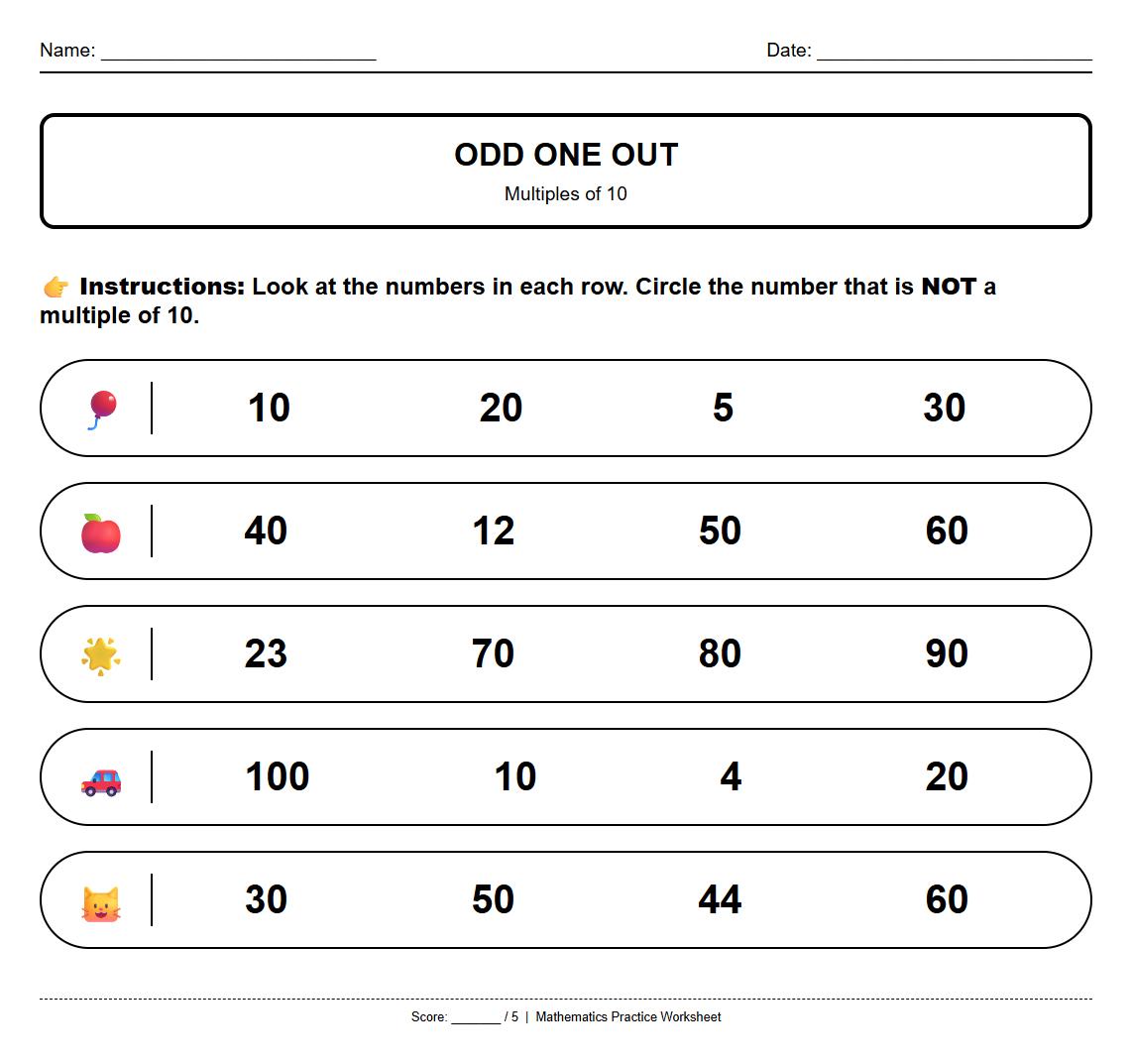
Which of these numbers is not a multiple of ten: 40, 25, 60, 80?
The number that is not a multiple of ten is 25. All other numbers end with zero, signifying multiples of ten. Identifying exceptions helps students better understand patterns in numbers.
Fill in the missing numbers 10, 20, __, 40, 50
The missing number in the sequence is 30. This completes the skip counting by tens sequence. Filling missing numbers supports children's ability to recognize and predict number patterns.
Can you find the mistake in this sequence 10, 20, 25, 40, 50?
The mistake is 25, which breaks the skip counting by tens pattern. The correct number should be 30 to maintain the sequence. Identifying such errors sharpens children's attention to numeric patterns.
If you start at zero and skip count by tens five times, what number will you reach?
Starting at zero and skip counting five times by tens, you will reach 50. Each skip adds ten, showing steady numerical progression. This exercise reinforces counting skills and number sequencing.


Interactive Skip Counting by 2s Worksheet for Kindergarten Grade