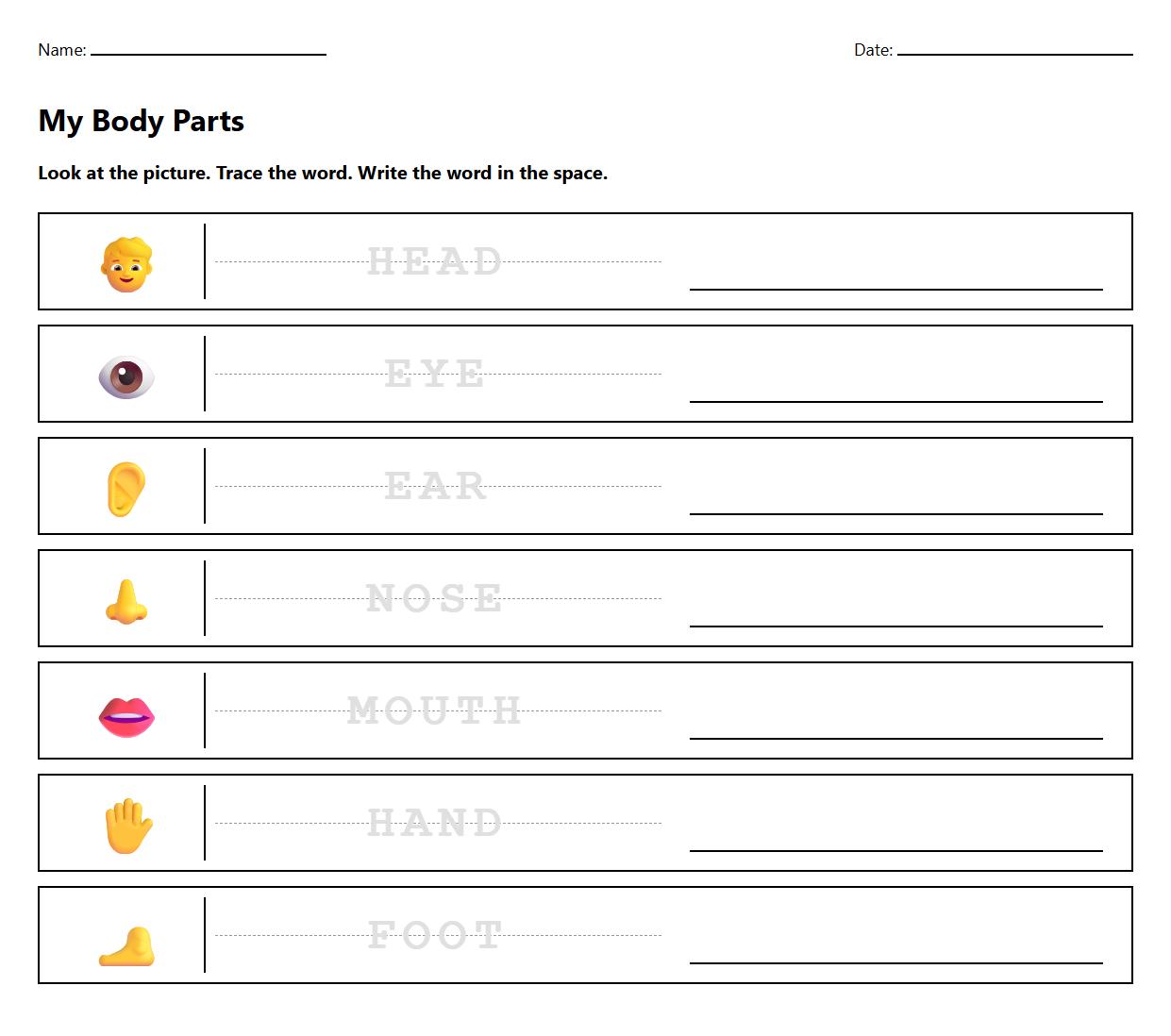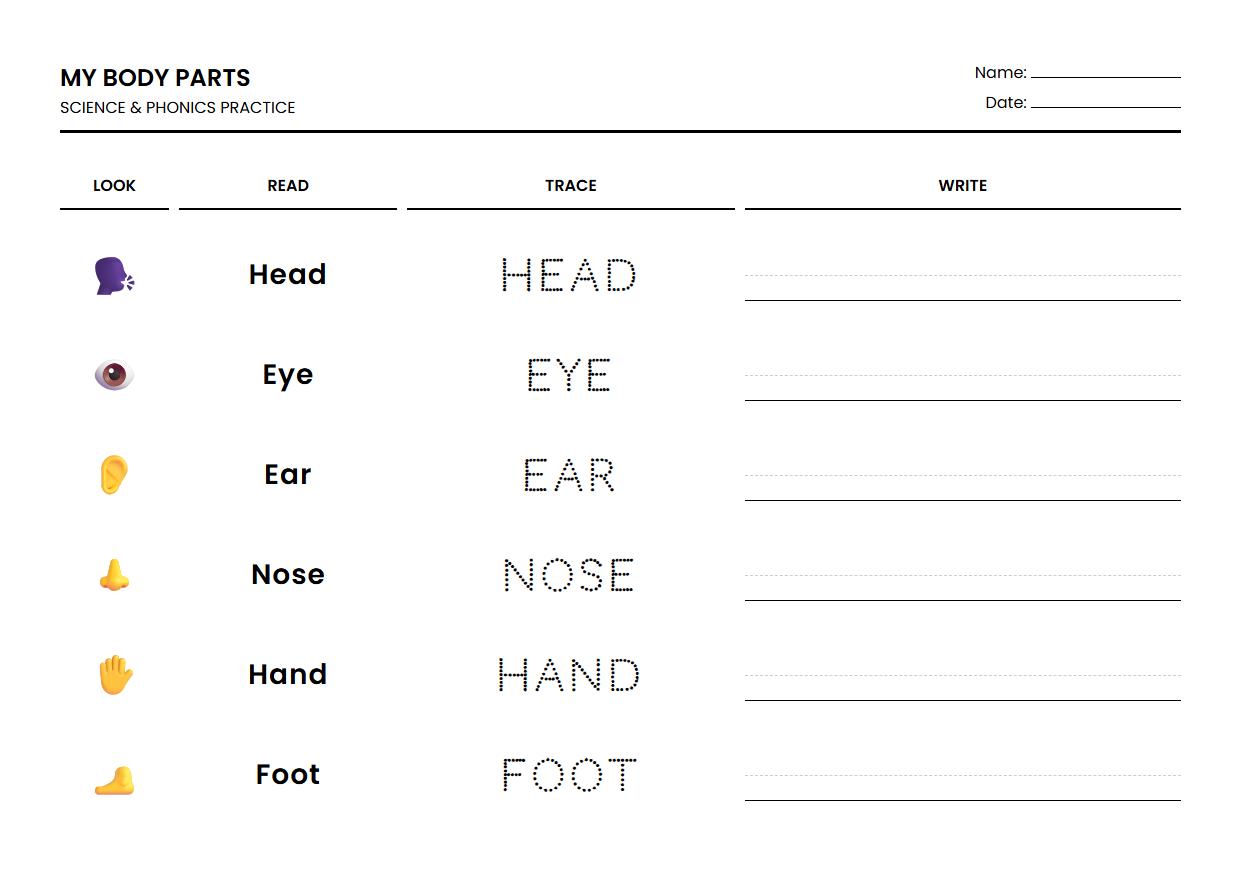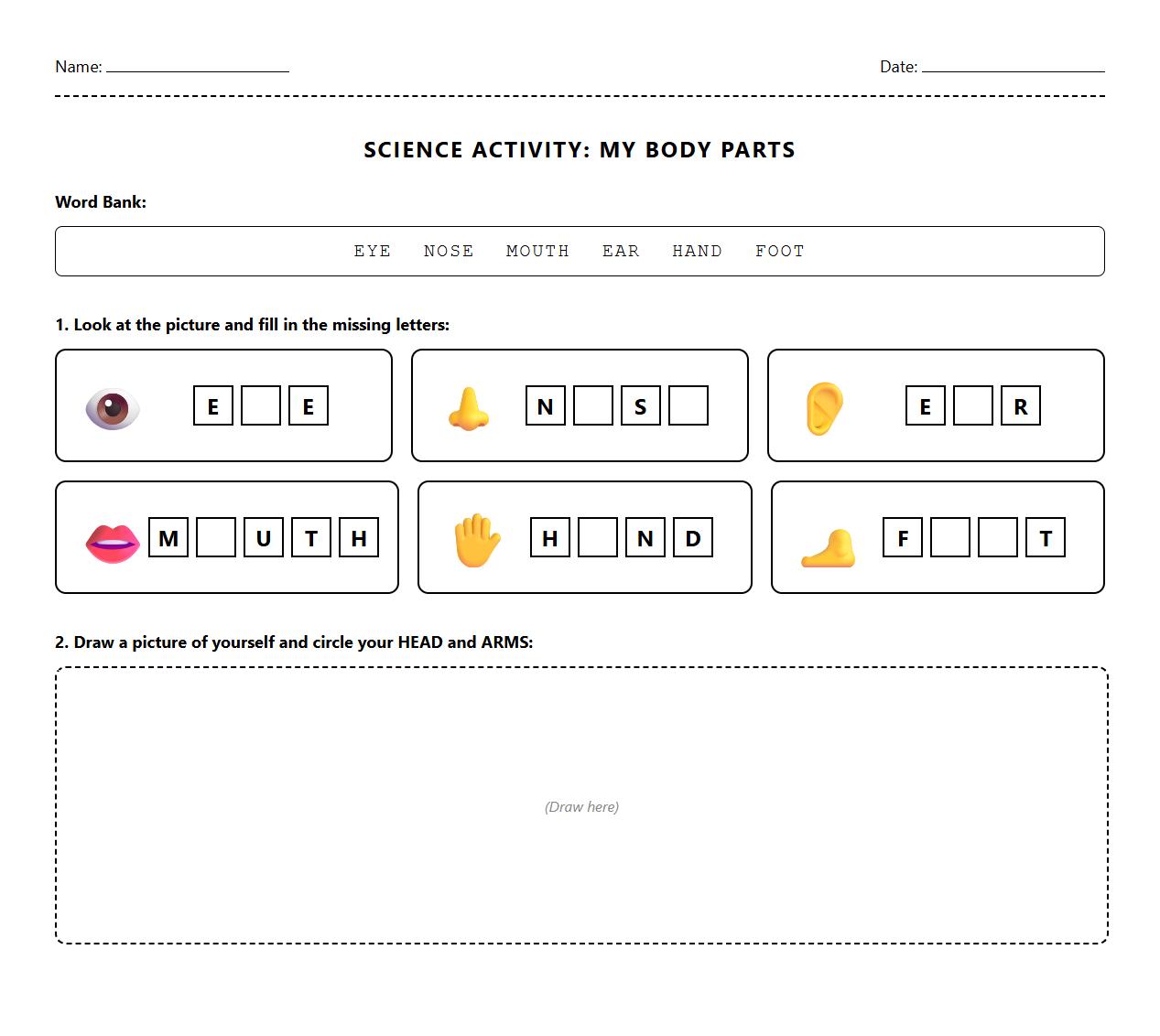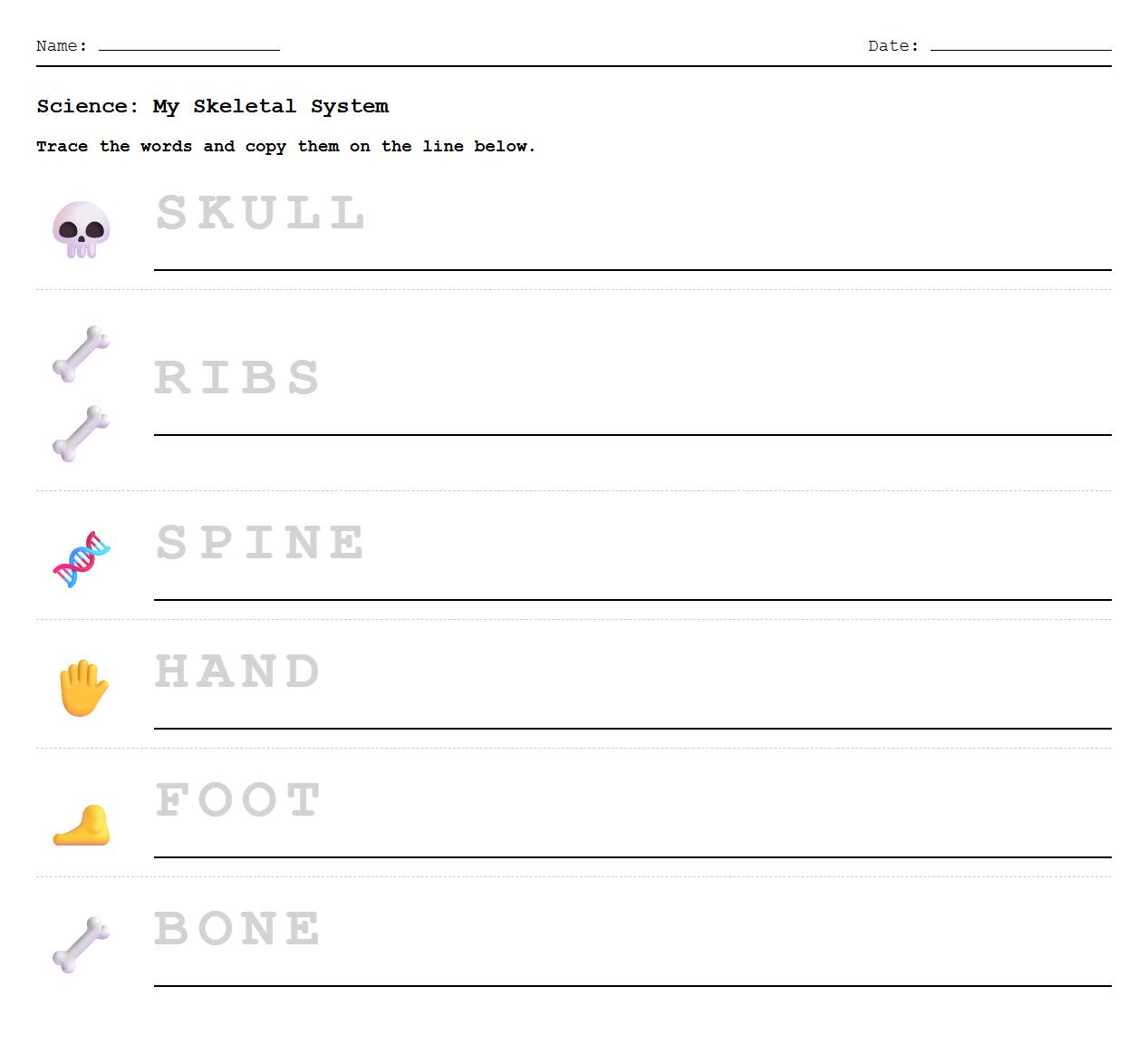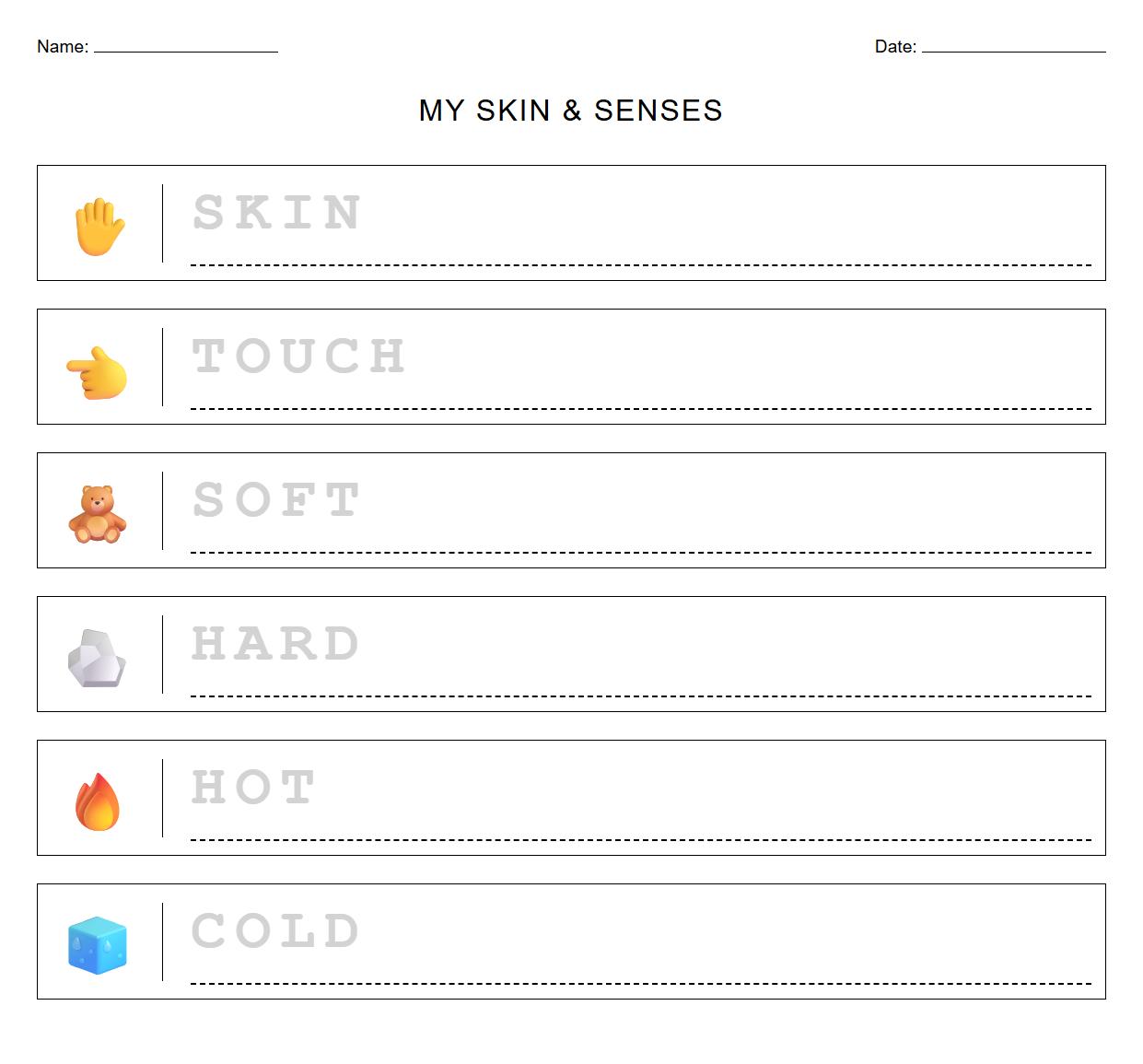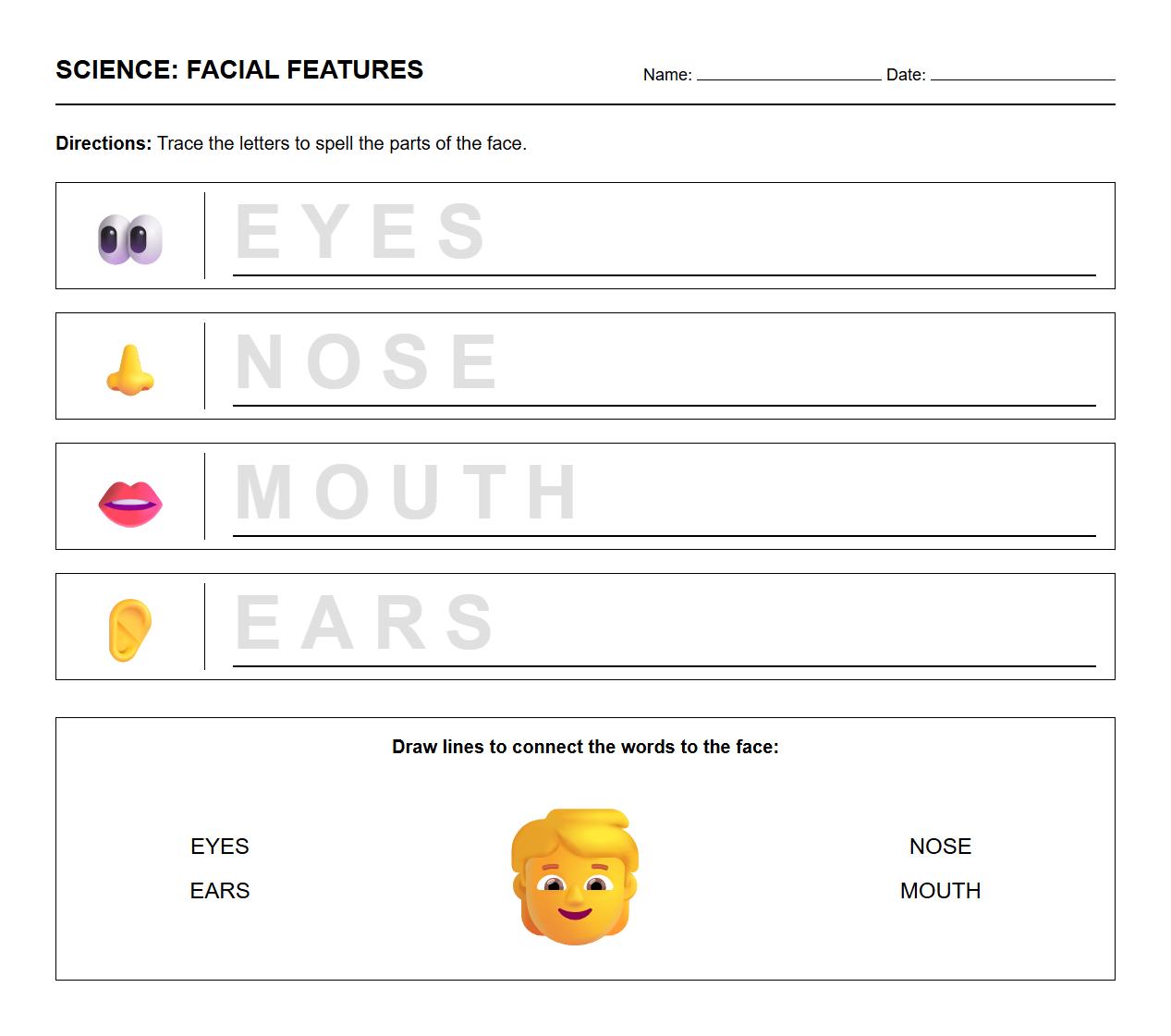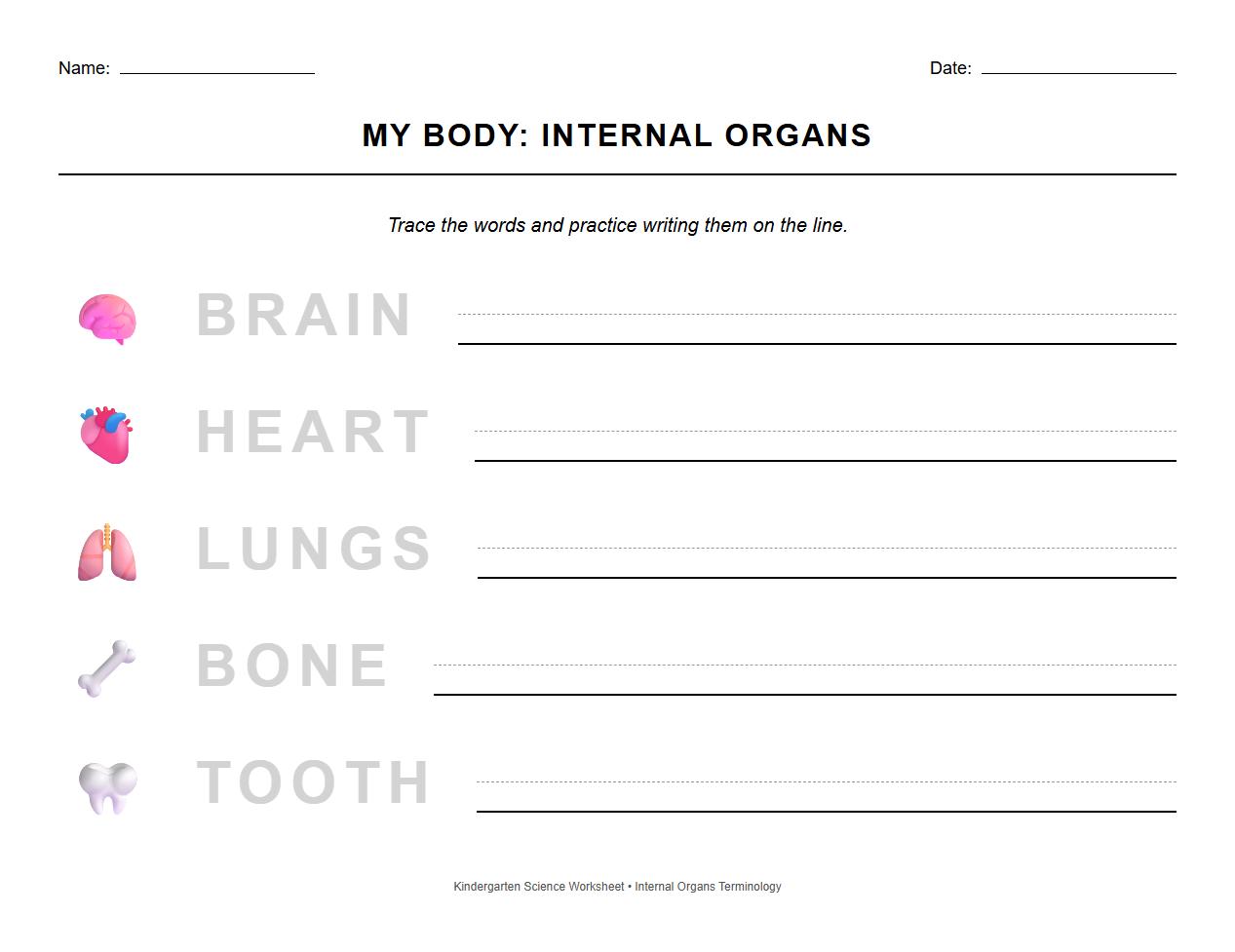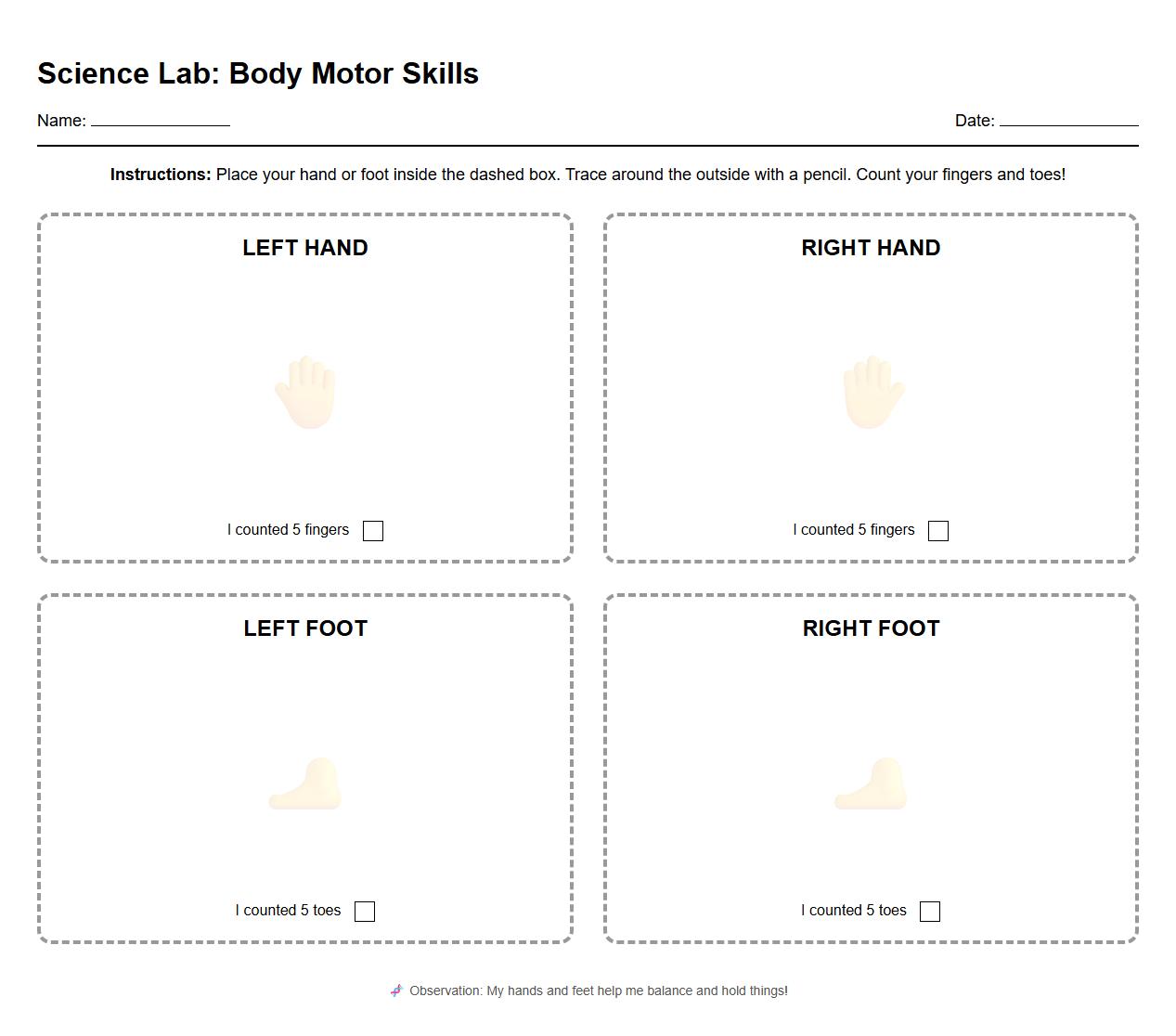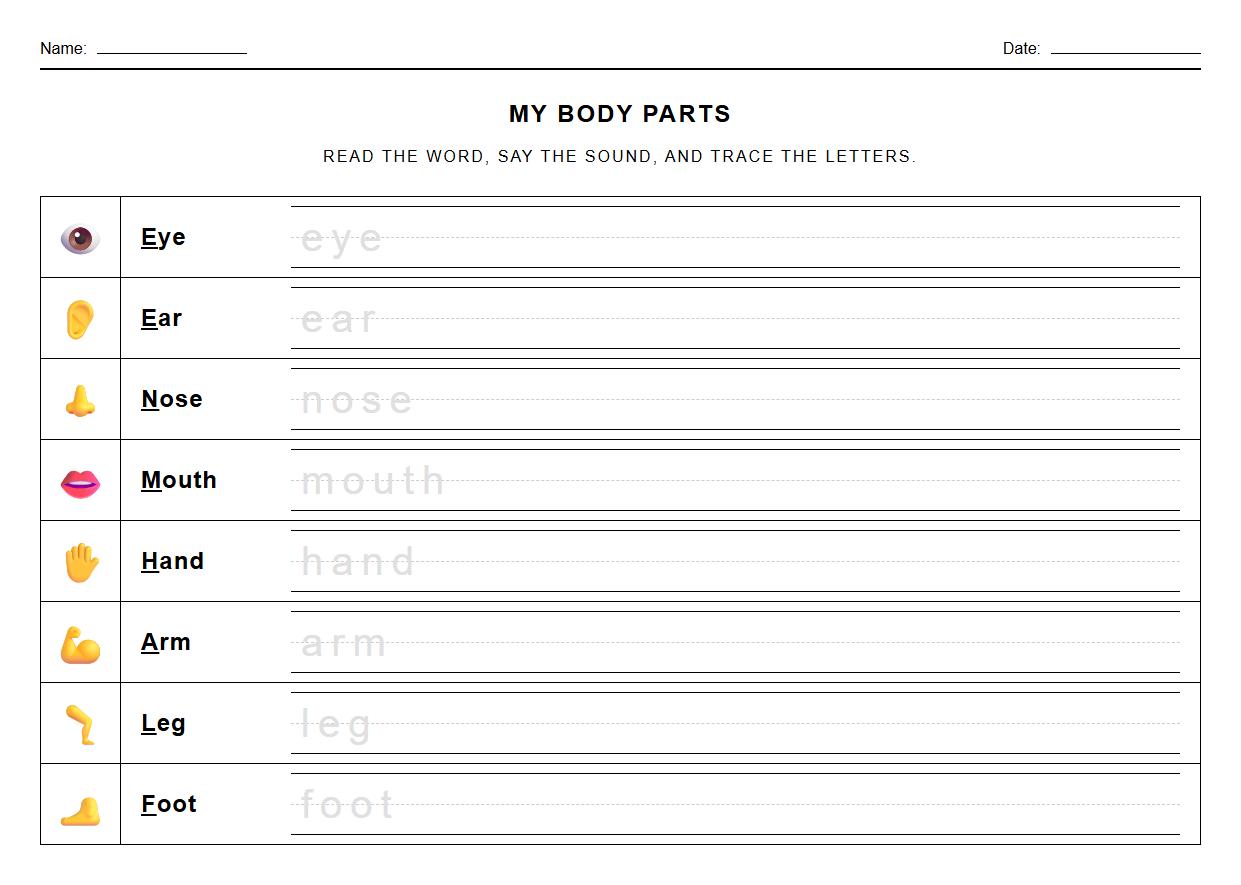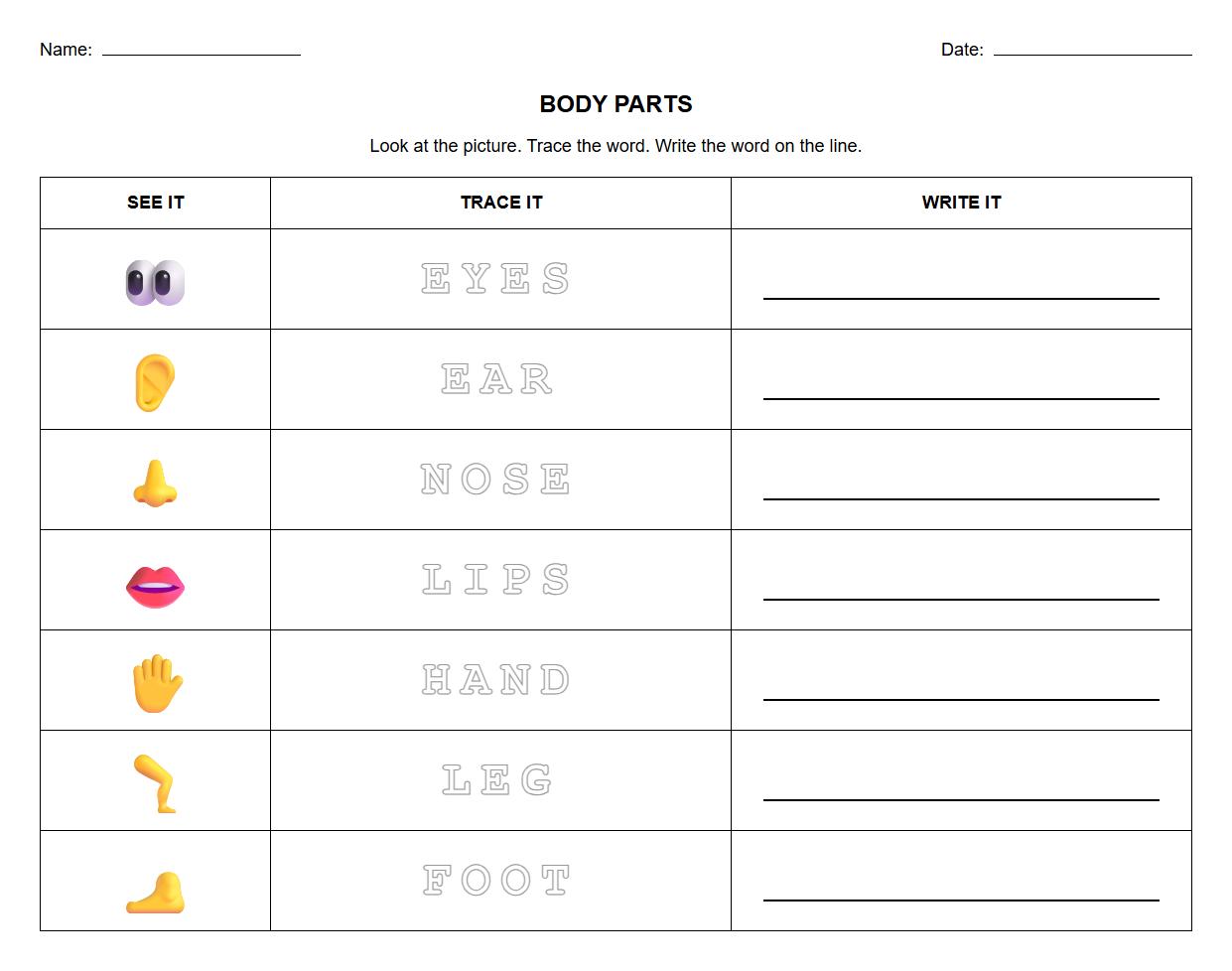
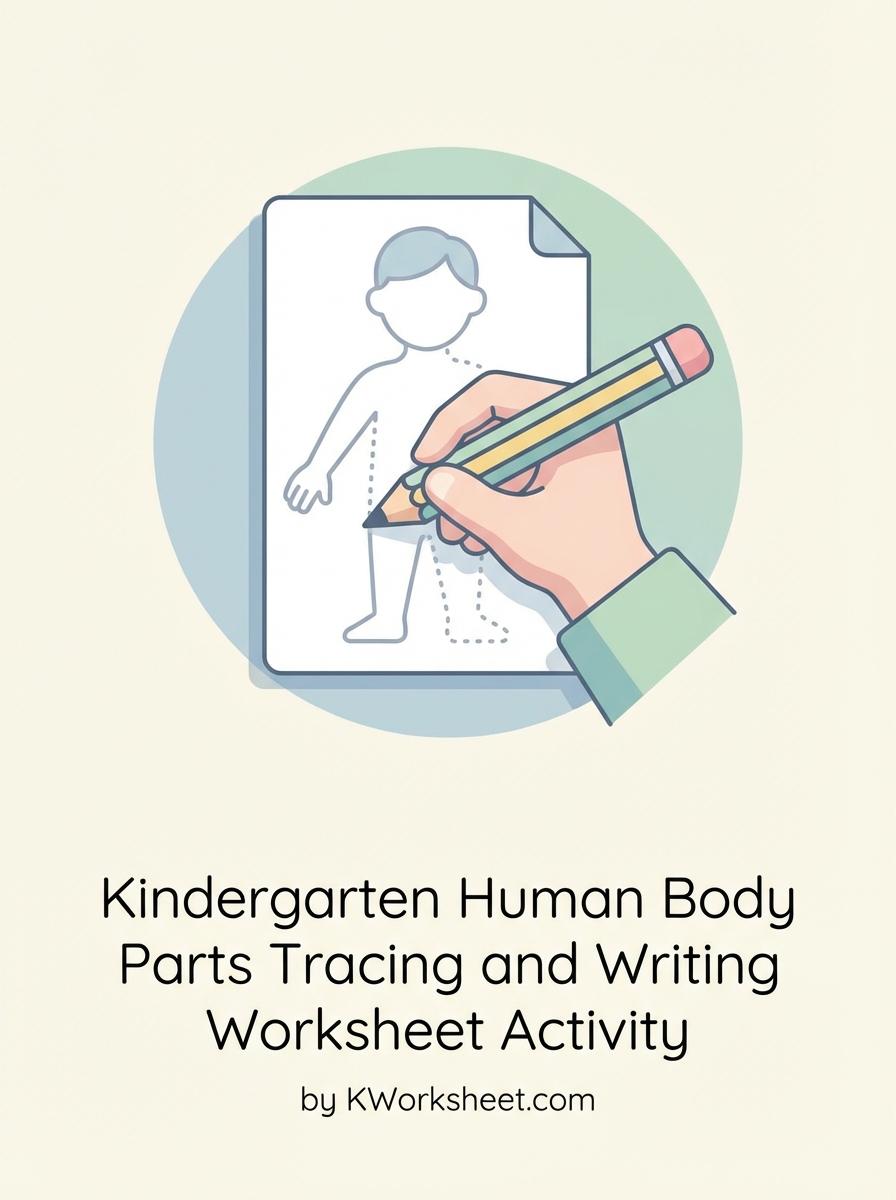
Kindergarten Human Body Parts Tracing and Writing Worksheet Activity enhances fine motor skills and familiarizes young learners with essential body parts through engaging tracing exercises. This hands-on approach fosters early literacy and anatomy awareness by combining writing practice with visual recognition. Explore our collection of worksheets designed to support your child's developmental journey.
What Body Part Do You Use to See?
Eyes are the body parts you use to see the world around you. They help you recognize colors, shapes, and movements. Teaching children about their eyes helps them understand how important vision is in daily life. Encourage them to look closely and describe what they see.
Trace and Write the Word Hand
Tracing the word hand helps children improve their writing skills and letter recognition. Use fun worksheets where kids can follow the dotted lines to form the word. This activity enhances their fine motor skills and spelling abilities. Praise their effort to make learning enjoyable.
Where Is Your Elbow Located?
The elbow is the joint in the middle of your arm that helps it bend. It is located between the shoulder and the wrist. Kids can touch and wiggle their elbows to understand where it is. This knowledge builds body awareness and coordination for young learners.
What Body Part Do You Use to Smell?
Your nose is the special body part that helps you smell different scents around you. It detects pleasant smells like flowers and warns you of bad odors. Teaching children about the nose encourages them to explore their surroundings safely. You can play scent games to make this fun and interactive.
Find and Trace Your Knees
Children can find their knees by bending their legs and touching the middle joint. Tracing the word "knees" on their worksheets helps connect the body part to the written word. This task combines physical movement with literacy skills. It supports both body awareness and reading readiness.
What Helps You Hear Sounds?
Your ears are the incredible body parts that let you hear sounds around you. They pick up voices, music, and nature sounds to keep you informed and entertained. Teaching children about ears improves their understanding of senses and communication. Encourage good ear care habits as well.
Write the Word Head on Your Worksheet
Writing the word head helps children practice their handwriting and spelling simultaneously. Using worksheets with dotted letters for tracing can make learning easier and engaging. Repeating this exercise strengthens their memory and fine motor skills. Celebrate their progress to boost confidence.
Which Body Part Helps You Walk?
Your legs are the strong body parts that help you walk, run, and jump. Understanding their function helps children appreciate their movement abilities. Activities that focus on legs encourage physical development and coordination. It's important to combine learning with active play for best results.
Where Are Your Fingers?
Fingers are located at the ends of your hands and help you hold, touch, and explore objects. Teaching kids to count and name fingers builds early math and motor skills. Encourage them to wiggle, touch, and use their fingers during different activities. This strengthens hand-eye coordination and dexterity.
Trace and Write the Word Foot
Tracing the word foot helps children connect the body part with the written language. Worksheets with fun pictures of feet make the activity exciting and relatable. Writing practice boosts their confidence in spelling and handwriting. Combine tracing with physical activities involving feet for better learning.


Magnets and Forces Worksheet for Kindergarten Science Learning