Kindergarten Science Centers Magnet and Force Worksheets

📅 Jun 27, 2025 👤 Nylen Smith

Explore the fundamental concepts of magnets and forces through hands-on activities designed for kindergarten learners. These worksheets promote understanding of magnetic attraction, repulsion, and the effects of force in simple, engaging experiments. Discover our collection of Kindergarten Science Centers Magnet and Force Worksheets to enhance early science education.

Magnetism Exploration Sorting Activity Sheet
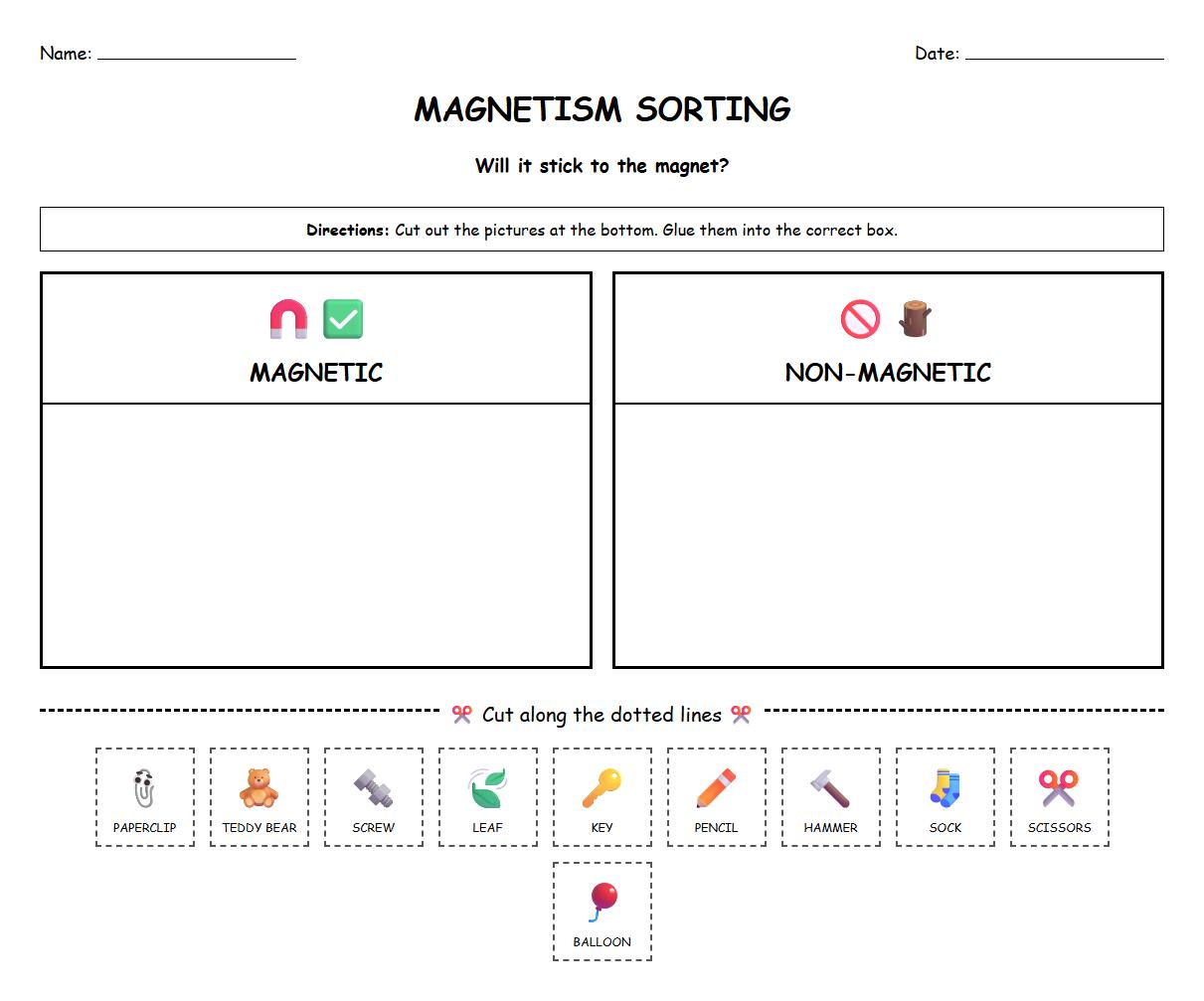
Magnetism Exploration Sorting Activity Sheet

Download PDF     Pin it

Push and Pull Forces Identification Worksheet
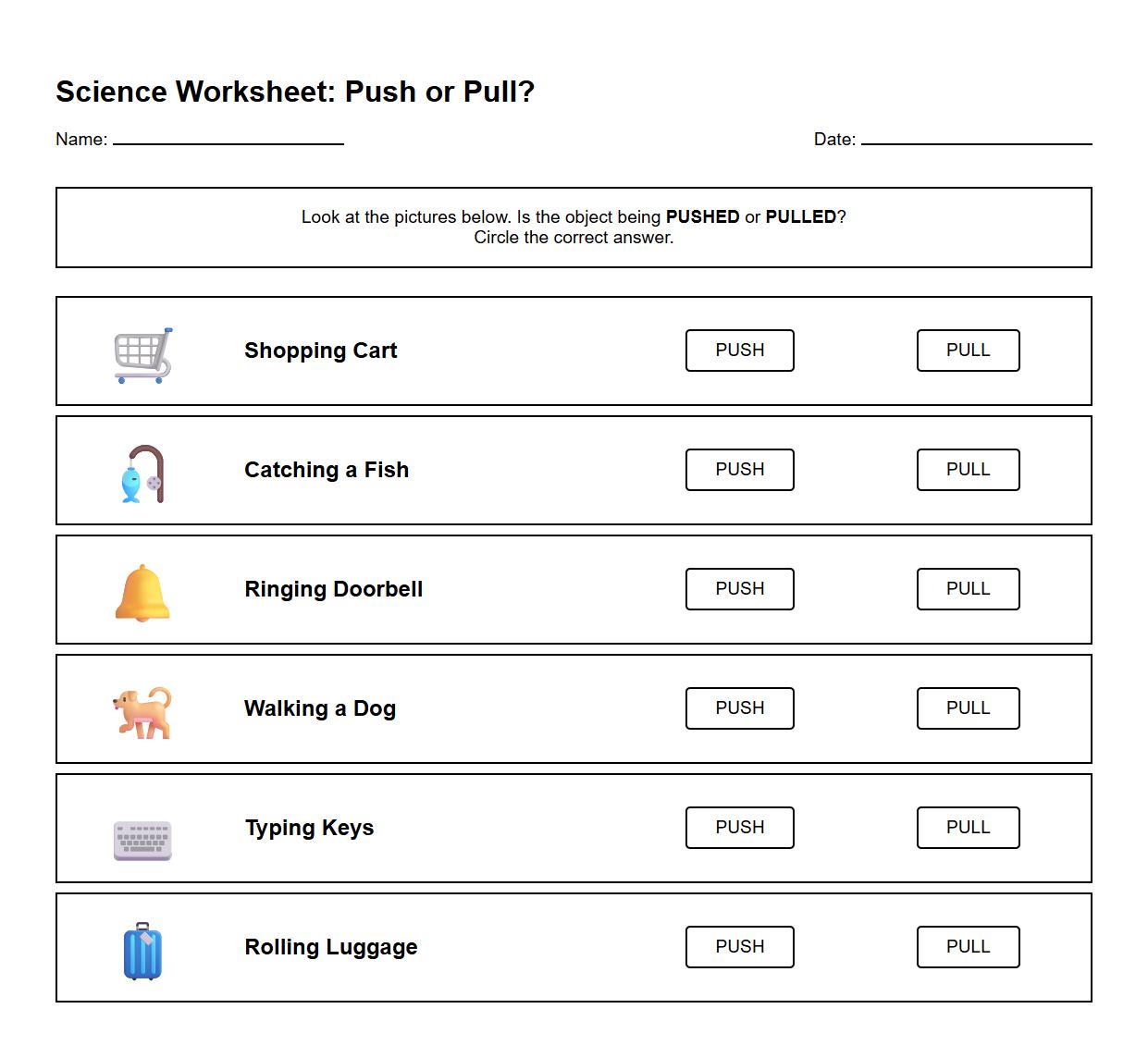
Push and Pull Forces Identification Worksheet

Download PDF     Pin it

Magnetic vs Nonmagnetic Objects Classification Chart
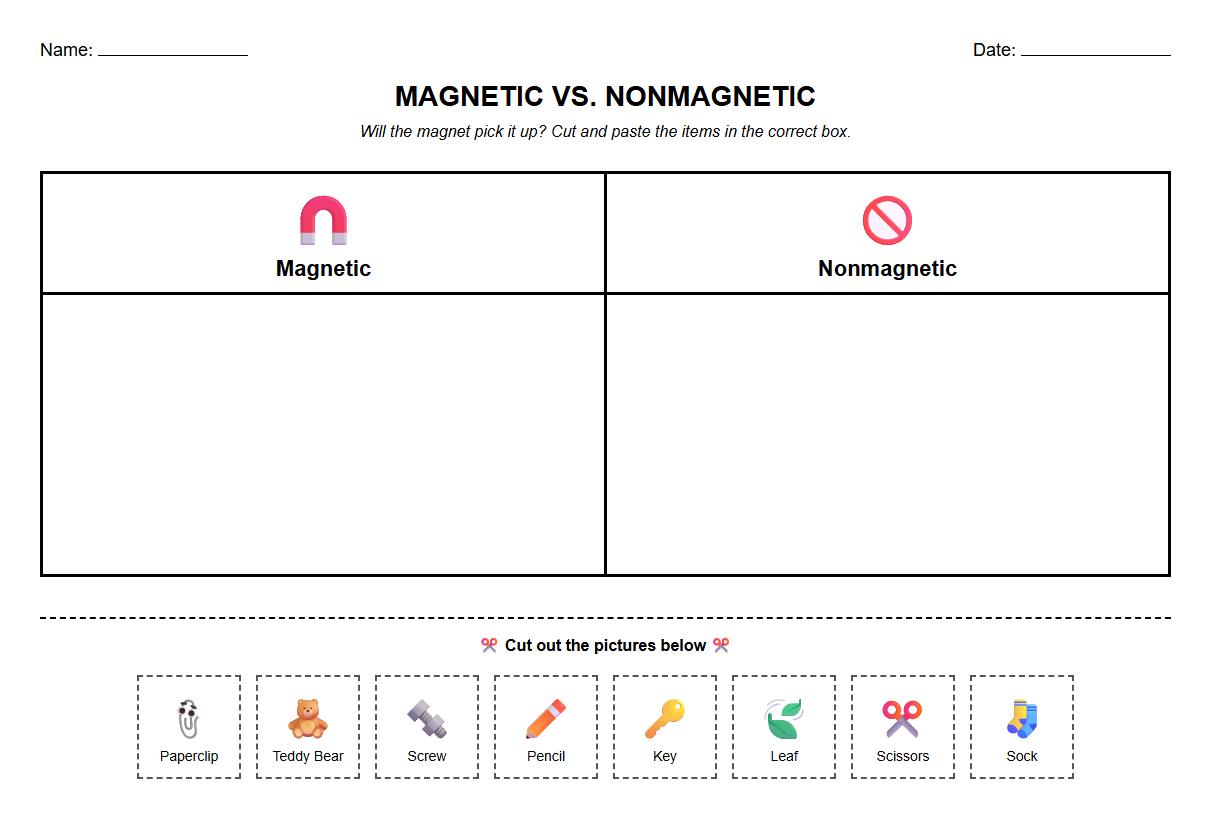
Magnetic vs Nonmagnetic Objects Classification Chart

Download PDF     Pin it

Magnetic Field Mapping Drawing Task
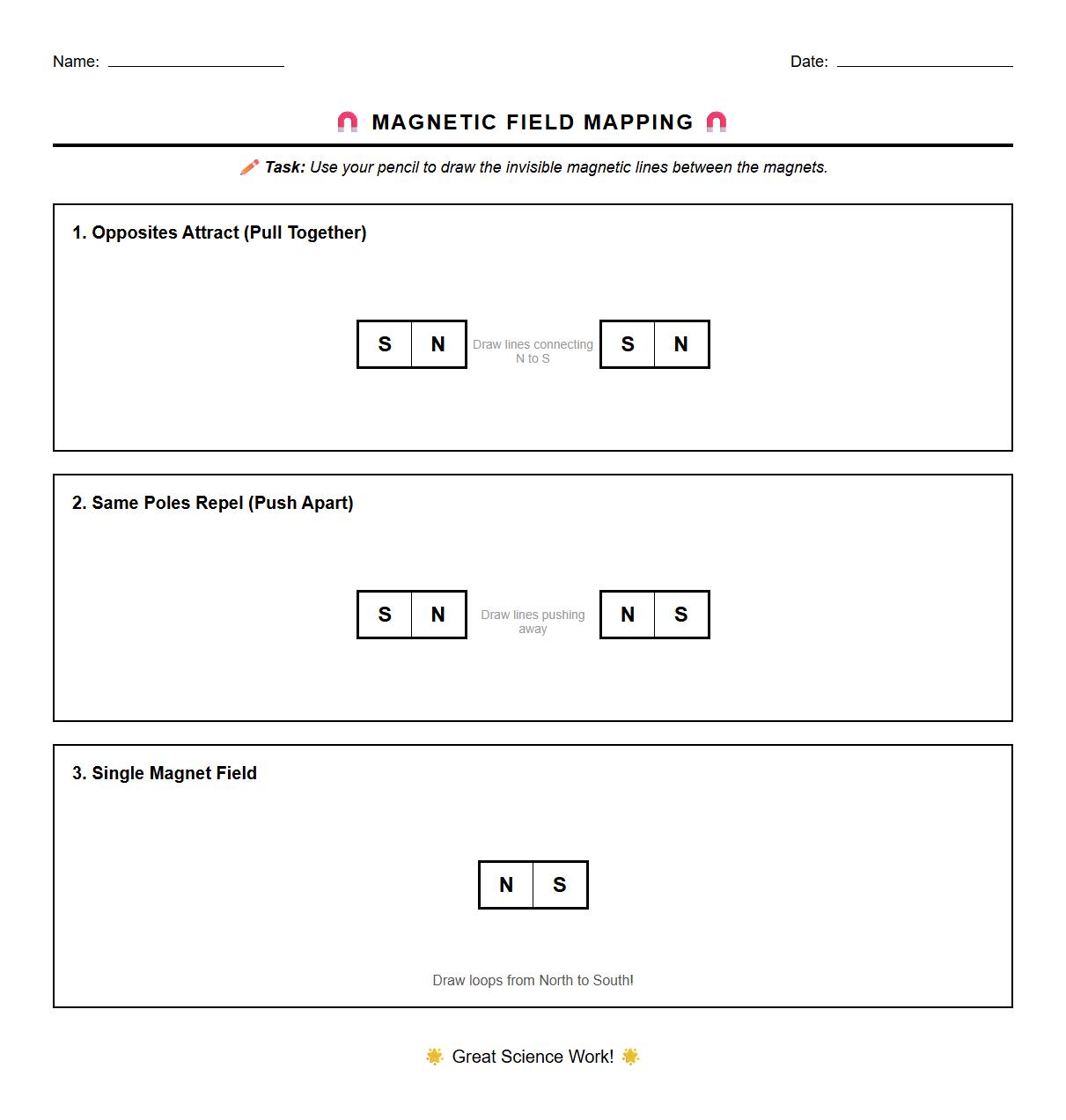
Magnetic Field Mapping Drawing Task

Download PDF     Pin it

Attract and Repel Forces Matching Exercise
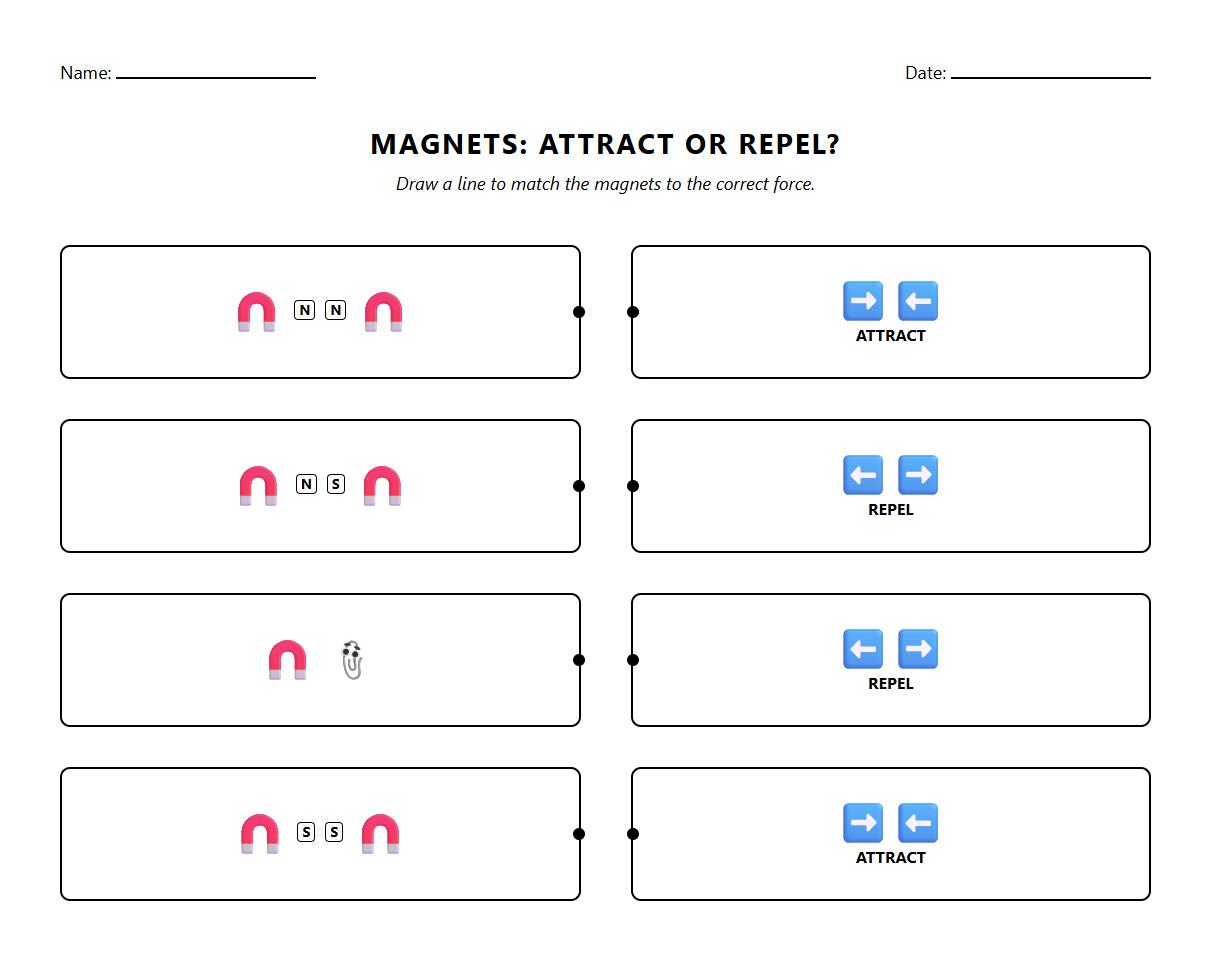
Attract and Repel Forces Matching Exercise

Download PDF     Pin it

Science Vocabulary Phonics Card Cut and Paste
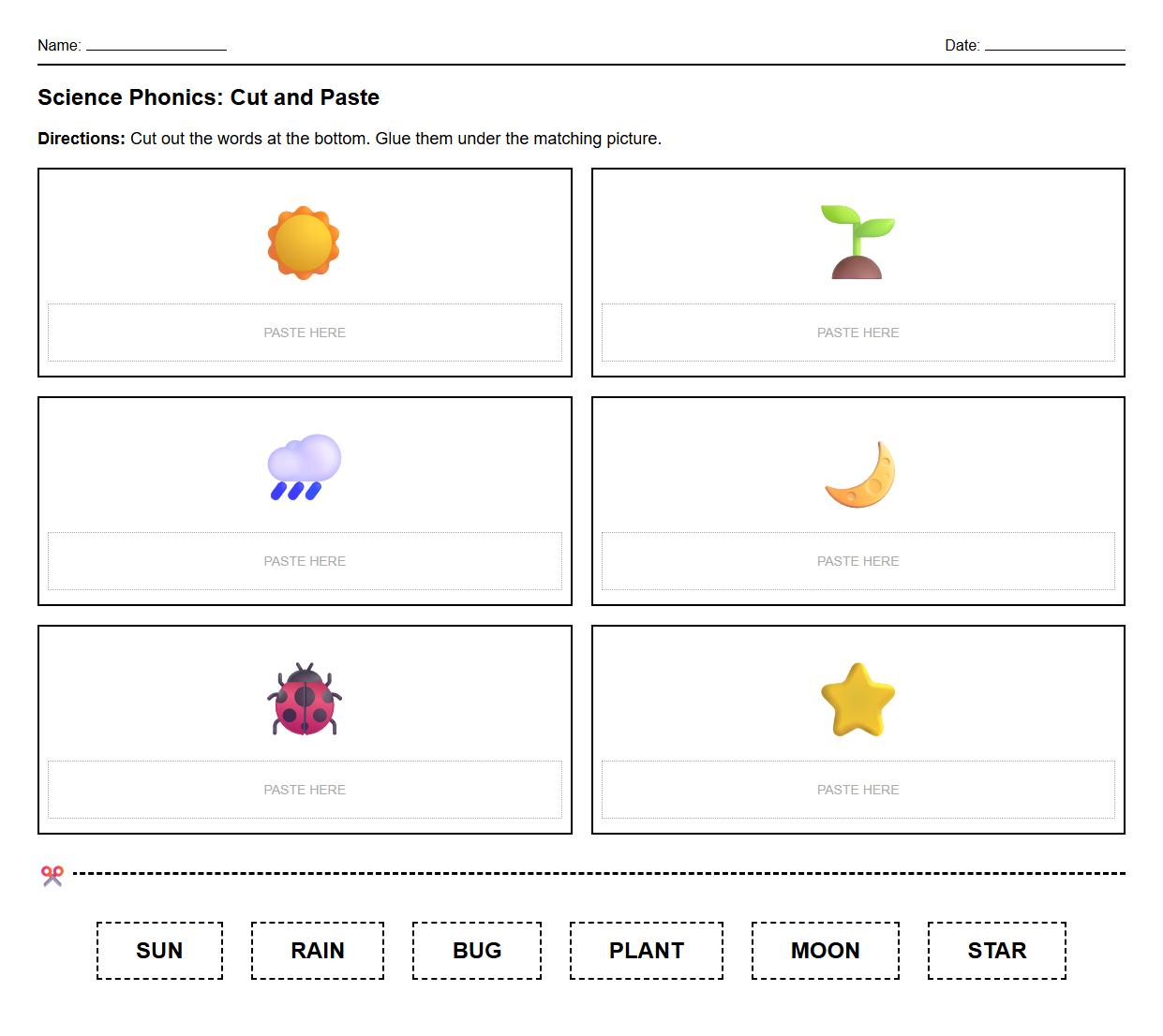
Science Vocabulary Phonics Card Cut and Paste

Download PDF     Pin it

Sink or Float Force Investigation Table
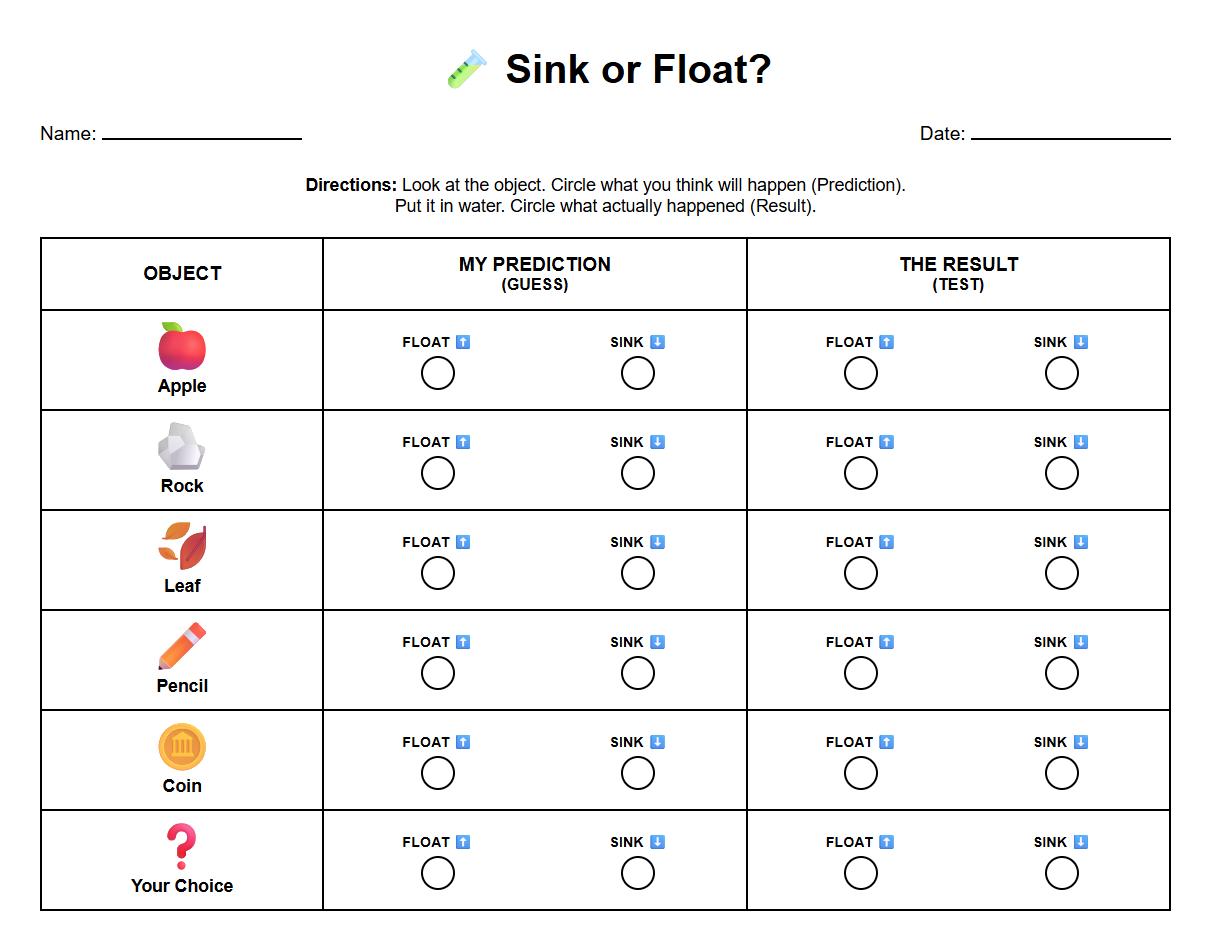
Sink or Float Force Investigation Table

Download PDF     Pin it

Magnet Strength Comparison Recording Sheet
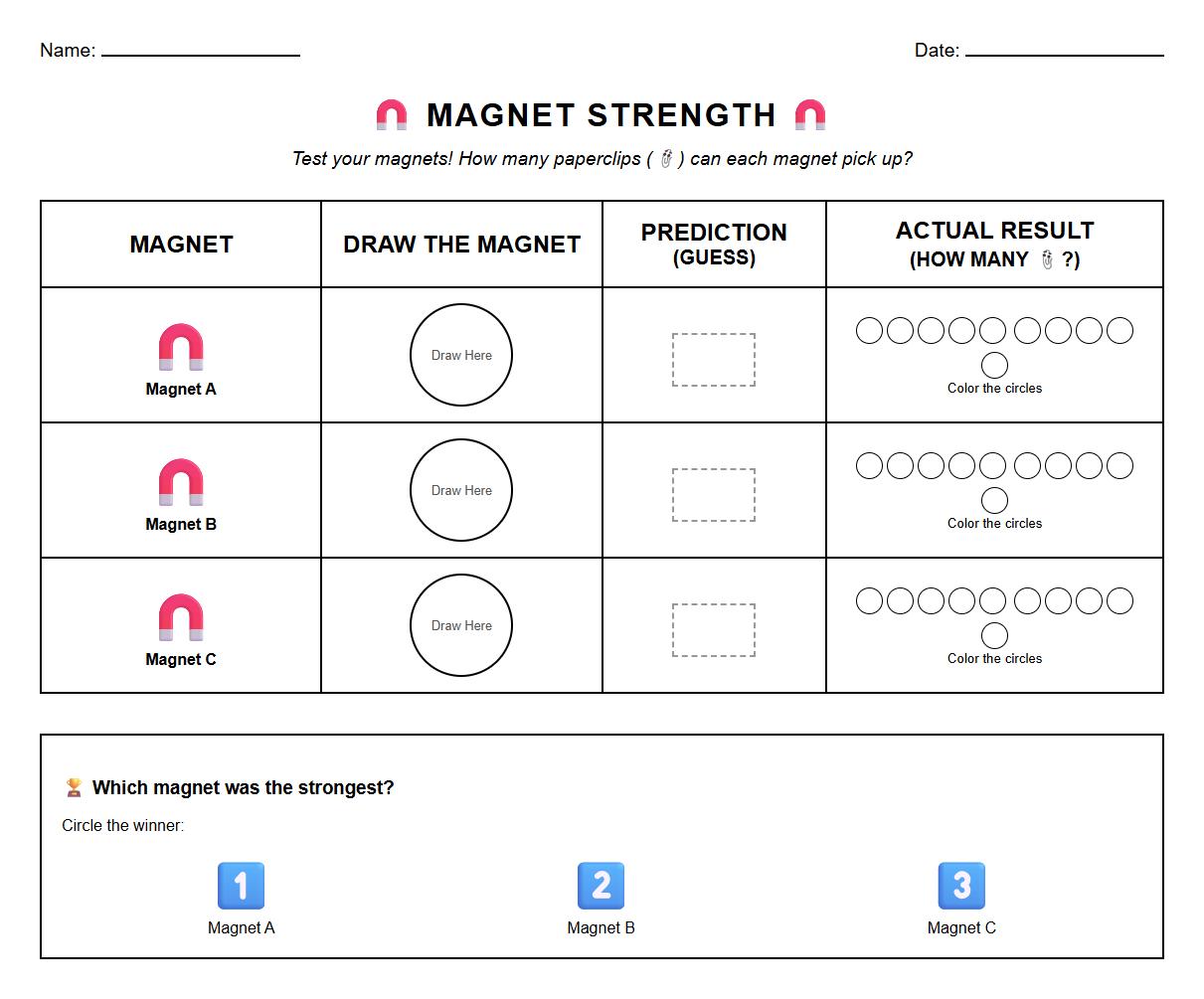
Magnet Strength Comparison Recording Sheet

Download PDF     Pin it

Magnetic Materials Scavenger Hunt Checklist
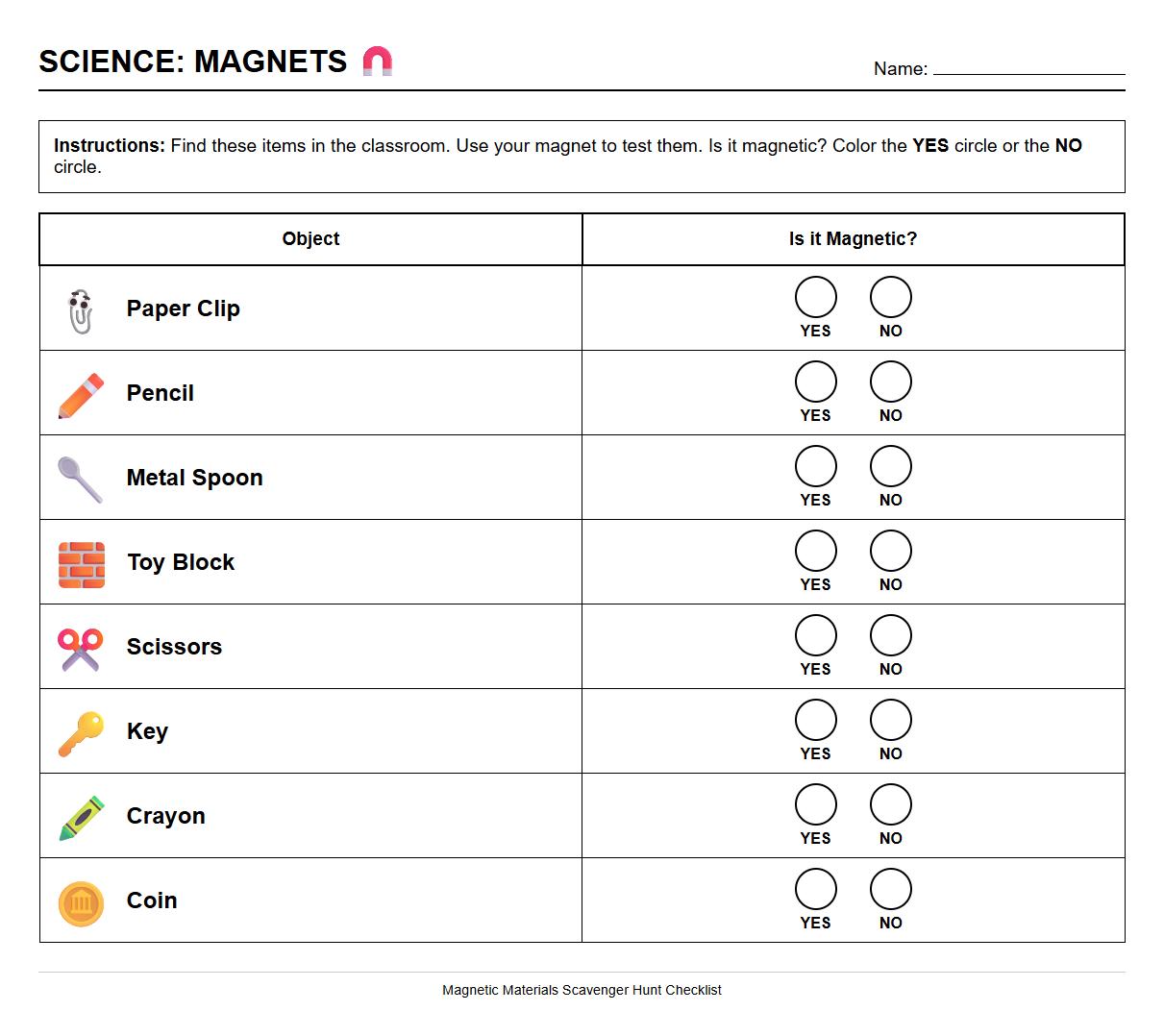
Magnetic Materials Scavenger Hunt Checklist

Download PDF     Pin it

Cause and Effect Forces Scenario Worksheet
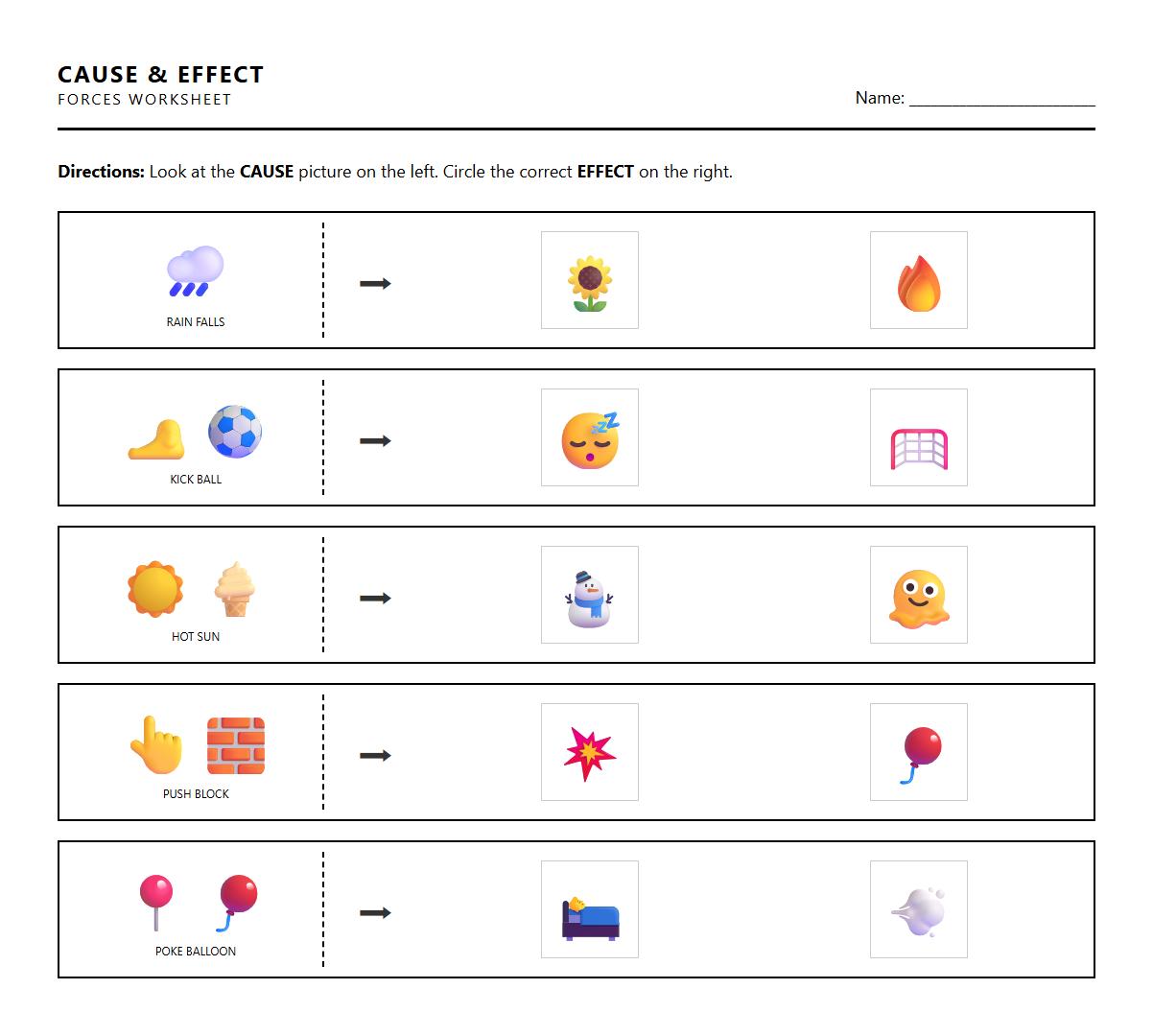
Cause and Effect Forces Scenario Worksheet

Download PDF     Pin it

What Objects in the Classroom Are Attracted to Magnets?

Magnets attract objects made of metal, such as paperclips, nails, and some classroom tools. Items like plastic or wood do not stick to magnets. Encourage children to explore the classroom and find magnetic materials through hands-on discovery. This activity builds observation and critical thinking skills.

How Can You Use a Magnet to Move a Paperclip Without Touching It?

You can move a paperclip by holding a magnet close to it without direct contact. The magnetic force pulls the paperclip toward the magnet, demonstrating invisible attraction. This technique helps children understand non-contact forces in a fun and interactive way. It also encourages them to experiment with distance and strength of the magnet.

What Happens When You Try to Push Two Magnets Together with the Same Poles Facing Each Other?

When you push two magnets with the same poles facing each other, they repel and push away. This shows the concept of like poles repelling in magnetism. It is a great way for children to observe how magnetic forces can both attract and repel. Discussing this helps develop their understanding of magnetic fields.

Can a Magnet Pick Up Plastic or Wood Objects?

No, magnets cannot pick up plastic or wood objects because these materials are non-magnetic. Magnets only attract certain metals like iron, nickel, and cobalt. This distinction helps children learn about different material properties. Use this to guide discussions about everyday materials and their interactions with magnets.

What Materials Do You Find in the Science Center That Are Magnetic?

Common magnetic materials in the science center include paperclips, metal screws, and small tools. These items contain magnetic metals that respond to magnets. Encourage children to sort materials into magnetic and non-magnetic groups. This hands-on sorting activity enhances their categorization and observation skills.

How Does a Magnet Help Us Stick Things to a Refrigerator?

A magnet sticks to a refrigerator because the fridge surface contains magnetic metal. Magnets have poles that attract the refrigerator's metal, allowing things like notes or drawings to stay in place. This practical use shows how magnets are part of everyday life. It also introduces children to the idea of useful magnetic applications.

What Happens if You Cover a Magnet with Paper and Try to Pick Up Metal Objects?

When a magnet is covered with paper, it can still attract metal objects because magnetic force passes through the paper. However, the attraction might feel slightly weaker. This demonstrates how magnets can work through thin materials and sparks curiosity about magnetic fields. It's a simple experiment for children to observe invisible forces.

Which Items in Your Worksheet Move When You Roll a Magnet Under Them?

Items made of metal, like paperclips drawn or glued on the worksheet, will move when a magnet rolls underneath. This illustrates the magnetic force acting through paper or other thin materials. It encourages children to predict and observe cause and effect. This interactive activity makes learning about magnets engaging and fun.

How Do Magnets Help Us Explore the Idea of Push and Pull Forces?

Magnets exhibit push and pull forces through attraction and repulsion without direct touch. They help children understand these invisible forces in a tangible way. Experimenting with magnets strengthens grasp of physics concepts like forces and motion. Using magnets in lessons provides a clear visual and sensory experience.

What Did You Discover About Magnets When You Worked with Your Friends at the Science Center?

Children often discover that magnets attract certain metals and repel when like poles face each other. Working together encourages sharing findings and asking questions. This cooperative exploration builds social and scientific skills simultaneously. Reflection on discoveries deepens their understanding of magnetism.


More in Science Category


About the author. Nylen Smith is a dedicated educator and cofounder of KWorksheet.com, a popular platform specializing in high-quality kindergarten worksheets and printable activities.

Disclaimer. The information provided in this document is for general informational purposes and/or document sample only and is not guaranteed to be factually right or complete. Please report to us via contact-us page if you find and error in this page, thanks.

Comments

No comment yet