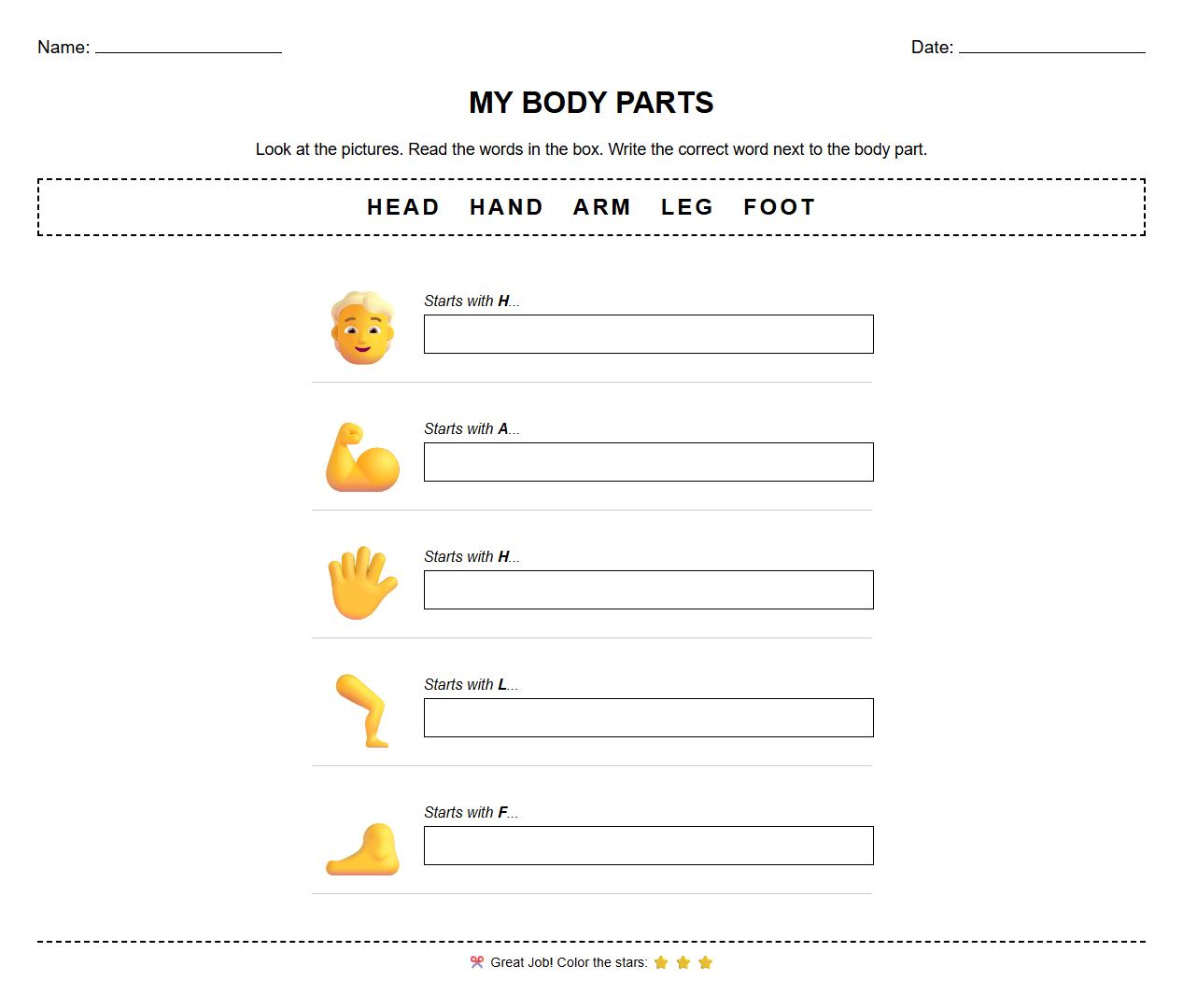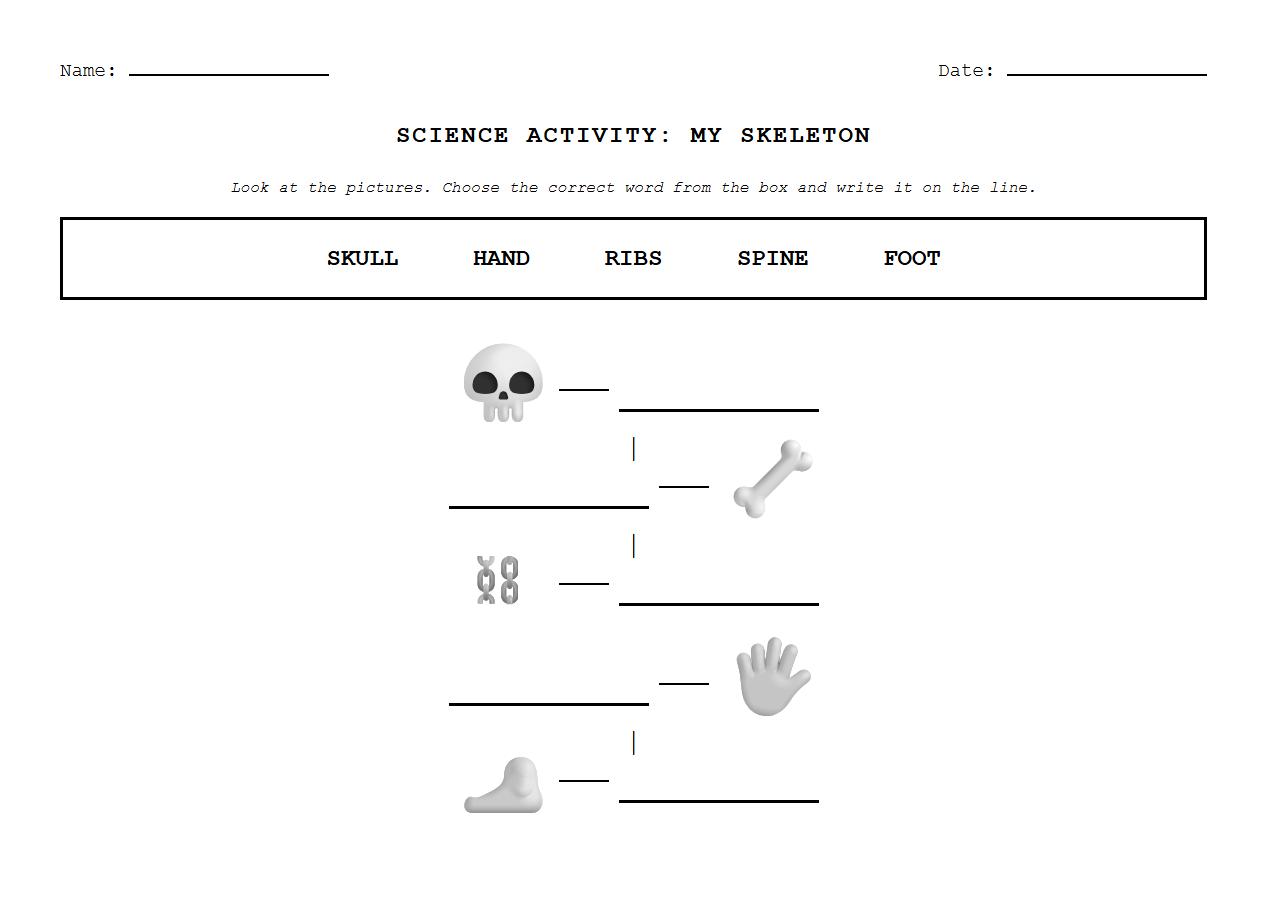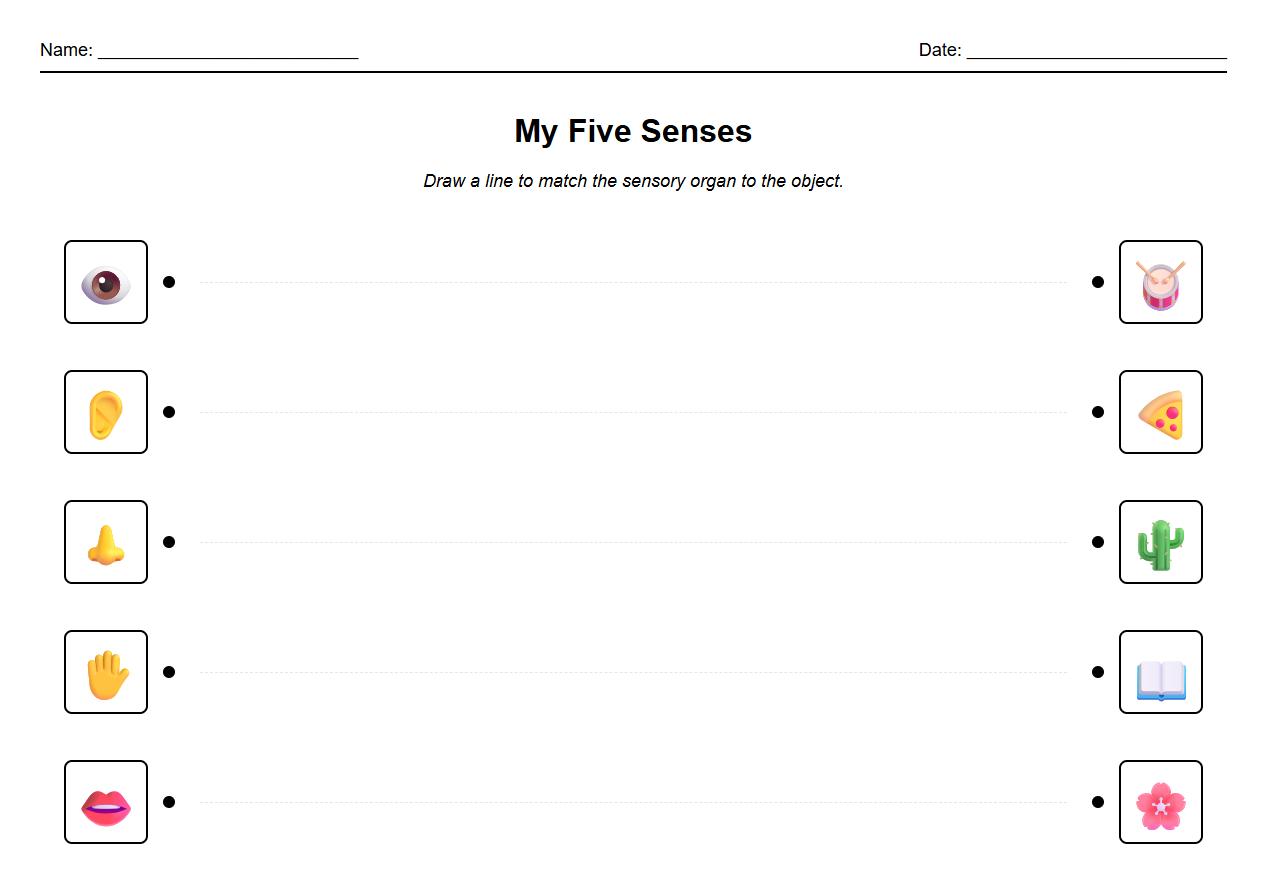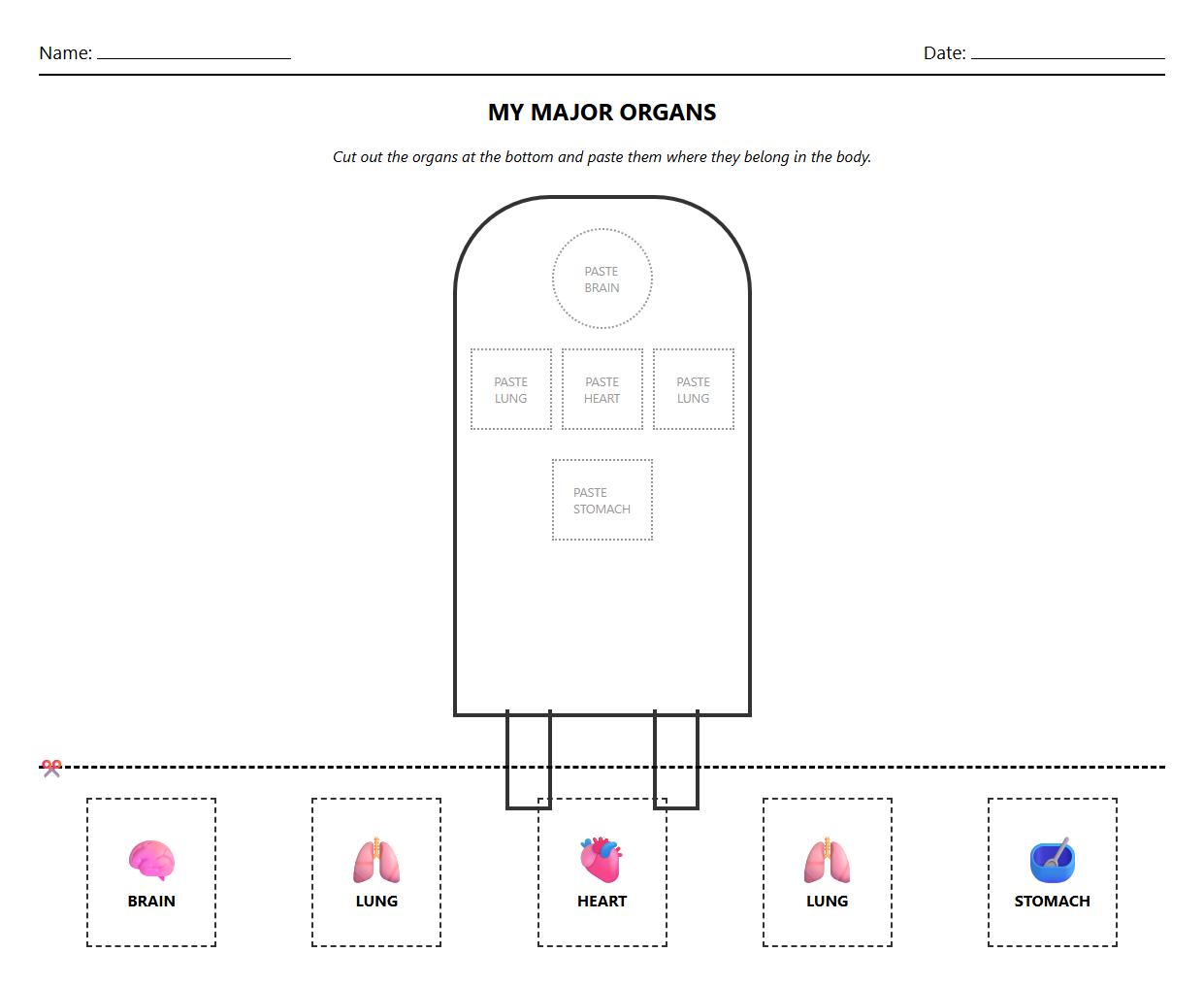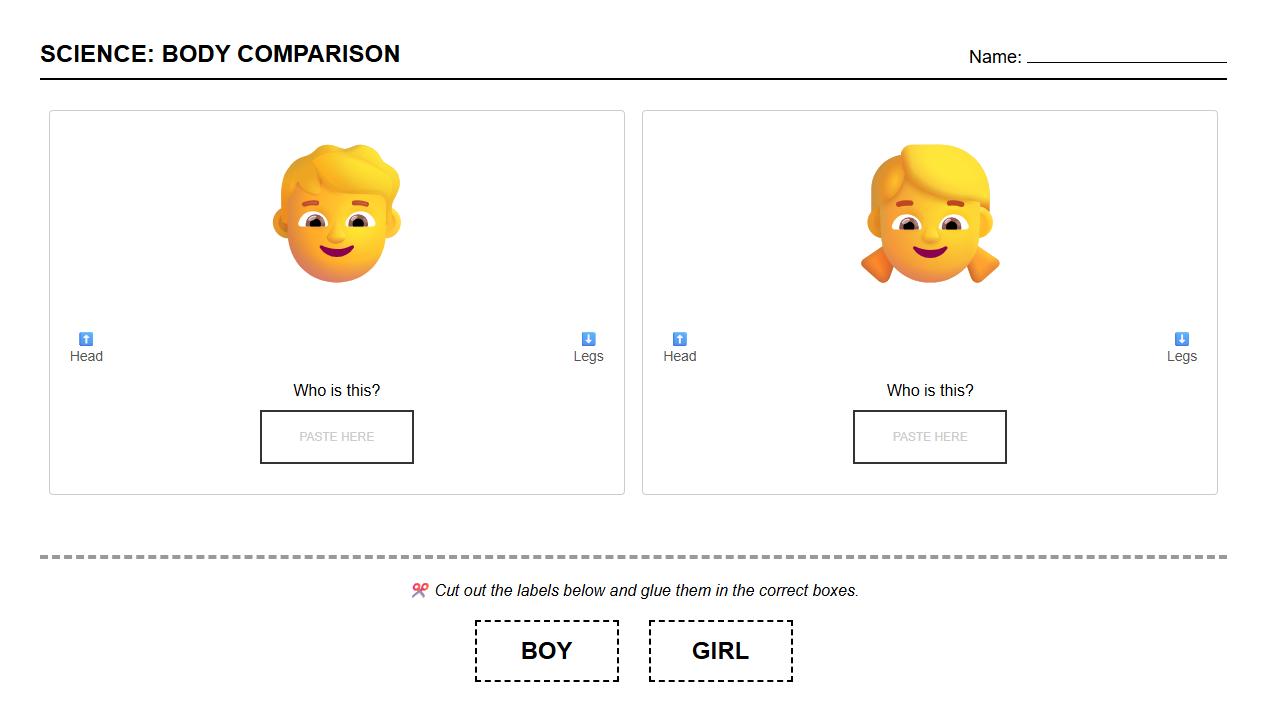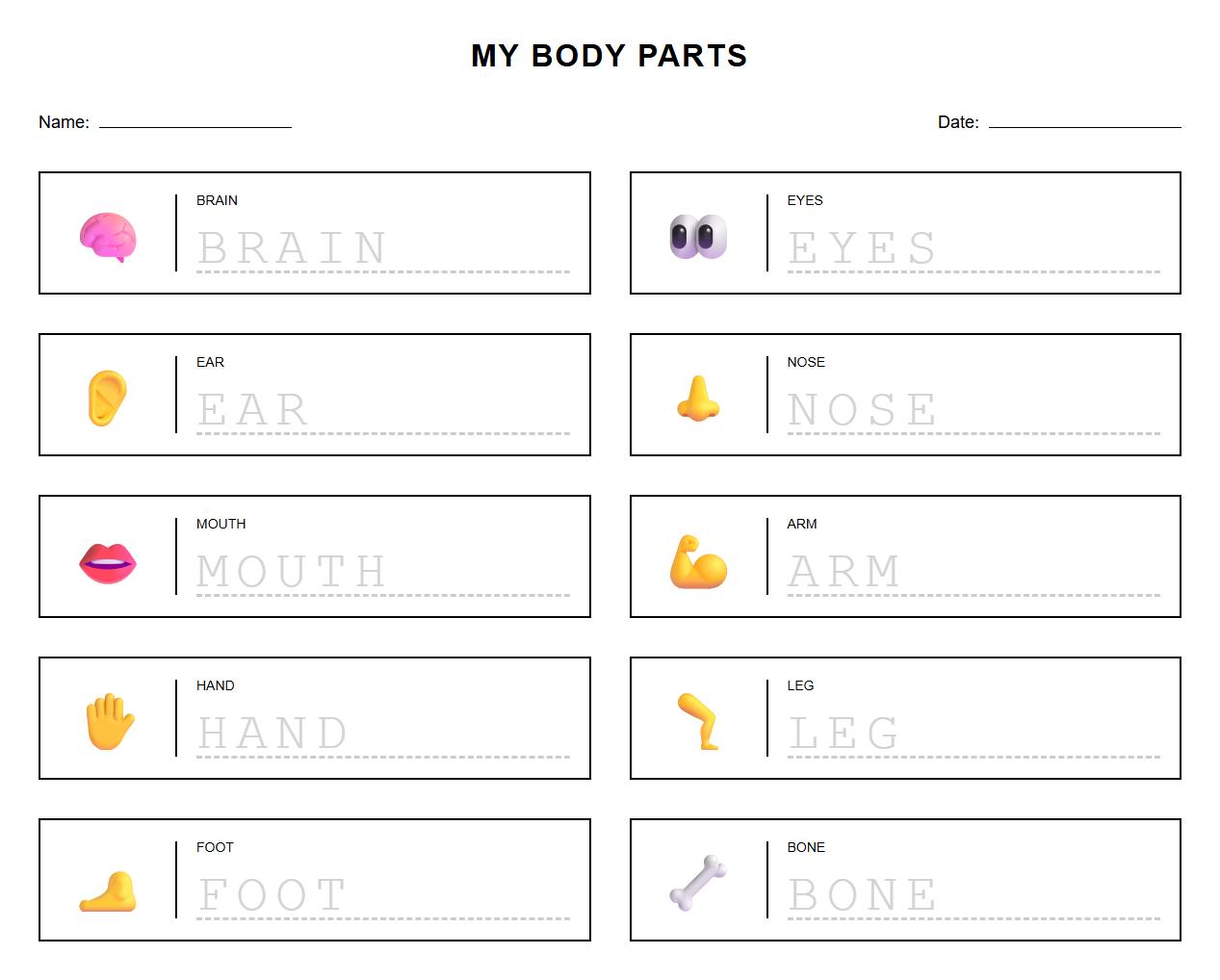
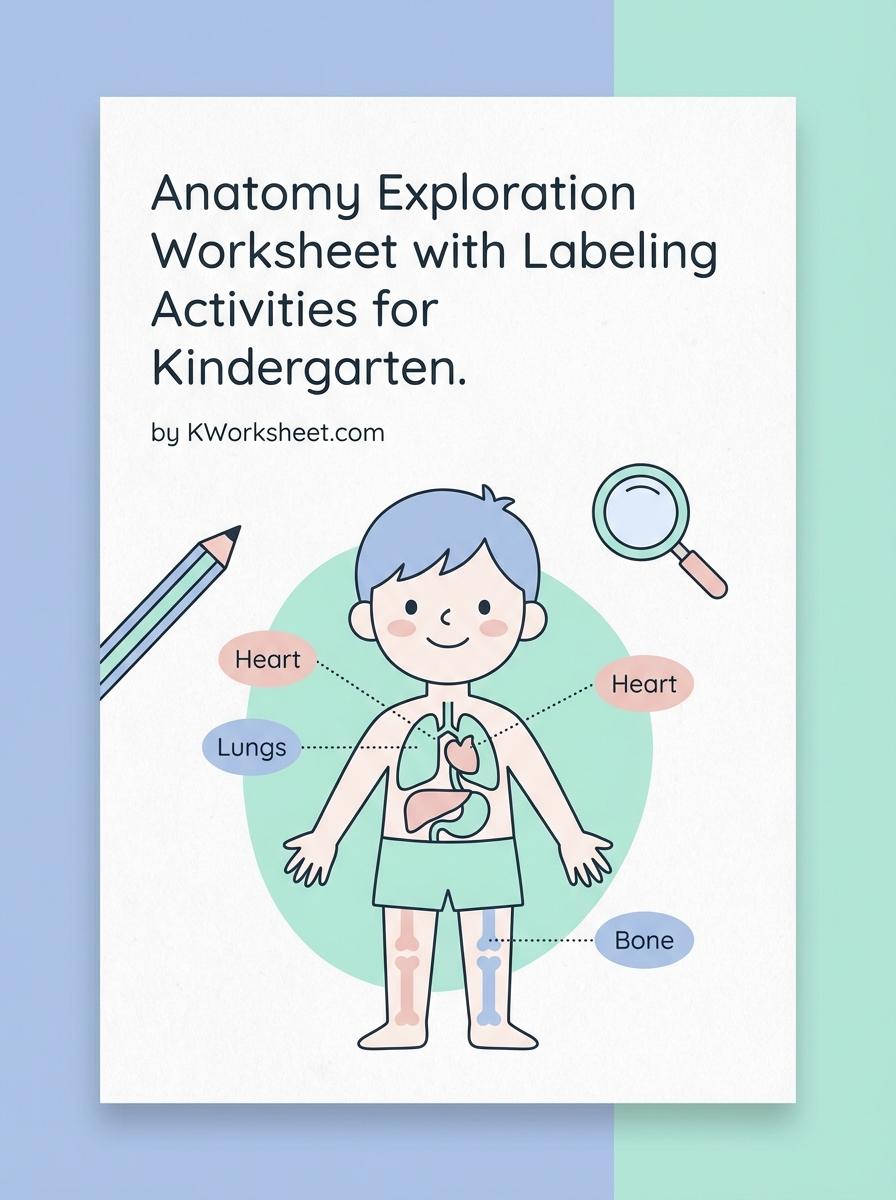
Kindergarten students develop foundational understanding of human anatomy through engaging labeling activities that enhance recognition of body parts and their functions. These hands-on exercises promote cognitive development and fine motor skills, making learning both fun and educational. Explore the available worksheets to support early anatomy education with interactive and age-appropriate materials.
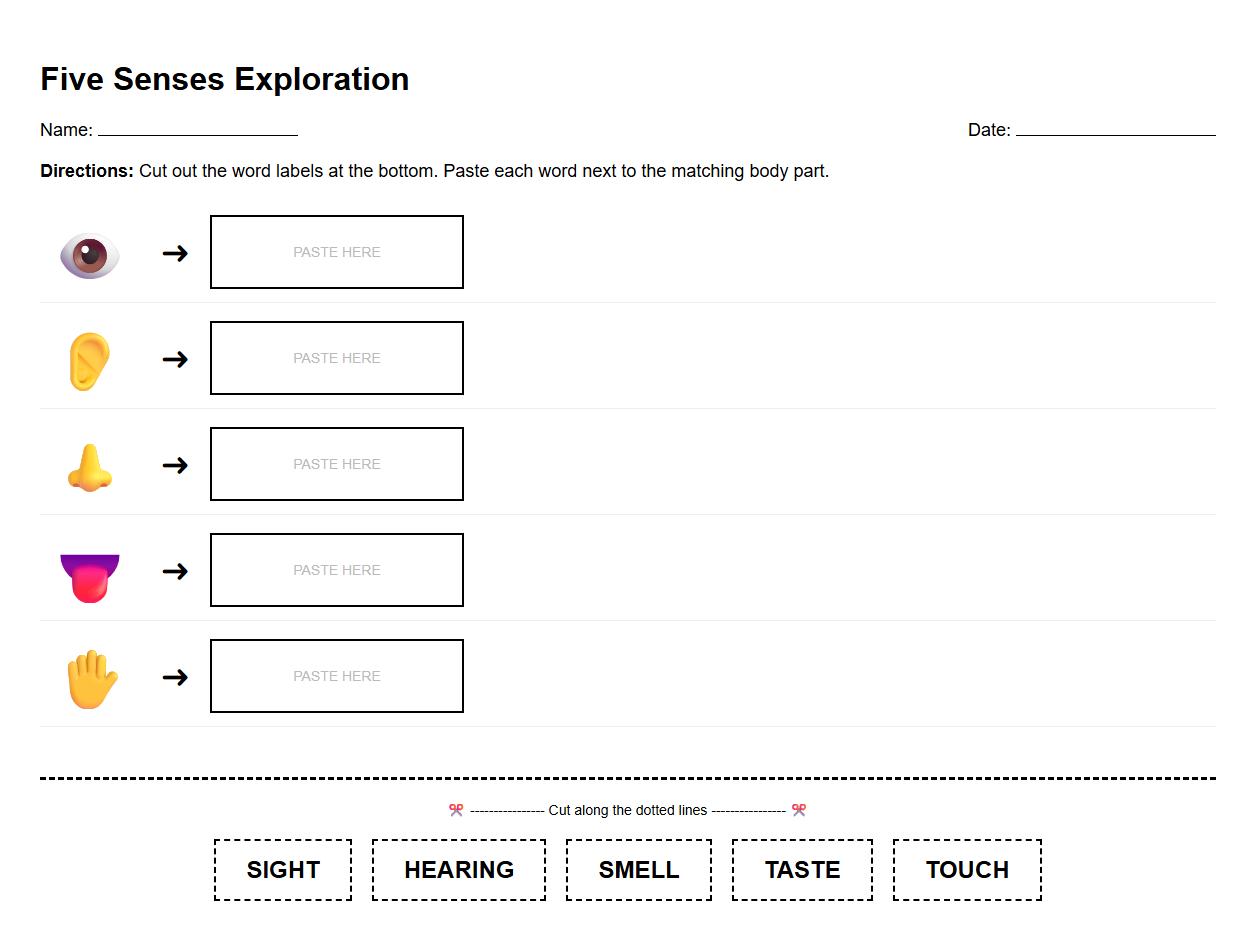
What is the name of the body part we use to see?
The eyes are the body parts used to see. They help us recognize colors, shapes, and movement around us. Teaching children about the eyes encourages curiosity about how vision works. Use visual aids to make learning fun and engaging.
Where is your heart located on your body?
The heart is located in the chest, slightly to the left side. It is an important organ that pumps blood throughout the body. Helping children understand the heart's location supports health awareness. Use simple diagrams to show its position inside the body.
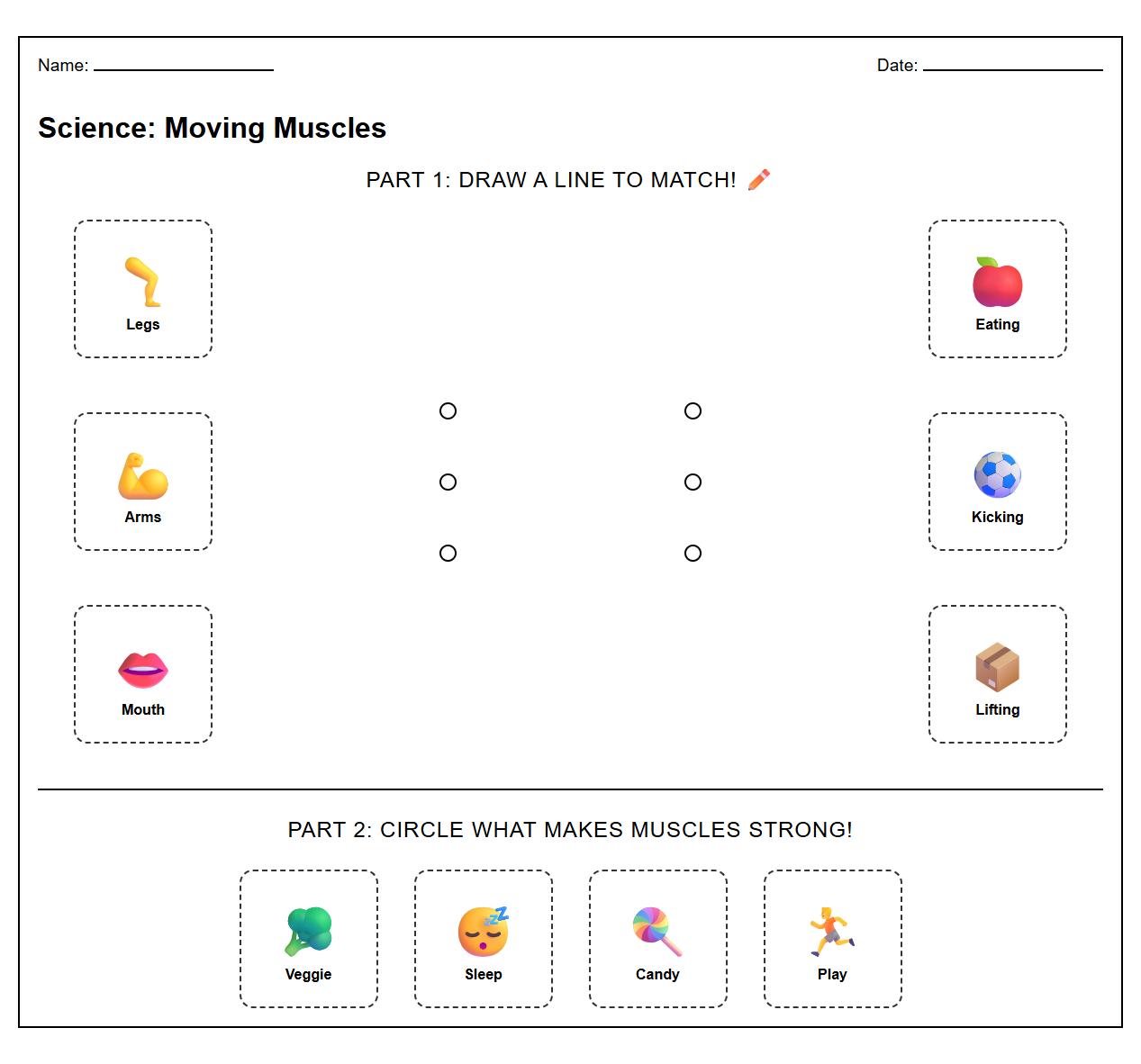
Which part helps you to walk and run?
The legs are essential for walking and running. They provide support and mobility for various activities. Explaining the role of legs helps children appreciate their body's movement. Encourage physical activity to strengthen these important muscles.
What do you use your hands for?
Hands are used for holding, touching, and feeling objects. They help us perform tasks like drawing, eating, and playing. Teaching about hands enhances fine motor skills and coordination. Use hands-on activities to develop these abilities.
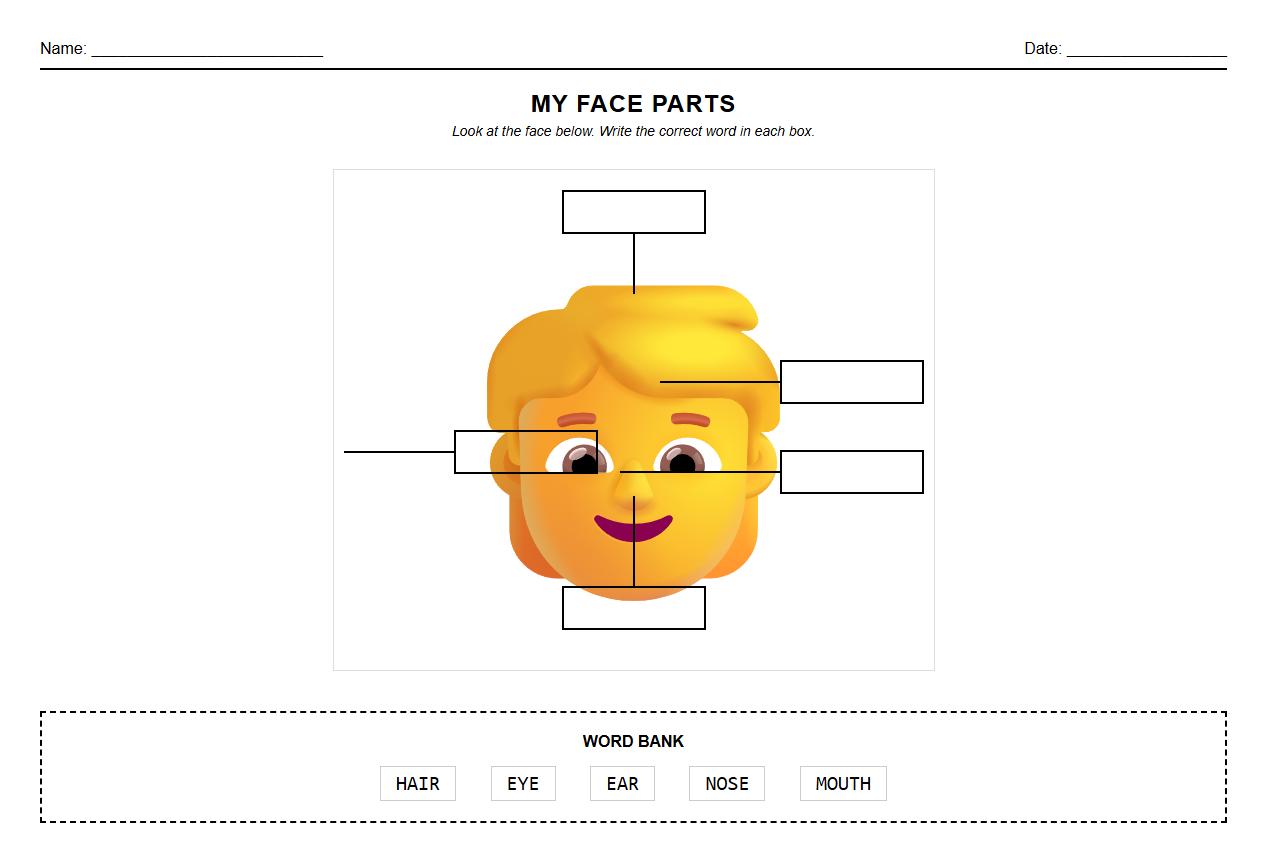
Can you point to where your head is?
The head is at the top of your body and houses important parts like the eyes, ears, nose, and mouth. It controls many senses and activities like thinking and speaking. Helping children identify the head connects to learning about all facial features. Make it interactive by asking kids to touch their head during the lesson.
Which body part do you use for hearing sounds?
The ears are the body parts used for hearing. They allow us to listen to sounds and stay aware of our environment. Teaching about ears develops awareness of the sense of hearing. Use sound games to make learning about ears enjoyable.
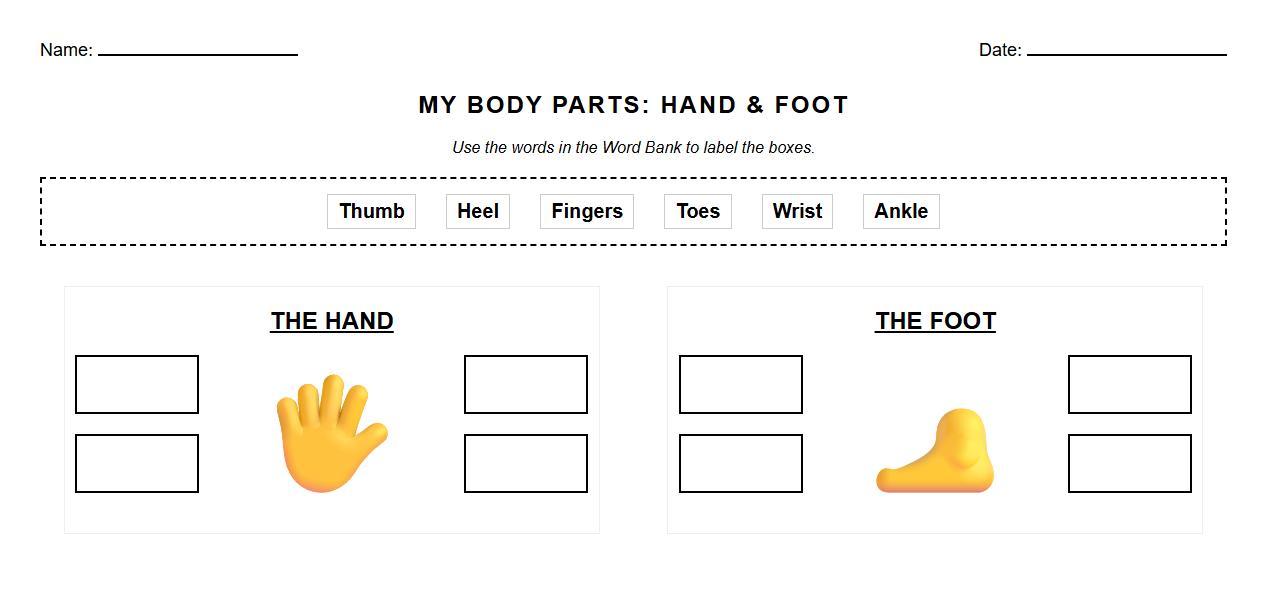
Where are your fingers found?
Fingers are found at the end of our hands. They help us grasp, hold, and manipulate objects. Introducing fingers early supports fine motor development and counting skills. Encourage finger play and counting games to reinforce learning.
What helps us taste food?
The tongue helps us taste food. It senses flavors like sweet, salty, sour, and bitter. Learning about the tongue connects to understanding our senses and enjoying mealtime. Use taste tests to engage children with this body part.
Which body part bends when you sit down?
The knees bend when you sit down. They help us bend and move our legs easily. Teaching about knees helps children understand how their body moves. Encourage activities like sitting and standing to explore knee movement.
Where do you have your toes?
Toes are located at the end of your feet. They help with balance and walking. Learning about toes supports body awareness and coordination. Use foot-related games to make this learning fun.


Personal Cleanliness Cut and Paste Worksheet for Early Childhood Education