Solid Liquid Gas Cut and Paste Worksheet for Kindergarten

📅 Apr 6, 2025 👤 Nylen Smith

Kindergarten students develop foundational science skills by identifying and categorizing solids, liquids, and gases through hands-on cut and paste activities. This worksheet enhances their understanding of the properties of matter while promoting fine motor skills and critical thinking. Explore the available Solid Liquid Gas Cut and Paste Worksheets to reinforce early science learning.

States of Matter Phonics Cut and Paste Worksheet
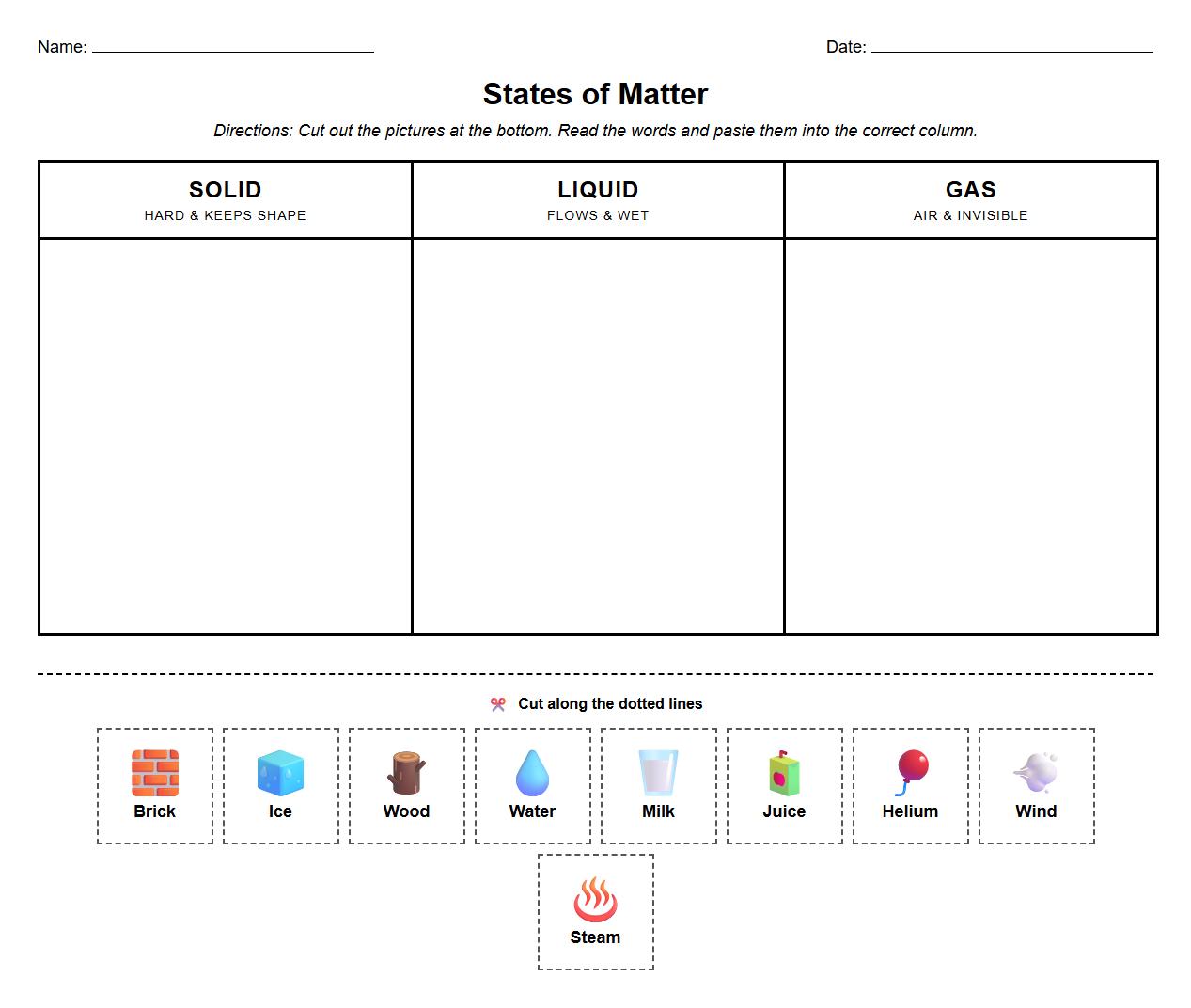
States of Matter Phonics Cut and Paste Worksheet

Download PDF     Pin it

Solid Liquid Gas Sorting Activity Sheet
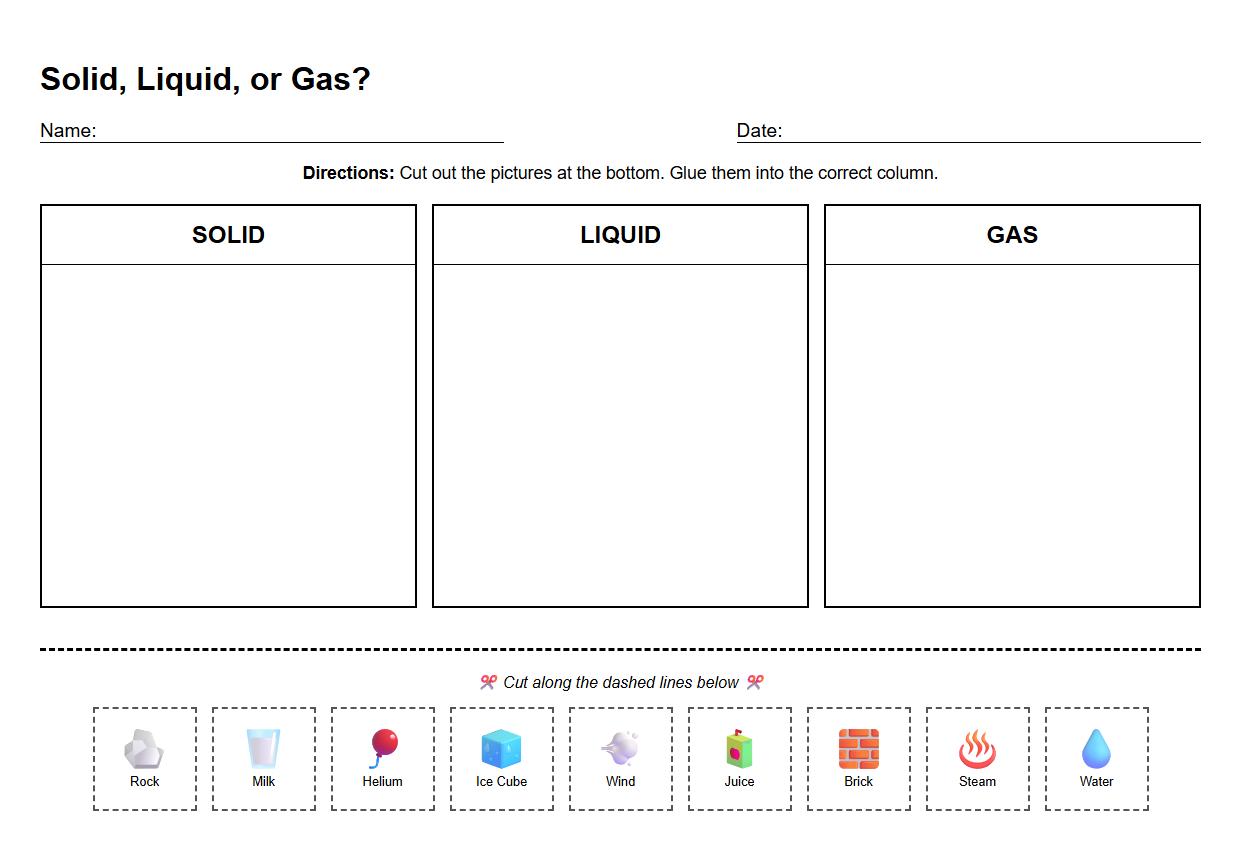
Solid Liquid Gas Sorting Activity Sheet

Download PDF     Pin it

Matter Classification Cut and Paste Practice
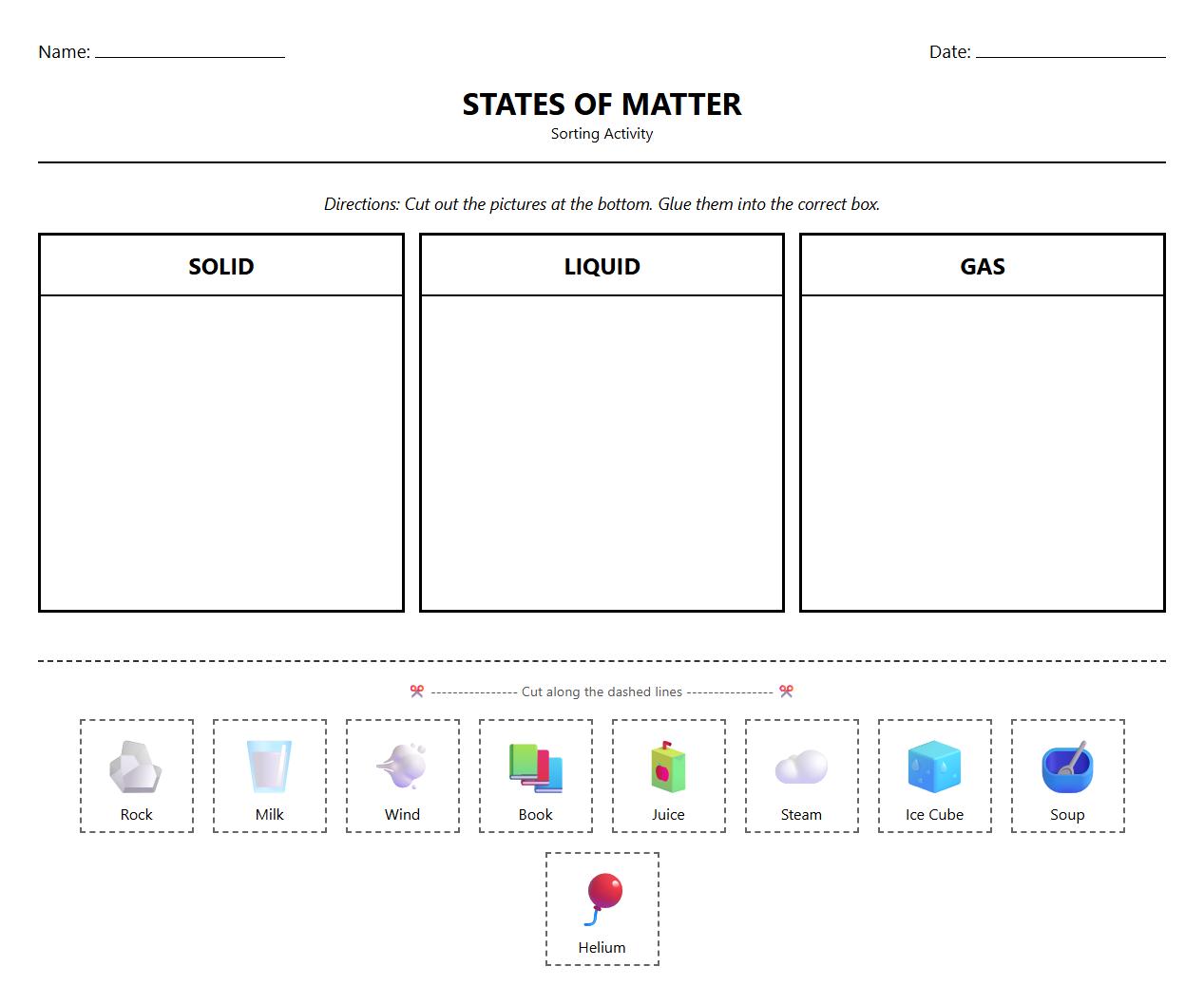
Matter Classification Cut and Paste Practice

Download PDF     Pin it

Science Vocabulary Matching for Solid Liquid Gas
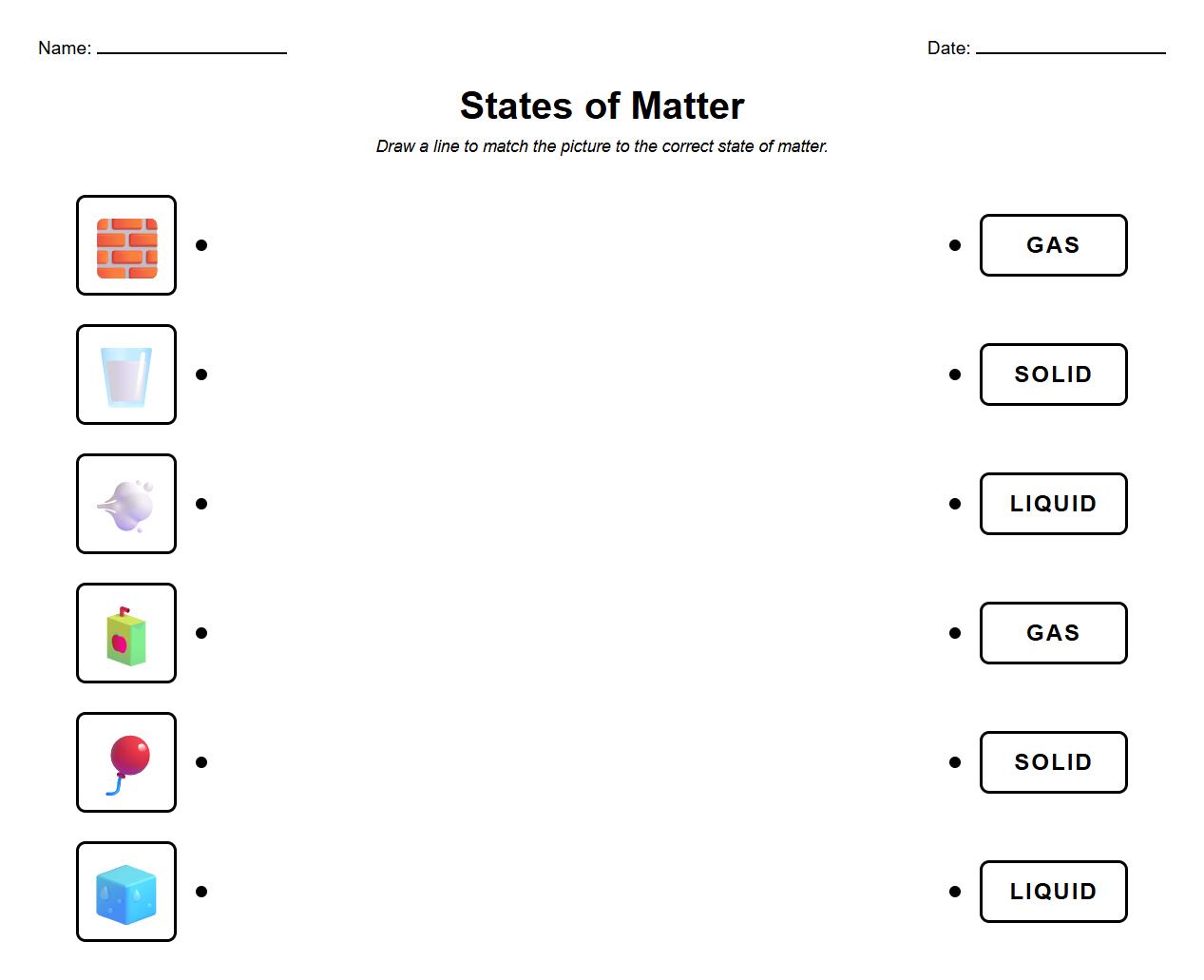
Science Vocabulary Matching for Solid Liquid Gas

Download PDF     Pin it

Hands on States of Matter Worksheet Exercise
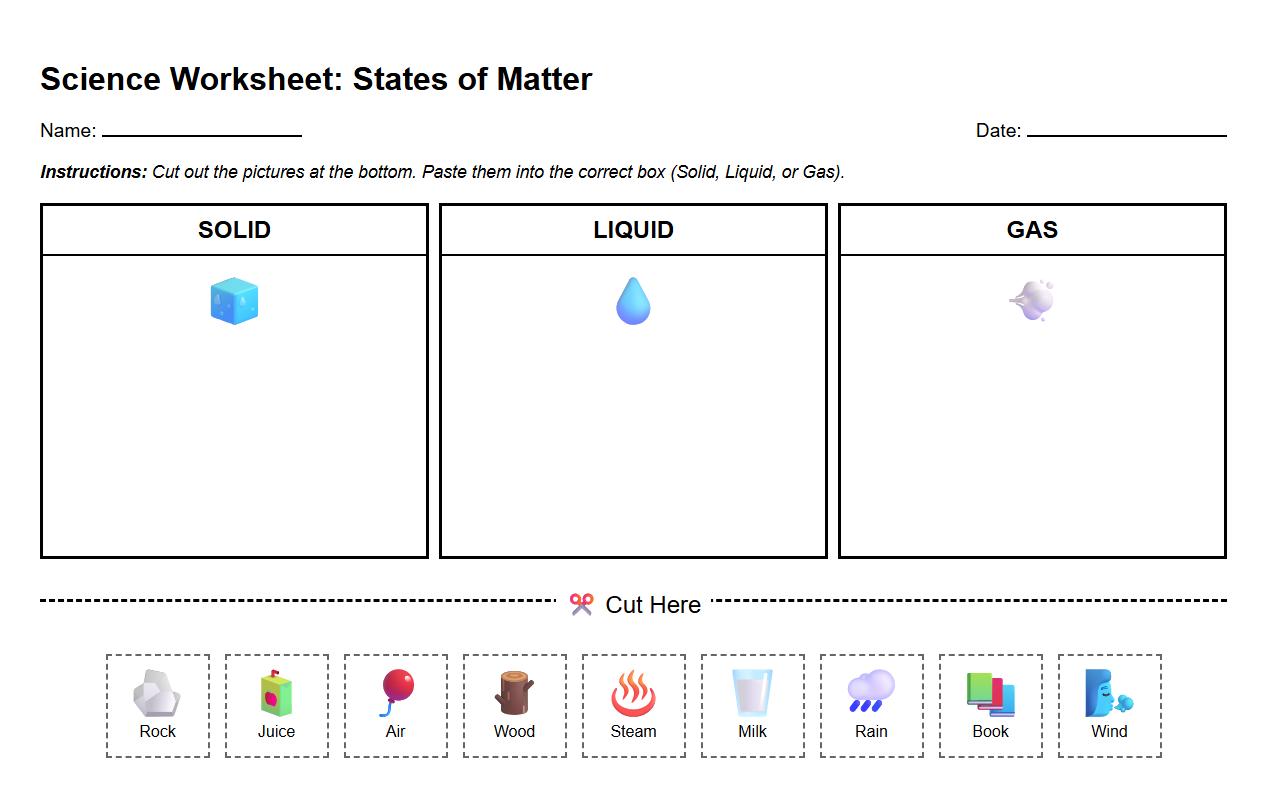
Hands on States of Matter Worksheet Exercise

Download PDF     Pin it

Solid Liquid Gas Identification Cut and Paste
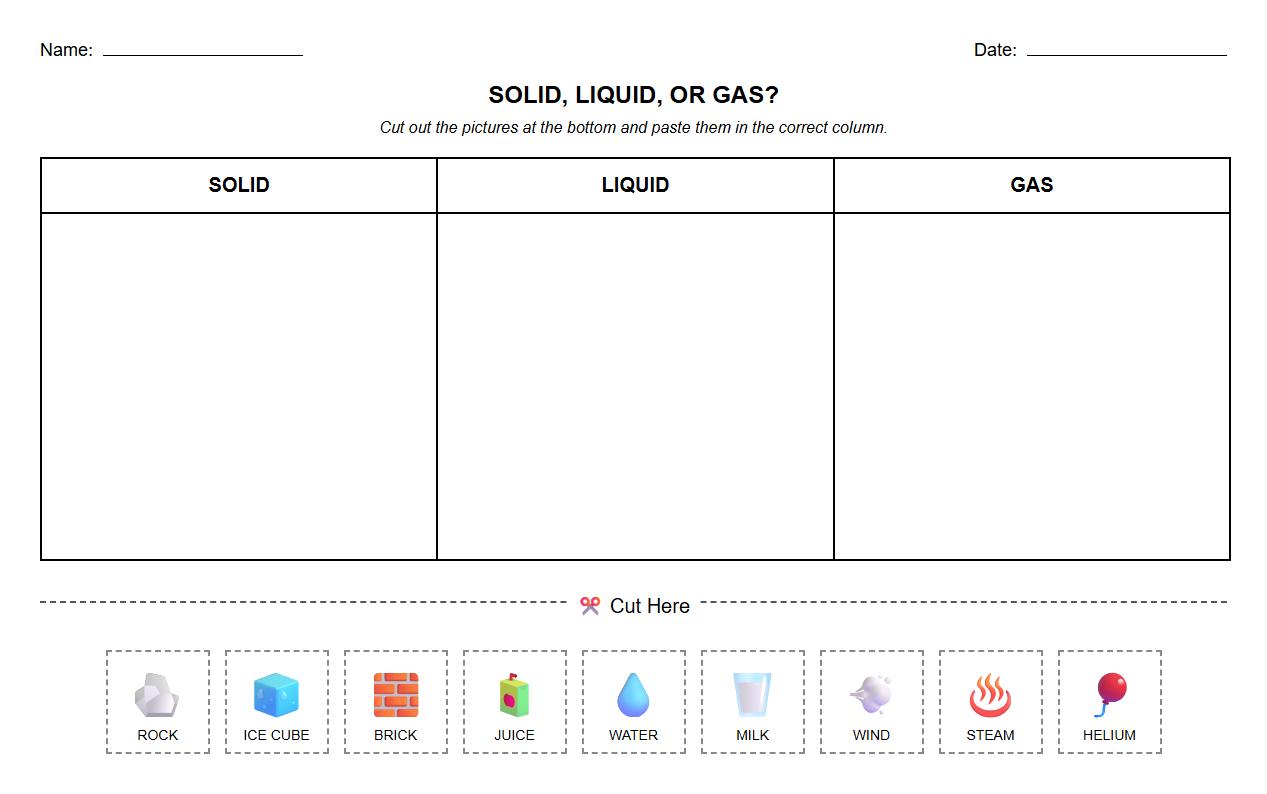
Solid Liquid Gas Identification Cut and Paste

Download PDF     Pin it

Sorting Properties of Matter Worksheet for Kindergarten
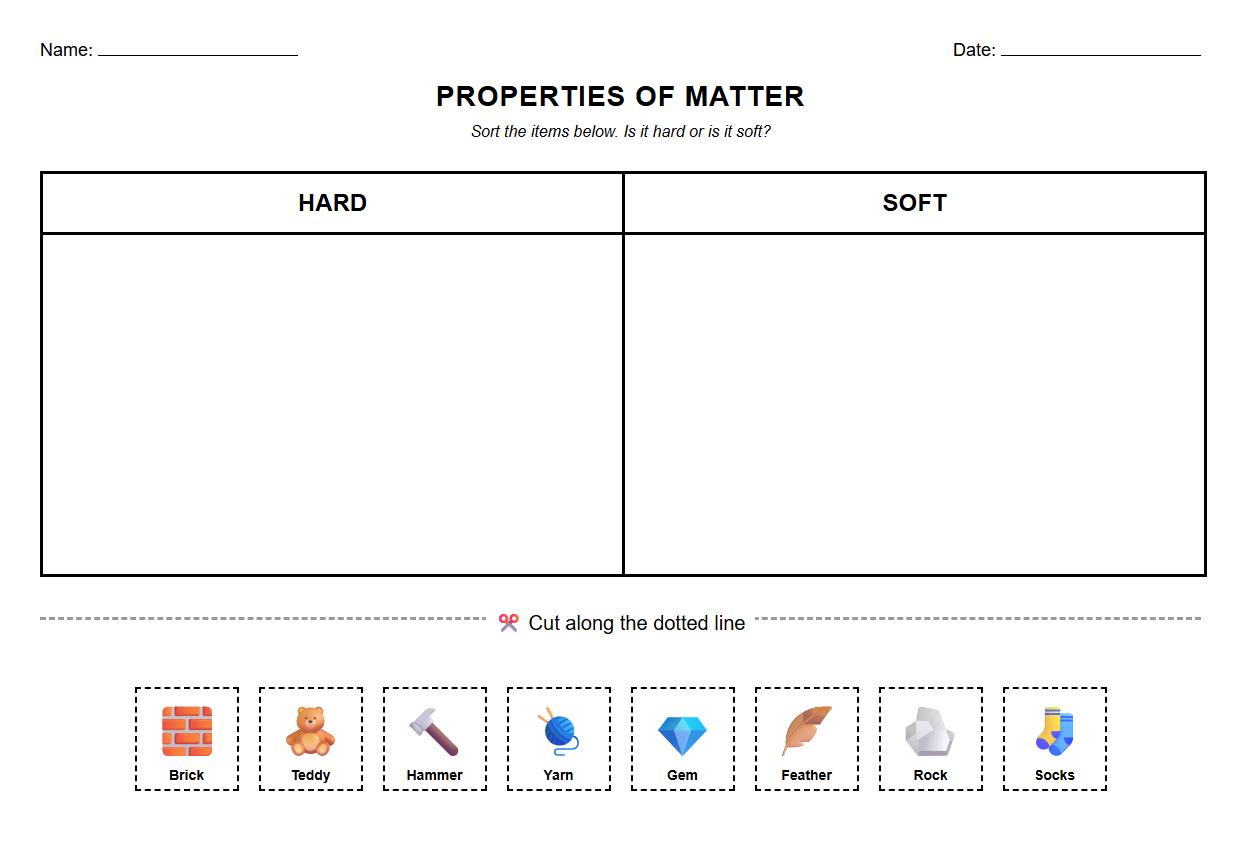
Sorting Properties of Matter Worksheet for Kindergarten

Download PDF     Pin it

Visual Discrimination Solid Liquid Gas Worksheet
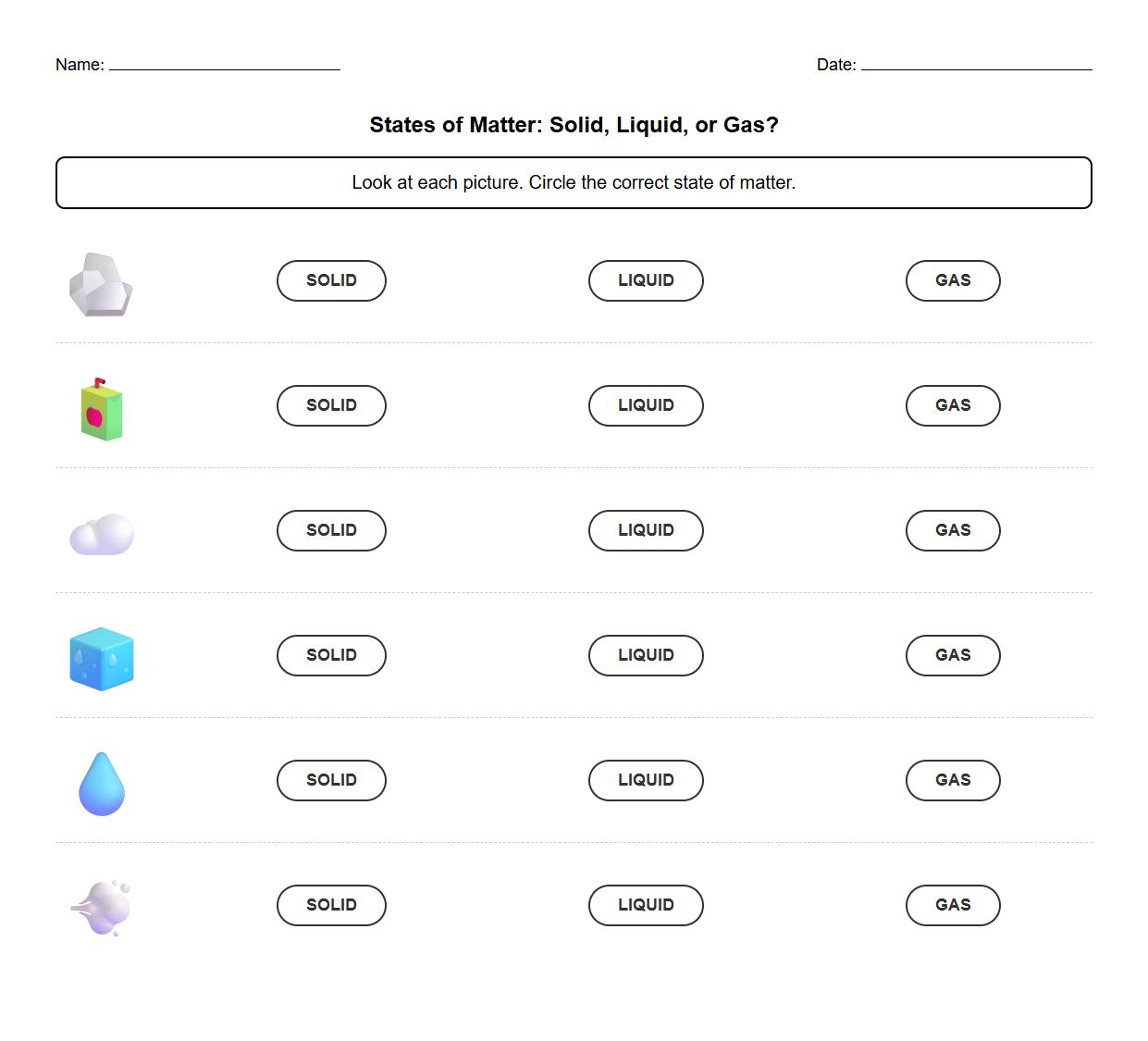
Visual Discrimination Solid Liquid Gas Worksheet

Download PDF     Pin it

Introduction to Chemistry: Matter Sorting Sheet
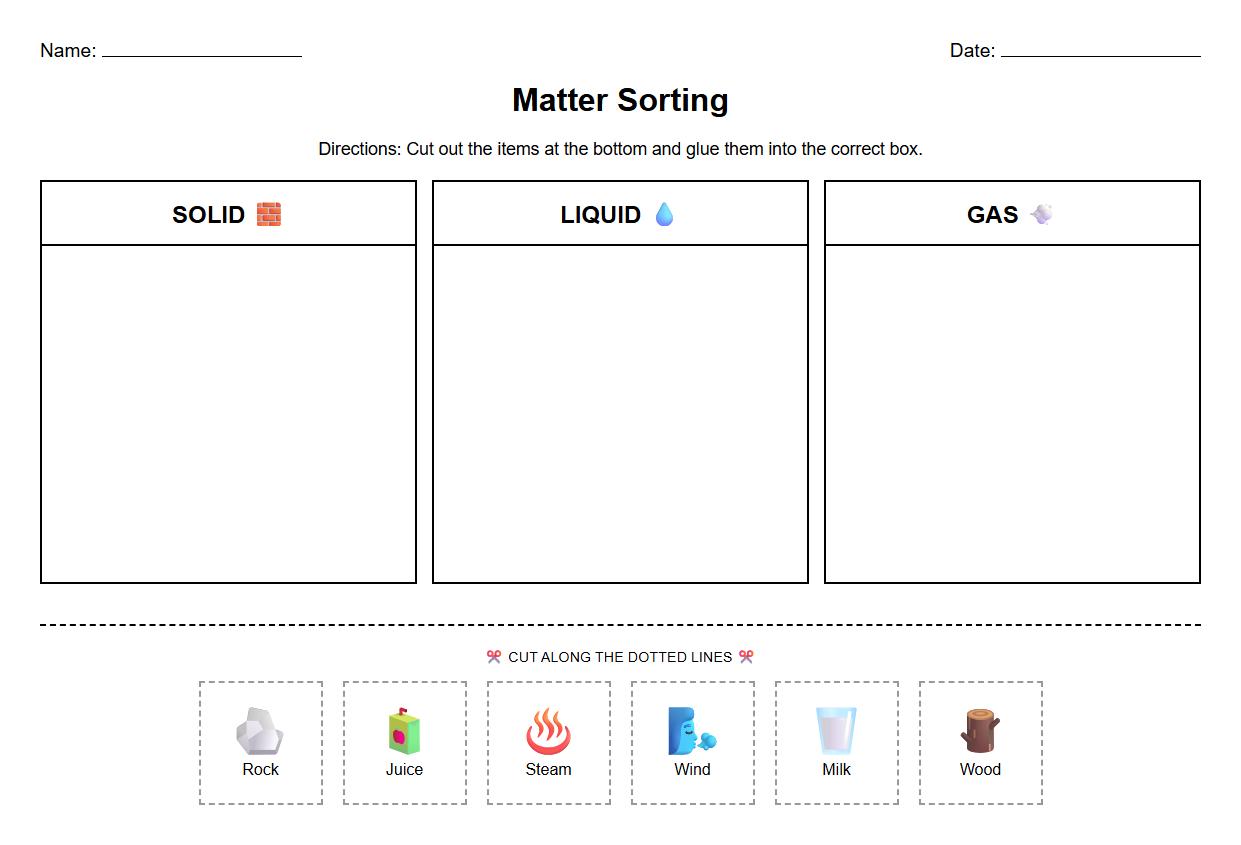
Introduction to Chemistry: Matter Sorting Sheet

Download PDF     Pin it

Early Science Categorization Worksheet on States of Matter
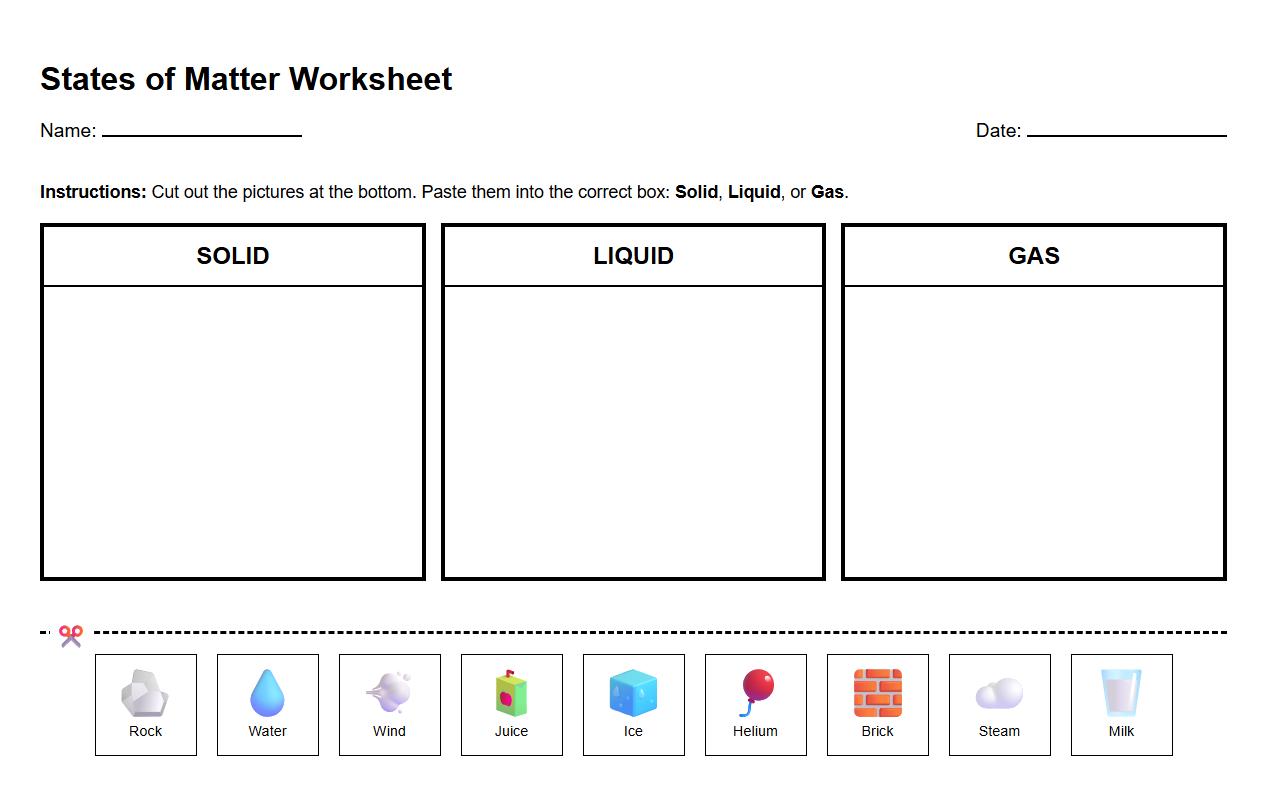
Early Science Categorization Worksheet on States of Matter

Download PDF     Pin it

Identifying Solids in the Worksheet

Objects that maintain their shape and do not flow are classified as solids. Examples include a book, a chair, or a toy block in the worksheet. These items are firm and hold their form without needing a container. Help children recognize solids by pointing out these characteristics. Learn more in the Classifying Everyday Items States of Matter Worksheet.

Finding an Image Showing a Liquid

A picture of water being poured, a glass of juice, or a puddle often represents a liquid. Liquids take the shape of their container and flow easily. Encourage kids to notice how the liquid moves compared to solids. This visual helps in understanding the unique properties of liquids. See examples in the Labeling States of Matter Phonics Practice Worksheet.

Picture Representing a Gas

A balloon filled with air or steam rising from a kettle is a common image showing gas. Gases spread out to fill any space available and are invisible most of the time. In the worksheet, look for images indicating something that can expand or float. This assists in distinguishing gases from solids and liquids. Check the Sink or Float Kindergarten Science Investigation Worksheet Pack for related activities.

Where to Paste the Glass of Water

The glass of water should be pasted in the liquid section of the worksheet. Since water flows and takes the shape of its container, it clearly belongs with liquids. Guide children to categorize items by their physical state. This activity strengthens their understanding of matter. See more sorting activities in the Kindergarten Magnet and Force Sorting Activity Visuals.

Balloon Filled with Gas or Liquid?

The balloon is filled with gas, typically air or helium. Gases expand to fill the balloon completely, unlike liquids which do not compress as easily. Teaching this difference helps children grasp the concept of gas in a fun way. Visual aids like a balloon are effective for this purpose. Learn more about animal homes and differences in Phonics Based Worksheet on Animal Homes Kindergarten.

Items Belonging to the Solid Section

Objects like pencils, blocks, and books should be placed in the solid section. Solids have a fixed shape and volume, making them easy to identify. Encourage kids to group these items together based on their rigidity. Sorting by physical state is a key learning objective. Try the Sorting Animals Classifications Worksheet Kindergarten for sorting practice.

Should Juice Be Cut and Pasted Under Liquid or Solid?

Juice belongs in the liquid section because it flows and takes the shape of its container. It is not solid and does not hold a fixed shape. This activity teaches children to differentiate between substances based on physical properties. Using juice as an example makes liquids relatable. For more about what animals need, visit What Do Animals Need to Survive Worksheet.

Picture Showing Something You Can Pour

Images of water being poured from a bottle or a glass show a liquid that can be poured. Pouring is a practical way to demonstrate liquid behavior to children. Visuals like these make abstract concepts more concrete. Pouring shows that certain substances can change shape easily. Try related activities in the Phonics Worksheet Exploring Day and Night Kindergarten.

How to Tell if Something Is a Gas

You can tell something is a gas if it fills the available space and is invisible or diffuses quickly. It often surrounds us, like air or steam from a hot drink. Teaching children to observe these traits helps them differentiate gases from solids and liquids. Activities with balloons and bubbles are great examples. Check out the Match Animal to Its Habitat Worksheet for more exploration worksheets.

Items Too Hard to Change Their Shape

Solids such as rocks, wood blocks, and metal toys are too hard to change their shape easily. These solid items resist pressure and maintain their form unless broken. Helping children identify these objects cultivates an understanding of matter states. This knowledge builds a foundation for science learning. Find further learning in the Sight Words Worksheet: Spring, Summer, Fall and Winter.


More in Science Category


About the author. Nylen Smith is a dedicated educator and cofounder of KWorksheet.com, a popular platform specializing in high-quality kindergarten worksheets and printable activities.

Disclaimer. The information provided in this document is for general informational purposes and/or document sample only and is not guaranteed to be factually right or complete. Please report to us via contact-us page if you find and error in this page, thanks.

Comments

No comment yet