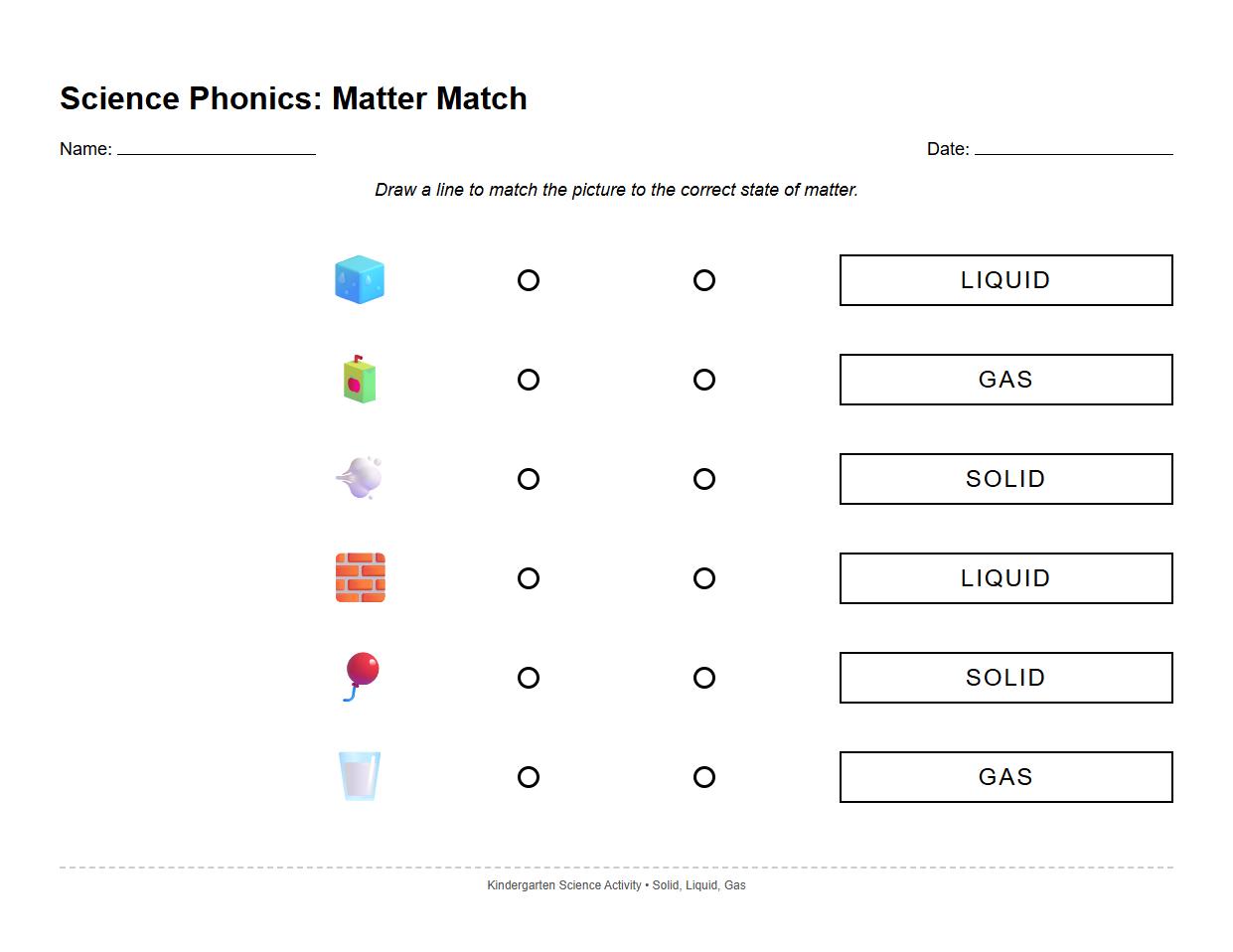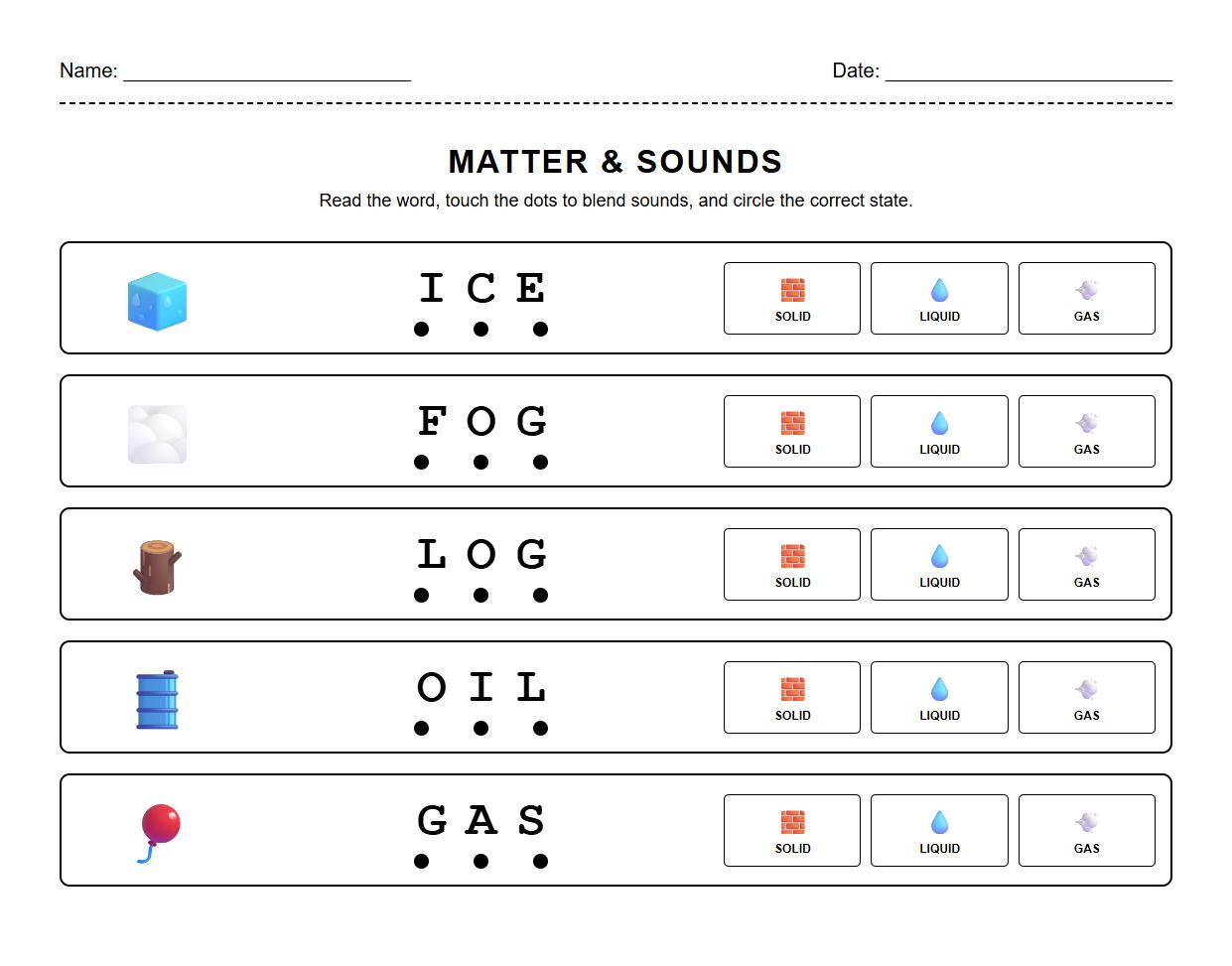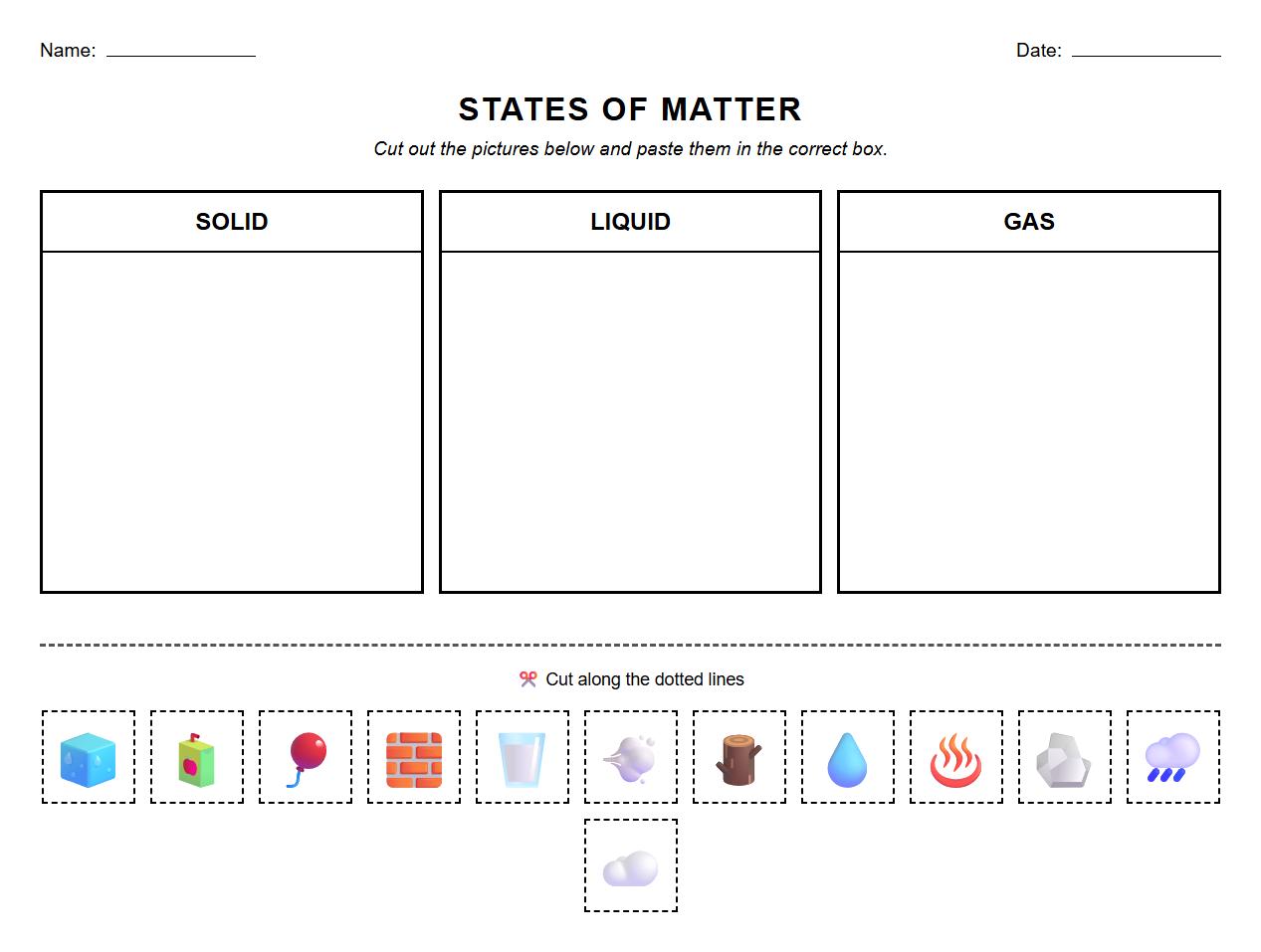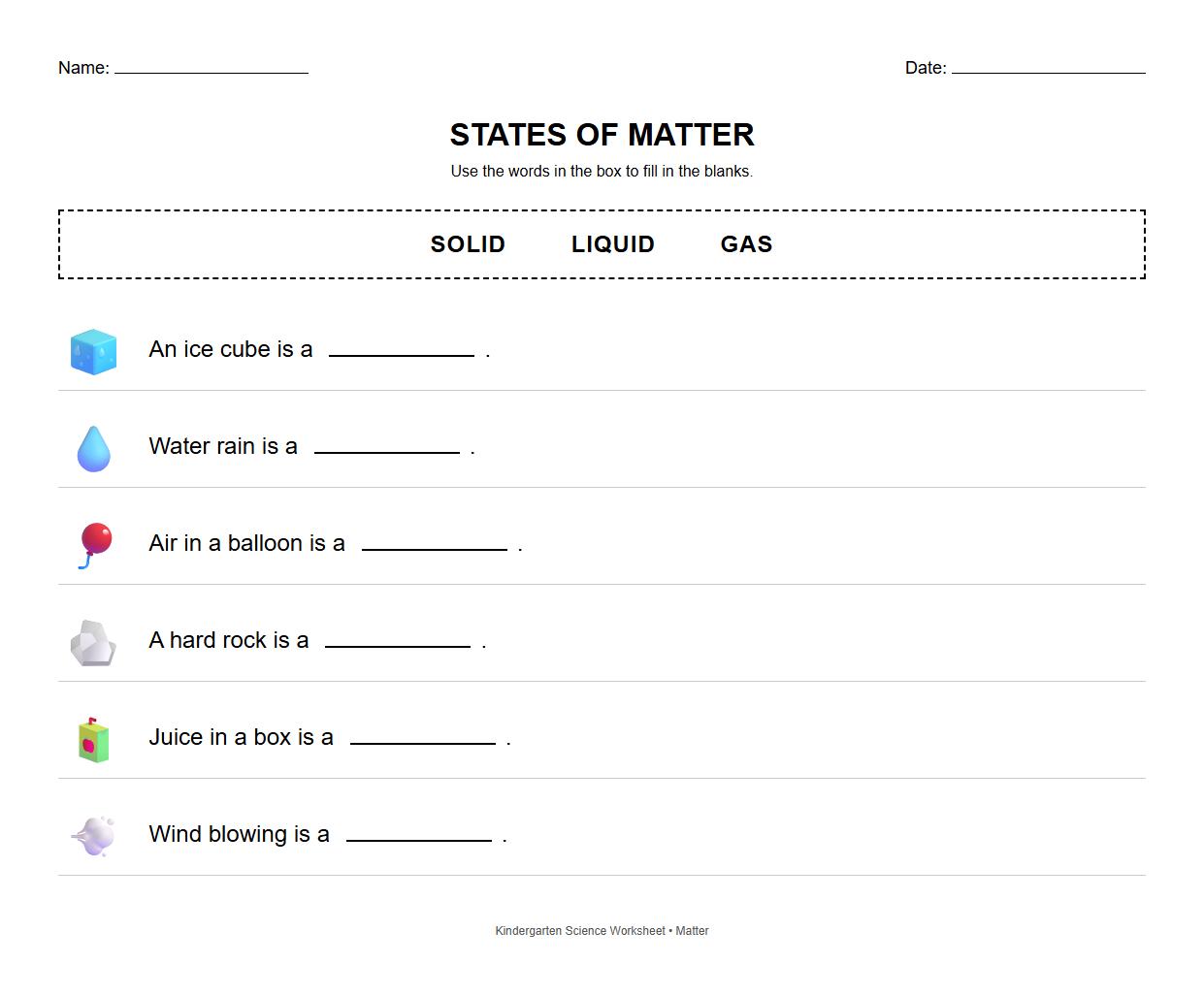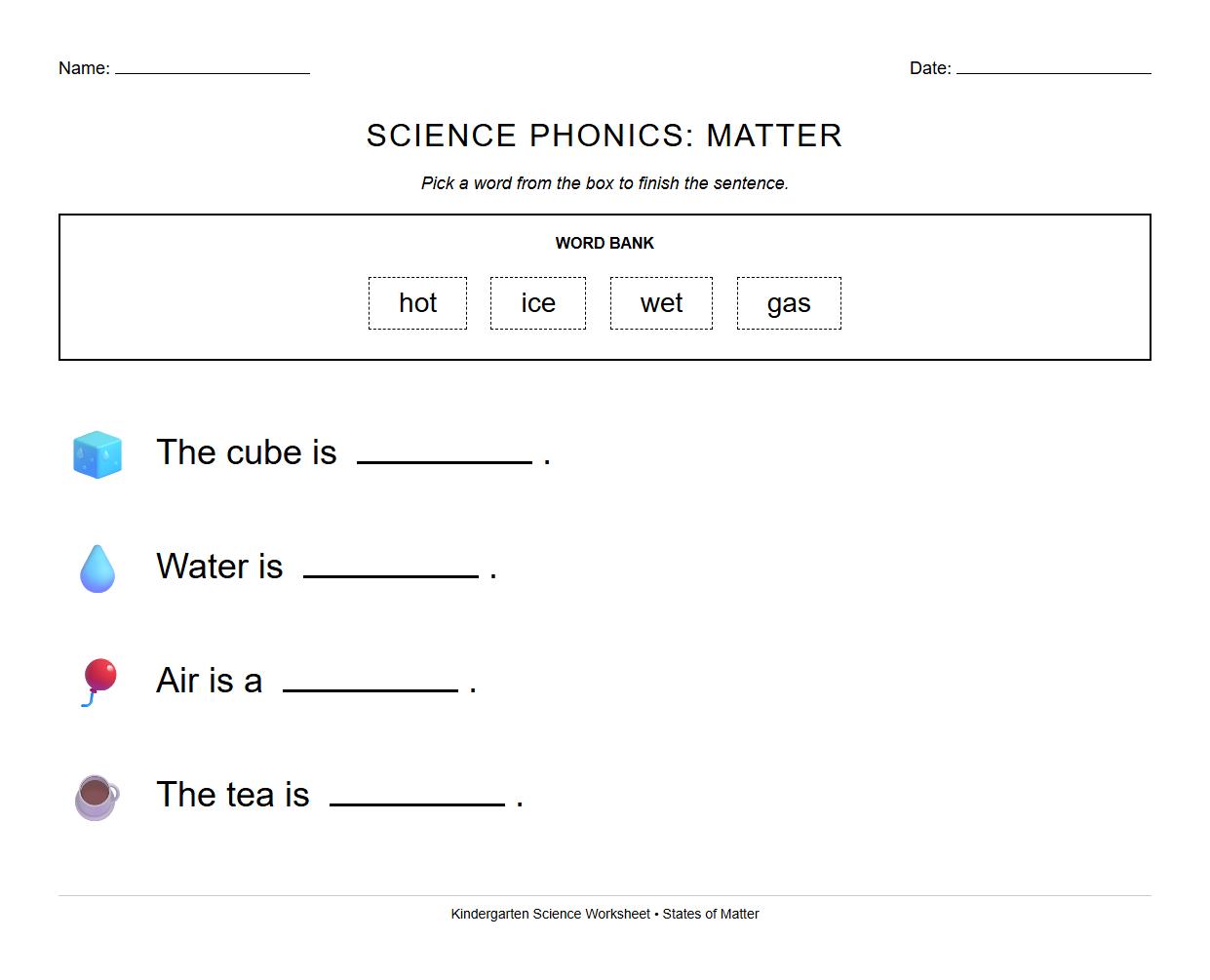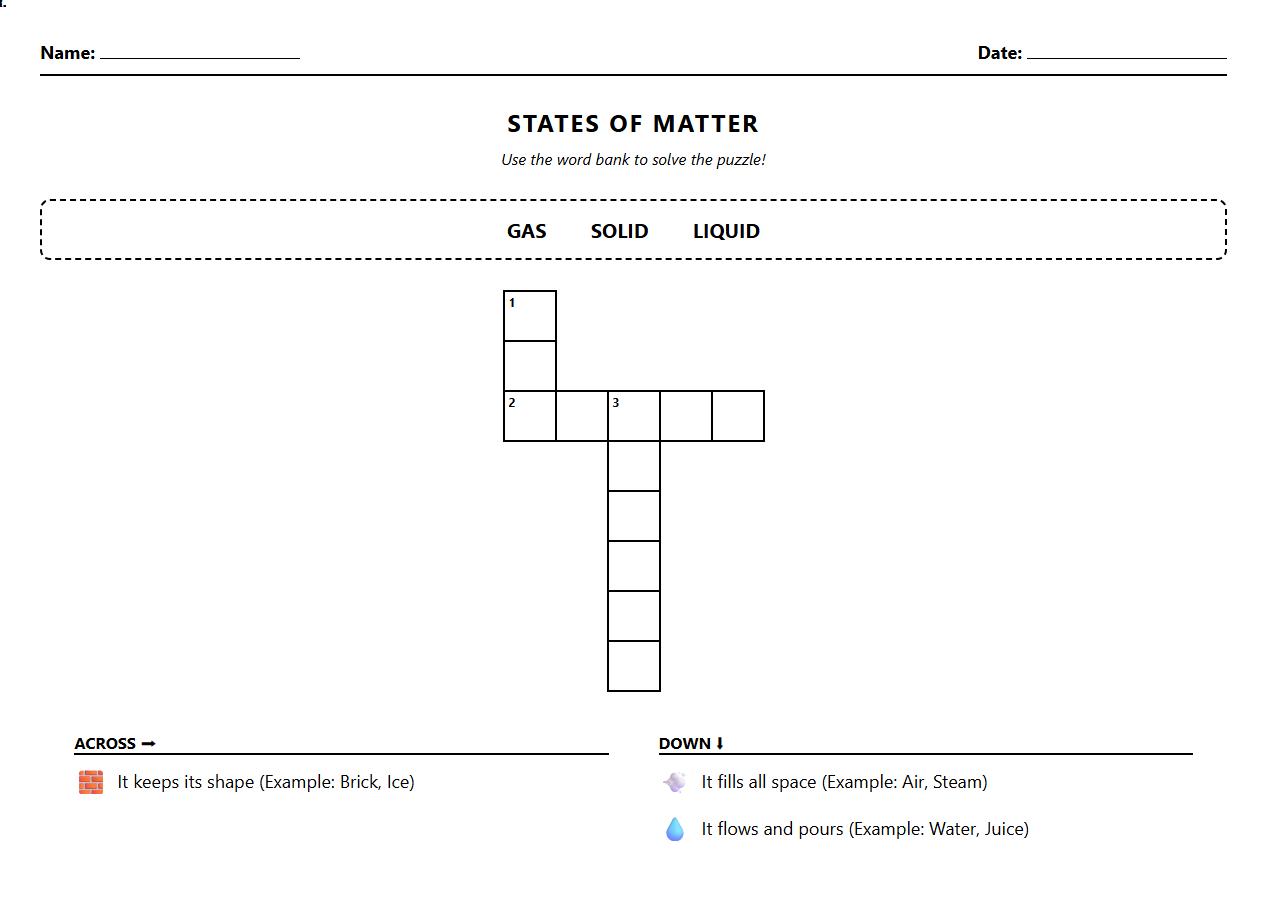
Explore the fundamental concepts of solids, liquids, and gases with this Phonics and Vocabulary Enrichment Worksheet designed to enhance understanding of states of matter. Engage with targeted exercises that build key vocabulary while reinforcing phonics skills related to scientific terminology. Check out the available worksheets to strengthen your grasp of these essential science concepts.
Guide for Teaching States of Matter to Kindergarteners
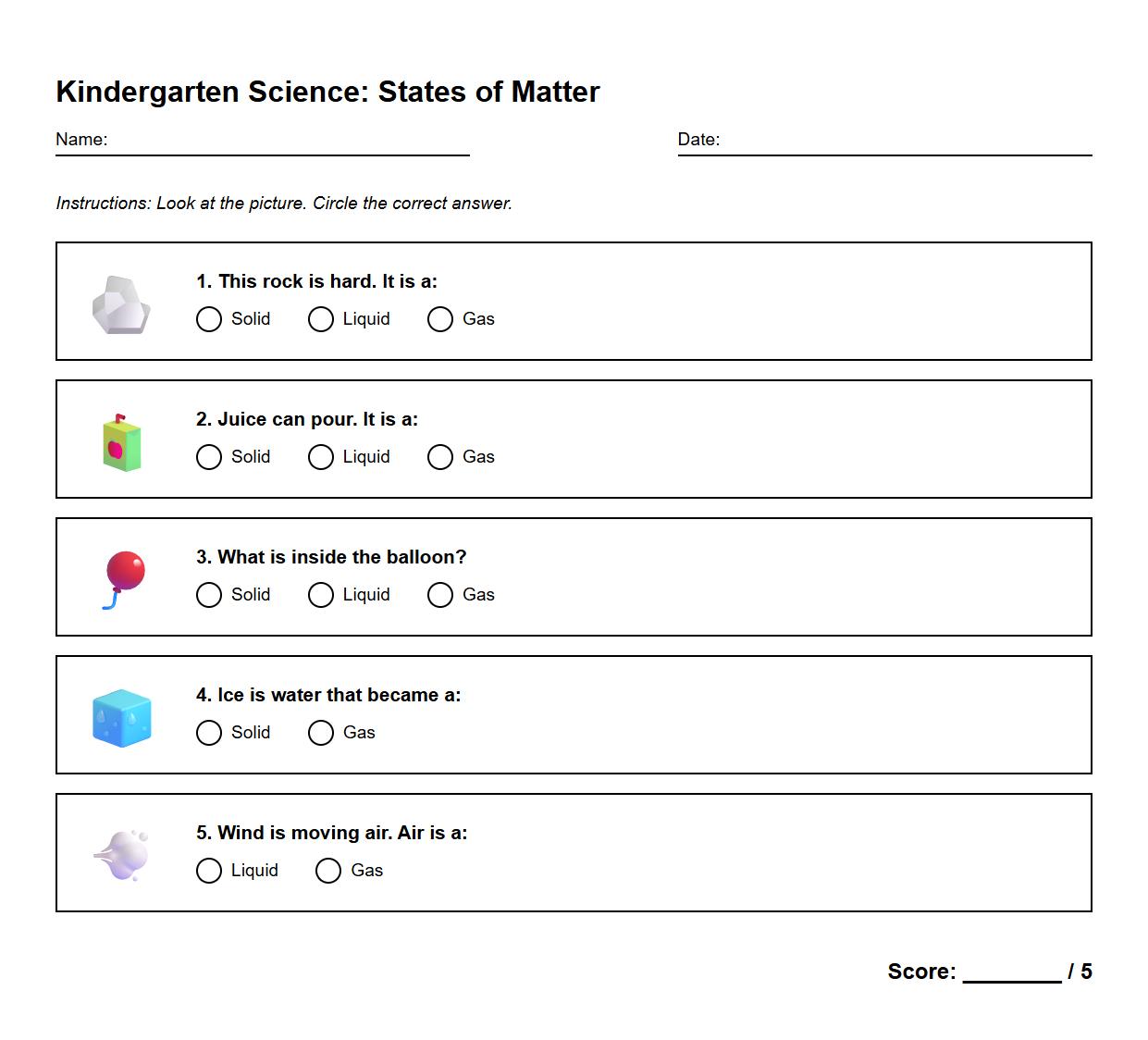
When teaching young learners, it's important to introduce simple concepts using familiar words. A word that describes something you can pour or drink, like water, is liquid. This helps children relate to everyday experiences. Encourage children to recognize this word as describing a common state of matter.
Identifying Letter Sounds in Words
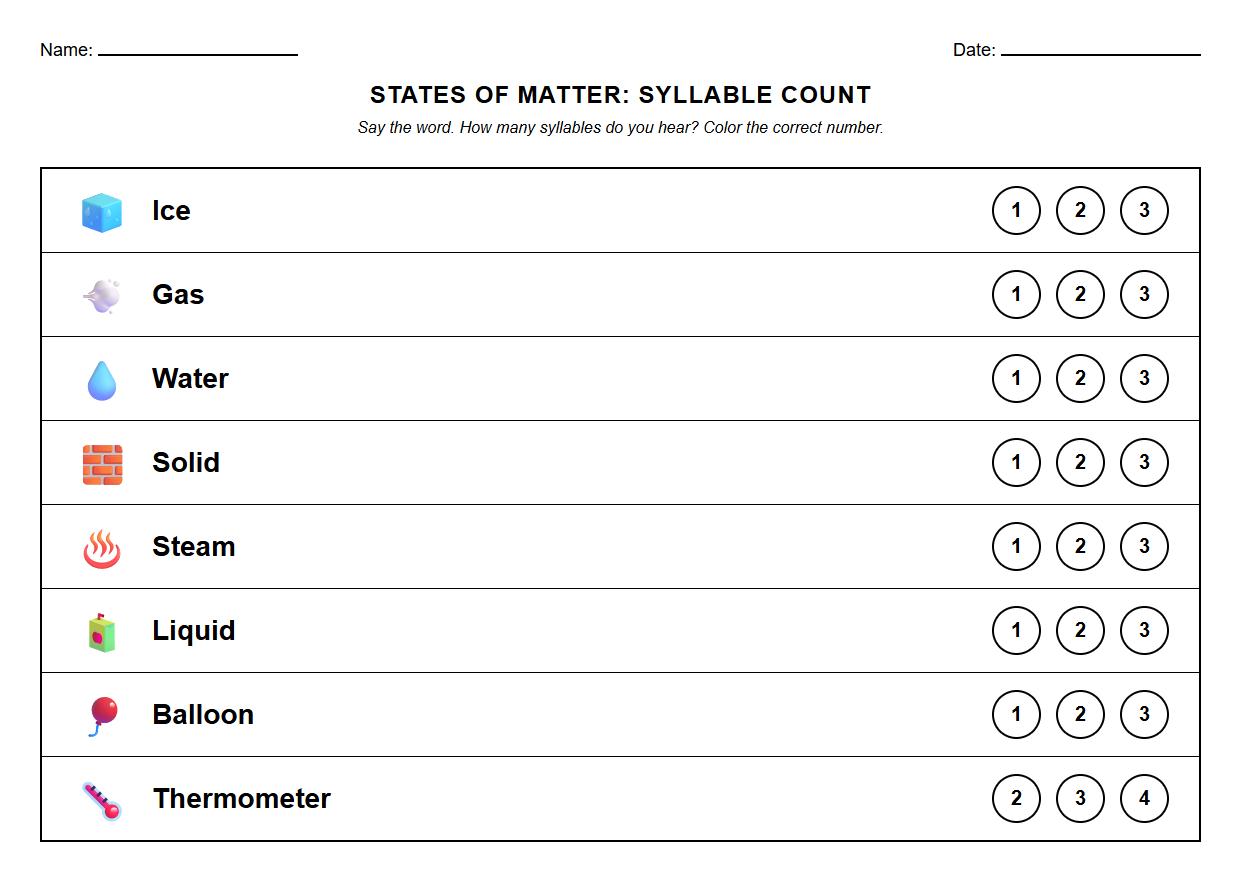
Ask children which letter sound the word "solid" begins with to develop phonemic awareness. The word "solid" starts with the letter S sound. This strengthens early reading skills by connecting sounds to letters. Practicing this helps children with spelling and pronunciation.
Understanding States of Matter
Help children name a state of matter they can blow into the air, which is gas. This concept shows that gases can spread and fill spaces. By linking the word to the action of blowing air, teachers and parents reinforce the idea effectively. It is important to highlight that gases differ from solids and liquids.
Describing Texture and Feelings
Teach children contrasting words to describe how things feel, such as the opposite of hard, which is soft. This builds vocabulary and helps them express sensory experiences. Use examples and objects for hands-on learning. Understanding opposites is key in early language development.
Rhyming Words in the Worksheet
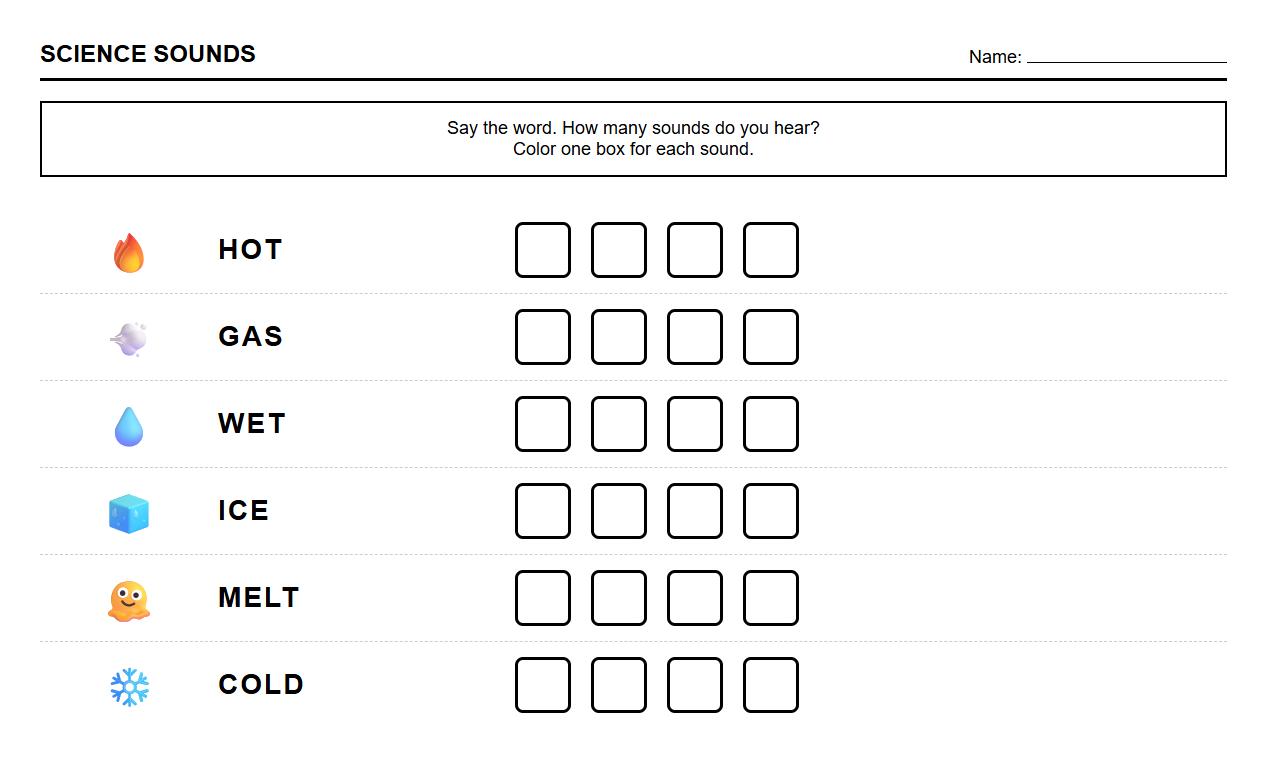
Encourage children to find the word that rhymes with "gas" in the worksheet, which is class. Rhyming supports phonological awareness and memory skills. Playing with rhymes is a fun way for children to learn language patterns. It also aids in identifying word families.
Explaining Melting and Changes
When ice melts, it turns into water, illustrating a change of state from solid to liquid. This example helps children understand physical changes in matter. Use simple experiments to observe melting in real-time. Visual aids strengthen comprehension of this science concept.
Identifying States of Matter through Word Search
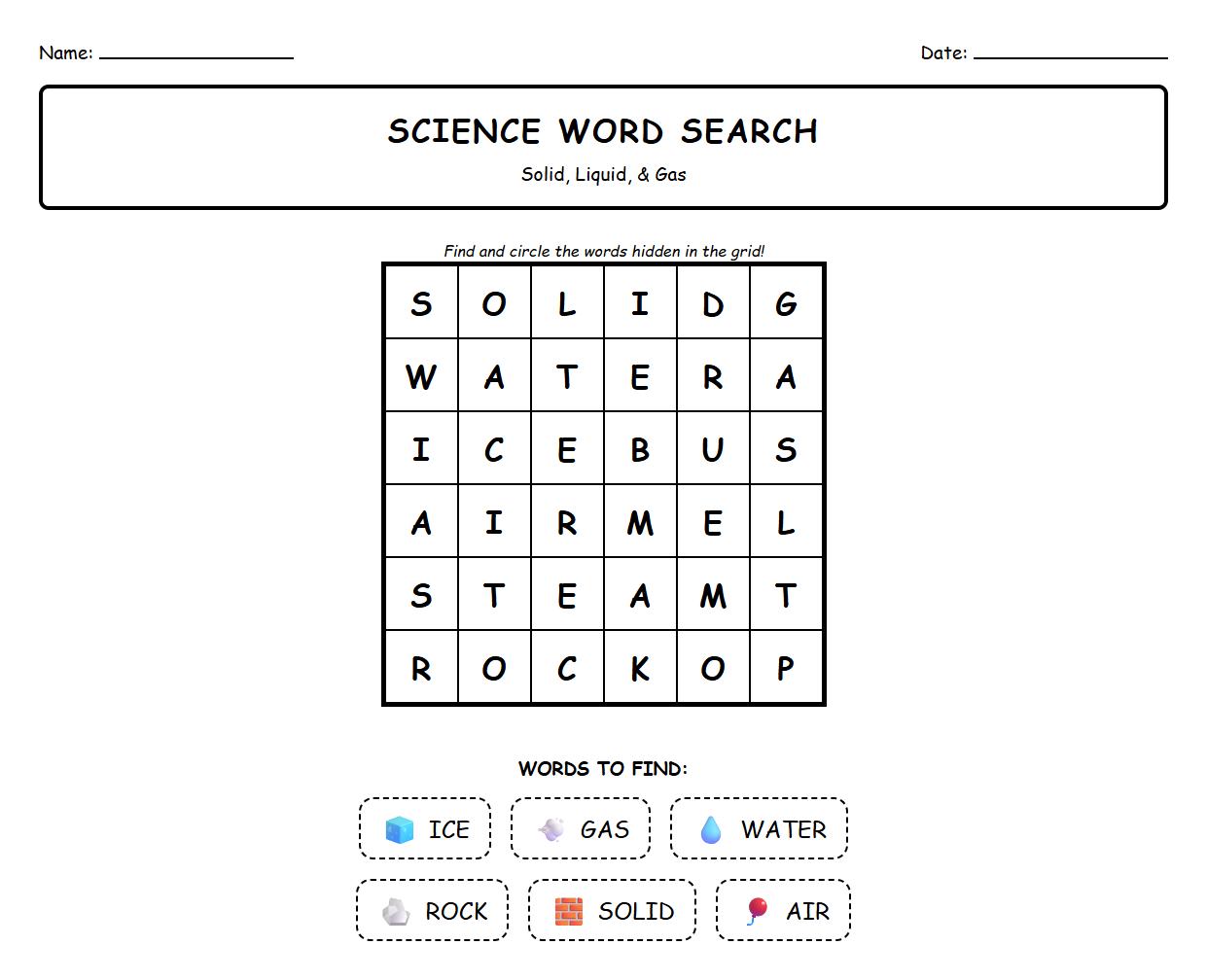
Guide children to circle the word that means something is not a liquid or solid, which is gas. This activity reinforces the three states of matter. Highlighting the unique properties of gases compared to solids and liquids enables better understanding. Word recognition also supports literacy.
Recognizing States of Matter by Observation
The state of matter where you often see bubbles is liquid. Bubbles form when gases are trapped in a liquid. Teaching this observation helps children connect science concepts with everyday experiences. It also illustrates how states of matter interact.
Spelling and Letter Recognition
Have children fill in the missing letter to make the word liquid, enhancing their spelling skills. This interactive task supports letter recognition and word formation. Combining phonics with hands-on work strengthens literacy development. Structured practice is essential at this stage.
Understanding Abstract Concepts
Identify from the worksheet the word that means something you cannot hold in your hand, which is gas. This teaches children the concept of intangible substances in science. Using simple language makes abstract ideas easier to grasp. It also bridges science and language learning.


Engaging Sink or Float Kindergarten Worksheet Activities for Science Exploration