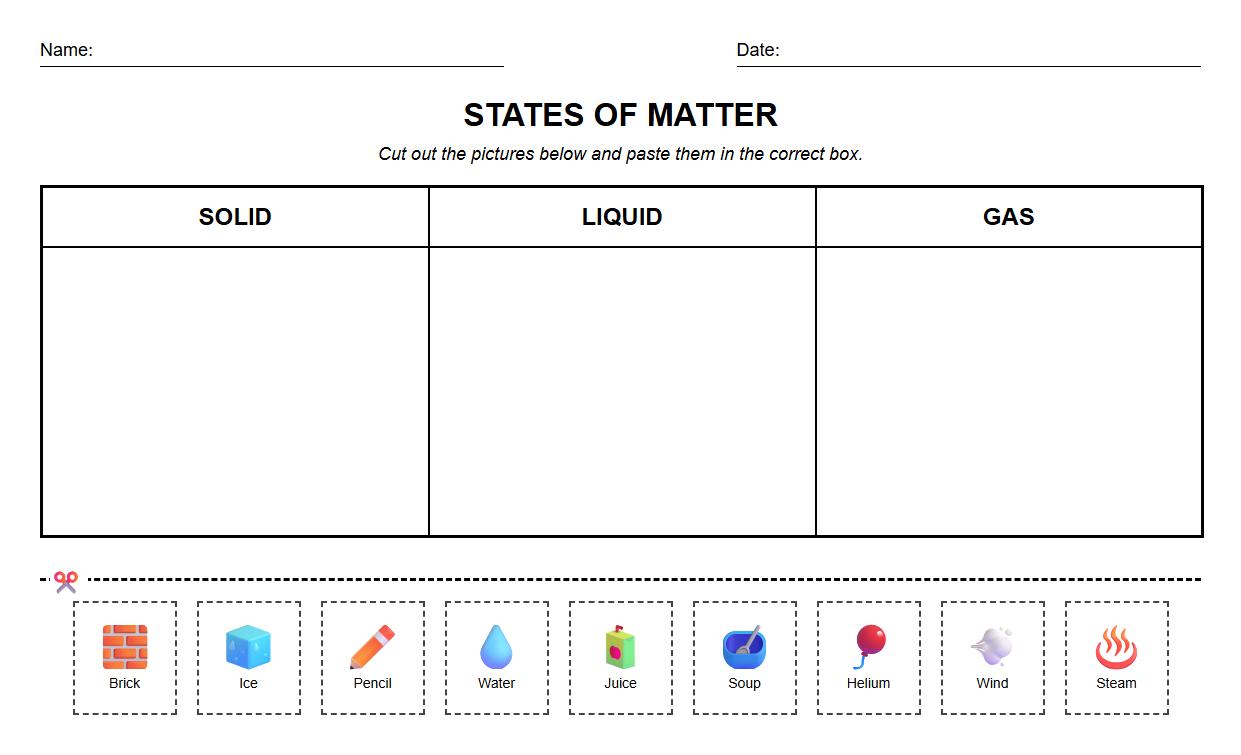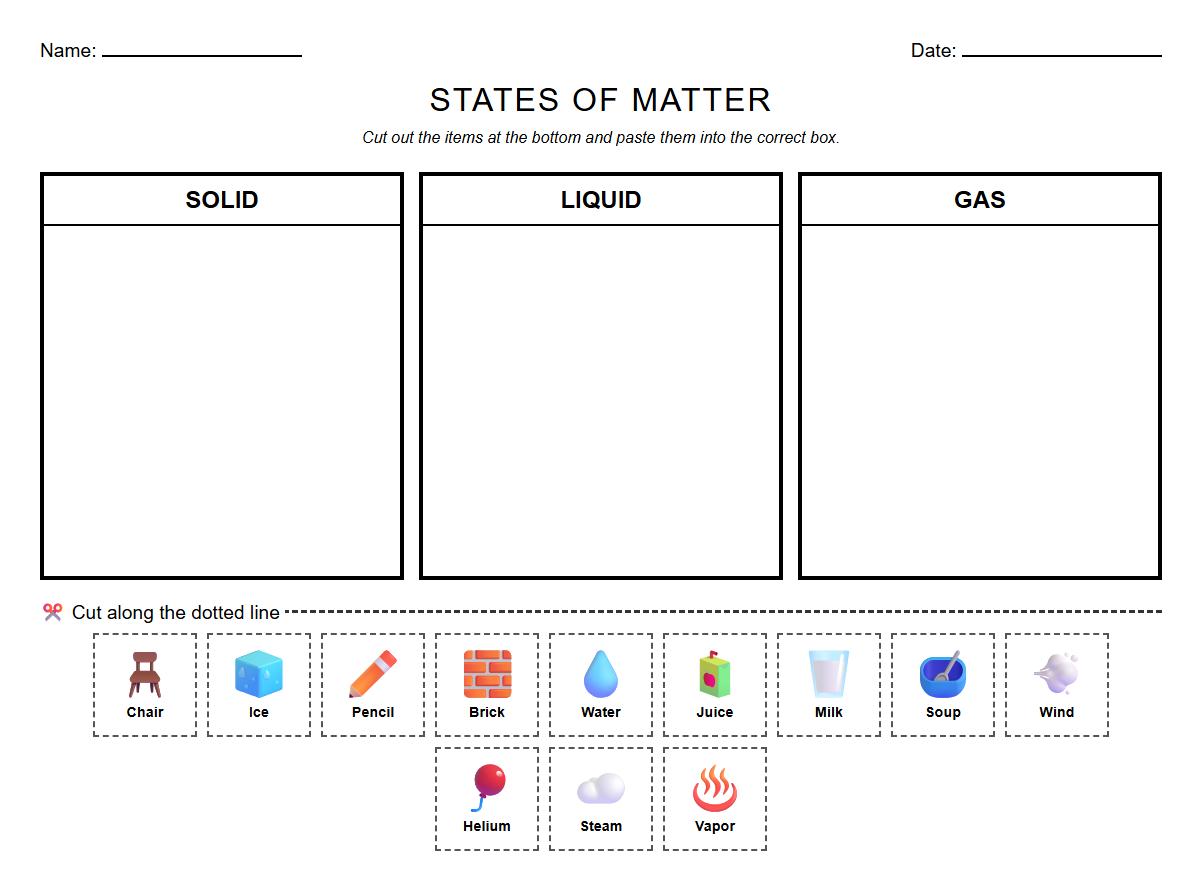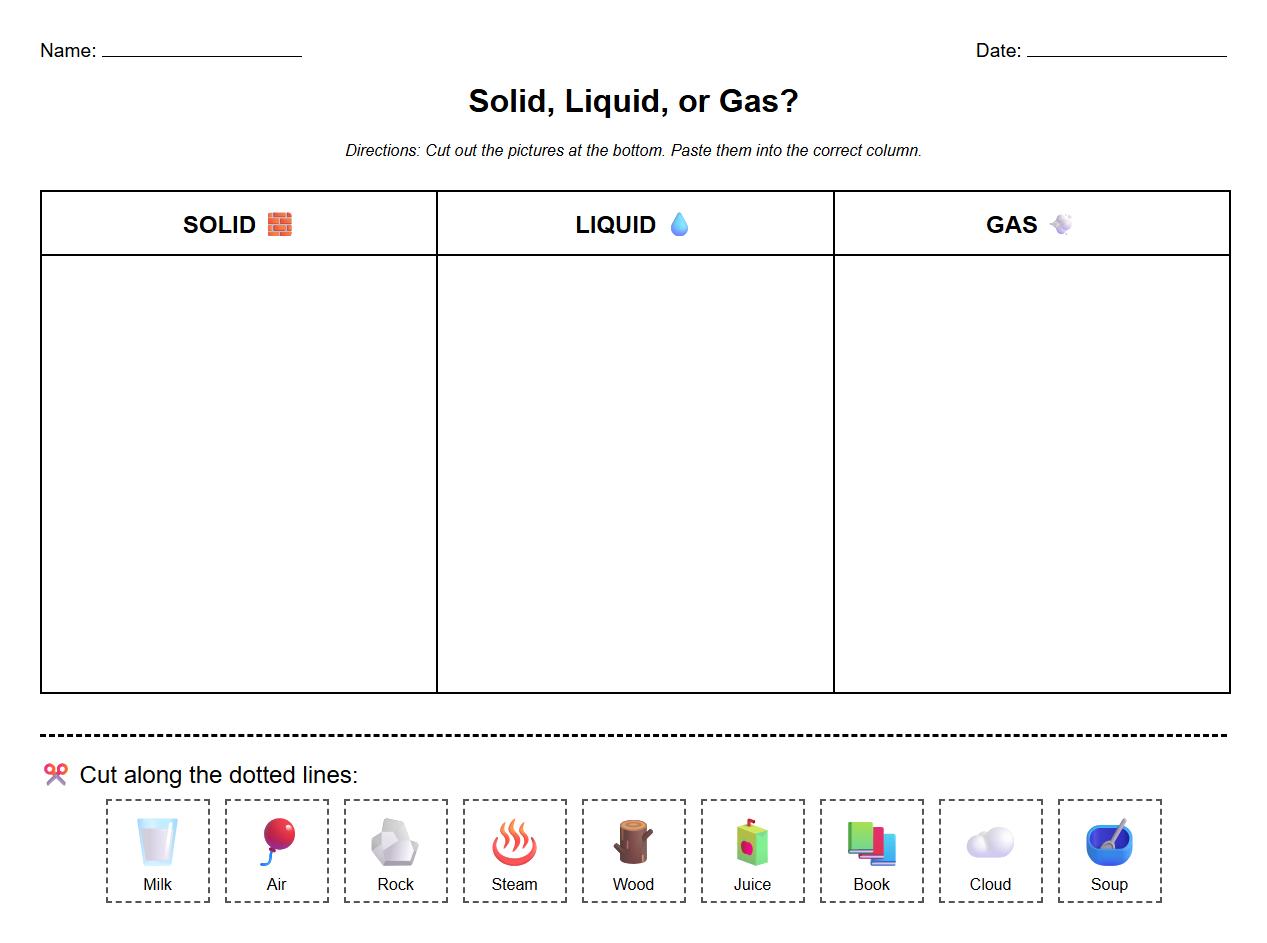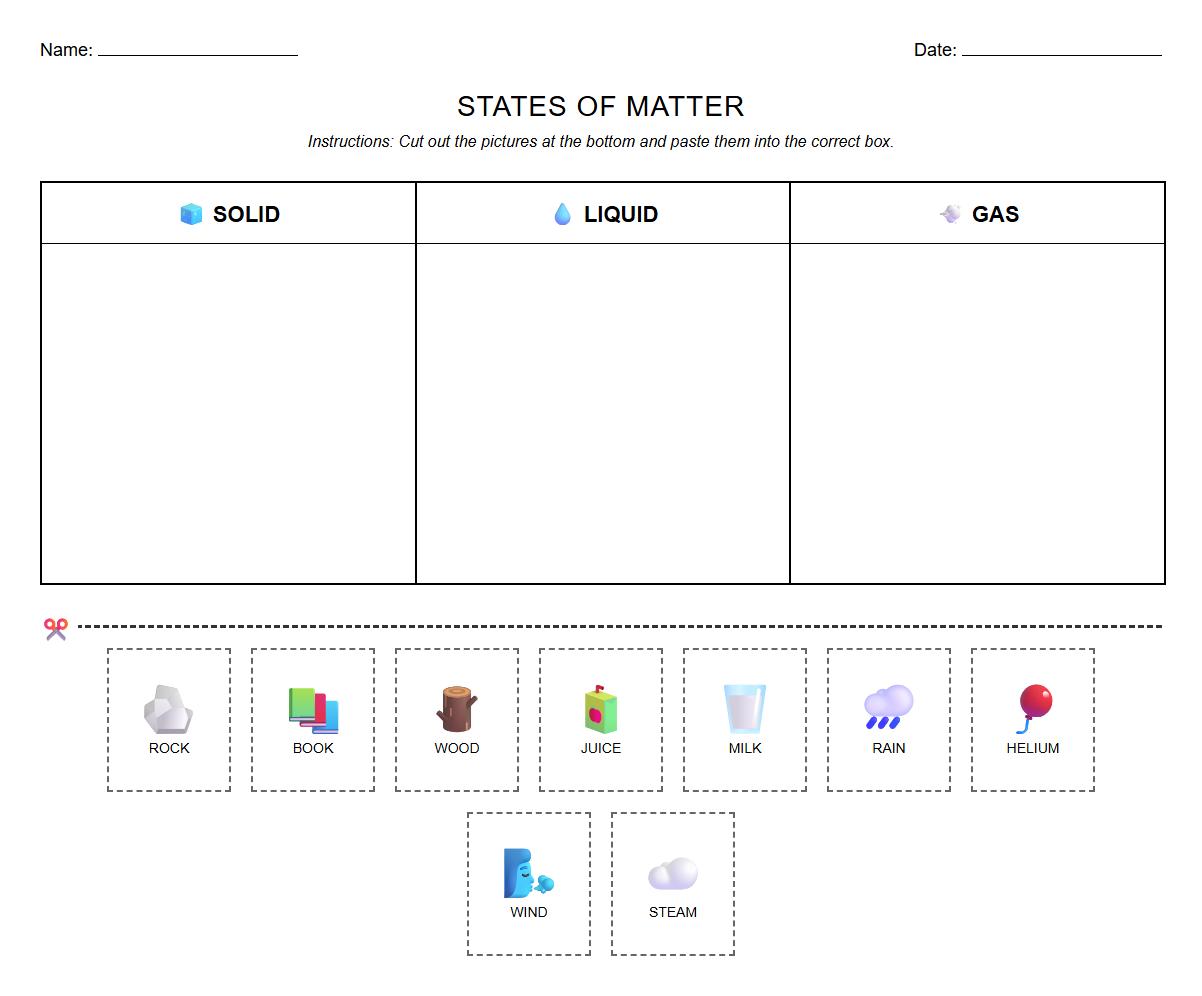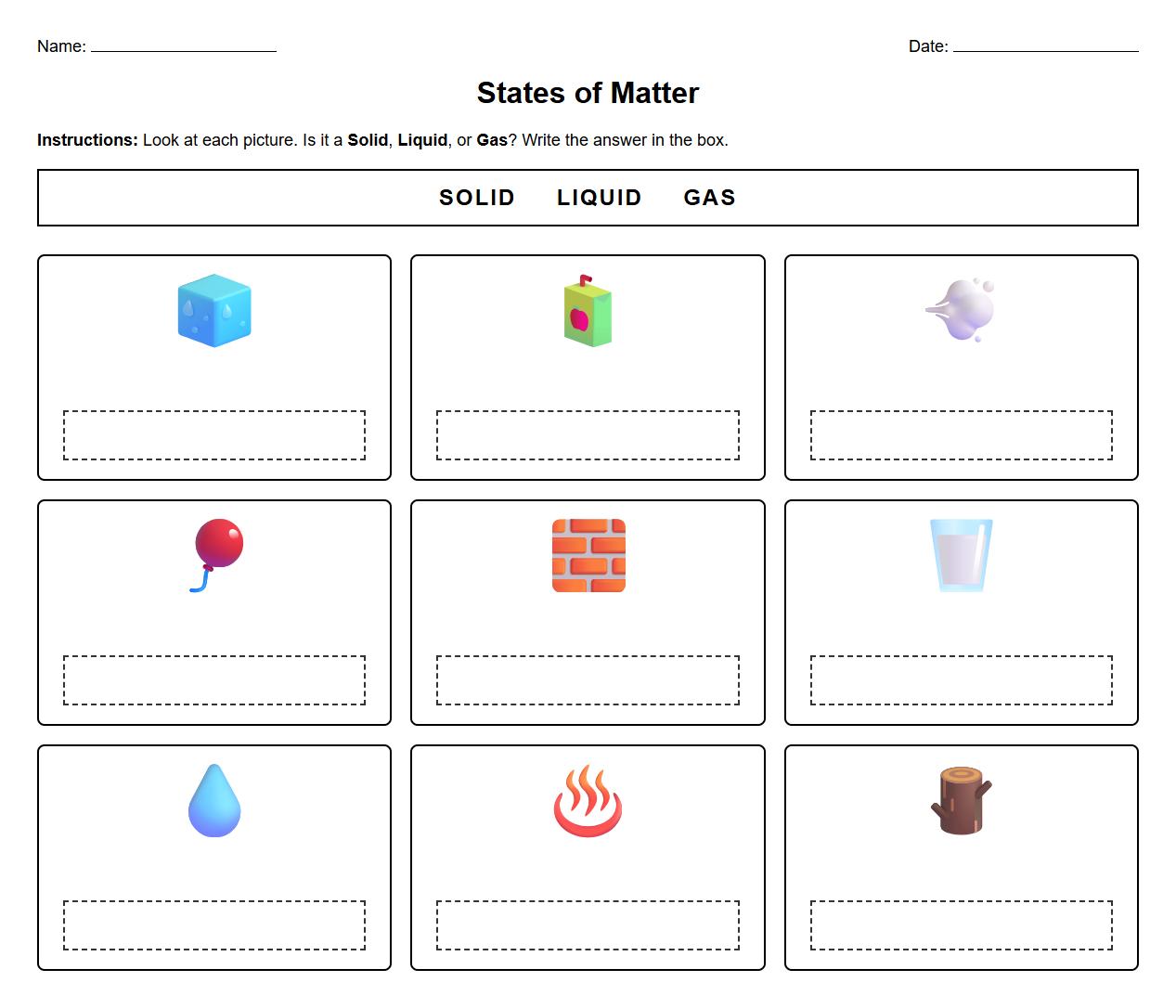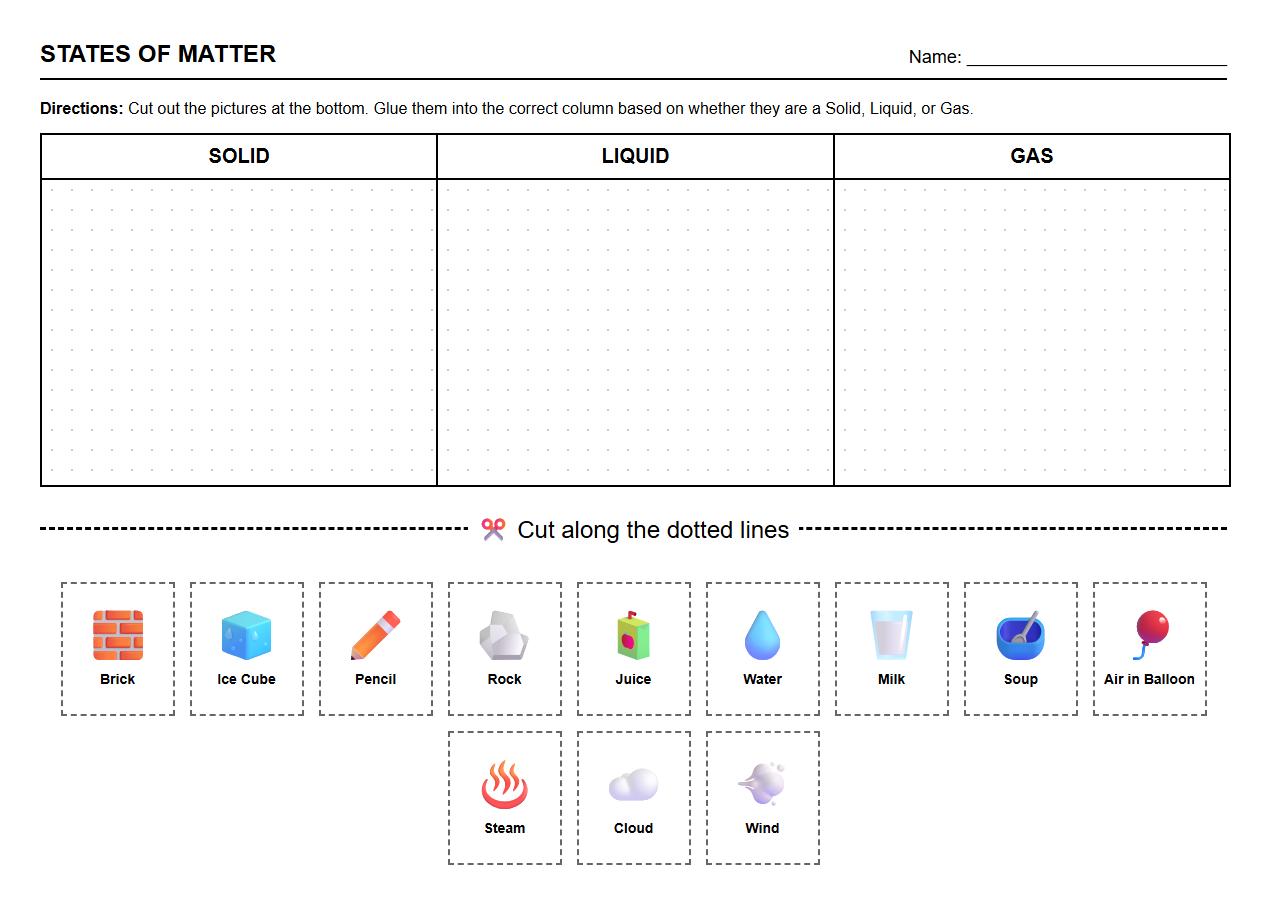
Classifying everyday items by their states of matter helps students understand solids, liquids, and gases in practical contexts. This worksheet encourages hands-on learning by sorting objects based on their physical properties. Explore the available worksheets to practice identifying items as solids, liquids, or gases.
Identifying Solids
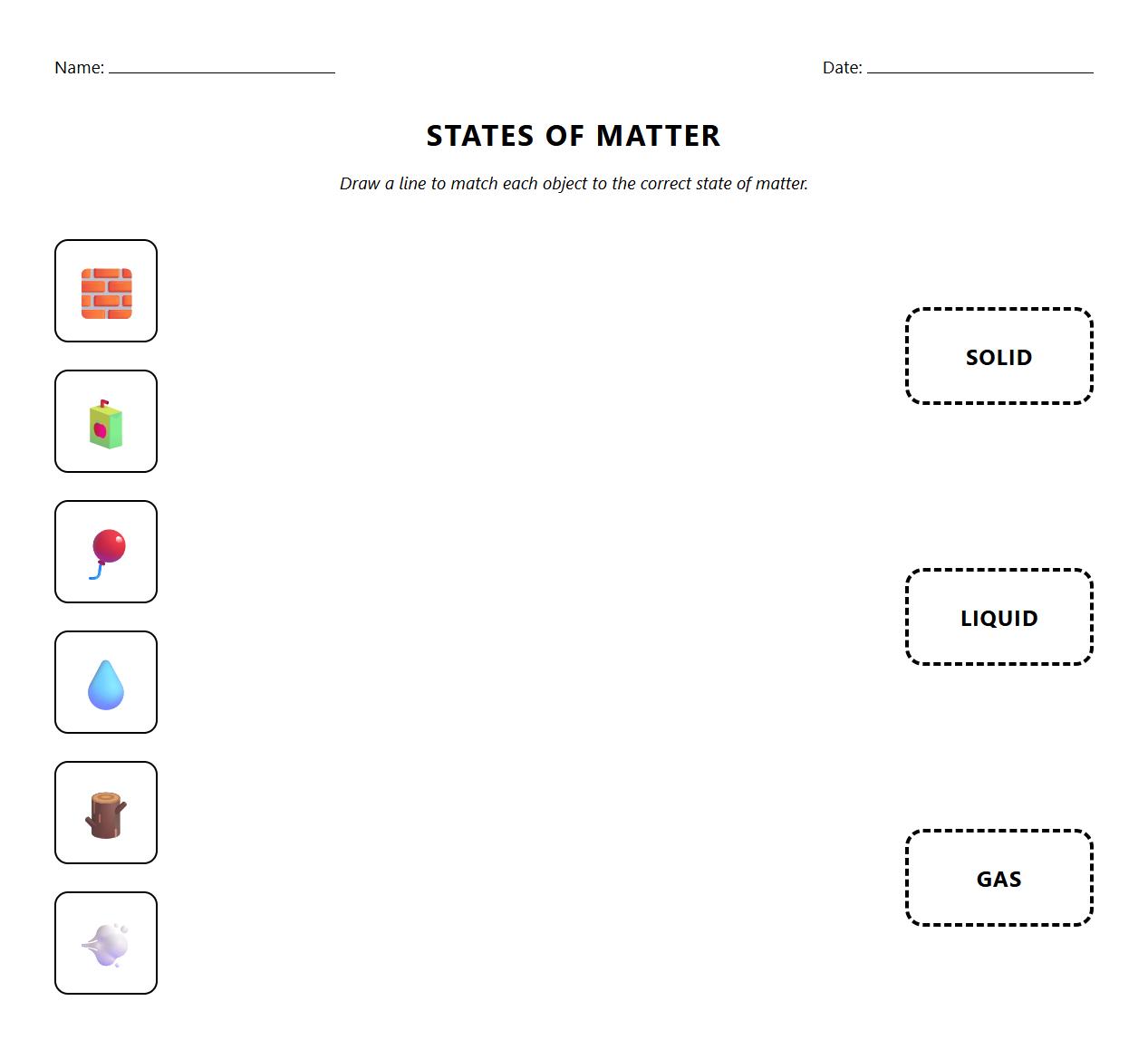
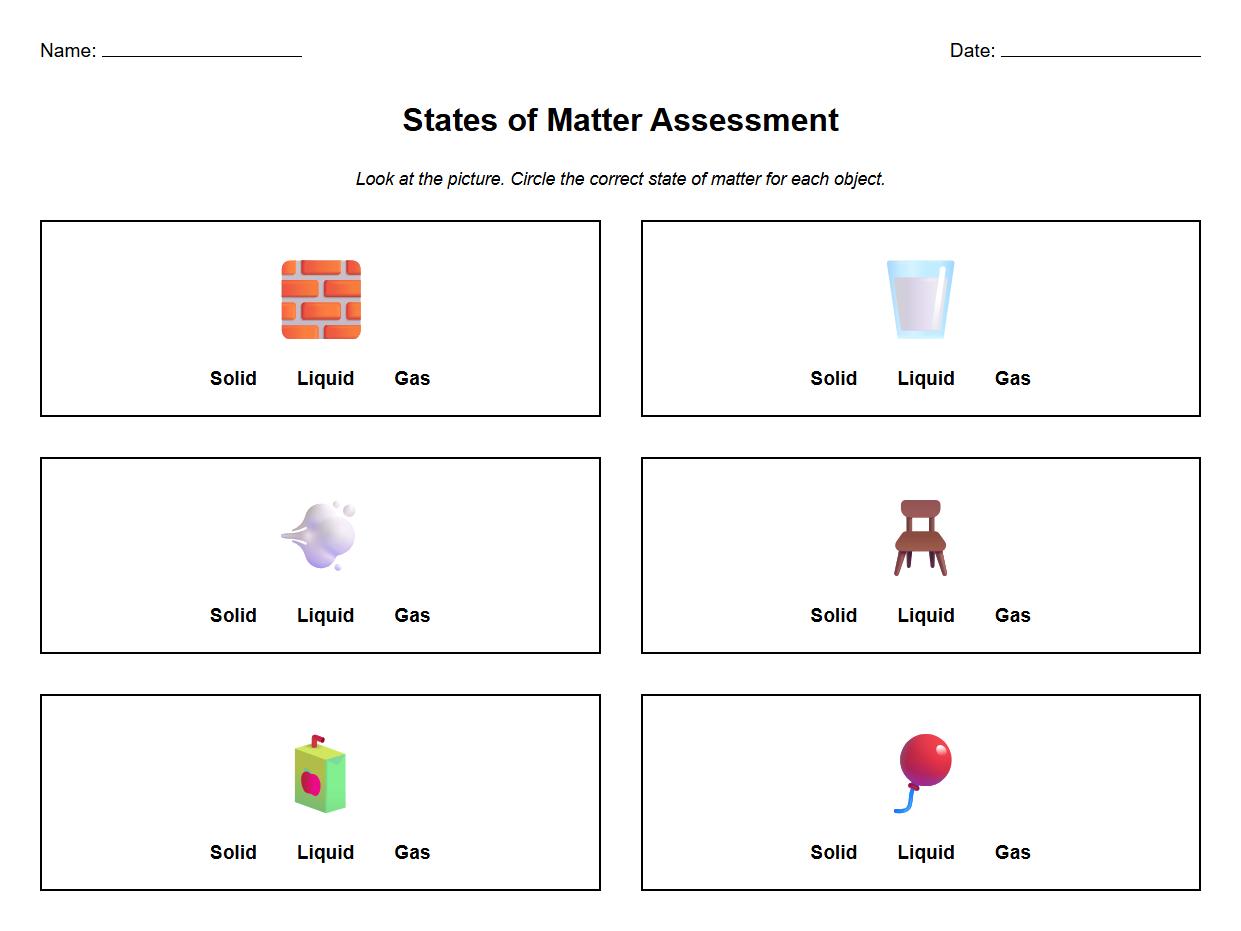
A solid has a definite shape and does not change easily. Among block, juice, and air, the block is a solid because it keeps its shape. Juice is a liquid, and air is a gas. This helps children understand basic physical properties.
Understanding Milk's State of Matter
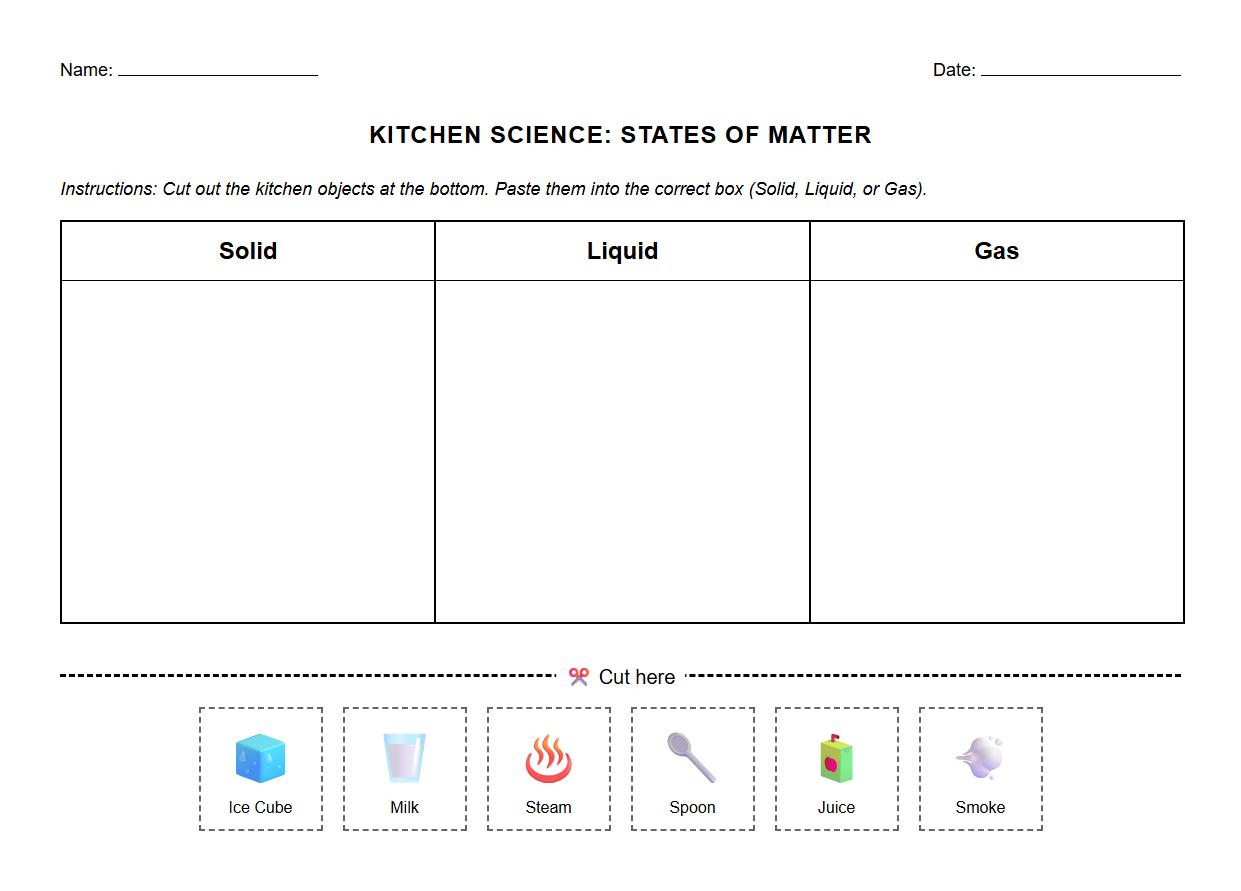
Milk is a liquid because it flows and takes the shape of its container. It does not have a fixed shape like a solid. Teaching this helps kids learn different states of matter. Liquids like milk are essential for their daily life understanding.
Ice Cream: Solid or Liquid?
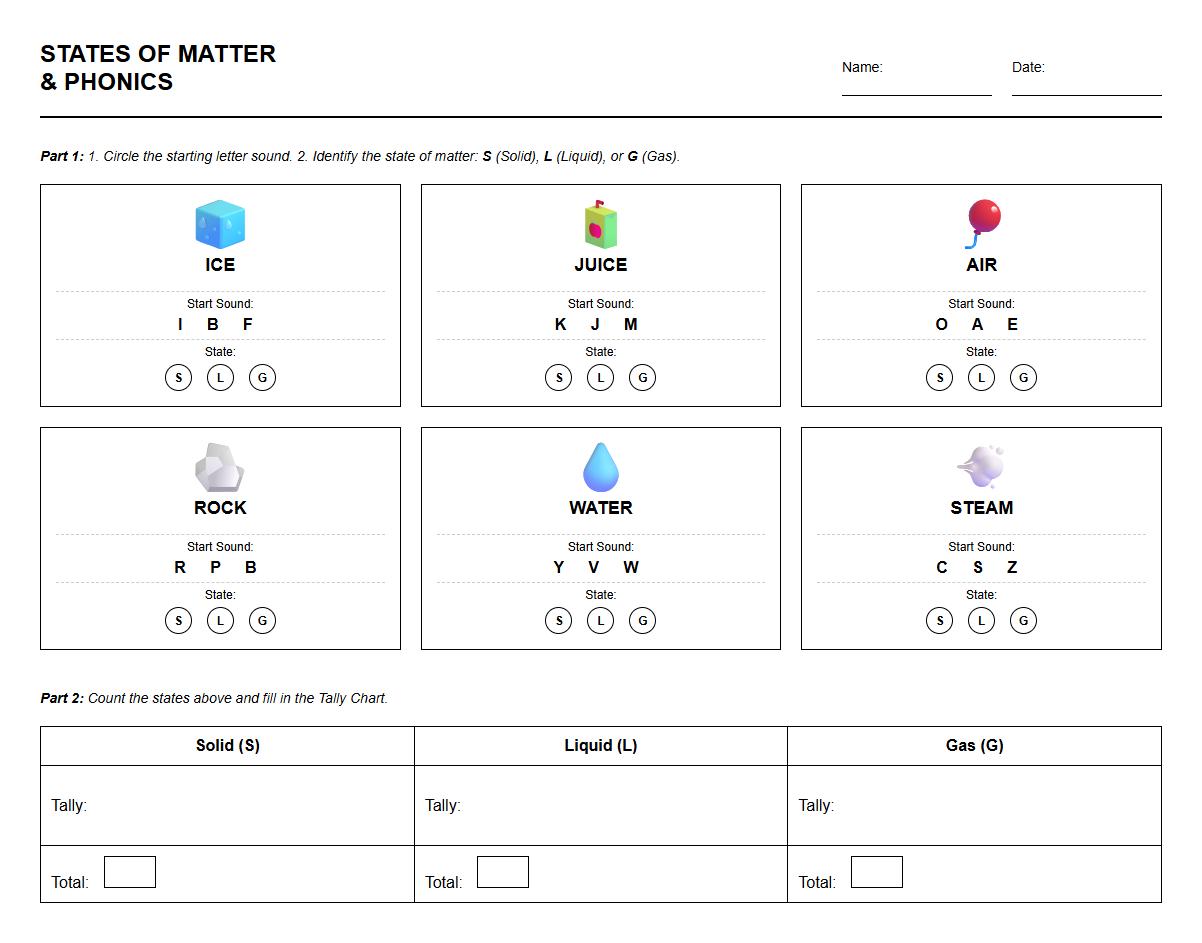
Ice cream starts as a solid but melts into a liquid when warm. It is mostly a solid when frozen, making it easy to hold. Explaining this shows children how temperature affects matter. This concept introduces changes in states of matter.
Identifying a Gas
A gas has no fixed shape and fills any container. Among balloon, water, and chair, the air inside the balloon is a gas. Water is a liquid, and a chair is a solid. This example helps kids recognize different matter states.
Examples of Liquids
One liquid you can drink is water. Liquids flow and take the shape of their container. Teaching this allows children to connect everyday items to states of matter. Other drinks like juice and milk are also liquids.
Can You Touch a Gas?
You cannot directly touch a gas because it spreads out and fills spaces. Gases are invisible like air around us. This helps children understand that not all matter can be held or seen. It's important to learn about different properties of matter.
Crayons as Solids
A crayon is a solid because it keeps its shape and can be held easily. Solids do not flow or change shape without force. Teaching this helps children recognize solid objects around them. Crayons are also useful for arts and crafts.
The State of Matter of Rain
Rain is a liquid because it falls as water droplets. It flows and takes the shape of the surfaces it lands on. Kids learn how water moves through different states in nature. This expands their understanding of the water cycle.
Pouring a Solid
You cannot pour a solid because solids do not flow like liquids. Solids hold their shape unless broken or melted. This difference is key in teaching children about matter properties. Examples like sand or blocks illustrate this well.
Which Is Not a Liquid?
Among soup, bread, and soda, bread is not a liquid. Soup and soda are liquids because they flow and take the shape of containers. Bread is a solid with a fixed shape. Understanding these differences aids young learners in categorizing matter.


Kindergarten Science States of Matter Visual Discrimination Worksheet