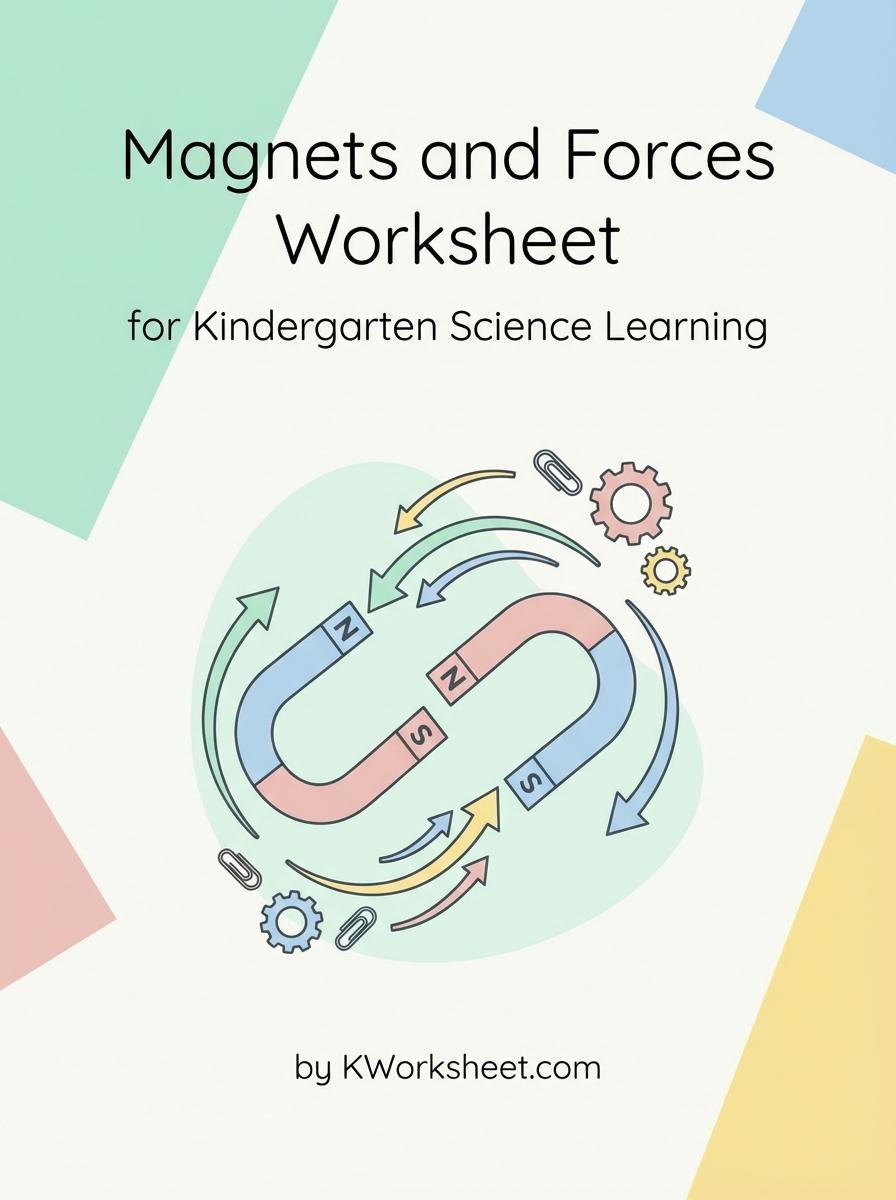
Magnets and Forces Worksheet for Kindergarten Science Learning

📅 Jun 3, 2025 👤 Nylen Smith

Explore the basic properties of magnets and their ability to attract or repel objects through fun, hands-on activities designed for kindergarten students. This worksheet helps young learners understand the concept of forces and magnetic interactions in an engaging way. Check out the available worksheets to support early science learning with magnets and forces.

Magnetic and Nonmagnetic Objects Sorting Worksheet
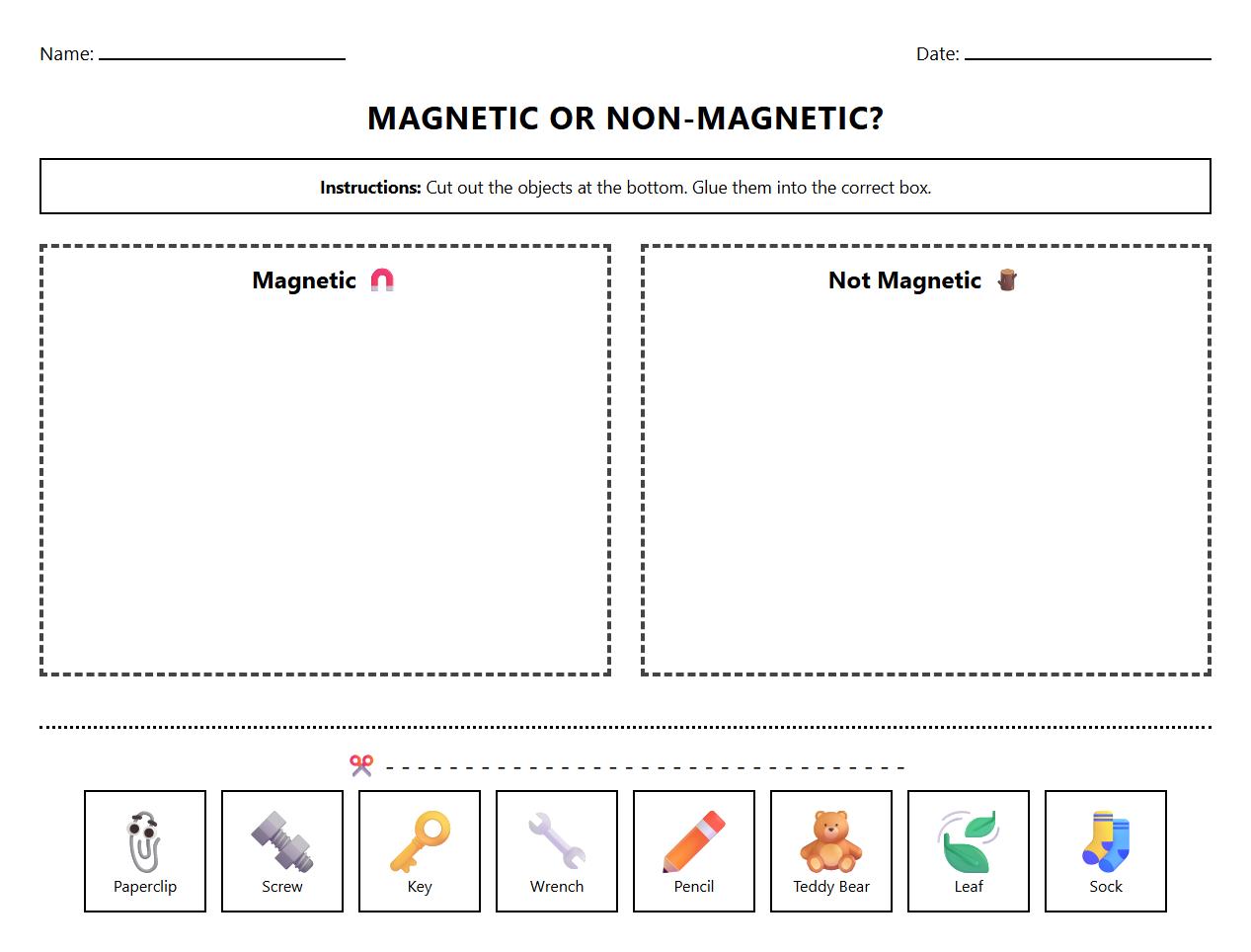
Magnetic and Nonmagnetic Objects Sorting Worksheet

Download PDF     Pin it

Push and Pull Forces Identification Worksheet
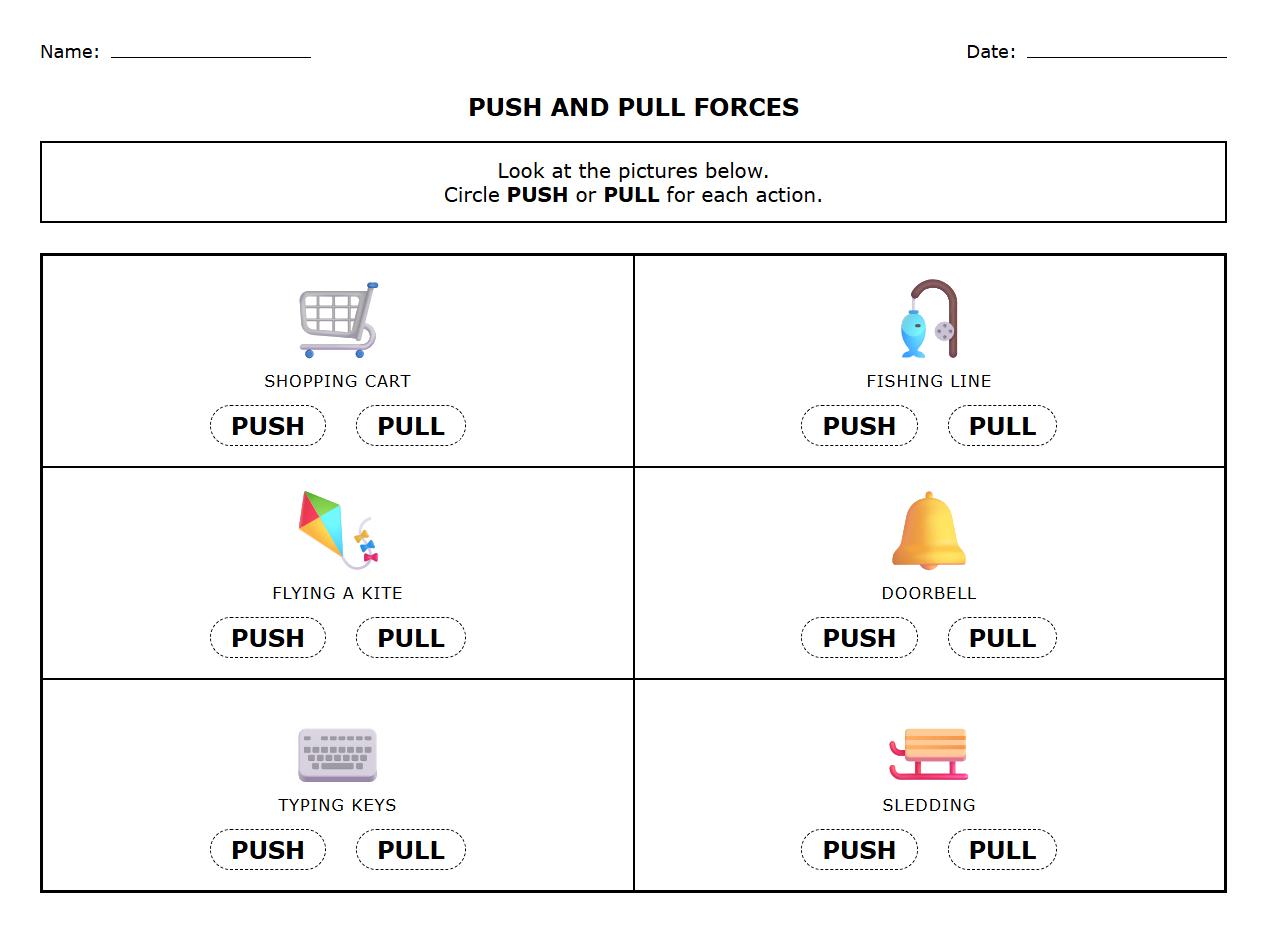
Push and Pull Forces Identification Worksheet

Download PDF     Pin it

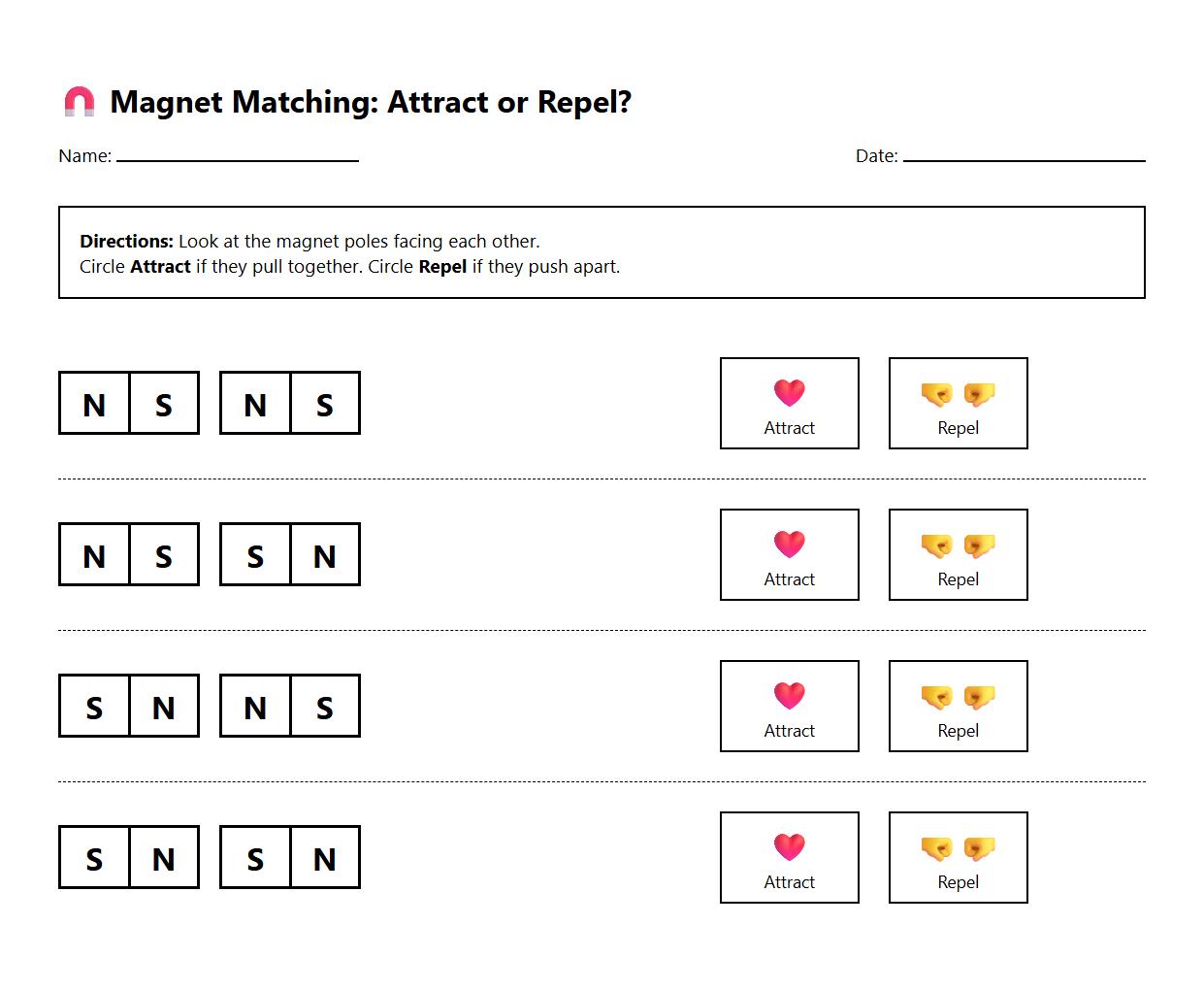
Magnet Poles Matching Activity

Magnet Poles Matching Activity

Download PDF     Pin it

Everyday Uses of Magnets Cut and Paste Worksheet
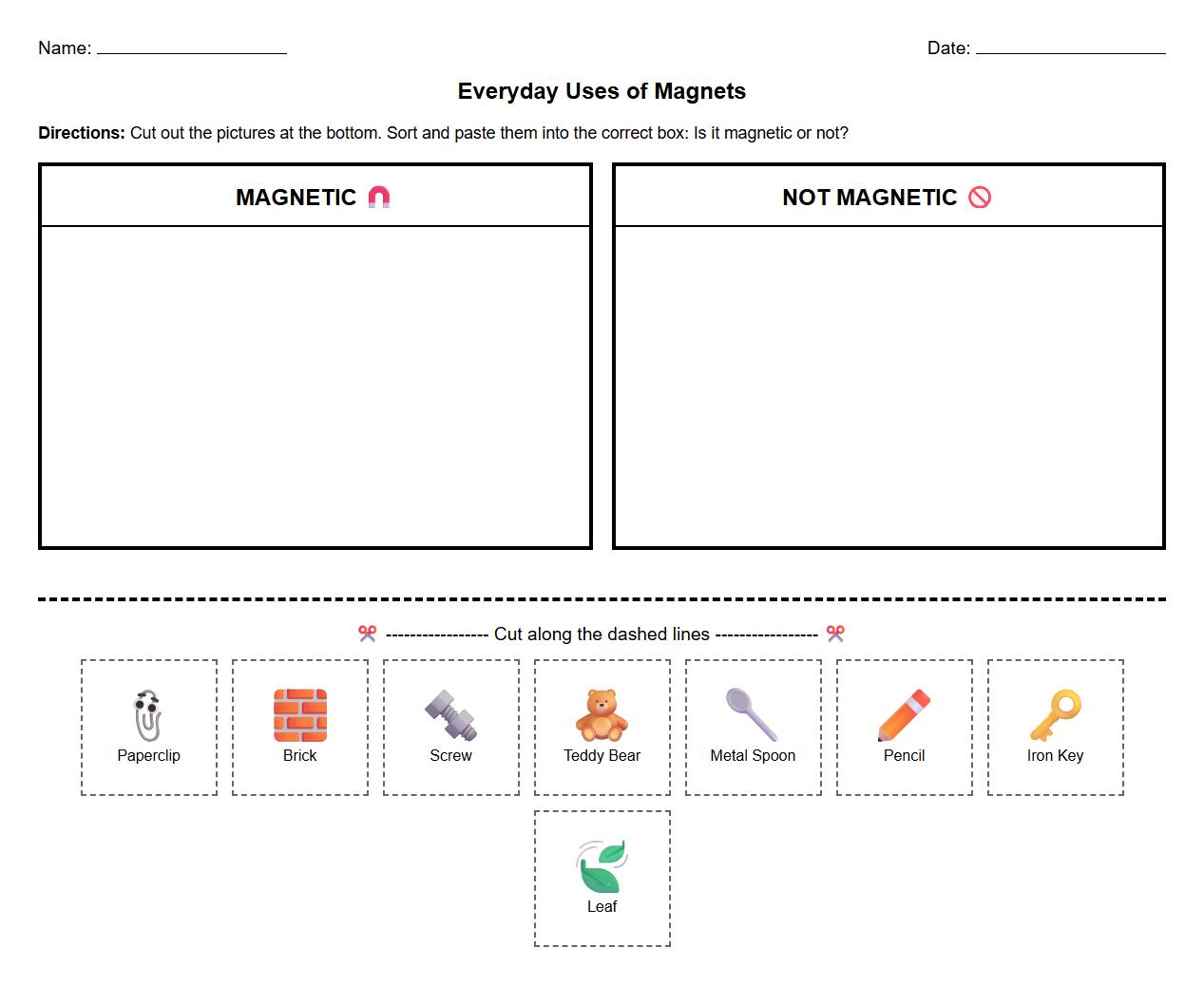
Everyday Uses of Magnets Cut and Paste Worksheet

Download PDF     Pin it

Force Direction Arrow Drawing Exercise
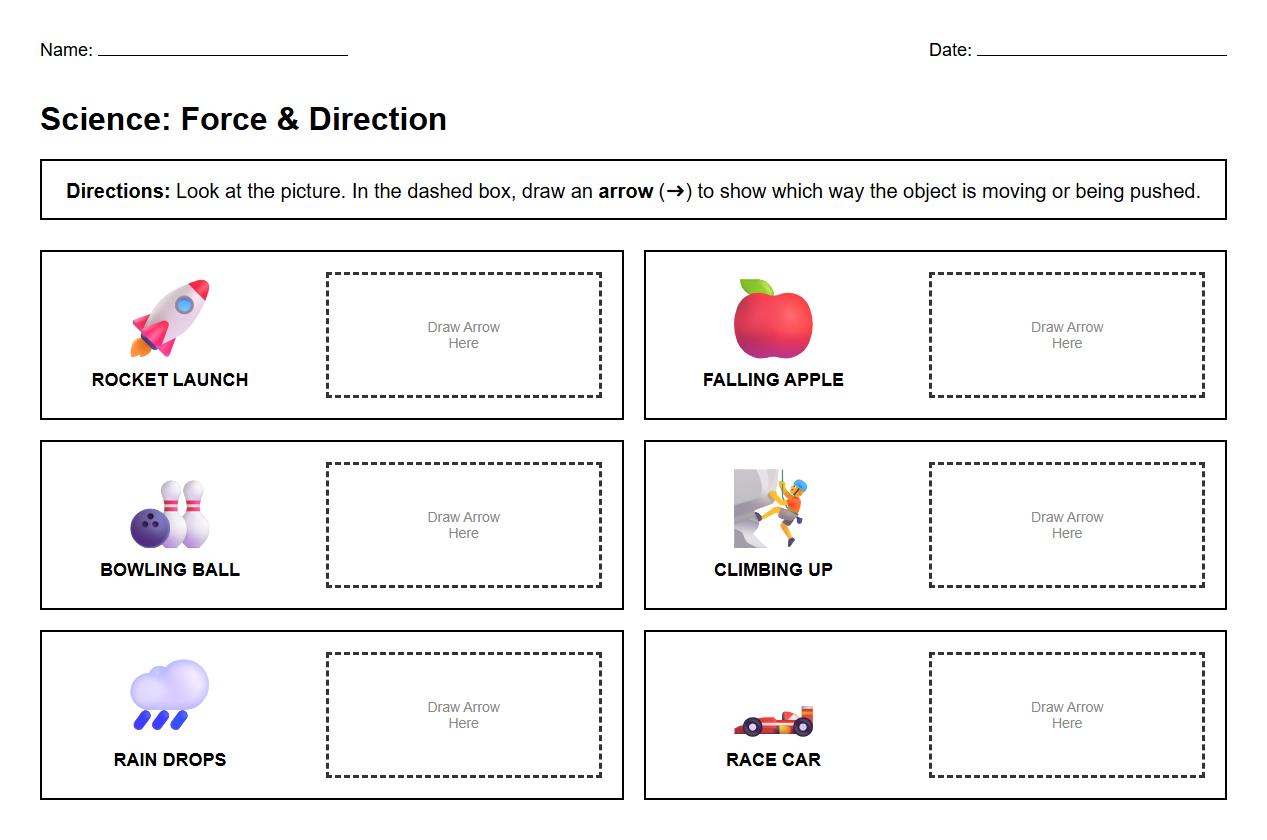
Force Direction Arrow Drawing Exercise

Download PDF     Pin it

Attract and Repel Magnet Experiment Recording Sheet
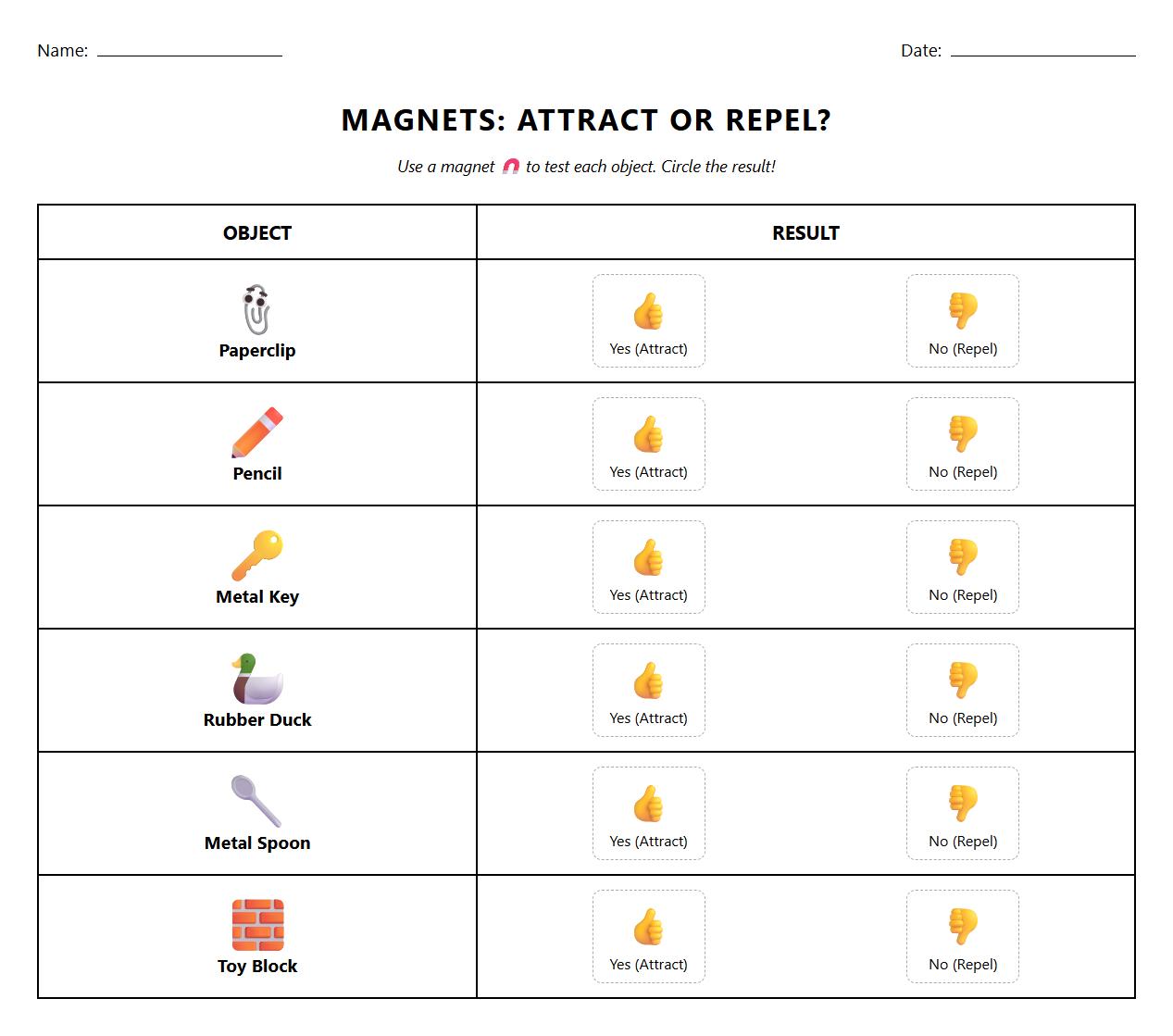
Attract and Repel Magnet Experiment Recording Sheet

Download PDF     Pin it

Which Items Stick to a Magnet Observation Chart
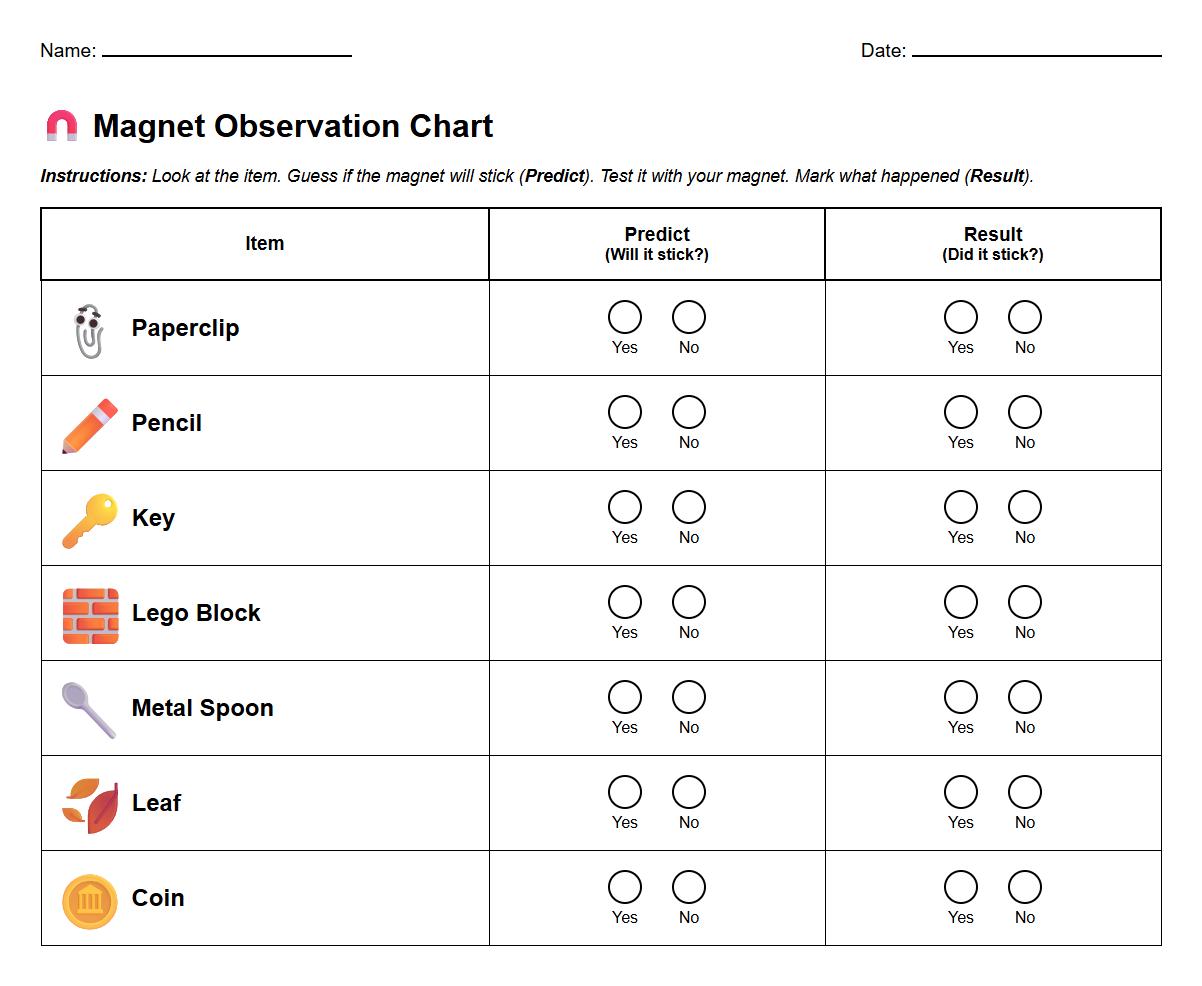
Which Items Stick to a Magnet Observation Chart

Download PDF     Pin it

Strength of Magnetic Force Simple Bar Graph Worksheet
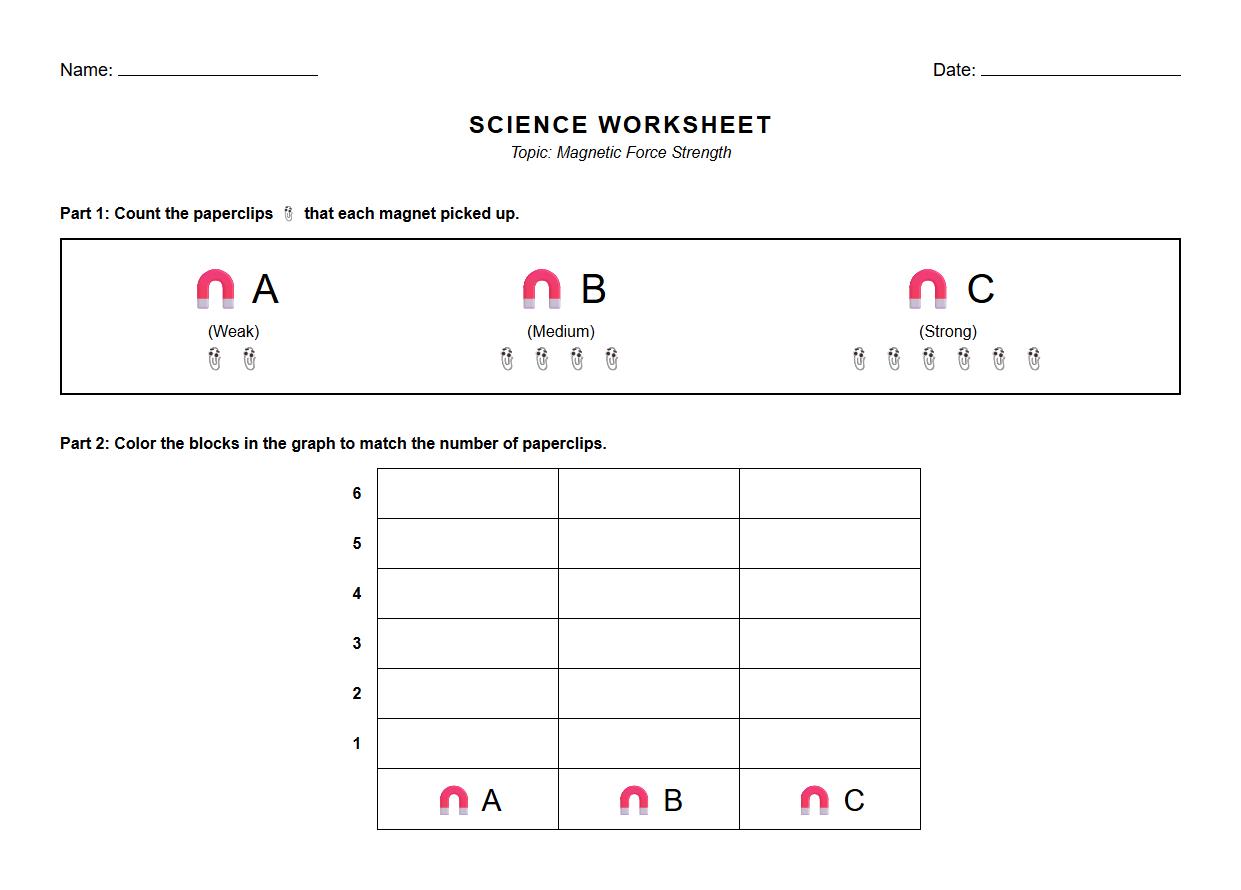
Strength of Magnetic Force Simple Bar Graph Worksheet

Download PDF     Pin it

Magnets in Home Visual Scavenger Hunt
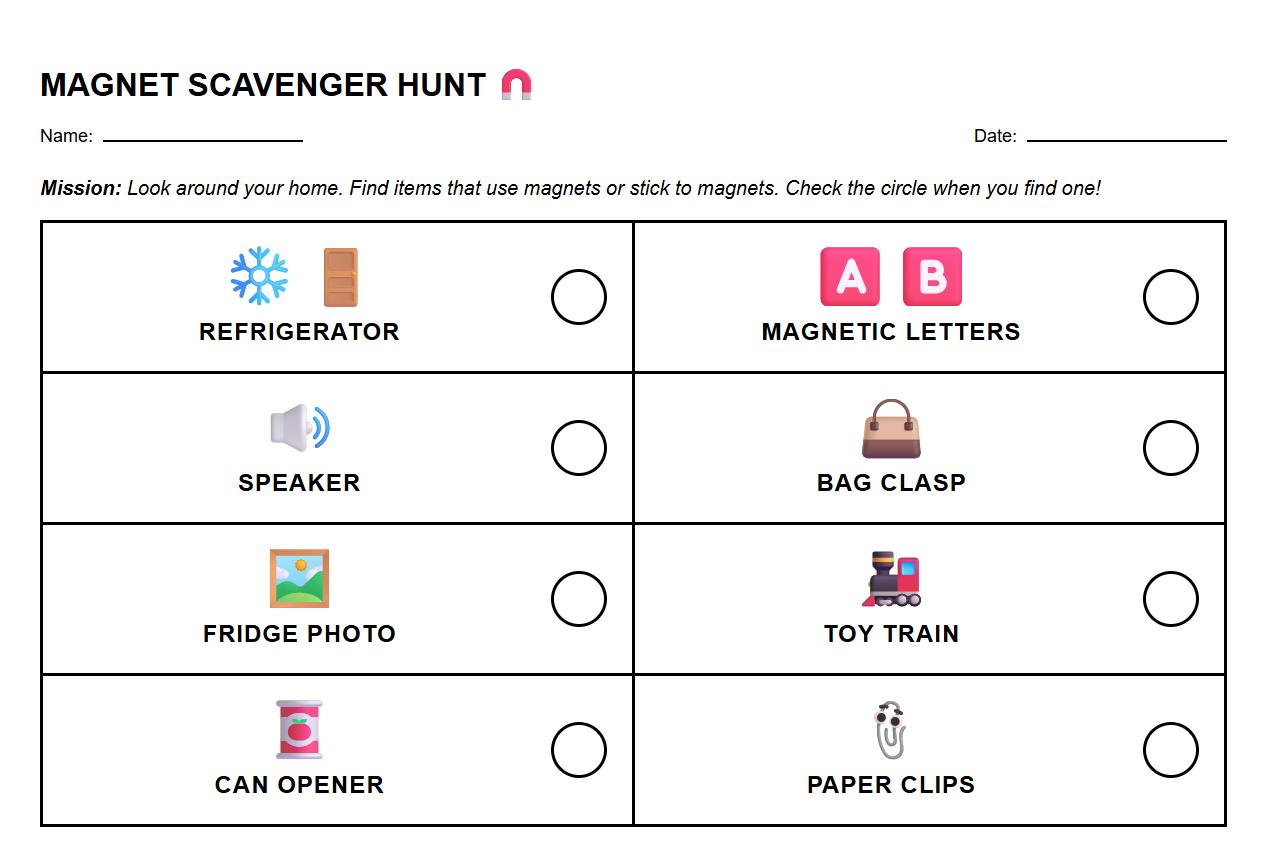
Magnets in Home Visual Scavenger Hunt

Download PDF     Pin it

Phonics and Science Vocabulary Magnet Words Coloring Sheet
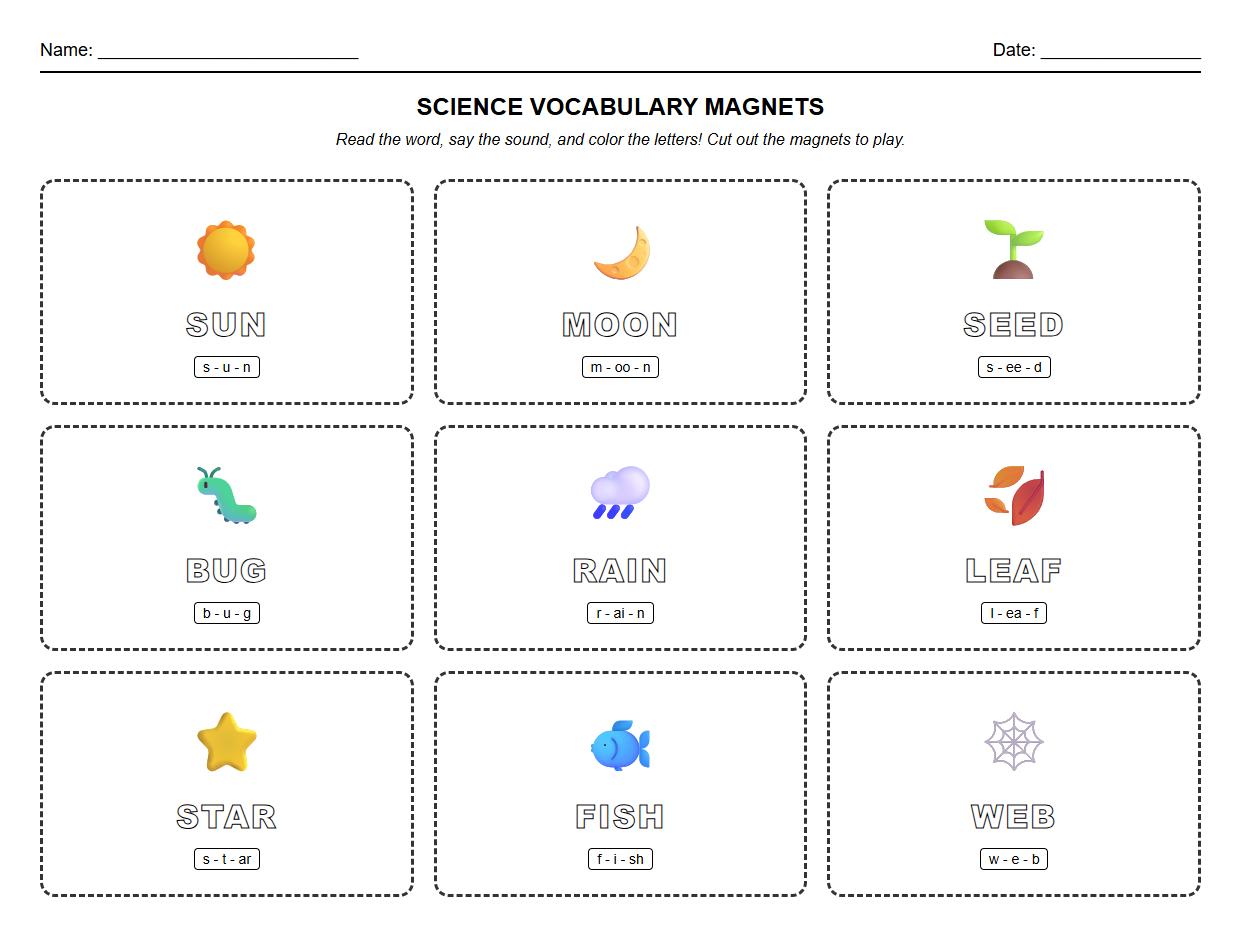
Phonics and Science Vocabulary Magnet Words Coloring Sheet

Download PDF     Pin it

What Objects Can Magnets Pick Up?

Magnets can pick up objects made from magnetic materials like iron, steel, nickel, and cobalt. These materials contain metals that magnets attract easily. Common classroom items such as paper clips, nails, and some toys are picked up by magnets. Plastic, wood, and paper cannot be picked up by magnets because they are not magnetic.

Which Materials Do Magnets Stick To?

Magnets stick to materials that contain iron, nickel, or cobalt. Metals like steel and iron are good examples because they have magnetic properties. Materials such as wood, plastic, or glass do not attract magnets. This helps children learn to differentiate between magnetic and non-magnetic materials.

Are Magnets Attracted to Wood?

No, magnets are not attracted to wood because wood is a non-magnetic material. Wood does not contain the necessary metals that magnets pull towards. This fact is useful when teaching children about different material types. Understanding this helps classify objects in the classroom environment.

Can You Find Something in the Classroom That a Magnet Will Attract?

Look around the classroom for objects made of magnetic metals, such as paper clips, metal scissors, or staples. These items will easily be pulled by a magnet. This fun activity encourages children to explore and identify magnetic objects. It also introduces hands-on learning about magnets.

What Happens When You Try to Push Two Magnet Ends Together?

When you push two magnet ends with the same poles together (like north to north), they repel or push away from each other. If you try opposite poles (north to south), they attract or pull together. This magnetic behavior shows that magnets can both push and pull. Learning this concept helps kids understand forces in magnetism.

Which Part of the Magnet is the Strongest?

The strongest part of a magnet is called the magnet's poles, usually located at the ends. These areas have the highest magnetic force and attract metal objects the best. The middle part of the magnet is weaker in comparison. Teaching this helps children learn how magnets work more effectively.

Do Magnets Work Under Water?

Yes, magnets work under water because water does not block magnetic forces. Magnets can attract metal objects even through water or other liquids. This fact can be demonstrated during fun water-based classroom experiments. It helps children see that magnetism works in different environments.

What is a Force?

A force is a push or pull that can make something move, stop, or change direction. Magnets create a magnetic force that pulls certain materials worn or pushes like poles apart. Understanding force is important for learning about movement and energy in objects. This basic science concept is essential for early learners.

Can a Magnet Move an Object Without Touching It?

Yes, a magnet can move an object without touching it because magnetic force works at a distance. This means magnets can attract or repel objects from close by without any contact. Demonstrating this helps kids understand invisible forces. It also sparks curiosity about how things work unseen.

How Can You Tell if Something is Magnetic?

To test if something is magnetic, use a magnet to see if the object is pulled or attracted by the magnet. If the magnet sticks, the object contains magnetic materials. If not, it means the object is non-magnetic, like plastic or wood. This simple test helps children identify different materials and expand their understanding of magnetism.


More in Science Category


About the author. Nylen Smith is a dedicated educator and cofounder of KWorksheet.com, a popular platform specializing in high-quality kindergarten worksheets and printable activities.

Disclaimer. The information provided in this document is for general informational purposes and/or document sample only and is not guaranteed to be factually right or complete. Please report to us via contact-us page if you find and error in this page, thanks.

Comments

No comment yet