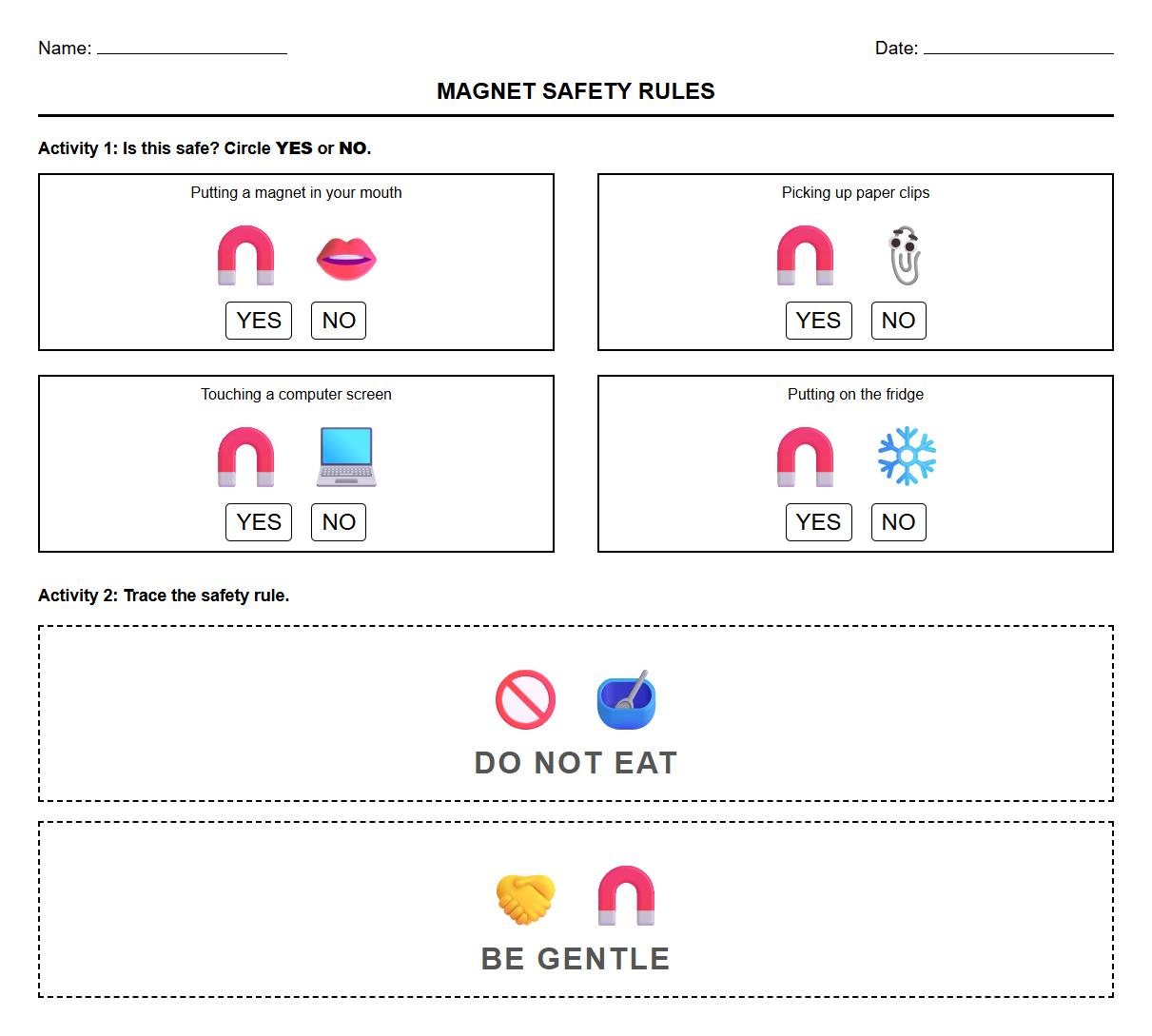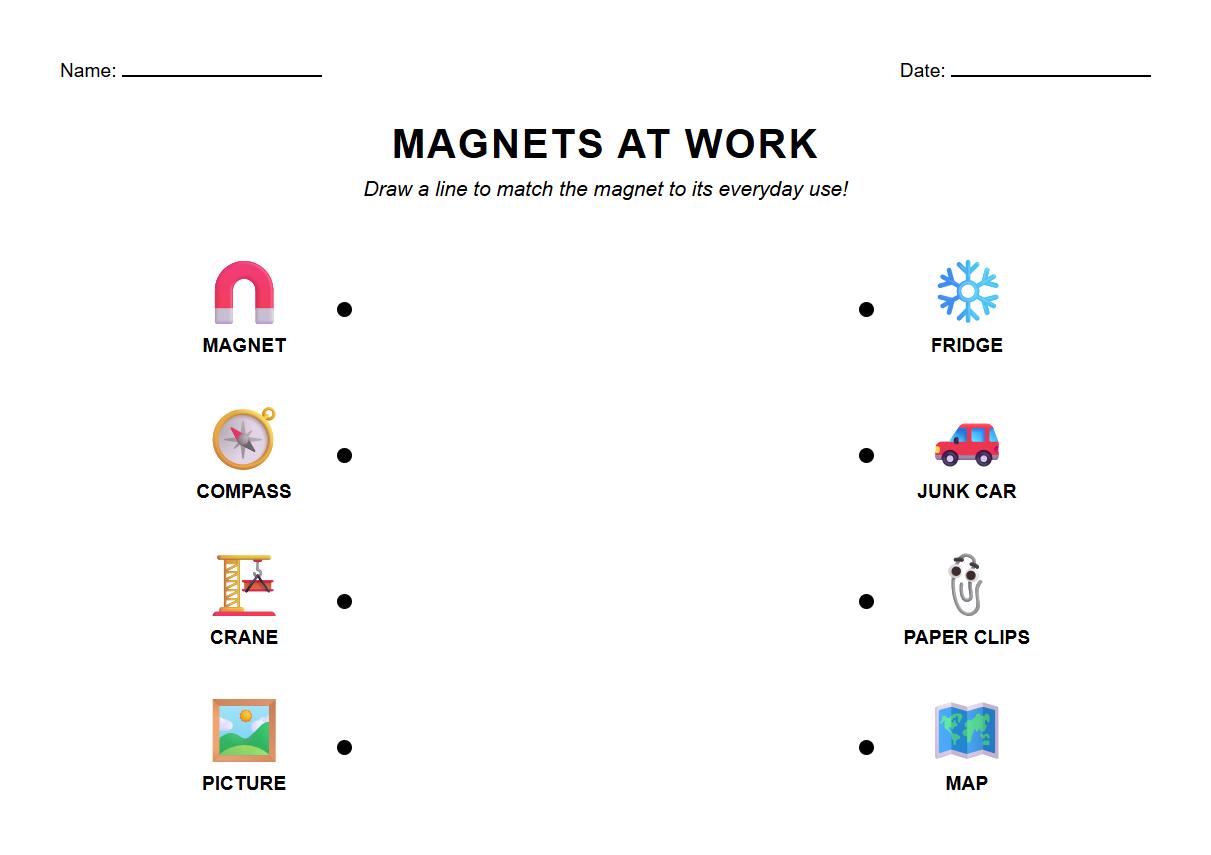
Explore the fascinating world of magnetism with hands-on experiments designed specifically for young learners to develop their scientific curiosity and critical thinking skills. These engaging activities provide practical experience in observing magnetic forces, understanding attraction and repulsion, and discovering real-world applications of magnets. Check out the available worksheets to spark your students' excitement in science through interactive magnet experiments.
Objects Tested with the Magnet
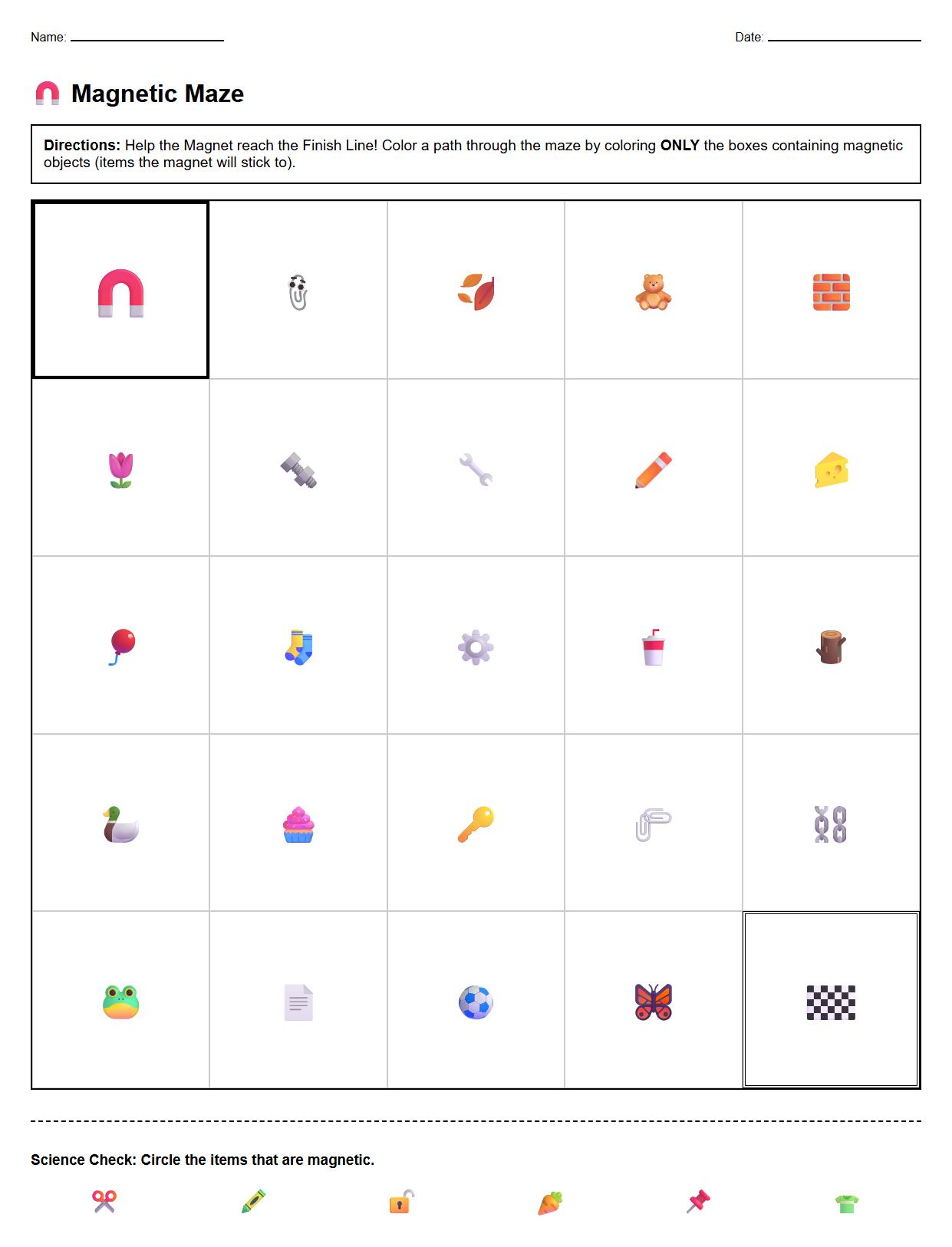
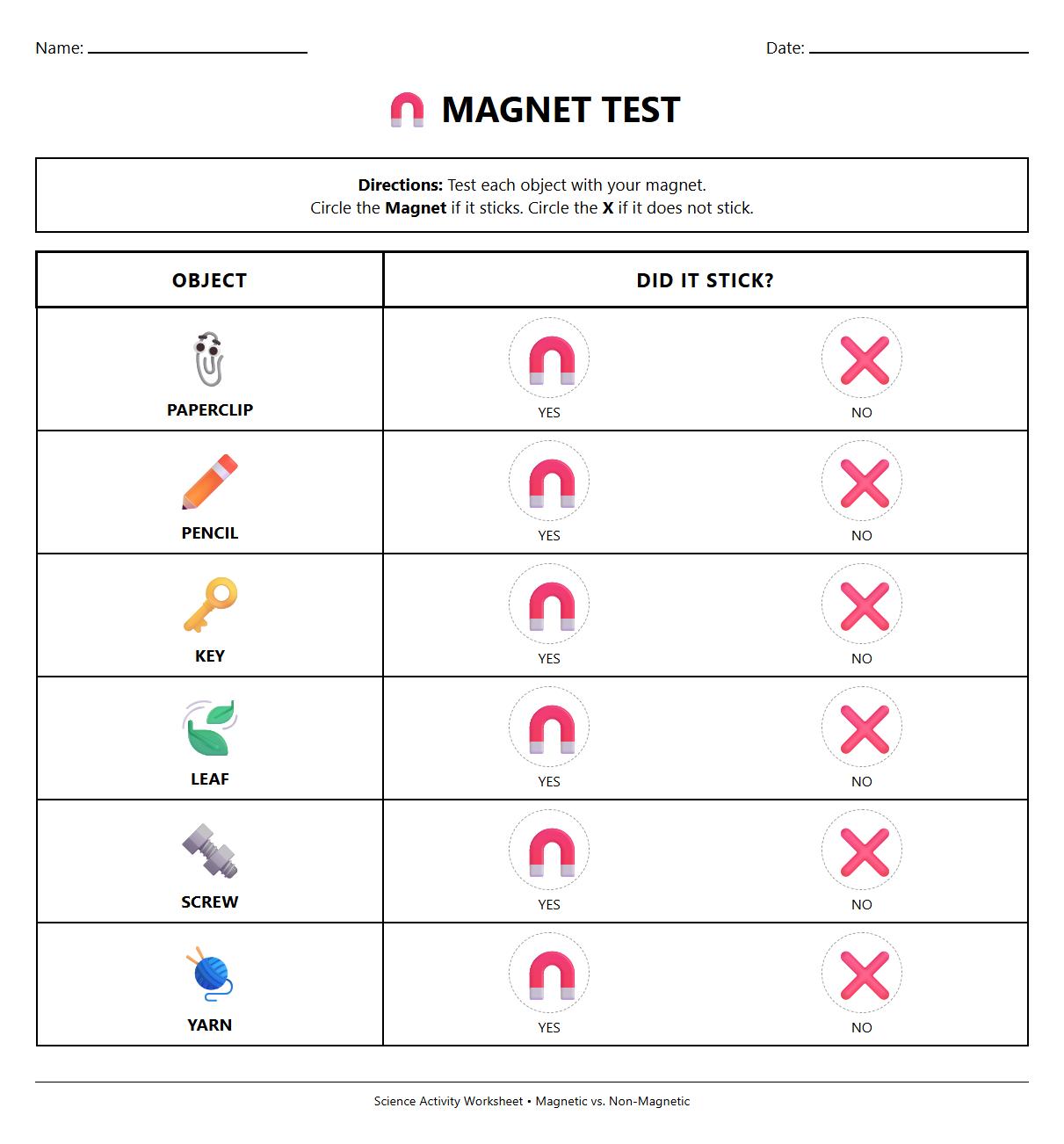
During the magnet activity, children explored various everyday objects to see if they responded to the magnet's pull. These items included paper clips, coins, plastic toys, and buttons. The goal was to engage kids in hands-on learning by observing which objects showed magnetic properties. This discovery process helps develop early scientific thinking, similar to activities found in the Anatomy Exploration Worksheet.
Items Attracted to the Magnet
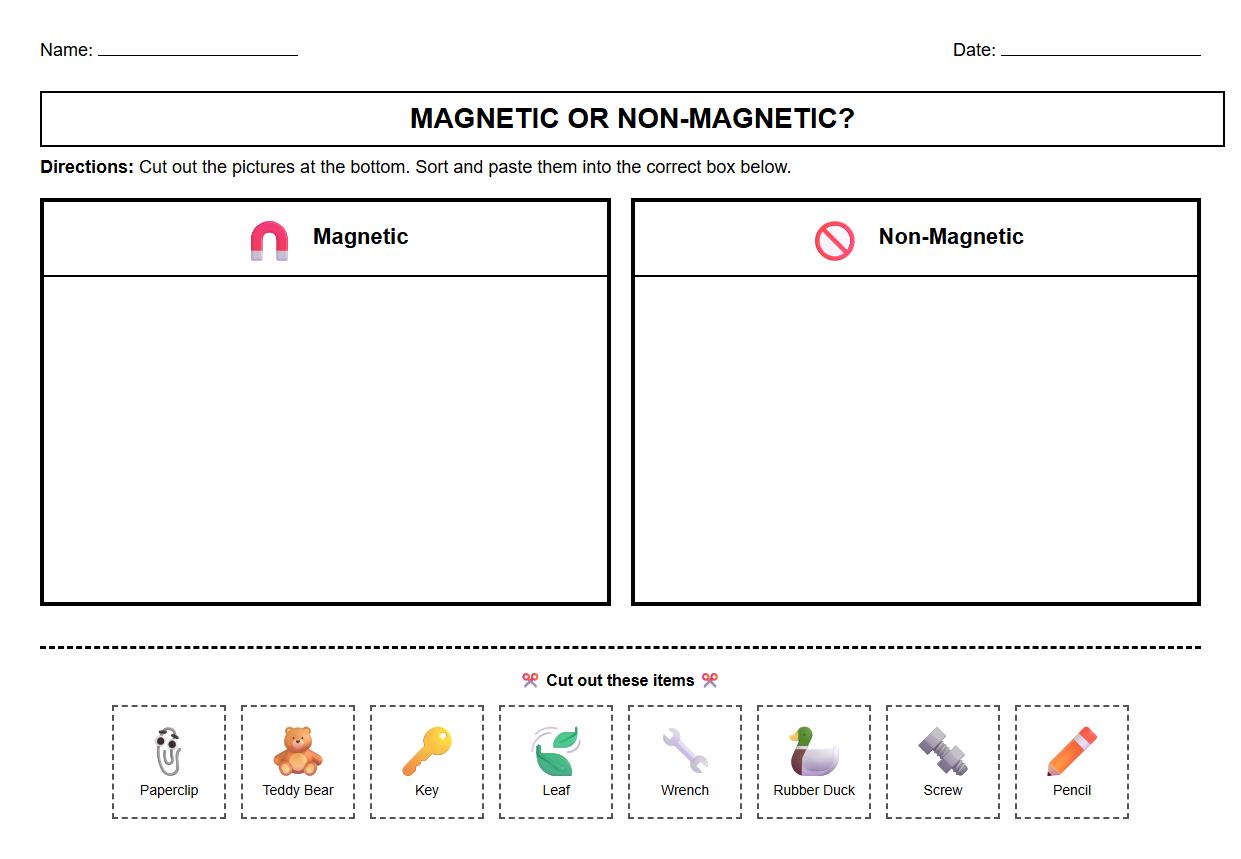
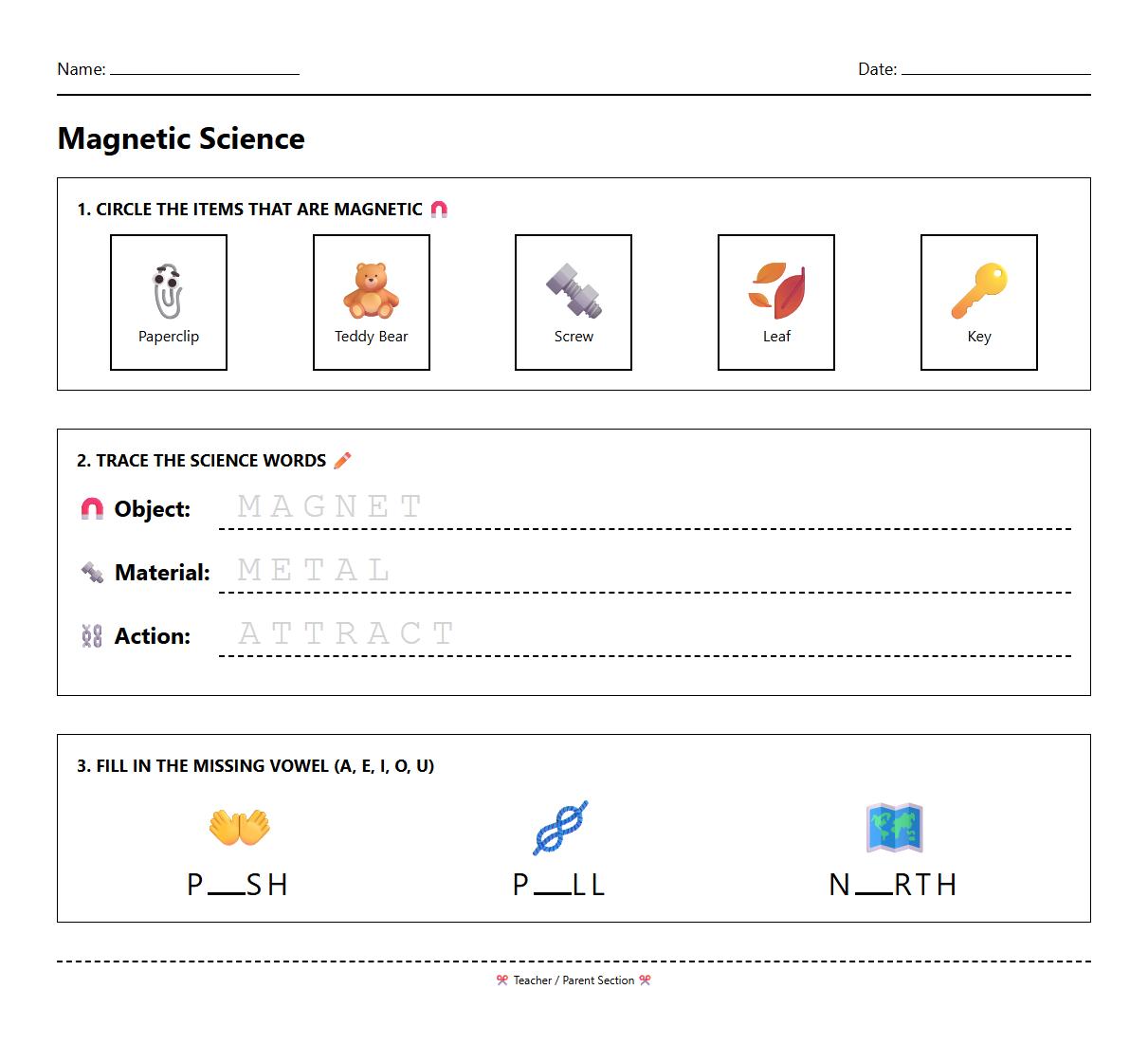
The objects attracted to the magnet were mostly metal items such as paper clips and some coins. These materials contained iron or steel, which are known to be magnetic. Observing this helped children understand the concept of magnetic attraction. It also encouraged them to categorize materials based on their responses to magnets.
Items Not Sticking to the Magnet
Items like plastic toys, buttons, and wooden blocks did not stick to the magnet because they are made of non-magnetic materials. Children learned that not all materials respond to magnets, highlighting differences in material properties. This distinction supports critical thinking and sensory exploration. Teachers can prompt discussions about why certain materials behave differently.
Observations About Magnetic Materials
Kids noticed that the materials attracted by the magnet were usually metallic and solid. These materials could conduct magnetism because of their atomic structure. Discussing these observations fosters curiosity and scientific vocabulary. It also lays a foundation for understanding magnetism's role in everyday objects.
Determining If Something Is Magnetic
To figure out if an item was magnetic, children brought the magnet close and observed whether it pulled the object towards it. If it stuck, the item was magnetic; if not, it wasn't. This simple test encourages prediction and experimentation skills. Repeating the test with multiple objects reinforces the learning process.
Description of the Magnet's Shape
The magnet used was shaped like a horseshoe or bar magnet, which is easy for small hands to hold. Its distinct shape helps children identify the poles where magnetic forces are strongest. Teachers can explain that the shape affects how magnets attract or repel objects. This visual and tactile experience supports multisensory learning.
Behavior When Two Magnets Were Close
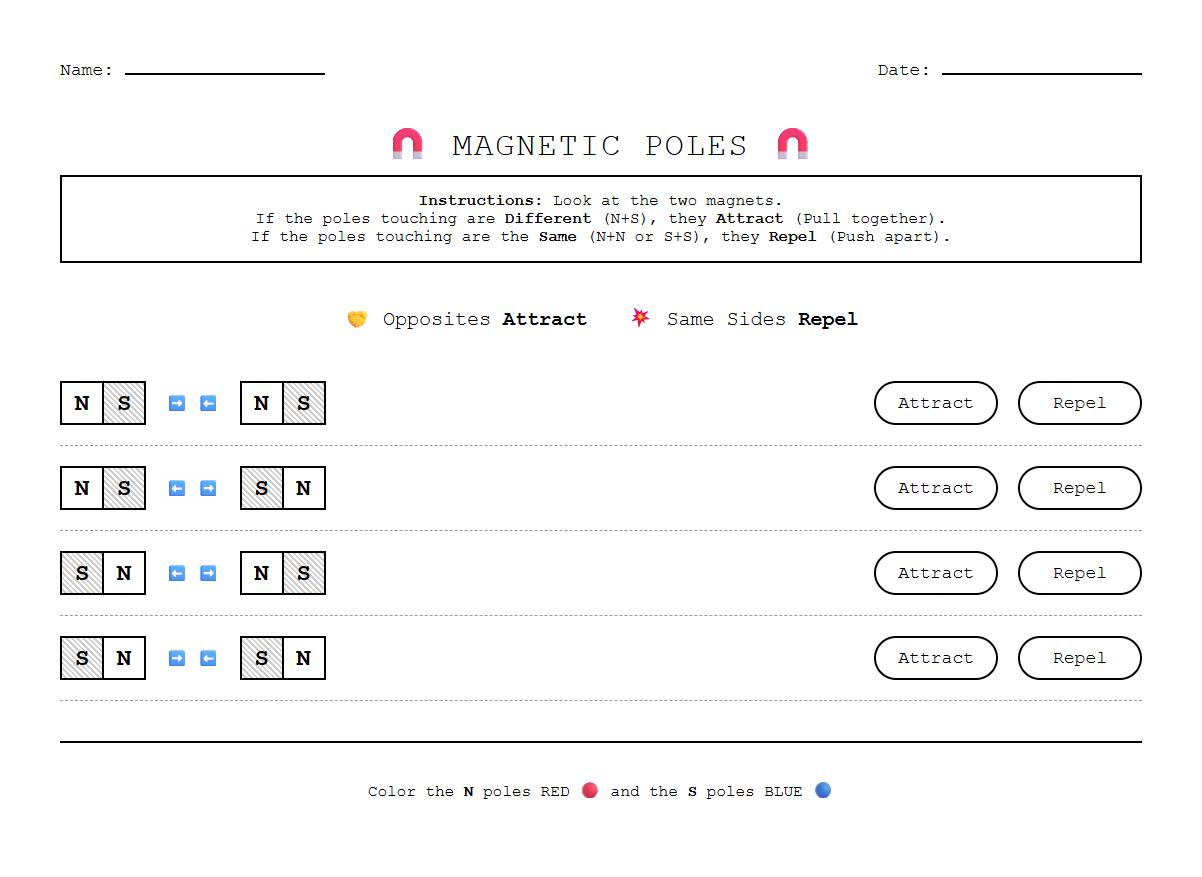
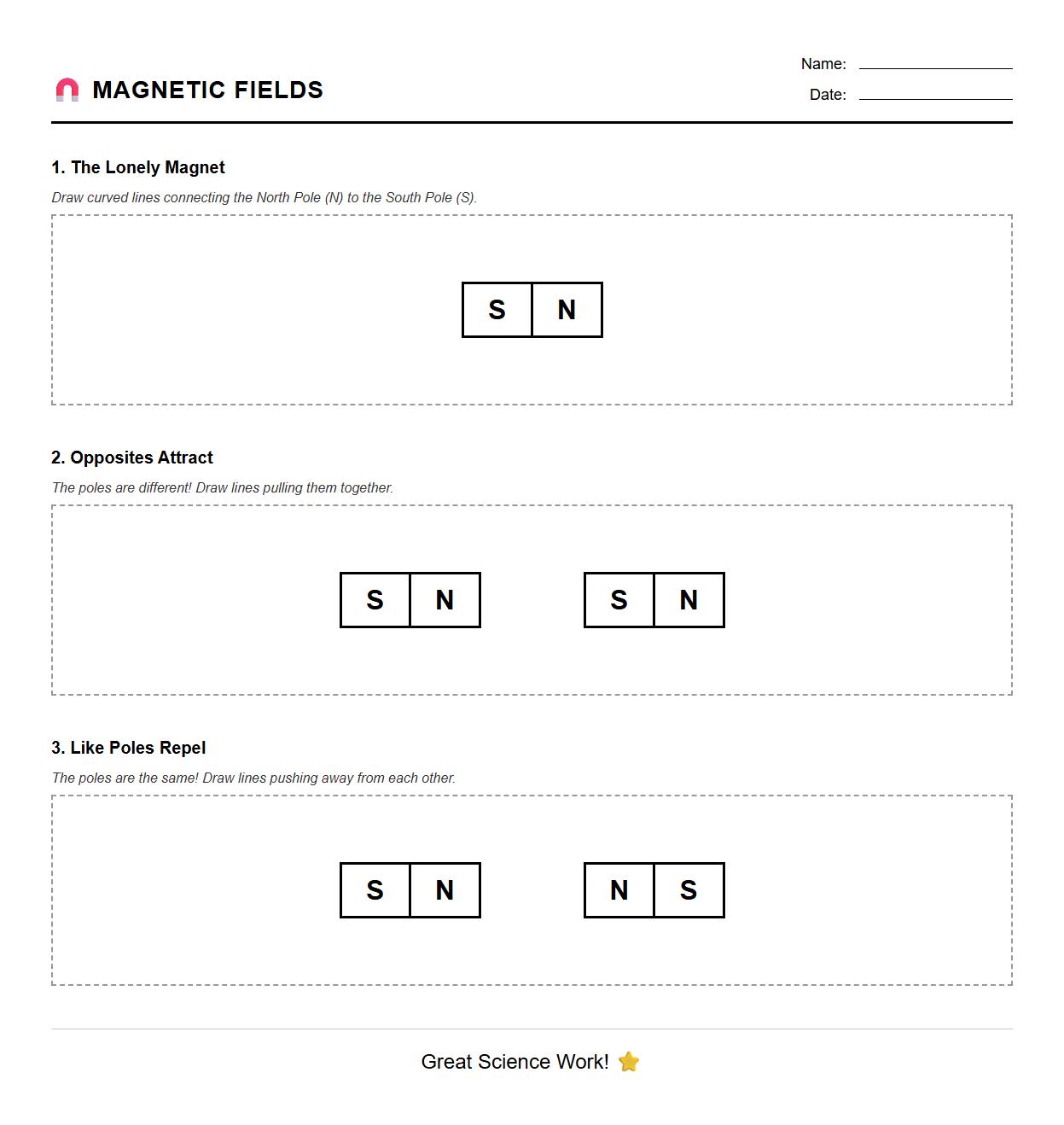
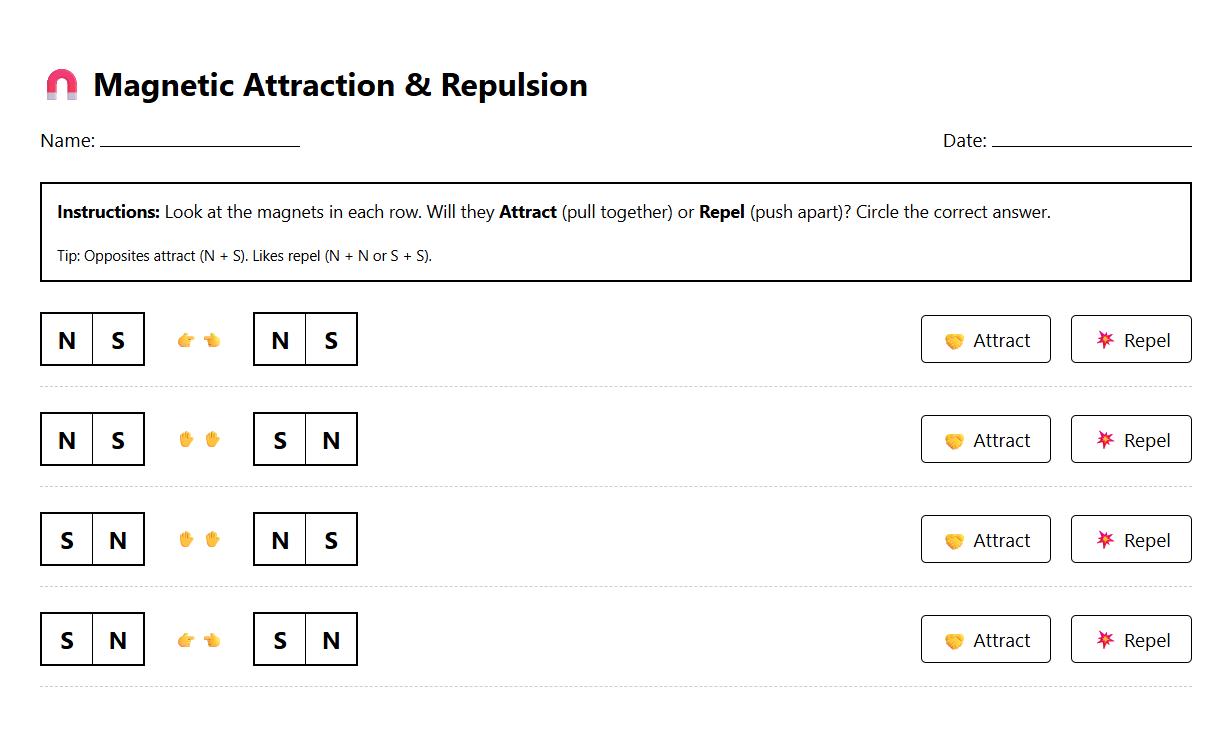
When two magnets were brought close together, the children observed either attraction or repulsion depending on the poles facing each other. Sometimes the magnets stuck together, and other times they pushed apart. This activity introduces the concept of magnetic poles and forces. It also enriches understanding through playful interaction.
Magnets Sticking or Pushing Apart
The magnets stuck together when opposite poles were near and pushed apart when like poles faced each other. This clear demonstration shows how magnets have different sides with different properties. Kids learned about the invisible forces that cause these reactions, as seen in the kinds of interaction worksheets. Such experiences build foundational knowledge for future science concepts.
Favorite Part of the Magnet Experiment
Many children enjoyed the moment when the magnet picked up surprising objects like paper clips or small metal toys. This hands-on discovery sparks excitement and wonder, making learning fun just like in sequencing experiments. Sharing these moments with peers or adults encourages language development and social skills. It's important to celebrate these favorite parts to motivate ongoing exploration.
Ideas for Next Magnet Activities
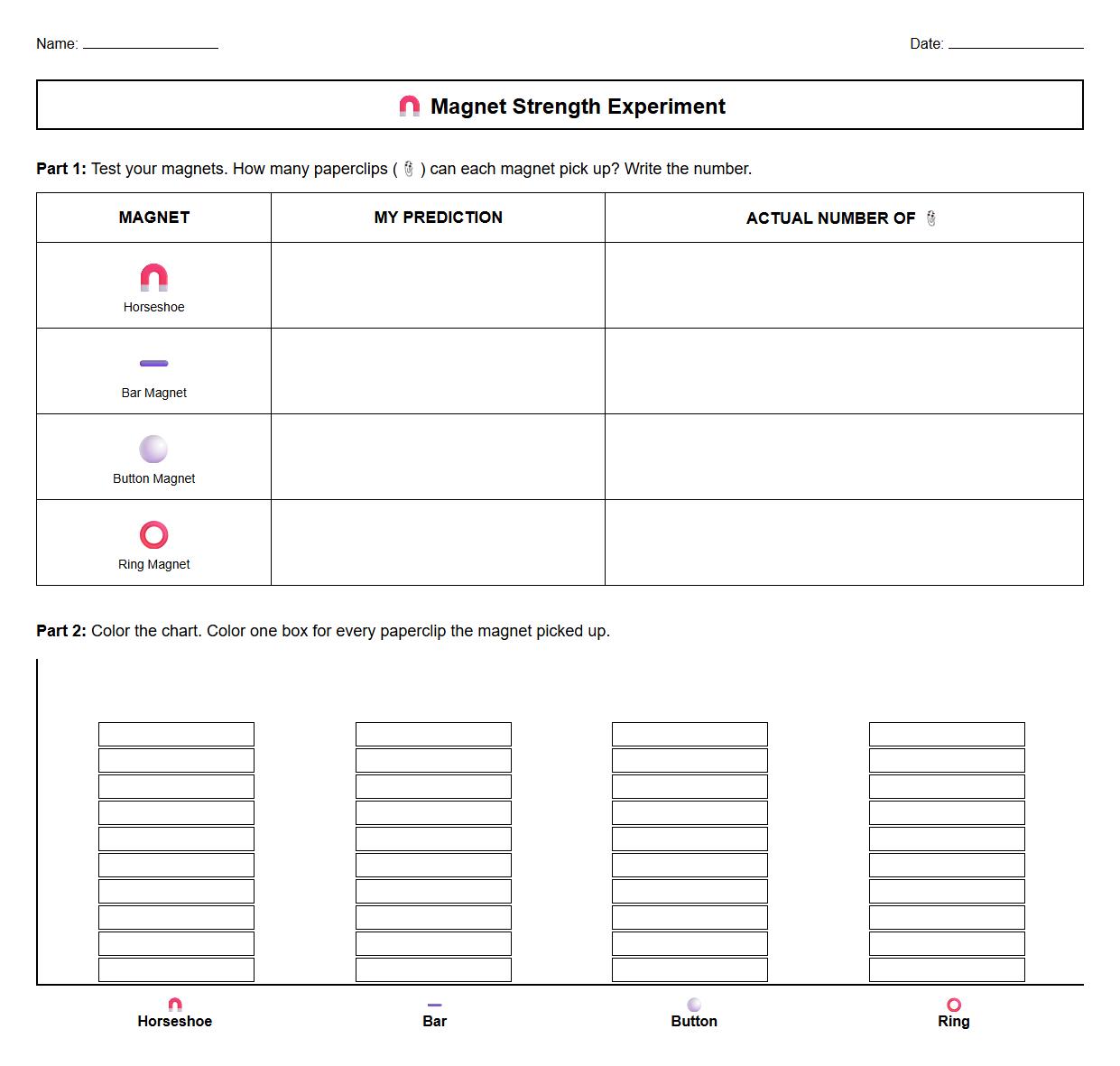
To extend learning, teachers and parents can encourage children to try rolling magnets on different surfaces or testing magnet strength with various objects, inspired by visual sorting science activities. Exploring how magnets interact through materials or across distances is engaging. Planning these next steps nurtures curiosity and deepens understanding. It also helps develop patience and problem-solving skills. For further exploration, see ideas about science vocabulary and needs.


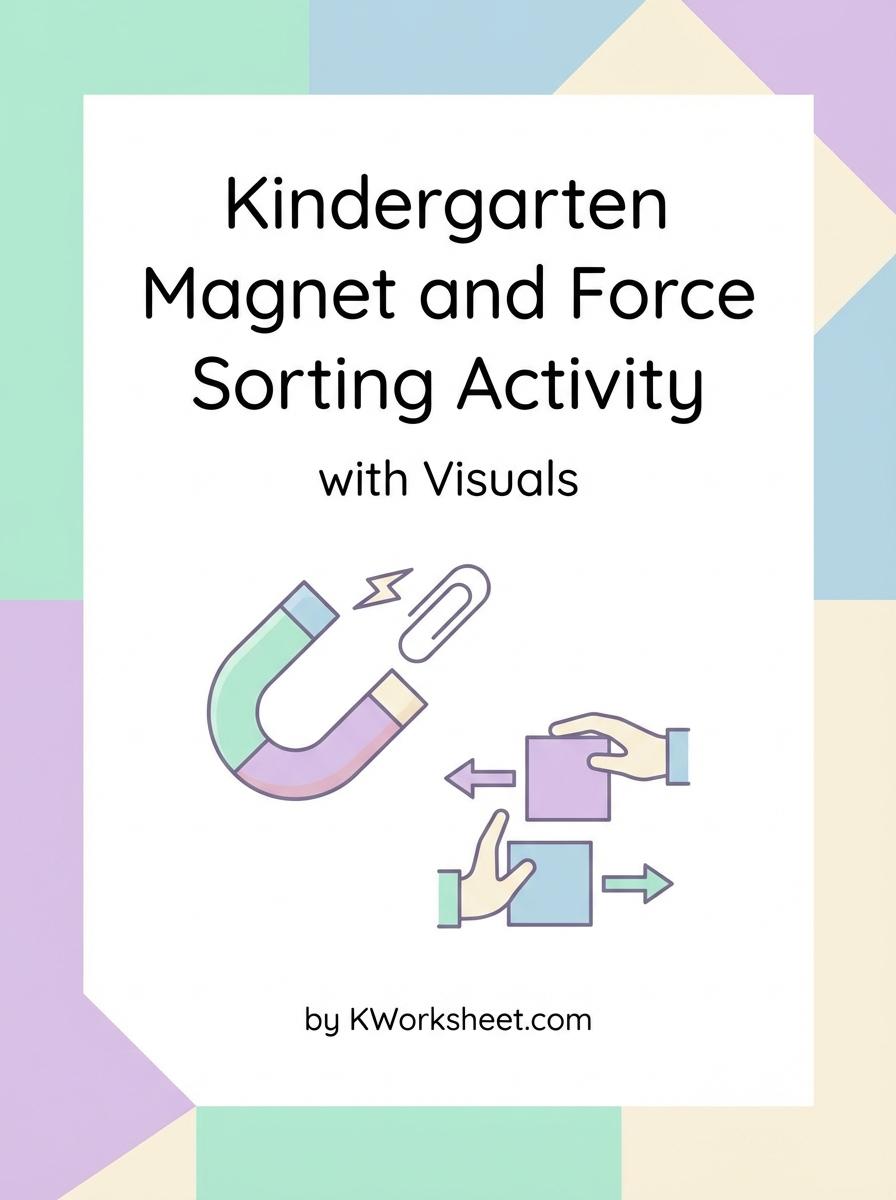
Kindergarten Magnet and Force Sorting Activity with Visuals