Kindergarten Magnet and Force Sorting Activity with Visuals

📅 Feb 8, 2025 👤 Nylen Smith

Kindergarten students explore basic concepts of magnets and forces using colorful visuals that help distinguish magnetic attraction and repulsion. Hands-on sorting activities encourage active learning and reinforce understanding of how magnets interact with different objects. Check the available worksheets to engage young learners in discovering magnetic forces through fun and interactive exercises.

Magnet and Nonmagnet Objects Sorting Worksheet
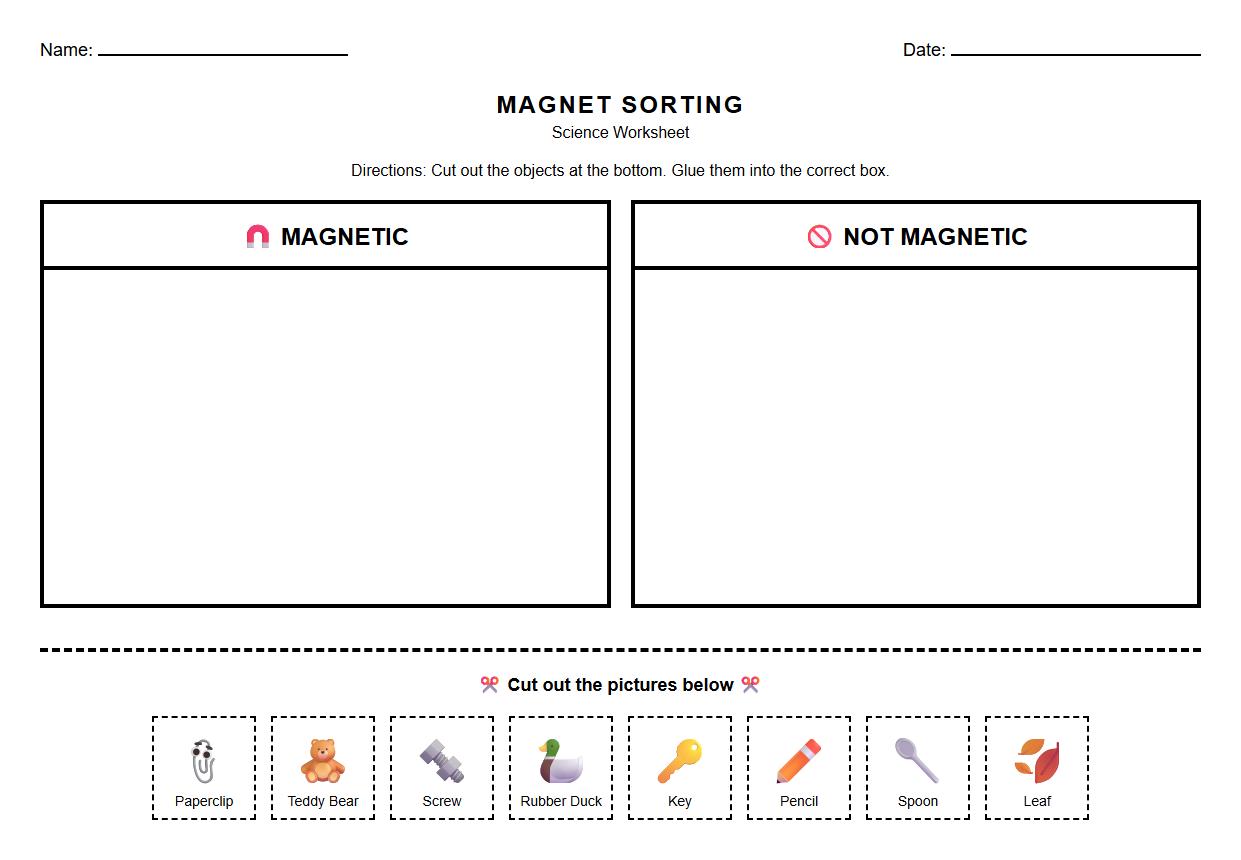
Magnet and Nonmagnet Objects Sorting Worksheet

Download PDF     Pin it

Magnetic Force Attraction Sorting Activity
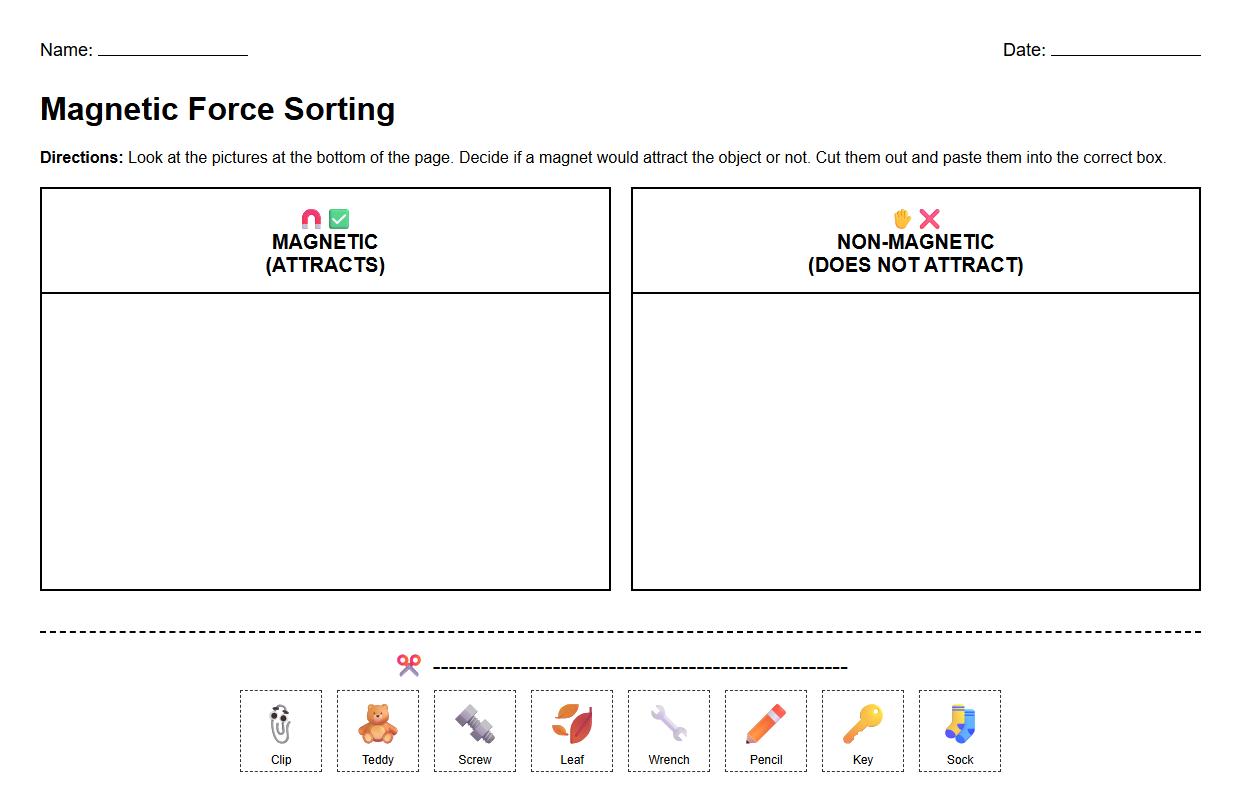
Magnetic Force Attraction Sorting Activity

Download PDF     Pin it

Everyday Items Magnetic Sorting Visual Sheet
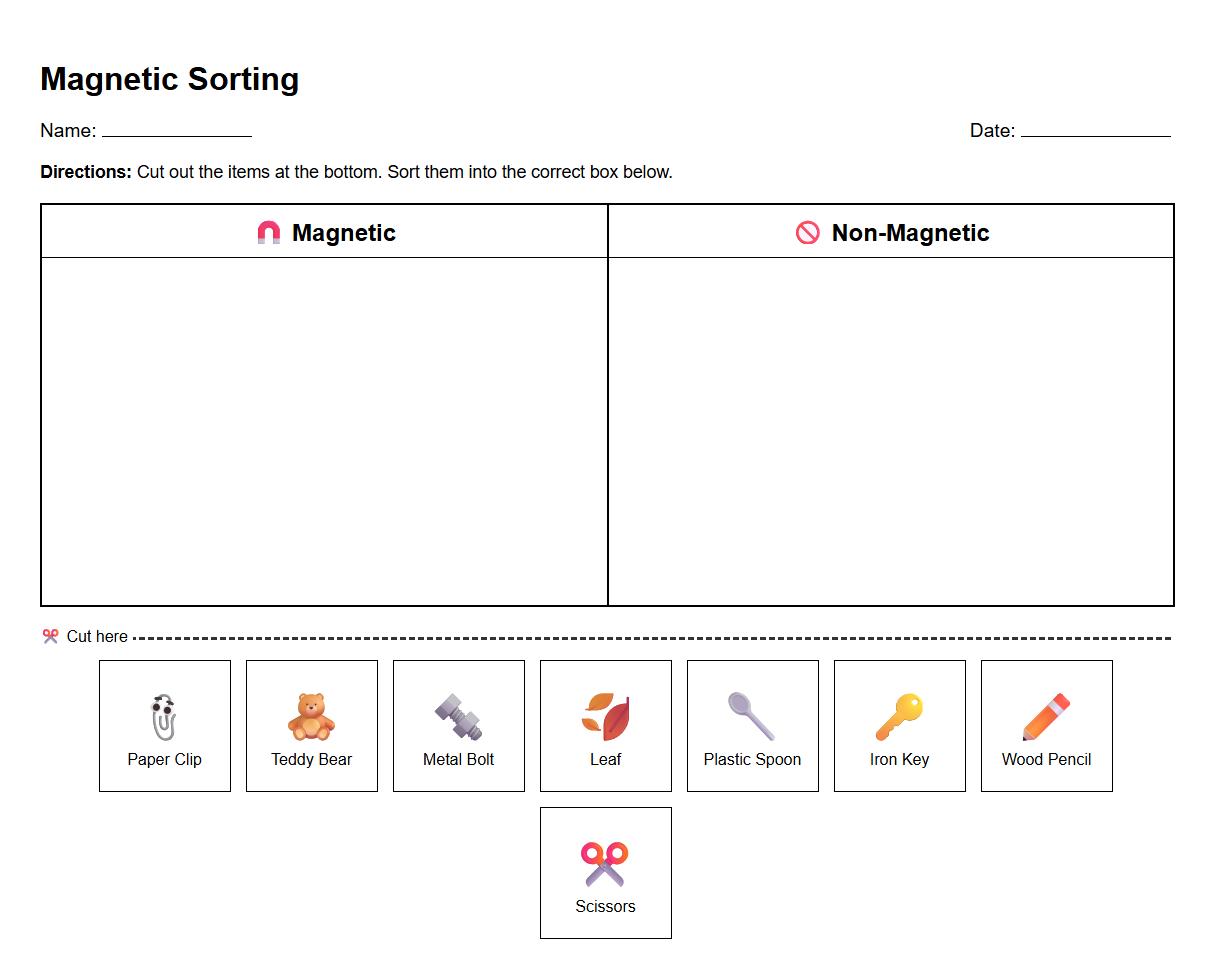
Everyday Items Magnetic Sorting Visual Sheet

Download PDF     Pin it

Push and Pull Force Sorting Worksheet
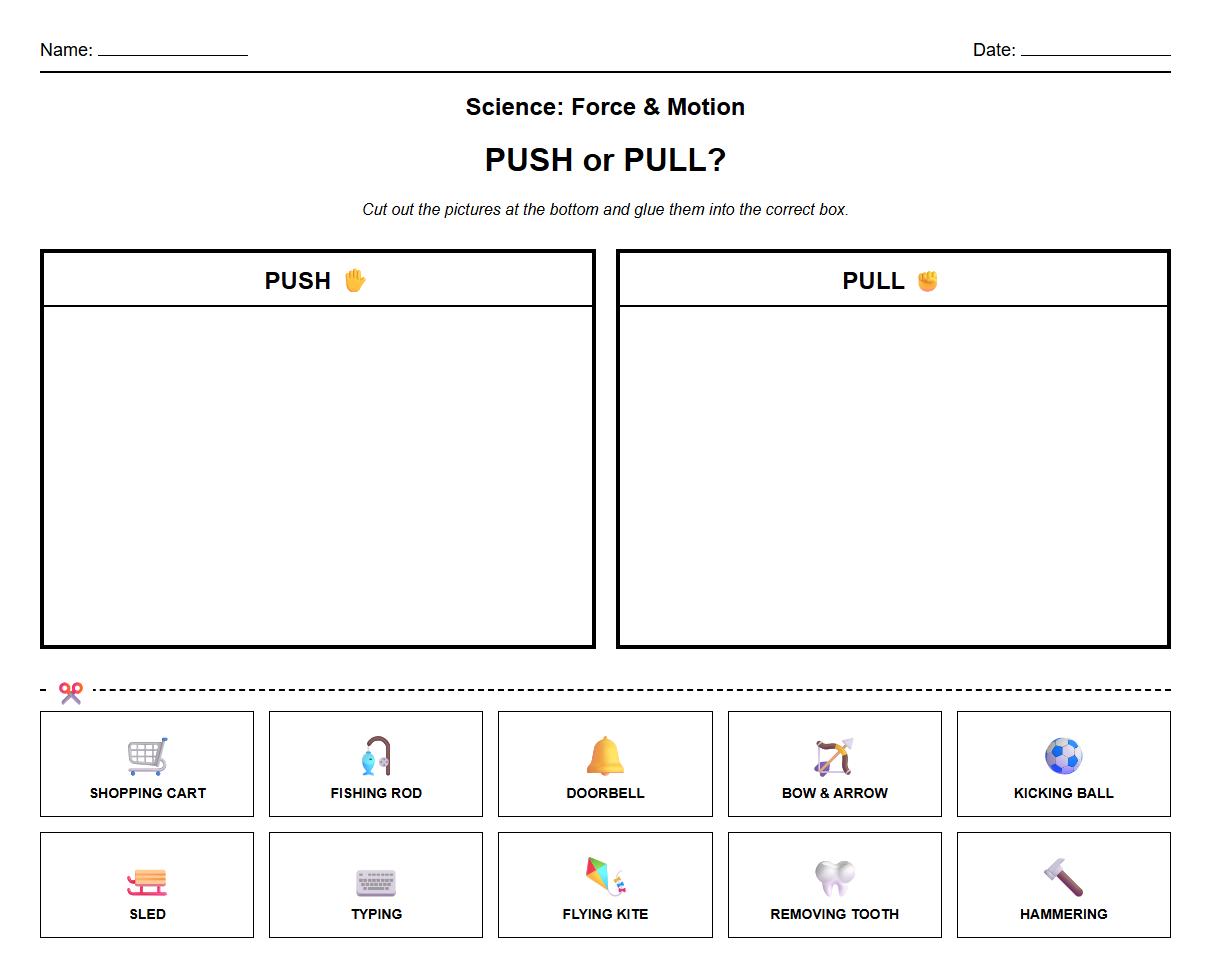
Push and Pull Force Sorting Worksheet

Download PDF     Pin it

Sorting Metals and Nonmetals by Magnetism
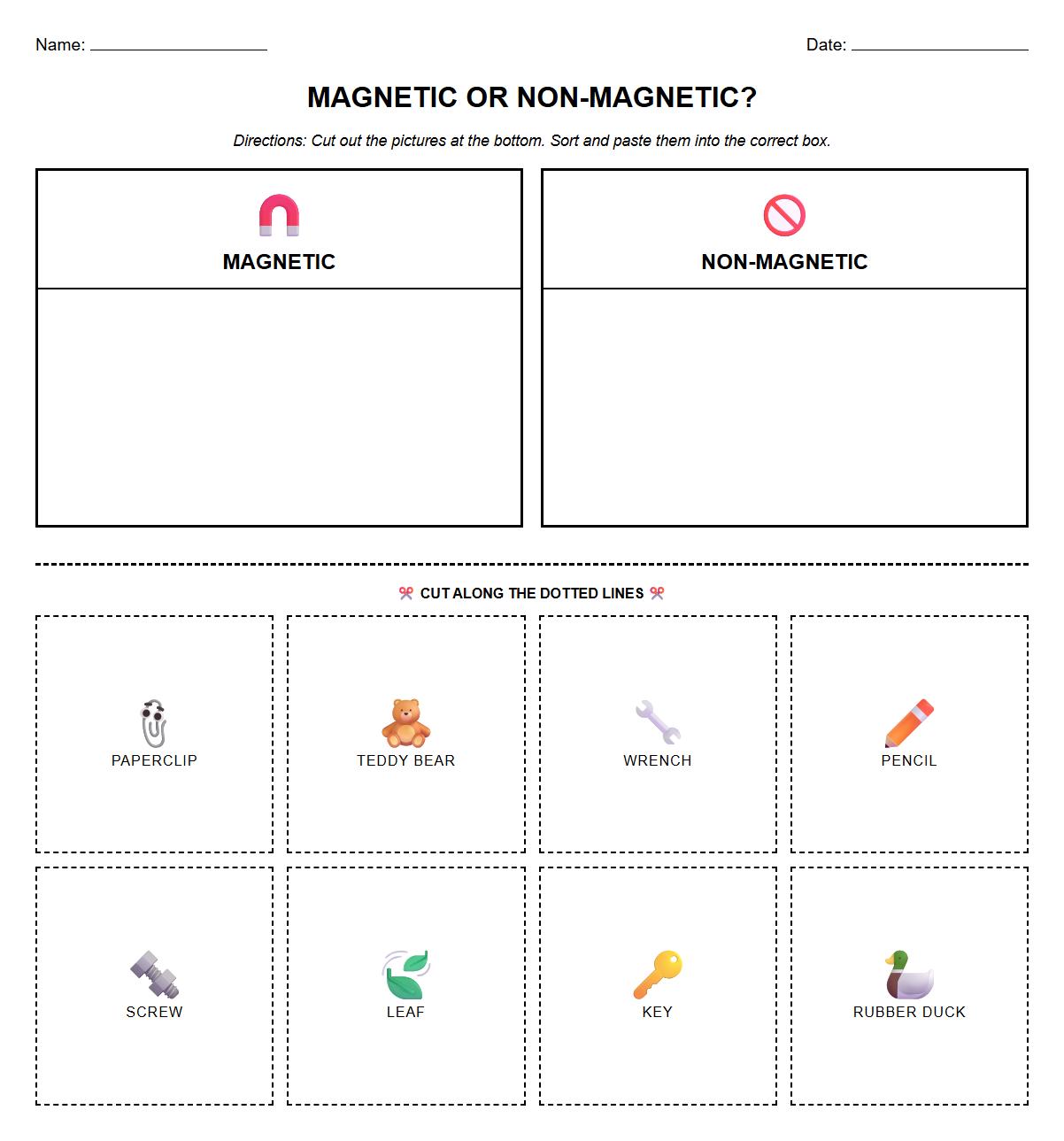
Sorting Metals and Nonmetals by Magnetism

Download PDF     Pin it

Sorting Magnets by Shape and Size Visuals
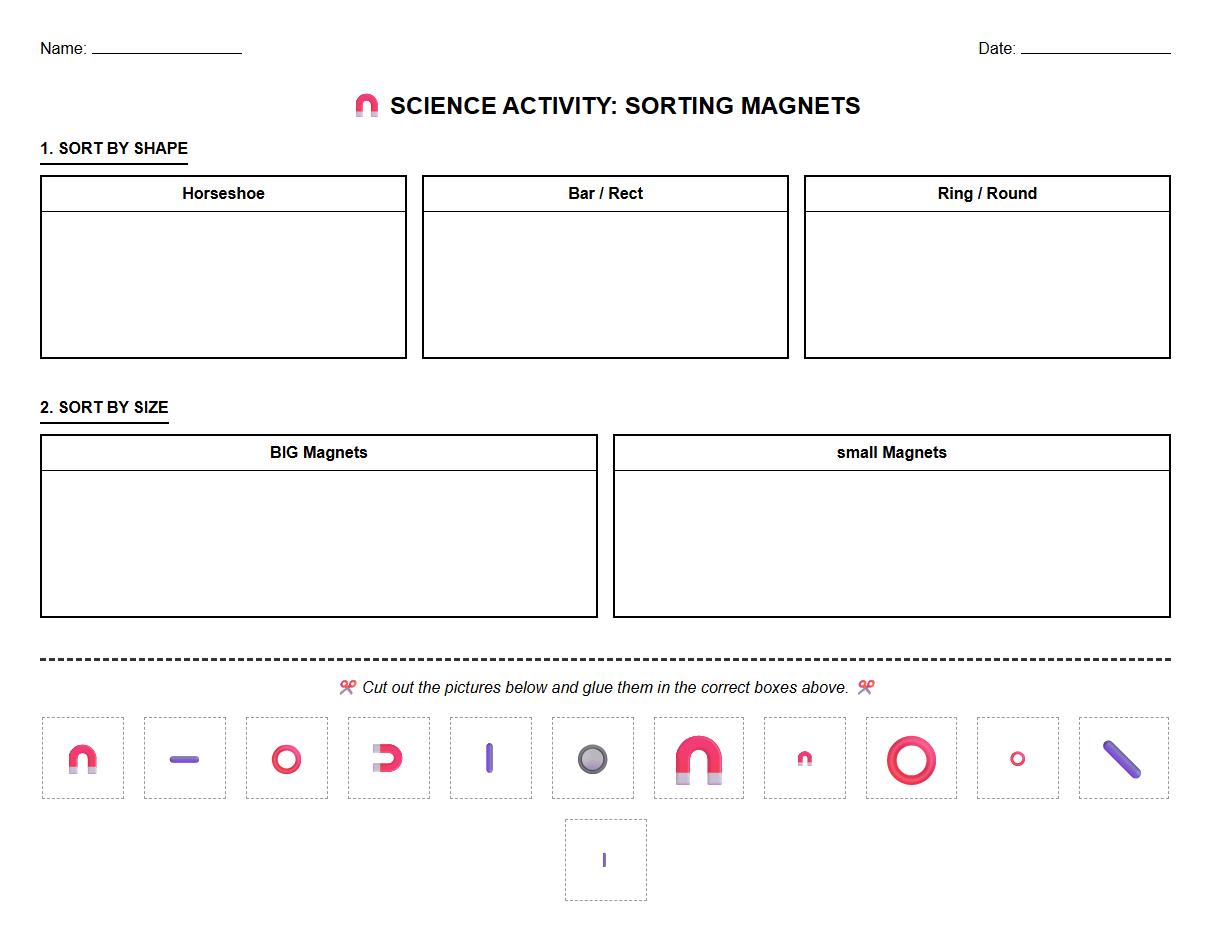
Sorting Magnets by Shape and Size Visuals

Download PDF     Pin it

Magnetic Tools vs. Nonmagnetic Tools Classification
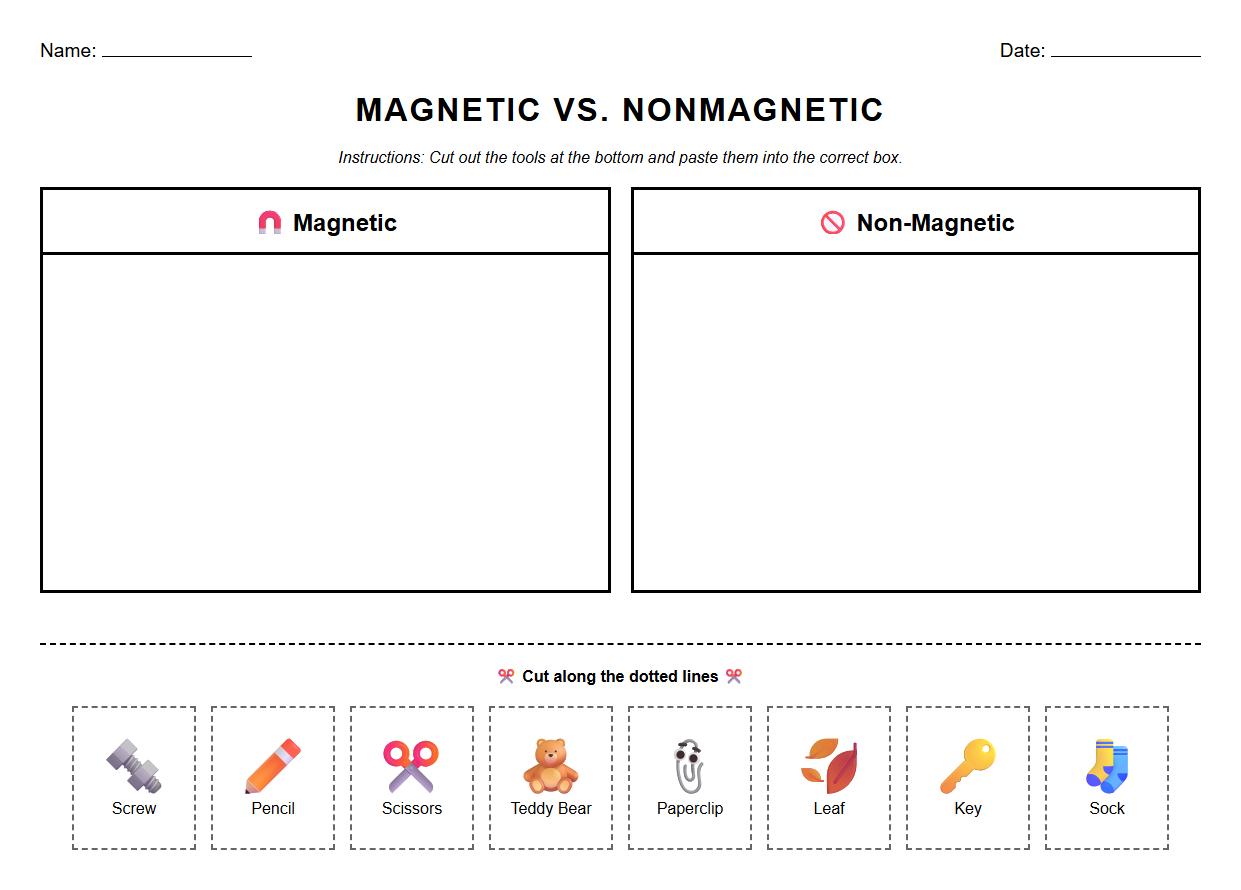
Magnetic Tools vs. Nonmagnetic Tools Classification

Download PDF     Pin it

Sorting Objects with Visual Cues Based on Magnetic Properties
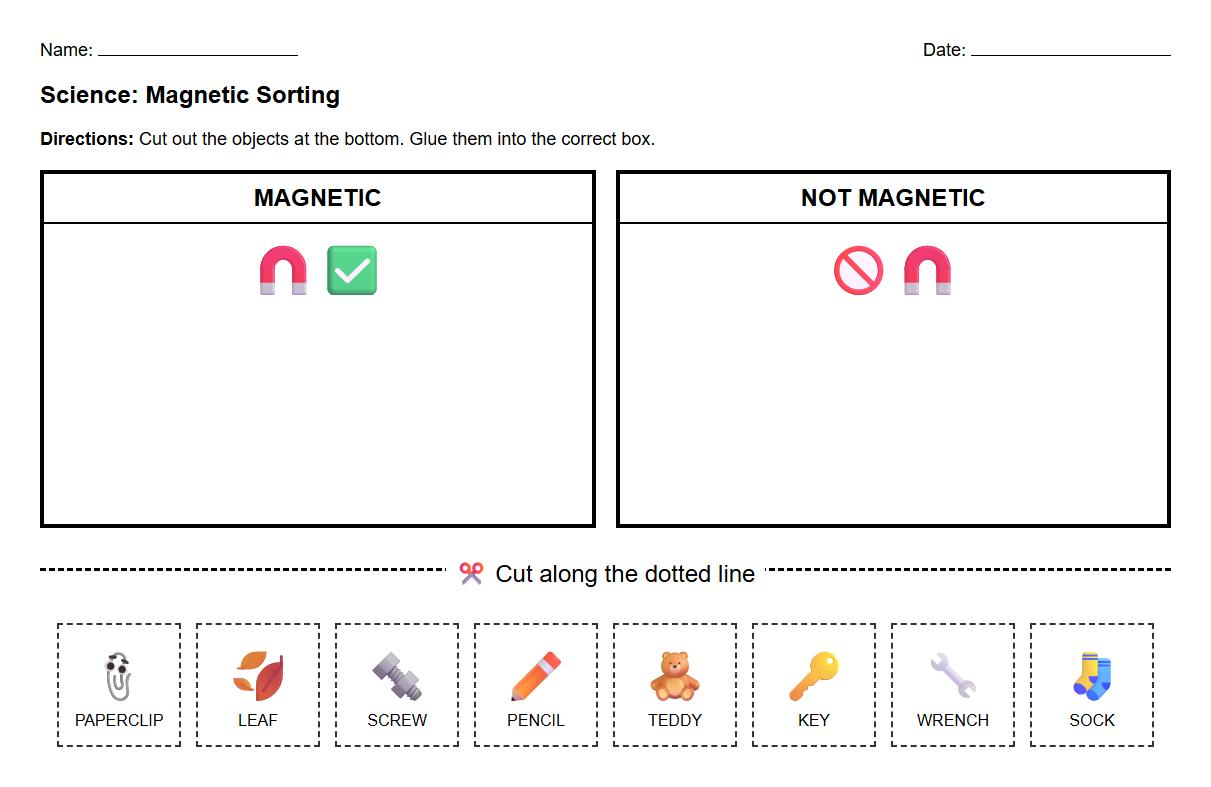
Sorting Objects with Visual Cues Based on Magnetic Properties

Download PDF     Pin it

Identifying Magnetic Material Sorting Worksheet
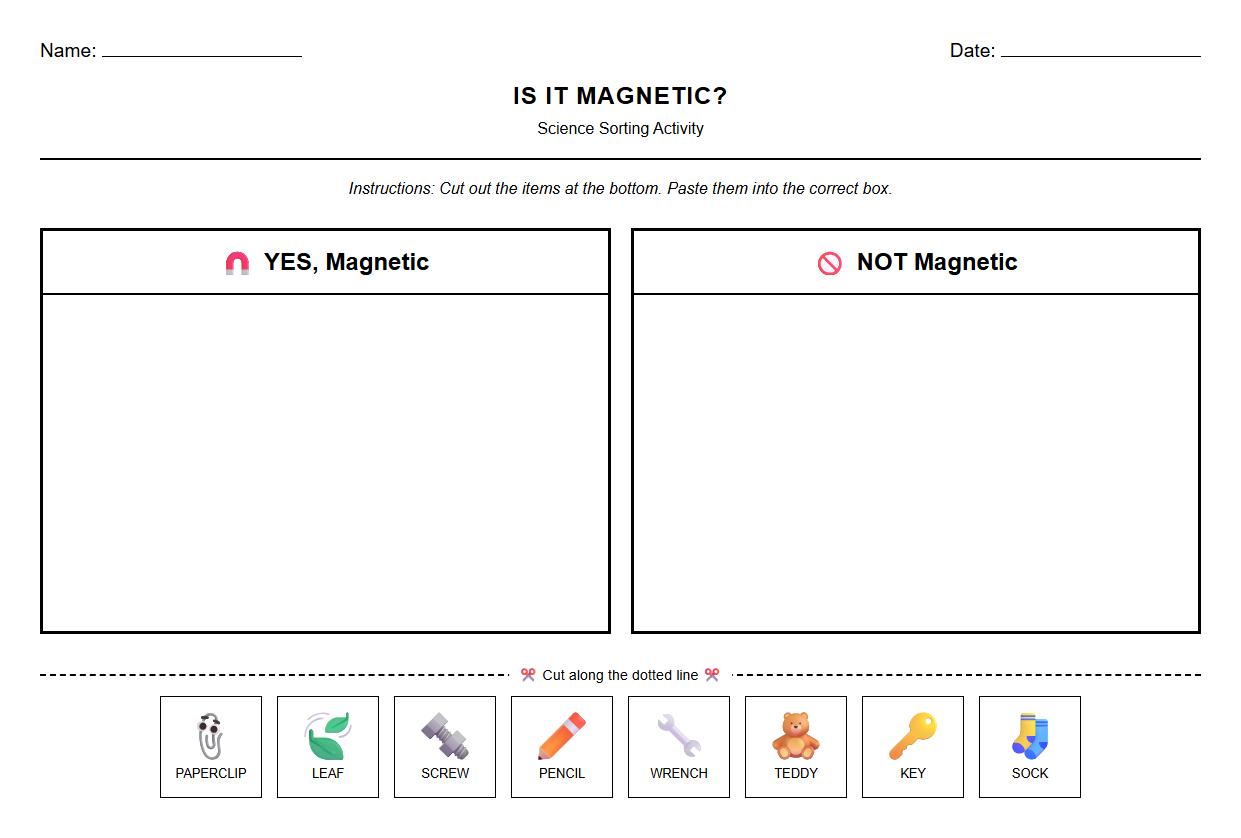
Identifying Magnetic Material Sorting Worksheet

Download PDF     Pin it

Sorting Activities Using Phonics and Magnet Images
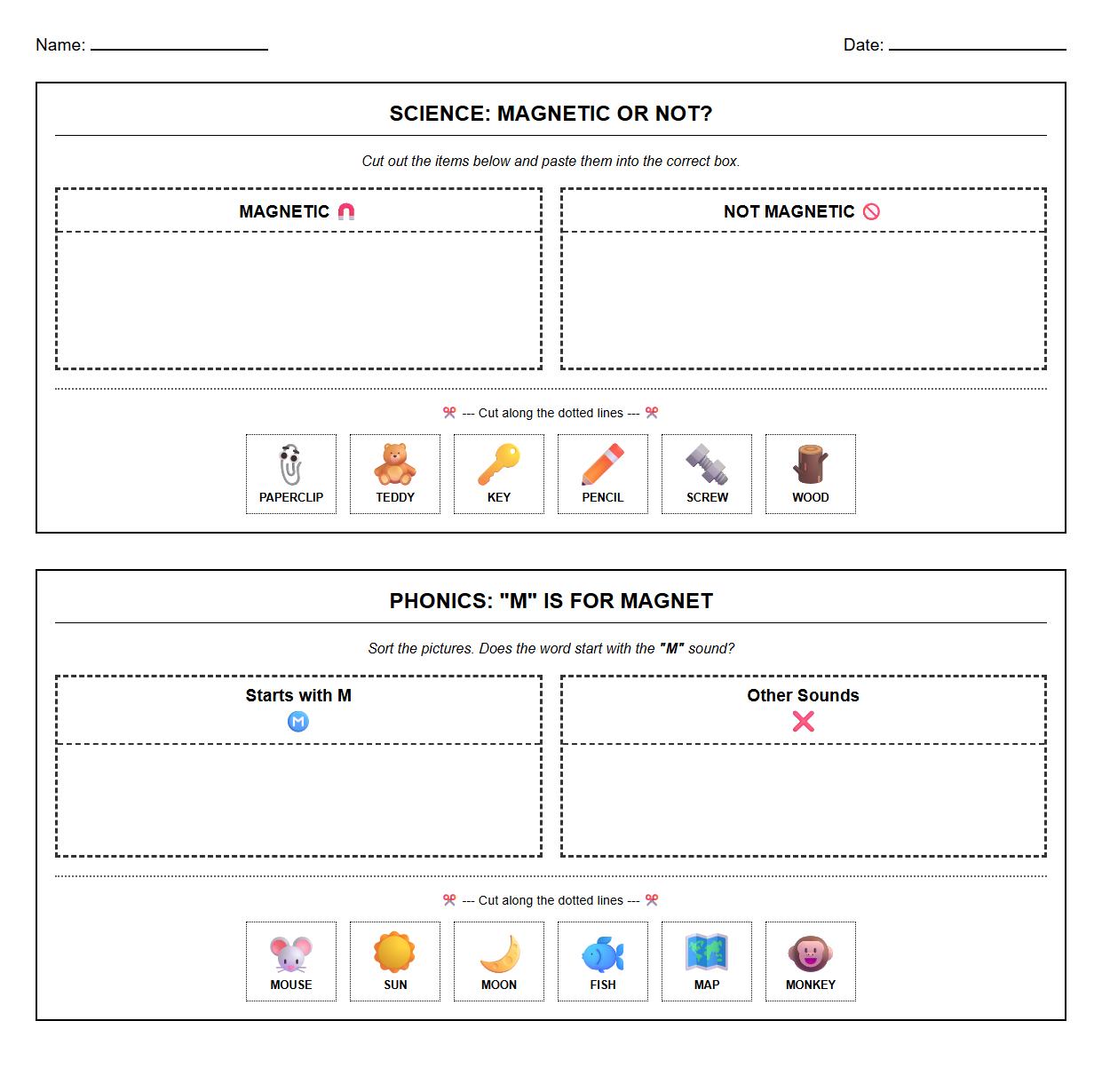
Sorting Activities Using Phonics and Magnet Images

Download PDF     Pin it

What Objects Can a Magnet Attract in This Sorting Activity?

In this sorting activity, a magnet can attract objects made of metal, especially those containing iron, nickel, or cobalt. Common items children might find include paperclips, nails, and some coins. The activity helps young learners understand the specific magnetic properties of certain materials by sorting these objects. This tactile experience encourages observation and critical thinking skills.

Which Items in the Visuals Are Made of Metal?

The visuals highlight items like paperclips, screws, and small metal toys as metal objects. These items typically have a shiny appearance and are often heavy for their size. Identifying metal objects helps children differentiate between various materials in their environment. Recognizing metal is the first step to understanding which objects might be magnetic.

Can You Find Something That Is Not Magnetic in the Pictures?

Yes, the pictures commonly include objects like plastic toys, wooden blocks, or rubber erasers, which are non-magnetic. These items do not respond to the magnet and remain unaffected during the sorting process. Including non-magnetic items reinforces the concept that only certain materials are attracted to magnets. This contrast helps children grasp the magnetic properties more clearly.

How Do You Know If an Object Is Attracted to a Magnet?

An object is attracted to a magnet if it sticks to the magnet when placed near it. This physical reaction indicates the material has magnetic properties, usually due to the presence of metals like iron. Conducting this simple test allows children to explore and confirm which objects are magnetic. It also introduces basic scientific investigation methods.

What Happens When You Try to Sort Plastic Items with the Magnet?

When plastic items are tested with a magnet, they do not stick or move towards the magnet. This demonstrates that plastic is a non-magnetic material. Sorting them into the correct category helps children understand the limitations of magnetic attraction. It also encourages careful observation and reasoning.

Are All Shiny Objects Magnetic in the Activity?

Not all shiny objects are magnetic; for example, some may be made of plastic or aluminum, which are non-magnetic despite their appearance. The activity teaches children that shine does not always mean an object is metal or magnetic. Differentiating between shine and magnetic properties develops critical thinking. Children learn to rely on testing rather than assumptions with activities like those found on the sink or float worksheet.

Can You Group the Pictures by Magnetic and Nonmagnetic Objects?

The pictures can be grouped into two main categories: magnetic objects like metal keys and nails, and nonmagnetic objects such as plastic blocks and wooden items. This visual sorting reinforces the concept of magnetic attraction and material properties. It fosters categorization skills and supports early scientific learning. Teachers and parents can guide children through the sorting process effectively.

What Do the Visuals Show About How Magnets Work?

The visuals illustrate that magnets attract certain metals due to the magnetic force acting on those objects. They show how some objects move toward the magnet while others remain stationary. This helps children visualize and understand the invisible magnetic force. The activity is a practical demonstration of cause and effect.

Which Force Is Showing in the Magnet and Force Sorting Activity?

The force demonstrated is the magnetic force, which pulls specific materials toward the magnet without direct contact. This force is fundamental in showing how magnets interact with metals. Understanding this force introduces basic physics concepts in an accessible, hands-on manner. It builds foundational knowledge about forces in nature.

Can You Think of More Objects to Add to the Magnetic Group?

Additional magnetic objects could include nails, metal bottle caps, small wrenches, or paperclips. Encouraging children to find everyday magnetic items expands their learning beyond the worksheet. This exploration enhances curiosity and reinforces concepts about material properties. It also relates to vocabulary development activities like those in this vocabulary building worksheet and connects classroom activities with real-world experiences.


More in Science Category


About the author. Nylen Smith is a dedicated educator and cofounder of KWorksheet.com, a popular platform specializing in high-quality kindergarten worksheets and printable activities.

Disclaimer. The information provided in this document is for general informational purposes and/or document sample only and is not guaranteed to be factually right or complete. Please report to us via contact-us page if you find and error in this page, thanks.

Comments

No comment yet