Interactive Forces and Motion Worksheet for Kindergarten Physics

📅 Apr 17, 2025 👤 Nylen Smith

Kindergarten students explore basic forces and motion concepts through engaging, hands-on activities that build foundational physics skills. These interactive exercises help young learners understand push and pull forces while observing how objects move in response. Explore our available worksheets to introduce your child to the exciting world of forces and motion.

Cut and Paste Matching Worksheet for Push and Pull Forces
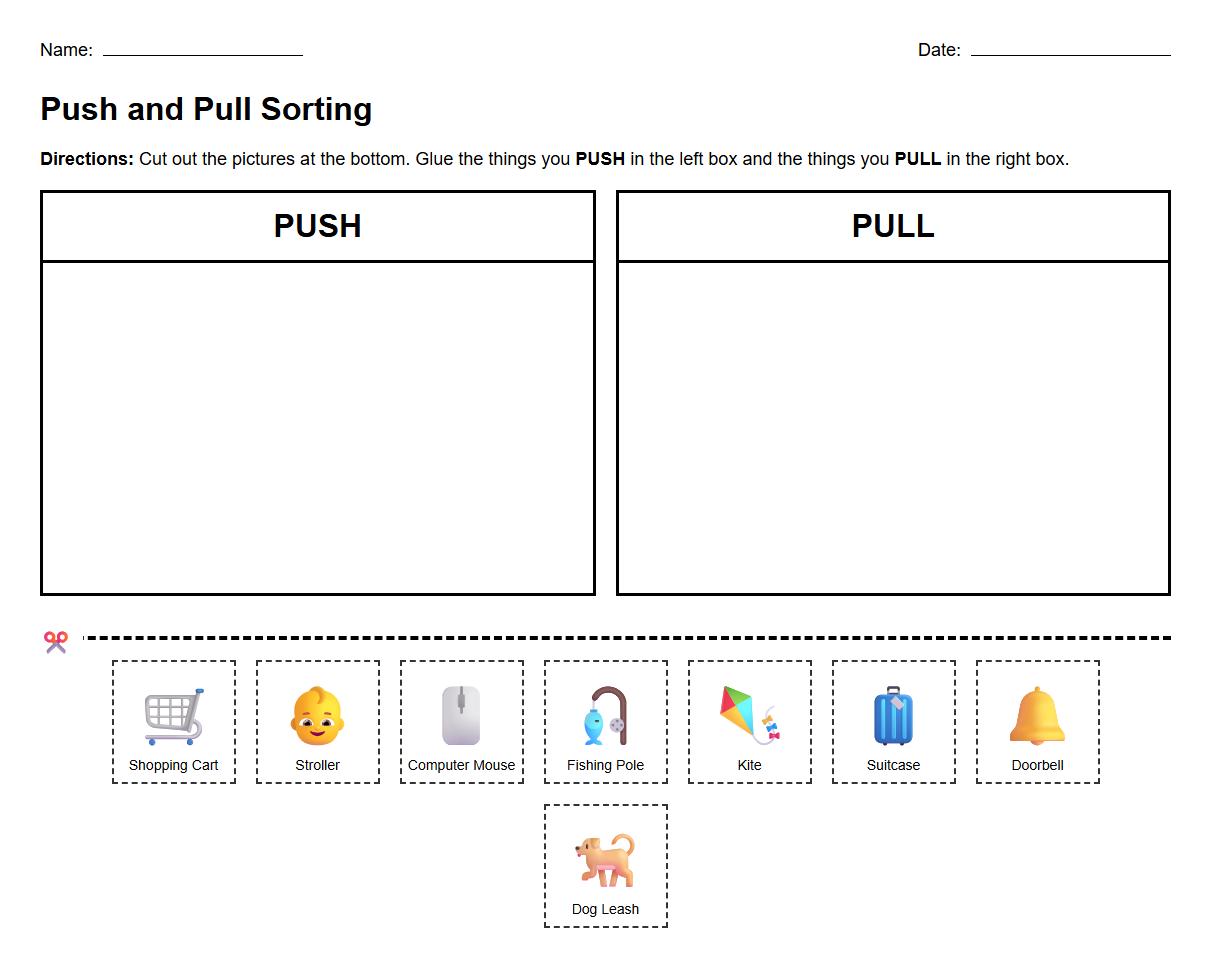
Cut and Paste Matching Worksheet for Push and Pull Forces

Download PDF     Pin it

Color by Code Worksheet for Motion Direction Identification
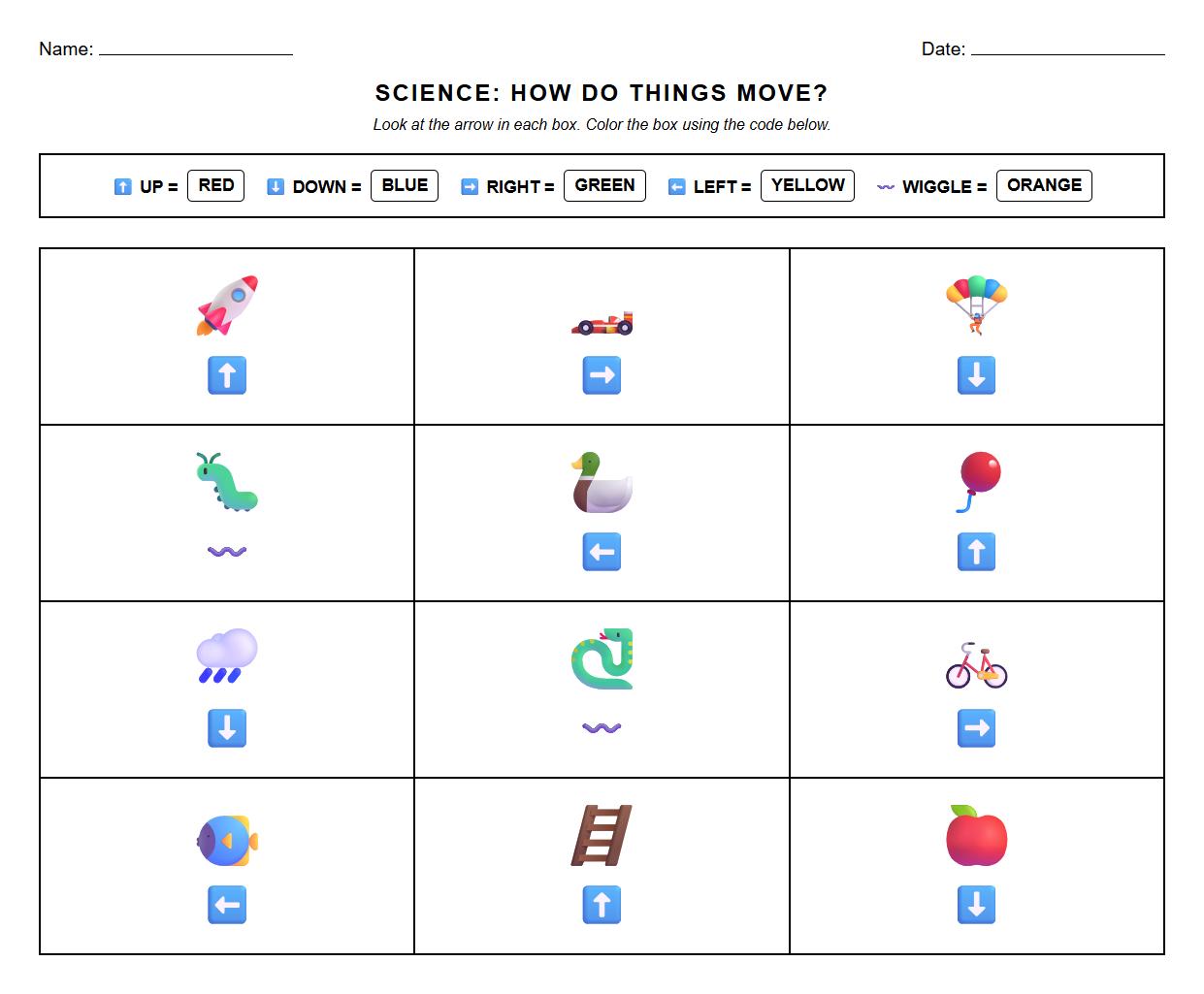
Color by Code Worksheet for Motion Direction Identification

Download PDF     Pin it

Trace the Lines Worksheet for Force Paths
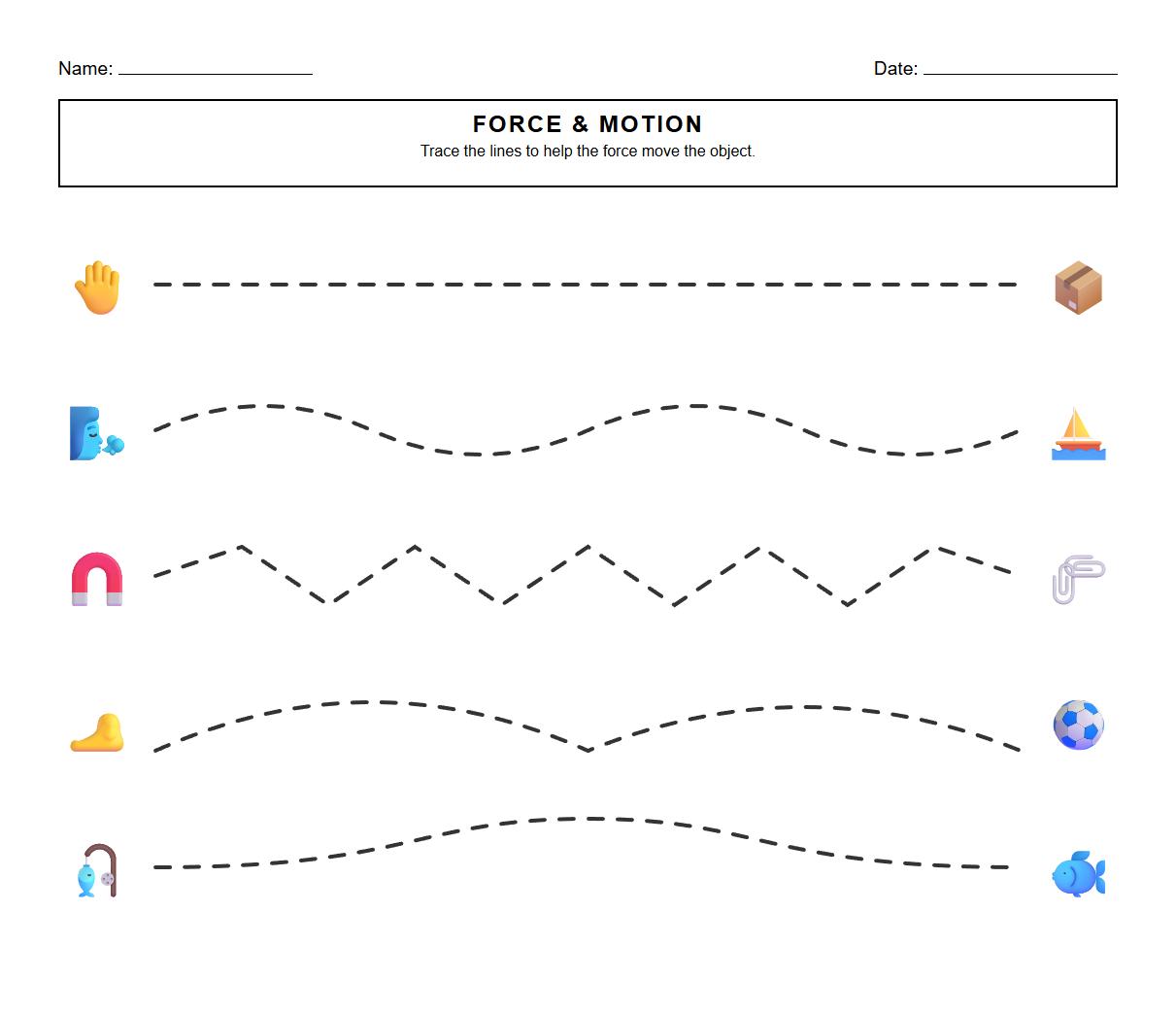
Trace the Lines Worksheet for Force Paths

Download PDF     Pin it

Circle the Object Worksheet for Example of Friction
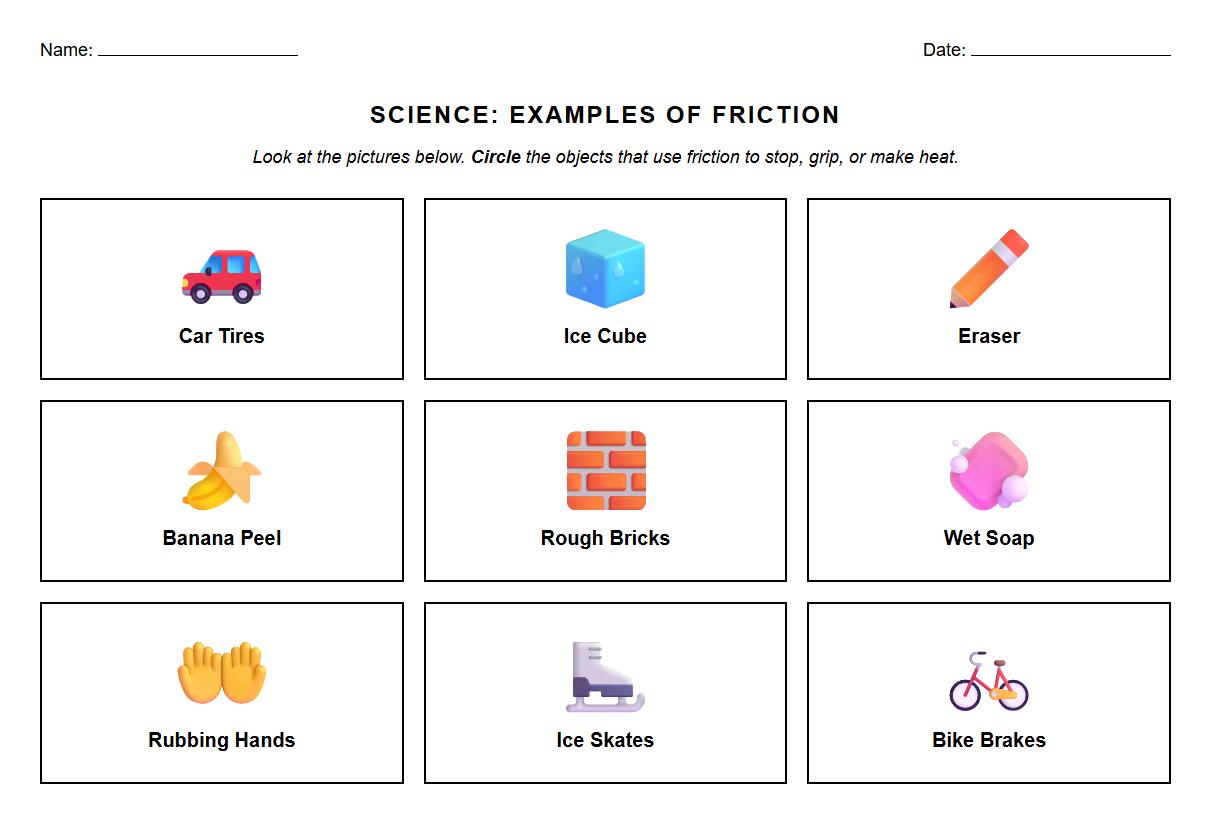
Circle the Object Worksheet for Example of Friction

Download PDF     Pin it

Draw the Next Motion Worksheet for Predicting Object Movement
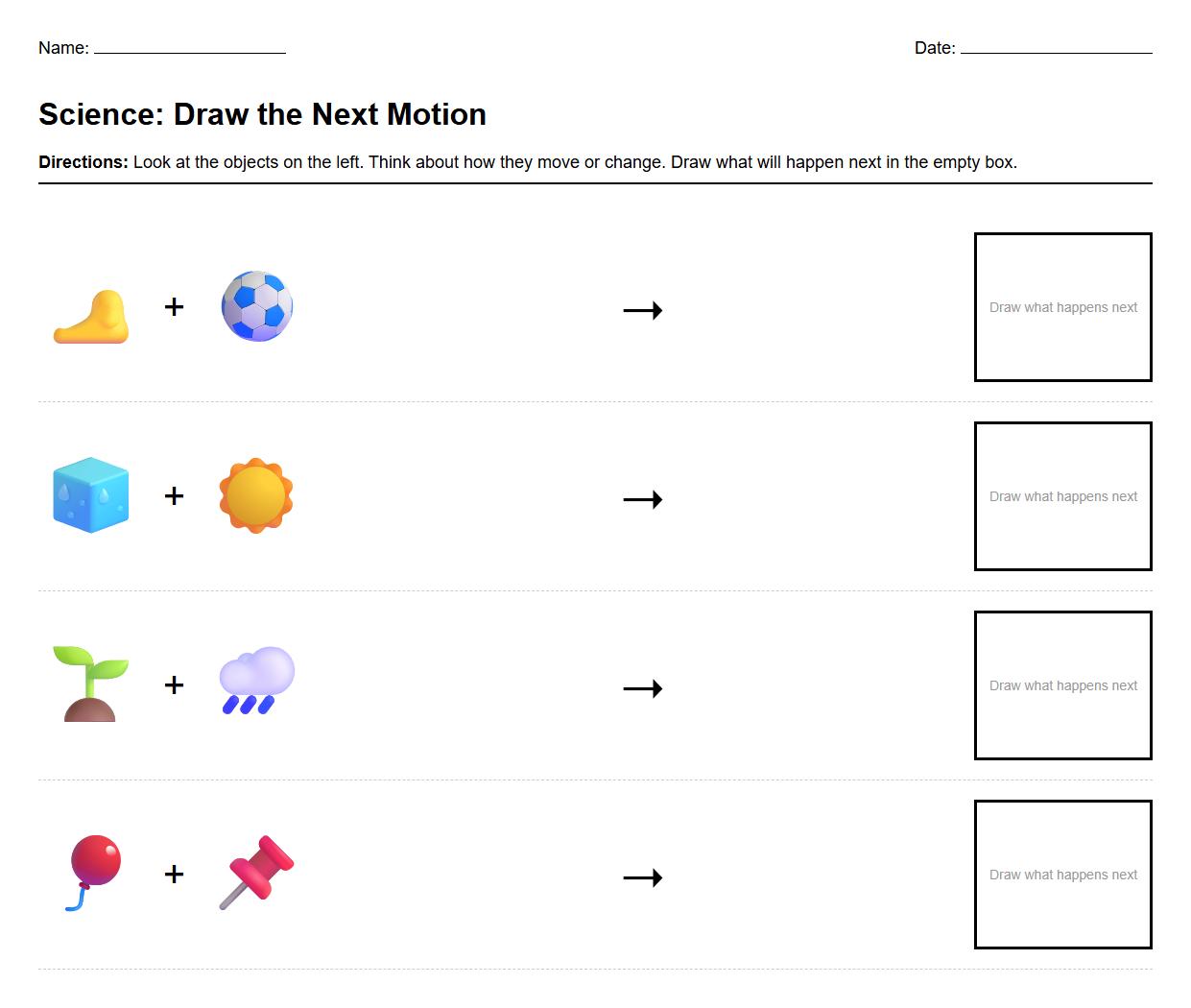
Draw the Next Motion Worksheet for Predicting Object Movement

Download PDF     Pin it

Sort and Classify Worksheet for Rolling vs Sliding Objects
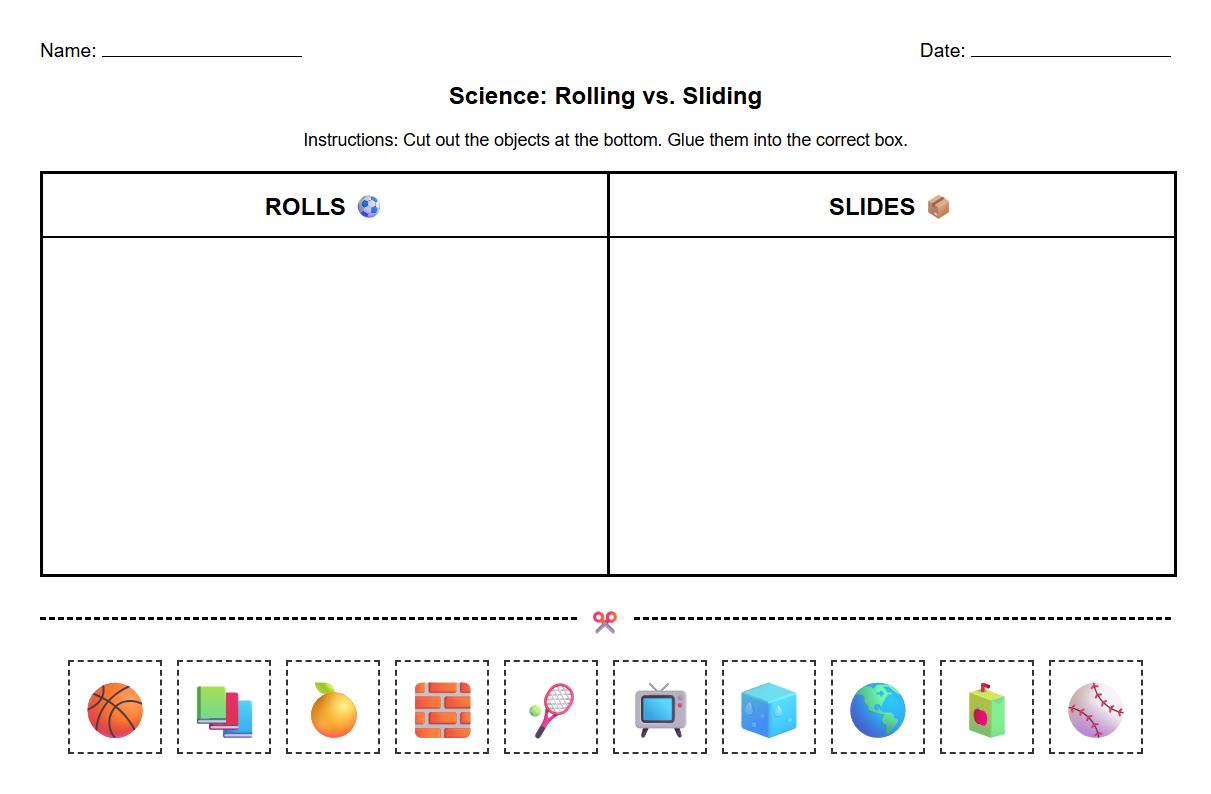
Sort and Classify Worksheet for Rolling vs Sliding Objects

Download PDF     Pin it

Matching Forces Worksheet for Balanced and Unbalanced Scenarios
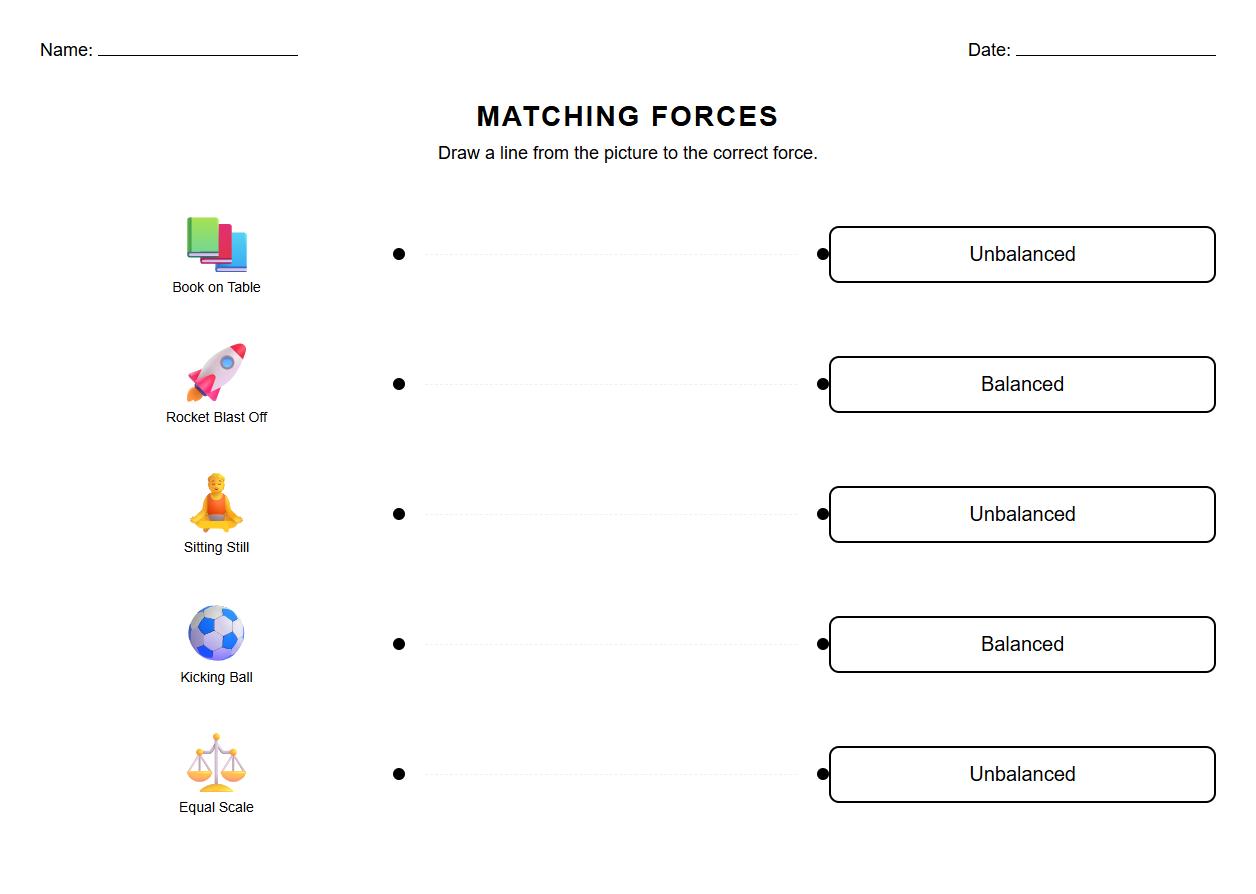
Matching Forces Worksheet for Balanced and Unbalanced Scenarios

Download PDF     Pin it

Cut Out and Sequence Worksheet for Step by Step Motion Events
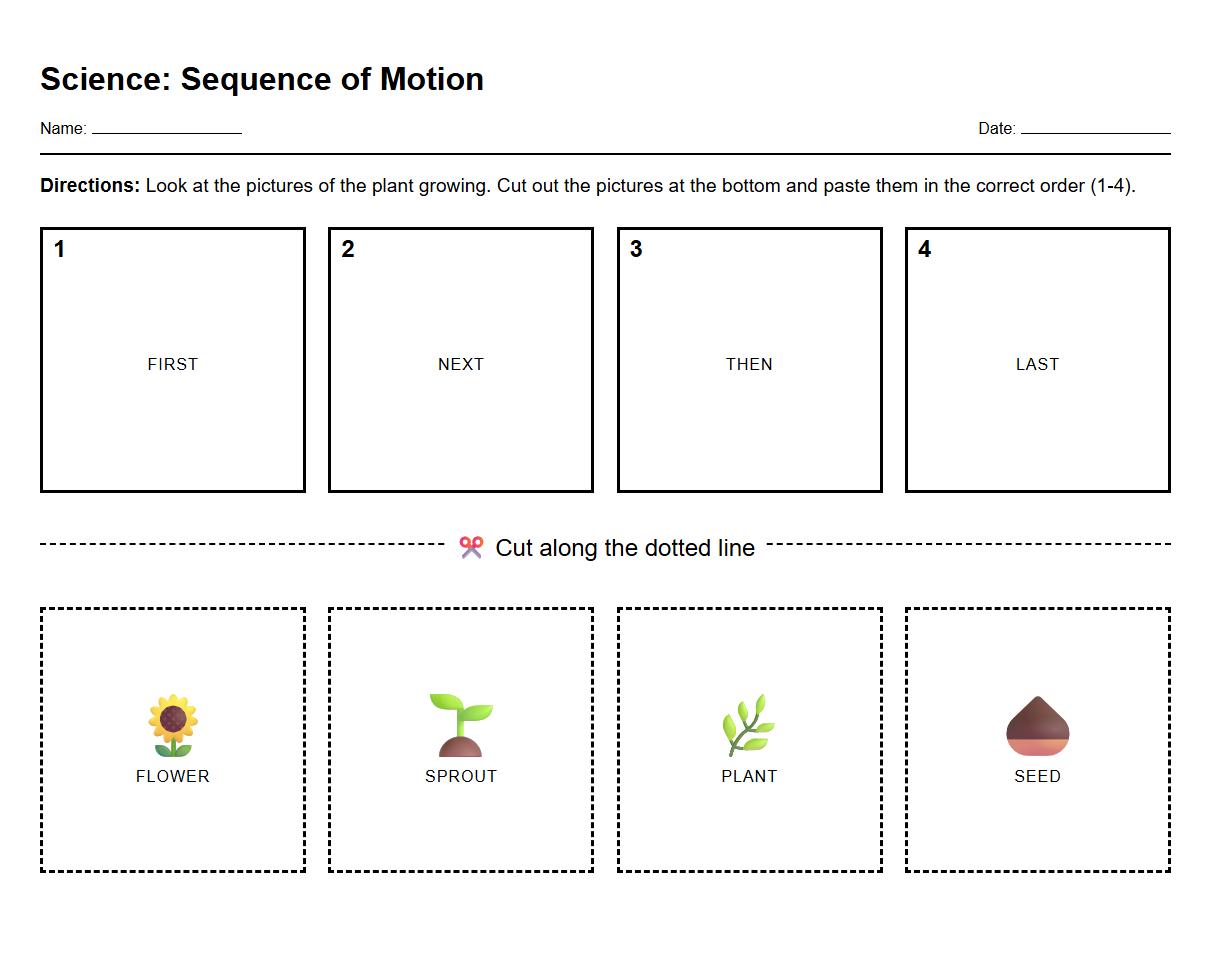
Cut Out and Sequence Worksheet for Step by Step Motion Events

Download PDF     Pin it

Fill in the Blank Worksheet for Simple Force Vocabulary
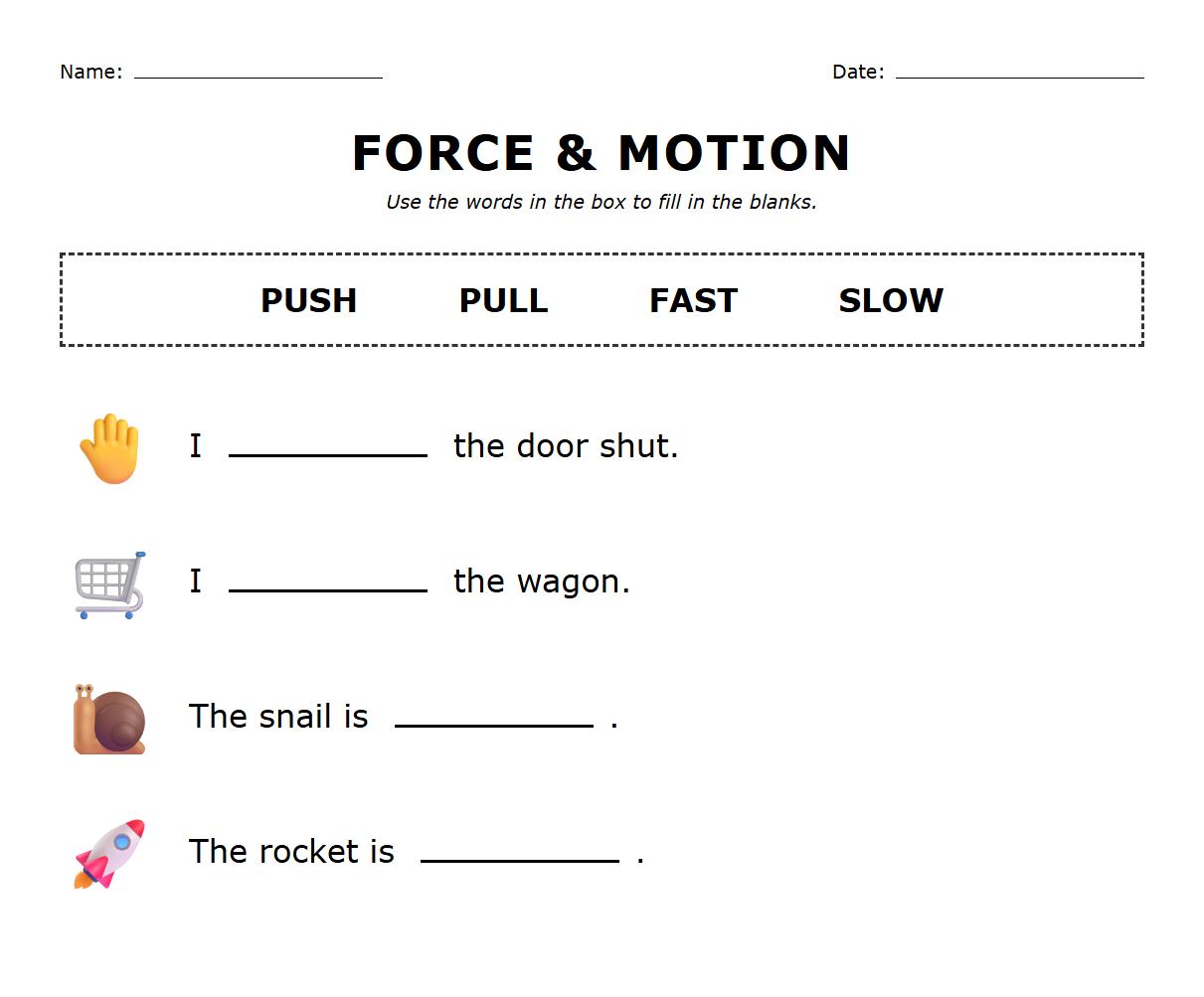
Fill in the Blank Worksheet for Simple Force Vocabulary

Download PDF     Pin it

Label the Diagram Worksheet for Cause and Effect in Motion
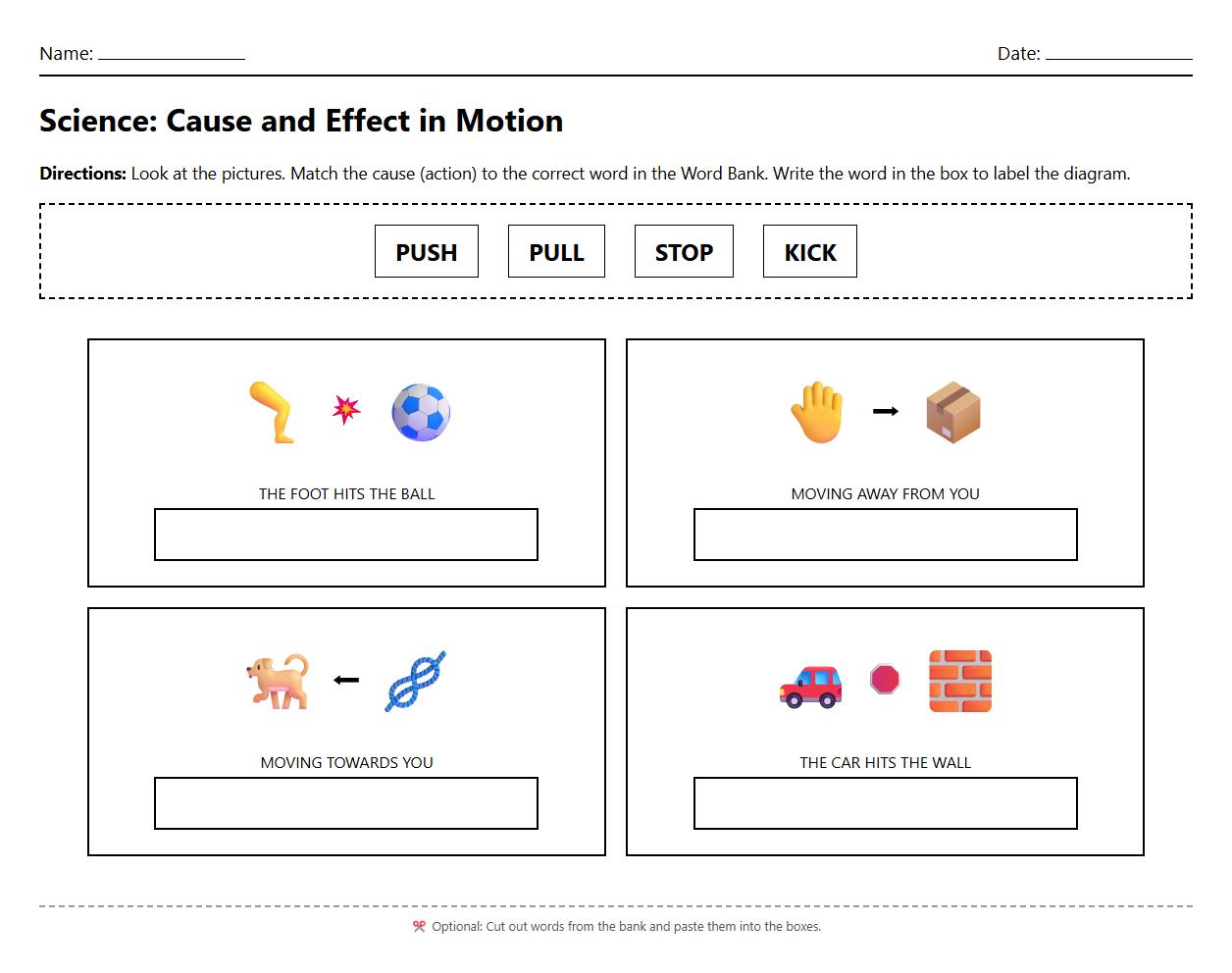
Label the Diagram Worksheet for Cause and Effect in Motion

Download PDF     Pin it

What Makes an Object Start Moving When You Push It?

Force is what makes an object start moving when you push it. When you apply force, you change the object's state from resting to moving. This is called motion. Teaching children that pushing creates motion helps them understand basic physics concepts.

How Do You Stop a Ball from Rolling?

You stop a ball from rolling by applying a force in the opposite direction or by using an obstacle. Friction between the ball and the surface also slows it down. Explaining this helps kids learn about forces and how things can be controlled. Simple activities like stopping a ball can reinforce these ideas.

What Happens When You Pull a Toy Car Backward and Let It Go?

When you pull a toy car backward and let it go, it moves forward on its own. This happens because of stored energy that sets the car in motion. Children can observe cause and effect and learn how energy changes form. It's a great way to discuss motion and energy in play.

Why Does a Slide Help You Move Down Faster?

A slide helps you move down faster because gravity pulls you downward along a smooth surface. The smooth material reduces friction, making it easier to slide. Understanding gravity and friction introduces children to basic physical forces in everyday life. Slides are fun tools to explore these ideas.

How Can You Make a Swing Go Higher?

You can make a swing go higher by pushing it with more force or pumping your legs at the right time. The stronger the push, the more energy is added to the swing. This demonstrates how forces can increase the height of movement. Swings provide a hands-on way to learn about energy and motion.

What Do You Feel If Someone Gently Pushes You on a Swing?

If someone gently pushes you on a swing, you feel a soft force that sets you moving back and forth. This gentle push creates smooth, gentle motion that you can control. It helps kids understand how force affects movement. The feeling of being pushed and swinging is a way to experience physics personally.

What Changes If You Roll a Ball on a Smooth Floor Versus a Rug?

Rolling a ball on a smooth floor makes it move farther and faster because there is less friction. On a rug, the ball slows down quickly due to more friction. This contrast teaches children how surface texture affects motion. Comparing these surfaces shows how friction works in real life.

How Do Two Magnets Move When You Push Them Together?

When you push two magnets together, they either attract or repel depending on their poles. Like poles repel and opposite poles attract, creating movement. This magnetic force is invisible but strong, making it a fascinating topic for kids. Exploring magnets encourages curiosity about invisible forces.

What Is Happening When You Jump Up and Land Back Down?

When you jump up, your muscles apply force to lift you against gravity. Gravity then pulls you back down, bringing you safely to the ground. This cycle shows the balance of forces and the effect of gravity. Jumping helps children experience these forces firsthand.

Why Does a Heavier Object Not Move as Fast as a Lighter One When You Push Them Both?

A heavier object does not move as fast as a lighter one because it has more mass and requires more force to accelerate. This difference explains inertia -- the resistance to change in motion. Teaching about mass and force helps children understand movement in the world around them. Hands-on experiments with different objects make this concept clear.


More in Science Category


About the author. Nylen Smith is a dedicated educator and cofounder of KWorksheet.com, a popular platform specializing in high-quality kindergarten worksheets and printable activities.

Disclaimer. The information provided in this document is for general informational purposes and/or document sample only and is not guaranteed to be factually right or complete. Please report to us via contact-us page if you find and error in this page, thanks.

Comments

No comment yet