Interactive Phonics-Based Human Body Vocabulary Worksheet for Kindergarten

📅 Jun 21, 2025 👤 Nylen Smith

This interactive phonics-based worksheet introduces kindergarten students to essential human body vocabulary through engaging activities that reinforce letter sounds and word recognition. Children develop foundational language skills while learning about body parts, enhancing both their phonemic awareness and scientific curiosity. Explore the collection of available worksheets to support early literacy and anatomy learning.

Phonics Matching Human Body Parts Worksheet
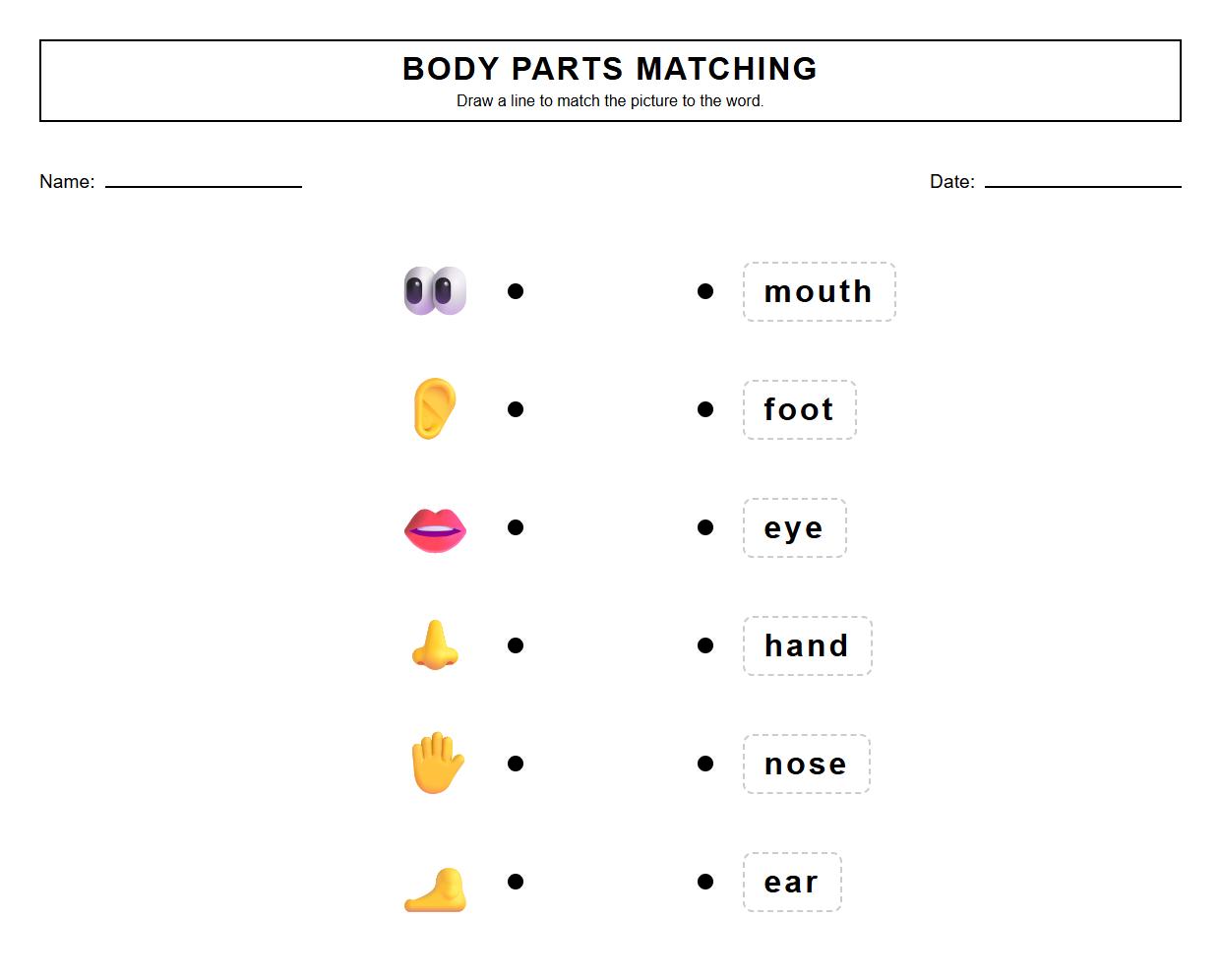
Phonics Matching Human Body Parts Worksheet

Download PDF     Pin it

Human Body Parts Cut and Paste Phonics Activity
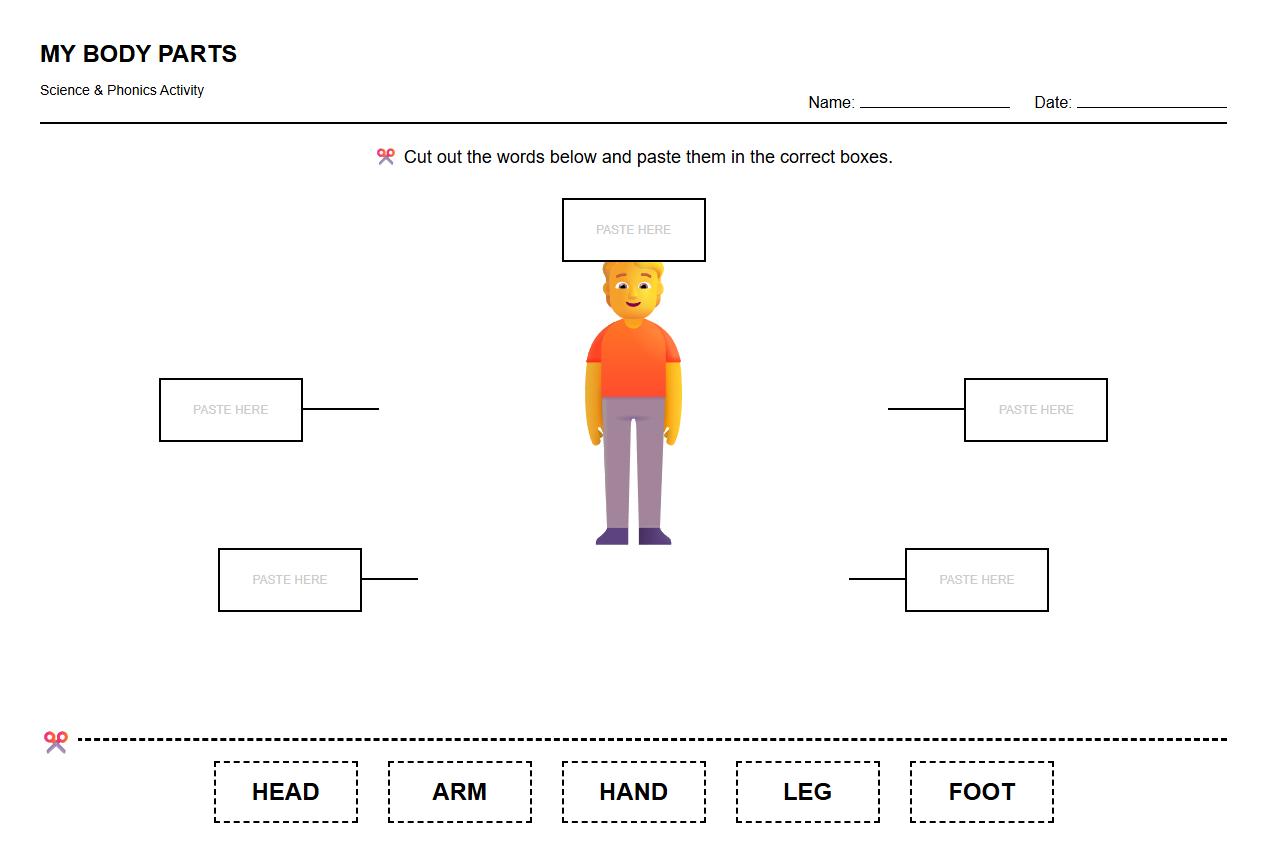
Human Body Parts Cut and Paste Phonics Activity

Download PDF     Pin it

Trace and Spell Body Vocabulary Phonics Sheet
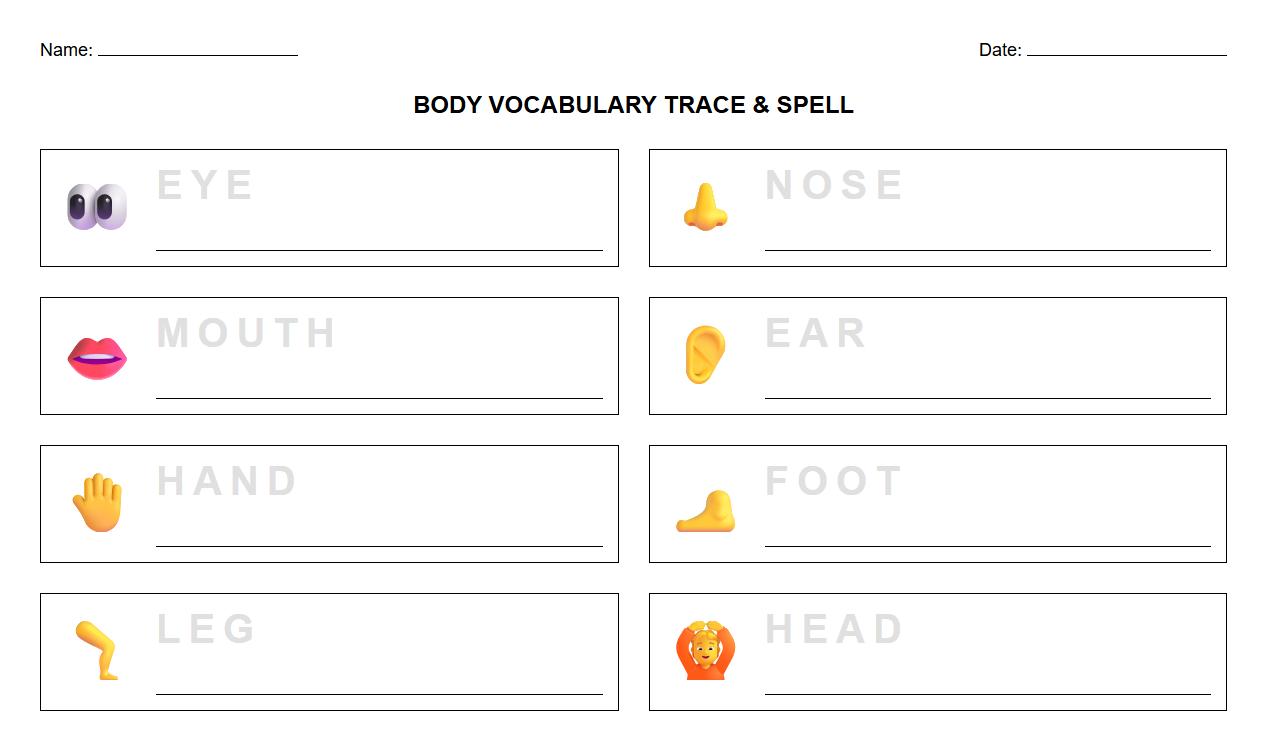
Trace and Spell Body Vocabulary Phonics Sheet

Download PDF     Pin it

Initial Sound Human Anatomy Flashcard Worksheet
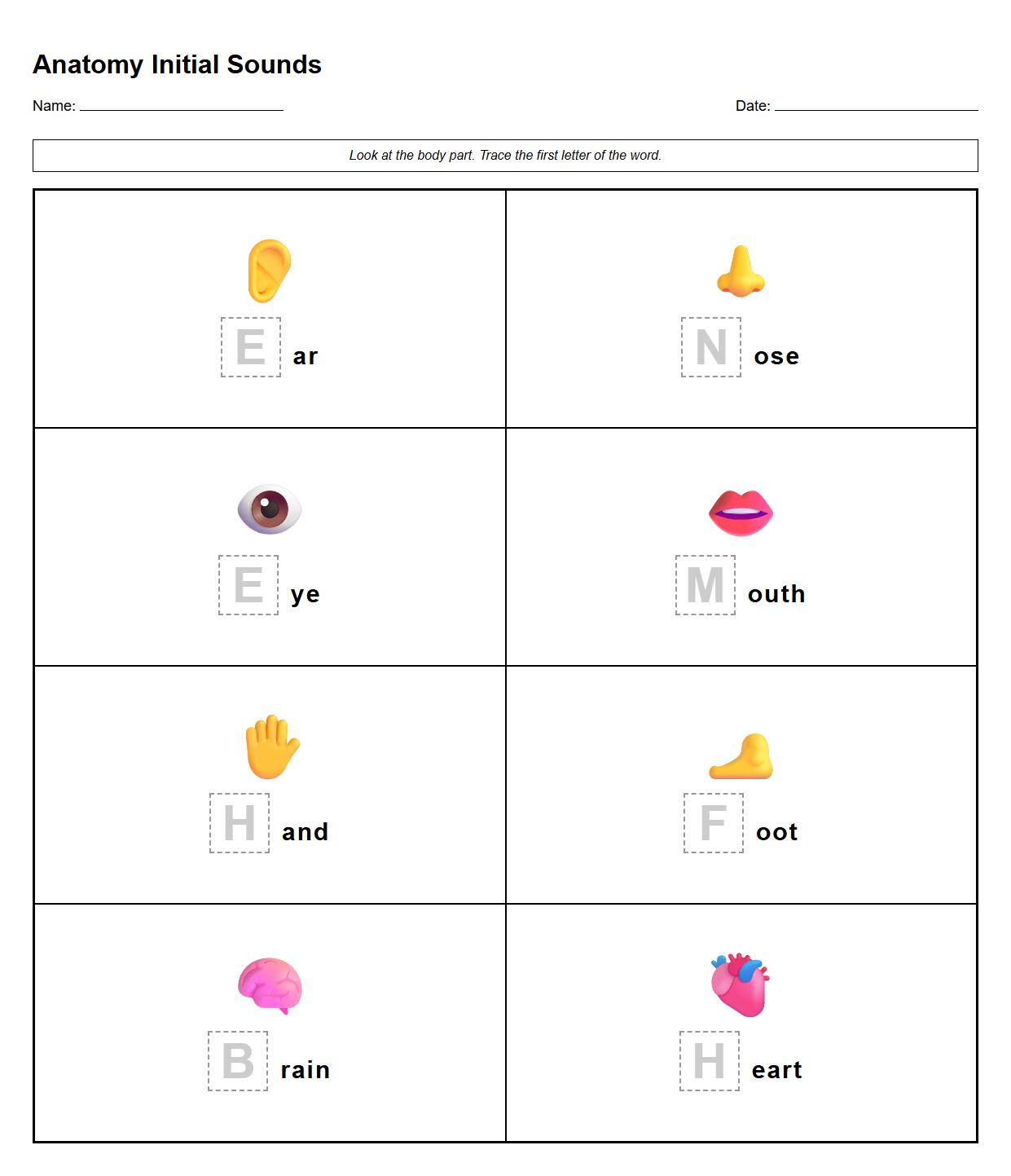
Initial Sound Human Anatomy Flashcard Worksheet

Download PDF     Pin it

Fill in the Blanks Human Body Phonics Exercise
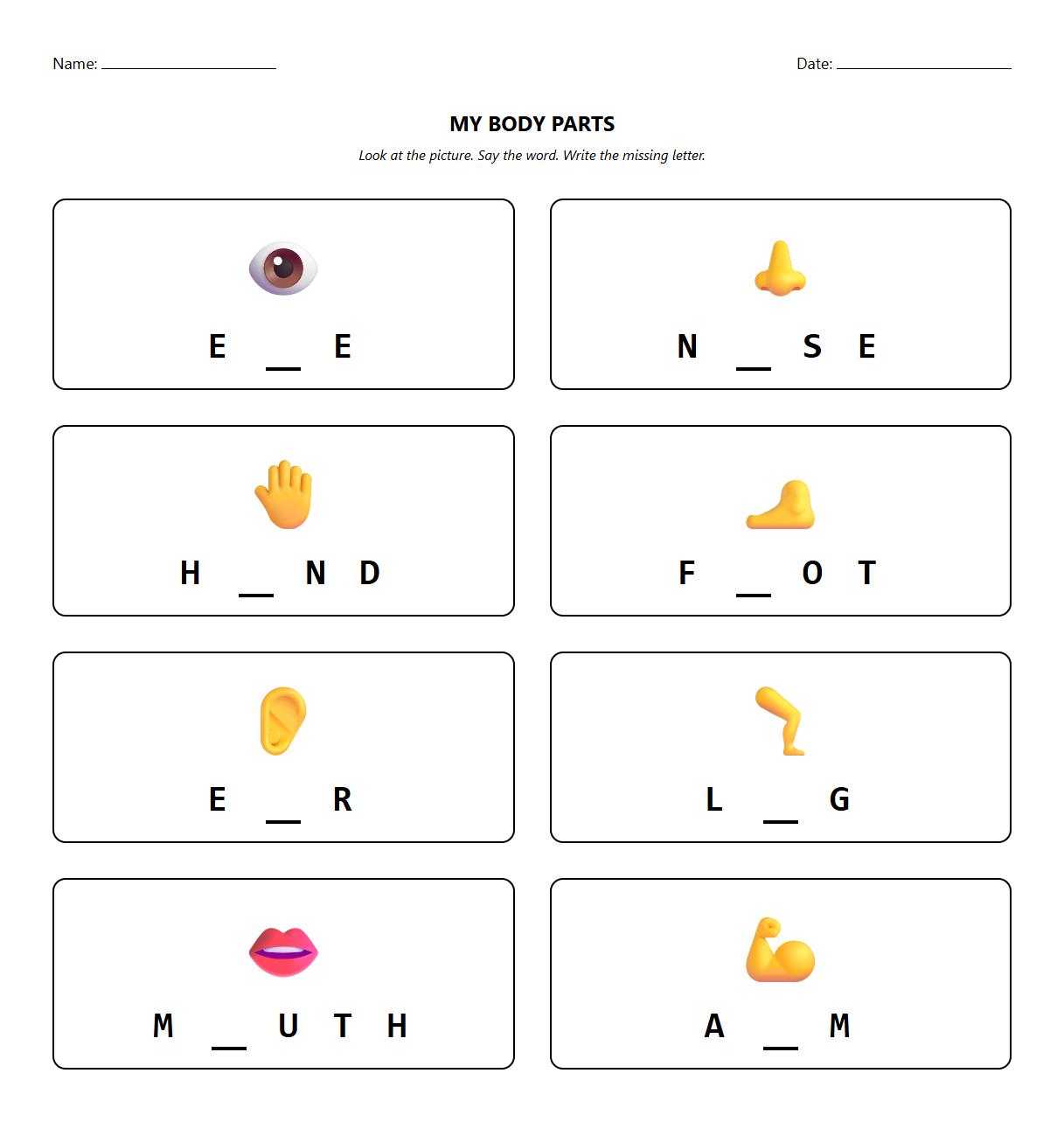
Fill in the Blanks Human Body Phonics Exercise

Download PDF     Pin it

Body Parts Rhyming Words Phonics Task
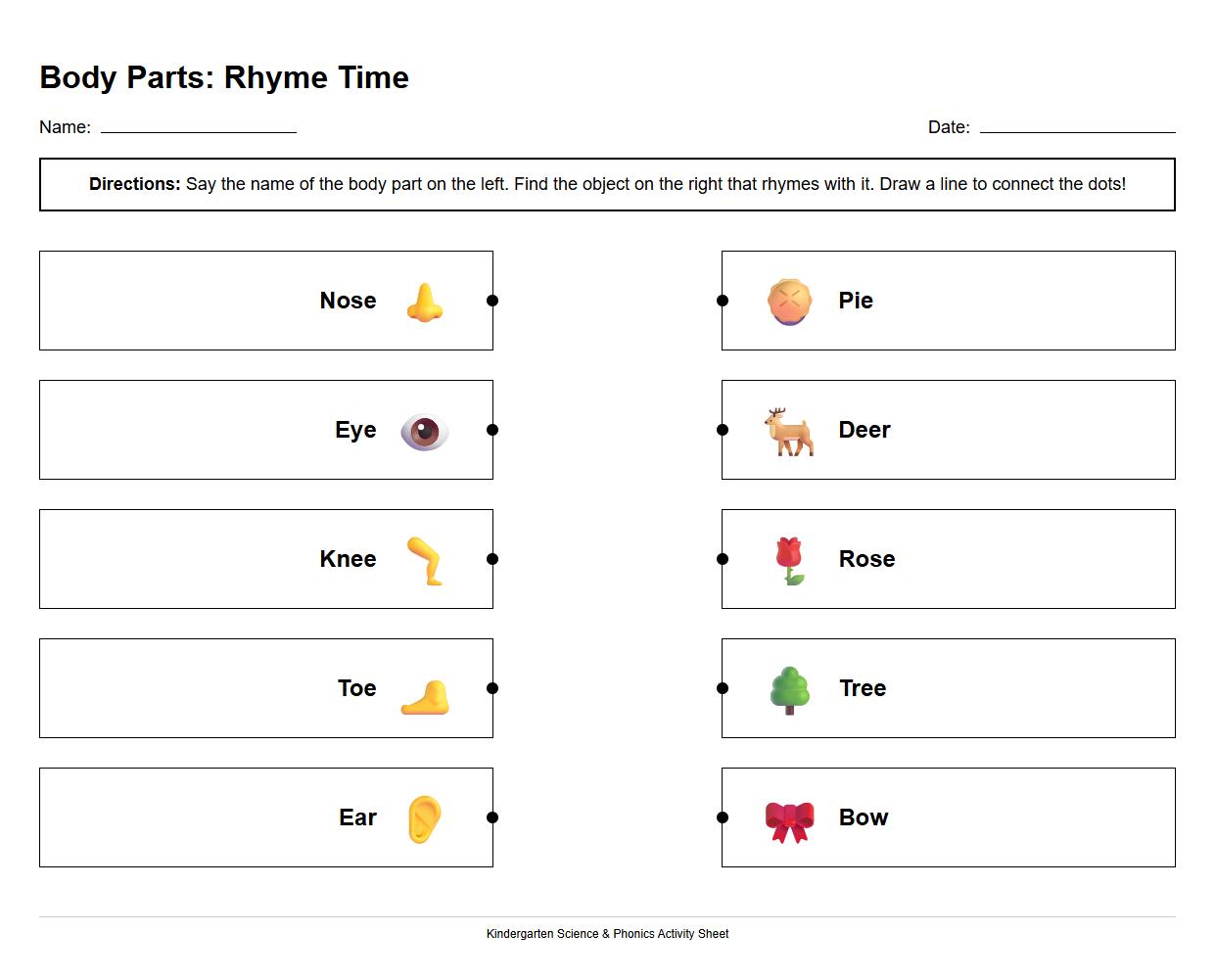
Body Parts Rhyming Words Phonics Task

Download PDF     Pin it

Identify and Color Body Parts Phonics Worksheet
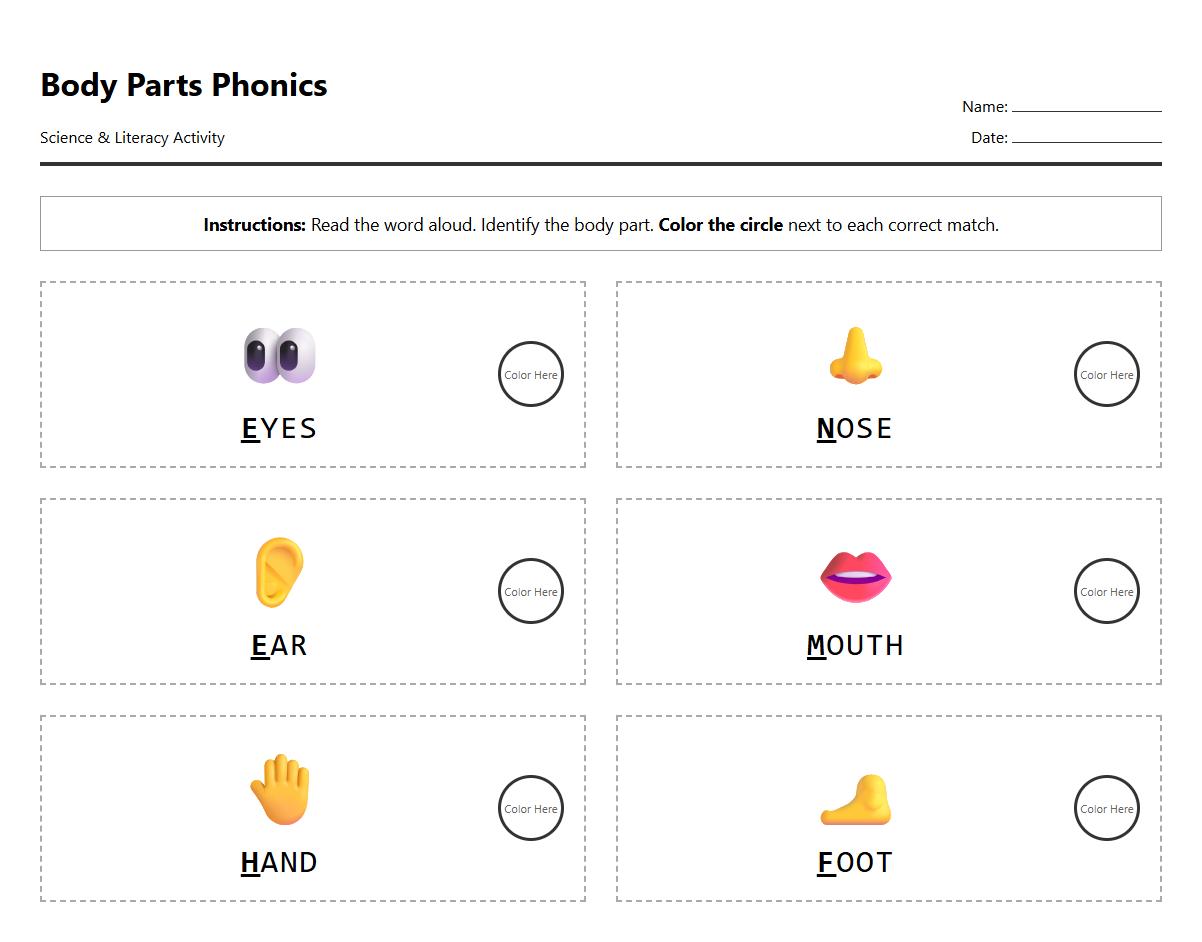
Identify and Color Body Parts Phonics Worksheet

Download PDF     Pin it

Syllable Counting Human Body Vocabulary Page
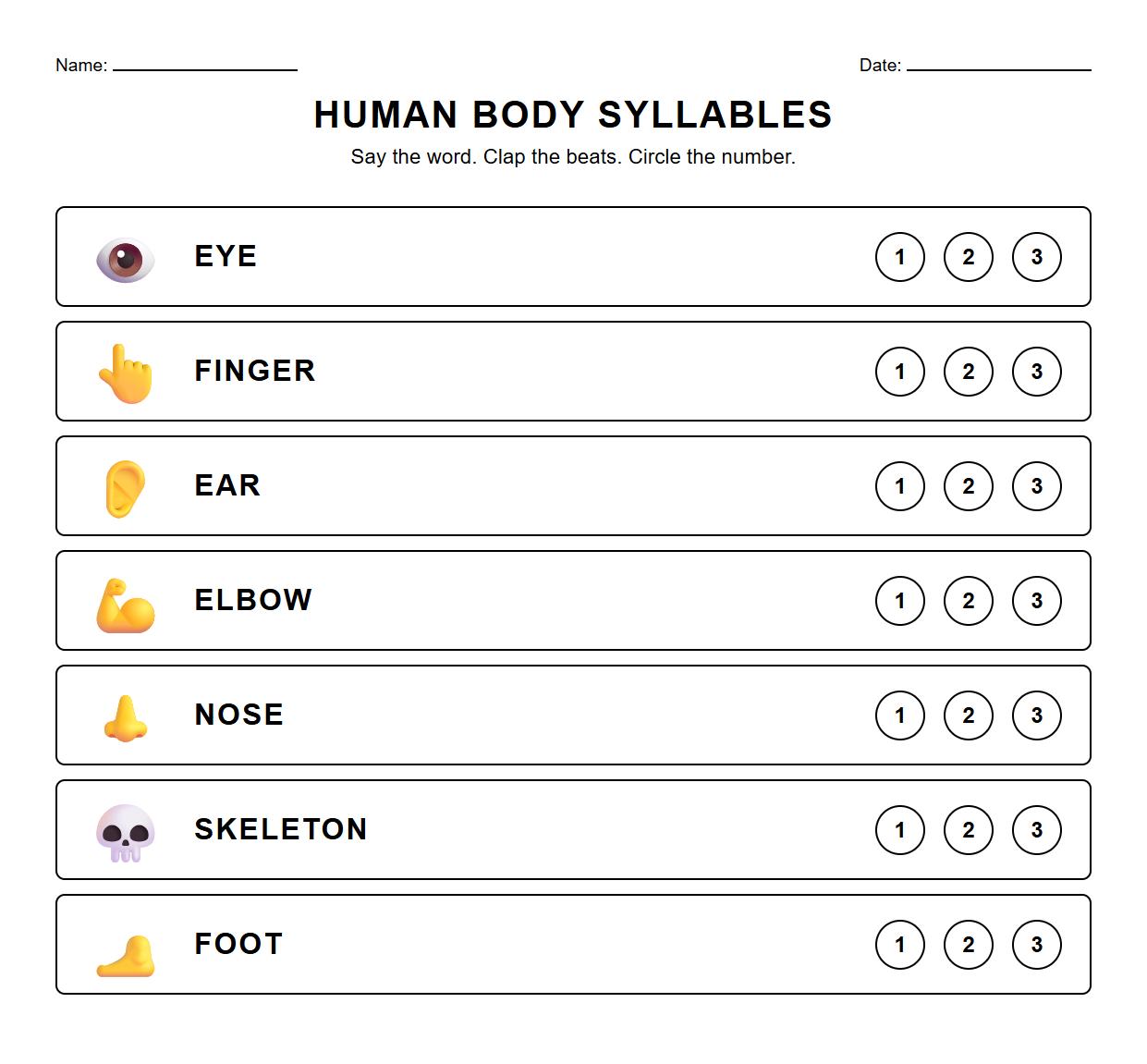
Syllable Counting Human Body Vocabulary Page

Download PDF     Pin it

Missing Letters Human Body Phonics Drill
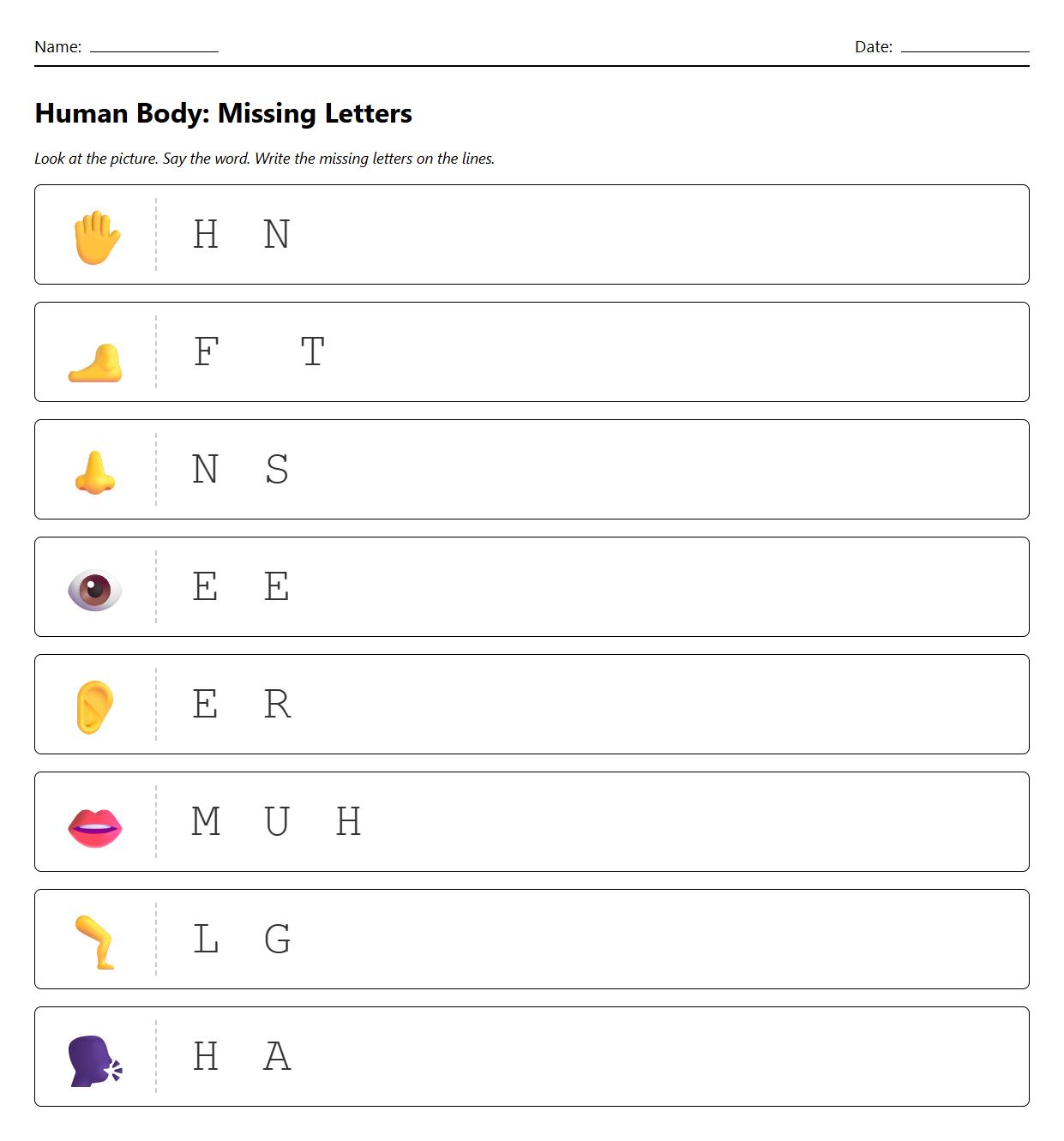
Missing Letters Human Body Phonics Drill

Download PDF     Pin it

Phonics Word Search Human Body Anatomy Worksheet
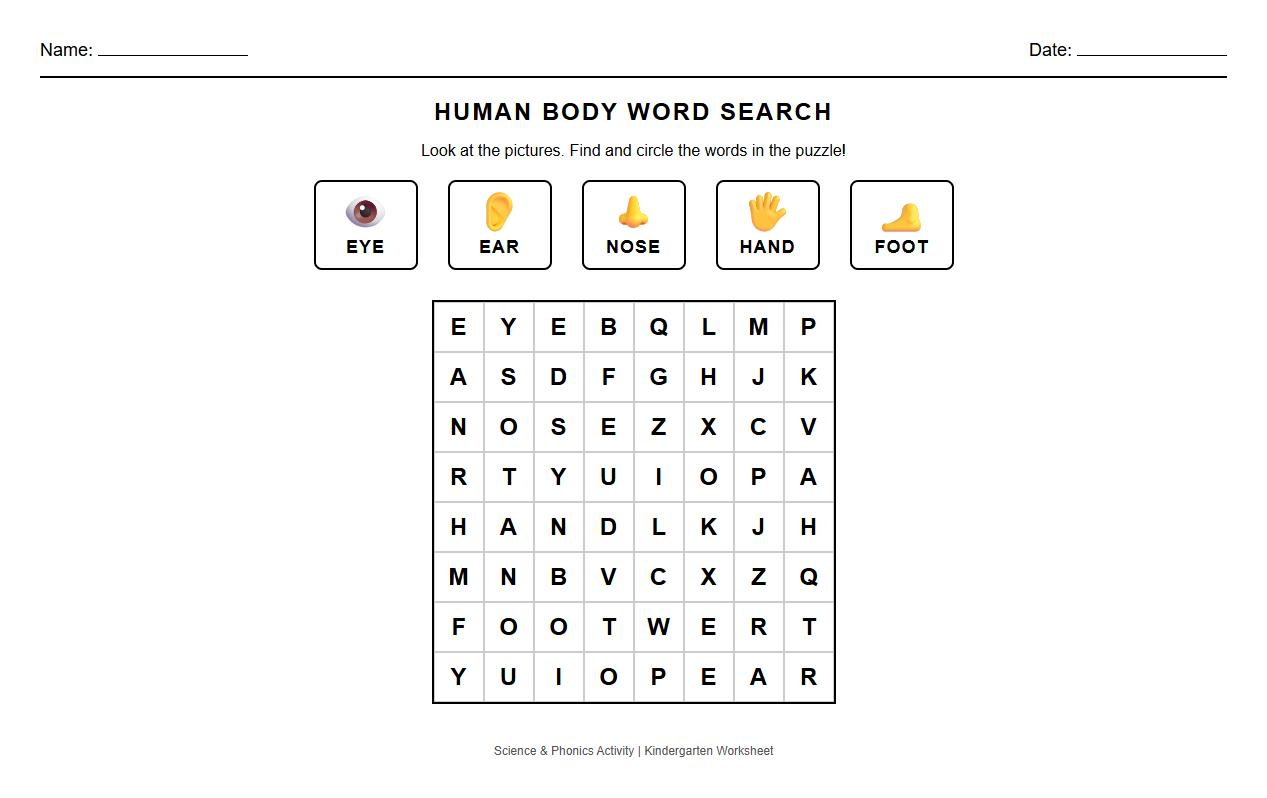
Phonics Word Search Human Body Anatomy Worksheet

Download PDF     Pin it

Fun Phonics Activities to Teach Human Body Vocabulary

The worksheet includes engaging phonics activities such as rhyming games and sound matching exercises focused on body parts. These activities help children connect sounds to letters, reinforcing phonetic awareness while learning new vocabulary. Teachers and parents can use interactive sound cards or songs to make learning enjoyable. This multisensory approach supports early reading skills linked to the human body theme.

Helping Kindergartners Identify and Name Human Body Parts

Bold and colorful illustrations present major human body parts clearly labeled to aid recognition. Children are encouraged to point and say the names of body parts aloud, boosting verbal skills. Simple questions and labeling tasks help solidify knowledge and increase confidence in naming. The worksheet scaffolds learning with step-by-step guidance ideal for young learners.

Interactive Games to Reinforce Body Part Vocabulary

Suggested games include "Simon Says" focusing on body parts to develop listening and movement coordination. Matching games pair body part names to pictures for memory enhancement and visual learning. Additional activities like Body Part Bingo make vocabulary reinforcement dynamic and social. These games create an engaging environment that motivates repetition and recall.

Coloring Sections for Body Parts to Support Word Recognition

Coloring pages feature clear outlines of body parts with their names printed nearby to enhance word recognition. Children color the body parts while verbalizing their names, integrating visual and verbal learning. This hands-on activity encourages attention to detail and promotes fine motor skills. The connection between coloring and vocabulary aids memory retention.

Encouraging Matching Words with Pictures

The worksheet incorporates matching exercises where students draw lines between words and corresponding body part images. This activity sharpens visual discrimination and word recognition abilities. It allows children to independently connect vocabulary with meaning, fostering self-confidence. Repetitive matching tasks help reinforce memory through association.

Simple Fill-in-the-Blank Exercises Using Body Vocabulary

Fill-in-the-blank sections use familiar body part words in easy sentences to encourage context-based learning. These exercises prompt children to recall and write appropriate vocabulary, boosting both spelling and comprehension. They provide a gentle challenge that supports sentence formation skills. Completing blanks also reinforces understanding of body part functions.

The Role of Tracing and Writing Activities in Learning Body Words

Tracing exercises guide children in forming letters that spell body parts, improving handwriting and letter recognition. Writing activities solidify phonics concepts by linking sounds to written words through practice. These tasks promote fine motor control and literacy, crucial for young learners. Tracing also helps internalize the shape and structure of vocabulary words.

Listening Component for Identifying Spoken Body Part Names

The worksheet includes audio-based tasks where children listen to body part names and point to the correct pictures. This listening exercise enhances auditory discrimination and reinforces vocabulary through sound recognition. It supports learners who benefit from oral instruction or have emerging listening skills. Such activities build a foundation for effective communication and language development.

Cut-and-Paste Activities to Build Body-Related Words

Cutting out letters or pictures to assemble body part names helps develop coordination while reinforcing spelling skills. This tactile activity engages kinesthetic learners and makes vocabulary building interactive. Arranging words physically strengthens the child's understanding of word structure. It also encourages creativity and fine motor skill practice.

Supporting Pronunciation Practice of Body Part Vocabulary

Pronunciation practice is encouraged through repetitive oral exercises embedded within the worksheet, including echo reading and choral speaking. Teachers and parents are advised to model correct sounds and encourage children to mimic them. Visual aids paired with pronunciation guides ensure clarity and confidence. This approach facilitates accurate and clear communication of body-related vocabulary.


More in Science Category


About the author. Nylen Smith is a dedicated educator and cofounder of KWorksheet.com, a popular platform specializing in high-quality kindergarten worksheets and printable activities.

Disclaimer. The information provided in this document is for general informational purposes and/or document sample only and is not guaranteed to be factually right or complete. Please report to us via contact-us page if you find and error in this page, thanks.

Comments

No comment yet