Scientific Inquiry Magnet Worksheet for Kindergarten Grade

📅 Jun 12, 2025 👤 Nylen Smith

Scientific inquiry worksheets for kindergarten encourage young learners to explore basic concepts through observation and hands-on activities. These worksheets foster curiosity, critical thinking, and the foundation of the scientific method tailored to early childhood education. Discover a variety of engaging worksheets designed to introduce scientific inquiry principles effectively.

Magnet Sorting Activity Worksheet with Everyday Objects
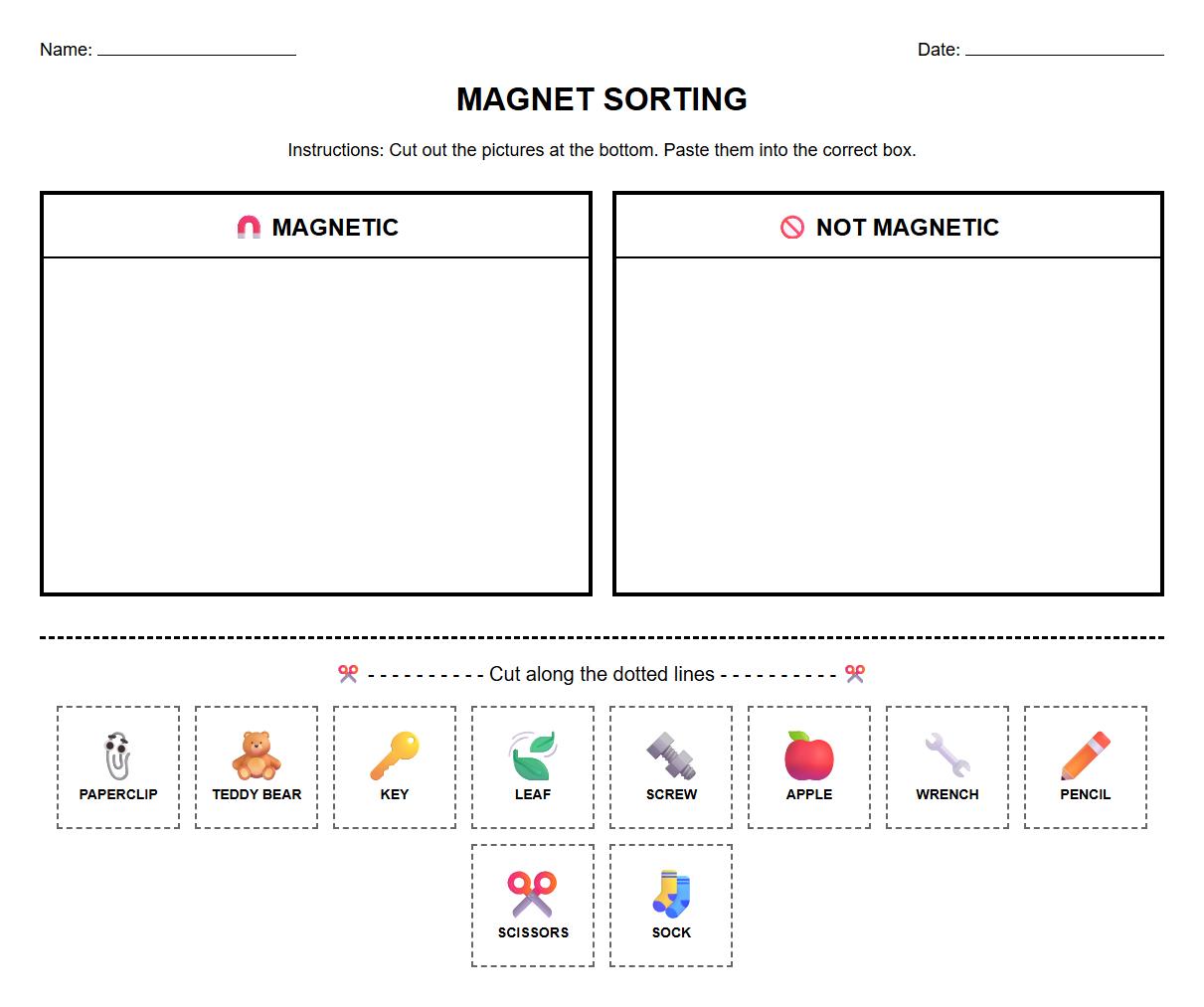
Magnet Sorting Activity Worksheet with Everyday Objects

Download PDF     Pin it

Fill in the Blank Magnetic or Nonmagnetic Worksheet
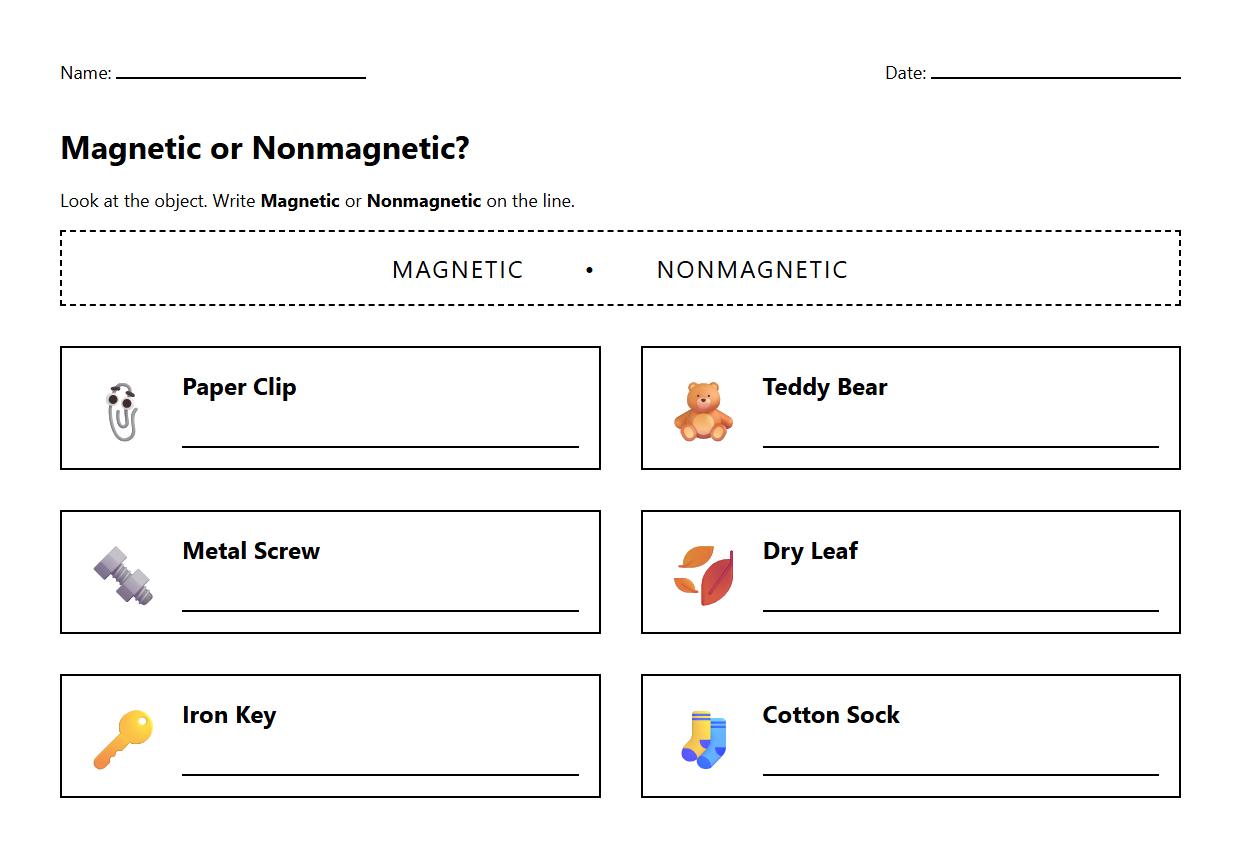
Fill in the Blank Magnetic or Nonmagnetic Worksheet

Download PDF     Pin it

Magnets and Their Poles Matching Exercise
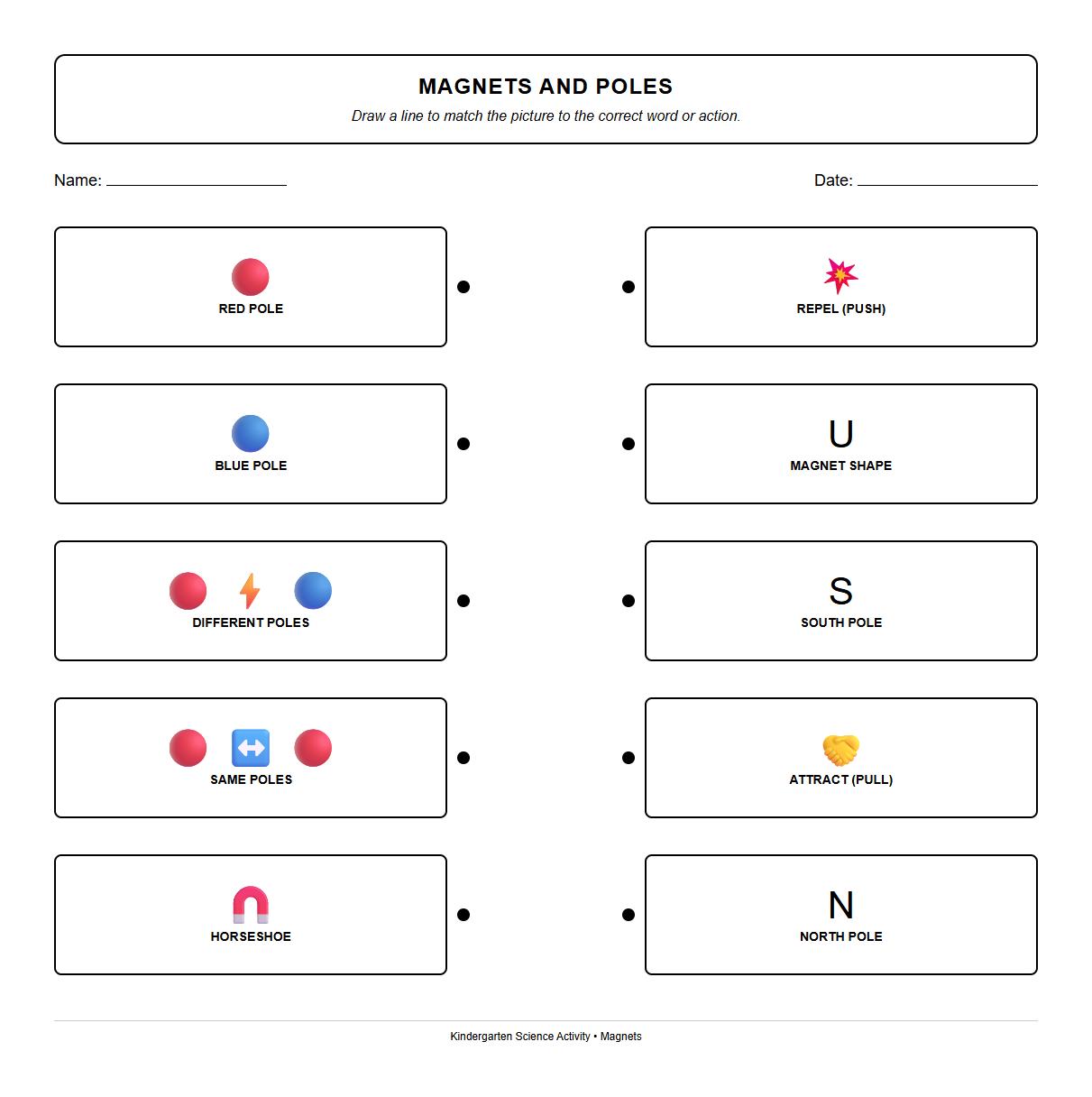
Magnets and Their Poles Matching Exercise

Download PDF     Pin it

Magnetism True or False Science Statements
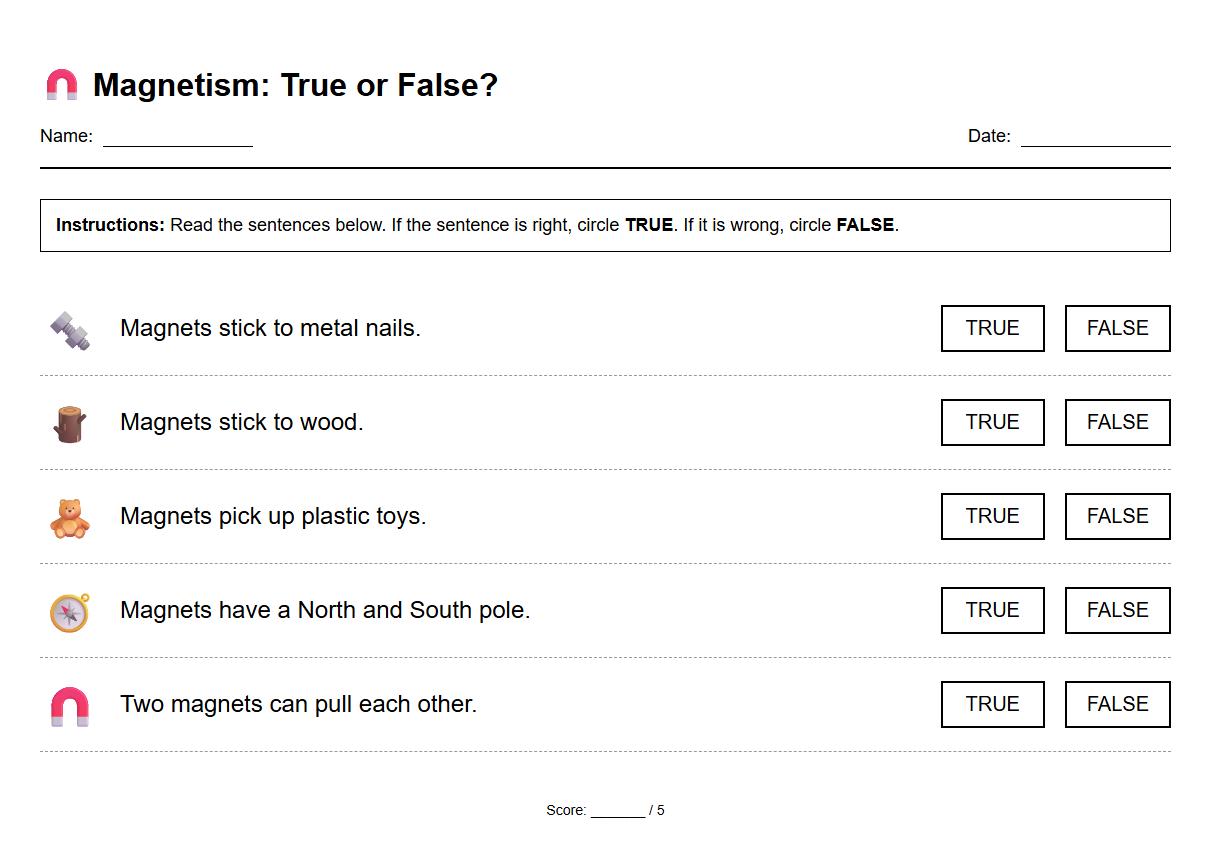
Magnetism True or False Science Statements

Download PDF     Pin it

Vocabulary Sheet with Magnet-Related Technical Terms
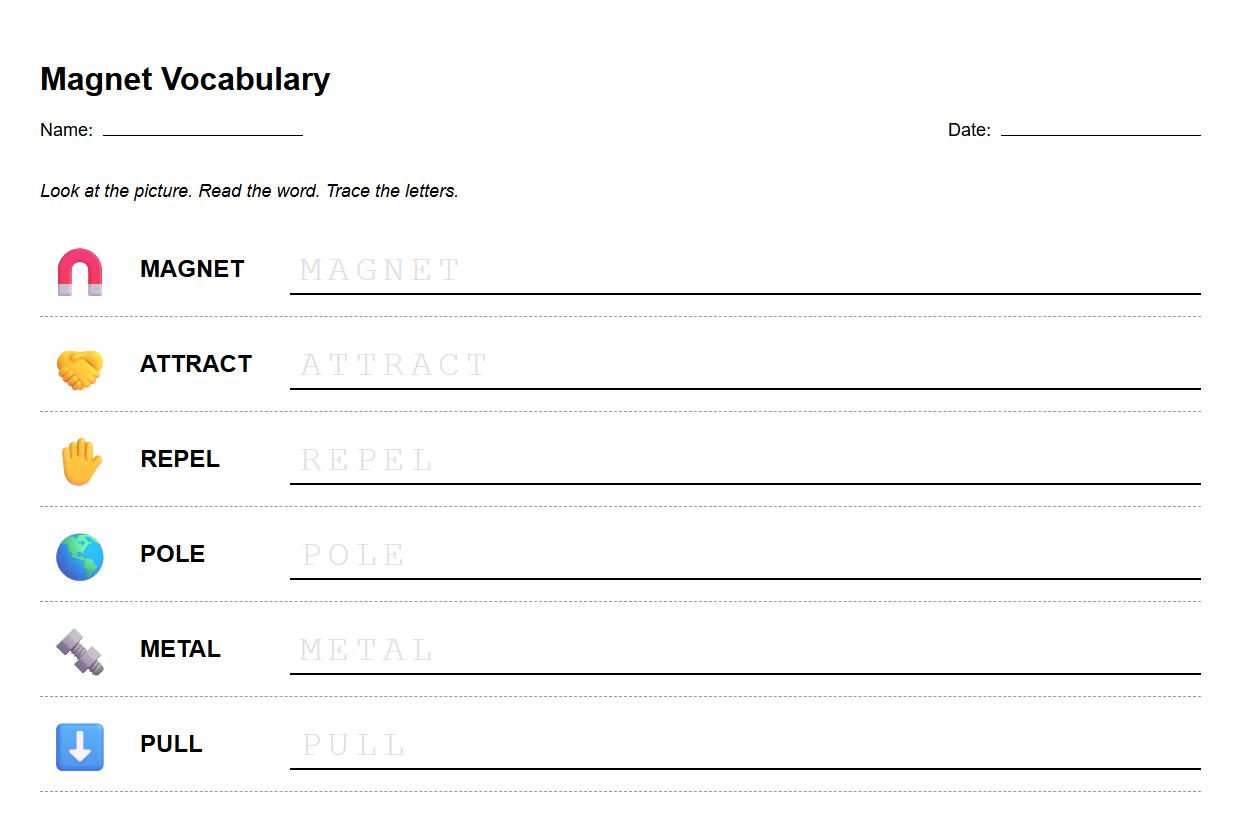
Vocabulary Sheet with Magnet-Related Technical Terms

Download PDF     Pin it

Magnet Maze: Guide the Object Using Magnetic Force
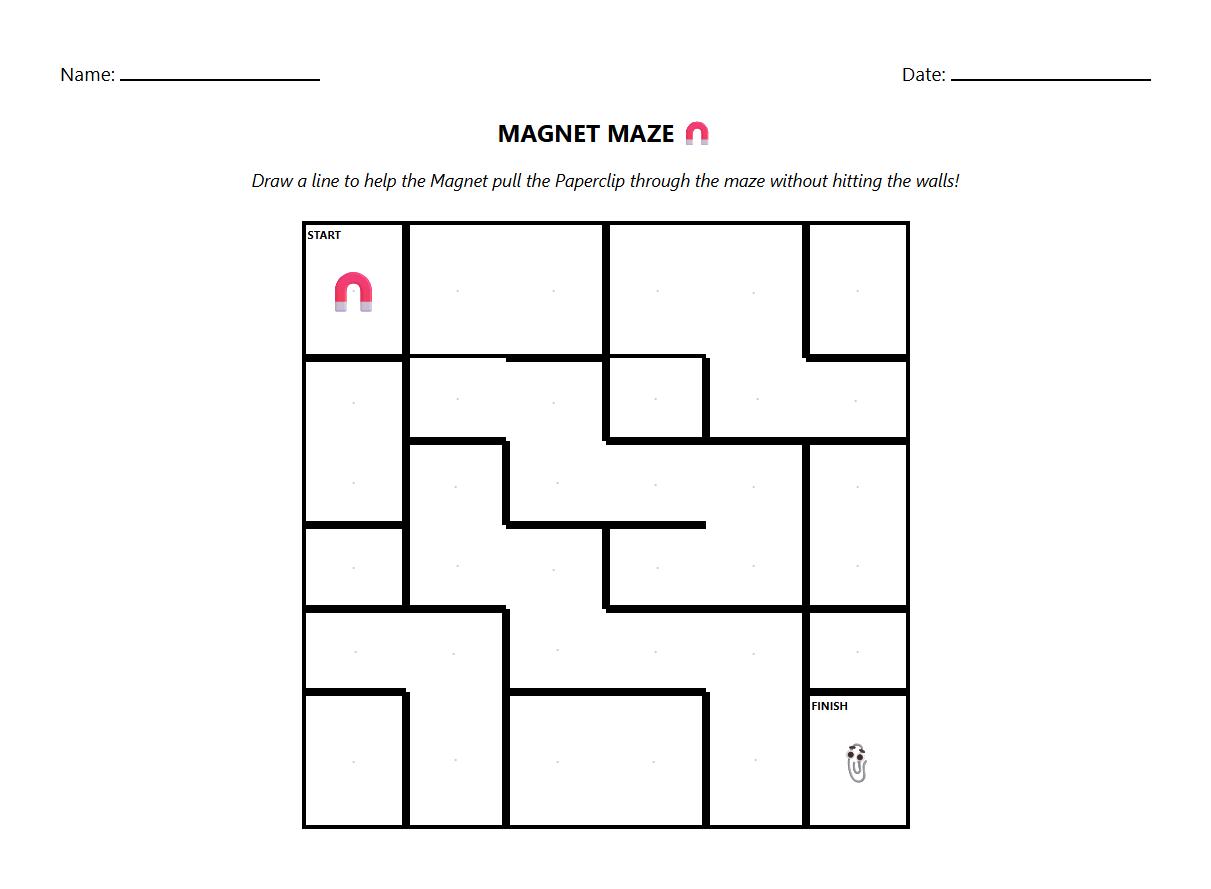
Magnet Maze: Guide the Object Using Magnetic Force

Download PDF     Pin it

Predict and Test Magnet Strength Chart
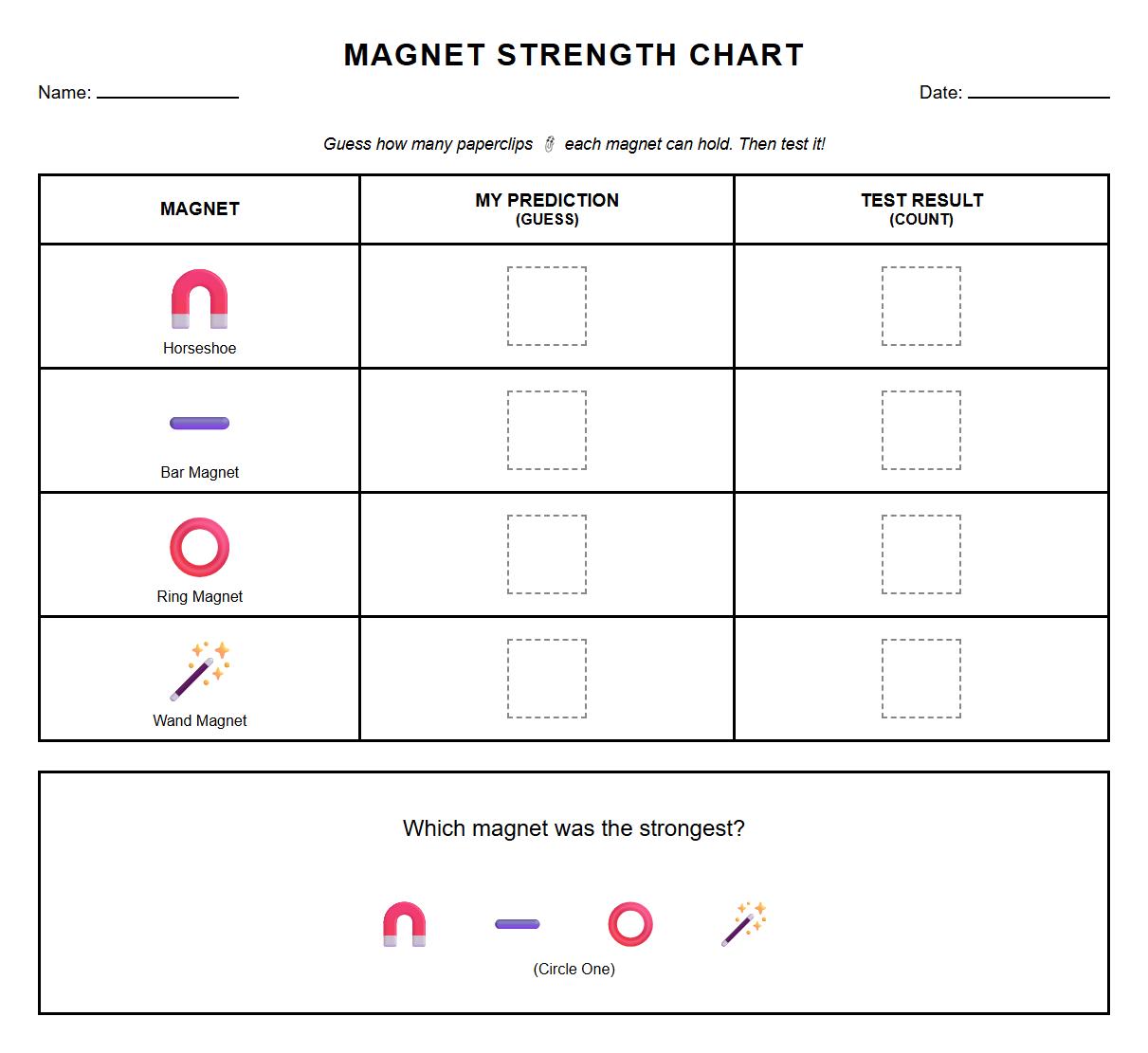
Predict and Test Magnet Strength Chart

Download PDF     Pin it

Simple Scientific Inquiry Drawing Magnets in Action
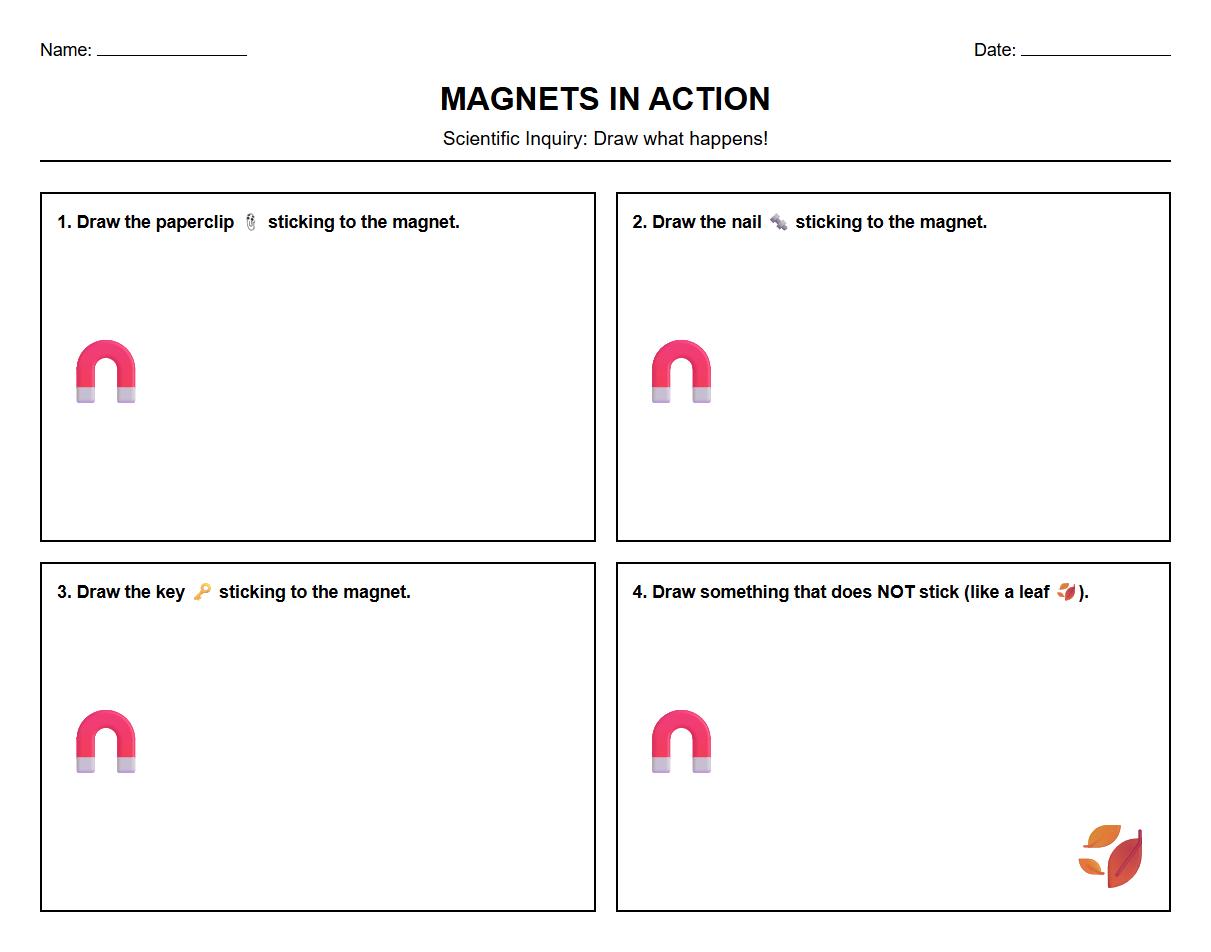
Simple Scientific Inquiry Drawing Magnets in Action

Download PDF     Pin it

Phonics Focus: Find and Circle Words Starting with Letter M for Magnet
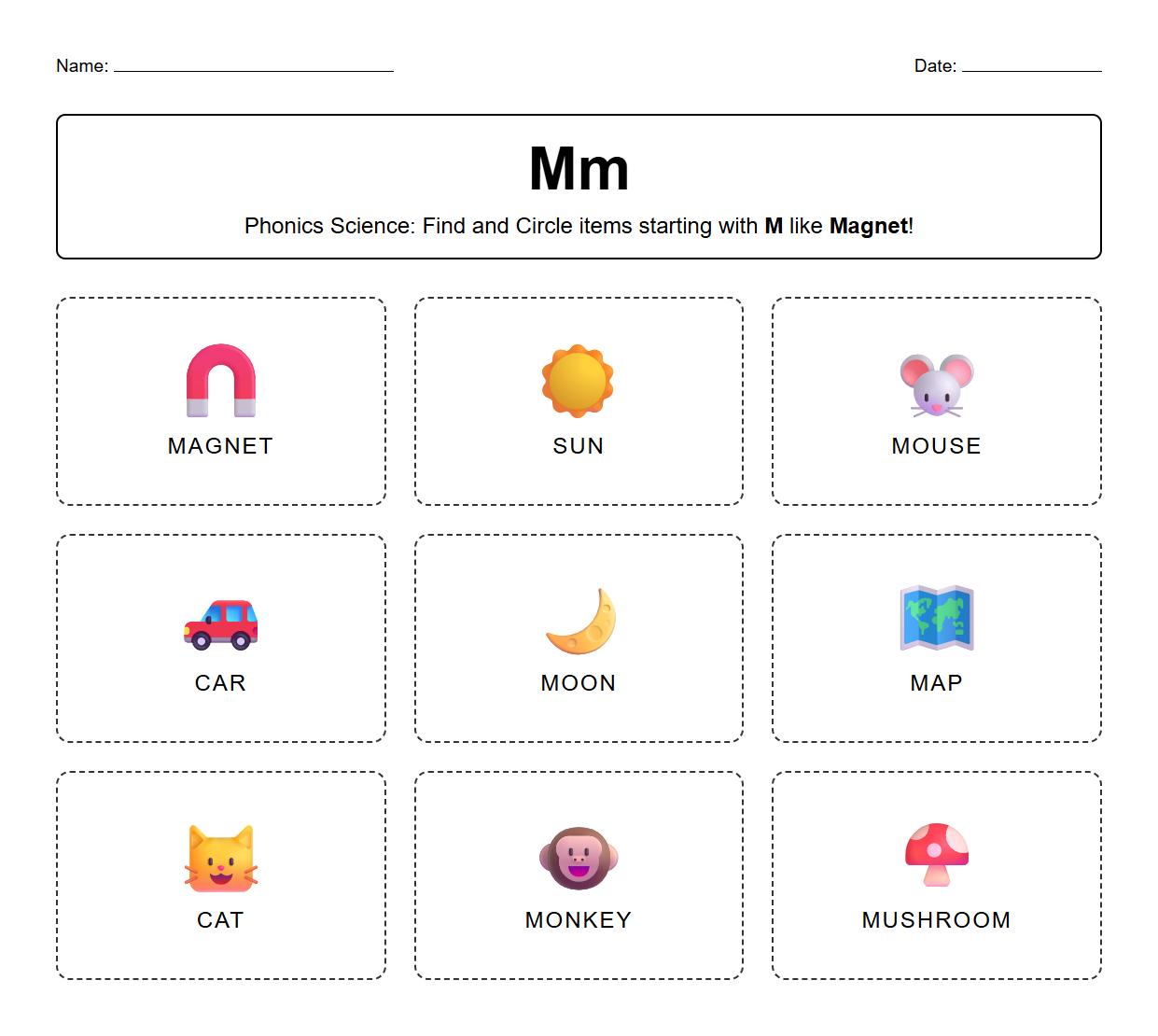
Phonics Focus: Find and Circle Words Starting with Letter M for Magnet

Download PDF     Pin it

Step-by-Step Magnetic Investigation Recording Sheet
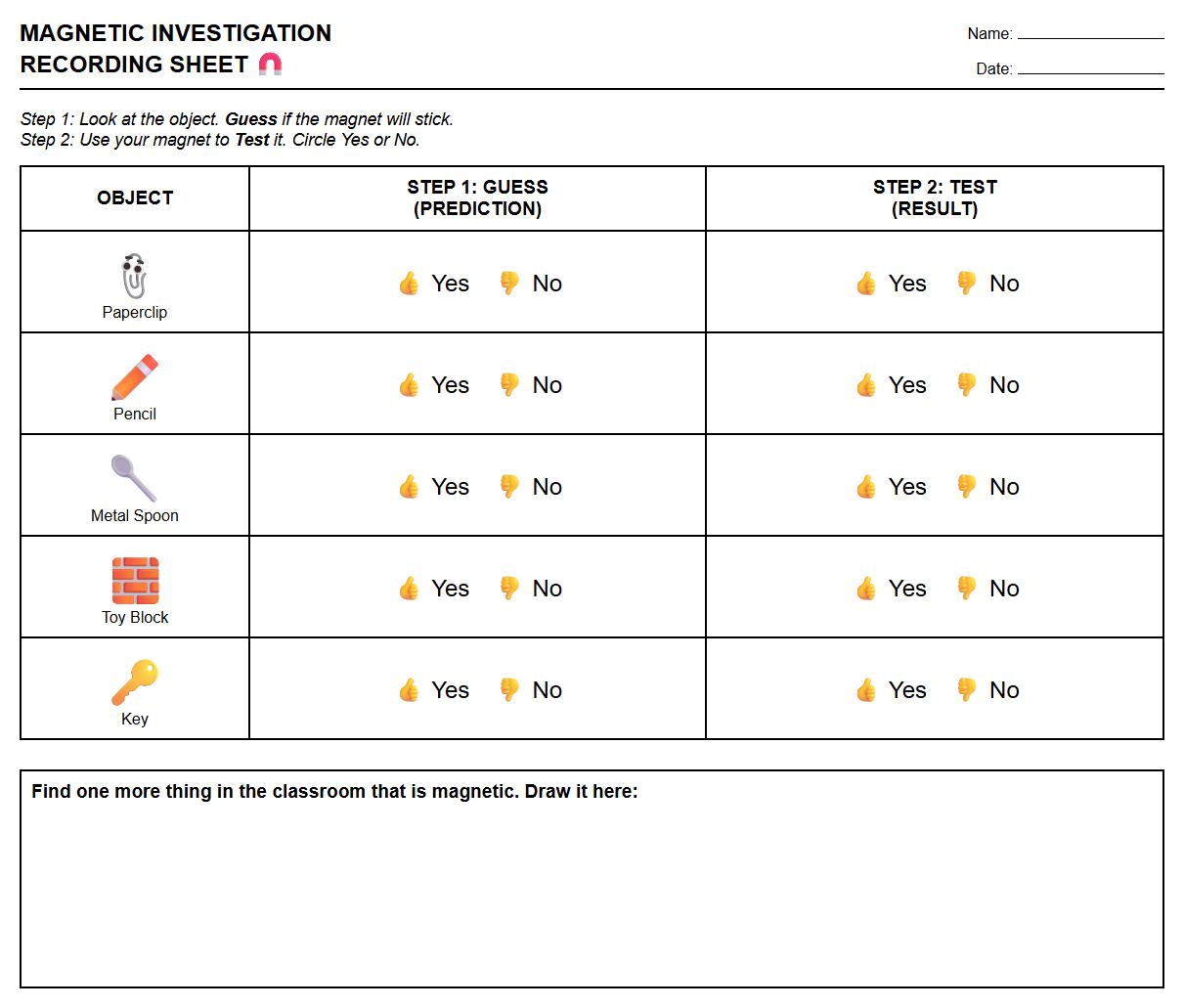
Step-by-Step Magnetic Investigation Recording Sheet

Download PDF     Pin it

What Happens When You Bring a Magnet Close to a Paper Clip?

When you bring a magnet close to a paper clip, the paper clip is pulled toward the magnet. This happens because the magnet's magnetic force attracts the metal inside the paper clip. The paper clip may even stick to the magnet. This shows how magnets can affect some objects.

Can You Find Three Objects in the Classroom That a Magnet Will Stick To?

Look around the classroom to find objects that magnets stick to. Common examples include paper clips, refrigerator magnets, and metal door handles. These objects contain magnetic metals like iron or steel. Finding these items helps children understand the concept of magnetism.

Which Objects Do Magnets Not Attract?

Magnets do not attract objects made of plastic, wood, glass, or paper. These materials are non-magnetic because they lack the metals that magnets can pull. Understanding what magnets cannot attract helps children learn the difference between magnetic and non-magnetic materials. It's a great way to observe and explore.

What Does a Magnet Do to Metal?

A magnet pulls metal objects like paper clips or nails toward itself. It attracts certain metals due to the magnetic force. This attraction can make metal objects stick, move, or even jump to the magnet. This property is the foundation of how magnets work in everyday life.

How Can You Tell If Something Is Magnetic?

To tell if something is magnetic, you can hold a magnet near the object. If the object moves or sticks to the magnet, it is magnetic. Otherwise, it will stay in place and not be affected. This simple test helps children learn through hands-on experience.

Can You Draw What a Magnet and a Coin Look Like Together?

Drawing a magnet and a coin side by side helps children visualize differences. The magnet often has a horseshoe or bar shape, while the coin is round and flat. This exercise improves observation and understanding of shapes and objects. You can discuss whether the coin sticks to the magnet or not. For more fun, check out this drawing activity.

Why Do You Think a Magnet Sticks to Some Things But Not Others?

Magnets stick to some things because those things contain magnetic metals like iron or steel. Other materials, like plastic or wood, lack these metals, so the magnet doesn't affect them. This is due to the magnetic properties of certain materials. Discussing this idea encourages critical thinking.

What Shapes Can Magnets Come In?

Magnets come in many shapes, including bars, horseshoes, discs, and rings. Each shape has different uses and magnetic strengths. Teaching about shapes helps children recognize magnets in various forms. It also introduces the concept of magnetic poles at the magnet's ends.

What Does a Magnet Feel Like When You Touch It?

A magnet usually feels hard and smooth. You might sense a slight pull or resistance when bringing it close to metal objects. It often has a cool surface, especially if made of metal. Talking about these sensations helps children connect physical feelings with scientific ideas.

Can You Make a Paperclip Move Without Touching It by Using a Magnet?

Yes, you can make a paper clip move without touching it by bringing a magnet close to it. The magnet's force pulls the paper clip from a distance. This fun experiment shows how magnets can act through space and attract objects without direct contact. It's a great activity to demonstrate invisible forces. Try making your own experiment with the help of this worksheet.


More in Science Category


About the author. Nylen Smith is a dedicated educator and cofounder of KWorksheet.com, a popular platform specializing in high-quality kindergarten worksheets and printable activities.

Disclaimer. The information provided in this document is for general informational purposes and/or document sample only and is not guaranteed to be factually right or complete. Please report to us via contact-us page if you find and error in this page, thanks.

Comments

No comment yet