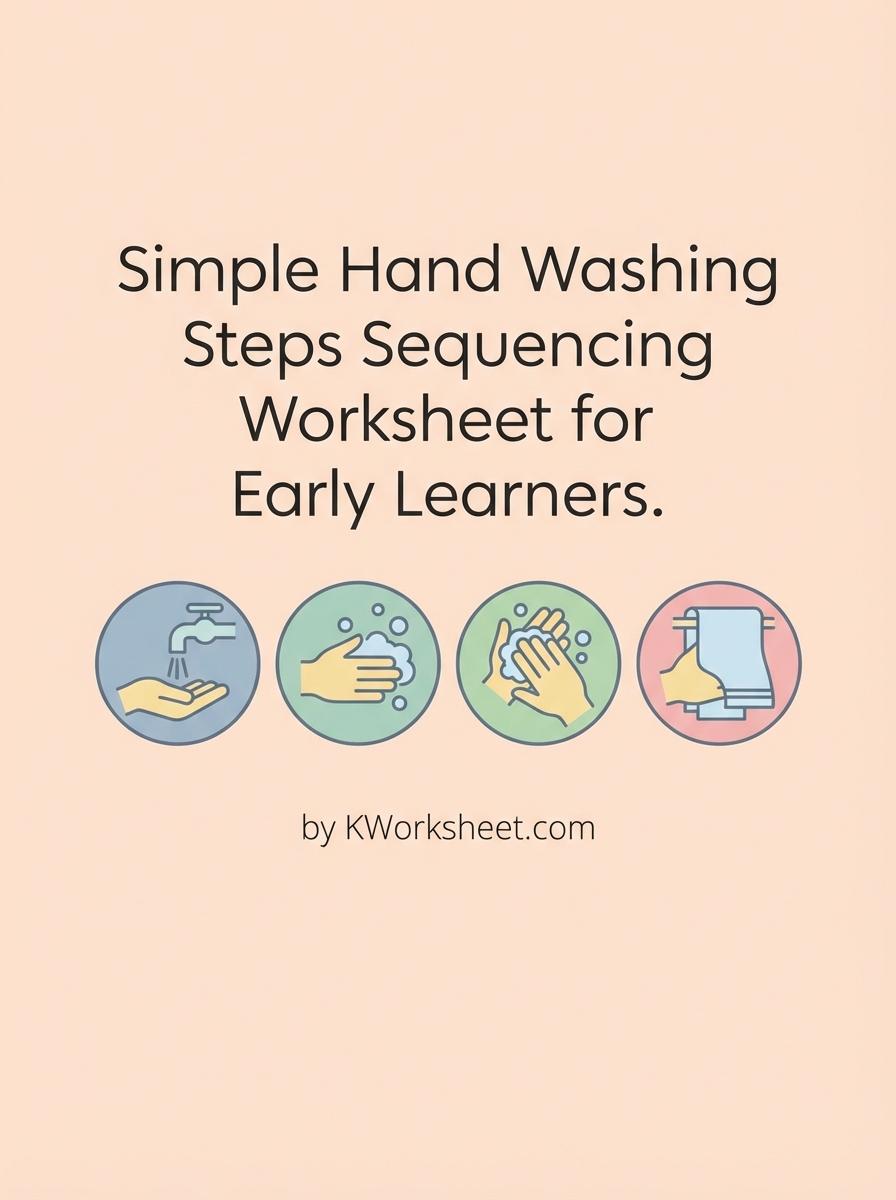
Simple Hand Washing Steps Sequencing Worksheet for Early Learners

📅 Apr 19, 2025 👤 Nylen Smith

Simple hand washing step sequencing worksheets help early learners understand and remember the correct order of actions for proper hand hygiene. These worksheets promote healthy habits by improving children's ability to follow instructions and develop fine motor skills. Explore the available worksheets to support your child's hand washing routine effectively.

Hand Washing Steps Cut and Paste Sequencing Worksheet
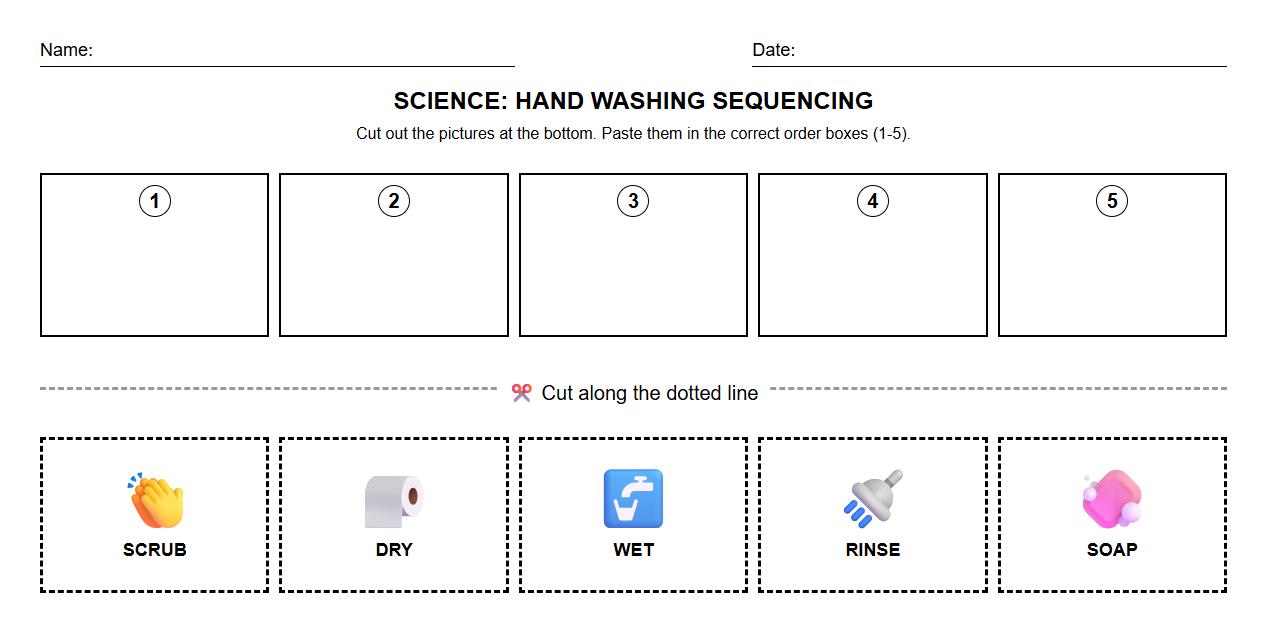
Hand Washing Steps Cut and Paste Sequencing Worksheet

Download PDF     Pin it

Hand Hygiene Visual Sequence Ordering Worksheet
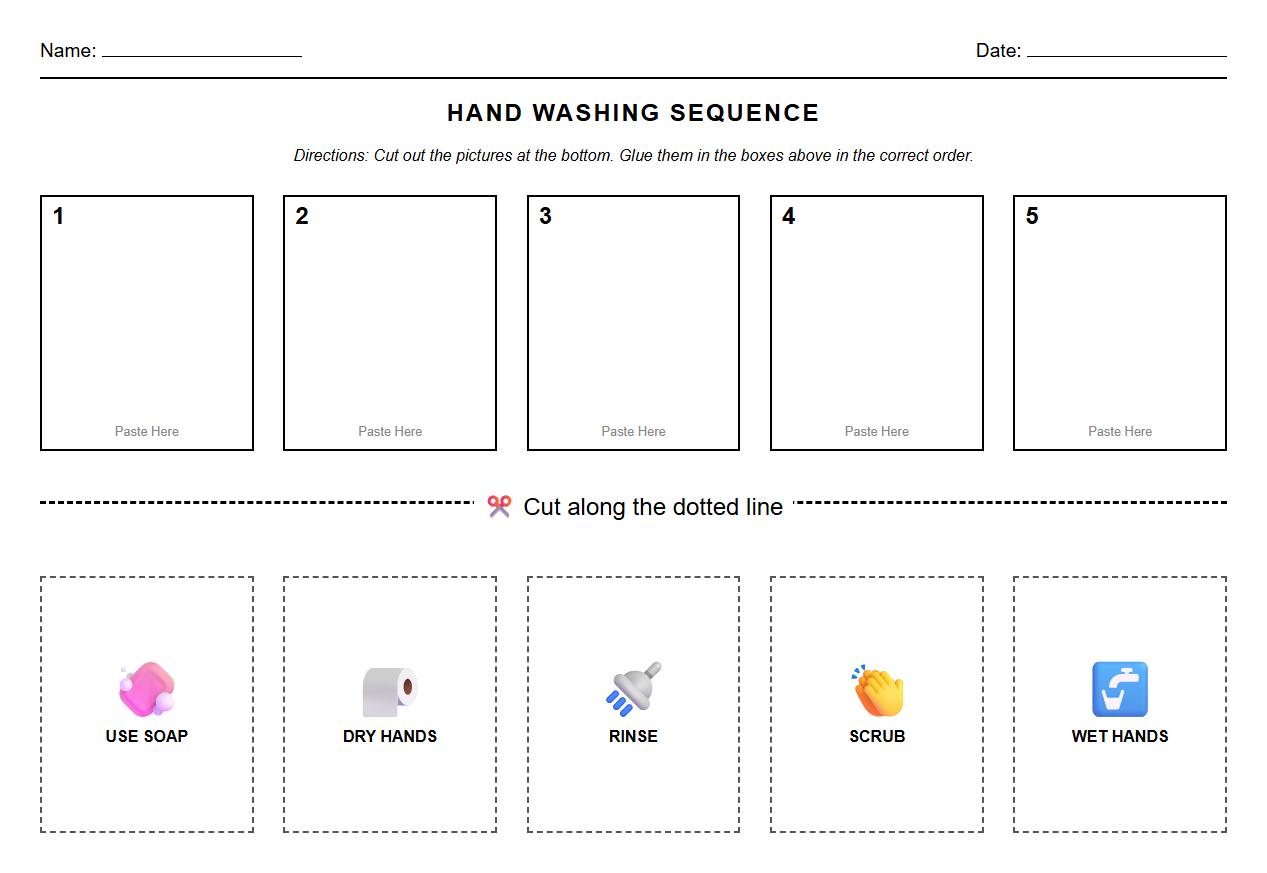
Hand Hygiene Visual Sequence Ordering Worksheet

Download PDF     Pin it

Step by Step Hand Washing Phonics Labeling Worksheet
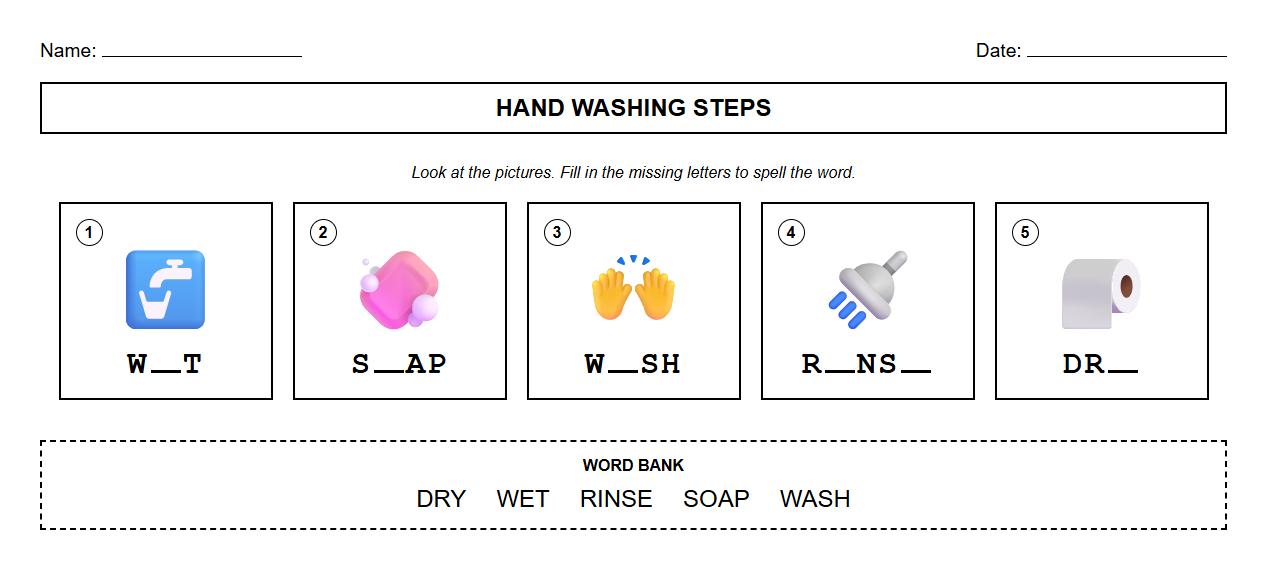
Step by Step Hand Washing Phonics Labeling Worksheet

Download PDF     Pin it

Hand Washing Routine Picture Matching Activity Sheet
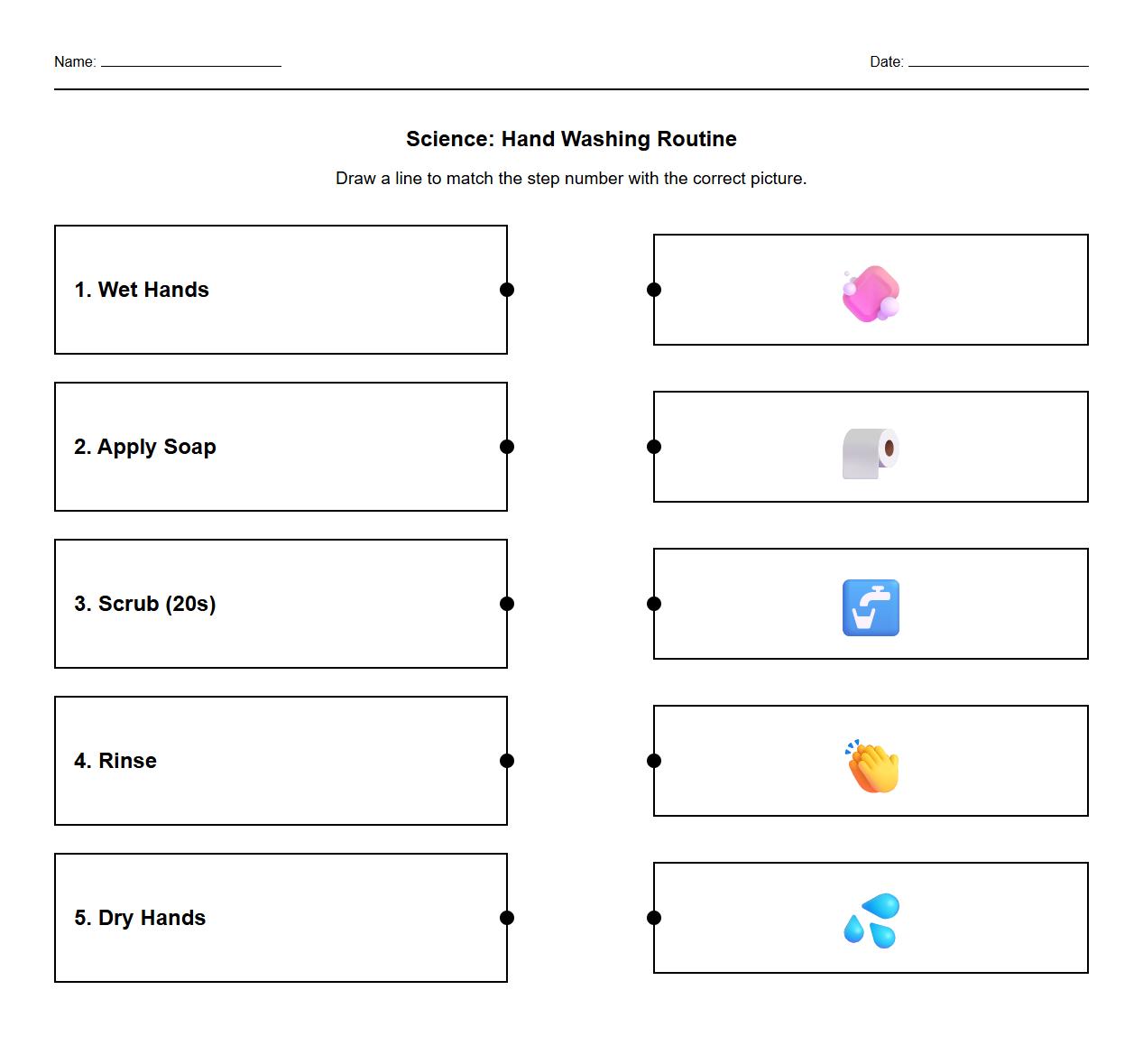
Hand Washing Routine Picture Matching Activity Sheet

Download PDF     Pin it

Sequencing Cards for Hand Washing with Simple Images
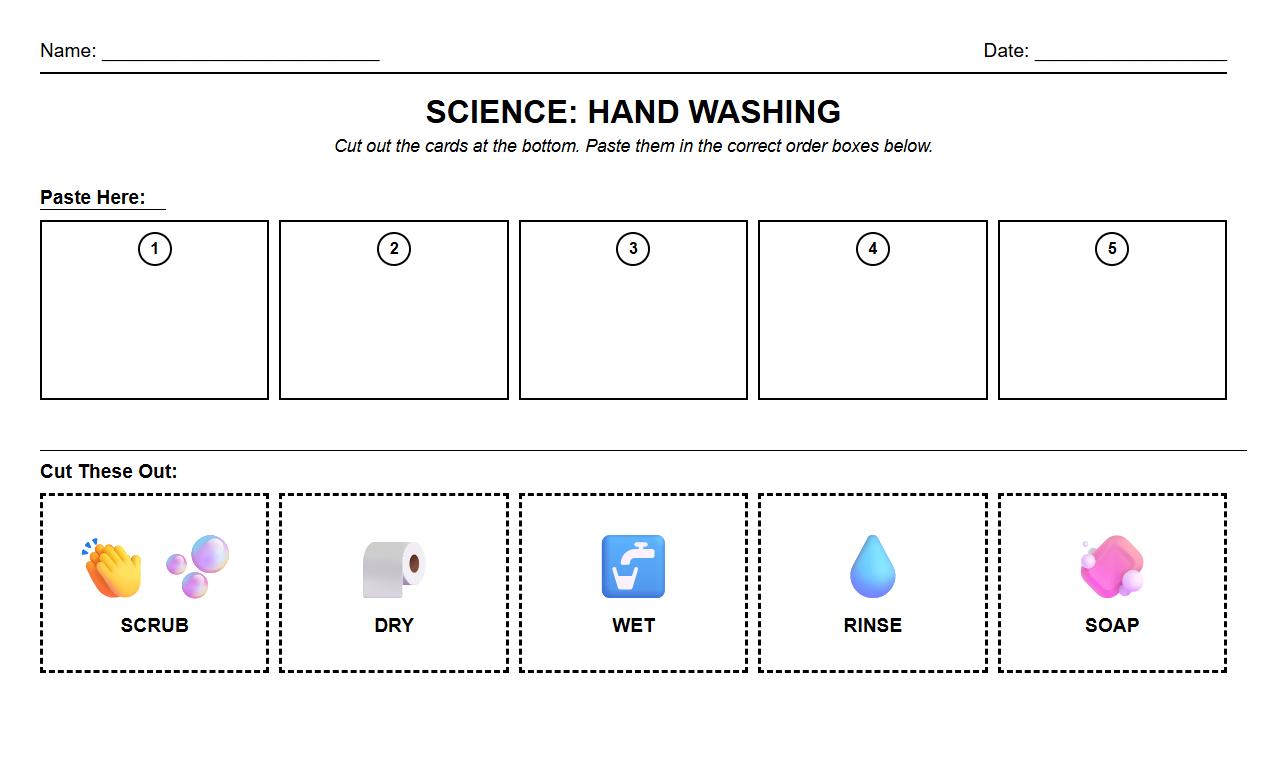
Sequencing Cards for Hand Washing with Simple Images

Download PDF     Pin it

Early Literacy Trace and Sequence Hand Washing Worksheet
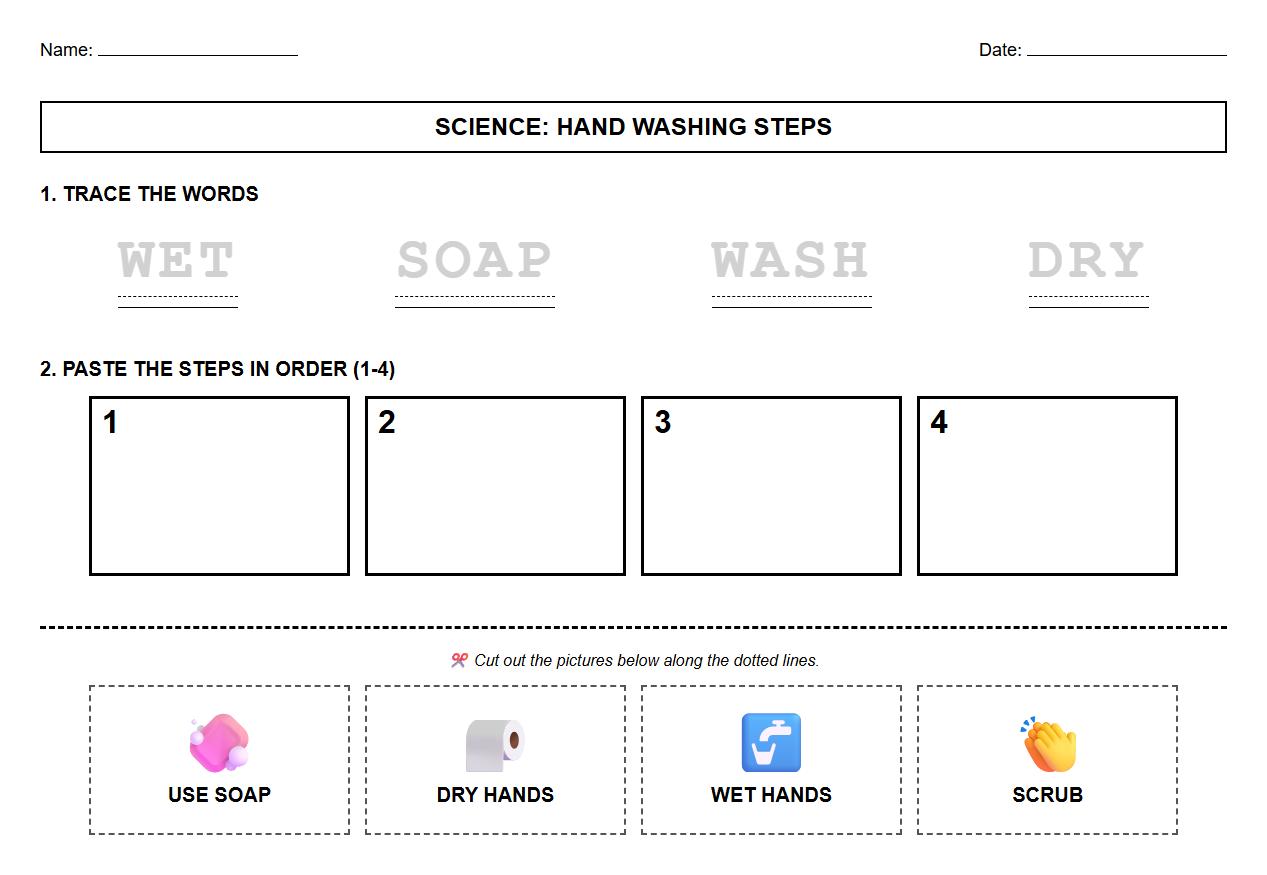
Early Literacy Trace and Sequence Hand Washing Worksheet

Download PDF     Pin it

Hand Washing Procedure Word and Picture Sorting Sheet
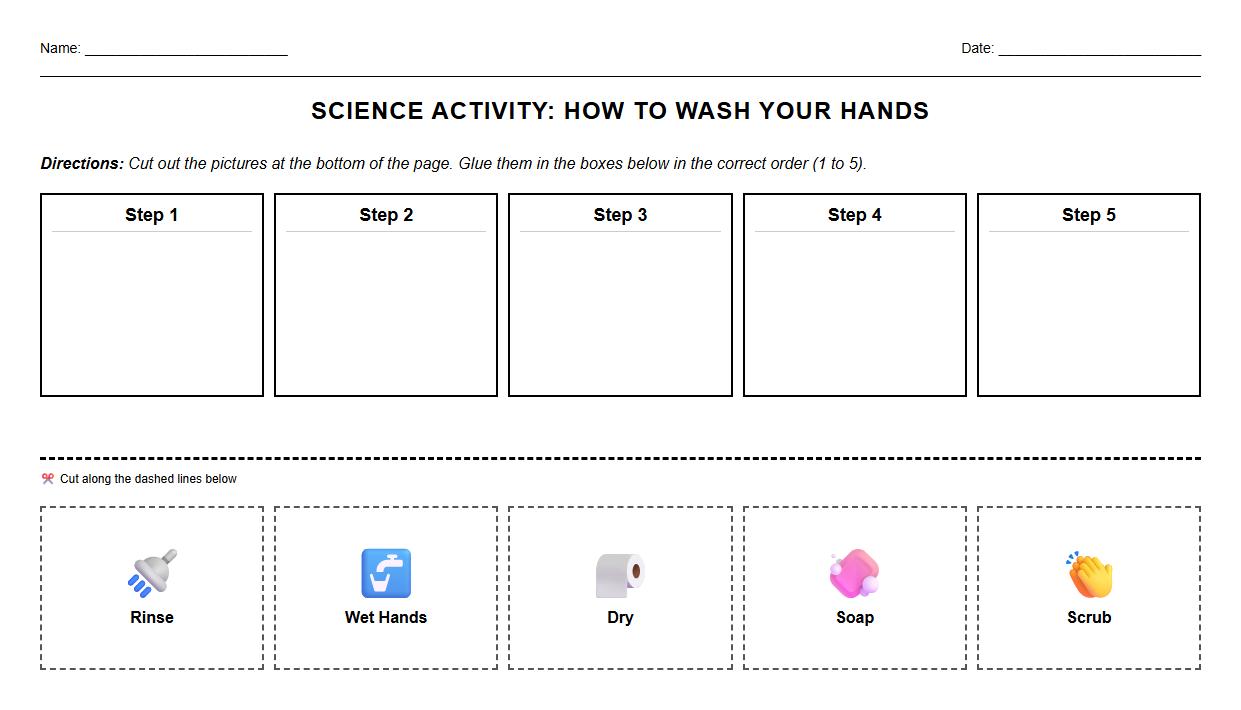
Hand Washing Procedure Word and Picture Sorting Sheet

Download PDF     Pin it

First Next Last Hand Washing Steps Phonics Sheet
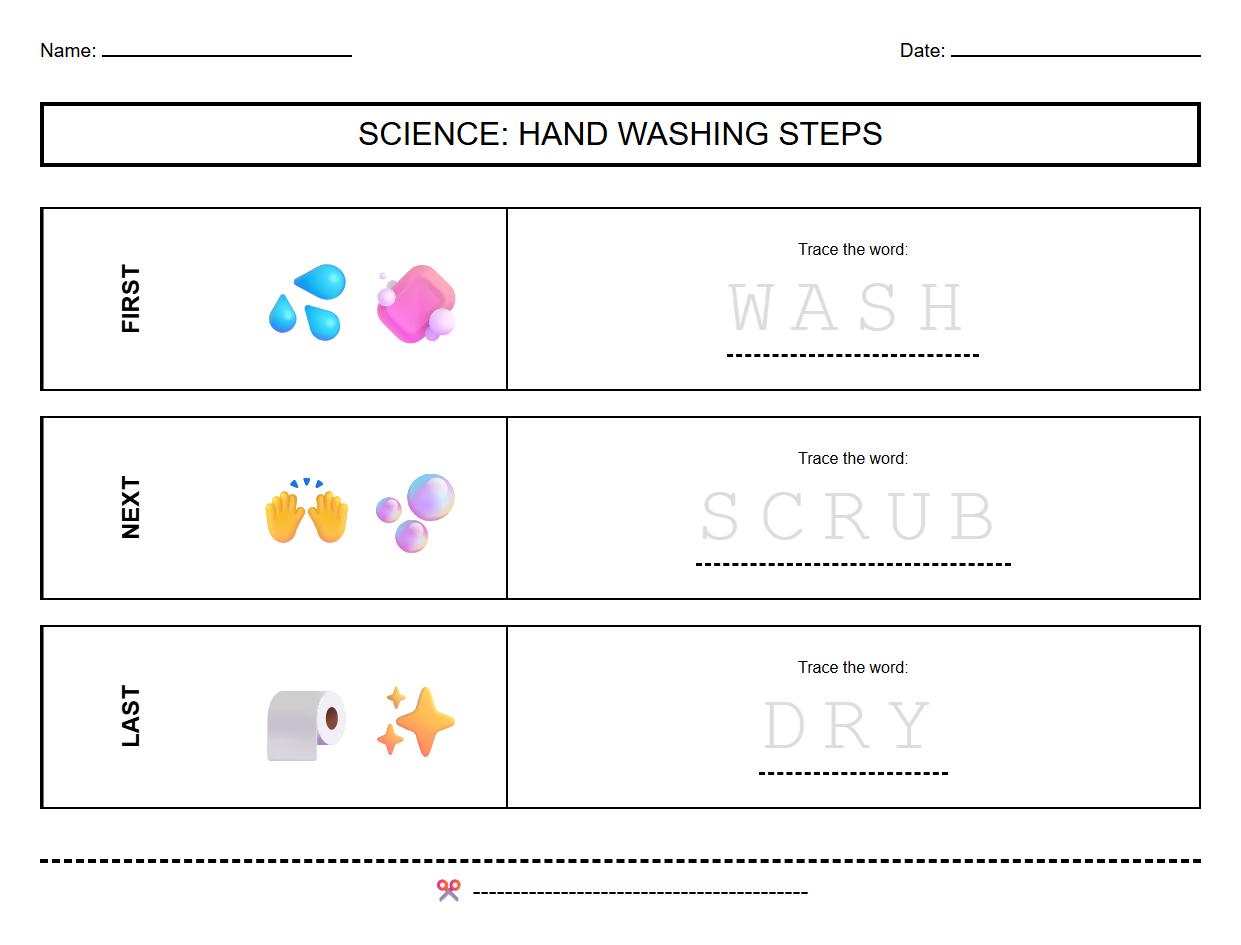
First Next Last Hand Washing Steps Phonics Sheet

Download PDF     Pin it

Hand Washing Steps Gap Fill and Sequence Worksheet
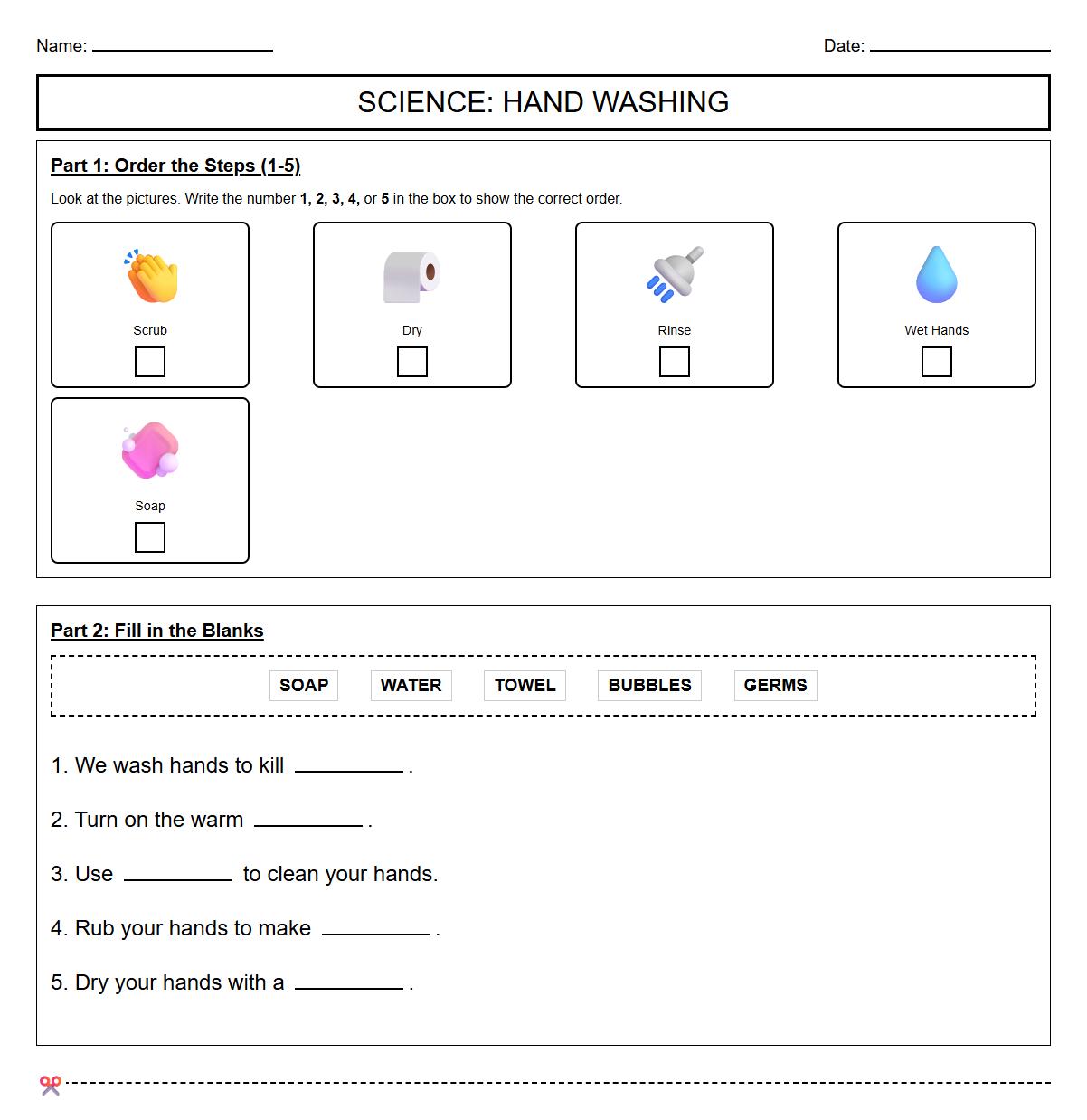
Hand Washing Steps Gap Fill and Sequence Worksheet

Download PDF     Pin it

Hand Washing Process Order Recognition Worksheet
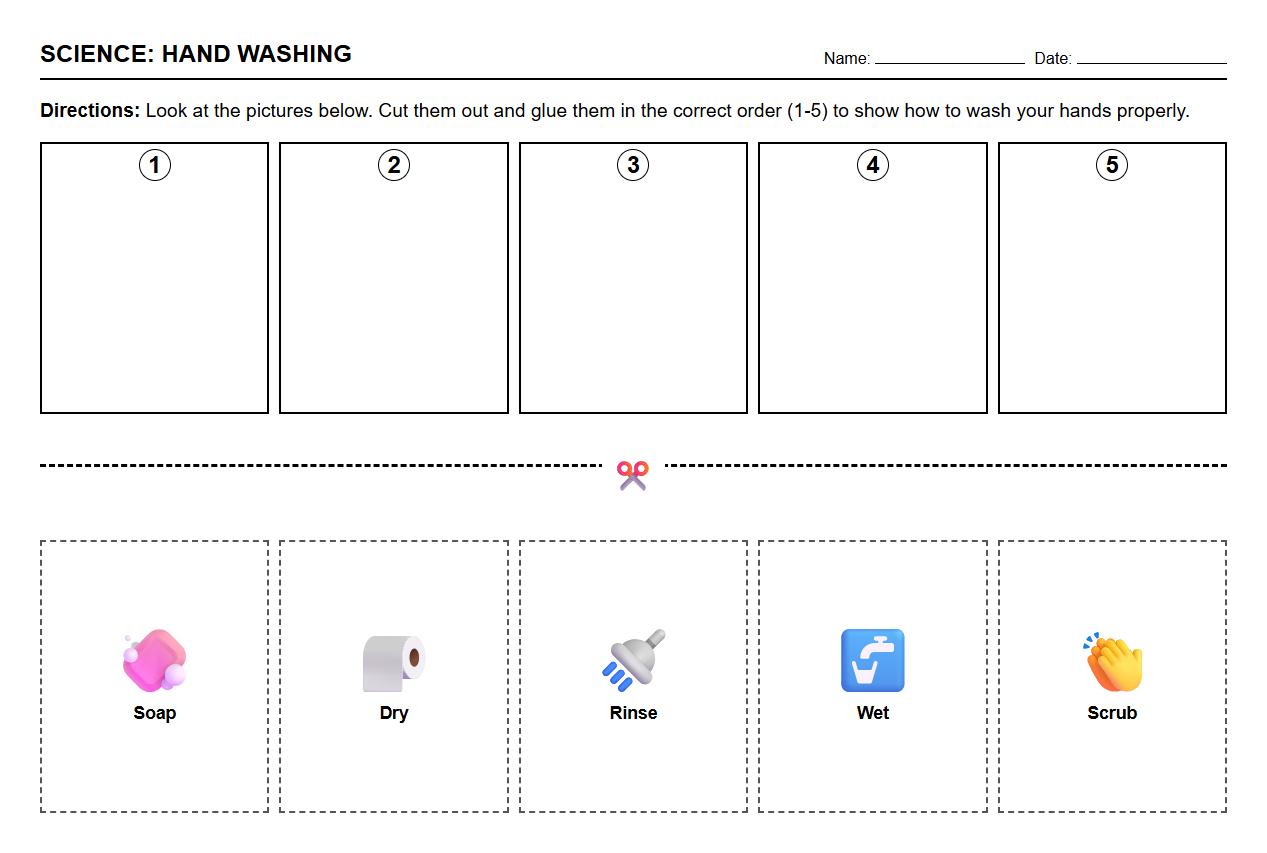
Hand Washing Process Order Recognition Worksheet

Download PDF     Pin it

First Step Before Washing Hands

The first step before washing your hands is to remove any jewelry like rings or bracelets. This allows for better access to all parts of your hands. It's also helpful to roll up sleeves to avoid getting them wet. Preparing your hands ensures a more effective cleaning process. Learn more about hygiene and germs in this hygiene habits and germs worksheet.

Step After Turning On the Water

After you turn on the water, the next step is to wet your hands thoroughly. Make sure the water temperature is comfortable, usually lukewarm. Wetting your hands is essential to activate the soap. This step starts the process of removing germs and dirt.

What to Put on Hands After Wetting

Once your hands are wet, you should apply a sufficient amount of soap. Liquid soap is preferred for hygiene reasons. Soap helps break down dirt and germs. Using enough soap is crucial for an effective wash.

Duration of Rubbing Hands With Soap

You should rub your hands with soap for at least 20 seconds. Singing a short song like "Happy Birthday" twice can help keep track of time. This duration ensures thorough cleaning. Proper scrubbing removes most germs and bacteria.

Parts of Hands to Clean With Soap

Make sure to clean all parts of your hands: the palms, backs, between fingers, and under nails. Don't forget your thumbs and wrists. Soap must reach all these areas for complete cleanliness. This step prevents germs from hiding on your hands.

What to Do After Scrubbing Hands

After scrubbing, the next step is to rinse your hands under clean running water. Rinsing removes the soap along with the loosened dirt and germs. Make sure all soap is washed off to avoid irritation. This step completes the cleaning process. Understanding the states of matter can also be fun through this states of matter worksheet.

How to Rinse Soap Off Hands

Rinse your hands under running water while rubbing them lightly. This helps wash away soap residue and germs thoroughly. Use warm water if possible for comfort. Proper rinsing is important for clean, soap-free hands.

What to Use to Dry Hands

Use a clean towel or paper towel to dry your hands after washing. Avoid shared cloth towels to prevent spreading germs. Drying your hands completely helps prevent bacteria growth. Clean hands and dry skin are healthier.

When to Turn Off the Faucet

Turn off the faucet using a paper towel or your elbow to avoid recontamination. Do this right after rinsing your hands and before drying them. Touching the faucet directly can transfer germs back. This practice maintains hand hygiene.

Importance of Proper Hand Washing

Proper hand washing is essential to prevent the spread of germs and illnesses. It protects both the individual and those around them, especially young children. Teaching this habit early ensures lifelong health benefits. Clean hands contribute to a safer community. Explore more on science and health in this animal classification and habitats worksheet.


More in Science Category


About the author. Nylen Smith is a dedicated educator and cofounder of KWorksheet.com, a popular platform specializing in high-quality kindergarten worksheets and printable activities.

Disclaimer. The information provided in this document is for general informational purposes and/or document sample only and is not guaranteed to be factually right or complete. Please report to us via contact-us page if you find and error in this page, thanks.

Comments

No comment yet