Weather Charting Worksheet with Visual Data for Kids

📅 Mar 8, 2025 👤 Nylen Smith

Weather charting worksheets with visual data help kids understand daily weather patterns through engaging graphics and hands-on activities. These tools foster observational skills and introduce basic meteorological concepts in a fun and interactive way. Explore the available worksheets to enhance your child's learning experience with weather tracking.

Daily Weather Observation Worksheet with Temperature Recording
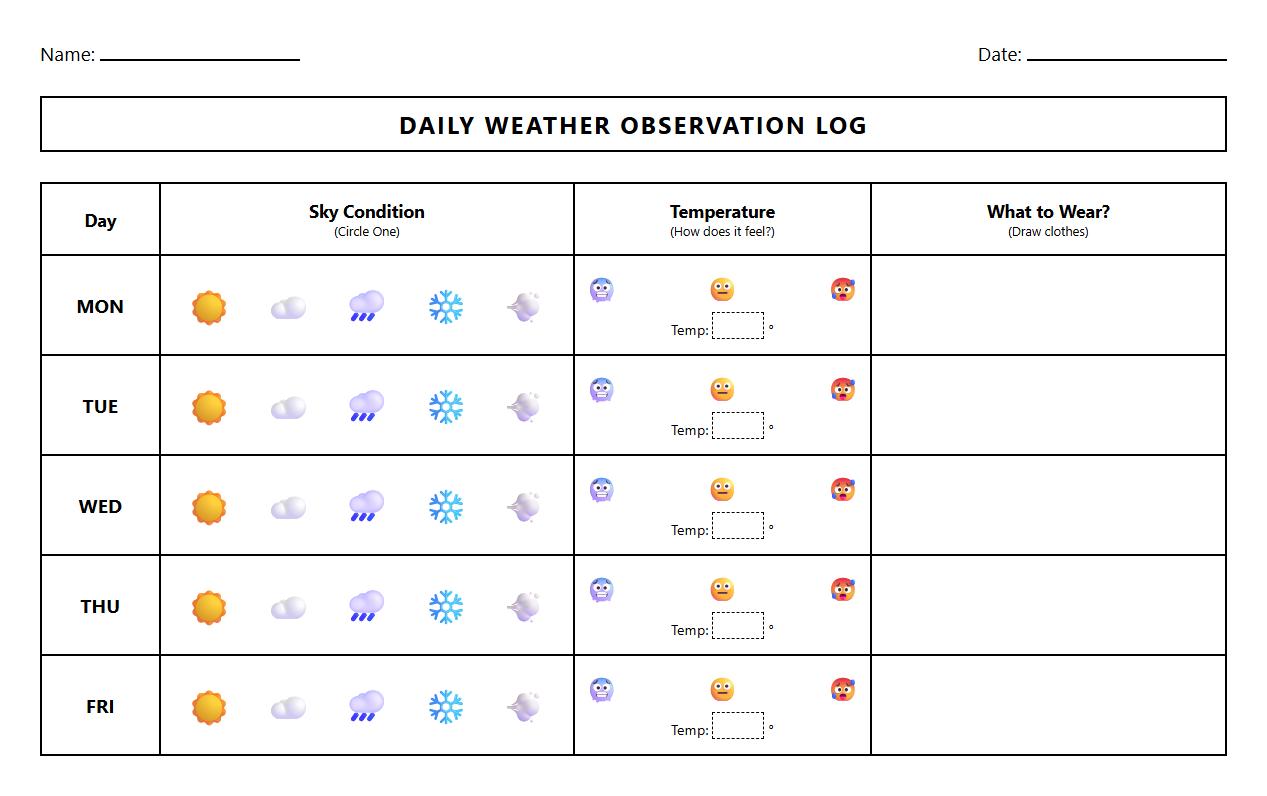
Daily Weather Observation Worksheet with Temperature Recording

Download PDF     Pin it

Interactive Weather Symbols Chart for Children
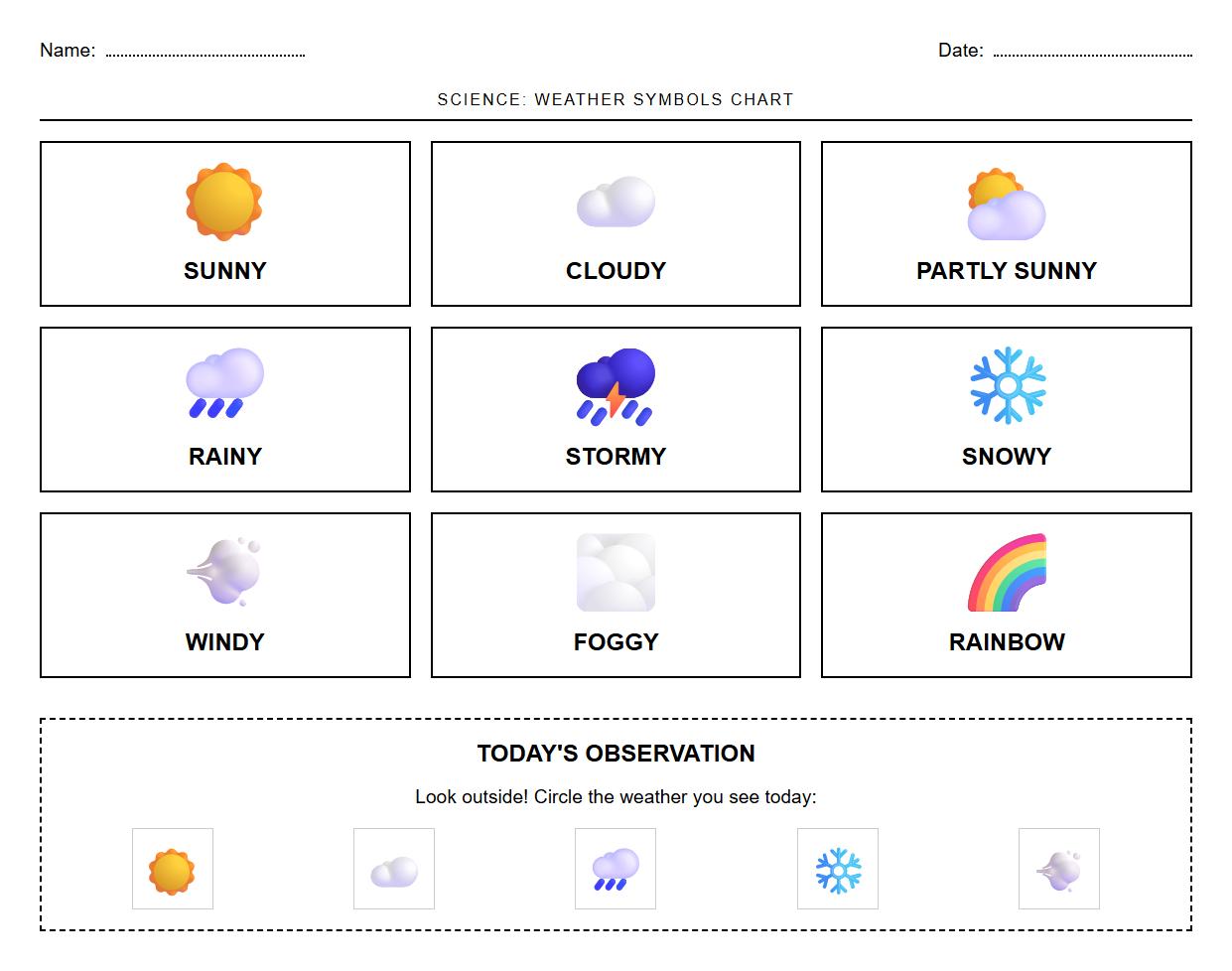
Interactive Weather Symbols Chart for Children

Download PDF     Pin it

Weekly Weather Tracking Graph with Pictograms
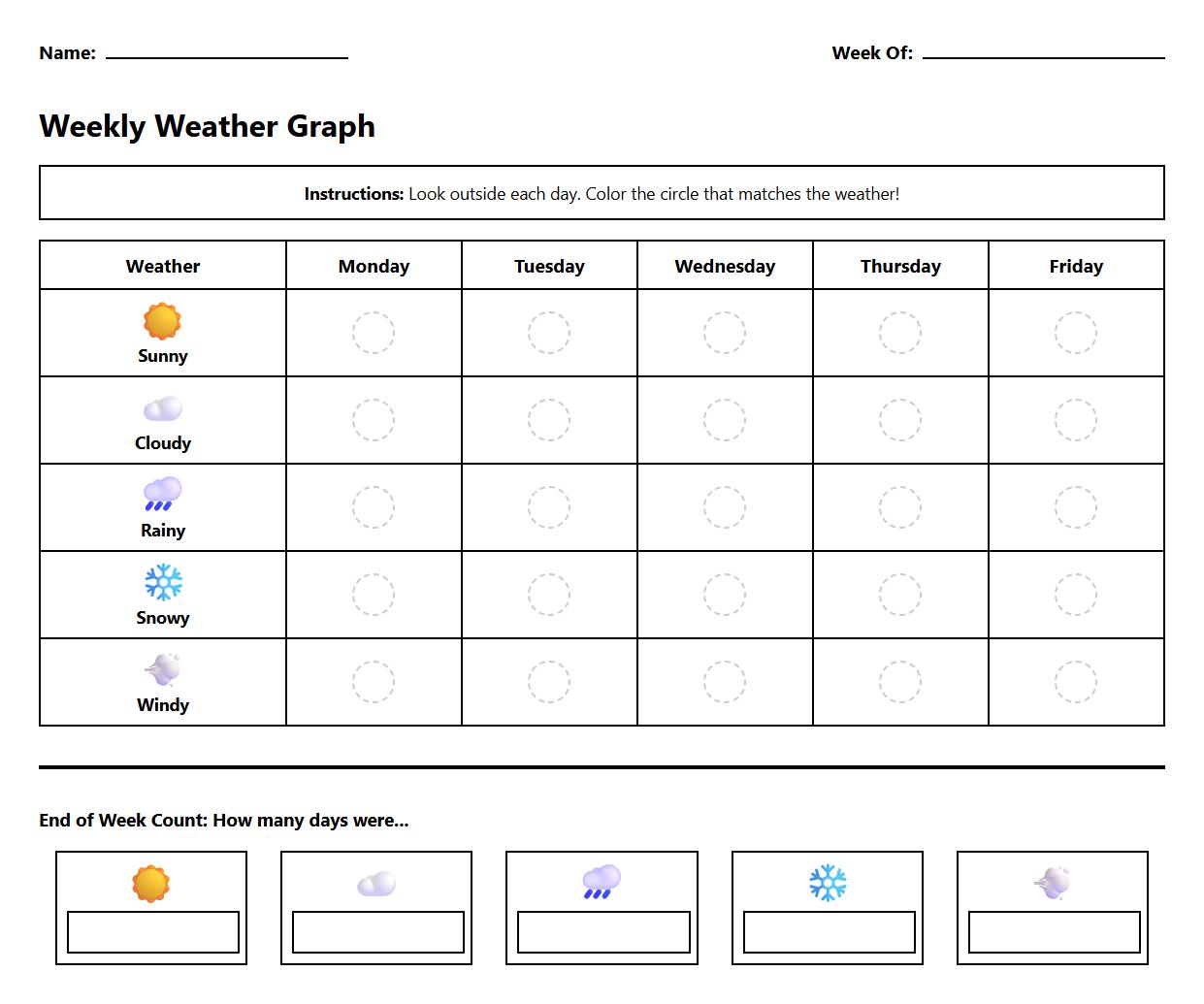
Weekly Weather Tracking Graph with Pictograms

Download PDF     Pin it

Weather Vocabulary and Phonics Practice Sheet
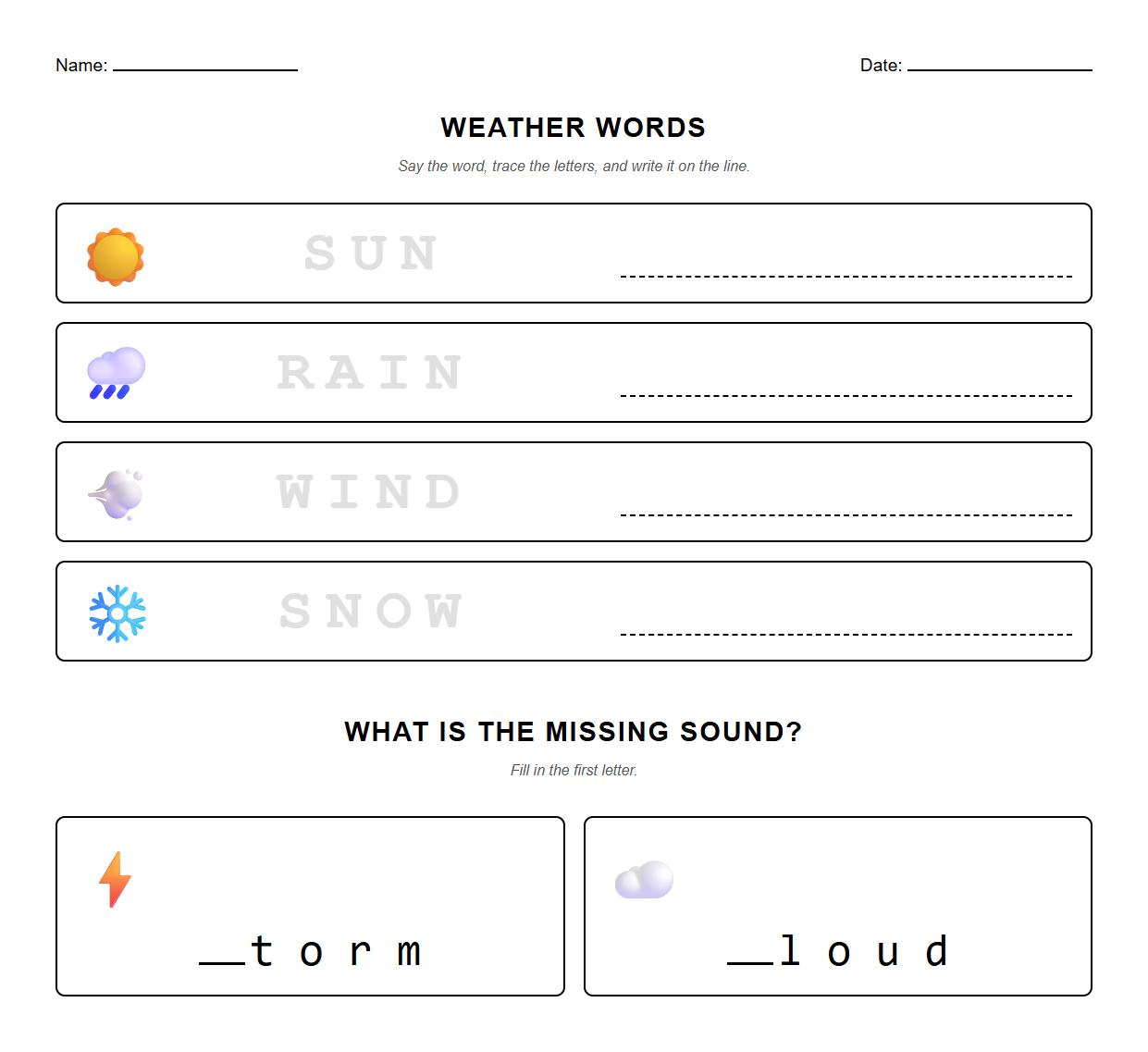
Weather Vocabulary and Phonics Practice Sheet

Download PDF     Pin it

Precipitation Measurement Worksheet with Bar Graphs
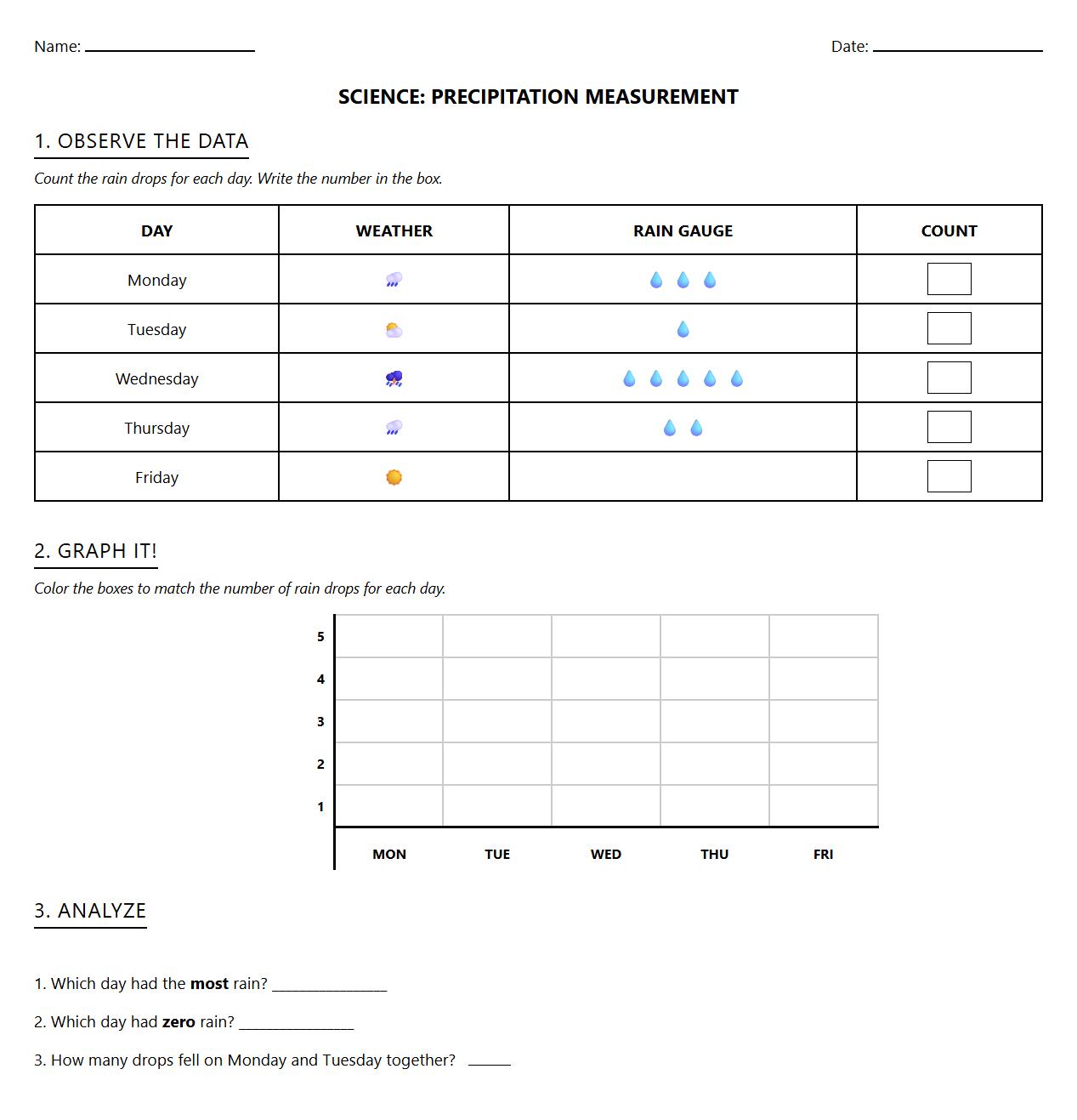
Precipitation Measurement Worksheet with Bar Graphs

Download PDF     Pin it

Climate Zone Comparison Table for Elementary Students
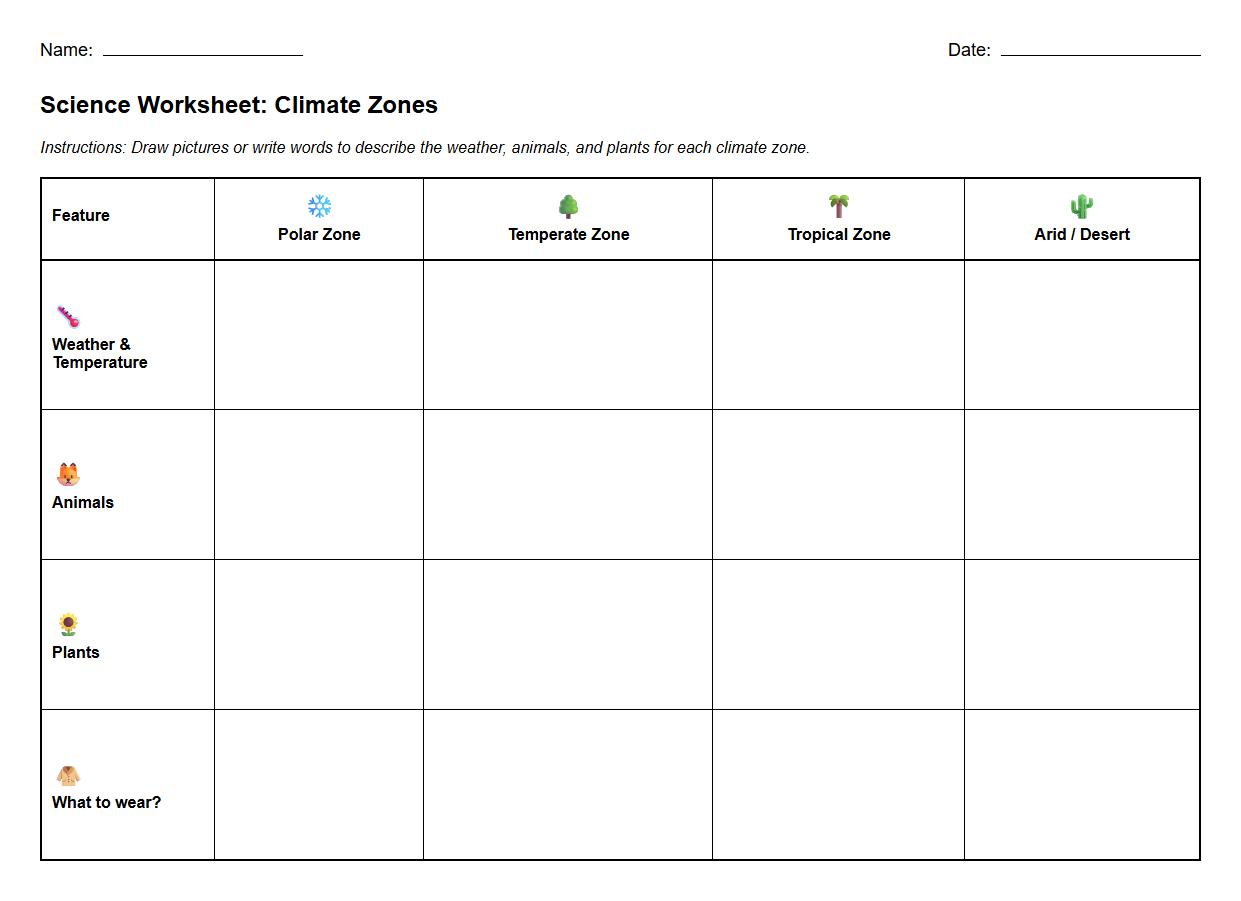
Climate Zone Comparison Table for Elementary Students

Download PDF     Pin it

Weather Pattern Analysis Sheet with Visual Cues
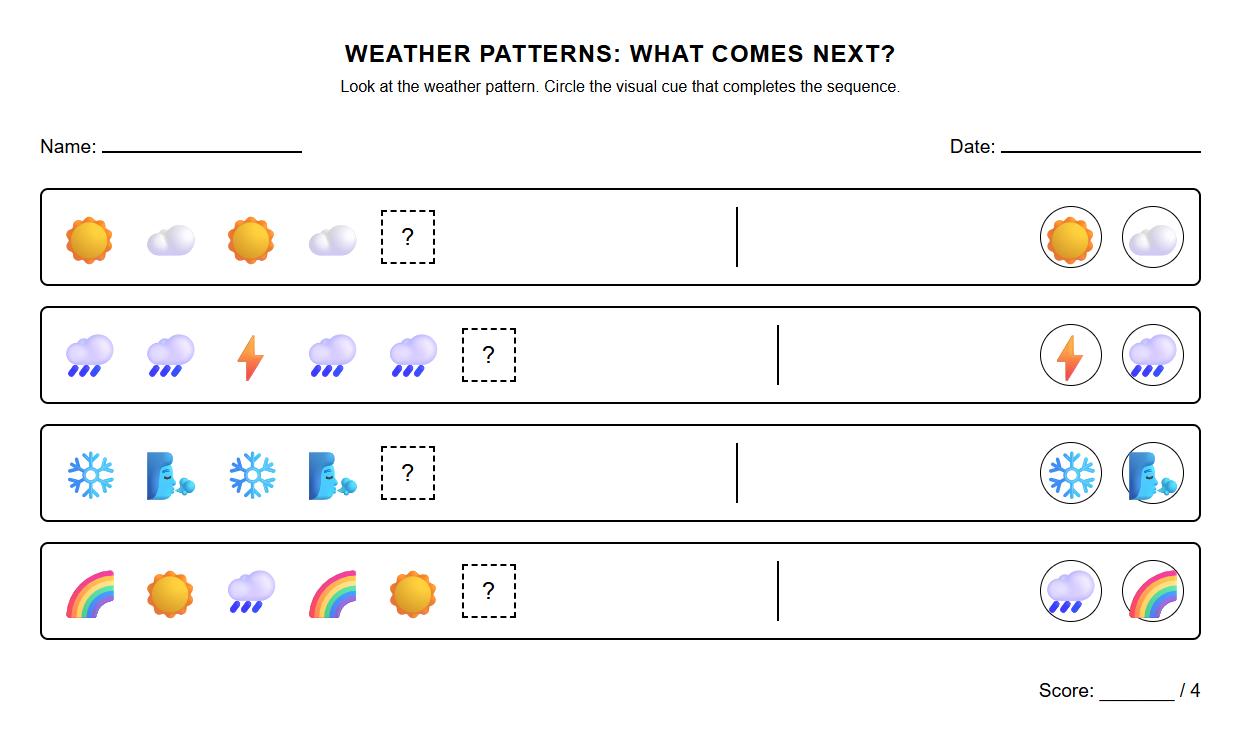
Weather Pattern Analysis Sheet with Visual Cues

Download PDF     Pin it

Wind Direction and Speed Mapping Activity
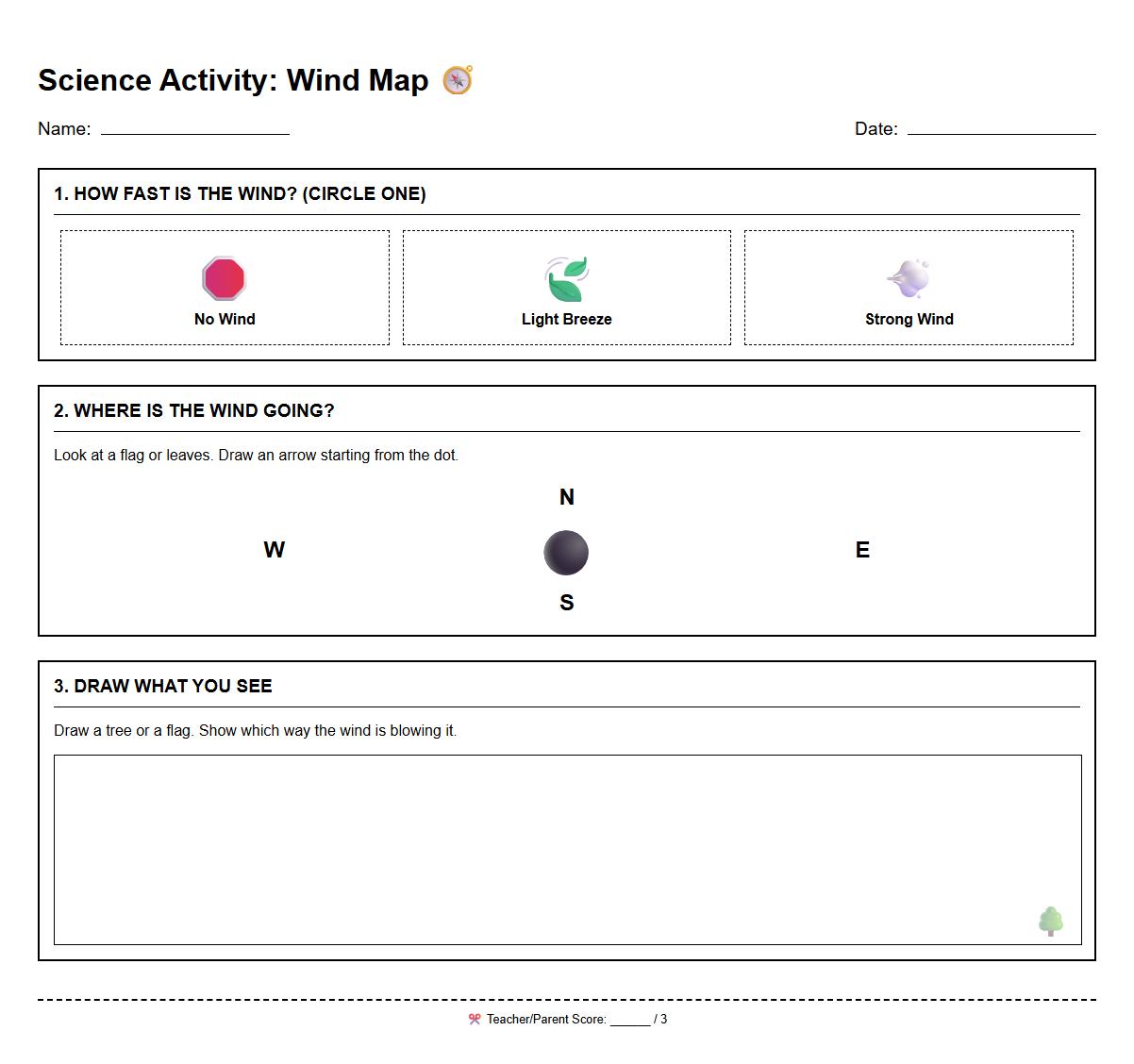
Wind Direction and Speed Mapping Activity

Download PDF     Pin it

Seasonal Weather Comparison Matrix with Icons
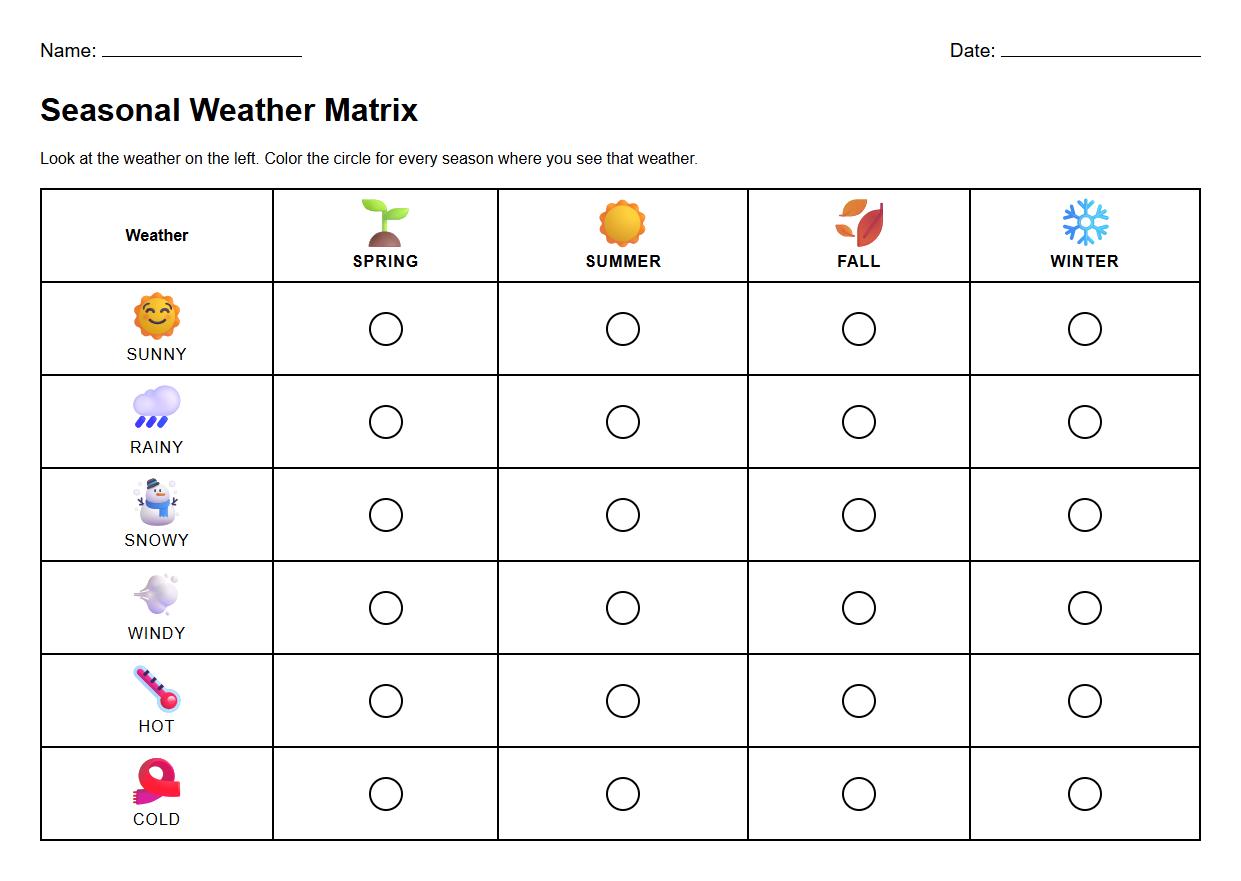
Seasonal Weather Comparison Matrix with Icons

Download PDF     Pin it

Cloud Type Identification Chart with Semantic Classification
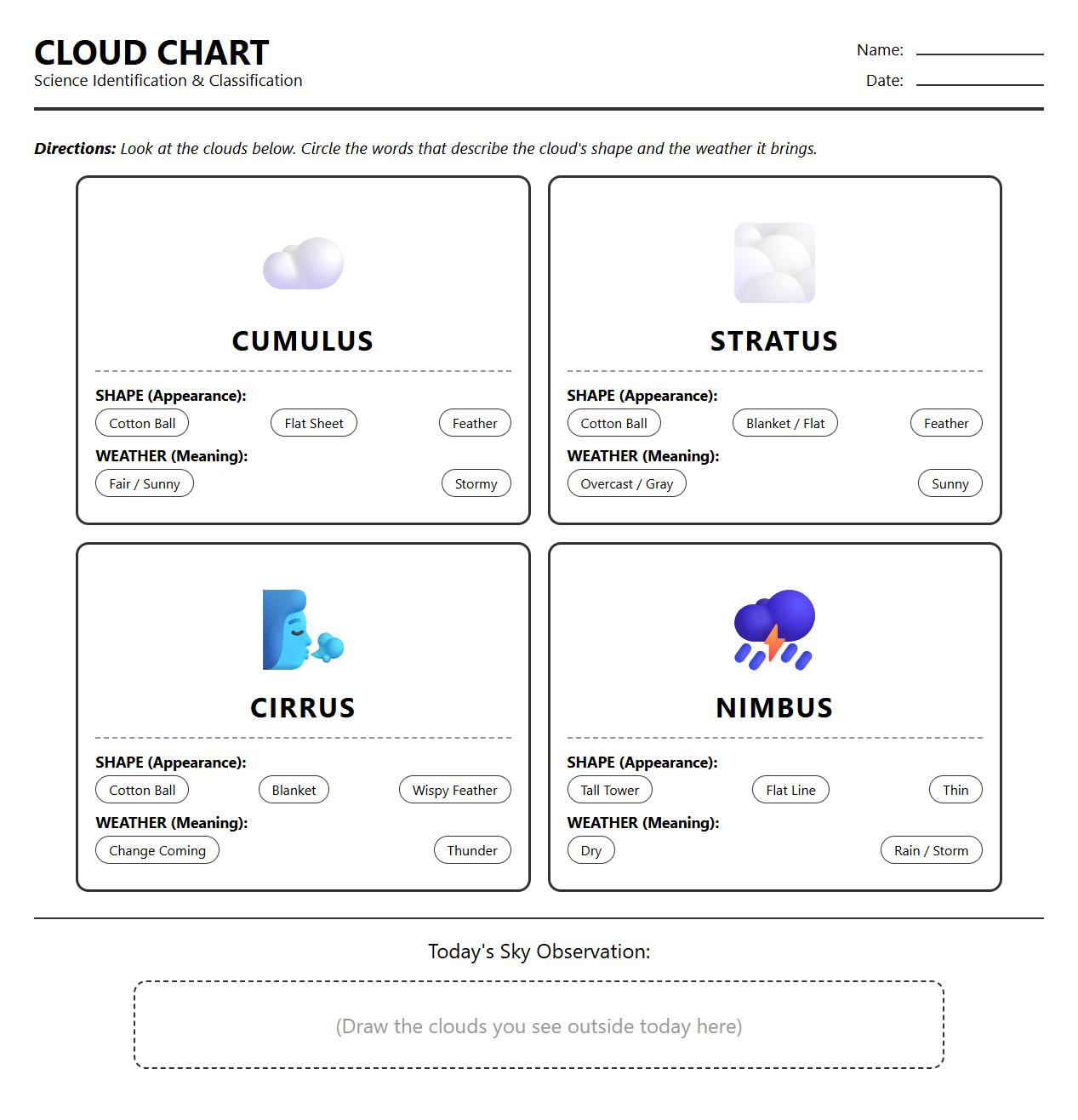
Cloud Type Identification Chart with Semantic Classification

Download PDF     Pin it

Understanding the Weather Chart

Use the weather chart to help children identify today's weather conditions effectively. Observe and describe the type of weather shown, such as sunny, rainy, or cloudy, using the chart as a fun visual aid. This activity helps young learners develop observational skills and understand daily weather changes.

Counting Sunny Days

Encourage children to count the number of sunny days recorded on the worksheet. This exercise reinforces counting skills and helps children recognize patterns in the weather over the week. Highlight each sunny day with bright colors to make the activity engaging.

Identifying the Most Frequent Weather

Ask children to determine which weather type appears most often during the week. This encourages comparative thinking and introduces the concept of majority or frequency. Use tally marks or symbols to visually compare the weather types.

Finding Rainy Days

Guide children to spot any rainy days on the chart by looking for the rain symbol or color. This activity helps with symbol recognition and understanding different weather patterns. Discuss the impact of rain on daily activities to make learning relatable.

Counting Cloudy Days This Month

Help children count the total number of cloudy days recorded over the month. This supports mathematical skills like addition and helps children understand longer-term weather trends. Use consistent symbols or colors to mark cloudy days for clarity.

Understanding Colors on the Chart

Explain which color represents snowy weather on the chart, helping children associate colors with weather types. This enhances color recognition and links it to real-world phenomena. Using vibrant colors makes the chart more visually appealing.

Comparing Warm and Cold Days

Ask whether there were more warm or cold days this week by reviewing the symbols or colors used. This comparison builds critical thinking and temperature awareness in children. Encourage discussions about how temperature affects daily life.

Counting Weather Symbols Used

Invite children to identify how many different weather symbols are used on the worksheet. This broadens their vocabulary and recognition of various weather conditions. Displaying all symbols helps reinforce learning through repetition.

Identifying the First Stormy Day

Help children locate the day when the first stormy symbol appears on the chart. This activity sharpens observation skills and introduces the concept of sequence. Discuss the safety measures during storms to add practical knowledge.

Spotting Mixed Weather Days

Check if there is any day with two weather types charted together, such as sunny and rainy. This encourages children to think about complex weather patterns and how weather can change quickly. Use this opportunity to talk about transitional weather days.


More in Science Category


About the author. Nylen Smith is a dedicated educator and cofounder of KWorksheet.com, a popular platform specializing in high-quality kindergarten worksheets and printable activities.

Disclaimer. The information provided in this document is for general informational purposes and/or document sample only and is not guaranteed to be factually right or complete. Please report to us via contact-us page if you find and error in this page, thanks.

Comments

No comment yet