Engaging Sink or Float Kindergarten Worksheet Activities for Science Exploration

📅 Jun 5, 2025 👤 Nylen Smith

Kindergarten students develop observation and prediction skills through hands-on sink or float science activities that make learning about objects and buoyancy exciting. These engaging worksheets encourage young learners to classify everyday items based on their ability to sink or float, fostering critical thinking and inquiry. Explore the available worksheets to dive into fun and educational science exploration.

Sink or Float Prediction Chart Worksheet
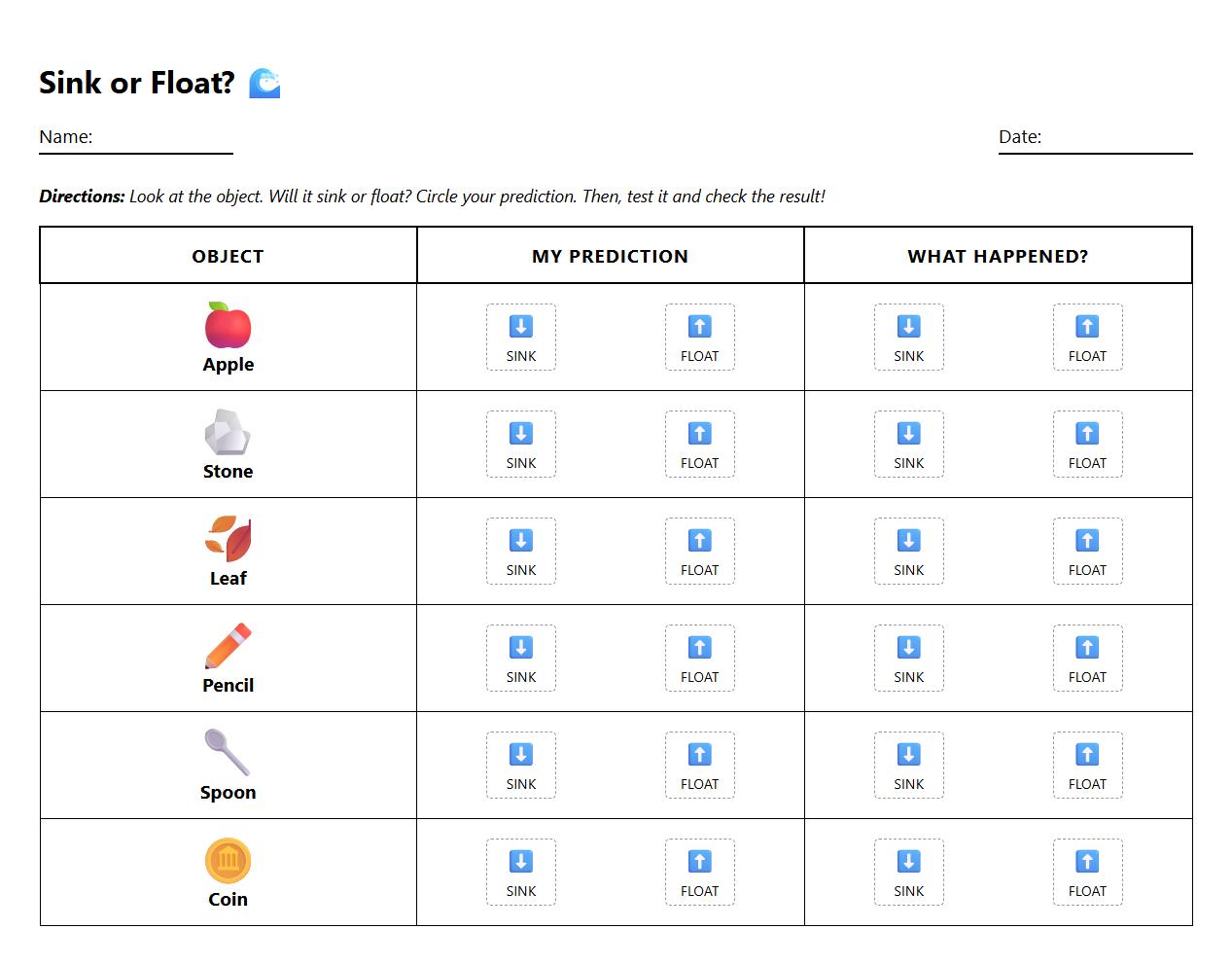
Sink or Float Prediction Chart Worksheet

Download PDF     Pin it

Phonics Vocabulary Match: Sink or Float Objects
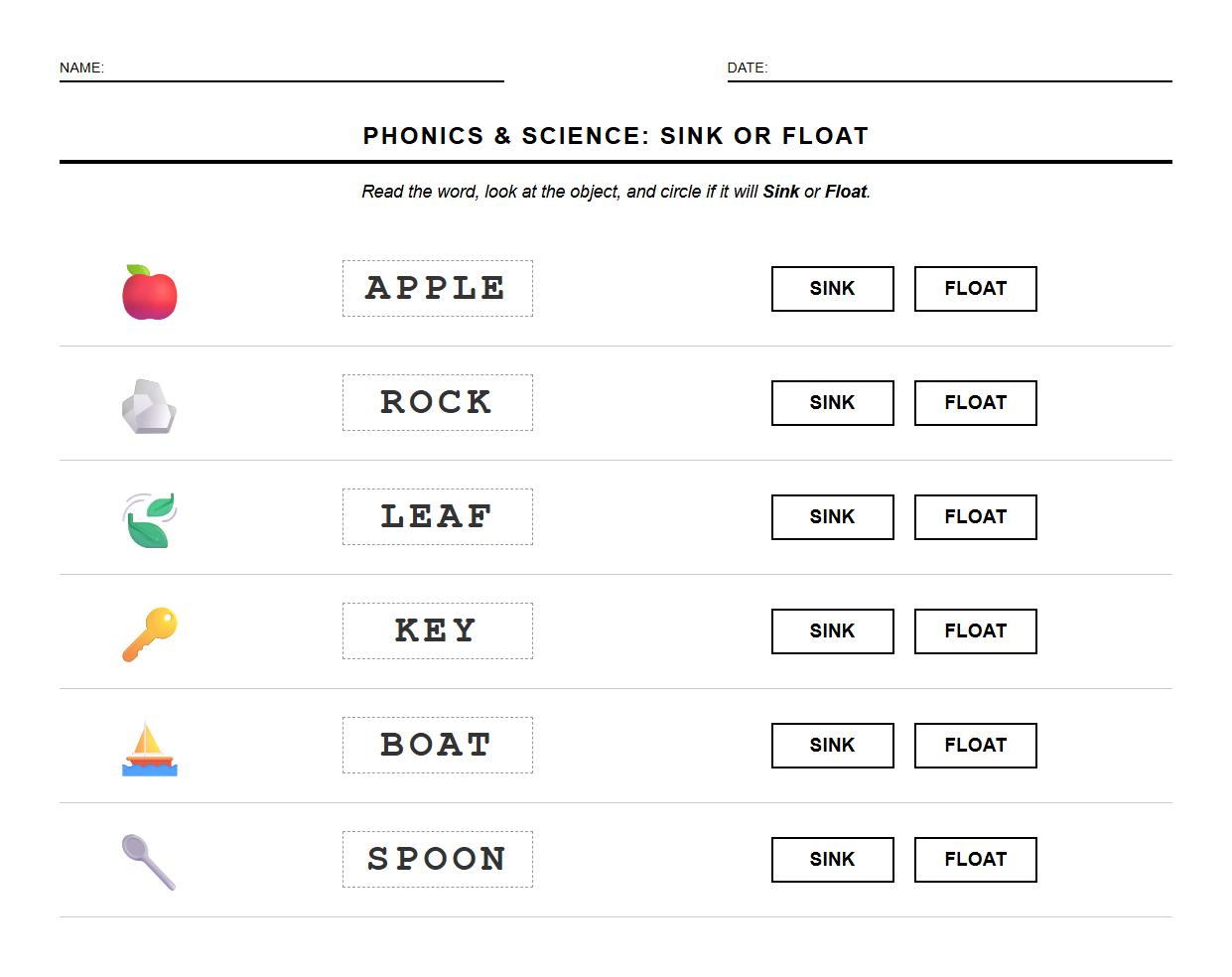
Phonics Vocabulary Match: Sink or Float Objects

Download PDF     Pin it

Sorting Worksheet: Classifying Materials by Density
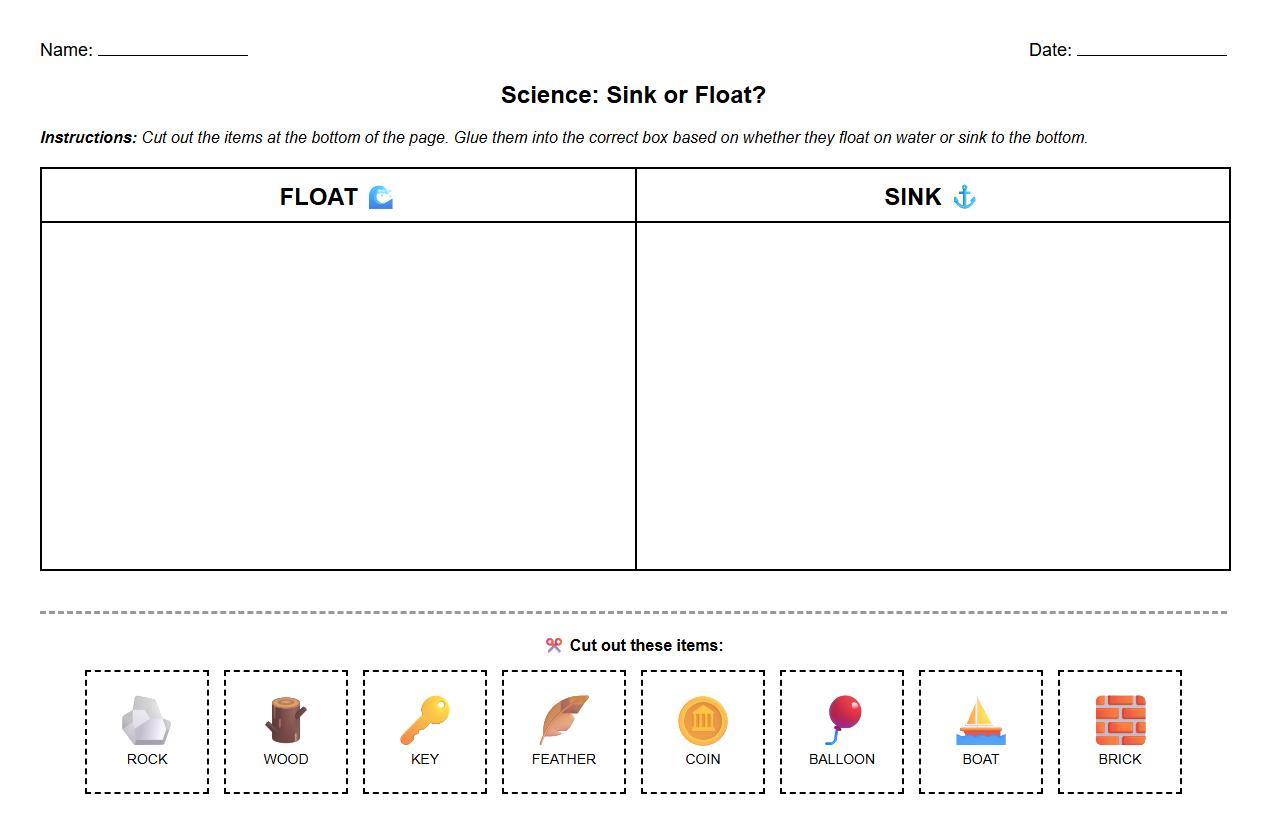
Sorting Worksheet: Classifying Materials by Density

Download PDF     Pin it

Observation Log for Sink or Float Experiments
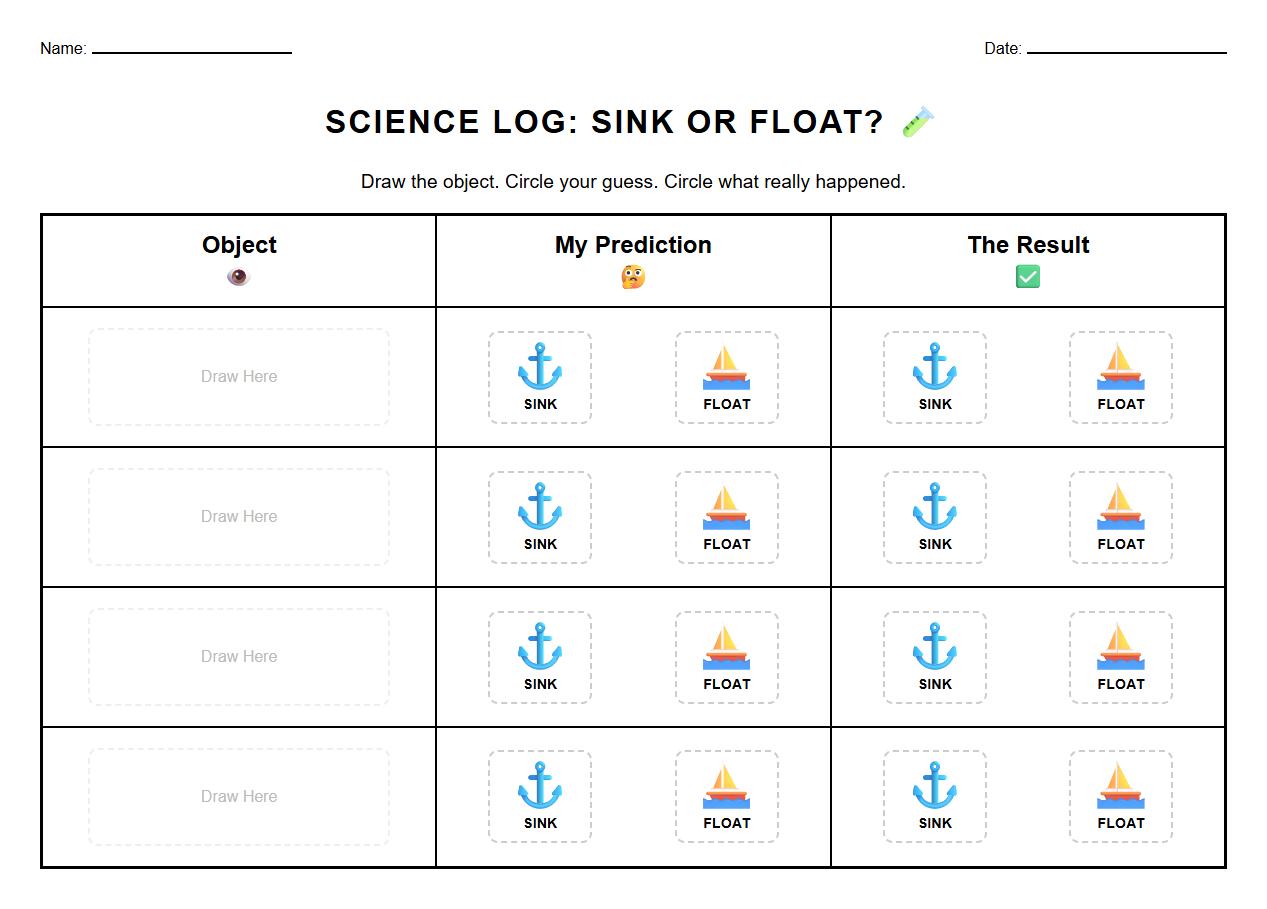
Observation Log for Sink or Float Experiments

Download PDF     Pin it

Illustrated Sink or Float Cut and Paste Activity
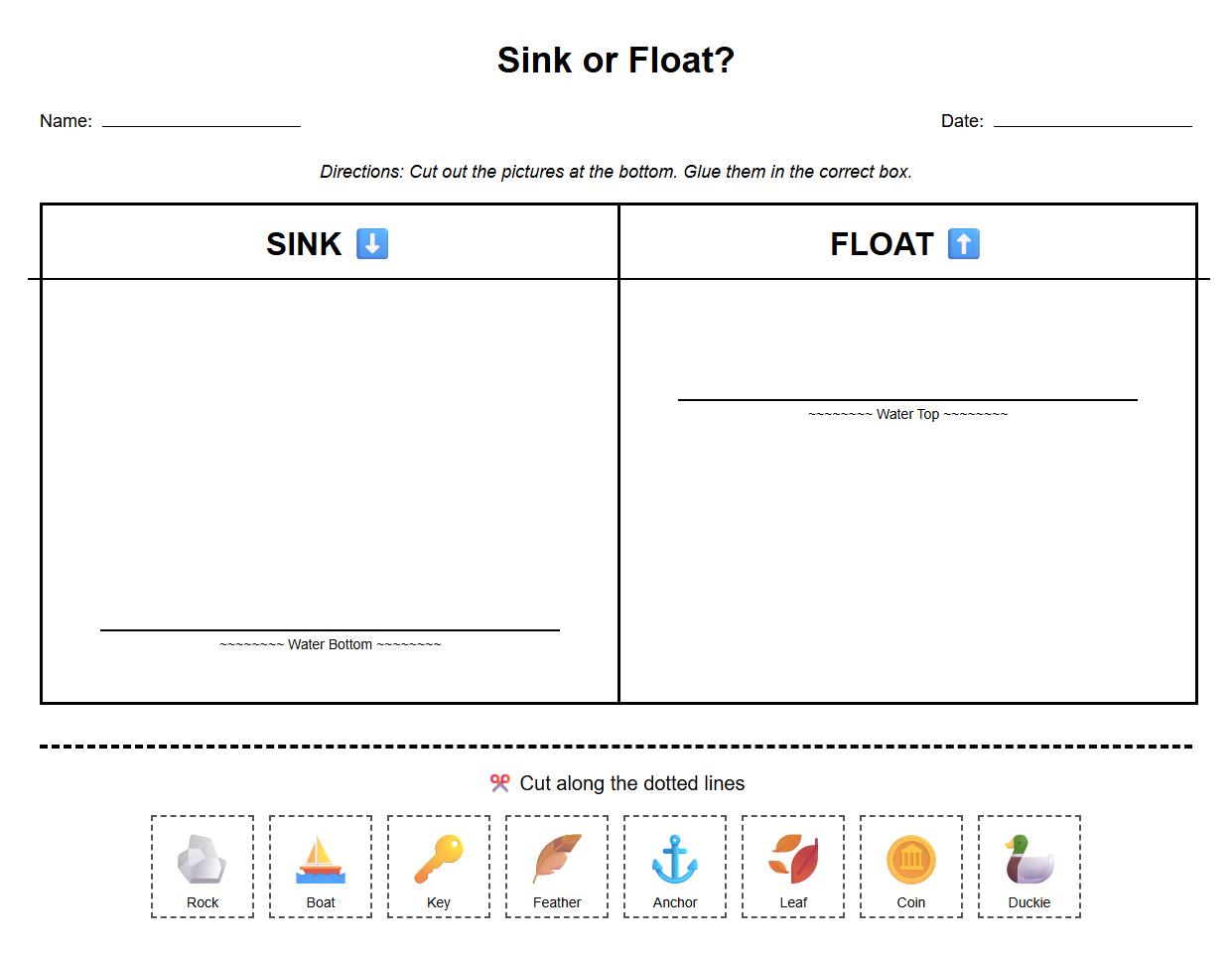
Illustrated Sink or Float Cut and Paste Activity

Download PDF     Pin it

Data Table Recording Worksheet for Water Displacement
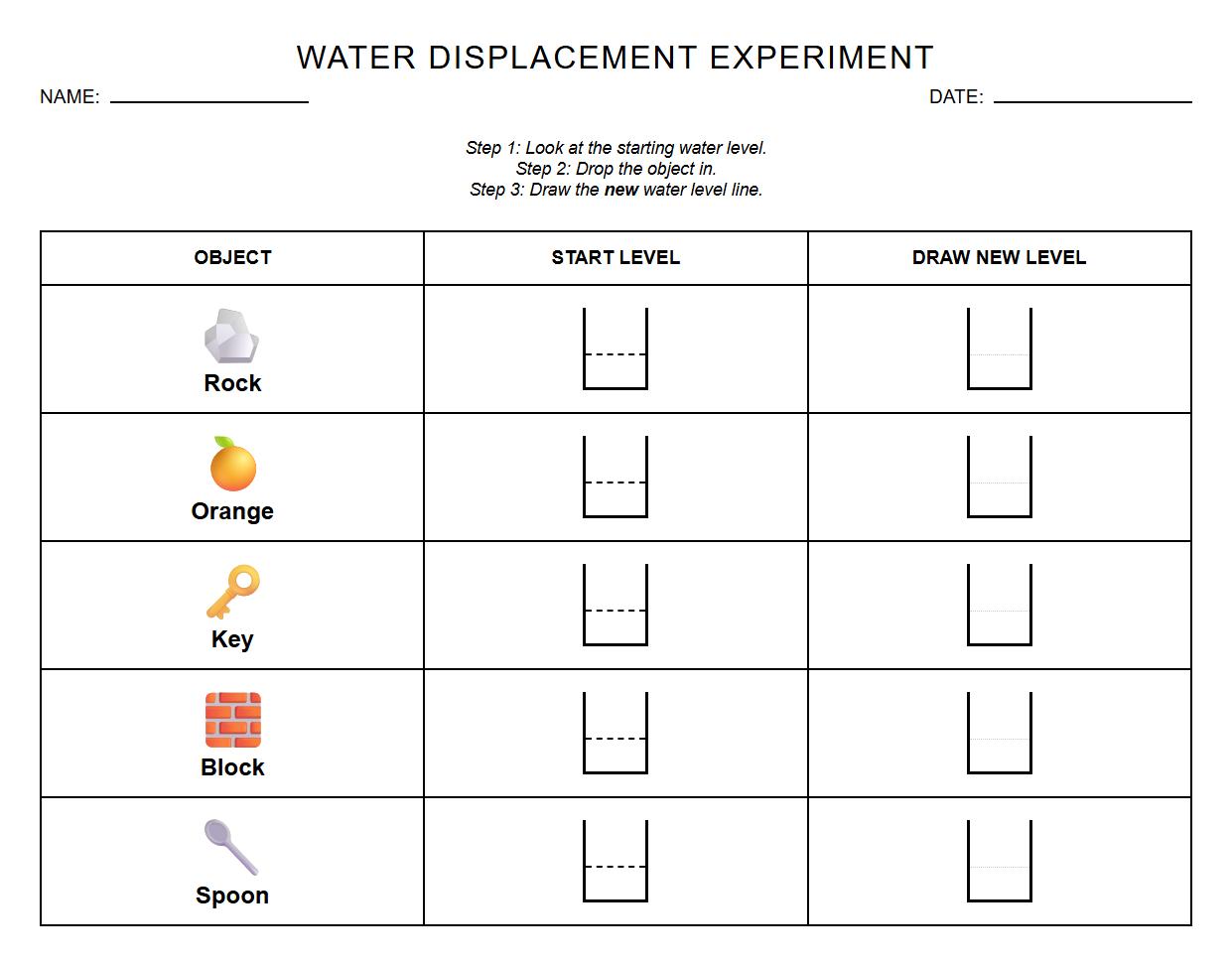
Data Table Recording Worksheet for Water Displacement

Download PDF     Pin it

Graphing Results: Bar Graph Worksheet for Sink or Float
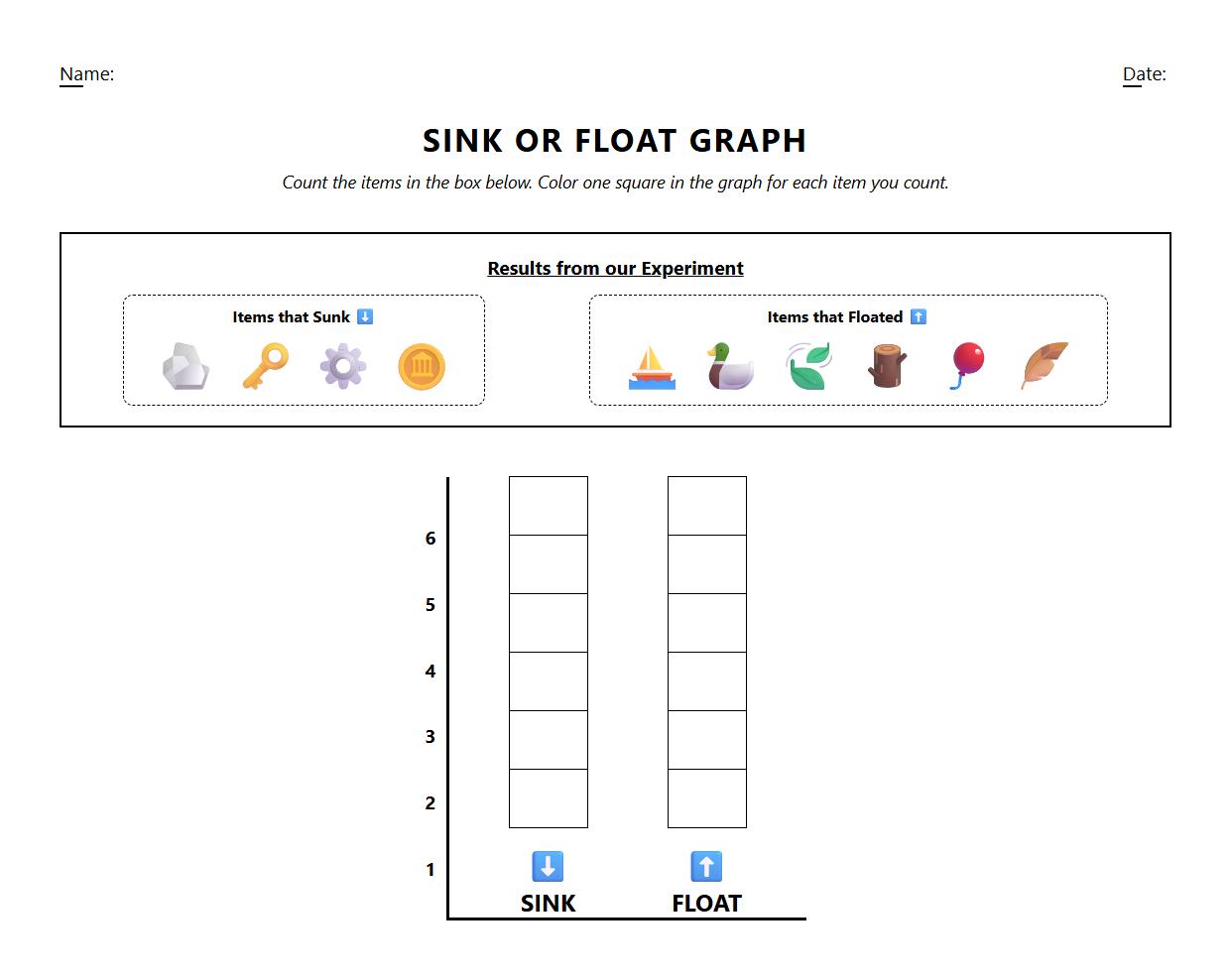
Graphing Results: Bar Graph Worksheet for Sink or Float

Download PDF     Pin it

Sequencing Worksheet: Steps of Sink or Float Investigation
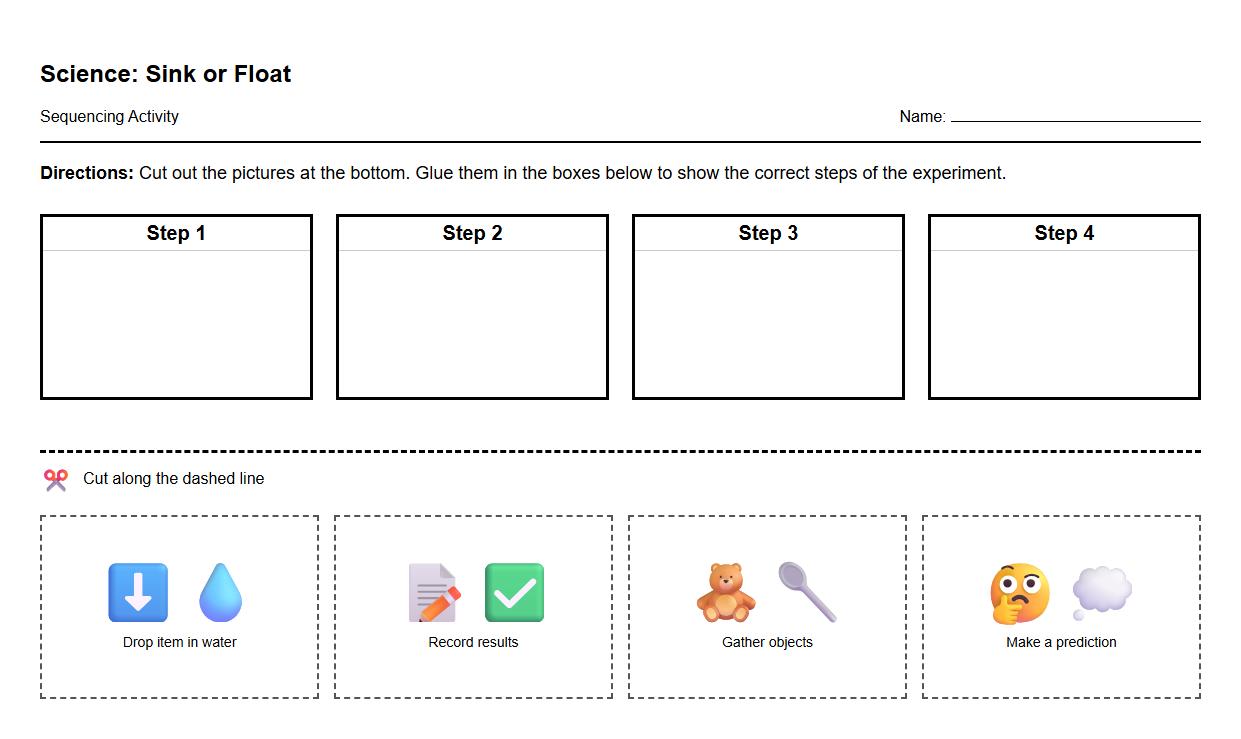
Sequencing Worksheet: Steps of Sink or Float Investigation

Download PDF     Pin it

Critical Thinking Worksheet: Hypothesis and Conclusion
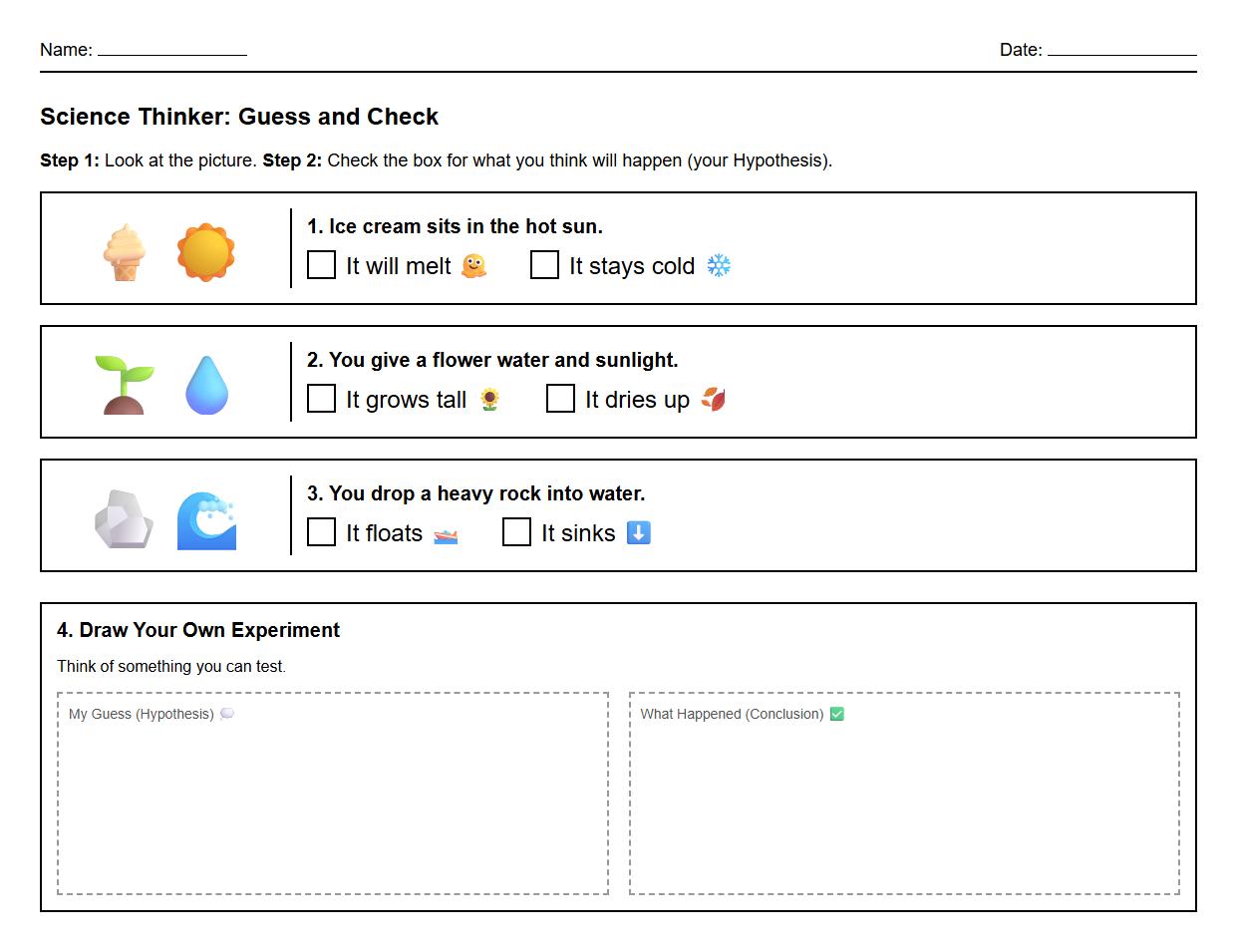
Critical Thinking Worksheet: Hypothesis and Conclusion

Download PDF     Pin it

Vocabulary Worksheet: Scientific Terms for Sink and Float
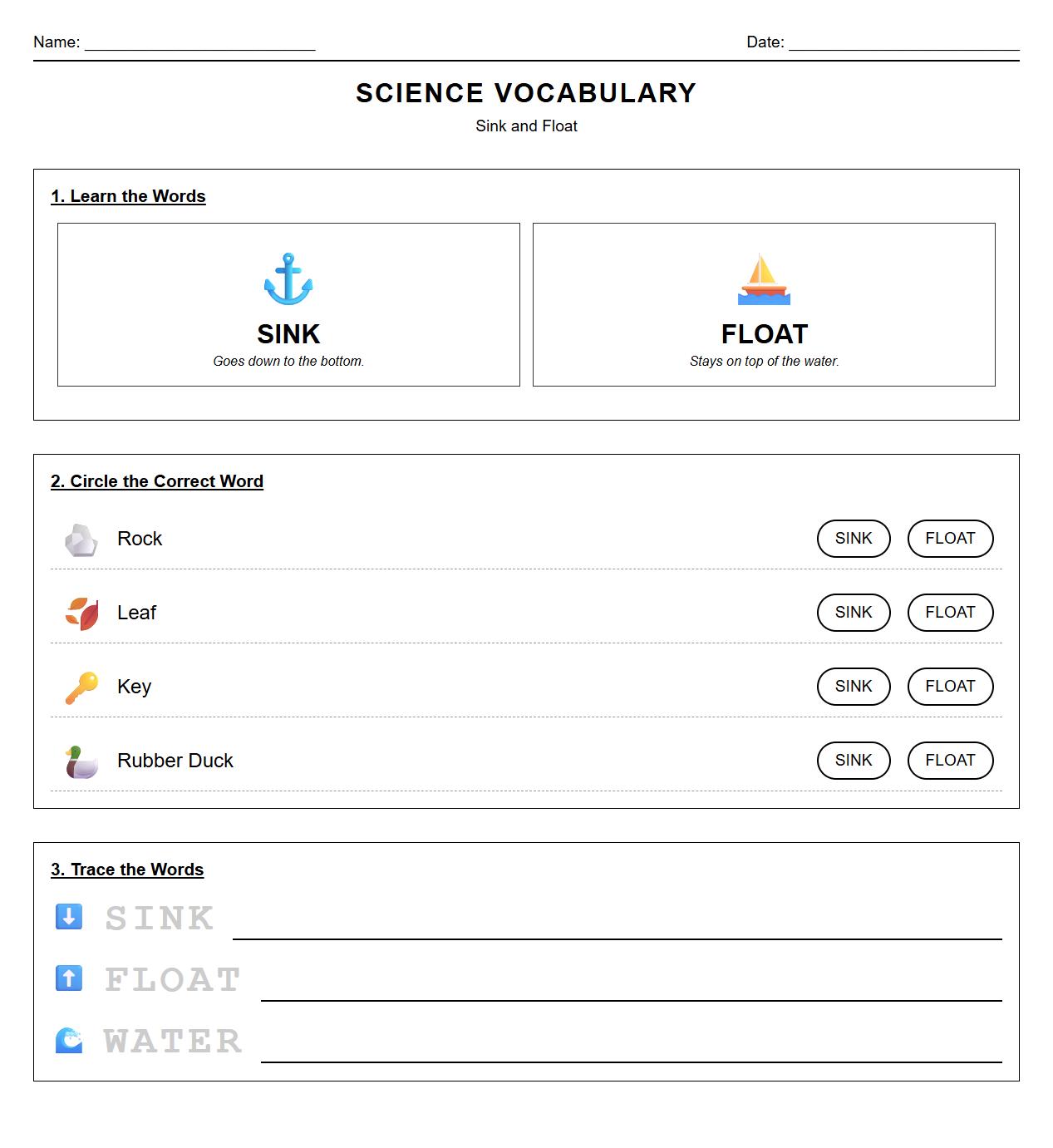
Vocabulary Worksheet: Scientific Terms for Sink and Float

Download PDF     Pin it

Which objects do you think will sink or float in water?

When exploring sink or float, children can predict if objects will stay on the surface or go underwater. Common items like leaves, plastic toys, or coins are great examples. Encouraging kids to think about their experiences helps build early scientific thinking. It's important to test different objects to see varied results.

How can you predict if an item will float before testing?

To predict floatation, children can consider the object's size, shape, and material. Lightweight and less dense items often float, while heavy or dense ones usually sink. Teaching kids to make careful guesses helps develop critical thinking skills. Predictions make the activity more engaging and educational.

What happens when you put a plastic toy in the water?

When a plastic toy is placed in water, most often it floats because plastic is less dense than water. This shows how material density influences floatation. Some plastic toys may still sink if they have water inside or are very heavy. Observing this helps children understand physical properties.

Do heavy objects always sink in the water?

Not all heavy objects sink; weight alone doesn't determine floatation. An object's density and shape play key roles. For example, a large heavy boat floats because it displaces water efficiently. This teaches kids that weight and material both matter in sinking or floating.

What materials are good for testing in a sink or float activity?

Using a variety of materials like wood, plastic, metal, and fabric helps children explore different properties. Select safe and easy-to-handle items suitable for young kids. This variety enhances learning by showing many possible outcomes. Diverse materials encourage curiosity and experimentation.

Can you draw a picture of something that floats and something that sinks?

Drawing items that float and sink helps children reinforce their observations in a creative way. Encourage kids to illustrate objects like boats or leaves for floating and rocks or coins for sinking. This activity supports memory and comprehension. Visual expression complements hands-on exploration.

How does the shape of an object affect whether it sinks or floats?

The shape affects water displacement, which impacts floatation. Objects shaped to spread out their weight, like flat or hollow shapes, float better. Compact or rounded objects may sink more easily. Understanding this concept introduces kids to basic physics.

What did you notice about things that floated in your experiment?

Children often observe that floating things are light or have a shape that helps them stay on top of water. These items sometimes trap air or are less dense than water. Such observations build important scientific skills like noticing patterns and making connections. It encourages curiosity about natural phenomena.

How can you change an object to make it float if it sinks?

You can alter an object's shape or add materials to help it float. For example, adding air-filled parts or making it larger to displace more water helps. Wrapping a heavy item in a lightweight material can also help. This teaches problem-solving and creativity in science.

Why do you think boats can float on water?

Boats float because their shape allows them to push aside enough water to support their weight. This is called buoyancy, which helps counteract the boat's heaviness. Materials used and air inside the boat also contribute to floating. This simple concept introduces children to real-world science applications.


More in Science Category


About the author. Nylen Smith is a dedicated educator and cofounder of KWorksheet.com, a popular platform specializing in high-quality kindergarten worksheets and printable activities.

Disclaimer. The information provided in this document is for general informational purposes and/or document sample only and is not guaranteed to be factually right or complete. Please report to us via contact-us page if you find and error in this page, thanks.

Comments

No comment yet