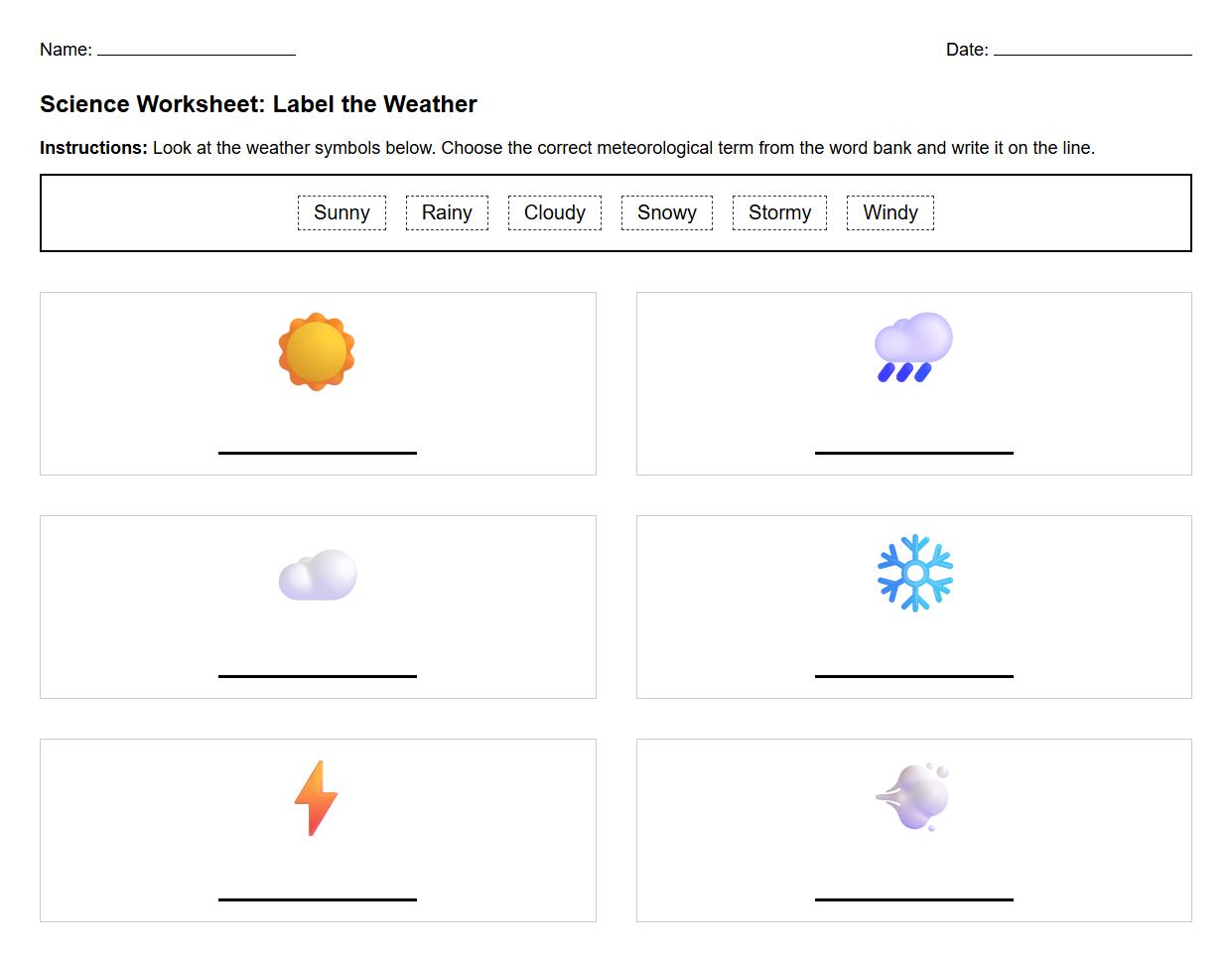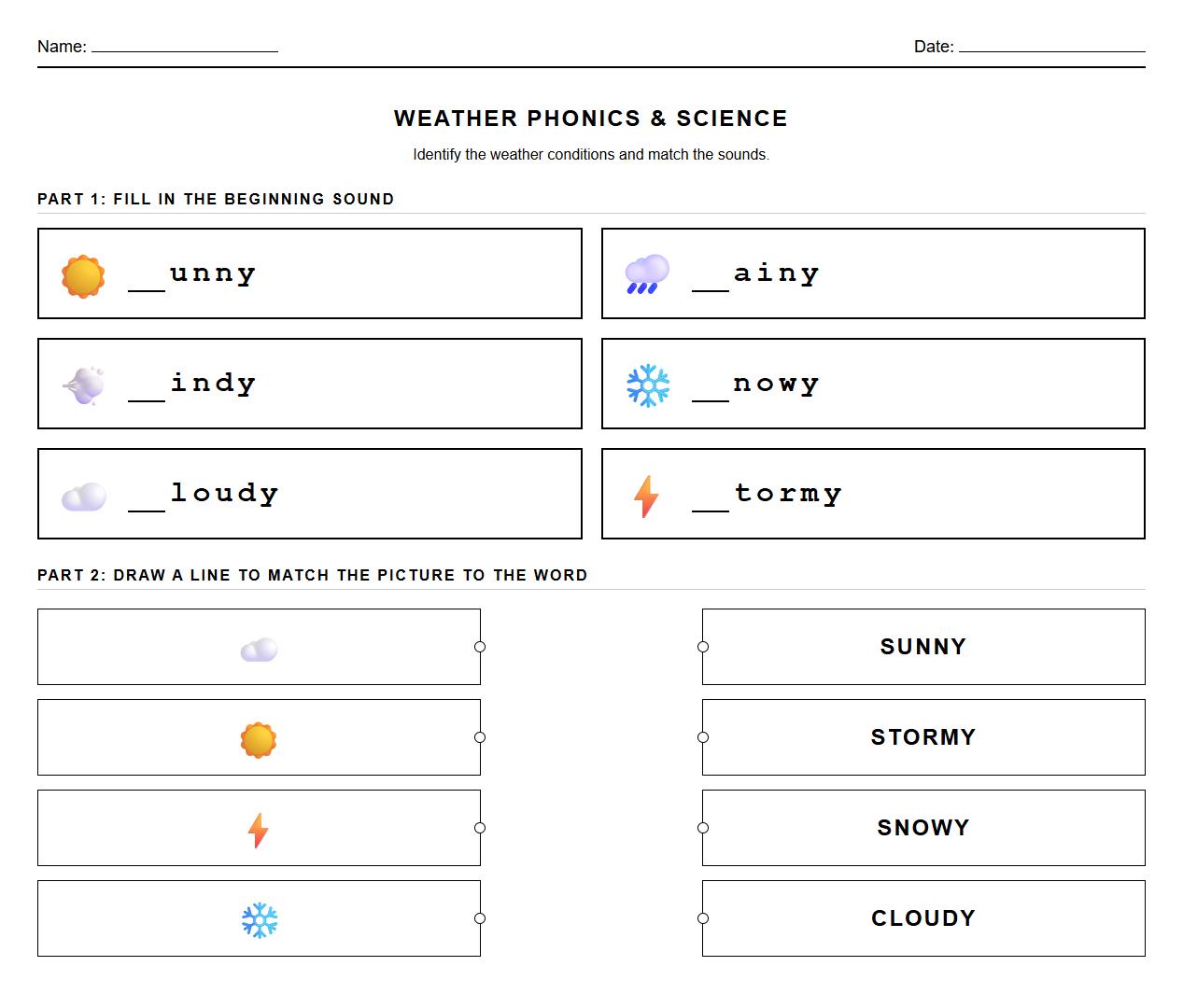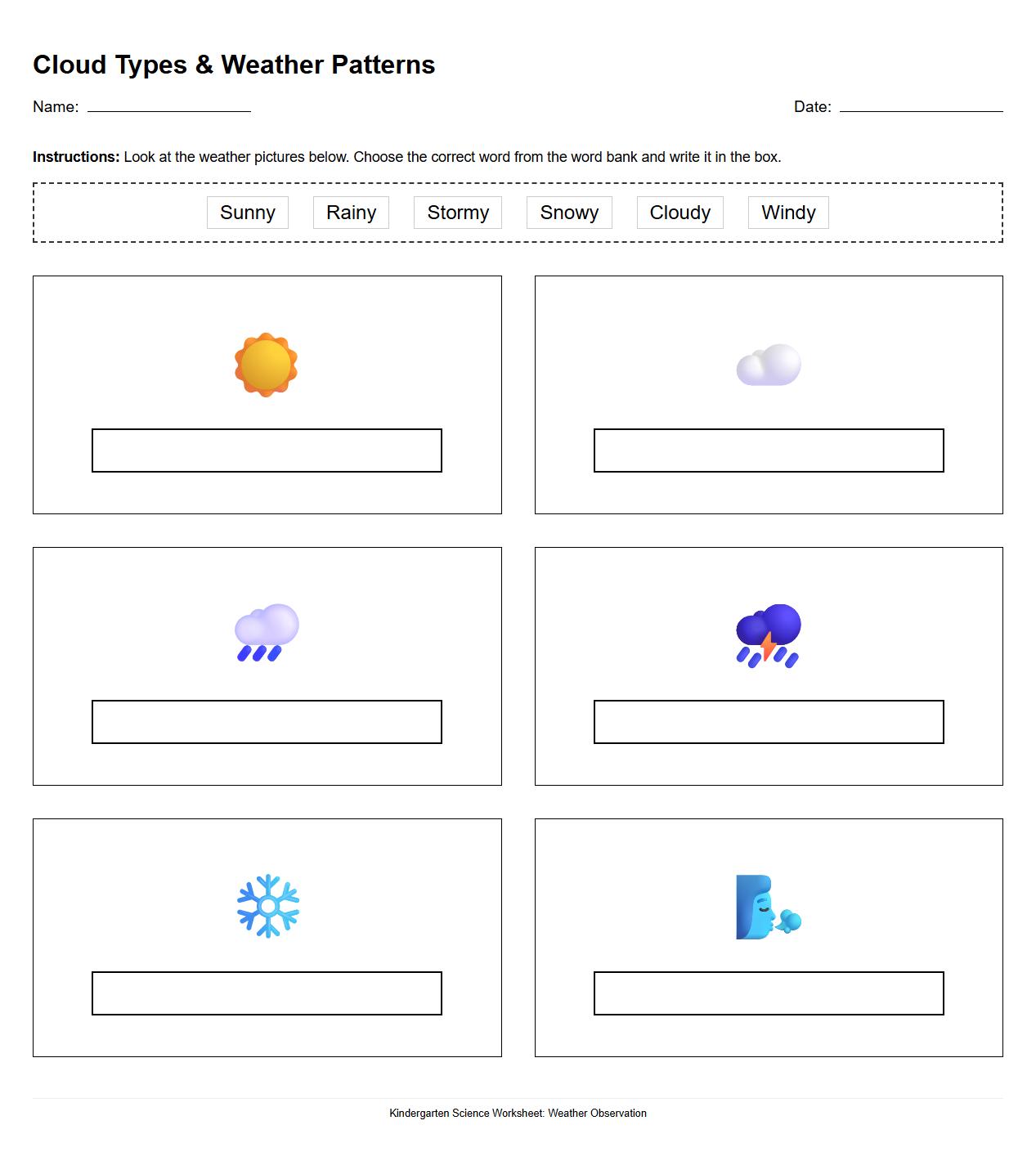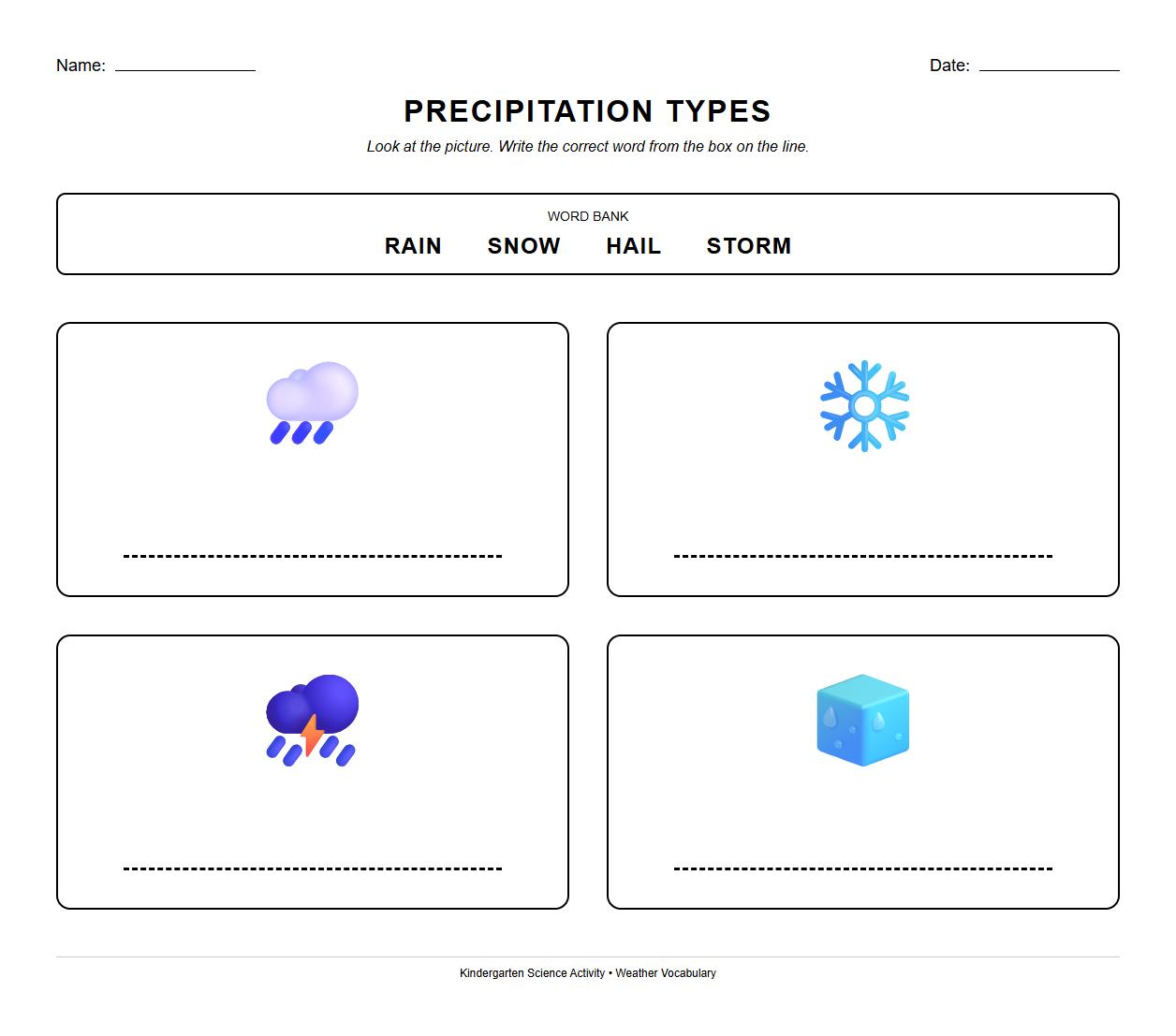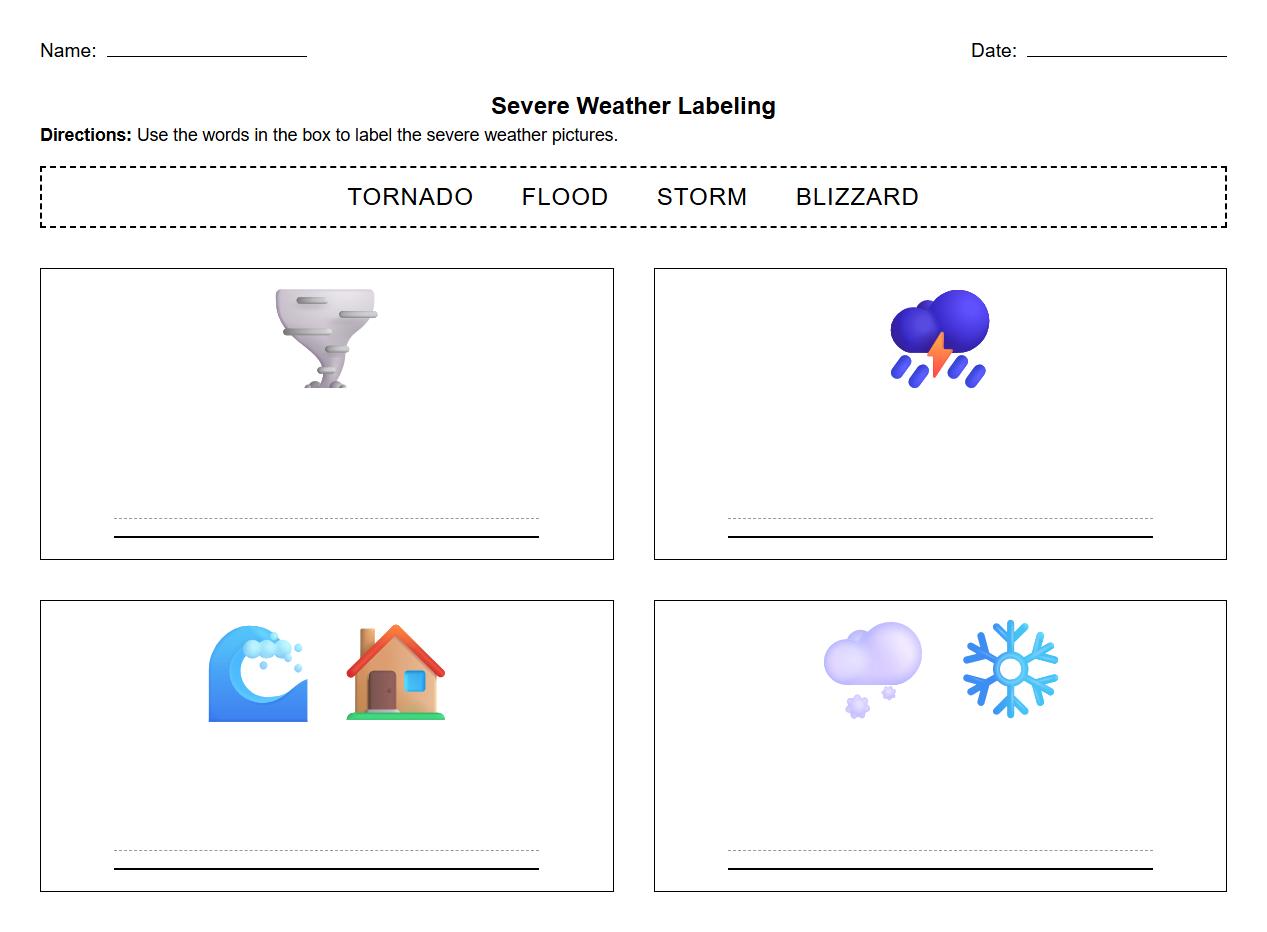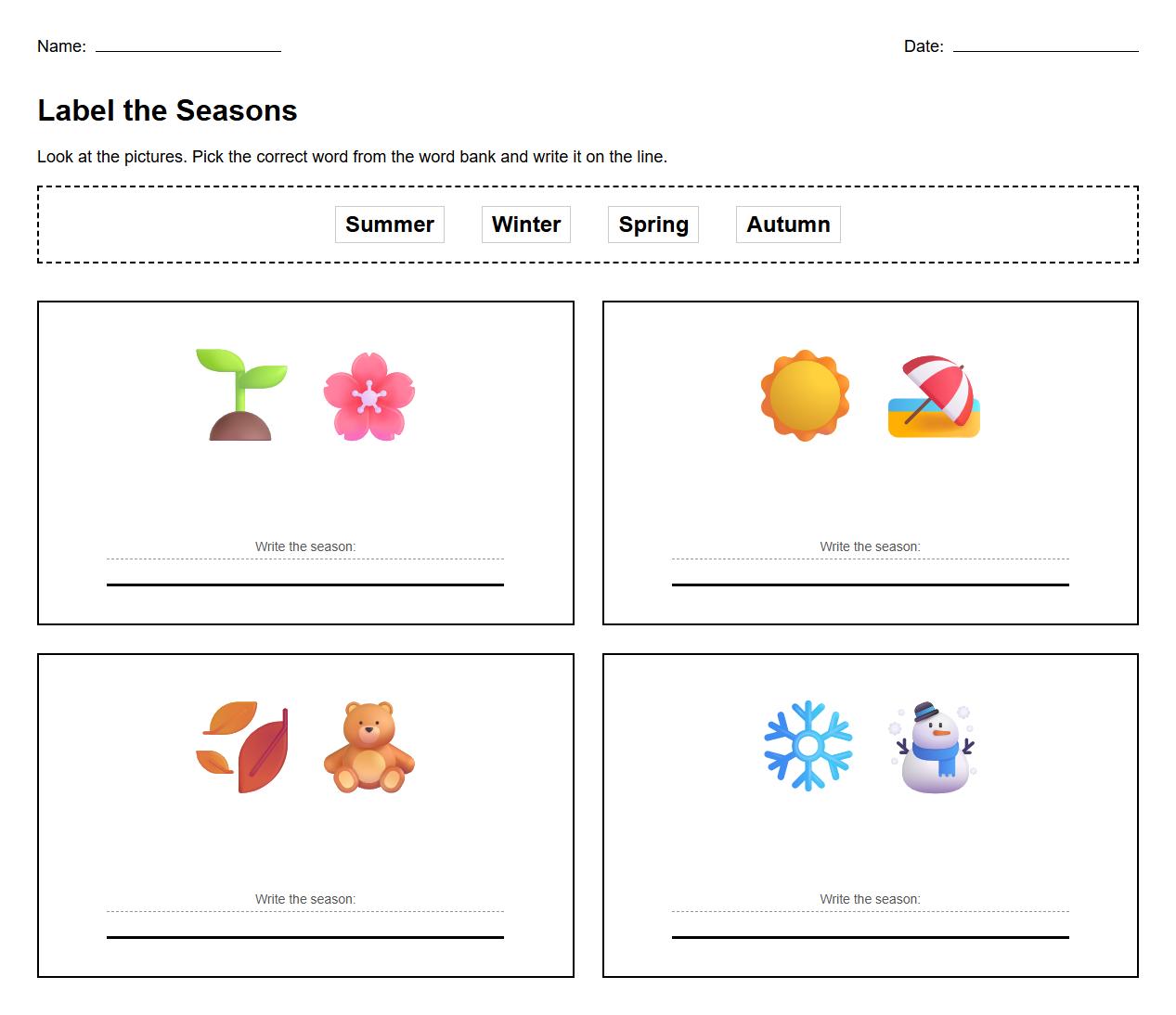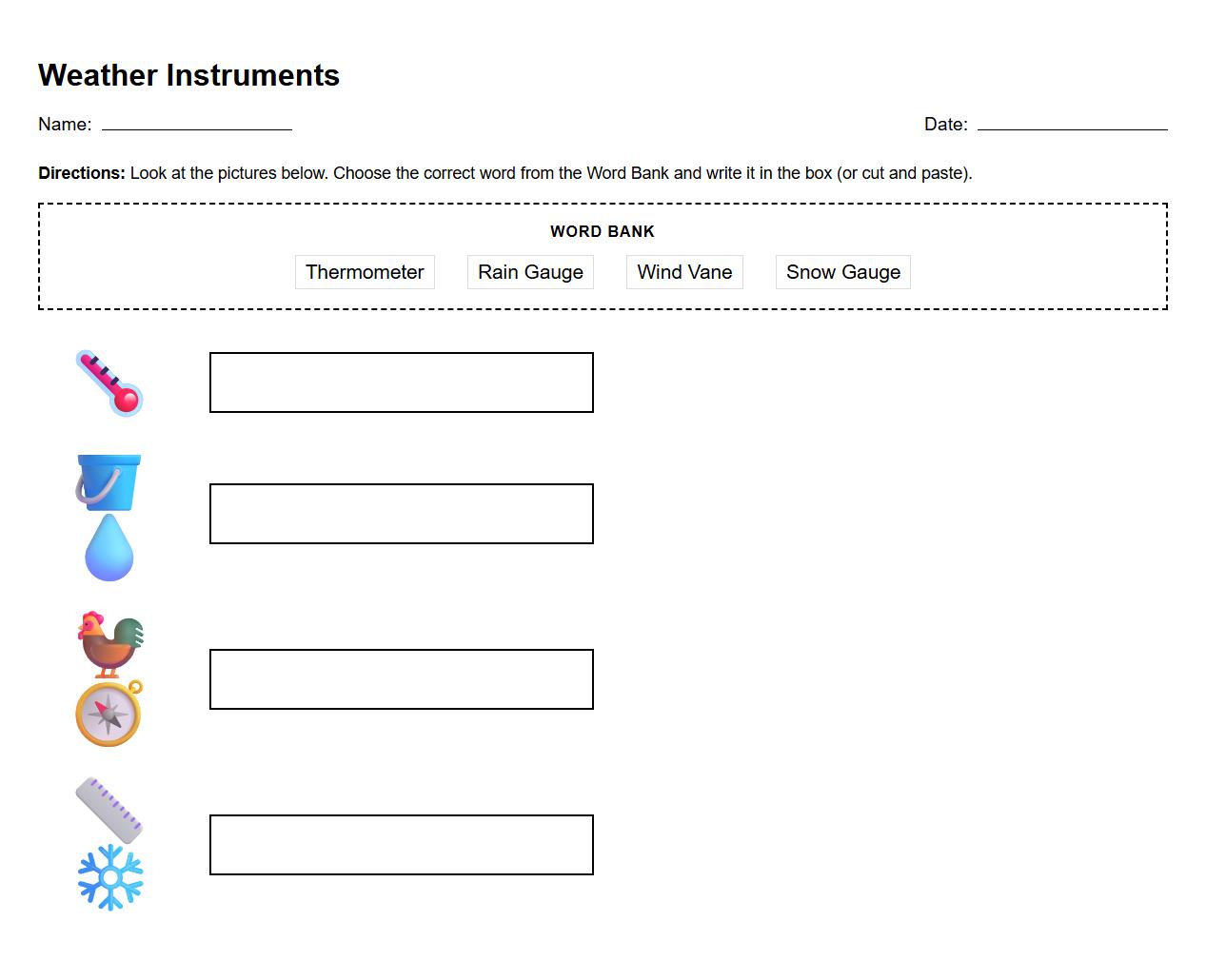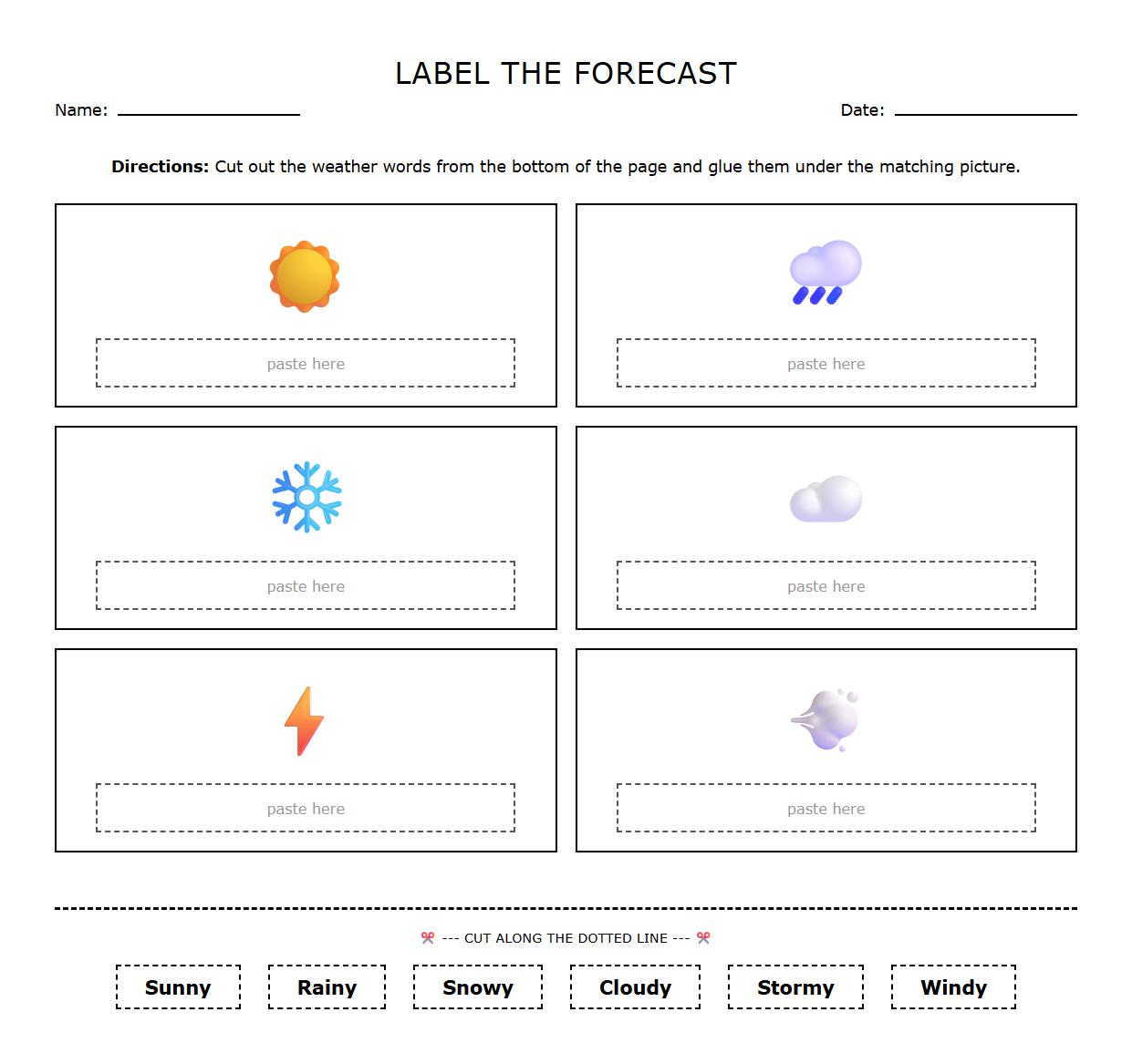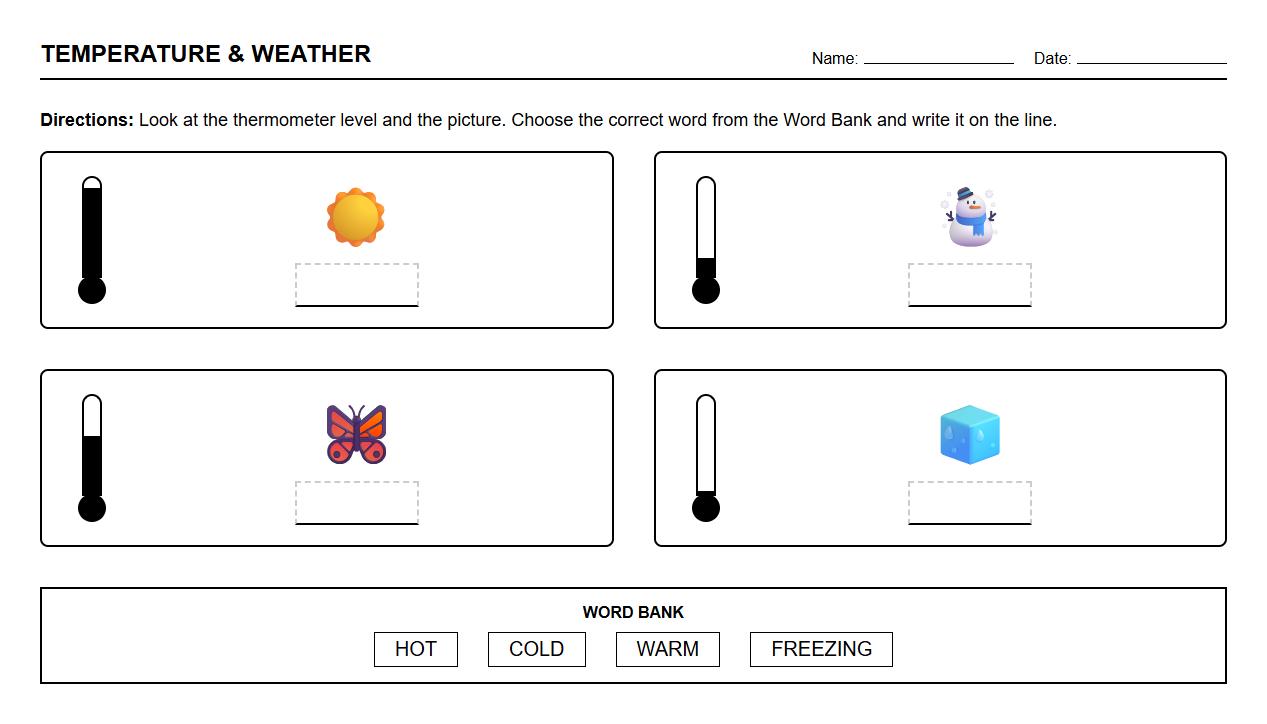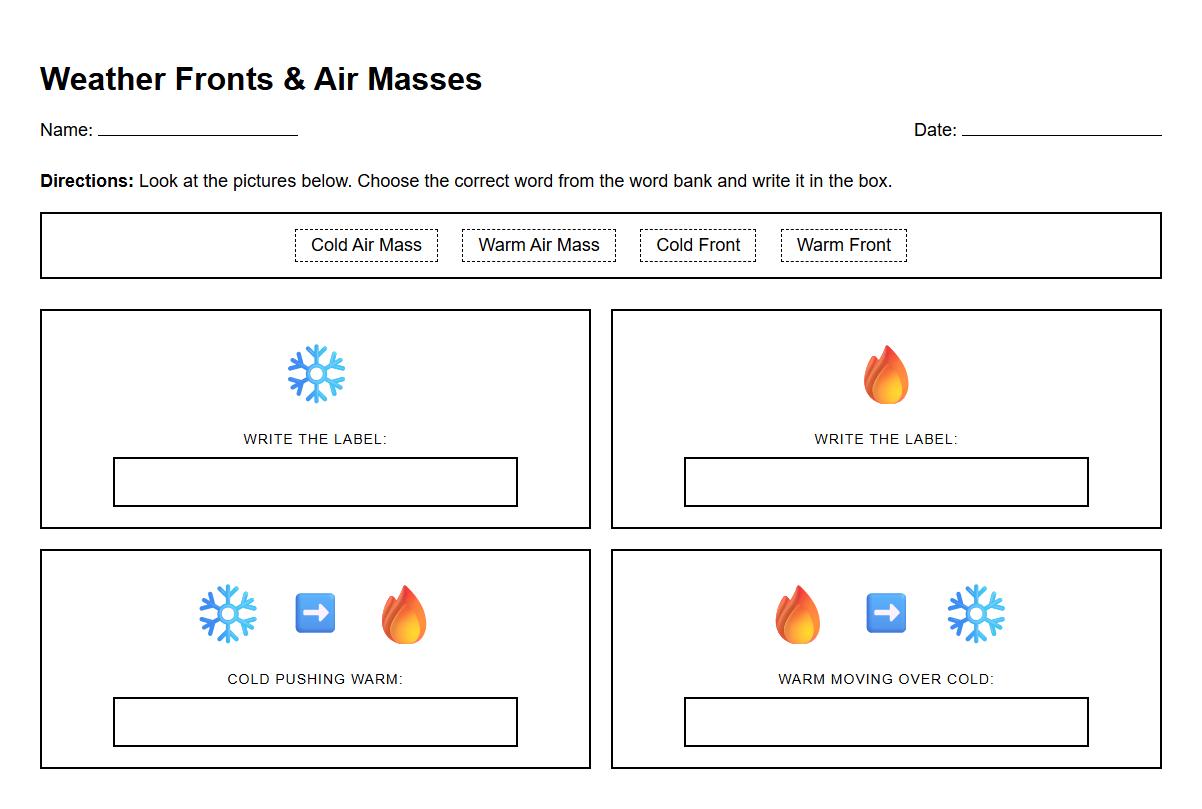
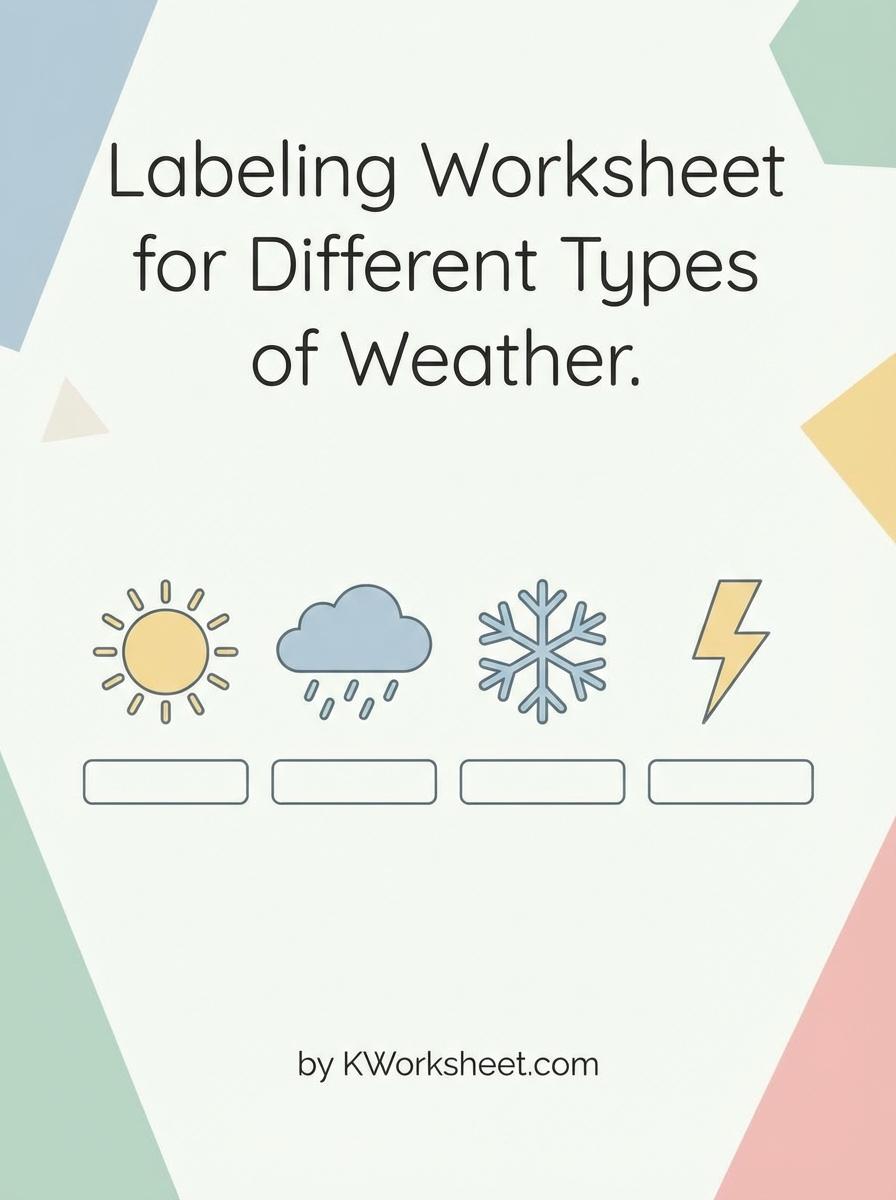
Labeling worksheets for different types of weather enhance students' understanding of various meteorological conditions by engaging them in identifying and naming weather elements such as sunshine, rain, clouds, and snow. These activities bolster vocabulary development and promote recognition of weather patterns through interactive learning. Explore our collection of labeling worksheets to support effective weather education.
Bright Sun Weather
The picture with a bright sun depicts clear, sunny weather, ideal for outdoor activities. This weather type is characterized by clear skies and warmth. Teachers and parents can use this image to explain sunny days to children. It helps young learners recognize and understand sunny weather verses other types.
Rainy Weather Picture
The image showing raindrops falling and often with clouds illustrates rainy weather. This type of weather is important for children to learn as it affects outdoor play and dressing choices. Encourage kids to use umbrellas or raincoats, which can be demonstrated using this worksheet. Rainy weather is essential for understanding nature's water cycle.
Snowy Weather Image and Label
Look for the picture where snowflakes fall and the ground is covered in white, representing snowy weather. Labeling this image helps children grasp concepts of winter and cold conditions. It's a great way to talk about seasons and the different types of weather during the year. Snowy weather also introduces topics like snow play and safety.
Windy Day Worksheet
The worksheet image showing leaves or trees bending with motion indicates a windy day. This weather type engages students in discussions about wind effects and safety measures during strong winds. Recognizing windy days helps prepare children for varying weather conditions. It's a fun opportunity to explore how wind influences the environment.
Cloudy Weather Picture
Clouds covering the sky without precipitation characterize cloudy weather. This picture is useful for teaching children about overcast conditions, which often feel cooler and less bright. Parents and teachers can use this to help kids understand changing weather patterns. It also contrasts well with sunny and rainy images.
Stormy Weather Image
A picture featuring dark clouds, lightning, and heavy rain shows stormy weather. This type of weather is crucial to teach for safety awareness and preparedness during storms. It helps children understand when to stay indoors and the power of nature. Stormy weather also promotes conversations about weather warnings and emergency measures.
Foggy Weather Identification
The worksheet with blurred or misty visuals depicts foggy weather. Labeling fog teaches children about reduced visibility and safe movement outside. It's a useful topic for discussing variations in weather that aren't always sunny or rainy. Foggy days require caution, making this a key learning point for young learners.
Hot Day Imagery
An image showing the sun shining brightly with high temperatures represents a hot day. This picture helps explain heat effects like thirst and sunscreen use to prevent sunburns. Parents and teachers can discuss hydration and summer activities with this worksheet. Understanding hot weather prepares children for safe outdoor play.
Cold Day Label
The image showing frost, snow, or children bundled in warm clothes depicts a cold day. Labeling this helps kids recognize needing coats, hats, and gloves during chilly conditions. It's an important part of learning how weather influences clothing choices. Cold day illustrations also introduce the concept of winter weather safety.
Sun and Clouds Weather Type
An image showing both sun and clouds highlights partly cloudy weather. This weather type teaches children about mixed conditions that change throughout the day. It's excellent for explaining varied weather and the transition between sunny and cloudy skies. Parents and teachers can use this to discuss how weather isn't always just one type.


Morning Routine Weather Chart Worksheet for Kindergarten