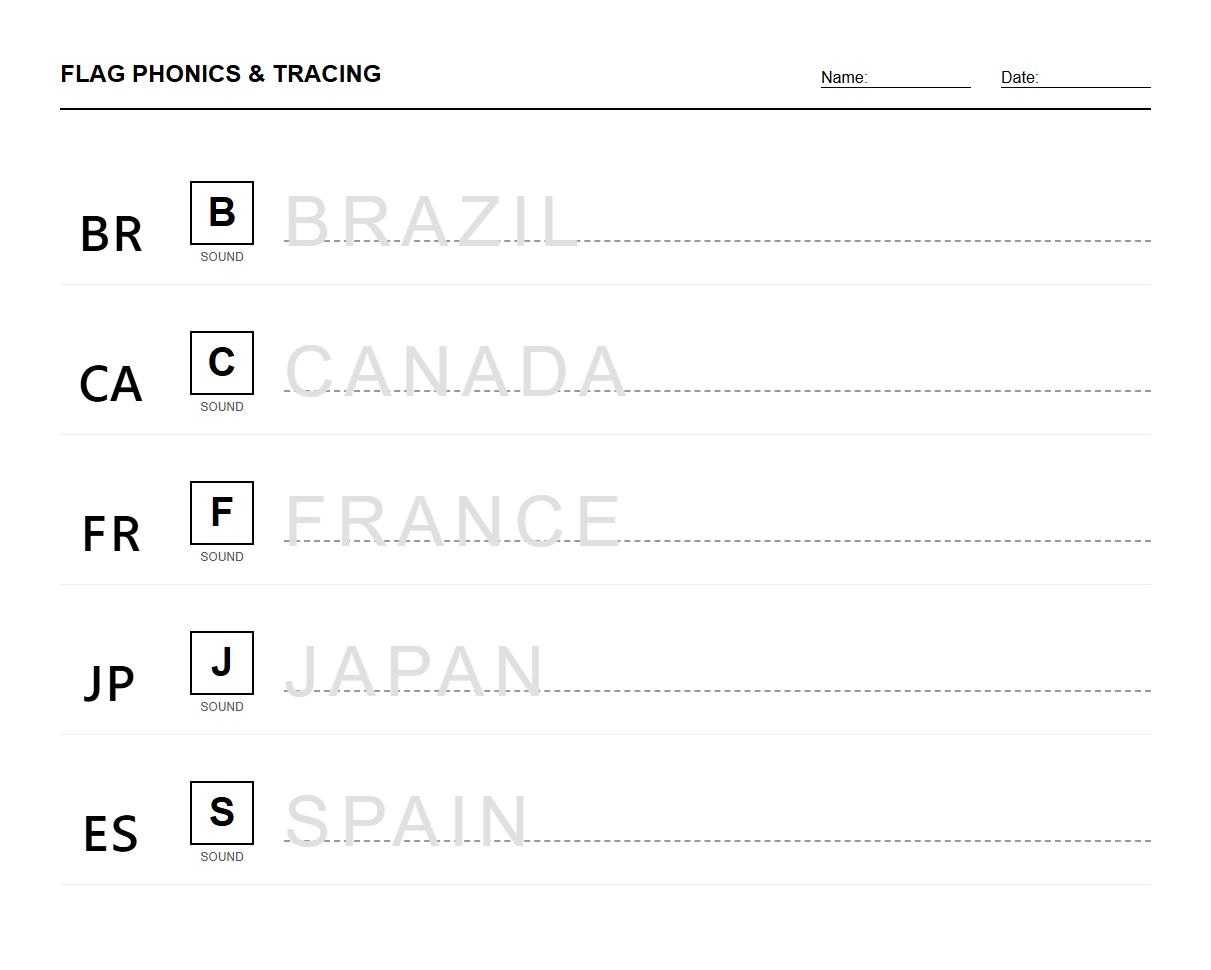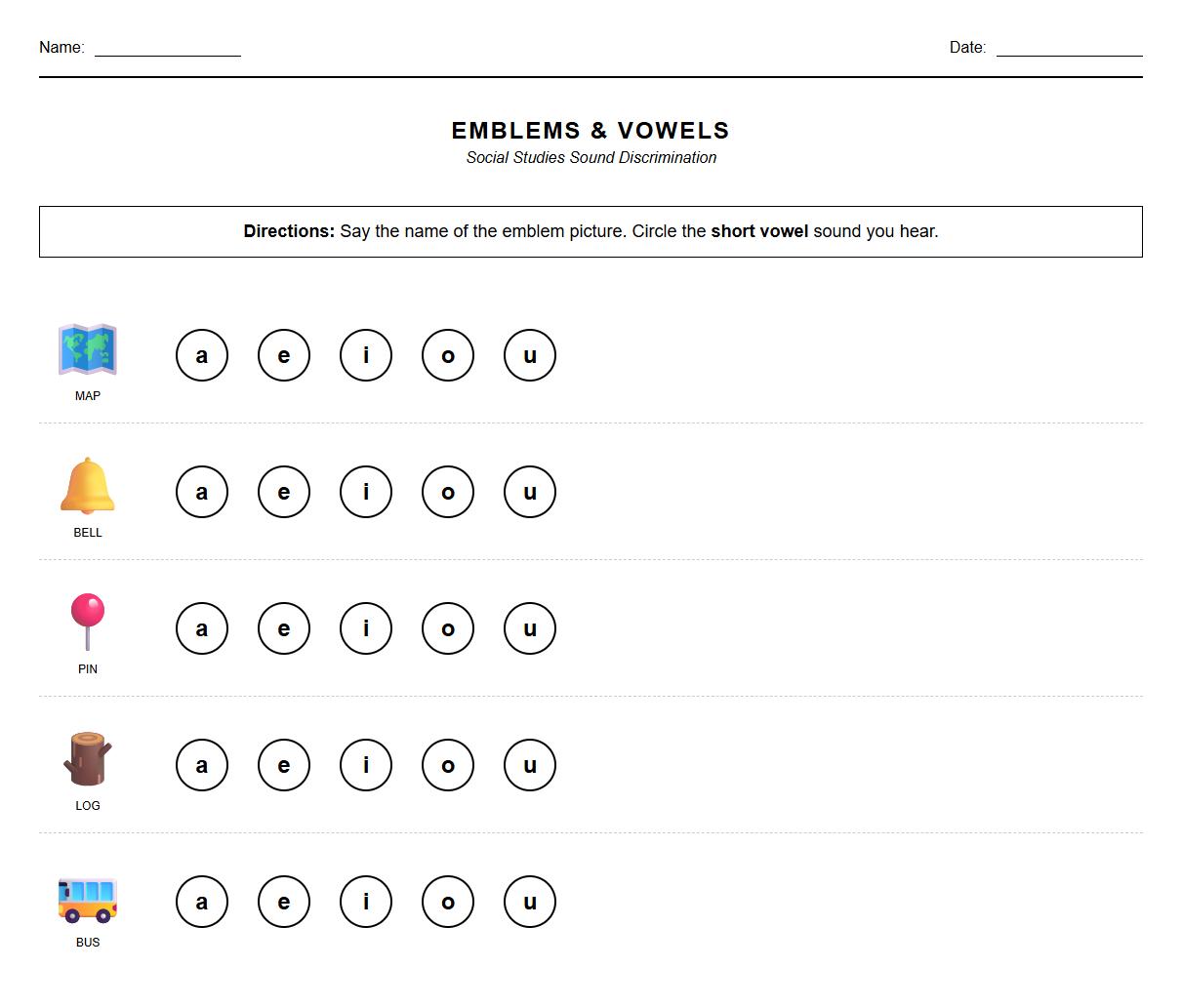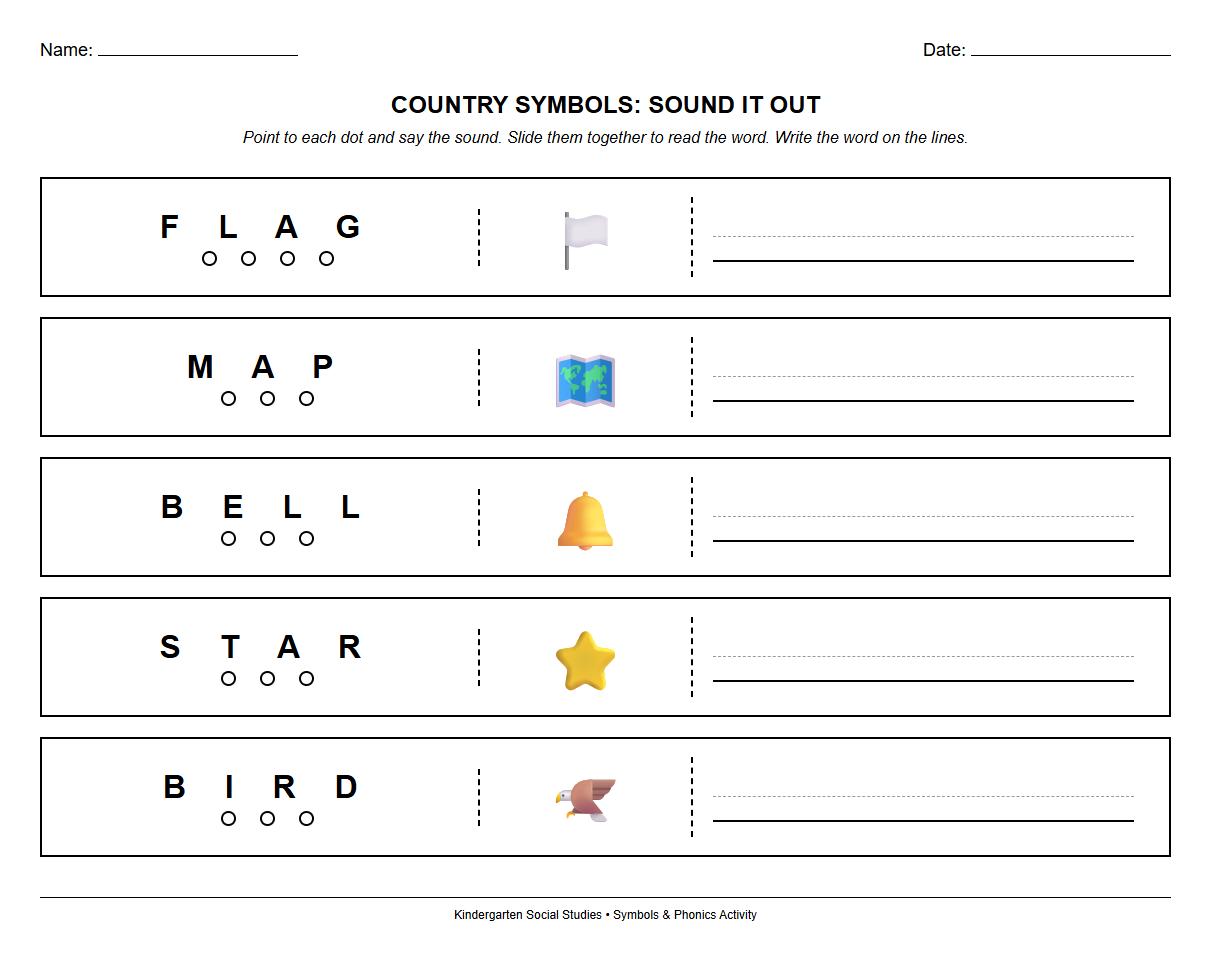
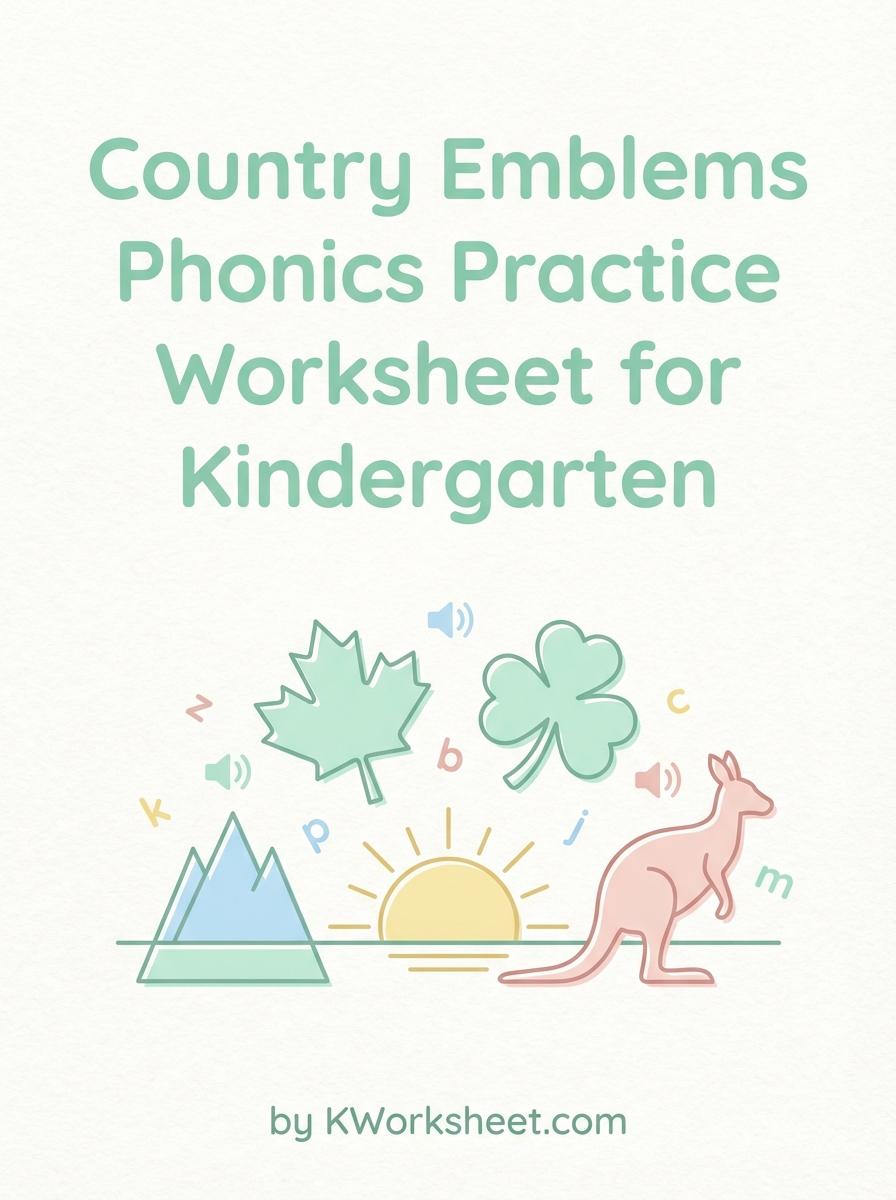
Country emblems help kindergarten students connect letters and sounds through familiar symbols like flags and animals. This phonics practice worksheet enhances letter recognition and sound association using country-themed images. Explore the available worksheets to support early reading skills with engaging activities.
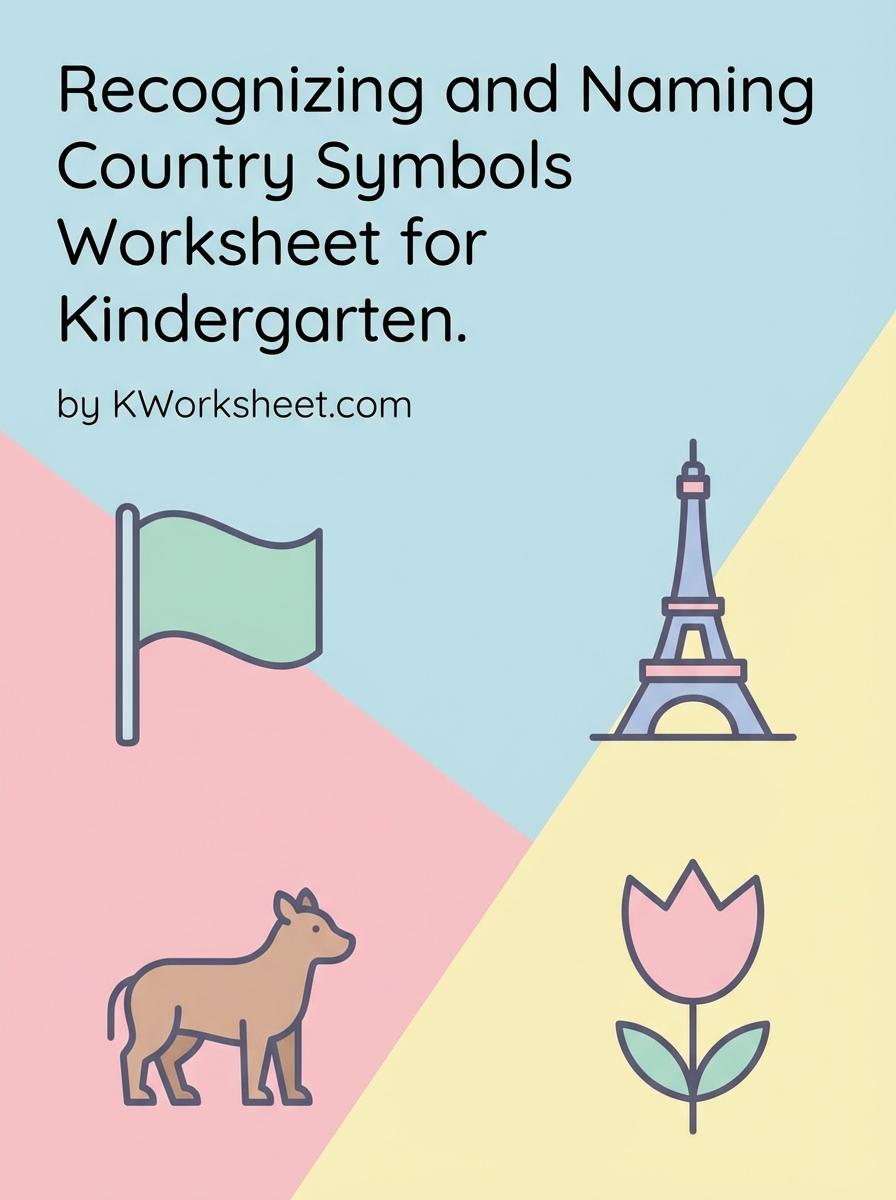
What is the Name of Your Country's Flag Shown on the Worksheet?
This question helps children recognize the national flag and associate it with their country. Teachers and parents can encourage students to describe the flag's colors and symbols. This activity promotes national identity and cultural awareness in young learners. It also helps develop critical observation skills as children focus on the flag's details.
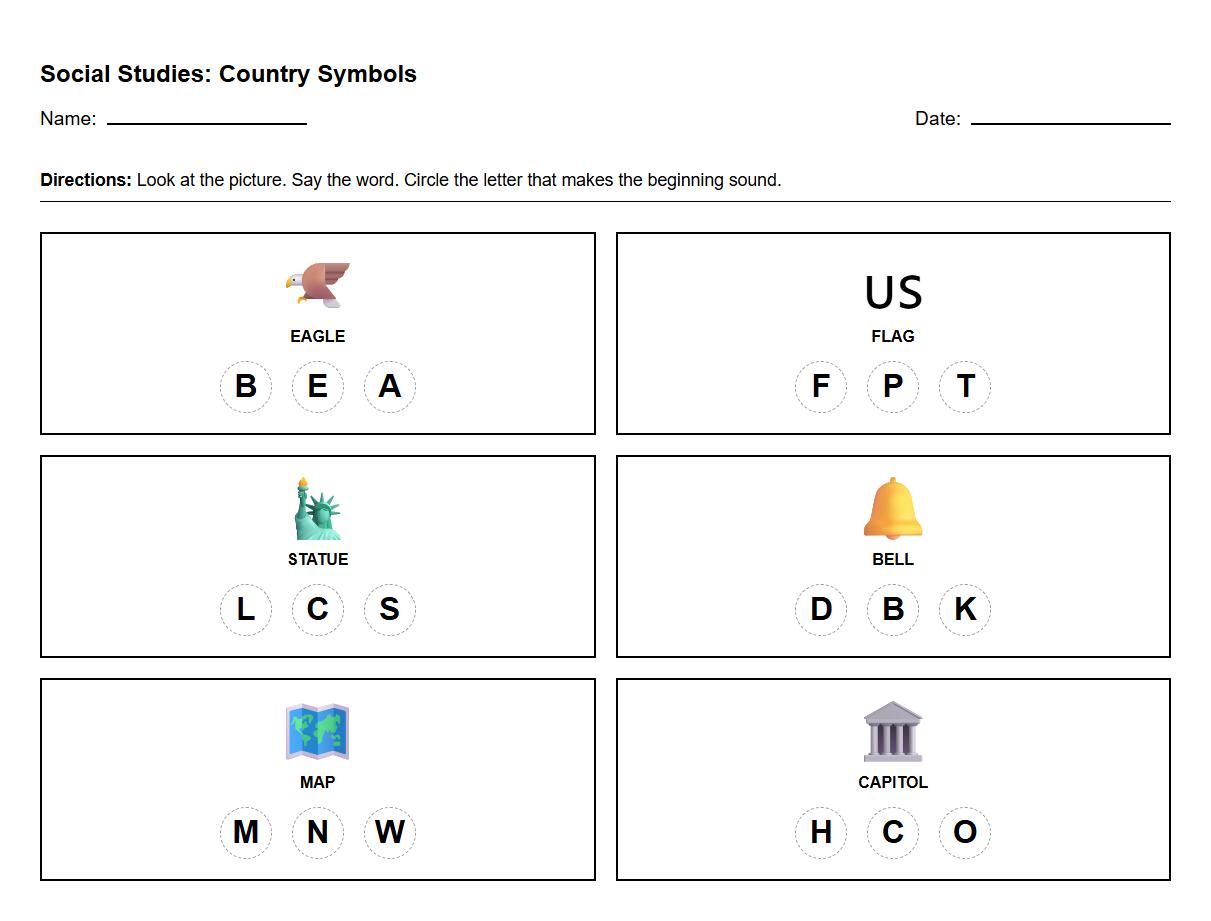
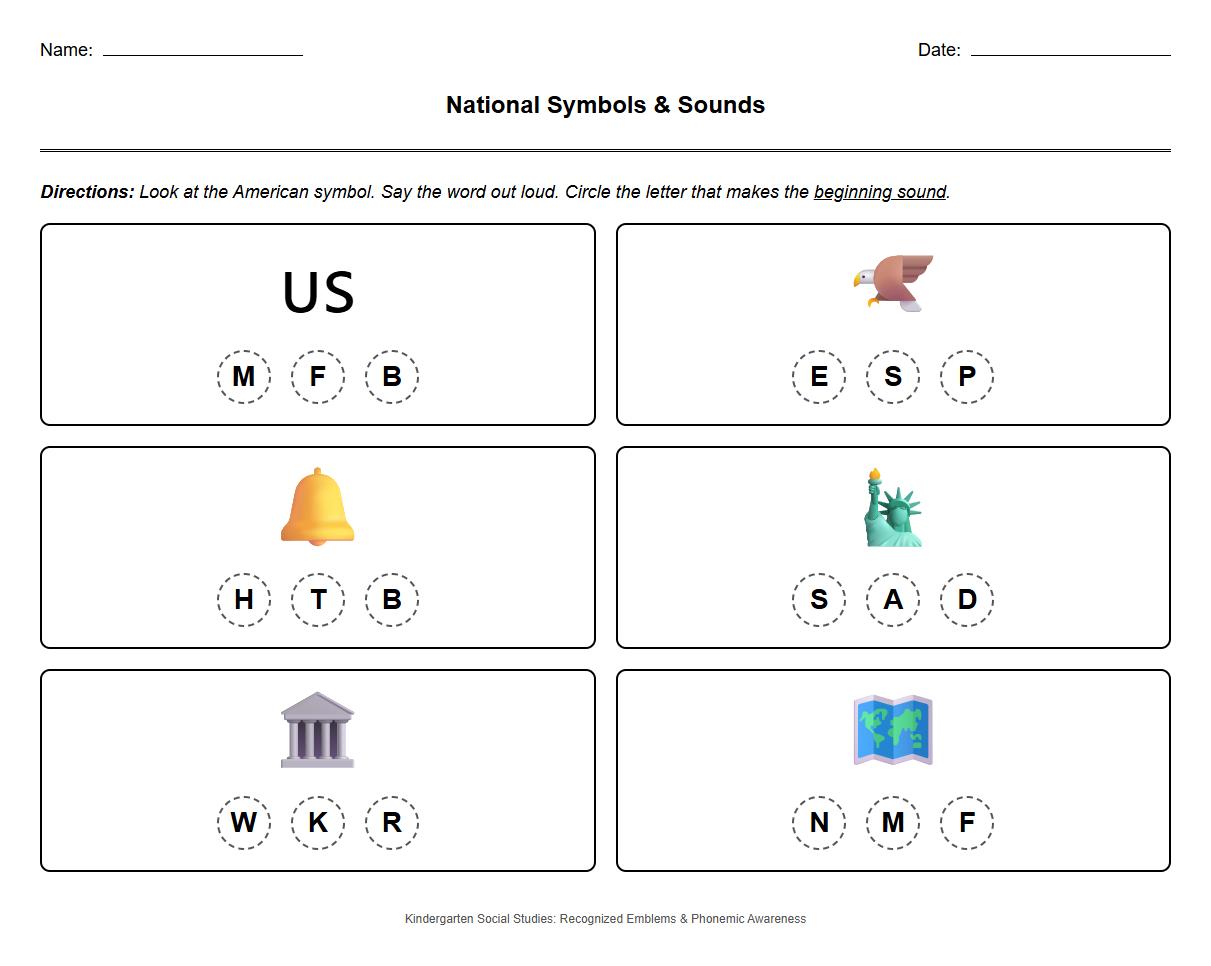
Can You Circle the Letter Sound That Begins the Word "Flag"?
This exercise strengthens phonics skills by identifying the beginning sound of a word. Children learn to recognize and isolate the initial letter sound, which is essential for early reading success. Teachers and parents should guide children to focus on the letter "F" as the starting sound. Circling the sound reinforces visual and auditory connections.
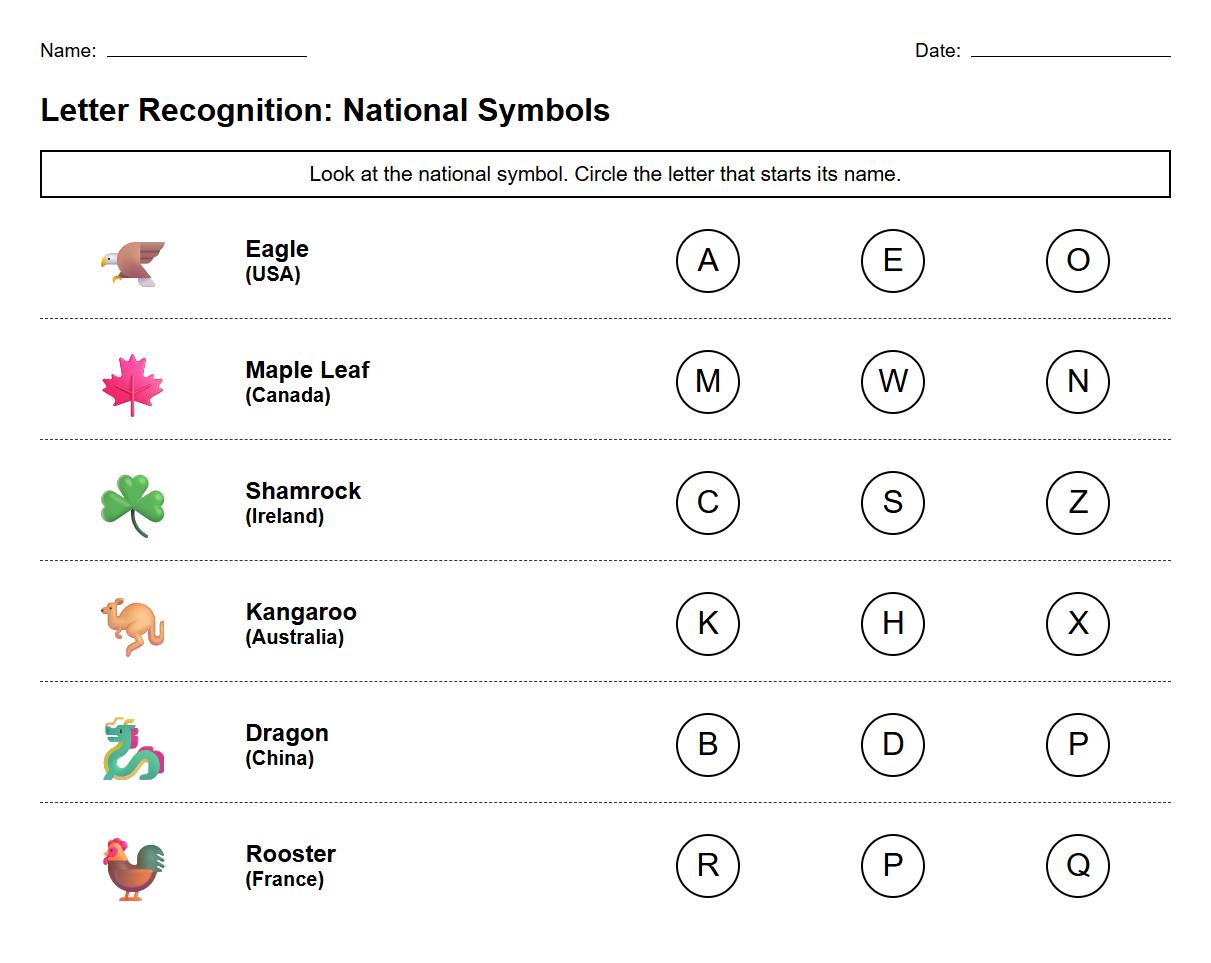
Which Animal Symbol is Shown as a Country Emblem?
Recognizing the animal emblem deepens children's understanding of national symbols. This activity encourages visual recognition and connects animals with their symbolic importance in culture. Parents and teachers can discuss why certain animals represent their country. It fosters curiosity about history and symbolism in a fun, engaging way.
What Letter Does the Word "Maple" Start With?
Identifying the first letter of the word "maple" focuses on building early literacy skills. Children learn to associate the letter "M" with its sound in this context. Encouraging children to say the word aloud helps reinforce phonemic awareness. This simple question also supports vocabulary development related to nature and symbols.
Point to the Picture That Starts With the "E" Sound
This activity sharpens children's ability to recognize the initial phoneme in words starting with the "E" sound. Teachers and parents can present images and ask children to identify those beginning with "E". It reinforces sound-letter correspondence vital for reading readiness. Pointing to pictures also engages visual learning and fine motor skills.
Can You Trace the First Letter of "Emblem"?
Tracing the first letter "E" in "emblem" develops fine motor skills and letter recognition. This hands-on practice supports writing readiness and memorization of letter shapes. It's important for adults to guide children gently while encouraging independence. Tracing connects visual memory with tactile experience, vital for literacy development.
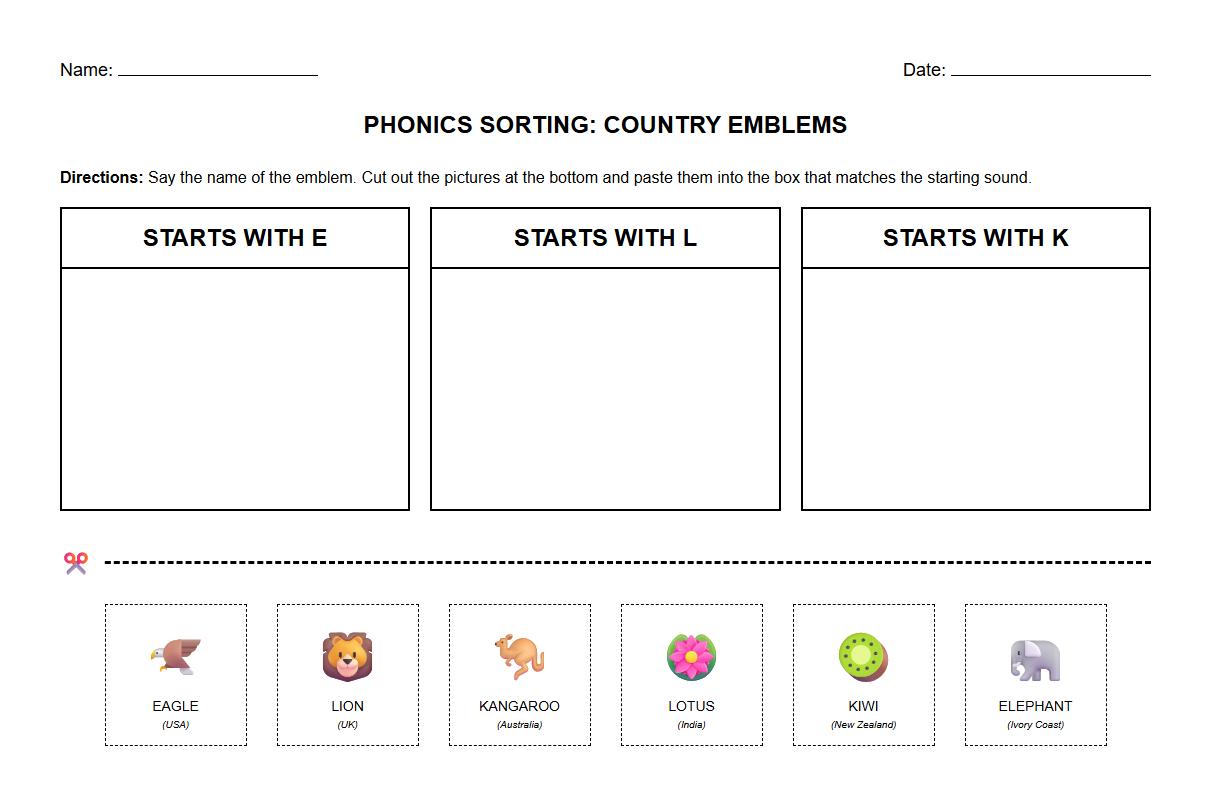
Which Emblem Starts With the "L" Sound?
This question expands phonics practice by identifying the emblem beginning with the "L" sound. It encourages children to listen carefully and match sounds with letters. Teachers and parents can provide clues to help students find the correct emblem. This reinforces auditory discrimination and early reading skills.
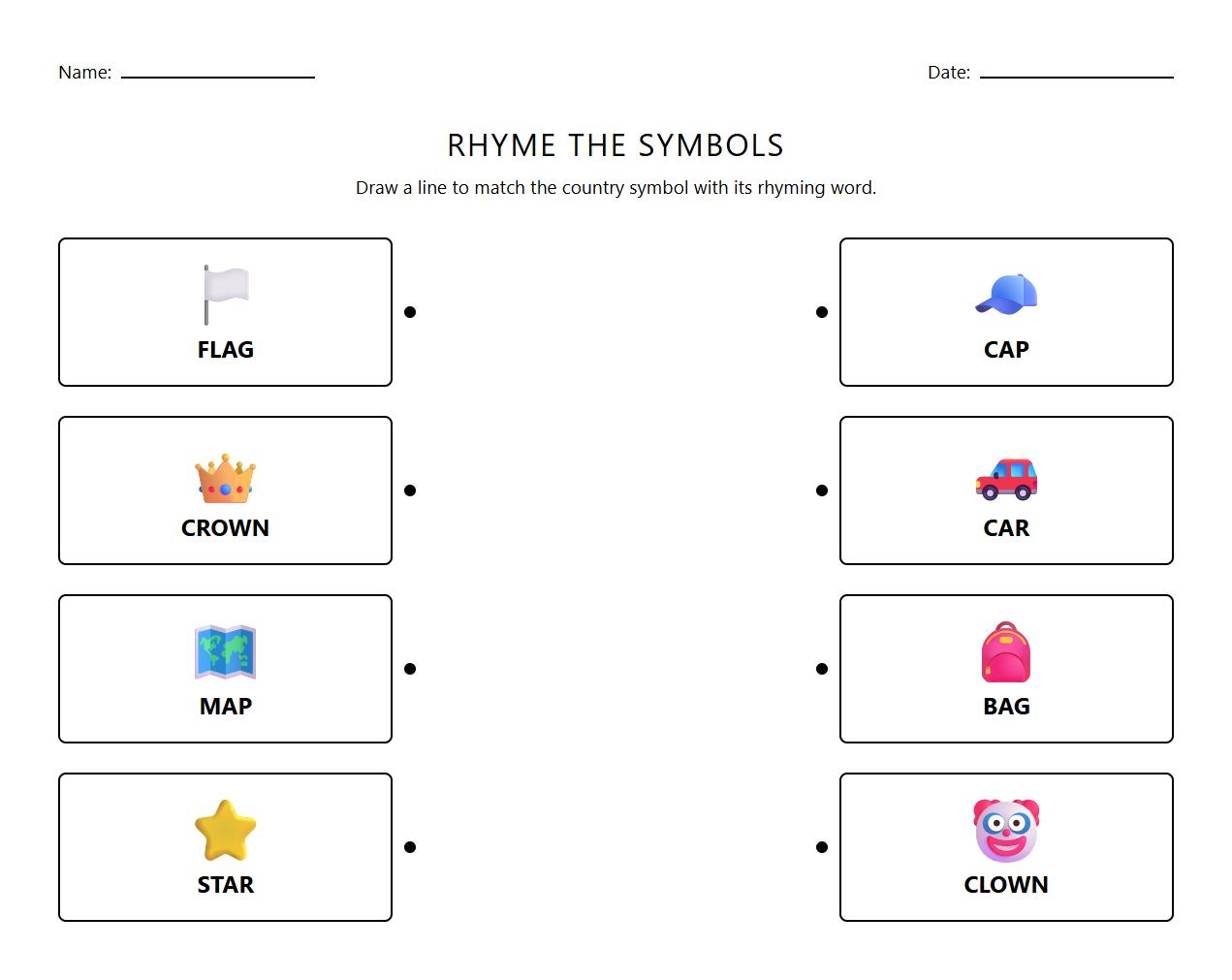
Find the Word That Rhymes With "Bell"
Rhyming activities boost phonological awareness, a key skill for learning to read. Children search for words that rhyme with "bell", such as "tell" or "sell". This practice improves their ability to hear sound patterns and identify word families. It also enhances vocabulary and pronunciation in an enjoyable way.
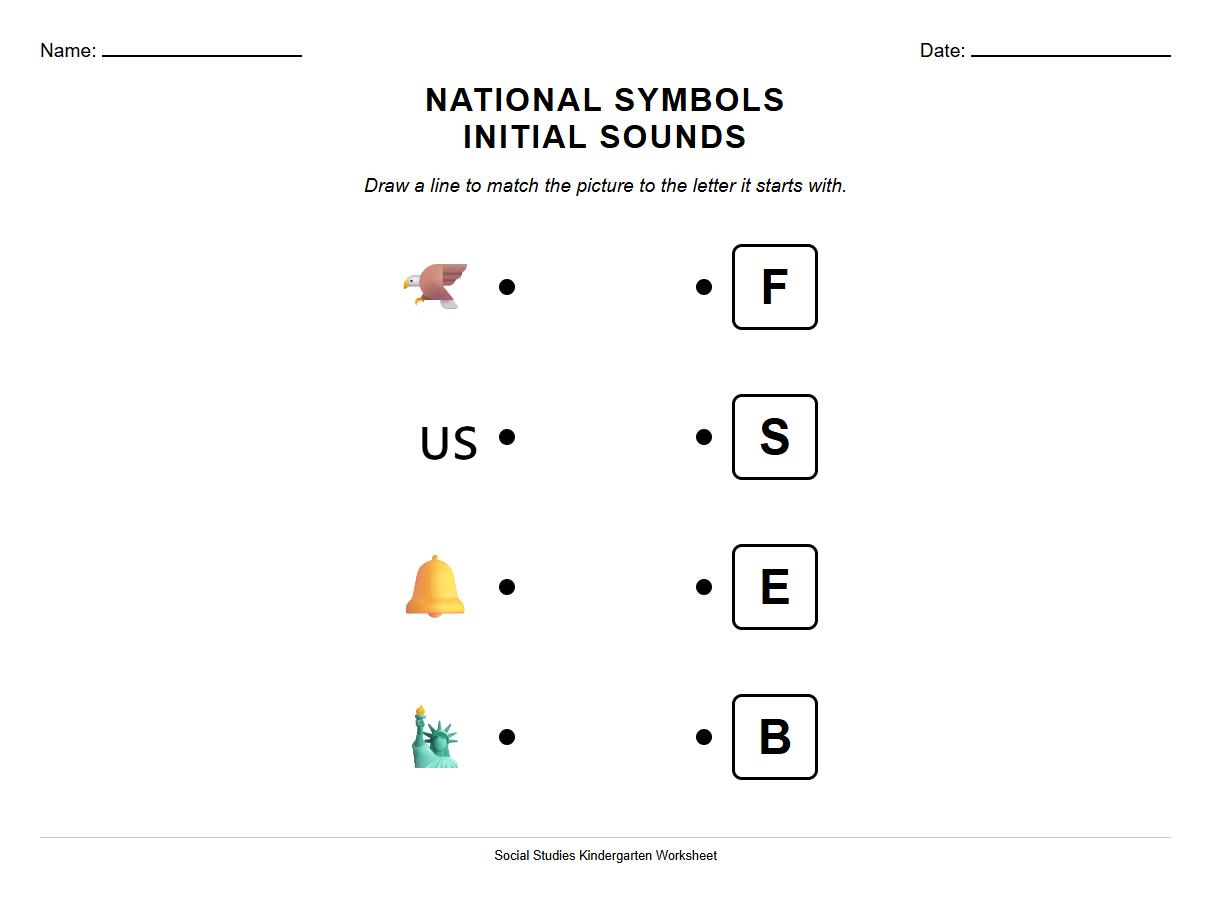
Match the Country Emblem to Its Starting Letter
This task links national emblems with their corresponding starting letters to support alphabet knowledge. Children learn to associate symbols with sounds and letters, building literacy skills. Parents and teachers can encourage children to name each emblem as they match. This interactive exercise integrates cultural learning with phonics.
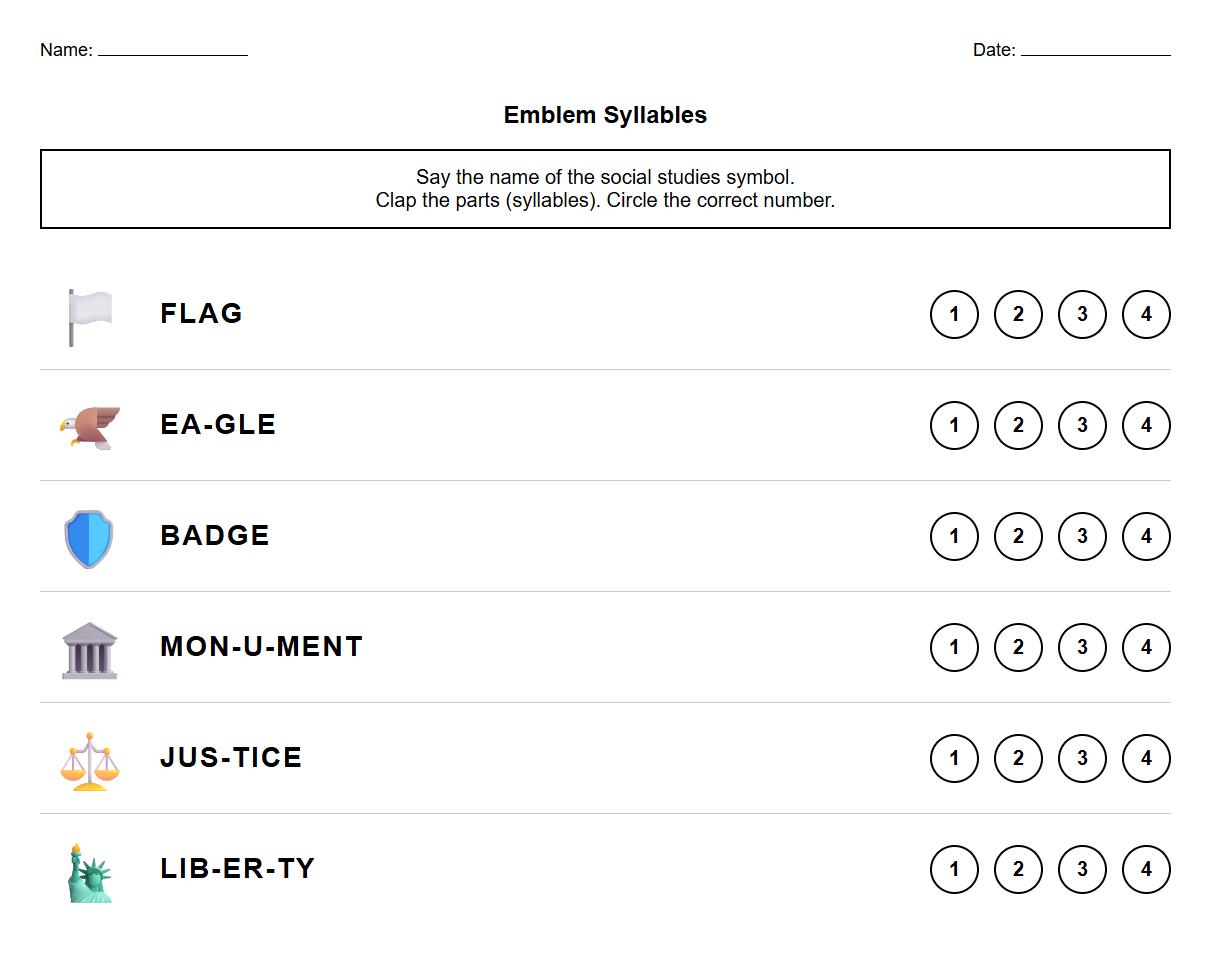
Say the Name of Each Emblem and Clap for Every Syllable
Clapping syllables while saying emblem names develops phonological segmentation. This exercise helps children break words into syllables, improving pronunciation and rhythm. Teachers and parents can model clapping in time to guide students. It enhances auditory processing and language skills vital for early literacy.


Recognizing and Naming Country Symbols Worksheet for Kindergarten