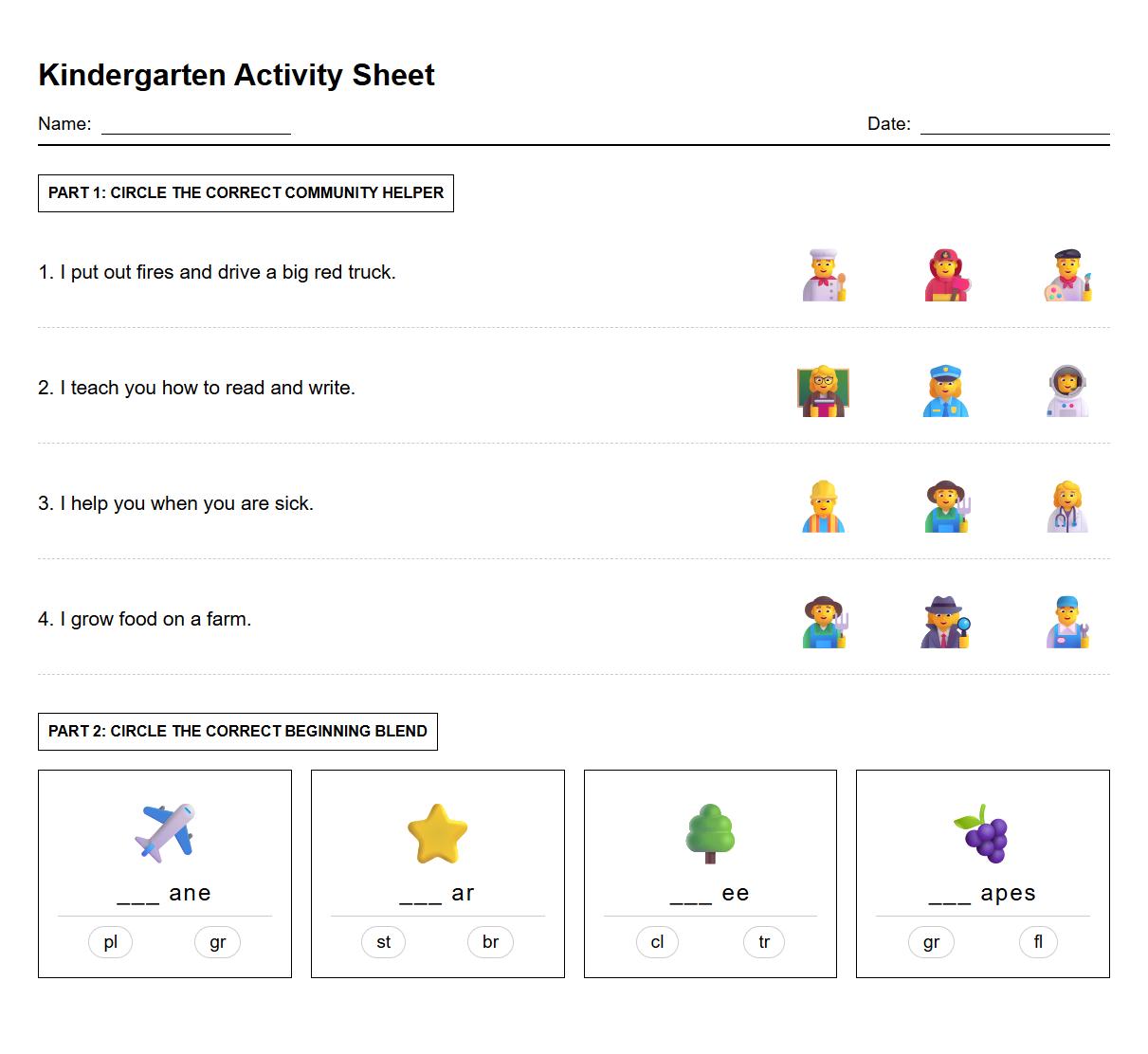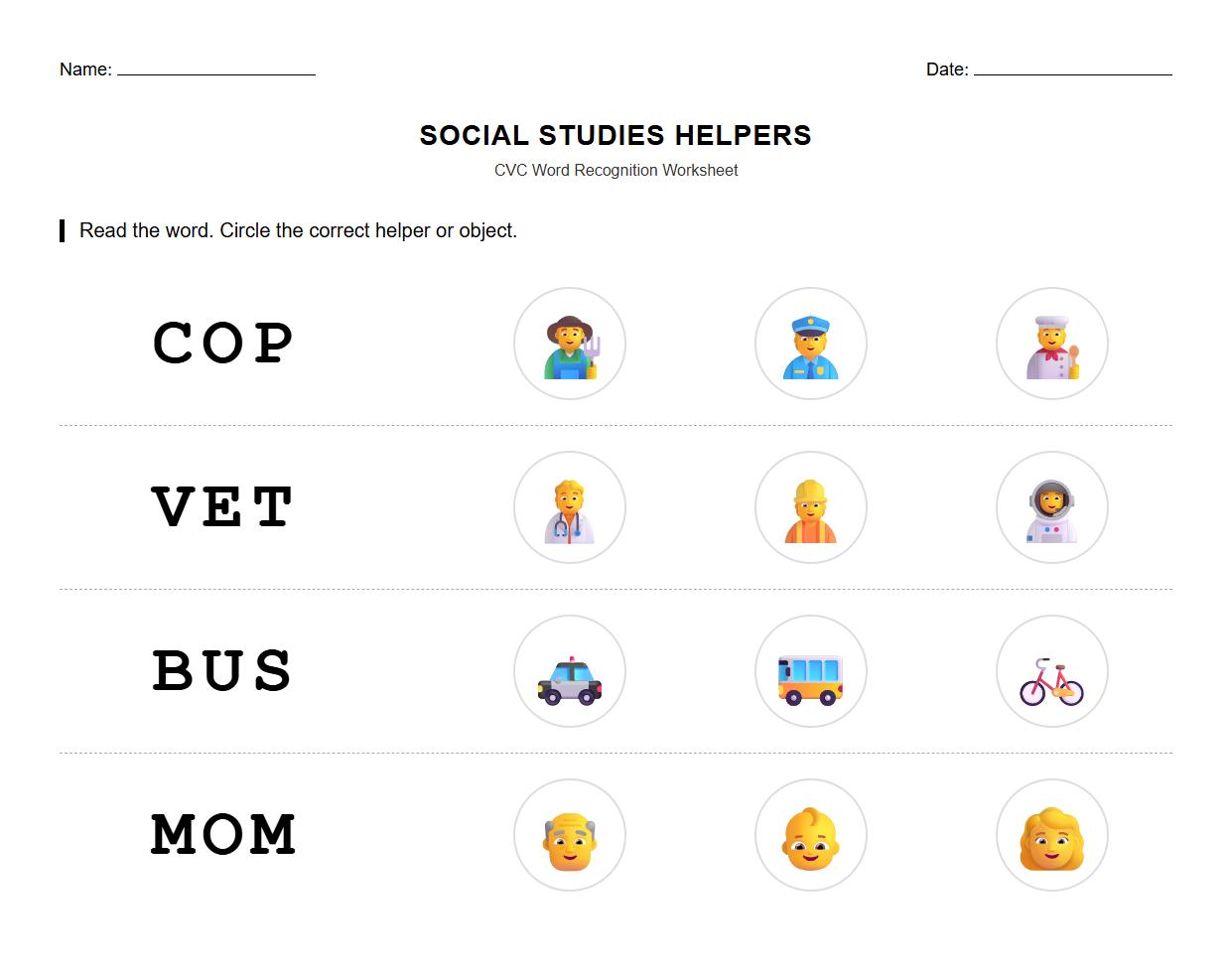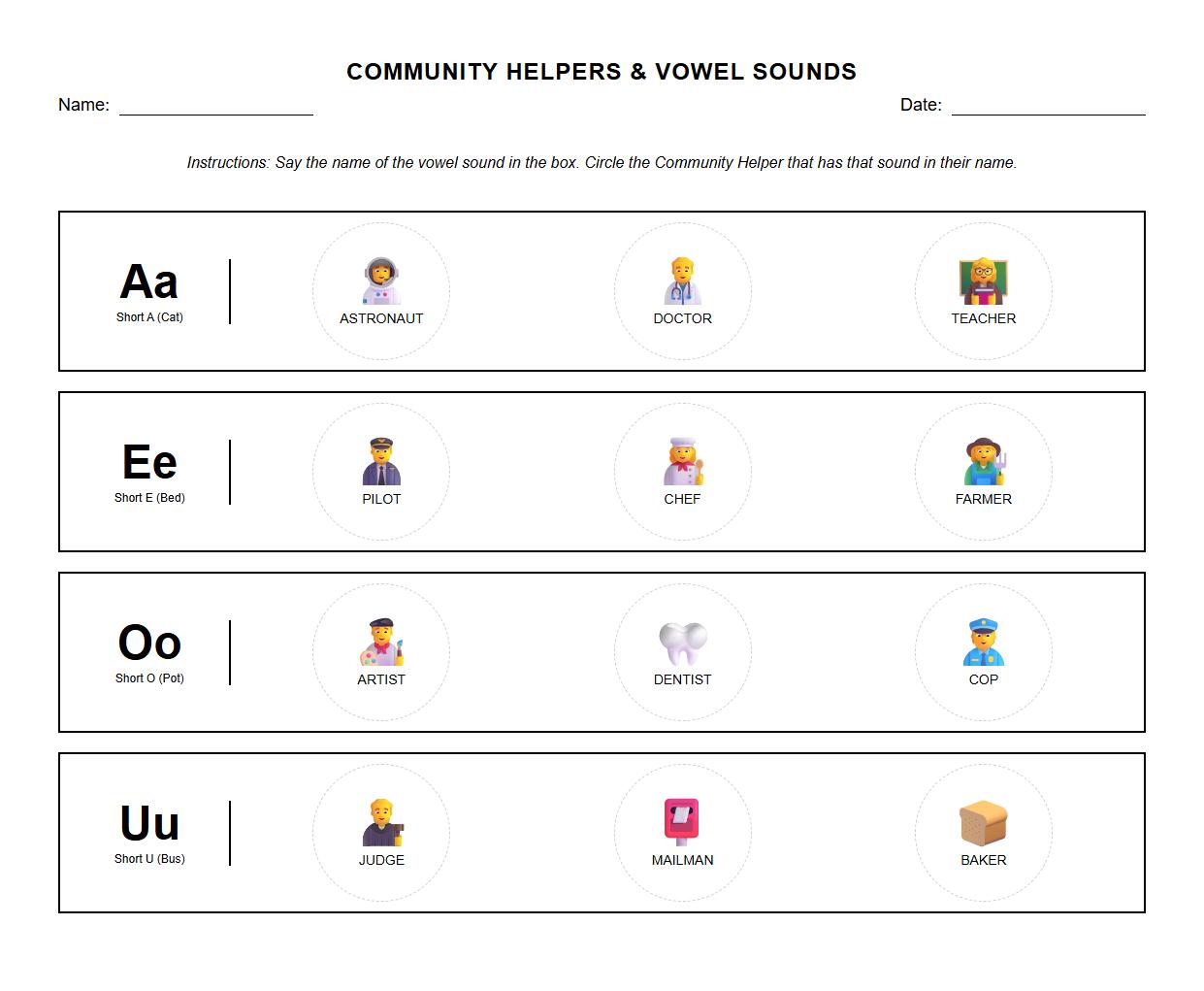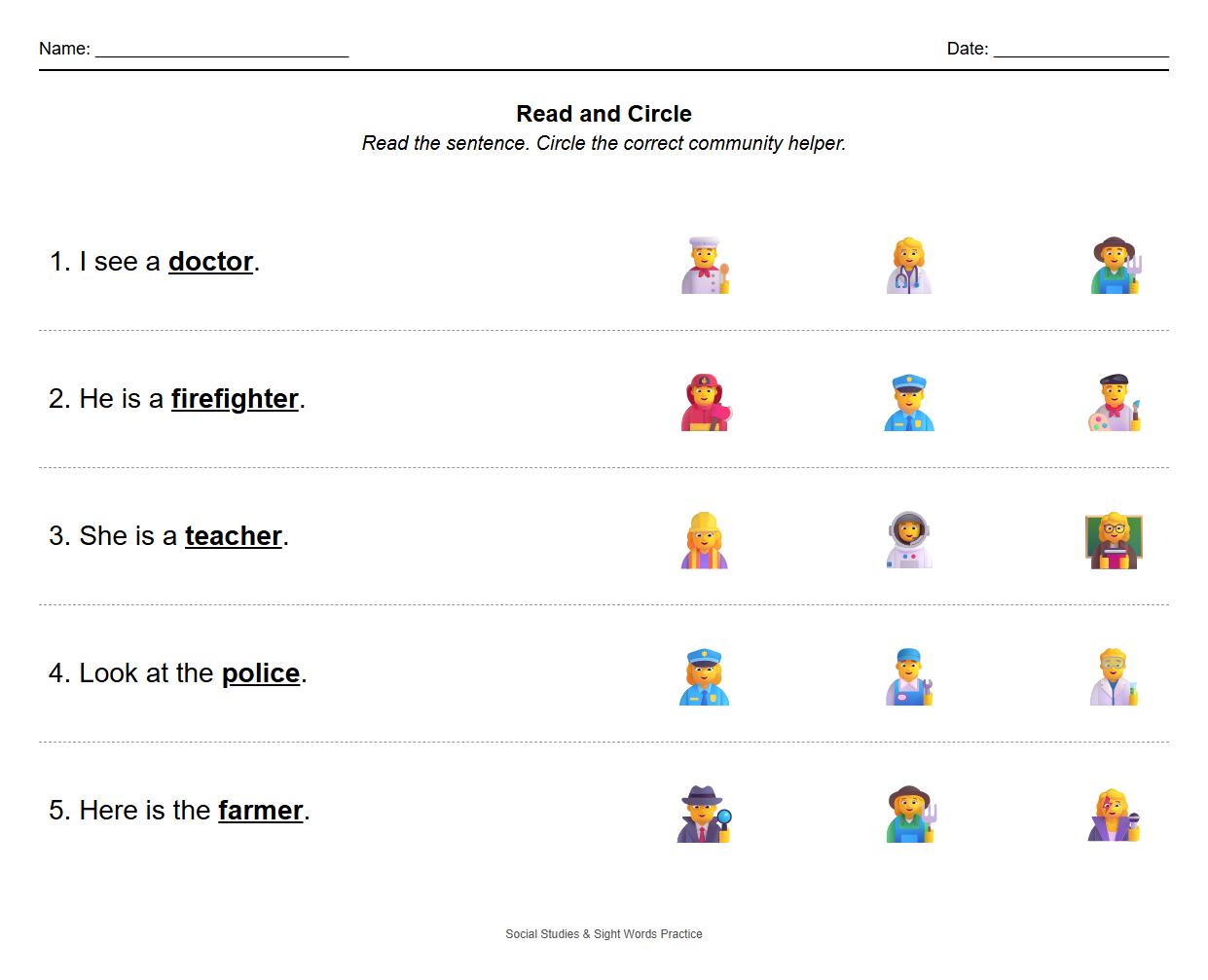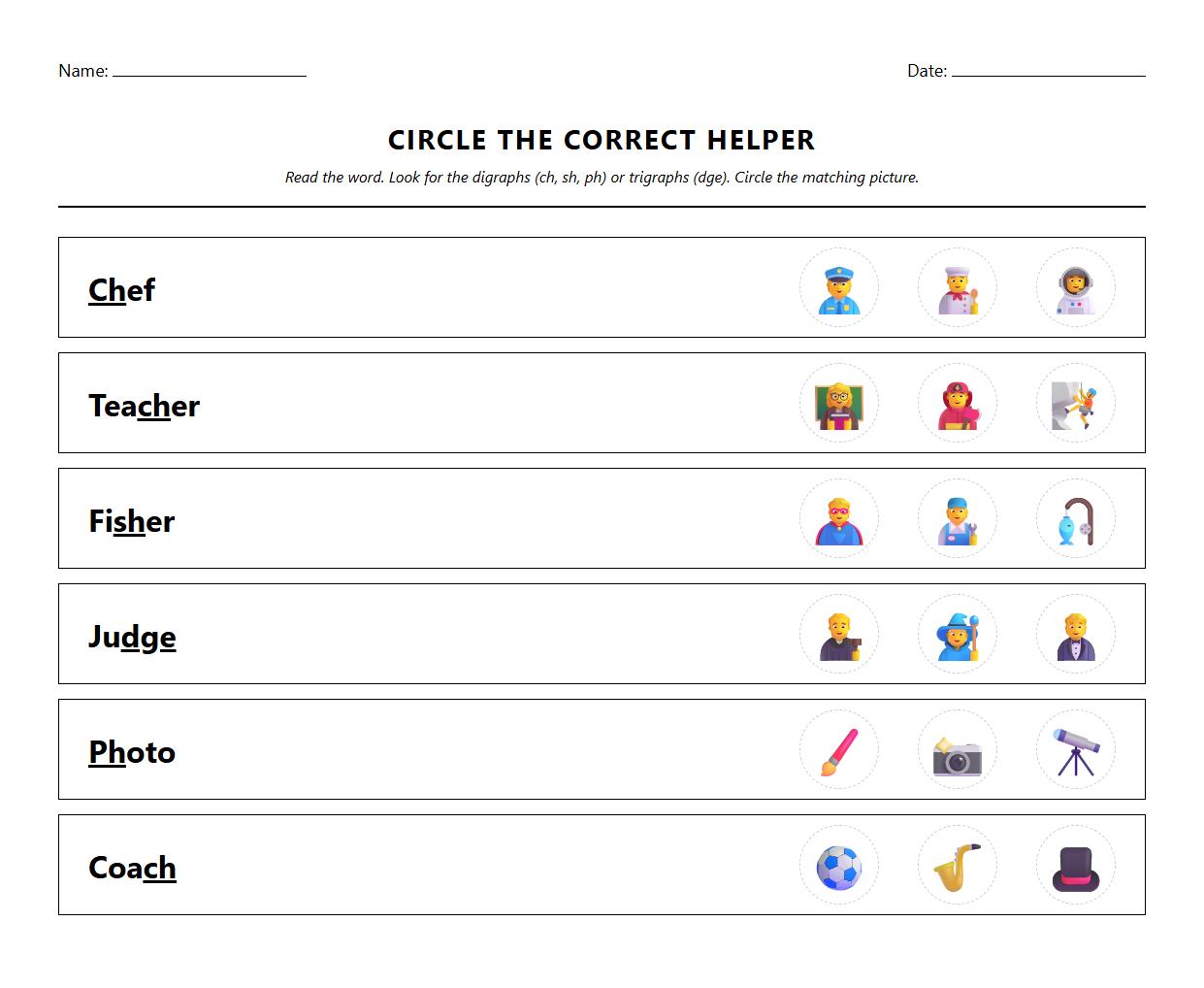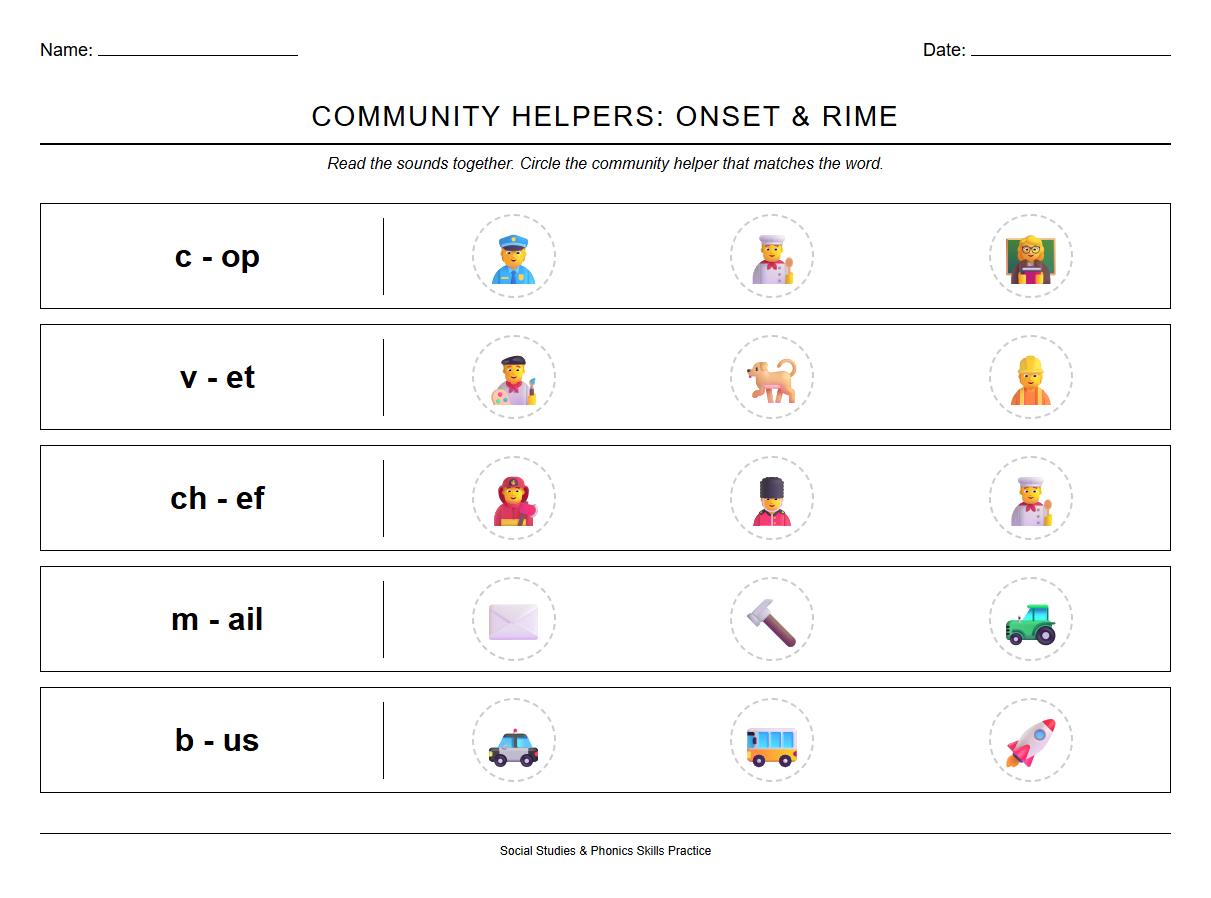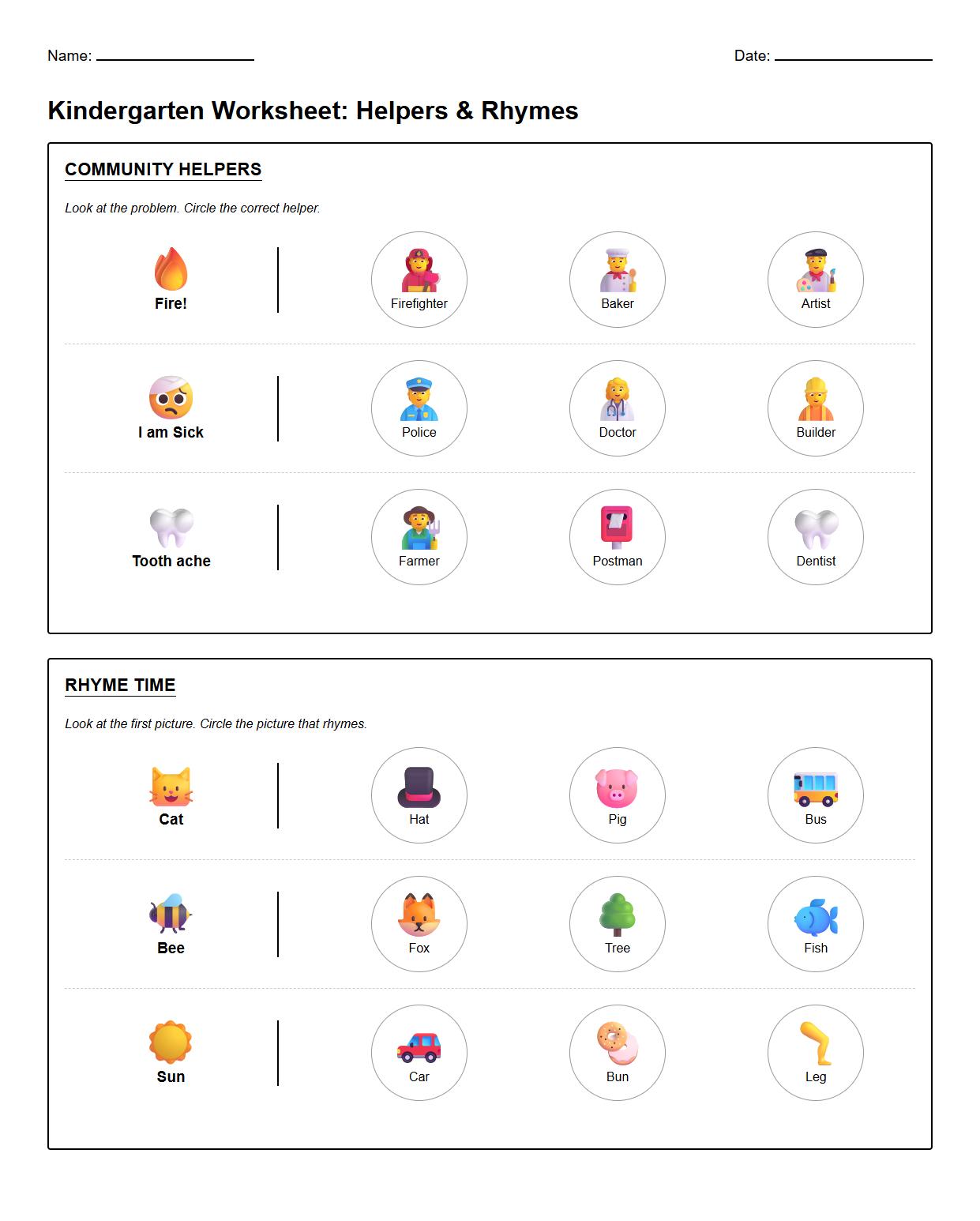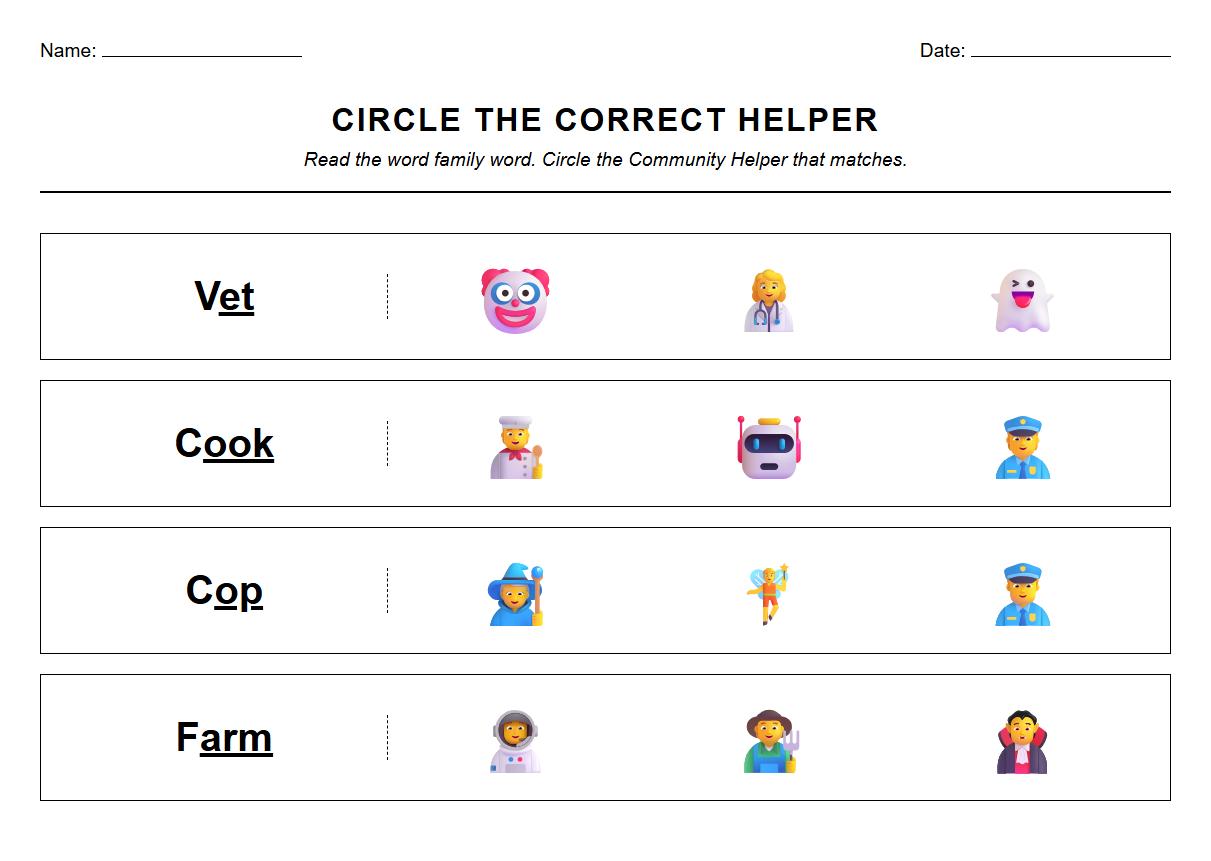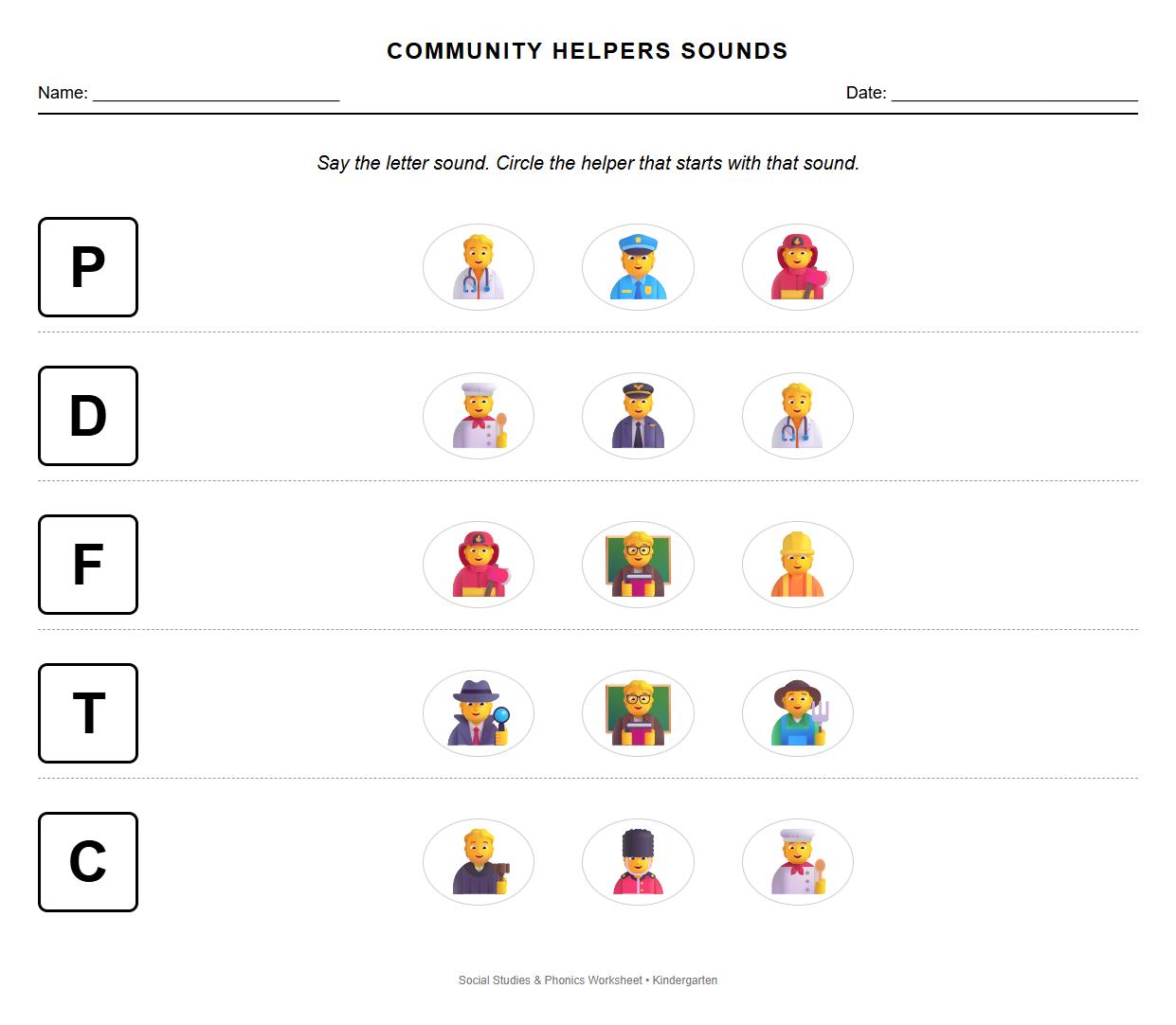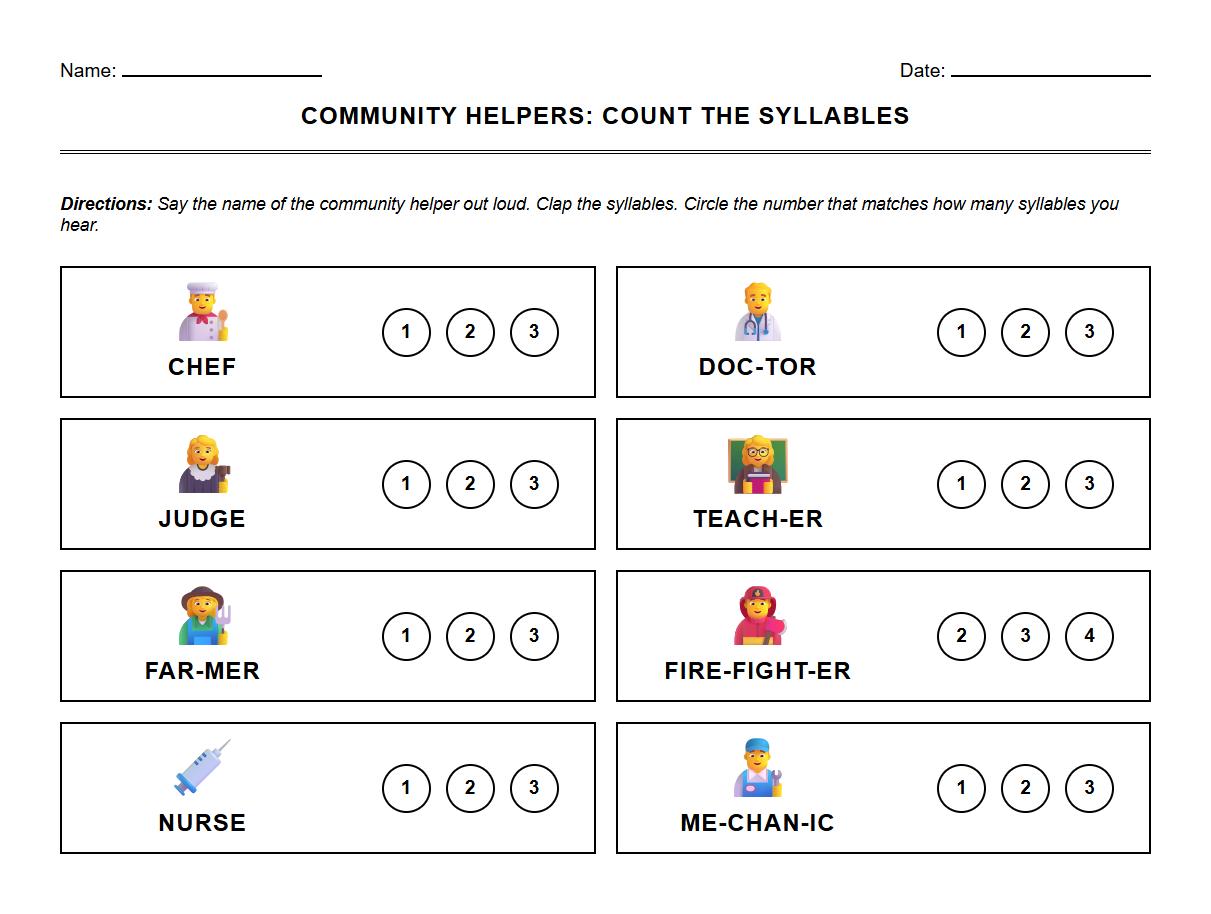
This Circle the Correct Helper worksheet enhances reading and phonics skills by guiding students to identify the right helper words in sentences. It focuses on improving word recognition and pronunciation through engaging, targeted exercises. Explore our available worksheets to strengthen your child's phonics foundation today.
Which helper shows the correct way to hold a book?
Holding a book properly is essential for young learners. This helper demonstrates how to hold the book securely with both hands and turn pages carefully. Encouraging children to use the correct grip fosters good reading habits from the start. Teachers and parents should model this behavior frequently.
Who helps you sound out the first letter?
The helper focuses on phonics and letter sounds. This guide assists children by identifying the initial letter sound within words. It supports early decoding skills critical for reading development. Parents and teachers can use this approach to strengthen letter recognition.
Which helper can help you match the picture to the word?
This helper encourages word-picture association. Matching images to corresponding words boosts vocabulary and comprehension. Visual aids help children link visual cues with written language. Active participation from adults makes this exercise engaging and effective.
Who is pointing to the word that starts with S?
The helper points out words beginning with the letter S to reinforce letter identification. This practice sharpens children's ability to recognize initial letters in words. It also promotes attentive listening and observation skills. Repetition of this exercise aids memory retention.
Who helps you find the rhyming words?
The rhyming word helper supports phonological awareness by highlighting words with similar ending sounds. Identifying rhymes enhances spelling and reading fluency. This skill is a foundational step in early literacy development. Use playful songs or games to deepen this learning experience.
Which helper circles the word cat?
This helper focuses on word recognition by highlighting specific words, such as "cat." Circling the word helps children visually isolate and remember it. It also connects spoken and written language through interactive activities. Consistent practice with familiar words builds confidence.
Who helps you break the word into sounds?
Breaking words into individual phonemes is guided by this helper. It teaches children how to dissect words to understand their components. This skill improves decoding and spelling abilities. Parents and teachers should encourage sound segmentation exercises regularly.
Which helper helps you find the uppercase letter?
This helper draws attention to uppercase letters within words and text. Recognizing uppercase letters helps children differentiate between letter cases. This knowledge is important for reading comprehension and proper writing skills. Daily reading sessions can reinforce uppercase letter identification.
Who helps you read the sentence aloud?
Reading aloud with a helper boosts fluency and expression. This activity strengthens vocabulary, intonation, and comprehension. It also builds confidence in young readers through guided practice. Parents and teachers should encourage regular reading aloud to develop these skills.
Which helper finds the word that ends with T?
This helper focuses on identifying words that end with a specific letter sound, such as "T." Finding endings supports phonics skills and word recognition. It is a key strategy for enhancing spelling and reading accuracy. Practice with various word endings improves literacy proficiency.


Find the Job Worksheet for Semantic Field Exploration in Careers