Simple sentence structure worksheets for kindergarten literacy focus on building foundational language skills by helping young learners identify and construct basic sentences. These exercises enhance understanding of subjects and predicates, promoting confidence in early reading and writing. Explore our collection of engaging worksheets designed to support kindergarten literacy development.
What is a Simple Sentence?
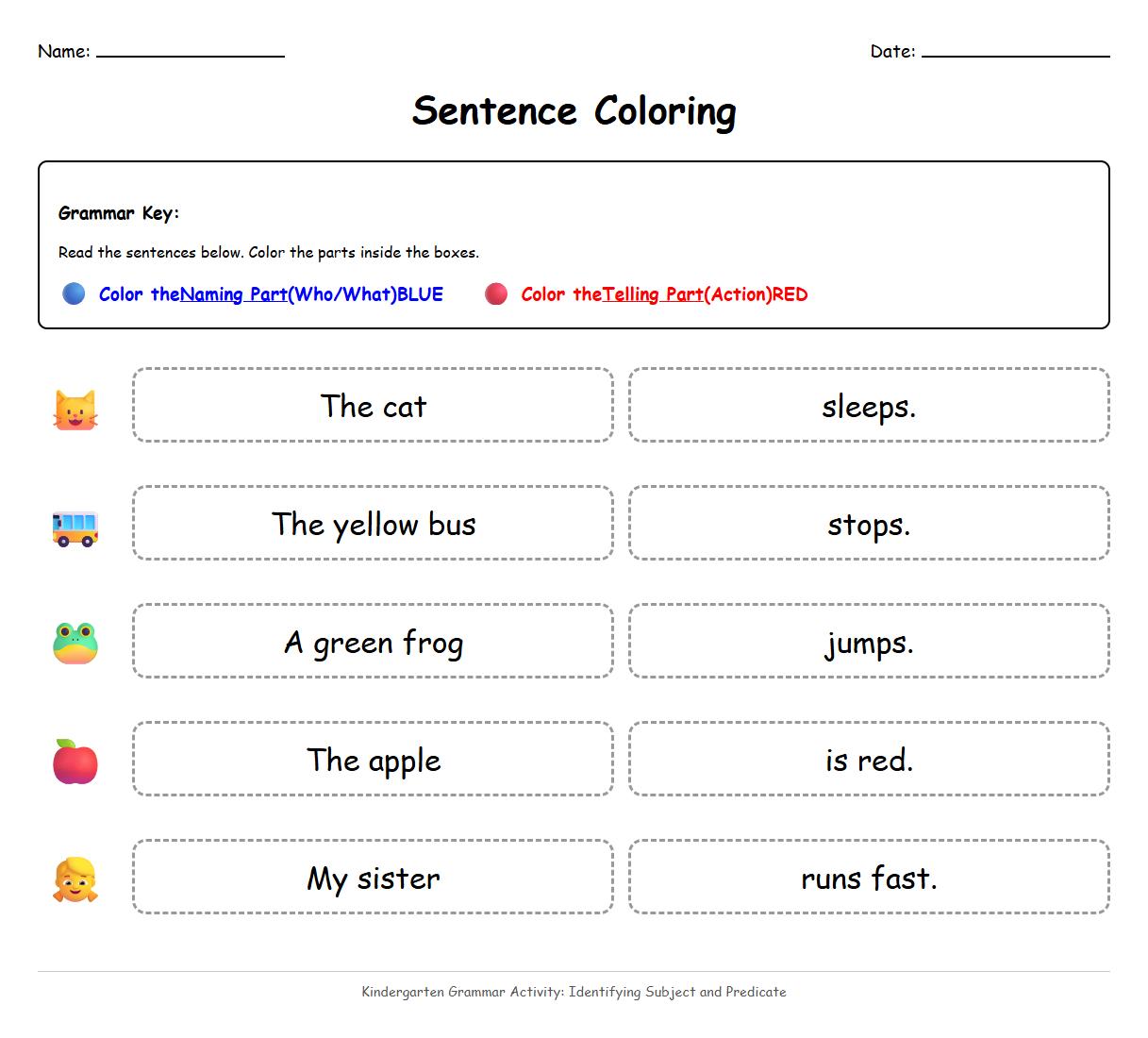
A simple sentence expresses a complete thought with a subject and a verb. It is short and easy to understand, perfect for young learners. Teaching children to recognize simple sentences builds the foundation for reading and writing. Encourage students to practice by creating their own simple sentences daily.
Can You Circle the Subject in Each Sentence?
Identify the subject, the person, place, or thing the sentence is about. Circling the subject helps children focus on the main part of the sentence. This activity improves comprehension and sentence structure awareness. Use fun worksheets to engage children in this task.
Which Word is the Verb in This Sentence?
The verb shows the action or state of being in a sentence. Asking children to find the verb strengthens their understanding of what the subject is doing. Highlighting verbs enhances grammar skills and sentence building. Practice with simple, clear examples suitable for kindergarten students.
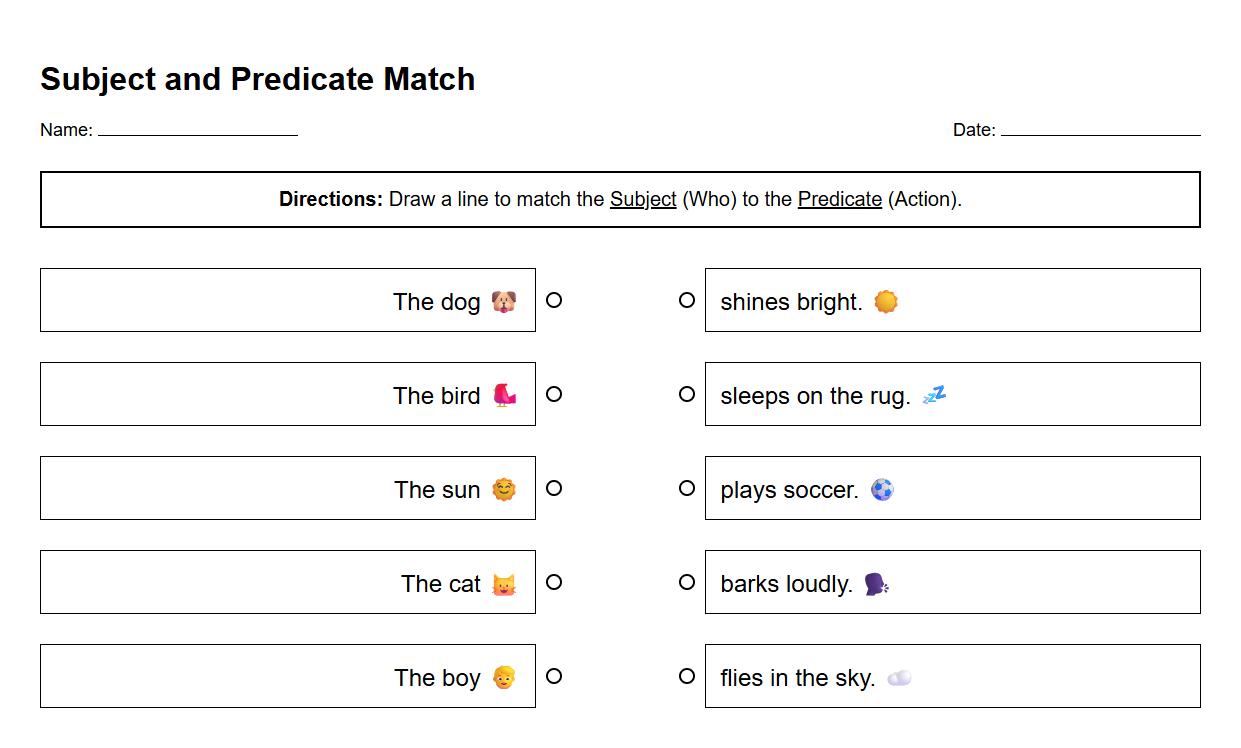
Match the Subject to the Correct Verb
Matching the subject with the correct verb ensures sentence agreement. This activity helps children learn proper grammar and improve sentence formation. Use pictures and words to make the matching process more engaging. Consistent practice supports language development in young learners.
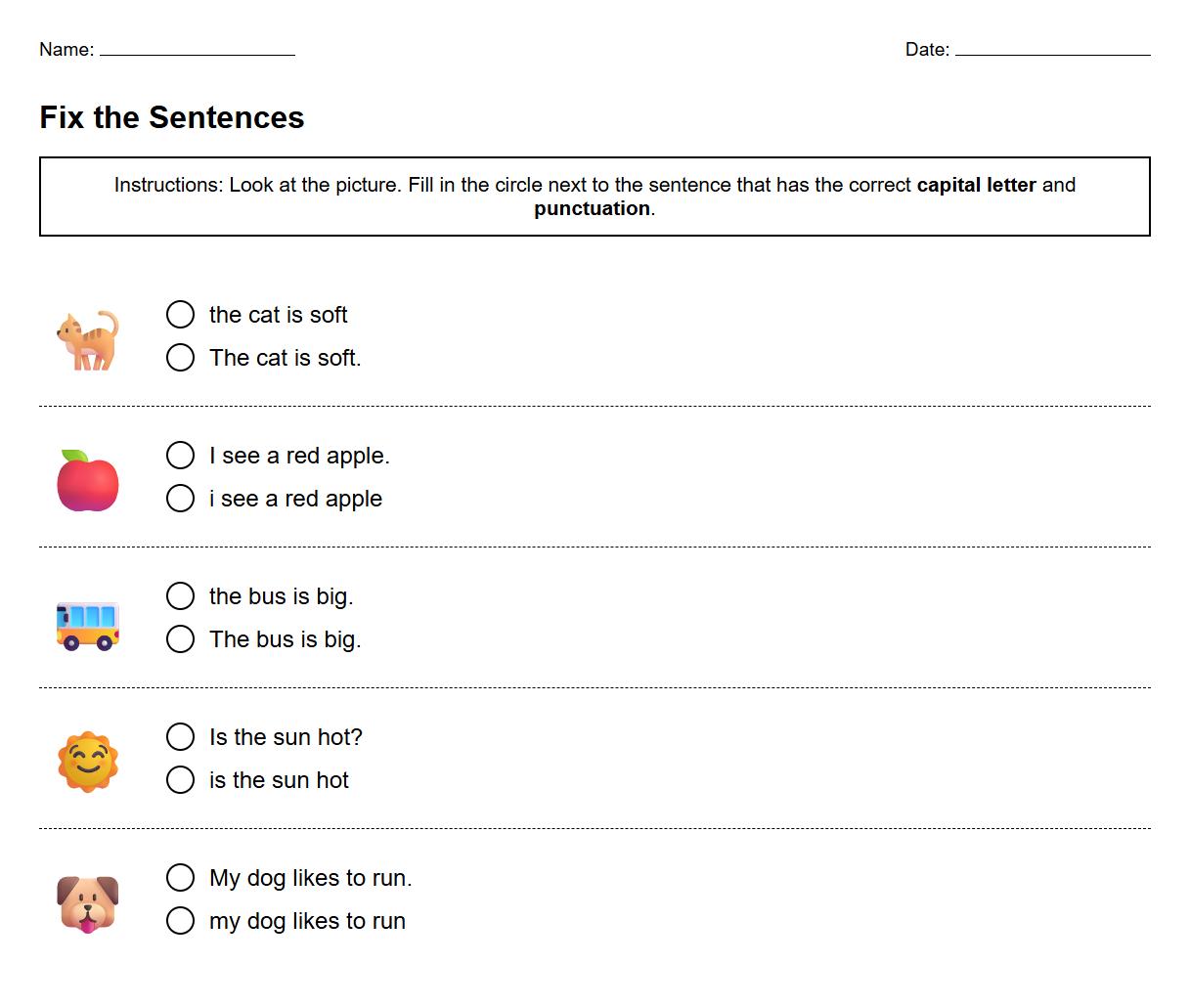
Rewrite the Sentence Using a Capital Letter
Capitalizing the first letter of a sentence is an important writing rule. Teaching children to rewrite sentences with a capital letter at the beginning reinforces writing conventions. Encourage attention to detail in punctuation and capitalization. This skill boosts readability and writing confidence.
Does This Sentence End with a Period?
Check if a sentence ends with a period to complete the thought correctly. Teaching children to recognize end punctuation helps with reading fluency and writing accuracy. Emphasize the importance of correct punctuation in every sentence. Use examples to show how a period indicates a full stop.
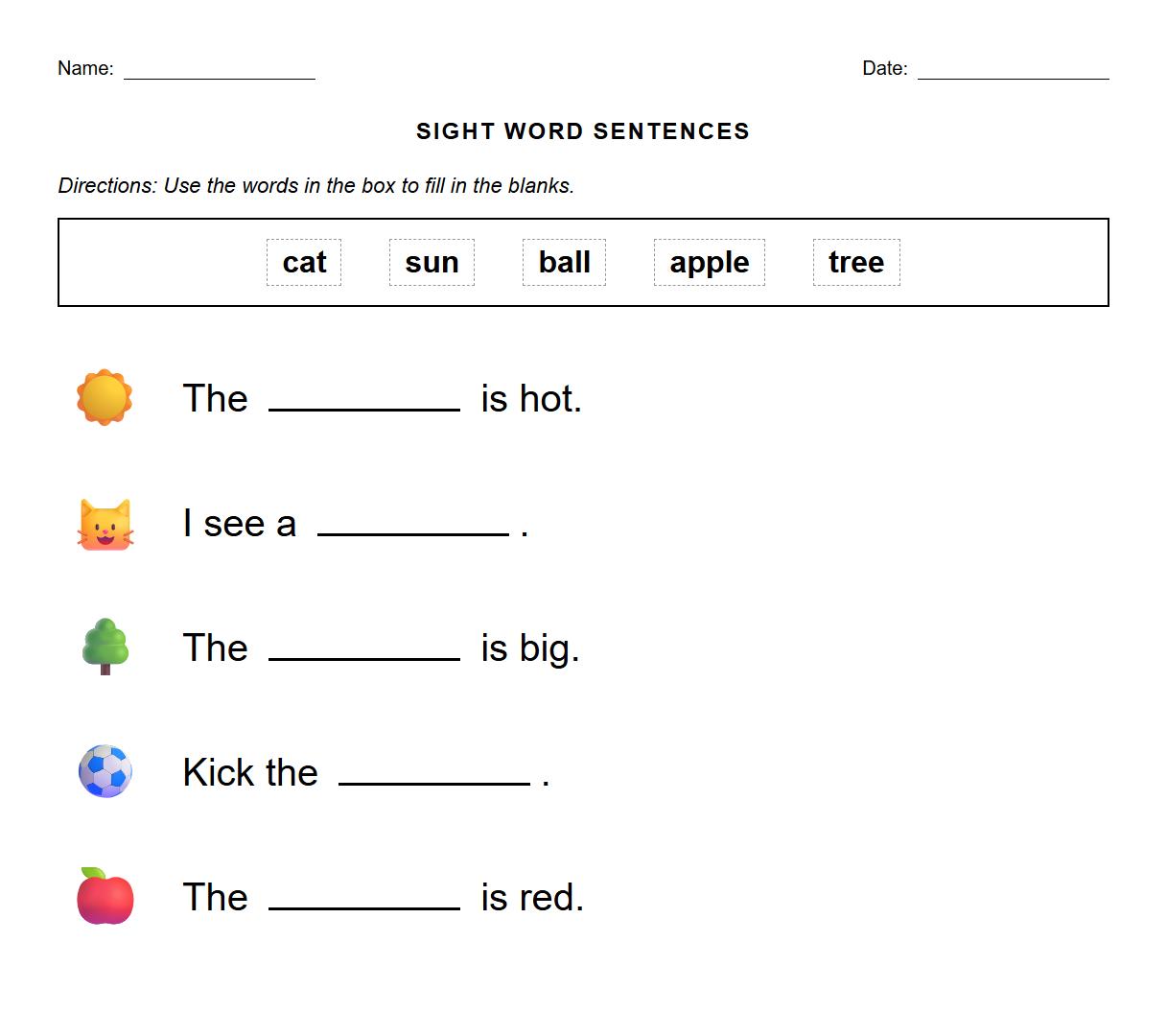
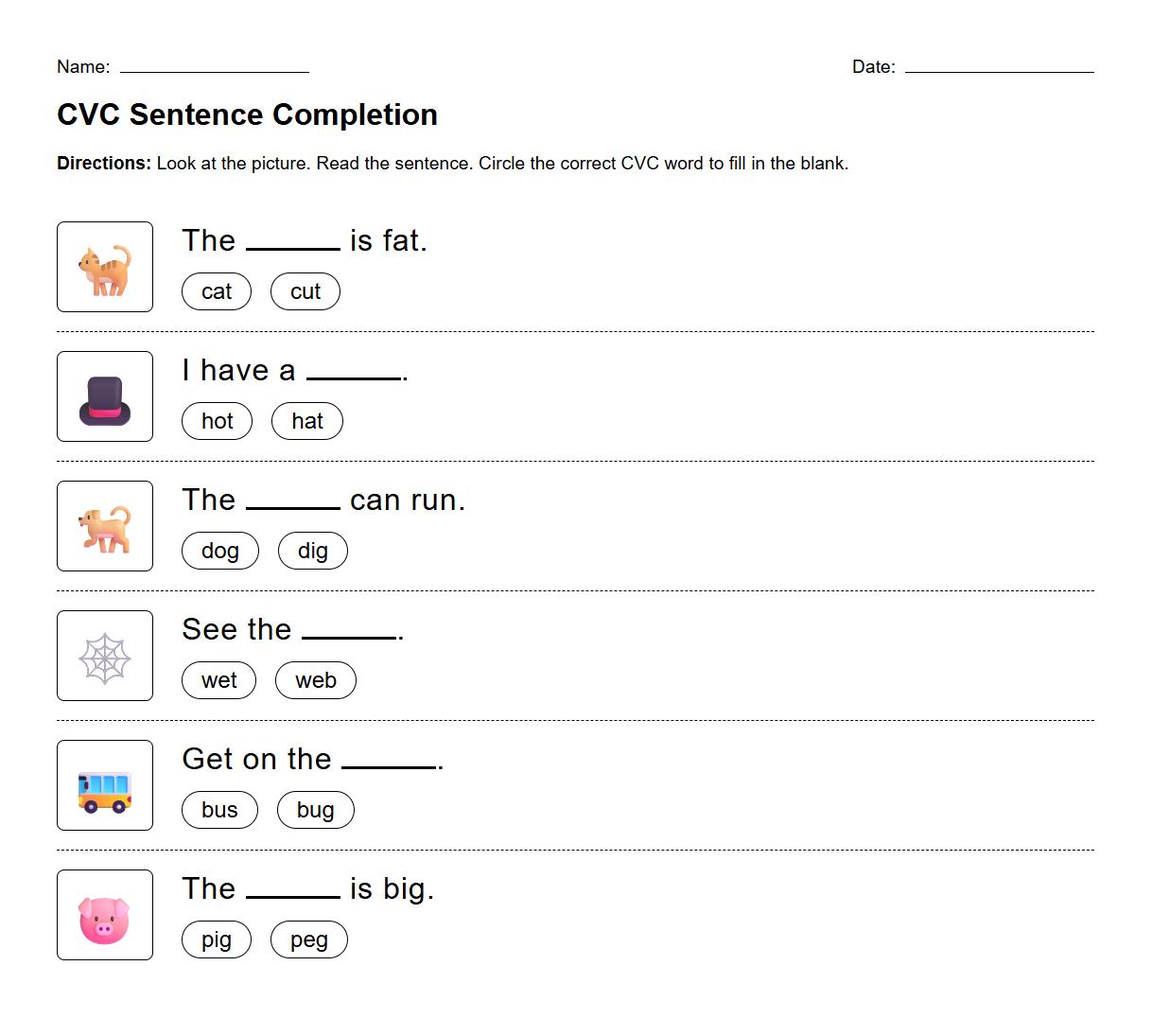
Fill in the Blank to Complete the Simple Sentence
Filling in blanks encourages children to think critically about sentence structure. This exercise allows them to select the correct word to complete a simple sentence. It nurtures vocabulary development and sentence logic. Create fill-in-the-blank worksheets to practice this skill regularly.
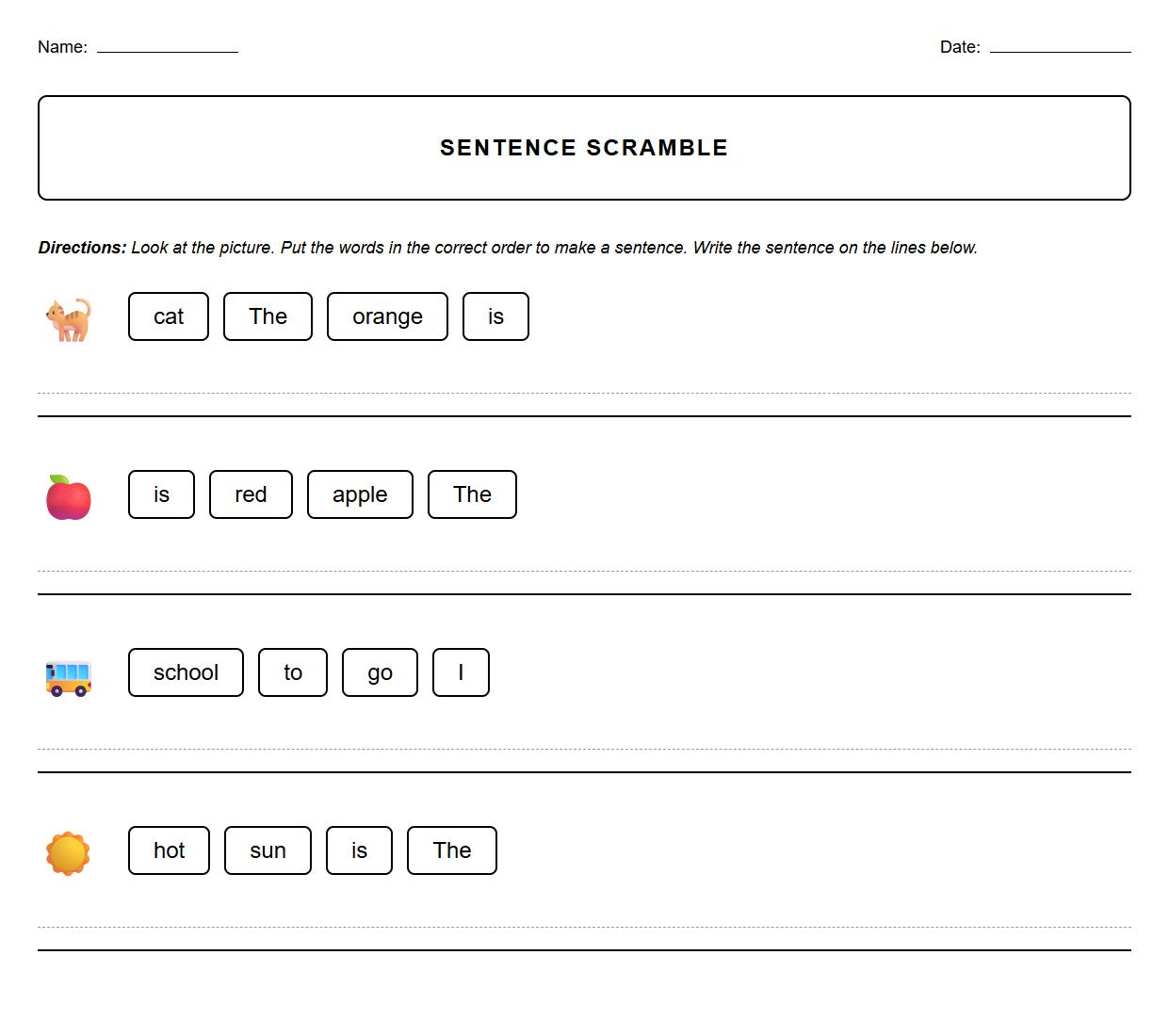
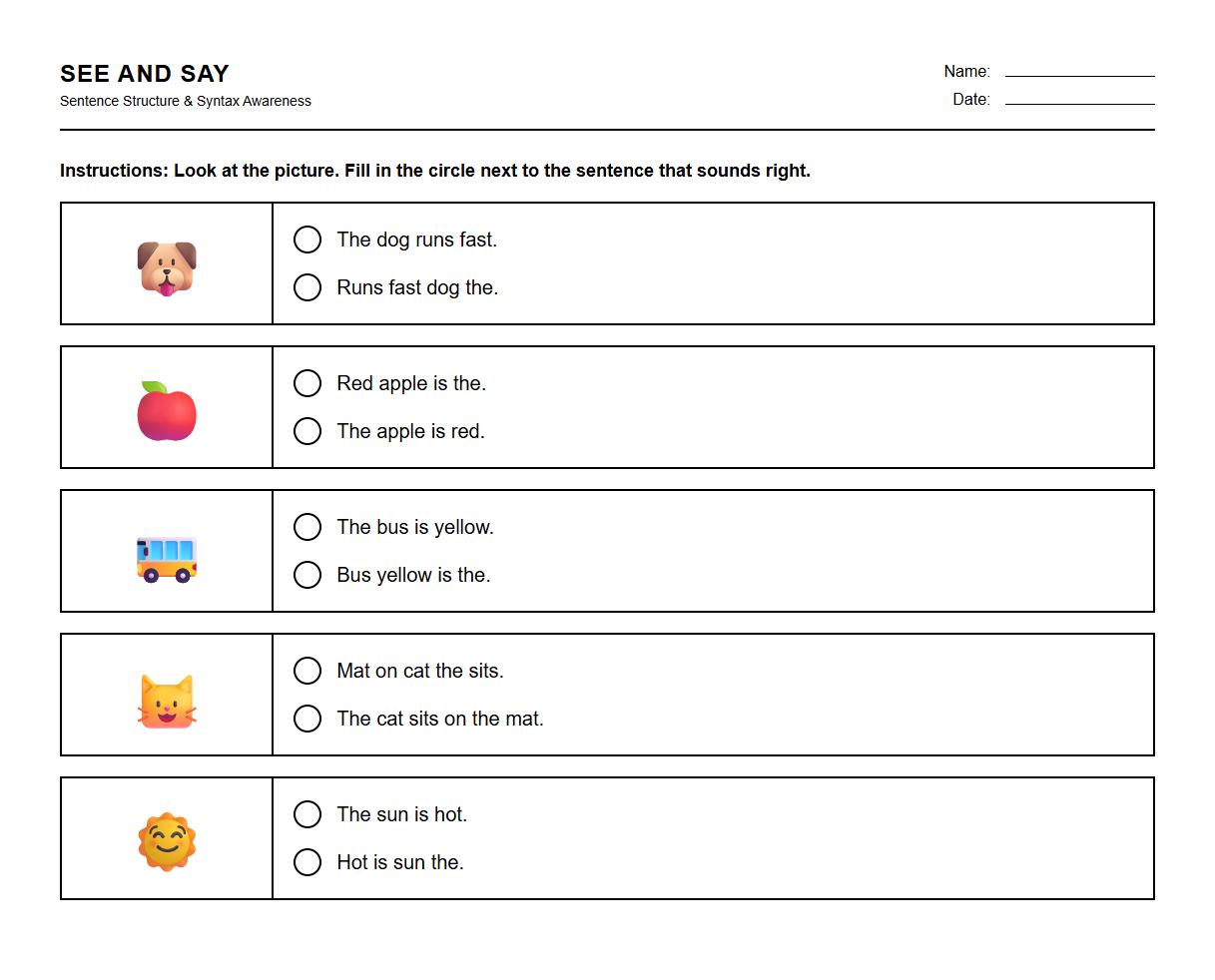
Are the Words in the Right Order for a Sentence?
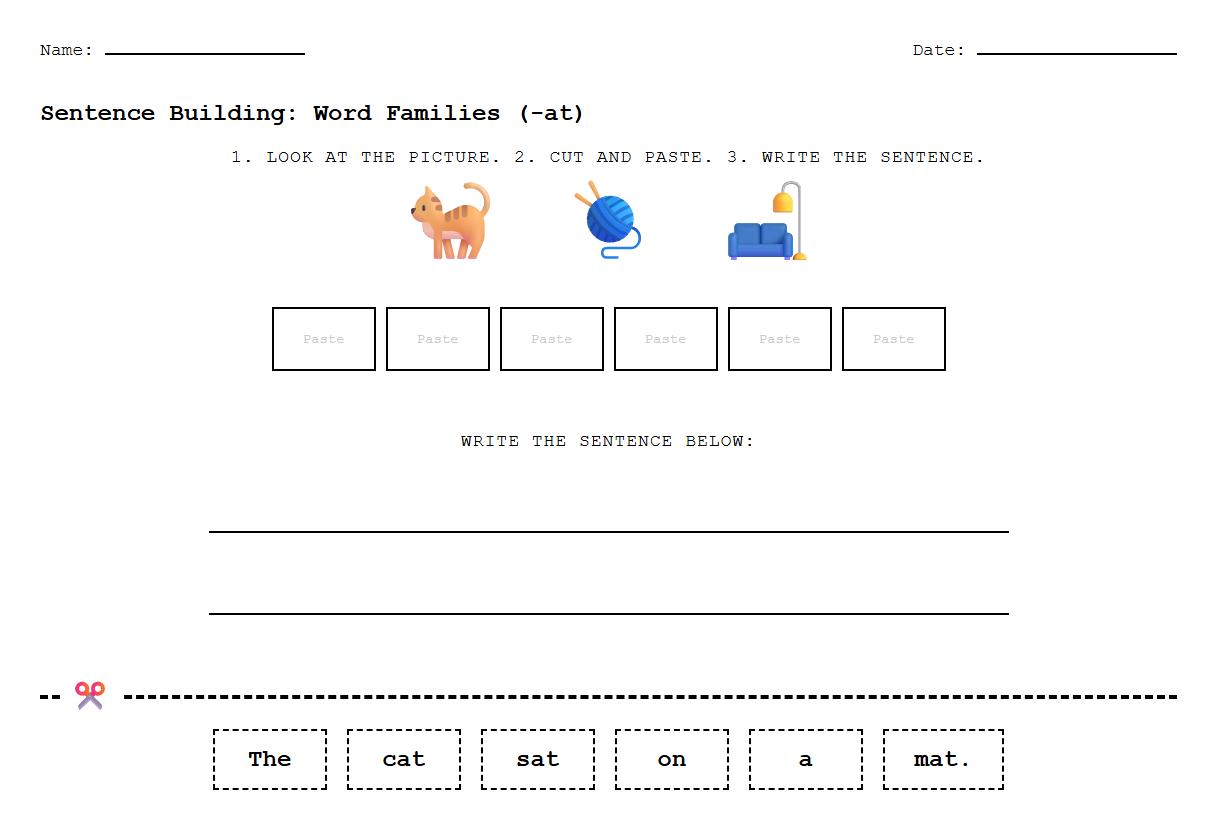
The word order determines the meaning and clarity of a sentence. Teach children to arrange words properly to form correct sentences. Rearranging words is a fun activity that strengthens grammar understanding. Use simple sentences to illustrate the correct structure clearly.
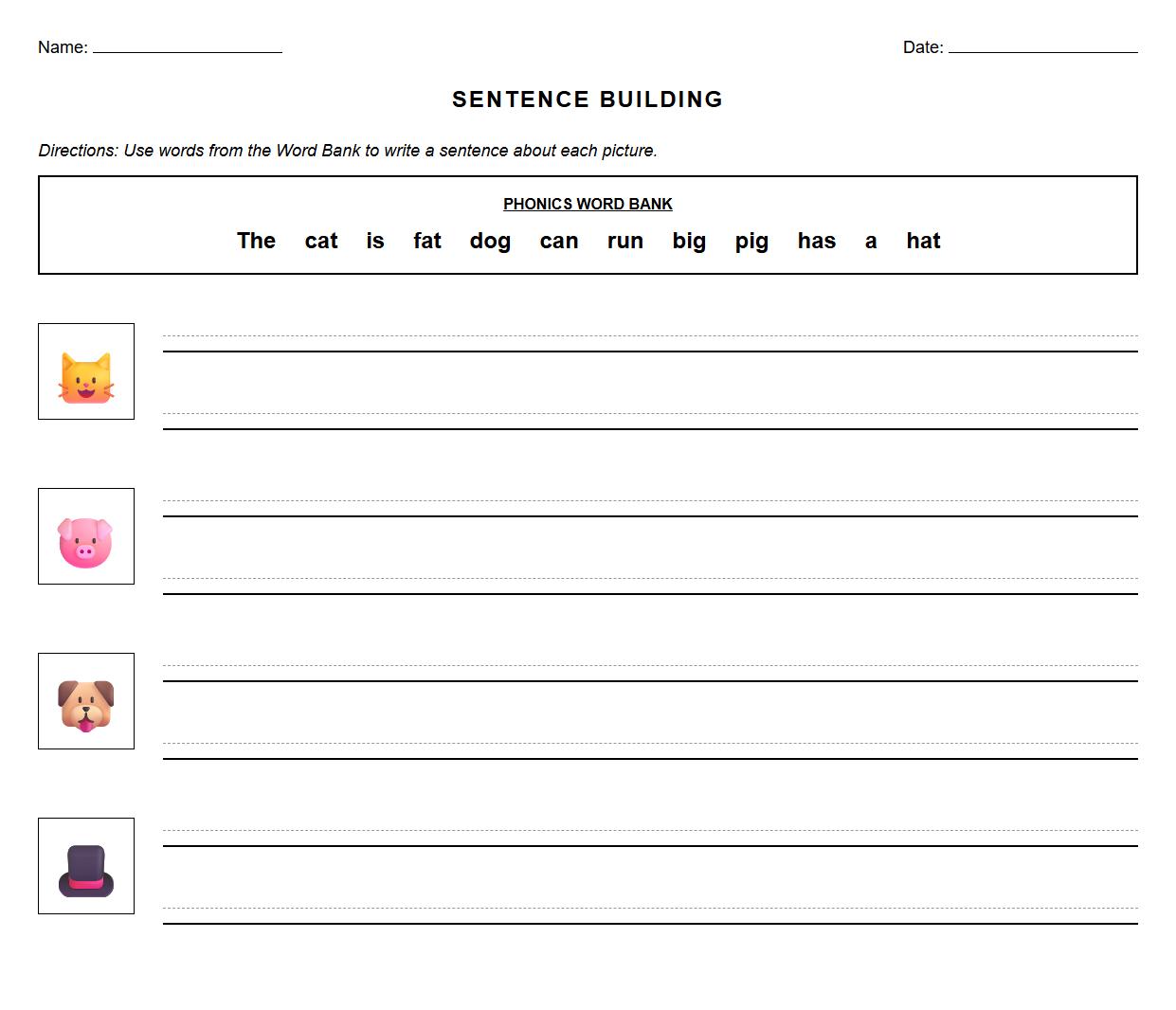
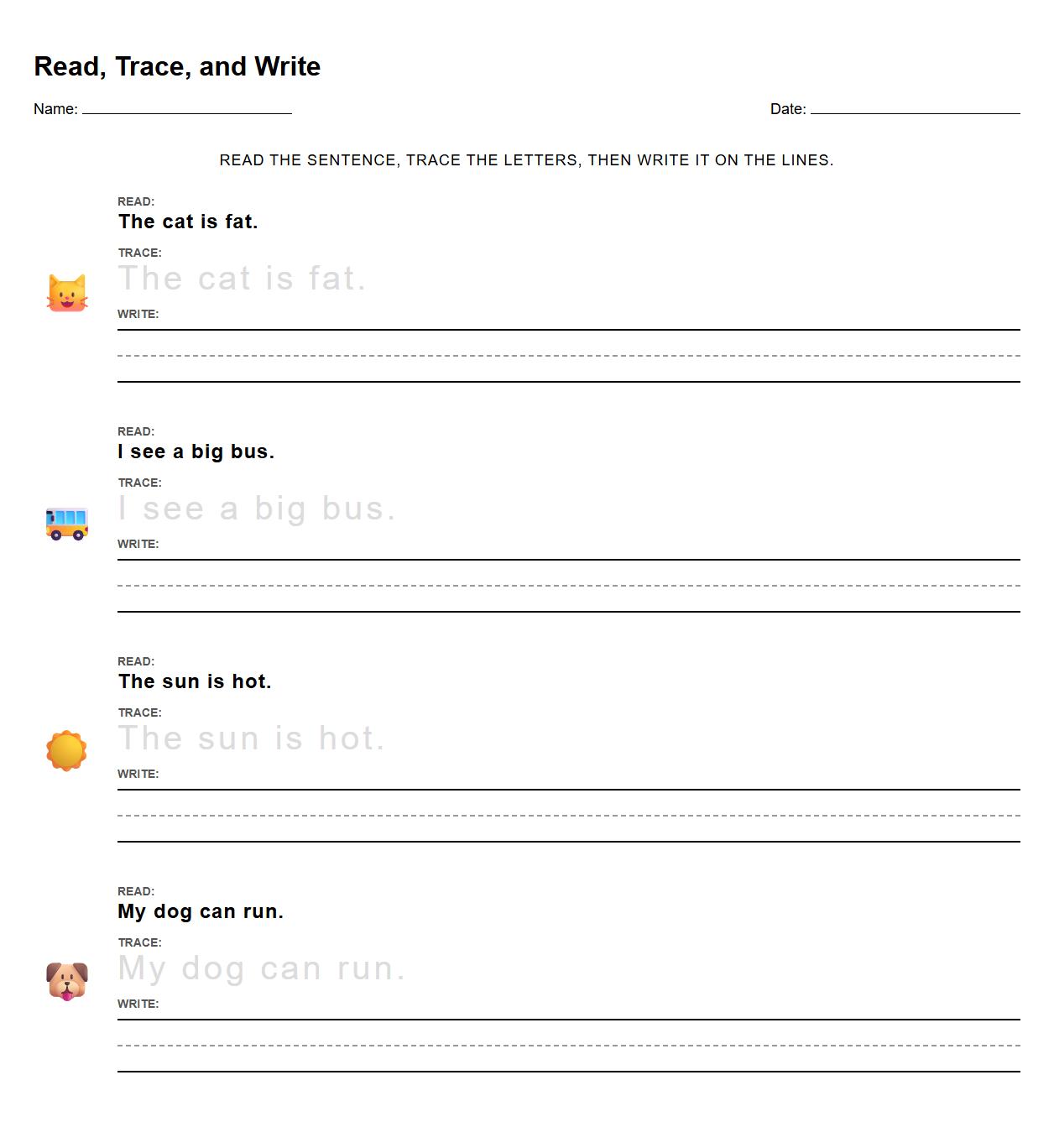
Write a Simple Sentence About a Cat
Writing sentences about familiar topics like a cat makes learning relatable. Encourage children to create simple sentences describing the cat's actions or appearance. This builds confidence in sentence writing and expression. Praise creativity while focusing on sentence structure.
Underline the Action Word in Each Sentence
Action words or verbs show what the subject is doing. Underlining verbs helps children identify actions within sentences. This activity improves grammar skills and vocabulary awareness. Use colorful markers to make underlining fun and engaging.


Kindergarten Sentence Building Activities to Strengthen Reading Skills