Kindergarten Sentence Writing Practice Worksheets with Phonics Focus

📅 Jan 20, 2025 👤 Nylen Smith

Kindergarten Sentence Writing Practice Worksheets with a phonics focus help young learners build foundational reading and writing skills by reinforcing letter sounds and word patterns. These worksheets encourage children to construct simple sentences, enhancing their phonemic awareness and sentence structure understanding. Explore the available worksheets to support your child's early literacy development through engaging phonics-based exercises.

CVC Word Sentence Writing Worksheets for Phonics Practice
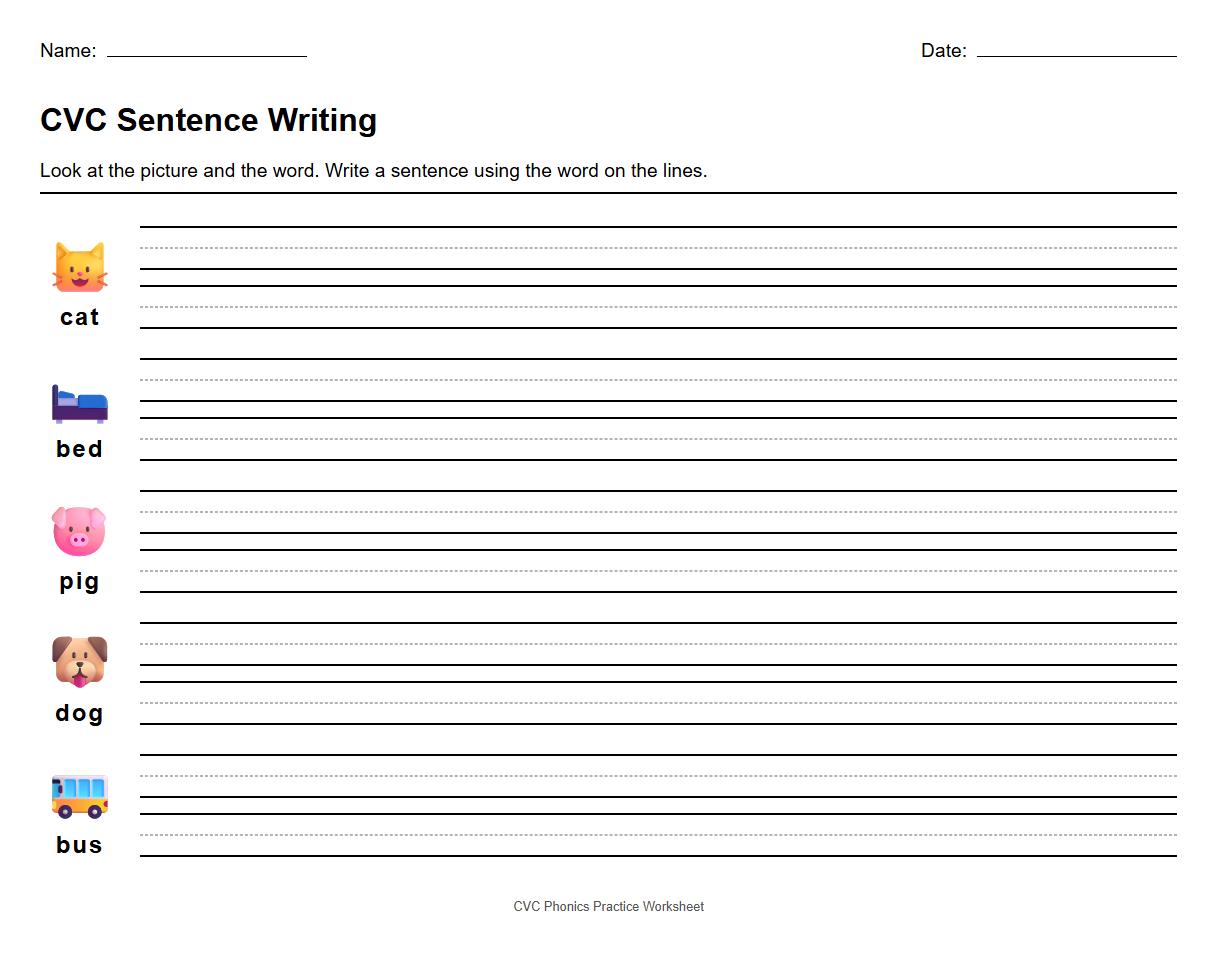
CVC Word Sentence Writing Worksheets for Phonics Practice

Download PDF     Pin it

Beginning Blends Sentence Construction Sheets
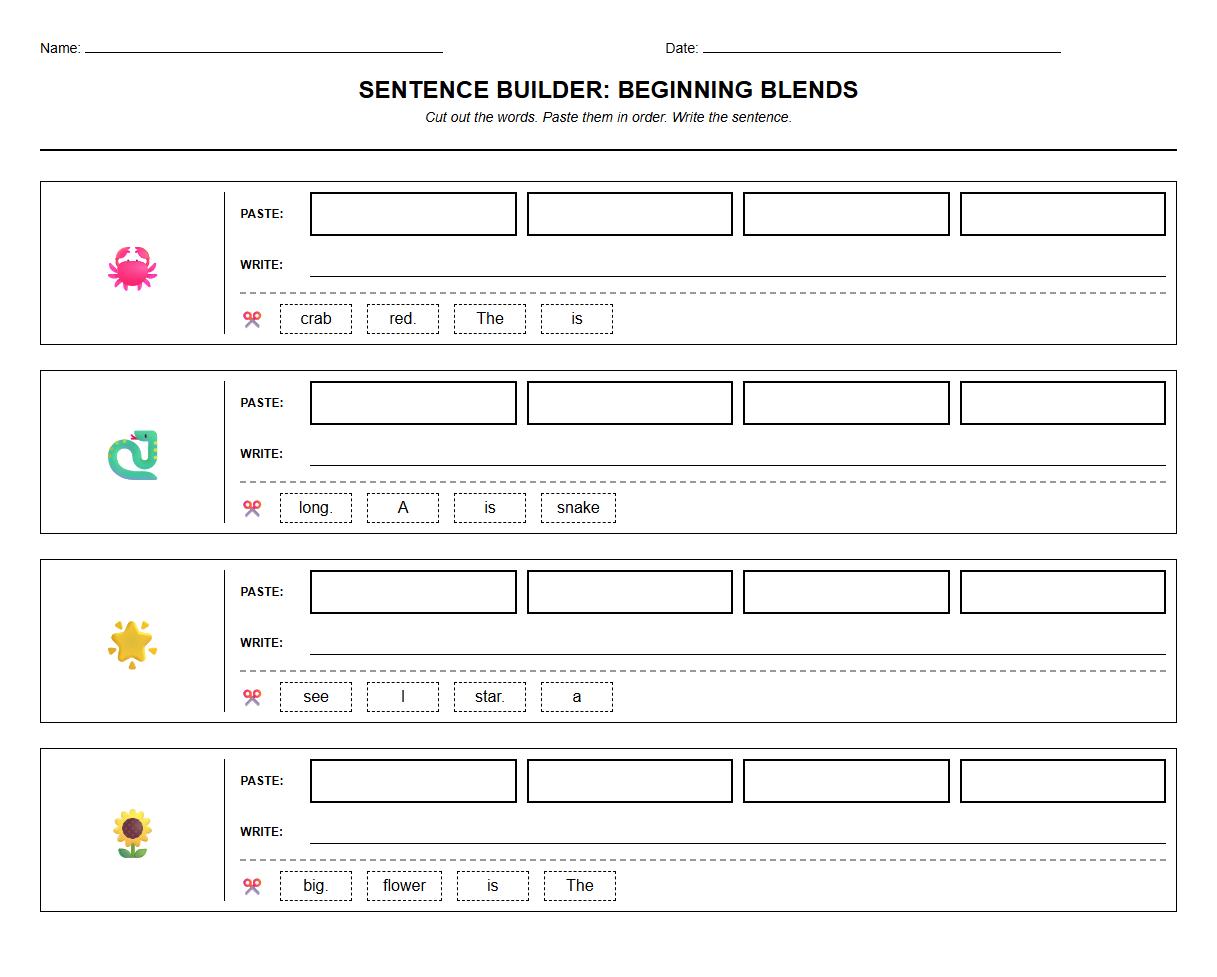
Beginning Blends Sentence Construction Sheets

Download PDF     Pin it

Simple Sight Word Sentences with Phonics Focus
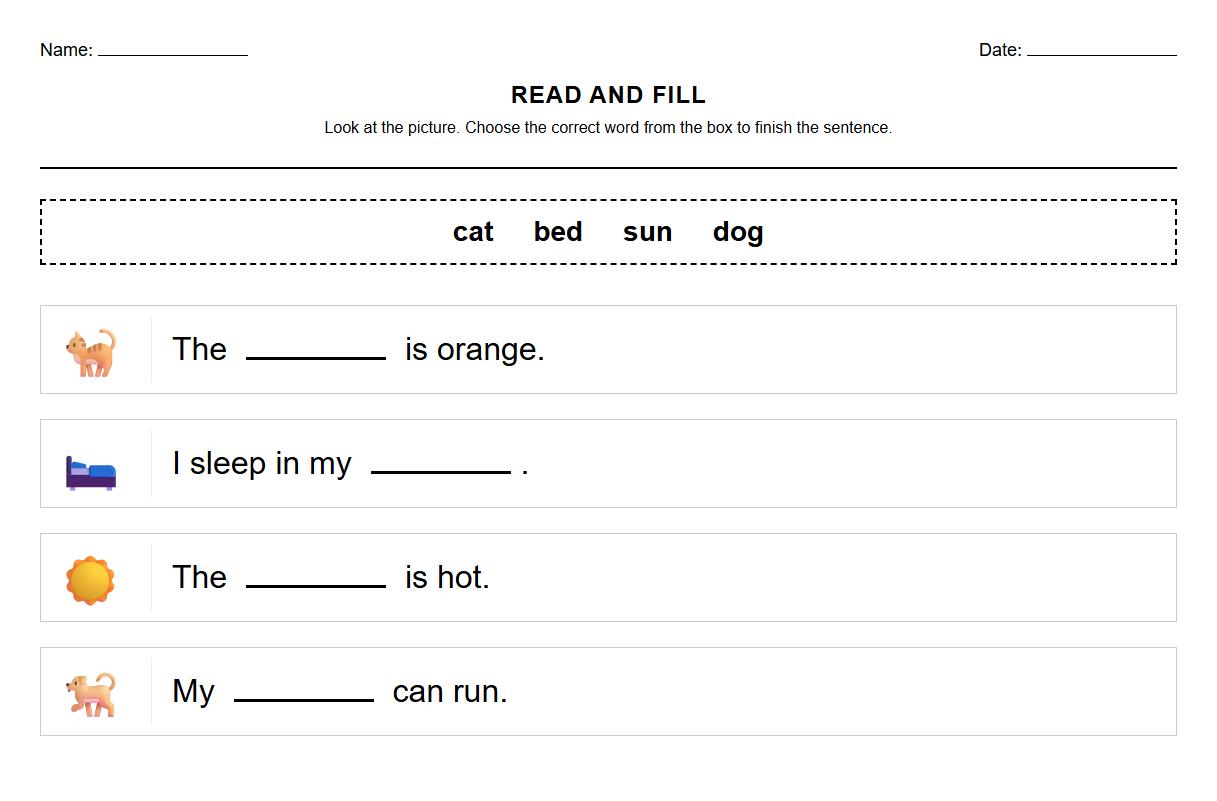
Simple Sight Word Sentences with Phonics Focus

Download PDF     Pin it

Sentence Building Worksheets Using Digraphs
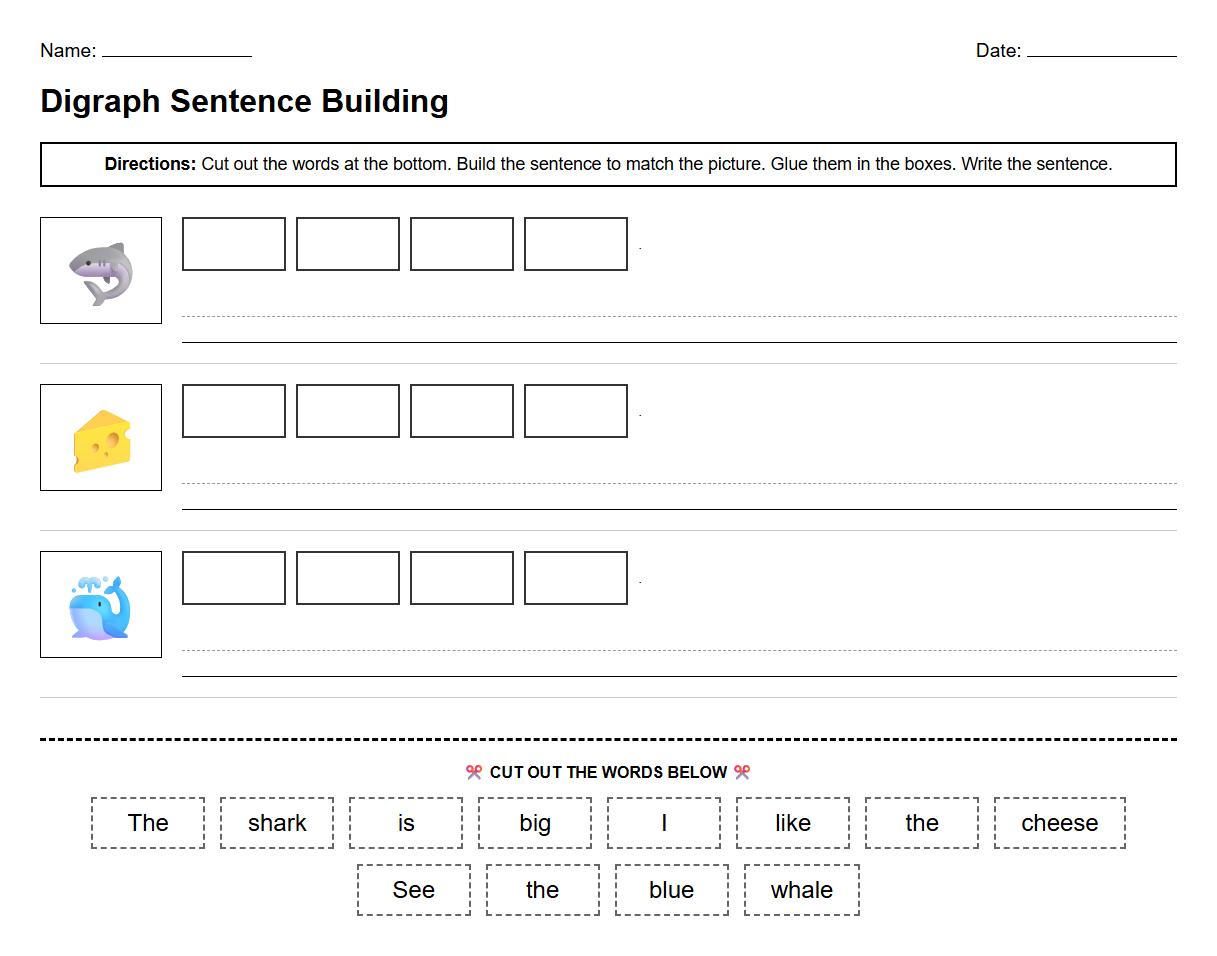
Sentence Building Worksheets Using Digraphs

Download PDF     Pin it

Short Vowel Sound Sentence Writing Activities
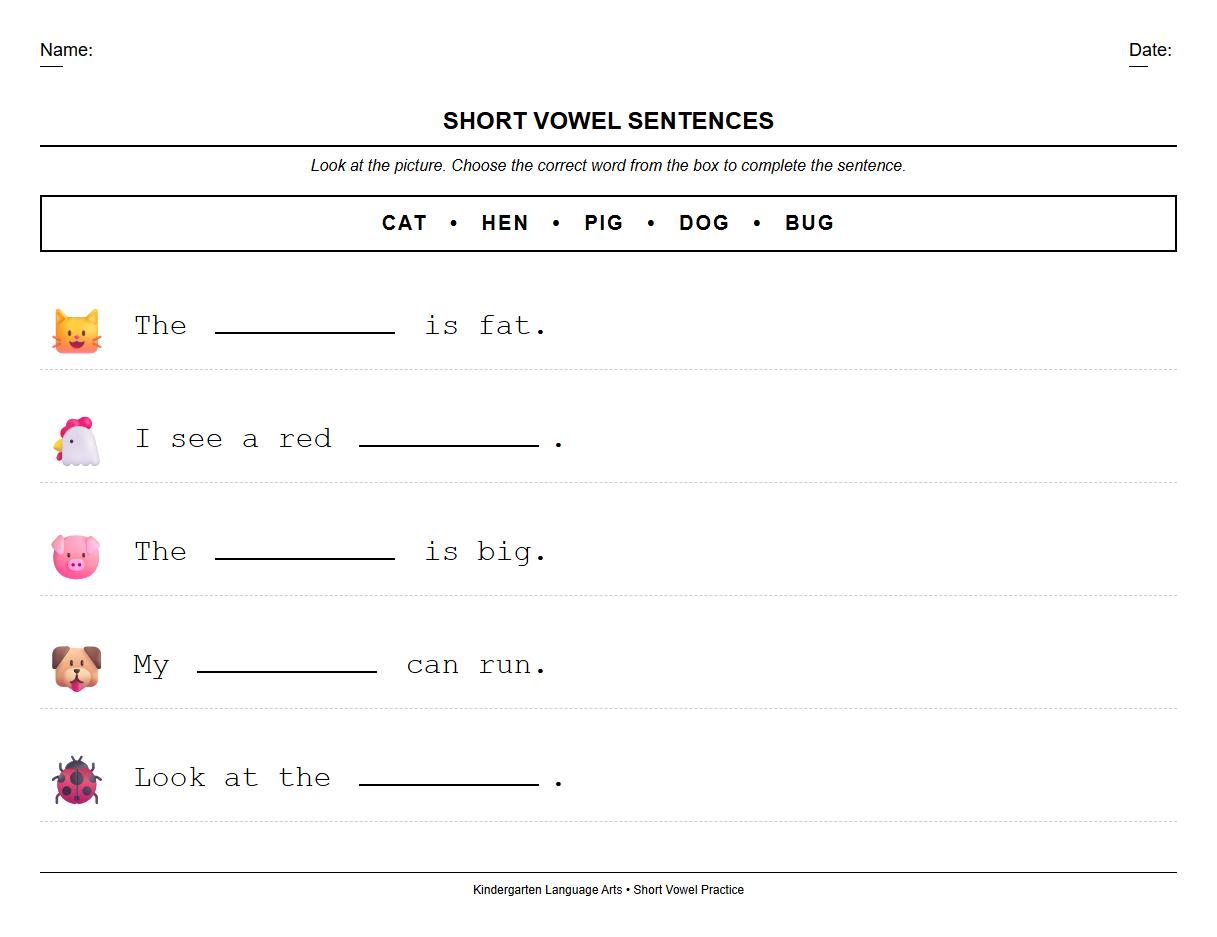
Short Vowel Sound Sentence Writing Activities

Download PDF     Pin it

Long Vowel Sentence Formation Worksheets
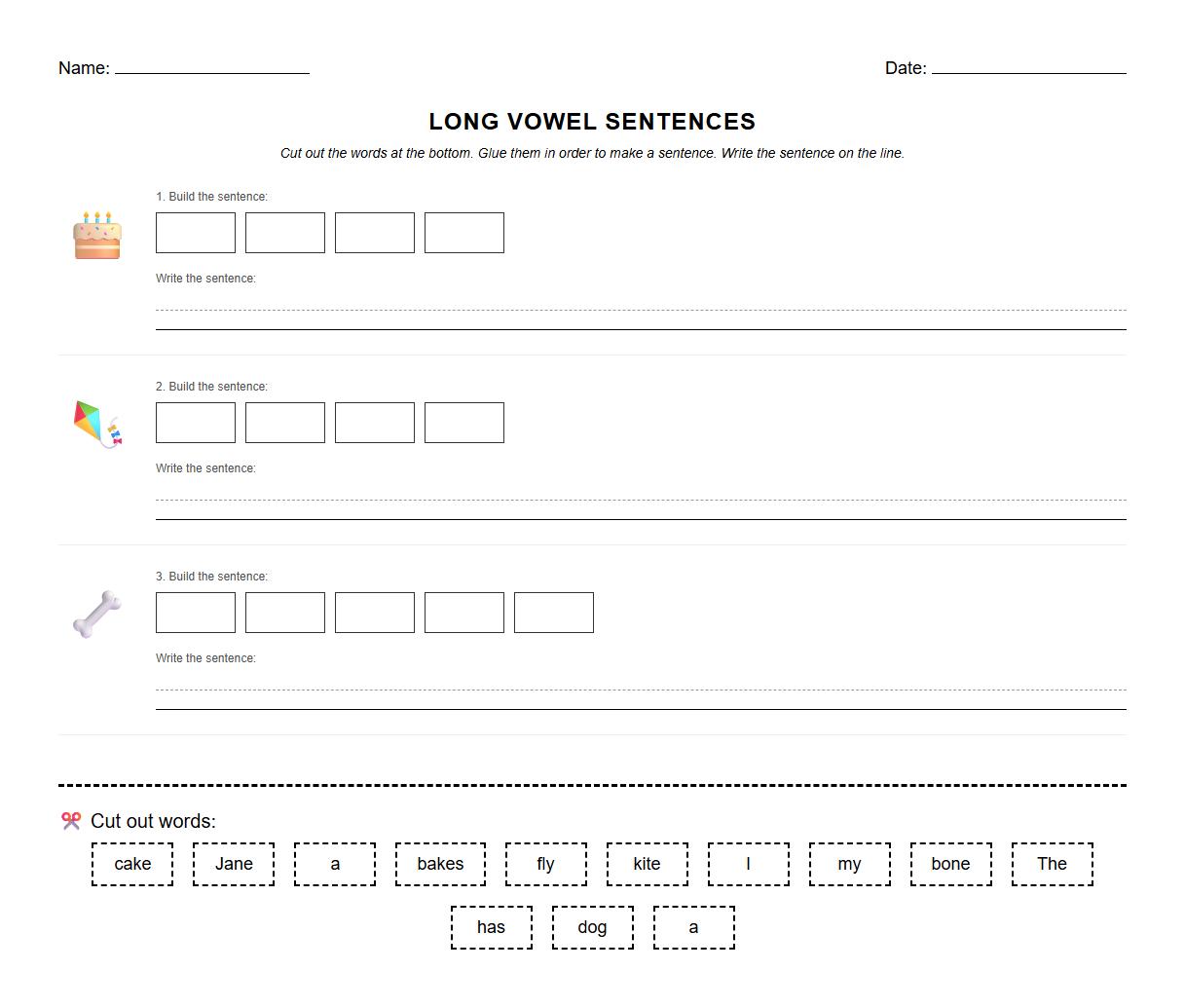
Long Vowel Sentence Formation Worksheets

Download PDF     Pin it

Rhyming Words Sentence Writing Sheets
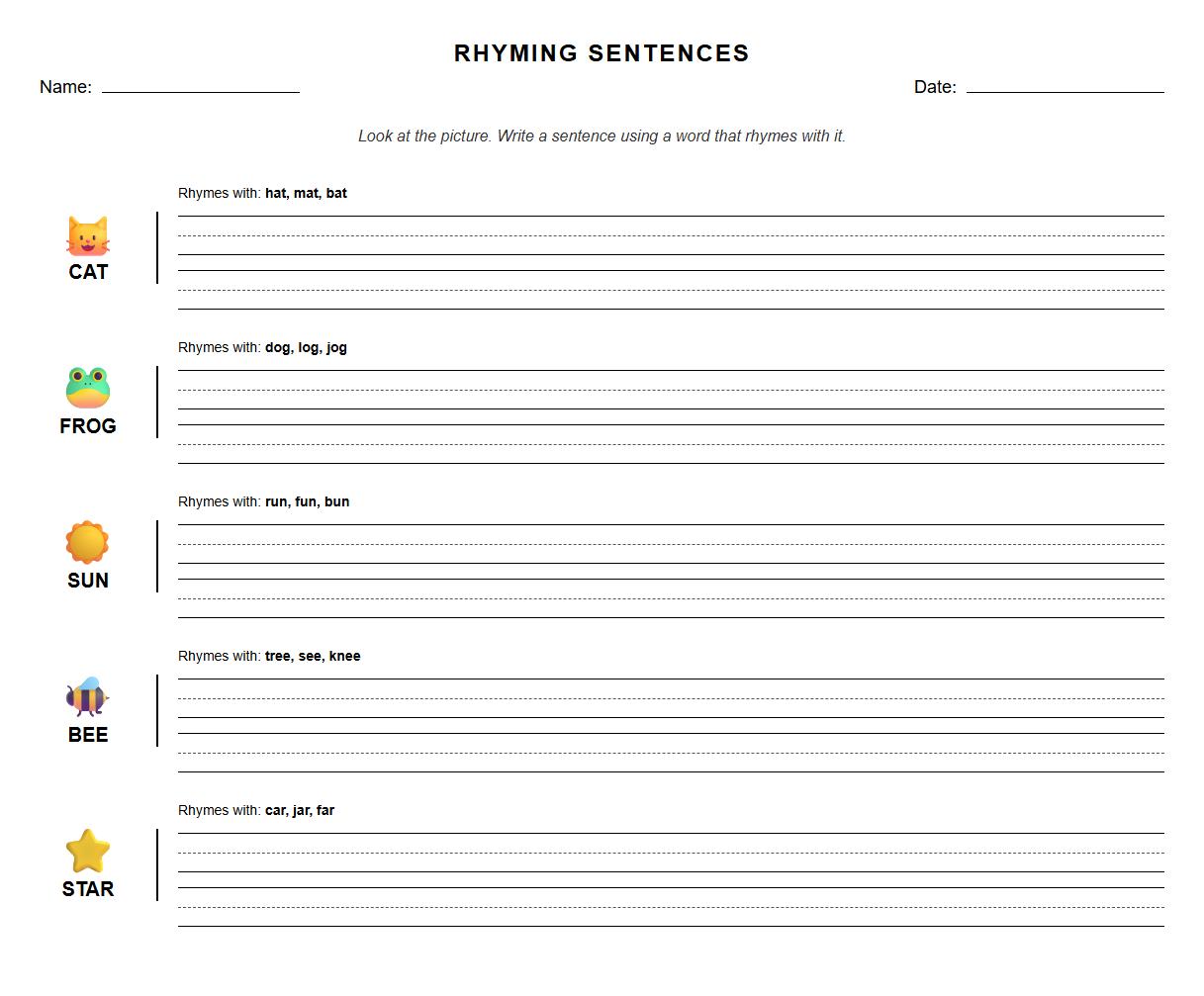
Rhyming Words Sentence Writing Sheets

Download PDF     Pin it

Sentence Writing with Word Families Exercises
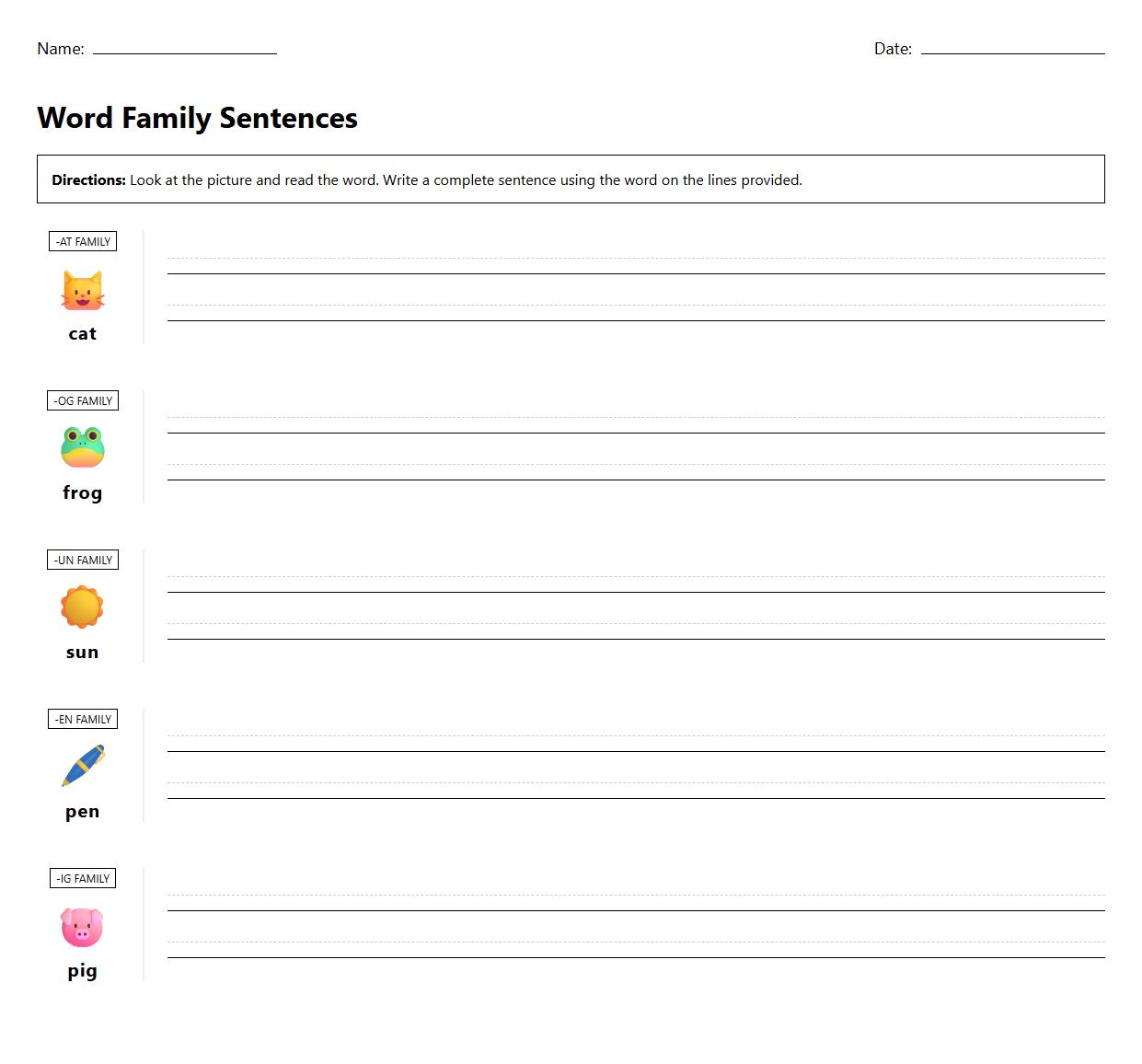
Sentence Writing with Word Families Exercises

Download PDF     Pin it

Missing Sound in Sentence Completion Worksheets
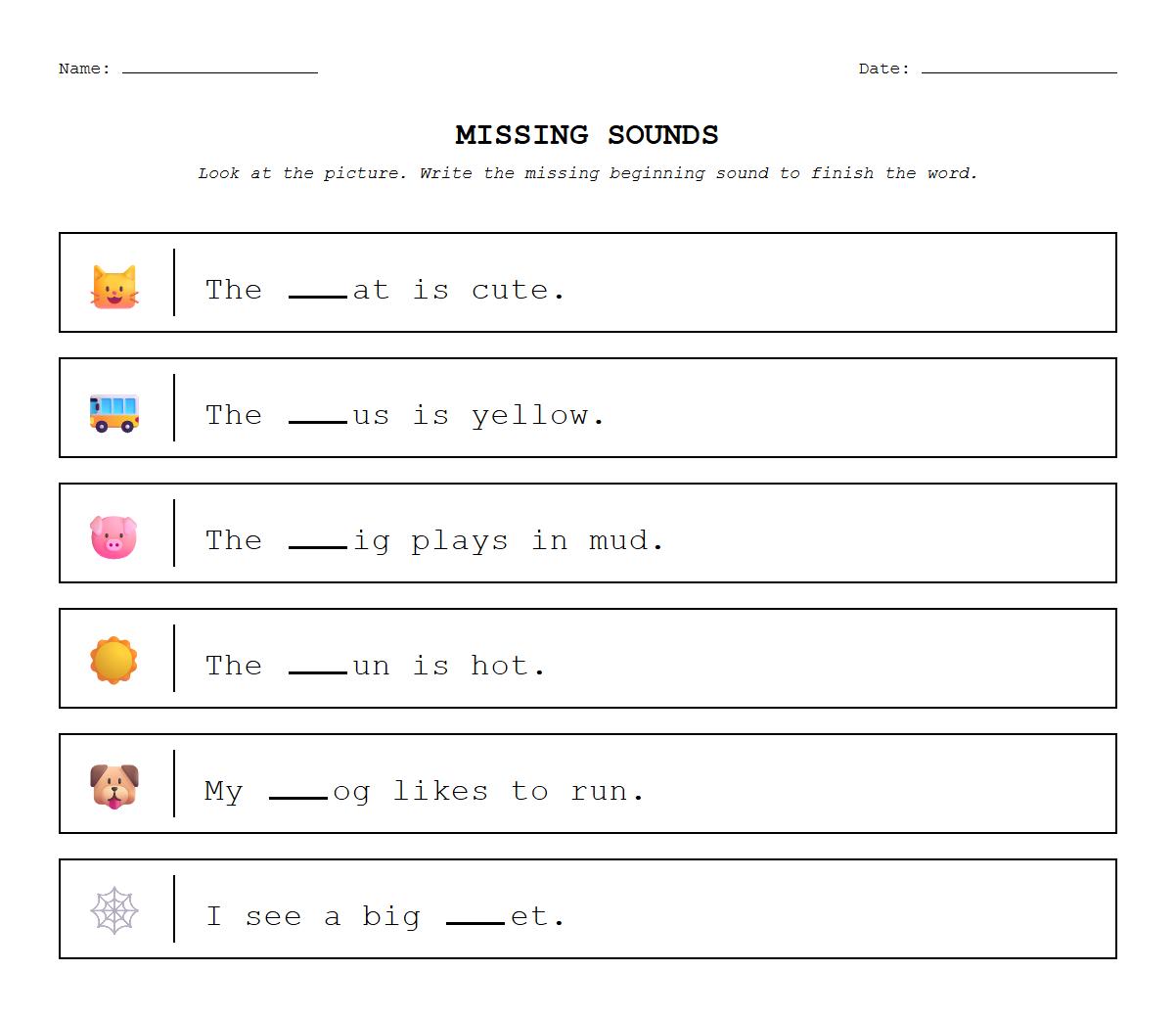
Missing Sound in Sentence Completion Worksheets

Download PDF     Pin it

Read Write Draw Phonics Sentences Practice
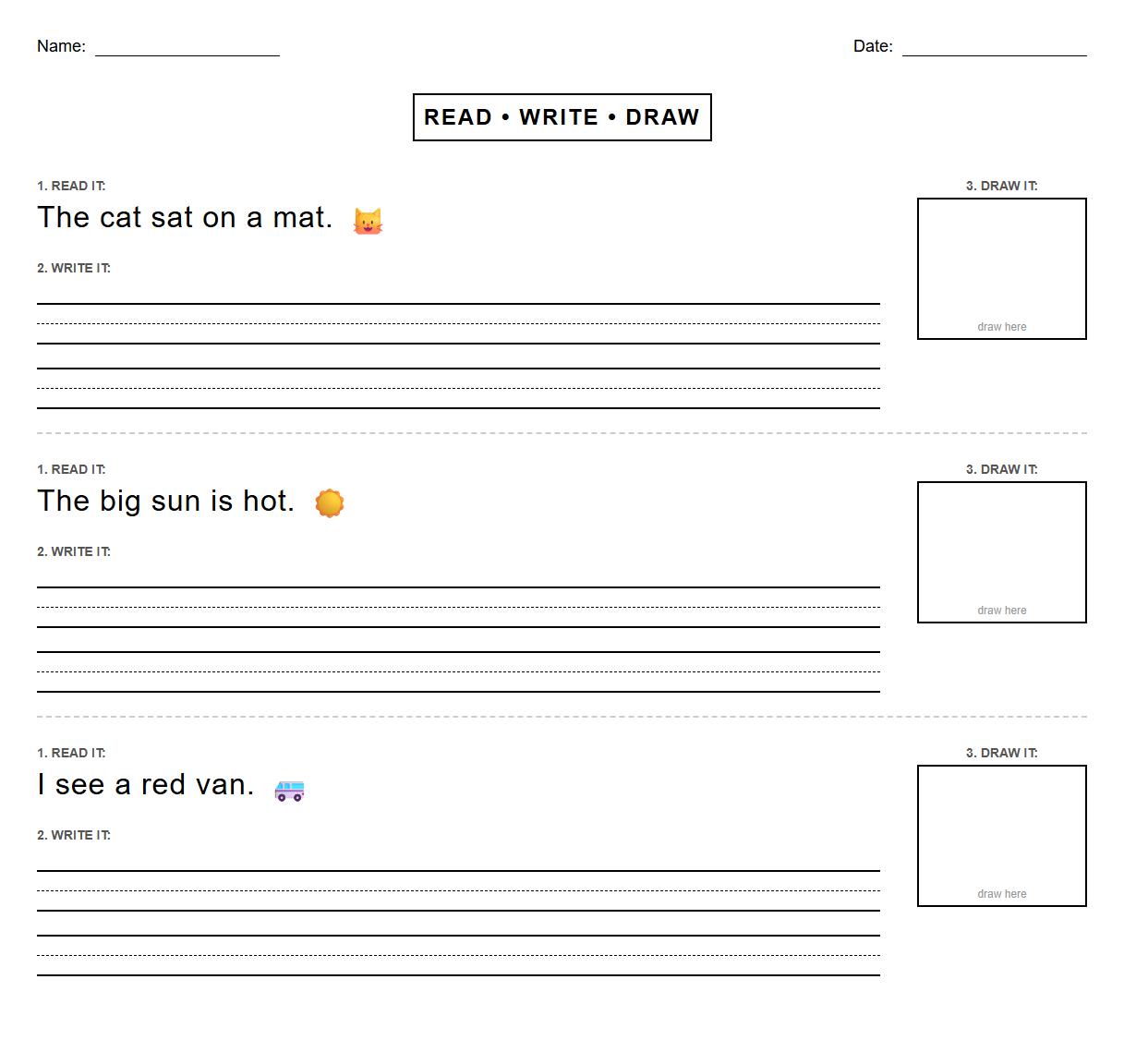
Read Write Draw Phonics Sentences Practice

Download PDF     Pin it

Effective Design of Sentence Writing Worksheets with Phonics Focus

To create effective sentence writing worksheets for kindergarten, combine simple sentence structures with targeted phonics patterns. Use repetitive and familiar phonetic elements to boost confidence and fluency. Incorporate step-by-step guidance to help both teachers and parents deliver instructions clearly. Include opportunities for children to practice blending sounds and writing words within sentences.

Phonics Patterns to Prioritize in Early Kindergarten

Focus on basic consonant-vowel-consonant (CVC) patterns such as cat, hat, and dog. Introduce short vowel sounds (a, e, i, o, u) along with consonant blends like -st, -bl, and -tr. Emphasizing these foundational sounds promotes early decoding skills essential for sentence formation. Prioritize high-frequency phonics rules relevant to initial reading experiences.

Supporting Sight Word Recognition through Sentence Writing

Incorporate high-frequency sight words into sentence writing exercises to reinforce recognition through repeated exposure. Use simple, age-appropriate sentences that balance phonics words with common sight words like "the," "and," and "is." This contextual practice strengthens reading fluency and word recall. Provide visual cues alongside sight words to aid memory retention.

Common Phonics Mistakes in Kindergarten Sentence Writing

Children often confuse similarly sounding letters or omit sounds within words, impacting accuracy. Another frequent error involves mixing short and long vowel sounds incorrectly. Mistakes may also include spelling words phonetically but inaccurately due to letter reversals or omissions. Awareness of these errors helps tailor targeted interventions in worksheets.

Incorporating Visual Aids in Phonics-Based Worksheets

Integrating pictures and graphic organizers supports comprehension and motivation in sentence writing activities. Use images aligned with phonics vocabulary to provide contextual clues for word formation. Visual icons for sentence parts can clarify sentence structure and syntax. Establish a color-coded system to highlight phonics patterns and sight words for easy recognition.

Ideal Sentence Length for Kindergarten Phonics Practice

Keep sentences concise, usually between three to five words, to match young learners' writing stamina. Short sentences reduce cognitive load and allow for focus on phonics accuracy and handwriting. Repetitive sentence frames encourage confidence and allow for phonics pattern reinforcement. This length supports gradual skill development in early writing.

Frequency of Phonics-Focused Sentence Writing Practice

Regular practice, ideally 3 to 5 times per week, ensures steady phonics skill growth. Short, consistent sessions improve retention without overwhelming young students. Combining sentence writing with reading and phonics drills maximizes learning outcomes. Frequent practice also aids in developing writing fluency and confidence.

Assessment Tools for Tracking Phonics Sentence Writing Progress

Utilize checklists that track phonics patterns correctly written within sentences and sight word usage. Observational notes during writing tasks offer insights into common errors and progress. Digital portfolios or writing samples collected weekly provide longitudinal data on skill development. Phonics-focused rubrics ensure objective measurement of sentence structure and spelling accuracy.

Differentiating Worksheets for Various Phonics Skill Levels

Design tiered worksheets that range from tracing and word copying to free sentence writing. Provide scaffolds like word banks or sentence starters for beginners while challenging advanced learners with complex phonics patterns. Adjust sentence complexity and phonics demands to individual student needs. Differentiation promotes inclusive learning environments supporting all skill levels.

Engaging Themes for Phonics Sentence Writing Worksheets

Incorporate familiar and appealing themes such as animals, family, seasons, and food to maintain interest. Thematic content connects phonics practice to real-life concepts enhancing engagement. Use stories, rhymes, or characters to create meaningful contexts for sentence writing. This approach motivates students and enriches learning experiences.


More in Language Arts Category


About the author. Nylen Smith is a dedicated educator and cofounder of KWorksheet.com, a popular platform specializing in high-quality kindergarten worksheets and printable activities.

Disclaimer. The information provided in this document is for general informational purposes and/or document sample only and is not guaranteed to be factually right or complete. Please report to us via contact-us page if you find and error in this page, thanks.

Comments

No comment yet