Structured Sentence Building Activities for Young Learners

📅 Mar 13, 2025 👤 Nylen Smith

Structured sentence building activities help young learners develop essential grammar and syntax skills through guided practice. These activities foster creativity and confidence in forming coherent sentences by using age-appropriate vocabulary and interactive exercises. Explore our collection of engaging worksheets designed to support sentence construction mastery.

Phonics based sentence scramble worksheet
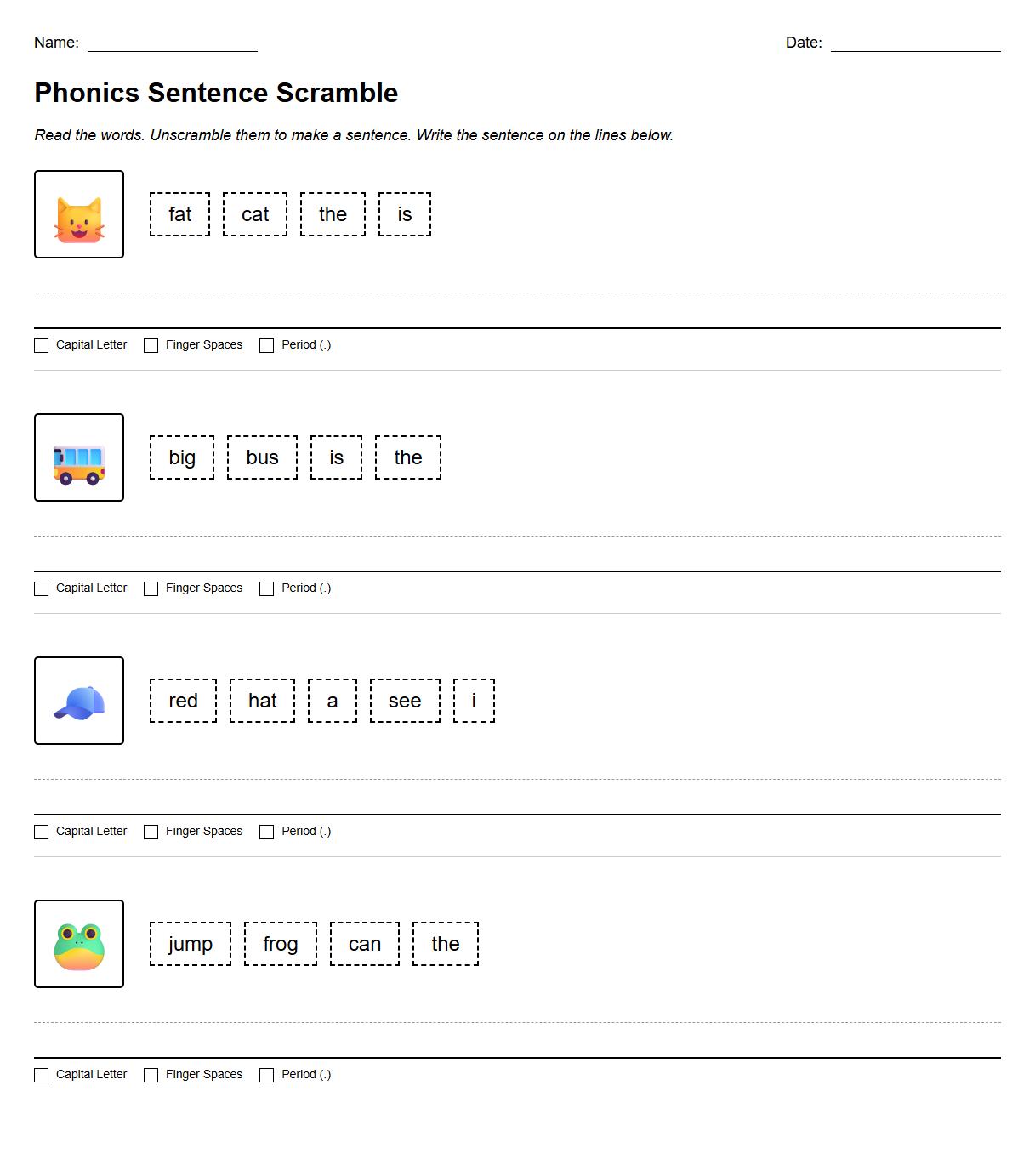
Phonics based sentence scramble worksheet

Download PDF     Pin it

Sight word sentence construction activity
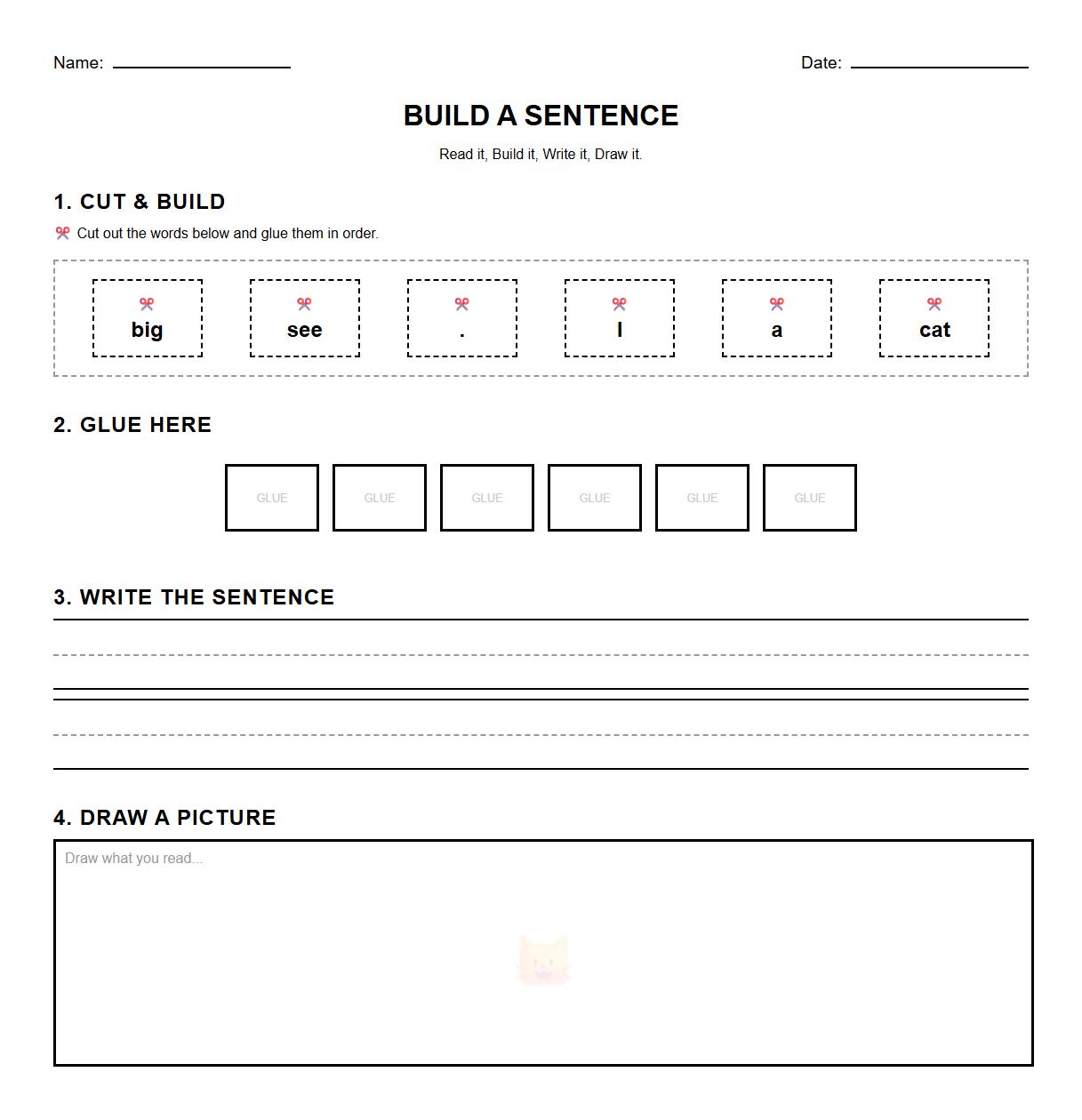
Sight word sentence construction activity

Download PDF     Pin it

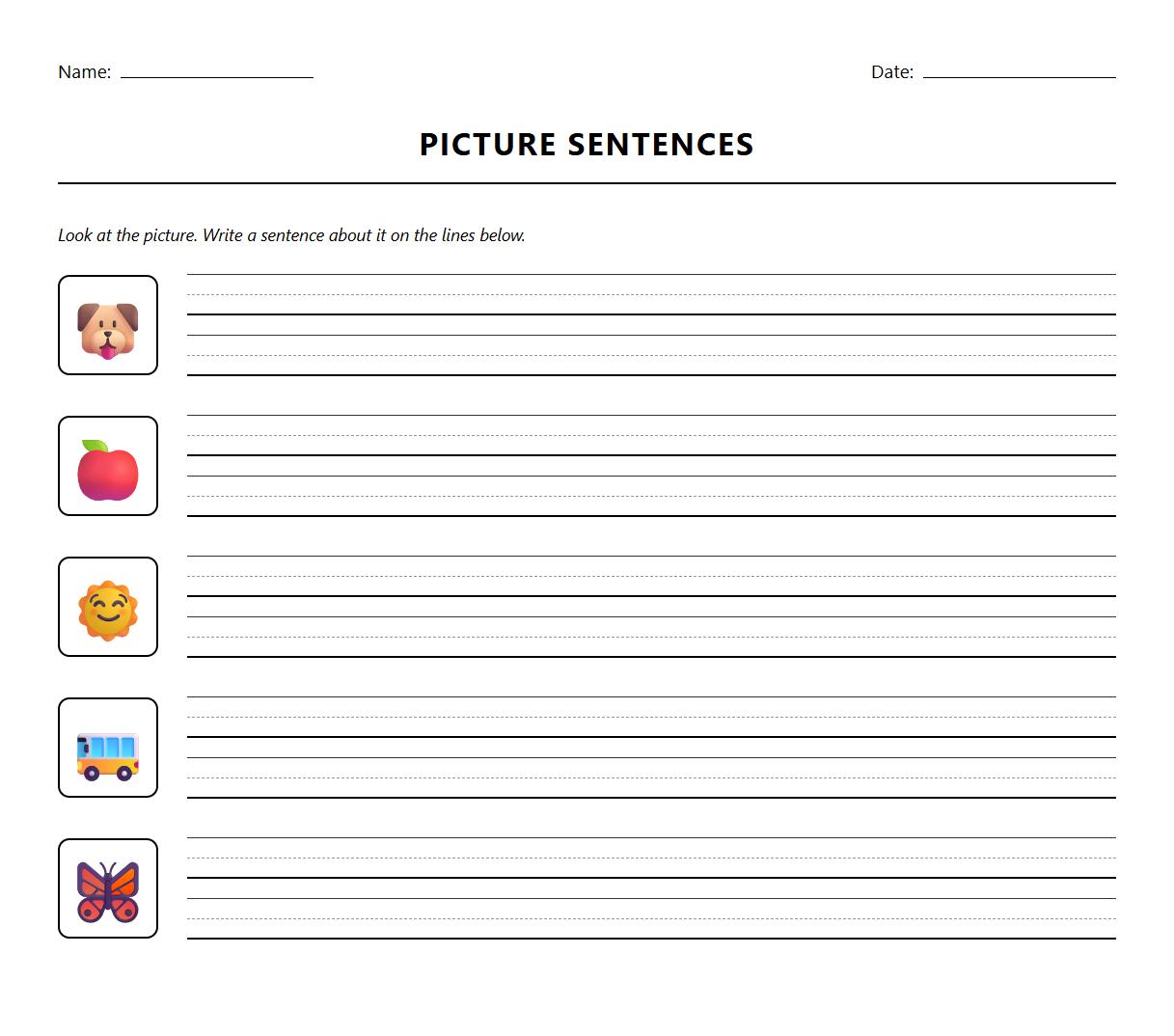
Picture cue sentence writing sheet

Picture cue sentence writing sheet

Download PDF     Pin it

Subject predicate matching exercise
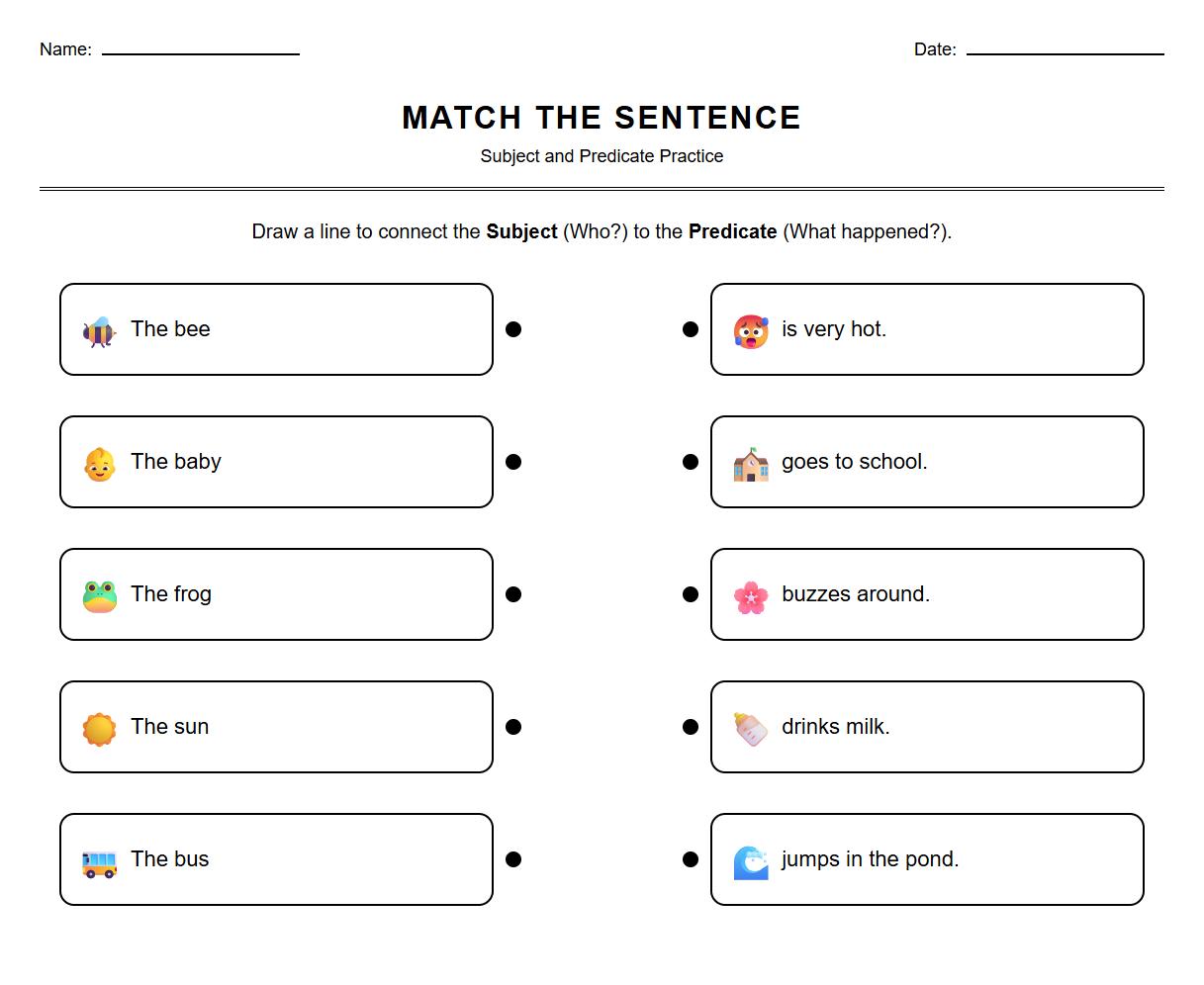
Subject predicate matching exercise

Download PDF     Pin it

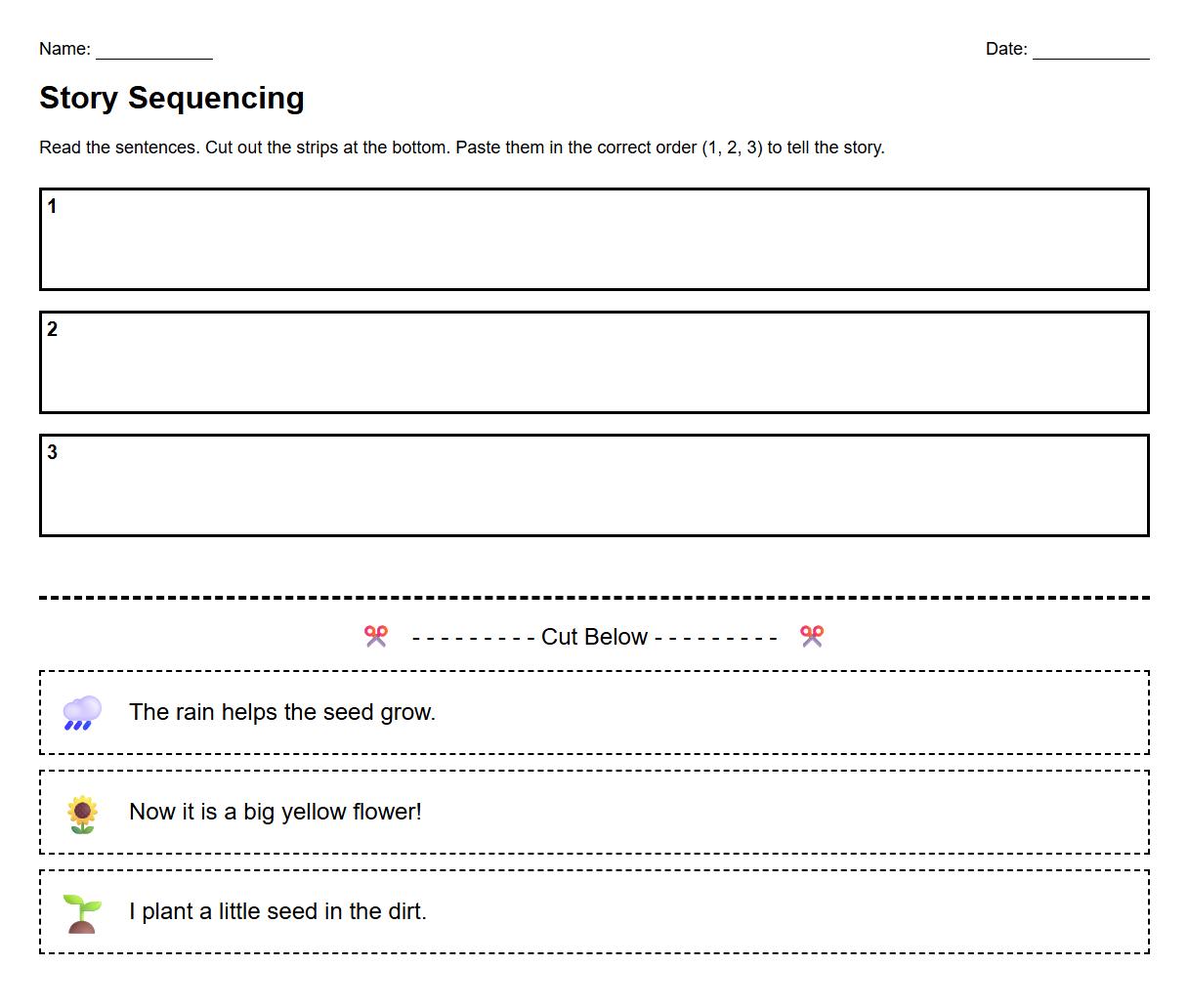
Sequencing sentence strips task

Sequencing sentence strips task

Download PDF     Pin it

Sentence correction with syntax focus
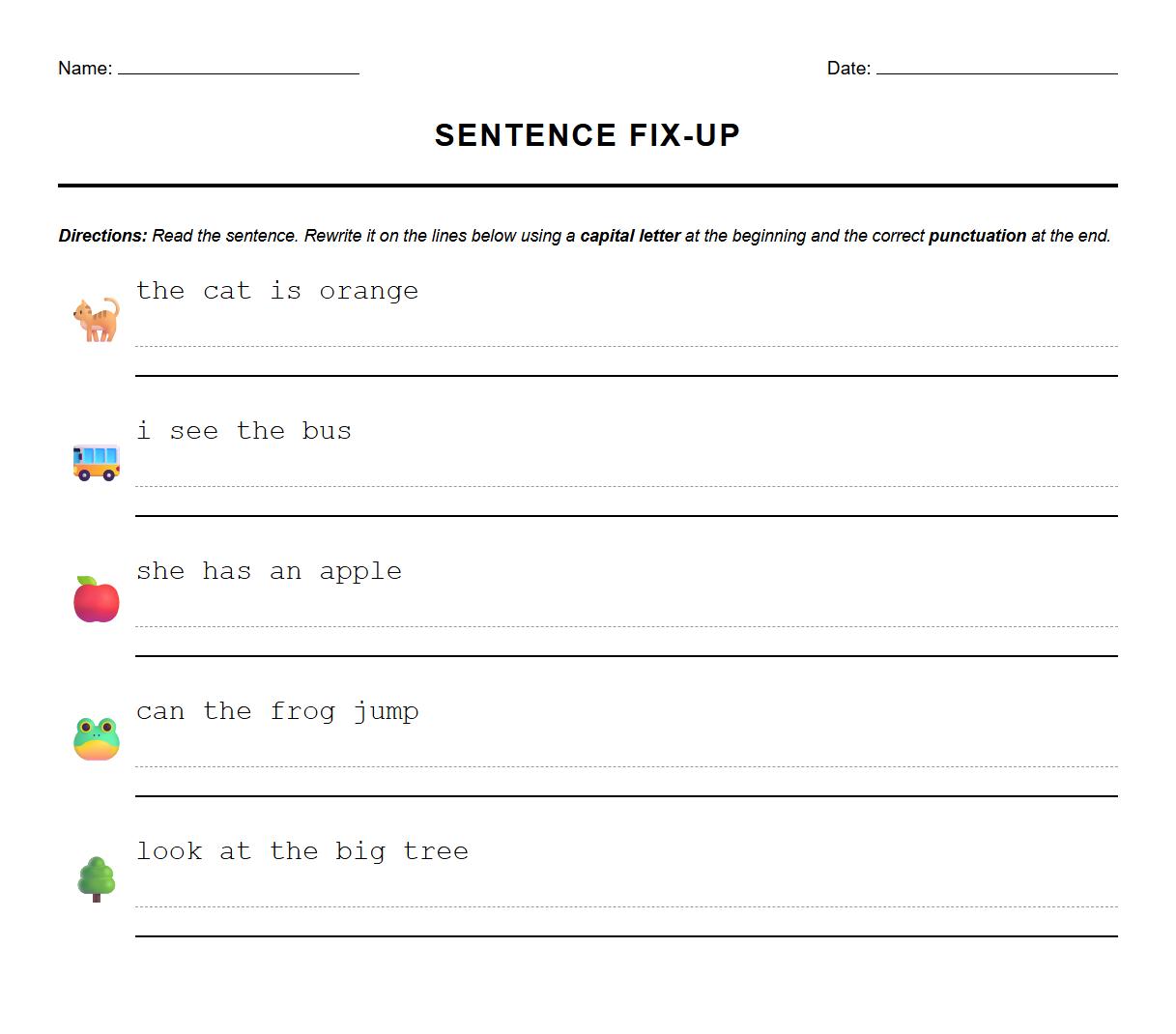
Sentence correction with syntax focus

Download PDF     Pin it

Gap fill sentence completion for grammar practice
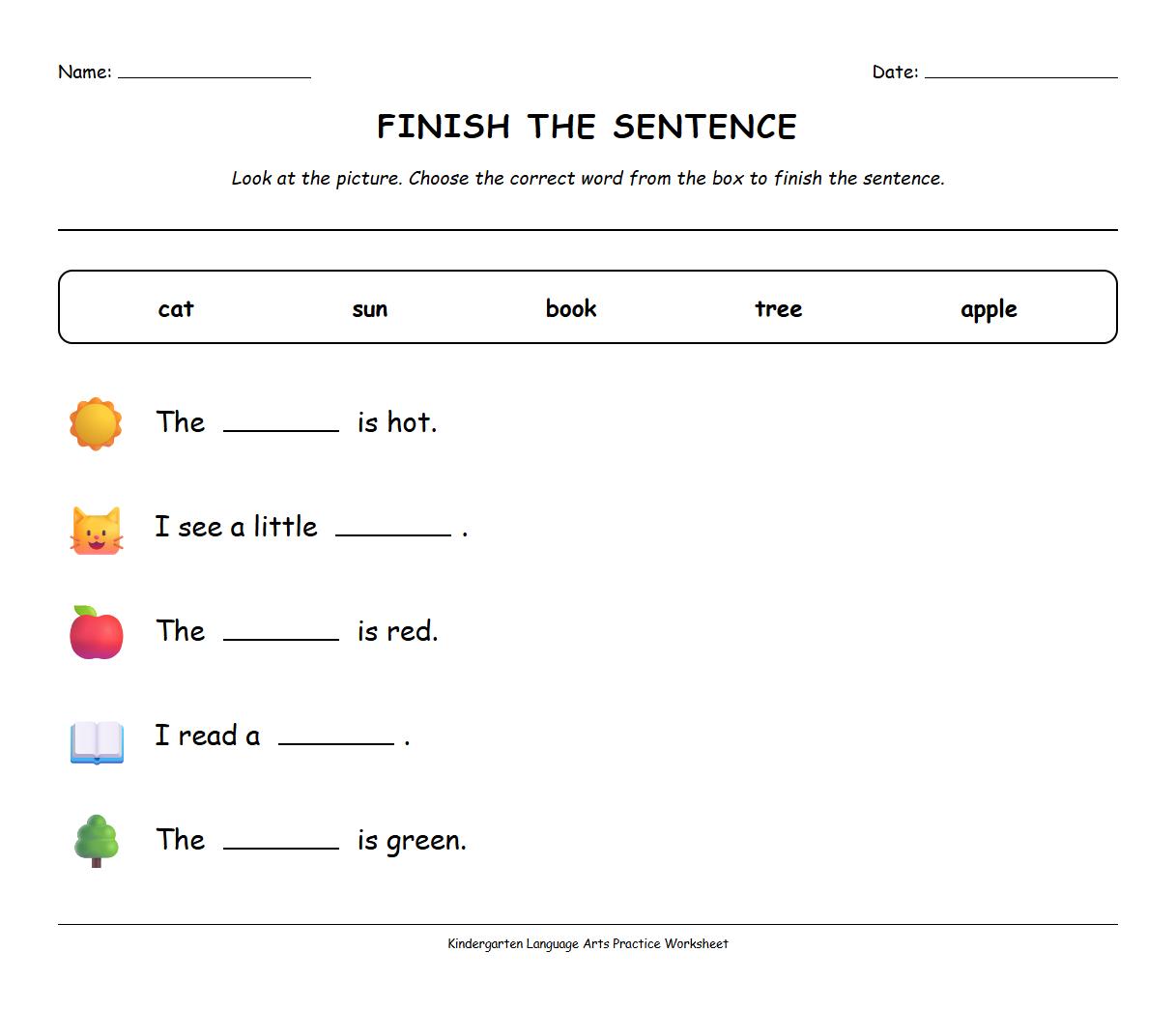
Gap fill sentence completion for grammar practice

Download PDF     Pin it

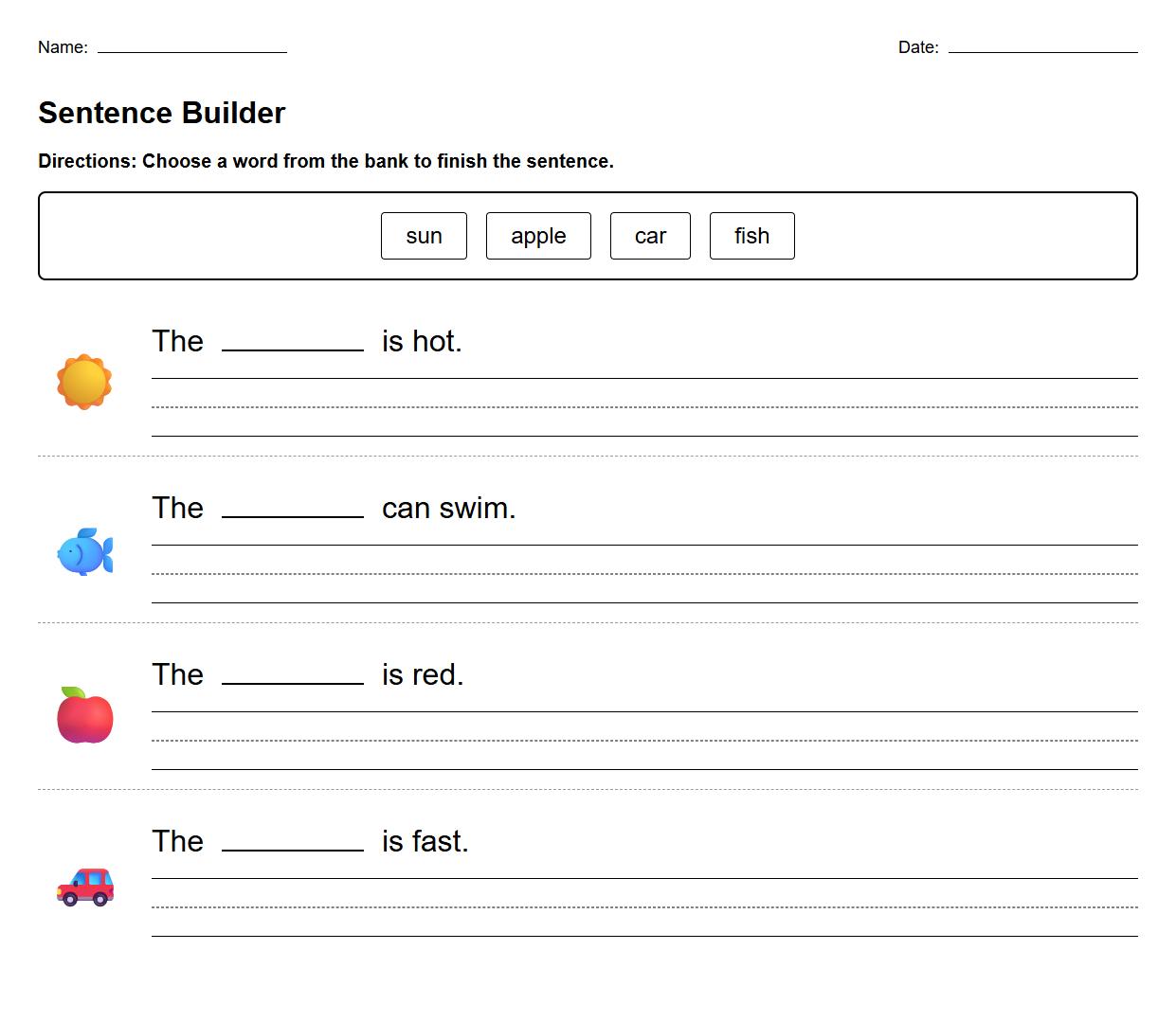
Word bank guided sentence formation

Word bank guided sentence formation

Download PDF     Pin it

Simple to compound sentence transformation
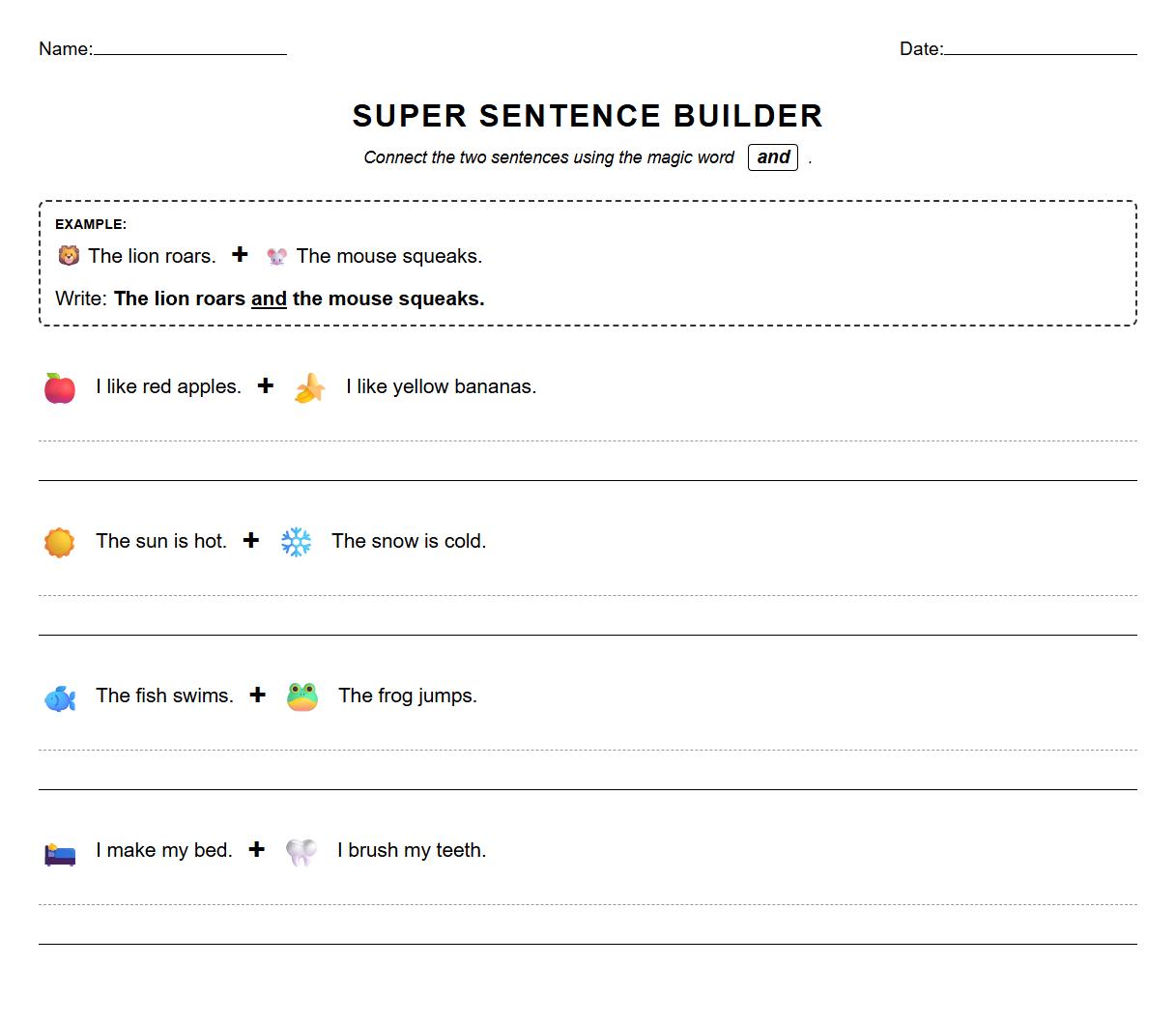
Simple to compound sentence transformation

Download PDF     Pin it

Tense identification and sentence building worksheet
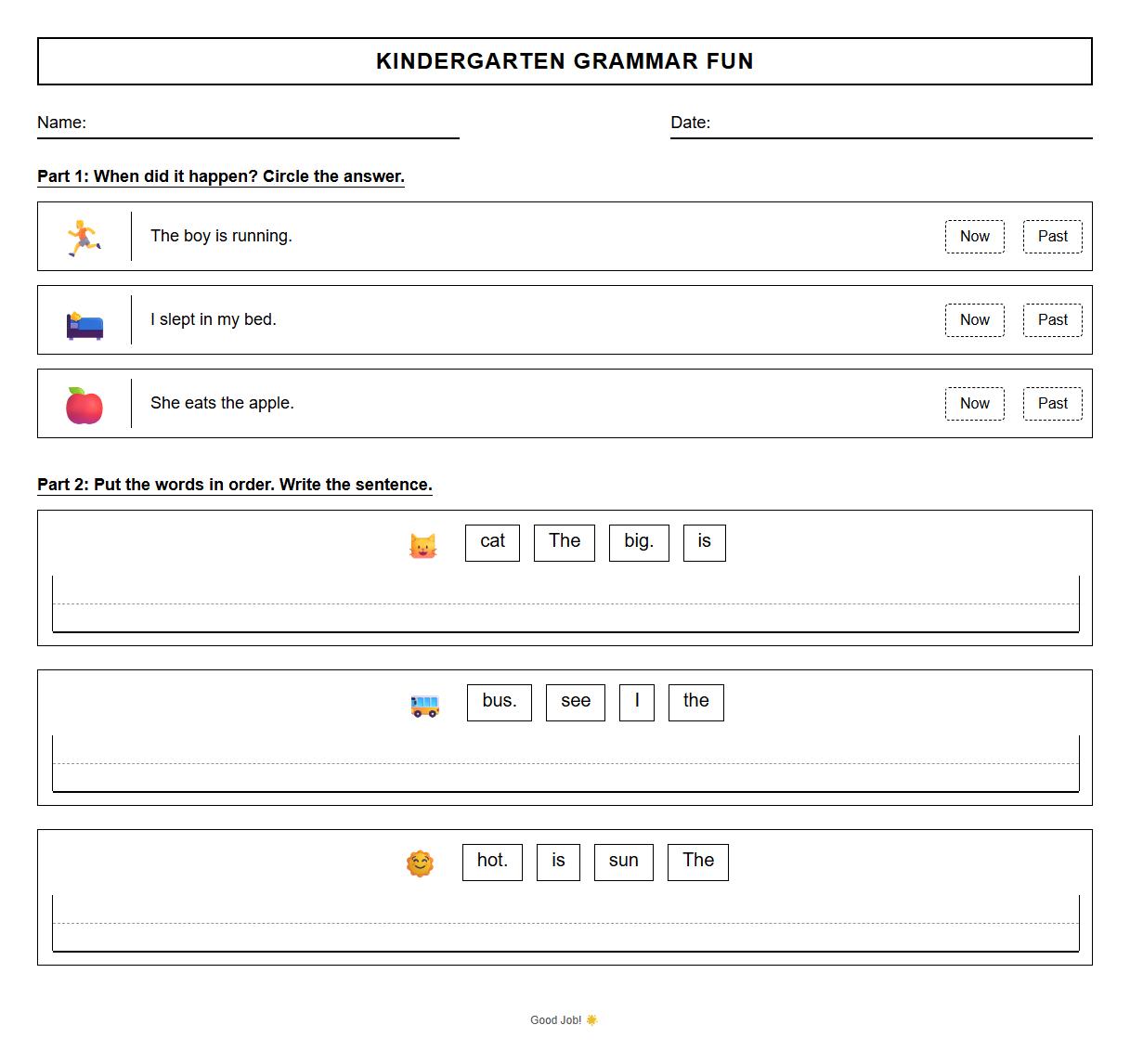
Tense identification and sentence building worksheet

Download PDF     Pin it

Effective Structured Sentence Building Activities

Sentence building activities for kindergarten students should be engaging and developmentally appropriate. Using word cards, students can arrange words to form simple sentences, promoting syntax understanding. Additionally, guided sentence completion exercises encourage creativity and sentence fluency. These activities build foundational grammar skills essential for early literacy.

Incorporating Visual Aids into Sentence Structure Lessons

Visual aids such as pictures, charts, and storyboards help young learners grasp sentence structure by providing contextual clues. Teachers can use illustrated flashcards to represent nouns, verbs, and adjectives, enabling students to visually connect words with meanings. This multisensory approach enhances comprehension and retention of sentence components. Visual supports also make abstract grammar concepts more concrete for kindergarteners.

Interactive Games for Practicing Sentence Formation

Interactive games like "Sentence Scramble" and "Memory Match" keep students motivated while reinforcing sentence-building skills. These games require children to put words or picture cards in order to form correct sentences, fostering critical thinking and language development. Incorporating play encourages collaboration and makes learning enjoyable. Regular use of such games improves fluency in sentence construction.

The Role of Sentence Strips in Skill Development

Sentence strips are versatile teaching tools that help students physically manipulate parts of a sentence. They allow children to arrange words or phrases to create meaningful sentences, which enhances understanding of syntax and punctuation. Using sentence strips supports hands-on learning and can be adapted for individual or group activities. They provide visual and tactile reinforcement critical for early sentence mastery.

Using Story Sequencing Cards to Support Sentence Construction

Story sequencing cards guide children through logical narrative order and help them form clear sentences related to each image. By arranging cards in sequence, learners practice constructing sentences that describe actions or events. This method promotes comprehension, sequencing skills, and coherent sentence formation. It also encourages storytelling and vocabulary expansion.

Group Activities for Collaborative Sentence Building

Collaborative sentence building activities foster teamwork and communication among kindergarteners. Teachers can organize group projects where students create sentences together, using shared word banks or sentence frames. Such interactions develop social skills and reinforce language patterns through peer learning. Group work also allows for differentiated support tailored to individual needs.

Differentiating Sentence Building Activities

Differentiation ensures all students engage meaningfully with sentence building, regardless of skill level. Teachers can modify activities by varying word complexity, sentence length, and support provided, such as visual cues or sentence starters. Small group instruction and personalized feedback help meet diverse learning needs. This approach maximizes growth and confidence in sentence construction.

Digital Tools for Practicing Sentence Structure

Digital tools like interactive apps and online games provide engaging platforms for practicing sentence construction. Programs such as Starfall and ABCmouse offer structured sentence-building exercises tailored to kindergarten learners. These tools often include instant feedback and progress tracking for teachers and parents. Incorporating technology enhances motivation and reinforces skills in a fun, interactive way.

Hands-on Manipulatives to Support Sentence Building

Manipulatives like magnetic words, letter tiles, and flashcards provide tactile learning opportunities for young children. Physically handling and arranging these materials helps reinforce word recognition and proper sentence order. Hands-on tools make abstract language concepts tangible, aiding memory and engagement. They are effective in encouraging active participation and language development.

Assessment Methods for Tracking Sentence Building Progress

Assessing sentence building can involve informal observations, checklists, and student work samples to monitor growth. Teachers may use sentence construction tasks as formative assessments to identify areas needing reinforcement. Digital platforms often offer built-in progress reports that simplify tracking. Regular assessment ensures instruction is responsive to student development and supports effective learning outcomes.


More in Language Arts Category


About the author. Nylen Smith is a dedicated educator and cofounder of KWorksheet.com, a popular platform specializing in high-quality kindergarten worksheets and printable activities.

Disclaimer. The information provided in this document is for general informational purposes and/or document sample only and is not guaranteed to be factually right or complete. Please report to us via contact-us page if you find and error in this page, thanks.

Comments

No comment yet