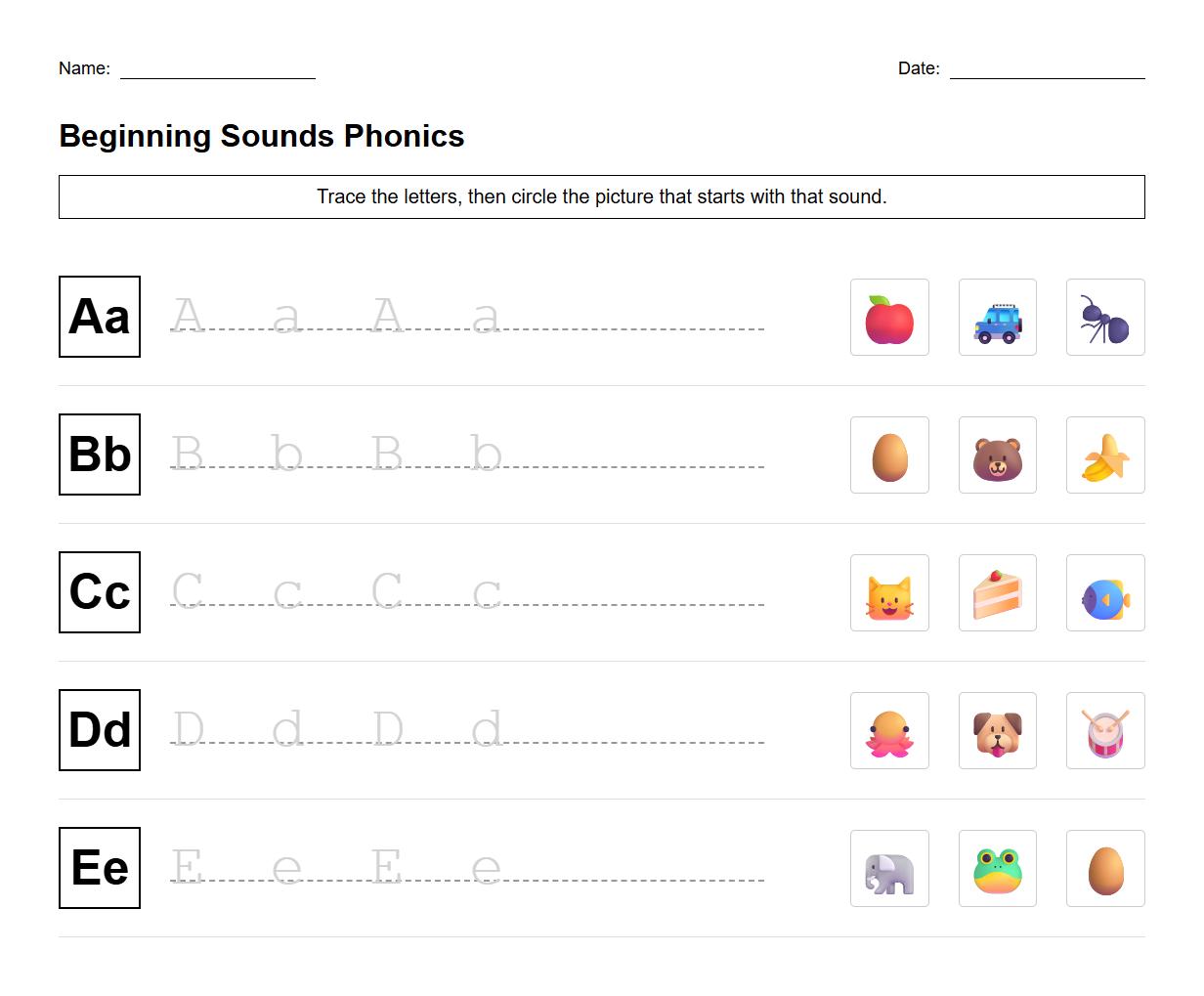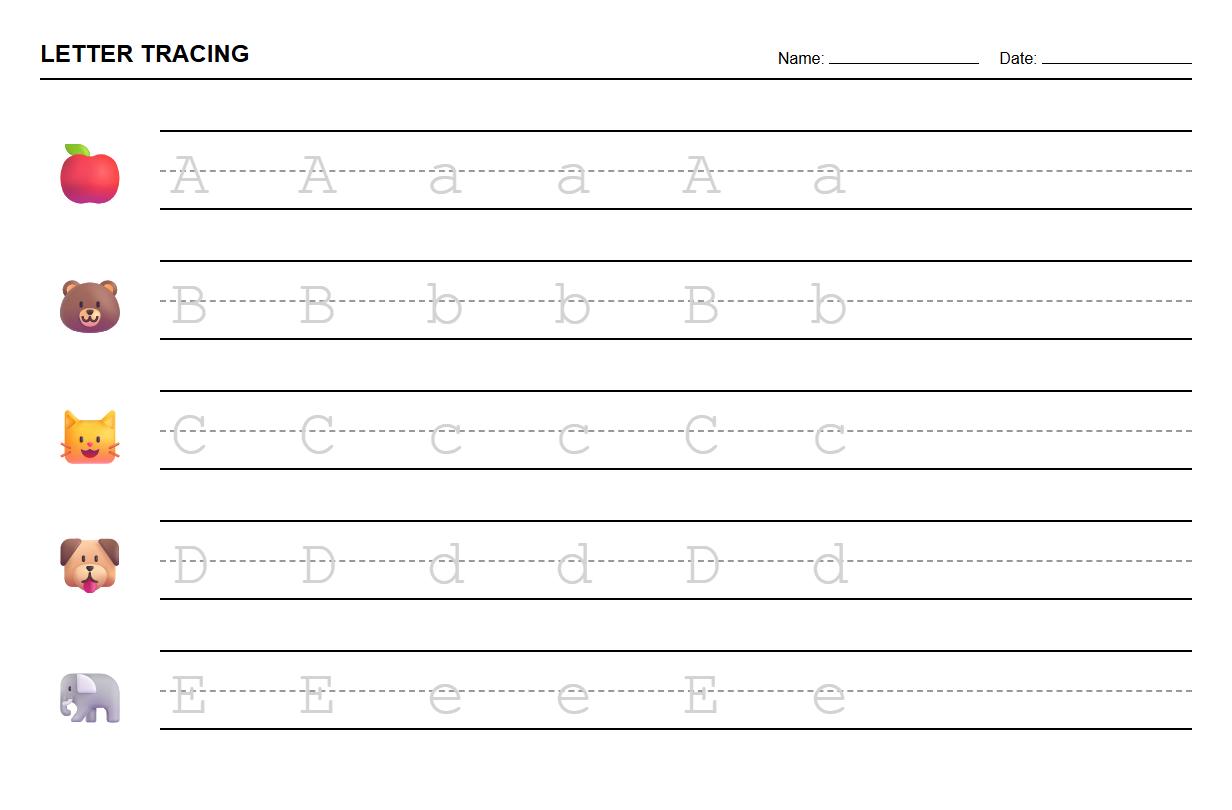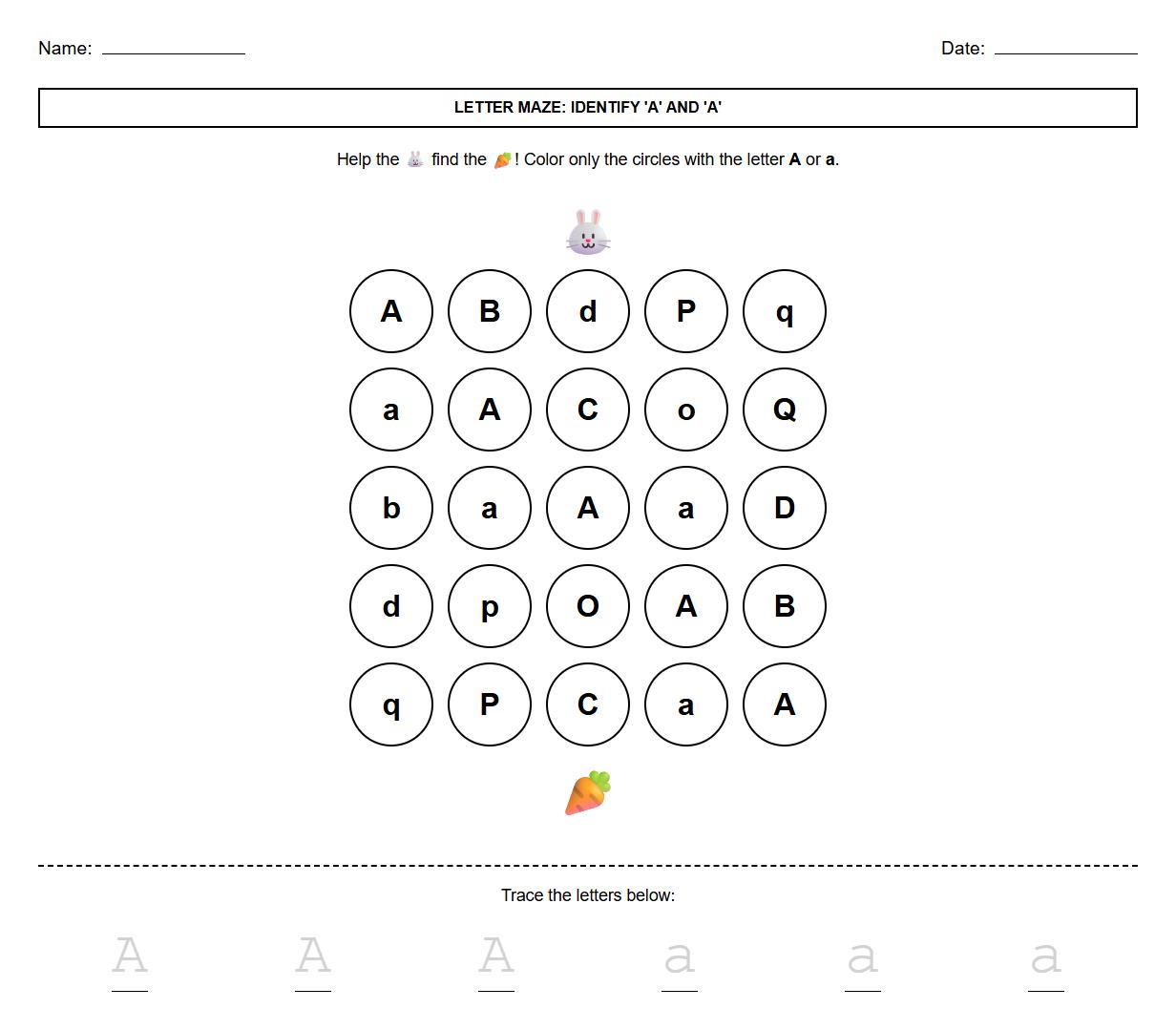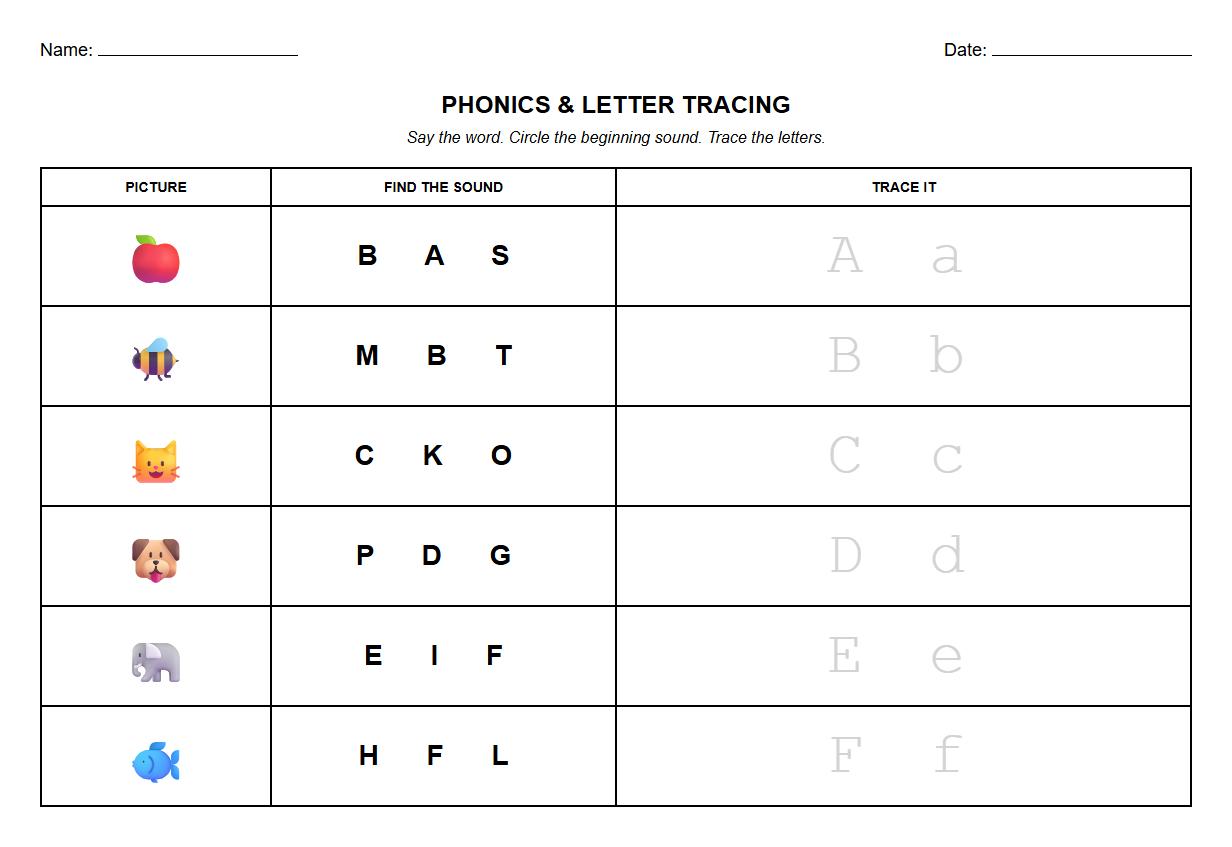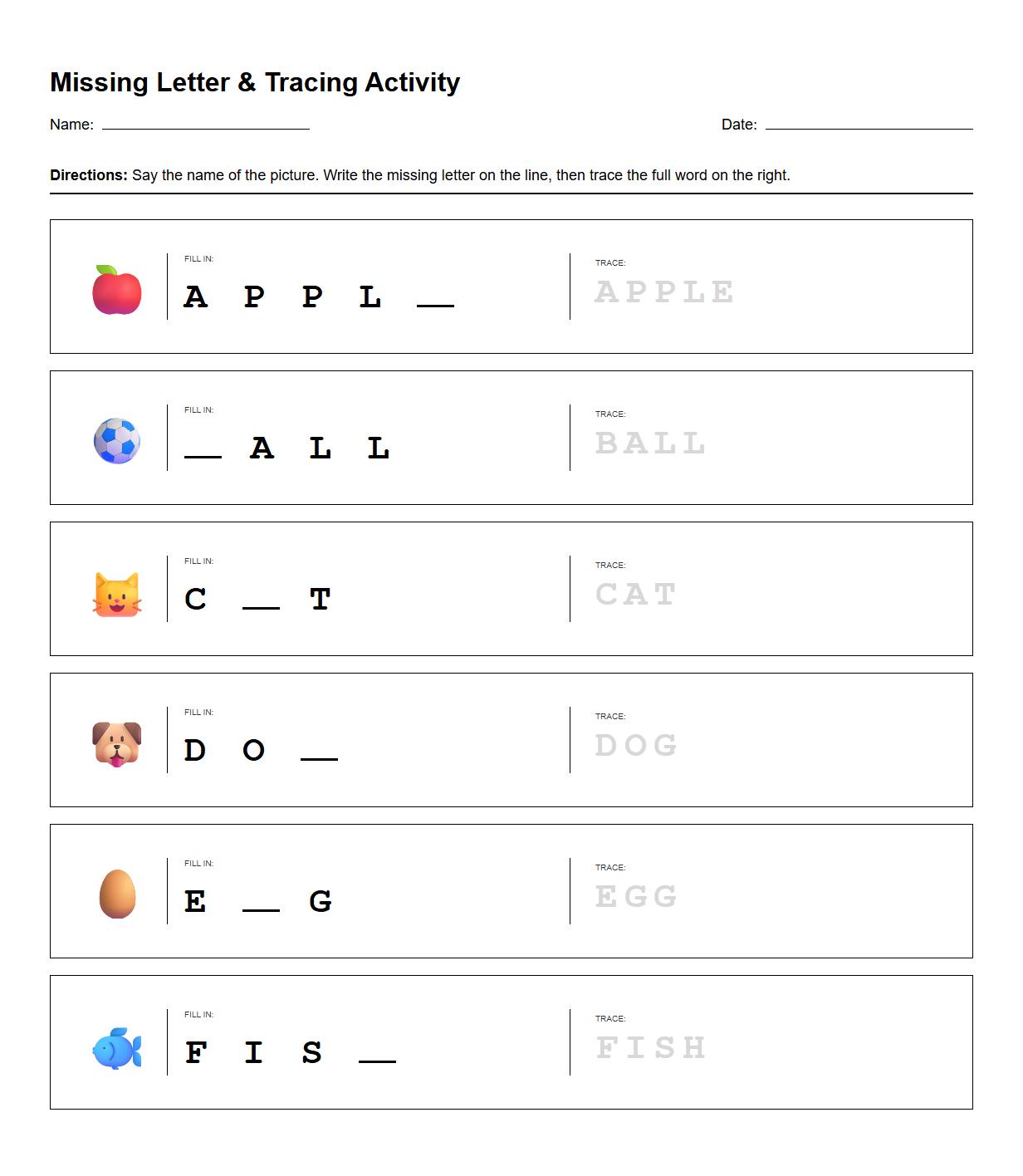
Tracing and identifying letters of the alphabet are essential early literacy skills that help children build a strong foundation for reading and writing. These activities enhance fine motor skills, letter recognition, and cognitive development. Explore our engaging kindergarten worksheets to support your child's learning journey.
Identifying the Traced Letter
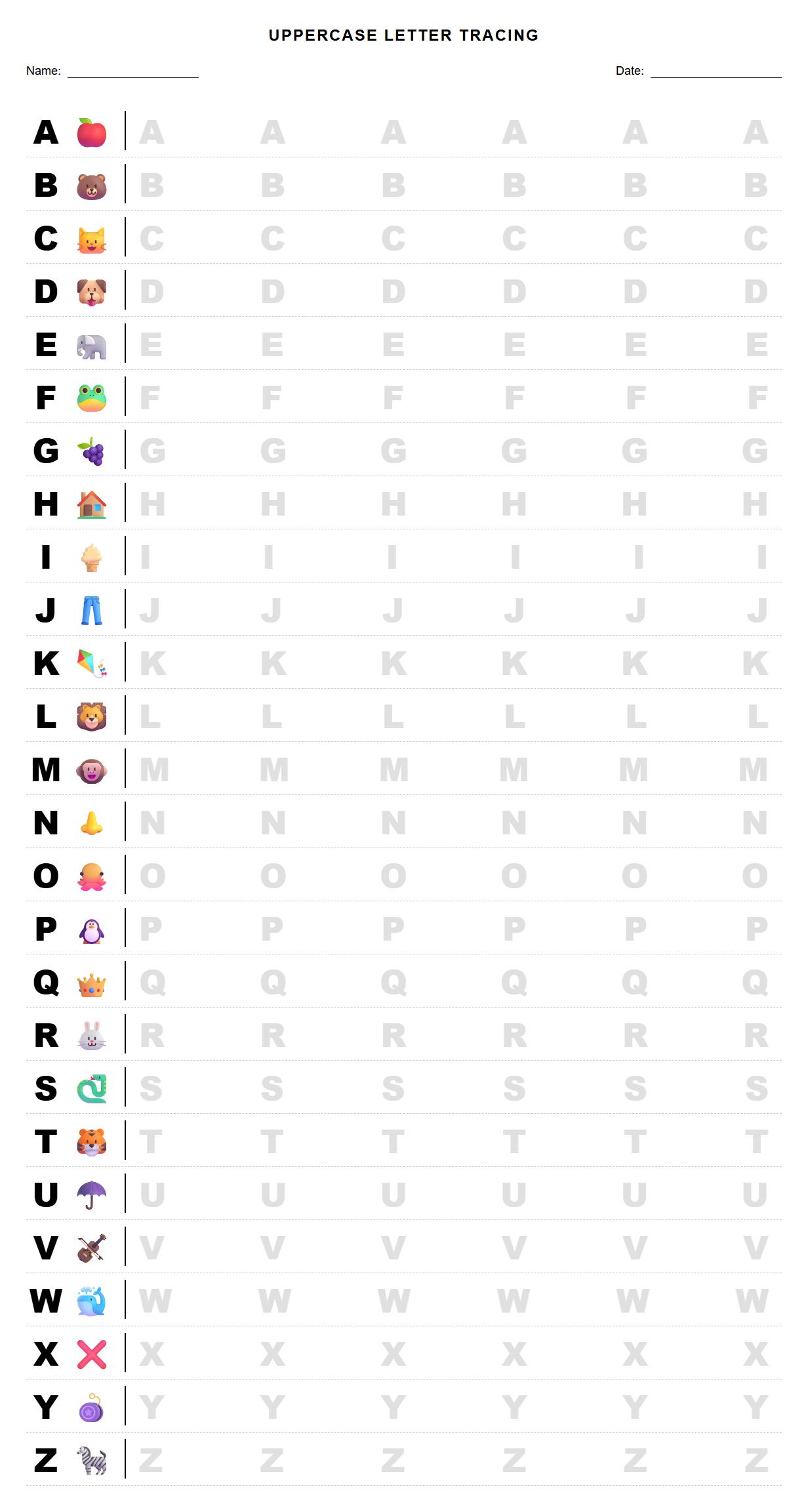
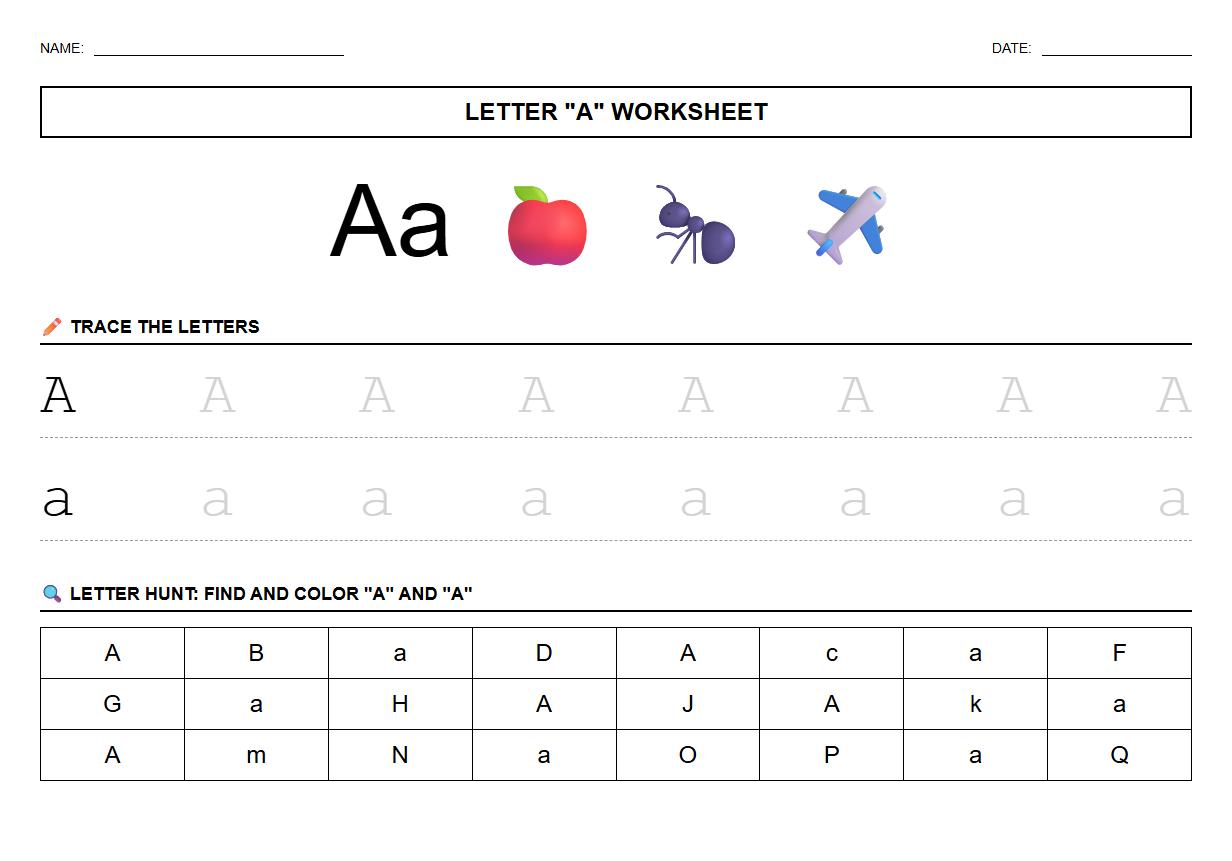
This worksheet focuses on the uppercase letter A. Children are encouraged to carefully trace the letter to improve their handwriting skills. Recognizing the letter is the first step in learning the alphabet. Teachers and parents should guide students to identify this letter clearly, similar to activities found in the Kindergarten Worksheet Collection for Learning Letter Sounds.
Matching the Uppercase Letter
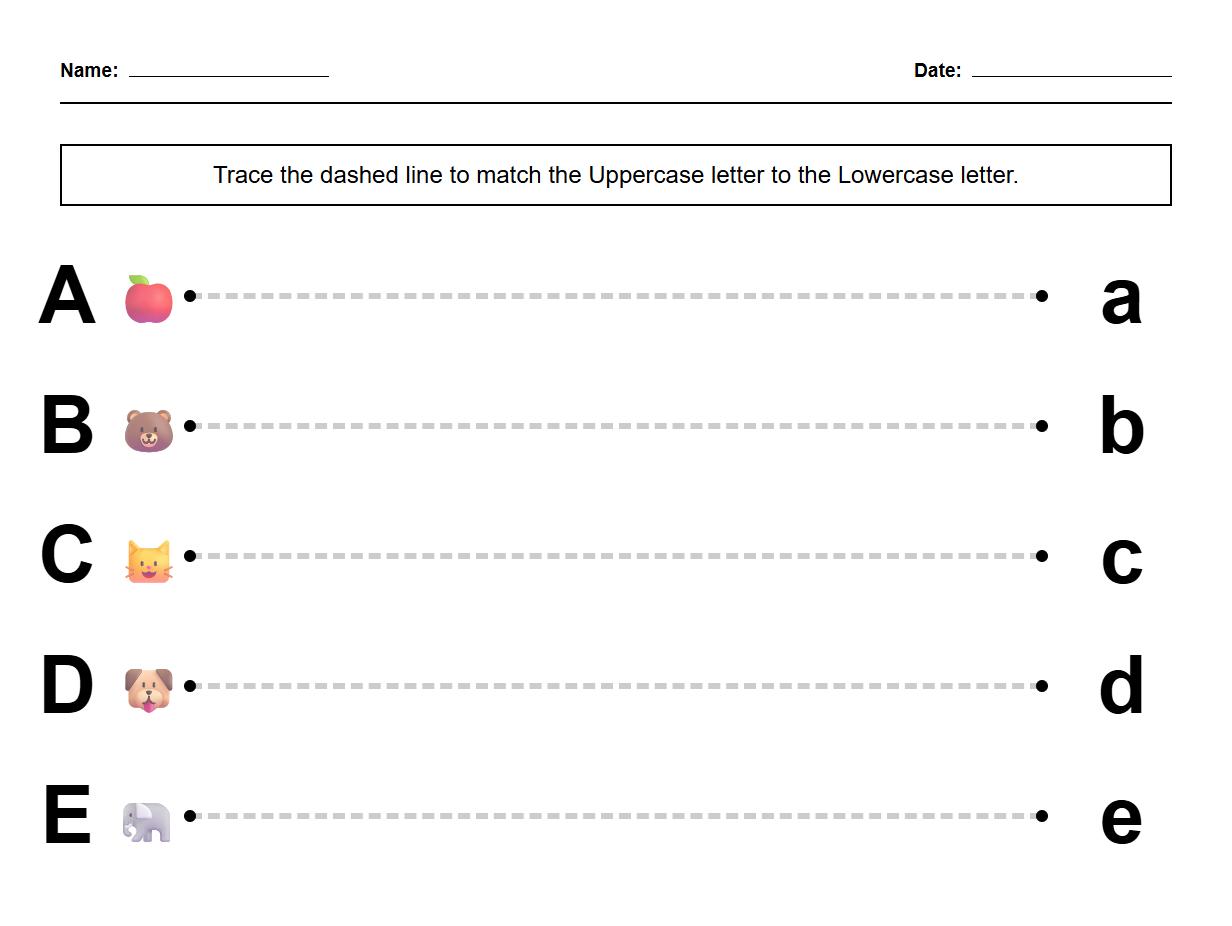
The uppercase letter displayed is A. It stands out clearly for easy identification and tracing by young learners. Reinforcing this letter helps children build a solid foundation in letter recognition. Consistent practice aids in memorization and confidence.
Letter Sound Identification
The traced letter A typically makes the short /ae/ sound as in "apple." Emphasizing the sound helps connect the letter to phonics learning, as practiced in phonics worksheets for matching words with vowel sounds. Sound recognition is key to developing reading skills at this stage.
Matching the Picture to the Letter
The picture that matches the letter A is an apple. Matching pictures with letters creates meaningful associations for children, similar to phonics worksheet activities for short vowels. Visual aids support memory and make learning enjoyable.
Tracing Frequency for Each Letter
Children are asked to trace the letter A five times on this worksheet. Multiple repetitions help build muscle memory for writing, mirroring strategies found in CVC word families and sorting activities. Repetition ensures the skill becomes natural and fluid over time.
Uppercase and Lowercase Letters for Tracing
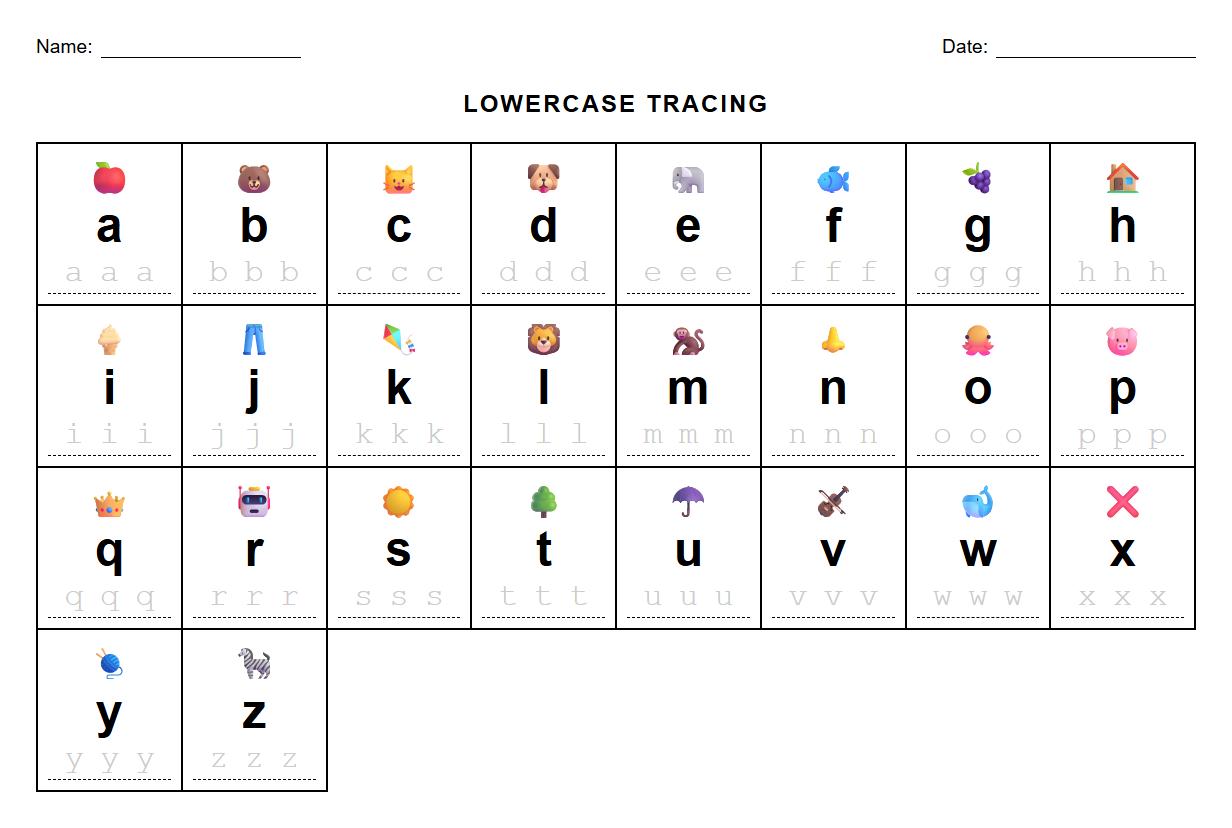
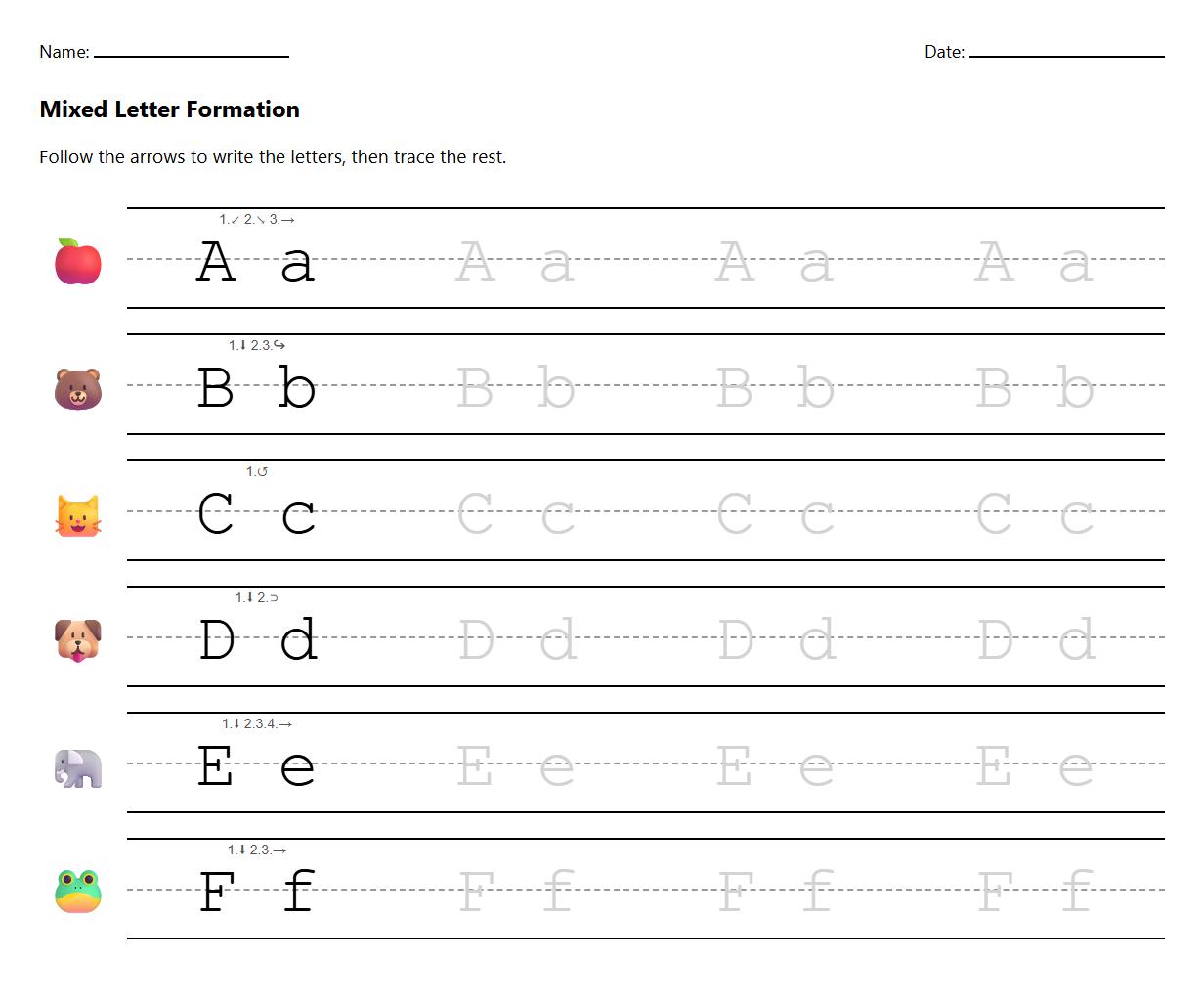
This worksheet includes both uppercase A and lowercase a letters to trace. Differentiating between letter cases is important in early literacy, much like the focus in phonics practice distinguishing vowel sounds. Practicing both forms enhances reading and writing proficiency.
The Next Letter in the Alphabet
After tracing the letter A, the next letter to learn is B. Introducing letters sequentially helps students follow the alphabetic order. This progression supports organized learning, as encouraged in story starter worksheets for kindergarten.
Circular Recognition of Similar Letters
Students are encouraged to circle all letters that look similar to A. Identifying similarities and differences sharpens visual discrimination skills, which can be further developed through consonant cluster worksheets. This exercise aids in preventing confusion between letters.
Difficulty in Tracing Letters
Some children may find letters like R or S more difficult to trace due to their curves and complexity. Teachers and parents should provide extra support with these challenging letters, as addressed in hands-on consonant blends cut and paste worksheets. Practice and patience improve tracing abilities.
Coloring After Tracing
After tracing, children are invited to color the letter A. Coloring enhances engagement and reinforces letter recognition, an approach also utilized in phonics digraphs sorting worksheets. It also adds a creative element to the learning process.


Phonics Focused Alphabet Tracing Activity for Letter Recognition