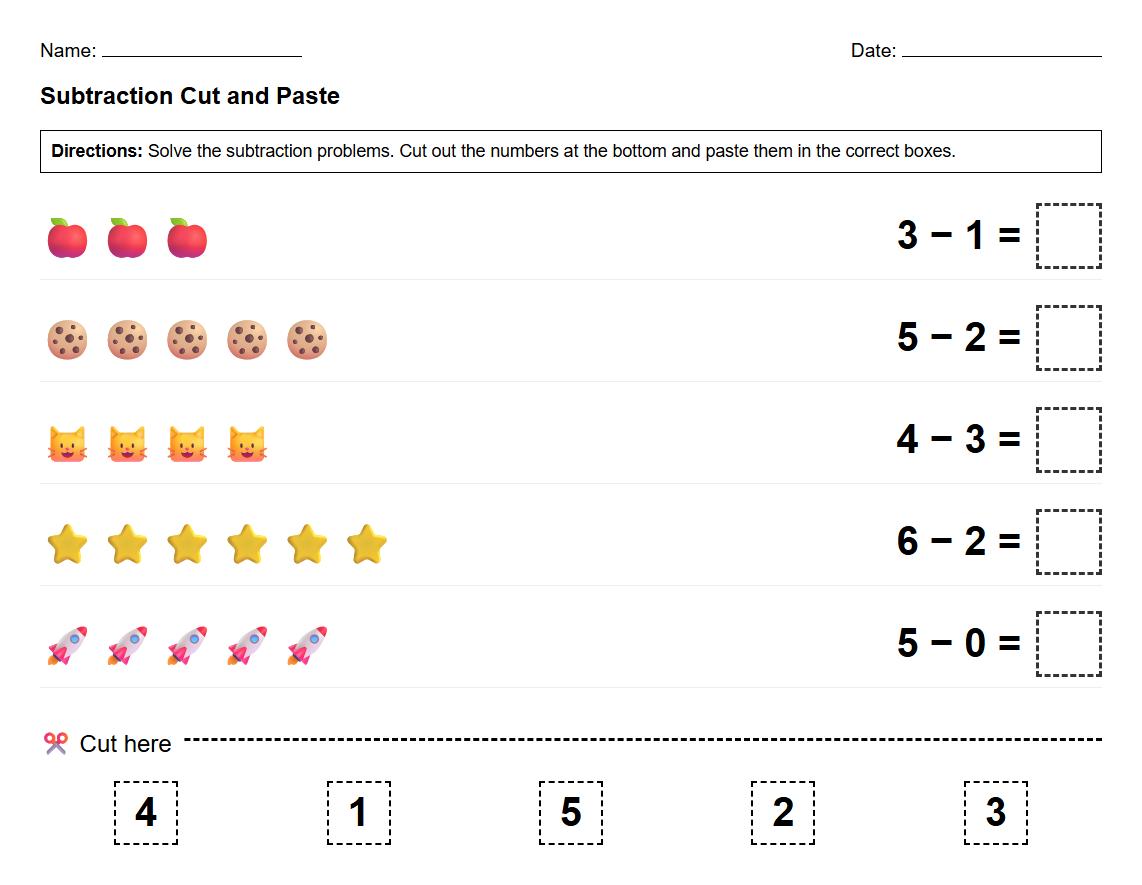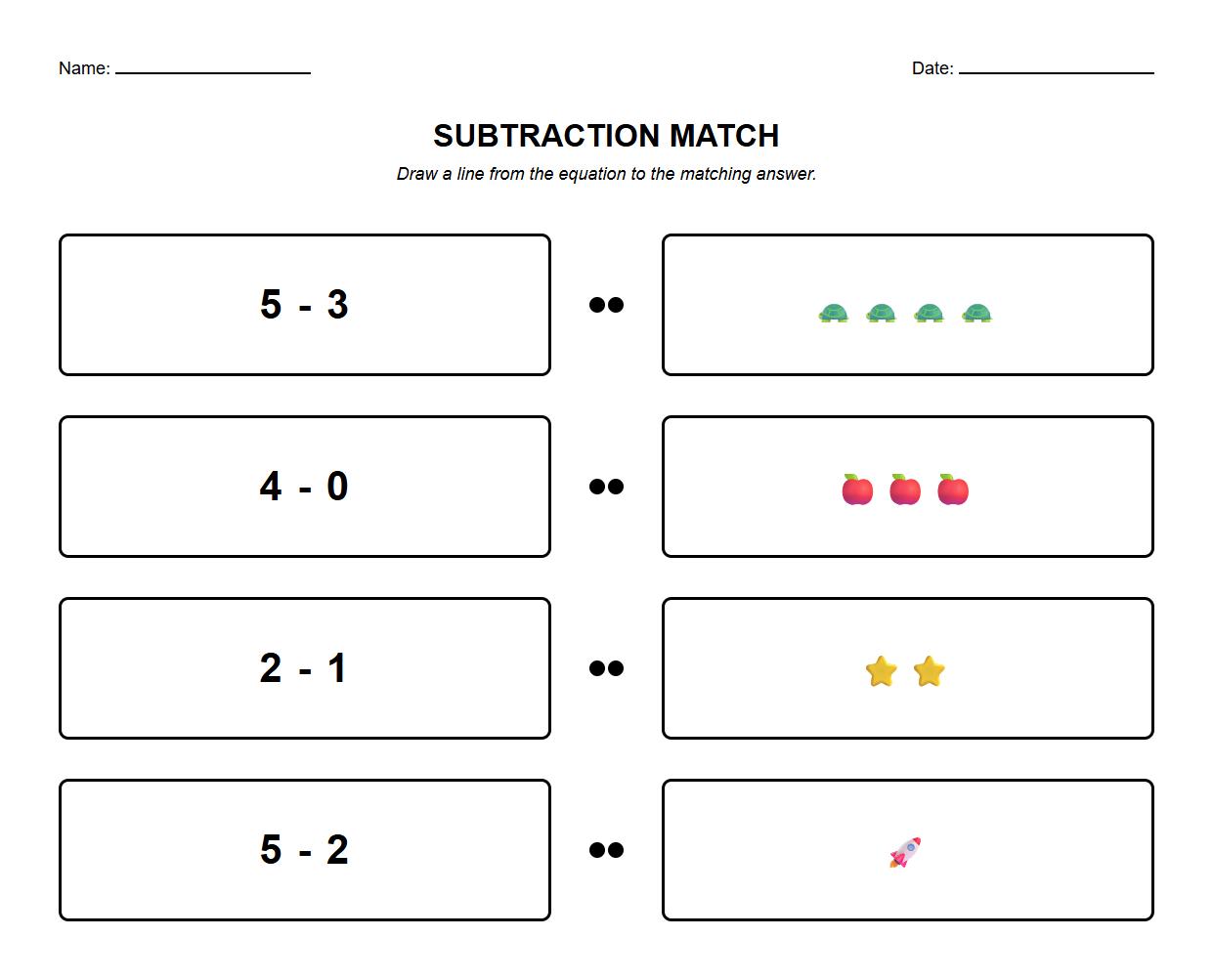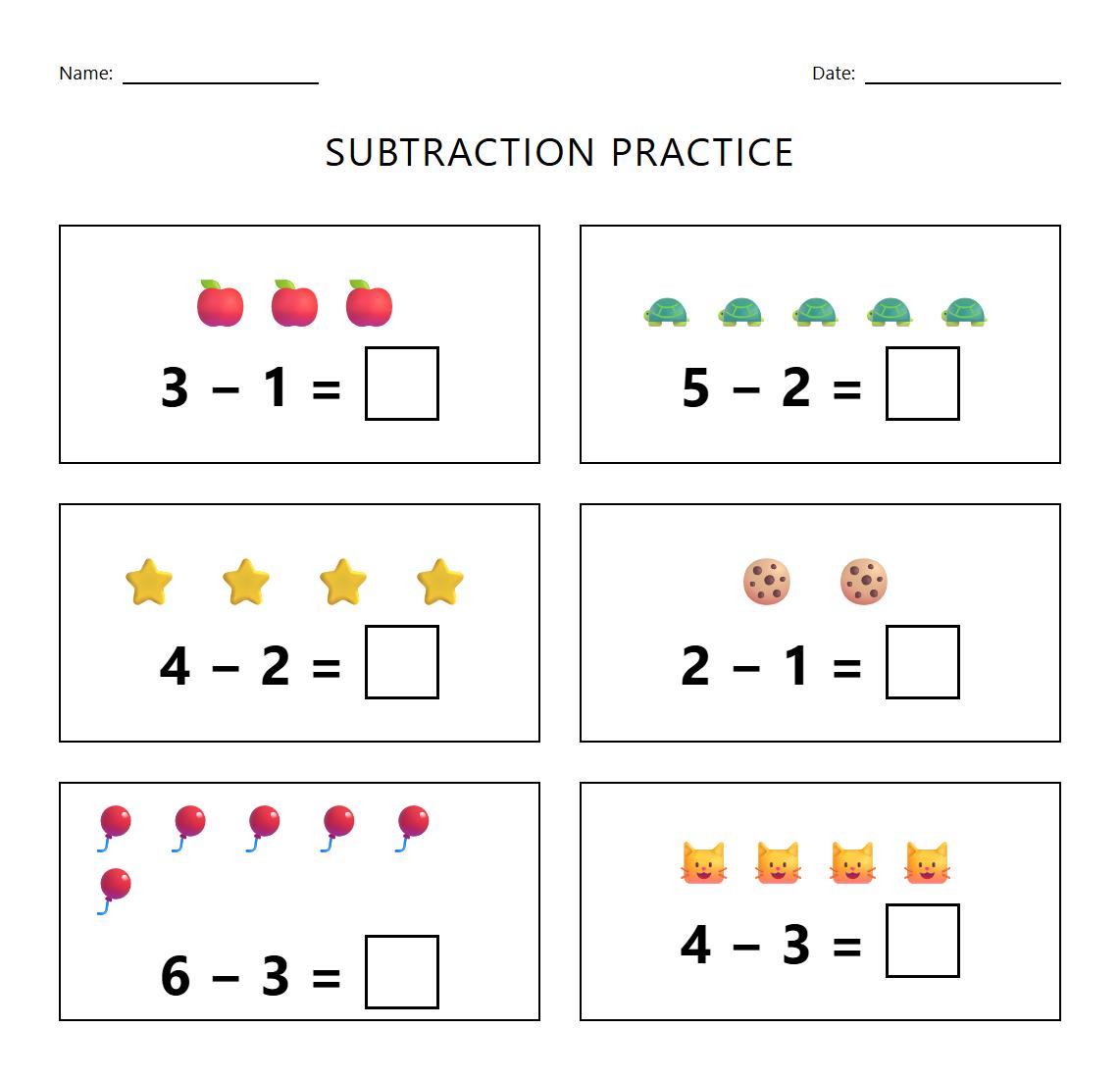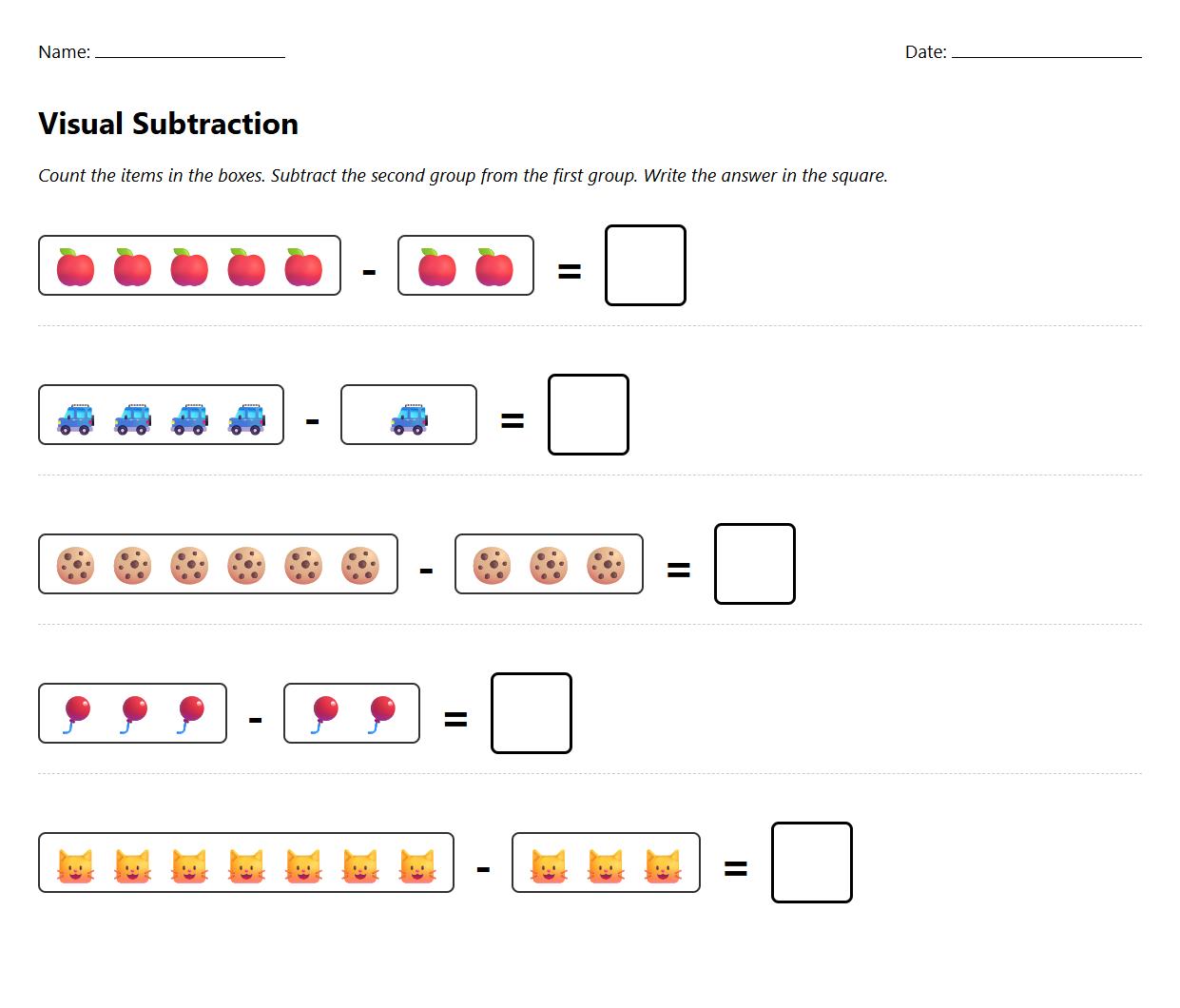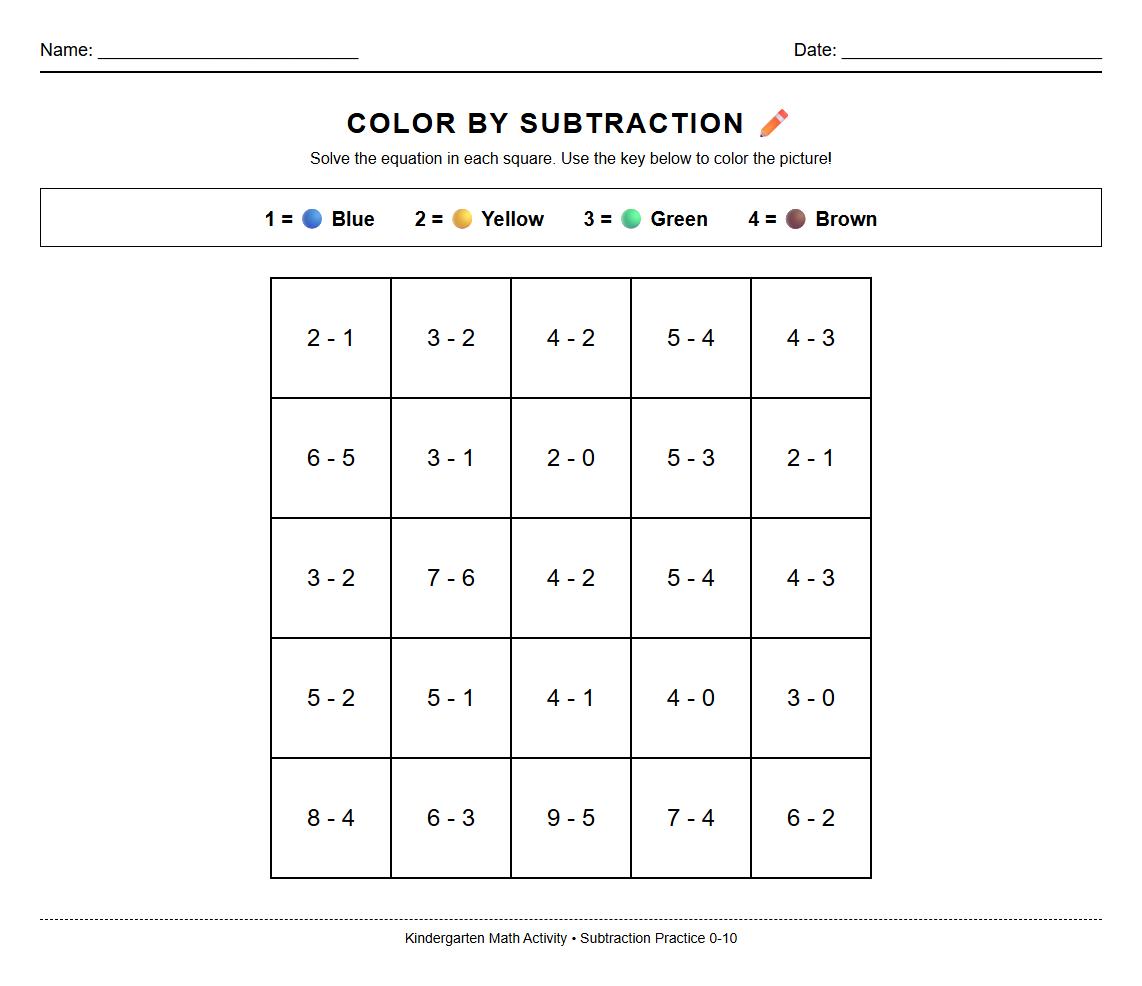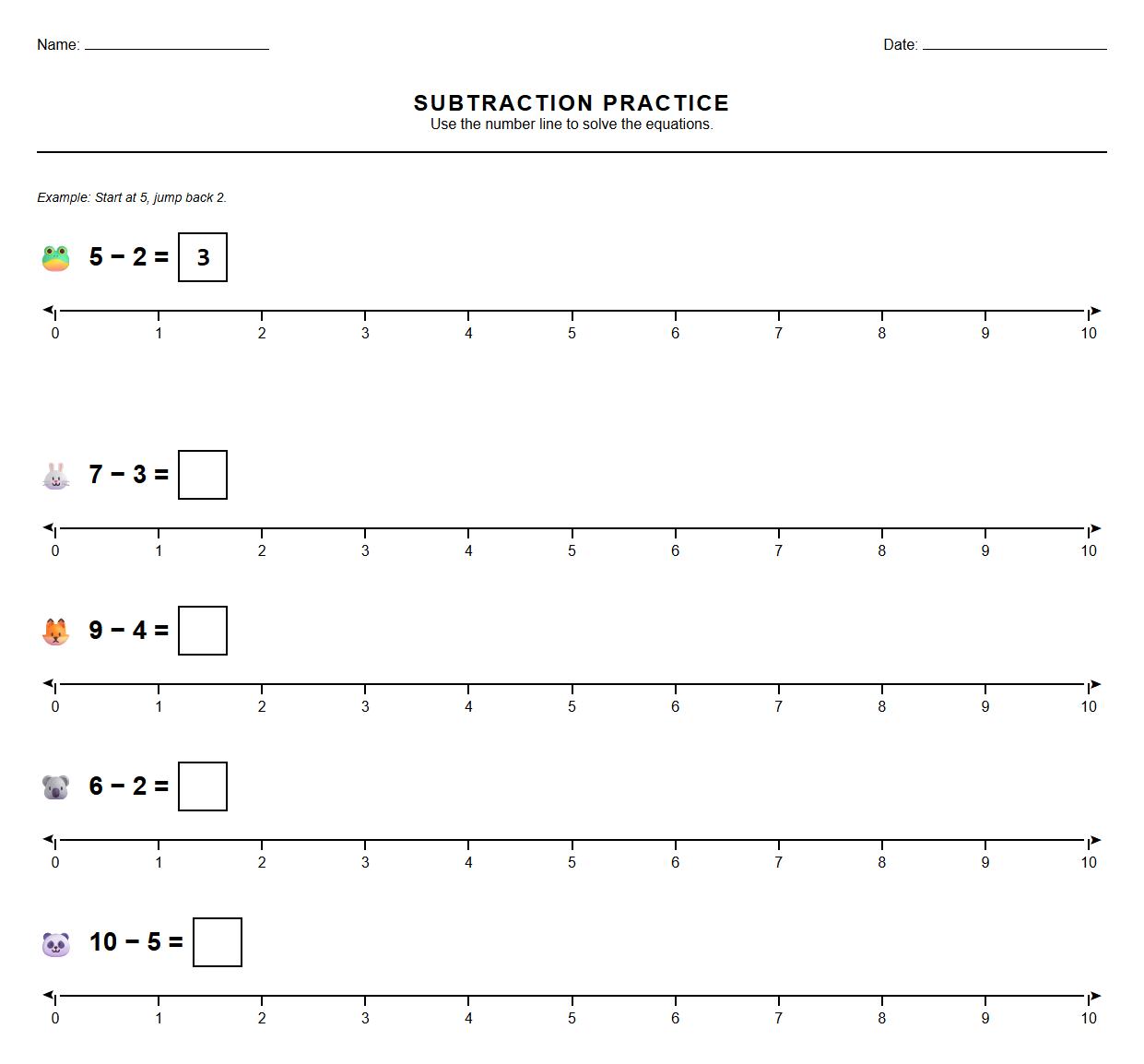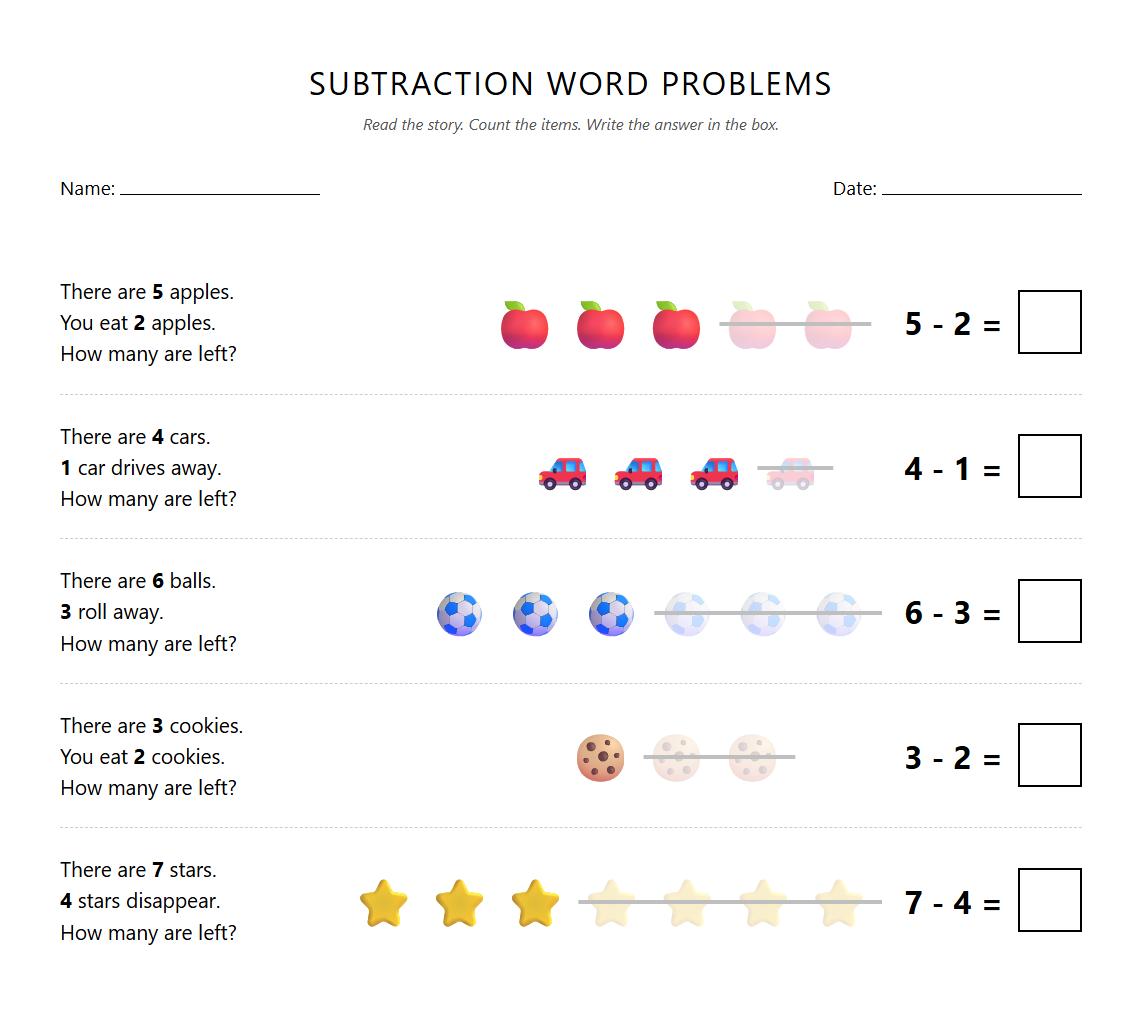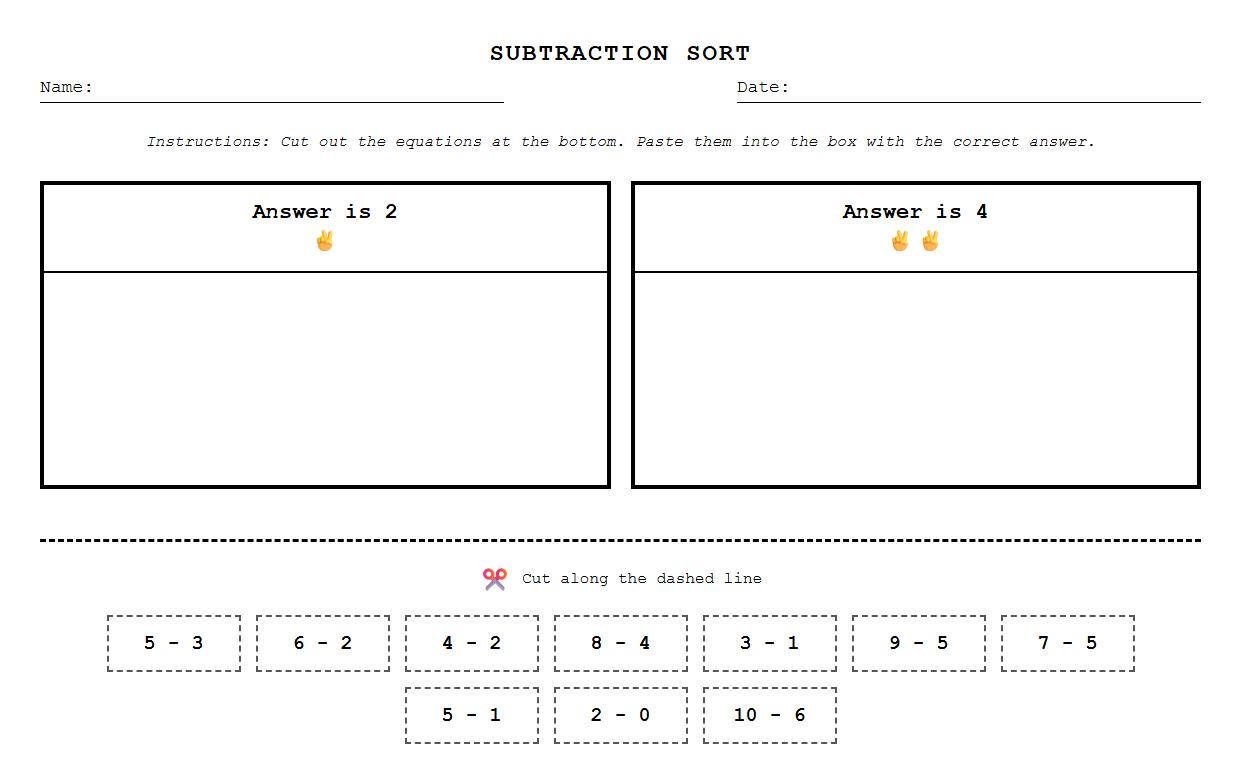
Kindergarten subtraction equation practice worksheets help young learners build foundational math skills by encouraging them to solve simple subtraction problems using visual aids and number lines. These worksheets promote number sense and problem-solving abilities through engaging activities tailored for early education. Explore the available worksheets to support your child's math development today.
Understanding the Difference Between Numbers
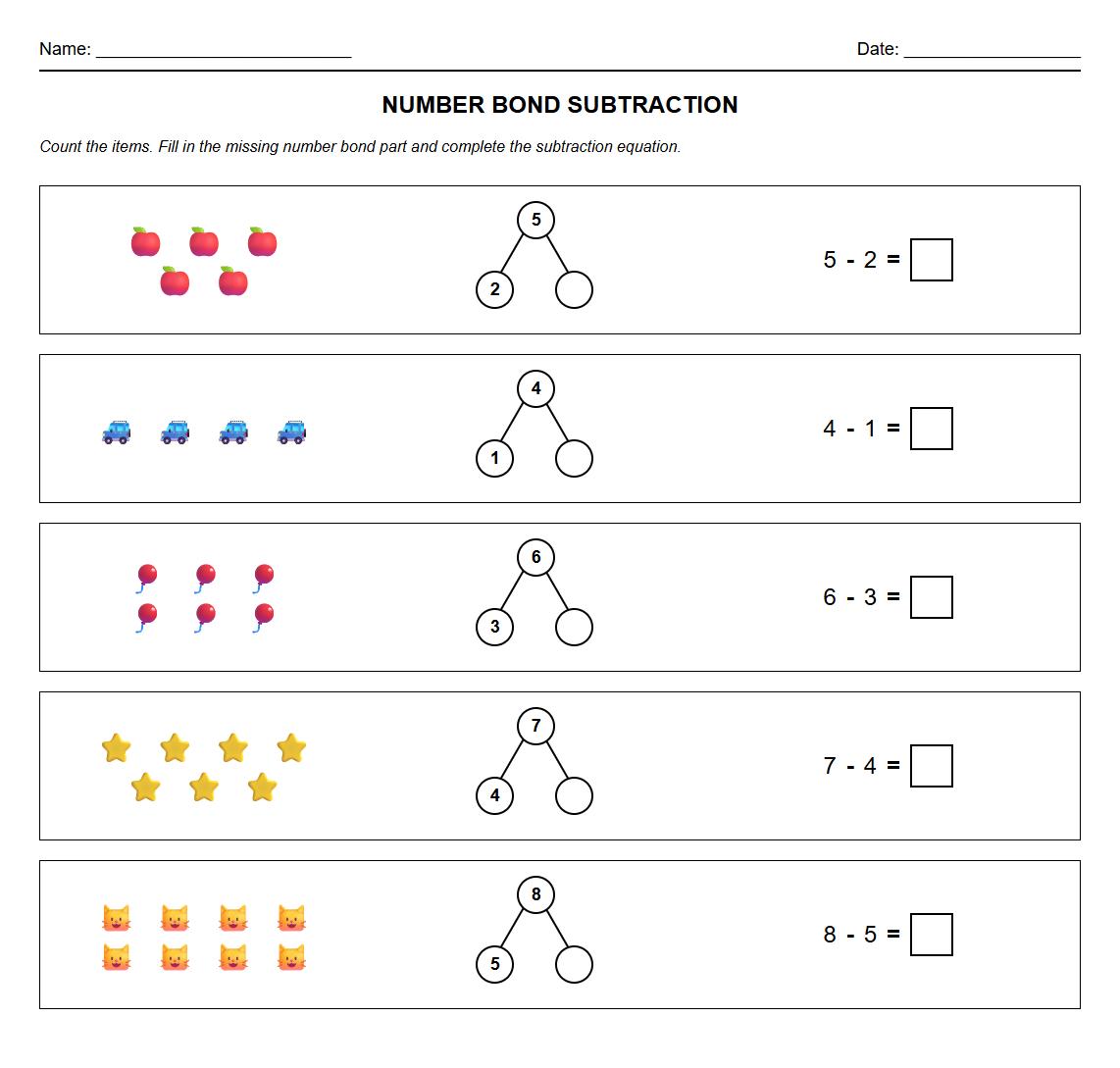
Teaching children to find the difference between numbers is a key math skill. For example, the difference between five and two is three. This helps kids understand subtraction in a simple way. It builds a foundation for more complex math concepts later.
Simple Subtraction Problems
Solving problems like three minus one is great practice for young learners. The answer in this case is two. These exercises improve mental math and number recognition. Encouraging kids to explain their answers helps reinforce learning.
Subtracting in Everyday Contexts
Asking questions such as "What number do you get if you subtract four from six?" makes subtraction relatable. The answer here is two. Using real-world examples, like how many apples are left after giving some away, builds practical math skills. This approach keeps children engaged and attentive.
Using Story Problems to Explain Subtraction
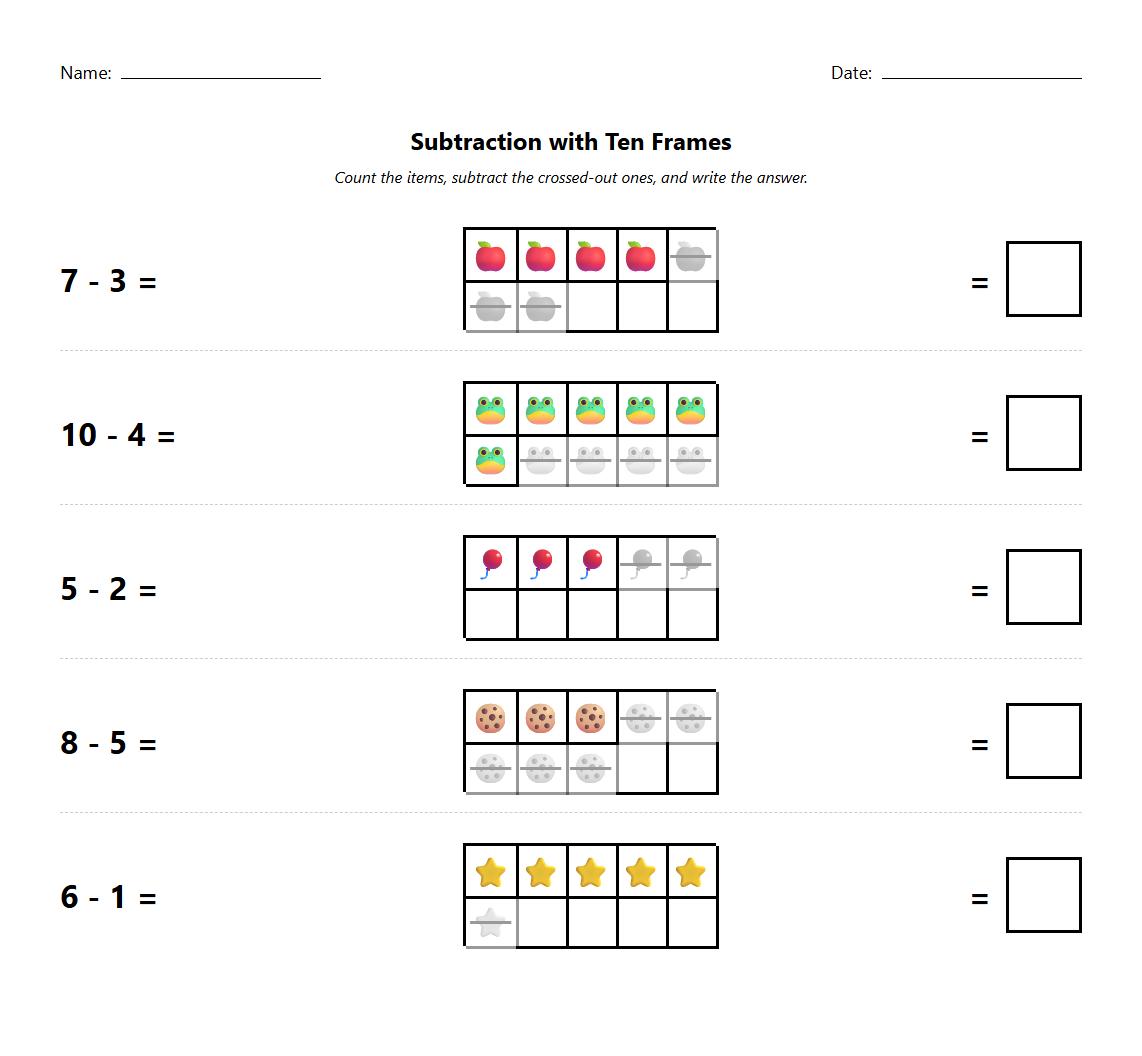
Story problems like "If you have seven apples and give away three, how many are left?" help children visualize subtraction. The answer is four. Storytelling enhances comprehension and makes abstract numbers concrete. Parents and teachers can use these scenarios to support learning at home and school.
Practicing Basic Subtraction Facts
Questions like "What is eight minus five?" provide simple subtraction facts for repetition and mastery. The correct answer is three. Repeated practice with such facts helps build confidence in mathematical operations. It's important to keep these sessions fun and interactive.
Exploring Subtraction With Small Numbers
When you take away two from five, the result is three. This type of exercise helps children understand the concept of taking away. It encourages them to count backwards and improve number sense. Parents and teachers can use physical objects to demonstrate this.
Learning About Number Complements
Asking "How many more do you need to reach four if you have one?" teaches kids about number complements. The answer is three. This builds early addition and subtraction skills simultaneously. It also boosts problem-solving and critical thinking abilities.
Working With Larger Numbers
Questions like "What is the answer to nine minus three?" help kids handle larger numbers confidently. The answer is six. Understanding these problems strengthens their numeric fluency and ability to perform operations without hesitation. It prepares children for more advanced math tasks.
Subtraction Using Tens and Units
Starting with ten and subtracting four leaves six. This example illustrates subtraction within the context of tens and units. It is important for understanding place value in the early years. This knowledge is essential before moving to more complex mathematical concepts.
Mastering Results of Simple Subtraction
The result of six minus two is four. Mastering these facts forms the basis for all future math learning. Consistent repetition and varied problem formats enhance retention. Teachers and parents should celebrate successes to motivate young learners.


Basic Subtraction Worksheet for Kindergarten with Ten Frames