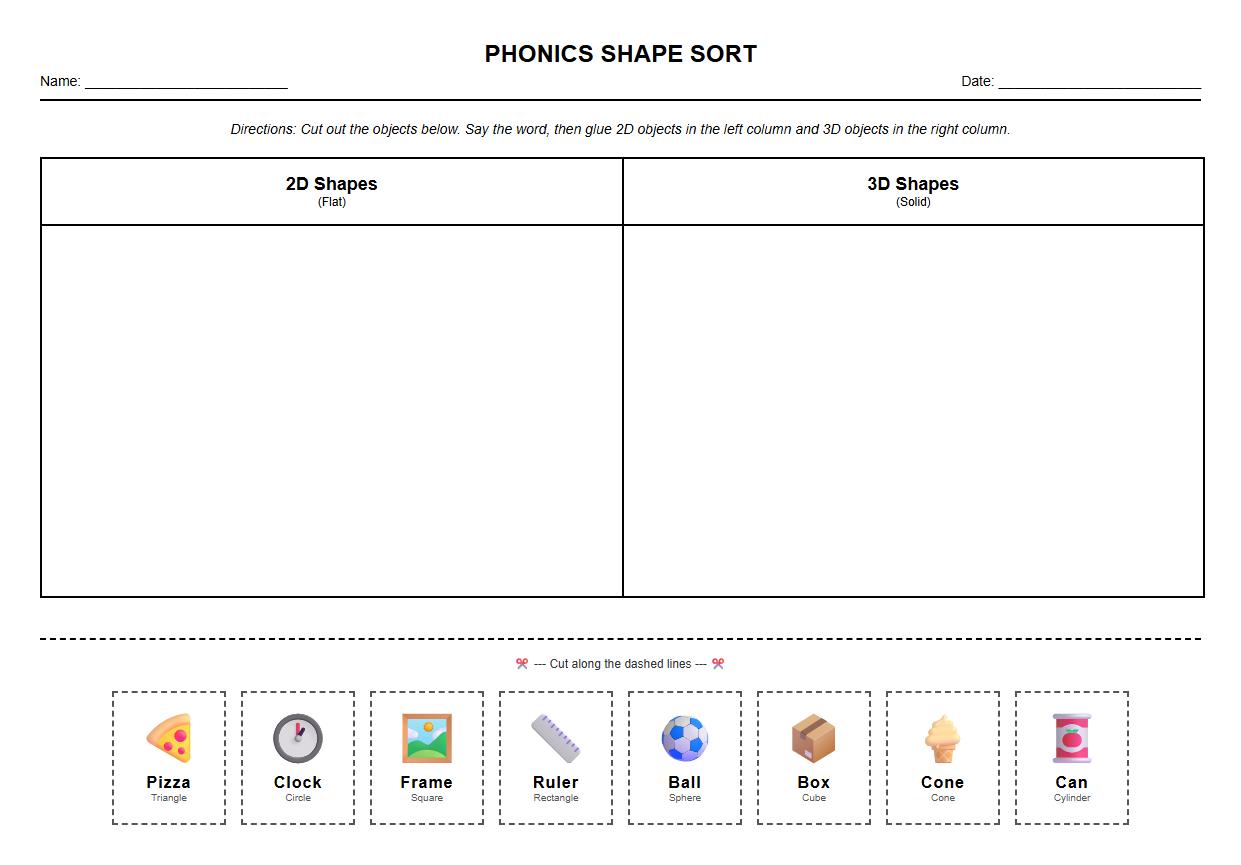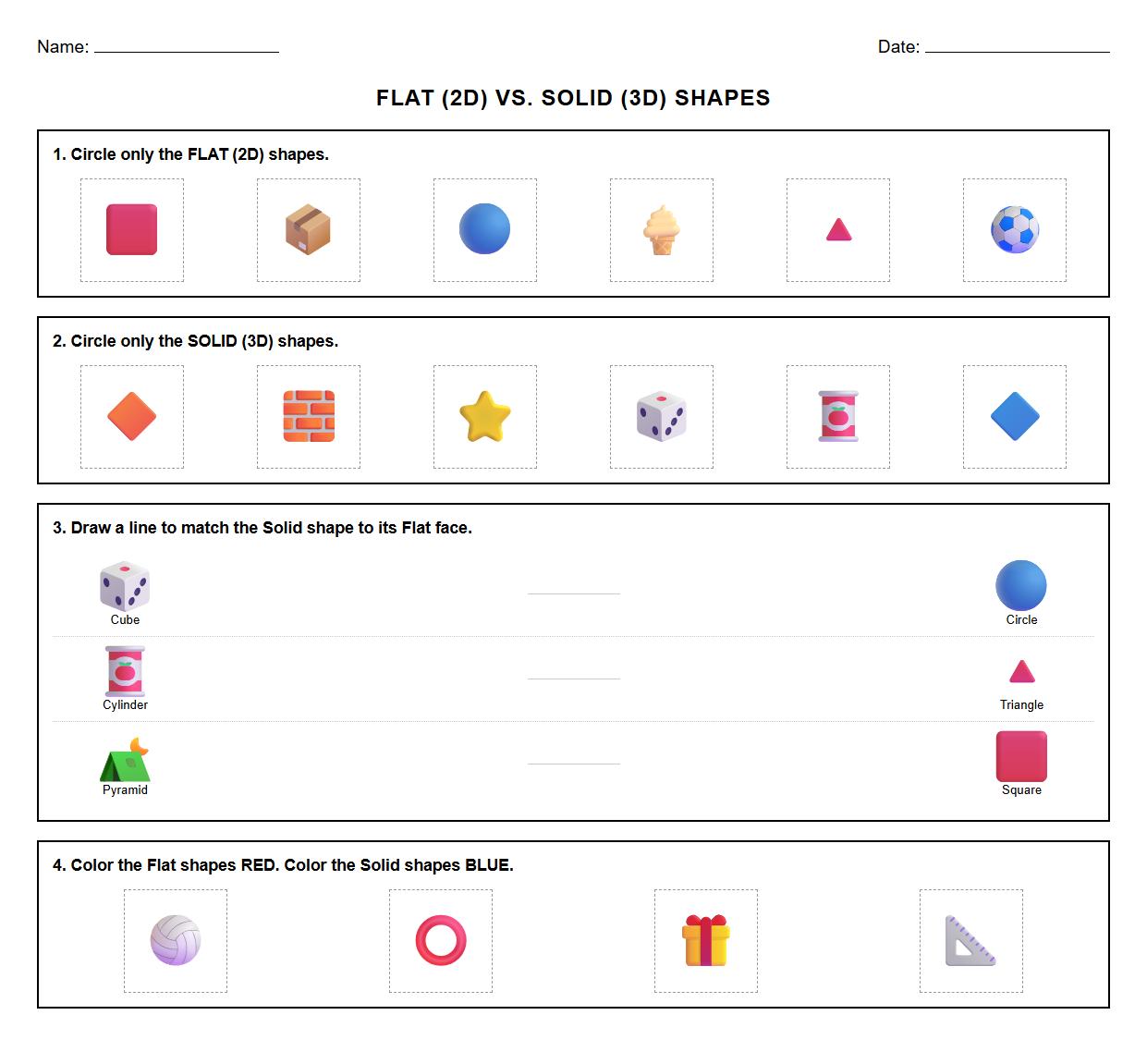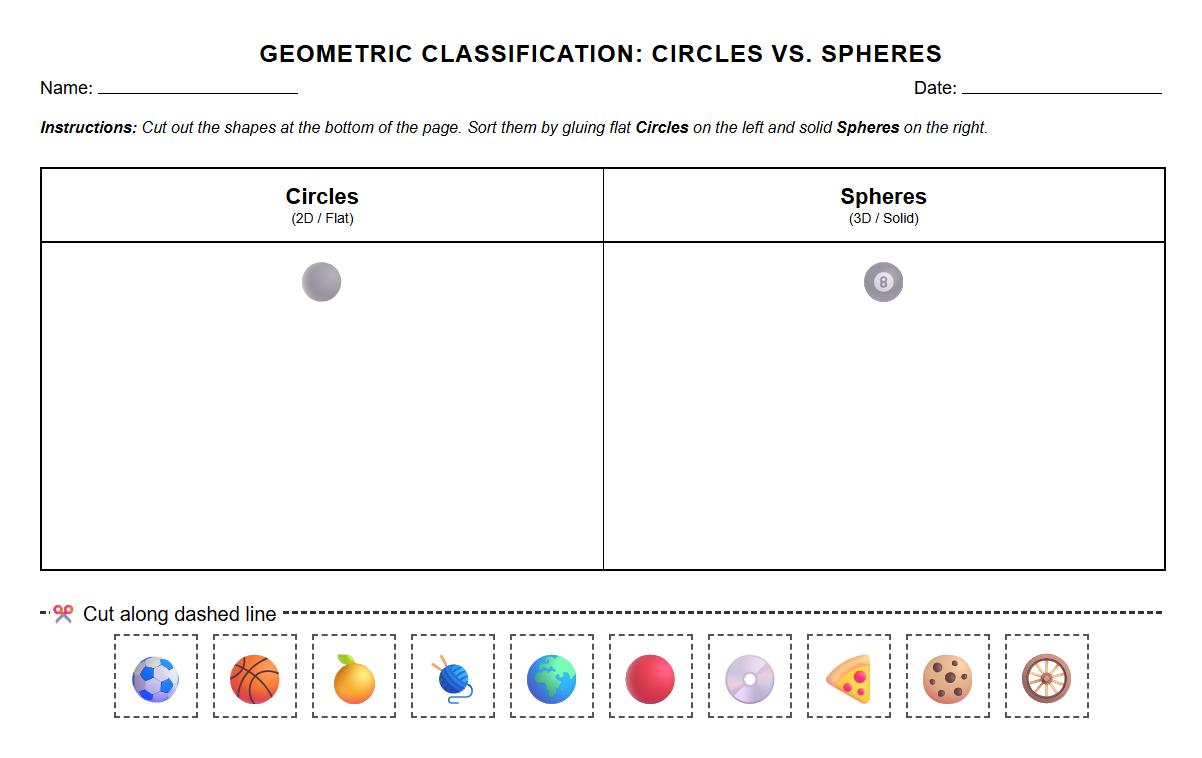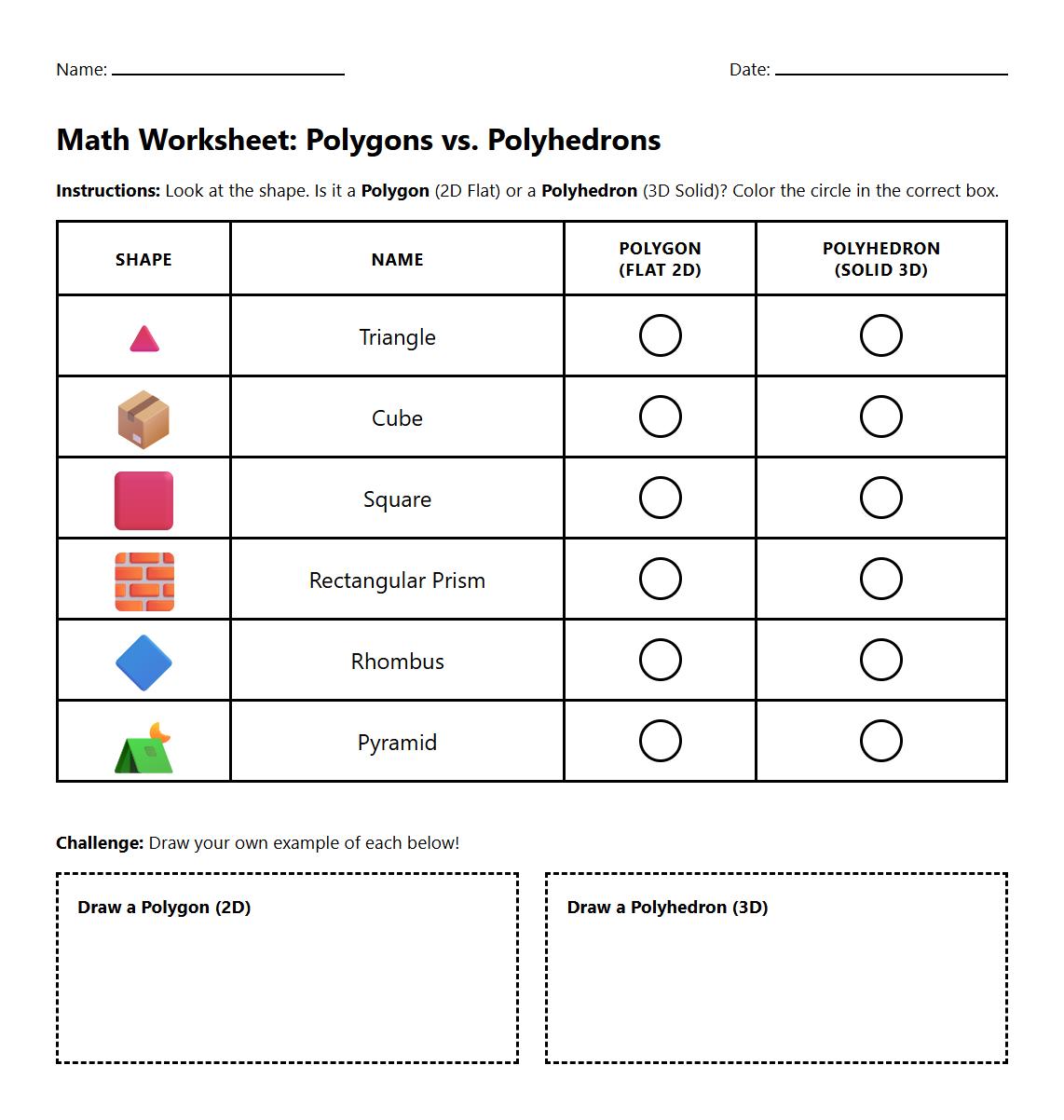
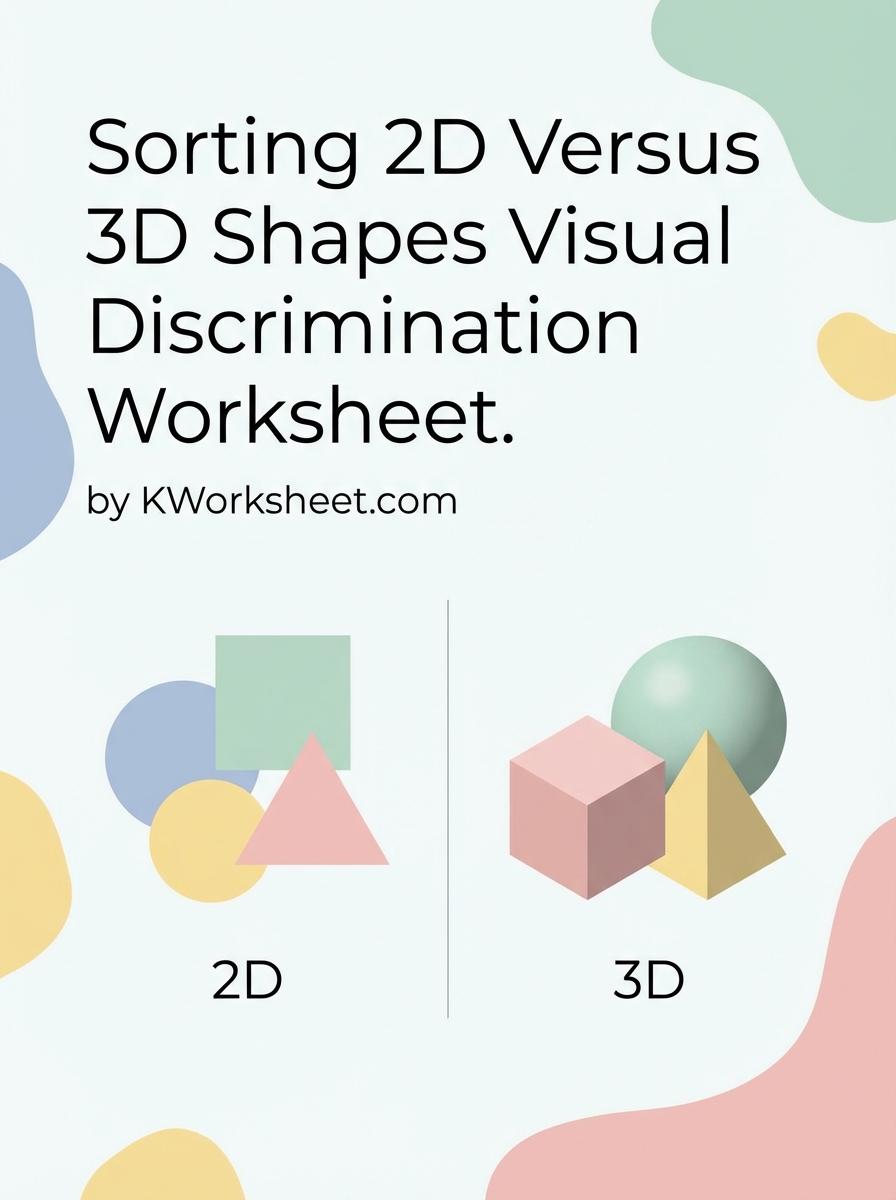
Sorting 2D versus 3D shapes enhances spatial awareness and visual discrimination skills by helping learners identify differences in dimensions and properties. This exercise sharpens the ability to recognize flat shapes like squares and circles compared to solid shapes such as cubes and spheres. Explore the available worksheets to practice sorting and strengthen shape recognition abilities.
Flat Shapes vs. Solid Shapes
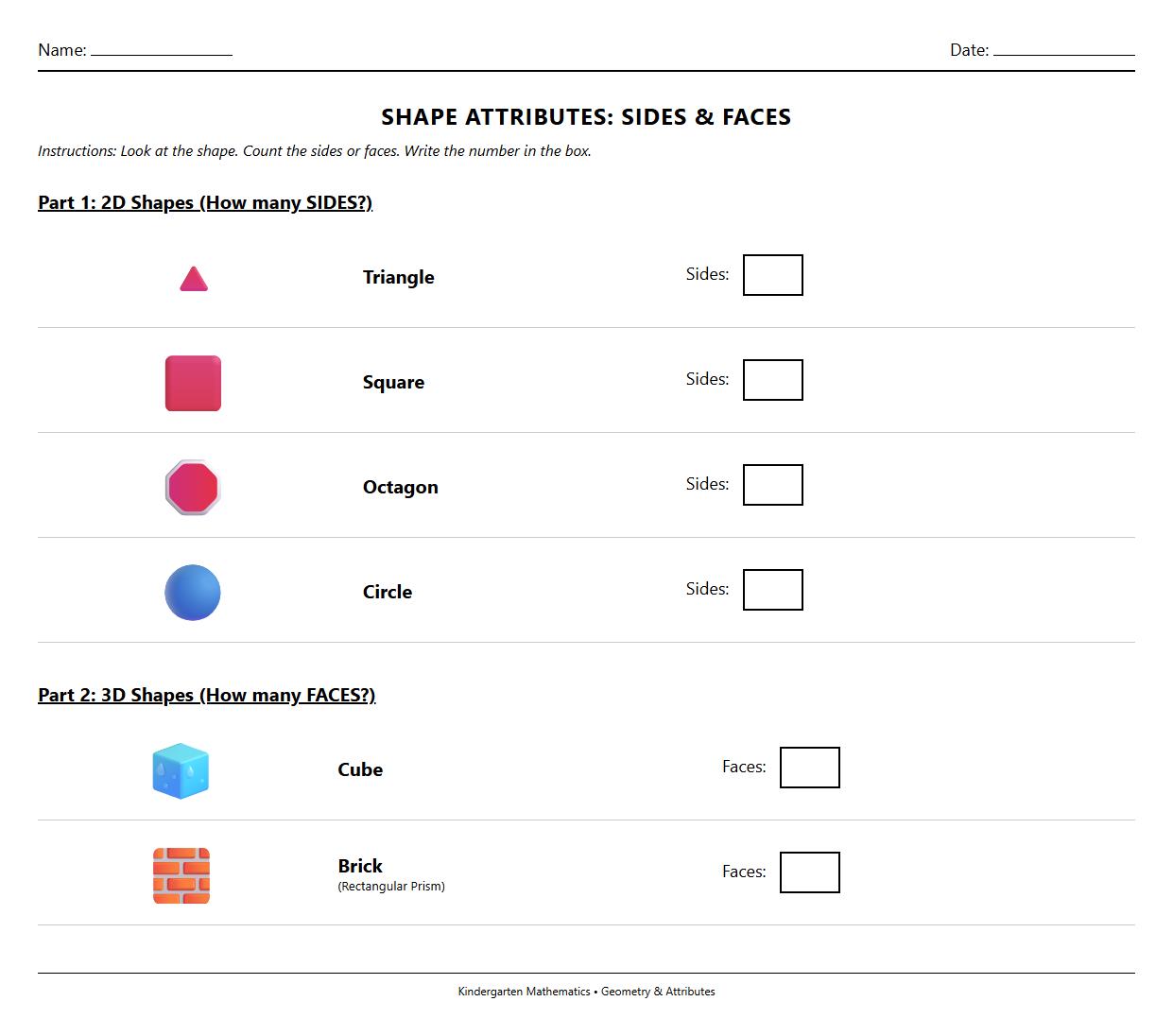
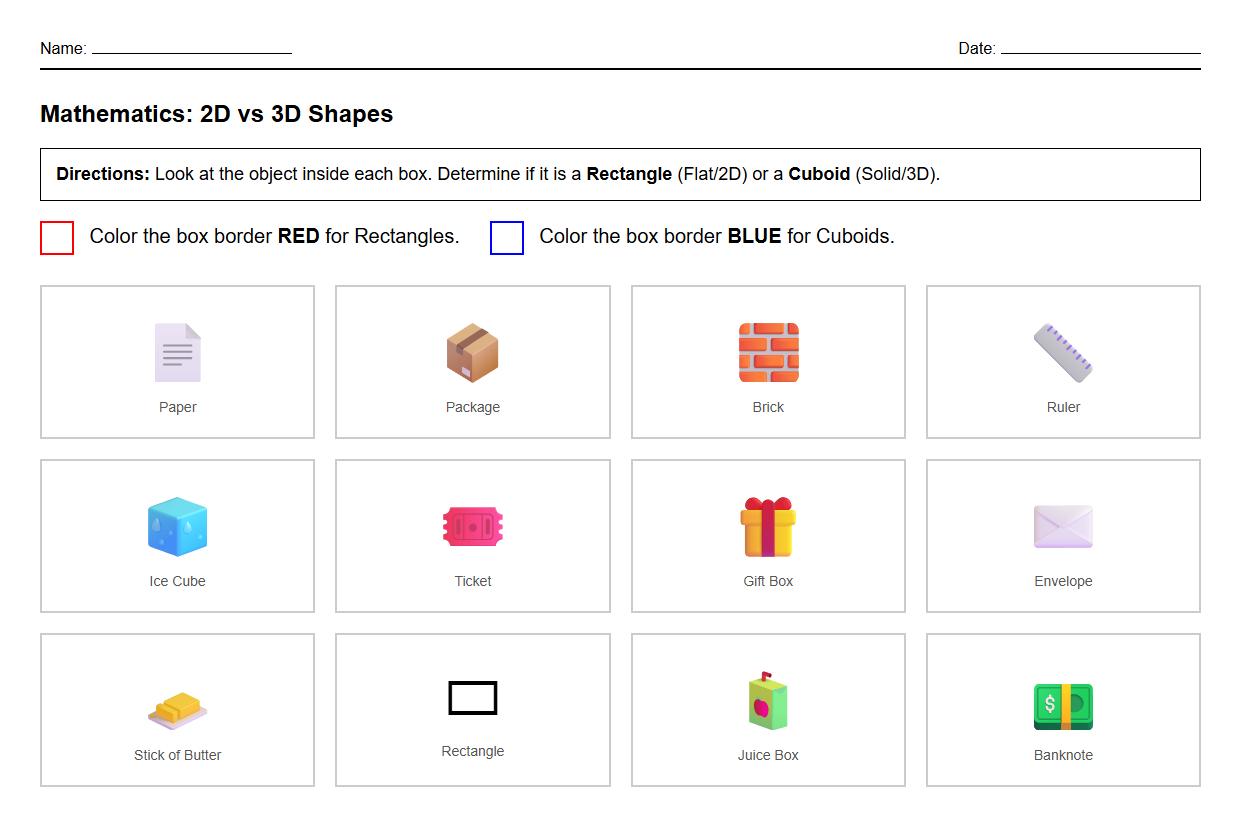
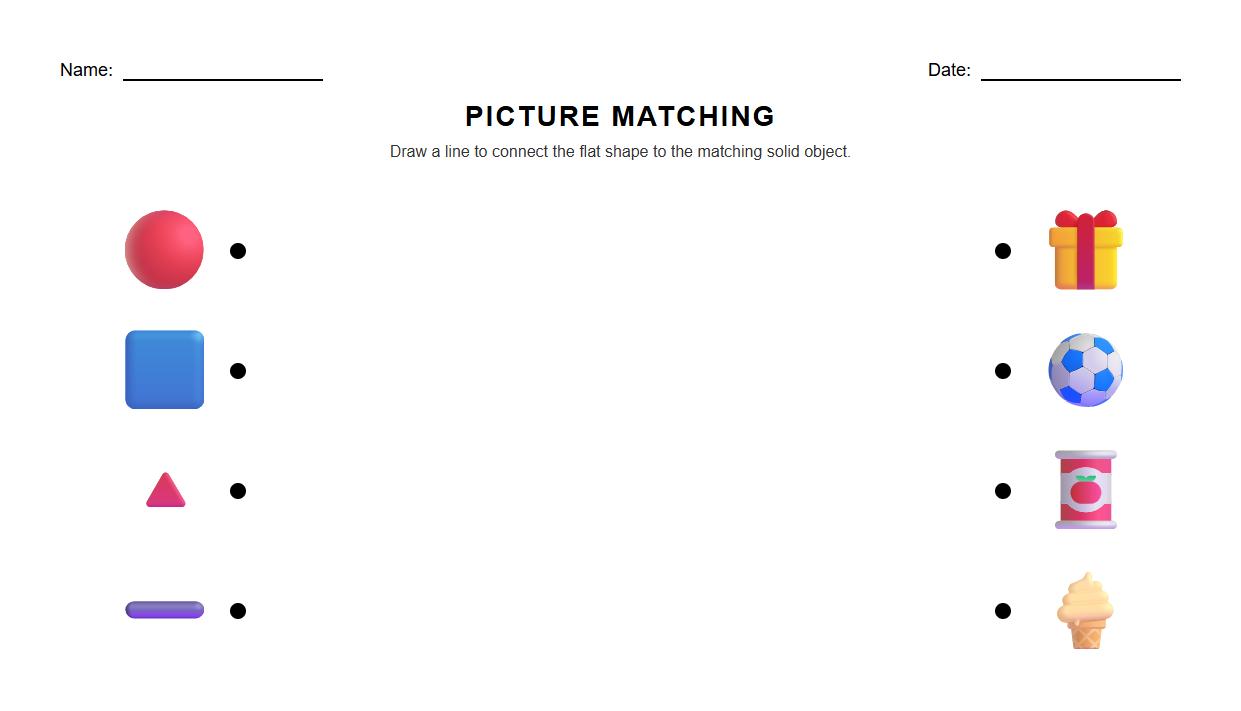
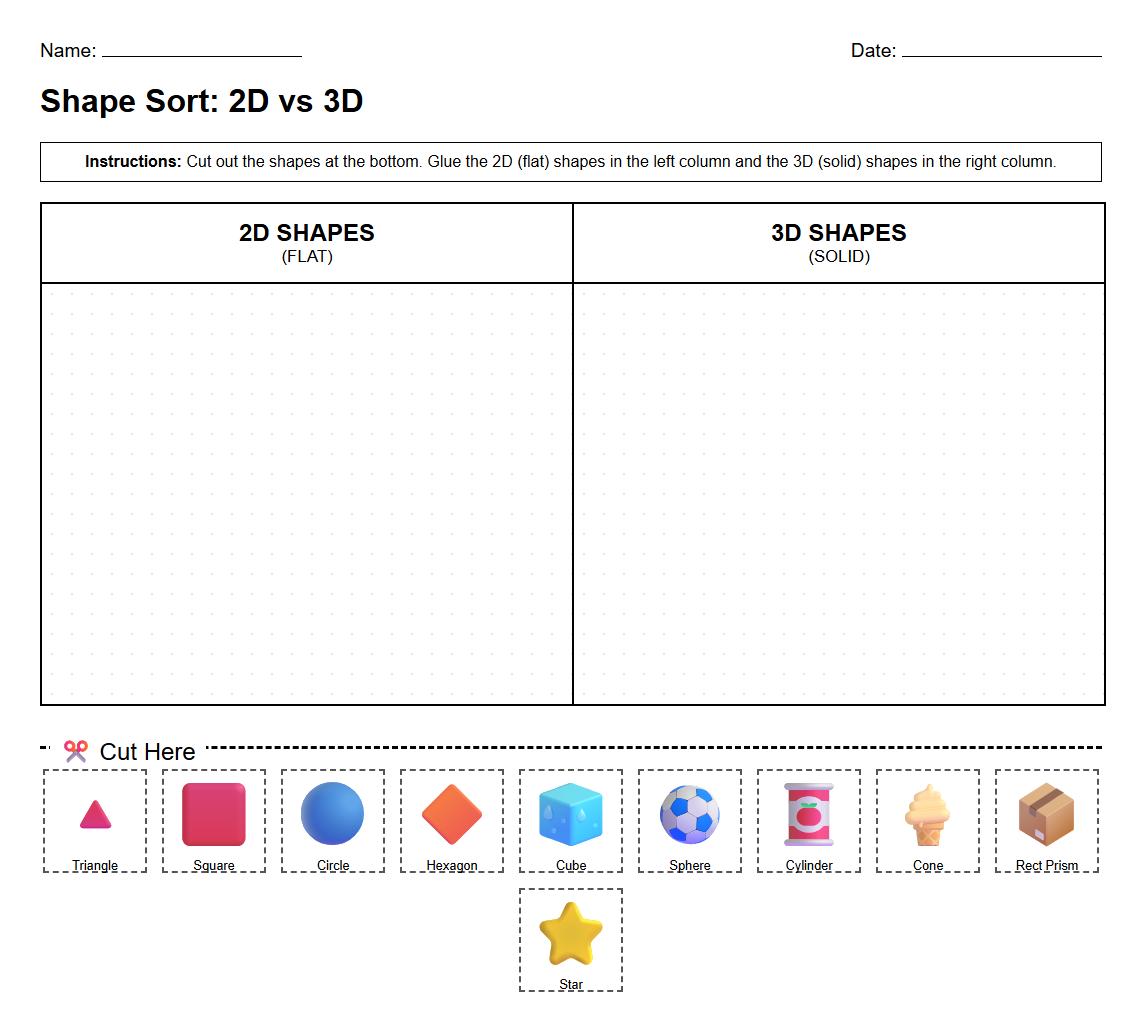
Flat shapes are two-dimensional, meaning they have only length and width, such as circles, squares, and triangles. Solid shapes are three-dimensional and have length, width, and height, like cubes, spheres, and cones. Understanding the difference helps children visualize and categorize shapes effectively. This guide encourages identifying both in daily learning.
Shapes with Only Two Dimensions
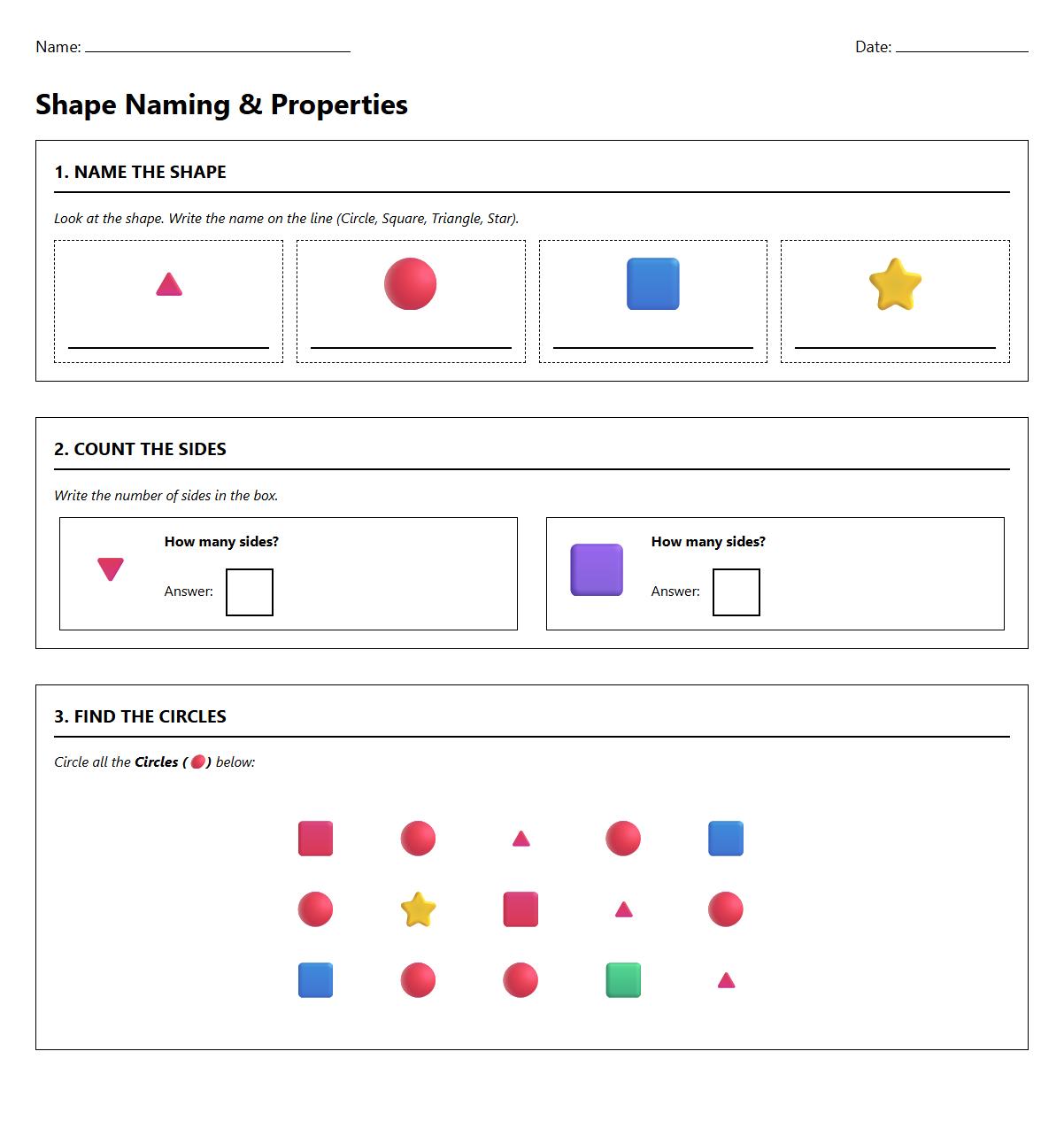
Two-dimensional shapes include circles, squares, rectangles, triangles, and ovals. These shapes lie flat and can be drawn on paper without depth. Pointing to these shapes helps children recognize basic properties of flat objects. Using worksheets, teachers and parents can reinforce this concept through hands-on activities.
Stacking Shapes Without Rolling
Shapes that can be stacked without rolling have flat bases, such as cubes, rectangular prisms, and cylinders. Spheres and cones tend to roll and are harder to stack. Teaching children which shapes balance well encourages exploration of physical properties in objects. This knowledge also relates to concepts of stability and design.
Shapes with Corners and Edges
Shapes like squares, rectangles, triangles, and cubes have corners and edges. Corners are where two edges meet, giving these shapes a defined structure. Recognizing these features helps children identify and describe shapes with precision. Activities include finding and tracing corners on shape cutouts.
Shapes That Look the Same From Every Side
Symmetrical shapes like circles, spheres, and some regular polygons look the same from multiple angles. This uniformity aids in developing spatial awareness and symmetry understanding. Helping children spot these shapes fosters their ability to recognize patterns in the environment. The worksheet includes examples to practice this skill.
Shapes That Can Be Fully Colored or Shaded
Flat shapes can be completely colored or shaded in, unlike solid shapes where visibility of all surfaces is limited. This makes two-dimensional shapes ideal for coloring activities, enhancing fine motor skills in children. The guide suggests sorting shapes to practice shading and coloring neatly. This also introduces the concept of surface area.
Real-Life Shapes Like Blocks or Balls
Common objects relate to shapes: blocks are often cubes or rectangular prisms, while balls represent spheres. Connecting shapes to real-world items helps children understand abstract concepts through familiar examples. This approach makes learning interactive and meaningful. Discussions can include everyday objects to reinforce the lesson.
Naming a Flat Shape and a Solid Shape
A flat shape example is a triangle, showing only length and width on paper. A solid shape example is a cube, which has length, width, and height, like a toy block. Naming examples aids in vocabulary building and shape recognition. Teachers and parents can encourage children to point out or draw these shapes.
Shapes Easy to Cut Out from Paper
Flat shapes such as squares, circles, and triangles are easy to cut out from paper due to their simple outlines. In contrast, solid shapes require 3D construction to replicate. Practicing cutting enhances hand-eye coordination and fine motor skills. Worksheets include templates to support cutting practice safely.
Grouping Shapes Based on Appearance
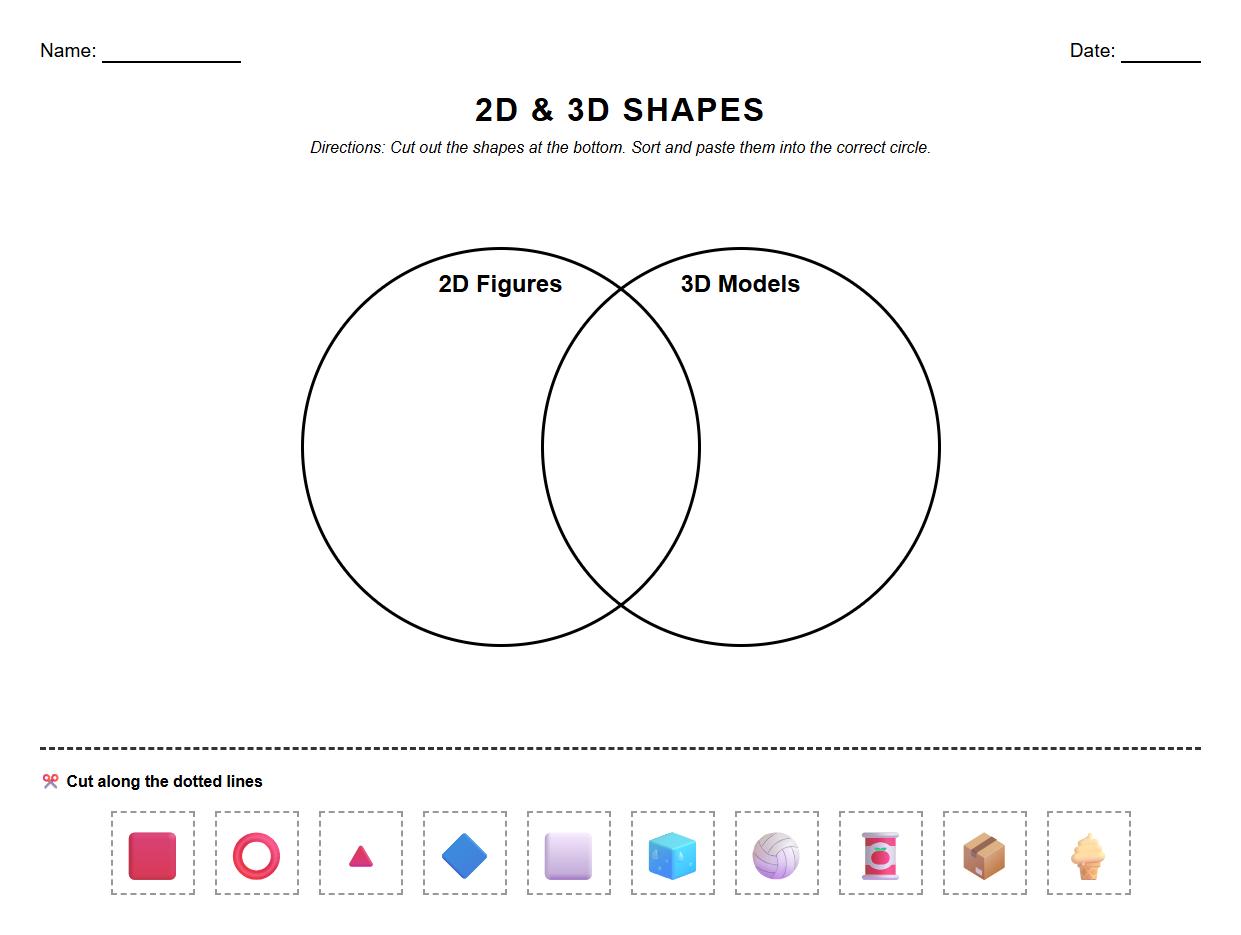
Shapes can be grouped into two sets: flat (2D) shapes and solid (3D) shapes. Flat shapes are simple outlines, while solid shapes have depth and volume. Sorting shapes visually encourages classification skills and critical thinking. This grouping provides a foundation for more advanced geometry learning later on.


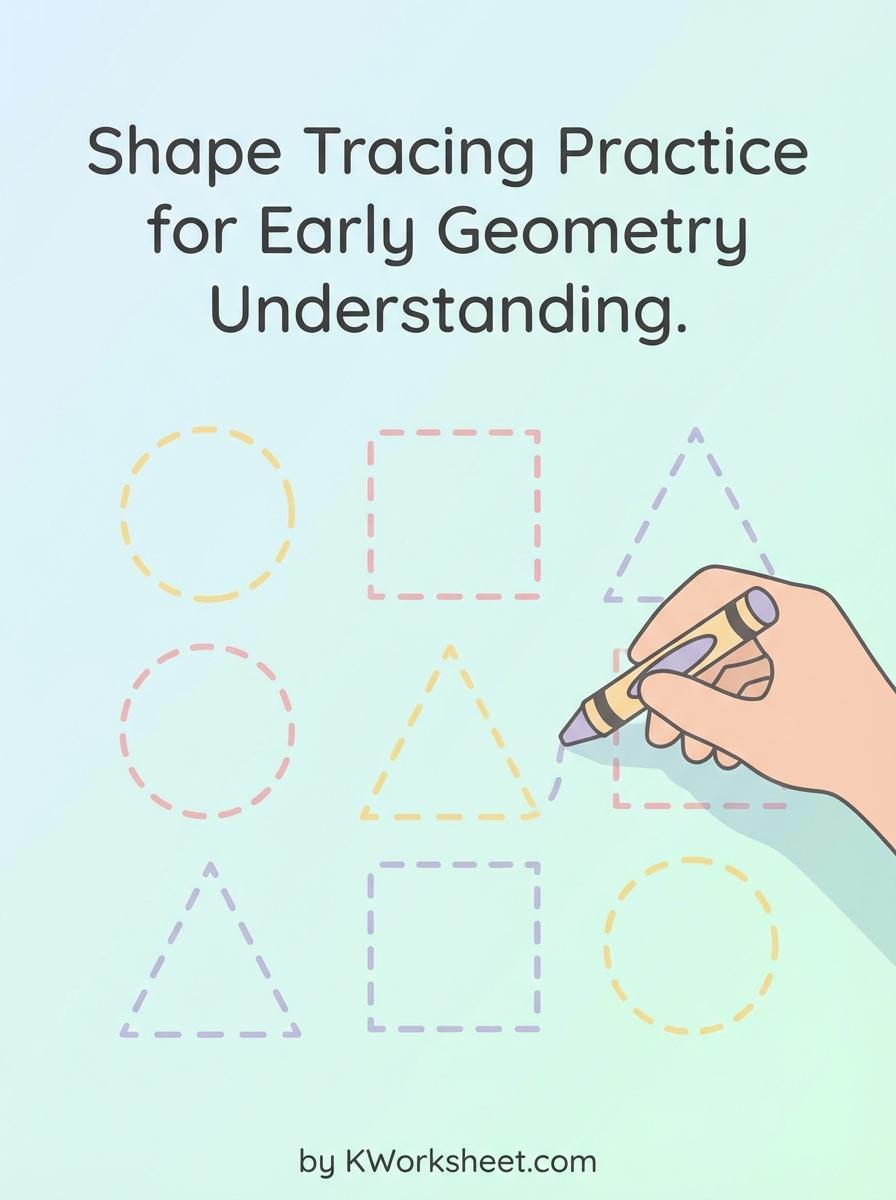
Shape Tracing Practice for Early Geometry Understanding