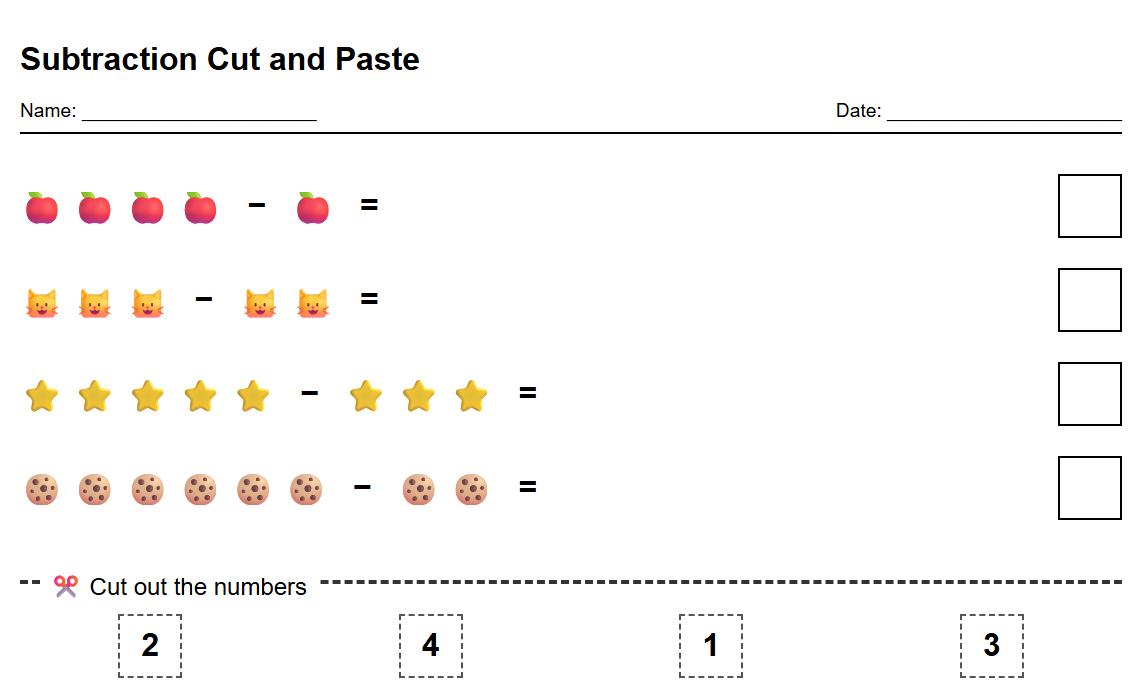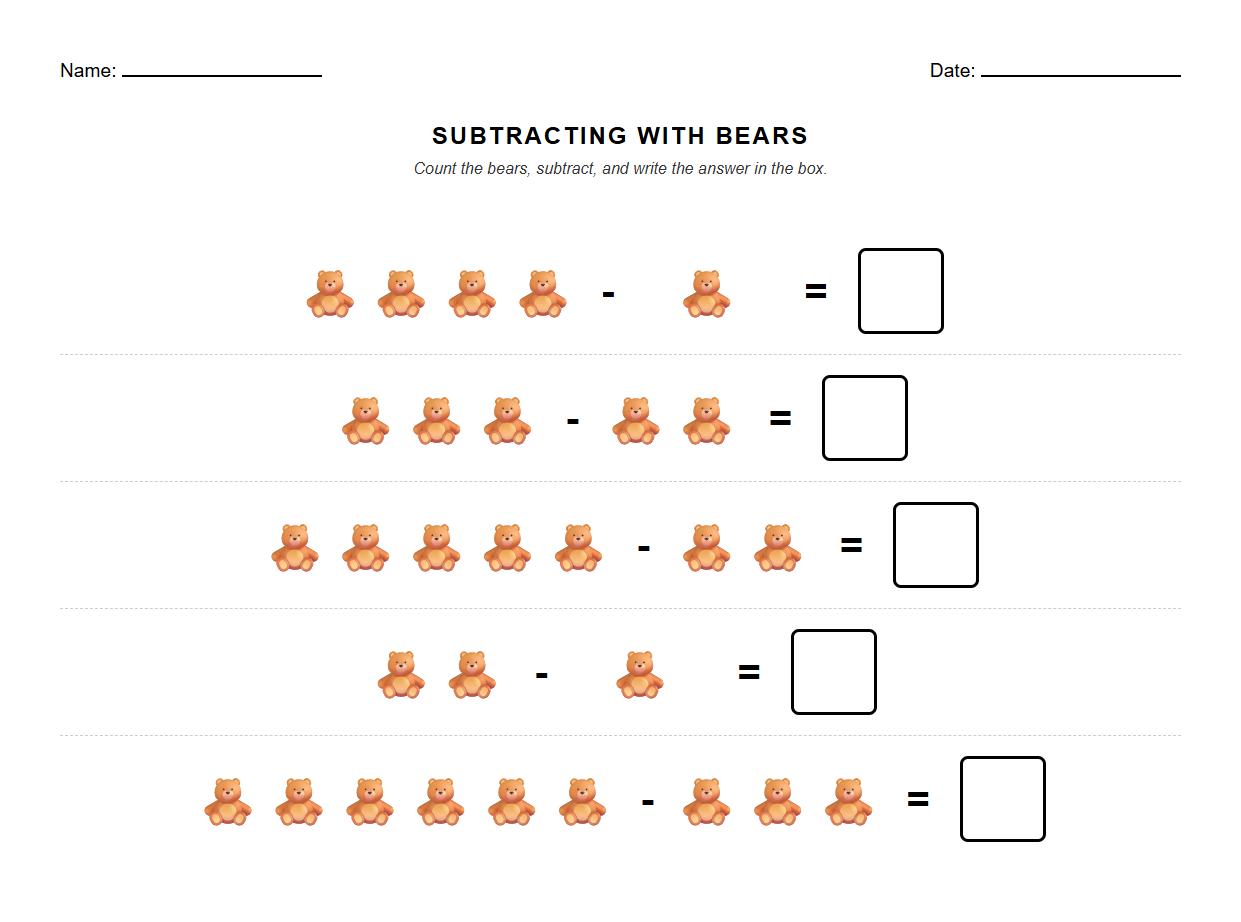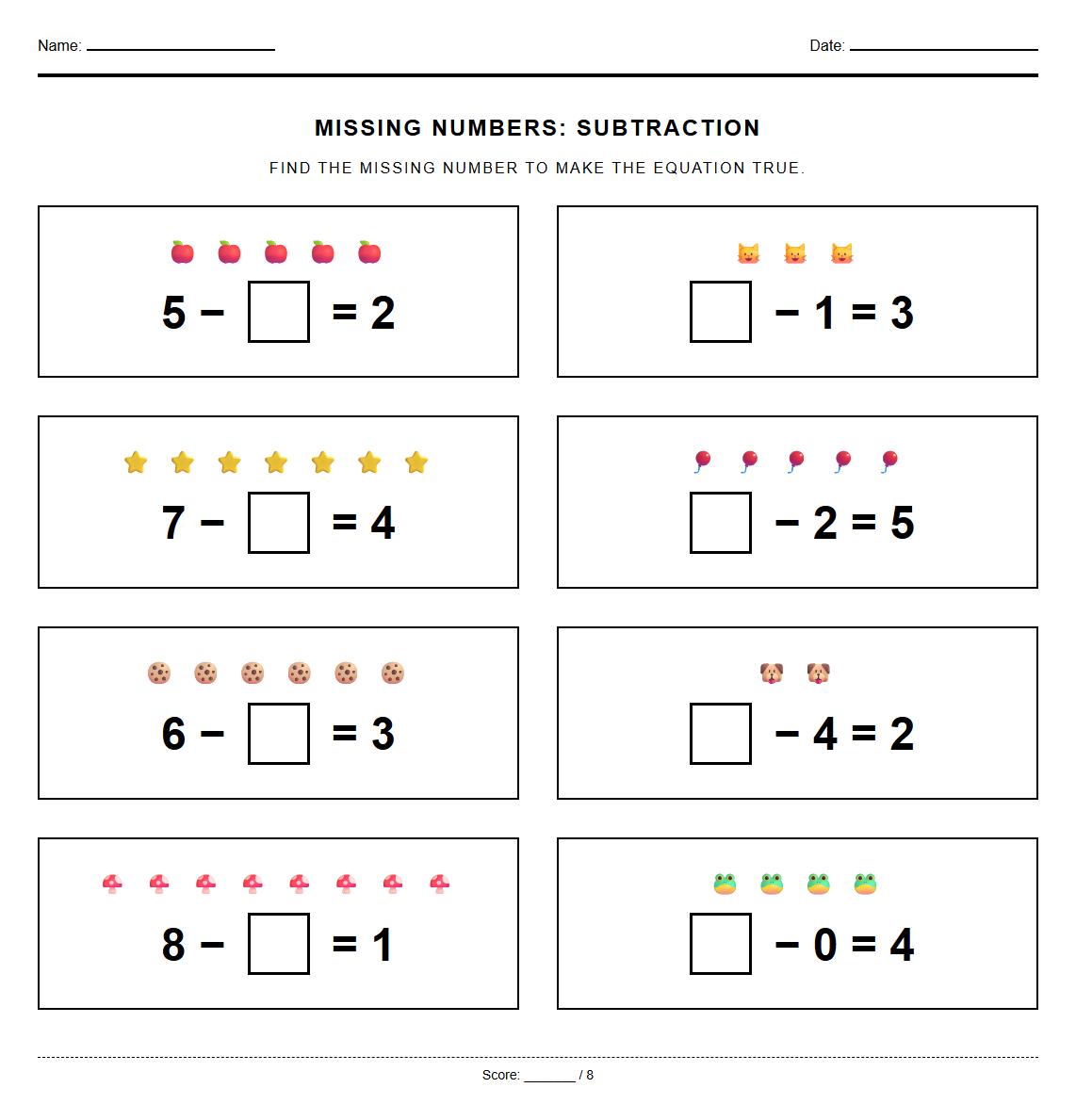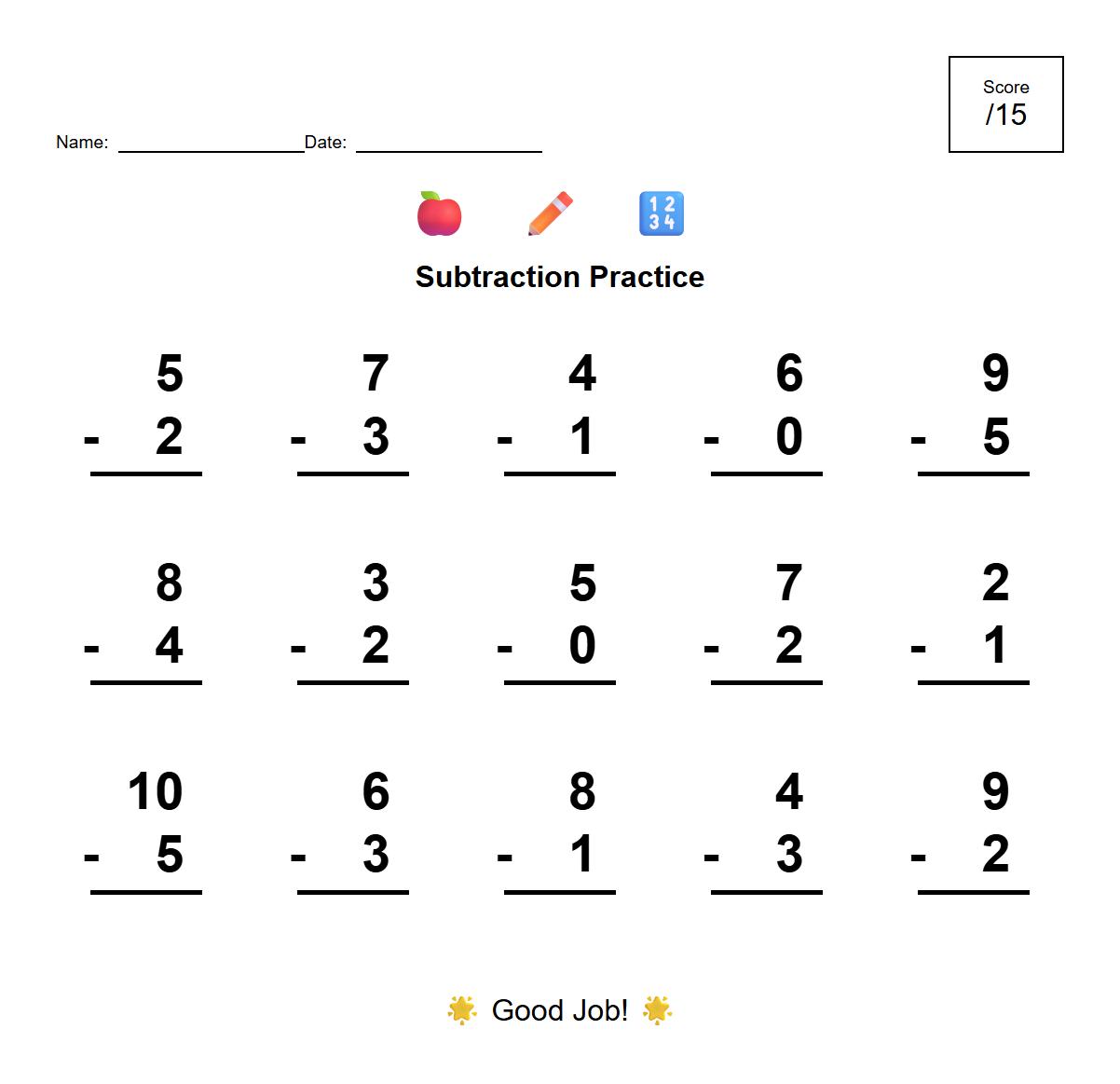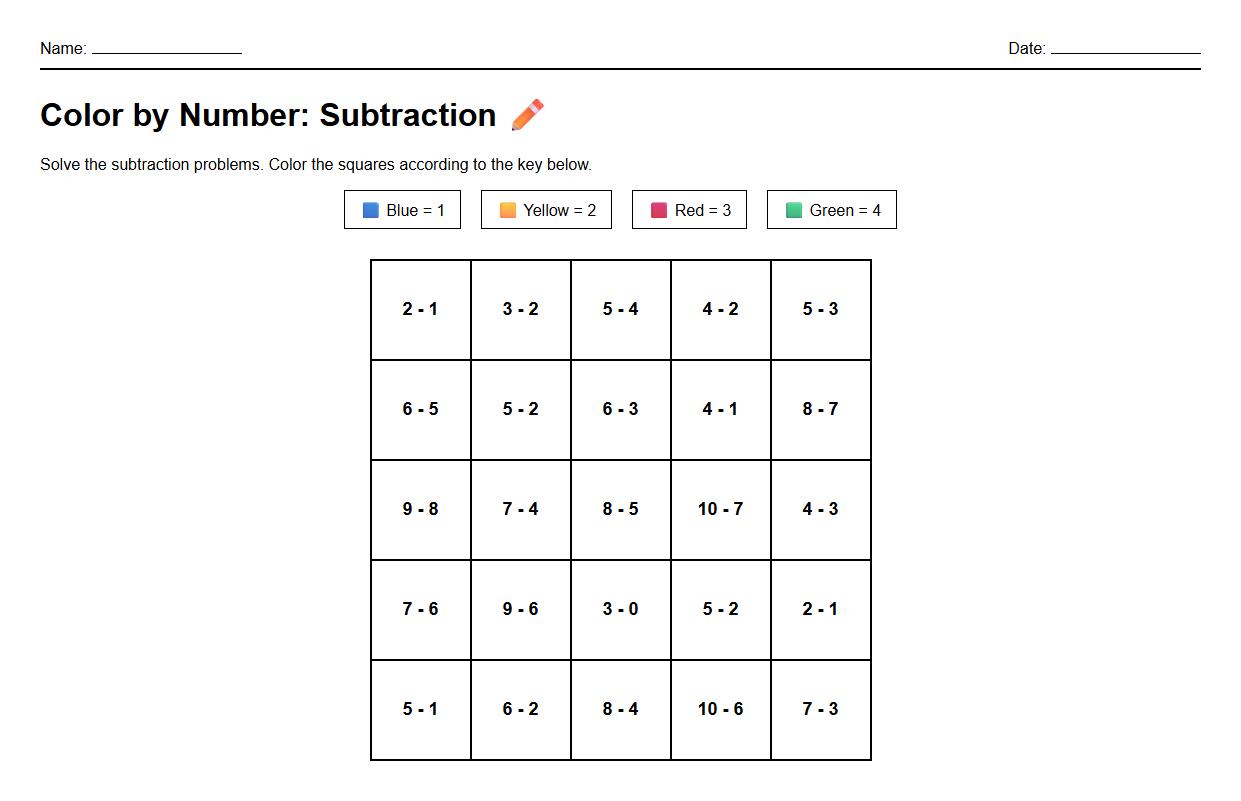
Kindergarten grade basic subtraction facts worksheets focus on building foundational math skills by introducing simple subtraction problems using visual aids and engaging exercises. These resources help young learners develop number sense and confidence in solving basic subtraction equations. Explore the available worksheets to enhance your child's early math learning experience.
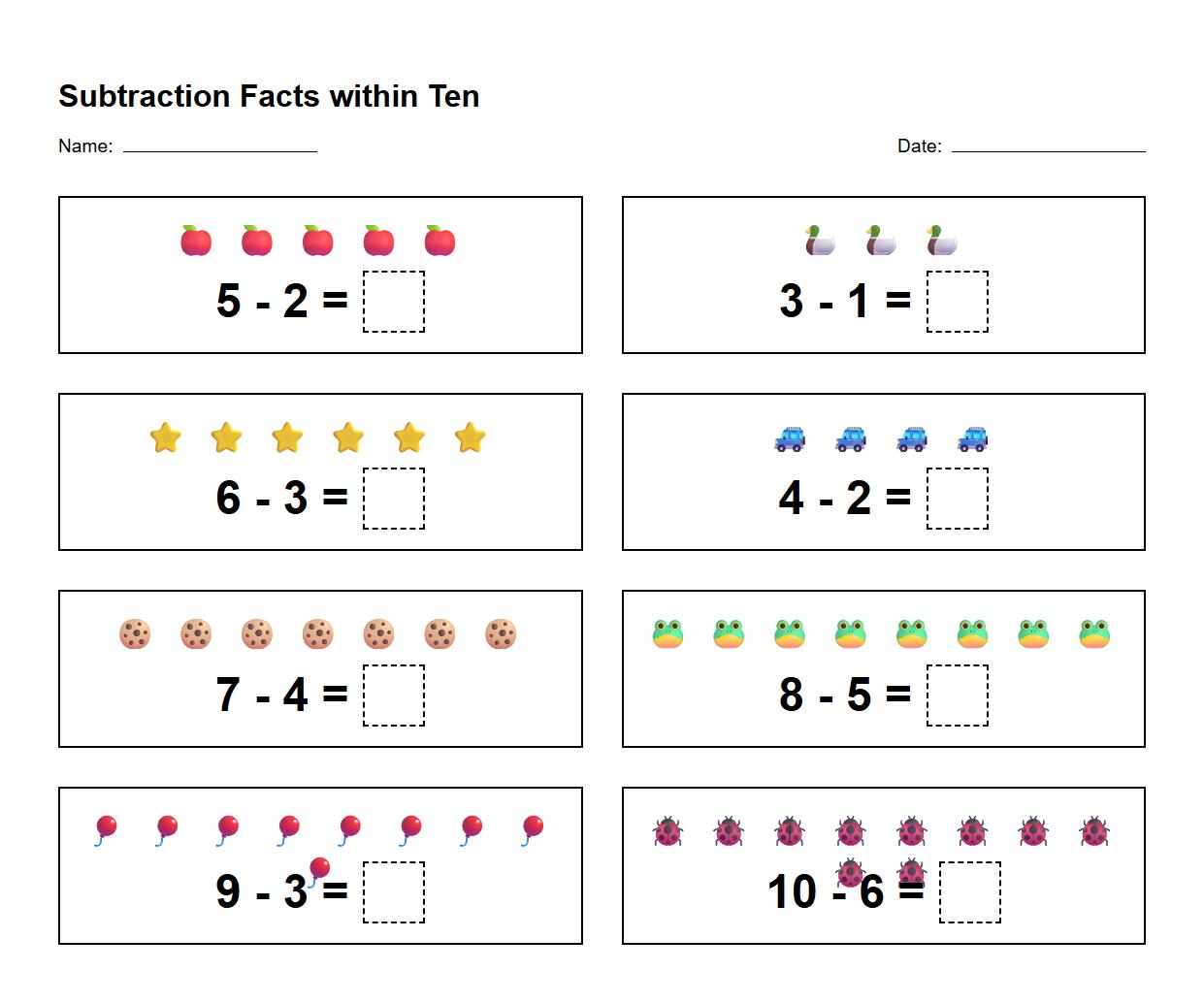
Understanding Subtraction: 5 Minus 2
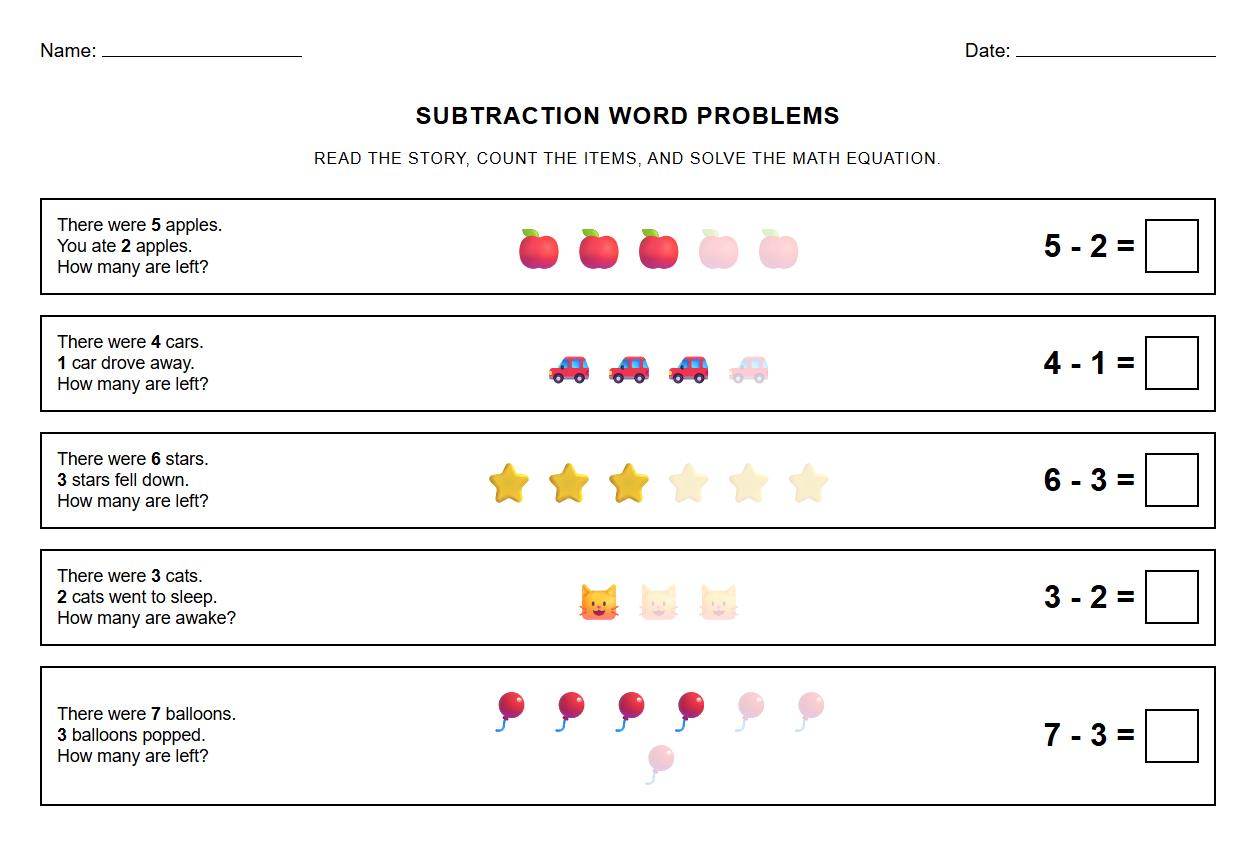
The answer to 5 minus 2 is 3. This teaches children how to count backward and understand the concept of taking away. Using visual aids like fingers or objects helps solidify this skill. Encourage kids to practice with small numbers for confidence. For more practice on this skill, try this math comparison worksheet focusing on more and less counting skills.
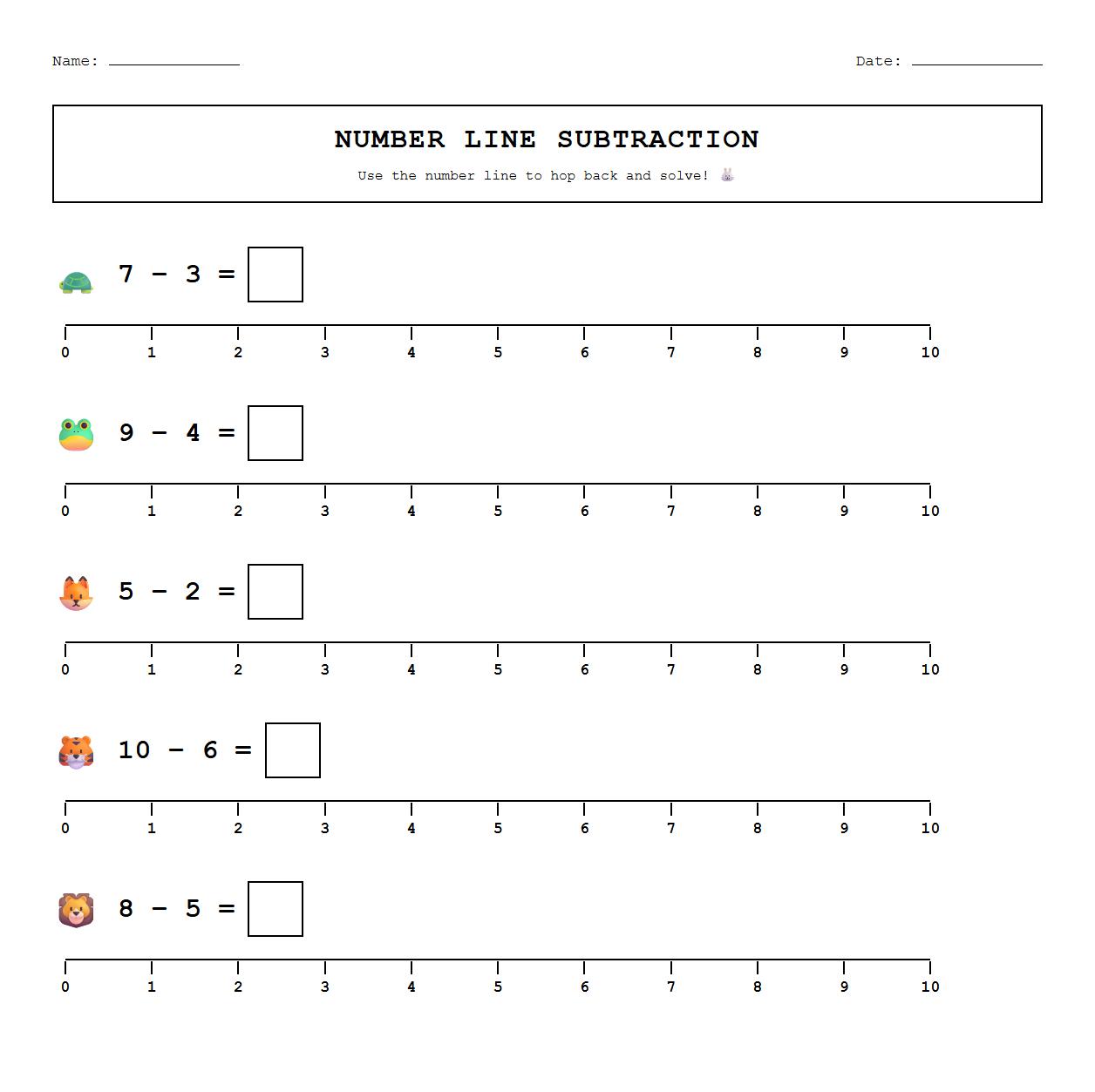
Solving 7 Take Away 3
When you take away 3 from 7, you get 4. This subtraction problem supports children's ability to find the difference between two numbers. Use simple objects like blocks to demonstrate. Repetition in various forms boosts comprehension. Explore more with number recognition and tracing worksheets.
What is 4 Subtract 1?
The result of 4 subtract 1 is 3. This basic subtraction helps kids understand reducing quantities by one unit. Hands-on activities, such as removing one item from a group, make the concept clear. Always encourage verbal explanation to reinforce learning. Enhance these skills using this kindergarten math drill worksheet focusing on basic addition.
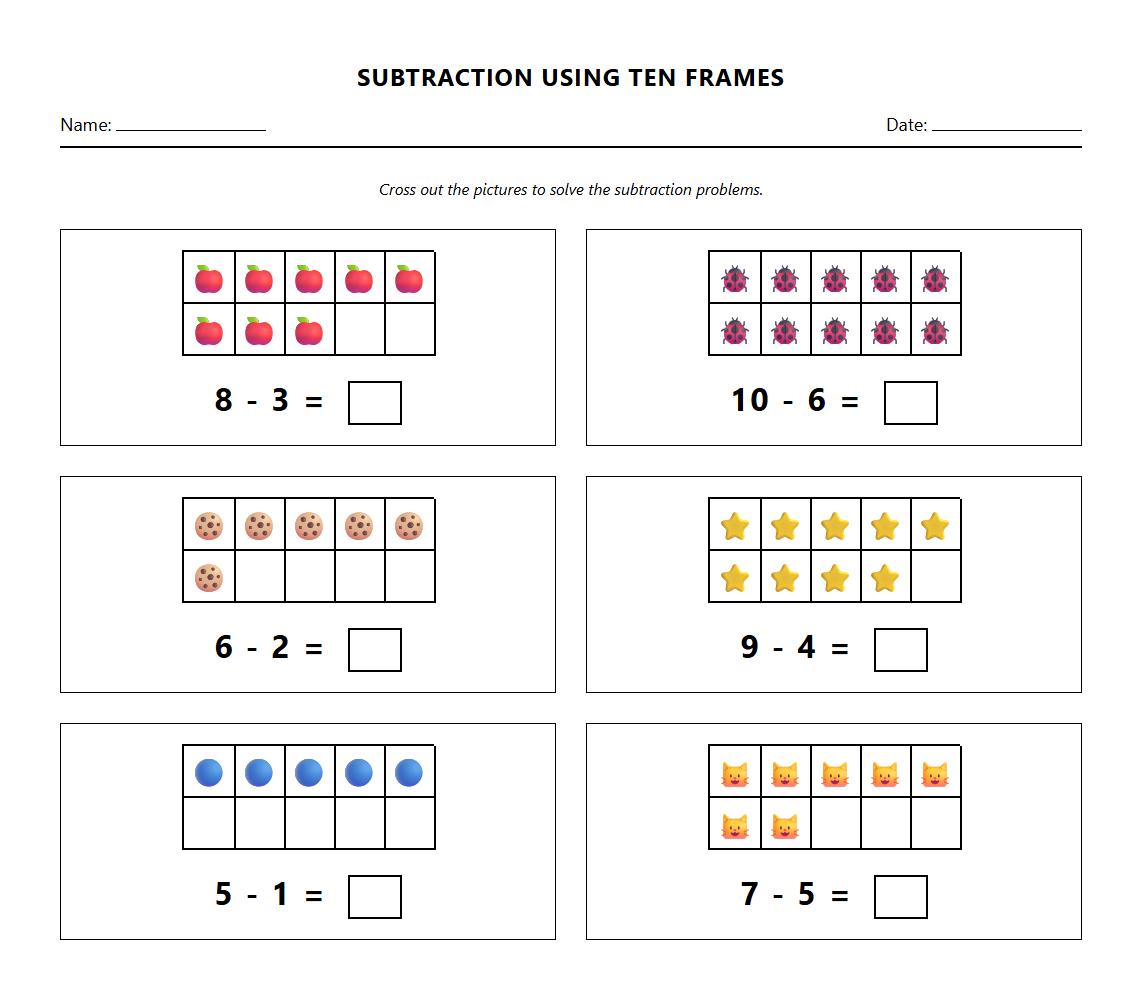
Finding the Difference Between 6 and 4
The difference between 6 and 4 is 2. This illustrates how subtraction measures the gap between two numbers. Visual comparisons help children grasp this idea effectively. Practice with various number pairs to build skill. Support learning with a shape attributes comparison semantic worksheet.
What is Left When You Take 2 from 8?
When you take 2 from 8, 6 is left. This helps children practice counting down and recognizing remaining quantities. Using physical objects, like toys or blocks, makes learning interactive. Encourage children to explain their reasoning. Try this coin sorting activity for early math skills to reinforce counting and subtraction.
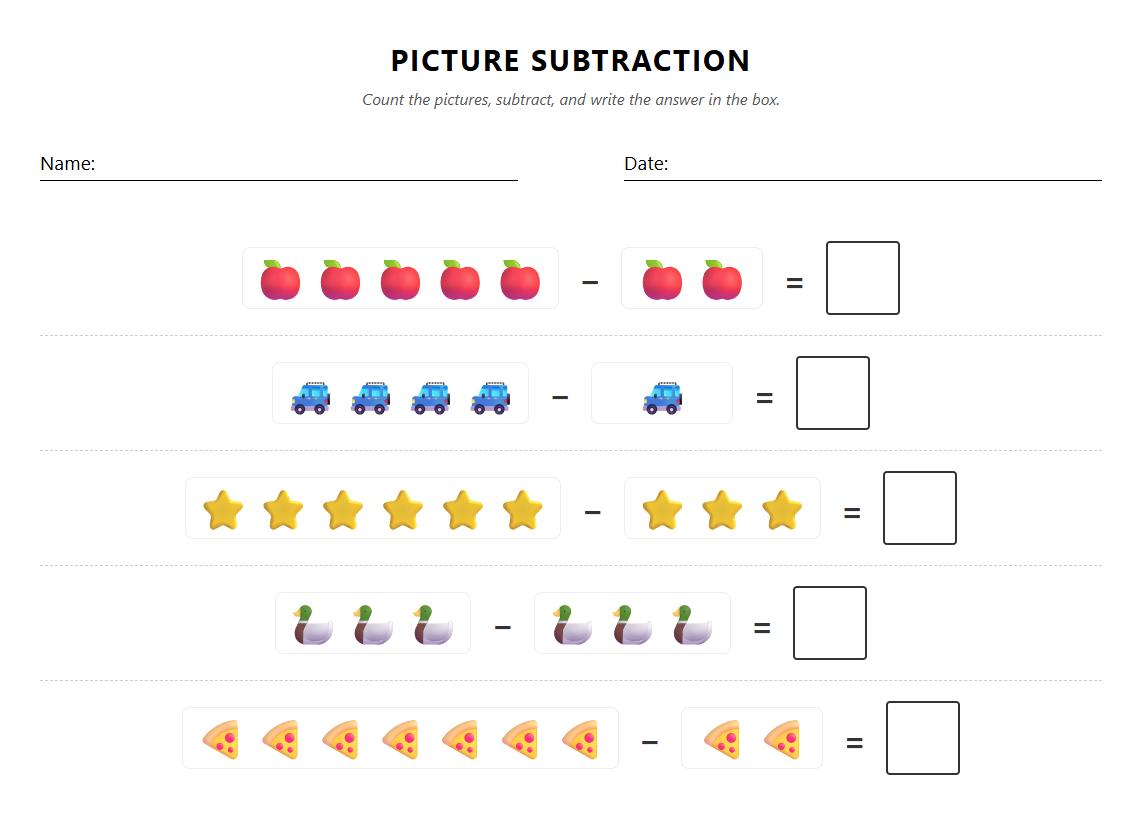
Removing 1 Apple from 5 Apples
If you remove 1 apple from 5 apples, you have 4 apples left. This scenario aids understanding of subtraction in everyday contexts. Using real-life examples helps children relate to the math concept. Visual storytelling enhances retention. Practice comparing items with a draw and compare 2D and 3D figures worksheet.
Answering 9 Minus 5
9 minus 5 equals 4. This reinforces subtraction with slightly higher numbers. Encourage children to use fingers or counters to solve such problems. Consistent practice strengthens number sense. Find engaging activities in this engaging phonics worksheet activity.
Subtracting 3 from 10
When you subtract 3 from 10, the answer is 7. This helps children understand that taking away decreases the total count. Visual aids and repeated exercises aid mastery. Highlight patterns in subtraction to deepen understanding. For more pattern practice, check out this match and complete pattern AABB worksheet.
Taking 1 Away from 2
If you take 1 away from 2, you get 1. This simple subtraction reinforces the idea of removing a small amount. Practice with group activities where children physically take away objects. This hands-on method solidifies learning. Support this concept with a phonics-enhanced basic addition worksheet.
Giving Away 2 Pencils from 4
If you have 4 pencils and give away 2, 2 pencils remain. This practical example connects subtraction with sharing and kindness. Use role-playing to engage children in problem solving. Real-life applications make subtraction meaningful. Practice labeling and identifying objects in context using a label shape name semantic worksheet for young learners.


Subtraction Worksheet for Kindergarten Using Counting Objects