Hands On AB Pattern Worksheet for Kindergarten Math Skills

📅 Mar 7, 2025 👤 Nylen Smith

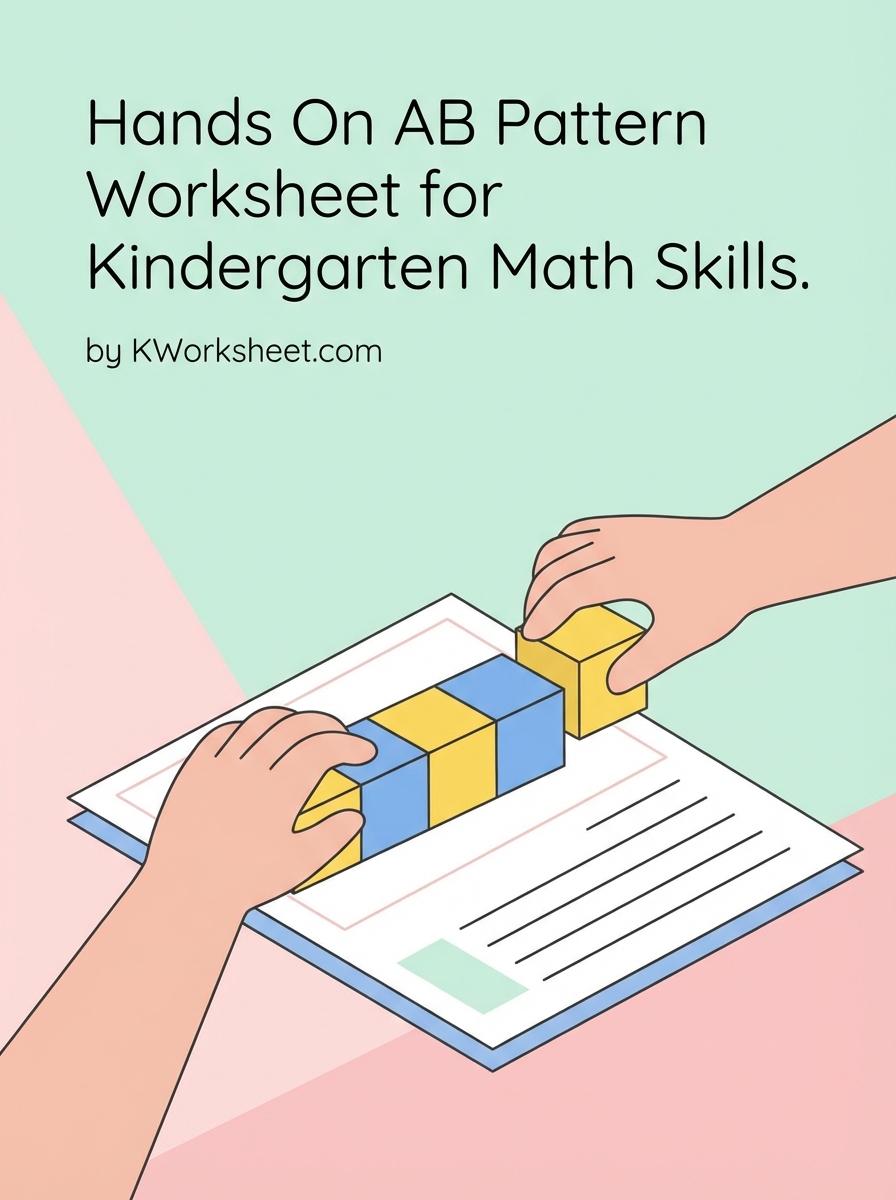
Strengthen early math skills with the Hands On AB Pattern Worksheet designed for kindergarten learners to recognize, create, and extend patterns using engaging visuals. This activity enhances critical thinking and sequencing abilities essential for foundational math understanding. Explore the variety of worksheets available to boost pattern recognition in young minds.

AB Pattern Blocks Sequencing Worksheet for Kindergarten Math
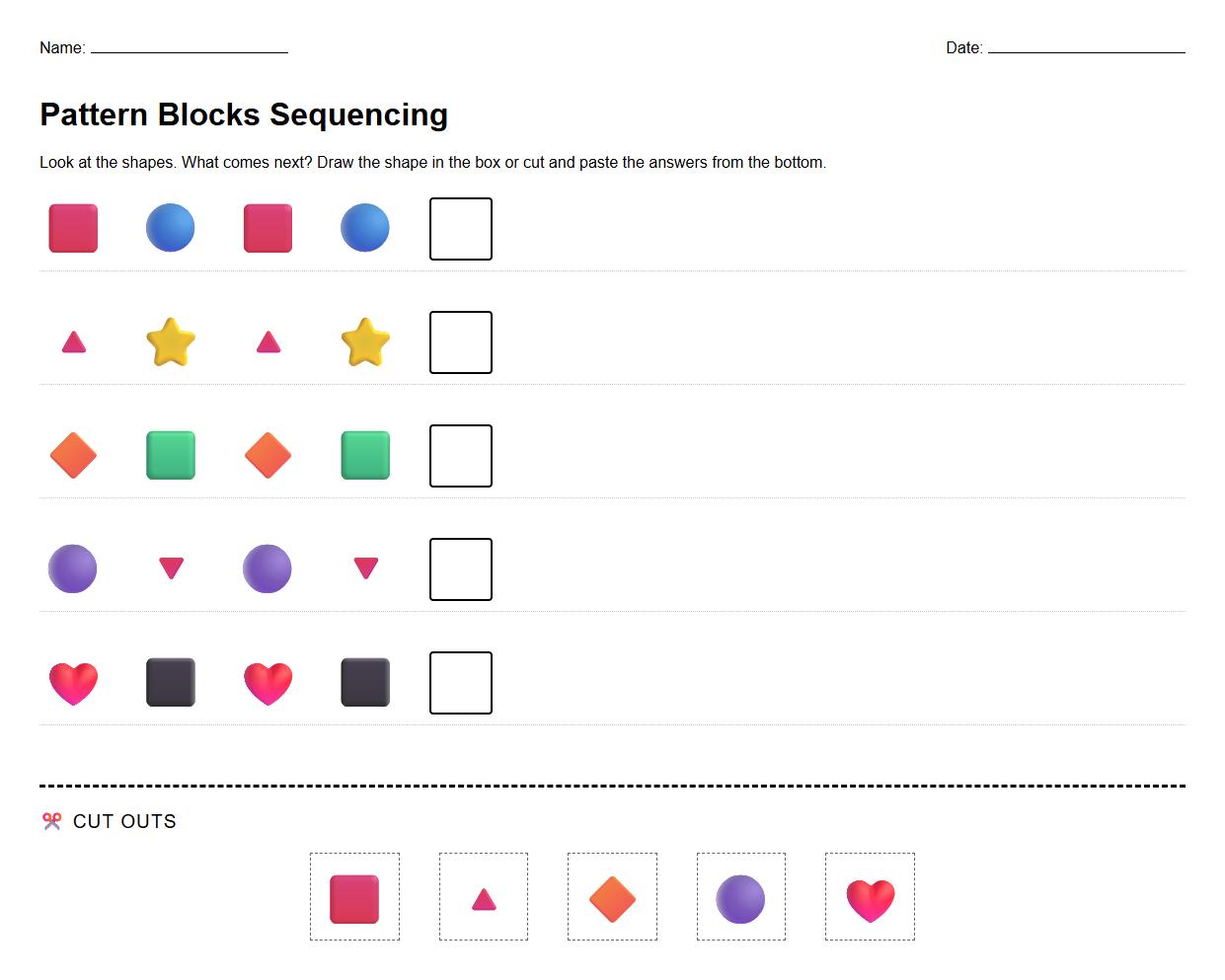
AB Pattern Blocks Sequencing Worksheet for Kindergarten Math

Download PDF     Pin it

Cut and Paste AB Pattern Strips Worksheet for Early Learners
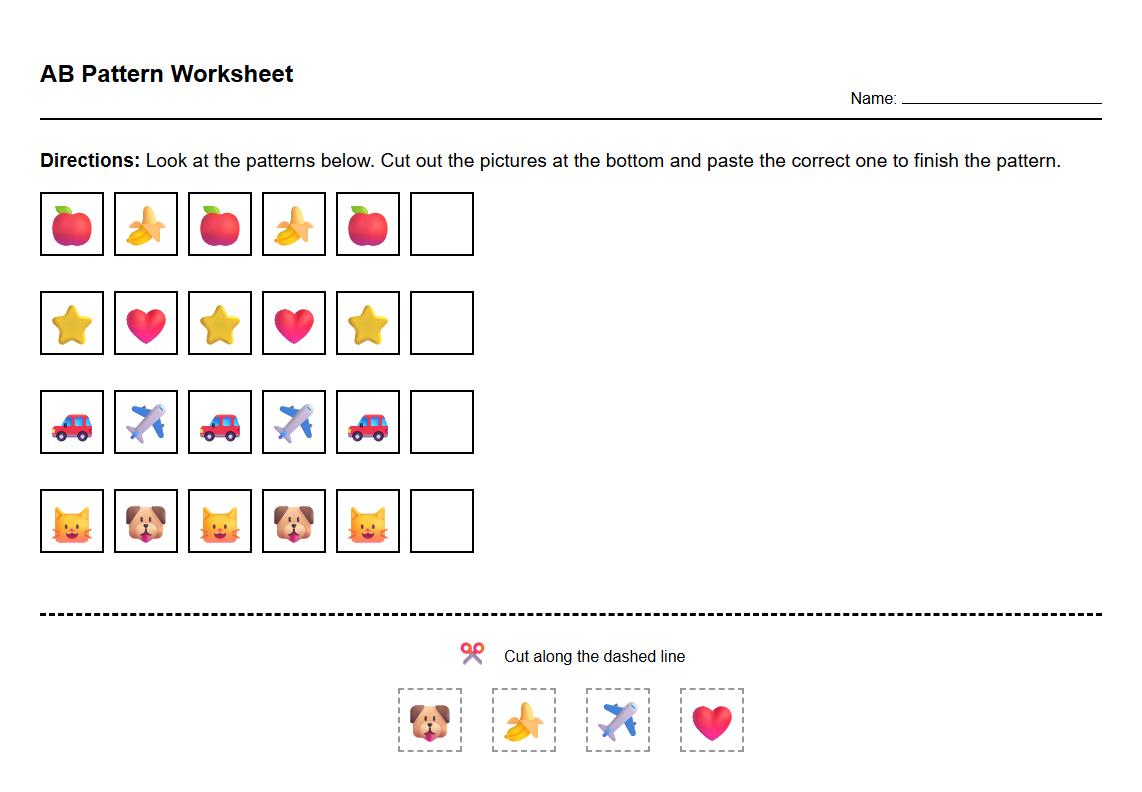
Cut and Paste AB Pattern Strips Worksheet for Early Learners

Download PDF     Pin it

Interactive AB Pattern Coloring Worksheet Using Shapes
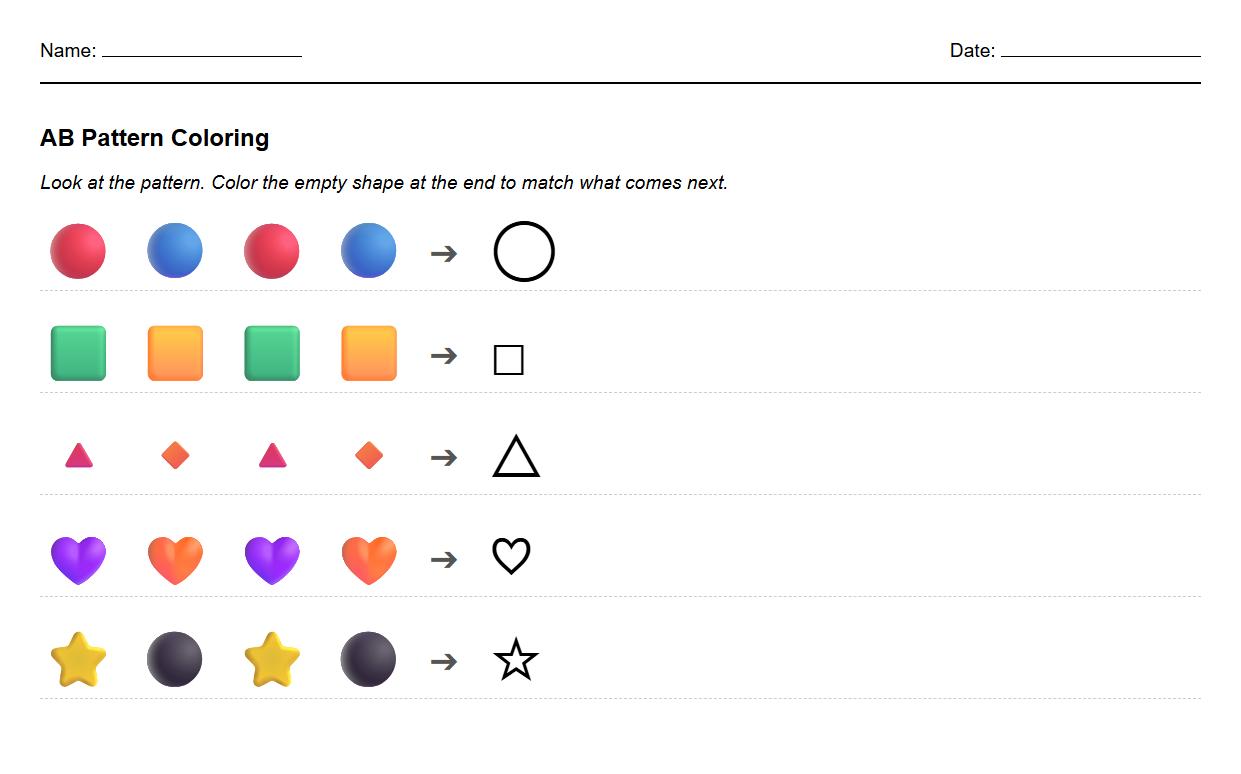
Interactive AB Pattern Coloring Worksheet Using Shapes

Download PDF     Pin it

AB Pattern Recognition with Building Bricks Activity Sheet
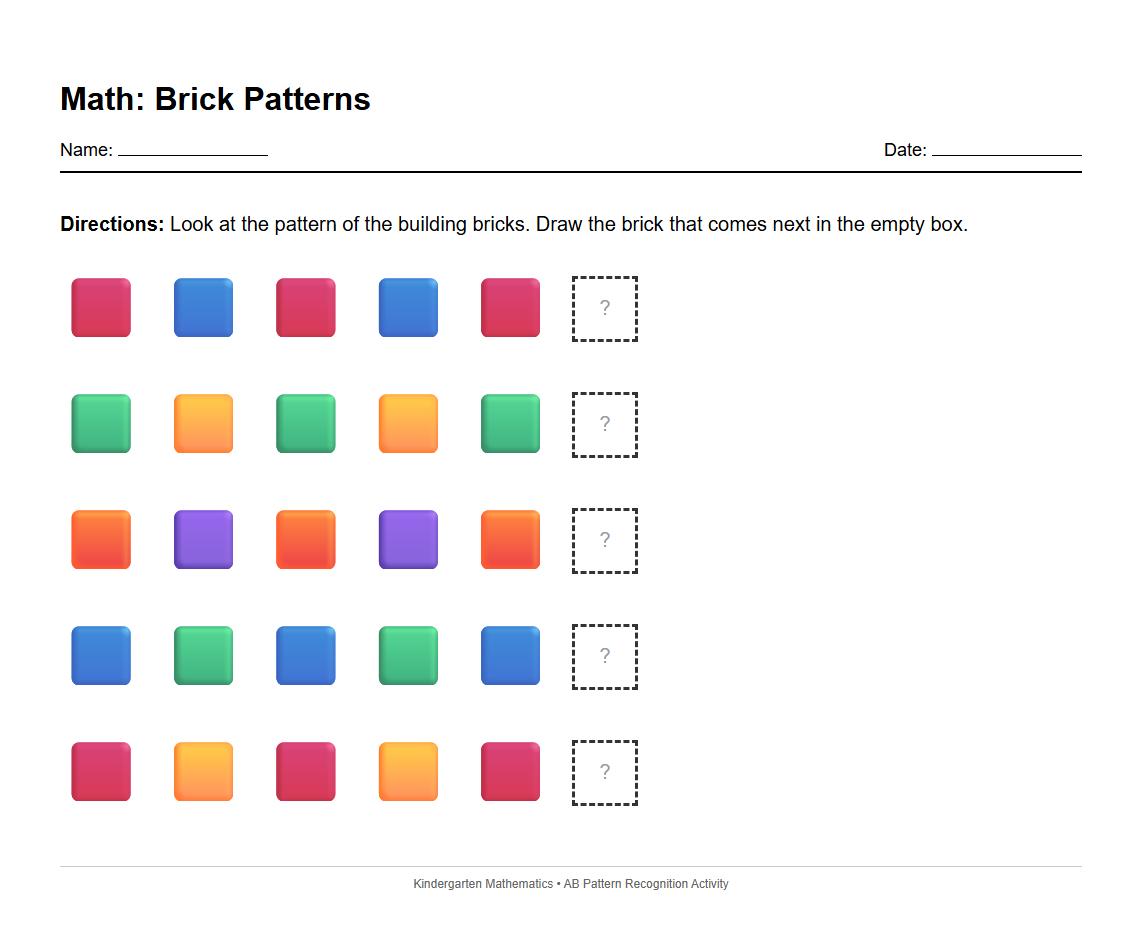
AB Pattern Recognition with Building Bricks Activity Sheet

Download PDF     Pin it

Sorting Beads for AB Pattern Hands On Math Practice
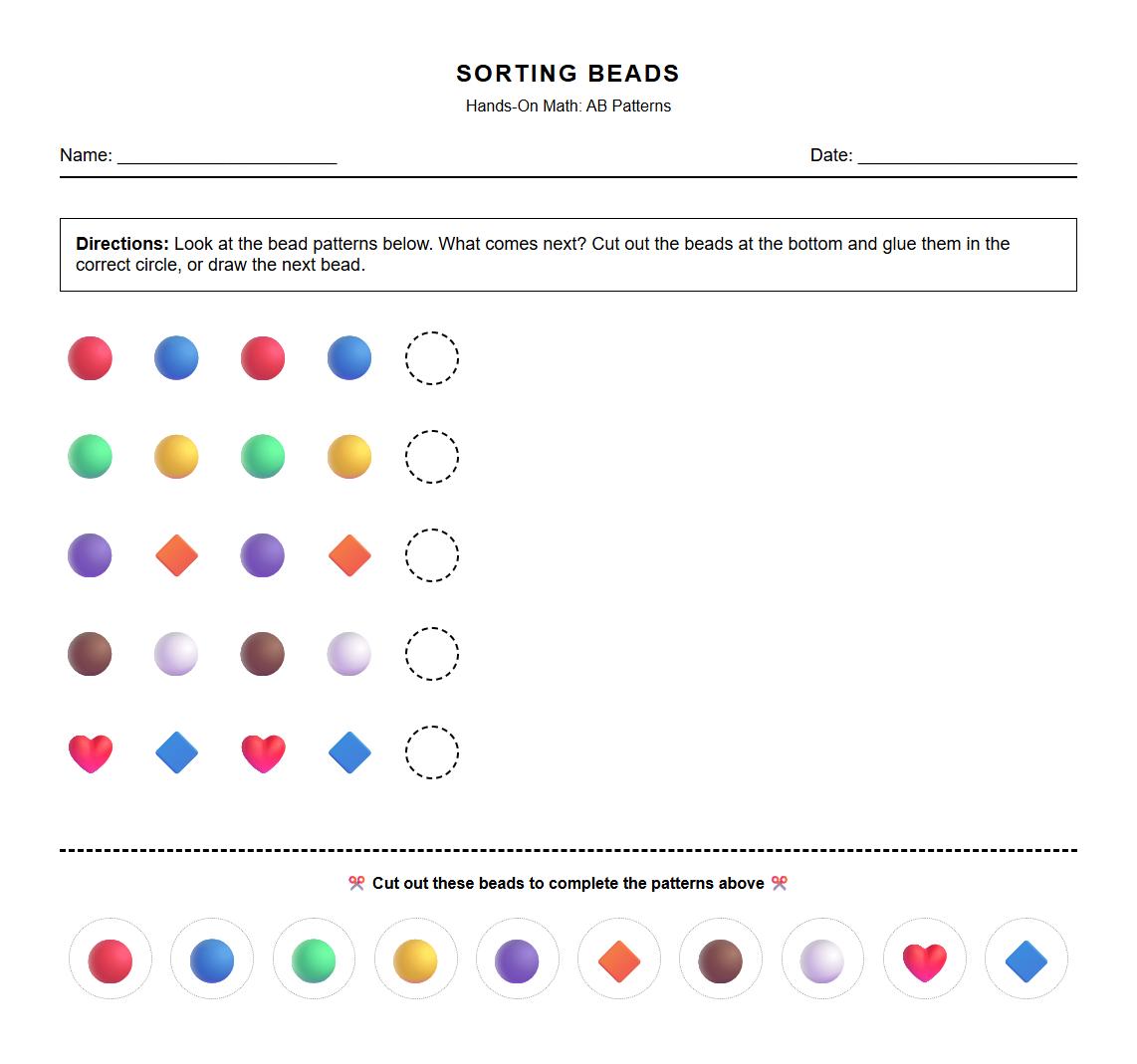
Sorting Beads for AB Pattern Hands On Math Practice

Download PDF     Pin it

Completing AB Pattern with Stickers Worksheet for Kindergarten
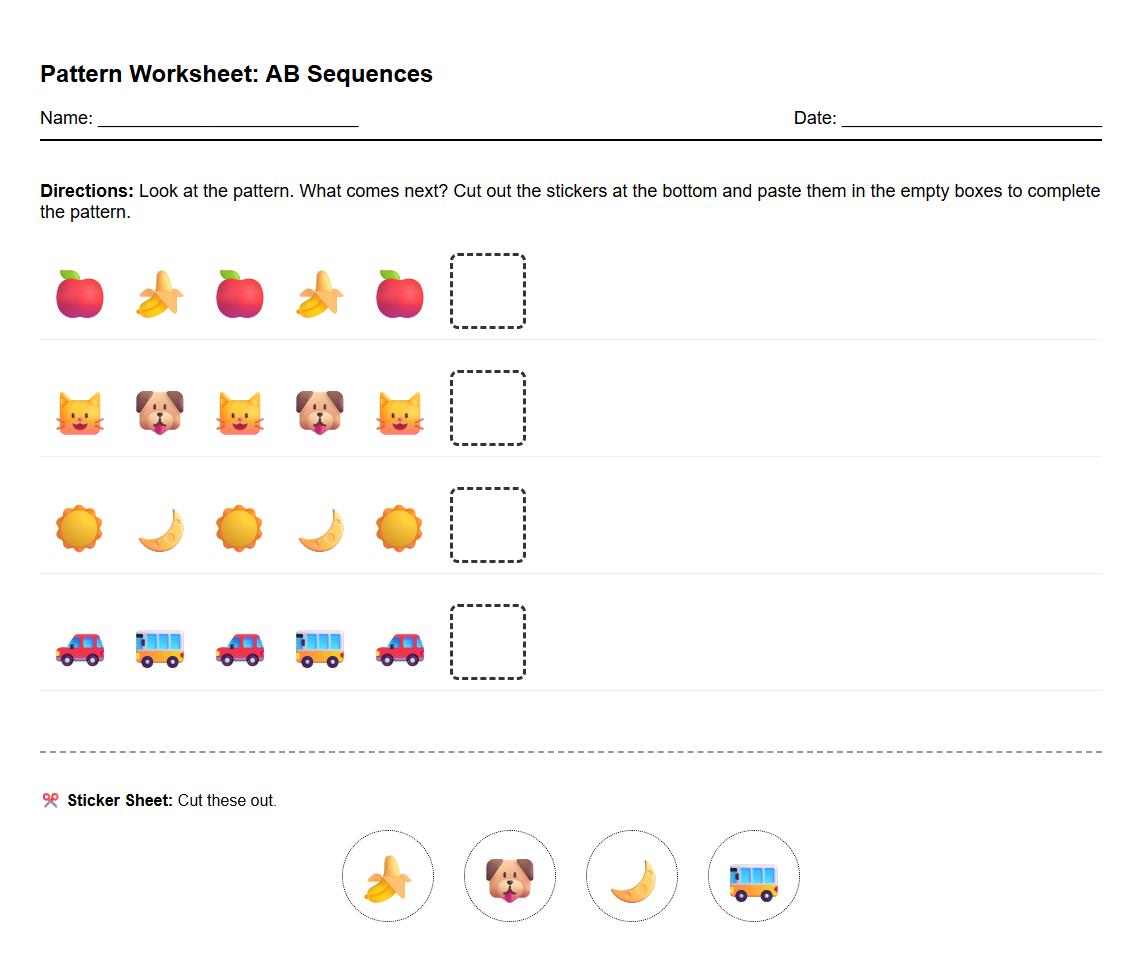
Completing AB Pattern with Stickers Worksheet for Kindergarten

Download PDF     Pin it

Clothespin Clip Cards Focusing on AB Pattern Formation
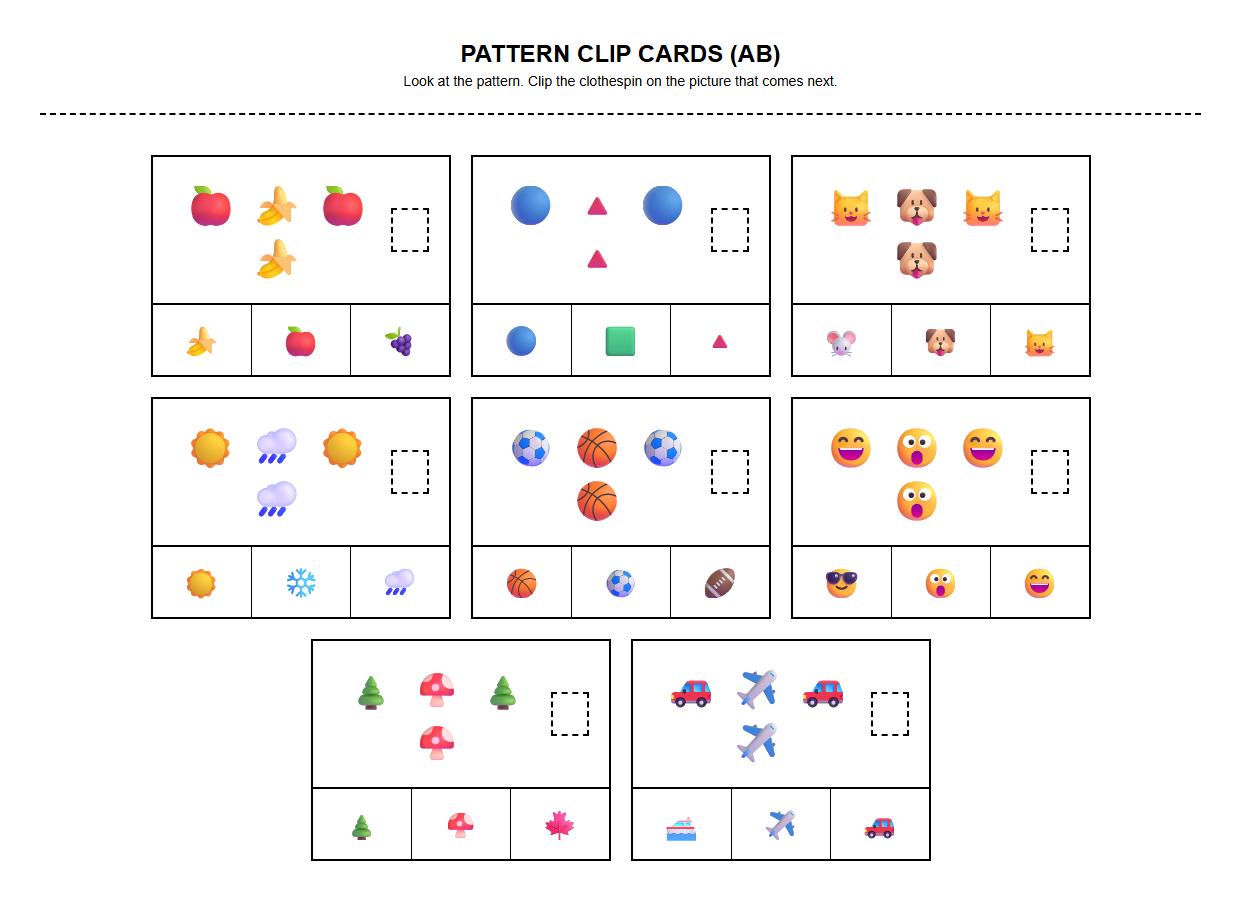
Clothespin Clip Cards Focusing on AB Pattern Formation

Download PDF     Pin it

Playdough Mats for Creating AB Pattern Rows in Math
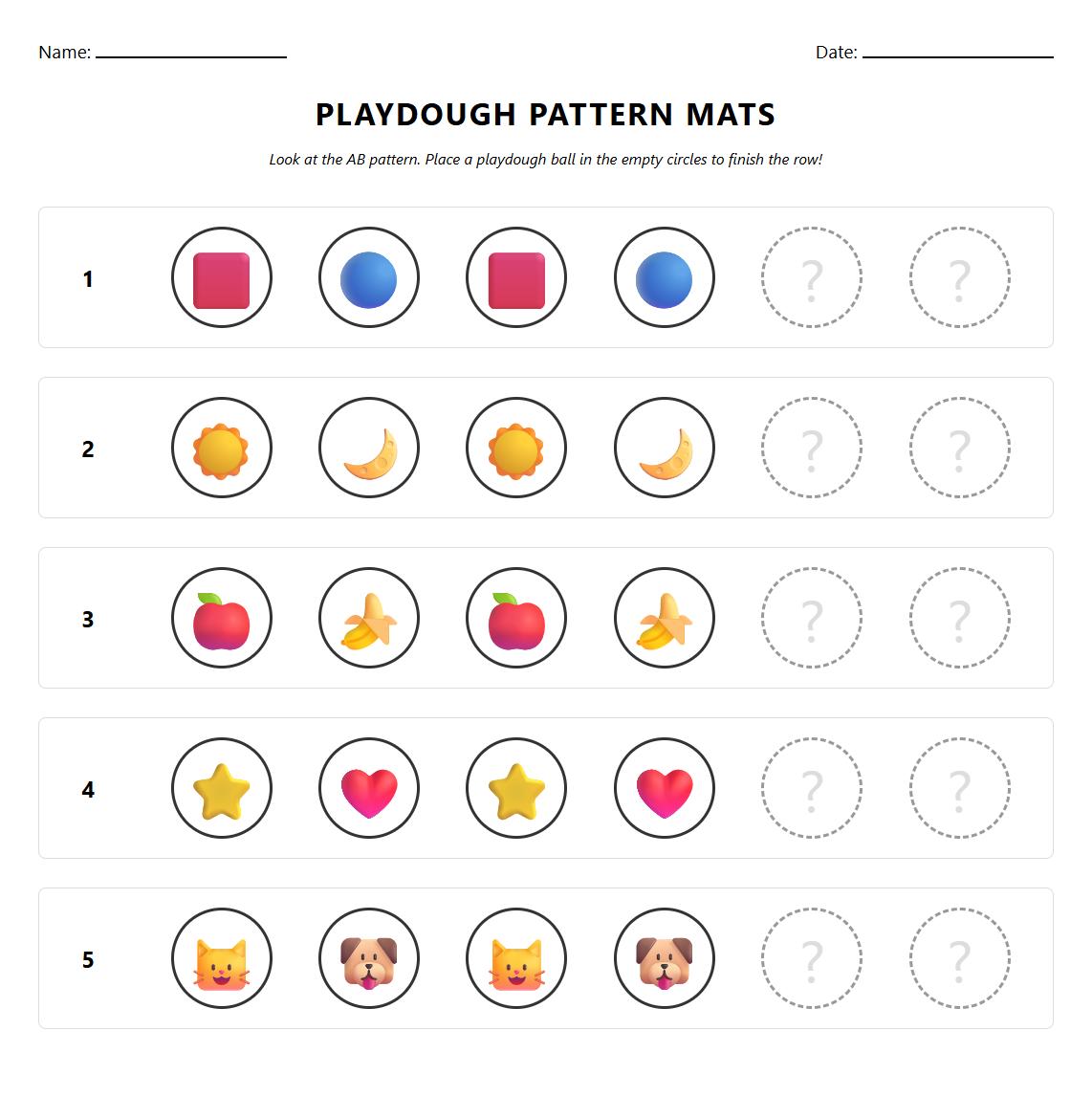
Playdough Mats for Creating AB Pattern Rows in Math

Download PDF     Pin it

AB Pattern Matching Cards Worksheet Incorporating Objects
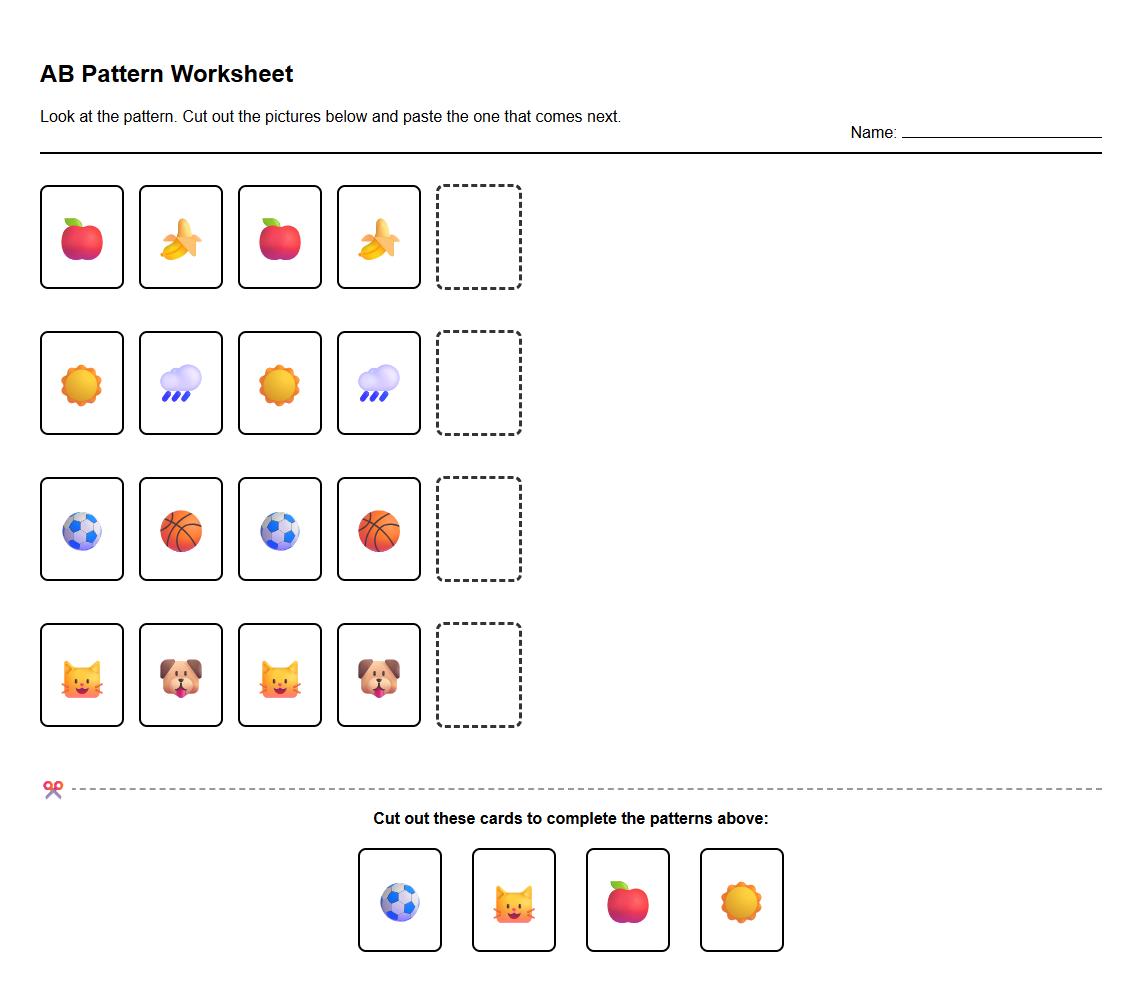
AB Pattern Matching Cards Worksheet Incorporating Objects

Download PDF     Pin it

Pipe Cleaner AB Pattern Threading Task for Fine Motor Math
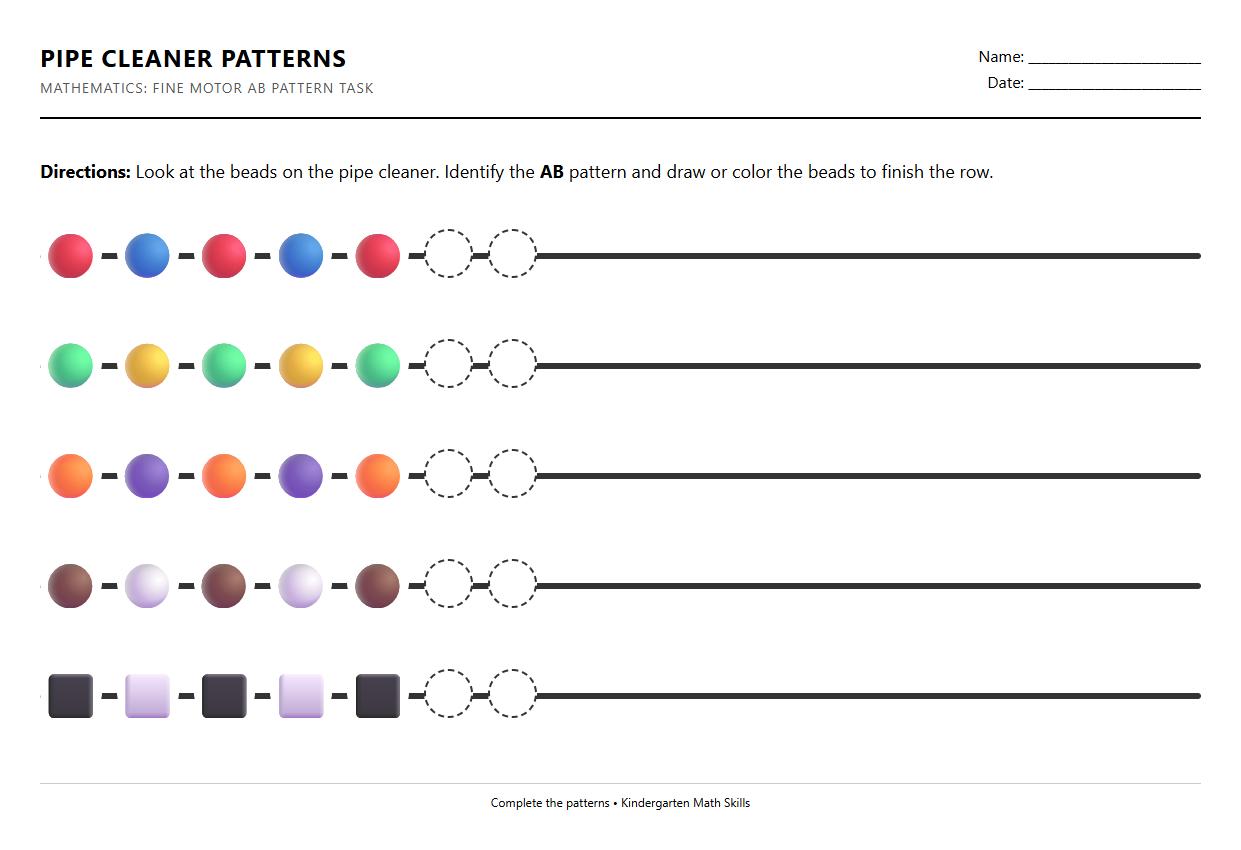
Pipe Cleaner AB Pattern Threading Task for Fine Motor Math

Download PDF     Pin it

What is an AB Pattern in Kindergarten Math?

An AB pattern is a simple, repeating sequence of two different elements, such as colors, shapes, or sounds, arranged in an alternating order. Kindergarten students learn to identify and create these patterns to develop early math skills like sequencing and prediction. Recognizing AB patterns helps children understand order and regularity, which are foundational concepts in math. This concept supports logical thinking and problem-solving abilities.

How Do Hands-On Activities Help Children Understand AB Patterns?

Hands-on activities engage children by allowing them to physically manipulate objects, making abstract pattern concepts concrete and understandable. When children use tangible items, they can see and feel the sequence, which reinforces learning through multiple senses. These activities improve retention and encourage experimentation with patterns. By actively participating, students build confidence in identifying and extending AB patterns.

Common Objects Used to Create AB Patterns in Class

Two objects commonly used to create AB patterns in kindergarten are colored blocks and beads. Colored blocks are versatile and easy to arrange in sequences, while beads are excellent for stringing together simple patterns. Both materials provide visual and tactile feedback, which enhances comprehension. They are accessible and safe for young learners in classroom settings.

Why is Recognizing AB Patterns Important for Early Math Skills?

Recognizing AB patterns lays the groundwork for understanding more complex math concepts such as addition, subtraction, and multiplication. It helps children develop critical thinking by identifying regularities and predicting what comes next. Early pattern recognition builds essential skills in sequencing and organizing information. These abilities are crucial for success in both math and literacy.

How Can Students Extend a Given AB Pattern?

Students can extend an AB pattern by identifying the sequence and adding the next items in order. For example, if the pattern is red, blue, red, blue, they should continue with red, blue to maintain repetition. Encouraging children to verbalize or explain their reasoning strengthens understanding. This process enhances their ability to anticipate and create longer sequences.

Everyday Classroom Materials for AB Pattern Worksheets

Common materials include crayons, stickers, and shape cutouts. Crayons can be used to color patterns, while stickers and cutouts allow for hands-on placement. These materials are readily available and make worksheet activities engaging and interactive. Using familiar items helps children relate learning to their environment.

How Can Teachers Assess a Child's Understanding of AB Patterns?

Teachers can assess understanding by observing if a child can accurately identify, replicate, and extend AB patterns. Asking students to explain their reasoning or predict the next item provides insight into their thought process. Informal assessments during activities or structured pattern tasks can be used. Consistent success in these areas indicates strong comprehension.

What is the Next Item in this AB Pattern: red, blue, red, blue, _____?

The next item in the AB pattern red, blue, red, blue is red. This follows the alternating sequence rule where red and blue repeat in the same order. Recognizing the pattern helps children predict subsequent elements confidently. This simple exercise reinforces their grasp of basic pattern concepts.

How Can Group Activities Reinforce AB Pattern Learning in Kindergarten?

Group activities encourage collaboration and communication while practicing AB patterns. Children can take turns creating or extending patterns with peers using shared materials like blocks or cards. This social engagement promotes discussion about patterns and supports learning from different perspectives. Group work also builds cooperative skills alongside math understanding.

What Comes After a Finished AB Pattern Worksheet to Further Learning?

After completing an AB pattern worksheet, children can explore more complex patterns such as ABC or ABB sequences. Teachers might introduce pattern-related games or real-life applications, like identifying patterns in nature or daily routines. Encouraging creative pattern creation and problem-solving deepens knowledge. This progression keeps math learning engaging and developmentally appropriate.


More in Mathematics Category


About the author. Nylen Smith is a dedicated educator and cofounder of KWorksheet.com, a popular platform specializing in high-quality kindergarten worksheets and printable activities.

Disclaimer. The information provided in this document is for general informational purposes and/or document sample only and is not guaranteed to be factually right or complete. Please report to us via contact-us page if you find and error in this page, thanks.

Comments

No comment yet