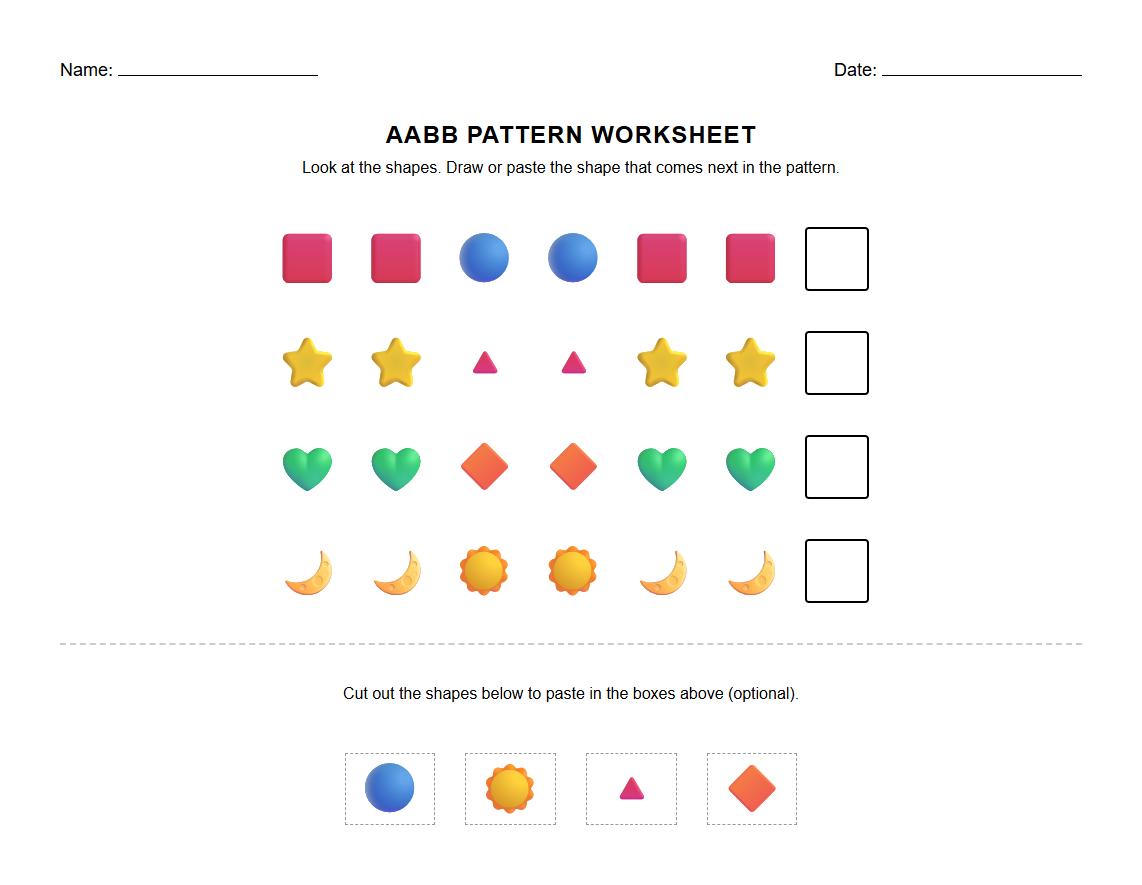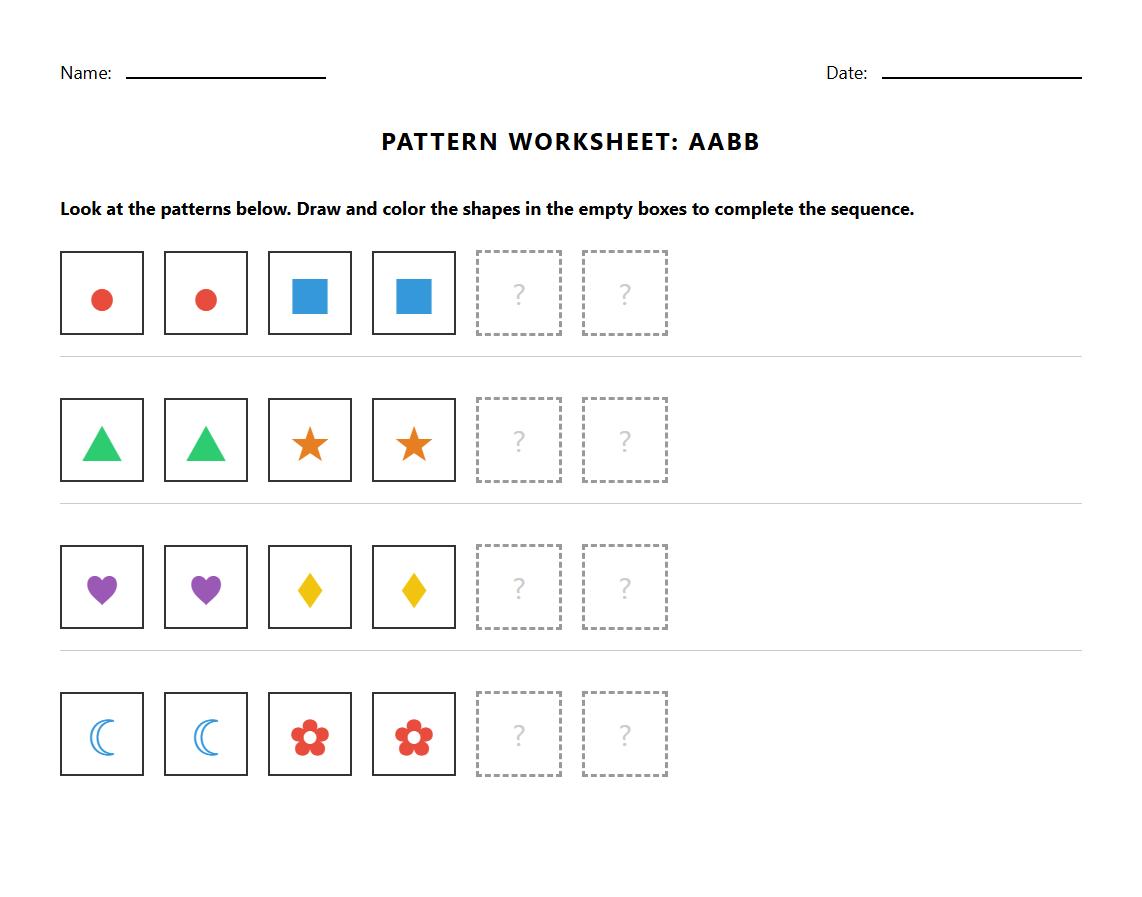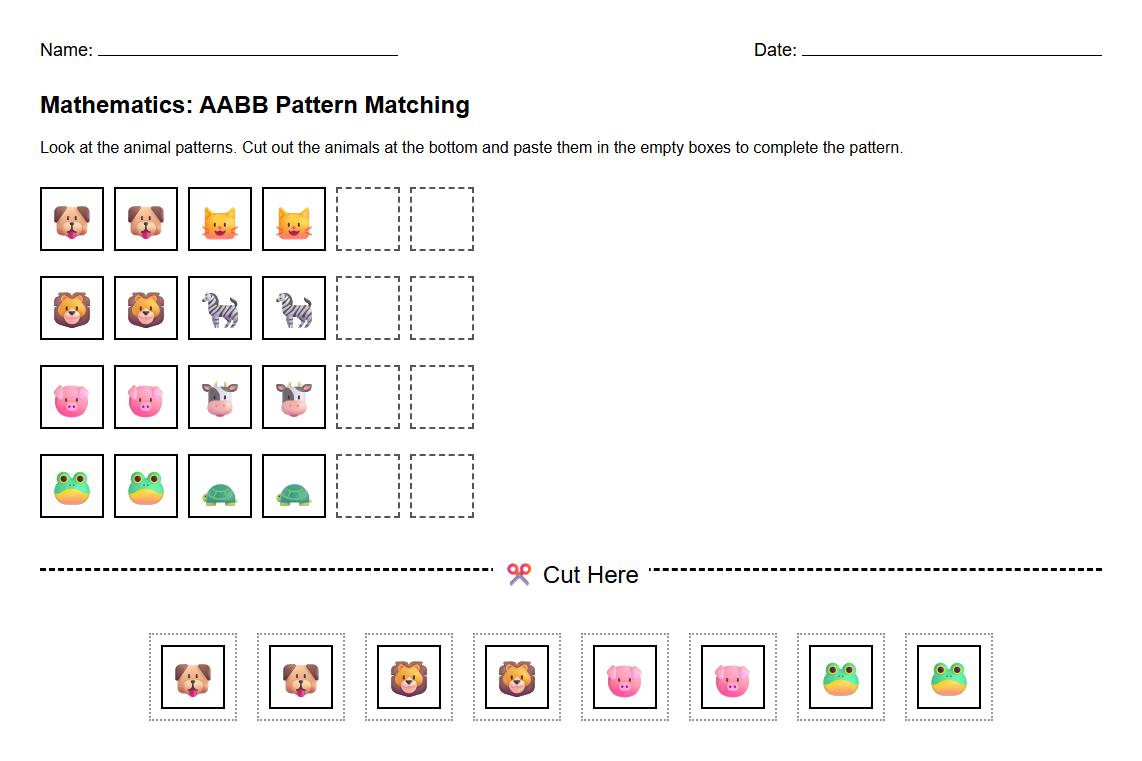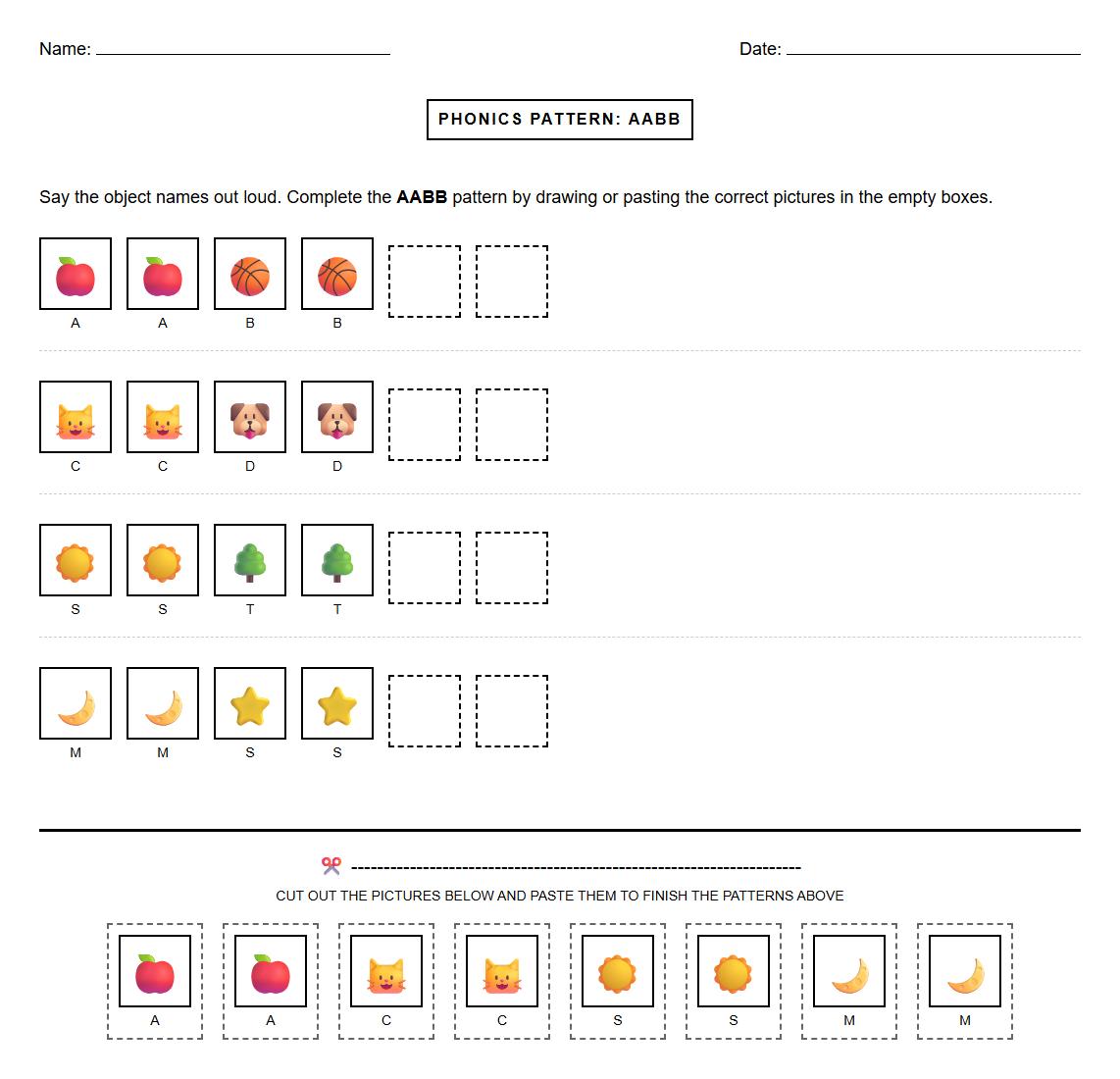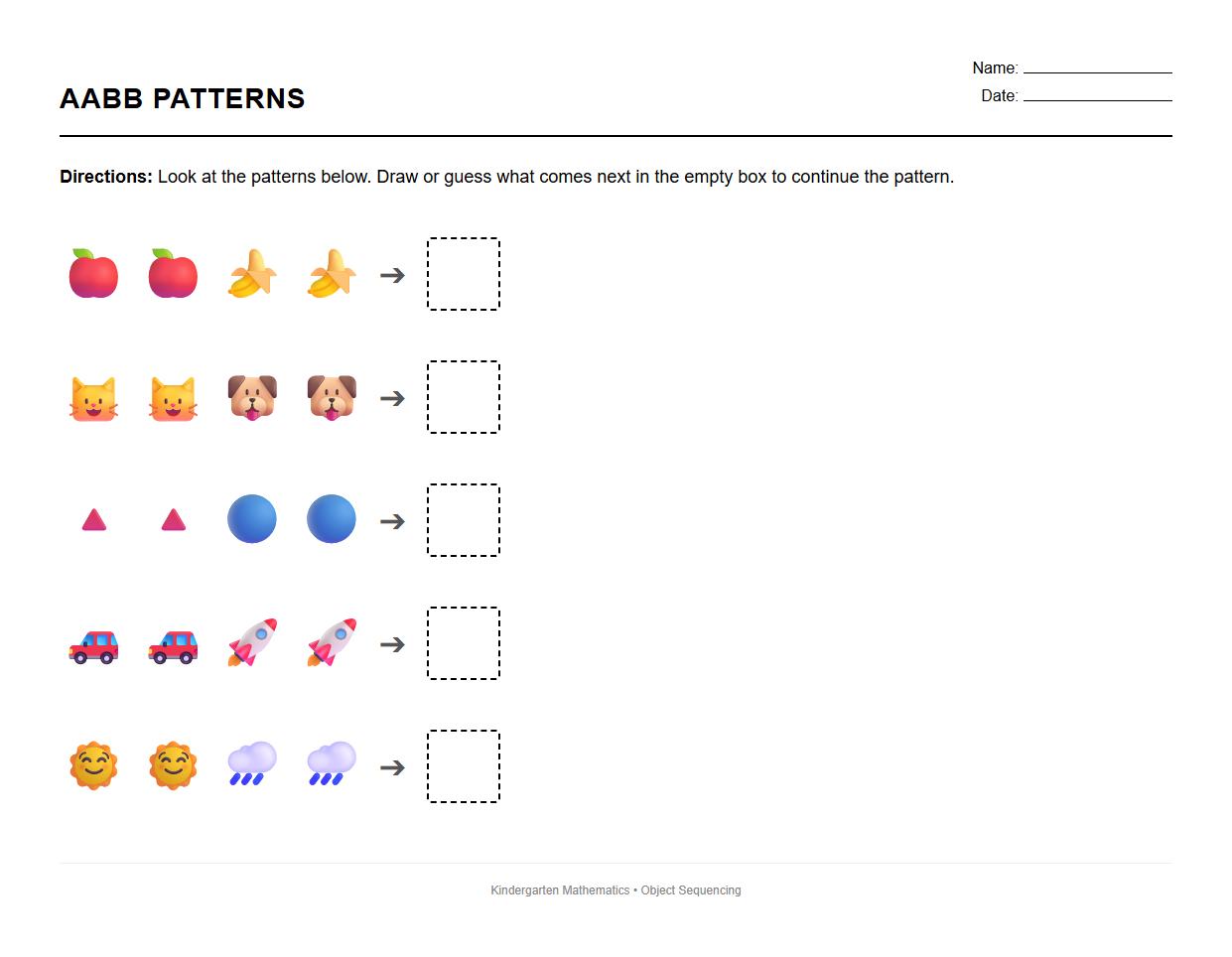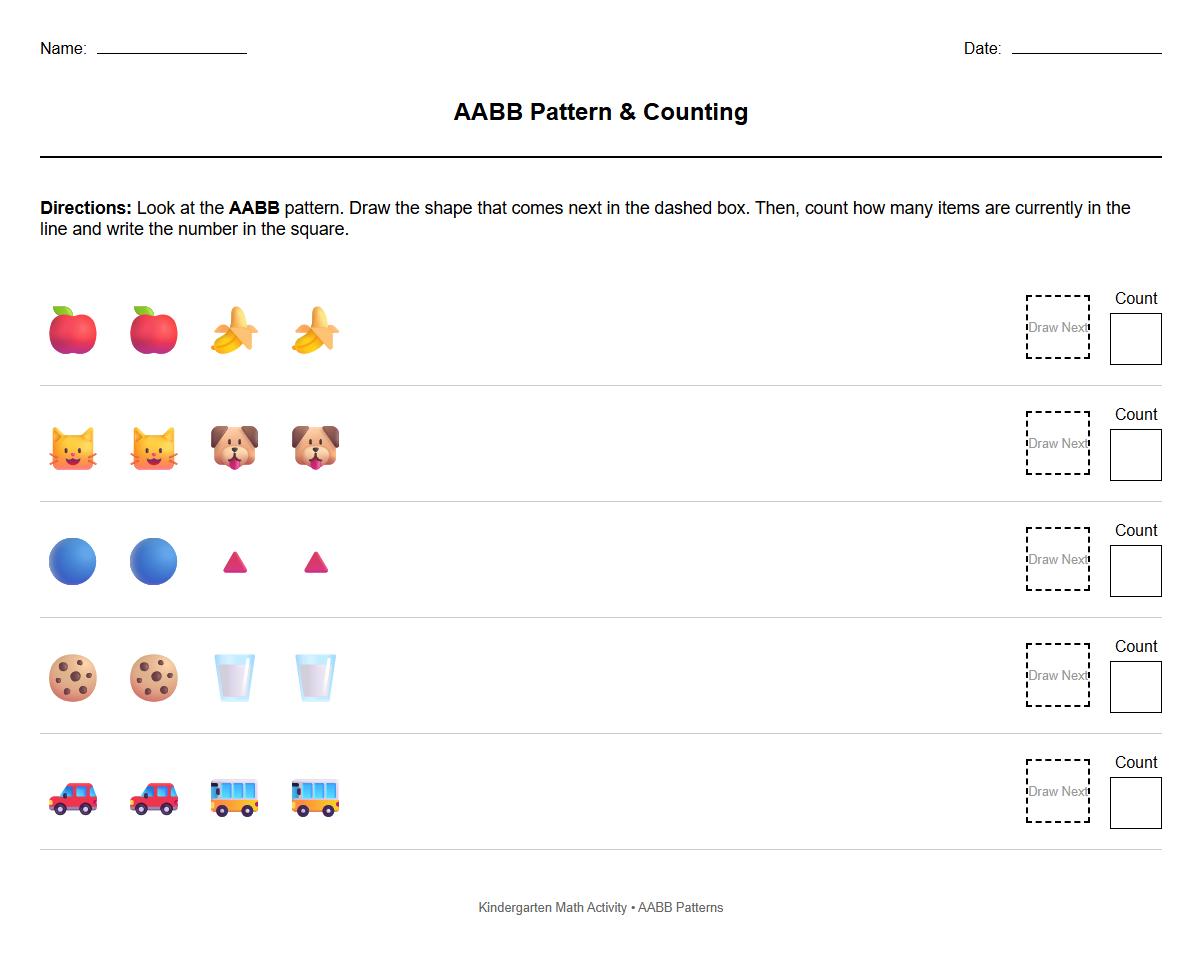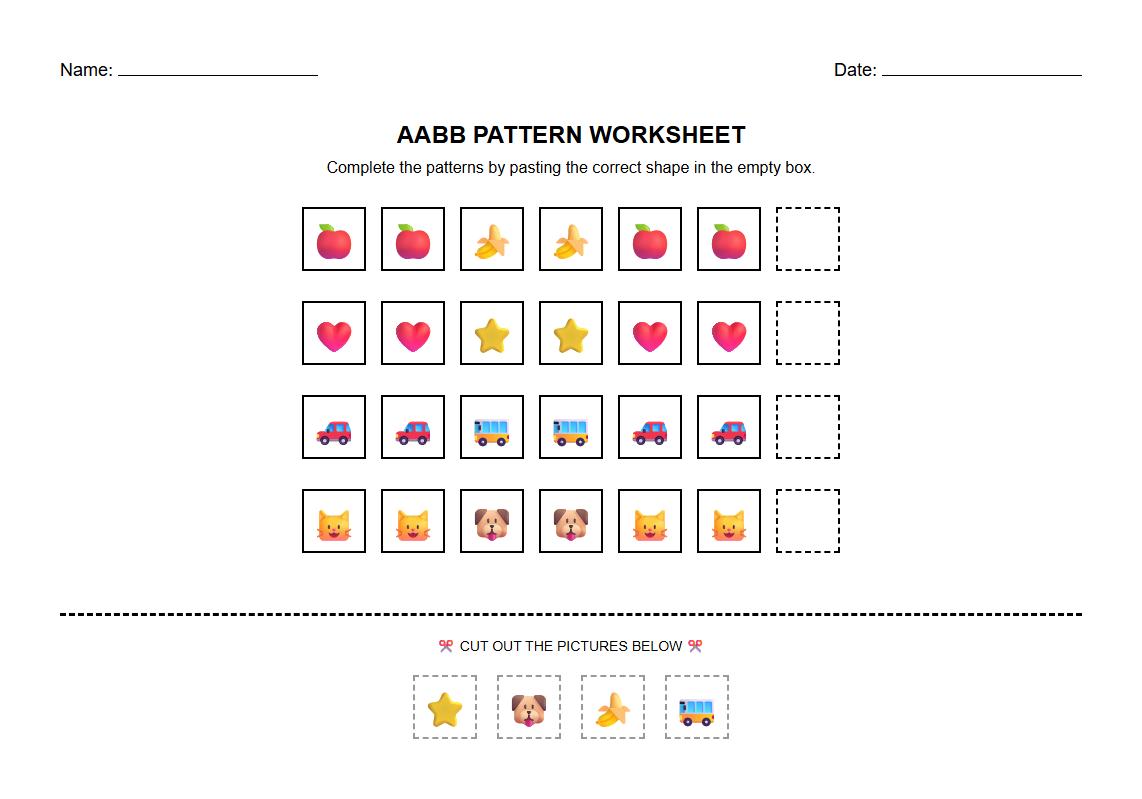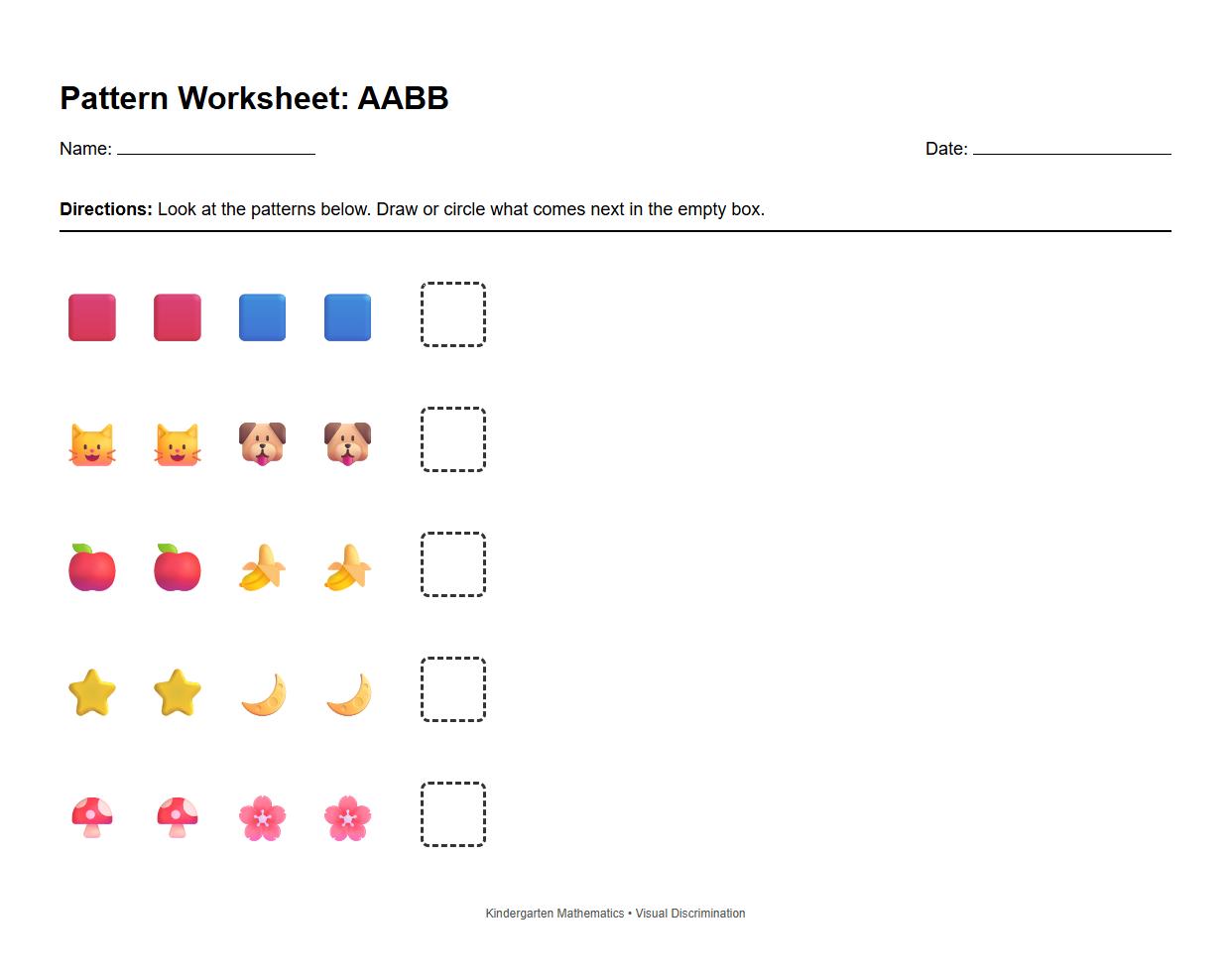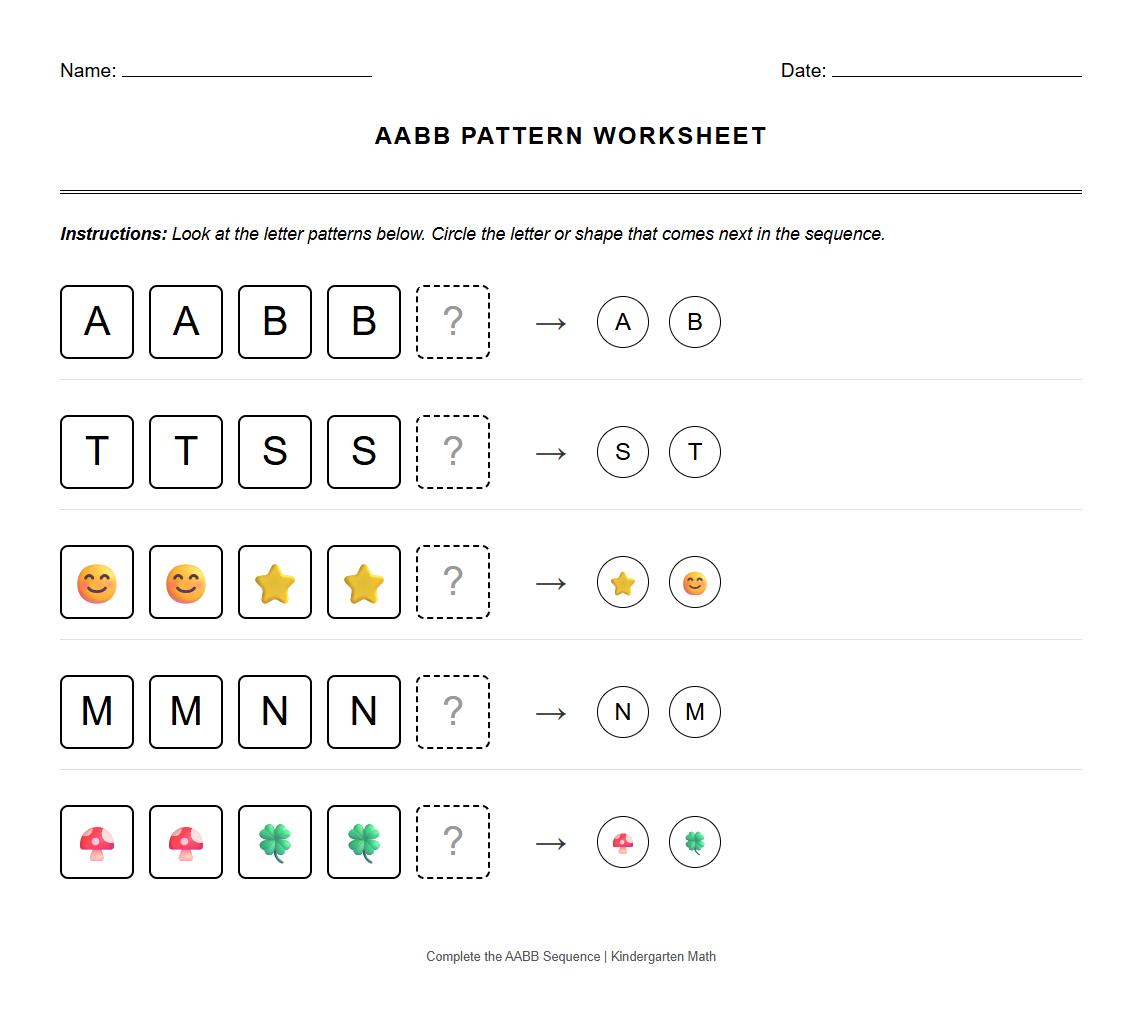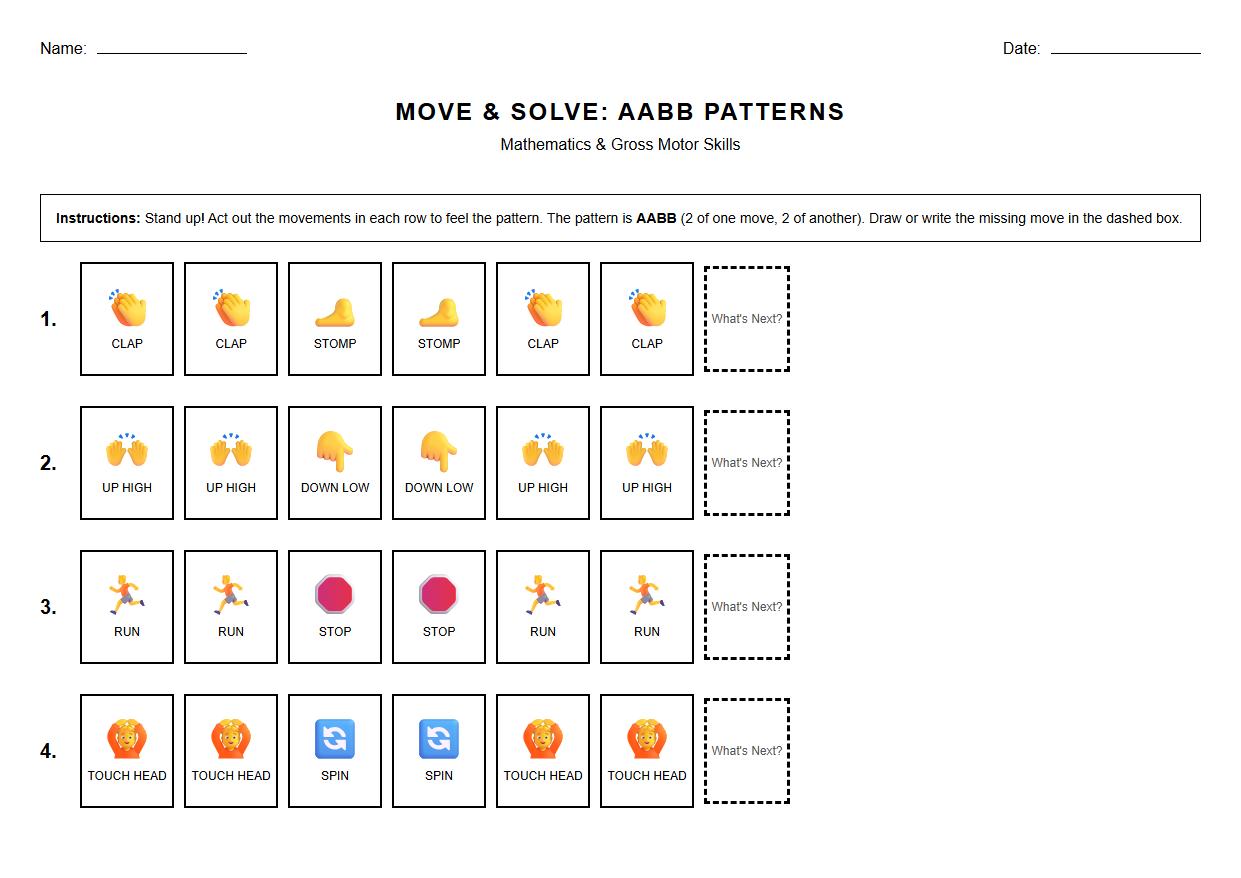
Pattern recognition helps early learners develop critical thinking and problem-solving skills by identifying visual sequences and repetitions. The AABB pattern worksheet encourages children to recognize and create simple, repetitive patterns using colors, shapes, or objects. Explore our collection of engaging worksheets to support your child's pattern recognition practice.
Understanding Patterns: What Comes Next?
The pattern red blue blue red red blue blue follows a repeating sequence. After this group, the next items will again be red, blue, blue to continue the pattern. Recognizing what comes next helps children develop critical thinking and sequencing skills. Encourage kids to say the colors out loud to reinforce memory.
Identifying AABB Patterns in Groups
When asked to circle the group of objects that follow an AABB pattern, look for two items repeated twice sequentially. For example, two stars followed by two hearts create the AABB sequence. This activity strengthens children's visual discrimination and pattern recognition capabilities. It's an engaging way to practice early math concepts.
Shapes and AABB Patterns
Comparing shapes, the sequence square square circle circle perfectly illustrates the AABB pattern. The alternative, square circle square circle, represents a different pattern type. Teaching this difference helps children understand how patterns are formed and varied. Use tangible shapes for hands-on learning.
Completing the AABB Pattern
Drawing the next two items after star star heart heart means repeating stars again to keep the AABB sequence consistent. This practice fosters creativity and reinforces pattern rules. Parents and teachers should encourage students to explain their choices for deeper understanding. Visual arts combined with math improves cognitive connections.
Counting AABB Repeats
Counting how many times the AABB sequence repeats in a row helps kids practice counting, observation, and pattern analysis. Each complete sequence has four items: two of one kind followed by two of another. Repetition identification also aids in memory and concentration. It is a valuable skill for early literacy and math readiness.
Spotting Different Patterns
Pointing to a pattern that differs from AABB encourages attention to detail and logical reasoning. Variations might include ABAB or ABC patterns, which teach flexibility in thinking. This task refines children's ability to classify and sort patterns based on properties. Discussing why something is different deepens comprehension.
Filling in the Blanks for AABB
Completing the sequence cat cat dog dog cat cat ___ ___ requires adding dog dog to maintain the AABB structure. Filling blanks improves sequencing skills and visual prediction. Such exercises promote problem-solving and recognize pattern consistency. Support from adults helps children feel confident in answers.
Animals and AABB Patterns
The pair lion lion tiger tiger illustrates the correct AABB animal pattern. In contrast, lion tiger lion tiger forms an alternating pattern. Identifying these distinctions enhances pattern recognition and categorization skills. Use animal toys or pictures to make learning interactive and fun.
Choosing the Correct AABB Group
The set apple apple banana banana shows the true AABB pattern versus apple banana apple banana. Selecting the right group helps develop an understanding of pattern repetition. This activity supports early math learning and builds attention span. Encourage kids to explain their choices to boost verbal skills.
Coloring to Continue AABB Patterns
To continue coloring the blocks in the sequence blue blue green green, kids should color the next two blocks blue blue. This reinforces the AABB color pattern concept. Coloring activities integrate creativity with cognitive skill development effectively. They provide a visual and tactile approach to learning patterns.


ABC Pattern Sequencing Worksheet for Kindergarten Math