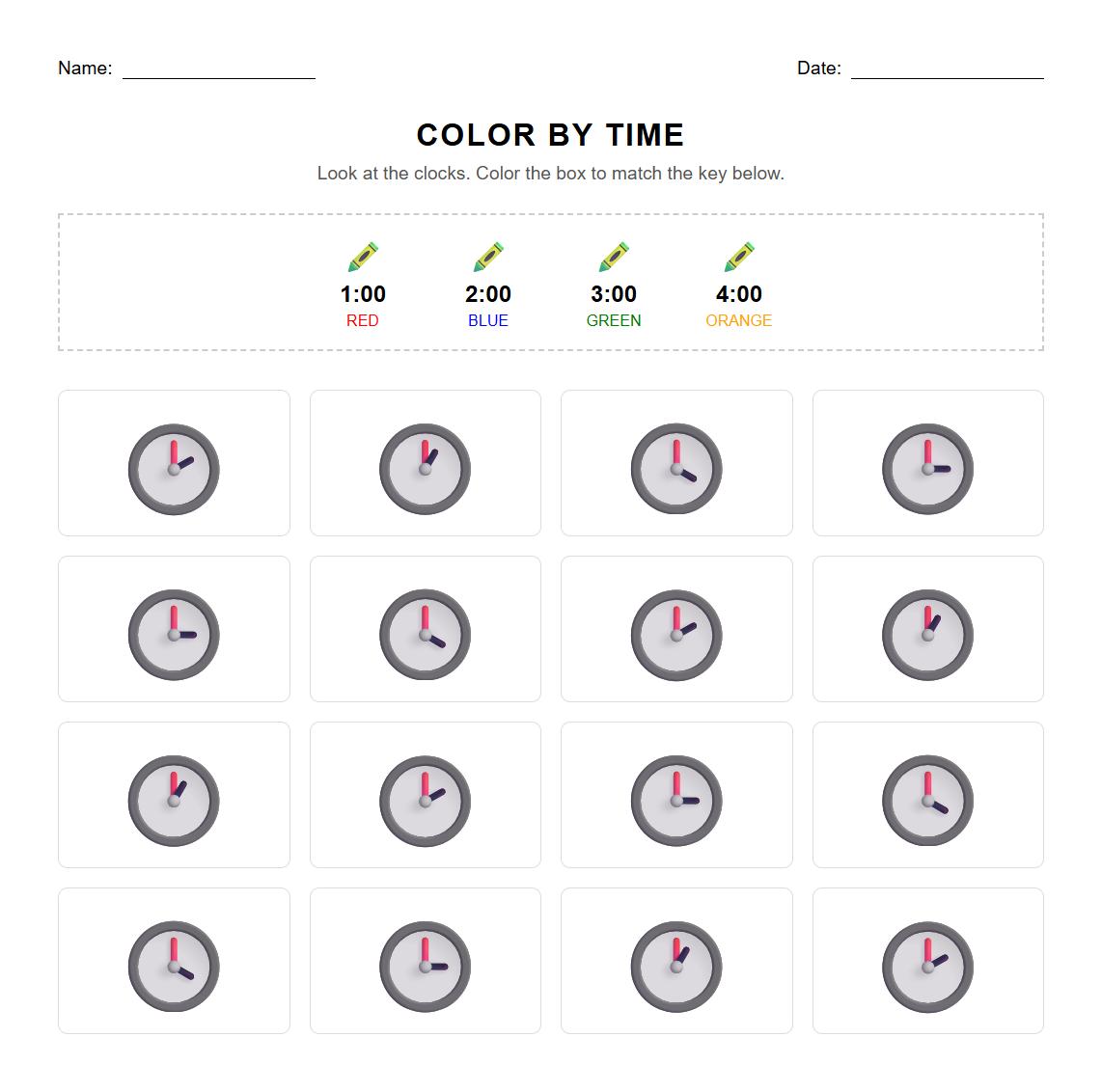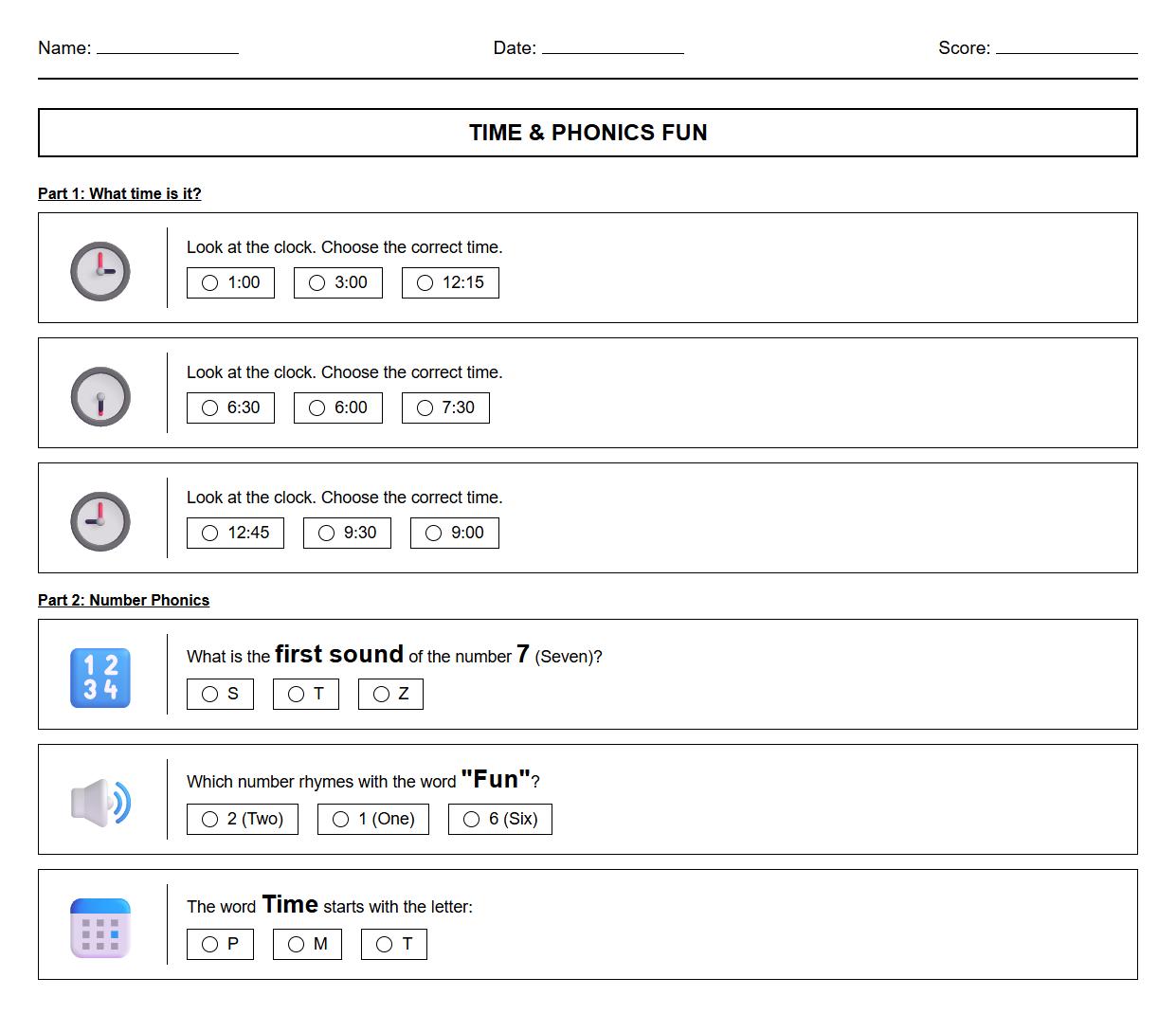
Kindergarten students develop essential time-reading skills by practicing telling time to the hour and half hour on analog clocks. These engaging worksheet activities enhance their ability to recognize and write time while reinforcing number sense and sequencing. Explore our collection of telling time worksheets designed to build confidence and proficiency in young learners.
What Time Does the Clock Show on the Hour Activity Sheet?
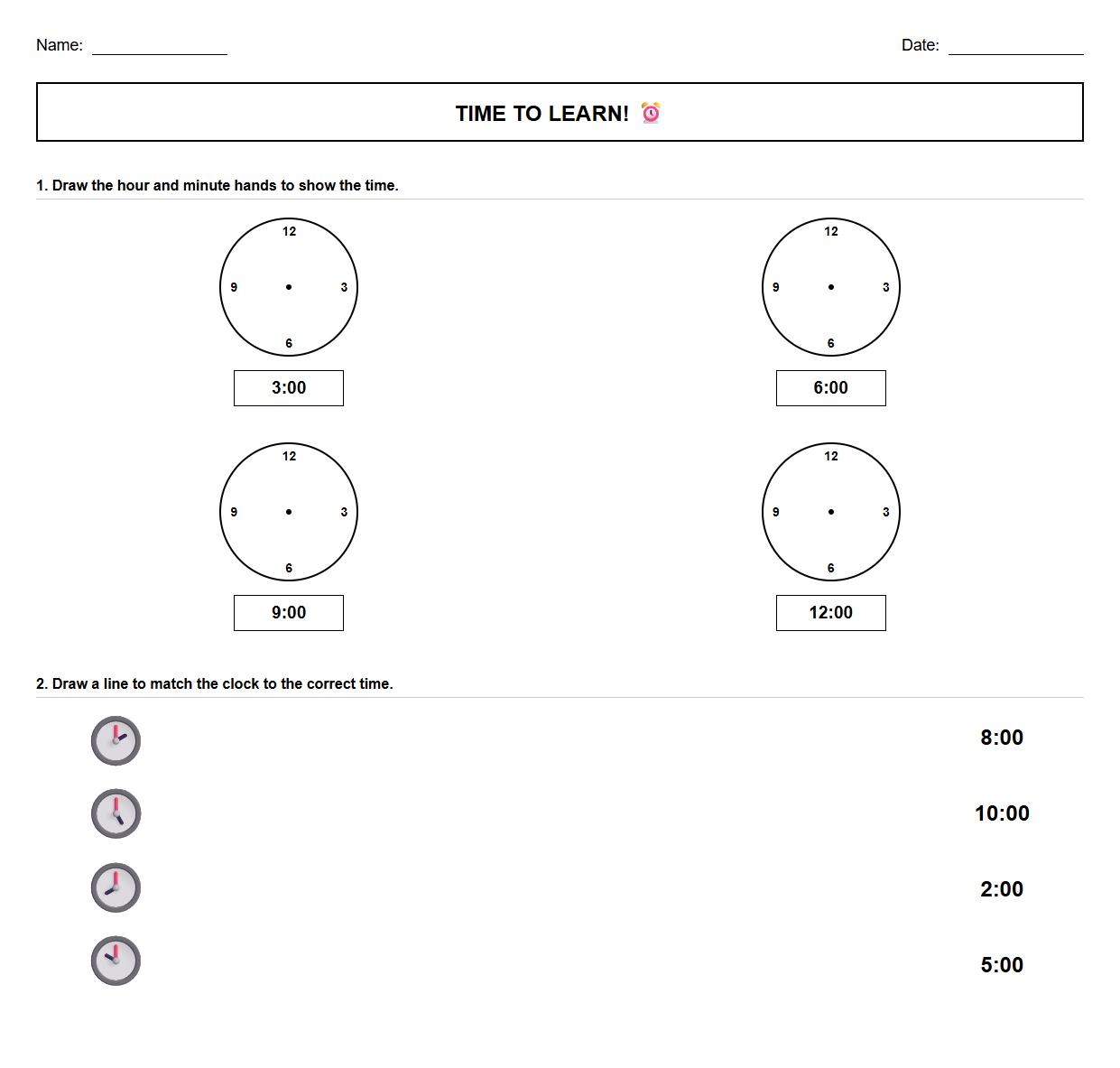
This activity sheet helps children recognize times on the hour displayed on analog clocks. Teachers and parents guide children to identify each clock's hour hand pointing exactly to a number, such as 2:00 or 5:00. It strengthens basic time-reading skills by focusing on clear hour marks. Encouraging verbalizing the time enhances understanding.
Which Clock Shows Half Past Three in This Worksheet?
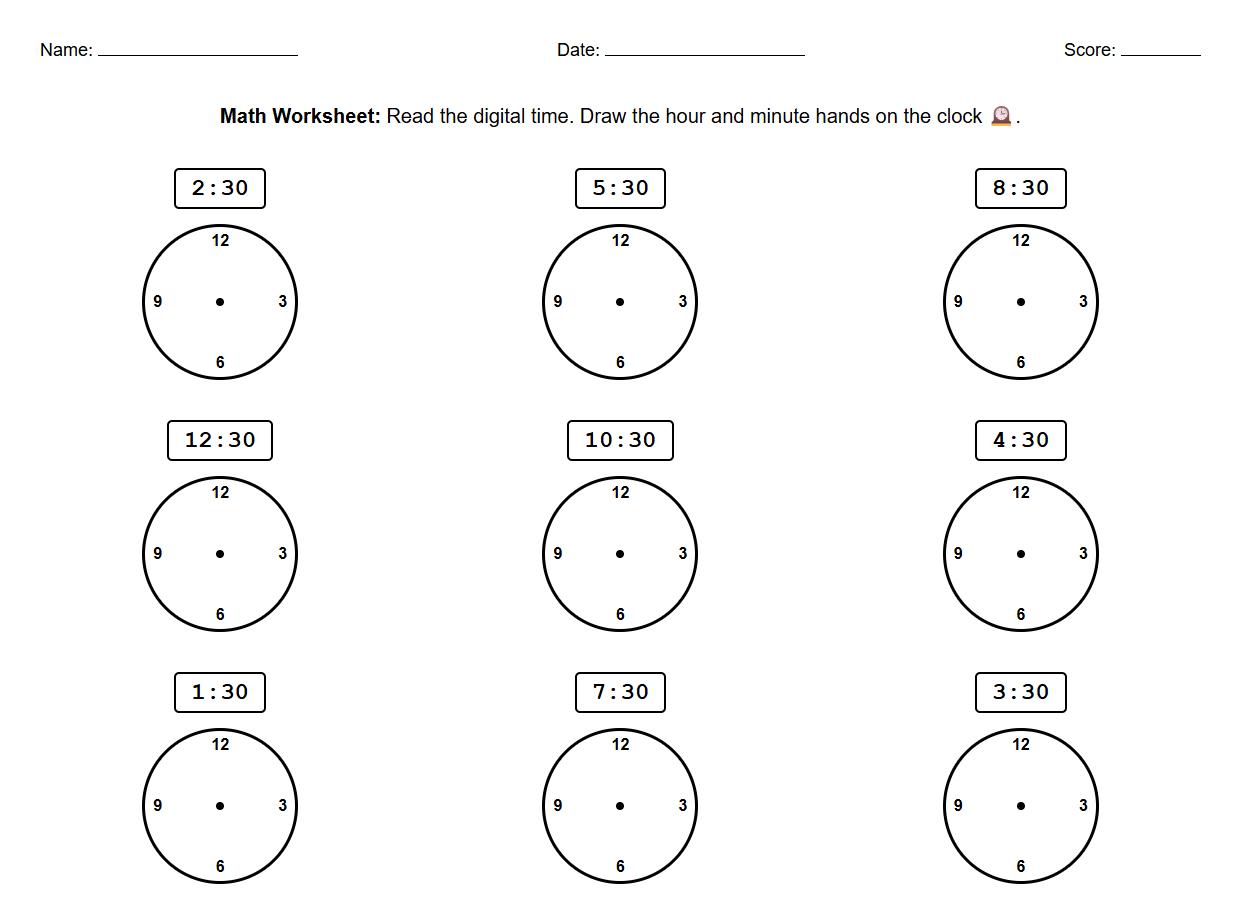
Children are asked to find the clock with the minute hand on 6 and the hour hand slightly past 3, indicating 3:30. This activity reinforces the concept of 'half past' as the minute hand reaches the 30-minute mark. Visual differentiation helps children connect the position of hands with time expressions. Parents and teachers can prompt children to explain why the clock shows half past three.
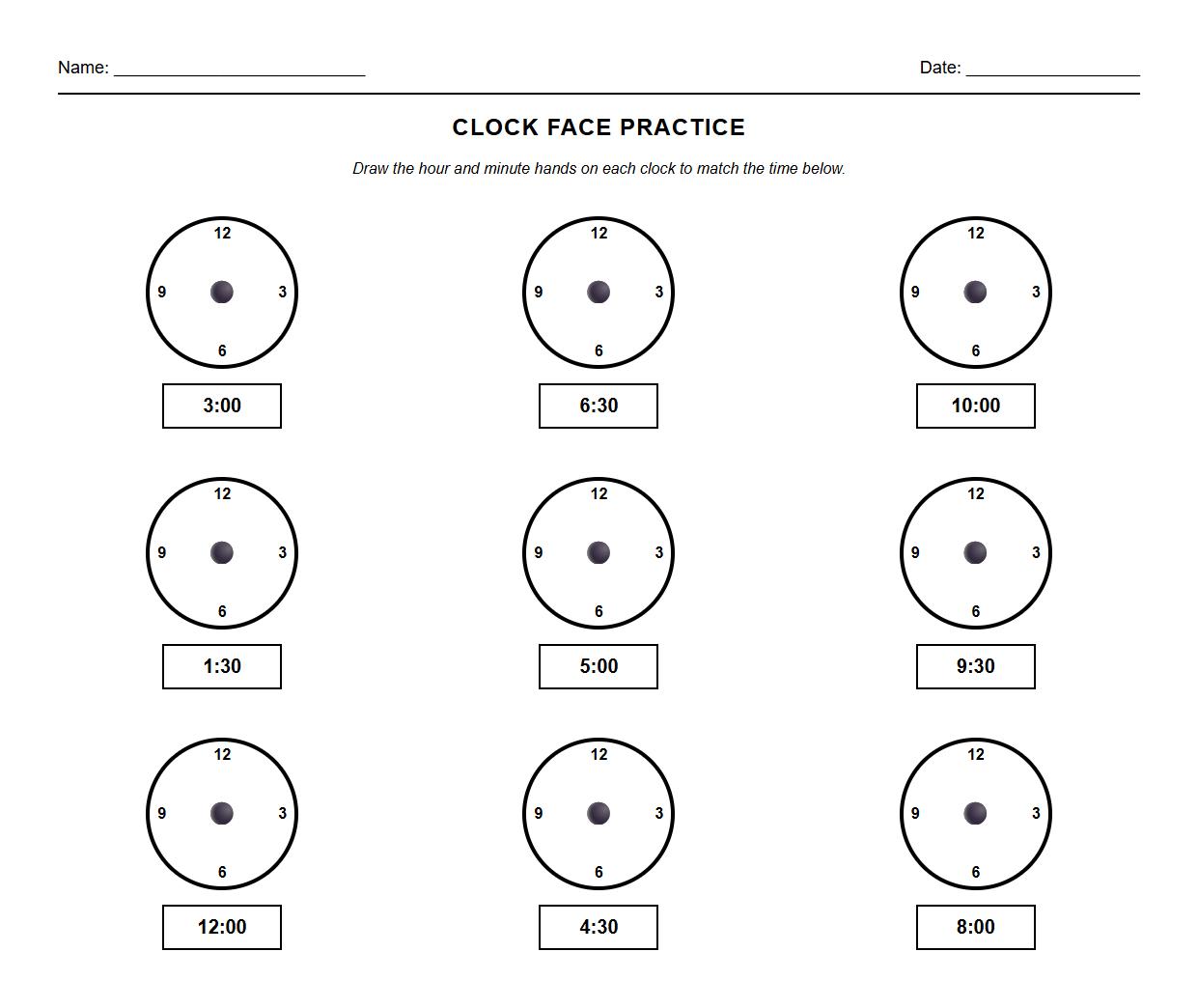
Draw the Hands to Show Four O'Clock
This interactive task invites children to draw the hour hand on 4 and the minute hand on 12. It encourages fine motor skills while reinforcing understanding of o'clock times. Teachers can demonstrate before children practice to ensure clarity. Drawing clocks solidifies the link between time concepts and clock visuals.
Color the Clock That Shows Half Past Twelve
Children identify clocks where the hour hand is just past 12 and the minute hand is on 6, indicating 12:30. Coloring these clocks makes the learning process engaging and memorable. This activity supports visual learning and time recognition. Guided discussions about why these clocks show half past enhance retention.
Circle All the Clocks That Show the Hour
In this exercise, children distinguish between clocks showing exact o'clock times and other times. Circling the correct clocks reinforces the concept of the hour and minute hands' positions. It helps in developing keen observation skills and time-telling accuracy. Teachers can review the answers with children to clarify misconceptions.
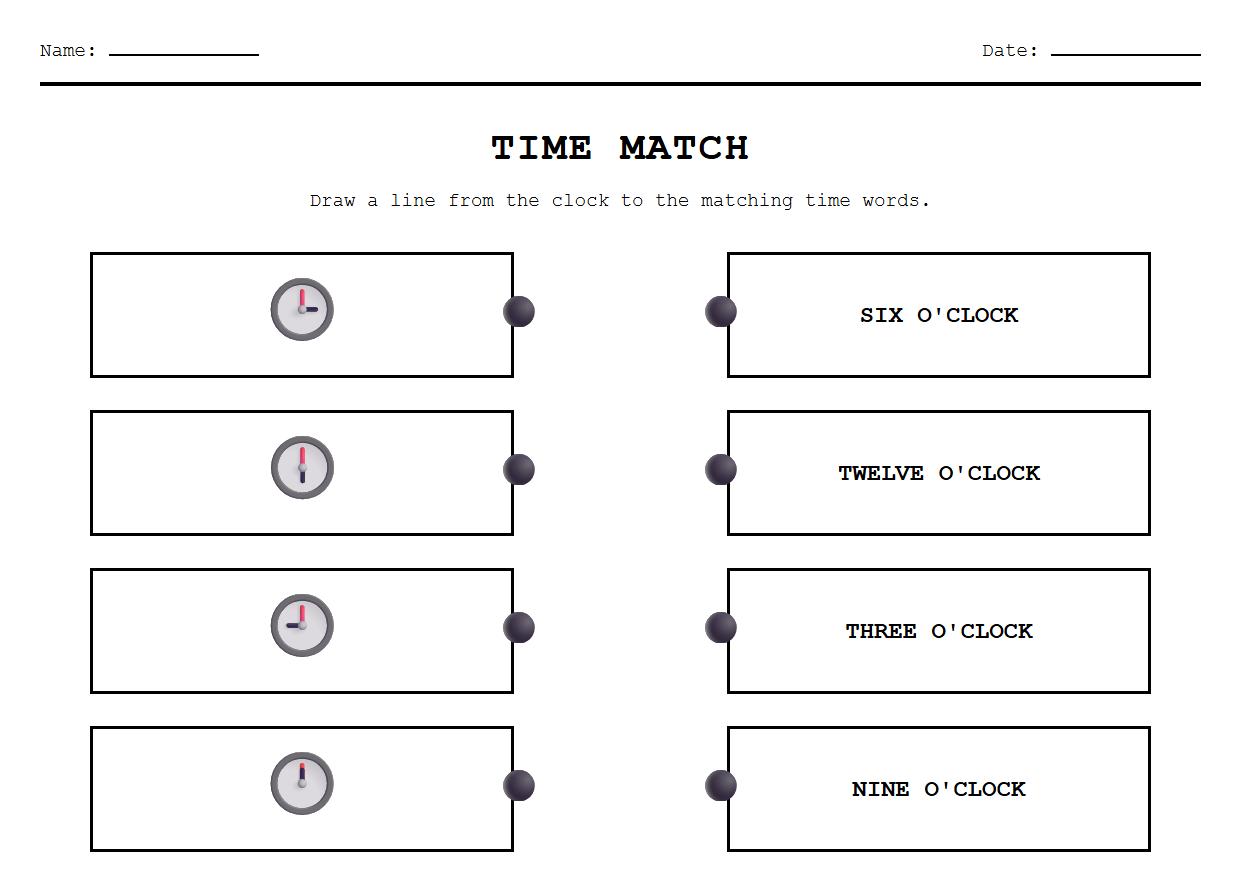
Match the Digital Time to the Correct Analog Clock Showing the Hour
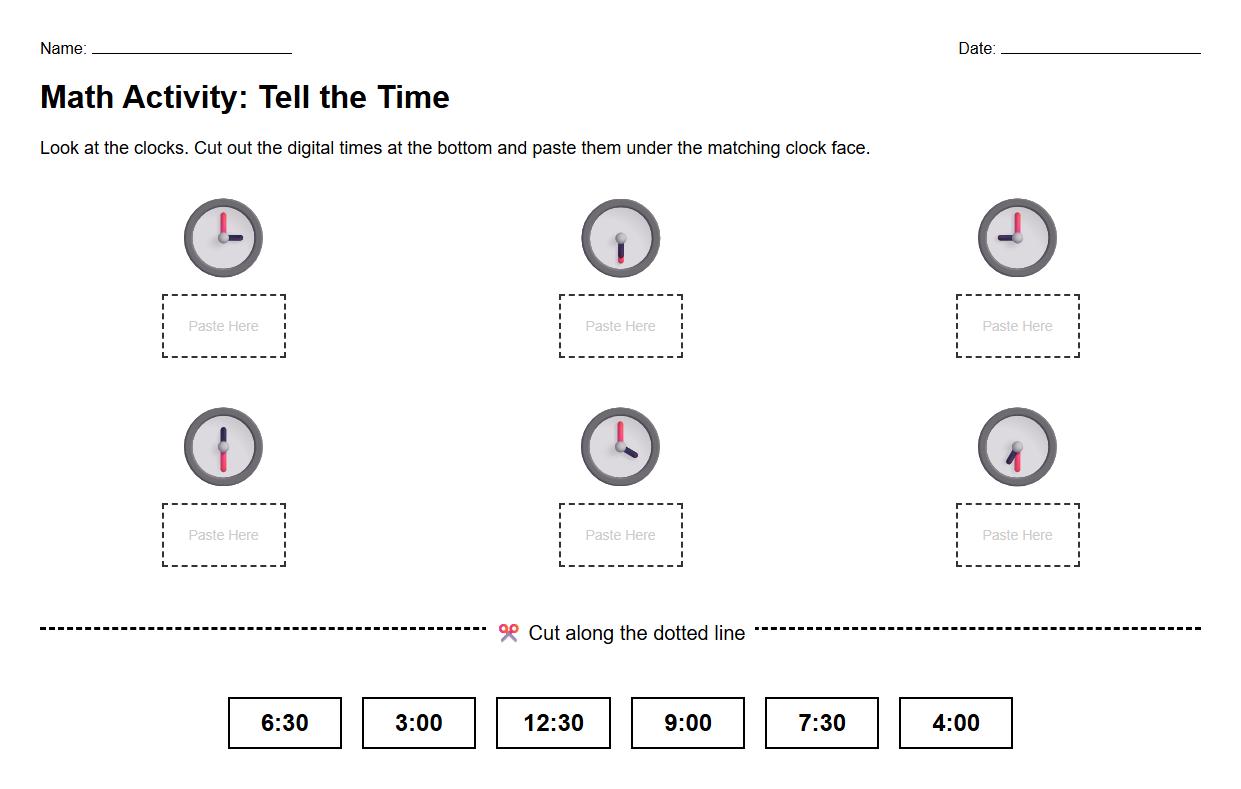
This matching activity connects digital and analog time representations. Children learn to associate numbers on digital clocks with the corresponding positions of hands on analog clocks. It enhances dual-format time reading skills essential for daily life. Parental support can boost confidence during this exercise.
What Time Is It When the Big Hand Is on Twelve and the Little Hand Is on Six?
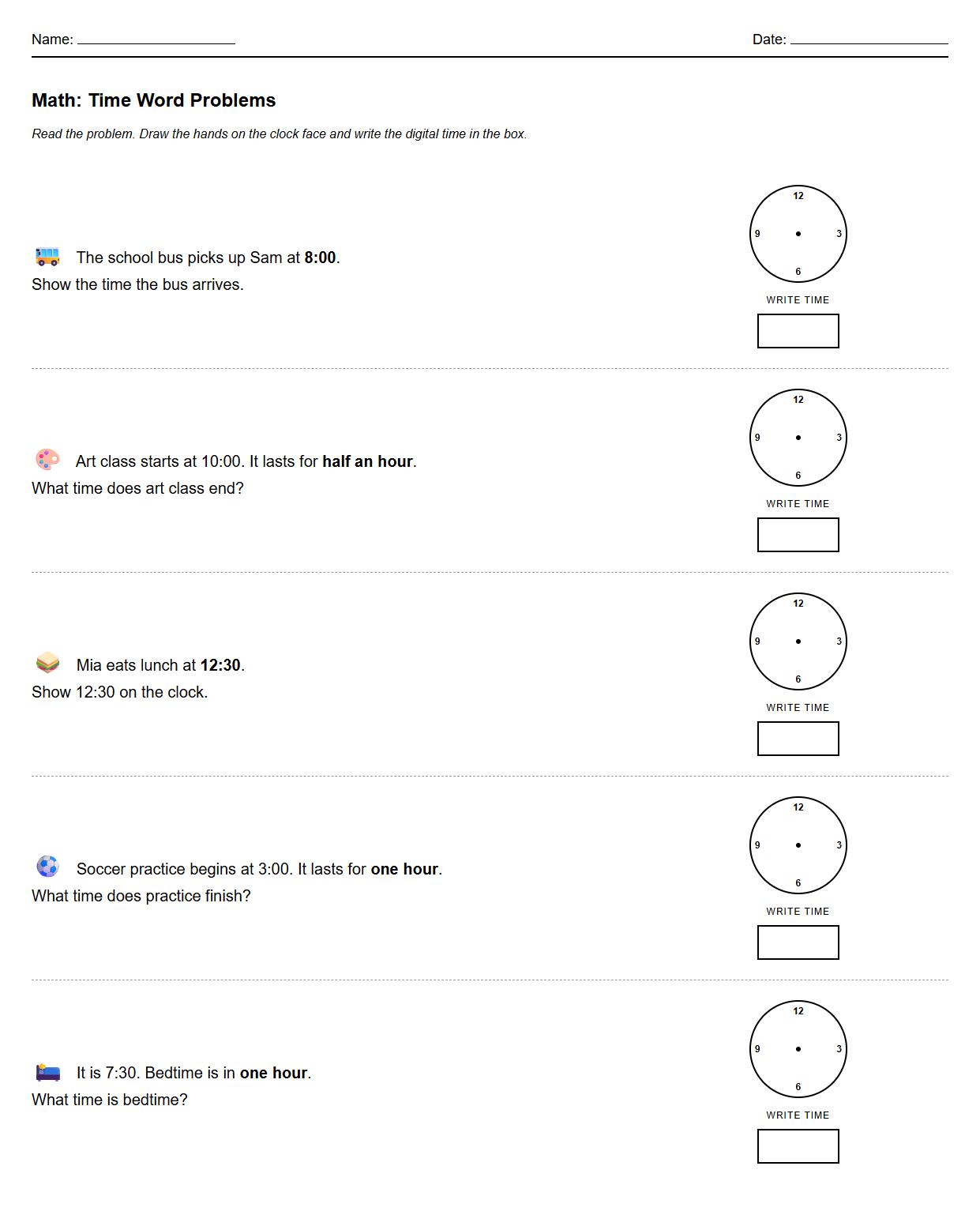
When the minute (big) hand points to 12 and the hour (little) hand points to 6, the clock shows six o'clock. This question cements understanding of how hand positions indicate precise times. Repetition of this concept aids in building time-telling fluency for young learners. Teachers can expand by asking children to say or write the time aloud.
Connect the Clocks That Show the Same Time
Children draw lines connecting clocks that share the same time, fostering pattern recognition and comparison skills. This task builds awareness of identical times despite different clock faces. It encourages critical thinking and attention to detail. Group discussions about matched clocks deepen comprehension.
Fill in the Blanks with "O'clock" or "Half Past"
This worksheet asks children to complete sentences or time labels using "o'clock" or "half past", reinforcing key time vocabulary. It supports both reading and writing skills alongside time-telling knowledge. Contextual clues on clocks guide children in choosing the correct phrase. Parents and teachers can provide examples to aid learning.
Trace the Numbers to Complete the Clock for Half Past Seven
This tracing activity supports number recognition and fine motor development by having children trace clock numbers. Completing a clock showing half past seven familiarizes children with clock structure and the concept of half hours. It reinforces time vocabulary and hand placement. Repetitive practice sharpens both numerical and temporal skills.


Engaging Kindergarten Time Telling Worksheets Covering Hour and Half Hour