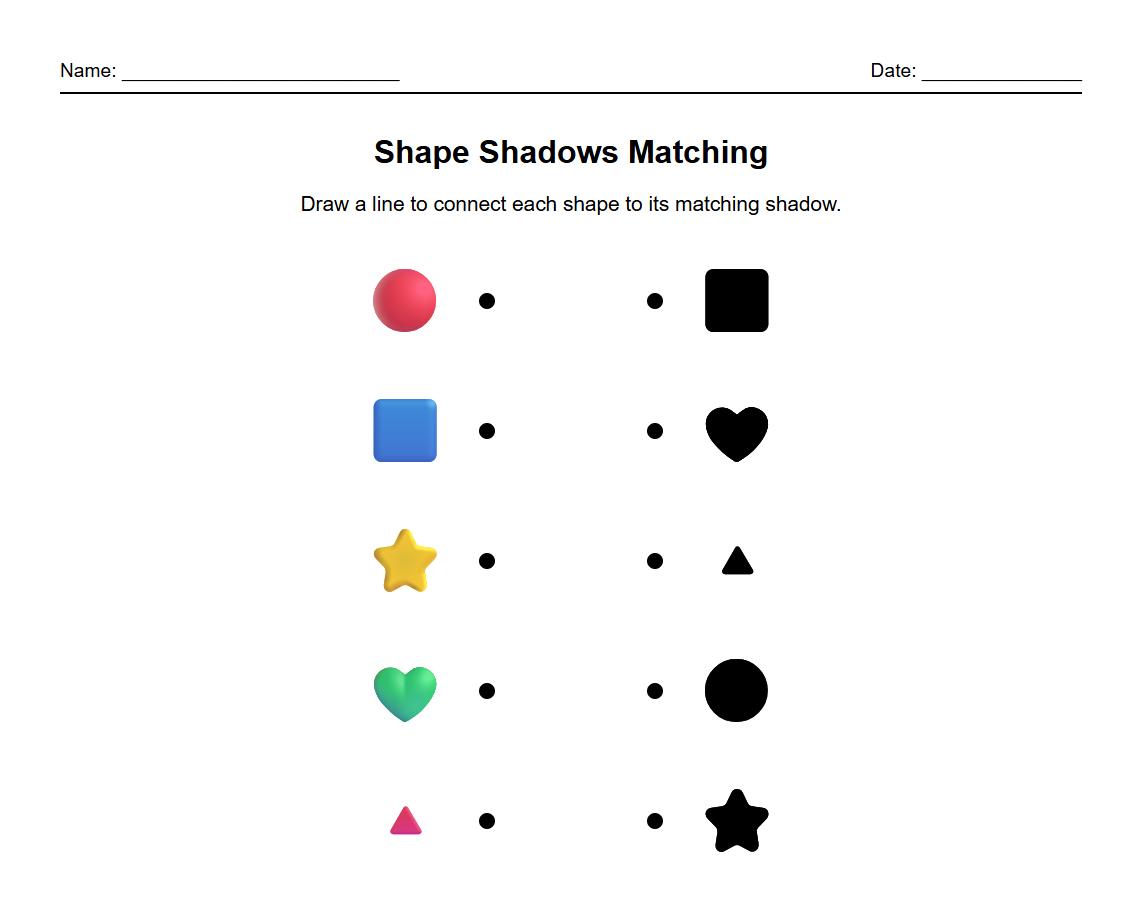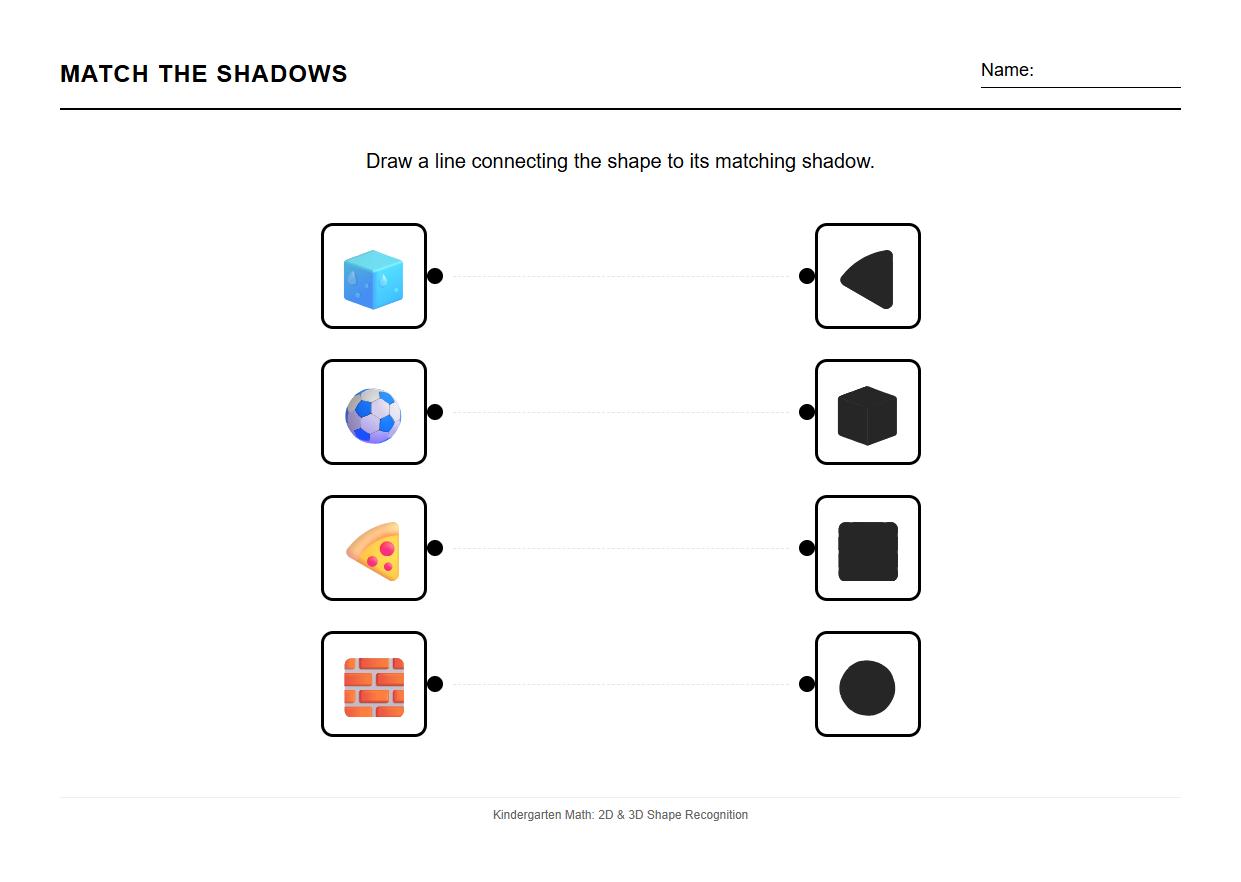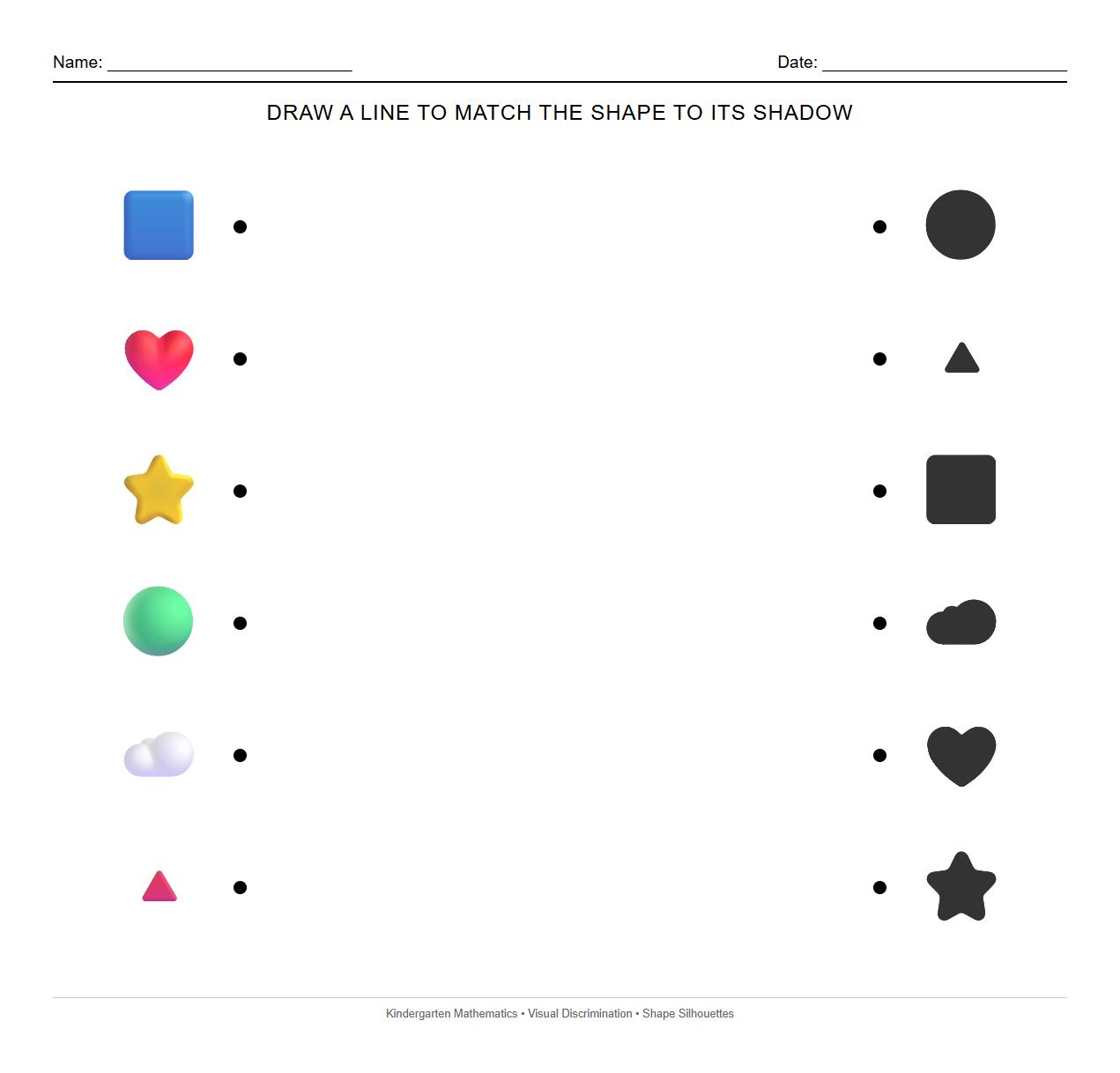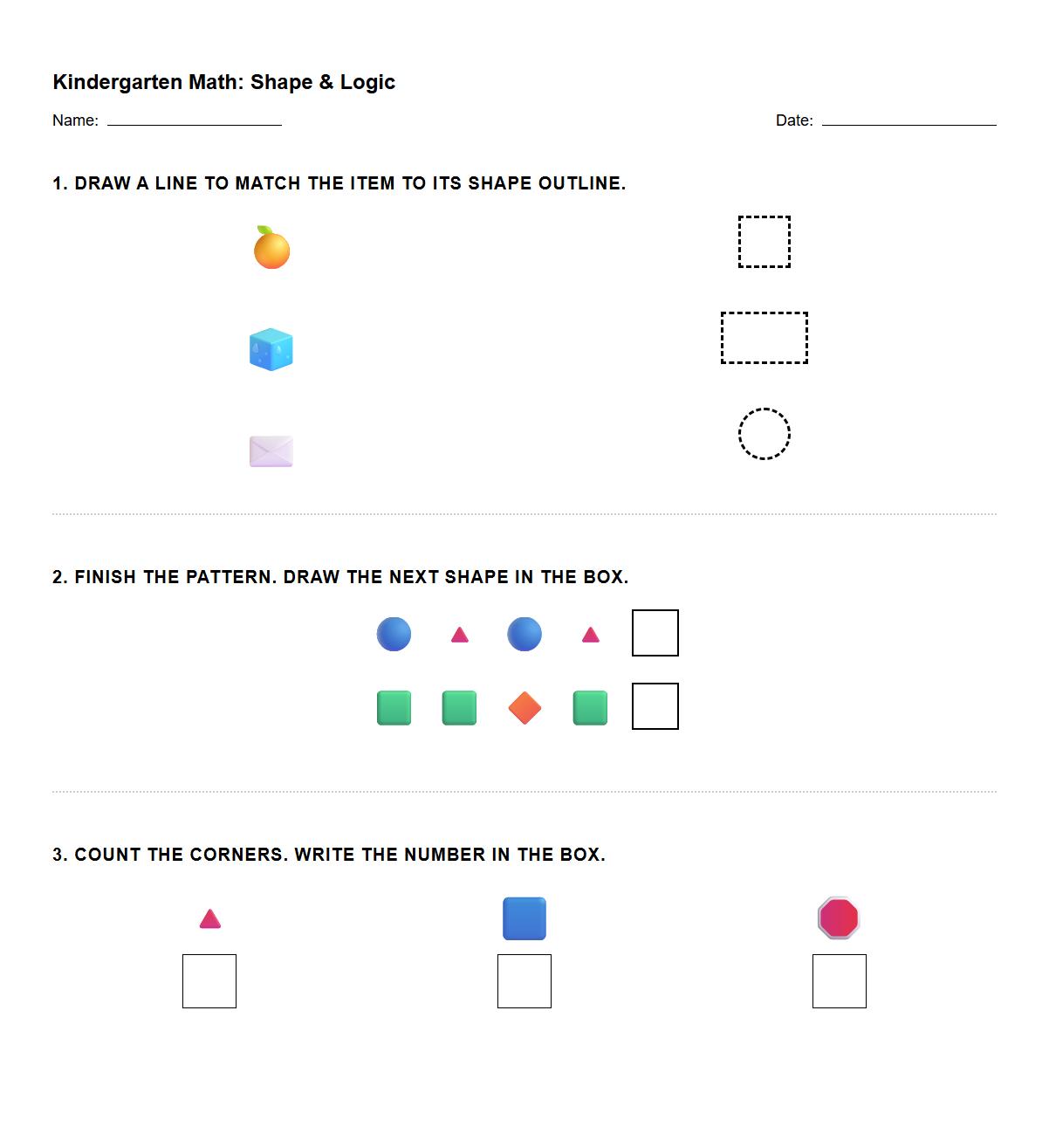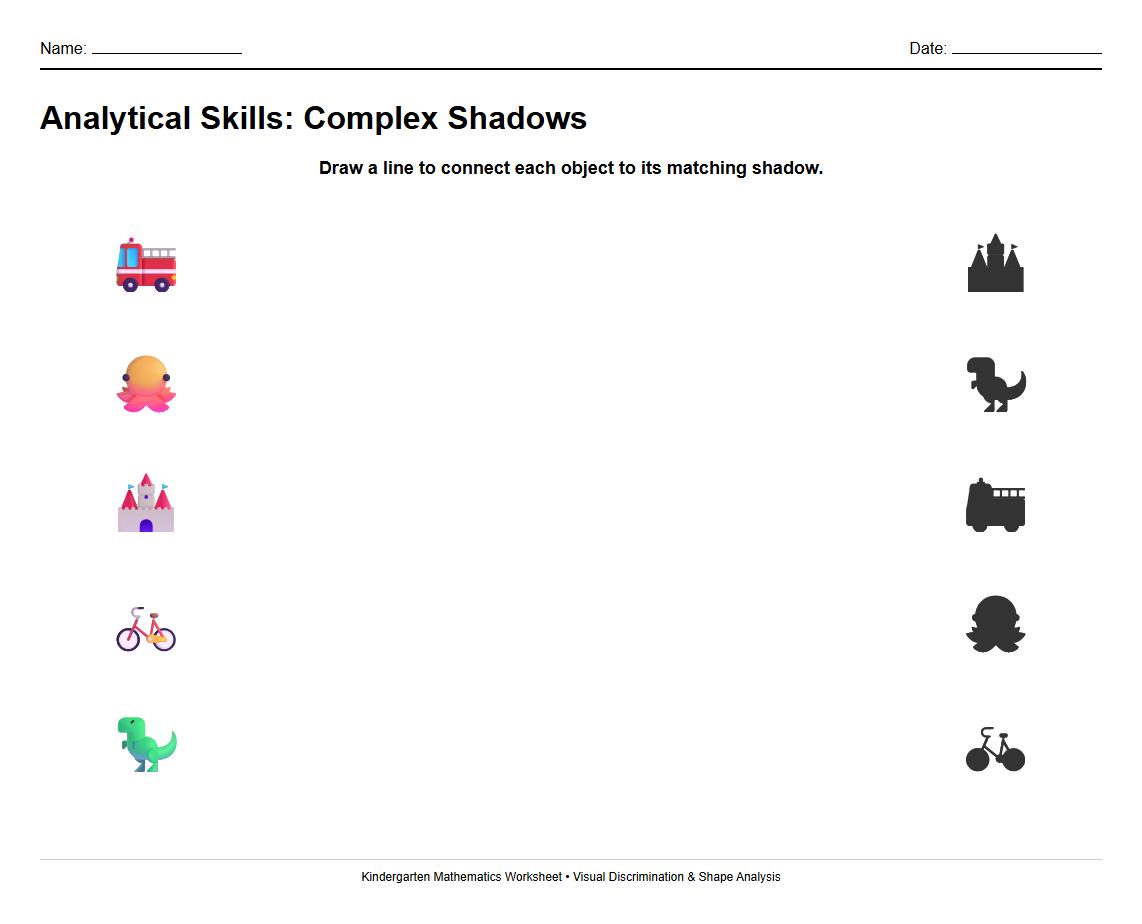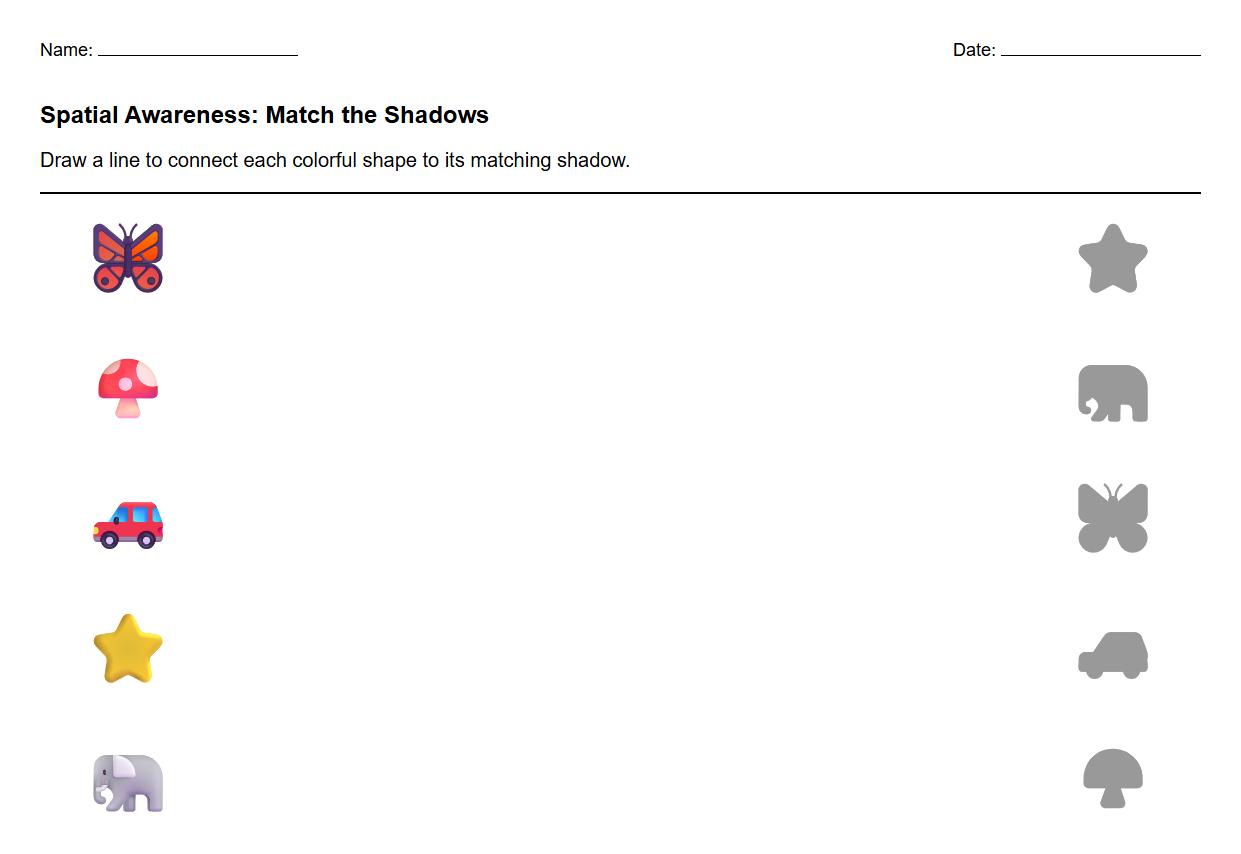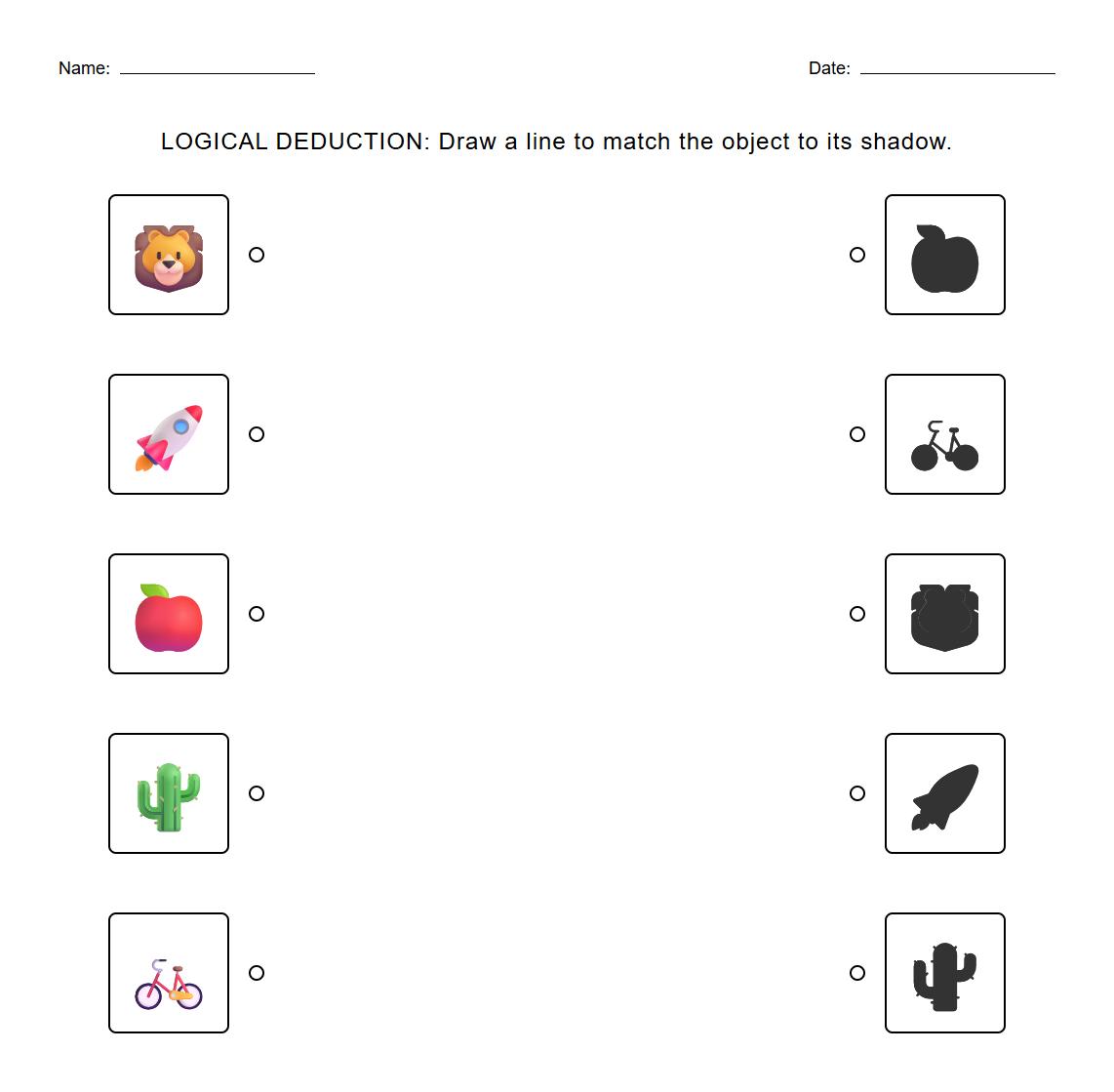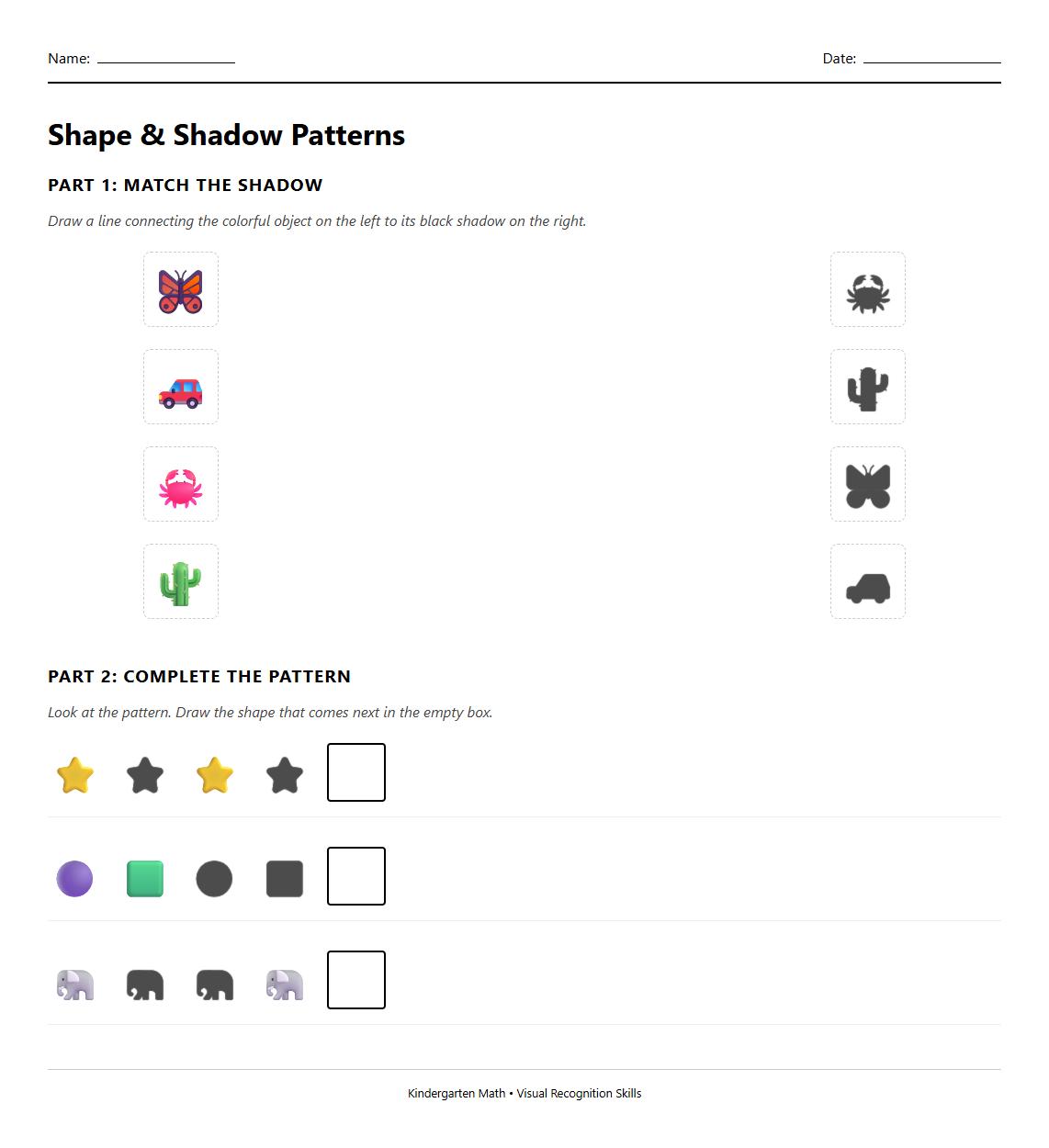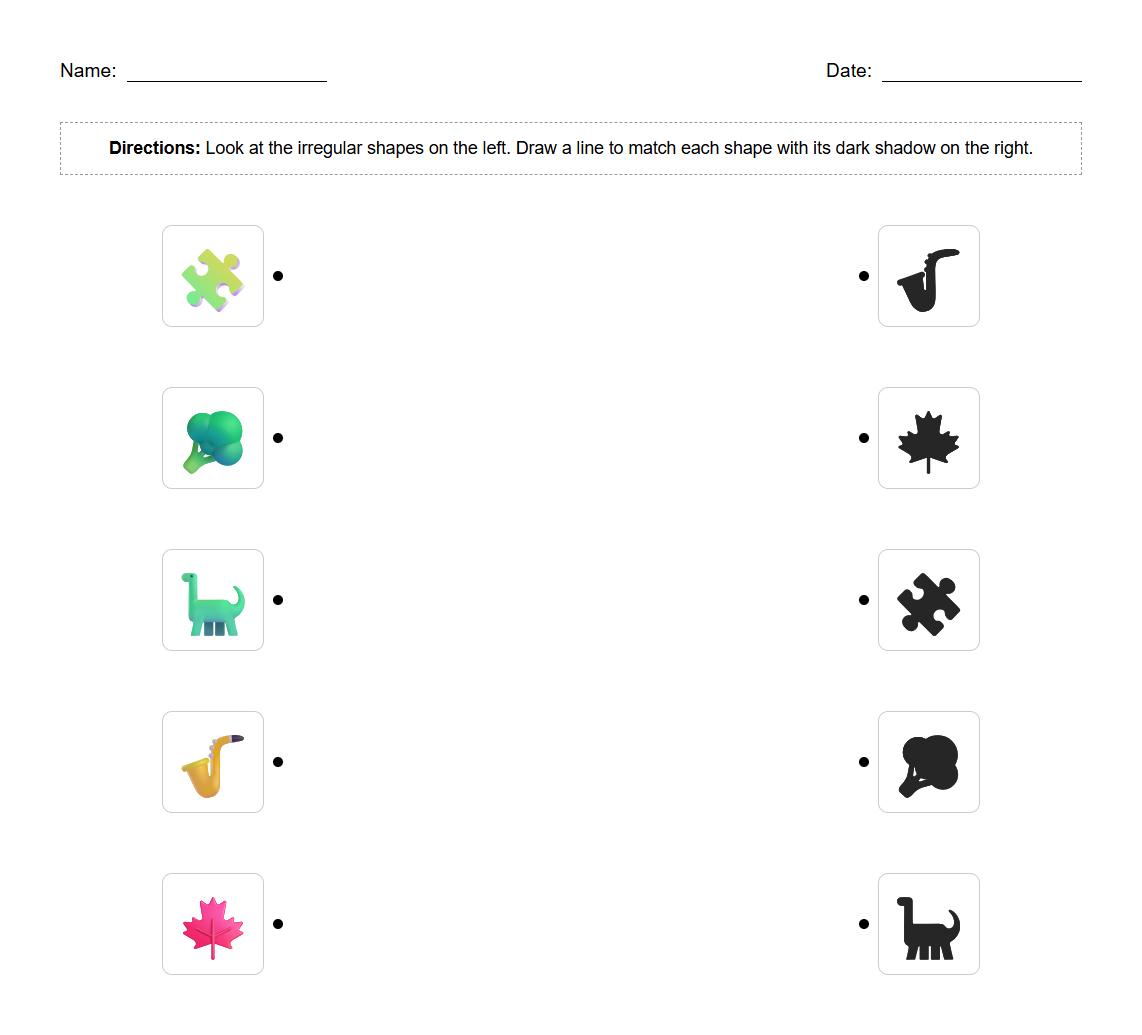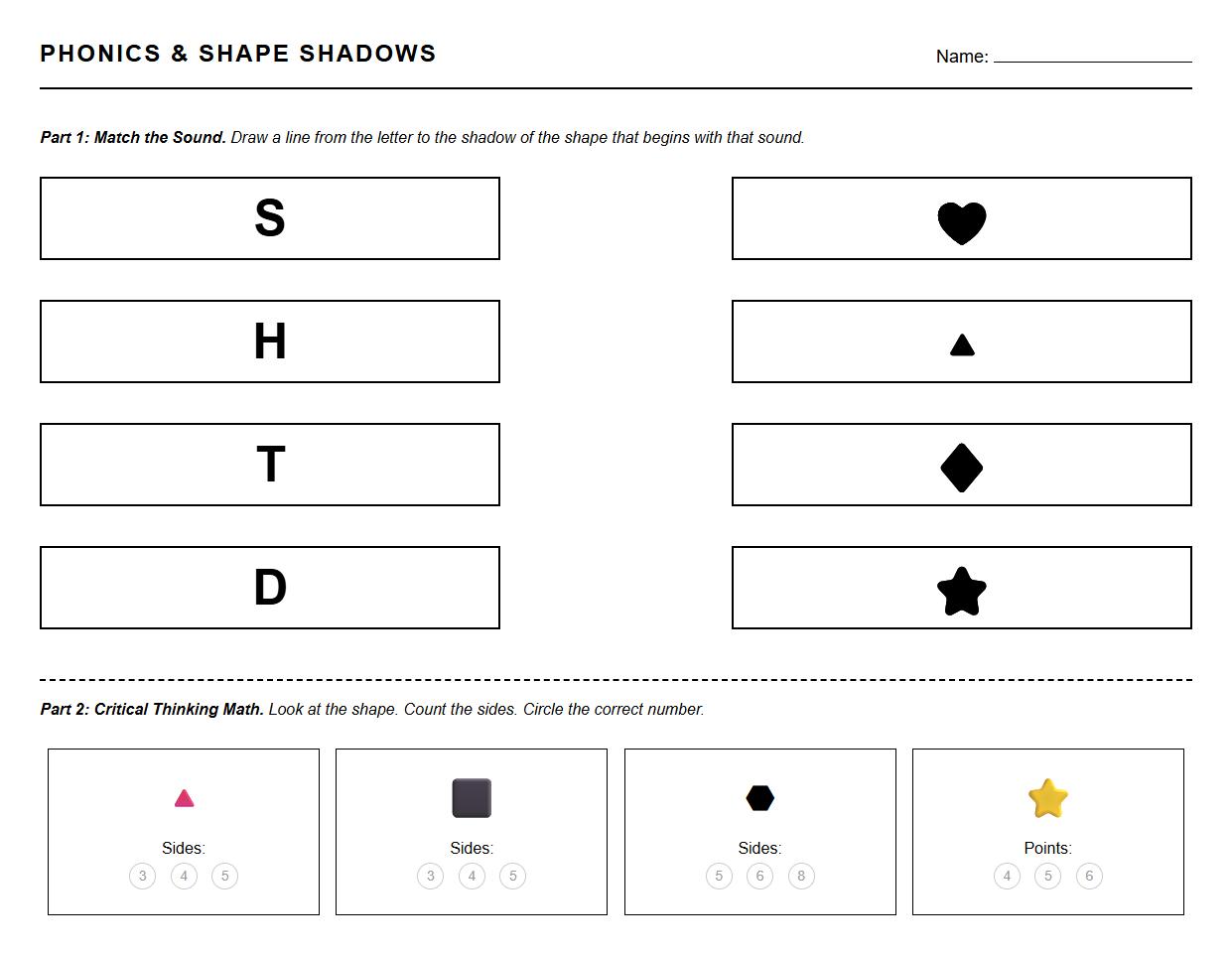
Identify matching shapes by analyzing their shadows to enhance spatial awareness and critical thinking skills. This activity encourages observation and attention to detail while strengthening visual discrimination. Explore the available worksheets to practice matching shapes with their corresponding shadows.
Which shape in the row has a matching shadow below?
Look carefully at each shape in the top row and compare it with the shadows below. The shadow that matches will have the same outline and angles as the shape it belongs to. Pay close attention to the size and position of the shadow. This helps children understand the concept of shapes and their corresponding shadows.
Can you find the shadow that does not belong to any shape above?
Identify the shadow that has no matching shape from the row above by comparing the shapes closely. This shadow will look different in form or size and will not match the contours of any shape. This activity helps kids learn to recognize when shadows do not fit with given shapes. It strengthens their observation and critical thinking skills.
Which two shapes have the same shadow?
Find the two shapes that share a matching shadow by observing the shadows' outlines carefully. Sometimes, different shapes can create similar shadows because of their angles or parts. This encourages children to explore how shapes can look alike in shadows, promoting pattern recognition. Highlighting this helps develop their visual discrimination abilities.
How do you know which shadow matches each shape?
Match a shape to its shadow by comparing their outlines and angles, checking for a perfect or near-perfect fit. The shadow will be a filled-in version of the shape, showing its exact edges and direction. Discussing this can help children understand the relationship between objects and their shadows in real-world contexts. It also improves their spatial awareness.
Could a triangle's shadow ever look like a square? Why or why not?
A triangle's shadow cannot look like a square because the number of sides and angles will not match. Triangles have three sides, while squares have four equal sides and right angles. This difference means their shadows will always be distinct shapes. Teaching this concept reinforces understanding of basic geometric properties.
What is different about the way the shadows are facing?
The shadows may face different directions depending on the shape's orientation and the light source angle. For example, a shape turned left will cast a shadow facing left or right. These differences show how positioning affects shadow direction, helping children grasp cause and effect. It also links geometry with physical phenomena.
If you move the shape, how will the shadow change?
When a shape moves, its shadow shifts position accordingly but maintains the same general shape. The shadow's size and direction might change if the light source or distance changes. This demonstrates the connection between object movement and shadow behavior, promoting understanding of light and shadow interaction. It also encourages experimentation during learning.
Are any of the shadows exactly the same? How can you tell?
Look closely to see if any shadows have identical shapes and face the same way. Shadows that are the same will have matching outlines and sizes. Identifying identical shadows helps develop attention to detail and visual comparison skills. It also supports lessons on shape recognition and symmetry.
What happens if a circle is next to a rectangle? How do their shadows compare?
A circle's shadow will be round, while a rectangle's shadow will have straight edges and corners. When placed side by side, their shadows clearly differ in shape and form. This contrast helps children differentiate between curved and angled shapes. It's a great way to teach the properties of basic geometric forms.
Can you draw your own shape and create a matching shadow?
Encourage children to draw a simple shape and then imagine or draw the shadow it would cast. This creative activity strengthens their understanding of shape-shadow relationships and light direction. It also fosters imagination and fine motor skills. Such exercises make learning about shapes fun and engaging.


Shape Building Challenge Activity with Spatial Reasoning