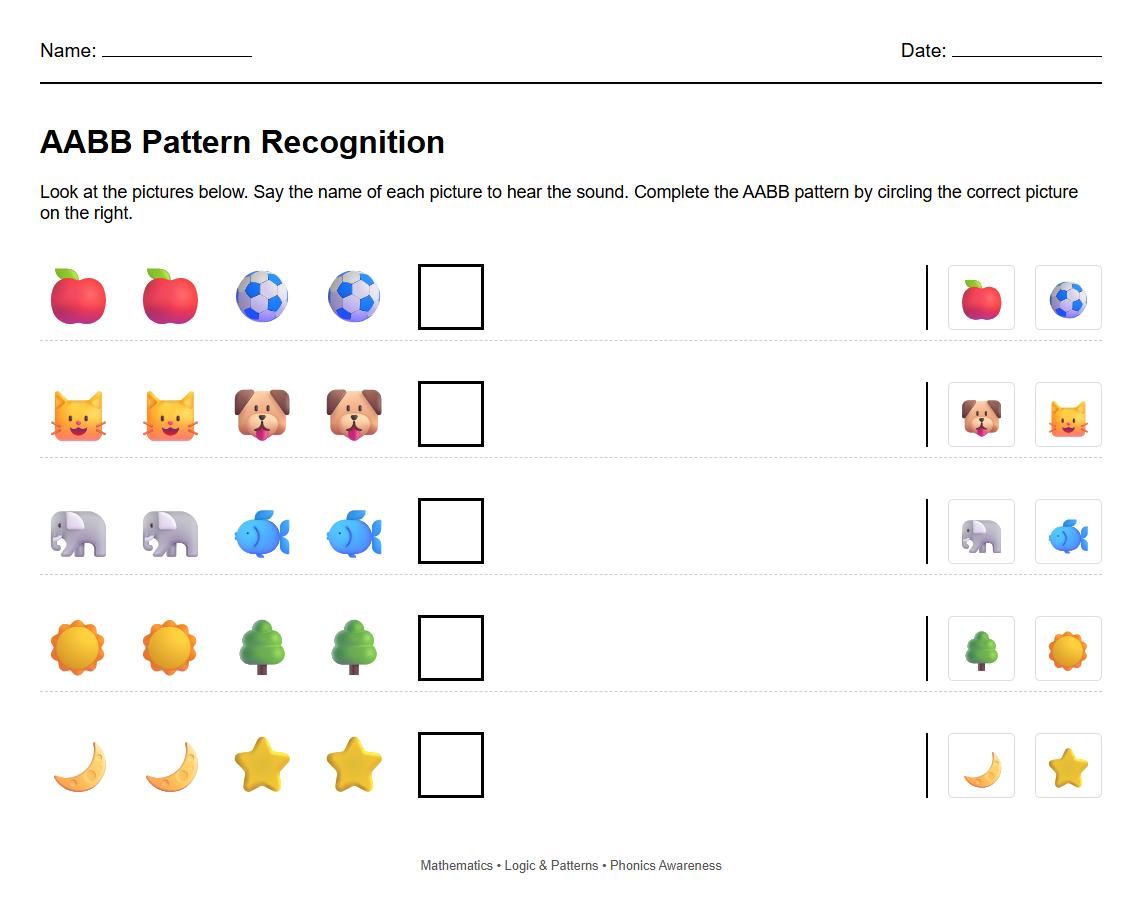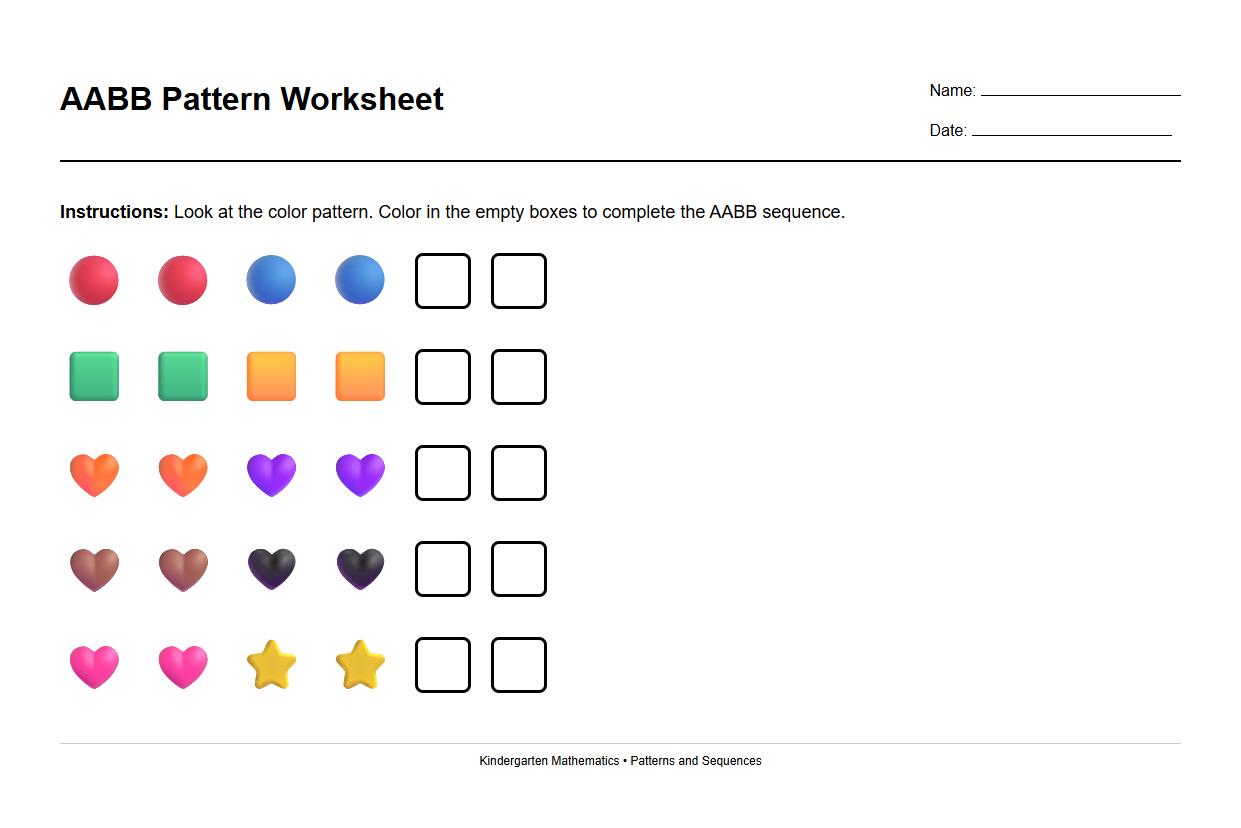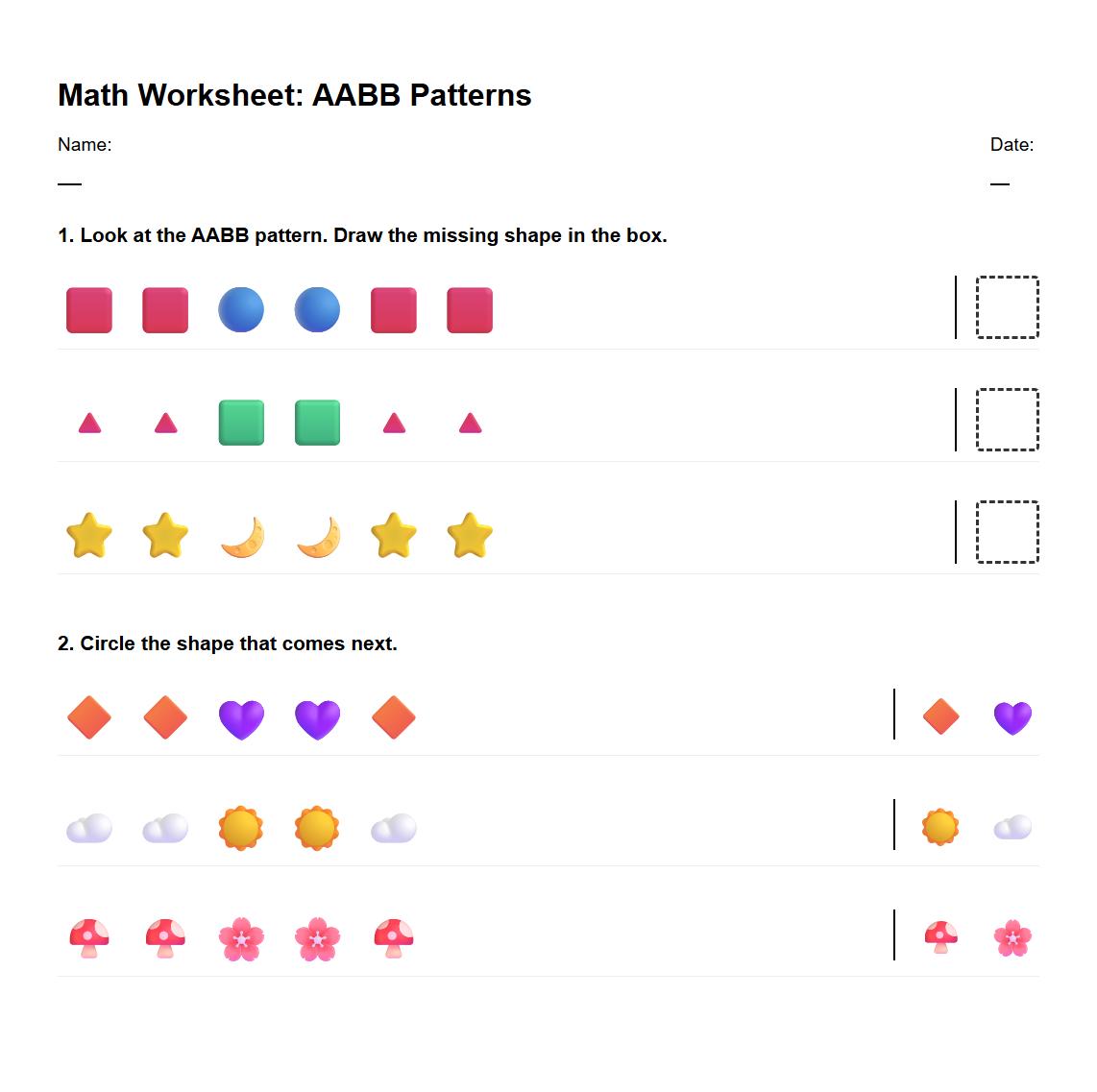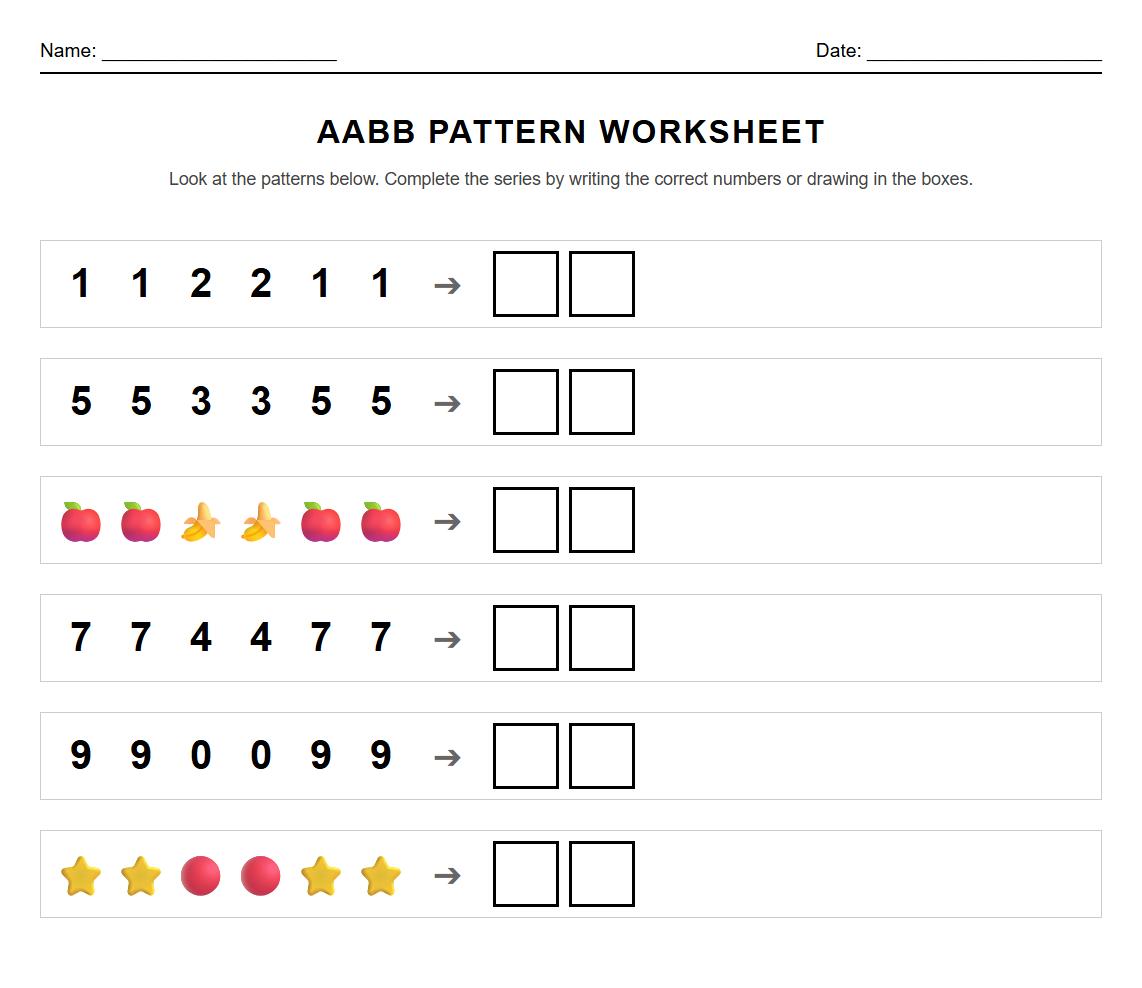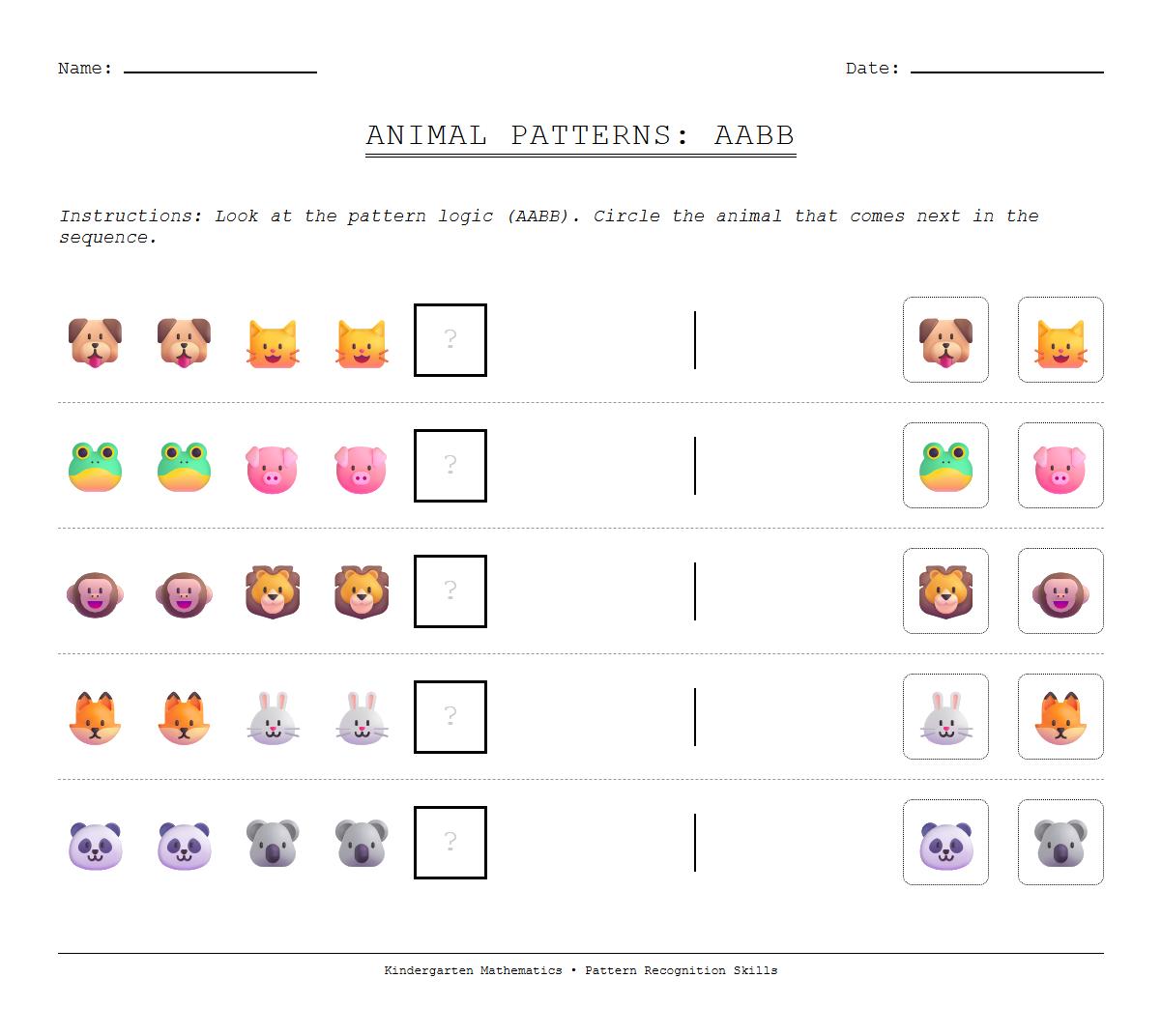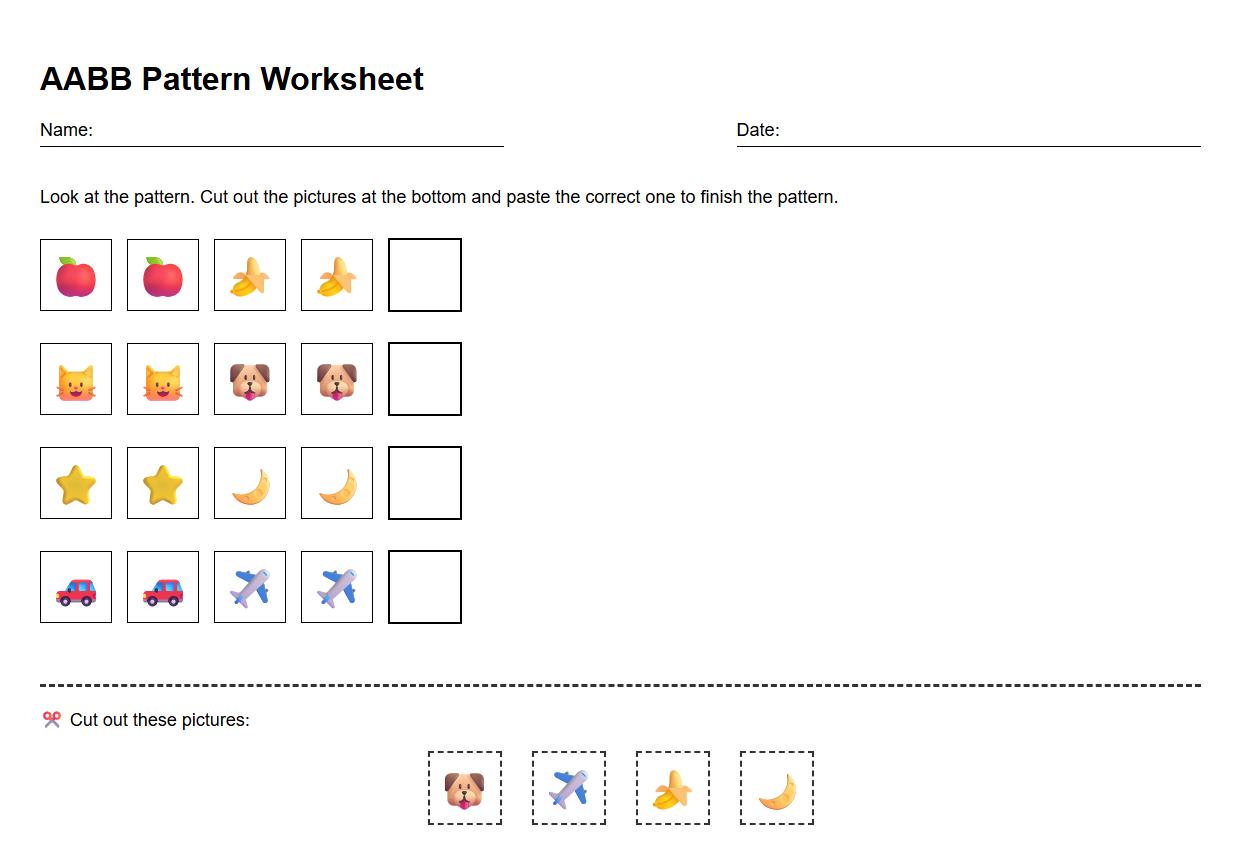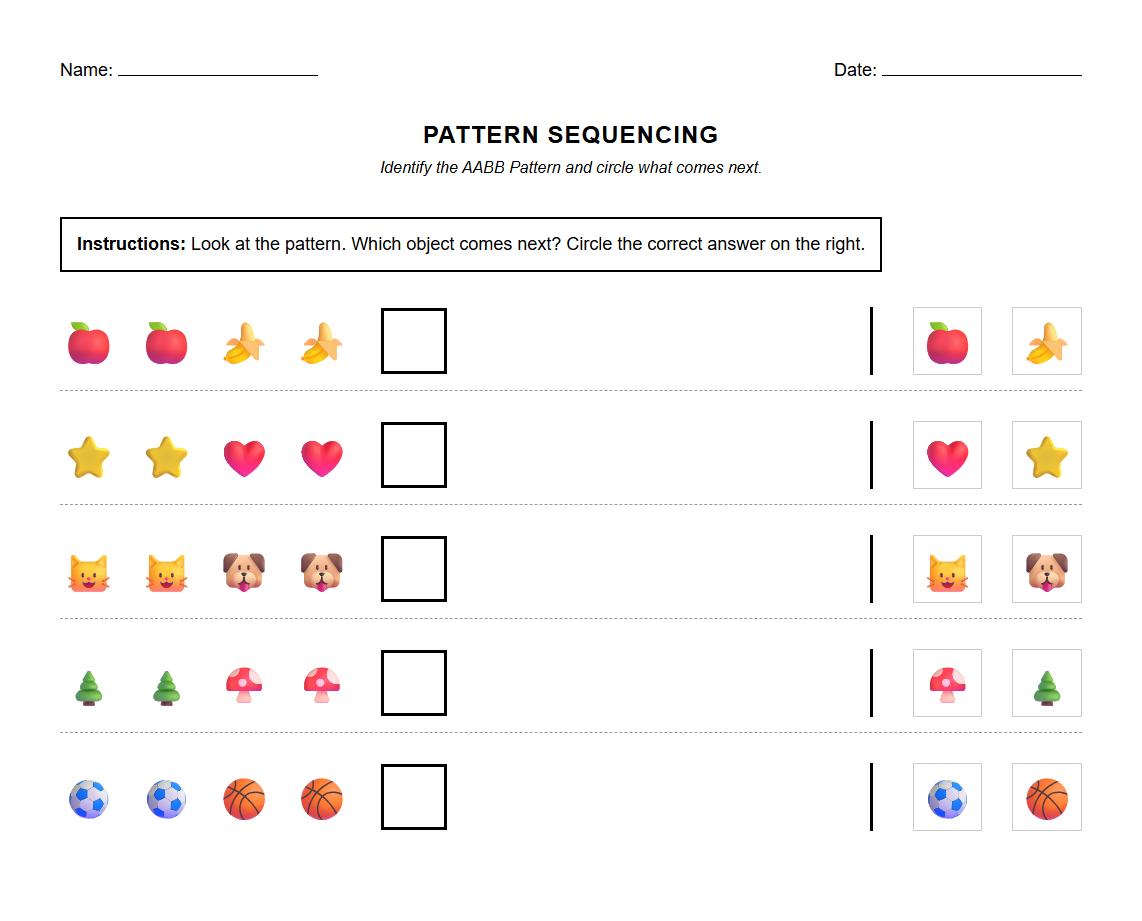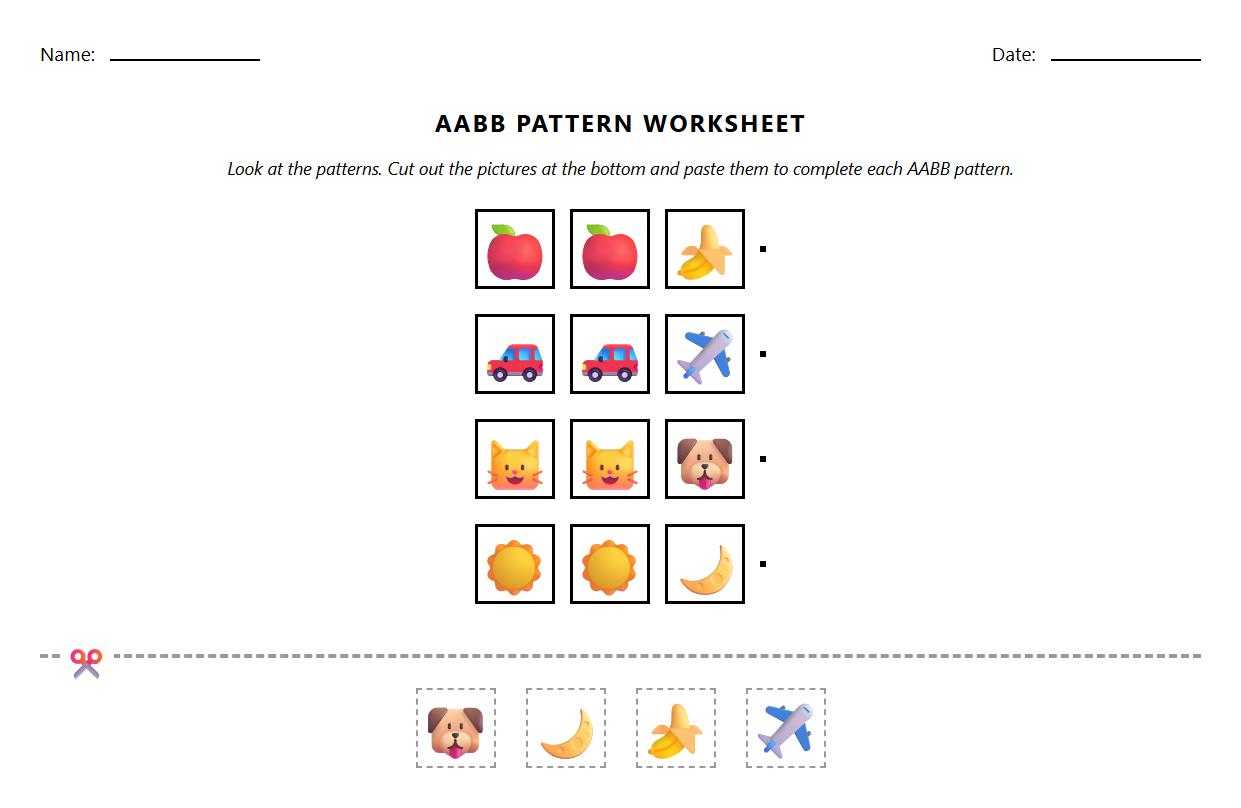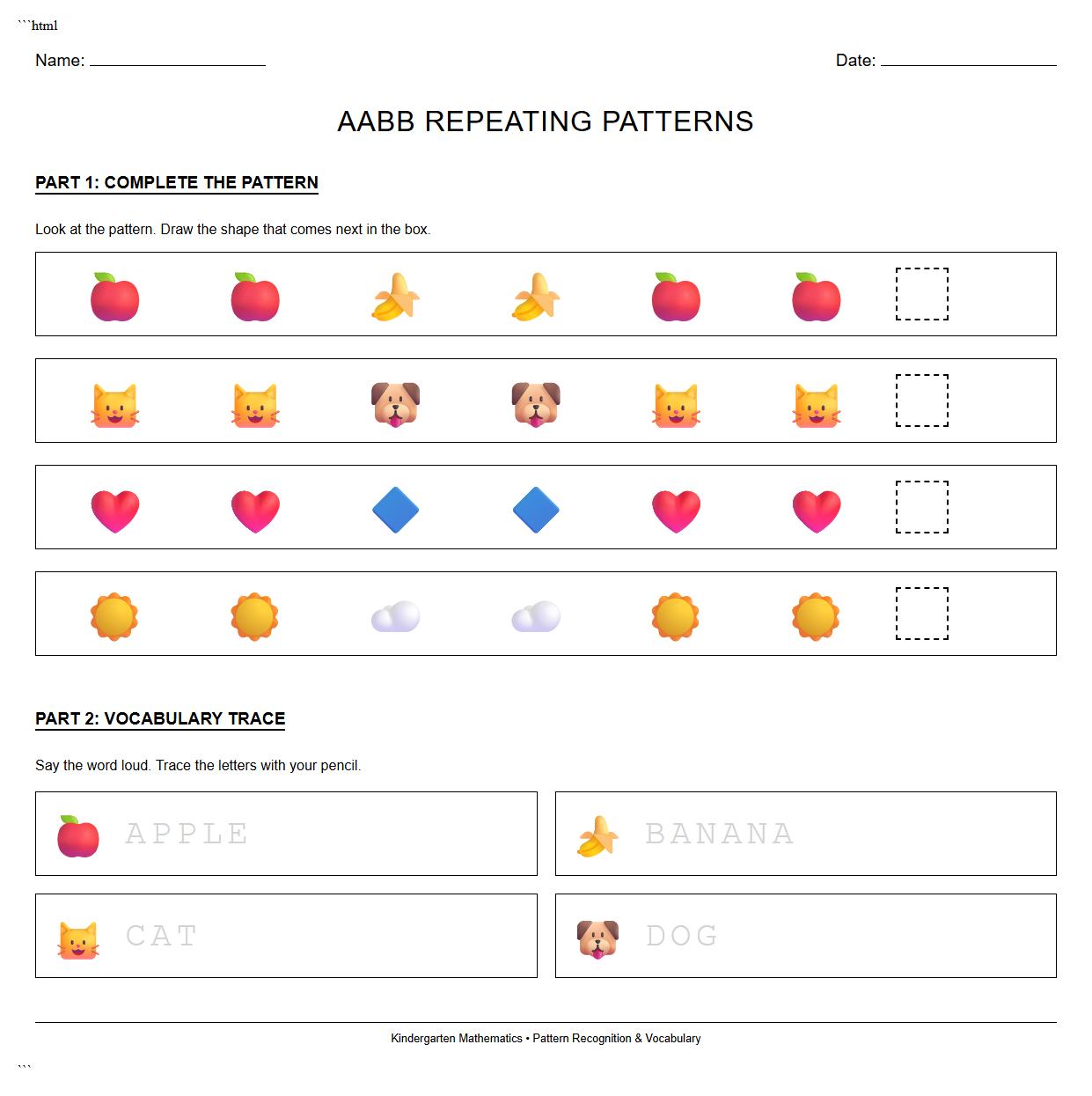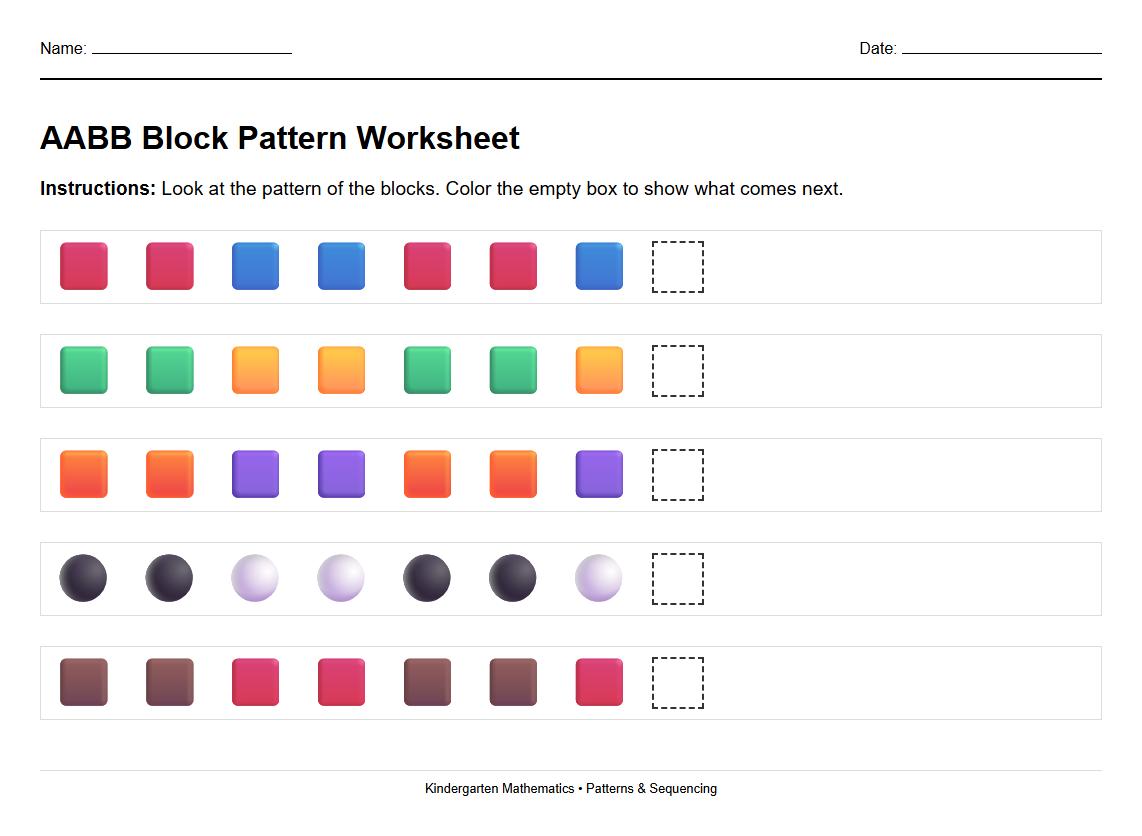
This Match and Complete Pattern AABB worksheet helps early grade students recognize and complete repeating patterns, enhancing their observational and critical thinking skills. Through engaging exercises, children practice identifying the sequence and selecting the correct elements to fill in missing parts. Explore the available worksheets to support your child's learning journey in pattern recognition.
Understanding the AABB Pattern
The AABB pattern is a simple sequence where two items or colors are repeated twice. For example, in the sequence red red blue blue, the pattern starts with two reds followed by two blues. This helps children recognize repetition and predict what comes next. It's essential for early cognitive and mathematical skills.
Choosing the Right Object in AABB
When asked to complete a pattern such as car car bus bus, children need to select the correct object that continues the pattern. The correct object repeats the last two, reinforcing the concept of pairs in the sequence. This activity develops both observation and decision-making abilities. Parents and teachers can guide children to look closely at the arrangement.
Identifying Patterns by Circling
Circular marking is a fun way to help children visually identify patterns like star star heart heart. By circling the correct picture, kids demonstrate their understanding of repeated sequences. It also improves hand-eye coordination and focus. This task encourages careful observation and attention to detail.
Drawing the Next Shapes in the Sequence
Children can be asked to draw shapes following a pattern such as square square triangle triangle. Completing this reinforces the recognition of sequence and prediction of what comes next. Drawing also aids fine motor skills and creativity. Making patterns tangible helps deepen understanding.
Selecting Items to Finish a Pattern
Selecting all items that fit the apple apple orange orange pattern requires identifying the repeated sequence. This teaches children to distinguish between different objects and understand sequence completion. It strengthens their cognitive skills and memory. Teachers and parents can encourage discussion about why certain items fit the pattern.
Predicting the Next Animal in the Sequence
In the pattern dog dog cat cat, asking children which animal comes next helps them practice logical thinking. The expected next animal repeats the AABB structure, reinforcing consistency in patterns. This task builds reasoning skills and familiarity with common animals. It also makes learning engaging through familiar subjects.
Completing Patterns Through Drawing
Drawing the next symbols in sun sun moon moon sequences supports artistic expression and patterning skills. Children learn to complete the pattern by accurate placement of symbols in order. This activity balances creative and analytical abilities. Encouraging drawing makes learning interactive and enjoyable.
Coloring to Match the AABB Pattern
Finding and coloring the item that fits socks socks shoes shoes helps children associate colors with objects in a pattern. Coloring enhances fine motor skills and reinforces the idea of repeated pairs. This hands-on task boosts focus and pattern recognition. It's an effective way to combine learning with play.
Adding Colors to Maintain the Pattern
Determining what color block follows green green yellow yellow teaches children about color sequences in patterns. Selecting the next color that follows the AABB format strengthens their understanding of color order and prediction. It encourages visual discrimination and sequencing. These skills are foundational for future math learning.
Arranging Pictures Correctly in a Pattern
Arranging pictures like duck duck frog frog in the proper AABB sequence helps children grasp order and repetition. It encourages organizational skills and visual memory. Understanding this concept is crucial for literacy and numeracy development. Teachers and parents can involve kids in arranging physical cards or drawings.


Identify and Extend ABC Patterns Worksheet for Kindergarten